Christ the King: never imposing, always inviting

The Lord Is My Chef Sunday Recipe for the Soul by Fr. Nicanor F. Lalog II
Solemnity of Jesus, King of the Universe, 22 November 2020
Ezekiel 14:11-12, 15-17  >><)))*>  1Corinthians 15:20-26, 28  >><)))*>  Matthew 25:31-46
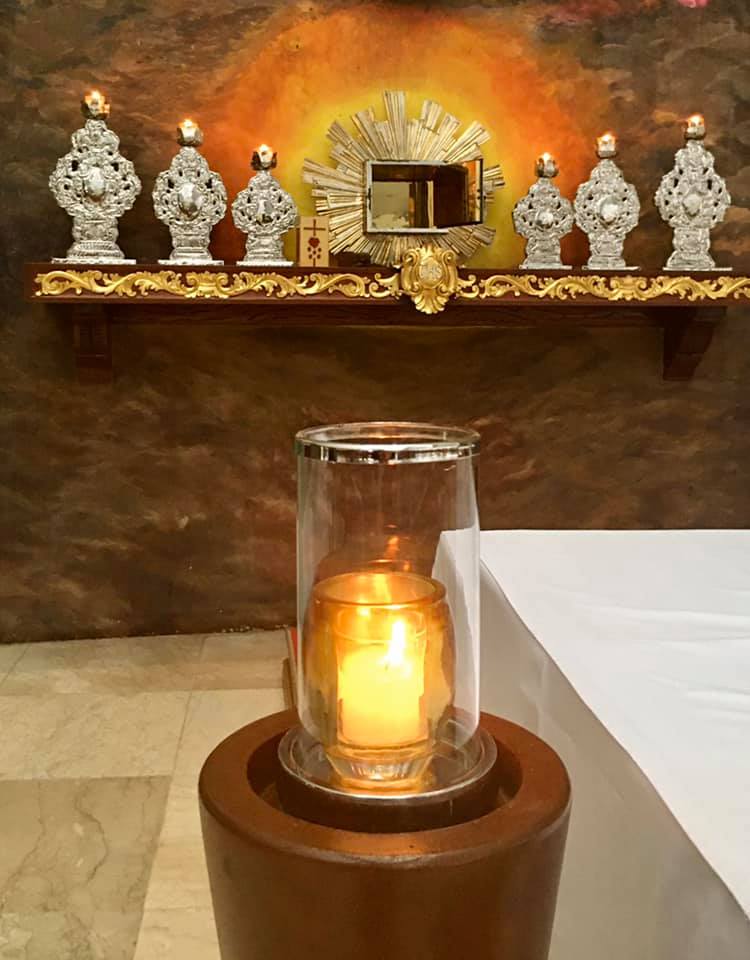
Photo by author, Chapel of the Graduate School of Theology, ICMAS, Guiguinto, Bulacan, 11 November 2020.

We Filipinos have a saying – sometimes taken as a riddle (bugtong) – that goes, “Utos ng hari, hindi mababali” that literally means the command of the king is unbreakable, always absolute.

Kings exist primarily to unite and help the people especially the weak, the suffering, and the voiceless; hence, kings are portrayed with strong bodies as well as sound minds to render justice. But, as we all know, power corrupts people that once kings like politicians have tasted the sweet elixir of authority and fame, everyone and everything is forgotten except one’s self interests.

And that has always been how kingship is seen based on power and supremacy, always imposing and domineering, insisting in their “power trips” that lead to divisions among peoples even nations that eventually, instead of serving others, they become the ones being served.

Exactly the opposite with the kingship of Jesus Christ that is not based on human power and authority but on the loving service of others, especially the weak and the marginalized. It was a radical move, of moving back to the very roots of kingship by God himself as prophesied by Ezekiel in the first reading. No wonder in Israel, kingship is closely seen in the imagery of shepherding.

Thus says the Lord God: I myself will look after and tend my sheep. As a shepherd tends his flock when he finds himself among his scattered sheep, so I will tend my sheep. I will rescue them… I will pasture them… I will give them rest… The lost I will seek out, the strayed I will bring back, the injured I will bind up, the sick I will heal…

Ezekiel 34: 11-12, 16

This is the essence of our celebration today of the Solemnity of Christ the King: Jesus is in the other and within us, the Emmanuel or “God-is-with-us” that the greatest honor we can give him as our King is to lovingly serve him in one another. See our many images in art of him suffering and dying than regal as a king because Jesus is truly one with us in our most difficult and trying times. That is why he is the only one truly a king!

“Ecce Homo” by Murillo, from wikipediacommons.com.

Christ the King grounds us to God and others again

When Pope Pius XI instituted this feast in 1925, the world was going through a lot of changes in every sphere of human life – for better and for worst – following the many advances in science and technology as well as in thoughts and ideas.

This continues to this day in our own age with its own twists that are more pernicious with everyone trying to reign supreme as kings and queens in life no longer with a scepter that was like a “magic wand” to get everything done but with the cellphones that can either build or destroy anyone with the slightest touch of ones’s fingers!

How sad that as the world had shrunken into a global community interconnected by modern means of communications invented to bring us all together, we have actually grown more apart from each other, polarizing us even further with every color of the rainbow signifying so many groups, agenda, and beliefs.

Worst of all, with these modern means of communications, we have become more focused with gadgets and things than with persons.

What an irony that we can be so close with those miles apart from us yet we hardly notice nor even recognize the persons seated next to us. Long before COVID-19, we have always been socially distant from each other, have always failed to appreciate or even look at the warmth and beauty of the human face now covered with a mask because we have always been “washing our hands”, escaping from our responsibilities as our brothers and sisters’ keepers.

See how in our readings this Sunday Jesus Christ is reminding us to go back to our solid grounding in God who dwells in each one of us.

Jesus said to his disciples: “When the Son of Man comes in his glory, and all the angels with him, he will sit upon his glorious throne, and all the nations will be assembled before him. And he will separate them from one another, as a shepherd separates the sheep from the goats.

Matthew 25:31-32
Photo by John Bonding, Architecture&Design Magazine, 25 May 2019 via Facebook.

I have always loved this photo above that speaks perfectly well of our situation today, of how most of us are missing so much in life when everything is “media-ted” that we no longer touch ground as if we are “floating on air” with everything reduced to a mere show or “palabas” that must be caught, kept, and shared in Instagrams instead of being enjoyed in our collective memories.

More tragic is the fact how most of these are often fake and not true at all, leaving many of us empty, even alienated that have resulted in many instances of depressions and suicides.

What an irony when everybody is claiming to be their own king or queen and master, of being free from religions and God, the more they have become unfree and empty! The more our egos and self-interests reign, the more chaotic we have become with peace and fulfillment most elusive.

When Jesus is our only King reigning in our hearts and relationships, that is when we find fulfillment in our lives as we discover our rootedness in God and interconnectedness with others.

When Jesus spoke of separating the goats and the sheep, we are reminded of how these animals can sometimes be indistinguishable — exactly like when we fail to recognize our loved ones and persons nearest to us.

And true enough, even Jesus has become indistinguishable among us right in our homes and most of all, among the suffering people like the hungry and thirsty, the strangers and homeless, the sick, the poor we have stripped not only of their clothings but also of their dignity as persons, and those imprisoned.

Recall what Jesus told Pilate at his trial, “You say I am a king. For this I was born and for this I came into the world to testify to the truth…” (Jn.18:37) that “God is love, and whoever remains in love remains in God and God in him” (1Jn.4:16).

All this comes to full circle today as Jesus tells us, “Amen, I say to you, whatever you did for one of these least brothers of mine, you did for me” (Mt.25:40) and “what you did not do for one of these least ones, you did not do for me” (Mt.25:45).

Jesus will surely come again

As we have reflected these past two Sundays, Jesus is coming again at the end of time to judge us if we have been faithful and loving to him through others. He himself assures us of his return as he declared When the Son of Man comes in his glory” and not the conditional If the Son of Man comes”.

The key is not to know the when and how but to be vigilant, of being awake, always finding Jesus our king with the least among us which is the truest sense of kingship — never imposed on others but always recognized and imitated. In Filipino, “sinusunod, sinusundan at tinutularan; hindi nasusunod”.

St. Paul reminds us anew in the second reading how Jesus Christ’s death on the Cross had decisively won over sin and death; but, he is coming again to fully establish his kingship when he vanishes sin and death completely to pave the way for new heaven and new earth.

When he comes again, will anyone recognize him among the poor and suffering like the hungry and thirsty, the sick and imprisoned, the strangers and homeless, and the naked? May we all have the eyes of a child who sees God in everyone and everything! Amen.

A blessed Sunday to you all!

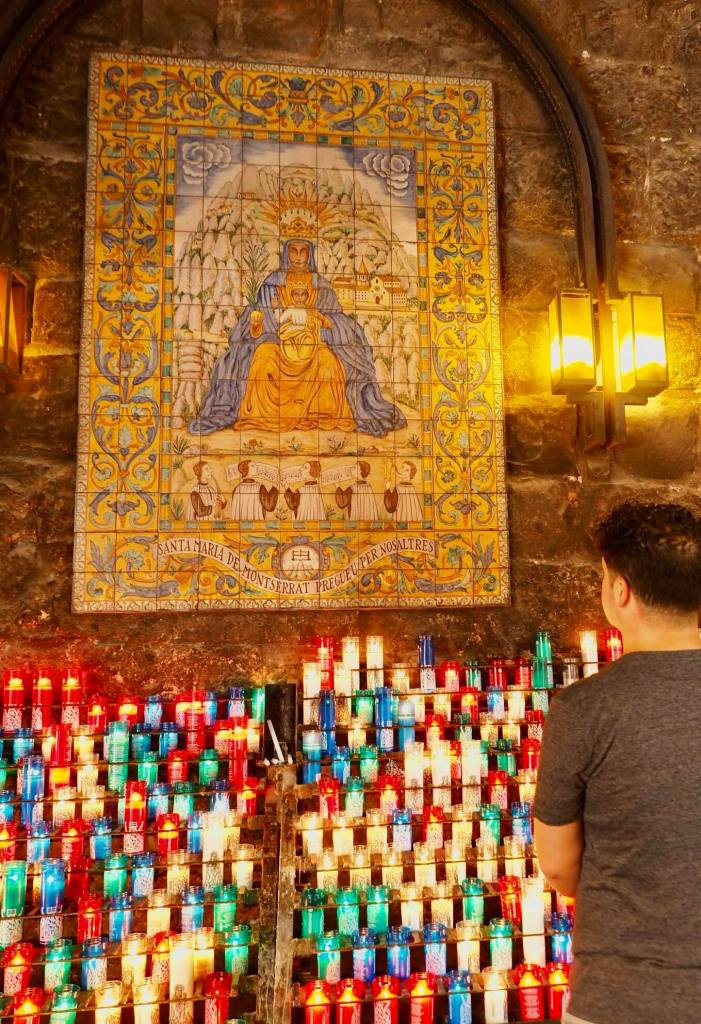
Photo by a parishioner of his son, Red Santiago, praying in our parish, November 2019.

“Be Thankful for What You Got” cover by Pepe Marquez (2019)

The Lord Is My Chef Sunday Music by Fr. Nick F. Lalog II, 15 November 2020
Photo by author, after the floods, typhoon Ulysses, 12 November 2020.

We try to be subdued and sober this Sunday in thanksgiving to the gift of life as we remember and pray too for our brethren in Cagayan and Isabela suffering from the worst floods in decades after typhoon Ulysses pummeled our region this week with heavy winds and rains.

Here is Mexican Pepe Marquez and his band for his cover of William DeVaughn’s 1972 soul song “Be Thankful for What You Got” that was released two years later in 1974, selling almost two million copies as it reached #1 on the US R&B chart and #4 on the Billboard Hot 100 chart that year.

There are other versions of this cool, cool music notably by Curtis Mayfield who had actually influenced DeVaughn in this song; thanks to Manny Pagsuyuin who shared me this music recently that I now prefer than the other covers for its superb percussions and instrumentations plus Marquez’s trademark videos of classic cars.

The song is so simple with gospel-like lyrics that remarkably hit home specially in a time of calamity like this when we have to be sensitive with others’ sufferings.

Most of all, despite its oft-repeated line “Diamond in the back, sunroof top, diggin’ the scene, with a gangsta lean”, the music is so clean and crisp with its second part reminding us that of all that we have, the most precious are our loved ones.

Part of the Lord’s message today in being vigilant for his return is for us to be thankful for everything we have because he gives us according to our abilities. It is not how much or how little we have in life but how we make use of it that matters.

How sad we only realize this after a calamity or a crisis in life.

Let’s make it a habit to be thankful daily for our gifts, use them wisely in serving others as we thank and praise God for his goodness. A blessed Sunday, everyone. Amen.

Directed by: Pepe Marquez & Carlos Guillen with Gabriella Guillen for LA CIMA MUSIC along with Cj Infinito & Carlos Alvarez Aragon for CJ Infinito Productions. #lacimamusic Featuring: Jeff Lewis on Trumpet – Dora Sanchez on Vocals & Lorenzo Martinez on Percussion. Album available on, Spotify, cdbaby, Amazon Music and all digital download sites. https://www.facebook.com/pepe.marquez.33

Taking risks like Jesus

The Lord Is My Chef Sunday Recipe for the Soul by Fr. Nicanor F. Lalog II
Week XXXIII-A in Ordinary Time, 15 November 2020
Proverbs 31:10-13, 19-20, 30-31 >><)))*> 1Thessalonians 5:1-6 >><)))*> Matthew 25:14-30   
From inquirer.net

It is my fervent hope and prayer that by this time, everybody is feeling better after those harrowing experience of winds and rains by typhoon Ulysses that have induced flash floods and left a path of destruction and deaths in Central Luzon and Metro Manila this week.

Indeed, it was like tropical storm Ondoy happening again after eleven years when everybody was caught by surprise by the floods and severe aftermath of dirt and trash left behind with no electricity nor water supply available in many parts of the affected areas.

As a result, many of us have again reflected on the one topic we have always avoided in life – death and things of the end like parousia or Second Coming of Christ, end of the world, and judgement day that have preoccupied the early Christians. St. Paul’s reminder to them in today’s second reading is so timely and relevant even for us today to be vigilant for Christ’s coming.

But you, brothers and sisters, are not in darkness, for that day to overtake you like a thief. For all of you are children of the light and children of the day. We are not of the night or of darkness. Therefore, let us not sleep as the rest do, but let us stay alert and sober.

1Thessalonians 5:4-6

Vigilance is faith in Christ.


Jesus gives us another parable today to illustrate his Second Coming and judgement; but unlike last week, today is more picturesque, touching our innermost core, challenging us to be “wiser” in daring to gain eternal life by working harder in this life.

Jesus told his disciples this parable: “A man going on a journey called in his servants and entrusted his possessions to them. To one he gave five talents; to another, two; to a third, one — to each according to his ability. Then he went away. Immediately the one who received five talents went and traded with them, and made another five. Likewise, the one who received two made another two. But the man who received one went off and dug a hole in the ground and buried his master’s money.”

Matthew 25:14-18
Photo by author, Chapel of the ICMAS Theologate, 05 October 2020.

Vigilance is more than being prepared and ready for any eventuality. It is active waiting by taking risks to ensure a more safe and sound situation when emergencies strike. This is the reason why investors are always surveyed how much risks they are willing to take with their investments: the bigger the risks, the higher the returns are. But, can we take the risks?

The same is true with everything if we wish to have a better future. We have to take risks like working harder, sacrificing more in order to save money and have better homes, to keep our body physically fit and healthy, and burning the night lamp to finish our studies and achieve our goals in life. In this all we find the need to maximize what we have – no one can claim as having nothing at all or “walang-wala” as we would always claim in Tagalog.

Jesus clarifies this today in his parable, telling us that each servant was given with talents “according to his ability”. We are all blessed by God! It is not a question of how much we have received but what have we done to what we are given with.

Of course, not everyone can have all in life but each one has his/her many talents as well as weaknesses. Focus more on what we have than what we do not have. Keep in mind that nobody is perfect, that everybody is going through some struggles in life.

Being vigilant, being “children of light” means striving for the best, choosing what is the best which is part of being holy, an expression of our faith in God. Whenever we dare to take risks like casting our nets into the deep like Simon Peter, we express our deep faith in God as we hope and trust in him.

Photo by Dr. Mylene A. Santos, MD, 30 October 2020.

We are made by the choices we make.


When I was still teaching in our diocesan schools, I used to tell my students to “study hard, work harder and pray hardest”, reminding them that their being good and successful lawyers, doctors, engineers or any professional starts not in the future but today, in the here and now.

Make the right choices in life by truly working on them not just at the spur of the moment or simply based on what others say. Most of all, pray first to discern God’s will for our decisions so we may choose what is best for us according to him.

God wants only the best for us — he made us share in his Life and gave us his only Son Jesus Christ to have its fullness in him here and in eternity. Unlike wealth managers who help people invest for their future, only Jesus assures us with sure, high yields in our “investments” in life by being good and holy.

A lot often, we decide and take risks based on the people we are with like when we have friends or superiors who are good and trustworthy. In the first reading we have heard how a faithful wife uses all her talents in serving her family as she is moved by the fidelity and love of her husband. The same is true if we have good and inspiring friends and employers who move us to be our very best. And most true of all with God who moves us to be our very best to lovingly serve him in others.

Here we find Jesus in his parable as the master who went on a long journey who risked all for us and continues to believe in us, giving us all the grace we need in this life to be fruitful in him.

All we have to do is just be faithful to him to whatever task and mission he has given us. It does not matter how big or small that may be; all he wants is for us to remain faithful to him, of not wasting that talent that must be put into good use not only for us but for others too.

If we are faithful to Jesus, anytime he returns to call us back to eternity, we can be sure of “sharing in his (master’s) joy” of Eternal Life! And if we are not faithful, then….

Photo by Dr. Mylene A. Santos, MD, 07 November 2020.

Today as we praise and thank God for the gift of life with the sun shining anew, let us ask ourselves following the recent calamities happening: what have I done with the many gifts and blessing God has given me? with the tasks, big and small, he has entrusted me?

Remember, it is not how big or how little talents we have received but how we have made it grow that matters. Our lives are the gift of God to us, what we do with our lives, that is our gift to him!

Have a blessed Sunday! Please pray and help our brothers and sisters in Cagayan and Rizal provinces severely affected by typhoon Ulysses. Lastly, kindly say a prayer for me and my six other classmates as we celebrate today (15 November 1997) our 23rd anniversary of ordination as Deacons. Amen.

Active waiting, authentic living now

The Lord Is My Chef Sunday Recipe for the Soul by Fr. Nicanor F. Lalog II
Week XXXII-A in Ordinary Time, 08 November 2020
Wisdom 6:12-16   ><)))*>   1 Thessalonians 4:13-18   >><)))*>   Matthew 25:1-13
Photo from MediaNews Group/The Mercury News via Getty Images, 10 September 2020 during the widespread California forest fires.

Beginning this Sunday until the Solemnity of Christ the King three weeks from now, we hear from the gospel Jesus speaking of his Second Coming at the end of time to render judgement to everyone.

It is during this time as we come to close the liturgical year and begin the new one with the Advent Season four weeks before Christmas when the Church reminds us in our Sunday Masses the true meaning of Christ’s Second Coming that have disturbed so many people for 2000 years.

Throughout history, it has spawned many doomsday and apocalyptic scenarios among peoples everywhere, particularly religious fanatics and cult followers with disastrous aftermaths like bloodbaths and murders despite their being anchored in a religious belief in God.

Lately there is a growing trend among some people of preparing for the final end of the world without any belief in God but more based on “science” and pop cultures but still with some degree of violence too.

And between these two extremes of awaiting the end of time with and without God, we find a majority who do not seem to care at all!

Everything comes to an end in order to begin anew.

Last Sunday in our reflection on All Saints Day we have mentioned the tension of the here and not yet, of Jesus being here now and still coming again at the end of time we call parousia which we proclaim in every Mass after the consecration.

This tension was a big deal during the time of the early Church with many believers including the Apostles believing they would witness the return of Jesus in their lifetime; but, when many of them started to die without the Second Coming happening, they began to question and reflect on the nature of parousia. They wondered what will happen with those who have died already and those left behind still alive when Christ comes again?

We do not want you to be unaware, brothers and sisters, about those who have fallen asleep, so that you may not grieve like the rest, who have no hope. For if we believe that Jesus died and rose, so too will God, through Jesus, bring with him those who have fallen asleep… we who are still alive, who are left until the coming of the Lord, will surely not precede those who have fallen asleep… will be caught up together with them in the clouds to meet the Lord in the air. Thus we shall always be with the Lord. Therefore, console one another with these words.

1 Thessalonians 4:13-14

From St. Paul’s reflections developed what we call escathology, that branch of theology dealing with the end of time and everything related with it like general and particular judgements, death and resurrection, parousia or Second Coming of Christ at the end of time.

It was St. Paul who insisted the centrality of Christ’s resurrection upon which is also hinged the resurrection of the dead and of his parousia (1Cor.15:14) which we call as mystery of our faith. For him, Christ’s resurrection is the beginning of the resurrection of the dead, the beginning of the end time; therefore, the end is something we shall not fear but in fact be excited with because it is the final victory of God over sin and death. Yes, Christ had definitively won over death at the cross but it is on his Second Coming when death and sin are final vanished to give way to new heaven and new earth.

Everything will come to an end not to simply terminate all but in order to bring forth new beginnings! And the key is authentic living in every here and now.

From a post at Facebook, 2018.

Live in the present, not future; focus on life, not on dates.

It is sad when many among us Catholics specially those who celebrate Mass every Sunday acclaiming “Christ will come again” are the ones so afraid of end time, always asking for the blessing of their candles in the belief that these would save them from days of darkness.

Wrong! What will truly save us on judgement day is our firm faith in Jesus Christ, not blessed candles. Most of all, what will truly save us on judgement day is to live daily as authentic Christians witnessing the gospel values of Jesus Christ our Savior and Judge.


In today’s parable of the ten virgins awaiting the arrival of the groom, the Lord wants to instill among us the need to focus on the present moment of our lives not on any particular time or date because nobody knows when he would come like the groom in a wedding.

Jesus told his disciples this parable: “The kingdom of heaven will be like ten virgins who took their lamps and went out to meet the bridegroom. Five of them were foolish and five were wise. The foolish ones, when taking their lamps, brought no oil with them, but the wise brought flasks of oil with their lamps.

Matthew 25:1-4

We are all the virgins awaiting the coming of the groom for the wedding. We all came from God and we are designed to return to him in the end for eternal life. Here I find the late Stephen Covey so real in teaching us to always begin with the end in sight which is heaven. In one of his writings, he said “We are not human beings on a spiritual journey; we are spiritual beings on a human journey.”

In 2012, we were shocked when we heard news how he fell from a bicycle in an apparent accident and a few days later, he died. In an instant I have felt how this layman who strongly advocated the infusion of values into business and management is after all a saint, perhaps now in heaven.

His seven habits of highly successful people are all anchored in meaningful, authentic living in the present. That is being wise, of bringing extra oil of charity and kindness and goodness in life while actively waiting the coming of the groom, the coming of our death and end. Habit is something that is good we always do; its opposite is vice. (Stop saying bad habits.)


Life is keeping our lamps burning even if it produces little light than be extinguished and be plunged to total darkness. Nobody is perfect; we all have our lapses in life that is always in darkness. Like those virgins in the parable, wise and foolish alike, we feel drowsy and fall asleep.

Photo by author, Holy Thursday Mass, 2020.

Since the bridegroom was long delayed, they all became drowsy and fell asleep.

Matthew 25:5

Therefore, all the more we need to be wise, not foolish. Being wise is always seeking and following the will of God who is Wisdom himself.

In the first reading, we are told how Wisdom as the personification of God himself can always be had by anyone sincerely searching for him.

Resplendent and unfading is wisdom, and she is readily perceived by those who love her, and found by those who seek her. She hastens to make herself known in anticipation of their desire; whoever watches for her at dawn shall not be disappointed, for he shall find her sitting by his gate.

Wisdom 6:12-14

To seek and obtain wisdom is to have pure or clean hearts that try to seek what is good, free of carnal desires and worldly allurements. Again, the need to have even the faintest light than be in total darkness.


So often, many things in our lives are decisively won – or lost – in a spur of the moment, in single crucial moments when everything comes to the fore. Woe not to those caught asleep but not ready or prepared, ill-equipped for the demand of the moment.

At midnight, there was a cry, ‘Behold, the bridegroom! Come out to meet him!’ Then all those virgins got up and trimmed their lamps. The foolish ones said to the wise, ‘Give us some of your oil, for our lamps are going out.’ But the wise ones replied, ‘No, for there may be not enough for us and you. /go instead to the merchants and buy some for yourselves.’ While they went off to buy it, the bridegroom came and those who were ready went into the wedding feast with him. Then the door was locked.

Matthew 25:6-10
Photo by author, Baguio Cathedral, January 2018.

See how in the parable where everything was similar and the same: ten virgins with lamps becoming drowsy and falling asleep in the night waiting for the groom. Everything changes at midnight with the announcement of the arrival of the groom where the wise virgins were clearly distinguished from the foolish. The wise had extra oil and came into the wedding with the groom, leaving behind the foolish who had to buy for oil in the dead of the night only to return with doors locked, leaving them outside.

This is life in a nutshell: being ready when opportunity strikes is not based on luck but hard work.

And that is the saddest and difficult part we always take for granted: life is often decided on short, instant moments that in a snap of a finger can decide our rising or downfall.

This pandemic is an eye opener for everyone that caught so many of us unprepared.

Any extra oil kept in this time of the corona has proven so wise for some who have adjusted so well in the situation, coping and even managing so well amid the crisis.

What is so disappointing, even appalling are the foolish who chose to wallow in their follies, whining and blaming everyone for the troubles and mess without admitting their own shortcomings.

Let us heed the Lord’s call to “stay awake, for you know neither the day nor the hour” (Mt.25;13) by living authentically as his disciples in every here and now. Amen.

A blessed Sunday and week ahead to everyone!

Photo by author, 22 September 2020.

“King of Pain” by The Police (1983)

The Lord Is My Chef Sunday Music, 01 November 2020
Photo by Mr. Jim Marpa, Bohol, 2019.

I have lined up some songs with “heaven” in their titles or lyrics for this Sunday’s celebration of All Saints’ Day and tomorrow’s All Souls’ Day; but, during prayers and reflections, I kept on hearing Sting singing in my head King of Pain which is my most favorite among his long list of great music.

Our celebrations this November first and second are a mixture of joy and mourning, of heaven and sufferings, of life and death. As we remember today those already in heaven and tomorrow pray for those awaiting entrance into heaven, we also remember on these twin dates the death of loved ones.

No matter how much we may extoll the redemptive nature of death not as an end but a beginning of eternal life, we cannot miss the sadness and pain it brings to everyone that is always for a lifetime.

And that is what hope is all about: hope does not remove sadness or pain. When we hope of getting into heaven with our departed loved ones, no matter how blissful heaven may be, we always have to deal with the hurts of losing a parent or a spouse, a sibling or a friend.

To hope means to firmly believe that when things get worst, even unto death, there is Life itself, God remaining in the end, loving us, taking us to his presence in heaven to live life in its fullness in him.

To hope means to face new beginnings in this life amid the pains we have in our hearts from deaths and separations, believing that someday, if not in this life, everything would be whole and perfect again.

That is why I find King of Pain more apt for All Saints’ Day and All Souls’ Day.

Written by Sting in 1982 at the Goldeneye Estate in Jamaica where Ian Fleming wrote his first James Bond novels, King of Pain expresses the inner torments he was going through as an individual at that time — his recent divorce from his first wife and growing misunderstanding with his other two colleagues, Andrew Summers and Stewart Copeland. They eventually parted ways after the release of the Synchronicity album from which King of Pain came in 1983.

The beat, the music and the lyrics seem to be dark and melancholic at first but as you get the feel of the entire song sung by Sting, then you realize it is actually about a man struggling with sadness or even depression, of a man filled with hopes until you realize it is speaking about you as king of pain.

Aren’t we all the king of pain in one or the other?

And as we bear all the pains, we keep on forging on with life, we never resign but keep hoping even for a piece of heaven, of the sun to celebrate life each day until we make it to the Other Side like our departed loved ones.

All in the grace of a loving God. Amen.

Provided to YouTube by Universal Music Group

We are blessed, meant to be saints

The Lord Is My Chef Sunday Recipe for the Soul by Fr. Nicanor F. Lalog II
Solemnity of All Saints, 01 November 2020
Revelation 7:2-4, 9-14   |+|   1 John 3:1-3   |+|   Matthew 5:1-12
“Mary and the Saints” painting by Duccio di Buonoinsegna (1308-1311) from en.wikipedia.org.

Let me begin our reflection on this All Saints’ Day with a joke from the “Language Nerds” on how the past, the present and the future came and appeared in a bar. Everybody was tense.


Our celebrations today and tomorrow deal with “verb tenses” – the past, the present, and the future that somehow converge in the here and now of Jesus Christ our Lord. We call it the tension of the already here but not yet, like God and heaven – both already here but not yet.

All Saints’ Day and All Souls’ Day are two Catholic celebrations so unique and distinctive of our faith that bring to the fore the beautiful tensions of the “here and not yet”, of that convergence of the temporal and eternal in our present lives.

It is something like our Filipino delicacies of tuyo (dried fish) and balut (fermented duck egg): when you smell the aroma of the frying tuyo by your neighbor, you could taste it but if you want to really experience its delight, you have to go to your neighbor and join their meal. Or the balut: is it an egg or a duckling?

In a similar manner, we find in our Gospel today that proverbial question of which came first, the egg or the chicken? Are we blessed because we followed the Beatitudes first or, are we blessed first that we can practice the Beatitudes of Christ?

When Jesus saw the crowds, he went up the mountain, and after he had sat down, his disciples came to him. He began to teach them, saying: “Blessed are the poor in spirit, for theirs is the kingdom of heaven. Blessed are they who mourn, for they will be comforted. Blessed are the meek, for they will inherit the land. Blessed are they who hunger and thirst for righteousness, for they will be satisfied. Blessed are the merciful, for they will be sown mercy. Blessed are the clean of heart, for they will see God. Blessed are….

Matthew 5:1-8
Photo by Pixabay on Pexels.com

We are all blessed

When Jesus preached his sermon on the mount to launch his ministry, he first presented himself — that he is the Christ, the Anointed or Blessed One because he is in fact the Beatitudes: he is the poor in spirit, the merciful and meek, the one with a clean heart.

Inasmuch as the Beatitudes tell us who is Jesus Christ, the Beatitudes also challenge us followers of Jesus to imitate and follow him in being poor in spirit, merciful, and clean of heart.

At first glance, we notice that blessedness seems like a reward given by Jesus after we have imitated him like being blessed after being insulted and persecuted in his name, working for peace and hungering and thirsting for righteousness.

However, the very fact we are able to bear all these sufferings to live the Beatitudes means that we are already blessed.

And that is the truth: in Christ’s Passion, Death, and Resurrection, we have all been blessed by God that we are able to live as his beloved children, now living in his “kingdom of heaven” right here on earth.

Beloved: See what love the Father has bestowed on us that we may be called the children of God. Yet so we are… we are God’s children now; what we shall be has not yet been revealed. We do know that when it is revealed we shall be like him, for we shall see him as he is. Everyone who has this hope based on him makes himself pure, as he is pure.

1 John 3:1, 2-3

Blessedness is who we are as children of God unless we choose to live otherwise.

Blessedness is God’s gift to us that enables us to live according to his will and plans, projecting us further into the future to finally be with him in all eternity in heaven. When we try to live the Beatitudes of Jesus, of going against the tide and flow of the world where power and wealth, popularity and fame are the means life is measured, then that becomes our gift to God.

And that is when we enter into heaven and become saints like what we celebrate today.

According to St. John Paul II, the good news of life is that we all share in the life of God — and that is why we are all blessed.

Our sharing in the life of God makes us blessed.

The difference that we have with the saints is just the tenses: they are now celebrating at present the fullness of their blessedness, of being present before God in all eternity in heaven because they have so well accomplished while living here on earth the works of the Beatitudes of Christ in the past. They have overcome all tests and trials in the past and now having the rewards of full blessedness.

We, on the other hand, though already sharing in the blessed life of God here on earth in the present, still have to face and endure many other trials in the future to perfect ourselves in Christ until we get a final glimpse of him in the afterlife.

Photo by Dr. Mai B. Dela Peña, MD, at Spain, 2018.

Blessedness is a relationship with God.

It is now clear with us that saints are like us who are blessed because we share in the life of God. However, saints enjoy the fullness of this blessedness of being in the very presence of God as a “reward” or a result of their striving with God’s grace to live out the Beatitudes.

Saints now enjoy the eternal presence of God, the fullness of blessedness and fullness of their relationship in God and with God, from earth into heaven.

This is the reason we have a feast for all the saints or those who have gone ahead of us and tried to lead holy lives, living out their blessedness that they now enjoy the eternal presence of God in heaven. They need not be declared by the Church as saints whoever gets into heaven in the presence of God is a saint.

We who are still living here on earth, though blessed as we share in the life of God, cannot be considered as saints yet because we still have to go through a lot of purifications, of tasks in loving.

Again, we see that tension of the here and not yet in this aspect of being saints, of blessedness: heaven is eternal union with God (hell is eternal separation from God); blessedness and heaven are both our relationships with God.

Therefore, the challenge of our blessedness here on earth as seen in the Beatitudes of Jesus is how we maintain and keep that intimate relationship with God that every choice we make is always a choice for life, of choosing to love than hate, to forgive than revenge, to understand and let go.

In the first reading, John tells us of his vision of heaven with great multitude of “saints” or holy men and women “wearing white robes holding palm branches in their hands”. The Lord told him,

“These are the ones who have survived the time of great distress; they have washed their robes and made them white in the blood of the Lamb.”

Revelation 7:14

Although we are extolling in this solemnity all the unnamed saints now in heaven, this is still a feast celebrating the goodness of God, of his immense love for us in blessing us in Jesus Christ who enables us to do good in the power of the Holy Spirit.

As we remember all the Saints, we celebrate also this sharing of God’s life in us for us to be blessed, assuring us of being saints someday!

We are challenged today to live out this blessedness freely given to us by God by being more loving with others specially in this time of COVID-19 as well as when two super typhoons are threatening to slam into some parts of our country this week.


A short note about cemeteries

Sometimes, non-Catholics laugh at us every November first when we troop to the cemeteries to be with our departed loved ones instead of November 2. Despite the closure of cemeteries this week due to COVID-19, many have earlier visited their loved ones in cemeteries while the rest among us would surely do the same once the ban is lifted.

Is there something wrong? NONE. Except for those who just go to cemeteries to drink and have fun without praying and celebrating Mass in their parishes. But there is nothing wrong with our tradition of visiting cemeteries on November first.

In fact, it is a vibrant display of our faith in God because every time we visit the dead on All Saints’ Day, we also presume they are already saints, already in heaven.

Most of all, our coming to the cemeteries on All Saints’ Day is an expression of our hope in heaven while still here on earth.

The cemetery reminds us of hope in the future. In the past when we buried our dead, the cemetery has become the place of our mourning; but, every November first, the cemetery reminds us it is the place of hope where sadness is not really removed but where we find strength and faith that like our departed loved ones, we shall overcome all trials and sufferings here on earth to be one with them in the presence of God in heaven.

That is the good news of All Saints’ Day and All Souls’ Day: we are so blessed by God in Jesus Christ who had opened our access into heaven not only in the future when we die but even now as we mourn – and celebrate the memory of our dead, we already have a taste of eternal life.

May we live out this blessedness God has given us. Amen.

“Alfie” by Dionne Warwick (1966)

The Lord Is My Chef Sunday Music, 25 October 2020
Photo by Dr. Mylene A. Santos, MD, Katmon Harbor Nature Sanctuary in Quezon, 2020.

Sorry for being away these past four weeks without any secular music inspiration for our Sunday gospels. Hoping to make up with you my dear Reader on this partly cloudy and warm Sunday with a classic song from a 1966 movie that starred Michael Caine, Alfie.

Written by the highly successful duo of Burt Bacharach and Hal David, sang and recorded for the said movie by their favorite interpreter Dionne Warwick, Alfie gives in its opening stanza the questions that create the drama of this 1966 film about a self-centered playboy who cared only for himself, using the people around him for his own gratification and satisfaction.

I have not seen the original 1966 film except its 2004 remake starring Jude Law that I find too “sleazy” that lacked what I suppose as the British “touch of class” and deep drama found in Caine’s starrer.

Nonetheless, we have chosen this song because of our Gospel this Sunday when a scholar of the law challenged Jesus with the question “which commandment in the law is the greatest”. Jesus answered the question so well by taking us all to the very foundation of all laws which is loving God with one’s total self expressed in loving others as we love our selves.

Here we find Jesus doing away with our legalisms that focus on the letters and individual laws and commandments, summing them all in love (https://lordmychef.com/2020/10/24/the-test-of-love/).

Jesus “passed the test” by the Pharisees and the question now is, how do we fare in the same test of love?

Do we love enough?

And that is why we have chosen the song Alfie that speaks so well of the same question.

There is a very interesting line in the song’s second stanza that relates perfectly well with Jesus Christ’s summary of the laws into love of God expressed in love of others:

And if only fools are kind, Alfie
Then I guess it’s wise to be cruel
And if life belongs only to the strong, Alfie
What will you lend on an old golden rule?
As sure as I believe there’s a heaven above, Alfie
I know there’s something much more
Something even non-believers can believe in

For years, many listeners including artists like Ms. Barbara Streissand have been baffled with the possible meaning of that line “What will you lend on an old golden rule?”; it has always been interpreted in so many ways despite Mr. David’s admission it meant nothing at all but just a line to fill in Mr. Bacharach’s music.

In that case, all the more we find how music is indeed more of the soul, touching our hearts with its deep meanings that transcends our physical world, giving us a glimpse of the Divine, of a personal and relating, loving God.

I believe in love, Alfie
Without true love we just exist, Alfie
Until you find the love you’ve missed you’re nothing, Alfie
When you walk let your heart lead the way
And you’ll find love any day, Alfie
Alfie …

The problem with love, my dear Reader and Friend, too often our words are not enough to truly express it. Most often, when we love, we just have to love, love, and love!

A lovely and loving week to everyone!

Provided to YouTube by Rhino Alfie (2013 Remaster) · Dionne Warwick Playlist: The Best Of Dionne Warwick ℗ 1967 Scepter Records Producer: Burt Bacharach Producer: Hal David Writer: Burt Bacharach Writer: Hal David Auto-generated by YouTube.

The test of love

The Lord Is My Chef Sunday Recipe for the Soul by Fr. Nicanor F. Lalog II
Week XXX-A in Ordinary Time, 25 October 2020
Exodus 22:20-26  |+++|   1 Thessalonians 1:5-10   |+++|   Matthew 22:34-40
Nuns bringing relief goods during the lockdown due to COVID-19 last summer. Photo from Facebook.

Our gospel this Sunday is a very usual scene happening daily in our modern world when we keep on testing Jesus Christ like the Pharisees for so many things about life we feel we know better than even God.

We keep on “pushing the lines” to avoid crossing them lest we break the laws and commandments when our hearts are clearly bent more on the legalisms than their spirit and sense.

How unfortunate that until now, when we would rather see the small parts than the whole that we keep on breaking down everything specially laws as if they are entities unto themselves, forgetting that each part leads to greater good.

Such is the essence of the one law of love, love of God is always love of neighbor and vice versa. They cannot be separated, like a face with two cheeks.

But more important than understanding the nature of the law of love which is the inseparability of love of God and love of others is passing its final test of loving.

I have always loved this actual photo of a banana vendor during the lockdown who kept his prices low as part of his effort in alleviating the sufferings due to COVID-19 pandemic. Photo from Smart, March 2020.

We keep on testing Jesus
who has passed every test we have
subjected him into...
Can we pass his test of love, too?

As we come to close our liturgical calendar in the coming weeks, our Sunday gospel today challenges us to examine our very selves too if like Jesus, can we pass the test of love?

When the Pharisees heard that Jesus had silenced the Sadducees, they gathered together, and one of them, a scholar of the law, tested him by asking, “Teacher, which commandment in the law is the greatest?”

Matthew 22:34-36

The scholar’s question to Jesus was partly a result of the confusion among people of his time when their experts and scholars of the Laws broke down into minute details and parts the Decalogue that eventually ended having over 600 precepts including those rituals of cleansing of things Jesus and his disciples were often accused of disregarding whenever they came to gatherings.

The sad thing is that instead of simplifying them so the people may find more the spirit of the Laws than its legalisms, the Jewish leaders “did not lift a finger” about it for selfish motives.

And now they were using it to test Jesus which we sadly continue in our present time.

While it is true that evil exists in lawlessness or when we live lawlessly, God’s law is directly opposed to a legalistic understanding that must be seen always in the light of faith.

This is perhaps the main point of Pope Francis in his recent statement proposing for “civil coexistence law” (convivencia civil) that will protect homosexual people from mistreatment and social rejection even from among their own family circles. The Pope is not calling for same sex civil union nor same sex marriage. We have to go beyond the legalese and legalisms of laws to see the Holy Father’s genuine concern and love for people with homosexual tendencies he had longed to bring back to the fold.

We cannot separate law and love if either is to bring deepened relationships and unity among peoples that are in fact the goals of both law and love. Law and love always take into consideration the other person often forgotten when we have an excess of our very selves.

In the first reading, we are reminded how the laws themselves are manifestations of God’s love for his people, of laws coming directly from him without any hint whatsoever of the distant lawgiver we have always seen and experienced among men.

See how he admonished everyone to be kind with everybody specially aliens for after all, we are all immigrants and travelers of this earth whom he takes care of. In declaring “I am compassionate” (Ex.22:26), God assures everyone of his oneness with us, that to love him is to love others, to hurt others is hurting him too! The very same thing Jesus is telling us today!

He said to him, “You shall love the Lord, your God, with all your heart, with all your soul, and with all your mind. This is the greatest and the first commandment. The second is like it: You shall love your neighbor as yourself. The whole law and the prophets depend on these two commandments.”

Matthew 22:37-40

Jesus easily passed the “test” by the Pharisees at that instant and would prove it more decisively and concretely on the Cross when he gives himself up to the Father for our salvation as the supreme sign of love that is true.

His answer takes us all to the very foundation of all the laws we have which is loving God with one’s total self expressed in loving others as we love our selves. Here we find Jesus doing away with our legalisms that focus on the letters and individual laws and commandments, summing them all in love.

Again, following the background and personality of Pope Francis, here we find his love in action being bogged down by legalisms and limitations of the language.

What does he really mean with convivencia civil or civil coexistence law minus any romantic meanings in adherence to our moral laws?

I do not know but in my heart, I could feel the love and compassion of this Pope for homosexuals we have long ostracized from the Church and even society, making fun of them, forgetting their feelings and well-being and persons. It might still take some time before the Pope’s idea is realized even in the Church. What we need at the moment is openness to the leading of the Holy Spirit to finally find those words and terms to encapsulate the love and compassion Pope Francis has for them.

That is the problem with love — always beyond words. One has just to do it, to just “love, love, and love” as Leo Buscaglia would always say.

In the second reading, St. Paul reminds us how the world continues to frown upon us Christians striving to live the life Christ had called us to. We can see the continuing biases in the society even in social media against us Christians standing for what is just, moral and true. It is in this context where we are challenged to be true witnesses of the love of Jesus Christ that the credibility of his gospel is proven daily as the only path towards peace and harmony.

Jesus passed the tests of his enemies about his love for God and love for us; all the past Popes have proven too their complete love for God and for others in their lives of holiness. Pope Francis has striven while still in Argentina to witness this immense love of Jesus for the marginalized. Instead of wasting our energies debating about his recent statements despite his being passed the same test of love, let us now examine ourselves how are we faring in this test of love too?

And loving and lovely week ahead of everyone in Jesus!

Photo by author, 2019.

Being clothed with Jesus

The Lord Is My Chef Sunday Recipe for the Soul by Fr. Nicanor F. Lalog II
Week XXVIII-A in Ordinary Time, 11 October 2020
Isaiah 25:6-10     ><)))*>     Philippians 4:12-14, 19-20     >><)))*>     Matthew 22:1-14
Photo by author, Our Lady of Mount Carmel of the Holy Family, Guiguinto, Bulacan (2018).

As we end the series of teachings in parables by Jesus directed to the chief priests and elders of the people, St. Paul concludes his Letter to the Philippians in our second reading with words so moving for a man awaiting trial and sure death, giving us a glimpse at how this great Apostle of the Lord looked at the most ordinary things in life.

Brothers and sisters: I know how to live in humble circumstances; I know also how to live in abundance. In every circumstance and in all things I have learned the secret of being well fed and of going hungry, of living in abundance and of being in need. I can do all things in him who strengthens me.

Philippians 4:12-14

Wow! Here we find St. Paul at his best and finest, with his mastery of language at the service of his innermost thoughts and feelings, indicating his transformation from the many hardships and difficulties he had gone through as an Apostle and suffered as a prisoner.

Like St. Paul, there are times we experience that perfect balance in life called equilibrium when we are able to bridge the distance between our mind and our heart with Jesus at the center amid so many trials and difficulties.

Most of all, we see in this short passage how St. Paul accepted both living in need and in abundance with calmness and composure because of Jesus Christ who strengthened him!

What an encouragement for us all in this time of pandemic to remind us of learning to adjust to situations, that true peace within comes not from abundance or scarcity of material goods but of letting go and letting God in our lives. St. Paul witnessed to us the centrality of the Lord’s teaching of denying ourselves, taking our cross and following Jesus.

Most of all, in St. Paul we find what is to be clothed in Christ or “to put on Jesus Christ” (Rom.13:14) by accepting God’s invitation to salvation through his Son as the parable of the wedding feast tells us in our gospel this Sunday.

Jesus again in reply spoke to the chief priests and elders of the people in parables, saying, “The kingdom of heaven may be likened to a king who gave a wedding feast for his son. He dispatched his servants to summon the invited guests to the feast, but they refused to come. A second time he sent other servants… Some ignored the invitation and went away, one to his farm, another to his business. The rest laid hold of his servants, mistreated them, and killed them. The king was enraged and sent his troops, destroyed those murderers, and burned their city.

Matthew 22:1-4, 5-7

Do not ignore God’s invitation; carpe diem (seize the moment).


Photo by Angelo N. Carpio, January 2020.

Jesus continues to direct his parables to the chief priests and elders of the people not really to shame them and expose their sinister plots against him but more in the hope of converting them, of giving them the chance of getting into God’s kingdom in heaven.

That is how great is his love for everyone, especially the sinful even if they would not admit it — just like us!

Keep in mind that Christ speaks always in the present and this parable is also meant for us who feel “entitled” in may ways like the chief priests and elders at that time. Interestingly, today’s parable to a large extent has to be taken in the context of the Sunday Mass, the prefiguration of the wedding feast in heaven to which we are all invited.

But how can we get to the wedding feast in heaven if we feel so sure like the chief priests and elders that we refuse to accept God’s invitation?

The Eucharist is the summit of our Christian life where we receive Jesus Christ in words proclaimed, in his Body and Blood, and among the people gathered. Every day Jesus is inviting us to partake in his Sacred Meal to be nourished and get our bearings in life through him like St. Paul.

See how before the pandemic, people refused to celebrate Mass and other Sacraments; but, when quarantine measures were implemented with the suspension of public Masses, everybody wanted to go to churches and receive the Sacraments, specially Holy Communion and Baptism, as well as Confession and Anointing of the Sick!

Photo from Shutterstock/Aleteia.

After seven months of pandemic, many of us have learned to adjust to the new situation but sadly, many have gone back to totally ignoring the Sunday Mass. Worst is at how some have considered online Masses as “video-on-demand” making Jesus Christ a “commodity” anyone can have when most convenient. Pope Francis had reminded us last summer that online Masses are not the norm but a response to the pandemic. Nonetheless, we still have to dispose ourselves properly when celebrating with online Masses like in actual live Mass in a Church and strive to be punctual and avoid doing other things during the online celebration.

In giving us these modern means of communications, God continues to invite us to come to him and gather in his name as a family in our homes for the Sunday online Masses and other liturgical activities that nourish our souls so essential in these trying times. Like the king in the parable today who had to invite guests thrice to his son’s wedding feast, God gives us all the opportunities and chances to celebrate in his gift of salvation through Jesus in the Eucharist which is the summit of Christian life.

May we not miss every opportunity!

When I was assigned to our diocesan schools during my first ten years in priesthood, I used to tell my students that God’s mercy and forgiveness are unlimited but there are acts that can have irreversible consequences like getting involved in a murder, getting pregnant outside marriage, or being caught in a video scam. I would tell them that God will surely forgive you and give you many chances in life while people like your family and friends including those you may have hurt may also forgive and accept you; however, you cannot escape the consequences of those acts that will surely limit your freedom and change forever your situations in life. Bottomline is, do not let yourself be missed out in accepting God’s invitation to his feast of life and salvation by following the path of holiness that beings in the Holy Mass.

The first reading from the Prophet Isaiah directs our attention to “that day” when God would save us and welcome us into heaven symbolized by the feast or banquet with great food and drinks. The good news is we are all invited to his feast, assured with a seat and it would only be our fault to not make it there, either by refusing it or not getting dressed properly.


Being properly dressed is always a sign of maturity.


Photo by Ezra Acayan/Getty Images, 09 February 2020, Baclaran Church.

“The servants went out into the streets and gathered all they found, good and bad alike, and the hall was filled with guests. But when the king came in to meet the guests he saw a man there not dressed in a wedding garment. The king said to him, ‘My friend, how is it that you came in here without a wedding garment?’ But he was reduced to silence. Then the king said to his attendants, ‘Bind his hands and feet, and cast him into the darkness outside, where there will be wailing and grinding of teeth.’ Many are invited, but few are chosen.”

As is often the case in his parables, Jesus pulled a surprise when he added another parable to this parable of the wedding feast that could have easily ended in the annihilation of those who rejected the king’s two earlier invitations.

God is the king who was so good that he never tired of inviting guests thrice to the wedding feast of his son, and this time he opened it to everyone! And here lies the clincher: though everyone is invited, guests were expected to come in proper attire.

We have learned at a very young age of getting properly dressed in an occasion. In fact, dressing properly is a sign of maturity. Some people especially in this age always claim what matters is the inside of the person not the outside appearance like clothes; but, they forget that the outside also indicates what is inside of us!

Clothes speak a lot of who we are and what we are that even St. Paul used several times the metaphors of clothes like “putting on the Lord Jesus” or being “clothed in Christ” as we have cited earlier.

See how the king went to meet the guests not just for pleasantries but for inspection that immediately his eyes caught the man not dressed in a wedding garment. The king was even courteous addressing the man as “my friend” when asked why he came not in a wedding garment.

Try to imagine the scene with that man “reduced to silence” meaning, he was guilty of not putting on a wedding garment even if he knew that was the occasion he was going to. He had been remiss of his duties and obligations, just like the wicked tenants last week or the merciless servant last month.


"Many are invited, but few are chosen" (Matthew 22:14) 

St. Matthew never failed to remind us these past weeks that our faith has no value if not translated into actions, if it does not bear fruits. Today, he reminds us to be properly dressed to become a part of the wedding feast of the Lord, of the need to be clothed in holiness, in charity, and kindness with others.

Moreover, with just barely two months to go before we end the liturgical year to usher in Advent in preparation for Christmas, Jesus tells us today to never feel so sure, even “safely assured” of getting into heaven like the chief priests and elders of his time that even if we celebrate Sunday Masses weekly, online or actual, nothing is final yet in this life until we all get into the hall of the wedding feast in heaven when we are judged for our good deeds.

For the meantime, let us not miss joining the “rehearsals” for that feast – the Sunday Mass we celebrate weekly when he invites everyone to come. Be sure to be properly dressed for the occasion, literally and figuratively speaking. Amen.

A blessed week to everyone!

Photo by author at Silang, Cavite, 22 September 2020.

Trees are “shaken” to get its fruits

The Lord Is My Chef Sunday Recipe for the Soul by Fr. Nicanor F. Lalog II
Week XXVII-A in Ordinary Time, 04 October 2020
Isaiah 5:1-7     ||+||     Philippians     ||+||     Matthew 21:33-43
Photo by Mr. Jim Marpa, 2018.

To all the plantitos and plantitas: happy feast day this Sunday, the fourth of October which is also the feast of St. Francis of Assisi, patron of those in the green movements.

Part of the grace of this pandemic is the new awareness and interests of many among us for all kinds of plants borne out of the prolonged quarantine periods these past seven months. I remember growing up in our barrio where fences were all plants like santan, San Francisco and gumamelas whose flowers we used to mix with Tide to play bubbles. Who would have thought that after several decades those plants we used to take for granted like the gabi varieties and others along with cactus found almost everywhere would cost a fortune today?

But what I really miss and hope the plantitos and plantitas will be able to revive and bring back are the fruit trees every home used to have even in vacant lots like guava, santol, atis, aratiles, mabolo, achesa, duhat, kamias and of course, mango. Whenever me and my cousin would trek to the mini forest at the back of our compound called “duluhan” near a swampland to shoot birds and everything with our slingshots (tirador), we always had some fruits to munch in our little adventures.

And part of that adventure was to “shake” until we break branches of trees to get fruits and local beetles called salagubang (on mango trees).

Shaking of tree. Exactly the same thing that Jesus did today in his next parable addressed to the chief priests and elders of the people who would soon have him arrested, tried, and crucified: after telling them parable of the wicked tenants who killed the servants and the son of the owner, Jesus shook and shocked his listeners who later realized the parable was about them!

“What will the owner of the vineyard do to those tenants when he comes?” They answered him, “He will put those wretched men to a wretched death and lease his vineyard to other tenants who will give him the produce at the proper times.” Jesus said to them, “Did you never read in the Scriptures: ‘The stone that the builders rejected has become the cornerstone; by the Lord has this been done, and it is wonderful in our eyes?’ Therefore, I say to you, the kingdom of God will be taken away from you and given to a people that will produce its fruit.”

Matthew 21:40-43

We are the vineyard of the Lord


From Google.

Jesus had already entered Jerusalem and was teaching at the temple area. Among his audience were the chief priests and elders of the people trying to gather evidences against him for his arrest and execution. Unknown to them, Jesus knew what was in their hearts.

Last Sunday the parable was directed to them so they may realize how wrong they have been in regarding them so highly above the publicans and prostitutes who repented for their sins and went to receive the baptism by John the Baptist.

Today, Jesus “shook them” with this second parable taken from a well known song and lament of a beloved to his vineyard by the Prophet Isaiah which we have heard at the first reading.

Vineyards are very common in Israel as in the rest of the Mediterranean and Europe where grapes and wine symbolize life. Hence, the vine is always considered as a highly prized plant that biblical authors have taken as the image of the people whom God cultivates and from whom he expects beautiful fruits.

In the first reading, we find God lamenting why after investing his vineyard with the best of everything, the grapes it produced were so bad that it had to be burned. It was a very strong warning against Israel who have gone wayward in its ways of living that aside from worshipping idols, they also killed the prophets sent by God.

Notice the transition by Jesus using the same imagery from the Old Testament of the vineyard as the people of God but this time bearing fruits at harvest time. By that time, the chief priests and the elders of the people felt they were better than their ancestors who had the prophets killed. In fact, they felt proud that they have been faithful to God, and therefore, fruitful — thinking they were a far cry from Isaiah’s lament. Unknown to them, Jesus could read their hearts, how they were all planning to kill him like the son in the parable so they can have the vineyard, the people and lord it over them!

Everything fell into right places at the end of the parable when Jesus asked them:

“What will the owner of the vineyard do to those tenants when he comes?” They answered him, “He will put those wretched men to a wretched death and lease his vineyard to other tenants who will give him the produce at the proper times.”

Matthew 21:40-41

Try to imagine the scene with Jesus face-to-face with the chief priests and elders of the people – and with us – discussing the present time, not the past.

Here is Jesus Christ shaking us all to find whatever fruits we have, telling us that this parable is about me and you (see v. 45), asking us, why are you trying to remove me from the people? Why are you easing me out, creating all these cults around yourselves like celebrities, getting the people’s money and approval for your own sake?


Sometimes we need to be shaken – even shocked – to bring out our fruits


Photo by author at Silang, Cavite, 22 September 2020.

See again my dear Reader the beauty of the Lord’s parables wherein he invites us to be involved with it to see how we felt with certain situations like in the merciless debtor and early workers at the vineyard; today, Jesus is asking us our opinion on what the vineyard owner must do against the wicked tenants.

He knows what to do and wants us to realize that we could be those tenants too because like the chief priests and elders, we easily see the sins and shortcomings of others, the fruitlessness of others without realizing our own darkness within, even our sinister plans to dominate.

See how the chief priests and elders of the people called the tenants “wretched men” deserving “wretched death”, not realizing that the more we talk of other people, the more we actually talk of ourselves!

Every parable by Jesus is always set in the present moment with sights set to the future, to eternal life.

Sometimes, God has to shaken us, even shock us so we may bring out and give him his share of harvest of fruits like our faith, hope and love that will build the community in him, not take people away from him. Problem with us is like with those tenants and the chief priests and elders: “masyado tayong bumibilib sa ating sarili”, that is, we believe too much on ourselves that unconsciously we feel like God, forgetting we are mere stewards or tenants of his vineyard.

St. Paul reminds us in the second reading that we strive to imitate Jesus, be like Jesus so that people may find in us a model in following Jesus. Very clear with St. Paul: nobody is replacing Jesus Christ whom we must all imitate.

This time of the pandemic is a time of harvesting, of showing others our fruits like love and kindness so we may lead more people to God, not to ourselves or anyone else trying to lord over us.

This is the time we are asked to feel more than think more like those tenants, a time to lead people back to God who truly owns us, his vineyard (see https://lordmychef.com/2020/10/02/on-being-kind-and-loving-during-covid-19/).

When shaken by the Lord, will there be fruits found in us to share with others?

Have a blessed Sunday and brand-new week ahead! Amen.