The problem with beginning

The Lord Is My Chef Simbang Gabi Recipe-2 for the Soul 
by Fr. Nicanor F. Lalog II
Thursday, Advent Week III, 17 December 2020
Genesis 49:2, 8-10     >><)))*> + >><)))*> + >><)))*>     Matthew 1:1-17
Photo by author of sun beginning to shine over the mountain ranges Sinai Desert in Egypt, May 2019.

Yesterday we started our reflection with an old Christmas song, Do You Hear What I Hear? by Bing Crosby; today, it is Andy Williams turn to serenade us with the opening lines to the theme of the 1970 film Love Story:

Where do I begin 
To tell the story of how great a love can be 
The sweet love story that is older than the sea 
The simple truth about the love she brings to me 
Where do I start

No. I did not see that movie now a classic but I was old enough to remember its theme that became popular even for some more years during the 70’s that made Andy Williams so well-known when we were in elementary school. His song came to my mind as I grappled – which usually happened – on how to begin this reflection.

Where do I begin or how shall I begin? is one of our most common question in almost anything we start doing or telling because beginning any undertaking is always difficult. Experts have tackled it like Stephen Covey telling us to “begin with the end in sight” while Simon Sinek insists we always “start with why”.

Every beginning – like a homily or a speech, a business venture, or even an exercise program – means so much as it gives us a gist of where it is leading to, of what is going to happen.

The evangelists also wrestled with the same issue and they all have their own style in starting their gospel account but nothing beats Matthew in his most unique manner by beginning with a series of names in the genealogy of Jesus Christ. According to the late American biblical scholar Fr. Raymond Brown, he was willing to bet that if anyone is asked to tell the story of Jesus to a non-believer, no one will ever imitate Matthew by starting with Abraham begetting Isaac, Isaac is the father of…

The book of the genealogy of Jesus Christ, the son of David, the son of Abraham. Abraham became the father of Isaac, Isaac the father of Jacob, Jacob the father of Judah and his brothers. Judah became the father of Perez and Zerah, whose mother was Tamar…

Matthew 1:1-3

Photo by author of an oasis in the Dead Sea region of Israel, May 2017.

God the Prime Mover, the Beginning of everything

Today we shift our focus in our Advent preparations to the first coming of Jesus Christ when he was born in Bethlehem more than 2000 years ago. Strictly speaking, the Church’s official countdown to Christmas begins only today when all our weekday readings from December 17-24 are focused on how the birth of Jesus happened.

And what a way to start this series with the gospel by Matthew that begins with “The book of the genealogy of Jesus Christ, the son of David, the son of Abraham”! The Greek is more literal in stating it as “The book of the genesis of Jesus Christ, the son of David, the son of Abraham.”

That makes Matthew’s gospel so unique by starting it with names that all sound so weird to us today.
So, what’s with the names? Of course, a name is everything!

Companies and organizations pay huge amounts of money for their trademarks and logos like Coca-Cola, IBM, and Apple. Some corporate or product names have in fact entered our vocabulary like Xerox for copiers, Colgate for toothpaste and Frigidaire for refrigerators.

Every name carries a story, a meaning, a mission, even a destiny. How sad that we Filipinos rarely take this seriously especially in giving names to children that often becomes a joke or a disaster, or both. But to foreigners especially the Jewish people, a name is more than an identification but also one’s mission.

When we examine each name in Matthew’s genealogy of Jesus, we discover it is just like our own family trees with some men and women not really that exceptional, even a shame and an embarrassment to the family. Behind each name we have heard is an imperfect person -except for Joseph and Mary – with so many sins and mistakes.

And that is the good news of today: God does not call the qualified but qualifies His call.

Everything begins with God – our lives and coming into being. In all eternity, God perfectly knows everything that will happen to us and yet He chose to believe in us, despite our imperfections and being prone to sin that He sent us to this world with a mission to make His Son our Lord Jesus come into the world through us, just like his ancestors.

Photo by author, Mt. St. Paul Spirituality Center, La Trinidad, Benguet, January 2020.

From the imperfect “house of King David” to Jesus Christ’s eternal kingdom

Let us take the first name mentioned by Matthew in starting his gospel, David who makes this genealogy so interesting. In fact, it was on him the whole genealogy is structured by Matthew. And we all know how imperfect was David, of how he had sinned when he took Bathsheba the wife of army officer Uriah whom he ordered placed in a position that got him killed in a battle.

But that is how God works – so unlike us! God is a God of surprises who works so unpredictably unlike us humans. Imagine after all the sex scandals with Bathsheba, God still promised an eternal kingdom coming from the house of David, that of Jesus Christ: “Your house and your kingdom shall endure forever before me; your throne shall stand firm forever” (2 Sam.7:16, first reading on Sunday and morning of Thursday).

At the end of his genealogy of Jesus, Matthew added this interesting note:

Thus the total number of of generations from Abraham to David is fourteen generations; from David to the Babylonian exile, fourteen generations; from the Babylonian exile to the Christ, fourteen generations.

Matthew 1:17

Matthew is up to something here! Why build around the history of Israel and genealogy of Jesus Christ around a person who had gravely sinned against God and others?

Most likely. Remember how Matthew experienced God’s mercy and forgiveness when Jesus came to call him while at his tax collection booth and he immediately stood and left everything behind to follow the Lord. Matthew knew well that God is not like humans who box people and label them like things.
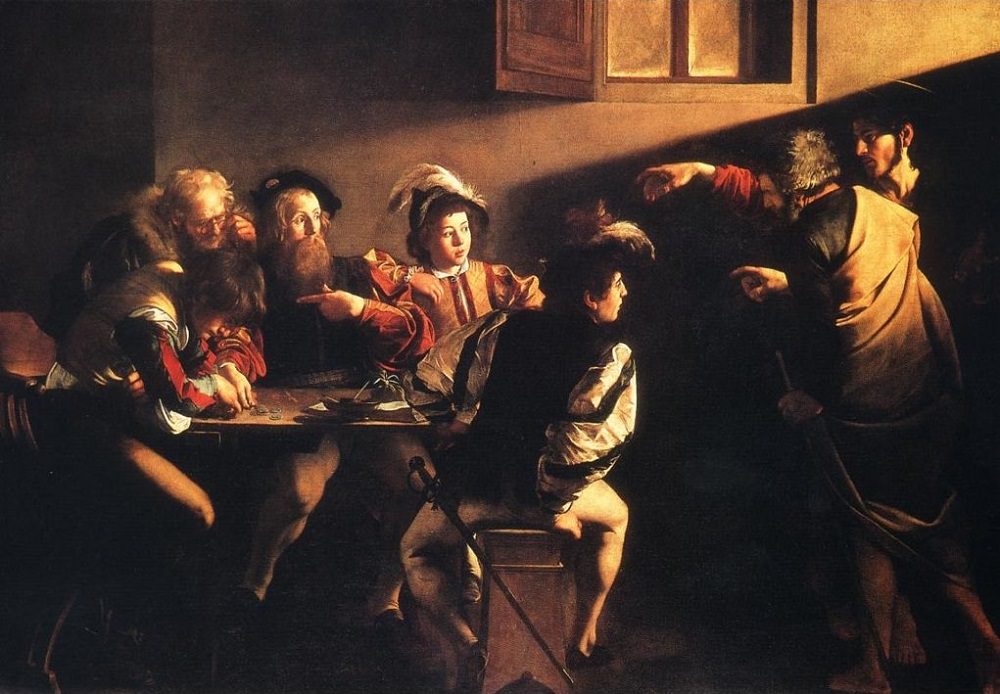
Caravaggio’s famous painting of the call of Matthew by Jesus from wikicommons.org.

In assembling to us three sets of fourteen generations that traced the coming of Jesus Christ from Abraham structured around David, Matthew shows us how God worked through this sinful man a series of new “beginnings” in life, both in grace and in sin. See the genealogy rising from Abraham to David, then its decline and descent from Solomon to the Babylonian Exile, and then rising again to the advent of Jesus.

Now try to imagine how great and loving is our God and Father who chose to believe in David, a person just like us with many imperfections and prone to sins! See His power and holiness in setting any sinful situation for new beginnings of grace and blessings.


Sometimes,
God uses our occasions of sins
as new beginnings 
of His grace and blessings.

One thing I have realized in life is that our most unforgettable moments happen either when we are nearest, or farthest away from God.

This is very amazing. Consider when are we closest to God? Most often that is when we were high and good, feeling blessed and loved, when healthy and successful that were ironically the times we rarely thought of God. We only remember those moments as our closest with God after being away in fact from Him!

And when are we farthest from God? Quickly we say when we were deep in sin, when lost, or when unloved and misunderstood.

Between these two moments, it is most often when we are farthest from God that is always most unforgettable, the ones we remember always, the ones that have left the deepest cut in us because those times in turn have become occasions for us to begin anew in God!

Like David. Or Matthew known before as Levi the tax collector.

Photo by author of the Lake of Galilee shortly after sunrise, May 2019.

That is how God sometimes would make it for us to begin anew in Him! See how at the first set of fourteen generations from Abraham to David, we find the whole history of Israel so close with God punctuated by Egypt and Exodus when their sins “turned” into their favor. In the second set of fourteen generations from Solomon to the Babylonian exile, the Israelites sank into their lowest point in history when led by their kings they turned away from God, worshipping idols. But, God did not abandon them as we see in the third set of fourteen generations when things got better as the Israelites returned to God and to their Promised Land reaching its high point in Jesus Christ’s birth.

God is the beginning of everything and even if we try to “end” with our many sins what He had began, He always finds ways to begin anew even when we are so far away from Him.

This is also the meaning of the Jacob’s choice for Judah over his other sons in being the tribe to continue his family line leading to the fulfillment of the Davidic lineage in Jesus Christ. It was from Judah came the name of their religion “Judaism” even if Judah was not the best and holiest of Jacob’s sons. Joseph the Dreamer must have been the wisest choice as more suitable to have been blessed by their father or by God himself but, that is not the way of God.

By starting his gospel with the line “The book of the genealogy of Jesus Christ, the son of David, the son of Abraham”, Matthew shows us God’s total power and goodness as source and beginning of all good things who also has the last and final say in everything.

In the genealogy of Jesus, we are reminded that every day is a new beginning in God, right in our darkness and sin, in our sickness and pandemic. David like Judah may have sinned so great before God but His mercy and love proved greater than their sins that they were able to rise again to become better and holier in His grace.

That’s one great beginning we can start right here, right now in our Simbang Gabi! A blessed Thursday to you! Amen.
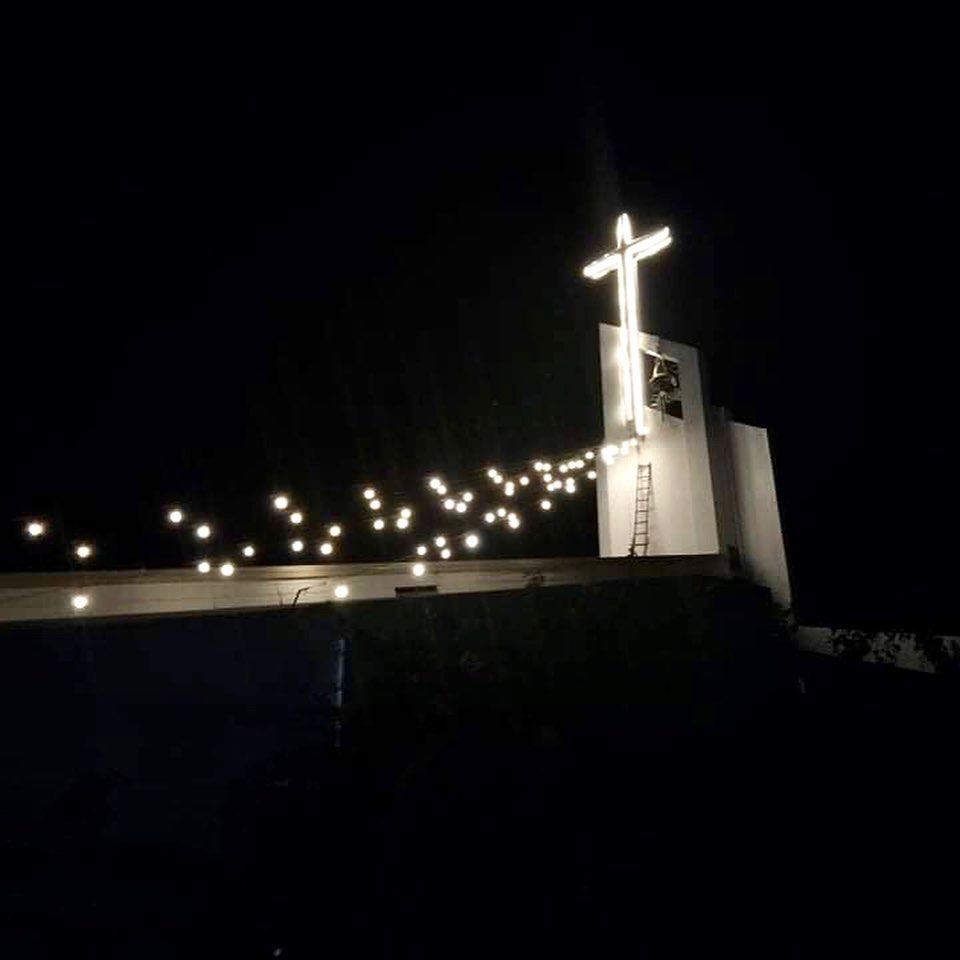
Photo by Marc Angelo Nicolas Carpio, our Parish at night, 29 November 2020.

“Wake Up Everybody” by Harold Melvin & the Blue Notes (1975)

The Lord Is My Chef Sunday Music by Fr. Nick F. Lalog II, 06 December 2020
Photo by Dr. Mylene A. Santos, MD, Katmon Harbor Nature Sanctuary, Infanta, Quezon (03 December 2020).

Finally got a song so perfect for this Second Sunday of Advent that speaks so well of being awake, awaiting judgement day by leading a life of loving service to others. It peaked on top of the Hot Soul Singles chart of 1976 for two weeks that launched the careers of some of the big names in R&B during that great decade of 1970’s.

My dear readers and followers, welcome Harold Melvin and the Blue Notes doing the original version of Wake Up Everybody.

Wake up everybody no more sleepin' in bed
No more backward thinkin' time for thinkin' ahead
The world has changed so very much
From what it used to be
There is so much hatred war an' poverty
Wake up all the teachers time to teach a new way
Maybe then they'll listen to whatcha have to say
'Cause they're the ones who's coming up and the world is in their hands
When you teach the children teach em the very best you can

The world won't get no better if we just let it be
The world won't get no better we gotta change it yeah, just you and me

Since its release in 1975, Wake Up Everybody has been covered by other artists not only in the US but also in Great Britain and France. During the 2004 US elections, it was covered by various prominent R&B artists with some rappers to urge young people to go out and vote. John Legend also did a cover of the song in 2010 with The Roots featuring Common and Melania Fiona.

Perhaps because of its theme and lyrics, the song has always been considered as political but, hey! even Jesus and John the Baptist were also accused of political leanings in their preachings about truth, dignity of every person, and value of life!

It is said that music is the food of the soul that when a song is so true and really good, it will always present the gospel values of Jesus Christ which is the case in most protest songs of the 60’s and 70’s like Wake Up Everybody.

See how the composers of this classic – John Whitehead, Gene McFadden, and Victor Carstarphen -have consciously or unconsciously incorporated Advent thoughts and theology in Wake Up Everybody that is still so true today:

Wake up all the doctors make the ol' people well
They're the ones who suffer an' who catch all the hell
But they don't have so very long before the Judgment Day
So won'tcha make them happy before they pass away
Wake up all the builders time to build a new land
I know we can do it if we all lend a hand
The only thing we have to do is put it in our mind
Surely things will work out they do it every time

The world won't get no better if we just let it be
The world won't get no better we gotta change it yeah, just you and me

Next to the lyrics, what makes this song so Advent-ish is its slow and cool instrumentations at the beginning of the song that bursts under control with the soothing voice of the late Teddy Pendergrass taking over, sounding so calming yet hits hard through one’s inner core without being preachy either.

That is how Advent happens: Jesus comes to us whenever we proclaim and embrace his gospel of repentance, doing what is right and good to everybody, when we wake up from our life of sins and evil, and indifference with others.

Listen, and wake up to this classic piece and have a blessed Second Sunday of Advent!

Posted on Youtube by yxyoic in 24 September 2011; licensed to YouTube by SME (on behalf of Epic); ARESA, BMG Rights Management (US), LLC, CMRRA, BMI – Broadcast Music Inc., Warner Chappell, PEDL, LatinAutorPerf, LatinAutor – Warner Chappell, UNIAO BRASILEIRA DE EDITORAS DE MUSICA – UBEM, LatinAutor – SonyATV, LatinAutor – UMPG, and 7 Music Rights Societies.

Advent is renewing friendship with Jesus

The Lord Is My Chef Breakfast Recipe for Soul by Fr. Nicanor F. Lalog II
Thursday, Memorial of St. Francis Xavier, Missionary, 03 December 2020
Isaiah 26:1-6 >><}}}*> >><}}}*> >><}}}*> Matthew 7:21, 24-27
Photo by Mr. Red Santiago of his son while praying in our Parish, November 2019.

Thank you very much, God our loving Father in continuing to keep us, in gathering us together as family, as friends, as a community despite our many sins and failures, most especially in the midst of these trying times.

Like the remnants of Israel thrown into exile in the first reading, you have gathered us in Jesus Christ as our “strong wall and rampart” (Is.26:1), protecting us, blessing us, befriending us.

Let us not make same old mistake again like your chosen people thrown into Babylonian exile who worshipped you only with lips:

Jesus said to his disciples: “Not everyone who says to me, ‘Lord, Lord,’ will enter the kingdom of heaven, but only the one who does the will of my father in heaven.”

Matthew 7:21

In this Season of Advent, let us rediscover you anew, Jesus, our Lord and Savior. Help us renew our friendship in you by cultivating a prayer life that is consistent because friends always communicate, they always listen and speak to each other.

Sorry, Lord, for ignoring your words for so long, listening more to empty words of media than to your words that are performative or life-changing as Pope emeritus Benedict XVI used to say.

Most of all, friends not only talk and listen — they love each other.

Teach me to be truly wise, dear Jesus, to love more in deeds than in words.

Teach me to have my life founded on you, rooted in your love like St. Francis Xavier whose memorial we celebrate today for having accomplished so much against all odds because of his love for you and for people scattered in the Far East, hungry for your words.

Fill my heart with your love so that like St. Francis Xavier, I may be “stirred to meditate on spiritual realities, to listen actively to what God is saying to me… that I may forget my own desires, my own human affairs and give myself over entirely to God’s will and choice that my heart would cry out: Lord I am here! Send me anywhere you like!” (adapted from a letter by St. Francis Xavier to St. Ignatius).

St. Francis Xavier, pray for us! Amen.

Christ the King: never imposing, always inviting

The Lord Is My Chef Sunday Recipe for the Soul by Fr. Nicanor F. Lalog II
Solemnity of Jesus, King of the Universe, 22 November 2020
Ezekiel 14:11-12, 15-17  >><)))*>  1Corinthians 15:20-26, 28  >><)))*>  Matthew 25:31-46
Photo by author, Chapel of the Graduate School of Theology, ICMAS, Guiguinto, Bulacan, 11 November 2020.

We Filipinos have a saying – sometimes taken as a riddle (bugtong) – that goes, “Utos ng hari, hindi mababali” that literally means the command of the king is unbreakable, always absolute.

Kings exist primarily to unite and help the people especially the weak, the suffering, and the voiceless; hence, kings are portrayed with strong bodies as well as sound minds to render justice. But, as we all know, power corrupts people that once kings like politicians have tasted the sweet elixir of authority and fame, everyone and everything is forgotten except one’s self interests.

And that has always been how kingship is seen based on power and supremacy, always imposing and domineering, insisting in their “power trips” that lead to divisions among peoples even nations that eventually, instead of serving others, they become the ones being served.

Exactly the opposite with the kingship of Jesus Christ that is not based on human power and authority but on the loving service of others, especially the weak and the marginalized. It was a radical move, of moving back to the very roots of kingship by God himself as prophesied by Ezekiel in the first reading. No wonder in Israel, kingship is closely seen in the imagery of shepherding.

Thus says the Lord God: I myself will look after and tend my sheep. As a shepherd tends his flock when he finds himself among his scattered sheep, so I will tend my sheep. I will rescue them… I will pasture them… I will give them rest… The lost I will seek out, the strayed I will bring back, the injured I will bind up, the sick I will heal…

Ezekiel 34: 11-12, 16

This is the essence of our celebration today of the Solemnity of Christ the King: Jesus is in the other and within us, the Emmanuel or “God-is-with-us” that the greatest honor we can give him as our King is to lovingly serve him in one another. See our many images in art of him suffering and dying than regal as a king because Jesus is truly one with us in our most difficult and trying times. That is why he is the only one truly a king!

“Ecce Homo” by Murillo, from wikipediacommons.com.

Christ the King grounds us to God and others again

When Pope Pius XI instituted this feast in 1925, the world was going through a lot of changes in every sphere of human life – for better and for worst – following the many advances in science and technology as well as in thoughts and ideas.

This continues to this day in our own age with its own twists that are more pernicious with everyone trying to reign supreme as kings and queens in life no longer with a scepter that was like a “magic wand” to get everything done but with the cellphones that can either build or destroy anyone with the slightest touch of ones’s fingers!

How sad that as the world had shrunken into a global community interconnected by modern means of communications invented to bring us all together, we have actually grown more apart from each other, polarizing us even further with every color of the rainbow signifying so many groups, agenda, and beliefs.

Worst of all, with these modern means of communications, we have become more focused with gadgets and things than with persons.

What an irony that we can be so close with those miles apart from us yet we hardly notice nor even recognize the persons seated next to us. Long before COVID-19, we have always been socially distant from each other, have always failed to appreciate or even look at the warmth and beauty of the human face now covered with a mask because we have always been “washing our hands”, escaping from our responsibilities as our brothers and sisters’ keepers.

See how in our readings this Sunday Jesus Christ is reminding us to go back to our solid grounding in God who dwells in each one of us.

Jesus said to his disciples: “When the Son of Man comes in his glory, and all the angels with him, he will sit upon his glorious throne, and all the nations will be assembled before him. And he will separate them from one another, as a shepherd separates the sheep from the goats.

Matthew 25:31-32
Photo by John Bonding, Architecture&Design Magazine, 25 May 2019 via Facebook.

I have always loved this photo above that speaks perfectly well of our situation today, of how most of us are missing so much in life when everything is “media-ted” that we no longer touch ground as if we are “floating on air” with everything reduced to a mere show or “palabas” that must be caught, kept, and shared in Instagrams instead of being enjoyed in our collective memories.

More tragic is the fact how most of these are often fake and not true at all, leaving many of us empty, even alienated that have resulted in many instances of depressions and suicides.

What an irony when everybody is claiming to be their own king or queen and master, of being free from religions and God, the more they have become unfree and empty! The more our egos and self-interests reign, the more chaotic we have become with peace and fulfillment most elusive.

When Jesus is our only King reigning in our hearts and relationships, that is when we find fulfillment in our lives as we discover our rootedness in God and interconnectedness with others.

When Jesus spoke of separating the goats and the sheep, we are reminded of how these animals can sometimes be indistinguishable — exactly like when we fail to recognize our loved ones and persons nearest to us.

And true enough, even Jesus has become indistinguishable among us right in our homes and most of all, among the suffering people like the hungry and thirsty, the strangers and homeless, the sick, the poor we have stripped not only of their clothings but also of their dignity as persons, and those imprisoned.

Recall what Jesus told Pilate at his trial, “You say I am a king. For this I was born and for this I came into the world to testify to the truth…” (Jn.18:37) that “God is love, and whoever remains in love remains in God and God in him” (1Jn.4:16).

All this comes to full circle today as Jesus tells us, “Amen, I say to you, whatever you did for one of these least brothers of mine, you did for me” (Mt.25:40) and “what you did not do for one of these least ones, you did not do for me” (Mt.25:45).

Jesus will surely come again

As we have reflected these past two Sundays, Jesus is coming again at the end of time to judge us if we have been faithful and loving to him through others. He himself assures us of his return as he declared When the Son of Man comes in his glory” and not the conditional If the Son of Man comes”.

The key is not to know the when and how but to be vigilant, of being awake, always finding Jesus our king with the least among us which is the truest sense of kingship — never imposed on others but always recognized and imitated. In Filipino, “sinusunod, sinusundan at tinutularan; hindi nasusunod”.

St. Paul reminds us anew in the second reading how Jesus Christ’s death on the Cross had decisively won over sin and death; but, he is coming again to fully establish his kingship when he vanishes sin and death completely to pave the way for new heaven and new earth.

When he comes again, will anyone recognize him among the poor and suffering like the hungry and thirsty, the sick and imprisoned, the strangers and homeless, and the naked? May we all have the eyes of a child who sees God in everyone and everything! Amen.

A blessed Sunday to you all!

Photo by a parishioner of his son, Red Santiago, praying in our parish, November 2019.

“Be Thankful for What You Got” cover by Pepe Marquez (2019)

The Lord Is My Chef Sunday Music by Fr. Nick F. Lalog II, 15 November 2020
Photo by author, after the floods, typhoon Ulysses, 12 November 2020.

We try to be subdued and sober this Sunday in thanksgiving to the gift of life as we remember and pray too for our brethren in Cagayan and Isabela suffering from the worst floods in decades after typhoon Ulysses pummeled our region this week with heavy winds and rains.

Here is Mexican Pepe Marquez and his band for his cover of William DeVaughn’s 1972 soul song “Be Thankful for What You Got” that was released two years later in 1974, selling almost two million copies as it reached #1 on the US R&B chart and #4 on the Billboard Hot 100 chart that year.

There are other versions of this cool, cool music notably by Curtis Mayfield who had actually influenced DeVaughn in this song; thanks to Manny Pagsuyuin who shared me this music recently that I now prefer than the other covers for its superb percussions and instrumentations plus Marquez’s trademark videos of classic cars.

The song is so simple with gospel-like lyrics that remarkably hit home specially in a time of calamity like this when we have to be sensitive with others’ sufferings.

Most of all, despite its oft-repeated line “Diamond in the back, sunroof top, diggin’ the scene, with a gangsta lean”, the music is so clean and crisp with its second part reminding us that of all that we have, the most precious are our loved ones.

Part of the Lord’s message today in being vigilant for his return is for us to be thankful for everything we have because he gives us according to our abilities. It is not how much or how little we have in life but how we make use of it that matters.

How sad we only realize this after a calamity or a crisis in life.

Let’s make it a habit to be thankful daily for our gifts, use them wisely in serving others as we thank and praise God for his goodness. A blessed Sunday, everyone. Amen.

Directed by: Pepe Marquez & Carlos Guillen with Gabriella Guillen for LA CIMA MUSIC along with Cj Infinito & Carlos Alvarez Aragon for CJ Infinito Productions. #lacimamusic Featuring: Jeff Lewis on Trumpet – Dora Sanchez on Vocals & Lorenzo Martinez on Percussion. Album available on, Spotify, cdbaby, Amazon Music and all digital download sites. https://www.facebook.com/pepe.marquez.33

On leaving and living

Quiet Storm by Fr. Nick F. Lalog II, 09 November 2020
Photo by Dr. Mylene A. Santos, MD, 30 October 2020.
I have always believed
life is more on coming
than on leaving 
because 
whenever we leave,
we also come.
But, 
there is something
about leaving 
that makes 
it strongly felt 
than coming:
from the pain of leaving
follows emptiness -
the angst of still living
when someone is missing.
Most painful part of leaving
is when you are the one left behind;
it is the one who leaves
who actually comes
to somewhere else
while the one left
bears the scars
of leaving,
like grappling
with the unseen
presence
of nothing
but memories
gone 
with the one who had left
who might never come again.
But, I think
it is when leaving 
is truly hurting
that it turns into a coming -
an arrival 
of blessing
of opening 
to a new lease on life 
and living when we discover 
somebody anew
filling what's missing within 
not necessarily seen
that together we spin
a new thread in life again.
The other person
gone is never replaced
by a newfound one;
that's the beauty
of every leaving
and coming
when we leave
in order to come
creating a space
for a new one
until it leaves again
to come another one
until finally
we become one in the Only One.

Friendships should depend on nothing like TIME and SPACE. Remove TIME and what we have is NOW; remove SPACE and what we have is HERE. Don’t you think we could meet once or twice between NOW and HERE?

Richard Bach, Jonathan Livingston Seagull (1970)
Photo by Dr. Mylene A. Santos, MD, 07 November 2020.

Kailan ako tunay nagmamahal?

Lawiswis ng Salita ni P. Nicanor F. Lalog II, Ika-03 ng Nobyembre 2020
Larawan kuha ng may-akda, gayak ng aming parokya, Nob. 1-2, 2020.
Madalas aking ipinapalagay
bilang bahagi ng buhay 
itong pagmamahal
ako nama'y nakagaganap,
nakatutugon sa hamon.
Nguni't ano nga ba talaga
ang magmahal at kailan ako
tunay na nagmamahal?
Napakadali na maging mabuti 
sa iba, magtimpi ng sarili,
magparaya at magpalampas;
mahabag at maawa na kusang 
tutulo ang luha,
umakay at sumabay sa mahihina,
magmalasakit maski sa walang sakit.
Kailan nga ba
ako tunay na nagmamahal,
tanong ko sa sarili noon pa man;
maski mga kaibigan
mga pinapayuhan
sa simbahan
o saan pa man
iyan ang palaging katanungan
na ano mang kasagutan
ay siyang buod at kabuuang
kahulugan ng pagmamahal
di lamang ng mga magkasintahan
o magsing-ibig
kungdi ng sino mang nilalang
ng Diyos na pag-ibig.
Noon ay
palagi kong sinasabi
mula sa limitado kong karanasan
na aking inihahabi,
pinagtatagpi-tagpi
sa mga napag-aralan
at napagnilayan
na tunay ka lamang nagmamahal
kapag ika'y nasasaktan
dahil kung wala ka nang nararamdaman
mas malamang
pusong bato
ang nariyan sa iyong dibdib,
di lamang manhid
kungdi patay at malamig.
Hindi natapos
aking pag-aasam
malaman at maranasan
kung kailan nga ako
tunay nagmamahal;
maraming karanasan
aking pang dinaraanan
dahan-dahan, unti-unti
naliliwanagan na
tunay akong nagmamahal
di lamang kapag ako'y nasasaktan
kungdi dama ko man
aking kawalan
sa kakayahang ibsan maliban samahan
kapatid kong nahihirapan.
Tunay akong nagmamahal
kung aking pipiliing mahalin
ang iba kesa akin;
 hindi na daraing
kungdi sasarilinin
at aangkinin pati tiisin
mga iyak at hinaing
ng ginigiliw
 at kung maari ay pasanin
kanilang mga dalahin.
Sa kahuli-hulihan
batayan pa rin ng pagmamahal
ang masaktan --- kung hanggang saan,
hanggang kailan doon malalaman
yaring lalim at kadalisayan.
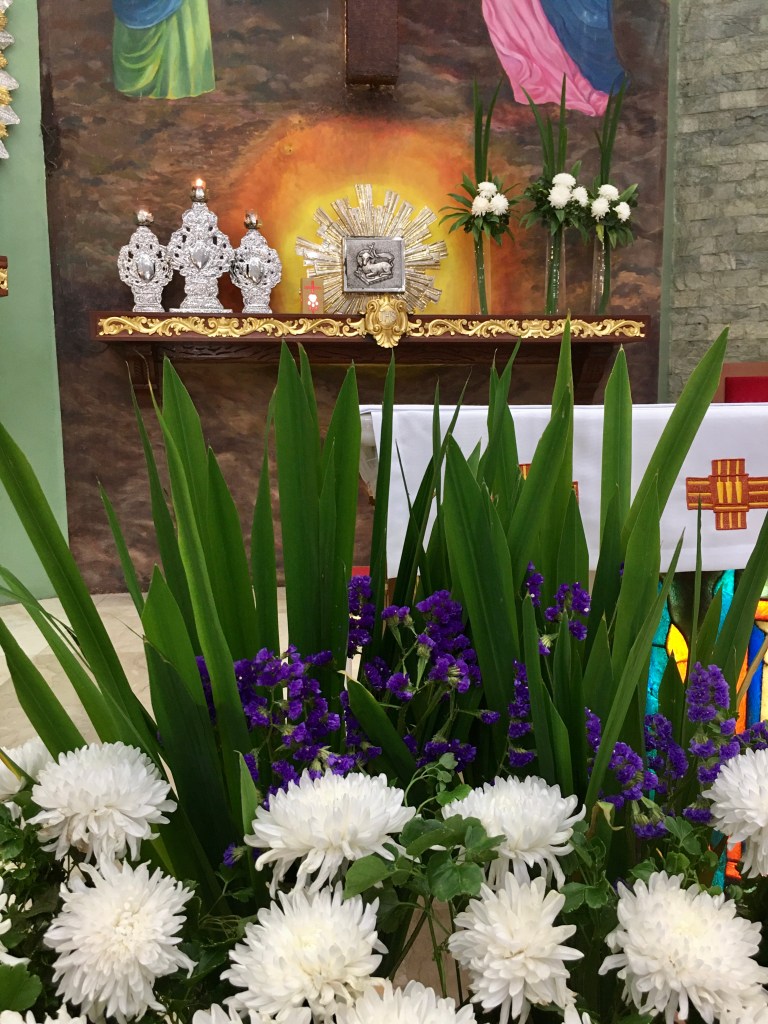
Larawan kuha ng mga may-akda, gayak ng altar ng parokya, Nob.1-2, 2020.

The Body of Christ

Quiet Storm by Fr. Nicanor F. Lalog II, 28 October 2020
Photo by Pixabay on Pexels.com
Everyday 
I hold your Body
for every-body to see
saying again your words
on the night before you were betrayed:
"Take this, 
all of you, 
and eat of it,
for this is my Body,
which will be given up for you."
THIS IS MY BODY.
We have studied and learned
theology of your Body
but it was only lately
after I have held
someone's body
with a malady
so sick, so weak, and untidy
have I truly felt your Body.
The nobility and beauty,
the awe and wonder
of holding your Body
dear Jesus came to me
after I have given up my own body
to some-body
in need of my body.
Oh, how I felt your Body
next to me after I have held another body;
it was just the tip of my fingers
touching you but as I looked at you
I felt you in my whole body
filling me with your mystery
unfolding daily in the liturgy;
why did I not see, was it due to apathy,
when some-body comes to me
and treats him a no-body? 
Photo from Reuters/Lucas Jackson via The Economist, 2019.

Jesus in our relationships

The Lord Is My Chef Breakfast Recipe for the Soul by Fr. Nicanor F. Lalog II
Tuesday, Week XXX, Year II in Ordinary Time, 27 October 2020
Ephesians 5:21-33     +  >><)))*>  +  >><)))*>  +  >><)))*>  +     Luke 13:18-21  
Photo by Mr. Jim Marpa, 2018.

Brothers and sisters: Be subordinate to one another out of reverence for Christ.

Ephesians 5:21

What a beautiful admonition to us all this day by St. Paul and a wonderful prayer too to you, O God our Father that we need to pray more often in our world where relationships are getting complicated, very fleeting, and sometimes misleading and hurting.

May Jesus Christ be revered as basis and foundation of our every relationship in life so that the ties that bind us as couples, families, siblings and society may become more human, more loving, and more faithful.

So often, we look down upon your words as too old-fashioned and even outdated for the present situation like the defined codes of relationships St. Paul talks about in his Letter to the Ephesians; but, the sad truth is we have only changed the language nuances to make us sound more just these days without really removing the old obligations of the weaker ones with the stronger ones, like wives to husband, children to parents, and slaves to masters.

Grant us wisdom through the Holy Spirit to base all our relationships only in Jesus Christ who had come to bring us closer to you, God our Father.

May we find the value of many little things we take for granted like respect and being fair so essential in our relationships with everyone beginning in our homes, in our family circles where the kingdom of heaven always begins. Amen.

“Alfie” by Dionne Warwick (1966)

The Lord Is My Chef Sunday Music, 25 October 2020
Photo by Dr. Mylene A. Santos, MD, Katmon Harbor Nature Sanctuary in Quezon, 2020.

Sorry for being away these past four weeks without any secular music inspiration for our Sunday gospels. Hoping to make up with you my dear Reader on this partly cloudy and warm Sunday with a classic song from a 1966 movie that starred Michael Caine, Alfie.

Written by the highly successful duo of Burt Bacharach and Hal David, sang and recorded for the said movie by their favorite interpreter Dionne Warwick, Alfie gives in its opening stanza the questions that create the drama of this 1966 film about a self-centered playboy who cared only for himself, using the people around him for his own gratification and satisfaction.

I have not seen the original 1966 film except its 2004 remake starring Jude Law that I find too “sleazy” that lacked what I suppose as the British “touch of class” and deep drama found in Caine’s starrer.

Nonetheless, we have chosen this song because of our Gospel this Sunday when a scholar of the law challenged Jesus with the question “which commandment in the law is the greatest”. Jesus answered the question so well by taking us all to the very foundation of all laws which is loving God with one’s total self expressed in loving others as we love our selves.

Here we find Jesus doing away with our legalisms that focus on the letters and individual laws and commandments, summing them all in love (https://lordmychef.com/2020/10/24/the-test-of-love/).

Jesus “passed the test” by the Pharisees and the question now is, how do we fare in the same test of love?

Do we love enough?

And that is why we have chosen the song Alfie that speaks so well of the same question.

There is a very interesting line in the song’s second stanza that relates perfectly well with Jesus Christ’s summary of the laws into love of God expressed in love of others:

And if only fools are kind, Alfie
Then I guess it’s wise to be cruel
And if life belongs only to the strong, Alfie
What will you lend on an old golden rule?
As sure as I believe there’s a heaven above, Alfie
I know there’s something much more
Something even non-believers can believe in

For years, many listeners including artists like Ms. Barbara Streissand have been baffled with the possible meaning of that line “What will you lend on an old golden rule?”; it has always been interpreted in so many ways despite Mr. David’s admission it meant nothing at all but just a line to fill in Mr. Bacharach’s music.

In that case, all the more we find how music is indeed more of the soul, touching our hearts with its deep meanings that transcends our physical world, giving us a glimpse of the Divine, of a personal and relating, loving God.

I believe in love, Alfie
Without true love we just exist, Alfie
Until you find the love you’ve missed you’re nothing, Alfie
When you walk let your heart lead the way
And you’ll find love any day, Alfie
Alfie …

The problem with love, my dear Reader and Friend, too often our words are not enough to truly express it. Most often, when we love, we just have to love, love, and love!

A lovely and loving week to everyone!

Provided to YouTube by Rhino Alfie (2013 Remaster) · Dionne Warwick Playlist: The Best Of Dionne Warwick ℗ 1967 Scepter Records Producer: Burt Bacharach Producer: Hal David Writer: Burt Bacharach Writer: Hal David Auto-generated by YouTube.