Lent is “seeing” Jesus

40 Shades of Lent by Fr. Nicanor F. Lalog II
Fifth Sunday in Lent-B, 21 March 2021
Jeremiah 31:31-34  +  Hebrews 5:7-9  +  John 12:20-33
Photo by author, details of the Seventh Station of the Cross at the St. Ildephonse Parish Church in Tanay, Rizal, January 2021.

In the beautiful church of the town of Tanay in Rizal is found a most unique Seventh Station of the Cross where one of those depicted when Jesus fell for the second time is a man with dark glasses looking afar. Local residents say the man with sunglasses is Caiaphas, the chief priest during the time of Jesus who led the Sanhedrin at his trial leading to his crucifixion.

Nobody can explain exactly why the artist portrayed that man wore sunglasses that was popular among people of stature and position in the country when the carving was made in 1785. Also interesting aside from the man in shades are the soldiers with him shown with Malay features of brown color and wide eyes opened, all looking somewhere except for one looking at the Lord while clutching his garment as he fell looking heavenwards.

I remembered this piece of work of art inside the Tanay Parish Church declared by the National Museum as “National Cultural Treasure” because our gospel today speaks about a request by some pagans to see Jesus. Seeing has many meanings, always leading to believing. And sometimes, it is in believing we are able to see most of all!

Some Greeks who had come to worship at the Passover Feast came to Philip, who was from Bethsaida in Galilee, and asked him, “Sir, we would like to see Jesus.” Philip went and told Andrew; then andfrew and Philip went and told Jesus. Jesus answered them, “The hour has come for the Son of Man to be glorified. Amen, amen, I say to you, unless a grain of wheat falls to the ground and dies, it remains just a grain of wheat; but if it dies, it produces much fruit. Whoever loves his life loses it, and whoever hates his life in this world will preserve it for eternal life.”

John 12:20-25

Seeing to believe

Photo by Dr. Mylene A. Santos, MD, Infanta, Quezon 2020.

As we have been mentioning three Sundays ago, the fourth gospel uses poetic expressions and symbolisms to convey deeper truths and realities about Jesus and our very selves, our having or lacking faith in God. Like the act of seeing by those Greeks who requested Philip “to see Jesus”.

If they simply wanted to catch a glimpse of Jesus, they could have easily seen the Lord who was always at the temple area at that time. Jesus had always been available to everyone like last Sunday when Nicodemus went to see him at night.

But, John often used the verb to see in many senses that also mean to believe like in his appearance a week after Easter to his disciples along with doubting Thomas: Jesus said to him “Have you come to believe because you have seen me? Blessed are those who have not seen and have believed” (Jn.20:29).

Most mysterious for me in John’s use of the verb to see is in the call of the Lord’s first disciples led by Andrew: He said to them, “Come, and you will see.” So they went where he was staying and saw where he was staying… Andrew followed Jesus. He first found his brother Simon and told him, “We have found the Messiah” (Jn.1:39-41).

What did Andrew see that he later told his brother Simon that they have found the Messiah?

Of course, John’s most notable use of the verb to see is from that scene at the empty tomb on Easter Sunday when the perfect model of the believer is the “other disciple” whom Jesus loved “went in, and he saw and believed” (Jn.20:8).

Very clear in the mind of John that the request of those Greeks to see Jesus was one of faith, of meeting and speaking with Jesus to be enlightened more like Nicodemus last Sunday. Here we find our important role of being another Philip and Andrew, leading other people to see Jesus.

Those Greeks described as “God-fearing” were pagans attracted to the teachings of Judaism and came to Jerusalem to observe the Passover Feast. They already have faith in God that must have been awakened further when they heard the teachings of Jesus; hence, their request to see Jesus.

It happens so often that when by the grace of God people are illuminated with faith even in the most personal manner, they still need Philips and Andrews who would enable them “to see” Jesus to grow and be deepened in faith. There will always be a need for an apostle who could lead others to “see” Jesus because faith happens within a community, within the Church and through others’ mediation.

And here lies the bigger challenge for us disciples for us to make Jesus “seen” in our lives and in our community.

Believing to see.

Photo by Onnye on Pexels.com

Jesus answered them, “The hour has come for the Son of Man to be glorified. Amen, amen, I say to you, unless a grain of wheat falls to the ground and dies, it remains just as a grain of wheat; but if it dies, it produces much fruit. Whoever loves his life loses it, and whoever hates his life in this world will preserve it for eternal life. Whoever serves me must follow me, and where I am, there also will my servant be. And when I am lifted up from the earth, I will draw everyone to myself.” He said this indicating the kind of death he would die.

John 12:23-26, 32-33

In a sudden twist, John tells us nothing if those “God-fearing” pagans saw Jesus at all because the Lord immediately went on a discourse after being told by Andrew and Philip of the request, briefly interrupted by God’s voice speaking from heaven that everybody heard in the temple area.

Speaking in the parable of the grain of wheat dying first in order to produce much fruit, Jesus tells us how we can lead others to truly see him in us and through us by having the same determination and perseverance to follow him, stay with him, and be like him by dying to ones self for others. For the grain of wheat to die and spring forth to new life, it has to be detached. And so are we.

Notice Jesus repeating that sign of his being lifted up on the cross he mentioned last Sunday to Nicodemus. John mentions it again in this part of his gospel adding an explanation at the end because for him, the Crucifixion is Christ’s greatest sign and revelation of his glory, opening a path for us back to God in his Cross, through his Cross.

In teaching us about the parable of the grain of wheat dying and linking it with his being “lifted up”, Jesus now tells us and every “God-fearing” person that we can only “see” him in the scandal of the Cross.

Did those God-fearing Greeks remained in Jerusalem and saw Jesus on the Cross?

We do not know but we are sure that anyone who requests to see Jesus always sees him if we believe first in his crucifixion which is when everyone is drawn to him as he had said. We must first believe Christ died so we may see him risen to life.

It was on Christ’s dying on the cross when God established a “new covenant” among us as prophesied by Jeremiah in our first reading today, giving us all an access to him in Jesus, through Jesus, with Jesus which we celebrate daily in the Holy Eucharist.

Photo by author, 2020.

Grappling with death to see life

We have never seen the crucifixion of Jesus except in its portrayals in the many movies we used to watch in Holy Week; but, its realities are etched and impressed in our hearts through the many trials and difficulties we have gone through in life that we believe Jesus truly died. And because of that, we have also seen him alive!

Such is the reality of seeing Jesus that every time we describe something so difficult, so trying, we equate it with death like when we say “we felt like dying” taking the exam. And the good news is when we overcome the tests that we use again the word or concept of death to describe something so good as it leads us to glory like when we say a pizza or a steak or a cake to die for.

Such is the paradox and scandal of the Cross of Jesus: we can never see him risen in glory if we avoid and refuse seeing his Passion and Death right in our own selves, in our painful experiences.

Going back to that unique Seventh Station of the Cross at the Tanay Parish Church, I realized how the unbelievers and others among us could not see Jesus as the Christ because they have refused to believe in him first especially when they are down with all kinds of problems and trials, looking somewhere else instead of seeing Jesus fallen in front of them.

Let us believe in Jesus so we may see him in this final week of Lent as we prepare for Palm Sunday next. Amen.

A blessed week to everyone!

Photo by author, January 2021.

The colors of Lent

Quiet Storm by Fr. Nicanor F. Lalog II, 16 March 2021
Lately
 I have been feeling gladly
at how the Lord is blessing me abundantly
showing me daily
how life is a journey like Lent
bringing me to desert and valleys
where me and the holy
parry attacks by the wily
making me see the beauty
of colors mixed playfully
in a huge tapestry
woven in mystery.
What I like most in Lent
is its shades of violet
calling us to repent and relent
our ways of evil and sin
so we begin to see God again
in the face of every human being;
if Lent were a palette of spirituality,
imagine mixing white of the Father's purity
with Christ's love colored red so bloody
then everybody shall rejoice in ecstasy
with colors bursting in pink so rosy
as Easter promises it to be!
Photo by author, Laetare Sunday 2020.

Lent for dreamers

Quiet Storm by Fr. Nicanor F. Lalog II, 05 March 2021
*Homily as Chaplain of Our Lady of Fatima University (OLFU) and Fatima University Medical Center (FUMC) in Valenzuela.
Photo by Dr. Mylene A. Santos, MD, February 2021.

Contrary to a common belief by many, Lent is a season of joy because it is a preparation for Easter, the “mother of all feasts” in our Church.  Although this season calls for intense prayers, contrition of sin, fasting and abstinence, and alms-giving, Lent does not have to be sober nor somber. 

Jesus said to his disciples, “When you fast, do not look gloomy like the hypocrites.  They neglect their appearance, so that they may appear to others to be fasting.  But when you fast, anoint your head and wash your face…”

Matthew 6:16, 17

At the start of this season during Ash Wednesday, I have told you that life is a daily lent, a daily exodus from darkness into light, from sickness into health, from sin into grace and new life. 

During Lent, we are filled with joy as we await our little Easter celebrations in life when we finish all our papers or pass our exams, or achieve whatever goals we have set even in the midst of this pandemic. Lent is a joyful season because it is a celebration of our rising to new life in Jesus Christ.  It is therefore a time for us to dream again, to aspire for the best, to “Rise to the Top” as our motto says at Our Lady of Fatima University and Medical Center.

In our readings today are two great dreamers, Joseph the son of Jacob (aka, Israel) called “the Dreamer” and our Lord Jesus Christ, the one referred to as son of the vineyard owner in our gospel’s parable of the wicked tenants. 

How sad that in our time of social media that have saturated us with too much showbiz and entertainment, many people no longer dream big except to be rich and famous with a lot of money and many “followers”.

Photo by Dr. Mylene A. Santos, MD, February 2021.
Importance of dreaming to become better persons

Lent invites us to dream big again, dream things that really matter in life like being good and holy, being a better person or “Improving Man as Man” minus all the arte and kikay things and porma we are so used to these days.

Yesterday I went to the mall to get my pair of glasses.  I was so surprised to see great crowds seated in about six rows of chairs at the hall with a another row snaking through Watson’s while a guard directed the flow of human traffic with his megaphone.  When I inquired at my optical shop about the crowd, I was shocked to learn that it was all due to a sale of cosmmetics!

I am not judging nor demeaning those people lining up for a sale of cosmetics but, should we not examine our priorities again in this time of pandemic?

When I was still assigned in our diocesan school in Malolos, I used to require my students at elementary to start dreaming what they would want to be when they grow up even while still in grade one.  I tell them to start dreaming while young.  No wonder there are so many young people about to enter college still not certain what course to take or even what to do with his/her life.  

Do not be afraid to dream like Joseph and Jesus or Dr. Martin Luther King Jr with his famous “I have a dream” speech. 

Photo by author, 2020.

Dream big, it is free!  Do not be affected by those without dreams and plans in life.  Watch out for them who may be even those closest to you like family and friends like the brothers of Joseph who “hated him so much that they would not even greet him” (Gen.37:4) he spoke to them of his many dreams in life.

Danger of not having a dream

People without dreams are people without vision, people who cannot see beyond the present moment and the physical realities. 

Helen Keller said “The only thing worse than being blind is having sight but no vision” like the brothers of Joseph as well as the wicked tenants in the Lord’s parable who have no vision of things beyond this life. That is why they did not mind killing their own brother Joseph who was eventually sold or murdering the only son sent by the vineyard owner to collect his share of harvest. 

Here lies the evil of people without dreams in life:  they lack any concern at all to the value of person and of human life. 

People without vision, without plans in life, without dreams have no regard at all with others.  A dreamer is always one who thinks not only of the betterment of his life but also of others.  Dreamers are those who perfect themselves, who seek fulfillment in life, not just material things.  They think of how they can help others in need for they always seek the higher and deeper truths in life.  No wonder, dreamers are also merciful as we shall see how Joseph forgave his brothers for their grave sin against him.

Recently we have started our limited face-to-face classes in our College of Medicine because we are not contented waiting for things to happen, because we dream of something better even in the midst of a pandemic.  Dreamers make things happen, even against all odds like Joseph who never stopped dreaming in God after being sold to Egypt by his brothers.  The Dreamer eventually became the interpreter of the dream of the Pharaoh that led Egypt to adequately prepare itself for the great famine Joseph had predicted. It led to his rise to power and fame in Egypt that later became the fulfillment of his dream as a teenager when his brothers and father came to him to apologize and buy grains.

On Sunday, our graduates are taking the Physician Licensure Exam.  Let us pray for them to have the chance to fulfill their dreams of serving the people as doctors especially in this pandemic.  May they all pass the medical board exam with flying colors. 

It is not enough that we dream big for ourselves but we also share in others’ dreams because ultimately in the end, all our dreams lead us to God our fulfillment in life.  Amen.

Photo by Dr. Mylene A. Santos, MD, February 2021.

Contrasts in Lent, contrasts in life

40 Shades of Lent by Fr. Nicanor F. Lalog II
Thursday, Second Week in Lent, 04 March 2021
Jeremiah 17:5-10   ><}}}*>  +  <*{{{><     Luke 16:19-31
Photo by author at Silang, Cavite, 22 September 2020.

How lovely is the season of Lent with its shades and hues of violets that reveal to us in many beautiful ways, O God, the many contrasts in life, enabling us to see and appreciate its deeper realities and meanings when seen in your light.

Lead us back to you, dearest Lord, and let us stop believing that happiness in life lies in external impressions like wealth, power, and fame but in what is going on in the depths of our heart like believing in you, holding on to you, just having you.

Thus says the Lord: Cursed is the man who trusts in human beings, who seeks his strength in flesh, whose heart turns away from the Lord. He is like a barren bush in the desert that enjoys no change of season, but stands in a lava waste, a salty and empty earth. Blessed is the man who trusts in the Lord, whose hope is the Lord. He is like a tree planted beside the waters that stretches out its roots to the streams. It fears not the heat when it comes, its leaves stay green; in the year of drought it shows no distress, but still bears fruit.

Jeremiah 17:5-8

What a beautiful and simple contrast in this life, so easy to remember yet we also forget or ignore: with you, there is life; without you, no life too.

This reality becomes clearer in the contrasts presented by your Son Jesus in the parable of the rich man and Lazarus whose name means “God has helped” from the Hebrew el azar. No name was given to the rich man for he is more like us, Lord, who lavish ourselves with beautiful and expensive clothings, dining sumptuously in total disregard of Lazarus whose body was covered with sores, licked by dogs, gladly eating the scraps falling from the table of the rich man.

That’s a load of contrasts we take for granted in life yet so obvious though we hardly notice because we remember more what the rich man had without realizing that it was Lazarus who had more life despite his poverty.

Photo by author, August 2020.

Open our eyes, Lord, to the significance and meanings of these contrasts: purple garments and fine linen of the rich man versus the sores covering the body of Lazarus; and sumptuous meals of the rich man vis-a-vis Lazarus gladly eating scraps falling from the rich man’s table.

The rich man relied only to himself with his wealth, celebrated life with things like food and clothes while Lazarus had you in himself, gladly eating scraps from the rich man’s table and going on with life’s sufferings like body covered with sores.

Surely there were other things that eventually brought Lazarus into heaven but clearly, the rich man’s self-indulgence with worldly things and securities that made him forget and totally disregard Lazarus did him big time!

While still here on earth, especially in this season of Lent, may we see the many contrasts in life and choose always where there are more of you, no matter how dark or light it may be. Amen.

Ang buhay ay Kuwaresma

Lawiswis ng Salita ni P. Nicanor F. Lalog II, Ika-23 ng Pebrero 2021
Larawan kuha ng may-akda sa Lungsod ng Jericho, Mayo 2019.
"Noong panahong iyon,
si Hesus ay agad pinapunta 
ng Espiritu sa ilang.
Nanatili siya roon ng apatnapung araw,
tinutukso ni Satanas.
Maiilap na hayop ang naroon 
nguni't si Hesus ay pinaglingkuran 
ng mga anghel" (Marcos 1:12-13).
Kay sarap namnamin tagpong ito
ng panunukso ng diyablo kay Kristo
dahil ganito rin ang buhay natin:
isang paulit-ulit na Kuwaresma
doon sa ilang ng kaguluhan at kasamaan
 sakit at mga pagsubok
sabay-sabay dumarating
kung kailan tayo nagpapakabuti
hindi lmang demonyo umaaligid
pati maiilap na hayop nagbabadya ng panganib
kaya mga problema hindi maubos
ni matapos, wala nang ibang ibig
kungdi makahulagpos
sa maraming tanikala at lubid
sa atin ay gumagapos.
Ngunit kung ating matatalos
pinagdaanan ni Hesus ating Manunubos
doon sa ilang Kanya nang tinapos
kapangyarihan ni Satanas
nang ituro Niya sa atin landas
 ng katatagan nang tayo mismo
ay Kanyang sinamahan sa ilang,
 pinaglingkuran ng mga anghel
upang mapagtagumpayanan
 kasalanan at kasamaan;
ating pagmasdan at pagnilayan
kapag tayo nasa kahirapan at kagipitan
maging kadiliman sa buhay,
saka dumarating si Hesus
hatid mabuting balita ng kaligtasan.
Hindi inalis ng Diyos
 ilang sa ating buhay
bagkus tayo ay kanyang sinamahan
sa paglalakbay, ibinigay kanyang Anak
upang sa atin umagapay, gumabay
pabalik sa kanyang tahanan
at kaharian sa langit
na dito pa man sa lupa
 ay atin nang matitikman, masusulyapan
sa Kuwaresma na ating pinaghahandaan
Pasko ng Pagkabuhay
na ating hinihintay
upang magbigay saysay at kulay
sa nananamlay nating buhay
kaya kay Hesus ating ialay!
Pagkatapos dakpin si Juan,
si Hesus ay nagtungo sa Galilea
at ipinangaral ang Mabuting Balita:
"Dumating na ang takdang panahon,
at malapit na ang paghahari ng Diyos!
Pagsisihan ninyo at talikdan
ang inyong mga kasalanan
at maniwala kayo sa Mabuting Balitang ito" (Marcos 1:14-15).
Larawan kuha ng may-akda, Egypt, 2019.

“Rainbow” by South Border (2003)

The Lord Is My Chef Sunday Music by Fr. Nick F. Lalog II, 21 February 2021
Rainbow appearing during our procession of the Blessed Sacrament last year during the first Sunday of lockdown, 22 March 2020. Photo by Ms. Anne Ramos, Parokya ni San Juan Apostol at Ebanghelista, Bagbaguin, Sta. Maria, Bulacan.

Rainbows are one of nature’s loveliest occurrence that remind us of God’s all-encompassing love for us despite our sinfulness. It is the most enduring and visible sign of God’s promise to love and keep us always despite our being-of-forgetfulness — forgetting God and others, forgetting our promises to be good, forgetting our loved ones.

On this First Sunday of Lent, we find how in the first reading God gave Noah the rainbow as a sign of his covenant to never destroy earth again after the great flood. Only Noah and his family along with the animals inside his ark survived the great flood that cleansed the world of sinfulness. It became the prefiguration of Jesus Christ coming to cleanse us of our sins to be able to lead holy lives anew amid the many temptations in life as seen in today’s gospel.

Jesus in the desert resisting temptations by Satan depicts how life really is, full of contrasts and struggles but always there is Christ helping us, comforting us, strengthening us like a rainbow after every storm.

Eventually on Good Friday when Jesus offered us himself on the cross, he became our rainbow in fact as seen in the shape of his outstretched arms.

And that is why we have chosen South Border’s 2003 hit Rainbow first heard for the movie Crying Ladies.

The song perfectly captures our reflection for this Sunday that life is a Lent, filled with so many contrasts like sufferings and joys, failures and victories, darkness and light.

And in the midst of it all is Jesus Christ journeying with us with life’s many difficulties (https://lordmychef.com/2021/02/20/gods-encompassing-love/).

Fallin’ out, fallin’ in
Nothing’s sure in this world no, no
Breakin’ out, breakin’ in
Never knowin’ what lies ahead
We can really never tell it all no, no, no
Say goodbye, say hello
To a lover or friend
Sometimes we
Never could understand
Why some things begin then just end
We can really never tell it all no, no, no
But oh, can’t you see
That no matter what happens
Life goes on and on
So Oh baby, please smile
Coz I’m always around you
And i’ll make you see how beautiful
Life is for you and me
Take a little time baby
See the butterflies color’s
Listen to the birds that were sent
To sing for me and you
Can you feel me
This is such a wonderful place to be
Even if there is pain now
Everything would be all right
For as long as the world still turns
There will be night and day
Can you hear me
There’s a rainbow always after the rain

The lyrics of this OPM are so Lent, in fact, that you can replace the “rainbow” with Jesus who is our Eternal Rainbow amid all the storms of life. Amen.

Have a blessed week ahead!

From polyeastrecords.

Choosing life is choosing the Cross

40 Shades of Lent by Fr. Nicanor F. Lalog II
Thursday after Ash Wednesday, 18 February 2021
Deuteronomy 30:15-20     ><)))*> + <*(((><     Luke 9:22-25
Photo by d0n mil0 on Pexels.com

Thank you very much, O dear God our Father, in giving us a most unique Season of Lent this 2021in the midst of the COVID-19 pandemic, disturbing us and forcing us to finally examine something we have taken for granted so long: our refusal to make final choices in life.

So many times, we would want to “have our cake and eat it too” wherein we keep on postponing major decisions in life in the hope things would take care of itself, that everything would be better without realizing that the longer we refuse to make a definite choice in life, the more we actually choose something wrong and even wasteful.

Moses said to the people: “Today I have set before you life and prosperity, death and doom… I call heaven heaven and earth today to witness against you: I have set before you life and death, the blessing and the curse. Choose life, then, that you and your descendants may live, by loving the Lord, your God, heeding his voice, and holding fast to him.”

Deuteronomy 30:15, 19-20

Teach us to finally take into our hearts this Lent, O Lord, that to choose life means taking the difficult path of life, your route of the Passion and Death and Resurrection. Life is not about pleasures and comforts, nor lack of responsibilities nor absence of pain and sufferings.

Too often, we are afraid to choose life because we are afraid of responsibilities, of getting hurt, of letting go, and of forgetting one’ s self; hence, we postpone making any choices at all!

Life is lent, a daily choosing of the cross of Jesus Christ in love and respect, humility and justice through others by denying one’s self, taking one’s cross daily to follow the Lord everywhere. Amen.

A Lenten Prayer in COVID-19

40 Shades of Lent by Fr. Nicanor F. Lalog II
Ash Wednesday, 17 February 2021
It is Lent again, Lord;
forty days of prayer
forty days of sacrifices
forty days of good works
forty days of silence and self-control
forty days of preparations for Easter.
Forgive us that we always forget our daily life
is essentially a daily Lent:
a daily exodus of going to the wilderness
filled with temptations 
and calls for fidelity 
to your love and person.
In this time of COVID-19
when so many of us are suffering,
help me, O Lord
not to be carried by feelings
and emotions of the Lenten Season;
give me the courage to see
beyond ordinary things,
to care more and share
even with the least that I have,
to find more reasons
to forgive and understand
most of all, to be fair and just with everyone.
Let me find my way back to you, Lord
in this time when everything and everyone I have
is quickly disappearing or have been gone or lost;
despite the face masks we wear,
let me look more into the eyes
of others to see your image and likeness;
let me wash my hands clean of evil and deceit
as I keep distance from occasions of sins
and most of all, let me empty myself of pride
to realize and experience again
my one and only, first true love is you,
alone, O dearest God.  Amen.
Photo by author, Pulilan bypass road in Bulacan, February 2020.

Road trip in time of COVID-19: the company we keep in life’s journey

Quiet Storm by Fr. Nicanor F. Lalog II, 04 February 2021

We have started this travelogue sharing with you how the Divine — God and music as food of the soul — have guided us in this road trip. He is the Invisible Hand leading us to directions not found on maps nor recognized by GPS, leading us to new discoveries not only to places outside but deep within us.

Let me now share with you the people we have met in this road trip, our companions who enriched our journey.

The word companion is from two Latin words cum + panis that mean “someone you break bread with”, not just someone you travel with but someone you share life with. After all, every journey is not just about places we visit but more of the persons we travel with and meet along the way.

During our first stop at the Baras Church, its sacristan mayor named Alvin told us an interesting story that had allegedly happened at the Pililla Wind Farm before its closure last year due to the COVID-19 pandemic.

According to Alvin, a group of bikers in 2019 allegedly posed half-naked while doing the dirty finger sign with the wind turbines as background. The people at the wind farm felt the place “desecrated” by that act especially after the photos were posted in social media, prompting them to tighten security in the area until the pandemic came that have kept it closed since then.

Though we have no way of verifying Alvin’s story about the “desecration”, it was not farfetched at all considering our penchant for anything notorious and vulgar like – sorry for the terms – kasalaulan and kababayun.

How sad that everything is desecrated and disrespected in our country like a whole environment, public places that include parks and monuments, even churches and schools as well as culture and history, not to mention the people taken for granted especially the weak and marginalized.

But it is not that bad at all. Especially in the province of Rizal where local residents remain warm and hospitable. Most of all, honest and trustworthy.

We were actually laughing because we both did not know how to take selfies…

This we have experienced first hand after Dindo had left his wallet at a convenience store two kilometers from Baras. When we returned to the store, we were so impressed because the guard and another staff member were waiting for us to give us back the wallet. We did not even leave our car as the wallet was promptly handed to us without asking us any questions at all.

Honesty is still very much alive here in our country. We just have to trust and be honest with others, too!

In fact, one thing we noticed that whole Thursday in Rizal was how everybody was so kind and nice, especially at the three churches we visited in Baras, Tanay, and Morong.

They were so kind and courteous with a ready smile to everyone, not grouchy like in some parishes. I did not have to introduce myself as a priest to be treated well that I felt like coming home while visiting those three churches!

It prompted me to commend Msgr. Rigs de Guzman of Tanay in having formed so well their church workers and volunteers whose goodwill flowed so naturally, not rehearsed nor faked because we were visitors.

St. Joseph Parish at Baras, Rizal.

Such kindness and niceties are things becoming so rare these days in many churches in our predominantly Christian nation when people complain against priests and lay people alike in being so cold and impersonal in dealing with the faithful who complain, saying “mga taong simbahan pa naman… kay susungit at sasama ng ugali.”

Sometimes, people leave the Catholic Church not because of difficult teachings and doctrines but of difficult people who failed or refused to witness Jesus Christ in their lives as his servants and disciples.

Parish of St. Jerome in Morong, Rizal.

At the beautiful Parish of St. Jerome in Morong, we arrived while a funeral Mass was ongoing. Not knowing where to park as the patio was filled with people, I drove up its old and beautiful driveway all the way to its main door.

Surprisingly, nobody blocked or prevented us from driving there; when I asked if we can park there, the people simply nodded their heads in approval!

And when we went to the parish office to ask permission to go to the side altar to pray, one of the volunteers willingly led us inside so we can comfortably have a seat.

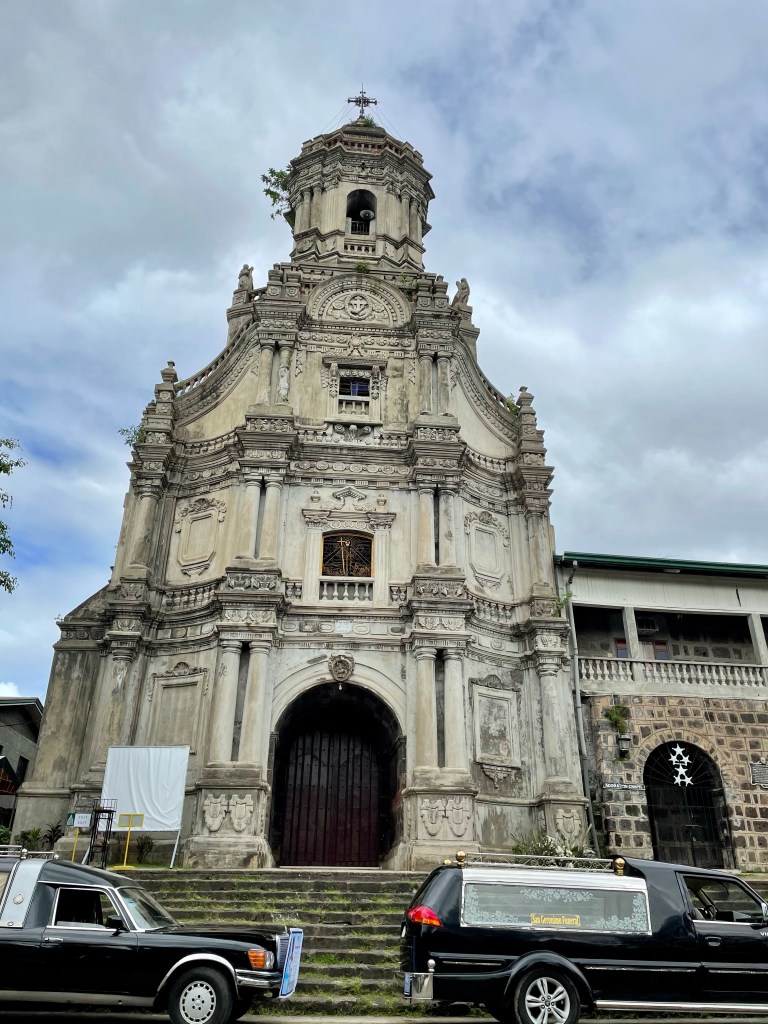
After we have prayed, we decided to skip our usual picture taking due to the ongoing Mass, choosing to feast our eyes with the amazing sight of this church’s unique architecture built by Franciscan Missionaries in 1620 and renovated to its present structure in 1853.

As we marveled at the imposing but genteel facade of the Morong Parish Church, I somehow got a feel of the people’s vibrant faith nurtured by their pastors who must be so dedicated too to have maintained its old and original architecture. One may also notice the same thing with the modern churches in the Diocese of Antipolo that covers the ecclesiastical province of Rizal where there is that blending of faith, arts, and architecture.

They must be so rich in having “respect” as in respect to the past, respect to the culture, and respect to the people that they have kept their many old and modern churches unaltered for so many years.

Altar of the Parish of St. Ildephonse in Tanay, Rizal declared as a National Cultural Treasure by the National Commission for Culture and the Arts in 2001.

How sad is the “edifice complex” afflicting some priests especially in our own Diocese of Malolos in Bulacan where many churches, old and new alike, have been disfigured with never ending renovations and constructions as well as overdecorating them that many have looked like cheap cakes smothered with icings.

Many seem to have forgotten the direct correlation between “church as the people gathered in faith” and “church as a building”.

Incidentally, the term used by the early Christians to refer to the Holy Eucharist as they gathered together was “breaking of bread”, a direct reference to our word companion because in every religious gathering, the companionship of the people is indicative of their kind of faith in God.

How lovely it is to see our churches, especially the old ones, as companions in our faith journey in God, to God!


'The real voyage of discovery consists 
not in seeing new sights,
but in looking in new eyes."
--- Marcel Proust

As we end this series of our travelogue, we go back to the lovely Parish Church of St. Ildephonse at Tanay, Rizal where we found something so mysterious like Steely Dan’s Pretzel Logic and Deacon Blues.

On the left wall near the main door is found the Seventh Station of the Cross when Jesus fell for the second time on his way to the calvary. It is a huge woodcarving done by local artisans in 1785 using local colors like the Malay features of the images depicted with their brown complexion, large and round eyes, and “squared” body features.

See the man leading the pack blowing a carabao horn for a tambuli while the soldier carried a bolo instead of a sword?

Most unique of all that makes Tanay’s Stations of the Cross as the most amazing and beautiful in Asia is that man at the middle wearing sunglasses, looking afar.

No one can truly explain why that man was portrayed as wearing shades that were already in existence at that time from China called “smoked glasses”. Some claim that man is the high priest Caiaphas who led the Sanhedrin in the trial that found Jesus guilty of blasphemy for claiming himself to be God.

Still, it does not answer the question why wear shades?

My kinakapatid Dindo claimed the woodcarving proves that rock and roll had long been in existence since the time of Jesus Christ, the real Superstar as presented in the 1970 rock opera by Tim Rice and Andrew Lloyd Weber.

Rock and roll is more than a kind of music. It is a way of life, a different kind of looking at things that try to disregard conventional and traditional ways by trying to get to the very roots of the things we do and hold on to.

Again, the word roots is from the Latin radix from which comes the word radical to describe people with revolutionary thoughts who go against the usual and accepted ways of life by going back to the roots of our many ways of life.

Radicals are not necessarily violent who shake our beliefs to see things more clearly like the woodcarver of this Seventh Station of the Cross in Tanay.

He must be telling us how often we try to color the world according to the hues and shades we want to see it that we become oblivious to the plight and sufferings of those around us like Jesus falling for the second time. Sometimes the key in truly enjoying this journey called life is to take off our shades and see others in their true colors by revealing also our true selves.

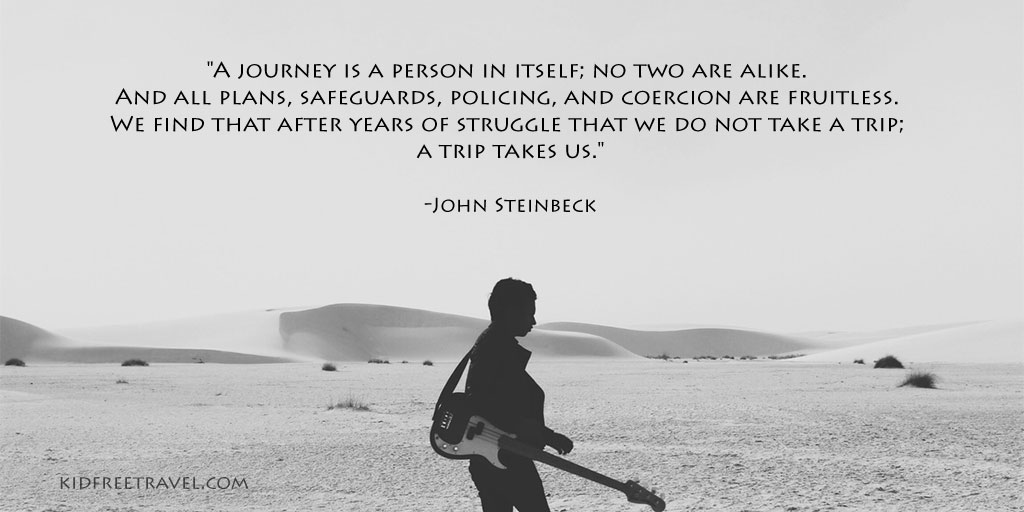
That is the greatest joy of every road trip when we do not really take the trip but it is the trip that takes us, giving us new eyes to see life in new perspectives and dimensions never seen before.

Our recent road trip actually started even before we planned it three years ago. Dindo and I have been traveling together as companions – breaking bread with each other – sharing life, its joys and pains, fears and hopes long before we took this road trip.

Though we travel on different roads in life, our paths have merged in various points and intersections without us really knowing it, deepening our ties and friendship truly as kinakapatid. It was actually a trip started by our dads who were cumpadres and never did I imagine those trips to their home at Little Baguio every New Year while growing up would eventually lead us to Baras, Tanay, Pillila, and Morong in Rizal!

In between songs and stories and jokes as we got lost going to Pililla Wind Farm, we have realized that we all have the same problems and issues in life. They just come in different shapes and colors that make every journey so wonderful.

Where have you been lately? And how are the people you have met? Try to remember the people you have been traveling with as companions in this journey of life. Thank them and most of all, take a break to let any trip take you — a road trip, a food trip, or any trip except bad trip!

Thank you very much in joining me in this blog and trip. May God bless your journey as well as your companions. Amen.

Prayer to be devout like Simeon

The Lord Is My Chef Breakfast Recipe for the Soul
Tuesday, Feast of the Presentation of the Lord, 02 February 2021
Malachi 3:1-4  >><)))*>  Hebrews 2:14-18  >><)))*>  Luke 2:22-40
“Presentation at the Temple” painting by Italian Renaissance artist Andrea Mantegna done around 1455; Mary holding Baby Jesus while St. Joseph at the middle looks on the bearded Simeon. The man at the right is said to be a self-portrait of the artist while the woman at the back of Mary could be his wife. Photo from wikipedia.org.

Dearest God our Father:

It has been 40 days since Christmas when you sent us your Son our Lord Jesus Christ! Thank you very much for this wonderful gift but, have we had him? Have we truly met him?

Fill us with your Holy Spirit like Simeon, dear God: make us devout like him who finally “met” Jesus Christ on his presentation at the temple by Joseph and Mary.

Now there was a man in Jerusalem whose name was Simeon. This man was righteous and devout, awaiting the consolation of Israel, and the Holy Spirit was upon him. It had been revealed to him by the Holy Spirit that he should not see death before he had seen the Christ of the Lord. He came in the Spirit into the temple; and when the parents brought in the child Jesus to perform the custom of the law in regard to him, he took him into his arms and blessed God…

Luke 2:25-28
“Simeon’s Moment” by American illustrator Ron DiCianni. From http://www.tapestryproductions.com

Only St. Luke used the word “devout” in the scriptures. First in describing Simeon, and thrice at the Book of the Acts of the Apostles to describe the Jews who attended the pentecost at Jerusalem (2:5); “the devout men who buried” our first martyr Stephen (8:2), and called Ananias a “devout observer of the law” when you told him to pray over and heal Saul who got blinded on the way to Damascus (22:12).

Teach us to be devout like Simeon, give us a “good heart, ready to believe, and then to act openly and with courage” (Timothy Clayton, Exploring Advent with Luke; page 125).

More than being faithful to you, a devout person O Lord is one who does not only wait patiently for your coming but most of all, looks forward to its fulfillment by making it happen. Exactly what Simeon and Anna did on that day when Mary and Joseph presented Jesus at the temple.

So many times in our lives, Jesus comes, enlightening our minds and our hearts but we are so busy with so many other things that do not truly fulfill us, that in the end, would be more of an excess baggage on our way to you and others. And eventually, making death difficult and devastating instead of becoming a blessing like with Simeon and Anna.

Let us spend more time meeting Jesus in prayers to be more attuned with his coming so that we may be ready to follow his promptings and leads.

May we also learn to respect and care for others in order to meet Jesus like Simeon who recognized his parents for their roles in bringing the child into this world; likewise, the attitudes of Mary and Joseph in giving Simeon and Anna the child Jesus. What a beautiful scene of loving and caring for one another, especially of respect for the elderly! So many times we forget that truth, that we meet Jesus coming in others.

Lastly, fill us with joy no matter how difficult life may be has for us; we can never meet your Son Jesus if all we have are bitterness and resentments. Like Simeon and Anna, they were overflowing with joy, so excited to meet Christ and upon encountering him that day, they embraced him in their arms, expressing their readiness to die and rest in peace.

“Now, Master, you may let your servant go in peace, according to your word, for my eyes have seen your salvation, which you prepared in sight of all the people, a light for revelation to the Gentiles, an d glory for your people Israel.”

Luke 2:29-32

Dearest Father in heaven, make us devout like Simeon and Anna with hearts overflowing with joy, striving to realize its fullness only in Jesus Christ, in this life and hereafter. Amen.

Photo by icon0.com on Pexels.com