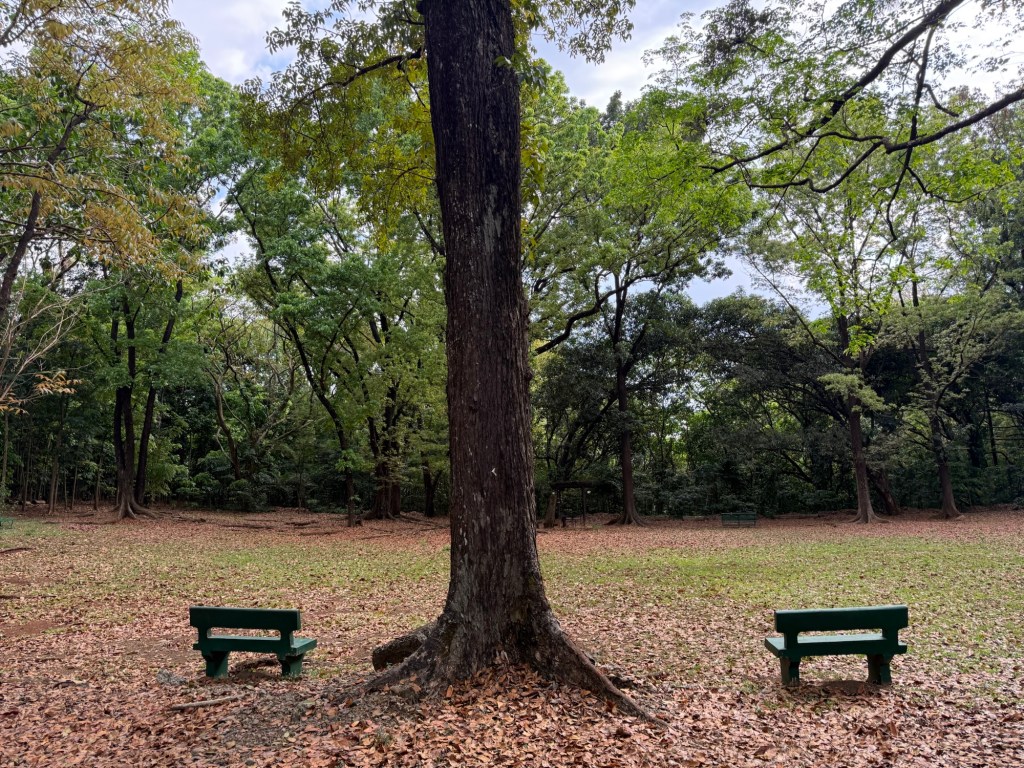
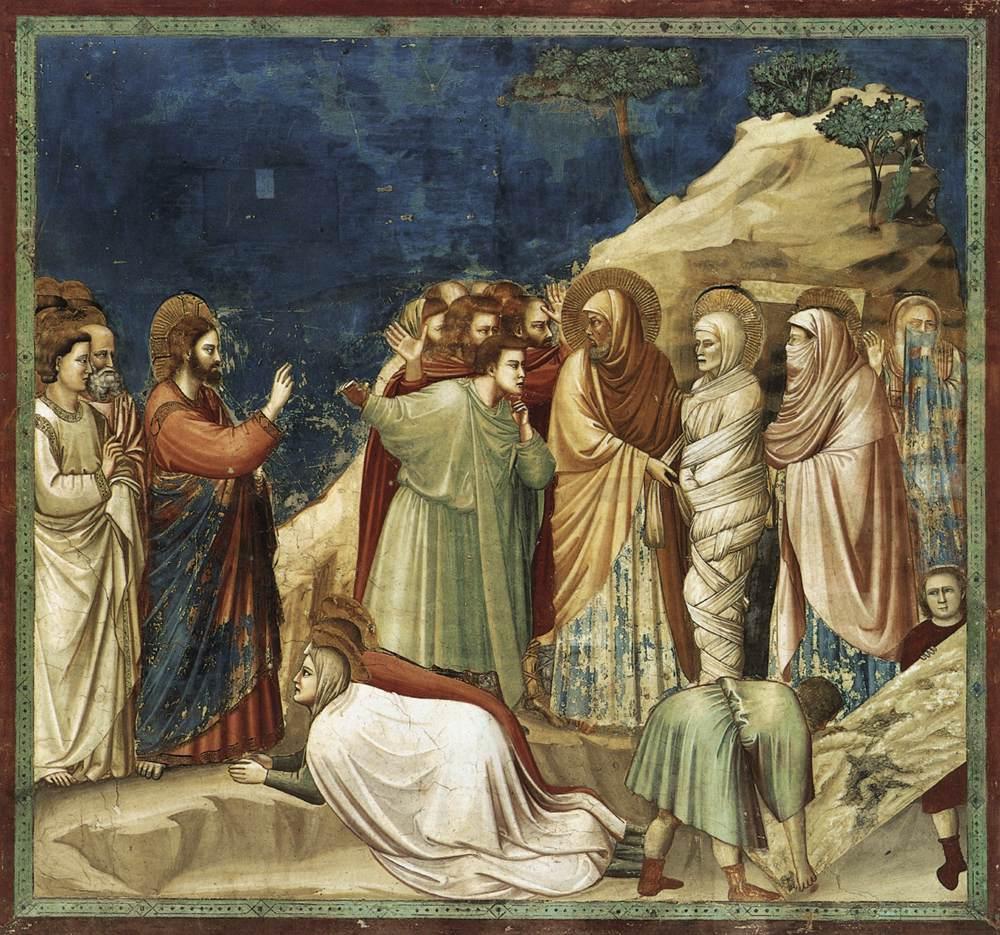
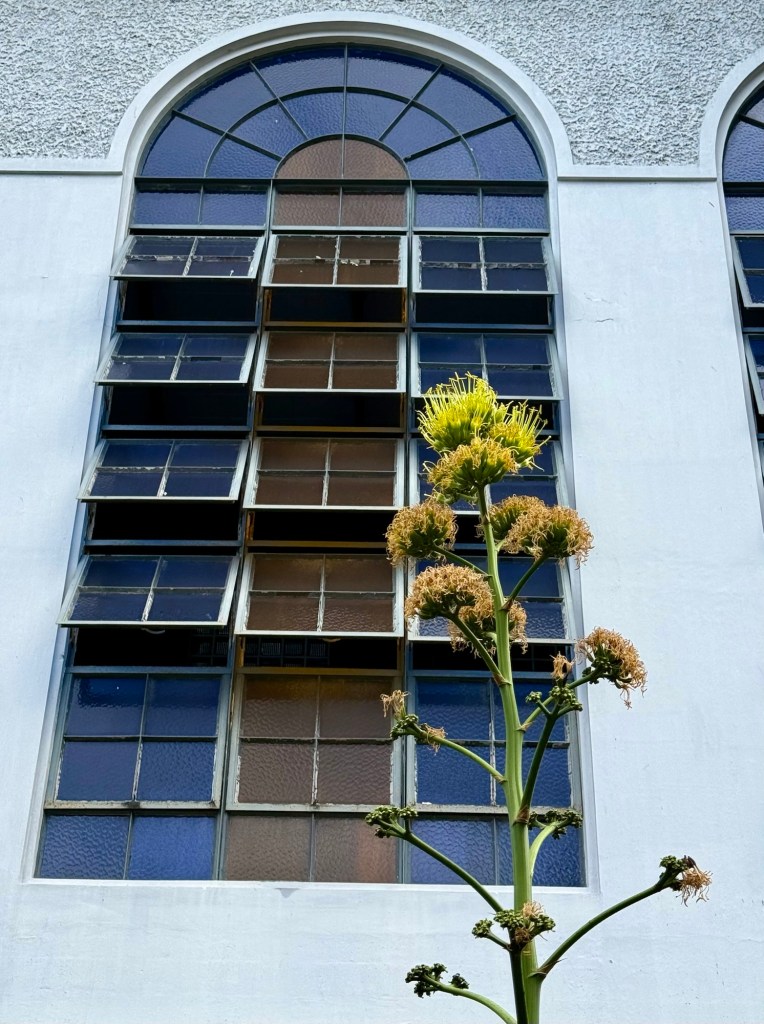
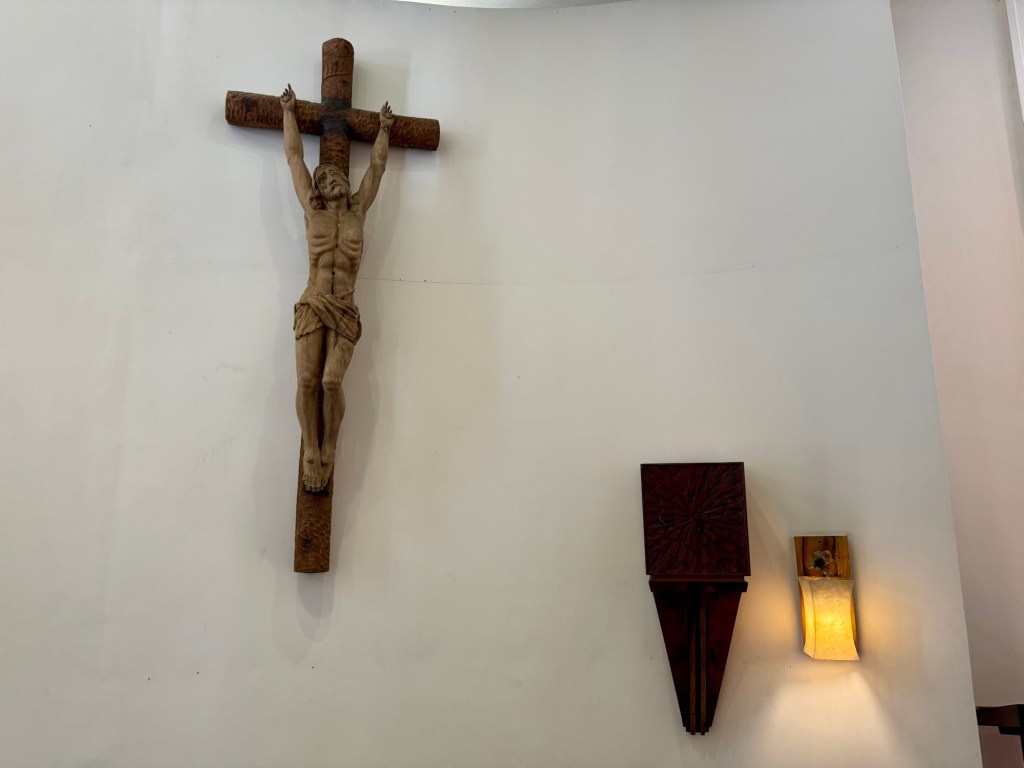
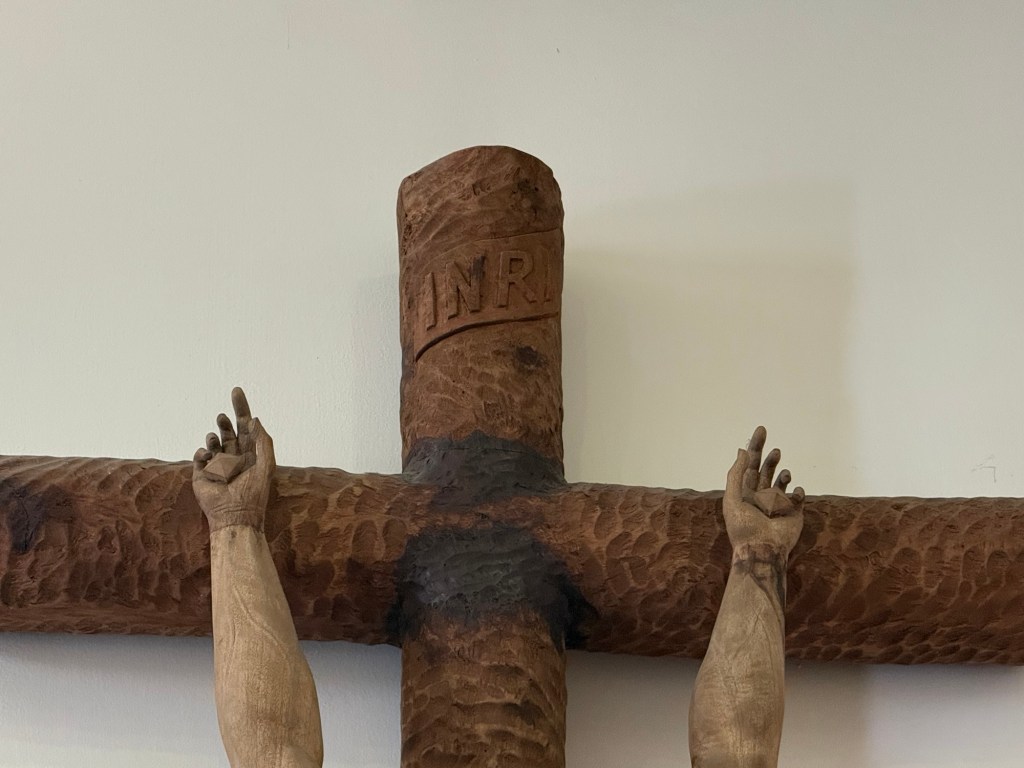
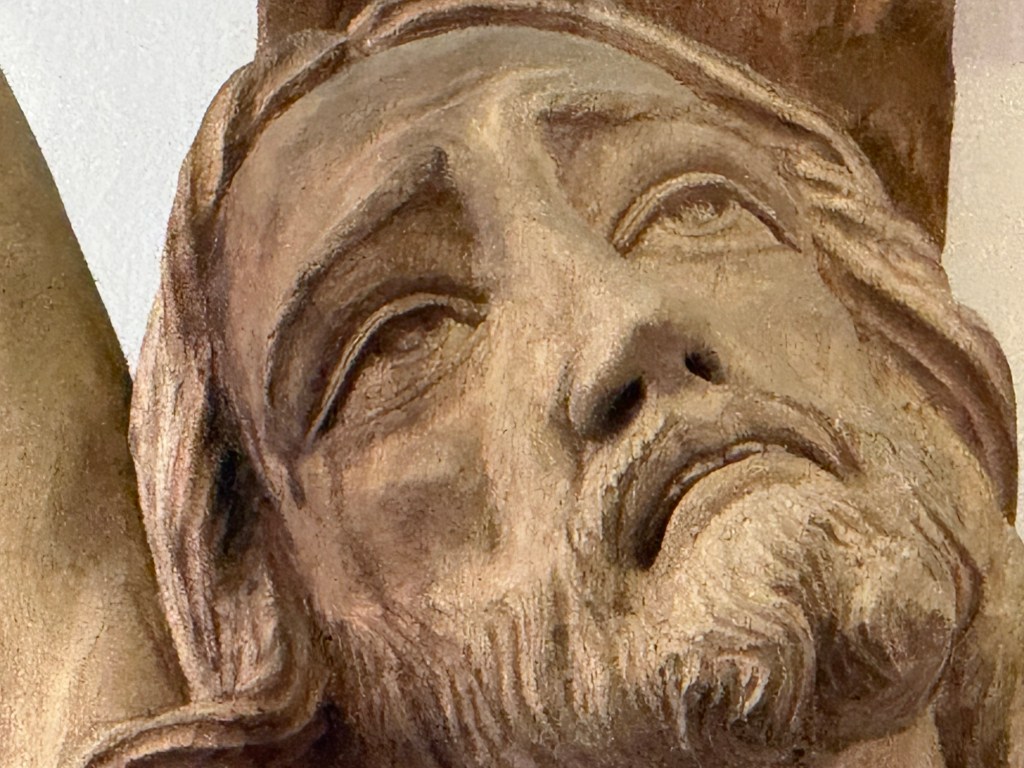
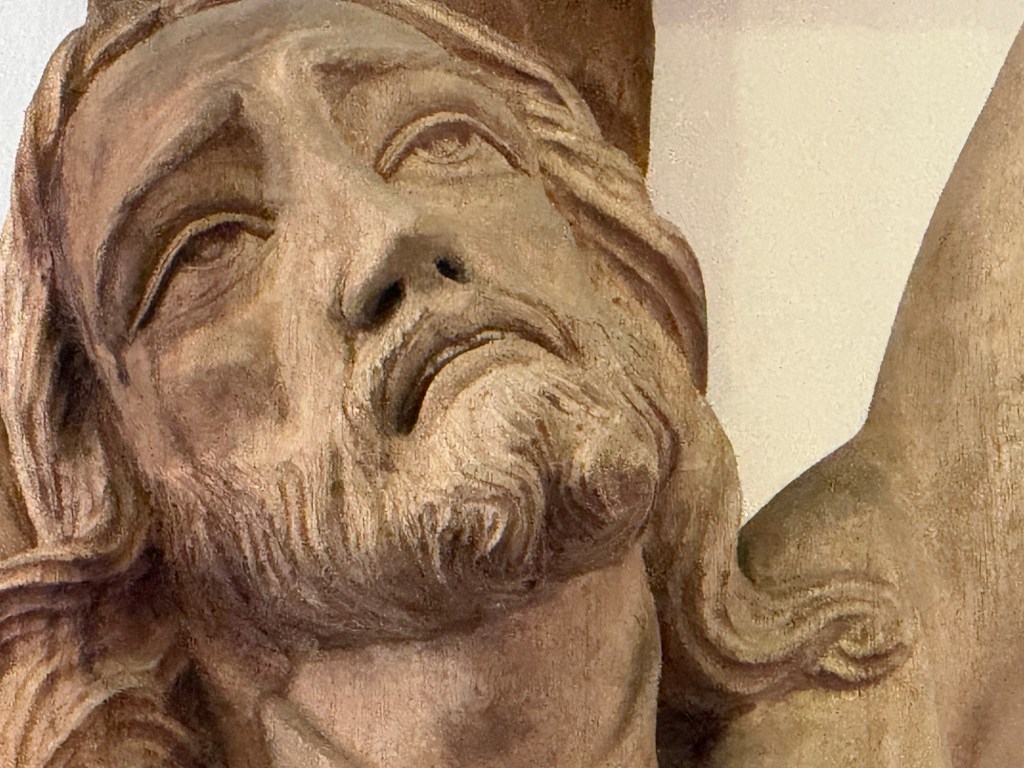
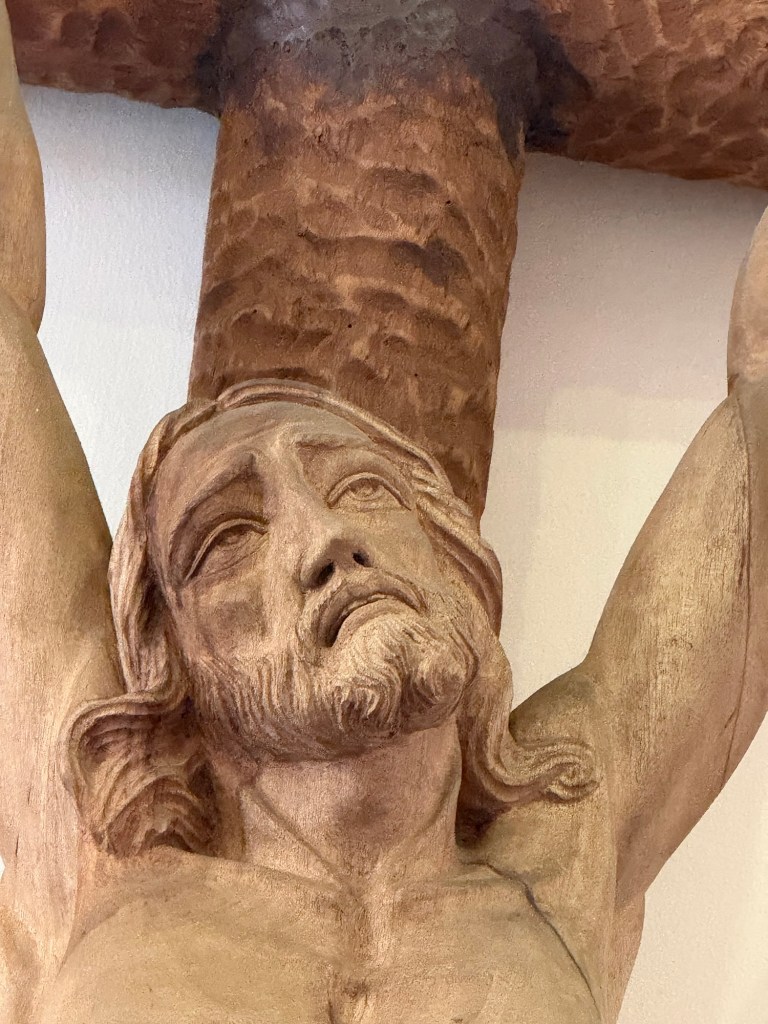
Lent is taking up my cross

40 Shades of Lent by Fr. Nicanor F. Lalog II
Thursday after Ash Wednesday, 19 February 2026
Deuteronomy30:15-20 +++ Luke 9:22-25
Can my life,
or life itself be separated
from you, my God?
Then he said to all,
"If anyone wishes to come after me,
he must deny himself
and take up his cross daily
and follow me.
For whoever
wishes to save his life
will lose it,
but whoever loses his life
for my sake will save it"
(Luke 9:23-24).
As I immerse myself to your
words today, Jesus,
I remember so many occasions
when I was younger always
trying to save my life,
simply clinging to my life,
or asserting my life,
that's when I lost in every count:
it seems to me now that when
we are young - and strong -
we choose ourselves more,
insist on ourselves,
even shouting deep within
"It's my life"...!
Sad truth is,
we lost always as we
felt most empty,
no direction,
no meaning
in life.
When life is too cushy,
without any problems and
challenges,
that is when life is
deep in serious trouble.
It is not even life at all
but felt like death!
But, Lord,
I remember too
that since I took that dive,
when I thought less of my self,
when I started following you,
of losing my life for your sake,
that was when I found meaning
and fullness in life,
when I truly save my life;
it was a bumpy road, Lord -
you know it very well
how many times I stopped along
the way to choose my own path,
even dared leaving you but
you were always there waiting
for me, walking with me even
in the opposite direction just to
bring me back to you
to gain my life in you.
Glory and praise to you,
Lord Jesus!
Your words are not
just a rhetoric,
nor a poetic overstatement
of a guru or a teacher
but actualizing words of
the Son of God,
our Savior and Messiah;
you have given me with so much
and I have given you so little;
teach me to give more of myself
to you so that I can give myself to
others by giving more of you in
loving service.
Let me choose you always,
Jesus, for life itself cannot be
separated from you
who is life yourself.
Amen.

Praying with the Pope on Ash Wednesday

40 Shades of Lent by Fr. Nicanor F. Lalog II
Ash Wednesday, 18 February 2026
Joel 2:12-18 +++ 2 Corinthians 5:20-6:2 +++ Matthew 6:1-6, 16-18
Thank you,
merciful Father 
for personally calling us
to return to you this Lent
as we mark its start with
Ash Wednesday;
thank you, Father
in sending us your Son
Jesus Christ our Lord
to lead us back to you,
reminding us of your
abiding presence despite
our turning away from you;
thank you for his Vicar,
Pope Leo XIV in guiding us
in this Lenten journey into
our inner selves,
into our hearts
to find you,
to rest in you,
and to remain in you.

“Even now, says the Lord, return to me with your whole heart,
with fasting, and weeping, and mourning; rend your hearts, not your garments, and return to the Lord, your God” (Joel 2:12-13).

Rend my heart,
dear Jesus,
that I may start listening
anew to your words,
in listening to your silence
to lead me into conversion;
rend my heart,
O Lord,
that I may always listen
to you in my brothers
and sisters' pleas for help
amid their many pains
and suffering because
I have been numb to them,
unmindful of their presence;
rend my heart,
Jesus so you may be my core
not easily swayed by
that little gadget the cellphone
that had become the modern baal
of our time
we unconsciously follow
and obey
instead of you,
Lord.
Rend my heart,
dear Jesus,
that I may truly fast
by emptying myself
of my pride and sins
so that you may fill me
with your humility,
justice,
and love;
rend my heart,
O Lord,
that I may "hunger" more
for your values
and "thirst" for your
love and mercy
by "disarming our language,
avoiding harsh words
and rash judgment,
refraining from slander";
render my heart,
Jesus,
so I may fast my tongue,
"striving to measure our words,
cultivate kindness
and respect
so that words of hatred
may give way
to words of hope and peace."
Rend my heart,
dearest Jesus,
so that my listening
and fasting may lead into
the common good,
into a communion
of your disciples
attentive to God and
to the least among us;
rend my heart,
Lord Jesus Christ
not only to cleanse my conscience
but also to enhance
the quality of my relationships
and dialogue with each other
in the power
of the Holy Spirit.
Rend my heart,
Lord Jesus Christ
to help me find my way back
to the Father
in you,
through you,
and with you.
Amen.
*Prayer based
on Pope Leo XIV's
first Lenten Message,
https://press.vatican.va/content/salastampa/en/bollettino/pubblico/2026/02/13

Lent is a journey within

40 Shades of Lent by Fr. Nicanor F. Lalog II
Ash Wednesday, 18 February 2026
Joel 2:12-18 +++ 2 Corinthians 5:20-6:2 +++ Matthew 6:1-6, 16-18

Lent is often portrayed as a journey of 40 days towards Easter starting today, Ash Wednesday.  But deeper than a journey in time, it is a journey into the Father that starts in our hearts, deep within each one of us. 

It is the season when we are invited to take time to look inside our hearts to see our true selves as sinful in order to meet God dwelling right inside us. The Prophet Joel in the first reading sets this tone of inner journey of conversion perfectly when he voiced out God’s call, speaking to us personally especially in this modern age:

“Even now, says the Lord, return to me with your whole heart, with fasting, and weeping, and mourning; rend your hearts, not your garments, and return to the Lord, your God” (Joel 2:12-13).

Photo by author, Buendia Ave., Makati City, 09 February 2026.

Very often, we are concerned about our external appearance, of how we look to other people but God sees what is in our hearts, of what is really inside us. And the path inside us is to cleanse ourselves thoroughly of the dirt and smudges of sin; hence, the imposition of ashes on our forehead.

Ash has long been a cleansing agent. Long before these modern kitchen stoves and gadgets of today, we used firewood for cooking that blackened the bottom of cooking wares. There were no Scotch Brite nor dishwasher at that time so we would mix ashes and cleanser soap then with steel wool and eskoba, we scrubbed them on the dirty kaldero and kawali until they were sparklingly beautiful again.

It is the very imagery of that cleaning of darkened pots with ash and soap the priest conveys to us when he says “Repent and believe in the gospel” while putting those ashes on our foreheads.

To repent is more than being sorry and admitting our sins but also a firm resolve to change our sinful ways, to be converted by following Jesus Christ in his Cross, by being more loving like him. In his first Lenten Message, Pope Leo XIV reminds us that “Every path to conversion begins by allowing the word of God to touch our hearts and welcoming it with a docile spirit.” He proposes three specific ways in doing this: listening, fasting and together.

Listening. The Holy Father reminds us so beautifully that “The willingness to listen is the first way we demonstrate our desire to enter into a relationship with someone.”

So true! But, so sad, too is the fact whom do we listen more these days? We live in a mass-mediated culture with so many young people practically living in the social media, taking and believing everything they read and see on their screen as the “gospel” truth that have only misled so many of us into various forms of miseries like emptiness, alienation from self and others, and even deaths.

Pope Leo explains that “Our God is one who seeks to involve us. Even today he shares with us who is in his heart. Because of this, listening to the word in the liturgy teaches us to listen to the truth of reality… In order to foster this inner openness to listening, we must allow God to listen as he does.” This is precisely the call of Jesus to us in the gospel when he repeatedly spoke of “God seeing you in secret” – God is always listening to us but do we listen to him?

In order to truly listen to God, first we must learn his language which is silence. See how the word “silent” is a palindrome of “listen” which is the reason why we have two ears so that we may listen more than speak. Remember also the shape of our ears – when placed together they form a heart because listening is not letting the words pass through the other ear nor keep in one’s head to understand but meant to bring down into our hearts so we can be more loving and kind, leading to oneness and bonding with the other persons.

Here we can adopt the suggestions of the CBCP that we fast this Lent on social media: no more cellphones before sleep and after waking up; limit social media and streaming time; observe device-free meals and gatherings; replace screen time with prayer and making time to be with others personally.

Photo by author, Sacred Heart Novitiate, Novaliches, QC, March 2025.

Fasting. According to Pope Leo, “fasting is a concrete way to prepare ourselves to receive the word of God.” He explains that “because it involves the body, fasting makes it easier to recognize what we ‘hunger’ for and what we deem necessary for our sustenance. Moreover, it helps us identify and order our ‘appetites,’ keeping our hunger and thirst for justice alive and freeing us from complacency.”

Again, let us use our Filipino language in understanding fasting and abstinence as well. Fasting is linked with abstaining from food. For us Filipinos, the most common practice of fasting and abstinence is avoiding meat like no meat on Fridays; meat in Filipino is laman. Therefore, when we say “no meat” it literally means walang laman which means empty in Filipino. It is when we are empty of ourselves that we become filled with God and his word, eventually of others especially the sick and suffering.

In a very interesting way, Pope Leo XIV invites us beginning this Lent to fast with our “tongue”: “Let us begin by disarming our language, avoiding harsh words and rash judgment, refraining from slander and speaking ill of those who are not present and cannot defend themselves. Instead, let us strive to measure our words and cultivate kindness and respect in our families, among our friends, at work, in social media, in political debates, in the media and in Christian communities. In this way, words of hatred will give way to words of hope and peace.”

Photo by MART PRODUCTION on Pexels.com

Together. Finally, the Holy Father sums up that listening and fasting must both lead to the common good, the unity of peoples because “conversion refers not only to one’s conscience, but also to the quality of our relationships and dialogue. It means allowing ourselves to be challenged by reality and recognizing what truly guides our desires” not only as a community but especially in our “thirst for justice and reconciliation”.

Again, our Filipino word for listening says it all: pakikinig leads to pagniniig or intimacy which is oneness, communion, and bonding. True conversion leads to communion that begins with reconciliation as St. Paul called on us today in the second reading, “We implore you on behalf of Christ, be reconciled to God.  Behold, now is a very acceptable time; behold, now is the day of salvation (1Cor. 5:20,6:2).” 

As we receive the ash on our foreheads today, let us have moments of silence to listen to God’s voice we have stifled in our hearts, let us fast from talking and scrolling, and together we help each other to truly journey inside our true selves to meet God this Lent. To meet God is to die into one’s self, one’s sins, one’s selfishness as well dying literally speaking which the old formula of imposition of ash solemnly declares, “Remember that you are dust, and to dust you shall return.” 

Let’s face it: it is the reality of death that we have often tried to deny and escape in life that have kept our hearts consumed with all these distractions in modern life that have led us into sins and meaninglessness. Let us start anew today in Christ Jesus to find ourselves and God within our hearts. Amen. A blessed Ash Wednesday to you!
Halik Judas, halik ng pagkakasundo

Lawiswis ng Salita ni P. Nicanor F. Lalog II, Ika-16 ng Abril 2025
Larawan kuha ng may-akda, Canyon Woods Resort, Batangas, 15 Marso 2025

Tinaguriang Spy Wednesday o Gabi ng mga Taksil itong Miyerkules Santo dahil sa gabing ito nakipagkasundo si Judas Iskariote sa mga punong pari na ipagkanulo niya si Jesus kapalit ng tatlumpung piraso ng pilak.

At gayon nga ang nangyari noong Huwebes Santo pagkatapos ng Huling Hapunan, pinuntahan ni Judas ang Panginoon sa halamanan ng Gethsemane at doon hinalikan bilang hudyat ng pagkakanulo sa Kanya.

Kaya ang babala sa halik Judas.

Ang halik ni Judas kay Jesus, isang eskultura ni Ignazio Jacometti noong 1854 sa kapilya ni San Lorenzo sa Saint John Lateran Church sa Roma. Mula sa GettyImages ng iStock photos.

Marahil ay minsan o ilang ulit din tayo nakalasap ng “halik Judas” sa mga akala nating kaibigan at kakampi. Ngunit aminin din natin ang ilang pagkakataon na tayo ay nag-Judas sa mga minamahal at nagmamahal sa atin.

Ngayong Miyerkules Santo, huwag lang natin isipin mga nagkanulo sa atin kungdi mga pagkakataong nagtraydor din tayo katulad ni Judas Iscariote.

Ngayong Miyerkules Santo, aminin din natin ang maraming pagkakataon na ang ating pagka-Judas ay sadyang tunay at sagad katulad ni Judas Iscariote na kapos sa katapatan at pagtitiwala sa habag at awa ng Panginoong Jesu-Kristo.

Nang makita ni Judas na si Jesus ay hinatulang mamatay, nagsisi siya at isinauli sa mga punong saserdote at sa matatanda ng bayan ang tatlumpung salaping pilak. Sinabi niya, “Nagkasala ako! Ipinagkanulo ko ang taong walang sala.” “Ano ang pakialam namin? Bahala ka!” sagot nila. Inihagis ni Judas ang mga salaping pilak sa loob ng templo saka siya umalis at nagbigti (Mateo 27:3-5).

Mahirap sagutin kung nasaan na nga ba ngayon si Judas Iscariote. Pinatawad kaya siya ng Diyos gayong siya ay nagsisi naman? Mahirap itong sagutin kasi nga ay nagpakamatay siya sa pamamagitan ng pagbibigti kaya tila kulang o hindi taos ang kanyang pagsisisi.

At iyan ang isang nakakatakot na katotohanan sa ating lahat ngayon, lalo na sa aming mga pari ng Simbahan.

Hindi po natin hinuhusgahan ang nag-viral na video ng isang pari na nagpapalabas ng tindera ng palaspas noong Linggo.

Nakakalungkot ang pangyayari. At masakit ang kuwento na minura pala ng vendor si Father kaya siya ay uminit ang ulo at hindi nakapagpigil sa pagpapalabas ng mga nagtitinda sa patio.

Inaamin ko po na madaling magsalita ngayong tapos na pangyayari ng kung ano nga ba dapat ang dinawa ni Father. Mas malamang pa nga siguro, ilan sa amin ay ganoon din ang magiging tugon at magviviral. Ngunit hindi po ito paghuhusga o pagbabatikos kungdi pagninilay sa mga nangyari.

Ang problema sa atin – lalo na sa aming mga pari at alagad ng Simbahan – hindi rin taos ang pagsisisi sa mga kasalanan at kamalian katulad ni Judas Iscariote.

Tama ang ginawa ng parokya na naglabas kaagad ng pahayag sa pangyayari na kung saan sila ay humingi ng “paumanhin” sa pangyayaring “nagdulot ng lungkot at pagkabigla.” Tama na sana mga iyon pero ang haba ng kanilang pahayag na mayroong Inggles at Filipino.

Larawan kuha ni Lara Jameson on Pexels.com

Hindi siguro nila naunawaan ang gawi ng social media. Hindi mapipigilan ang mga tao sa pagpapalaganap ng ano mang viral video lalo na kung pari o taong mayroong sinasabi ang sangkot. Kapag lumabas na sa social media, mahirap nang habulin. Higit sa lahat, maigsi lang ang pahayag para kagat agad, wika nga.

Sa halip ng mahabang paliwanag sa pangyayari, mas mainam na nagpahayag na lamang ng pagsisisi, ng pag-amin sa pagkakamali. No ifs, no buts sabi sa Inggles. Wala nang saysay ipaliwanag pa ang buong pangyayari dahil marami pa ring masasabi kung paano sana iyon naiwasan.

Hindi lamang ito ang pagkakataon na nag-viral kaming mga pari sa social media at sa kabila ng pagkakamali at pagkakasala, hindi makita ang taos pusong pagsisisi dahil palaging mayroong paliwanag.

Nasaan ang kadalisayan ng paghingi ng paumanhin kung agad namang susundan ng paliwanag? Ganyan din sa kumpisalan: palaging may paliwanag mga tao sa pagkakasala. E… ano ba talaga? Nagtitika ba tayo sa ating kasalanan kung mayroon tayong paliwanag at palusot sa tuwina?

Ipagpatawad ng mga kapatid kong pari pero aminin natin ito ang malaki nating problema lalo na sa Pilipinas: palagi na lamang mayroong paliwanag at pagtatanggol sa mga paring nagkakamali at nagkakasala. Hindi ba?

Larawan kuha ng may-akda, Sacred Heart Novitiate, Novaliches, QC, 17 Marso 2025.

Sapat-sapat na ang isang tunay at tapat na pag-amin at paghingi ng paumanhin o tawad sa kamalian at kasalanan.

Hindi ko sinasabing ipako sa krus ang nagkakasalang pari. Ang problema, wala tayong hinarap at tinapos na kaso ng pang-aabuso ng kapangyarihan maski sa atin-atin man lamang.

Bakit ang hirap sa amin na humingi lang ng tawad na sa obispo o kapwa pari, o mga parokyanong nasaktan?

Marahil hirap kaming umamin dahil ang tiwala namin ay nasa aming sarili tulad ni Judas Iscariote at hindi kay Kristo.

Hanggang sa huli tulad na Judas Iscariote, halos kami ay magbigti, hindi matanggap ang katotohanan na kulang kami sa pagtitiwala kay Jesus.

Hindi kami makapagtiwala ng lubos kay Jesus di lamang sa Kanyang hatid na kapatawaran kungdi sa kanyang liwanag at karunungan upang malampasan ano mang kasamaan at pagkakamali na aming nagawa. Duda kami kay Jesus baka hindi umamin aming nakaaway. Duda kami kay Jesus na madiriin kaming lalo e kalabaligtaran ang nangyayari kadalasan.

Tingnan paano sa mga sumunod na mga balita, maraming mga tao nagpahayag pa rin ng pag-unawa at suporta kay Father. Iyan ang biyayang nalilimutan naming mga pari palagi – higit pa rin ang tiwala at pag-galang ng mga tao sa pari.

Larawan buhat sa thesacredpage.com.

Ito ang malaking kaibahan ni Simon Pedro kay Judas Iscariote: bagaman walang sinasaad sa mga ebanghelyo ng kanyang pag-amin man lang sa kasalanang itinatwa niya si Jesus, maliwanag ang kanyang pagsisisi at pagtitiwala sa Panginoong muling nabuhay doon sa may lawa nang tatlong ulit siyang tanungin ng “Simon, anak ni Juan, iniibig mo ba ako?”.

Pagmasdan na pagkatapos umamin si San Pedro sa kanyang tatlong ulit na pagtatatwa at masabi kay Jesus na “Opo iniibig kita” saka lamang siya sinabihan ng Panginoong “sumunod ka sa akin” (Jn. 21:15-19). Marahil ay nagyakap ang Panginoon at si Simon Pedro pagkatapos noon at nagbigayan ng halik ng kapayapaan gaya ng kaugalian ng mga Judio.

Kung mayroong halik Judas, mayroong halik ng kapayapaan ni Kristo tulad sa Banal na Misa kung saan mayroong pagkakasundo ang dating nagkaalitan o nagkasamaan ng loob.

Yaong katagang pagkakasundo ay napakayaman sa kahulugan. Hindi ba kapag tayo ay susundo sa airport o saan man, kailangan nating iwanan ating kinaroroonan upang tayo ay magtagpo? Ang pagkakasundo o reconciliation sa Ingles ay ganun din: iwanan natin ang nakaraang pangyayari upang tayo ay magtagpo at magkasundo, magkaisa at muling mabalik dating mabuting samahan. Tingnan ang daloy ng pag-amin at paghingi ng tawad siyang naghahatid sa pagkakasundo at saka lamang magkakaroon ng pagsunod kay Kristo. O kanino mang ating natraydor.

Inyong subukan ngayong mga Mahal na Araw upang malubos inyong kagalakan sa Pasko ng Pagkabuhay. Amen.

Larawan kuha ng may-akda, 14 Abril 2025.

Ang Pasyon sa buhay-pananampalataya nating mga Pilipino

Lawiswis ng Salita ni P. Nicanor F. Lalog II, Ika-15 ng Abril 2025
Larawan kuha ng may-akda, taunang Pabasa ng Lunes Santo sa Parokya ng Pambansang Dambana ng Fatima, Valenzuela City, 14 Abril 2025.

Para sa mga tulad ko na promdi – laking probinsiya – ang mga Mahal na Araw ay pinababanal ng magdamagan at maghapong Pabasa ng Pasyon ng ating Panginoong Jesu-Kristo.

Sa katunayan, isa ito sa mga eksenang aking kinagisnan mula pagkabata kaya taun-taon, ako man ay bumabasa ng Pasyon lalo na noong buhay pa aking ina at kami man ay nagpapabasa sa aming bahay sa Bocaue, Bulacan. Tuwing ganitong panahon, hinahanap ng aking katawan ang pagbasa ng Pasyon kaya noong isang taon, dumayo ako sa dati kong parokya.

Larawan kuha ng may-akda, taunang Pabasa ng Lunes Santo sa Parokya ng Pambansang Dambana ng Fatima, Valenzuela City, 14 Abril 2025.

Anong laki at bagong kaalaman ang aking nabatid noon!

Ito palang mga salita ng ating unang Santo na si San Lorenzo Ruiz ay kanyang kinuha sa Pasyon!

Batay sa ating kaalaman, sinabi ni San Lorenzo noon sa harapan ng kanyang mga taga-usig sa Japan na “isang libong buhay man ang ibigay sa kanya, isang libong ulit niyang iaalay ang mga ito sa ating Panginoong Jesu-Kristo.”

Nguni’t, pagmasdan ninyo itong aking nabatid sa Pasyon:

Larawan kuha ng may-akda, Biyernes Santo, 2024.

Batay sa tradisyon, si Longinus na tinuturing dito sa Pasyon na Longino ang sundalong Romano na umulos ng sibat sa tagiliran ni Jesus habang nakabayubay doon sa krus; mula sa sugat na iyon dumaloy ang dugo at tubig sa Kanyang tagiliran na siyang bukal ng habag at awa ng Diyos sa sangkatauhan (fount of Divine Mercy).

Para sa akin, isang magandang katotohanan ang sinasaad ng bahaging ito ng Pasyon: maaring bukod sa bibliya at katesismo, bumabasa rin ng Pasyon noon at marahil katulad ng ilan hanggang ngayon, kabisado ito ni San Lorenzo Ruiz kayat nausal niya mga pananalitang iyon.

Dito rin nating makikita na sa kabila ng maraming kamalian at mga samo’t saring bagay na kailangang isaayos sa Pasyon, malaki rin ang papel nito sa paghubog sa ating pananampalatayang Kristiyano.

Larawan kuha ng may-akda, taunang Pabasa ng Lunes Santo sa Parokya ng Pambansang Dambana ng Fatima, Valenzuela City, 14 Abril 2025.

Maituturing ang Pasyon ay isa sa mga una at malalaking hakbang ng inculturation ng Kristiyanidad sa kalinangang Pilipino.

Nagsimula ang Pasyon sa tradisyon ng mga katekista na sinusugo ng mga pari noon sa malalayong lugar upang samahan sa pananalangin ang mga naghihingalo. Bahagi rin ito ng tinaguriang “pa-Jesus”, mga paulit-ulit na panalangin tulad ng litanya habang ipinagdarasal ang naghihingalo. Kaya ang tagpo ay mula sa pagpapakasakit at kamatayan o Pasyon ng Panginoon ang ginagamit. Humaba ito ng isang aklat dahil naman sa kadalasan inaabot ng magdamag o maghapon ang paghihingalo bago tuluyang malagot ang hininga.

Mahalagang alisin sa isipan ng karamihan na hindi talambuhay ni Jesus ang Pasyon. Hindi rin ito lahat mula sa mga tagpo sa Bibliya habang ang ilang mga kuwento ay halaw sa tradisyon. Una itong tinipon at pinagsama-sama bilang aklat ni G. Gaspar Aquino de Belen, isang makata na tagasalin buhat sa Rosario, Batangas noong 1703 na inaprubahan ng mga kinauukulan sa Simbahan nang sumunod na taon.

Larawan kuha ng may-akda, taunang Pabasa ng Lunes Santo sa Parokya ng Pambansang Dambana ng Fatima, Valenzuela City, 14 Abril 2025.

Hindi maikakaila na maraming Pilipino noon namulat sa Krstiyanidad dahil na rin sa Pasyon dahil na magiliw na pamamaraan nito ng paglalahad ng mga aral at kuwento ng pakanta. Kaya naman nang malaunan sa paglaganap nito, isinaayos na rin ito batay sa kautusan ng mga obispo at pari habang mayroong ilang sipi na mismong gawa ng pari.

Sa sawimpalad, hindi naisaayos maraming kamalian nitong Pasyon. Kinausap ko aking kaibigan at kaklase na bumabasa rin ng Pasyon, si P. Ed Rodriguez at narito dalawang halimbawa aniya na dapat ayusin sa Pasyon:

At sa Henesis na libro,
Nalalaman ay ganito:
Nang lalangin itong mundo
Nitong Diyos na totoo,
Kaarawan ng Domingo.

Paliwanag: ang sinasabi lamang po sa Henesis ay “dumating ang kinagabihan at sumunod ang umaga, ang unang araw”. Wala pa pong pangalan ang mga araw ng sanlinggo noong isulat ang Henesis.

Gayon din naman, maraming kamalian ang sinasaad sa Pasyon ukol sa Mahal na Birheng Maria na malayo sa katotohanan katulad nito ayon kay Fr. Ed:

Sa maganap ang totoo
At araw ay mahusto
ng ipanganak na ito,
Agad dinala sa templo
Si Mariang masaklolo.

Hindi naman po inaalay sa templo ang anak na babae ng mga Hudyo; ang panganay na lalaki lamang ang inihahandog sa templo katulad ni Jesus na ating ipinagdiriwang sa Candelaria o Pebrero dos.

Larawan kuha ng may-akda, taunang Pabasa ng Lunes Santo sa Parokya ng Pambansang Dambana ng Fatima, Valenzuela City, 14 Abril 2025; imahen ng Dolorosa, ang nahahapis na Birheng Maria.

Marami pang ibang dapat itama at isaayos sa Pasyon upang higit natin itong mapangalagaan at mapanatili sapagkat isa itong buhay na patunay ng ating maganda at Kristiyanong kalinangan.

Nakatutuwa na maraming parokya ang nagpapabasa na sa ngayon upang maituro at maipagpatuloy ito ng mga bagong henerasyon. Tama ang maraming diyosesis na mayroong mga alituntuning itinakda sa pagbasa o pag-awit ng Pasyon: hangga’t maari ay huwag itong gawing biro na kung saan inilalapat ang mga makabagong tono ng tugtugin lalo na yaong mabibilis at mahaharot. Dapat palaging isaalang-alang ang kasagraduhan nitong Pasyon na tumutukoy sa pagpapakasakit at pagkamatay ni Jesus.

Gayun din naman, nagtuturo ang Pasyon ng kaisahan ng pamilya at pamayanan kaya dapat ito ipagpatuloy at palaganapin. Maraming pamilya noon maging hanggang ngayon ang nagkakaisa na basahin ng buong mag-anak ang Pasyon bilang tradisyon at panata nila.

Sakali mang mayroong pampublikong pabasa, maaring paghatian ng mga pamilya ang gastos sa pagkain kaya sa maraming bayan at barrio, hinahati ang aklat ng Pasyon sa dalawang pamilya para hindi mabigat ang pagpapakain sa mga tao.

Larawan kuha ng may-akda, taunang Pabasa ng Lunes Santo sa Parokya ng Pambansang Dambana ng Fatima, Valenzuela City, 14 Abril 2025.

Gayon din naman, ang pagkain o handa sa pabasa ay tinatawag na caridad o charity – bukod sa pagpapakain sa mga bumabasa, naghahanda ang nagpapabasa upang pakainin din yaong mga maliliit nating kapatid na dukha at kapus-palad. Nakakalungkot lamang na mayroong mga tao ang inaabuso ang caridad sa pabasa na nilulusob ng mga tinaguriang “PG”.

Hindi pa kay gandang halimbawa ito ng pagbubuklod ng mga pamilya at angkan?

Higit sa lahat, nabubuklod ang pamayanan ng pabasa ng Pasyon dahil mayroong schedule ang mga pabasa. Hindi basta-basta maaring magpabasa sa isang nayon dahil sa bawat araw, isa lang ang pabasa na maaring ganapin para isa lamang ang pupuntahan. Kaya nga noong araw sa mga nayon kay gandang balikan itong kaisahang ito ng mga kababayan natin tuwing panahon ng mga Mahal na Araw.

Bukod tangi ang pamamaraan ng pabasa ng Pasyon dahil ito ay makata o patula na inaawit, nakakaaliw lalo na kung nakasaliw sa musika.

Larawan kuha ng may-akda, taunang Pabasa ng Lunes Santo sa Parokya ng Pambansang Dambana ng Fatima, Valenzuela City, 14 Abril 2025; imahen ng Ecce Homo, si Jesus nang iharap ni Pilato sa mga tao matapos ipahagupit.

Isang kakaibang paraan ng pagtuturo o pedagogy na magaan at madaling matutunan at higit sa lahat, kaagad nadarama.

Kung baga, mayroong kurot sa puso at kalooban kaya nanunuot ang mga turo at aral. Isipin na lamang natin paanong nakatulong itong Pasyon maging sa ating unang Santo na si San Lorenzo Ruiz na sa kanyang kamatayan ang mga namutawi sa kanyang mga labi ay buhat sa Pasyon.

Sa inyong pag-uwi sa inyong mga lalawigan ngayong Mahal na Araw, sikaping bumasa ng Pasyo upang maranasan ang lalim ng ating pananampalataya at kagandahan ng ating kalinangan.

Narito dalawang video ng aming pabasa kahapon, Lunes Santo dito sa Parokya ng Pambansang Dambana ng Fatima sa lungsod ng Valenzuela. Buhat sa bayan ng Malabon ang aming nakuhang musiko sa tumugtog mula ika-pito ng gabi hanggang ika-sampu ng gabi.

“My Ever ChangingMoods” (1984) by the Style Council

Lord My Chef Sunday Music by Fr. Nicanor F. Lalog II, 13 April 2025
Photo by author, Sacred Heart Novitiate, Novaliches, QC, 17 March 2025.

Today we begin the Holy Week with the celebration of Palm Sunday in the Lord’s Passion.

See how since the entry of Jesus to Jerusalem more than 2000 years ago, nothing much have really changed among us – we are still the same fickle-minded people who would sing “Hosanna in the highest” and later shout “crucify him! crucify him!”.

Everybody wants to become better, each one wishing for so many things without really realizing the good things we are hoping for are all right in front us if we could just open our eyes or listen more or perhaps have a change of heart to realize everyday is a Palm Sunday too for us when God comes right into us to fulfill us.

However, many times whether in our wishful thinking or future-looking and planning, it is highly probable that what we long for is already present to us.

As we begin the Holy Week with the celebration of Palm Sunday in the Lord’s Passion, we are reminded by the liturgy with its long readings how so often in life, we just need to see with different eyes, hear with different ears, expect with different hearts to find fulfillment, peace and joy.

The sad truth is that many times, we really do not know what we want and most of all, we also do not know what we are doing because we are so far from Jesus Christ. https://lordmychef.com/2025/04/12/when-we-do-not-know-what-we-are-doing/

The night before I wrote my homily yesterday, I was posting some reels in my Instagram account when one of the music I used was the Style Council’s 1984 hit “My Ever Changing Moods”. Composed by the group founder Paul Weller who shot to fame in the 1970’s as lead singer and guitarist of the British rock band The Jam, “My Ever Changing Moods” is the Style Council’s fifth single.

Aside from Weller’s superb vocals, “My Ever Changing Moods” is so remarkable in what shall we describe as “subtle intensity” – ang tindi ng dating as we say. Despite the message conveyed by its title, the song is heavy in meanings that can stir one’s soul with its light and easy poetry yet so penetrating. That is why we right away felt its direct link with Palm Sunday.

Daylight turns to moonlight and I'm at my best
Praising the way it all works, and gazing upon the rest, yeah
The cool before the warm, the calm after the storm

I wish to stay forever, letting this be my food
Oh, but I'm caught up in a whirlwind
And my ever changing moods, yeah

Many times in life, we forget that reality of how everything is like the weather that shifts and changes in a rhythmic pattern, “Daylight turns to moonlight…the cool before the warm, the calm after the storm.” The key is openness to these changes happening in us and around us.

Though Weller and critics claim of the song’s political undertones, we see something deeper, something spiritual that we find it so appropriate in this time as we enter the holiest days of the year. Notice these final four stanzas how they convey love and order, something so similar to Jesus Christ’s first words when crucified more than 2000 years ago, “Father, forgive them for they know not what they do” (Lk.23:24).

Teardrops turn to children who've never had the time
To commit the sins they pay for through another's evil mind
The love after the hate, the love we leave too late

I wish we'd wake up one day, an' everyone feel moved
Oh, but we're caught up in the dailies
And an ever changing mood, yeah

Evil turns to statues and masses form a line
But I know which way I'd run to, if the choice was mine
The past is knowledge, the present our mistake
And the future we always leave too late

I wish we'd come to our senses and see there is no truth
In those who promote the confusion
For this ever changing mood, yeah
Photo by author, Sacred Heart Novitiate, Novaliches, QC, 17 March 2025.

What do we really know at all that we continue to crucify Jesus today, nailing him on the cross with our many sins as we pretend and assume to know so many things in life?

To know in the Jewish mind is to have a relationship, an activity more of the heart than of the mind. To know is to love, to care. Therefore, when Jesus prayed to the Father to forgive them for they know not what they do is to forgive them because they refuse to love which is what sin is all about. And that is what we still do not know until now – to love, to care for one another that we keep on crucifying Jesus Christ.

Until now, we pretend to know a lot that some nations resort to wars while some blind followers insist on what they know as right while evading the truth with their fake news being spread to cover crimes and atrocities. Until now we pretend to know what we are doing that everyday everywhere is a road rage happening often costing lives senselessly because many insist on their rights. And the confusions and quarrels and deaths continue because we do not know what we are doing. Like Paul Weller, we pray to Jesus that we’d come to our senses and see there is no truth// In those who promote the confusion// For this ever changing mood, yeah.

For this piece, we chose the slow version on piano of Style Council’s “My Ever Changing Moods” to be more attuned with Palm Sunday; you may check their original music video which is equally excellent.

From YouTube.com

When we do not know what we are doing

40 Shades of Lent by Fr. Nicanor F. Lalog II
Palm Sunday of the Lord's Passion, Cycle C, 13 April 2025
Isaiah 50:4-7 ++ Philippians 2:6-11 ++ Luke 22:14-23:56

Photo by author, Palm Sunday in our previous parish, 2019.

If we were given one wish with a guarantee that it would be fulfilled, what would that wish be?

Of course, each of us would have different wishes depending on what really matters for us like healing or good health for someone who is sick, wealth for one who is poor, even youth for someone already old. No matter what our wish, it is always a desire for a better future, a chance to change any dissatisfaction we have in our present condition.

However, many times whether in our wishful thinking or future-looking and planning, it is highly probable that what we long for is already present to us.

As we begin the Holy Week with the celebration of Palm Sunday in the Lord’s Passion, we are reminded by the liturgy with its long readings how so often in life, we just need to see with different eyes, hear with different ears, expect with different hearts to find fulfillment, peace and joy.

The sad truth is that many times, we really do not know what we want and most of all, we also do not know what we are doing because we are so far from Jesus Christ.

Then Jesus said, “Father, forgive them, they know not what they do.” (Luke 23:34)

Photo by author, Chapel of the Holy Family, Sacred Heart Novitiate, Novaliches, QC, 2016.

Consistent with his theme of the mercy and forgiveness of God to us as shown the other Sunday in the parable of the prodigal son, Luke presents to us again this most wondrous and touching trait of God in Christ even while crucified.

Again, only Luke has this detail of Jesus praying for forgiveness for his enemies while being reviled and mocked by them on the cross. It is one of the many examples of Luke’s artistry in presenting to us God’s mercy and forgiveness in Christ in a sort of play of words, “Father, forgive them, they know not what they do” as we confront our selves with the question, “what do we really know?”

What do we really know at all that we continue to crucify Jesus today, nailing him on the cross with our many sins as we pretend and assume to know so many things in life?

To know in the Jewish mind is to have a relationship, an activity more of the heart than of the mind. To know is to love, to care. Therefore, when Jesus prayed to the Father to forgive them for they know not what they do is to forgive them because they refuse to love which is what sin is all about. And that is what we still do not know until now – to love, to care for one another that we keep on crucifying Jesus Christ.

Photo by author, Chapel of the Holy Family, Sacred Heart Novitiate, Novaliches, QC, 2016.

Until now we pretend to know the truth by waging wars in various parts of the world with more than half of them ironically due to our different religious beliefs! Debates continue on who must live and who must die as lawmakers pretend to know the truth with their proposals for abortions and artificial contraceptives as well as capital punishment.

Until now we pretend to know the truth as some sectors push for divorce and same sex marriage that destroy the family. Out in the streets are the daily road rage happening with everyone pretending to know the truth on who has the right of way even at the cost of life and dignity of a person.

Until now we pretend to know the truth in all those fake news and speeches defending immoralities and crimes committed against many poor people never given a fair chance to defend themselves from accusations as drug users and pushers. What a shame when some people claim to know the truth asserting freedom of expression by making fun of women and sex as well as those terminally sick or taking advantage of those with disabilities just to win votes in the coming elections.

See how almost everyone would claim to know the truth but what we actually show is our ignorance and lack of any knowledge at all of the realities around us as our problems become more complex that lead to more deaths, more disillusions, more anxieties and more emptiness in life.

Until now as we pretend to know the truth when in fact we know nothing at all that we continue to crucify Jesus Christ who – thankfully continues to pray to the Father to forgive us for we do not know what we are doing.

Photo by author, Chapel of the Holy Family, Sacred Heart Novitiate, Novaliches, QC, 2016.

See how in his passion narrative Luke invites us to enter every scene, to find our roles, of whether we are on the side of Jesus or not because neither the Jewish leaders nor the Roman officials even the Apostles understood anything at all. Jesus was crucified because they did not know what they were doing.

Notice how Luke shuffled different scenes, contrasting the ignorance of characters with the certain knowledge of Jesus: Peter denied him thrice while he blanked all lying efforts of the Sanhedrin; Pilate sent Jesus to Herod to find the truth but both were too coward to acquit him that though enemies for a long time, they eventually became friends because of Jesus(!); and while crucified there on the cross, the people who reviled Jesus are contrasted with the centurion who realized him as the Christ at his death.

See? Who knows anything at all? And the most wonderful part of the passion narrative of Luke, he tells us about that beautiful conversations of the three men crucified on that day. One insulted Jesus while the other, the good thief, had a conversion by calling out, “Jesus remember me in paradise” and thereby stole heaven for himself!

Here we find what we were saying at the start: we keep on projecting ourselves to a better future but right here with us is Jesus Christ not knowing he is our fulfillment.

We do not know like the Jewish leaders, the Roman officials and soldiers as well as the Apostles who kept on pinning their hopes in the worldly kingdom, totally unmindful of the kingdom of God that had come in Jesus Christ’s coming.

This Palm Sunday of the Lord’s Passion invites us to slow down in our lives.

Photo by author, Palm Sunday in our previous parish, 2019.

In this Holy Week, let us empty ourselves of our pride, of everything we know about life, of ourselves and of others for us to listen really to God’s voice within us. The kingdom of God is Jesus Christ. It is not a territorial domain protected by armies and navies or tariffs and laws; we become a part of God’s kingdom in Jesus Christ when we learn to commend our spirit like him to the Father amid our crosses in life.

Please, the Holy Week is meant for God, for us to meditate and pray his great love for us in Jesus Christ who suffered and died for us on the Cross. Let us return to him so we may know him, love him and follow him. Amen.
Ang “masamang balita” ng Jollibee sa Visita Iglesia

Lawiswis ng Salita ni P. Nicanor F. Lalog II, Ika-10 ng Abril 2025
Larawan kuha ng may-akda.

Noong isang taon ko pa ito ibig ilathala nang aking makita sa harapan ng aming simbahan, ang Pambansang Dambana ng Birhen ng Fatima dito sa Valenzuela ang karatula ng pambansang bubuyog ukol sa Visita Iglesia. Sa aking panlasa, hindi bagay, hindi match ang mix na ito. Hindi ito “mabuting balita” ayon sa Jollibee.

Ako man po ay maka-Jollibee. Paborito ko ang kanilang palabok, pangalawa lamang ang Chicken Joy at pangatlo ang Champ bagaman ayoko po ng pagkaing mayroong pinya kaya inaalis ko ito sa dambuhala nilang langhap-sarap na burger.

Subalit tuwing mga Mahal na Araw lalo na noong isang taon, ako ay nalulungkot sa Jollibee. Marahil pati ang langit at maaring lumuluha sa lungkot ang mga anghel tuwing nakikita si Jollibee masayang-masaya kung Biyernes Santo kasi masama sa panlasa ang kanilang kampanya sa Visita-Iglesia.

Hindi yata Katoliko si Jollibee tulad ng karamihan sa ating mga Pilipino bagamat mayroong ilan silang mga tinadahan na binasbasan at minimisahan ng obispo at mga pari tuwing pinasisinayangan at nagdiriwang ng anibersaryo.

Larawan mula sa Facebook.

Noong isang araw aking nakita ang post sa Facebook ng maraming taong-simbahan kasama ilang mga pari na pinupuri ang Jollibee sa kanilang advertisement ng Visita Iglesia sa mga simbahan sa buong kapuluan kasama na kanilang mga tindahan mayroong mapa ng simbahang maaring puntahan upang manalangin at mag-peregrinasyon (pilgrimage po) kasama na ang pinaka-malapit sa kainan ng Jollibee. Marami ang pumuri sa Jollibee sa naturang kampanya. Sabi ng isang uploader, “Kudos kay Jollibee ah.. very catholic.”

Sorry po. Hindi po yata tama ang inyong caption. Sa unang tingin, tila maganda pero kung susuriin natin, mali. Hindi po ito Catholic practice dahil ito ay salungat sa hiling sa atin ng Simbahan noon pa mang simula na magkaroon ng pagsasakripisyo tuwing panahon ng Kuwaresma at mga Mahal na Araw.

Sa katunayan, ang turo ng Simbahan ay mag-ayuno tuwing Miyerkules ng Abo at Biyernes Santo bilang pagninilay at pakikiisa sa pagpapakasakit at pagkamatay ni Jesu-Kristo doon sa krus mahigit dalawang libong taon na ang nakalipas. Totoo na hindi na mamatay si Jesus at hindi naman nating kailangang malungkot at malumbay sa mga panahong ito ngunit, paano tayo makapagninilay at dasal ng taos kung nasa isip natin ang pagsasaya ng pagkain ng masasarap tuwing Mahal na Araw o Biyernes Santo?

Ipagpaumanhin po ninyo lalo ng mga kaibigan ko sa Jollibee, malinaw na ang kanilang Visita-Iglesia campaign ay commercialization ng ating banal na tradisyon at gawaing Katoliko. Sa halip na makatulong ang Jollibee kasama na ang iba pang mga fastfood chain na mayroong Lenten special meals sa paggunita ng mga Mahal na Araw na maranasan man lamang nating mga Filipino muli ang tunay na diwa ng Paskuwa ng Panginoong Jesus, ito ay kanilang winawasak. Hindi nga po tayo dapat kumain bilang bahagi ng panawagang mag-ayuno o fasting tuwing Miyerkules ng Abo at Biyernes Santo. Ito ang hindi batid ng mga fastfood chain: tuwing sasapit ang Kuwaresma, palagi silang nag-aalok ng fish sandwich at iba pang pagkaing walang karne bilang bahagi ng fasting (edad 18-59) at abstinence.


Nasaan na ang panawagang mag-sakripisyo para sa mga banal na gawain ng Kuwaresma at mga Mahal na Araw tulad ng Visita Iglesia kung ang hahantungan ay Jollibee o mga fastfood?

Inuulit ko po na wala tayong layuning siraan ang Jollibee na naghatid ng maraming karangalan sa ating bayan lalo na sa larangan ng pagkain at negosyo kung saan ay inilampaso ng isang bubuyog ang dambuhalang McDonalds ng Amerika pati na sa ibang bahagi ng Asya. Sa larangang ito ng panahon ng Kuwaresma at mga Mahal na Araw, sa aking pananaw ay lumabis ang Jollibee sa kanilang gimik na Visita-Iglesia. Sa katunayan, mayroon ako nabasa sa ibang bahagi na tinatawag nila itong “Bee-sita Iglesia.” Wala po sa hulog at pokus ang kanilang kampanya na tila mayroong pagkapagano dahil malapit na itong maging idolatry. Hindi magtatagal, baka ang darasalin na ng mga bata ay “Jollibee to the Father and to the Son and the Holy Spirit…”

Ang pinakamasakit sa lahat ay makita ang mga fastfood chain tuwing Biyernes Santo na umaapaw sa mga tao – daig pa mga simbahan – na tila wala na yatang pagpapahalaga sa pagpapakasakit at pagkamatay ni Jesus para sa atin.

Batid ko po na pakaunti ng pakaunti ang mga mananampalataya na hindi na nag-aabstinensiya at ayuno tuwing Biyernes Santo. Magiging malala pa ito sa ganitong uri ng kampanya ng Jollibee tuwing Visita-Iglesia. HIndi ba sila maaring mangilin kung Biyernes Santo man lang? O, kahit mula alas-dose ng tanghali ng Biyernes Santo hanggang alas-singko ng hapon sa paglabas ng prusisyon? Hintayin man lamang sana ng mga fastfood chain at restaurant na “malibing” ang Panginoon bago sila magbukas ng tindahan nila.

Hindi ba malaking kabalintunaang makita sa araw ng ating pagninilay sa mga hirap ng Panginoong Jesu-Kristo ay naroon pa rin ang pagsasaya ng mga tao na para tayong mga pagano kumakain at nagsasaya?

Ang mga Mahal na Araw ay inilalaan upang magnilay ng taos sa ginawang pagliligtas sa atin ng Panginoon. Hindi naman natin ikamamatay ang hindi pagkain sa Jollibee ng isang raw lang tulad ng Biyernes Santo sa buong taon. At lalo namang hindi ipaghihirap at ikalulugi ng Jollibee sa sila man ay mangilin man lamang tuwing Biyernes Santo. Amen.
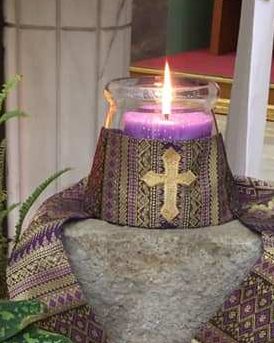
Larawan kuha ng may-akda, Kapilya ng Sacred Heart Novitiate, Novaliches, QC, 17 Marso 2025.

“I Don’t Know How to Love Him” (1971) by Yvonne Elliman

Lord My Chef Sunday Music by Fr. Nicanor F. Lalog II, 06 April 2025

This is the second time we have featured Ms. Yvonne Elliman’s I Don’t Know How to Love Him in our Sunday Music at this time of the year when the Sunday gospel is about the woman caught committing adultery.

Every time that story comes up, my mind automatically links it with this song sang by Ms. Elliman in both the Broadway and movie versions of the rock-opera Jesus Christ, Superstar where she played the role as Mary Magdalene who was believed for a long time as the woman caught committing adultery. Modern biblical scholarships have long debunked that belief but that song by Andrew Lloyd Weber and Tim Rice plus Elliman’s amazing interpretation has given us with so many perspectives about the gospel itself.

One thing we realized this year is how we – like the woman caught committing adultery meet Jesus Christ face-to-face to experience his immense love and mercy and forgiveness.

We encounter Jesus when we disarm ourselves of our false securities and pretenses, masks and camouflages that all cover our sins. It is when we come face-to-face with our sinful self when we eventually meet Jesus face-to-face too because that is when we surrender in silence like the woman caught in adultery and the mob to some degree because all the charges against us are true.

See also that it is only the fourth gospel that Jesus is portrayed “bending” low – first here before the woman caught committing adultery and secondly at the washing of the feet of his Apostles at their Last Supper. How lovely is that sight to behold, dear friends! Imagine God bending before us, giving us like the sinful woman and the mob that space for us to confront our true self, to realize and accept the whole realities we are all interconnected in love.

Only the woman remained – like the eleven Apostles at the Last Supper – because she was the only one willing to change, probably sorrowful and contrite for her sins. Contrary to our fears, Jesus has only love and mercy, kindness and forgiveness to anyone contrite and sorrowful of one’s sin that so unlike with the people’s wrath and anger, judgment and condemnation. St. Augustine perfectly described that moment in today’s gospel, Relicti sunt duo; misera et miserecordia (Two were left; misery and mercy). https://lordmychef.com/2025/04/05/lent-is-encountering-jesus/

Now, look at the first two stanzas of I Don’t Know How to Love Him:

I don't know how to love him
What to do, how to move him
I've been changed, yes really changed
In these past few days
When I've seen myself
I seem like someone else

I don't know how to take this
I don't see why he moves me
He's a man
He's just a man
And I've had so many
Men before
In very many ways
He's just one more

See the conversion and transformation of the woman caught in adultery expressed by Ms. Elliman in the song: I’ve been changed, yes really changed/ In these past few days/ When I’ve seen myself/ I seem like someone else. It is one of the great ironies in life: when we are most vulnerable and weakest, that is when we are also most truest to our self, that is when we truly grow and mature in life!

And this was all possible because of the gift of love and mercy of Jesus Christ, of encountering the Lord and Savior Himself in our own brokenness which the song and the singer captured so perfectly, He’s just a man/ And I’ve had so many men before/ In very many ways/ He’s just one more.

How amazing that the lyrics and the rendition blended perfectly, making us realize how Jesus is just like any other man but not just another additional man; Jesus is MORE than any one because He is the only who truly loves us most, offering us forgiveness once we strip ourselves naked before Him of all our sins and pride and pretensions. God’s love in Jesus Christ is beyond imagining. This we have seen in the parable of the prodigal son and now in the story of the woman caught committing adultery. Do not let your past sins prevent you from meeting Jesus face-to-face to finally experience that inner peace and joy you have been missing and searching for so long.

We are now in the final Sunday in Lent, next week is Palm Sunday, the start of the Holy Week. We can never experience the joy of Easter unless we join Christ’s Passion of emptying ourselves of sins and pride to be filled with His humility, justice and love.

Here is the lovely Ms. Elliman with her superb singing of I Don’t Know How to Love Him, hoping this helps you prepare in this final week of Lent.

From YouTube.com.

Lent is encountering Jesus

40 Shades of Lent by Fr. Nicanor F. Lalog II
Fifth Sunday in Lent, Cycle C, 06 April 2025
Isaiah 43:16-21 + Philippians 3:8-14 + John 8:1-11
Photo by author, Sacred Heart Novitiate Main Chapel, 17 March 2025.

Our gospel on this last Sunday in Lent is so similar in its beauty and simplicity -and drama – with last week’s parable of the prodigal son. In fact, some believe the style of the woman caught in adultery is very much like Luke but, let’s leave that to the experts.

On this beautiful Sunday, it is John’s turn to invite us to enter into the scene of his story set at the temple area shortly before the arrest of Jesus Christ.

Jesus went to the Mount of Olives. But early in the morning he arrived again in the temple area, and all the people started coming to him, and he sat down and taught them. Then the scribes and the Pharisees brought a woman who had been caught in adultery and made her stand in the middle (John 8:1-3).

Photo by author, Sacred Heart Novitiate, 17 March 2025.

Try entering the scene. See the woman who most likely almost naked draped only in a piece of cloth as proof of her committing adultery. The Pharisees and the scribes were ganging up on her to Jesus whom they wanted to test, “Teacher, this woman was caught in the very act of committing adultery. Now in the law, Moses commanded us to stone such women. So what do you say?”

Imagine being there, standing close to Jesus and the woman. How would you feel? Would you be able to look at the woman straight on her face? Nah… seems not good. Perhaps, glance only as you feel also her pain and shame. But, can you look straight at the angry mob? Probably for a while with much fears and trepidation along with a deep anger within you cannot express.

Most likely, it is only at Jesus you can look intently and longer because he is not looking at you. Tensions were rising and Jesus simply bent down, writing something on the ground with his finger while the Pharisees and scribes raised up their attacks against him and the lowly woman standing listlessly, so embarrassed, so ashamed. Even in tears.

Recall those moments when we too were caught in the midst of an undeniable transgression like her or, simply being a witness, someone caught in between of another person without any way out of his/her predicament. It must be so dark. So scary. And shameful.

Then, the unexpected happened: But when they continued asking him, he (Jesus) straightened up and said to them, “Let the one among you who is without sin be the first to throw a stone at her.” Again he bent down and wrote on the ground. and in response, they went away one by one, beginning with the elders. So he was left alone with the woman before him (John 8:7-9).

Photo by author, Sacred Heart Novitiate Main Chapel, 17 March 2025.

Many times, we encounter Jesus in our most vulnerable situation when we let go of our guards so to speak.

It is one of the great ironies in life: when we are most vulnerable and weakest, that is when we are also most truest to our self. And that is when we truly grow and mature in life.

That is when we feel peace and joy and freedom within when we are left alone with Jesus still looking down, writing with his finger on the ground to give us more space literally and figuratively speaking. It is not that Jesus wants to shame us or whatever but simply wants us to be true as he has always been true to us, full of love and mercy. Most of all, with all of Christ’s humility in bending, that is when we finally admit the need for a Savior, the need to be converted in him.

We encounter Jesus when we disarm ourselves of our false securities and pretenses, masks and camouflages that all cover our sins. It is when we come face-to-face with our sinful self when we eventually meet Jesus face-to-face too because that is when we surrender in silence like the woman caught in adultery and the mob to some degree because all the charges against us are true.

See also that it is only the fourth gospel that Jesus is portrayed “bending” low – first here before the woman caught committing adultery and secondly at the washing of the feet of his Apostles at their Last Supper. How lovely is that sight to behold, dear friends! Imagine God bending before us, giving us like the sinful woman and the mob that space for us to confront our true self, to realize and accept the whole realities we are all interconnected in love.

Only the woman remained – like the eleven Apostles at the Last Supper – because she was the only one willing to change, probably sorrowful and contrite for her sins. Contrary to our fears, Jesus has only love and mercy, kindness and forgiveness to anyone contrite and sorrowful of one’s sin that so unlike with the people’s wrath and anger, judgment and condemnation. St. Augustine perfectly described that moment in today’s gospel, Relicti sunt duo; misera et miserecordia (Two were left; misery and mercy).

Then Jesus straightened up and said to her, “Woman, where are they? Has no one condemned you?” She replied, “No one, sir.” Then Jesus said, “Neither do I condemn you. Go, and from now on do not sin anymore” (John 8:10-11).

Stations of the Cross, Fatima University & Medical Center, Valenzuela City, 28 March 2025.

We are now on the final Sunday of Lent. Next week will be the Palm Sunday of the Lord’s Passion that ushers in the Holy Week leading to the Sacred Triduum of Holy Thursday Evening, Good Friday and Easter Vigil and on to the Mother of all Feasts, Easter.

As we get closer to the holiest week of the year, our liturgy invites us to intensify our Lenten practices to be “conformed to Christ’s death” as St. Paul urged us in the second reading which opened with these beautiful confession:

“Brothers and sisters: I consider everything as a loss because of the supreme good of knowing Christ Jesus as my Lord. For his sake I have accepted the loss of all things and I consider them so much rubbish, that I may gain Christ” (Philippians 3:8).

The pillars of Lent – prayer, fasting and alms-giving – aim to empty us of our very selves, of our pride and sins that all prevent us from encountering Jesus Christ always coming to us full of love and mercy. On this final stretch of Lent, are we ready to let go of ourselves and to let God?

Today, Jesus assures us of his love and forgiveness for our sins. The first reading tells us of God asking us to forget the events of the past. Just come home to him. And never leave him like the woman caught committing adultery. Amen. Have blessed week ahead.

Stations of the Cross, College of Maritime Engineering, Our Lady of FatIma University, 28 March 2025.