The Lord Is My Chef Breakfast Recipe, Tuesday, Easter Week-II, 21 April 2020
Acts of the Apostles 4:32-37 ><)))*> +++ 0 +++ <*(((>< John 3:7-15
Posted by Marivic Tribiana on her Facebook 18 April 2020 when a huge fire hit “Happyland” in Tondo district, Manila, leaving 450 families homeless with one fatality.
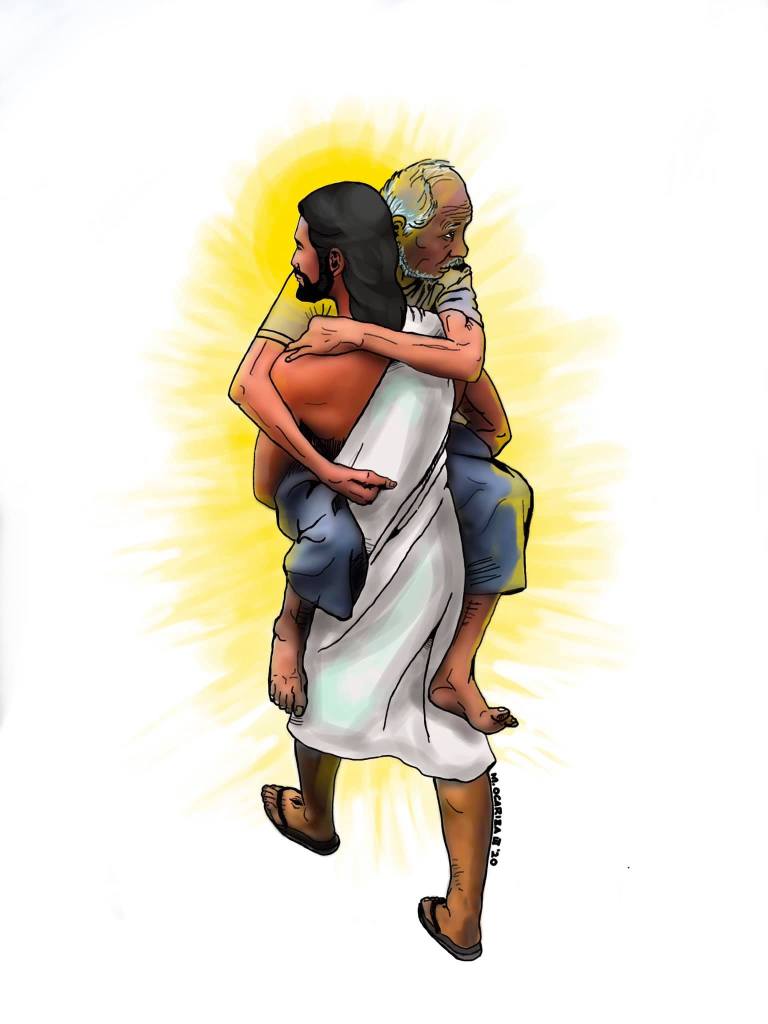
Artwork by Fr. Marc Ocariza using Digital Art Timelapse after seeing photo at left, claiming it was like seeing Jesus Christ carrying the old man as he contemplated the Divine Mercy that Saturday.
Glory and praise to you, O Lord Jesus Christ for coming to us, and continuing to come to us most especially amid this COVID-19 pandemic.
Increase our faith in you, awaken our being “born from above” in you in the Holy Spirit so that we may continue to find you and follow you in the ordinary things that happen to us.
It is not enough that we as a “community of believers be of one heart and mind, having everything in common” (Acts 4:32).
As a community united in you, Lord Jesus, keep us strong in fulfilling our mission from you.
Remind us always that we merely represent you in this mission.
We are not the ones who will change the world but you, O Lord.
Give us the grace to forget ourselves and carry our cross daily so we can follow you more closely every day.
Most of all, give us the courage to seek your ways and follow wherever your Holy Spirit leads us to so we can best serve you without ever thinking of our very selves or anything in return except that we are doing your most holy will. Amen.
The Facebook post by Marivic Tribiana that inspired Fr. Marc to make a digital representation of the scene amid the huge fire with thick, black smokes billowing above visible kilometers ahead in a city under an extended lockdown due to Covid-19.
He dubbed his artwork “Nag-aalab na Pag-Ibig” (Burning Love), an interplay between the raging fire in the area and the burning love of Jesus to the old man being carried.
That is why we need to be “born from above” to be able to understand teachings of Jesus about heavenly things on earth (Jn.3:12), remaining open to leading of the Holy Spirit to follow the Lord closely, not our selves, nor our plans, nor our personal agenda.
Lawiswis Ng Salita ni P. Nicanor F. Lalog II, Ika-20 ng Abril 2020
Nakita lamang kita
kamakalawa sa balita
ng social media
karga-karga isang matanda
habang lumilikas mga nasunugan
sa gitna nitong lockdown
doon sa inyong tirahan
kung tawagi'y "Happyland"
sa Tondo na napakaraming tao.
Hindi ko sukat akalain
sa sumunod na pagtingin
naiba at nabago ang lahat sa akin
sa larawan ng naturang balita pa rin
matapos ito ay guhitan at kulayan
dahil kinabukasan ay kapistahan
ng Divine Mercy
at ikaw pala iyan, Jesus
aming Panginoon at Diyos.
Sa gitna ng naglalagablab na apoy
nag-aalab mong pag-ibig Panginoon
ang umantig sa pananalig
ng Iyong dibuhista at pari
Marc Ocariza kaagad nagpinta
gamit bagong teknolohiya
upang ipakita kakaiba niyang nadama
na sadyang tamang tama naman pala
upang itanghal iyong Mabathalang Awa talaga.
"Panginoon ko at Diyos ko!"
ang panalanging akin ding nasambit
katulad ni Tomas na apostol mo
nang muli Kang magpakita sa kanila;
tunay nga pala
mapapalad ang mga nananalig
kahit hindi ka nakikita
dahil hindi itong aming mga mata
ang ginagamit kungdi aming pagsampalataya.
Nawa ikaw ang aming makita
mahabaging Jesus
sa gitna ng dilim nitong COVID-19
Iyong Dakilang Awa aming maipadama
sa pamamagitan ng paglimot sa aming sarili
 at pagpapasan ng krus upang Ikaw ay masundan
tangi Mong kalooban ang bigyang katuparan
upang Ikaw ay maranasan at masaksihan
ng kapwa naming nahihirapan.
Turuan mo kami, maawaing Jesus
na muling magtiwala sa iyo
kumapit ng mahigpit
hindi lamang kapag nagigipit
at huwag nang ipinipilit
aming mga naiisip at mga panaginip
na kailanma'y hindi nakahagip
sa ginawa Mong pagsagip at malasakit
upang kami ngayo'y mapuno ng Iyong kariktan at kabutihan! *
*Maraming salamat kay Marivic Tribiana (hindi ko kakilala) na nagpost sa kanyang Facebook ng unang larawan ni kuya pasan-pasan lolo niya sa kainitan ng sunog sa Happyland noong Abril 18, 2020.
At higit ding pasasalamat ko kay P. Marc Ocariza sa pagmumulat sa aking mga mata ng kanyang pagninilay at obra gamit ang Digital Art Timelapse na kanyang tinaguriang “Nag-aalab na Pag-ibig”.
Ang lahat ng ito ay para sa higit na ikadadakila ng Diyos na nagbigay sa atin ng Kanyang Anak “hindi upang tayo ay mapahamak kungdi maligtas” lalo ngayong panahon ng pandemiya ng COVDI-19.
At sa inyo, maraming salamat po sa pagsubaybay sa Lawiswis ng Salita.
The Lord Is My Chef Breakfast Recipe, Saturday within the Octave of Easter, 18 April 2020
Acts 4:13-21 ><)))*> +++ <*(((>< Mark 16:9-15
Mass in my parish without a congregation, except for two birds.
Praise and glory to you, O Lord Jesus Christ, our Eternal High Priest for this most joyous day of our lives with my six other classmates, our 22nd Presbyteral anniversary that coincides with the birthday of or fifth Bishop, the Most Rev. Dennis Villarojo!
In a few minutes I will be celebrating your Holy Sacrifice of the Mass alone – no congregation, no families and friends except for the birds keeping me company since last month.
First, it was my birthday last month; today, our presbyteral anniversary still in lockdown and on my third “self-quarantine” after exposing myself to some possible carriers. At first, I felt tired like the Simon Peter and the rest in yesterday’s gospel when I felt like going back to my old ways. But, the day dragged on without catching any fish at all when in the afternoon, a sudden burst of your light made me realize to search you more in this time of darkness. You taught us through St. Ignatius of Loyola in our 30-day retreat to always be positively indifferent to you, that I may be poor than rich, sick than healthy…
I do not complain, sweet dear Jesus, that we are still in a lockdown or in self-quarantine again. These are all part of my life in you and with you. Besides, I have no plans of great celebrations as it has always been slightly like this in the past 22 years. And maybe, this is one way of you telling us to be alone with you longer, more intensely.
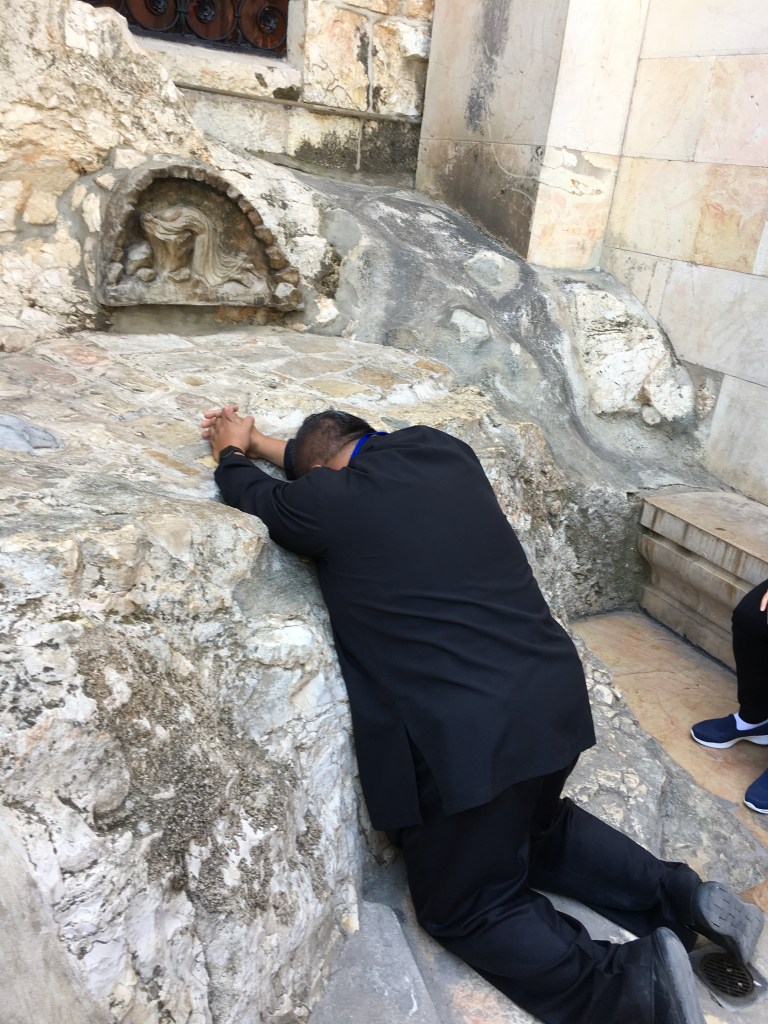
Praying at the Garden of Gethsemane in the Holy Land, 2019. Photo by Atty. Polaris Grace Rivas-Beron.
What do I have to pray for today, Lord?
Nothing really but the usual things I ask you day in, day out: when I die, I will be with you in Paradise like that thief on the Cross. I have no desire of going anywhere or having anything more than what I need because only you suffice.
Make me your faithful servant that everyday I may know you more, love you more, and follow you more closely. May I do your holy will in every here and now in the way you would want it to be done, not mine. And always, give me the gifts of hiddenness, of stillness for this is not really about me at all but more of YOU.
You have given me with so much, Jesus, but I have given so little. Teach me to give more of my talents, more of my love, more of my patience, more of myself, and most of all, more of YOU to others.
In my prayers yesterday and last night, I saw myself somehow with Peter and John in the first reading…
Observing the boldness of Peter and John and perceived them to be uneducated, ordinary men, the leaders, elders, and the scribes were amazed, and they recognized them as the companions of Jesus.
Acts 4:13
Let me be recognized more than ever as your companion, Lord Jesus. I have nothing special to be chosen as your priest. It is all your love and grace freely given to me.
May I have the courage like that of Peter and John to be bold and daring to proclaim you are risen, you are alive, that you are the Christ especially in this time of quarantine.
Keep me faithful to your mandate to “Go into the whole world and proclaim the gospel to every creature” (Mk.16:15).
The Lord Is My Chef Breakfast Recipe for the Soul, Friday within the Octave of Easter, 17 April 2020
Acts of the Apostles 4:1-12 <*(((>< +++ ><)))*> John 21:1-14
Photo by Mr. Chester Ocampo in Catanduanes, 2019.
Dearest Jesus:
Today I am so tempted like your Apostles to go back to previous life, to do the usual old things amid the very trying times of this quarantine period.
Simon Peter said to them, “I am going fishing.” They said to him, “We also will come with you.” So they went out and got into the boat, but that night they caught nothing. When it was already dawn, Jesus was standing on the shore; but the disciples did not realize that it was Jesus. Jesus said to them, “Children, have you caught anything to eat?” They answered him, “No.” So he said to them, “Cast the net over the right side of the boat and you will find something.” So they cast it, and were not able to pull it in because of the number of fish. So the disciple whom Jesus loved said to Peter, “It is the Lord.” When Simon Peter heard that it was the Lord, he tucked in his garments for he was lightly clad, and jumped into the sea.
John 21:3-7
Like your Apostles, I am supposed to be happy, joyous because you have risen, Lord.
But, what happened that you are suddenly nowhere to be found?
Why, dear Jesus, in our joy of sharing you with others amid this quarantine period, problems arise, when we have to go back into self-quarantine, to be in total isolation to prevent the spread of this dreaded corona virus?
Why do people still lie, careless in their ways, particularly our leaders, our co-workers?
Help us to find you in all these things, Lord.
Open our minds as Peter and John later explained to the chief priests that it is you whom we must always find and see in every event in our lives, to always try to find the good things happening amidst the many dismal situation we are into.
Most of all, give us the grace of the sight of faith like your beloved disciple who immediately recognized you upon seeing the bountiful catch of fish. Amen.
The Lord Is My Chef Breakfast Recipe for the Soul, Thursday within the Octave of Easter, 16 April 2020
Acts of the Apostles 3:11-26 <*(((>< +++ ><)))*> Luke 24:35-48
Dearest Lord Jesus Christ:
Today I pray for just one simple thing for everyone: that we believe in you and the One who sent you.
How sad, O Lord, that in the midst of this pandemic, we still refuse to believe in you with some people continuing to rely more in themselves, in their sciences, in their technologies, in their peoples.
How sad, O Lord, when our religious beliefs border mostly between the two extremes of either blaming you for every tragedy and calamity we go through or, forgetting and even disregarding you from every triumph and victory we achieve in life.
Enlighten our minds and our hearts, Jesus.
“Now I know, brothers and sisters that yo acted out of ignorance, just as your leaders did; but God has thus brought to fulfillment what he had announced beforehand through the mouth of all the prophets, that his Christ would suffer. Repent, therefore, and be converted, that your sins may be wiped away, and the Lord may grant you times of refreshment and send you the Christ already appointed for you, Jesus…”
Acts of the Apostles 3:17-20
Indeed, O Lord, to believe in you is the starting point of everything.
Give us the grace to recognize you within us most especially when we break the bread even through the wonders of the modern internet.
One common thing that the evangelists tell us after you rose from the dead is how you would always join your disciples on the table and share meal with them.
In this time when churches are closed and all we can do is celebrate the Eucharist on TV or the Internet, pour out your grace upon us to continue to recognize and experience you in our table fellowship to remove our doubts of your presence and assure us of your salvation.
“Why are you troubled? And why do questions arise in your hearts?” While they were still incredulous for joy and were amazed, he asked them, “Have you anything here to eat?” They gave him a piece of baked fish; he took it and ate it in front of them. He said to them, “These are my words that I spoke to you while I was still with you, that everything written about me in the law of Moses and in then prophets and psalms must be fulfilled.” Then he opened their minds to understand the Scriptures. And he said to them, “Thus it is written that the Christ would suffer and rise from the dead on the third day and that repentance, for the forgiveness of sins, would be preached in his name to all the nations, beginning from Jerusalem. You are witnesses of these things.”
Luke 24:38, 41-48
Help us, Jesus in our unbelief, increase our little faith in you in these times of crisis.
Keep us strong in being your witnesses in this modern time when we have so many other gods being worshipped. Amen.
Quiet Storm by Fr. Nicanor F. Lalog II, 15 April 2020
Photo by Mr. Chester Ocampo, Immaculate Conception Seminary chapel, 2014.
It was three in the morning
my day was earlier than usual calling
while kneeling I began praying
I could not believe the words coming
for they are meant before sleeping:
"Father, into your hands, I commend my spirit."
Since the beginning
of this quarantine
there is this feeling
seeping within, asking
what is happening
but scared when answering.
It is reality now biting
reminding me of one thing
that is so intimidating
haunting me ever since
not just of dying
but of being alone.
I know it is the Easter season
but there must be a reason
why this is going on:
I have never felt alone
until I have grown old
when there is nobody home.
When Jesus died on the cross
he was alone but never abandoned
for when he implored
the Psalm for his farewell song
he added the word "Father" that will lead us on.
Father, into your hands I commend my spirit!
Such was the loneliness of the Lord
but in one word expressed his oneness
and closeness amid the great darkness
a love so immense, so intense
where every life and spirit here on earth commenced.
What a unique invitation
from Jesus to follow him on the Cross
into his Resurrection
by being lonely and abandoned
so we may pray in his filial way
Father, into your hands I commend my spirit!
It is in calling God our Father
when we are far and lost
that we can truly have that intimacy
with our Maker who breathed into thee
the very spirit that keep us alive
here and in eternity.
The Lord Is My Chef Recipe, Holy Thursday, 09 April 2020
Our altar is ready
the tabernacle is empty
but are we also hungry
or thirsty for Thee?
O Lord have mercy
and please empty
our hearts of pride,
fill us with your humility,
justice and love
so we may say to Thee
on this Holy Thursday
"Lord, I am not worthy
to receive Thee but only
say the word and I shall
be healed."
Tonight is “Spy Wednesday” – the night traitors and betrayers are put on the spotlight because it was on this night after Palm Sunday when Judas Iscariot struck a deal with the chief priests to hand them over Jesus for 30 pieces of silver (Mt. 26:14-16).
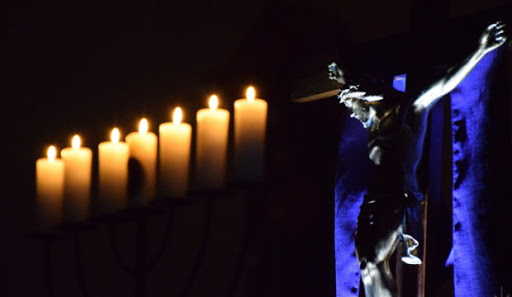
The “Tenebrae” is celebrated in some churches when candles are gradually extinguished with the beating of drums and sounding of matraca to evoke silence and some fear among people as they leave in total darkness to signal the temporary victory of evil in the world for tomorrow we enter the Paschal Triduum of Holy Thursday, Good Friday and Easter Vigil of the Lord.
From Google.
Darkness generally evokes evil and sin, uncertainties and sufferings. But, at the same time, darkness preludes light!
That is why Jesus Christ was born during the darkest night of the year to bring us light of salvation.
Beginning tonight, especially tomorrow at his agony in the garden, we shall see Christ entering through darkness reaching its climax on Friday when he dies on the cross with the whole earth covered in darkness, rising on Easter in all his glory and majesty.
Our present situation in an extended Luzon-wide lockdown offers us this unique experience of darkness within and without where we can learn some important lessons from the Lord’s dark hours beginning tomorrow evening of his Last Supper.
St. John gives us a glimpse into how we must deal with life’s darkness that plagues us almost daily with his unique story of the Lord’s washing of his disciples’ feet on the night he was betrayed.
Before the feast of Passover, Jesus knew that his hour had come to pass from this world to the Father. He loved his own in the world and he loved them to the end. The devil had already induced Judas, son of Simon the Iscariot, to hand him over. So, during supper… he rose from supper and took off his outer garments. He took a towel and tied it around his waist. Then he poured water into a basin and began to wash the disciples’ feet and dry them with the towel around his waist. He came to Simon Peter…
John 13:1-2, 4-6
Photo from aleteia.org.
It is very interesting to reflect how Judas Iscariot and Simon Peter dealt with their own inner darkness on that night of Holy Thursday when Jesus was arrested.
Though Judas Iscariot and Simon Peter are poles apart in their personalities, they both give us some traits that are so characteristic also of our very selves when we are in darkness. In the end, we shall see how Jesus turned the darkness of Holy Thursday into becoming the very light of Easter.
Getting lost in darkness like Judas Iscariot
Right after explaining the meaning of his washing of their feet and exhorting them to do the same to one another, Jesus begins to speak of Judas Iscariot as his betrayer.
When he had said this, Jesus was deeply troubled and testified, “Amen, amen, I say to you, one of you will betray me …It is the one to whom I hand the morsel after I had dipped it.” So he dipped the morsel and handed it to Judas, son of Simon the Iscariot. After he took the morsel, Satan entered him… and left at once. And it was night.
John 13:21, 26-27, 30
Photo from desiringgod.org
The scene is very dramatic.
Imagine the darkness outside the streets of Jerusalem in the stillness of the night and the darkness inside the Upper Room where they were staying.
More darker than that was the darkness among the Apostles not understanding what Jesus was saying about his betrayer because they thought when Judas left, he was being told to buy more wine or give money to the poor!
Most of all, imagine the darkness within Judas.
To betray means to hand over to suffering someone dear to you.
That’s one darkness we always have within, of betraying Jesus, betraying our loved ones because we have found somebody else to love more than them. Satan had taken over Judas. The same thing happens to us when we sin, when we love someone more than those who truly love us or those we have vowed to love always.
And the darkest darkness of all is after handing over our loved ones, after dumping them for something or somebody else, we realize deep within the beautiful light of truth and love imprinted in our hearts by our betrayed loved ones – then doubt it too!
The flickering light of truth and love within is short lived that we immediately extinguish it, plunging us into total darkness of destruction like Judas when he hanged himself.
See how Judas went back to the chief priests because “he had sinned”, giving them back the 30 pieces of silver to regain Jesus.
Here we find the glow of Jesus, of his teachings and friendship within Judas still etched in his heart — the light of truth and love flickering within.
Any person along with their kindness and goodness like Jesus, our family and true friends can never be removed from one’s heart and person. They will always be there, sometimes spurting out in our unguarded moments because they are very true.
That is the darkest darkness of Judas – and of some of us – who think we can never be forgiven by God, that we are doomed, that there is no more hope and any chance at all.
See how the evangelist said it: “Judas left at once. And it was night.”
And that is getting lost in darkness permanently, eaten up by darkness within us because we refuse to believe in the reality of a loving and forgiving God who had come to plunge into the darkness of death to be one with us so we can be one in him. What a loss.
Groping in the dark into the light like Peter
Photo by author, Church of Gallicantu, Jerusalem where the cock crowed after Peter denied Jesus the third time, May 2017.
Of the Twelve, it is perhaps with Simon Peter we always find ourselves identified with: the eager beaver, almost a “bolero” type who is so good in speaking but many times cannot walk his talk.
“Master, are you going to wash my feet?” Jesus answered and said to him, “What I am doing, you do not understand now, but you will understand later.” Peter said to him, “You will never wash my feet.”
John 13:6-8
Here is Peter so typical of us: always assuming of knowing what is right, which is best, as if we have a monopoly of the light when in fact we are in darkness.
See how during the trial of Jesus before the priests, Peter denied him thrice, declaring he never knew Jesus while outside in the dark, completely in contrast with Jesus brilliantly answering every question and false accusation against him inside among his accusers!
Many times in our lives, it is so easy for us to speak on everything when we are in our comfort zones, safe and secured in our lives and career. But when left or thrown out into the harsh realities of life, we grope in the darkness of ignorance and incompetence, trials and difficulties.
How often we are like Peter refusing Jesus to wash our feet because we could not accept the Lord being so humble to do that simply because he is the Lord and Master who must never bow low before anyone.
And that is one darkness we refuse to let go now shaken and shattered by the pandemic lockdown! The people we used to look down upon are mostly now in the frontlines providing us with all the comforts we enjoy in this crisis like electricity, internet, security, food, and other basic services.
Bronze statue of the call of Peter by Jesus. Photo by author, May 2017.
We have always thought of the world, of peoples in hierarchy, in certain status where there are clear delineations and levels of importance, totally forgetting the lessons of Jesus of being like a child, of service and humility: “whoever wants to be great must be the least and servant of all.”
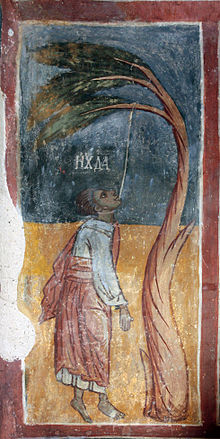
According to Matthew and Luke, Peter realized his sins – the darkness within him – of denying Jesus thrice after the cock crowed that he left the scene weeping bitterly, feeling so sorry. Eventually after Easter, Peter would meet Jesus again on the shores of the Lake of Tiberias, asking him thrice, “do you love me?”
Peter realized how dark his world has always been but in that instance when he declared his love that is so limited and weak did he finally see the light of Christ in his love and mercy!
Unlike Judas, Peter moved out of darkness and finally saw the light in the Risen Lord right in the very place where everything started when he was called to be a fisher of men, in his humanity as he was called by his original name, “Simon, son of Jonah, do you love me?”.
Human love is always imperfect and Jesus knows this perfectly well!
The best way to step out of darkness within us is to be like Simon — simply be your imperfect self, accepting one’s sins and weakness for that is when we can truly love Jesus who is the only one who can love us perfectly.
Overcoming darkness in, Jesus, with Jesus, through Jesus
Though the fourth gospel and the synoptic gospels of Matthew, Mark, and Luke differ in providing us with the transition from the Upper Room of the Last Supper into the agony in the garden, the four evangelists provide us with one clear message at how Jesus faced darkness: with prayer, of being one in the Father.
Even on the cross of widespread darkness, Jesus spoke only to pray to the Father.
Then Jesus came with them to a place called Gethsemane, and he said to his disciples, “Sit here while I go over there and pray.” He took along Peter and the two sons of Zebedee, and began to feel sorrow and distress.
Matthew 26:36-37
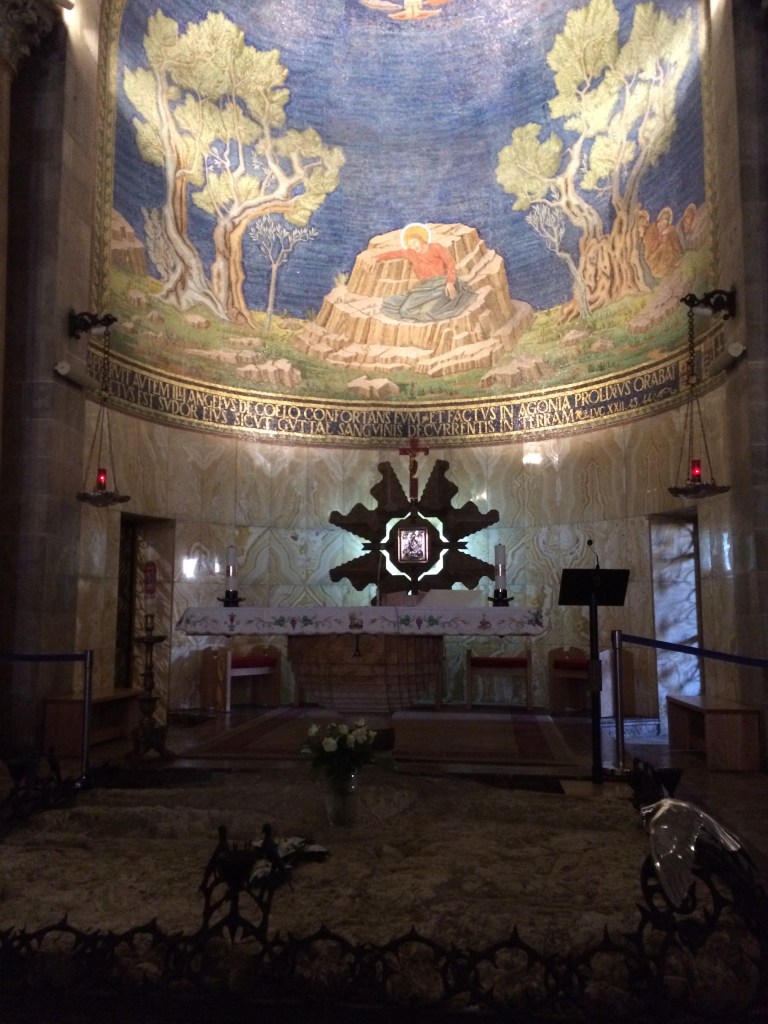
Photo by author, altar of the Church of All Nations beside the Garden of Gethsemane, May 2017. The church is always dimly lit to keep the sense of darkness during the Agony in the Garden of Jesus.
Before, darkness for man was seen more as a curse falling under the realm of evil and sin; but, with the coming of Jesus, darkness became a blessing, a prelude to the coming of light.
We have mentioned at the start of our reflection that Jesus was born during the darkest night of the year to show us he that is the light of the world, who had come to enlighten us in this widespread darkness, within us and outside us.
As the light of the world, Jesus was no stranger to darkness which he conquered and tamed in many instances like when they were caught in a storm at sea and in fact, when walked on water to join his disciples caught in another storm.
But most of all, Jesus had befriended darkness and made it a prelude to light.
How? By always praying during darkness. By prayer, it is more than reciting some prayers common during his time as a Jew but as a form of submission to the will of the Father. Jesus befriended darkness by setting aside, forgetting his very self to let the Father’s will be done.
Bass relief of agony in the garden on the wall of the Church of All Nations at Gethsemane. Photo by author, May 2019.
This he showed so well in two instances, first on Mount Tabor where he transfigured and second in Gethsemane before his arrest.
In both events, Jesus showed us the path to overcoming darkness is always through prayers, of being one in the Father.
It is in darkness when God is most closest to us because it is then when we get a glimpse of himself, of his love and mercy, of his own sufferings and pains, and of his glory.
This is something the three privileged disciples – Simon Peter, James and his brother John – did not realize while being with Jesus at both instances until after Easter. We are those three who always fall asleep, who could not keep with praying in Jesus, with Jesus, and through Jesus.
It was in the darkness of the night when Jesus spent most of his prayer periods, communing with the Father up in a mountain or a deserted place.
On Mount Tabor, Jesus showed his coming glory while in Gethsemane he showed his coming suffering and death. But whether in Gethsemane or on Mount Tabor, it is always Jesus we meet inviting us to share in his oneness with the Father, in his power in the Holy Spirit to overcome every darkness in life.
And the good news is he had already won for us!
Photo by Mr. Raffy Tima of GMA-7 News of Mt. Samat with the Memorial Cross across the Manila Bay following clear skies resulting from the lockdown imposed since March 17, 2020.
In these extended darker days of quarantine period, let us come to the Lord closer in prayer to. experience more of his Passion and Death, more of his darkness so we may see his coming glory when everything is finally cleared in this corona pandemic.
Prayer does not necessarily change things but primarily changes the person first. And that is when prayer changes everything when we become like Jesus in praying.
Jesus is asking us to leave everything behind, to forget one’s self anew to rediscover him in this darkness when we get out of our comfort zones to see the many sufferings he continues to endure with our brothers and sisters with lesser things in this life, with those in total darkness, with those groping in the dark.
Now more than ever, we have realized the beauty of poverty and simplicity, of persons than things.
And most especially of darkness itself becoming light for us in this tunnel.
May Jesus enlighten us and vanish all darkness in us so that soon, we shall celebrate together the joy of his coming again in this world darkened by sin. Amen.
40 Shades of Lent, Sunday Week-V, Year-A, 29 March 2020
Ezekiel 37:12-14 +++ Romans 8:8-11 +++ John 11:1-45
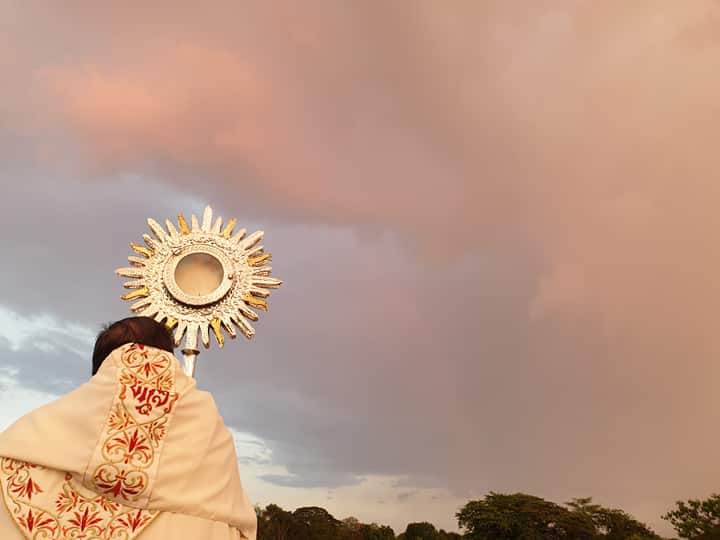
Photo by Ms. Anne Ramos last March 22, 2020 during our procession of Blessed Sacrament in the Parish when a rainbow appeared at the horizon.
Once again as we near the closing of our Lenten journey, Jesus does another “sign” or miracle — his last and grandest in anticipation of his coming Passion, Death, and Resurrection: the raising from death of his friend Lazarus.
What is so beautiful in this story is how the evangelist involves us his readers and hearers into a conversation with Jesus unlike last Sunday at the healing of a man born blind where the characters conversed only among themselves.
The raising of Lazarus to life is more engaging because it is deeply personal and intimate as it involves friends dearest to Jesus — exactly like each one of us! And that is why it is also very timely as we go through the ongoing lockdown due to COVID-19.
When Jesus heard this he said, “This illness is not to end in death, but is for the glory of God, that the Son of God may be glorified through it.”
John 11:4
My dear family and friends, Jesus assures us today of the Father’s love and healing, that he would save us from the deadly corona virus. Come and let us converse with him with the sisters of Lazarus, Martha and Mary.
After my “private Mass” (Missa sine populo) during the Solemnity of the Annunciation, 25 March 2020.
Presence of Jesus
Martha said to Jesus, “Lord, if you had been here, my brother would not have died. But even now I know that whatever you ask of God, God will give you.”
John 11:21-22
Twice do we hear this line in this very long story of the raising of Lazarus when Mary repeated it upon meeting Jesus later at the entrance of their town of Bethany.
And like Martha and Mary, we always say it to Jesus too as if he ever leaves us alone!
“Lord, if you had been here…”
Jesus is always with us.
We are the ones who always leave Jesus behind.
We always have so many other things to do, so many other people to meet that we have no time to truly pray and most of all, celebrate the Sunday Mass every week.
It is my hope that following the suspension of the “public Masses” due to lockdown, people now realize the value of the Holy Eucharist which is the “summit” of our Christian life where we are nourished by the words of God and strengthened by the Body and Blood of Christ.
Photo from Forbes.com via Facebook, 2019.
Long before we were told to observe “social distancing” in this time of pandemic, we have long been distant from one another and from God.
How ironic that these modern means of communications were invented to bring us closer but have actually brought us farther apart! Most often, we are close enough with someone miles across the seas but too distant and cold to persons physically near us, even seated beside us.
Let us spend more time with our family and most especially with God in prayer during this enhanced quarantine period to be the presence of Christ with one another. Let us remember Fr. Patrick Peyton’s expression, “The family that prays together, stays together; a world at prayer is a world at peace”.
Remember: the most wonderful and enriching relationships we can have are those rooted in Jesus Christ who is always present in us.
Jesus is perturbed and deeply troubled
While praying over this long gospel, this photo by Raffy Lerma kept on flashing in my mind, showing me how Jesus must have reacted upon seeing Mary weeping over the death of her brother Lazarus.
He became perturbed and deeply troubled, and said, “Where have you laid him?” They said to him, “Sir, come and see.” And Jesus wept.
John 11:33-35
Like our gospel today, Lerma’s photo of a mother crying over her son lost to “tokhang” at the height of this administration’s war against drug in July 2016 is very conversant, so moving like the Pieta by Michaelangelo in Rome. In fact, the government doubted the veracity of the photo, claiming through its trolls it was merely “staged” or “drawing” as we say in journalism. The photo is authentic because the event truly happened. And continued to happen before this lockdown.
What I like most with this photo is the composure of the mother. You can feel she was deeply sad and troubled, weeping without the hysterical theatrics or palahaw in Tagalog that we see in many instances like funerals.
Photo by Mr. Jay Javier, Quiapo, January 2020.
Multiply that to the highest degree and we get the image of Jesus “perturbed and deeply troubled, weeping” at the death of his friend Lazarus.
There is the gentle yet firm mastery by Jesus of the situation, of the loss and tragedy.
No hysterics nor theatrics. Pure and all-encompassing presence.
It would be the same mastery and composure Jesus would exhibit at his coming Passion and Death, reaching its highest point on Easter.
Here we find Jesus Christ truly human, truly Divine. Yes, he was perturbed and deeply troubled; he cried and wept not because of weakness but rather more of strength, of being true and determined in overcoming not only his coming Passion but most of all, our own setbacks and losses.
Have faith, my dear reader. Jesus is surely “perturbed and deeply troubled, weeping” again with us in this time of the corona pandemic. Step back and let him be himself in being one with us; then, wait and see what he is going to do next for us.
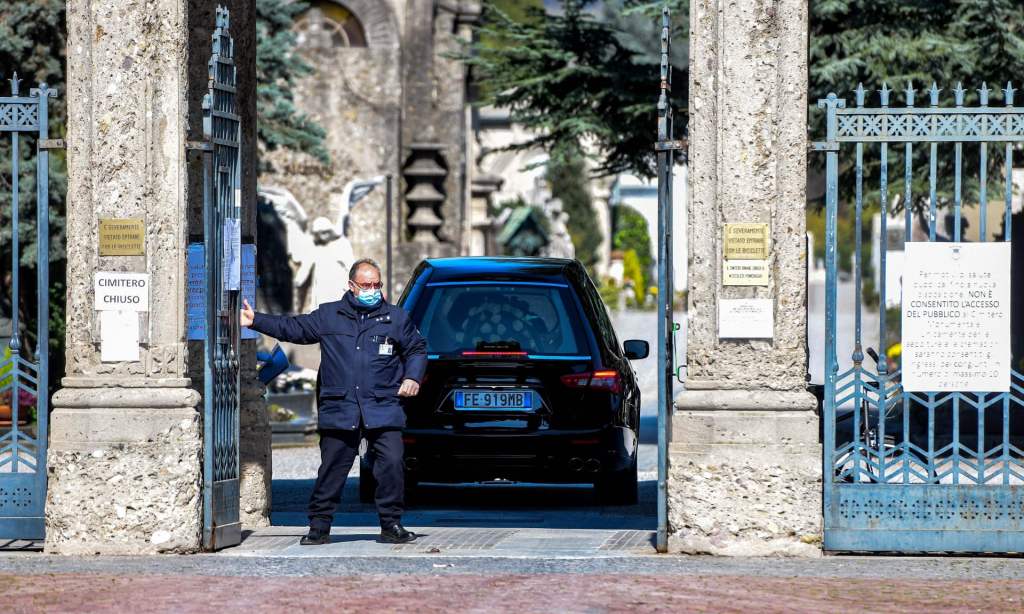
Photo from theguardian.com, 19 March 2020 reporting how a “generation has died” in Bergamo, Italy struggling with 1959 deaths from corona virus that has overwhelmed the nation’s funeral sector.
Jesus joins us in death so we can rise to life in him
Today is not a beautiful day to die, especially for victims of COVID-19. No wakes. No Masses. Just simple blessings after cremation. If ever possible.
The scenes from Italy are deeply disturbing that has become the new epicenter of corona pandemic. According to a report last Monday, the obituary page of a local newspaper had increased tenfold in a week, listing up to 150 deaths daily! More disturbing is the fact that “death and mourning happen in isolation”.
Our readings this Sunday speak a lot about death symbolized by graves.
But not on a morbid sense like a defeat or a loss; rather, as a victory, a raising to new life!
Thus says the Lord God: O my people, I will open your graves and have you rise from them, and bring you back to the land of Israel. Then you shall know that I am the Lord, when I open your graves and have you rise from them, O my people! I will put my spirit in you that you may live.
Ezekiel 37:12-14
Ezekiel proclaimed these words of the Lord to the Israelites during their Babylonian Exile when they lost everything and everyone, including God as they thought have forsaken them for their sinfulness. This prophecy is finally fulfilled in Christ’s coming and victory over death on Easter.
In calling back Lazarus to life, Jesus shows us in this scene his tremendous power over death and defeat, agony and pain, sin and evil. It is a prefiguration to a grander scale of his own Resurrection on Easter after the Good Friday.
And when he had said this, he cried out in a loud voice, “Lazarus, come out!” The dead man came out, tied hand and foot with burial bands, and his face was wrapped in cloth. So Jesus said to them, “Untie him and let him go.”
John 11:43-44
Photo by Mr. Raffy Tima of GMA-7 News. Used with permission. Seen here from atop the GMA Network Center in QC is Mt. Samat in Bataan with the Memorial Cross visible, across the Manila Bay, taken on 26 March 2020.
Do you believe this?
Jesus is calling us to have faith in him, to believe in him especially in this time of COVID-19 pandemic. And like his question to Martha which he repeated twice, the Lord is asking us the same question today:
Jesus told her, “I am the resurrection and the life; whoever believes in me, even if he dies, will live, and everyone who lives and believes in me will never die. Do you believe this?
John 11:25-26
Do you believe in him, Jesus the Christ?
Good things have also been happening lately in this two-week old lockdown.
Families are again getting together, staying together. Finally we now have more time than ever to converse once again as husband and wife, children and parents, brothers and sisters.
Some people have rediscovered God and are back to praying again, to believing again.
Even Mother Nature is said to have taken a big break during this lockdown, giving us spectacular views never seen before due to cleaner air, less pollution and congestion in the cities.
These are all conversations going on – thanks to COVID-19!
Let us join the conversations with our loved ones, with nature, with our self, and with God.
Below is one of my favorite photos this week taken by GMA-7 reporter Mr. Raffy Tima. Again, another photo conversing with us, like Jesus in the story of the raising to life of Lazarus.
See the Memorial Cross on Mt. Samat in Bataan?
The raising of Lazarus is the “sign” or miracle as the other evangelists would say, that prefigures the definitive victory of Jesus on the cross.
Like the sisters of Lazarus, believe in Jesus who is awakening us today amid the threats or crosses of corona virus to bear all these sufferings, to passover like him to the life that bodily death cannot touch “through his Spirit dwelling in us” (Rom. 8:11). Amen.
40 Shades of Lent, Wednesday, Solemnity of the Annunciation, 25 March 2020
Isaiah 7:10-14; 8:10 +++ Hebrews 10:4-10 +++ Luke 1:26-38
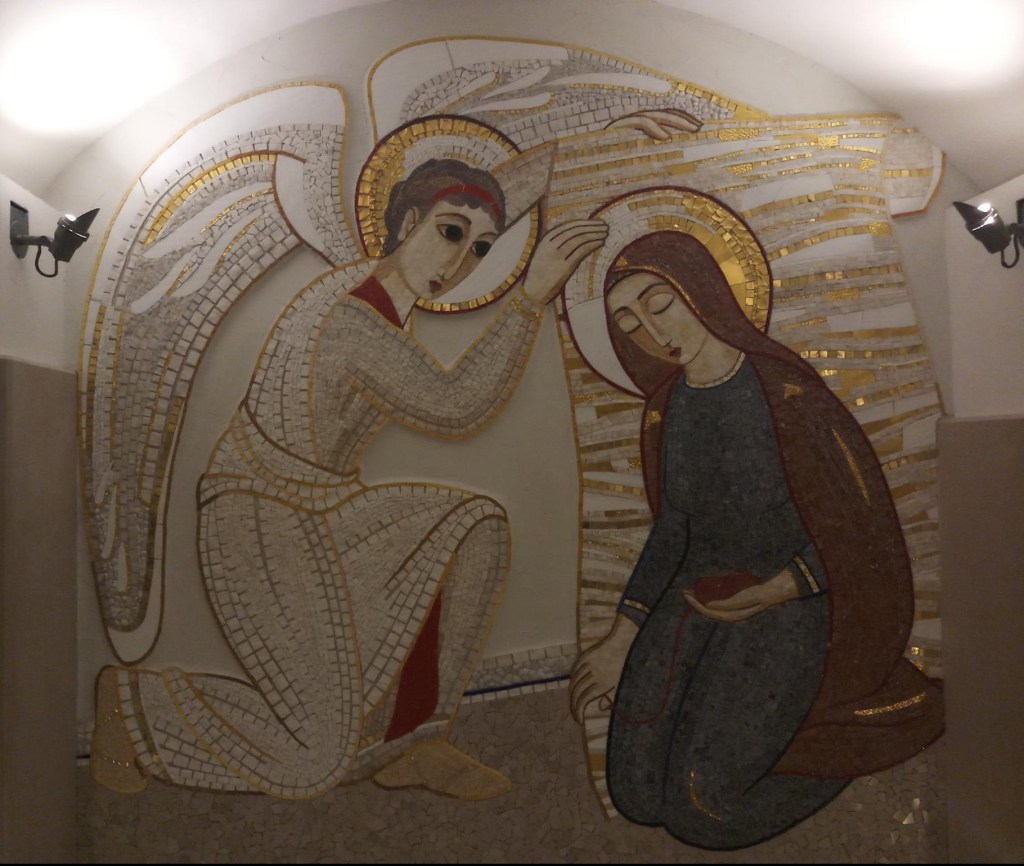
Mosaic of the Annunciation to Mary at San Giovanni Rotondo Church, Italy. Photo by Arch. Philip Santiago, 2019.
Glory and praise to you, O God our Father as we celebrate today the Solemnity of the Annunciation of the Birth of Jesus Christ to Mary. What a celebration so appropriate in this time of COVID-19 amid the ongoing lockdown not only in our country but in many parts of the world.
You know how I am not into any countdown whatsoever, Lord; in fact, I do not even keep tabs of how many days we have been locked down except that I really miss my parishioners, the normal grind of each day.
But as I prayed on this Solemnity, the first thing that I realized is that we are nine months from Christmas!
Jesus is coming, Jesus has come, Jesus is never gone — especially in this lockdown!
Photo by Ms. Ria De Vera during our procession of the Blessed Sacrament in our Parish, 22 March 2020.
What an honor and grace, O Lord, that despite our sinfulness and failures, you continue to offer us salvation, of starting all over again, of picking up the pieces of our lives, of hoping for that great day when all these lockdown and pandemic are gone.
We pray for all the health workers who sacrifice their very lives in saving the sick and all the other unsung heroes who do their share in helping us unburden the heavy crosses we are carrying following COVID-19’s wrath.
Thank you for the many among us who have opened like Mary to receive Jesus and share Jesus in these trying times.
But we also pray, O Lord, for those many of us who remain closed and cold to you and to others.
The people who continue to ignore “social distancing” and those who have remained spiritually and emotionally distant from family members, friends, and neighbors.
We pray most especially for our officials in the government who continue to bring more shame and dishonor to themselves to the detriment of the people.
The leaders who think more of themselves, who regard themselves as more important than others. The modern “King Ahaz” of our time who rely more on their own power, on their alliances with their foreign and local lords and masters.
Have mercy on them, Lord.
Come quickly and save us.
Open our hearts, teach us humility to be able to say to you like Mary, “Be it done unto me according to your word.” Amen.
Photo by author of the site where Mary received the Good News of Christ’s coming from Archangel Gabriel beneath the Basilica of the Annunciation, Nazareth, 2019.