Love: Morality of Christianity

The Lord Is My Chef Sunday Recipe for the Soul, Week VII-A, 23 February 2020

Leviticus 19:1-2, 17-18 ><)))*> 1 Corinthians 3:16-23 ><)))*> Matthew 5:38-48
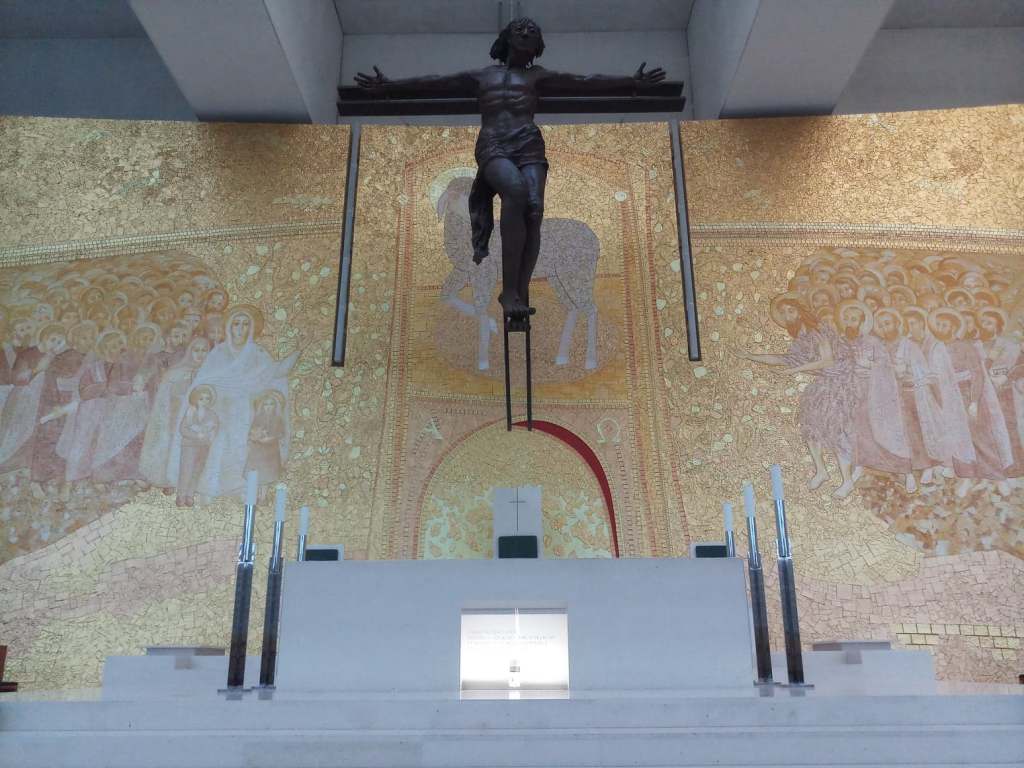
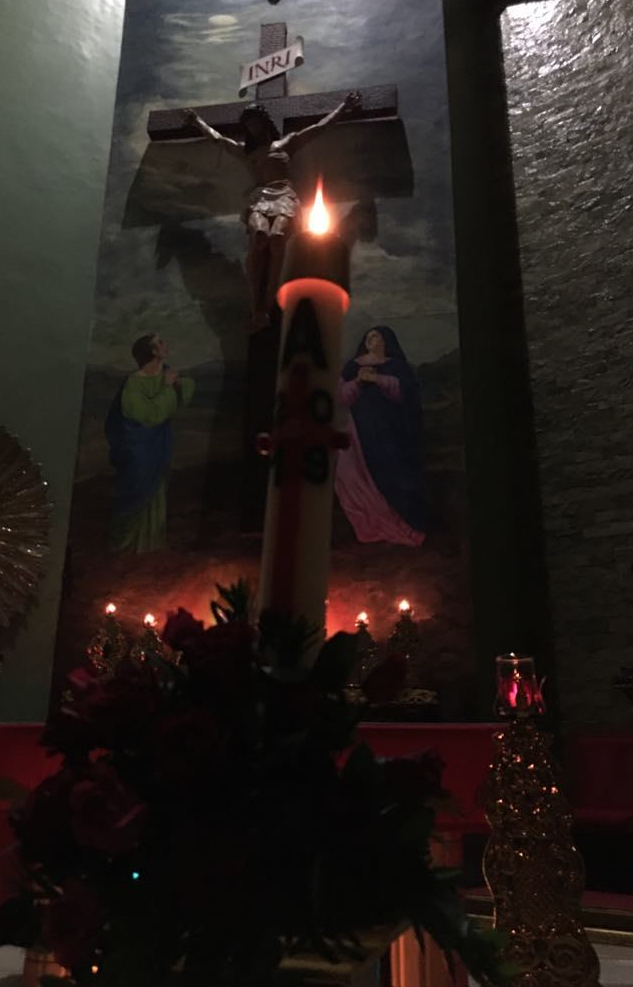
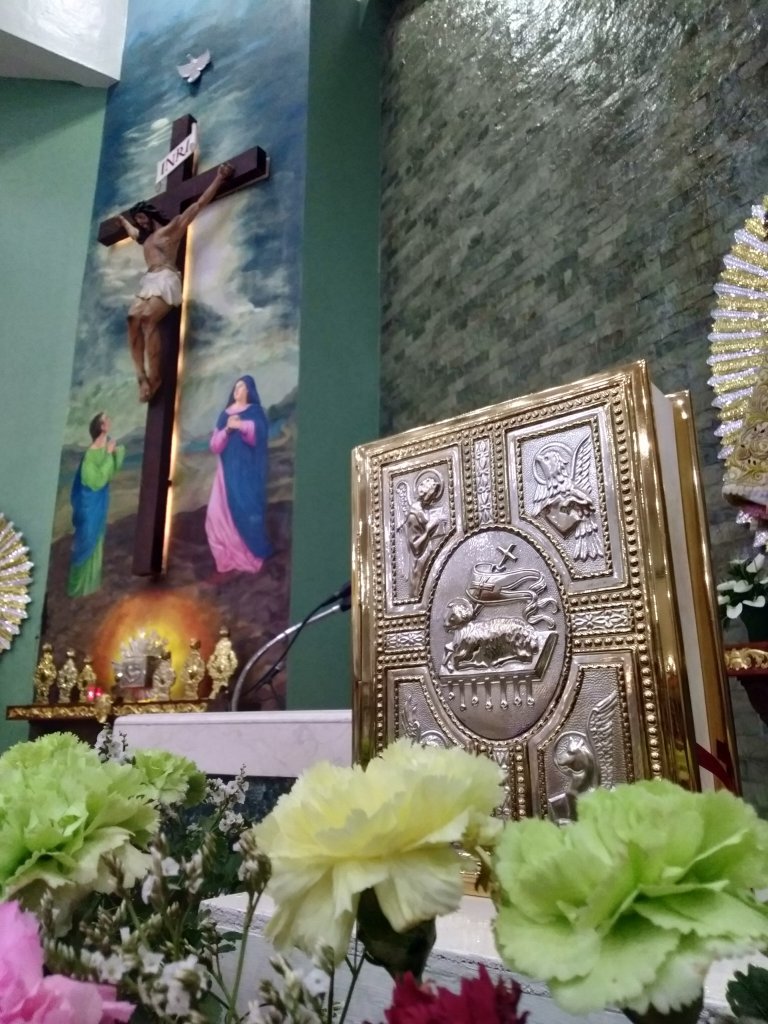
Altar of the modern Minor Basilica of the Holy Trinity at Fatima, Portugal. Photo by Arch. Philip Santiago, 2017.

Jesus concludes his Sermon on the Mount this Sunday just in time for the start of Lent this coming Ash Wednesday. He taught us last Sunday that righteousness is not only measured by acts but most of all by the purity of the heart’s intentions that we call “education of the heart”.

Today Christ comes to the demands of charity and love, the fullness of the Laws in himself.

Jesus said to his disciples: “You have heard that it was said, An eye for an eye and a tooth for a tooth. But I say to you, offer no resistance to one who is evil. When someone strikes you on your right cheek, turn the other one as well… You have heard that it was said, You shall love your neighbor and hate your enemy. But I say to you, love your enemies, and pray for those who persecute you, that you may be children of your heavenly Father..”

Matthew 5:38-39, 43-45

See again the Lord’s pattern in his preaching like last Sunday: a recall of the laws to show his adherence to them contrary to claims of his enemies, and then his infusion of his teaching that perfects the laws: “You have heard… But I say to you…”

Jesus focuses only on two laws today, that of revenge or “lex talionis” (from Latin talio for the word such) and that of hate for enemy which needs some clarifications.

Nowhere do we find in the Laws of Israel “to love your neighbor and hate your enemy”. Experts say Jesus must be citing a popular saying of his time in this part of his teaching. Besides, the Aramiac spoken by the Lord does not connote the harsh meaning we have today for the word “hate”. In short, Jesus is correcting here the norm among Jews of his time to “just love those who love us”.

This is why he adds this beautiful explanation with the most unique conclusion of all.

“For if you love those who love you, what recompense will you have? Do not the tax collectors do the same? And if you greet your brothers only, what is unusual about that? Do not the pagans do the same? So be perfect, just as your heavenly Father is perfect.”

Matthew 5:46-48
Photo by Lorenzo Atienza, 12 June 2019, Malolos Cathedral.

A fraternity of humanity in the Father

Here we find a beautiful dimension of Jesus Christ’s assertion last week that he had come to fulfill the Laws: more than having a broader approach to the spirit of the laws, education of the heart leads us to see everyone as a brother and a sister.

No one is different. Every one is a family – a kin! which is the root of the word “kind”.

Being kind is more than being good as we say in Filipino, mabait or mabuti.

Being kind is treating the other person as a kin, a relative or family; someone who is not different from us. When we say “he is kind to me”, it means more than being good to me but treating me as a family, a brother or a sister – not as “another” or “iba sa akin” as we say in Filipino.

Photo by author, Mt. St. Paul, Baguio City, 03 February 2020.

This is the essence of our “Year of Inter-religious Dialogue, Ecumenism, and Indigenous Peoples” in preparation next year of our 500 years of Christianity in the country.

Everybody is included in that celebration as we reach out to peoples of other faith and beliefs as well as to the indigenous peoples whose forefathers were actually the first settlers of the country.

This is very important in any dialogue and relationship and partnerships including marriage: there must always be the acceptance of everyone in equal footing with same dignity as a person. It is from here we start that fullness of the Laws in Christ in love.

Human holiness as a reflection of God’s holiness in love

Love can only happen where there is equality and fairness. Love demands we are first of all at equal footing with each other. This is why Jesus became human like us: the Son of God became human to stand on equal footing with us that we cannot argue that he is greater because he is truly human, too, going through everything we have gone through except sin.

When he said that we offer our other cheek, to give our cloak, and go for another mile, he is not referring to criminal or penal codes but more into our humanity, that spirit of universal brotherhood so that even our oppressors and enemies come to realize within them that we are one, that we should be caring for one another, not hating and hurting each other.

Loving our enemies does not mean we let evil continue; loving our enemies means continuing to “love” perpetrators of evils until they realize we are brothers and sisters, keeping each other, caring for each other.

Loving our enemies is making them realize that there are nobody else here on earth for them except us – why fight and perish?

Yes, these are easier said than done. And admittedly, I must confess it is the most difficult part of the gospel, of being a Christ-ian. But it is something Jesus is asking us in the most personal manner.
From Google.

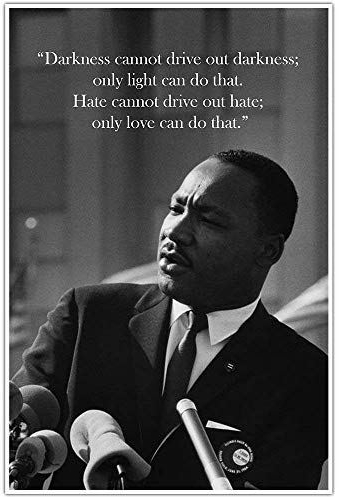
Let it be clear that Jesus is not asking us to behave with naiveté that we give in to injustice, evil, and violence but that we always be peacemakers, the blessed ones he said in his Beatitudes. In our fight for justice and peace, we fight with the moral persuasions of love which is the morality of Christ.

The American civil rights leader Rev. Martin Luther King, Jr. had shown in our modern time that the Lord’s teachings are doable: we just have to be convinced and must truly believe in Jesus.

“Love is the most durable power in the world. This creative force is the most potent instrument available in mankind’s quest for peace and security.”

Rev. Martin Luther King, Jr.

When we love truly in Jesus Christ, asserting what is true, what good, what is just, we make God truly present in the world. When that happens, the more we allow him to do his works of changing us within, of transforming us within. It is in our imperfect love that we make God present, the perfect I Am.

The Lord said to Moses, “Speak to the whole Israelite community and tell them: Be holy, for I, the Lord your God, am holy. Take no revenge and cherish no grudge against your people. You shall love your neighbor as yourself. I am the Lord.”

Leviticus 19:1-2, 18
Photo by Dra. Mai B. Dela Peña, Santorini in Greece, 2016.

Hubris, our greatest temptation and sin

The Season of Lent is fast approaching us, set to start with Ash Wednesday this week. It is a season characterized by barrenness: no Gloria and Alleluias, no flowers, no decorations, no images to make us turn back to God again, our Lord and Master alone.

St. Paul reminds us today in our second reading that we are “God’s temple… that there is no need to boast of anyone including one’s self” (1Cor. 3:16, 21). Instead of embracing or holding on to anyone including one’s self, we have to embrace the scandal of the cross of Christ, that is, power in weakness, wisdom in what the world considers folly.

For the ancient Greeks as depicted in their epics, the greatest temptation and sin of man is hubris – the arrogant presumption that he is god, that he can do everything, he can have everything that he defies the gods.

Hubris is the sin of pride that has led everyone from Adam and Eve to all the powerful men and women of history into their downfall. It is absolute power crumbling absolutely, always tragically.

In his Sermon on the Mount where we heard many of the Lord’s teachings this whole month of February, Jesus shows us the path away from hubris, his path of love and holiness in the Father. Let us heed his calls, give his teachings a try and a chance to be fulfilled in us.

A very lovely and loving Sunday to you!

That “Eureka!” moment of life – and death

The Lord Is My Chef Recipe for the Soul

Homily at the Funeral of Archimedes Lazaro (ICS ’97), 18 February 2020

Wisdom of Solomon 3:1-9 ><)))*> 0 <*(((>< Luke 7:11-17

Photo by Pixabay on Pexels.com

Soon afterward Jesus journeyed to a city called Nain, and his disciples and a large crowd accompanied him. As he drew near to the gate of the city, a man who had died was being carried out, the only son of his mother, and she was a widow. A large crowd from the city was with her. When the Lord saw her, he was moved with pity for her and said to her, “Do not weep.” He stepped forward and touched the coffin; at this the bearers halted, and he said, “Young man, I tell you, arise!” The dead man sat up and began to speak, and Jesus gave him to his mother. Fear seized them all, and they glorified God, exclaiming, “A great prophet has arisen in our midst,” and “God has visited his people.”

Luke 7:11-16

Today, we are like at the city of Nain. Traffic is so heavy outside as many of us – family and friends, former classmates, colleagues at work from all over and neighbors – gather to pray and pay our last respects for Archie.

Celebrating a funeral Mass for a young person is always difficult for me. Like Jesus, I feel so sad for their parents. Normally, it is the children who bury their parents. It must be so painful for parents burying a son or a daughter. That is why in our gospel, Jesus was “moved with pity” with the widow of Nain.

But today, amid the pains and sorrows with the sudden death of Archie last week at a very young age, we actually celebrate life in Jesus Christ.

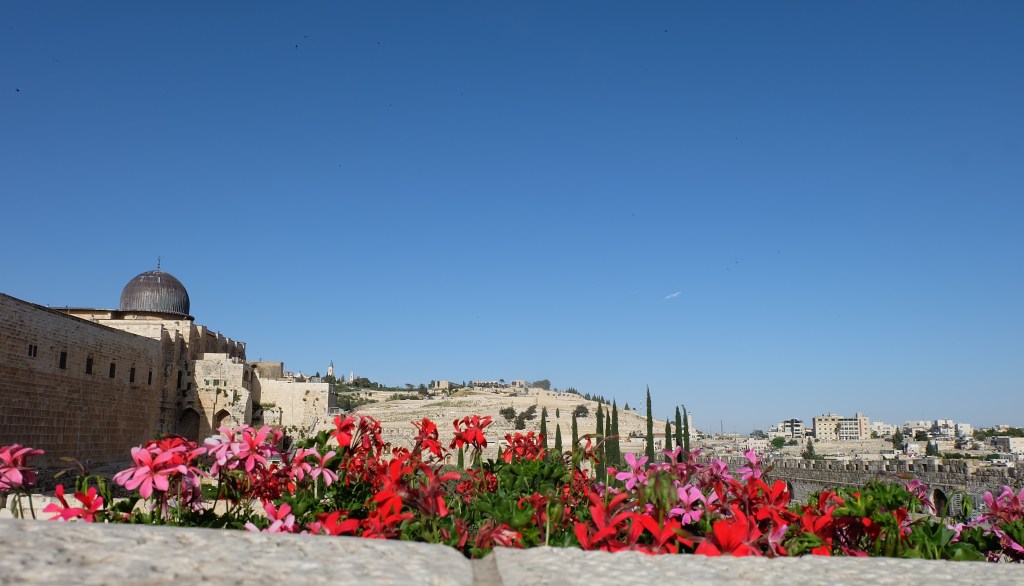
Photo by author of the hills of Galilee from the Walls of Jerusalem, May 2017.

Jesus comes to visit us always

Like in that scene at Nain, we remember and celebrate the life of Archie who had come to visit us even for a short time.

I love that part of the gospel where the people at Nain exclaimed at how “God has visited his people” when Jesus raised the dead young man.

Jesus continues to visit us everyday through one another like Archie.

Despite his many sins and imperfections, Archie made us experience Jesus Christ’s love and friendship, warmth and kindness, especially to his two sons, family, and friends.

Surely, Jesus must have visited Archie, too, during those dark moments of his life.

And the good news is, Archie visited Jesus so often especially these last two years when he started to pick up the pieces of his life.

Last time I saw Archie was last November when he came to celebrate Mass in our Parish. And I have heard how he had sought spiritual guidance from Fr. Carl, driving that far to Paco every month as he renewed his relationship with Christ, trying to follow anew the Lord he had served since elementary as a sacristan and later as a seminarian in our high school seminary.

It is Jesus who first finds us always

Photo by author at Mt. St. Paul Spirituality Center, Baguio, 04 February 2020.

We all know Archie’s tocayo is one of ancient Greece’s great scientist and inventor, Archimedes.

It is said that he discovered the principle of buoyancy – the “Archimedes’ principle” – while taking a bath.

When Archimedes sat onto his bathtub, he observed that “when a body is submerged in a fluid, it experiences an apparent loss in weight that is equal to the weight of fluid displaced by the immersed body.”

Archimedes was so ecstatic with his accidental discovery that he jumped naked from his bathtub out to the streets, shouting “eureka!” or “I have found” the solution to a problem he was trying to solve at that time.

Archimedes had not only enriched the field of mathematics and sciences with his discoveries but also the English language with the word “eureka” or “eureka moment”: when somebody discovers something very significant in business and economics, the sciences especially medicine, and practically in every field and subject.

Most especially in life.

Photo by author, Mt. St. Paul Spirituality Center, Baguio, 04 February 2020.

Archie had the same eureka moment in life: he had found Jesus Christ again that he went back to Mass and Confessions.

He had found meaning in life again after losing hope and directions.

Most of all, Archie had found love again.

Like his namesake of ancient Greece, Archie is now exclaiming “eureka” ecstatically into heaven – naked – with nothing but the love and mercy of Jesus Christ who first found him and brought him back to life a few years ago.

Today as we bring the remains of Archie into his final resting place, we thank God who never stops looking for us, finding us so that we can find him again and finally rest in him.

Today it is Jesus who is most ecstatic of all because he is the first to have found Archie and that is why, he had called him back to him, never to get lost again.

But the souls of the just are in the hand of God, and no torment shall touch them. They seemed, in the view of the foolish, to be dead; and their passing away was thought an affliction and their going forth from us, utter destruction. But they are in peace. In the time of their visitation they shall shine.

Wisdom of Solomon 3:1-3, 7

Amen.

Fullness of person, fulfillment of law

The Lord Is My Chef Sunday Recipe for the Soul, Week VI-A, 16 February 2020

Sirach 15:15-20 ><)))*> 1 Corinthians 2:6-10 ><)))*> Matthew 5:17-37

Photo by author of pilgrims entering the Church of the Beatitudes with a painting of the Sermon on the Mount above the door, May 2019.

Jesus continues his Sermon on the Mount this Sunday, expounding the meaning of his teachings called the Beatitudes. As we have reflected last week, the Beatitudes tell us the person of Jesus Christ as being “poor, merciful, clean of heart” whom we must all imitate to become the salt and the light of the world.

Most important of all, Matthew presents to us at the Sermon on the Mount that Jesus is more than the new Moses as giver of laws like at Mt. Sinai in the Old Testament: Jesus himself is the Law, who is both our Teacher and Redeemer.

This we see in his teachings today when he claims to be the fulfillment of the Laws and the Prophets from God in the Old Testament.

Jesus said to his disciples: “Do not think that I have come to abolish the law or the prophets. I have come not to abolish but to fulfill it. Amen, I say to you, until heaven and earth pass away, not the smallest letter or the smallest part of a letter will pass from the law, until all things have taken place.”

Matthew 5:17-18

Essence of the Laws: reflection of God, the good of man

Today, Jesus is teaching us to see the laws in the right perspectives, in the light of the will of God for the good of every person. Throughout his ministry, Jesus has always been consistent in reminding everyone that the laws were made for man, not the other way around.

During Christ’s time, people have lost the real meaning of the Commandments of God as priests and religious leaders focused more on its letters than in its essence and spirit that in the process, the laws have become burdensome. It has continued in our own generation with laws taking precedence over God and persons.

Photo by author of the Church of the Beatitudes at the Holy Land, May 2019.

At the Sermon on the Mount, we find Jesus restoring and recalibrating the laws so that these become more relevant and powerful as reflections of God in the service of man.

Jesus “relectures” us the laws in this part of his Sermon on the Mount by adding more righteousness (holiness), declaring that,

“I tell you, unless your righteousness surpasses that of the scribes and Pharisees, you will not enter the kingdom of heaven.”

Matthew 5:20

By using a pattern where he would cite Laws, saying, “You have heard that it was said”– Jesus shows us his fidelity and obedience to Judaism, contrary to his enemies’ accusations that he had abolished their laws. Moreover, in fulfilling the laws, Jesus put himself in the midst of every law and precept by declaring, “Amen, I say to you” or “but I say to you”.

In following that formula, Jesus gave the laws with a human face and a human heart in himself as its fulfillment so that from then on at his Sermon on the Mount, Christ made every law, every tradition, everything else to be seen always in his person.

Black and white photo by Mr. Jay Javier in Quiapo, 09 January 2020.

Performative powers of the laws in Jesus Christ

With Jesus in the midst of every law and precept as its fulfillment, God’s laws then become not only informative but most of all, performative to borrow one of Pope Emeritus Benedict XVI’s favorite expression. This we find Jesus teaching us in three stages in our long gospel this Sunday.

  1. Education of the heart.

The first two laws cited by Jesus in this long list of commandments are “You shall not kill” and “you shall not commit adultery”. Both laws bring us to the very core of our personhood, of what is in our hearts and in our minds. The Lord explains that being angry as well as saying bad words against another person is like murder while looking lustfully at a woman is a form of adultery because in both cases, we have ceased to regard the other individuals as persons to be loved and respected, created in the image and likeness of God.

From Google.

It is an invitation for us to purify our hearts and minds for what defiles man is not what enters him but what comes out from him (Mt.15:11). Whatever is within us will always have an effect in all of our actions, for better or for worse.

What a tragedy that right here in the middle of our wired world of social media and instant communications, we have actually grown apart than together in the last 35 year with so much animosities fed on by lies and misinformation.

How ironic also that despite the information explosion from the Net, we have more benighted souls today than ever before who have actually gone to schools who know nothing of our history and geography?!

Education of the heart is formation of the whole person, not just a training of skills. One problem we have these days is when information is geared on data and facts without integration that we forget our relationships as well as the values we keep like respect, kindness, and dedication. Unless we have an education of the heart, a wholistic and integral formation, we can never be transformed into like Jesus Christ.

2. Get into the roots of our sins.

In telling us to pluck out our right eye or cut off our right hand if these cause us to sin, Jesus is inviting us again to probe deep into our hearts and being to understand what causes us to sin.

Photo by author, water plants in my room at the Fatima Parish and National Shrine, Valenzuela City, 2010.

The key here is to be totally free. In the first reading, Ben Sirach counsels us to “choose” rightly what is good and avoid what is evil.

We can only exercise our true freedom when we have clearer knowledge and understanding of ourselves and of things within us. We fall into vices and sins because we do not know what is going on inside us; hence, we are enslaved by our desires and sins to be not free at all.

Once we understand our sins, we commit them less often. Most of all, when we understand our sins, our struggles against committing these become more persevering, resulting to more triumphs than defeats.

The Season of Lent is near. Once again, we shall be busy with fasting and abstinence, contrition and confession of sins, almsgiving and other spiritual works that make us holy. But too often, these acts become mechanical that sooner, we sometimes reach that point when we cannot find meaning in doing them anymore that we sink deeper into sins and evil.

This happens when we get focused with letters of the laws and we forget its spirit that we become mechanical because we have failed to understand our very selves as well as our sins.

3. Be true.

Jesus said it perfectly well at the end of his teachings today,

“Let your ‘Yes’ mean ‘Yes’ and your ‘No’ mean ‘No.’ Anything more is from the evil one.”

Matthew 5:37

In this last installment of reviewing the laws, Jesus underscored the problems with divorce as well as with lies that continue to this day because we always choose not to be true at all with ourselves, with God, and with others.

Photo by author of the last two Stations of the Cross at the chapel of my niece Ms. Babs Sison in Los Baños, Laguna 13 February 2020.

See the wisdom of Jesus in putting together divorce and oaths, the two great lies that until now continue to mislead so many among us who refuse to accept and carry the cross of Christ, preferring only the Easter Sunday minus the Good Friday.

Being true is embracing the Cross of Jesus Christ like St. Paul in the second reading. It is something we cannot deny in this life. There will always be pain and sufferings. As Dr. Scott Peck put it in his book The Road Less Travelled, “life is difficult.”

At his Sermon on the Mount, Jesus clearly showed in his Beatitudes that he and his values are in sharp contrast to the wisdom of the world. And this wisdom is only accessible to those willing to embrace the crucified Christ and the scandal of the cross.

It is there on the Cross with Jesus Christ we truly find the fulfillment of the laws as well as our fullness as persons. Amen.

Have a blessed Sunday, everyone!

Sharing the light of Christ

The Lord Is My Chef Recipe for the Soul, Sunday Week V-A, 09 February 2020

Isaiah 58:7-10 ><)))*> 1 Corinthians 2:1-5 ><)))*> Matthew 5:13-16

Our parish cross at night, taken with my camera phone, 02 February 2020.

For most of us, 2020 is a very tough year with all the dark clouds that have come to hover above us in January remain in this month of February.

Threats from the corona virus are growing especially in our country. And while the alert level at Taal Volcano had gone down, dangers of its major eruption remain while volcanologists observed last week a “crater glow” on Mayon Volcano, indicating a possible rising of magma in the world’s most perfect cone.

Elsewhere, more bad news are happening like the sudden deaths this week of healing priest Fr. Fernando Suarez and of our very own and beloved Fr. Danny Bermudo, just 24 hours apart due to heart attacks.

In our own circles of family and relatives, friends and colleagues are also dark clouds covering us while we go through our many trials and tests in life that seem to eclipse this early the many gains we have achieved in the whole of 2019.

Indeed, year 2020 shows us in “perfect vision” the sad realities of dark spots in life that behoove us more to heed Christ’s call to be the light of the world.

Jesus said to his disciples: “You are the light of the world. Just so, your light must shine before others, that they may see your good deeds and glorify your Heavenly Father.”

Matthew 5:14, 16
Photo by author, frost on petals, Baguio City, 04 February 2020.

Jesus is the light of the world, not us

Our gospel this Sunday follows immediately the inaugural preaching of Jesus called “the Sermon on the Mount” with the Beatitudes at its centerpiece. We have skipped that part of the gospel last Sunday due to the celebration of the Feast of the Presentation of the Lord.

For us to better appreciate this Sunday’s gospel, let us keep in mind that for Matthew, the Sermon on the Mount is the great discourse of Jesus Christ that depicts his image not only as the new Moses but as the Law himself, being both our Teacher and Savior as well.

Jesus shows us a picture of his person in the Beatitudes as someone we must imitate in being “poor in spirit, meek, and merciful” so we can follow his path to the Father. After all, as the Son of God, Jesus is “the way, the truth, and the life” (Jn. 14:6).

Hence, after enumerating the nine Beatitudes, Jesus followed up his Sermon on Mount with a call for us to be the salt and the light of the world: as salt, we merely bring out the Christ or the taste in every person and as light, it is the light of Christ that we share.

Focus remains in being like Jesus, not in replacing him who is our Savior. That is why he tells us clearly before shifting to another lesson in his Sermon that “your light must shine before others, that they may see your good deeds and glorify your Heavenly Father” (Mt.5:16).

Sharing Christ’s light with our good deeds as a community

So, how do we share the light of Jesus Christ in this age when so many others are claiming to be the light that will dispel all darkness in our lives?

As early as during the darkest period in the history of Israel in the Old Testament called the “Babylonian Captivity (or Exile)”, God had taught his people how to become light for one another during trials and sufferings.

Christ Light of the World, Red Wednesday, 27 November 2019. Photo by author.

Thus says the Lord: Share your bread with the hungry, shelter the oppressed and the homeless; clothe the naked when you see them, and do not turn your back on your own. Then your light shall break forth like the dawn… if you bestow your bread on the hungry and satisfy the afflicted; then light shall rise for you in the darkness, and the gloom shall become for you like midday.

Isaiah 58:7-8, 10

To share one’s bread with the hungry, to welcome the homeless, to clothe the hungry are some of the most concrete demands placed by God to his people since he had freed them from slavery in Egypt and later in Babylonia (Iraq today) when the third part of the Book of Isaiah was written.

Eventually, this prophecy was fulfilled in Jesus Christ who also preached exactly the same things shortly before fulfilling his mission in Jerusalem when he stressed the need to do good to one another because “whatsoever we do to one another, especially to the least among us, we also do unto him” (Mt.25:31-40).

We shall hear this part of Matthew’s gospel at the end of our current liturgical year on November 22, 2020 in the celebration of the Solemnity of Christ the King.

These instructions became the basis of our catechism’s “spiritual and corporal works of mercy” that Pope Francis stressed in 2016 during the Extraordinary Jubilee of Mercy.

From fathersofmercy.com

By saying “you are the light of the world”, Jesus is telling us that to fulfill this mission, we have to do it together as a community, as his Body, the Church!

No matter how good and holy we are, none of us is the “light of the world” on our own.

One candle or lamp, or even a light bulb today cannot produce enough light to brighten a whole town or community. But, if one Christian will be lighting just one little candle in the dark, he or she can encourage others especially those who are timid, hesitant, and indifferent until they finally set the world ablaze with Christ’s light.

Christ’s call to be the light of the world is also a call for us to be united as one community, one family, one faithful couple with all our imperfections and sinfulness. What matters is our striving to be good disciples, always charitable to one another as brothers and sisters in Christ.

Here we find the direct relationship of mission and community: every mission given by Jesus is also a call to become a community because without it, it soon becomes a cult centered on the disciple than the Lord.

Photo by Mr. Jim Marpa, 2018.

The example of St. Paul in sharing Christ’s light

St. Paul shows us the best example of being a light of Jesus is to always have it done and fulfilled in the context of a community, of the Church as the Body of Christ, avoiding chances of grabbing the light from him for personal gains.

“I came to you in weakness and fear and much trembling, and my message and my proclamation were not with persuasive words of wisdom, but with a demonstration of Spirit and power, so that your faith might rest not on human wisdom but on the power of God.”

1 Corinthians 2:3-5

It has always happened especially for us serving in the Church that in sharing the light of Christ, we get carried by our ministry and apostolate that we forget him until we claim being the light ourselves.

Sometimes, we consciously or unconsciously create clouts and personality cults for ourselves for being the best, the brightest, even the holiest and most humble of all!

We foolishly brag the great buildings and edifices we have built or the countless malnourished kids we have fed or sent to school for free through college, et cetera, et cetera, et cetera without being bothered at all where is Jesus Christ in all our efforts and projects!

How sad when we forget that what matters most in life is not what we have done or what we have achieved but what have we become as bearers of the light of Christ like St. Paul.

My dear friend, if you are going through many darkness in life today, simply be good, think only of Jesus Christ in everybody you meet and deal with. That is actually when you shine brightest as the light of Christ because people will be surprised at how calmly and gracefully you carry your cross.

In that way, you encourage others living in darkness to let their little sparks of light come out too without realizing how in their own darkness and limitations they have made Christ’s light seen. Amen.

Have a bright and blessed Sunday with your loved ones!

Recognizing, meeting, and sharing Jesus, the Light of the world

The Lord Is My Chef Sunday Recipe for the Soul, Feast of the Presentation of the Lord, 02 February 2020

Malachi 3:1-4 ><)))*> Hebrews 2:14-18 ><)))*> Luke 2:22-40

Photo by author of Baby Jesus at the Bishop’s Chapel, Malolos Cathedral, 07 January 2020.

We take a break from our Ordinary Sunday to celebrate today the Feast of the Presentation of the Lord at the temple, 40 days after Christmas. It is a prolongation of the celebration of the Lord’s Nativity with a paschal undertone recognizing Christ as Light who had come to us to lead us back to the Father through his Passion, Death, and Resurrection.

This feast used to be known in the East as the Ypapante or the Encounter of Jesus by the two elderly people at the temple, Simeon and Anna. When it reached Europe, it came to be known as the “Purification of the Blessed Virgin Mary” based on St. Luke’s description, evolving into Candlemass or Candelaria when Pope Sergius I in Rome adopted in the eighth century the French tradition of procession of lighted candles at dawn before the Mass to signify Jesus as the light of the world who had come to bring us back to the Father expressed by Simeon in his canticle.

“Now, Master, you may let your servant go in peace, according to your word, for my eyes have seen your salvation, which you prepared in sight of all the peoples, a light for revelation to the Gentiles, and glory for your people Israel.”

Luke 2:29-32

Despite its evolution through the ages with its many names and practices, the Feast of the Presentation of the Lord is a good reminder to us in recognizing, meeting, and sharing Jesus Christ to everyone as the light of the world.

Photo by author of a view from the Temple of Jerusalem, May 2017.

Being devout leads us to recognize and meet Jesus

Only St. Luke reports the story of the Presentation of Jesus at the temple because he wanted to show his audience who were Gentiles or pagan converts that Jesus came not only for the Jews but for everyone.

This remains true to us especially in these modern times when people live in artificial lights and “Klieg lights” that put us on the centerstage only to leave us later groping in the dark, even blinded to false hopes of virtual realities.

St. Luke invites us today to emulate both Simeon and Anna in recognizing and meeting Jesus, the only Light of the world who dispels darkness within and around us.

Now there was a man in Jerusalem whose name was Simeon. This man was righteous and devout, awaiting the consolation of Israel, and the Holy Spirit was upon him. It had been revealed to him by the Holy Spirit that he should not see death before he head seen the Christ of the Lord. He came in the Spirit into the temple; and when the parents brought in the cild Jesus to perform the custom of the law in regard to him, he took him into his arms and blessed God.

Luke 2:25-28
“Simeon’s Moment” by American illustrator Ron DiCianni. From http://www.tapestryproductions.com

Recall how during our Simbang Gabi that for the Jews, a “righteous” person is someone who is holy because he faithfully keeps the Laws of God like St. Joseph, the husband of Mary.

But more than being holy and just, St. Luke also described to us Simeon – as well as Anna implicitly – as “devout” Jews. It is a word rarely used in the Bible. In fact, St. Luke used it only four times: once here in this scene and thrice in the Acts of the Apostles.

In Acts 2:5, St. Luke called the Jews who came to Jerusalem for Pentecost as “devout” ones; then in 8:2, he said “devout men buried” the first martyr of the Church, St. Stephen; and finally in 22:12, he gave the distinction to Ananias as “a devout observer of the law” who came upon instructions from God to pray over and heal Saul who was blinded by Christ’s light on the way to Damascus.

In all four instances, St. Luke described people as “devout” including Simeon and Anna as those of “good heart, ready to believe, and then to act openly and with courage” (Timothy Clayton, Exploring Advent with Luke; page 125). Devout people or devoted persons are a notch higher than just being faithful because they do not merely wait but look forward to the fulfillment of what they believe.

Devoted people make things happen; they do not wait for things to unfold. And that is why they are always at the right place in the right time. Like Simeon and Anna, they give themselves to God wholly to stay attuned with the Holy Spirit and be ready to follow its promptings and leads.

Anna meeting Jesus from catholicfunfacts.com.

See the common trait of both Simeon and Anna as devout people — the presence of the Holy Spirit in them that amid the crowd in the temple on that day, they were able to spot the Child and Savior Jesus Christ being presented by his parents Mary and Joseph!

There was also a prophetess, Anna, the daughter of Phanuel, of the tribe of Asher. She was advanced in years, having lived seven years with her husband after her marriage, and then as a widow until she was eighty-four. She never left the temple, but worshipped night and day with fasting and prayer. And coming forward at that very time, she gave thanks to God and spoke about the child to all who were awaiting the redemption of Jerusalem.

Luke 2:36-38

Jesus comes to us everyday in various ways, in many occasions. He is always passing by, calling us. We have to be on guard in these moments so that we do not miss him. Like reporters following the news, we have to be focused or “tutok” and immersed or “babad” so that nothing or no one escapes us.

Three ways of being devout like Simeon and Anna

It is imperative that we have to be devout first with God so that we recognize and meet his Son Jesus Christ coming to us so we may eventually share him to enlighten everyone. Simeon and Anna show us three important things to keep for us to be devoted to God to encounter Jesus Christ.

First, we have to be faithful in our prayer life. There is no other way in meeting Christ except in having a life of prayer which is a discipline. It is something we do as a habit, every day, every night. Not just once a year like those going to Quiapo every January 9 or completing any novena and then the whole year does nothing.

Devotion is more than collecting images of Jesus, the Virgin Mary, and the saints, joining processions during fiesta or Holy Week, then nothing. Devotion is life, not a show.

Like Simeon and Anna, we have to grow intimately with the Lord by cultivating personal prayers and joining communal activities like the Sunday Mass so that we may know personally and vibrantly God who always leads us to various directions and mission. God is never static but dynamic, unlike us people who keep on insisting on some of our traditions and ways no longer applicable.

Notice how in the first reading the Prophet Malachi said the Lord will suddenly come in the temple, calling on people to always await him (Mal.3:1).

The Old Jerusalem from the inside of the Church of Dominus Flevit (The Lord Cried) at the Mount of Olives, Jerusalem. Photo by author, May 2017.

Second, we can only recognize, meet and share Jesus Christ as Light when we care, love, and respect others. See how Simeon spoke to Mary about his coming mission and its harsh realities. He recognized not only Jesus but also Mary and Joseph. Simeon’s speaking to Mary and Joseph means he recognized the important roles of the parents in being instrumental that he met the Lord.

Any devotion to God and his saints and the blessed Mother Mary without any concern for the people especially the poor and the needy is merely a show and a pageantry of clerical and liturgical excesses. It is triumphalism in its purest sense and hypocrisy at its worst.

We meet Jesus among other people not only within us. This is the gist of the author of the Letter to the Hebrews today when he claimed how Jesus suffered and endured sufferings and death to help those facing trials and tests in life.

Third, we can only recognize, meet, and share Jesus Christ as Light when there is joy in our hearts. And not just being joyful but overflowing with joy like Simeon and Anna that upon encountering the Child Jesus, the more they felt eager to share the good news with others. In fact, they were overjoyed that they even felt so ready to die.

Our parish church on a Sunday afternoon. Photo by Angelo Nicolas Carpio, 12 January 2020.

Fruit of devotion is finally embracing Jesus Christ

Every night before we priests and religious pray Simeon’s Canticle in our Compline (Night prayer), we recite a responsory that says, “Into your hands, Lord, I commend my spirit”. And after that, the antiphon: “Protect us, Lord, as we stay awake; watch over us as we sleep, that awake, we may keep watch with Christ, and asleep, rest in his peace.”

It is only then that we recite or chant Simeon’s Canticle or Nunc Dimittis. It is then followed by the final prayer closed with a blessing that says, “May the all-powerful Lord grant us a restful night and peaceful death. Amen.”

Without sounding morbid or anything, it is my most favorite prayer of all our prayers because it is filled with joy, filled with Jesus, filled with Light. At the end of the day, what a consolation to be filled with joy of Christ that you have had a glimpse of him that you rest in peace hoping to meet him again as well as share him with others too.

I think it is only when we are overflowing with joy that we realize its fullness is found only in Christ, whether in this life or in eternal life. Amen.

Blessed Sunday to you!

Darkness in every beginning

The Lord Is My Chef Sunday Recipe for the Soul, Week IV-A, 26 January 2020

Isaiah 8:23-9:3 ><)))*> 1 Corinthians 1:10-13, 17 ><)))*> Matthew 4:12-23

Photo by author, July 2019, Tagaytay City.

In the beginning, when God created the heavens and the earth, the earth was a formless wasteland, and darkness covered the abyss, while a mighty wind swept over the waters.

Genesis 1:1-2

The Bible clearly tells us everything in the beginning was dark. And since then, almost everything has always begun in darkness, like human life itself, or every new day, even new year!

Some relatives and friends have been complaining to me how 2020 started off with a lot of darkness.

And I totally agree with them!

Since the Christmas Season until last Friday, I have been officiating funeral Masses for parishioners and friends as well as praying for some relatives and friends who have passed away this January abroad. Also included in this vast swathe of darkness are some relatives and friends diagnosed with serious illnesses like Alzheimer’s and cancer.

In the news we find so many darkness at the start of 2020 like fears of World War III when an Iranian military officer was killed in an American drone attack in Baghdad on January 03; the January 12 phreatic eruption of Taal Volcano now threatening a catastrophic eruption anytime; and, this fast-spreading new corona virus from China that is reportedly so deadly.

Everything is so dark at the start of 2020 and January is not even over yet!

Photo by Mr. Raffy Tima, GMA-7 News, 15 January 2020.

Darkness leads us into light

Even our readings today speak about darkness, especially the beginning of the public ministry of our Lord Jesus Christ after John the Baptizer was arrested.

When Jesus heard John had been arrested, he withdrew to Galilee. He left Nazareth and went to live in Capernaum by the sea, in the region of Zebulun and Napthali, that what had been said through Isaiah the prophet might be fulfilled.

Matthew 4:12-14

However, these same readings assure us that not all darkness are gloomy after all. In fact, it is in darkness where we see the light of the gospel shining brightly.

Sunrise at Lake Tiberias (aka, Galilee), May 2017. Photo by author.

Despite that dark note on the arrest of John the Baptizer, we actually have here the beginning of the good news of salvation with the start of the preaching and public ministry of Jesus Christ.

Darkness is always a prelude to light, like chaos is to order.

Sometimes, we need to experience some darkness for us to realize the need to be enlightened, to see more the beauty of light, to seek light – most especially of the love and mercy of God in Jesus Christ who had come to us on the darkest day of the year, December 25.

See how in our lives when bad things have to happen first before we can learn our lessons so well or find particular values we now treasure in life.

Sometimes, God allows us to be plunged into darkness to find him, to see him, to desire him and eventually have him.

First the Lord degraded the land of Zebulun and the land of Naphtali; but in the end he has glorified the seaward road, the land west of the Jordan, the District of the Gentiles. Anguish has taken wing, dispelled is darkness: for there is no gloom where but now there was distress. The people who walked in darkness have seen a great light; upon those who dwelt in the land of gloom a light has shone.

Isaiah 8:23-9:1

Jesus comes to us in darkness

Photo by Mr. Jim Marpa, Bohol Island, 2019.

Darkness in the bible signifies sin and evil, failures and disappointments, struggles and sufferings, and finally, sickness and death. No one is immuned from darkness.

But with the coming of Jesus Christ who conquered evil and sin, darkness has become a blessing, an invitation for us to find him, to listen to him, and to follow him.

Fram that time on, Jesus began to preach and say, “Repent, for the kingdom of heaven is at hand.” As he was walking by the Sea of Galilee, he saw two brothers, Simon who is called Peter, and his brother Andrew, casting a net into the sea; they were fishermen. He said to them, “Come after me, and I will make yo fishers of men.” At once they left their nets and followed him. He walked along from there and saw two other brothers, James, the son of Zebedee, and his brother John. They were in a boat, with their father Zebedee, mending their nets. He called them, and immediately they left their boat and their father and followed him.

Matthew 4:17-22

Jesus opted to start his public ministry and preaching in the “darkest region” of Israel at that time, among the peoples living in darkness of sins and lack of meaning and directions in life. He comes to us most of the time during our moments of darkness to enlighten us and give us direction.

That makes every darkness a blessing in itself for that is when Jesus – the Gospel himself – shines brightly.

Lake Tiberias at the back of the ruins of the Capernaum synagogue where Jesus preached. Photo by author, May 2019.

Let everything begin in the words of Jesus

Right away at the start of his preaching and ministry, people began following to listen to Jesus in Galilee, particularly at Capernaum where he used to preach in their synagogue near the shores of the Lake of Galilee (a.ka., Tiberias).

Everything began with the words of Jesus Christ: the sick were healed, those possessed by evil spirits were cleansed, sinners were forgiven, and those troubled found comfort in him.

Most of all, people found meaning in life as experienced by the first four disciples of Jesus, Simon and his brother Andrew, and the sons of Zebedee, James and John.

They were all rich and money was not a problem because they owned fishing boats that was very expensive at that time. Simon Peter is believed to be a very successful fisherman with many hired workers while the brothers James and John were beginning to learn the trade from their rich dad.

All four grew up together, worked together, most of all shared the same darkness in life, searching for meaning and direction in life that they have finally found in Jesus Christ while listening to his preaching. And that is why they immediately left everything and everyone behind after being called by Christ!

Very surprising was the attitude of Zebedee also who did not even bother to call or drag his sons back to their boat to help him because he must have felt and seen the bright sparks within his sons who have finally found meaning and direction in life through the preaching of Jesus Christ – “the Word who became flesh” – according to John who later wrote the fourth gospel account.

The Gospel Book (Evangelare) enthroned at our altar for the Bible Sunday celebration, 26 Jan. 2020. Photo by Angelo Nicolas Carpio.

Such is the power of the word of God who cleanses us of our sins, empties us of our pride and foolish self to be filled with the wisdom and light of Jesus Christ.

In a decree issued last week, Pope Francis has declared every third Sunday of Ordinary Time as “Bible Sunday” to emphasize the importance of praying the Sacred Scriptures, listening to God himself present in his words found in the Bible.

Even today, everything begins with the words of Jesus Christ: that is why it is the very first part of the Mass, equally important with the Eucharist.

We can never experience Jesus Christ in his Body and Blood at the Holy Eucharist or even among our brothers and sisters gathered in the celebration of the Holy Mass unless we first meet and experience him in his words.

Most of all, we can never experience him in person without praying the Sacred Scriptures because according to St. Jerome, “Ignorance of the scriptures is ignorance of Jesus Christ.”

Is there ay darkness in your life these days?

Try dusting off that bible you have kept in a little corner of your shelf — read it, study it, and pray it.

Be surprised in its powers for,

“Indeed, the word of God is living and effective, sharper than any two-edged sword, penetrating even between soul and spirit, joints and marrow, and able to discern reflections and thoughts of the heart”

Hebrews 4:12

A blessed Sunday to you!

First of all, be a child of God

The Lord Is My Chef Sunday Recipe for the Soul

Feast of Sto. Niño, 19 January 2020

Isaiah 9:1-6 ><)))*> Ephesians 1:3-6, 15-18 ><)))*> Matthew 18:1-5, 10

The Cross and the Bell of our parish church. Photo by Gelo N. Carpio, 12 January 2020.

Looming high always at the center of our Christian faith is the Cross of Jesus Christ. Whether inside or outside any church, there is always the Cross reminding us of our salvation in Jesus and of the path we have to follow as his disciples.

But, so often we forget that the first call of the Cross is for us to be a child of God above all in order to follow his Son our Lord in his Passion, Death, and Resurrection.

Here we find the full meaning of our celebration of the Feast of the Baptism of the Lord last Sunday, of how in our Baptism we have become the children of God in Jesus Christ who became like us so that we may become like him, blessed and divine as the eternal Son of the Father.

Such is the plan of God in the very beginning of his Creation.

Blessed be the God and Father of our Lord Jesus Christ, who has blessed us in Christ with every spiritual blessing in the heavens, as he chose us in him, before the foundation of the world, to be holy and without blemish before him. In love he destined us for adoption to himself through Jesus Christ, in accord with the favor of his will, for the praise of the glory of his grace that he granted us in the beloved.

Ephesians 1:3-6

It is only in our becoming first the sons and daughters of the Father in Jesus Christ that St. Paul declares how we are saved in this part of the second reading skipped by the liturgy today:

In him we have redemption by his blood, the forgiveness of transgressions, in accord with the riches of his grace that he lavished upon us.

Ephesians 1:7-8
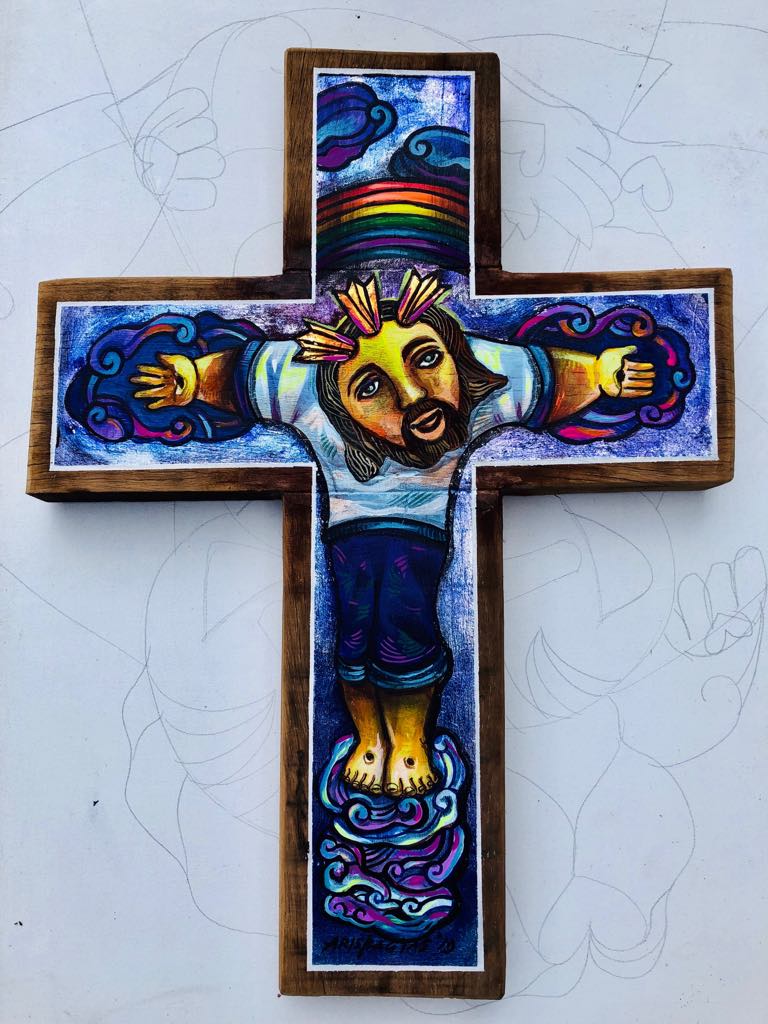
A painting of Sto. Niño devotees by Bulakenyo artist Aris Bagtas, 2018.

Work of Christmas continues

We are already into the second week of Ordinary Time in our liturgy but, we in the Philippines are still celebrating an “extension” of the Christmas Season this third Sunday of January for the Feast of the Sto. Niño, the Holy Child Jesus.

And, for a very good reason! to remind us the story of Christmas continues even after the Feast of the Lord’s Baptism or when all decors have been kept.

The work of Christmas, of sharing Jesus Christ in our loving service with others continues the whole year through. In fact, it is during the 34 weeks of Ordinary Time where we are most challenged to continue Christ’s work he started at Christmas when he became a child among us.

And there lies the very core of his teachings, of his message to us: our being like a child!

At that time the disciples approached Jesus and said, “Who is the greatest in the kingdom of heaven?” Jesus called a child over, placed it in their midst, and said, “Amen, I say to you, unless you turn and become like children, you will not enter the kingdom of heaven. Whoever humbles himself like this child is the greatest in the kingdom of heaven. And whoever receives one child such as this in my name receives me.”

Matthew 18:1-5

Jesus remained the Child of God until the end

If we examine everything in the Gospel, from the Incarnation and Nativity of Jesus, his hidden and public lives, his miracles and preaching, into his Passion, Death, and Resurrection, everything is anchored in Christ’s being like a child, the eternal Son of God.

When he was lost and found in the temple at the age of 12, right away he told his Mother his being the Son of God: “Why were you looking for me? Did you not know that I must be in my Father’s house?” (Lk.2:49)

Painting by Aris Bagtas, 2018.

At Last Supper, Jesus explained his being the Child of the Father: “The words that I speak to you I do not speak on my own. The Father who dwells in me is doing his works” (Jn.14:10).

His being one with the Father is due to his being the Eternal Son that reached its highest point of expression at the crucifixion where Jesus repeatedly called God his “Father”.

Here we find as in our gospel today the essential requirement of first becoming a child of God to make it into the kingdom of heaven. It is impossible to follow Jesus to his Cross when we remain adults who know everything!

This is the problem with the Traslacion that has become rowdy, even crazy over the years which is completely the opposite of the Pit Señor de Sto. Niño in Cebu that remains solemn and orderly despite its vast crowd of devotees.

See how in Quiapo the devotees “fight” and insist on their own ways of doing the procession, of how things are now turned upside down with the hijos lording over (pun intended) everything every January 9 with the gall to call Christ “Padre Nuestro Jesus de Nazareno”?

Everybody wants to fulfill one’s panata of jumping into the revered image of the Nazareno, in total disregard of others.

Where is the spirit of being a child, of being generous and kind with others?

What we have been seeing these past years in the Traslacion is more of machismo, of who is the greatest to be able to reach the Nazareno. And included among them are the growing members of media suddenly becoming devotees with the panata to anchor Traslacion!

Being a child is a call to daily conversion in Christ Jesus

Becoming like a child a daily call to conversion to Jesus, a going back to the story of Christmas, of being humble and small. I like that word used by Jesus today – turn – when he declared, “Amen, I say to you, unless you turn and become like children…”

To be able to carry our cross and follow Jesus, we have to turn first, that is, be transformed from world-wise, self-sufficient, all-knowing adults of the world into abiding children of the Father of Jesus Christ by the grace of the Holy Spirit.

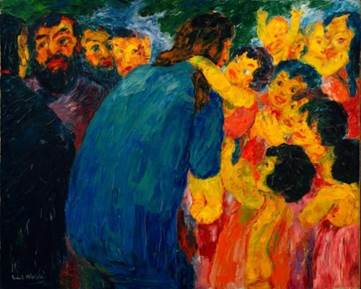
Children always have that glow within them that can disarm us of our insecurities and fears. Below is a painting by the Danish-German Modern Artist Emil Nolde (1867-1956) portrayed children with Christ in bright colors while the adults were all dark and gloomy.

“Christ Among Children” (1910) by Emil Nolde.

Being like a child is letting go of our fears and insecurities to entrust ourselves to God’s care and providence. And to others dependability and reliability too!

Maybe that is why as we get older, we mellow: we realize after all that we remain children of God and of somebody else in the end. There is always somebody out there who would look after us especially when we are already old and weak. There is always somebody whose heart would always be moved to come to our rescue or simply to warm our hearts or make us smile.

If each of us can become like a child daily, simply loving and trusting others, then we can bring light into this world deeply plunged in the darkness of sin and pride, of rat race without any winner, or arms race without any war at all.

If we can become like the child, we can become like Jesus Christ, the great light in the land of gloom bringing joy and great rejoicing (Is.9:1-2) with his life of love flowing from the great sacrifice at the Cross. Amen.

Continuing the Christmas story

The Lord Is My Chef Sunday Recipe for the Soul

Baptism of the Lord, 12 January 2020

Isaiah 42:1-4, 6-7 ><}}}*> Acts 10:34-38 ><}}}*> Matthew 3:13-17

From Google.

Today is our “holy birthday” as children of God, the Feast of the Baptism of Jesus. That explains the sprinkling of Holy Water at the start of our Mass to remind us of continuing the Christmas story the whole year through as sons and daughters of God.

With this feast, we close the Christmas Season by celebrating the great mystery of Christ’s Nativity when he became human like us so that we can become divine like him as children of the Father in heaven.

Jesus came from Galilee to John at the Jordan to be baptized by him. John tried to prevent him, saying, “I need to be baptized by you and yet you are coming to me?” Jesus said to him in reply, “Allow it now, for thus it is fitting for us to fulfill all righteousness.” Then he allowed him. After Jesus was baptized, he came up from the water and behold, the heavens were opened for him, and he saw the Spirit of God descending like a dove and coming upon him. And a voice came from the heavens, saying, “This is my beloved Son, with whom I am well pleased.”

Matthew 3:13-17

We are the children of God

Sunrise at Atok, Benguet. Photo by Ms. Jo Villafuerte, September 2019.

Every morning when we wake up, the same thing happens with us with Jesus at Jordan: as we arise whether filled with joy or saddled with so many pains and worries from the previous day or night, Christ joins us in every brand new day as his brother and sister in the Father.

Despite all our anxieties and fears with every new day of work and school, the heavens open and the Holy Spirit comes down to us with our Father in heaven declaring to all his creation, “This is my beloved child, with whom I am well pleased.”

That is the mystery of Christmas we must celebrate daily when Jesus became human like us in everything except sin. In Baptism, we have become sons and daughters of the Father in his Son Jesus Christ our Lord through the power of the Holy Spirit.

That coming down of Jesus to John to be baptized in Jordan is the message of Christmas, of how God became human like us to be one with us in our dirt and stain so he may cleanse us in his Passion and Death in order to share in the glory of his Resurrection .

That is why Christmas is a continuing story we have to keep on telling and sharing with our life of holiness with others.

As children of God, we are called to holiness

Please don’t be scared with the call to “holiness”, my dear reader and follower.

Holiness is not being sinless.

Holiness is being filled with God.

Holiness is following Jesus who calls us to be holy like the Father in heaven with all of our imperfections and sinfulness.

Morning in our Parish. Photo by author, 2019.

So many times in our lives, as we strive to lead holy lives by being good individuals, we also feel so tired and exhausted that we question or wonder if we are still doing the right things in life especially when we try to be faithful to God and with others.

There are times we just cry and suffer in silence in order not to hurt with our words and actions those people dearest to us who are oblivious or even do not care at all to the pains and difficulties they cause us.

Like a slave driver boss, demanding and exacting parents, a perfectionist husband or wife or partner, a naive sibling.

It is very difficult to be holy, to be like Jesus who is so loving and merciful, kind and understanding.

And that is why he chose to come to us, to be with us, to help us, to assure us that “the Father is so well pleased with us”!

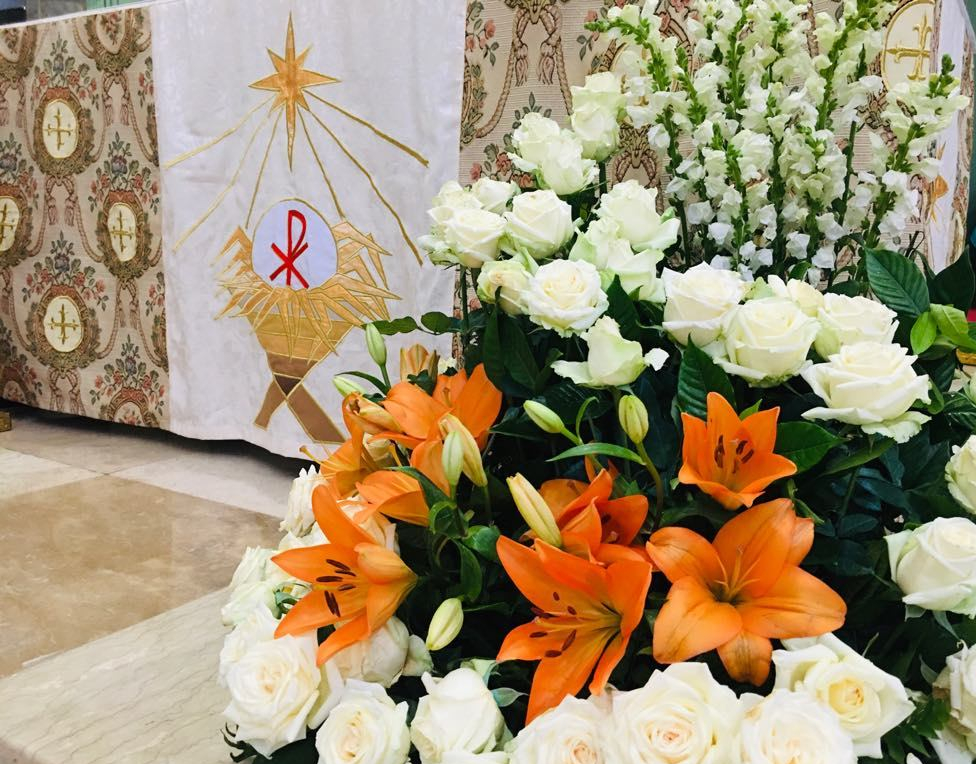
Flowers at our Altar, Epiphany Sunday 2020. Photo by author.

God is well pleased with us

Three things I wish to share with you this lovely Sunday, especially for some of us feeling tired and exhausted this early with our many tasks and responsibilities at home, the school, the office, and even the church and community.

First is get it done. We all have roles to play in life. Remain faithful and stay focused with the mission not with the person. Yes, it is easier said than done but like Jesus instructing John for his baptism, he said, “Allow it now, for thus it is fitting for us to fulfill all righteousness” (Mt.3:15). It must have been so difficult for John to baptize Jesus the Son of God but the Lord told him anyway, get it done! And just as John did his role, everything happened according to God’s plan.

Second is give others the chance to do the will of God. Sometimes many of us have that “messianic complex” as if we are the saviour of the world. No! That is Jesus alone and he has tasked all us with specific roles in doing his mission. Let others do their part. Stop monopolizing all good deeds because when there is a monopoly of holiness, certainly there is already a pervading evil. Jesus as the Christ is the definitely the holy one but he told John to baptize him and he in turn “allowed” the baptism to take place.

Third is do whatever is good. Always. That’s what Jesus told John, “Allow it now, for thus it is fitting for us to fulfill all righteousness” (Mt.3:15). Doing what is righteous is doing what is good, what is holy, what is just. But, it is not that easy. I know.

“Minsan nakakapikon na magpakabuti lalo na kapag tila walang pakialam yung mga ginagawan mo ng kabutihan.”

We have felt so many times that being good, doing what is right can take its toll. We always wonder “when is enough really enough” with people who have made it their way of life of hurting us, of stressing us, of being pain in the ass.

We want to scream, to spill the beans, to unmask them to reveal them as fakes and hypocrites!

But, don’t!

Do not be like them.

Be good like Jesus, the one prophesied by Isaiah in the first reading.

Thus says the Lord: Here is my servant whom I uphold, my chosen one with whom I am pleased, upon whom I have put my spirit; he shall bring forth justice to the nations, not crying out, not shouting, not making his voice heard in the street. A bruised reed he shall not break, and a smoldering wick he shall not quench…

Isaiah 42:1-3
Baby Jesus on a bed of white roses in our Sanctuary area, Epiphany 2020. Photo by author.

In the second reading, we heard St. Peter preaching after the Pentecost of how “Jesus went about doing good and healing all those oppressed by the devil, for God was with him” (Acts 10:38).

Whatever difficulty you are going through at this very moment, you are still God’s beloved child with whom he is well pleased. God is always with you. Continue the beautiful Christmas story with your life of loving service, even to people who hurt you.

A blessed Sunday to you!
Keep Christmas Alive

The Lord Is My Chef Recipe for the Soul, 01 January 2020

Wednesday, Solemnity of the Blessed Virgin Mary, Mother of God

Numbers 6:22-27 ><}}}*> Galatians 4:4-7 ><}}}*> Luke 2:16-21

Photo by Rev. Fr. Gerry Pascual, Minor Basilica of the Immaculate Conception, Washington DC, 2017.

Today marks the octave or eighth day of Christmas when we celebrate the Solemnity of the Blessed Virgin Mary, Mother of God.

Octave means we extend the celebration of Christmas Day into eight days because one day – December 25 – is not enough to reflect on the meaning and mystery of the Incarnation of the Son of God.

The eighth day also signifies eternity which comes next after the seven days of the week.

Hence, whenever people greet me on this day with a “Happy New Year”, I just say “thank you” and then greet them too with “a blessed Christmas to you” or the usual “Merry Christmas”!

I am not disturbing your peace this Christmas and it is more than my being a “language nerd” – but, if you really want to appreciate more and experience the depth and the joy of Jesus Christ’s birth, stop that happy new year greeting.

The more proper and perfect greeting this January 2020 is still “blessed Christmas” or “Merry Christmas” because it is another year in the Lord Jesus Christ.

And here we find the very important and deeper meaning of Christmas: do not ever forget it is about Jesus Christ. Christmas is not about gifts and bonus, it is not about food and merry making, it is not about vacation and long weekends.

Christmas is all about Jesus Christ, the Son of God who became human like us in everything except sin in order to save us and bring us back to the Father in heaven. In his coming, it is not only us who were made holy but even our time that became “his story”.

Indeed, Jesus Christ is the reason of the Season. Let us maximize in greeting “Merry Christmas” and stop its abrupt ending with the coming of the new year that after all, is based on his birth that is why we call it “Anno Domini” (AD) or “year of the Lord”.

Nativity Scene at the National Shrine of the Minor Basilica of the Our Lady of Mt. Carmel, Quezon City. Photo by author, 30 December 2019.

Why stop greeting everyone with a happy new year

Keep greeting everyone with “a blessed Christmas” or a “Merry Christmas” until January 12, last day of our Christmas Season with the Baptism of the Lord.

In the Philippines, you may continue greeting people with Merry Christmas until January 19, Feast of the Sto. Nino which is an extension of the Christmas Season in our country granted by Rome.

Furthermore, for the lazy among you, you can have the excuse of not removing your Christmas decors until February 02, Feast of the Presentation at the Temple because chronologically, that is the precise moment when Christmas Season ends. That is why, the giant Christmas Tree at the Vatican’s St. Peter’s Square is traditionally removed only on this date.

Also, please stop announcing in churches about the Mass tonight and tomorrow as “New Year’s Mass” because there is no Mass for New Year.

Though our Sacramentary offers prayers for Mass at New Year, the same book stipulates that “this cannot be celebrated on January 1 because it is the Solemnity of the Blessed Virgin Mary, Mother of God.”

Basic reason why we should not be greeting one another with a happy new year on January 1st is the fact that we celebrated our New Year in the Church during the First Sunday of Advent, that Season of four Sundays when we prepare for Christmas.

Remember, Advent has two aspects: from First Sunday of Advent until December 16, our focus is on the Second Coming of Christ or Parousia at the end of time. Nobody knows when it will be, not even Jesus Christ except the Father in Heaven. Then, from December 17 to 24, we enter the second aspect of Advent which is the focus on the first coming of Jesus when he was born in Bethlehem more than 2000 years ago. All the readings on these days center on the events and stories leading to Christ’s birth.

So my dear reader and follower, we start each year in the Church preparing for the coming of the King of kings and we end the year with Solemnity of Christ the King.

To be exact, we start and end each year in Jesus Christ, not in numbers.

Every day of the year is a Christmas in essence, a coming of Jesus Christ.

And for us to continue this beautiful story of Christmas especially on these first 19 days of 2020, the Blessed Virgin Mary, the Mother of Jesus Christ who is true God and true Man, teaches us the way to keep this spirit of bringing the Savior into the world even beyond December 25 and January 1.

The shepherds went in haste to Bethlehem and found Mary and Joseph, and the infant lying in the manger. When they saw this, they made known the message that had been told them about this child. All who heard it were amazed by what had been told them by the shepherds. And Mary kept all these things, reflecting on them in her heart.

Luke 2:16-19
Shepherds approaching the Nativity Scene at the National Shrine of the Basilica of Mt. Carmel, Quezon City. Photo by author, 30 December 2019.

Mary to guide us through another year closer to Jesus

A natural reason we have for cutting short our greetings of Merry Christmas to one another is the very close proximity of December 25 with the New Year. Though the civil calendar also came from the Church, in a sense the start of the year has been made holy by its closeness with Christmas.

Rightly then, all the more we find the reason to keep on greeting Merry Christmas than happy new year!

Notice the sudden shift from the holy and transcendent so evident in just a span of one week that personally, I feel we have to promote all the more a stop in this greeting of happy new year at Christmas Season.

How easily we can forget the wonder and awe of Christ’s birth!

See how from our rich liturgical celebrations of Advent and Christmas then suddenly this last seven days of the year, we turn to pagan practices to usher in the new year?

Have we become like the shepherds who came to Jesus only at his brith and never to be mentioned again in the entire account of St. Luke?

What happened?

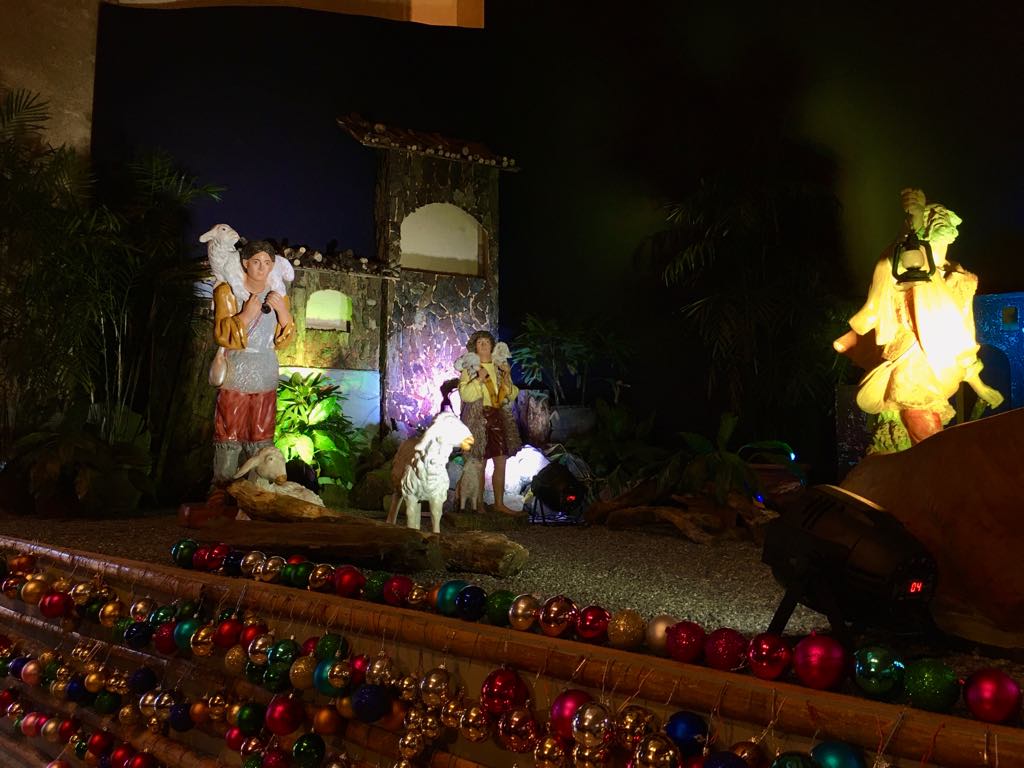
A shepherd near the Nativity Scene at the National Shrine and Basilica of Our Lady of Mat. Carmel in Quezon City. Photo by author, 30 December 2019.

Mary guides us to the true meaning of Christ’s birth and of the new year that closely comes after Christmas. See how St. Luke narrated the attitude and disposition of Mary, the Mother of Jesus Christ our Lord and God:

And Mary kept all these things, reflecting on them in her heart.

That’s the problem with our Christmas celebrations: after December 25, we go back to “normal lives” which is more of living without Jesus, of getting into the daily grind of life away from Jesus.

Like us, Mary did not know what was really ahead of her with the birth of Jesus: she had no idea about his being lost at the temple, of his being tempted by the devil, of his being rejected and killed by his own people despite his many healings and other miracles.

Mary simply believed in Jesus. And that is why she is blessed according to Elizabeth, because she believed the words spoken to her would be fulfilled.

Mary had nothing certain about her coming year, of her life except the name to be given to her Son, Jesus which means “God is my Savior”.

The same is true with us! We do not know if we will still be together until December or at least in January 2021. We do not know who would get married this year, who would be migrating to another country, who will hit it big time in business or whatever.

Stop consulting fortune tellers because they know nothing about the future! Only the Father of Jesus knows everything that is going to happen. And he had sent us his Son Jesus to make sure that through everything that is going to happen, none of us would ever be lost (Jn.6:39).

Like Mary, we have only one surety and security this 2020: Jesus Christ, our Lord and God living with us!

Let us focus this year in Jesus Christ and his words of salvation.

And that is the challenge of Christmas of the new year 2020: that every day, despite all the good news and bad news we hear and encounter in life, we make that conscious decision to trust in Jesus that good is coming to us for his name means God is my Savior.

Like Mary, let us lose ourselves every day in this wonderful moment of Christmas of looking at the child Jesus inviting us to be caught up in his joy of coming, to fear not of the new year ahead for he has come precisely to be one with us.

May we stay with him, keep his words in our hearts like Mary by reflecting on their meaning trusting and awaiting their fulfillment.

Let us not leave Jesus like the shepherds, though, they were the first to see the Lord at Christmas, they missed his full glory of resurrection because they never went back to him again.

Have a blessed and Merry Christmas!

From the inside of the Church of the Nativity in Bethlehem, the small doors that require pilgrims to humbly bow first to enter the church and find Jesus. Photo by author, May 2019.

God among us in our family

The Lord Is My Chef Sunday Recipe for the Soul

Feast of the Holy Family, 29 December 2019

Sirach 3:2-7, 12-14 ><}}}*> Colossians 3:12-21 ><}}}*> Matthew 2:13-15, 19-23

One of the many bas reliefs at the Cavern Church complex in Cairo, Egypt where the Holy Family fled to escape Herod’s wrath when he ordered the murder of all male children below three years old after learning from the Magi the birth of the “new king of the Jews”.

Among the celebrations during this Christmas Season, the Feast of the Holy Family is something peculiar because it was not borne out of liturgical origins but more of the changing times in the past 126 years since it was first celebrated as a devotion.

In the beginning, it was designed to counteract the growing attacks against family life and morality of the rapidly changing times.

Since 1969 when Vatican II designated its feast to be celebrated within the Christmas octave, the feast of the Holy Family has proven to be a major contribution in helping us understand the mystery of the Lord’s nativity in our modern time.

When the magi had departed, behold, the angel of the Lord appeared to Joseph in a dream and said, “Rise, take the child and his mother, flee to Egypt, and stay there until I tell you. Herod is going to search for the child to destroy him.” Joseph rose and took the child and his mother by night and departed for Egypt. He stayed there until the death of Herod, so that what the Lord had said through the prophet might be fulfilled, out of Egypt I called my son.

Matthew 2:13-15
A diptych mosaic depicting the story of the flight to Egypt of the Holy Family on the walls of the Saint Virgin Mary’s Coptic Church in Cairo, Egypt beside the Cavern Church. It is one of the oldest churches in Egypt that dates back to the third century.

Christmas, a living story continuing in our family

The feast of the Holy Family reminds us that Christmas is a living story that continues to this day wherein God comes first in and through our family.

We go back to Matthew’s gospel to hear again the important role of Joseph not only in taking Mary as his wife in order to give name to Jesus but also to protect them from all harm.

We have seen during Christmas how Jesus had always been subjected to suffering right in his mother’s womb when Joseph and Mary have to travel from Nazareth to Bethlehem to comply with Augustus Caesar’s directive to all subjects of the empire to register.

Now, they have to travel outside Israel to flee to another country to escape the murderous plot of Herod against Baby Jesus.

We have heard again the continuation of Joseph’s mission revealed again to him by an angel in a dream. But, Matthew added something very interesting that is the key to understanding our gospel today and our feast of the Holy Family.

He (Joseph) stayed there until the death of Herod, so that what the Lord had said through the prophet might be fulfilled, out of Egypt I called my son.

Matthew 2:15
Entrance to the Cavern Church where the Holy Family lived for about three years while in Egypt before going back to Israel.

Remember Matthew’s audience and followers were Christians of Jewish origins.

The Holy Family’s flight to Egypt is very similar to the story of Jacob’s migration into that country during the great famine when one of his sons, Joseph the dreamer, became a governor there.

Many years later, the Egyptians would make them suffer that God sent them Moses to bring them back to the Promised Land through Exodus that has become the single most important date in their entire history. Also known as the “passover”, it was at that time when Israel passed over from slavery in Egypt into freedom in the Promised Land.

But, the result was not favorable because after settling back into the Promised Land, the people would repeatedly break God’s covenant by worshipping foreign gods and idols that eventually led to their Babylonian exile, not to mention the division of the kingdom into two after David’s death.

By citing a prophecy by Hosea, Matthew is now telling us how Jesus, the Son of God, is the new beginning of fidelity to the covenant. Like Moses, God took out Jesus from Egypt; but greater than Moses and unlike him, Jesus would never be unfaithful to the covenant.

As the new beginning not only for Israel but also for the whole world, Jesus in fact passed us over from sin to grace with his own passover or pasch – his Passion, Death and Resurrection.

Welcoming Jesus in our family through our love and care for each member

The family is the basic unit of every society. Destroy the family, we destroy the society. Eventually, we destroy our nation.

The same is true with us in the Church: the family is a domestic church. Jesus comes first in our family.

But how can he now come when our family is disintegrating, when it is right in the family where women and children are first abused?

How can Jesus come in our family when we have lost all senses of the holy, of God that we no longer pray and gather together in the Sunday Mass and other sacraments?

See how the giant flatscreen has become every family’s altar and deity, replacing the Christ the King or any other Poon in our homes. Malls have replaced our places of worship. Worst of all, the great feasts and seasons of Christmas and Easter have become so commercialized, reduced to become our modern excuses for much needed breaks and supposed family bonding in beaches and abroad.

The Holy Family’s flight to Egypt brought them closer with one another and most especially with God. Unfortunately, our own “flight to Egypt” has become our excuse to leave God behind and focus more with our own lives.

A portion of a larger mix of bronze reliefs on one of the doors of the Duomo Cathedral in Florence, Italy depicting the harsh conditions the Holy Family have to face in Egypt while escaping Herod. Photo by Ms. Janine Lloren, 2015.

A friend had shared this photo with me which she had taken while on a trip in Italy, home to thousands of our OFW’s who, like the Holy Family, have to leave our country to find life, to escape “death”.

Like Jesus, Mary, and Joseph, God “sends” us out to our own, different “flight to Egypt”, pulling us out from the comforts of our family and home, career and other comfort zones in order to gather ourselves so we can start anew in Christ to be more free to love and be faithful to him and our loved ones.

Many times in our lives, separations and other adversarial situations make us better persons, enabling us to be more fruitful in life than just having everything for granted and so easily.

The adversarial conditions the child Jesus have experienced very early on – from his birth to early childhood in Egypt – strike many similarities with our situations today.

It is hoped that with this Feast of the Holy Family, we may be reawakened again with our sense of mission in bringing Jesus Christ more present especially when life is threatened, when persons are denied of justice and freedom.

May the first and second readings remind us that every relationship we have here on earth, starting in our families must always be based on our relationship with God our Father. Amen.