God in the “eye of the storm”

The Lord Is My Chef Sunday Recipe for the Soul by Fr. Nicanor F. Lalog II
Sunday in the Nineteenth Week of Ordinary Time, Cycle A, 13 August 2023
1 Kings 19:9, 11-13 ><}}}}*> Romans 9:1-5 ><}}}}*> Matthew 14:22-33
The well-defined eye at the center of the storm Hurricane Florence seen from the International Space Station taken by astronaut Alexander Gerst in 12 September 2018, https://www.nasa.gov/image-feature/staring-down-hurricane-florence.

Our gospel this Sunday speaks of winds and storms, something we have experienced recently that brought so much rains and caused widespread floods even in Metro Manila.

Storms and typhoons are categorized by the winds they pack that induce the heavy rains which result in floods. At the center of every storm and typhoon is called the “eye” which is its most calm part without winds at all, even with clear skies; however, all the hazards and dangers of a storm come from the wall of that eye of the storm that is why we have the expression “lull in the storm” – that moment of calmness before suddenly everything breaks loose as the storm passes or pummels an area.

Our first reading and gospel today imply something about this “eye of the storm” where God is found, where Jesus comes. Both readings tell us that it is not really in the raging storm where we find God but right in that eye of the storm, the peace and stillness of our heart within.

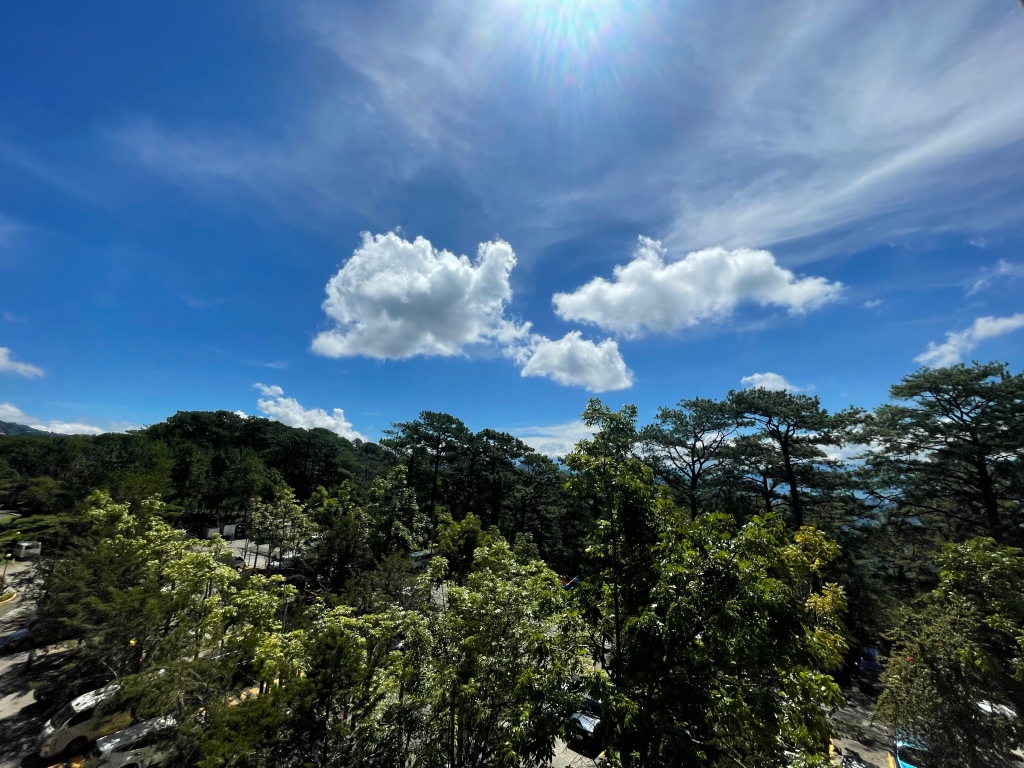
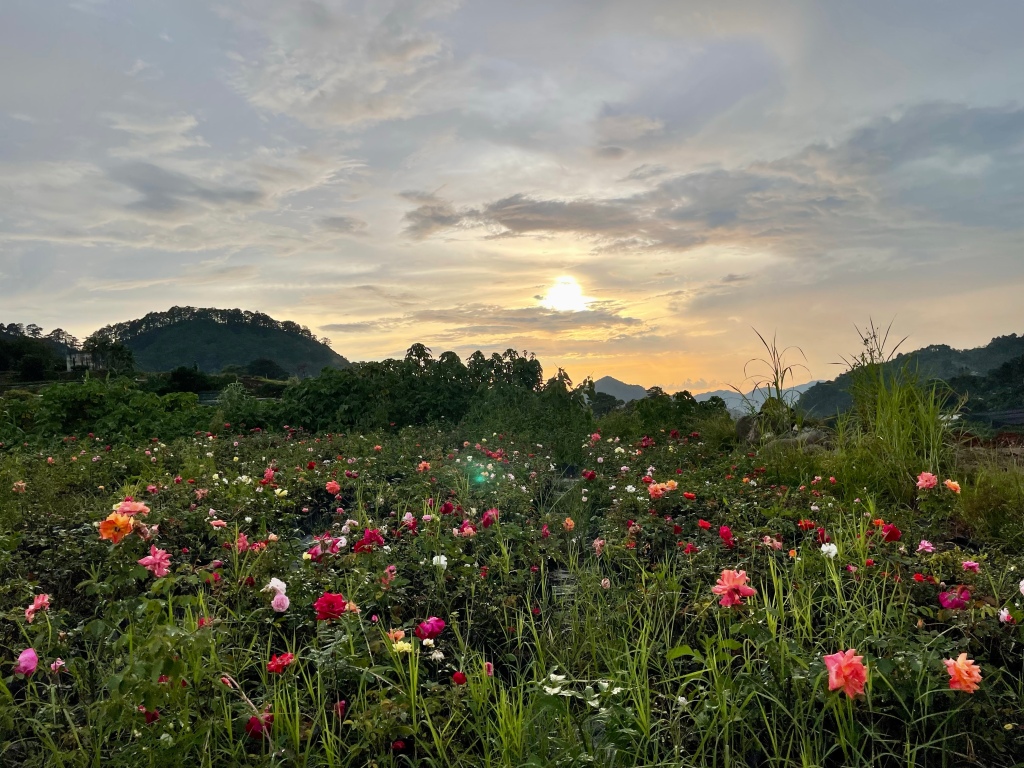
Photo by author, Katmon Nature Sanctuary & Beach Resort, Infanta, Quezon, 04 March 2023.

In the first reading, God told Elijah to wait for him at the entrance of the cave as he fled from soldiers of Queen Jezebel out to kill him. First came a strong wind, followed by an earthquake, then, fire, but God was nowhere.

After these shattering events, Elijah found God in a “tiny whispering sound” that followed. What a beautiful imagery of the prophet deep in prayers! It was in his serenity, in his complete trust in the Lord – in the eye of a storm – that he found God and had to cover his face with a cloak as a sign of respect. Imagine the stormy condition of Elijah at that time, of being hunted.

Here we find again the importance of prayer life, the eye of the storm, our communion with God in Jesus Christ. It is in prayer where God first comes and reveals himself to us. More than the recitation of traditional prayers, prayer is being one with God, of wrestling with him in our inner selves that is always in turmoil, always with a storm that makes us choose whether to stay or to leave, to wait for God or go ahead with what we believe and think. Prayer is wrestling with God like Jacob because deep within us is always a storm and typhoon going on, with an eye as its center where God is, where Jesus walks on water to save us when like his apostles we are in the middle of a storm at the darkest hour of the night.

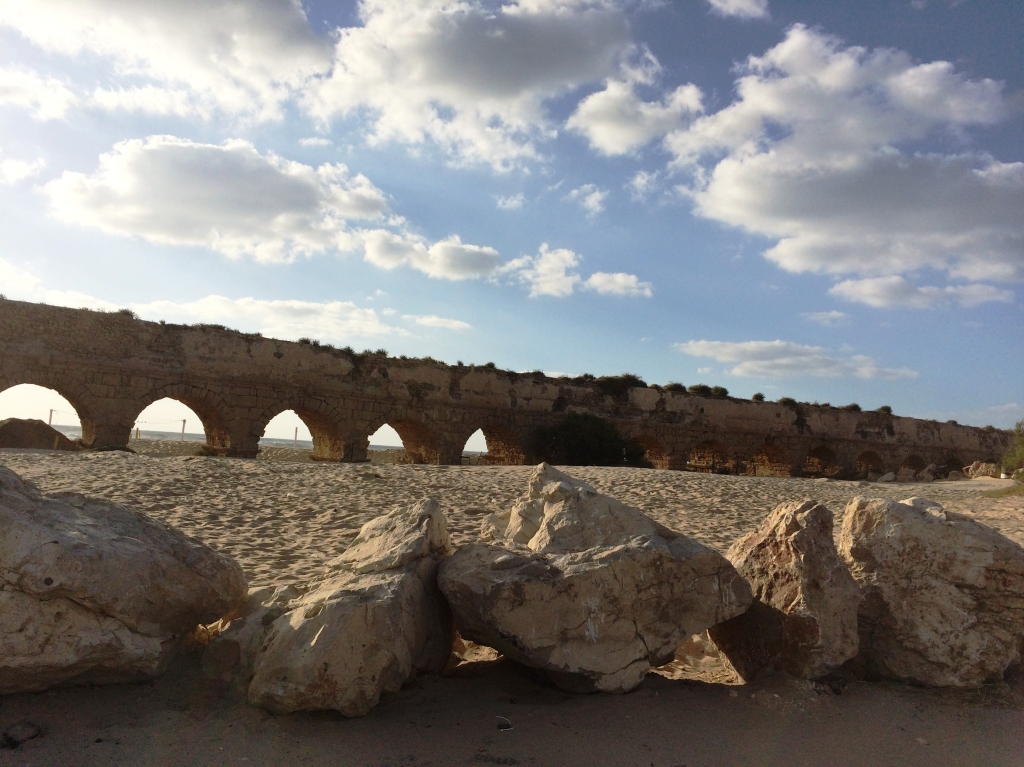
Photo by author, sunrise at the Lake of Galilee, Israel, May 2017.

When the disciples saw him walking on the sea they were terrified. “It is a ghost,” they said, and they cried out in fear. At once Jesus spoke to them, “Take courage, it is I; do not be afraid.” Peter said to him in reply, “Lord, if it is you, command me to come to you on the water.” He said, “come.” Peter got out the boat and began to walk on the water toward Jesus. But when he saw how strong the wind was he became frightened; and, beginning to sink, he cried out, “Lord, save me!” Immediately Jesus stretched out his hand and caught him, and said to him, “O you of little faith, why did you doubt?” After they got into the boat, the wind died down. Those who were in the boat did him homage, saying, “Truly, you are the Son of God.”

Matthew 14:26-33

These two instances of Elijah in the cave and Jesus walking on water show us that God is always present in our lives. Whatever is happening around us does not determine God’s presence.

What matters most is that we pay attention to him alone in Jesus, our Emmanuel or God-is-with-us. Every time we cry out “where is God?”, it is us who have left him, it is us who have doubted like Peter who even in the middle of a storm was thinking more of himself than Jesus. See how doubtful was Peter that even after Jesus had identified himself by saying “It is I” which is actually “I AM” as God had called himself to Moses and the Israelites, he dared to say “Lord, if it is you, command me to come to you on water.” How funny that when Jesus gave in to his request, Peter sank because he still doubted the Lord. Just like us when we would dare God but when he plays our games, we chicken out, still unbelieving, still unconvinced.

Is it really God whom we are seeking especially in moments of storms in life?

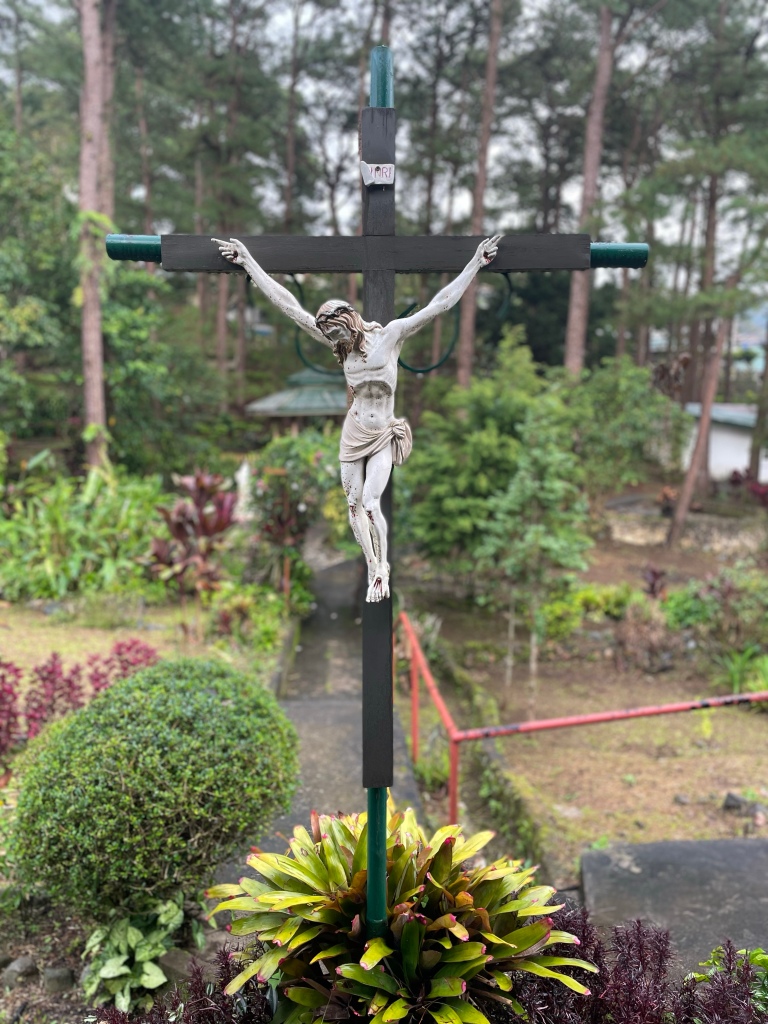
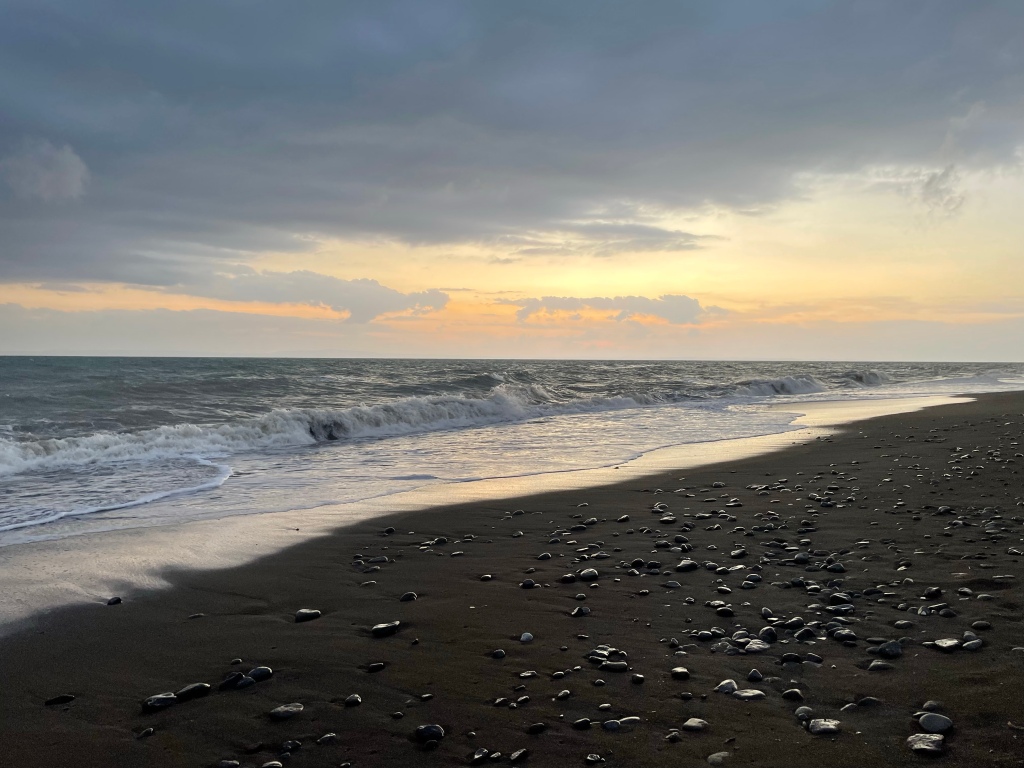
Photo by author, San Juan, La Union, 24 July 2023.

If all we seek is fame, comfort and pleasure even amid the storms in life, paying attention only to our selves, we would surely miss the Lord who is always beside us. People, things, events can distract us and lead us astray at critical moments in life.

Hence, the need for us to remain focused in Jesus by looking right into the very “eye of our storm”, into what is disrupting us, seeking Christ like the psalmist in our responsorial psalm today who begged, “Lord let us see your kindness, and grant us your salvation.”

In this age with so many storms of distractions outside us in a world on a 24/7 mode with almost everyone in his/her own world listening/watching to their playlists and podcasts with eyes stuck on their gadgets or stuck in their ears, do we make time to find our “eye of storm”, our center of peace and calmness where God is?

See how St. Paul in the second reading was tormented or tortured in himself because of his fellow Jews’ refusal to accept the good news that Jesus is their awaited Christ. It was a perfect storm within him that saddened him but never bothered him because he was focused with God and his mission. He had no qualms in bearing many sufferings and facing death because amid all the storms in his life, he had found Jesus. This focus on God is the reason why Jesus remained behind to pray that night when he told the Twelve to go ahead to the other side of the lake. This is the first time Matthew tells us Jesus was praying. Two things I wish to share with you regarding prayer life as the eye of our storms in life.

First, the most difficult prayer is always the most meritorious. Prayer is not about feelings nor of feeling good and light but in giving one’s self to God wholly that even if nothing seems to happen, we remain in God, with God. Desire only God in prayer, asking him for courage to find and follow Jesus. Like the apostles in the boat, true prayer happens when we feel abandoned and isolated, so far from God. It is in our many trials in life when we pray that we learn how strong and faithful are we in God’s grace!

Second, there are no distractions in prayer. I have realized that most often, the distractions we consider during prayer periods may actually be from God, not from the devil as we usually believed. Recall how Jesus forced the 12 to go ahead to the other side of the lake perhaps to test them and face their inner distractions and storms. The people, things, and events that distract us in our prayers are from God as reminders of the issues we have to face and resolve in life so we may see him clearly.

12th century mosaic in the Cathedral of the Assumption in Monreale, Sicily of Jesus saving Peter. From https://orthodoxartsjournal.org/icon-carving-of-christ-pulling-st-peter-from-the-water/.

Why do you see your enemies in your prayers? Maybe it is time to forgive them.

Why all these malicious thoughts happening during prayers? Maybe it is about time you stop watching porn and start respecting women as persons.

Why do our embarrassing moments keep on appearing in prayers? Maybe God wants us to forgive ourselves and move on with life.

They are not distractions but blessings that if we open ourselves to confront our inner storms, no strong wind from outside can topple us because we have Jesus inside us. Today is a Sunday. Go celebrate Mass in your parish. Forget all the noise and distractions you experience, be focused only on God. Find your eye of the storm in yourself and there you shall find God, loving you, comforting you, blessing you! Amen. Have a blessed week ahead.

Ang pangit sa pagrereklamo

Lawiswis Ng Salita ni P. Nicanor F. Lalog II, Ika-07 ng Agosto 2023
Larawan kuha ni Dra. Mylene A. Santos, MD, sa France, 2022.

Matapos nating pagnilayan kaibahan ng reklamo at hinaing, ngayon ay masinsinang suriin natin ang sama at kabuktutan – ang kapangitan – nitong pagrereklamo. Bukod sa sinasadya itong pag-isipan upang manipulahin mga tao maging Diyos, ang masaklap na mukha ng pagrereklamo ay naroon ito palagi sa mga taong malalapit sa atin tulad ng pamilya at kaibigan.

Sina Miriam at Aaron ay nag-usap laban kay Moises tungkol sa asawa niyang taga-Cus. And sabi nila, “Si Moises lamang ba ang kinausap ni Yahweh? Hindi ba’t tayo man?” Hindi kaila kay Yahweh ang usapan nilang ito.

Bilang 12:1-2
Larawan kuha ng may-akda sa San Juan, La Union, 24 Hulyo 2023.

Ito ang masakit na katotohanan sa pagrereklamo: ang mga unang-unang nagrereklamo laban sa atin palagi yung pinakamalapit sa atin, iyong mga taong inaasahan natin na sana higit nakaka-unawa sa atin, na sana ang mga tagapagtanggol at kakampi natin, mga nagmamahal sa atin.

Kahapon sa unang pagbasa ating natunghayan paanong nagreklamo mga Israelita laban kay Moises nang sila ay nahirapan at nagutom sa ilang. Dinig na dinig ni Moises kanilang mga reklamo kaya siya ay naghinaing sa Diyos. Dapat sana sina Aaron at Miriam na mga kapatid niya ang dumamay sa kanya subalit sa ating pagbasa ngayon, sumama pa sila sa pagrereklamo laban kay Moises!

At hindi lamang iyon! Nang-intriga pa ang magkapatid laban sa kanilang kapatid. Ginawang isyu nina Aaron at Miriam ang taga-Cus na asawa ni Moises na si Zipporah. Ating napagnilayan kung paanong sa pagrereklamo mayroon palaging panunumbat, panunukat at paghahamon sa mga inirereklamong tao kungdi pati sa Panginoong Diyos tulad sa tagpong ito (https://lordmychef.com/2023/08/07/masama-magreklamo-pananalangin-ang-dumaing/).

Alam naman nina Aaron at Miriam bakit nakapag-asawa si Moises ng hindi Judio dahil nga siya ay tumakas at nagtago sa ilang matapos niyang mapatay isang bantay na Egipsiyo. Sa pagkakataong ito, kanila ring kinukuwestiyon nila pagkatao ni Moises na kapatid nila.

Higit sa lahat, dito ating nakita ang pangit at mabahong katotohanan ng pagrereklamo na bunsod ng simpleng inggit. Tingnan kung paanong kayang wasakin ng pagka-inggit ating pagiging magkakapatid at pamilya!

Nagngingitngit sa inggit sina Aaron at Miriam laban kay Moises at maging kay Yahweh dahil hindi sila makabida sa mga tao. Ibig nilang umepal sa mga tao. Sa mga susunod na kabanata, ganito rin ang kuwento ng mga kalalakihang nainggit sa mga hinirang na propeta ni Yahwen sa ilang. Katulad ni Miriam, sila ma’y pinarusahan ng Diyos.

Larawan kuha ng may-akda sa San Juan, La Union, 25 Hulyo 2023.

Dapat nating matanggap na bawat isa sa atin ay mayroong gampaning papel at misyon sa buhay mula sa Diyos. Huwag nating sukatin o kuwentahin uri ng ating gampanin sapagkat walang maliit o malaking bagay sa Diyos. Ang pinaka-mahalaga sa kanya ay ang ating katapatan sa kanyang iniatas na gawain at misyon. Kung ang ibig ng Diyos na papel natin sa mundo ay tagapagpatay ng ilaw o taga-kaway ng munting bandila tuwing dumaraan ang tren sa crossing, iyon na iyon! Ang ningning at kahalagahan ng bawat gawain ay nakabatay sa Diyos at hindi sa ano pa mang sukatan o pamantayan ng tao. Kaya sa halip mainggit, ating pagbutihin mga gawain natin.

Sa ebanghelyo sa araw na ito ating natunghayan si Simon Pedro “umepal” kay Jesus na naglakad sa ibabaw ng tubig nang hilingin niyang palapitan din siya doon ng Panginoon. At pinagbigyan naman siya ni Jesus ngunit nang maramdaman ni Pedro ang malalakas na hangin, unti-unti siyang lumubog dahil sa takot kaya napasigaw siya sa paghingi ng saklolo kay Jesus.

Madali kasing makita ang ganda ng tanawing naglalakad sa ibabaw ng tubig o masarap siguro maranasan ikaw ay ginagalang ng lahat katulad ni Moises. Pero, iyon na ba lahat?

Hindi natin alintana mga likas na problema at hirap nakaatang sa kanya-kanyang balikat sa bawat tungkulin sa buhay at sa pamilya, sa opisina at sa pamayanan, o kahit saan man. Katulad ni Pedro nang maramdaman niya napakalakas na hangin nang maglakad sa ibabaw ng tubig katulad ni Jesus kaya natakot siya. Hindi lamang ganoon ang magreklamo at mainggit sa mga tao na ating hinahangaan o tinitingala.

Larawan ni Sto. Domingo mula sa Google.

Ngayong ika-walo ng Agosto ay paggunita kay Sto. Domingo, tagapagtatag ng Order of Preachers (OP) na tinaguriang mga Dominicano.

Batay sa mga kuwento noong ipagbuntis siya ng kanyang ina, nanaginip ito ng aso na tumatakbong may kagat-kagat na sulo, paikot-ikot sa madidilim na kalsada dahil gabi. Saan man magtungo ang naturang aso ay naghahatid siya ng liwanag dahil sa sulo sa kanyang kagat-kagat sa bibig.

Alalaong-baga, ipinalagay na ang sanggol niyang isisilang ay maghahatid ng liwanag sa buong daigdig katulad ng aso sa panaginip kaya pinangalanan siyang Domingo o Dominic na mula sa Domini Canes sa wikang Latin na ibig sabihin ay “Aso ng Panginoon”. At iyon nga ang nangyari sa buhay ni Sto. Domingo: siya at ang kanyang mga taga-sunod mula noon hanggang ngayon sa pamamagitan ng pagtuturo ay naghahatid ng liwanag ni Kristo sa daigdig na balot ng kadiliman ng kasamaan at kasalanan.

Hilingin natin kay Sto. Domingo tayo ay kanyang ipanalanging maliwanagan ating mga sarili upang mapawi lalo’t higit mga dilim ng inggit at pagrereklamo na bumabalot sa atin. Amen.

Face-to-Face with Christ’s glory

The Lord Is My Chef Sunday Recipe for the Soul by Fr. Nicanor F. Lalog II
Feast of the Transfiguration of the Lord, Cycle A, 06 August 2023
Daniel 7:9-10, 13-14 ><}}}*> 2 Peter 1:16-19 ><}}}*> Matthew 17:1-9
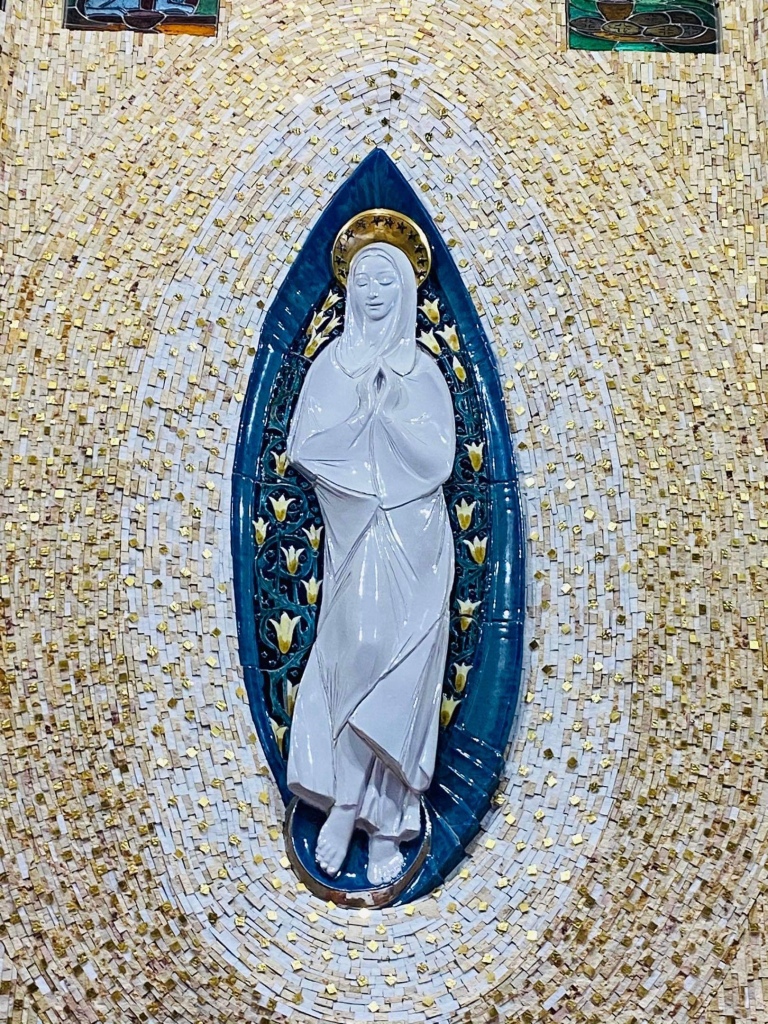
Photo of the mosaic inside the Basilica of the Transfiguration on Mt. Tabor, Israel (from commons.wikimedia.org).

Today we take a break from our gospel readings to celebrate the Feast of Transfiguration (August 06) that falls on a Sunday this year. The segue fits perfectly the series of parables we heard these past three Sundays that mentioned judgment day at the end of time.

Recall how Jesus interpreted his parables especially the separation of the weeds and wheat at harvest time as well as keeping the good fish caught in the net, throwing the bad ones that all evoke of judgement day in the end of time. For Matthew, the transfiguration of Jesus is exactly about the end of time when Christ’s glory is revealed at his Resurrection and ultimately in his Second Coming.

Jesus took Peter, James, and his brother, John, and led them up a high mountain by themselves. And he was transfigured before them; his face shone like the sun and his clothes became white as light.

Matthew 17:1-2
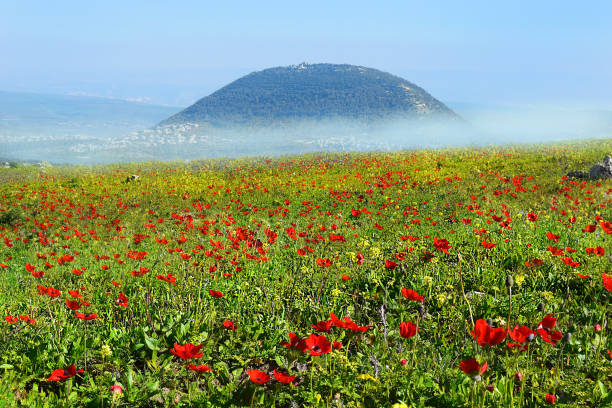
Mt. Tabor, believed to be the site of the Transfiguration of Jesus. Photo from iStockphoto.com.

In the Gospel according to Matthew, major events in the life of Jesus Christ mostly happened on a mountain: his temptation (Mt. 4:8), his inaugural teaching, the sermon on the mount (Mt. 5:1) and the sending of his apostles on their mission throughout the world until the end of time (Mt. 28:16).

Here at his transfiguration on top of the “high mountain” of Tabor we find glimpses of Christ’s explanation of the parable of the weeds among the wheat when he said that “the righteous will shine like the sun in the kingdom of their Father” (Mt. 13:43). See how this transfiguration of the elect at the end of time that was shown to Daniel in the first reading is expressed exactly in the same way as that of the face of Jesus on Mount Tabor that had “shone like the sun” as witnessed by the three apostles. Peter strongly attested to it later as we have heard in the second reading.

Last week in the daily readings from Exodus we have heard how the face of Moses also shone like the sun after he had conversed with God on Mount Sinai and every time he would see God at his tent called the dwelling in their journey in the desert. That is the context why Peter volunteered to build three tents for Jesus, Moses and Elijah during the transfiguration. The Jews have a celebration called feast of booths or tents they called sukkoth. The tent is the dwelling place of God in the wilderness that eventually became the temple of Jerusalem. It was the closest thing they have with God and with heaven. At the transfiguration of Jesus, the three apostles were enthralled at the experience and sight they did not want to go down because it was literally heaven, being with God. The transfiguration event itself for them was the fulfillment of their faith and everything in the Old Testament.

They would realize later that to dwell with God means to continue the journey in Christ, with Christ marked with many ascents and descents happening not just in space or physically but more of the interior kind. That is how we are transfigured, always inside. Right in our heart and soul. That was the deeper meaning of Moses entering God’s dwelling in the desert – of him being one in God, with God – that his face would shone after, prompting him to cover it because people were scared.

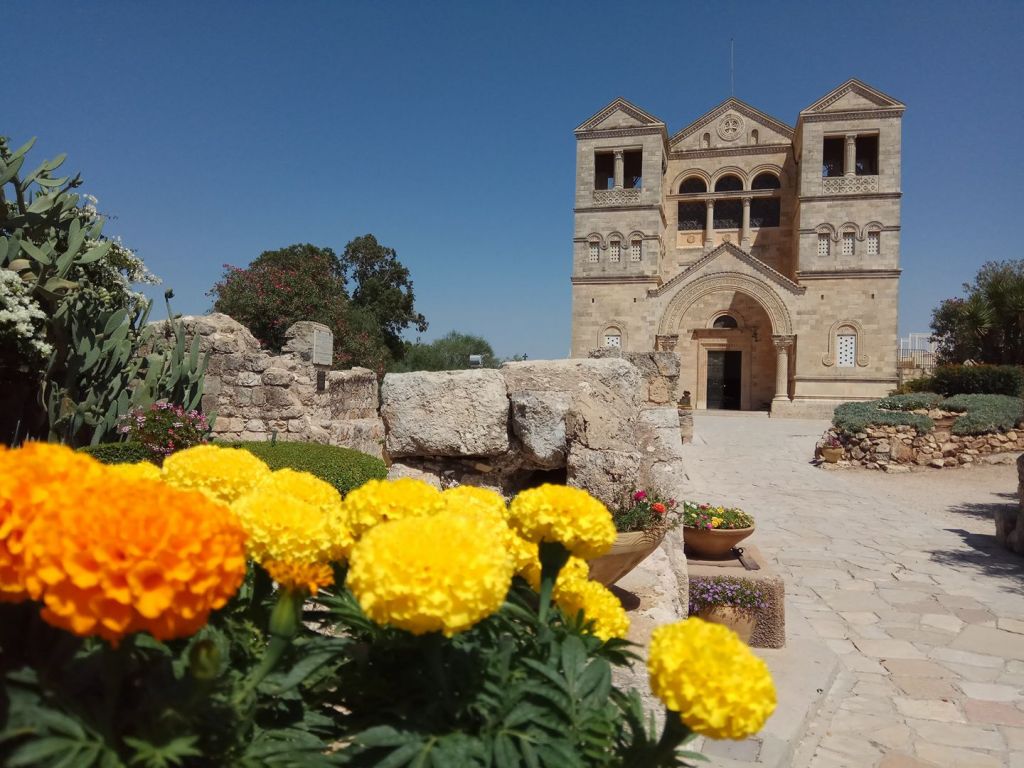
Photo from custodia.org, Basilica of the Transfiguration on Mt. Tabor, Israel.

Whatever is found on the face is always a reflection of what is in the heart and soul. No amount of cosmetics and beauty procedures can ever bring out that glow and radiance of anyone’s face beaming with joy and fulfillment, peace and contentment.

The face is the reflection of the depths – or shallowness – of one’s heart and soul. There is an English word used to describe this inner dynamics of the face – countenance. Any change in our countenance indicates something is being transformed within us as a result of our communion with God. That is why we describe some people even we do not know them as malalim or deep, or magaling magdala ng problema because of their countenance. In the same manner, we easily notice something rotting inside a person when despite one’s having good features like flawless skin or aquiline nose, beautiful eyes and the like. This is what the young people would call as “uma-aura” when they pose for FB or IG. Aura is the spirit within evoked by one’s face that cannot be manipulated.

The face of Jesus shone like the sun at his transfiguration primarily because deep inside him is his complete and perfect union in the Father. Jesus would always insist on this reality within him, his perfect communion in the Father from which also flows his total obedience which will reach its highest point at his Passion and Death on the Cross, his own Pasch or exodus.

There at Mount Tabor in his transfiguration, we are shown that Christ’s glory cannot be separated from the Cross. His majesty and triumph shall come from his pasch. And so are we his disciples. That is why the voice heard by the apostles said, “This is my beloved Son, with whom I am well-pleased; listen to him”. From now on, Christ would be speaking of his coming Passion, Death and Resurrection. All his lessons after Mount Tabor are about our participation in his paschal mysteries. Do we listen?

The apostles learned and embraced all these lessons in a process slowly with the guidance of the Holy Spirit after Pentecost. That is why Jesus told them to come down from Tabor to continue their journey to Jerusalem to fulfill his mission. Through them we have believed despite our not having seen Jesus that is how he would appear as “Lord” on the mountain that we the faithful are climbing to participate in the ultimate manifestation of his return at the end of time.

And there lies the good news of this Feast of Transfiguration happening in this dry month of August, often described as ghost month too. As we go through the last half of Ordinary Time’s remaining 17 weeks, may we continue to ascend in Christ, with Christ with his Cross in sharing his paschal mysteries in our daily lives. After the euphoria of Easter Season that had closed on Pentecost Sunday, we are reminded anew this sixth of August to never lose sigh of the Cross of Good Friday as our path to glorious transfiguration of Jesus Christ.

To journey with Christ, listening and obeying his voice is something of the inside and not just of space or place. Discipleship demands persistent practice of the Lord’s teachings and examples as we shall hear from the gospel these coming Sundays.

As COVID-19 virus wanes that we resume most of our activities minus the many protocols before while still being cautious and careful, may we face our inner issues in Christ and the Holy Spirit to be transfigured in him. Amen. Have a blessed week ahead. It is a Sunday, celebrate Mass with others in your Parish, pray for those still suffering from the effects of typhoon Egay and Falcon.

Painting of the Transfiguration by Italian artist Duccio di Buoninsegna between 1308 and 1311 from commons.wikimedia.org.

“Habang Buhay” by Zack Tabudlo (2021)

The Lord Is My Chef Sunday Music by Fr. Nicanor F. Lalog II, 30 July 2023
Photo by author in San Juan, La Union, 26 July 2023.

Finally we’re back! Sorry for being silent with our Sunday music blog relating secular songs with the Gospel of Jesus Christ.

For our return engagement since our last blog in June 11, 2023 with Stephen Bishop’s Parked Cars (https://lordmychef.com/2023/06/11/parked-cars-by-stephen-bishop/), we feature this Sunday one of our favorite local talents, Mr. Zack Tabudlo with his 2021 hit Habang Buhay from his album called Episode.

We can’t recall where and when we first heard this swinging OPM love song that sounds like from our era of VST & Co. Fact is, Tabudlo has other previous hits before Habang Buhay which struck us with two important things we find so close to our Sunday gospel.

First is its melodic upbeat tune teeming with profundity despite its being so light and refreshing to listening (and dancing). Though we find traces of influence from the late 1970 to1980’s disco era in Tabudlo’s music, Habang Buhay is so sincere with its Gen Z identity that is authentically so Pinoy especially with its shouts of Halika nga that is twice repeated.

Aking sinta, ano ba'ng mayro'n sa iyo?
'Pag nakikita ka na, bumabagal ang mundo

'Pag ngumingiti ka, para bang may iba
'Pag tumitingin sa 'kin, mapupungay mong mga mata
Wala akong takas sa nakakalunod mong ganda, ha
Halika nga (ha, ha, ha)

That shout of Halika nga is so typically Pinoy, so warm and genteel like Jesus Christ calling us to be open to his parables, to find God hidden in the most simplest things of ordinary life. Halika nga evokes those tender, loving calls of our Lola during summer vacation calling us to change clothes soaked in dirt and perspiration with a glass of Julep or Sunny Orange juice during those endless afternoons of fun and games.

Halika nga sometimes is an expression of playfulness masking as deeply serious. It is something we rarely hear these days because nobody seems to offer us with comfort and company, with love and concern anymore.

In Habang Buhay, Tabudlo is overjoyed, playfully or teasingly calling his beloved halika nga for them to bask and savor this wonderful love they have found. If we could just hear Jesus calling us too, telling us halika nga to stay with him to discover God as the only worthwhile love and treasure we could ever have in this life.

And where do we find that kind of love? In Christ’s dying for us on the Cross which Tabuldo had thought of as the true expression of his love that is faithful until the end.

Andito 'ko hanggang sa 'ting pagtanda
Mamahalin kita basta't 'pag nahulog
Nakahawak ako, 'wag ka lang bibitaw
Habang-buhay na ako'y iyo

Wala nang ibang nakagawa sa 'kin nang ganito
Kundi ikaw, nag-iisang diyosa ng buhay ko

'Wag ka nang matakot, 'wag kang mangamba
Andito ako 'pag ika'y mag-isa
Wala akong takas sa nakakalunod mong ganda, ha
Halika nga (ha, ha, ha)

This is the second thing that struck us in Habang Buhay, an amazing song that speaks of love that is pure and true, and most of all, willing to suffer and sacrifice. Like in the gospel today of the parables of the treasure buried in the field that prompted the farmer to sell all his possessions to acquire that property and of the fine pearl found by a merchant who also sold everything he had just to have it. The same is true with love, and with God: what are we willing to let go to have the love of our life?

It’s a rarity in this fast-paced world to hear from young people speaking about love in its deeper sense like the giving of self for a beloved, giving us deep sighs of relief that we’re leaving this world in good hands. Habang Buhay assures us not only of a love that is forever but invites us too to trust the next generation by witnessing to them Christ’s love found on the Cross. Amen.

From YouTube.com

On choosing well

The Lord Is My Chef Sunday Recipe for the Soul by Fr. Nicanor F. Lalog II
Sunday in the Seventeenth Week of Ordinary Time, Cycle A, 30 July 2023
1 Kings 3:5, 7-12 >><}}}}*> Romans 8:28-30 >><}}}}*> Matthew 13:44-46
Photo by author, San Juan, La Union, 24 July 2023.

We are now in the final installment of Jesus Christ’s parables this third consecutive Sunday of his teachings on the kingdom of heaven. It is hoped by this time we have learned and realized God is the only treasure we must have in this life.

And the good news is that God our treasure is found in the most ordinary things!

Many times he simply comes to us even without us looking for him while often would also appear if we truly seek him like in the two short parables we heard this Sunday.

Jesus said to his disciples: “The kingdom of heaven is like a treasure buried in a field, which a person finds and hides again, and out of joy goes and sells all that he has and buys that field. Again, the kingdom of heaven is like a merchant searching for fine pearls. When he finds a pearl of great price, he goes and sells all that he has and buys it.”

Matthew 13:44-46
Photo by author, San Juan, La Union, 25 July 2023.

Our gospel may be the shortest these past three Sundays but it challenges us to be wiser in making choices to acquire the only worthy treasure of all – God.

Both the farmer and the merchant exemplify to us this wisdom in letting go of their other possessions just to have the buried treasure and pearl they have found.

Note how the farmer merely chanced upon the treasure buried in a field not his, while the merchant finally found the fine pearl after years of searching all his life. Here we are reminded how God is not that difficult to find by those truly seeking him. The problem lies with us when we refuse to be the good soil so that the seeds sown in us may grow and bear fruit even amid the weeds! Many times, we have stopped having that sense of awe, of being surprised by God who is like a treasure buried in a field somewhere waiting to be found. Worst, a lot often we have simply given up searching for God as if it is impossible to find him like a fine pearl. God is with us in Jesus Christ, our Emmanuel.

This is the good news of our short parables today. Moreover, God even comes to ask us what we want in life like King Solomon in the first reading. Later in the gospel we find Jesus Christ also asking the blind Bartimaeus what does he want while passing by the city of Jericho. Notice how those healed by Jesus always had clear thoughts and focus, so wise in their choices of what they wanted in life like King Solomon. Can we be wise enough like Solomon in choosing well, in asking the right thing from God?

The Lord appeared to Solomon in a dream at night. God said, “Ask something of me and I will give it to you.” Solomon answered: “O Lord, my God, you have made me, your servant, king to succeed my father David; but I am a mere youth, not knowing at all how to act. Give your servant, therefore, an understanding heart to judge your people and to distinguish right from wrong. For who is able to govern this vast people of yours?” the Lord was pleased that Solomon made this request.

1 Kings 3:5-7, 9-10
Photo by author, San Juan, La Union, 25 July 2023.

What is so beautiful, even wonderful here is not just the nearness of God with us but his kindness in asking us what we want. Imagine God saying, “Ask something of me and I will give it to you.”

What shall we ask God if he were to come to us in a dream tonight like Solomon? Perhaps we would be at a loss! Remember, God is asking for just one thing we want. At least the genie usually gives three wishes, with only the third one as most crucial being the last for which we are told to always ask for three more wishes!

Here we find again Simon Sinek’s book Start with Why most useful because our whys give us the reason and meaning for whatever we wish to accomplish. Exactly what Solomon must have considered as he laid out to God his situation, his needs, most of all his weakness, “I am a mere youth, not knowing at all how to act.” See why Solomon asked for that grace instead of wealth or fame or strong army?

It is that consciousness of being small and weak before God that pleases him most in granting our prayers. Earlier before this scene Jesus praised and thanked God in giving wisdom to the little ones who accepted him than the wise and the learned who rejected him (Mt.11:25). That is the attitude of being a “good soil” who allows the seed to penetrate and absorb us!

God was so pleased with Solomon because he knew so well his whys that to govern Israel so well amid his many weaknesses, he needed God more than ever. Unlike Adam and Eve who tried to usurp God in his power in knowing right from wrong, Solomon recognized it as divine prerogative we can only share with God. Actually, what he asked for was God himself who is the treasure hidden in the field and the fine pearl found by the merchant. Solomon did not want to be like God inasmuch as he never thought of being wealthy and powerful nor famous that are of no value at all compared to having wisdom, in having a discerning heart to know right from wrong.

Photo by author, shore of the Lake of Galilee in Capernaum, Israel, May 2017.

I have realized in my 25 years as a priest that what we treasure most are not the ones that give us pleasure but the ones who complete us. We ask and pray to God for something or someone not because of need but more of fulfillment found only in Jesus Christ who promised that whatever we ask from his Father would be granted to us in his name if it is for the mission he had entrusted to us. That is why in my prayers, I no longer ask God for anything except of being with him in eternity because I am so sure that whatever I need, he would give. Most of all, if I have God, then I am complete.

The parables of Jesus are inexhaustibly rich yet so accessible to everyone with open minds and open hearts to meet God in Christ through the simple realities of life. That is why St. Paul tells us in the second reading today that “all things work for good for those who love God, who are called according to his purpose” (Rom. 8:28).

Let us pray for more zeal and enthusiasm in being the good soil, in choosing wisely the only treasure worthy in this life who is Jesus Christ, our Emmanuel or God-is-with-us. Let us welcome him in the many parables of life we take for granted that are all part of God’s plan of salvation for us leading to glory that is our destiny. Amen. Today is Sunday, go to Mass and pray for those severely affected by super typhoon Egay especially our brothers and sisters in northern Luzon.
Start with Why

The Lord Is My Chef Sunday Recipe for the Soul by Fr. Nicanor F. Lalog II
Sunday in the Sixteenth Week of Ordinary Time, Cycle A, 22 July 2023
Wisdom 12:13, 16-19 ><}}}*> Romans 8:26-27 ><}}}*> Matthew 13:24-30
Photo by author, Bgy. Alno, La Trinidad, Benguet, 11 July 2023.

Start with Why is Simon Sinek’s bestselling book written more than a decade ago about the need to focus on asking first “why” before making any choice and decision in life. I have found it very enlightening and useful even in matters of spirituality and prayers.

This is seen in our readings too this Sunday as we continue to listen to our Lord’s teachings using parables until next week. In all occasions of his teachings, his disciples asked him always Why do you speak to them in parables?” (Mt. 13:10).

As we have explained many times before, parables are simple stories we usually take for granted that reveal to us profound truths about life and our very selves, most especially of God and his kingdom which Jesus had come to proclaim.

The key to unlocking the beauty and lessons within parables is having that spirit of openness and sincerity of heart, especially in asking why which may often take different forms.

Jesus proposed another parable to the crowds, saying: “The kingdom of heaven may be likened to a man who sowed good seed in his field. While everyone was asleep his enemy came and sowed weeds all through the wheat, and then went off. When the crop grew and bore fruit, the weeds appeared as well. The slaves of the householder came to him and said, ‘Master, did you not sow good seed in your field? Where have the weeds come from?'”

Matthew 13:24-27
Photo by Onnye on Pexels.com

It is the question we ask most often, why is there evil at all if God our Creator is good? It is most difficult, even scandalizing when evil happens to us despite our efforts to be better and holy.

Today’s parable of the weeds among the wheat answers those many whys we have in life. It is a beautiful continuation of last Sunday’s parable of the sower that offers us Christians with many insights and challenges for the deepening of our faith and commitment to our mission.

First is our sense of sinfulness. It is one of the most serious problem Christianity, even the whole humanity is facing today. More and more people are losing that sense of sinfulness with so many becoming complacent in their faith and morals, always having reasons and alibis, worst, even justifications in committing sins. Or just about everything!

Today’s parable reminds us to always ask like the slaves, “Master, did you not sow good seed in your field? Where have the weeds come from?”

Photo by author, Bgy. Bahong, La Trinidad, Benguet, 12 July 2023.

Why all the evil in the world today?

How sad that many people have grown cynical with evil, simply accepting its existence in the world as a given reality, to be accepted wholly as if we can do nothing about it. Some even go to the extent of thinking the devil does not exist at all with evil simply existing like weeds?!

Here we find the importance of prayer life when we get to examine our conscience daily, asking why all the evils are happening. From there, we learn humility by examining too how we may have contributed in the commission of evil. Most of all, it makes us aware of that tricky “sins of omission”, of how we might have failed by omitting in doing what is good that have contributed to the spread of evil and sin. It is always easy to look outside blaming others, pointing at others for all the evil happening without seeing our own sins.

Second is the danger of neglect and complacency among us disciples of Christ. See the genius of Jesus as a storyteller when he mentioned that the planting of the bad seed or weeds happened while the Master was asleep, “The kingdom of heaven may be likened to a man who sowed good seed in his field. While everyone was asleep his enemy came and sowed weeds all through the wheat, and then went off. When the crop grew and bore fruit, the weeds appeared as well.”

From Pinterest.com.

In the New Testament, sleep is a metaphor for neglect. Jesus cautions us his disciples that if we are not vigilant and discerning of what we allow to influence us, bad seeds can get planted in our lives, families and relationships, even in the Church and in our ministry!

In some translations, the word used for the weeds is darnel, a kind of weed that looks like the wheat to show how evil works itself into our lives by masking itself to look something as good and harmless for a moment. “Wala namang masama” is our usual excuse until later when that evil is unmasked and revealed, its devastating impact had already wreak havoc on us because we have complacently tolerated its growth for some time.

Remember the saying, the devil is in the details. Likewise, keep in mind that the devil does not merely want us to sin but to eventually destroy our lives! “Be sober and vigilant. Your opponent the devil is prowling around like a roaring lion looking for someone to devour” (1 Pt. 5:8).

Third is Christ’s call for us to be patient but firm in dealing with evil and sin. We live in an imperfect world. There will always be evil and sin like this growing trend called liberalism and wokism that stress everyone’s rights without any regard at all with personal responsibility and accountability. These liberals and wokes who have infiltrated the media and government, maybe even the Church, want the natural order of things be changed like gender and marriage. For them, everything is relative. To each his own like praying the Our Father in a drag version.

Photo by Fr. Pop dela Cruz, San Miguel, Bulacan, 2022.

We have to be patient with them and fight them squarely with more reason and charity, to never stoop down to their level that only shows their weaknesses within.

The author of the Book of Wisdom tells us today how God in his power and might chose to be patient and moderate with us sinners precisely because he is strong; the exercise of strength like being noisy, the flexing of muscles with large gatherings actually indicate weakness.

That is why St. Paul in the second reading reminds us of our own weaknesses too in this time of hope and waiting for Christ’s Second Coming while in the midst of all these evils happening. Hence, our need to pray for the Holy Spirit to enable us to carry out our mission in this world marred by sin.

Here we find again the primacy of prayer life. Not just the recitation of prayers. What St. Paul envisions in our short reading today is the kind of prayer wherein God’s own Spirit is the one interceding for us according to God’s will. Teaching people to pray effectively is one of the most challenging of all pastoral duties because we priests and bishops must first be the ones deep into prayer. When we live in the Spirit, we would always be faithfully in prayer.

Sorry to mention here again our disappointment to our bishops in failing to reflect more on the reasons of upholding the rule that only the priest extends his hands in praying the Our Father. It is fidelity to the liturgy to prevent us from being misled by plain emotions that is already happening like in those “charismatic” Mass and gatherings with emphasis on health and wealth (gagaling, gagaling…siksik, liglig at umaapaw) interspersed with clapping of hands.

Photo by author, Bgy. Alno, La Trinidad, Benguet, 11 July 2023.

Jesus assures us in this parable there will be a time for separation, judgment, and punishment but it is not ours to carry out those actions in the present. Let us continue probing our hearts in prayer. Always start by asking why, not with what we think we know. Many times, as the parables of Jesus tell us, the kingdom of God is found in the simplest things in life like a simple word or a sentence we tend to interpret with our many assumptions. Amen. Have a blessed week ahead everyone!

When we drag words down

The Lord Is My Chef Sunday Recipe for the Soul by Fr. Nicanor F. Lalog II
Sunday in the Fifteenth Week of Ordinary Time, Cycle A, 16 
Isaiah 55:10-11 ><]]]]'> Romans 8:18-23 ><]]]]'> Matthew 13:1-23
Photo by author, Bgy. Bahong, La Trinidad, Benguet, 12 July 2023.

Surely you will hear in almost all homilies today something about that blasphemous drag version of the Lord’s Prayer trending in social media. What a coincidence that our Scripture readings this Sunday say a lot about words that teach us so much in dealing with this new kind of pandemic sweeping the world, the “LGBTQ+ woke” syndrome happening in the realm of words and languages.

In the light of recent things happening in our society, today’s readings tell us two important things we have forgotten or have deliberately disregarded: the power of God’s word and the need to listen.

Thus says the Lord: Just as from the heavens the rain and snow come down and do not return there till they have watered the earth, making it fertile and fruitful, giving seed to him who sows and bread to him who eats, so shall my word be that goes forth from my mouth; it shall not return to me void, but shall do my will, achieving the end for which I sent it.

Isaiah 55:10-11
Photo by author, Bgy. Alno, La Trinidad, Benguet, 11 July 2023.
The power of God's word

Our short reading from Isaiah perfectly introduces us to the sequence of Christ’s teachings in the next three Sundays beginning today about the power of God’s word, a preparation for us to understand the parable of the sower.

Here we find from the Prophet Isaiah God’s word as totally “other” – ibang-iba sa lahat – as it reveals and acts because it is the truth and effectiveness in one. See how Isaiah picturesquely expressed the power of God’s word, “Just as from the heavens the rain and snow come down and do not return there till they have watered the earth, making it fertile and fruitful… so shall my word be; it shall not return to me void, but shall do my will, achieving the end for which I sent it.

The Bible never fails in attesting to this conviction, of how God means what he says that has become the very basis of our hopes in him since the very beginning. Everything flows from God’s word, from the creation of the world and the universe to its fulfillment in Jesus Christ until he comes again at the end of time. God’s word creates history with power to renew and restore life, the power to save us as experienced by the thief on the Cross when he said, “Jesus, remember me when you come into your kingdom” (Lk.23:42).

Photo by author, Camp John Hay, Baguio City, 12 July 2023.

Contrast God’s word with our human experience aptly expressed by Shakespeare in Hamlet’s famous quote, “words, words, words!” – of how we use so many words in the belief more is powerful when in fact our words are vain and empty, lacking in substance. Instead of giving life, many times our words hurt and even kill others. In this age of social media, see how we use words to distort truth with lies and deceptions. Its worst aspect is not found in the words we use but in us who pronounce them when we say things without any commitment at all so that many times, our words never stood the test of time because they are easily forgotten when spoken or heard.

St. Paul said it so well in the second reading, of how “all creation is groaning in labor pains even until now” (Rom.8:22) especially when we distort the truth of our words, when we do not mean what we say, when we our words divide instead of unite, when our words destroy instead of build.

See how sin entered through the “words” of the devil that deceived Adam and Eve with the first “fake news” in history that they would not die if they ate the forbidden fruit but instead become like God. Sin took on its ugly face in the use of words again after the first crime of murder committed by Cain who dared to say to God “am I my brother’s keeper” when asked of the whereabouts of Abel.

Words continued to be the means through which sin permeated humans reaching its lowest point when people played God again by building the Tower of Babel to reach the heavens. God punished them by making them speak different languages that resulted in confusion and the collapse of the tower.

How sad that these days, human words are made louder, spread faster by technologies try so hard to undermine God’s word. There is no doubt on the power of the word of God for he himself had shown and assured it. For his words to be fully operational and experienced, we must first listen to Jesus, the word who became flesh.

Photo by author, Camp John Hay, Baguio City, 12 July 2023.
Listening to the word of God

“Whoever has ears ought to hear.”

Matthew 13:9

Jesus used these words seven times in the synoptic gospels, usually in connection with parables like in Matthew chapter 13 which we shall be using in the next three Sundays. We heard it first today and again next Sunday when Jesus explained the parable of the weeds.

His command to “hear” requires more than just taking in the words he speaks to us. To truly hear what Jesus is saying especially within the context of the parables, we must profoundly ponder what he wishes us to know. Just like in our prayers: what is essential is to be able to listen more to God than to tell him our needs which he already knew.

This can only happen in the spirit of silence and openness to God when we suspend our many preconceptions and other ideas especially about the parables we have been so familiar with.

Photo by author, Camp John Hay, Baguio City, 12 July 2023.

The seed is the word of God and Jesus is the Sower who comes to us everyday, speaking to us, telling us the most important things we need to know and do in this life for us to be fulfilled and joyful.

But, do we have our ears attuned to the word of God? Many of us practically live in media, so hooked with gadgets either or both the cellphone and headsets or pods. Nobody seems to listen anymore as we are so engrossed in our own little world centered in the endless me, me, me and I.

In the parable, it does not really matter where the seeds fell; it is always good, at least even as food for the birds! Wherever it fell, the seed always sprang into life! That is the power of the word of God! We just have to give it a chance to grow and mature to bear fruits of “a hundred or sixty or thirtyfold”.

To hear the word of God means also to have our hearts opened to receive God so we can gain insight into the kingdom of God. It is in our hearts where the word of God is sown. Stones and thorns refer to the hardness of our hearts, our refusal to welcome Jesus Christ because we have been dominated by fame and power and other cares of this modern world.

Receiving the word of God is a process, not just a one-shot deal. It is a relationship we have to cultivate in Jesus Christ, just like the ones we try to have with our plants. The Lord himself had warned us repeatedly in the gospels of how there would always be opposition and indifference, even mockery and blasphemy right in the very places where his word should manifest its effectiveness like in our country, the only Christian-nation in this part of the world. If ever the word is not fruitful, it is primarily due to our dispositions and attitudes to God and his word.

Photo by author, Camp John Hay, Baguio City, 12 July 2023.

How timely that at this particular moment in our country we heard again this classic parable of the sower by Jesus Christ.

We, especially in the Church, are being reminded anew to humbly open ourselves to God and his word, to give it a chance to grow and bear fruit, including our rules and other documents especially in the liturgy.

In spending so much time about the posture the laypeople should take in praying the Our Father in the Mass notwithstanding what the rubric says, the devil sneaked into the scene with this drag cover of the Lord’s Prayer. This is something we must reflect. Why even the drag queen had joined the discussion of the Our Father that have deeply hurt us all! With this recent decision by the bishops, the more it seems that the drag version of the Lord’s Prayer is partly our fault too. Let us go back to God and trust his word anew. And the words of the liturgy too. Amen. Have a blessed week ahead!

Be surprised. Believe. Love.

A Wedding Homily for a Nephew, Raymond Immanuel Alonzo & Charlene Patricia Moya
The Manila Cathedral of the Basilica Minore of Immaculate Conception, 07 July 2023
Ephesians 5:25-31   ><]]]]'> + <'[[[[><   John 15:12-17
Photo by PhotoMIX Company on Pexels.com.

All praise and thanksgiving to God our loving Father for this day, Immi and Pat! This is the day God had set to be your wedding day. Not last year, not next month nor any other day except this seventh day of July 2023.

Jesus Christ said in our gospel today, “It was not you who chose me, but I who chose you and appointed you to go and bear fruit that will remain, so that whatever you ask the Father in my name he may give you” (John 15:16).

Surprised? Yes, Immi and Pat, you have both felt God surprising you many times since you met each other, mysteriously weaving your lives seamlessly together that today you are before him at his altar to pledge your love for each other.

Photo by Ms. Jo Villafuerte, Atok, Benguet, 01 September 2019.

That is what I wish to share with you this afternoon: keep that element of surprise in your lives together, Immi and Pat. Never lose that sense of wonder because it is when we are surprised that we start to believe; when we believe, we get closer and then we love. The more we love, the more we are surprised and the more we believe until that love matures into more than feelings but a decision and commitment to love until death.

Hindi ba, Immi and Pat, that is why you are here today because you have finally decided to grow together in this love because you believe in each other and most of all in God?

There were many occasions you were both surprised at the twists and turns in your lives as individuals, beginning at how you got to know each other in the office.

Hindi naman love at first sight iyon. Hindi nga kayo magka-type pareho kaya nag-aasaran kayo palagi.

You were opposites but the more you were surprised in discovering new things about each other, the more you gravitated to each other, the more you believe in each other, surprisingly realizing that actually, you are not opposites but share a lot in common.

That’s when you became good friends caring for each other, conversing more often with topics getting deeper like plans and views in life until one day, Pat had so much of these surprises as she juggled many things in her life and asked to speak with you, Immi, to avoid confusion and complicate things further in your friendship.

Wala pa siyang sinasabi maliban sa “mag-usap tayo” and you just told her, “Let’s go out on a date”. Iyon na yun! Kayo na! Dehins na hangout, date na. Wow, tamis!

Photo by Elle Hughes on Pexels.com

The problem in our time is that everything, everyone is exposed. Even overexposed!

With social media all around us, everything is shown and displayed for all to see, leaving no room at all for surprises.

Many people these days want everything to be certain. Lahat segurista na ngayon.

No more surprises, no more faith because many of us have stopped believing. Remember, “Faith is the realization of what is hoped for and evidence of things not seen” (Heb. 11:1). That is why, when we are surprised, then we believe. Then as we believe more and get surprised more, we love.

Immi and Pat, always have faith, believe and be surprised with each other and with God.

The world tells us, “to see is to believe” but our faith teaches us, “believe so that we would see.” Remember when Jesus told Thomas a week after Easter, “Blessed are those who have not seen and have believed “(John 21:29b).

Keep that childlike attitude in you of being surprised always, of having that sense of awe and wonder. That is why kids believe and trust always.

Photo by Ms. Jo Villafuerte in Atok, Benguet, 01 September 2019.

Being surprised is being open with the simple realities of life, of the joys of being alive and sharing this life with a special someone in love. Being surprised is being open to getting hurt because we believe there is that special someone who would always take care of us, with whom we can be our true selves no matter what. Being surprised is being open to the realities and ecstasy of loving and of being loved in return. Being surprised is believing in God who is a God of surprises because he loves us so much.

In the Book of Genesis, we find Jacob falling asleep at Bethel with a stone as his pillow, dreaming of a stairway to heaven. It was so good because he saw God and his angels ascending and descending the stairway to heaven that upon waking up, Jacob had that sense of wonder and awe, “Truly the Lord is in this spot, although I did not know it!” (Gen.28:16). Jacob was surprised. Then he believed. And loved and served God. In 1971, we heard Jimmy Page and Robert Plant singing, “makes me wonder” over and over in their hit Stairway to Heaven.

But, Edith Piaf said it best in 1946, of how she was surprised in finding love with her classic song La vie en rose. No, I will not sing it but will just read it to remind you God’s many surprises for you, Immi and Pat.

I thought that love was just a word
They sang about in songs I heard
It took your kisses to reveal
That I was wrong, and love is real
 
Hold me close and hold me fast
The magic spell you cast
This is la vie en rose
 
When you kiss me heaven sighs
And though I close my eyes
I see la vie en rose
 
When you press me to your heart
I'm in a world apart
A world where roses bloom
And when you speak, angels sing from above
Everyday words seem to turn into love songs
 
Give your heart and soul to me
And life will always be
La vie en rose.

Immi and Pat, God has a lot of surprises for you. Remain faithful with each other, remain faithful to Jesus Christ who have called and chosen you. Have Christ always between you in your relationship. Pray, believe and have trust in him so you both would see more surprises, more life, more love in your married life. God bless you, Immi and Pat! Amen.

For those wishing to listen and perhaps use this classic piece, here is its English version.

From YouTube.com.

Imitating Jesus, meek and humble

The Lord Is My Chef Sunday Recipe for the Soul by Fr. Nicanor F. Lalog II
Sunday in the Fourteenth Week of Ordinary Time, Cycle A, 09 July 2023
Zechariah 9:9-10 ><}}}*> Romans 8:9, 11-13 ><}}}*> Matthew 11:25-30
Photo by Ms. Nikki Vergara, 2020.

Today we hear the final installment of Jesus Christ’s instructions to the Twelve as he sent them to their first mission which started two Sundays ago. Discipleship is essentially becoming like Jesus Christ, our Lord and Master who is meek and humble of heart.

“Come to me, all you who labor and are burdened, and I will give you rest. Take my yoke upon you and learn from me, for I am meek and humble of heart; and you will find rest for yourselves. For my yoke is easy, and my burden light.”

Matthew 11:28-30

For the third straight Sunday, Jesus has been teaching the Twelve including us today some important lessons in discipleship: first is to fear no one except God, then to be never influenced by others except God, and now, to learn from him who is “meek and humble” of heart.

Photo by author at the sacristy of the Manila Cathedral, 07 July 2023.

In the whole Bible, we find that “meekness” is the most remarkable quality of any one sent by God to his people, especially with Moses and King David.

Despite some instances of them getting angry and even being harsh sometimes, both were described as being meek especially Moses described as “the meekest man on the face of the earth” (Num.12:3).

When Jesus came and brought salvation to mankind by obediently dying on the Cross, he became the embodiment of meekness.

To be meek means being gentle and obedient, exactly who Jesus Christ is. All throughout his life, Jesus had repeatedly expressed everything he said and did were in total obedience to the Father who sent him to save us. That is why that we too find Christ’s words and actions as the fulfillment of the Old Testament prophecies of God coming to save his people, of sending someone so different from the other kings and servants before him. This is very evident in the gospel of Matthew who emphasized on the meekness of Jesus Christ that in narrating to us his version of the Palm Sunday entry of Jesus to Jerusalem, he actually cited (Mt. 21:4-5) our first reading today from Zechariah:

Thus says the Lord: Rejoice heartily, O daughter Zion, shout for joy, O daughter Jerusalem! See, your king shall come to you; a just savior is he, meek, and riding on an ass, on a colt, the foal of an ass.

Zechariah 9:9

Unlike the kings and other powerful men of the world who rode on prancing horses symbolic of their power and strength, here is Jesus Christ riding a placid donkey, symbolic of his meekness and humility, most especially of his message of peace.

Meekness in Tagalog is maamo, from the root word amo referring to “master”, connoting one’s recognition of master by being submissive in the positive sense. Maamo also means being tame as opposite with being wild. Hence, the English word of being gentle, or gentility.

The good news of Jesus being “meek and humble” is that we need not be afraid of becoming his disciples, of becoming truly Christians in this age relativism when anything goes, no more absolutes like God and morality. Now more than ever, St. Paul’s admonitions in the second reading are so real when we are challenged to live in solidarity with Christ empowered by the Holy Spirit, or to live in solidarity with the old humanity enslaved to sin.

Yes, the Gospel of Jesus is demanding. And so is true love which is most demanding.

Photo by author, La Mesa Forest Reserve seen from Our Lady of Fatima University-Quezon City with the Sierra Madre as background, January 2023.

There will always be pains and hurts but these occasions make our discipleship, our love for Christ and for others most meaningful and fulfilling. The Lord’s “yoke is easy and his burden is light” because it is naturally human and divine like him made possible with his paschal mystery. Being loving and kind, forgiving and merciful, caring and helpful are never painful nor tiring because they liberate us, setting us free from the imprisonment and shackles of sin due to our pride and self-centeredness, leading us to true freedom and fulfillment.

Why is it now life has become so complicated? It is not because of Jesus nor of his Church who simply echoes his teachings as he had commanded. Life has become complicated ever since we have allowed and accepted all these modern thoughts of freedom that actually “unfreed” us like these trends from the “sex revolution” that have spawned all the evils plaguing us, from divorce to contraceptions and abortions that not only destroy human life but most especially the family, society’s basic unit. There are some insisting on altering the most basic and natural of God’s creation like gender as either male or female, nothing in between; and, marriage solely between man and woman.

See how life has been reduced to lifestyle characterized by commercialization of everything including persons with sex casually portrayed as an act or activity and a mere part of the body. Everything has become relative, to each his own. That is why life has become so tiring, even empty despite all the comforts and modern amenities we now enjoy.

We have been removing God from everything, from all his creation. That is why Jesus comes to us today, calling us all to come to him, all who are burdened to find rest in him.

Find Christ in yourself, you find Christ in others. When we find Christ, we find God, we find truth, we find life, we find rest.

Our gospel this Sunday comes as a fitting closing to the Lord’s lessons on discipleship. It is never easy in becoming a Christian, of standing for what is right and true, just and fair, in being kind and forgiving, in lovingly serving others without expecting anything in return.

Let’s not make it more difficult on our part. Examine the demands of Christ are actually simple, love him by obeying him. What are the demands of those trying to lord over us these days like those so-called wokes and liberals who are so harsh in insisting their views that are self-serving and unnatural.

Remember, our series of these instructions came when “At the sight of the crowds, Jesus’ heart was moved with pity for them because they were troubled and abandoned, like sheep without a shepherd” (Mt.9:36, June 18, 11th Sunday). Jesus added that we pray for more laborers to work in the bountiful harvest, for more persons who are loving and warm, not demanding nor insistent on themselves and their beliefs. Have a restful week ahead! Amen.

Graduation lessons from St. Thomas the Apostle

Quiet Storm by Fr. Nicanor F. Lalog II, 03 July 2023
Photo by olia danilevich on Pexels.com

In this season of graduations when we also celebrate today the feast of St. Thomas the Apostle, we are reminded that growth and maturity in Christian faith goes through a process too of “graduation”.

St. Thomas went through different stages in life as a disciple of Christ before finally graduating with honors as a martyr. Most of all, he is a good model for every graduating student to emulate because he is the one so famous for having “doubts” and being known as the “doubting Thomas”.

To doubt is not necessarily bad. In fact, it is a grace from God because every doubt is a step closer to wisdom and knowledge. Without doubts, we can never learn because we will never be able to verify and validate what we know if we do not doubt at all. We shall discuss this further as we reflect on the three graduation events in the life of St. Thomas the Apostle.

His first graduation happened when the Lord’s best friend, Lazarus, died.

“The Raising of Lazarus”, 1311 painting by Duccio de Buoninsegna. Photo by commons.wikimedia.org

Recall how Jesus and his Apostles were prevented from visiting Lazarus when he was seriously ill because he lived with his sisters Marth and Mary in the town of Bethany that was near Jerusalem where the Lord’s enemies were plotting to arrest and put him to death. It was too risky for Jesus to go to Bethany but, because of his love for Lazarus and his sisters, Jesus decided to take the risk to visit him.

It was St. Thomas who rallied his fellow apostles to come with the Lord to share in his death.

So then Jesus said to them clearly, “Lazarus has died. And I am glad for you that I was not there, that you may believe. Let us go to him.” So Thomas, called Didymus, said to his fellow disciples, “Let us also go to die with him.”

John 11:14-16

A good student is always a risk-taker. All graduating students since 2021 to present deserve a great commendation, a great congratulations for taking all the risks and difficulties in pursuing your studies in these four years of the pandemic. Despite the poor internet connections, the threats of viral infections and many other risks, you forged on and now you are a step closer in fulfilling your dreams.

The key here is to never be away from Jesus like St. Thomas who at that early stage had identified himself with the destiny of Christ in offering himself on the Cross. St. Thomas knew it then that nothing is easy in this life but if we are with the Lord, there is nothing we cannot overcome.

Graduation as a process or a passing through stages is also a passover, a pasch like the Passion, Death, and Resurrection of Jesus Christ. Recall the gospel the other Sunday when Jesus told his Apostles to fear no one, to be not afraid. The same thing is what St. Thomas is reminding us today: do not be afraid to learn, to commit mistakes, to doubt, to fail, to get hurt. These little deaths are all part of our process of growing and maturing, of getting better, of being achievers.

The second graduation moment of St. Thomas happened during their Last Supper when the Lord was telling them of his coming death that would lead to his Resurrection and return to the Father’s house where he would prepare a room for them.

“Where I am going you know the way.” Thomas said to him, “Master, we do not know where you are going; how can we know the way?” Jesus said to him, “I am the way and the truth and the life. No one comes to the Father except through me.”

John 14:4-6

Imagine the somber and serious mood of the Last Supper, of Jesus telling everyone of his coming pasch. Then suddenly, there was St. Thomas interjecting with a statement “we do not know where you are going” with a question, “how can we know the way?”

Notice the comedy twist? Funny indeed and truly, we could see St. Thomas in a low level of understanding but if he never dared to ask that question, we would never have that most quotable quote of the Lord of him being “the way and the truth and the life.”

Here, St. Thomas is teaching us to always ask for explanations, even from the Lord himself! As RiteMed would say in its commercials, “Huwag mahihiyang magtanong”!

Photo by Mr. Paulo Sillonar, 07 June 2023.

In telling St. Thomas – and us – that Jesus is the way and the truth and the life, the Lord is reminding us how it is forever valid that true learning is gained from our dealing and relating with persons, with people, not with things like gadgets. Or even pet animals nor plants.

As you go on your school break after your graduation, spend more time with people, with your parents, with your brothers and sisters and cousins. Or playmates. Leave your gadgets and pets behind. Go out and play, bond with people. Get real and stop those virtual realities.

Very often, the teachers we truly love or like and appreciate impact are those who have gone out of their ways to reach out to us, to relate with us. They were the teachers really deserving to be called mentors who not only taught us with so many knowledge and information and techniques but most of all, the ones who have made us experience life, the ones who have opened our minds and hearts to realities of life, showing us the relationships between the classroom and actual life.

Jesus is more than a teaching or a doctrine or a lesson. Jesus is a person we relate with, we experience life with, we live with through people he sends us in the family and in the school. And we learn most in life with them.

Do not be afraid to approach and ask them for explanations, directions, and clarifications. Google nor ChatGPT can never teach you life. St. Thomas must have learned so much from that simple table incident in their Last Supper that even if at first he doubted Christ had risen, he eventually made the boldest expression of faith in Jesus when they finally met on the eighth day of Easter, his final graduation.

Then he said to Thomas, “Put your finger here and see my hands, and bring your hand and put it into my side, and do not be unbelieving, but believe.” Thomas answered and said to him, “My Lord and my God!” Jesus said to him, “Have you come to believe because you have seen me? Blessed are those who have not seen and have believed.”

John 20:27-29
Caravaggio’s painting “The Incredulity of St. Thomas” (1602) from en.wikipedia.org.

Many times, our doubts lead us to more brighter outcome than any uncertainty we may have before like St. Thomas. If St. Thomas did not believe at all that Jesus had risen, he would have not come to the Upper Room to be with the other Apostles to meet Jesus the following Sunday. He believed, though, there were some doubts that were natural. After all, the Resurrection of Jesus was beyond normal, beyond logic. It was truly astounding.

After a long series of stages, here we find St. Thomas making the boldest and strongest expression of faith ever which we silently pray every consecration period in the Mass, “my Lord and my God.”

Dear students, be a man of prayer, be a woman of prayer.

Persevere in deepening your faith despite the many difficulties and challenges being posed today by modern culture characterized by relativism and individualism, materialism and consumerism. St. Mother Teresa said it well, “We are called to be faithful, not successful”. The recent dark days of the pandemic have shown that science will never be enough in this world, in this life. There is God. And the good news is he is not that far from us. He is the one calling us to believe even if we have not seen him. If the world says to see is to believe, that if there are no pictures it did not happen at all, Jesus is telling us today in the experience of St. Thomas that when you believe, then you shall see!

Let us imitate St. Thomas, a student who studied hard, worked harder, and prayed hardest to Jesus who never abandoned him especially in his doubts and weaknesses. May the example of St. Thomas strengthen our faith in Jesus who is our Lord and God. Amen.