In touch Vs. Out of touch

40 Shades of Lent, Sunday Week II-A, 08 March 2020

Genesis 12:1-4 +++ 2 Timothy 1:8-10 +++ Matthew 17:1-9

“Creation of Adam” by Michaelangelo at Sistine Chapel, the Vatican. From Wikipedia.

Touch is a very powerful word – literally and figuratively speaking. We say “we are touched” when we are deeply moved by words or music, gestures, acts, and scenes that need not be so spectacular because to touch is about making a connection, a communion of persons.

A touch can be so powerful that when filled with love and sincerity, it can transform the person being touched. Experts say that a touch of about five seconds is worth more than 300 words of encouragement and praise!

And that is why our Lord Jesus Christ, the Son of God is a certified “touch person” who always reached out to people by physically touching them, embracing them to make them feel his loving presence, his mercy, and most of all, his healing.

Almost all his healings were done by touching the sick when he would lay his hands on them like with the blind Bartimaeus on the street of Jericho.

There were times Jesus held up the hand of the sick to raise them up from their bed like Peter’s mother-in-law and the daughter of Jairus. Sometimes in rare occasions, Jesus healed in the most bizarre ways with his sense of touch like with that deaf in Decapolis.

He (Jesus) put his finger into the man’s ears and, spitting, touched his tongue; then he looked up to heaven and groaned, and said to him, “Ephphatha!” (that is, “Be opened!”).

Mark 7:33-34

In Nain, Jesus raised to life the son of a widow by touching the coffin – not the dead – by saying, “Young man, I tell you, arise!” that everyone was amazed, saying “the Lord has visited his people”.

Jesus never missed an occasion without personally touching another person, especially the children like when he caught his disciples driving them away.

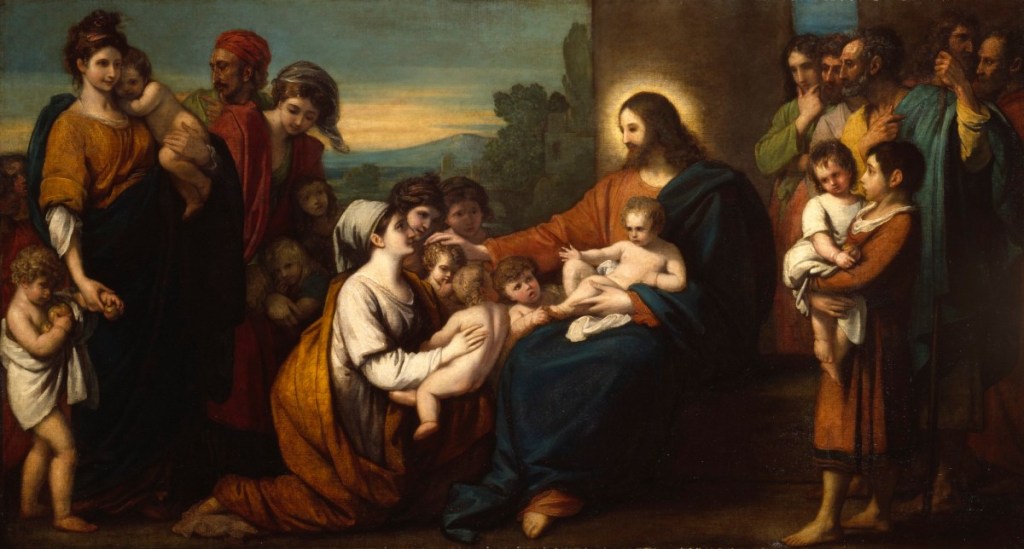
“Jesus blessing Little Children”, painting by British North American Benjamin West PRA (1781). Photo from wikipedia.

It is perhaps one of the most touching story of Jesus touching others when he told his disciples to “let the children come to me for theirs is the kingdom of heaven”, after which he embraced them, laid his hands on them and blessed them.

How blessed were those children must be to be embraced and laid with hands on by Jesus! According to tradition, one of those kids embraced and blessed by Jesus was St. Ignatius of Antioch who became a bishop and martyr in the early Church.

That is the transforming power of the touch by Jesus that children are blessed, the sick are healed by restoring their sight or cleansing their skin of leprosy, forgiving the sinners, giving hope to the poor. His touch is always a part of his proclamation of the good news to the people.

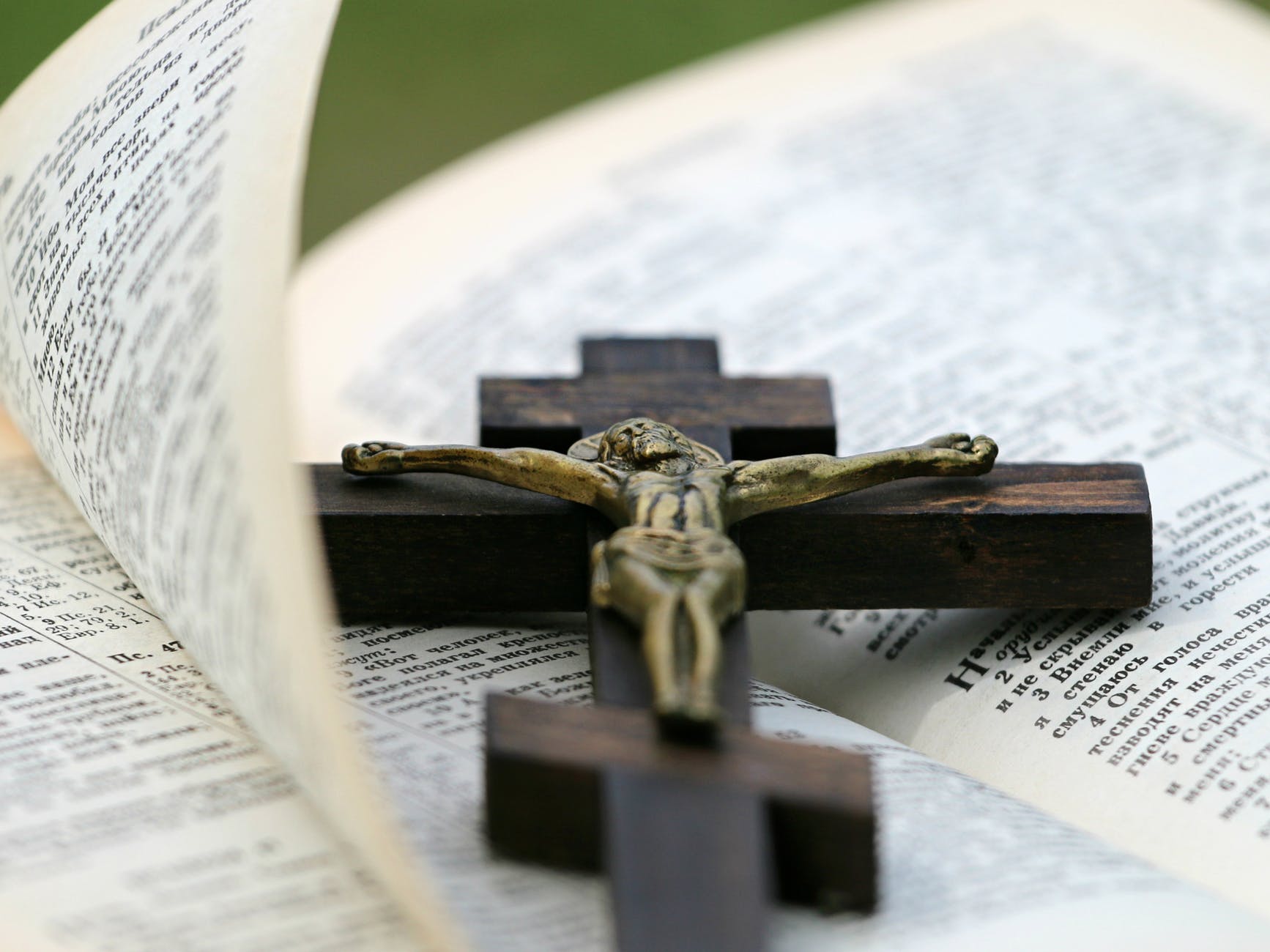
Photo by Pixabay on Pexels.com

Jesus continues to touch us today in every Mass we celebrate when he first speaks to us in the scriptures, trying to make us feel our “hearts burn inside” like the disciples going home to Emmaus on Easter Sunday; and secondly, when he gives us his Body and Blood to partake in the Holy Eucharist.

Most of all, Jesus continues to literally touch us today through one another in our loving service to one another as a community of his disciples.

But, in this age of social media when every communication is mediated by gadgets and other instruments, this kind of personal communication is something we have all been missing because we have stopped touching Jesus, touching others too.

And this is what the second Sunday of Lent is trying to remind us today in the Transfiguration of Jesus.

Transfiguration of Jesus, communion of God with us

Jesus took Peter, James, and John his brother, and led them up a high mountain by themselves. And he was transfigured before them… a bright cloud cast a shadow over them, then from the cloud came a voice that said, “This is my beloved Son, with whom I am well pleased; listen to him.” When the disciples heard this, they fell prostrate and were very much afraid. But Jesus came and touched them, saying, “Rise, and do not be afraid.” And when the disciples raised their eyes, they saw no one else but Jesus alone.

Matthew 17:1-2, 5-7
“Transfiguration of Jesus” by Raphael from wikipedia.

We hear this story of the Transfiguration of Jesus twice every year: the Second Sunday of Lent and the sixth of August for the Feast of the Transfiguration. At this time of the year, the Transfiguration story is heard in relation with the Lord’s coming Passion, Death, and Resurrection.

At his Transfiguration, Jesus made it very clear that his glory and divinity must always be seen in the light of his Cross for it is only with his Cross that he can be correctly recognized as the Christ. It is on the Cross where Jesus truly touches us too in our personhood, in our humanity.

See how the three disciples were seized with fear upon hearing the voice of the Father while a bright cloud cast a vast shadow over them; but, it was right in that “tremendum fascinans” that we also find the intimacy, the closeness of God to us through Jesus Christ when he touched the three disciples.

Jesus came and touched them, saying, “Rise, and do not be afraid.” And when the disciples raised their eyes, they saw no one else but Jesus alone.

Matthew 17:7

And that is the good news for us all!

God had chosen to be so close to us in his Son Jesus Christ who touches us most not only in glory but most especially in moments of trials and tribulations! It is on the Cross where humanity and the divine truly become one in Jesus, when that personal and loving touch of Jesus becomes transformative and even performative.

This is the reason St. Paul exhorted Timothy to “bear your share of hardship for the gospel with the strength that comes from God” (2Tim.1:8) because oneness with Jesus always starts at the cross!

This is very true with us too when we only come to realize who are our true friends, our BFF’s when they are personally one with us in our trials and tribulations, not only in times we are well and good.

True transformation in Jesus can only happen when we are willing to be one with him, to be in touch with him in his passion and death for it is the only path to his Easter glory of transfiguration.

Touch communication vs. mediated communication

From Forbes.com

How sad that in this age of modern communications that have shrunk the world into a “global village” with instant communications that instead of growing together we have grown more apart than ever from each other.

We have lost real communications that lead to communion of persons or unity of people because we have become more concerned with the techniques of communication, more of skills and gadgets than of persons.

That is the meaning of media or “mediated communication” where there is always a medium between or among persons like cellphones and gadgets.

No more interpersonal relationships, making us more isolated and alienated, leading to growing problems of loneliness, depression, and suicides.

How frustrating sometimes to attend social functions like dinners and weddings where everyone is more busy and interested with their cellphones than with persons beside them!

Aside from isolation from persons, we have also grown “out of touch” with reality itself when more and more people are retreating into their own small worlds like cocoons with wires attached into their ears while their eyes fixated on screens oblivious to the world around them.

We have become so out of touch with ourselves and with others that more and more we are becoming like porcupines – we have not only stopped getting in touch with others but even hurt others if ever we touch them!

From Google.

Parents, lovers, couples, even people we trust like priests and religious sometimes hurt us with their touch instead of healing us, comforting us. Nobody would want to go through the Passion of the Cross anymore that we would rather stay on top of the mountain, of everything to be delighted with our perceived power and glory.

So unlike in our first reading where we get the feel and touch of real encounter in persons between God and Abraham. Note how in just four verses the word “bless” used five times by God to Abraham, promising to bless him more if he leaves his kin to follow him to the land he would give him.

In their conversation, we find a very personal and engaging communication, as if God and Abraham were literally in touch with each other, where there is personal contact and communication.

We know this for a fact at how effective and more reliable are personal interactions in communication than mediated ones through phones and email – personal communications always have that feel and touch that enable us to negotiate further and be more fruitful.

This Season of Lent, the Father is asking us to be in touch with him again by listening to the words of his Son Jesus who asks us only one thing: deny yourself, take up your cross and follow him. Let us heed him, touch him, and allow him to touch us again to be healed and transformed.

May you be touched as you touch also others in the most loving way this Sunday throughout the whole week! Amen.

Fullness of person, fulfillment of law

The Lord Is My Chef Sunday Recipe for the Soul, Week VI-A, 16 February 2020

Sirach 15:15-20 ><)))*> 1 Corinthians 2:6-10 ><)))*> Matthew 5:17-37

Photo by author of pilgrims entering the Church of the Beatitudes with a painting of the Sermon on the Mount above the door, May 2019.

Jesus continues his Sermon on the Mount this Sunday, expounding the meaning of his teachings called the Beatitudes. As we have reflected last week, the Beatitudes tell us the person of Jesus Christ as being “poor, merciful, clean of heart” whom we must all imitate to become the salt and the light of the world.

Most important of all, Matthew presents to us at the Sermon on the Mount that Jesus is more than the new Moses as giver of laws like at Mt. Sinai in the Old Testament: Jesus himself is the Law, who is both our Teacher and Redeemer.

This we see in his teachings today when he claims to be the fulfillment of the Laws and the Prophets from God in the Old Testament.

Jesus said to his disciples: “Do not think that I have come to abolish the law or the prophets. I have come not to abolish but to fulfill it. Amen, I say to you, until heaven and earth pass away, not the smallest letter or the smallest part of a letter will pass from the law, until all things have taken place.”

Matthew 5:17-18

Essence of the Laws: reflection of God, the good of man

Today, Jesus is teaching us to see the laws in the right perspectives, in the light of the will of God for the good of every person. Throughout his ministry, Jesus has always been consistent in reminding everyone that the laws were made for man, not the other way around.

During Christ’s time, people have lost the real meaning of the Commandments of God as priests and religious leaders focused more on its letters than in its essence and spirit that in the process, the laws have become burdensome. It has continued in our own generation with laws taking precedence over God and persons.

Photo by author of the Church of the Beatitudes at the Holy Land, May 2019.

At the Sermon on the Mount, we find Jesus restoring and recalibrating the laws so that these become more relevant and powerful as reflections of God in the service of man.

Jesus “relectures” us the laws in this part of his Sermon on the Mount by adding more righteousness (holiness), declaring that,

“I tell you, unless your righteousness surpasses that of the scribes and Pharisees, you will not enter the kingdom of heaven.”

Matthew 5:20

By using a pattern where he would cite Laws, saying, “You have heard that it was said”– Jesus shows us his fidelity and obedience to Judaism, contrary to his enemies’ accusations that he had abolished their laws. Moreover, in fulfilling the laws, Jesus put himself in the midst of every law and precept by declaring, “Amen, I say to you” or “but I say to you”.

In following that formula, Jesus gave the laws with a human face and a human heart in himself as its fulfillment so that from then on at his Sermon on the Mount, Christ made every law, every tradition, everything else to be seen always in his person.

Black and white photo by Mr. Jay Javier in Quiapo, 09 January 2020.

Performative powers of the laws in Jesus Christ

With Jesus in the midst of every law and precept as its fulfillment, God’s laws then become not only informative but most of all, performative to borrow one of Pope Emeritus Benedict XVI’s favorite expression. This we find Jesus teaching us in three stages in our long gospel this Sunday.

  1. Education of the heart.

The first two laws cited by Jesus in this long list of commandments are “You shall not kill” and “you shall not commit adultery”. Both laws bring us to the very core of our personhood, of what is in our hearts and in our minds. The Lord explains that being angry as well as saying bad words against another person is like murder while looking lustfully at a woman is a form of adultery because in both cases, we have ceased to regard the other individuals as persons to be loved and respected, created in the image and likeness of God.

From Google.

It is an invitation for us to purify our hearts and minds for what defiles man is not what enters him but what comes out from him (Mt.15:11). Whatever is within us will always have an effect in all of our actions, for better or for worse.

What a tragedy that right here in the middle of our wired world of social media and instant communications, we have actually grown apart than together in the last 35 year with so much animosities fed on by lies and misinformation.

How ironic also that despite the information explosion from the Net, we have more benighted souls today than ever before who have actually gone to schools who know nothing of our history and geography?!

Education of the heart is formation of the whole person, not just a training of skills. One problem we have these days is when information is geared on data and facts without integration that we forget our relationships as well as the values we keep like respect, kindness, and dedication. Unless we have an education of the heart, a wholistic and integral formation, we can never be transformed into like Jesus Christ.

2. Get into the roots of our sins.

In telling us to pluck out our right eye or cut off our right hand if these cause us to sin, Jesus is inviting us again to probe deep into our hearts and being to understand what causes us to sin.

Photo by author, water plants in my room at the Fatima Parish and National Shrine, Valenzuela City, 2010.

The key here is to be totally free. In the first reading, Ben Sirach counsels us to “choose” rightly what is good and avoid what is evil.

We can only exercise our true freedom when we have clearer knowledge and understanding of ourselves and of things within us. We fall into vices and sins because we do not know what is going on inside us; hence, we are enslaved by our desires and sins to be not free at all.

Once we understand our sins, we commit them less often. Most of all, when we understand our sins, our struggles against committing these become more persevering, resulting to more triumphs than defeats.

The Season of Lent is near. Once again, we shall be busy with fasting and abstinence, contrition and confession of sins, almsgiving and other spiritual works that make us holy. But too often, these acts become mechanical that sooner, we sometimes reach that point when we cannot find meaning in doing them anymore that we sink deeper into sins and evil.

This happens when we get focused with letters of the laws and we forget its spirit that we become mechanical because we have failed to understand our very selves as well as our sins.

3. Be true.

Jesus said it perfectly well at the end of his teachings today,

“Let your ‘Yes’ mean ‘Yes’ and your ‘No’ mean ‘No.’ Anything more is from the evil one.”

Matthew 5:37

In this last installment of reviewing the laws, Jesus underscored the problems with divorce as well as with lies that continue to this day because we always choose not to be true at all with ourselves, with God, and with others.

Photo by author of the last two Stations of the Cross at the chapel of my niece Ms. Babs Sison in Los Baños, Laguna 13 February 2020.

See the wisdom of Jesus in putting together divorce and oaths, the two great lies that until now continue to mislead so many among us who refuse to accept and carry the cross of Christ, preferring only the Easter Sunday minus the Good Friday.

Being true is embracing the Cross of Jesus Christ like St. Paul in the second reading. It is something we cannot deny in this life. There will always be pain and sufferings. As Dr. Scott Peck put it in his book The Road Less Travelled, “life is difficult.”

At his Sermon on the Mount, Jesus clearly showed in his Beatitudes that he and his values are in sharp contrast to the wisdom of the world. And this wisdom is only accessible to those willing to embrace the crucified Christ and the scandal of the cross.

It is there on the Cross with Jesus Christ we truly find the fulfillment of the laws as well as our fullness as persons. Amen.

Have a blessed Sunday, everyone!

Valuing the human person always: A review of the series “Giri/Haji”

Quiet Storm by Fr. Nick F. Lalog II, 15 January 2020

From The Times.

Now streaming at Netflix is this excellent original 2019 BBC production, Giri/Haji (Duty/Shame), a Japanese story of two brothers set almost entirely in London seemingly inspired by French existentialist writer Albert Camus with closing scenes set in Paris.

Midway through the series, one notices right away the complexities or, absurdities of life that one cannot simply categorize it between “duty and shame”, or good and evil, right and wrong, black and white.

It is a series that hits our innermost core when we find ourselves in those gray areas of confronting what we believe as right and just versus the value of every human person that Camus beautifully expressed in his 1947 novel “The Plague”:

“A loveless world is a dead world, and always there comes an hour when one is weary of prisons, of one’s work, and of devotion to duty; and all one craves for is a loved face, the warmth and wonder of a loving heart.”

Albert Camus, The Plague

Like most Netflix series, Giri/Haji is rated 18+ for its violence, language, substance, and nudity but everything is done beautifully and artistically.

It is a masterpiece that shows some common threads among us humans regardless of our color and culture, gender and age, belief and language. How the creators were able to perfectly blend these all with the excellent cinematography, music, and fine prints into uncluttered and pure simplicity of Japanese Zen principles are a work of art and film genius.

Simple plot but very personal and universal

The plot is simple: an elder, straight brother is a cop with a younger brother who is a Yakuza member hiding in London after being presumed dead when he got the daughter of his boss pregnant. He staged his revenge in London where he killed a Japanese executive with the knife of his former boss that had sparked a war among Yakuza families in Tokyo that was going out of control. Cop-brother comes to London to bring his gangster brother back to Japan to atone for his sins so that peace is restored among the Yakuzas.

Along the way, the two brothers’ stories converged with the stories of three other main characters that provided the many uneventful twists to be united by the element of deaths in various forms and circumstances.

From Google.

Giri/Haji honestly confronts our basic issues of love and acceptance so lacking or taken for granted in our own families that lead to a host of so many other problems and situations like drugs and other crimes, infidelity and promiscuity, as well as homosexuality and sexual orientations.

What is so unique with the series is how it was able to take these sensitive issues as subjects to be seen in relation with persons, not as objects to be studied or examined apart from anyone that it becomes more of an experience, not just an entertainment.

Giri/Haji is so personal, you can feel yourself “slashed” so you experience the subjects’ pains and hurts, longings and desires, dreams and aspirations.

Like the samurai blade that can cut through almost anything, the series hits you at almost every turn that you find yourself laughing and weeping without realizing that along with the characters, you have also laid your soul bare for serious self-confrontation and examination about your very self and the people around you in the relationships you keep as well as skipped or taken for granted.

Death and new life

There is no glorification of evil and immoralities but Giri/Haji invites us to see these as realities in our imperfect world that must be seen more with our hearts than with our minds and convictions. The series contrasts the Western frame of mind of morals as codes to be followed to the minutest details that slashes even persons into categories with the Oriental point of view of seeing morality in the totality of the person.

How it is resolved in the end is amazing!

And despite its genre being crime and violence, I would still say Giri/Haji is so lovely, even quaint and as Japanese as it can be especially with the depiction of changing of seasons that peaked at autumn.

Despite the dark and gloomy nature of the topics of death in all of its forms, there is the radiance of hope always that will lead to new life. The series teems with other symbolisms and signs including great music selections that add intensity to its drama and tragedy that make us hope the new season comes soonest.

For the meantime, listen to the beautiful music theme of the Giri/Haji by British singer Tom Odell.

Take my mind
And take my pain
Like an empty bottle takes the rain
And heal, heal, heal, heal
And take my past
And take my sense
Like an empty sail takes the wind
And heal, heal, heal, heal

“The (unCatholic and unChristian) Two Popes”

Quiet Storm by Fr. Nicanor F. Lalog II, 23 December 2019

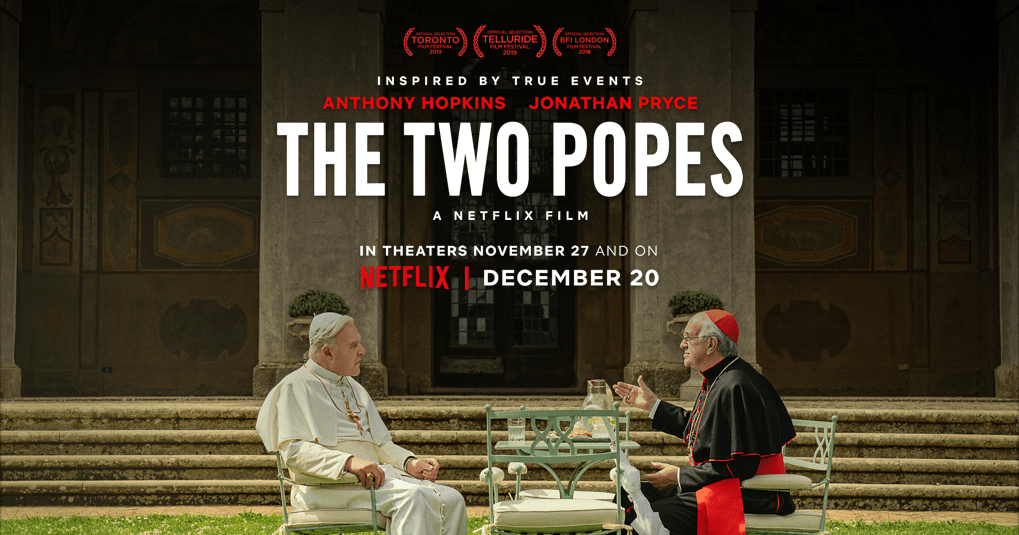
From Netflix.

As early as Friday night after my second Simbang Gabi Mass at 8:30, I have been wanting to react on social media against Netflix’s “The Two Popes”.

But I tried to control my self because I have only seen its first 30 minutes – and besides, it is a fiction story. So, in the spirit of fairness, I tried to finish the movie in three installments until Saturday afternoon before making any comments.

And I felt sad in having seen it at all.

“The Two Popes” is not entertaining. It is misleading without any strong elements to build on our faith and appreciate our religion. At its worst, despite its claim of being inspired by true events, the movie is unCatholic and unChristian.

From Google.

UnCatholic and UnChristian

Movies about religions and religious figures and personalities are always controversial by nature. But for as long as they follow the paths of honesty, sincerity, and truth, these movies eventually emerge as true expressions of art that can truly deepen one’s faith.

But “The Two Popes” at its opening scene is already disturbing and objectionable when it portrayed the Cardinals at the 2005 conclave as having animosity and rivalry among themselves in electing Pope Emeritus Benedict XVI.

Yes, we priests including bishops and Cardinals are all humans like anybody else but no one among us would ever dare to aspire for the papacy. While it is true there are some priests who are into “careerism” in the diocesan level, everything changes starting with the episcopacy or the office of the bishop.

In fact, part of the problem why we have so many vacant dioceses in the country and the whole world is that many priests refuse to accept their appointment as bishops because of many fears that are so real that come with the immense responsibilities of the position. According to the Vatican, three out of every ten priests offered to become bishops decline the offer personally made by the Pope through his Papal Nuncio in every country.

How much more with the Papacy?!

In the movie, Pope Benedict toured Cardinal Bergoglio inside the Sistine Chapel and showed him the “crying room” where the newly elected Pope may stay and cry – yes – before finally accepting his election as Pope.

That alone is true but not the movie portrayal during the conclave that claim Cardinals aspiring to become the Pope. It is something preposterous and totally untrue.

Catholic World Report

What is very disturbing in “The Two Popes” is how it presented Cardinal Ratzinger and Cardinal Bergoglio like “lowlife” lawmakers of congress gunning for the top post for prestige and power with their respective bloc members going around in hushed conversations with matching dagger looks at each other.

This is the movie’s weakest point: rather than being seen as something about deepening our faith in God and the institutional Church or any established religion for that matter, it played on “politics” in the guise of showing the flaws and frailties of two popes competing for position and fame.

You might say “it is just a movie” but, not everyone can rightly see whatever good intentions – if it really has – that the movie is trying to present.

Instead of enlightening the viewers in their faith to the Church in general, there was something sinister in the way it presented almost everyone except Cardinal Bergoglio.

Behind the movie’s beautiful cinematography and studio sets are “subliminal messages” as if inciting viewers to dismiss the Catholic Church and other religions because they are all the same – run by egoistic, power hungry people enjoying so many luxuries in life that the common masses could not even imagine to exist.

We priests are sinners and though there are some of us who have sold Jesus like Judas Iscariot for the price of wealth and fame, there are much too many who still work in silence and hiddenness and holiness bringing Christ to the people.

The Catholic Church has continued to exist since Christ’s ascension because the good shepherds like Jesus have always far outnumbered the rotten ones. Hence, those scenes repeated twice or thrice of Pope Benedict worried with his “popularity” are outrageously absurd!

The Catholiy abc Sun.

Bias against Pope Emeritus Benedict XVI

The movie is supposed to show us how two great men of God, of divergent backgrounds and worlds apart, resolved their many conflicts within themselves and with others regarding their faith and ministry and mission in leading the Catholic Church.

Both actors, especially Anthony Hopkins did superb jobs in playing their roles.

The movie tried to show the triumph of the Divine in mysterious ways we can never explain nor understand using men of limitations and weaknesses.

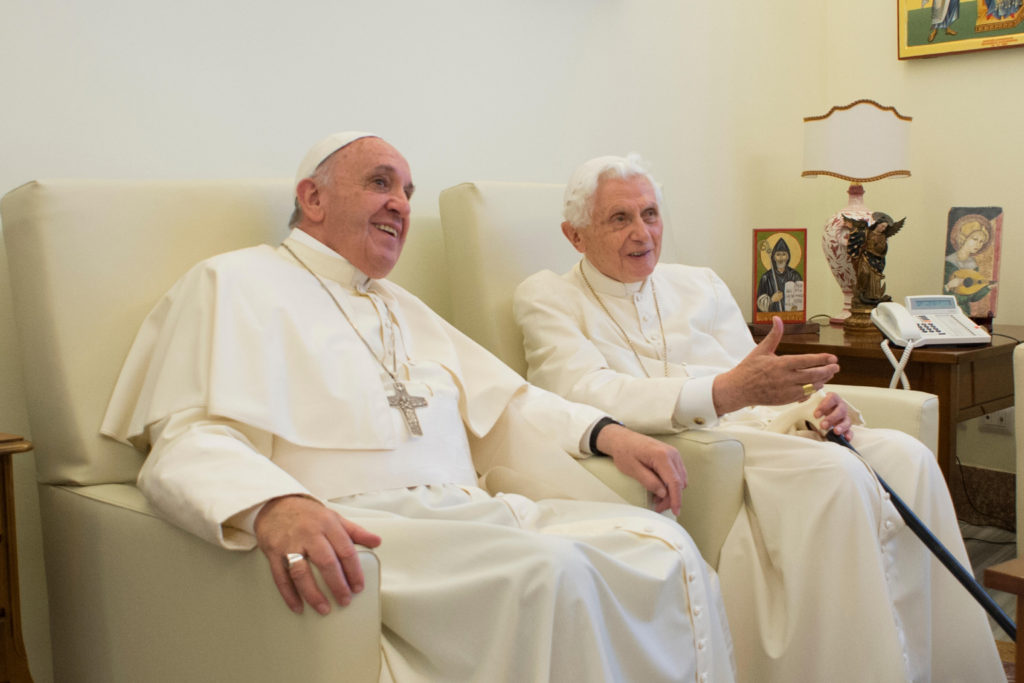
What makes “The Two Popes” so unkind and unchristian is the fact that it is more about Pope Francis as the vida and Pope Emeritus Benedict XVI as contravida. It could have been better if the producers just centered on the present Holy Father as basis of their film and called it “The Pope”. Period.

How can it be a film about faith and religion when the plot itself is unfair and grossly biased against the supposed co-star who is also a Pope?

The movie is also unfair to Pope Francis who would surely never allow himself to be praised and exalted at the expense of the Pope Emeritus or any other person, whether in real life or fiction.

This for me is the most unkindest cut of all in this Netflix movie that fans the many wrong impressions fed on by media against Cardinal Josef Ratzinger since his being the Prefect of Sacred Congregation of Doctrine and Faith during the time of St. John Paul II.

Throughout the film, it is very evident at how the Pope Emeritus is put on the bad light as if he never cared at all about actual situations in the Church and in the world, from the sex scandals to issues on celibacy among other things because he is so absorbed in his intellectual pursuits in the world of books and the academe.

We are of Christ

In 1963, the American film “The Cardinal” was released, earning six Academy Awards and very positive reviews for excellently portraying Catholic religion amid issues of interfaith marriage, sex outside marriage, abortion, racism, and dictatorships set during the Second World War.

It was also inspired by true events based on the life of the late Cardinal Francis Spellman of New York.

Its music theme has become a classic piece too that we have all learned by heart while still in high school seminary.

I can still remember the film that showed in a very positive light the main character with all his flaws and shortcomings as a person, as a priest. No need to put other characters down just to underscore his goodness.

The film had a Vatican liaison officer in the person of the young German priest Fr. Dr. Josef Ratzinger who, after that movie, would be attending Vatican II as a periter or consultant to join the efforts in reforming the Church and make it more responsive to modern time.

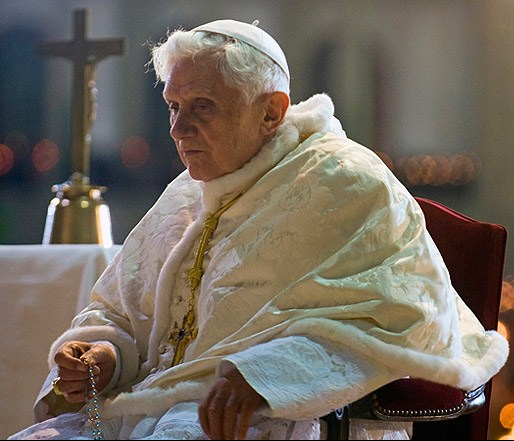
Yes, the very same Pope Emeritus Benedict XVI portrayed in the Netflix movie as “ignorant” of the Beatles and of tango and of many other things of the modern world.

Netflix

“The Two Popes” ended positively with the “unlikely friendships” of Pope Benedict and Cardinal Bergoglio but still with its askewed presentation of the two holy men, of the people in Vatican, and of the Church’s members and leaders.

So unlike the classic “The Cardinal”, “The Two Popes” missed the essence of the papacy and of the Church as an institution and a body of believers – that Christianity is not about categories or labels as conservatives, progressives, or liberals: it is about our being of Jesus Christ alone.

It is deceivingly appealing to the senses but nothing really so profound about faith and Jesus Christ and his Church. With hindsight, though, after seeing the movie, the more I have come to love and admire Pope Emeritus Benedict XVI for his love and faith in Jesus and the Church.

And Jesus told his disciples… “Blessed are you when they insult you and persecute you and utter every kind of evil against you falsely because of me” (Mt.5:11).

Have a blessed Christmas!

Nasaan na mga liham ng ating samahan?

Lawiswis ng Salita ni P. Nicanor F. Lalog II, Ika-13 ng Nobyembre 2019

Photo by Noelle Otto on Pexels.com
Nasaan na mga liham
ng ating mga samahan
at pagkakaibigan
na ngayo'y napalitan
ng maramihang balanang
kaisipan at mga larawan
pati katatawanan?
Walang umiiral na ugnayan
bagkus mga palitan
at pasahan na lamang
ng sari-saring nararanasan
at nararamdaman;
mabuti kung iyong masasakyan
maski mga kababawan.
Iba pa rin 
ang karanasang
mararamdaman
na higit mapagyayaman
ng sino mang sumusulat
at tumatanggap ng liham
mula kay Mister Postman.
Maraming kabutihan
at mga kagandahan
ginagawa nating usapan
sa pamamagitan ng internet
kagaya ng e-mail,
messenger at viber
na sadya namang super ang bilis.
Photo by Roman Koval on Pexels.com
Ngunit kailanman
hindi kayang palitan
ng mga makabagong
pagsusulatan
ating kinagawiang
mga liham
na laging kinasasabikan, inaabangan.
Hindi agad binubuksan
mga kamay pinupunasan
at baka marumihan
mamantsahan
tinanggap na liham
mula sa kanino man
na turing ay isang kaibigan.
Itong pagsusulat
maging pagtanggap ng liham
maituturing nating
ritwal ng ating pagkakaibigan:
walang minamadali
bawat sandali kinakandili
pilit pinanatili sana'y kapiling kang lagi.
Nakakahinayang itong kaugalian
ng pagliham napalitan,
pati ating pagkakaibigan,
mga ugnayan tila nakalimutan;
balikan mga lumang liham nasaan
hindi ba't nakatago, iniingatan
upang basahin, sariwain, palalimin ating samahan?
Photo by Suzy Hazelwood on Pexels.com

“Love On a Two Way Street” by The Moments (1968)

The Lord Is My Chef Sunday Music, 27 October 2019

Photo by d0n mil0 on Pexels.com

We have reflected last week that prayer is an expression of our faith by citing Dione Warwick’s 1967 hit, “I Say a Little Prayer”.

When there is faith expressed in prayer, there is also love.

And when there are faith, prayer and love, then we have a relationship like family and friends, and community.

Today in our gospel, Jesus tells us the right attitude we must have in maintaining our relationships, not only with him but also with others.

Jesus addressed this parable to those who were convinced of their own righteousness and despised everyone else. “Two people went up to the temple area to pray; one was a Pharisee and the other was a tax collector. The Pharisee took up his position and spoke this prayer to himself, ‘O God, thank that I am not like the rest of humanity – greedy, dishonest, adulterous – or even like this tax collector.’ But the tax collector stood off at a distance and would not even raise his eyes to heaven but beat his breast and prayed, ‘O God, be merciful to me, a sinner.’ I tell you, the latter went home justified, not the former.”

Luke 18:9-11, 13-14

From Dione Warwick’s 1967 “I Say a Little Prayer”, we move to the following year when Sylvia Robinson and Bert Keyes composed Love on a Two-Way Street recorded by The Moments as a filler for their 1968 album Not on the Outside, But the Inside, Strong!

It did not fare well in the charts and was released again as a single in 1970 when it spent five weeks at number one on Billboard’s Soul Singles chart. It become one of the greatest R&B song of that year that was later covered by other artists.

In 1981, 14-year-old Staci Lattisaw did a cover of the song that became so popular that others have thought it as her original.

But with all due respect to Staci, I have also always felt her version very cheesy that I prefer the originals singing it because they give more character and soul to the song.

I found love on a two way street and lost it on a lonely highway
Love on a two way street and lost it on a lonely highway

There was no specific experience behind the composition of Love on a Two-Way Street except that it was just a product of a play on words and poetry by Robinson supported by Keyes’ music.

The moment we become convinced of our righteousness that we despise everyone else (cf. Lk.18:9), then we shut ourselves in and leave no space for others even God.

Photo by Alex Powell on Pexels.com

Love as a two-way street based on today’s parable by Jesus requires three attitudes so our relationships would mature and grow deeper: a sense of sinfulness, self-surrender, and self-offering.

No love and faith would ever grow on a lonely highway, with no one else to relate with. That’s when we stop communicating and relating until we break up with others and end up alone and isolated.

That is when we become a “lonely highway” with nobody else but I, me, and myself.

Go back to the two-way street of God and others.

Though crowded with some traffic jams, there is always a space for everyone.


“I Say a Little Prayer” OST “My Best Friend’s Wedding” (1997)

The Lord Is My Chef Sunday Music, 20 October 2019

Photo by Emre Kuzu on Pexels.com

It’s a lovely Sunday especially for all married couples.

I am officiating the 40th Wedding Anniversary later today of a dear cousin when I remembered the 1997 movie “My Best Friend’s Wedding” with one of its most romantic scene with the singing of I Say a Little Prayer.

Composed by Burt Bacharach and Hal David in 1966 for Dionne Warwick, the song is meant to convey the woman’s sentiment for her man serving at the Vietnam War. It was finally released in 1967 and became an instant hit not only in the US but around the world. Since then, I Say a Little Prayer has been covered so many times even by male vocalists and went back to the charts again in 1997 as one of the tracks in the romantic comedy that starred Julia Roberts.

Prayer is the expression of our faith that always presupposes the presence of love. If there is love, there must be a community, a relationship.

Like people who love each other, believing in each other, they always speak and communicate even in silence. What matters most is their being together, their being one in faith and in love.

Exactly like in prayer.

If we love God, then we must always speak to him and most of all, be one with him, like most people who truly love.

We have chosen that lovely scene from “My Best Friend’s Wedding” singing I Say a Little Prayer because it evokes a lot about prayer: faith and love and relationships.

Most of all, in that movie, the prayer was heard loud and clear for Julia’s best friend.

See the movie again and have those kilig moments back with your loved one 22 years ago.

Prayer to understand God’s word

The Lord Is My Chef Breakfast Recipe for the Soul

Thursday, Week XXVI, Year I, 03 October 2019

Nehemiah 8:1-4, 5-6, 7-12 ><)))*> ><)))*> Luke 10:1-12

Photo by Pixabay on Pexels.com

Our loving Father, today I pray to you for more understanding of your words like the first reading.

Twice successively Nehemiah told us how

Ezra the priest brought the law before the assembly which consisted of men, women, and those children old enough to understand.

Nehemiah 8:2, 3

Then, a few more verses, your prophet tells us

Ezra reads plainly from the book of the law of God, interpreting it so that all could understand what was read.

Nehemiah 8:8

Until, finally, Nehemiah concludes today’s reading with a solemn pronouncement:

Then all the people went to eat and drink, to distribute portions, and to celebrate with great joy, for they understood the words that had been expounded to them.

Nehemiah 8:12

Dearest God, I pray for all who read and pray our blog each day. I pray that they may understand your words.

Most especially, I pray for us priests and lay preachers to always read, study, and pray your words.

Let us be the first to understand your words by praying that you, being the “harvest-master”, to send more laborers for your harvest.

Most of all, to truly understand your words, O God, let us be emptied of ourselves so we may only be focused on Jesus Christ, the word who became flesh. He alone is the one we must preach and share in word and in deed. Amen.

Hound of God

The Lord Is My Chef Breakfast Recipe for the Soul
Thursday, Feast of St. Dominic de Guzman, 08 August 2019
Numbers 20:1-13 >< )))*> <*((( >< Matthew 16:13-23
From Google.

A blessed Thursday, O Lord, especially to the Dominicans spread across the globe proclaiming your good news of salvation in words and in deeds.

Thank you very much, Lord, for the gift of St. Dominic whose name – Domini canis – literally means “hound of the Lord” or “dog of the Lord” .

Teach us to be like St. Dominic who was faithful and true to you, Jesus.

May we be like him in that dog in his mother’s dream who brought the torch of truth to dispel the great darkness of sin and evil in the world.

Today, there is a great plague of darkness infecting the modern means of communications where trolls and cyberbullies spread lies and falsehoods like fake news and misinformation to manipulate and mislead the minds of some into taking violent and truncated views about life and persons.

Make us your modern St. Dominic – Domini canes – to bring that torch of reason and decency, charity and truth to dispel this darkness engulfing us and have actually led to many forms of violence and animosities among peoples here and abroad lately.

Help us contemplate your person, Lord Jesus Christ like St. Dominic so we would know you more clearly, love you more dearly, and follow you more closely.

May we realise that whenever we fail to show who you really are, when we cannot personally confess like St. Peter that “you are the Christ, the Son of the living God” (Mt.16: 16), troubles begin to happen not only in the Church but also in the world like racism, gender inequality, and many forms of injustice.

When we your followers do not truly know you as the Christ, then we cease to become Christians when we stop respecting others who are not like us in color, creed, and culture; when we disregard the value of life, and finally, when we stop seeing each other as brothers and sisters in you.

How sad that until now, many Christians say many different things about you, Jesus, because we have miserably failed in being your faithful witnesses.

Help us Lord to “think more as God does, not as human beings do” (Mt.16:23) by imitating St. Dominic who spent much time “at the foot of your Cross.” Amen.

According to tradition, when the mother of St. Dominic was pregnant with him, she dreamt of a dog running their dark streets at night with a torch in its mouth, foretelling his future mission of bringing the light of Christ through education by founding the Order of Preachers.

Colors and shades of life

Quiet Storm by Fr. Nicanor F. Lalog II, 03 April 2019

From Google.

A follower is protesting the title of my Lenten blogs called “40 Shades of Lent”. She, or he, wrote us that “Our Roman Catholic Church is pure and sacred to be associated with a title of a pornographic movie.”  Our follower also suggested to us to “Please inform your Bishop and Priests before posting these titles on social media.”

Our follower is absolutely right that the title of my lenten reflections is indeed from E.L. James’ novel published in 2011 and later adapted into a movie in 2015. I have never read it nor seen any of its movie adaptations that were both a hit and a trending topic in 2016. At that time, I thought of having a series of reflections for Lent distinct from my regular Sunday homilies I have called “The Lord Is My Chef Sunday Recipe” since 2006. I thought that if everybody was talking about “50 Shades of Grey”, why not ride on the strong recall of the brand by having my “40 Shades of Lent” where people can find the many colors and meanings of our sacred season?! After all, Lent’s motif of the color violet comes in many shades and hues, too!

That’s it, pancit! In no way does the title “40 Shades of Lent” becomes erotic or, as our follower described, pornographic simply because of its similarity with the book or movie title “50 Shades of Grey”. But her, or his, contention has opened for us a springboard for discussion regarding the way we deal with modern media if you can bear with me.

From Google.

We live in a “mass-mediated culture” where every baby is now born with a mouse. If Jesus were with us today, maybe He would have directed us priests to “feed my geeks” instead of telling us to “feed my sheep”. Since the time of the great St. John Paul II to Pope Francis today, the Holy Fathers have all recognized this reality, asking us to find ways in proclaiming the Gospel among the young people without losing our Christian identity.

“The question confronting the Church today is not any longer whether the man in the street can grasp a religious message, but how to employ the communications media so as to let him have the full impact of the gospel message.”

St. Pope John Paul II , “Religion in the Mass Media” (Message, 1989 World Communication Day

The need for an equilibrium in our approach with media.

The two most media savvy Popes, St. John Paul II and Pope Francis have both noted in their speeches that young people today practically live in the world of media; hence, the need to reach out to them. Problem with us in the Church, both among the clergy and the laity, is when we respond in both extremes when some end up succumbing to the world of media while there are those at the other end rejecting it altogether or in some forms. What we need is some degree of equilibrium wherein we try to keep technology and media in their proper places. See the many instances when priests embrace media and technology so much that churches lose the sense of sacred with giant video screens all over with a barrage of tarpaulins in all sizes that make one wonder if it is a house of worship or videoke bar. On the other hand, there are those who reject media and technology, stepping back in history like in a parish in Poland recently where priests and the faithful burned some books including the Harry Potter series they deemed as sacrilegious and have evil forces.

It is difficult to achieve such equilibrium or balance in our dealing and use of modern media in the ministry for as long as we remain in our Pharisaical stage, of associating almost everything in the world and of the world as evil and sinful especially books and music. The gospel accounts teem with many instances when the Pharisees and scribes questioned Jesus eating and drinking with tax collectors and known sinners of His time. How sad that until now we still don’t get what He had said during that time.

Nothing that enters one from outside can defile that person; but the things that come out from within are what defile.

Mark 7:15
From Google.

Equilibrium is first achieved in the constant examination of our hearts so we can respond properly to the spirit of modernity not easily reconcilable with the demands of the Gospel of Jesus Christ. Attaining that equilibrium calls for a return to the contemplative spirit where we try to maintain our spirit of silence and prayer amid the constant changes in thoughts and beliefs including values often due to the growing efficiency of technology. Let me share with you the very words of a communication expert to conclude this piece that I hope may enlighten us to see the various shades of colors, including shadows and lights that surround us in this modern world today.

The contemplative spirit is not easily acquired, but without it people find it hard to discern the valuable from the worthless, or the enduring from the transitory. Contemplation puts us in touch with reality in a world in which a host of communication technologies work to sustain a multitude of illusions and images: a media world. The contemplative spirit helps us to see and hear beyond and through the sights and sounds we take for granted. The contemplative spirit is an attitude of mind and heart that enables us to focus on the essential, important things. It refuses to be hurried into premature rejection or acceptance of technology. If we Christians allow it to inform our use of communication technologies we shall learn to be realistic, but always hopeful, able to love and reverence our culture even as we strive, with God’s help, to transform it.

James McDonnell, “Communicating the Gospel in a Technological Age: Rediscovering the Contemplative Spirit”.
Sacred Heart Novitiate, Novaliches. Photo by author, July 2018.