Prelude to leaving into living

Quiet Storm by Fr. Nick F. Lalog II, 31 October 2019

Photo by Pixabay on Pexels.com

As the penultimate month of the year, November for me is something like Thursday – so relaxed when people seem to slow down in anticipation of the coming end of the year or week. It acts like a cushion to prepare us for the “stress” of December or Friday. Or, a prelude to leaving, then living.

Cold winds from Siberia we call amihan intensify during this month while autumn is about to end in the western hemisphere. The climate contributes greatly to this laid-back feeling in November almost everywhere, maybe except Down Under where I haven’t been to.

Photo by hiwa talaei on Pexels.com

Like autumn’s falling leaves, November is marked with three festivals associated with the dead to signal life and eternity.

On its first day, we celebrate All Saints’ Day in recognition of all the departed souls – including our beloved, of course! -now in heaven considered as “saints” aside from those canonized by the Church.

Day after tomorrow, November 2, we celebrate All Souls’ Day to pray for all those departed, especially our loved ones who are still awaiting entrance into heaven in Purgatory.

Then, on November 11, we celebrate St. Martin of Tours’ feast with a “Martinmas” in the old calendar of the Church after which Advent began for the Christmas countdown. Winter also starts in Europe and North America after the Martinmas immortalised in some poems and literature of the 18th and 19th centuries.

Incidentally, St. Martin of Tours (France) used to be a major saint in Europe because he is one of those first saints recognised by the Church as holy people who have died not as martyrs when persecution finally stopped and Christendom started to rise and “flex” her influence.

Photo by Johannes Plenio on Pexels.com

Today, November 11 is celebrated as “Remembrance Day” in Europe along with the Commonwealth nations of Britain and “Veterans Day” in the United States in honor of those who have died in the line of duty during the First World War that ended at the “eleventh hour of the eleventh day of the eleventh month of the year” in 1918. Red poppies take the centerstage on this day to signify the blood offered by the fallen soldiers in that first world war, something very similar to the Christian thinker Tertullian’s assertion that “the blood of the martyrs are the seeds of the Church.”

So many deaths, but so many lives too!

And that is why we celebrate these feasts, whether in the Church or in our civil society.

This is the tragedy of our time when despite all the technological advances and affluence we now have, the more we have been saddled with fear and pains of death and dying.

Focus is more on death as a solution, as an end.

Or, as an entertainment like the pagans in ancient Rome’s Colesseum and of many benighted Christians today celebrating spooky Halloween that underscores the debunked dark side of death.

Photo by Lorenzo Atienza, Malolos Cathedral, 12 June 2019.

In the Old Testament, death was a curse to man’s sins but with Christ’s Passion, Death, and Resurrection, death has become a blessing because he has made it our passing too into eternal life.

No, there is no gap between this life and life-after. It is a continuum where death is just a prelude to eternity.

November is a wonderful reminder to us all of this truth we seem to have forgotten these days when all we see and even seek is darkness and death.

November is like a door opening us towards the end of the year that leads us to new year. The weather is so lovely, not so cold and not so hot, perfectly reminding of the beauty of life and reality of death that invites us to live fully and authentically.

This long weekend, I strongly recommend you read Pope Emeritus Benedict XVI’s second encyclical, Spe Salvi that speaks a lot about the beauty of this life and life-after. His reflections are simple yet so profound and so touching like the following.

“Man’s great, true hope which he holds firm in spite of all disappointments can only be God… Life in its true sense is not something we have exclusively in or from ourselves: it is a relationship. And life in its totality is a relationship with him who is the source of life. If we are in relation with him who does not die, who is Life itself and Love itself, then we are in life. Then we “live”.

Spe Salvi, number 27.

One of the beautiful movies I have seen while on vacation in November-December 2005 at the US East Coast was “The Last Samurai” starring Tom Cruise who was asked by the boy Emperor of Japan at the end, “Tell me, how did my samurai die?” Tom Cruise replied, “I shall not tell you how your samurai died but how he lived!”

Live life, share life, enjoy life in God and with others!

Ang paboritong birtud ng Diyos

Lawiswis ng Salita ni P. Nicanor F. Lalog II, Ika-29 ng Oktubre 2019

Tula na aking hinalaw sa “The Portal of the Mystery of Hope” ng makatang Pranses na si Charles Peguy (pe-gi). Bagamat hindi siya debotong Katoliko, nang maglaon malaki ang naging impluwensiya sa kanya ng Katolisismo hanggang sa siya ay mamatay noong 1914 sa Villeroy, France.
Sa tatlong pangunahing birtud nating taglay
mula sa Kanyang mapagpalang kamay
sinabi ng Diyos: "Pag-Asa ang aking pinaka-paborito"
sapagkat ito lamang aniya ang "nakasosorpresa" sa kanya.
Paliwanag ng Diyos, 
hindi siya nasosorpresa sa Pananampalataya
dahil sa kanyang kaningningang taglay
aba'y bulag at manhid lamang ang sa Kanya'y hindi magkamalay!
Hindi rin Siya aniya nasosorpresa sa Pag-ibig 
sapagkat maliban na lamang kung sing-tigas ng bato
ang puso ng tao at hindi pa sila magmamahalan
sila na aniya pinaka-aba at kaawa-awa sa lahat ng kanyang nilalang.
Ngunit itong Pag-Asa ay kakaiba
Diyos ay laging nasosorpresa
dito nakikita kapangyarihan ng kanyang grasya
para mga tao ay umasa pa kahit wala nang nakikita!
Alalahanin sulat ni Apostol San Pablo 
sa mga taga-Roma: "ang pag-asa ay hindi pag-asa
kapag nakikita na ang inaasahan.
Sapagkat sino ang aasa sa nakikita na?"
Kakaiba sa pagiging positibo ang Pag-Asa
dahil nakabatay ito sa mga nakikitang palatandaan
o mga senyales upang mahulaan at matanawan
tinatantiyang kalalabasan ng isang inaasam.
Optimistic ang tao na umaasa gaganda panahon
o iigi sitwasyon batay sa mga indikasyon na kanyang nakikita;
ngunit ang taong umaasa batid niya mas lalala pa
mga bagay at sitwasyon, mas malamang hindi na iigi pa.
Ito ang kaibahan at kaibayuhan
nitong Pag-Asa na kahit talo na
at wala nang nakikita
kumpiyansa sa Diyos ay di nawawala.
Sa ating panahon ng social media
kung saan ang lahat ay nakikita at ipinakikita,
kitang-kita pa rin ang katotohanang
mga dakilang bagay sa buhay ay mula sa mga hindi nakikita.
Iyan ang nakasosorpresa sa Pag-Asa,
kahit wala ka nang nakikita
kitang-kita Kita pa rin Panginoon namin
kaya aking hiling ako'y lagi mong sorpresahin!
Photo by Essow Kedelina on Pexels.com


God calls, we respond… not the other way around.

The Lord Is My Chef Breakfast Recipe for the Soul

Wednesday, Week XXX, Year I, 30 October 2019

Romans 8:26-30 ><)))*> ><)))*> ><)))*> Luke 13:22-30

Photo by Dra. Mai Dela Pena, Chapel of St. John of God Hospital in Barcelona, Spain (August 2019).

Every day, every night, O Lord, we come to you to pray.

But so often, we forget we merely respond to your call when we pray.

How sad that when we pray, we come to you demanding you, asking you for so many things without us realizing that we pray primarily to ask you what you want us to do for you!

We are not the masters telling you, O God, what you must do or give us; we are your “unworthy” servants who must ask what you want from us.

May we allow always the Holy Spirit to direct our prayers the way you would want it to be because…

“We know that all things work for good for those who love God, who are called according to his purpose.”

Romans 8:28

Instead of being so concerned with how many or how few would be saved, may we focus more on how to “strive to enter through the narrow gate” of salvation.

Direct us, O Lord, to your holy will in the way you would want us to fulfill it. Amen.

Hope surprises

The Lord Is My Chef Breakfast Recipe for the Soul

Tuesday, Week XXX, Year I, 29 October 2019

Romans 8:18-25 ><)))*> ><)))*> ><)))*> Luke 13:18-21

Photo by Life Of Pix on Pexels.com

But hope, says God, that is something that surprises me…

And my grace must indeed be an incredible force.

Charles Peguy, “The Portal of the Mystery of Hope”

Whenever I come across the word “hope”, O Lord, I always remember this lovely poem by your faithful writer Charles Peguy (1873-1914) of France.

And I agree with Peguy, hope is your favorite virtue because it always surprises you and everybody else!

Again Jesus said, “To what shall I compare the kingdom of God? It is like the yeast that a woman took and mixed in with three measures of wheat flour until the whole batch of dough is leavened.”

Luke 13:20-21

Hope surprises us, Lord, because it is often so small, almost negligible for some.

And that is how you work, how your wonders perform, Lord.

Hope is not positive thinking because hope is still believing in you even if things do not get any better at all. In fact, things can get worst and that is when hope surprises us!

St. Paul said it so well.

For in hope we were saved. Now hope that sees for itself is not hope. For who hopes for what one sees? But if we hope for what we do not see, we wait with endurance.

Romans 8:24-25

In positive thinking, we hold on to at least something tangible, something we can see and feel clearly like the weather or the stock market.

But in hope, we only have you, Lord, whom we cannot see but can simply feel, believe and rely on that we hope would always remain and be still with us til the end.

In this world when size always matters, when everything has to be bigger and biggest, what remains true is the fact that no matter how big or great is anything, it surely came from a minute, little something.

Like the yeast that has become a wonderful bread or any baker’s creation.

Nobody had seen how it would turn out except that hope in one’s heart and mind that teases us with something big and wonderful and surprising.

Please surprise us today, Lord and let us live differently in you! Amen.

From Google.

Ang ating kamukha

Lawiswis ng Salita ni P. Nicanor F. Lalog II, Ika-28 ng Oktubre 2019

Mula sa Google.
Todos los Santos na naman
at kay laking kabaligtaran
naka-ugalian ng karamihan
ipagdiwang mga aswang at katatakutan
sa halip na mga banal at kanilang kabutihan.
Dati-rati nama'y hindi laganap
sa ating kapuluan banyagang kaugalian
pagdiriwang ng Halloween na nasira
tunay na kahulugan sa kaisipan ng mga
makamundong taga-kanluran.
Halloween ang taguring na nagmula sa 
pinagsamang "hallowed evening"
na kahuluga'y "gabi ng mga banal"
ngunit pilit binabalikan ng mga hangal
maling paniniwala noon pa napasinungalingan.
Akala ng mga paganong Druids 
ng Scotland at Wales sa Bretanya noong unang-una
lumilitaw sa lupa tuwing katapuasan ng Oktubre
mga impakto at masasamang espiritu
upang makabihag ng mga tao.
Nagdaramit sila at nag-aayos na nakakatakot
parang multo, kamukha ng mga lamang lupa
sa paniniwalang malilito mga impakto na sila'y kasamahan
kampon ng kadiliman at kasamaan
kaya sila iniiwan at hindi sinasaktan.
Photo by Pixabay on Pexels.com
Maraming Kristiyano hindi ito nalalaman ni nauunawaan
nakalimutan pangunahing katotohanan ating pinananaligan
nang pumarito si Hesu Kristo, kanya nang tinalo
kapangyarihan ng demonyo
nang pumaroon siya sa dako ng mga yumao.
Nang mabuhay mag-uli ang Panginoong Hesu Kristo
napanibago niya buong sangnilikha
higit sa lahat, muli nating nakamukha
Diyos Ama sa ati'y lumikha,
tiniyak ating tahahanan sa piling niya sa kalangitan.
Bakit nga ba ikaw, Kristiyano
ang siya pa ngayong lito at sadyong lilo
mas ibig pag makamukha mga impakto at demonyo
nakukuha pa ninyong matuwa at ikagalak
mga anak ninyong mukhang tiyanak?!
Akala ba ninyo demonyo ang mga nalilito 
sa inyong pagbibihis at pag-aanyong multo?
Hindi ba ninyo batid kayo ang nalilinlang
sa pagdaramit at pag-aayos ng hunghang
at magtataka pa kayo asal ng inyong anak parang animal?
Madalas kay hirap unawain mga gawi natin 
na katakutan kabutihan at katuwaan ang kasamaan;
sadya nga bang atin nakalimutan
dakilang karangalang tayo'y nilalang
katulad at kawangis ng mabuting Maykapal?
Diyos ang kamukha natin
kanyang liwanag sana'y mabanaagan din sa atin
upang maghatid ng kagalakang bumubukal
sa malinis at magandang kalooban
lipos ng kabanguhan ng kabutihan at kadalisayan.

People, not social classes or labels

The Lord Is My Chef Breakfast Recipe for the Soul

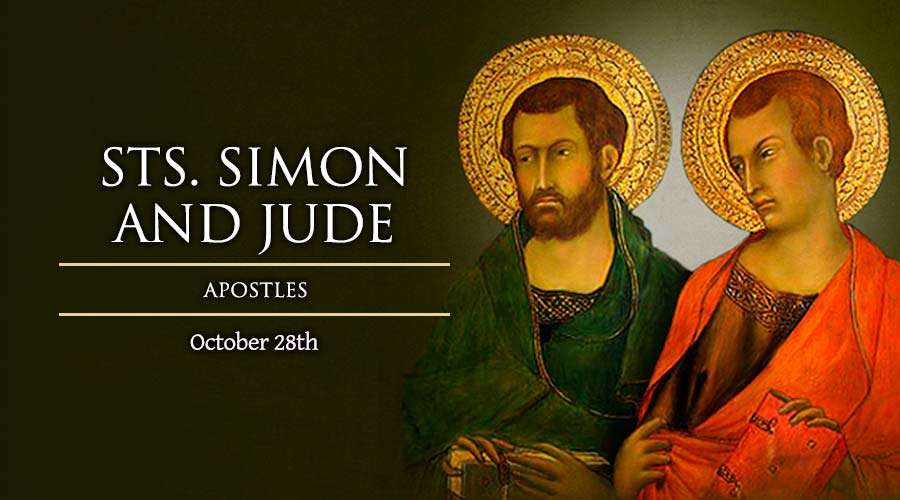
Monday, Feast of St. Simon and St. Jude, Apostles, 28 October 2019

Ephesians 2:19-22 ><)))*> ><)))*> ><)))*> Luke 6:12-16

From Google

What a glorious Monday, O Lord, we have today with the Feast of your Apostles St. Simon and St. Jude!

Whenever I think of your Apostles, O sweet Jesus, I am always filled with hope and love because they show us how you are interested with people, not with social classes or labels.

Jesus went to the mountain to pray, and he spent the night in prayer to God. When day came, he called his disciples to himself, and from them he chose Twelve, whom he also named Apostles: Simon, whom he named Peter, and his brother Andrew, James, John, Philip, Bartholomew, Matthew, Thomas, James the son of Alphaeus, Simon who was called Zealot, and Judas the son of James, and Judas Iscariot, who became a traitor.

Luke 6:12-16

How amazing you have called and gathered these people of different backgrounds and temperament.

Like St. Simon described as “the Zealot” who must be so passionate with his Jewish identity advocating independence yet working with the former Roman collaborator, St. Matthew the tax collector.

How they were able to overcome their many differences is a wonderful lesson for us all who tend to highlight our polarities and contrasts, forgetting that in you, Lord Jesus, we are given the grace to overcome our many conflicts in life.

But, at the same time, you call us to be men and women of integrity like St. Jude Thaddeus who minced no words in his letter against some Christians who “pervert the grace of our God into licentiousness and who deny our only Master and Lord, Jesus Christ” (v.4) by sowing divisions through their erroneous teachings.

May we have the courage of St. Jude to defend your teachings Lord strongly especially in this age when we try to tolerate everything for the sake of pluralism and openness and acceptance.

May St. Simon the Zealot and St. Jude Thaddeus help us rediscover the beauty of Christian faith to live it without tiring, knowing how to bear a strong and yet peaceful witness to it in Christ our Good Shepherd. Amen.

From Google.

“Love On a Two Way Street” by The Moments (1968)

The Lord Is My Chef Sunday Music, 27 October 2019

Photo by d0n mil0 on Pexels.com

We have reflected last week that prayer is an expression of our faith by citing Dione Warwick’s 1967 hit, “I Say a Little Prayer”.

When there is faith expressed in prayer, there is also love.

And when there are faith, prayer and love, then we have a relationship like family and friends, and community.

Today in our gospel, Jesus tells us the right attitude we must have in maintaining our relationships, not only with him but also with others.

Jesus addressed this parable to those who were convinced of their own righteousness and despised everyone else. “Two people went up to the temple area to pray; one was a Pharisee and the other was a tax collector. The Pharisee took up his position and spoke this prayer to himself, ‘O God, thank that I am not like the rest of humanity – greedy, dishonest, adulterous – or even like this tax collector.’ But the tax collector stood off at a distance and would not even raise his eyes to heaven but beat his breast and prayed, ‘O God, be merciful to me, a sinner.’ I tell you, the latter went home justified, not the former.”

Luke 18:9-11, 13-14

From Dione Warwick’s 1967 “I Say a Little Prayer”, we move to the following year when Sylvia Robinson and Bert Keyes composed Love on a Two-Way Street recorded by The Moments as a filler for their 1968 album Not on the Outside, But the Inside, Strong!

It did not fare well in the charts and was released again as a single in 1970 when it spent five weeks at number one on Billboard’s Soul Singles chart. It become one of the greatest R&B song of that year that was later covered by other artists.

In 1981, 14-year-old Staci Lattisaw did a cover of the song that became so popular that others have thought it as her original.

But with all due respect to Staci, I have also always felt her version very cheesy that I prefer the originals singing it because they give more character and soul to the song.

I found love on a two way street and lost it on a lonely highway
Love on a two way street and lost it on a lonely highway

There was no specific experience behind the composition of Love on a Two-Way Street except that it was just a product of a play on words and poetry by Robinson supported by Keyes’ music.

The moment we become convinced of our righteousness that we despise everyone else (cf. Lk.18:9), then we shut ourselves in and leave no space for others even God.

Photo by Alex Powell on Pexels.com

Love as a two-way street based on today’s parable by Jesus requires three attitudes so our relationships would mature and grow deeper: a sense of sinfulness, self-surrender, and self-offering.

No love and faith would ever grow on a lonely highway, with no one else to relate with. That’s when we stop communicating and relating until we break up with others and end up alone and isolated.

That is when we become a “lonely highway” with nobody else but I, me, and myself.

Go back to the two-way street of God and others.

Though crowded with some traffic jams, there is always a space for everyone.


“Where” we pray

The Lord Is My Chef Sunday Recipe for the Soul, Wk. XXX-C, 27 October 2019

Sirach 35:12-14. 16-18 ><}}}*> 2 Timothy 4:6-8. 16-18 ><}}}*> Luke 18:9-14

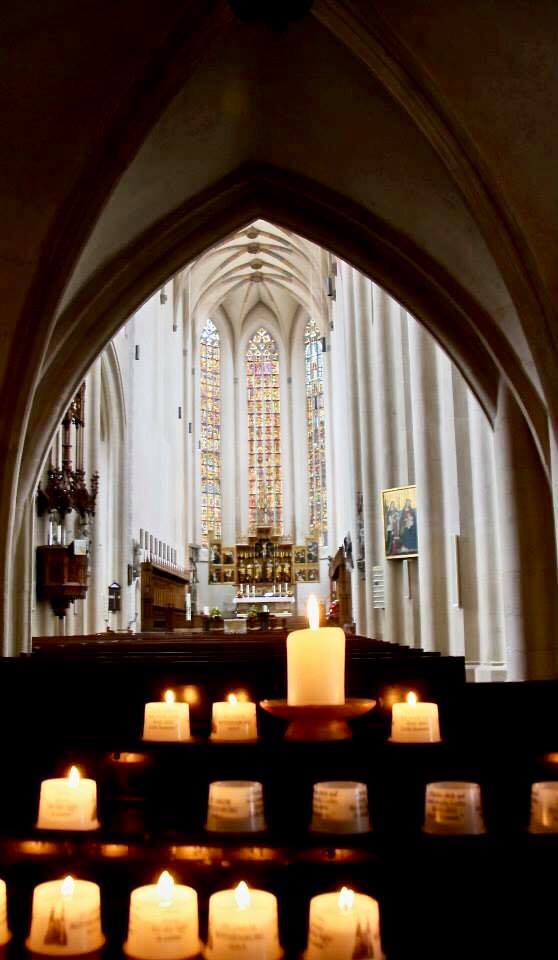
Photo by the author. Baguio City Cathedral, January 2019.

We have reflected last Sunday that prayer is an expression of our faith.

Where there is faith and prayer, there is always love.

And when we have prayer, faith and love, we have a relationship and community of two or three and more persons together as one, rooted in God.

Today we hear another parable by Jesus only St. Luke has, that of the Pharisee and the tax collector to show us another dimension of faith expressed in prayer.

Photo by the author at the Wall of Jerusalem, May 2017.

Like last week, St. Luke tells us anew the Lord’s purpose in narrating this parable:

Jesus addressed this parable to those who were convinced of their own righteousness and despised everyone else.

Luke 18:9

Were you moved or affected in any way upon hearing our parable today?

Did you feel a silent but swift, sharp thud inside your heart while your mind tried to reason out that the parable is not meant for you?

Listen again and pause, let the Lord’s words sink deeper into your heart:

“Two people went to the temple area to pray; one was a Pharisee and the other was a tax collector. The Pharisee took up his position and spoke this prayer to himself, ‘O God, I thank you that I am not like the rest of humanity — greedy, dishonest, adulterous —- or even like this tax collector. I fast twice a week, and I pay tithes on my whole income.’ But the tax collector stood off at a distance and would not even raise his eyes to heaven but beat his breast and prayed, ‘O God, be merciful to me a sinner.’

Luke 18:10-13

If prayer creates a relationship, Jesus is teaching us today the right attitude we must have to keep this communion we have in faith and love. Any relationship is bound to fail, or would not even exist at all despite the formalities of having ties and links like what we see or even have in our various social circles where roles are just acted out.

We call it “plastic” or fake. Untrue!

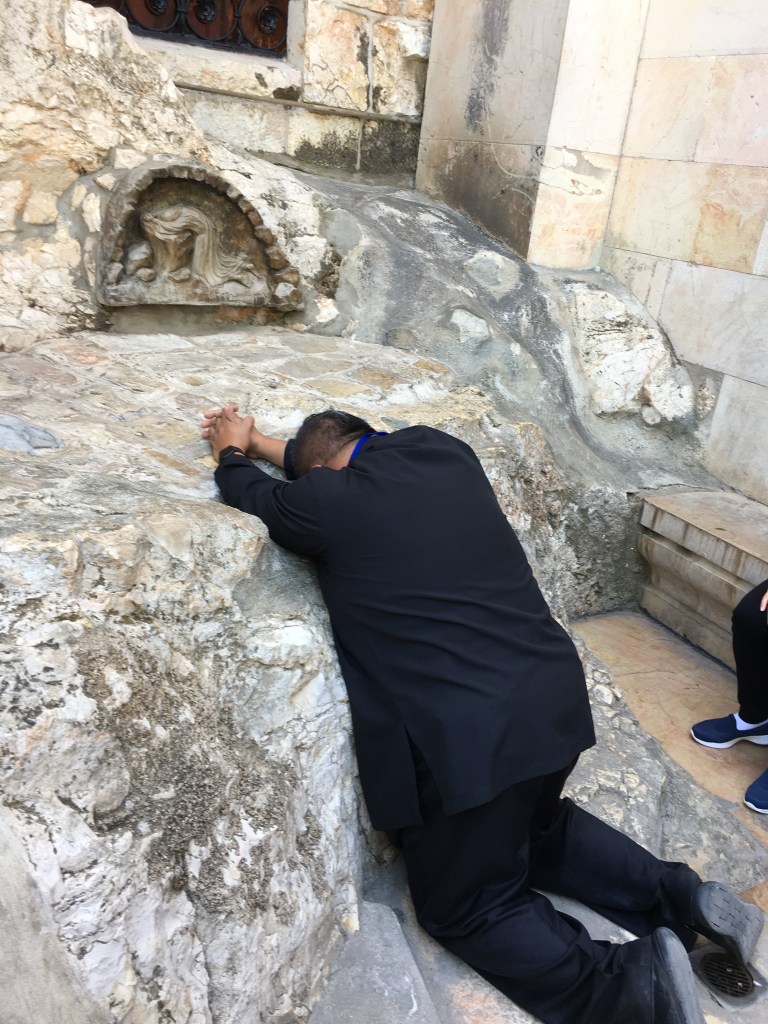
Praying at the Garden of Gethsemane, May 2019.

Prayer to be efficacious like any relationship must always be true.

Here Jesus directs our attention in the “where” when we pray – not just the location or locus of our prayer but our “place” in that relationship first with God who is our very foundation.

When all we see is our self in prayer like in any relationship, there is always a problem. It is clearly a one way street, a monologue.

Worst of all, it is an indication of the absence of God or even others because the pray-er is so preoccupied with his or her very self!

The Pharisee was clearly not in God even if he were in front of the temple. His very self was very far from God and all he had was his bloated ego. He may be a very pious person but not really good at all for he has no space for God and for others. He is a very closed man without any room for others.

The tax collector, on the other hand, may be physically far outside the temple but was the one actually nearest to God with his self-acceptance and ownership of his sinfulness, of his need for God. He was closest to God because he was more open with God and with others by admitting his own sinfulness.

Again we find the key to tis Sunday’s parable towards the end:

(Jesus said) ‘I tell you, the latter (tax collector) went home justified, not the former; for whoever exalts himself will be humbled, and the one who humbles himself will be exalted.'”

Luke 18:14
Photo by Dra. Mai B. Dela Pena, Germany, 2016.

Prayer is more than entering a church or a prayer room, or finding our most suitable spot or space to pray.

Prayer is being one with God, of being suffused in God.

“Where” are we when we pray?

First, we become one with God, one in him in prayer when we first admit our sinfulness, when we confess our sins to him, and own them without any “ifs” and “buts”.

God always comes to those who truly open themselves to him by emptying themselves of their sins and inadequacies.

The tax collector was justified in his prayer more than the Pharisee because in confessing his sins, he admitted his need for God. He knew very well his place, so unlike the Pharisee who felt God owes him so much!

When Pope Francis granted his first media interview (to their Jesuit Magazine!), the first question asked of him was, “who is Jose Mario Bergoglio?”

The Holy Father quickly answered, “I am a sinner.”

No wonder when he was elected Pope on March 13, 2013 at the Vatican, he first asked for prayers from the huge crowd gathered before he bestowed his apostolic blessing to them. It clearly showed that despite his holding the highest post in the Church, he considers himself a sinner, so weak needing prayers from the people.

I always tell couples during weddings that when they have a quarrel, the first one to speak and make the move for reconciliation is the one with most love, the one who is most willing to bow to start anew.

Most often in life, friendships and relationships are kept when we are willing to take the lower stance, not necessarily admitting fault or guilt in any misunderstanding because being lowly indicates the person’s need for the other person and of one’s love to work on that relationship despite its fragility.

Ordination of deacons, Malolos Cathedral, 12 June 2019.

Second, we are in God and with God in prayer when we have that attitude and inner disposition of being poor and lowly. Being lowly or poor means having the conviction to leave everything behind and go down with God into the lowest point because one is so confident of the efficacy of prayer like what Ben Sirach tells us in the first reading.

Most of all, like Mary the Mother of Jesus during the Annunciation of the Christ’s birth.

The one who serves God willingly is heard; his petition reaches the heaven. The prayer of the lowly pierces the clouds; it does not rest till it reaches its goal.

And thirdly, we are in God in prayer when there is an offering daily of one’s self to God.

It is not enough to be lowly and sorry for our sins in prayer. It has to be sustained because prayer is also a discipline like any sport. In the second reading, St. Paul calls us to persevere and endure until the end for Jesus Christ.

We need to be passionate with our prayer life, willing to go to all extent to offer everything for the Lord, to fulfill his will “who shall award us with the crown of righteousness in heaven.”

We are all sinners forgiven and beloved by God.

May we find ourselves in God and with God always both in our sinfulness and lowliness. Amen.

What Jesus looks for and how we see

The Lord Is My Chef Breakfast Recipe for the Soul

Friday, Week XXIX, Year I, 25 October 2019

Romans 7:18-25 ><)))*> ><)))*> ><)))*> Luke 12:54-59

Photo by Noelle Otto on Pexels.com

What a beautiful way to end the week of work and studies, O Lord, when you asked us to read the signs of the times.

Jesus said to the crowds, “When you see a cloud rising in the west you say immediately tat it is going to rain — and so it does; and when you notice that the wind is blowing from the south you say that it is going to be hot — and so it is. You hypocrites! You know how to interpret the appearance of the earth and the sky; why do you not know how to interpret the present time? Why do you not judge for yourselves what is right?”

Luke 12:54-57

In this age of social media where everything is being shown and seen by everyone, it is very unfortunate that we still fail to see beyond the physical realities.

In an age when everything and everyone is seen, we have become more superficial than ever and have refused to see more deeper than what appears to the eyes.

We look outside of us to explain everything like in the news and in the internet, at YouTube and Facebook, Google and Wikipedia.

Rarely do we look deep inside ourselves like St. Paul to realize the greater battle going on deep within each one of us between good and evil.

Teach us Lord to see more the spiritual meanings of the things happening in us and around us, to always look deep into our hearts to see and realize the need to be good and just, kind and loving.

Maybe if we can look more often into our hearts and look piercingly into the heavens to find you, perhaps we can have a better world with lesser crimes and hatred among peoples. Amen.

When Jesus speaks

The Lord Is My Chef Breakfast Recipe for the Soul

Thursday, Week XXIX, Year I, 24 October 2019

Romans 6:19-23 ><)))*> ><)))*> ><)))*> Luke 12:49-53

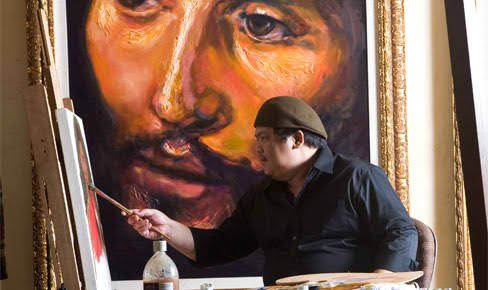
The late Joey Velasco at work. From Google.

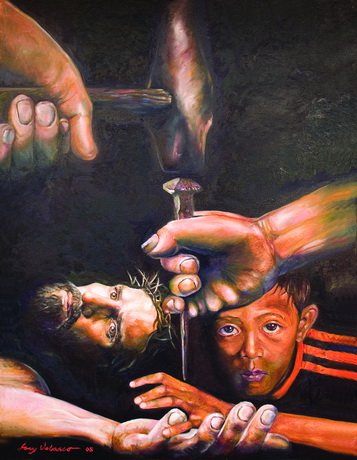
As I prayed today’s gospel, Lord Jesus, I remembered the late painter Joey Velasco who is best known for his “Hapag ng Pag-Asa”.

Joey portrayed you in a very unique way that is very disturbing, even harsh just like the way you spoke in today’s gospel.

Jesus said to his disciples: “I have come to set the earth on fire, and how I wish it were already blazing! There is a baptism with which I must be baptized, and how great is my anguish until it is accomplished! Do you think I have come to establish peace on the earth? No, I tell you, but rather division.”

Luke 12:49-51

Why did I feel that way, Lord?

It seems I have been so conditioned to your image of being “meek and humble”, so gentle like Isaiah’s Suffering Servant who bore all pains and insults.

But more than that imagery that we have nurtured of you like a “baby” within us, Joey’s paintings of you among the poor and suffering disturb us because we are so detached from you.

Yes, we are disturbed and even pained because we have refused to follow you closer among the poor and suffering.

So often, your words shock us and actually bring us back to life because we have actually been dead to sin and evil or the “wages of sin” according to St. Paul in our first reading today.

“That All May Be One” painting by Joey Velasco.
Photo from Google.

We are disturbed because our silence in reaching out to the poor and oppressed is more harsh than your words.

Your words are “harsh” because they are so radical in the truest sense, from the Latin radix or roots – you are shaking us down into our inner core and being to set the earth out on fire with your love!

Your words disturb us because they call us to leave our comfort zones and sidewalks to follow you right onto the dirty road of pain and suffering with the poor.

Yes, you have come Jesus to bring divisions, but not out of our petty quarrels and whims and fanaticisms.

Let us be divided for what is true and good, for what is just and fair.

Let us be divided, Lord, by choosing your side, by standing by your side at the foot of cross with the wounded and unaccepted.

Open our hearts, O Jesus, to the truest sense and meaning of your words to reawaken in us your fire and spirit of loving service for the less fortunate. Amen.