Advent is being small and simple

The Lord Is My Chef Sunday Recipe for the Soul by Fr. Nicanor F. Lalog II
Second Sunday of Advent-C, 05 December 2021
Baruch 5:1-9 ><}}}*> Philippians 1:4-6, 8-11 ><}}}*> Luke 3:1-6
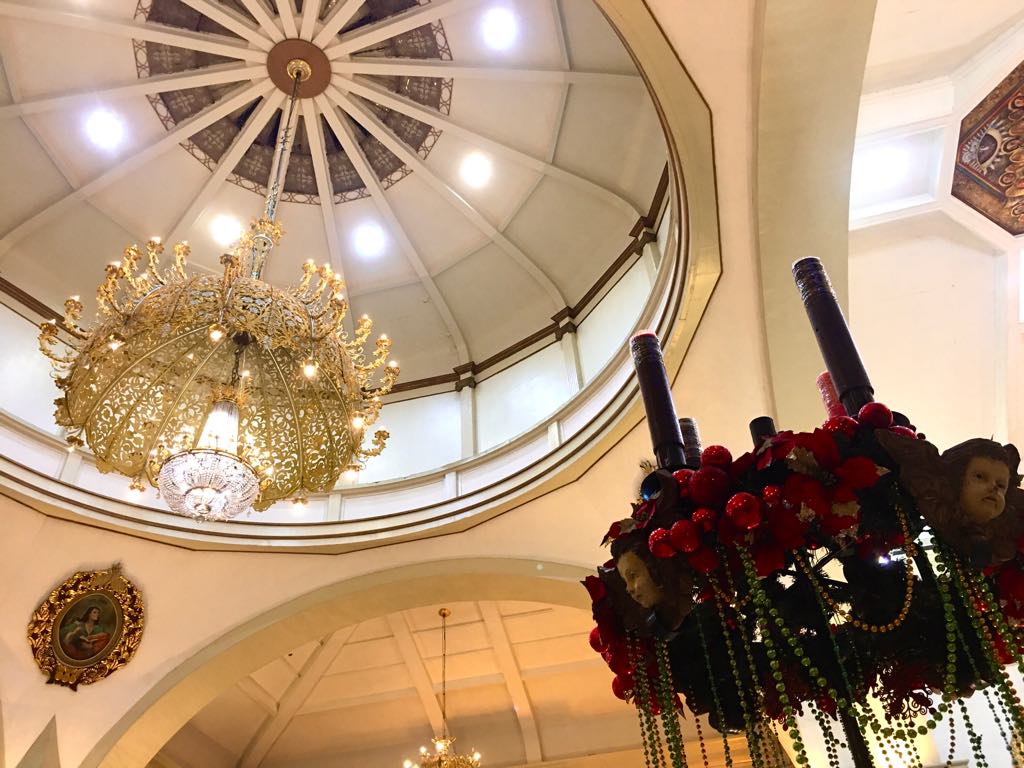
Photo by Mr. Jim Marpa, 2018.

From “beginning with the end” last Sunday at the start of Advent, we now move into its second week when we are reminded by the readings and gospel that “everything begins small and simple” in God and with God’s kingdom.

So often in life, God’s beauty and majesty are revealed in small, little beginnings that are hidden and obscured, things and persons we take for granted without knowing it is in them and through them that God silently continues his works of wonder among us.

Such is the reality of Christ’s coming – then and now and in the end of time – as presented by Luke who began his account this Second Sunday of Advent with the introduction of John the Baptist.

“St. John the Baptist Preaching In the Wilderness” by Anton Raphael Mengs from en.wikipedia.org.

In the fifteenth year of the reign of Tiberius Caesar, when Pontius Pilate was governor of Judea, and Herod was tetrarch of Galilee, and his brother Philip tetrarch of the region of Ituraea and Trachonitis, and Lysanias was tetrarch of Abilene, during the high priesthood of Annas and Caiaphas, the word of God came to John the son of Zechariah in the desert.

Luke 3:1-2

Feel the solemnity of Luke’s report, so formal, evoking a sense of power and might, an air of superiority with all the trappings of those in the corridors of power in government and religion.

Then abruptly, he wrote tersely, “the word of God came to John the son of Zechariah in the desert”. Boom! So simple yet elegantly emphatic.

Notice Luke’s artistry presenting a list of who’s who living in palaces and Temple with all the comfort and luxury available at that time when in a sudden shift, without losing the building up of the drama that led to the climax that is John “proclaiming a baptism of repentance for the forgiveness of sins, as it is written in the book of the words of the prophet Isaiah: A voice of one crying out in the desert: ‘Prepare the way of the Lord, make straight his paths'” (Lk.3:3-4).

In introducing to us the person of John the Baptist which started in the very first chapter of his gospel, Luke is actually telling us how John was already the presence of Christ, that aside from being his precursor, he had Jesus in himself already! For Luke, John foreshadowed Christ’s work of salvation reaching its summit at Easter even while orienting us to Christmas.

The nearness of God

Every year, the second and third Sundays of Advent narrate the preaching and baptism by John the Baptist at Jordan to remind us how Jesus comes to us whenever, wherever the word of God is heard, accepted, and proclaimed that result into repentance and forgiveness of sins.

See how Luke shows us the overlapping of salvation history with our secular history, a clear indication of the presence and nearness of God with us in Christ’s coming. Tiberius Caesar, Pontius Pilate, Herod, Philip, and Lysania with the high priests Caiaphas and Ananias were true persons who have lived in a particular time and specific places when John and Jesus lived too.

Here we find so true that God works silently and subtly in Jesus in our own personal lives and in the whole world for indeed, he is the God of history.

Photo by author, Chapel at the Basic Education Department, Our Lady of Fatima University, Valenzuela City, 28 November 2021.

This Second Sunday of Advent we are assured of God’s nearness with us in Christ, especially when there are those darkness and obscurity, hiddenness and being unknown. These little and simple things in life are occasions where God reveals himself to us! Take them to heart.

Sometimes in life it is good to be down and even unknown, away from the limelight specially in this age of social media where everything even coffee breaks and new purchases or grades and medals of children are made known to everyone with much noise like blaring trumpets.

This boom in social media is so tiring and even disgusting with nothing hidden anymore, nothing is personal, and worst, nothing sacred any more! God and faith and sacraments have become commodities, persons are cheapened and used for personal advantages that even personal messages or PM’s have become “public happenings”. No more respect and dignity to others and most of all, unknown to those so immersed in the social media, they are the ones in the losing end, losing their very selves as they lose touch and grounding with reality.

Contrast it with John the Baptist in the desert with his balanced life between solitude and community and most of all, his rootedness in God and with realities of life that he can speak about the need for repentance to renew one’s self.

The gift of Advent

It can happen that when we are so filled with our selves, when we are so spread out feeling famous, “viral” and “trending” that we are also most empty and nothing like those powerful men mentioned by Luke, from the Roman emperor to the high priests; hence, the need to be hidden and unknown, little and small once in a while to allow enough room for changes and growth, and most especially to have a room within us for Jesus to work in us.

This is the gift of Advent Season: a time for us to be like John, to withdraw from the busy and toxic world so we may be alone and at home again with one’s true self, with loved ones, and with God in Jesus, through Jesus.

In the first reading we heard the end of a poem by Baruch where God consoles his people personified by Jerusalem, giving them hope of redemption someday from their Babylonian conquerors. It was the lowest point in the Jewish history when Jerusalem and their Temple were destroyed with the entire nation exiled to Babylon as slaves. No country, no Temple, so down and so small yet, God tells them:

Photo by author, Advent 2019.

Jerusalem take off your robe of mourning and misery; put on the splendor of glory from God forever: wrapped in the cloak of justice from God, bear on your head the mitre that displays the glory of eternal name. For God will show all the earth your splendor; you will be named by God forever the peace of justice, the glory of God’s worship.

Baruch 5:1-4

See the beautiful image of God taking possession of his people exiled and enslaved, changing their lot into something so wonderful filled with splendor!

The same thing happens with us when we are down and lost for that is when God doubles his efforts in finding us, redeeming us, uplifting us. It had happened before in the coming of his Son Jesus Christ more than 2000 years ago which continues to happen now and would surely happen again in its fullness at his Parousia.

Nothing happens in life and in the world without God knowing even the minutest, single details we do not notice at all. Let us imitate the confidence of Paul this Season of Advent:

I am confident of this, that the one who began a good work in you will continue to complete it until the day of Christ Jesus. God is my witness, how I long for all of you with the affection of Christ Jesus.

Philippians 1:6, 8
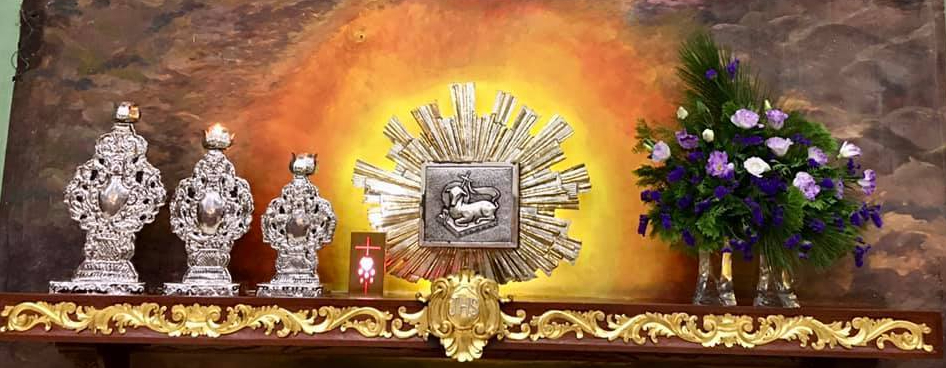
Photo by author, Advent 2020.

This Second Sunday of Advent we are told that even if we do not see Jesus like in the gospel of Luke when it is still concerned with the preaching of John the Baptist, he is already with us in those small and little sacrifices we do out of love for him.

Like John, Advent invites us to withdraw to the wilderness, to the desert to be hidden from the limelight to give God a space to come to us, to be present in us.

Like John, Advent invites us to empty ourselves of our pride and sins, to repent and be washed clean by God’s loving mercy and forgiveness to be filled with his humility, justice and love.

Like John, Advent wants us to be the fulfillment of Isaiah’s prophecy: to be the voice of reason and faith in this noisy world of lies and superficialities; to make straight the path so bended with many excuses and alibis that have moved the lines of morality and propriety; to fill the valleys with sense and meaning; and, to make low every mountain and hill of human pride and arrogance that have left us more empty and lost than before.

Let us all be a John the Baptist, not only a precursor but also a presence of Jesus.

A blessed second week of Advent to everyone!

Human situation, Divine response: multiplying our blessings

The Lord Is My Chef Sunday Recipe for the Soul by Fr. Nicanor F. Lalog II
Week XVIII, Cycle A in Ordinary Time, 02 August 2020
Isaiah 55:1-3 >><}}}*> Romans 8:35, 37-39 >><}}}*> Matthew 14:13-21

Remember our reflection last Sunday? Of how parables teach us that “less is always more” because to have the kingdom of God – Jesus Christ himself – we have to learn to appreciate the little things in life?

Beginning this Sunday until August 16, our gospels will start telling us who is Jesus Christ by showing us his powers and abilities that are exactly opposite the way we see and understand them. This new series of stories are so relevant to us in this time of pandemic, giving us wonderful insights into God’s ways of responding to our human situations.

St. Matthew now leads us with Jesus to the wilderness after teaching us in parables to experience his power in transforming us like the five loaves and two fish to feed more than five thousand people.

Multi-layered story of the multiplication of bread

All four evangelists have recorded this story of Jesus Christ’s multiplication of the loaves of bread with their particular focus and stress, showing us that it truly happened and was a major event in the Lord’s ministry.

Very unique with St. Matthew’s version of this miracle story – which has not one but two! – is his economy of words in narrating it like a straight news as if it were a developing story or a “breaking news” unfolding before us, calling us to follow its updates and details due to its multi-layered meanings.

When Jesus heard of John the Baptist, he withdrew in a boat to a deserted place by himself. The crowds heard of this and followed him on foot from their towns. When he disembarked and saw the vast crowd, his heart was moved with pity for them, and he cured their sick. When it was evening, the disciples approached him and said, “This is a deserted place and it is already late; dismiss the crowds so they can go to the villages and buy food for themselves.” Jesus said to them, “There is no need for them to go away; give them some food yourselves.” But they said to him, “Five loaves and two fish are all we have here.” Then he said, “Bring them here to me,” and he ordered the crowds to sit down on the grass. Taking the five loaves and the two fish, and looking up to heaven, he said the blessing, broke the loaves, and gave them to the disciples, who in turn gave them to the crowds. They all ate and were satisfied, and they picked up the fragments left over — twelve wicker baskets full. Those who ate were about five thousand men, not counting women and children.

Matthew 14:13-21
Photo from iStock/Studio-Annika.

The consolation of Jesus.

Our situation in this time of the corona pandemic is so similar with that of Jesus. With the increasing number of COVID-19 cases, it has finally hit us hard, so close to home with news of those we know getting infected and worst, dying from this disease.

Like Jesus upon hearing the death of John the Baptist, we are all saddened that we wish to withdraw away from everyone.

We want to mourn but there are more people in need of our presence and help in this time of pandemic like the countless medical frontliners and health workers who must be so tired – even sick, physically and emotionally – by now with the growing number of COVID-19 patients and yet have chosen to remain in their posts.

And there are still the other casualties of this pandemic like those who have lost their jobs, those evicted from their rented apartments, those stranded and separated from their loved ones, those begging for food, and those afflicted with other sickness going through dialysis and physical therapy.

Jesus knows so well the “wilderness” we are all going through and he is right here with us, one with us in our sufferings, in our fears and anxieties, and in our exhaustion.

To be one with us is consolation, from the Latin “con” or with + “solare” or alone, to be one with somebody feeling alone.

Jesus did not remove our pains and sufferings, even our death; he joined us to be one with us in these that he can call us to “Come to me, all you who labor and are burdened, and I will give your rest. Take my yoke upon you… For my yoke is easy and my burden light” (Mt.11:28-30, 14th Sunday, 05 Jul 2020).

Compassion of Jesus.

Still with Christ’s reaction of being “moved with pity” at the sight of the crowds who have followed him to the wilderness, we find something more deeper with his being one with us, in consoling us that he had forgotten all about himself, his tired body that he went on to heal the sick among them.

To be moved with pity is more than a feeling of the senses but a response of his total person.

You respond for help, you reply to a call.

Ever wondered why we have the “responsorial psalm” after the first reading in the Mass? Because those words from the Psalms express our total assent and commitment to God, involving our total self like body, mind, heart and soul.

Photo by Dra. Mai B. Dela Peña, Carmel Monastery, Israel, 2016.

God cannot suffer because he is perfect.

That is why he became human like us in Jesus Christ to be one with our suffering and death so that we would one with him in his glorious Resurrection.

In the wilderness, Jesus stayed with the people, not allowing them to leave as suggested by the Twelve because he was moved with pity with the crowd because he wanted to suffer with them.

That is compassion, literally means to “suffer with” from cum + patior. Here in the wilderness, Jesus showed his compassion for the people which will reach its highest point in giving himself on the Cross on Good Friday.

Have we “responded” to God’s call to serve, to a call of duty, and to a plea for help from the poor? Have we truly given ourselves to somebody without ever thinking our own comfort or rewards? Or, are we running away from his Cross?

What a shame in this time of pandemic there are some among us who rejoice at the losses of others like the Twelve who wanted the crowd to be sent home because they were afraid of responsibilities, of taking care of the suffering people.

Consolation and compassion are the two most needed from each of us in this time of crisis.

Our scarcity mentality, the God of plenty.

We now come to the miracle of the feeding of five thousand. According to the late Fr. Henri Nouwen, this story is an example of our “scarcity mentality” when we think of not having enough, of finding what we have as too little, always looking for more; hence, our tendency to hoard everything.

The Twelve were thinking more of themselves, afraid they could go hungry with the five loaves of bread and two fish they have. They were so afraid of difficulties ahead of them in their situation where to find and how to feed those great number of people.

They were focused on what was lacking than on what they have, and who was with them, Jesus Christ! They were hungry for food in the stomach than for food to the soul unlike the crowds who have followed Jesus.

Worst of all, the Twelve got “mad” upon seeing the crowds who have followed them to the wilderness when in fact, it was Jesus who needed most to rest to mourn John’s death!

But through all these, Jesus patiently bore the people’s woes and the Twelve’s selfishness to teach them all in a very nice way something so essential in our response to every human suffering and extreme situation: opening and entrusting our selves totally to God.

And that was actually the greatest miracle that happened that day.

Photo by Pixabay on Pexels.com

In doing it, Jesus simply asked the Twelve what they have, never asking how much they have or its condition. Just whatever they have to give everything to Jesus like those five loaves and two fish that he took, and while looking up to heaven, blessed and broke the loaves, and gave them to the Twelve to distribute to the crowd.

And everyone was satisfied with a lot of left overs too!

Matthew nor any of the other Evangelists ever explained how it happened because it does not really matter at all. What is most important is what are we willing to give up to Jesus so he can transform us into better persons.

That is what we continue to do this day in every celebration of the Holy Eucharist- whatever we have, even not the best or the worst and littlest we have, when given to Jesus becomes holy and multiplied!

The power of God is immense, without doubt. But, in this miracle of the feeding of five thousand, Jesus is showing us that his power is not meant to satisfy our material or bodily needs but our deepest desires that lead to our fulfillment in him as prophesied by Isaiah in the first reading.

Why spend your money for what is not bread; your wages for what fails to satisfy? Heed me, and you shall eat well, you shall delight in rich fare. Come to me heedfully, listen, that you may have life.

Isaiah 55:2-3

Amid the pandemic worsened by our government officials’ inanities, irresponsibilities, and sheer lack of compassion with us in this wilderness, the Lord assures us today that he is with us for “nothing can separate us from the love of Christ” (Second Reading) if we are willing to give him all that we have.

It is our spiritual transformation first that leads us to our material blessings. We can all have it if we are willing to give everything to Jesus and believe in him always. What do you have for miracles to happen?

A blessed August ahead for you! Amen.

Photo by Dra. Mai B. Dela Peña, Carmel, Israel, 2016.

Advent is for healing

The Lord Is My Chef Sunday Recipe for the Soul

Second Sunday of Advent-A, 08 December 2019

Isaiah 11:1-10 ><}}}*> Romans 15:4-9 ><}}}*> Matthew 3:1-12

Cathedral Basilica Minore of the Immaculate Conception, Malolos City, Advent 2019.

Advent is a season we are invited to look forward, to dream of the ideal, of the best things we wish we all have in this destructive world we live in.

It is the time for healing our wounds and brokenness as we look forward to the fulfillment of God’s promise of lasting peace brought by Jesus Christ’s coming more than 2000 years ago.

On that day, a shoot shall sprout from the stump of Jesse, and from his roots a bud shall blossom. The spirit of the Lord shall rest upon him… Not by appearance shall he judge, nor by hearsay shall he decide, but he shall judge the poor with justice, and decide aright for the land’s afflicted… Justice shall be the band around his waist, and faithfulness a belt upon his hips. Then the wolf shall be a guest of the lamb, and the leopard shall lie down with the kid; the calf and young lion shall browse together, with a little child to guide them. The cow and the bear shall be neighbors, together their young shall rest; the lion shall eat hay like ox. The baby shall play by the cobra’s den, and the child lay his hand on the adder’s lair. There shall be no harm or ruin on my holy mountain; for the earth shall be filled with knowledge of the Lord, as water covers the sea.

Isaiah 11:1-2, 3, 4, 5-9
“Peaceable Kingdom”, a painting based on Is.11:1-10 by American Edward Hicks, a Quaker pastor (1780-1849).

Jesus is coming again to heal our destructive world

Last November 28 we celebrated Red Wednesday to remember the more than 300 million Christians worldwide persecuted in various forms because of their faith in Jesus Christ. Many of them were tortured and/or murdered while others were denied of work, housing and liberty for carrying the cross and confessing their faith and love for Jesus Christ.

According to some reports, about 80% of wars and conflicts in the world today are due to religion. How tragic – and scandalous – that religion is tearing us apart than bringing us together as peoples believing in a God who is loving and merciful!

But despite all these destructions going on, Isaiah’s prophecy challenges us to keep our hopes alive for a better future, to look forward for the coming again of Jesus Christ, “the shoot that shall sprout from the stump of Jesse” to heal our destructive world.

Advent assures us that it is never too late for the Lord to make peace and justice spring forth in our dying world like a stump of tree.

Isaiah’s vision is an imagery of God’s test of faith to us all to make it Jesus Christ’s peace a reality in this fragmented world, calling us into conversion so that we shall be “filled with knowledge of the Lord, as water covers the sea.”

It is a call made louder and clearer by St. John the Baptist at the wilderness that still echoes to our own time today.

Healing our destructive world starts within me

Photo by Mr. Jim Marpa, September 2019.

When he saw many of the Pharisees and Sadducees coming to his baptism, he said to them, “You brood of vipers! Who warned you to flee from the coming wrath? Produce good fruit as evidence of your repentance… Even now the ax lies at the root of the trees. Therefore every tree that does not bear good fruit will be cut down and thrown into the fire.

Matthew 3:7-8,10

The season of Advent is not only inviting us to look forward for a new world order where there would be lasting peace and justice, when all our tears would be wiped out, with perfect joy replacing our pains and sufferings. Advent is calling on us to look forward in renewing our relationships with God and with one another by beginning within our own hearts.

And make no mistake that St. John’s preaching and call were not only meant for the Pharisees and Sadducees of his time but also to us all Christians of today to “produce good fruit of our repentance” because being sorry for our sins is just the first step to conversion.

Whenever there is true repentance in our hearts, there must also be a change in our very selves, in our living. And only then can we expect of a better and more beautiful world coming like Isaiah’s vision because from true repentance comes justice and mercy.

St. John was very clear: it is Jesus Christ who is coming whom we shall await and prepare to meet right in our hearts. He is coming not to destroy the world – and us – but to restore everything into life anew.

Skies over the desert of Sinai in Egypt, May 2019.

Meeting Christ in the desert

Sometimes we get discouraged by some people and many situations that throw us off-balanced, tempting us to abandon all our efforts to be healed of our wounds and brokenness, in striving to become better persons.

Like St. John the Baptist, we have our own desert of desolation and bareness that purifies us further in preparing the way of the Lord, in meeting the Lord to be healed.

It is in our own desert of desolation and bareness where we are healed as we learn to be empty of ourselves like St. John in order to conquer first our selfish desires with silence and prayer, not with activities as we are all bent in doing these days.

In our world saturated in media with cacophony of voices telling us to do everything to be rich and popular and famous, the more we become empty and lost, broken and wounded.

“St. John the Baptist Preaching in the Wilderness” by German painter Anton Raphael Mengs (1728-1779). From Google.

Like St. John the Baptist, we have to break free from the trappings of the world by retreating into our own desert right inside our hearts in order to listen more to the voice of the coming Christ we must proclaim fearlessly in words and in deeds.

St. Paul assures us that all that scripture foretold in the past has been fulfilled in Jesus Christ who is coming again at the end of time. Despite the many destructions in this world, despite the many setbacks we have in life, may we imitate St. John the Baptist in awaiting Christ in our own desert for he is most faithful in his promise and presence. Amen.