Advent is patient transformation to joy

Lord My Chef Sunday Recipe for the Soul by Fr. Nicanor F. Lalog II
Third Sunday in Advent-A (Gaudete Sunday), 14 December 2025
Isaiah 35:1-6, 10 ><}}}}*> James 5:7-10 ><}}}}*> Matthew 11:2-11
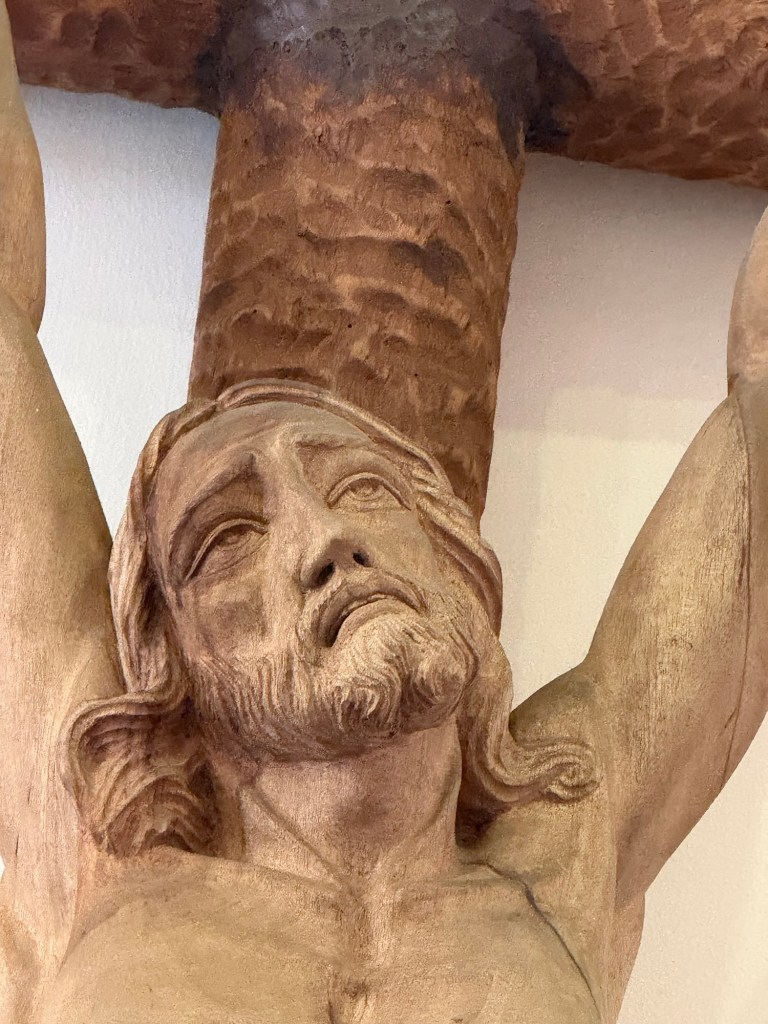
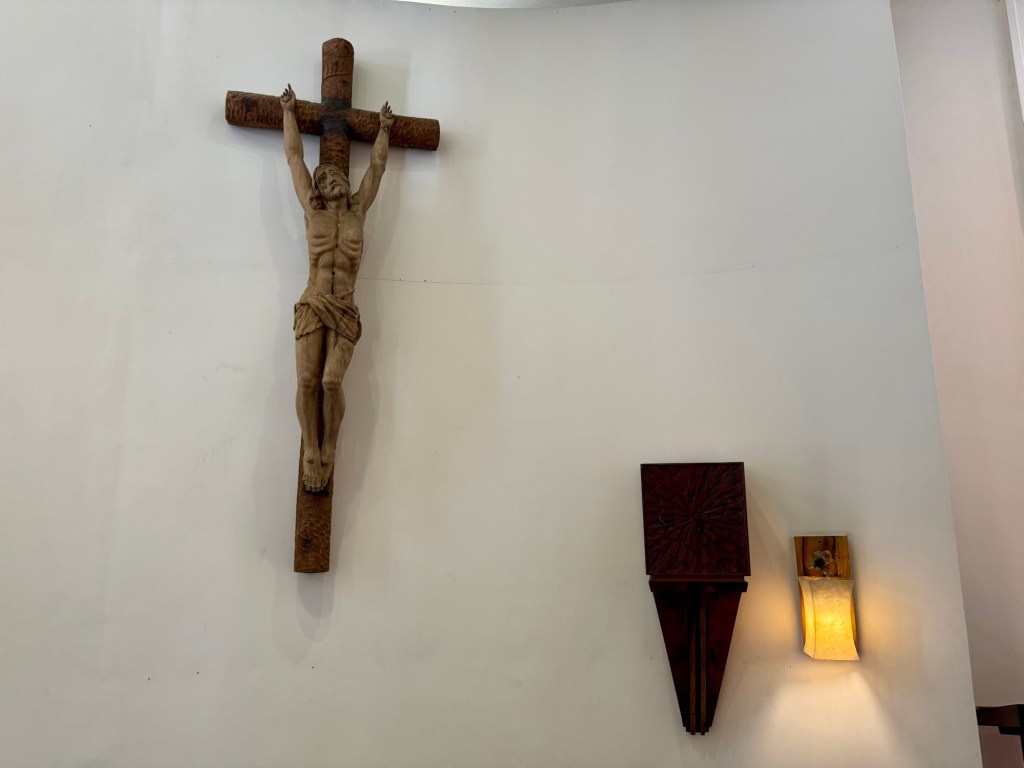
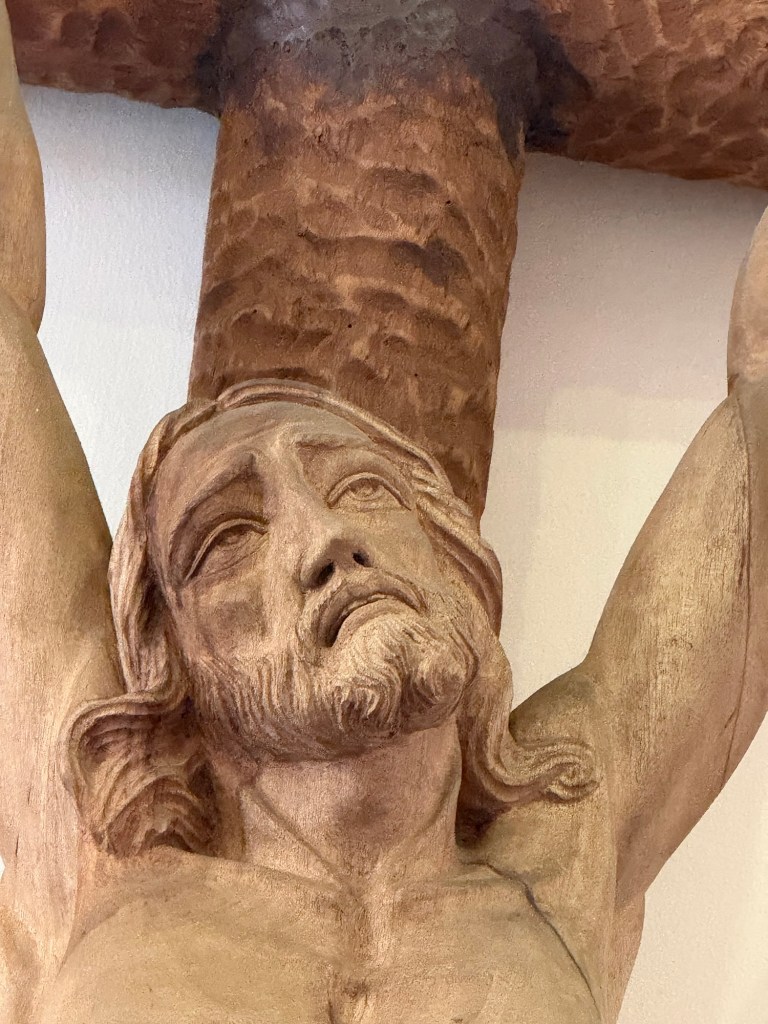
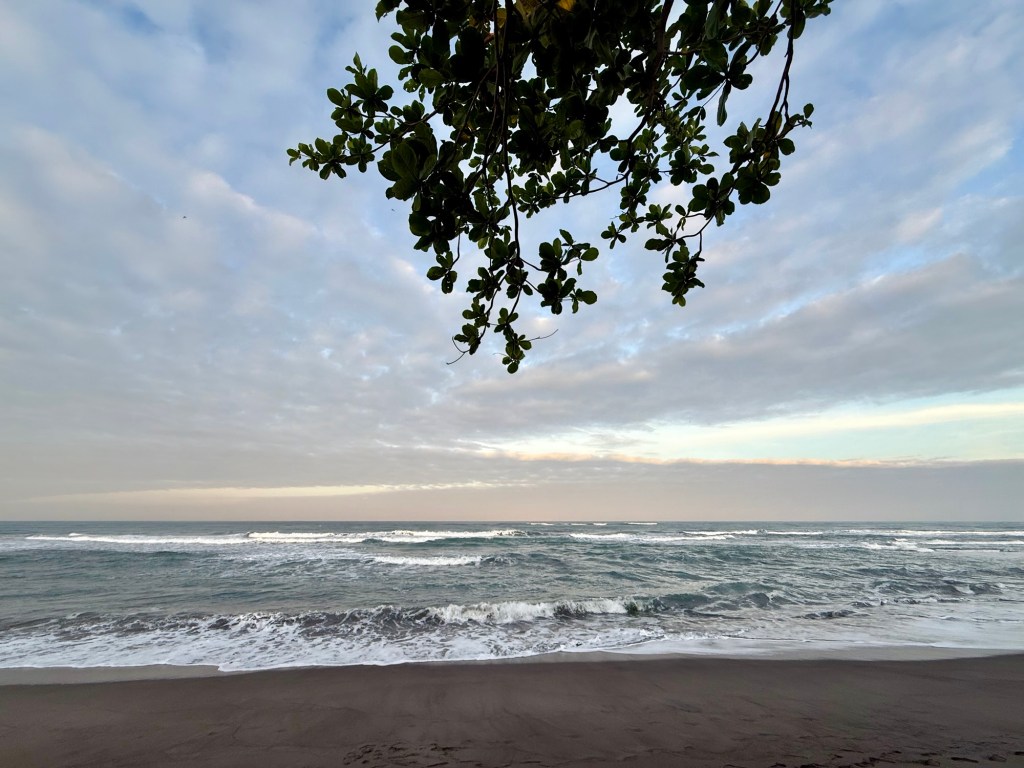
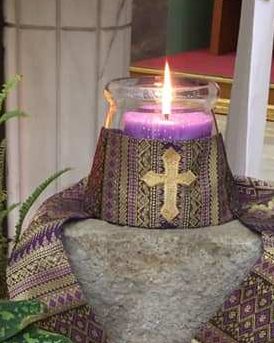
Photo by author, December 2019.

Our churches are bursting in hues of pink this Third Sunday of Advent rejoicing not only in the fast approaching Christmas but most especially in the Lord’s Second Coming already happening in our midst.

Like John the Baptist in today’s gospel who was imprisoned at the time, we could feel in our own waiting for Jesus his saving presence in the many good things happening within us and around us.

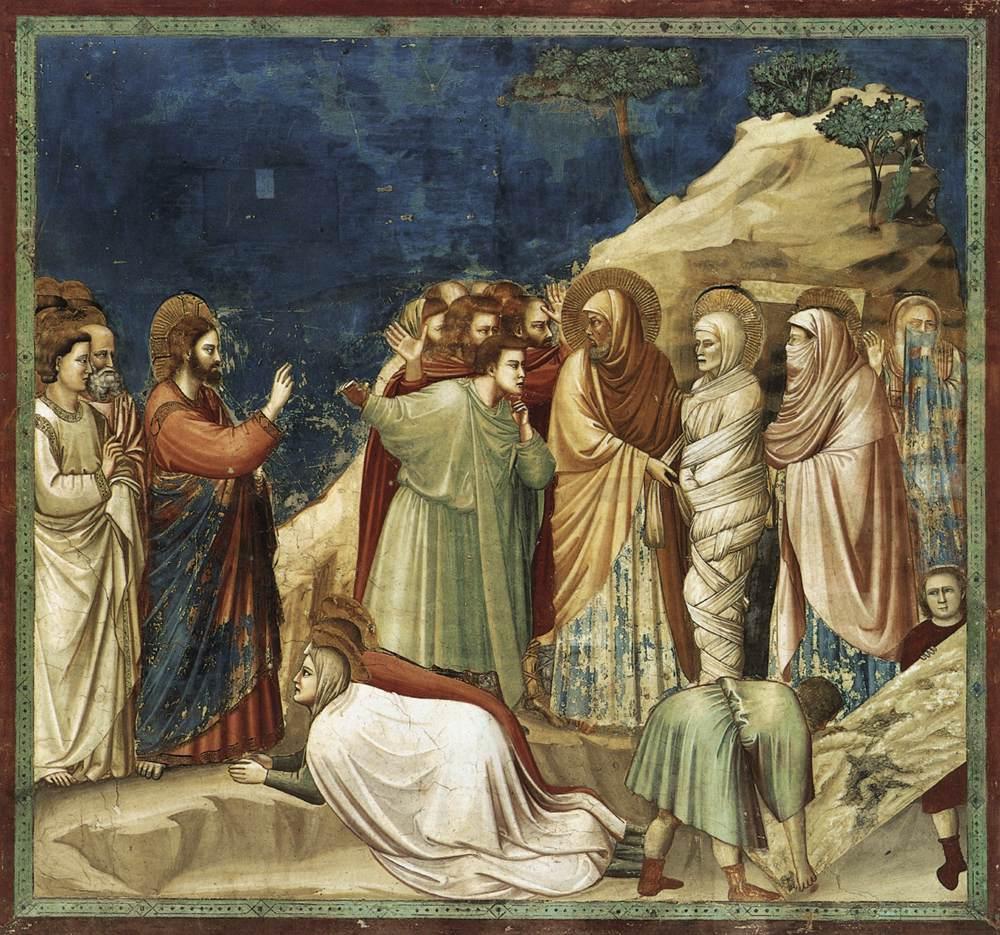
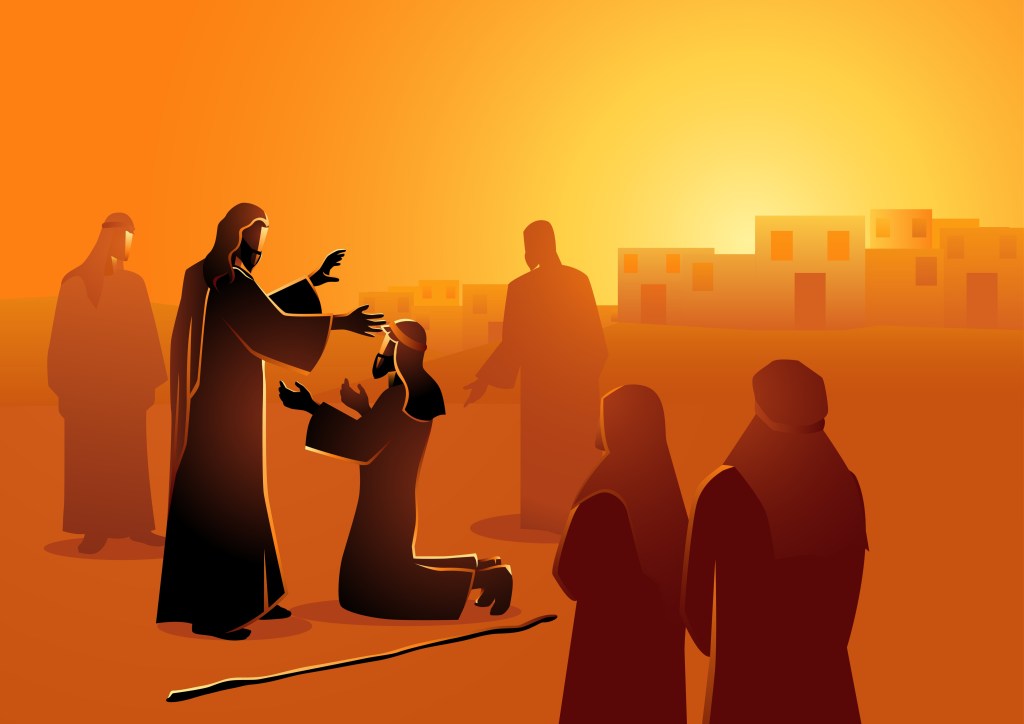
When John the Baptist heard in prison of the works of the Christ, he sent his disciples to Jesus with the question, “Are you the one who is to come, or should we look for another?” Jesus said to them in reply, “Go and tell John what you hear and see: the blind regain their sight, the lame walk, lepers are cleansed, the deaf hear, the dead are raised, and the poor have the good news proclaimed to them” (Matthew 11:2-5).

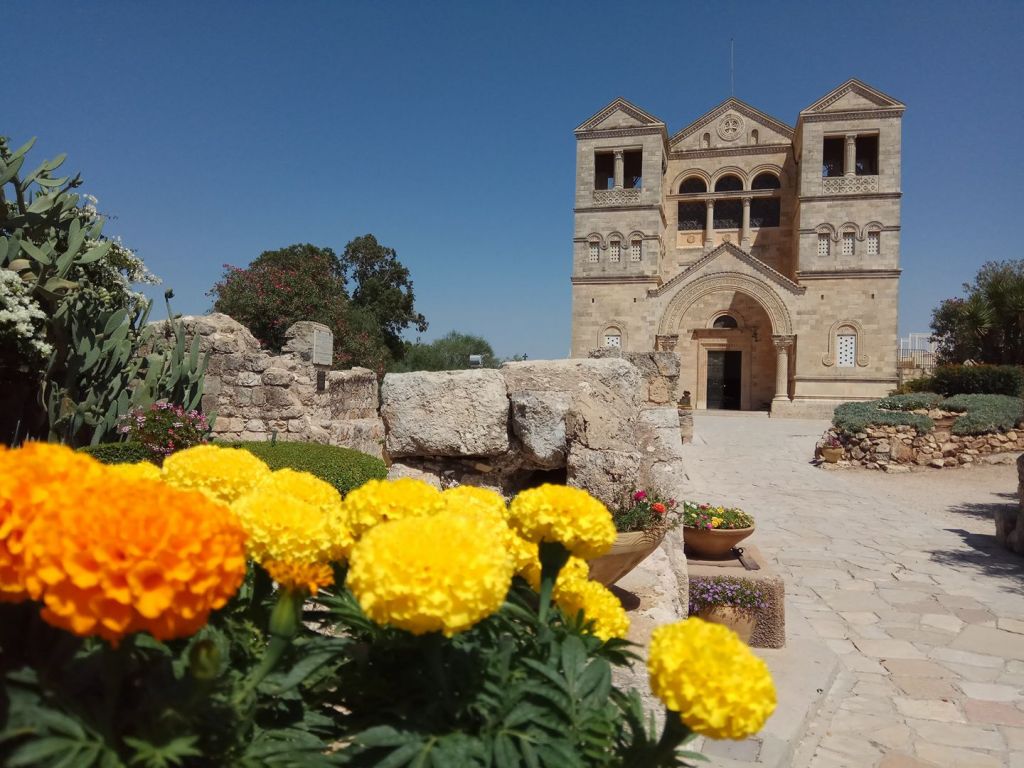
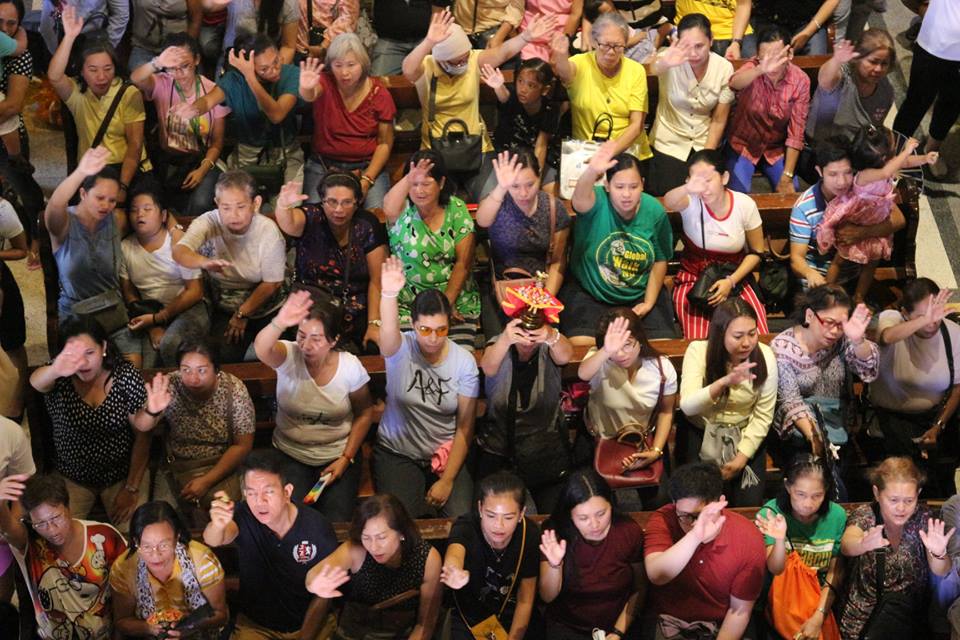
Photo by shy sol on Pexels.com

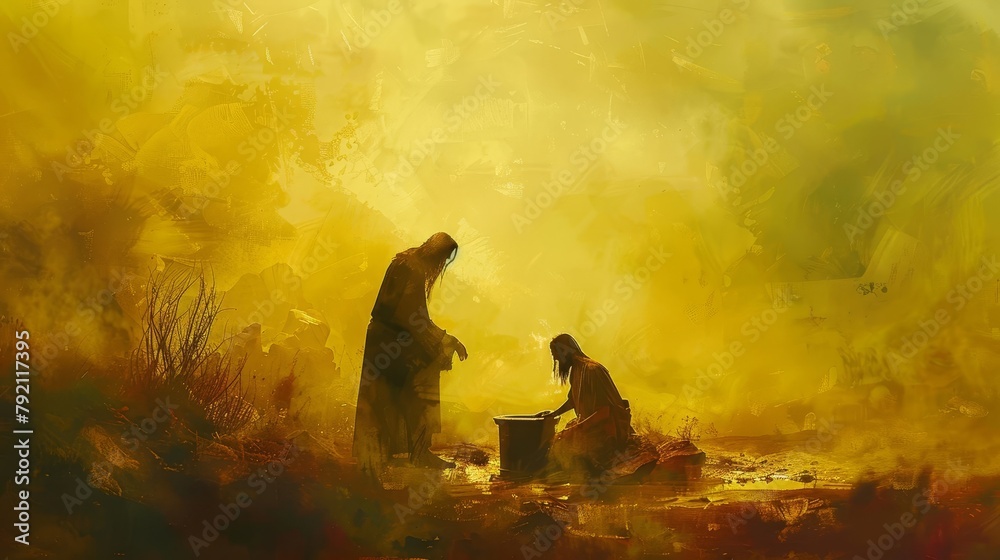
Remember our reflection last Sunday of John’s preaching in the desert of Jordan signifying our own desert where amid the dryness and emptiness Jesus comes to us, Jesus is most present with us and in us. That is because more than an imagery of nothingness and death, the desert signifies too our intimacy with God. Many times in life, God brings us or allows us to get lost in our own desert to experience his intimacy with us, his immense love for us because when we are sufficient and strong, we rarely feel him nor even desire him. But, when we are like in a desert with nothing, that is when we long for God, and most especially feel him present.

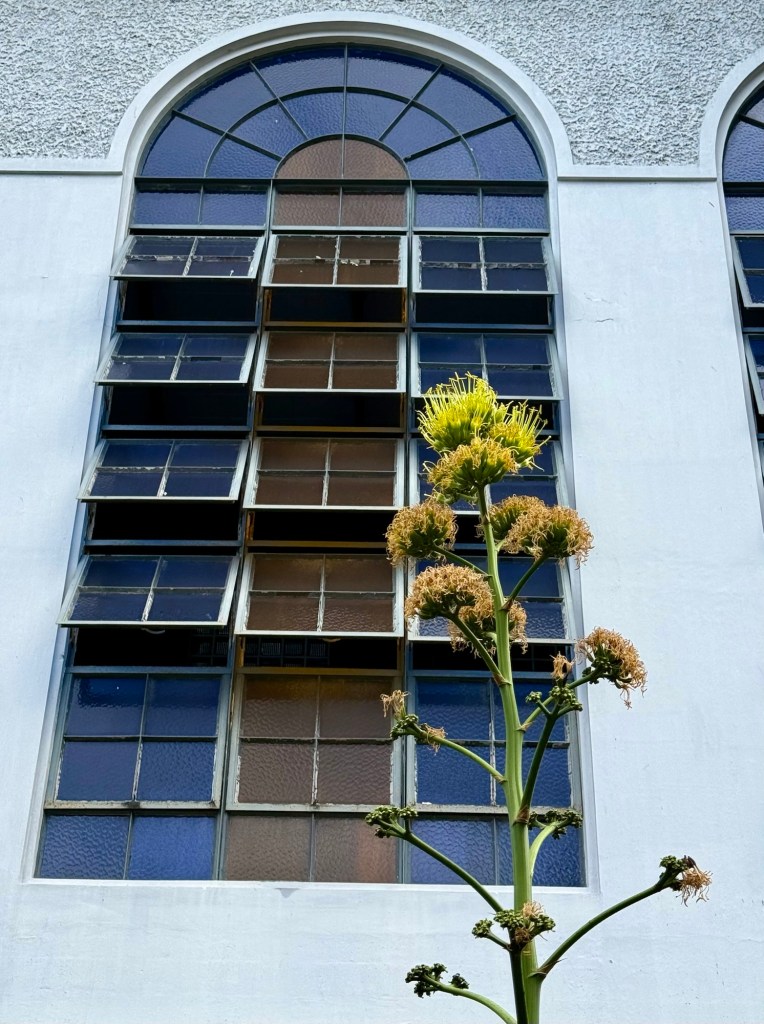
That is why every prophet in the Bible including our Lord Jesus Christ frequented the desert and wilderness to show their intimacy and communion with God. The desert is thus transformed into a greenery filled with life like what Isaiah prophesied in the first reading today:

The desert and the parched land will exult; the steppe will rejoice and bloom. They will bloom with abundant flowers, and rejoice with joyful song. The glory of Lebanon will be given them, the splendor of Carmel and Sharon; they will see the glory of the Lord, the splendor of our God… Then will the eyes of the blind be opened, the ears of the deaf be cleared; then will the lame leap like a stag, then the tongue of the dumb will sing (Isaiah 35:1-2, 5-6).

Photo by Walid Ahmad on Pexels.com

See now the transformations found in our readings: in the last two Sundays we heard Isaiah speaking of the dried and barren desert but today he spoke of its transformation into a lush and verdant stretch of land; in the gospel we find John still in the desert, firm and unchanging in his preaching though his situation had changed a lot.

Last Sunday John was freely proclaiming the coming of the Christ in the desert as he sternly warned the Pharisees and Sadducees of their judgment; this Sunday, John was still in the desert but imprisoned awaiting death when he reproached King Herod in taking his brother Philip’s wife Herodias. But despite that clear danger daily hanging on his head, John was not disturbed at all as he patiently awaited the coming of the Messiah that he sent emissaries to Jesus to ask if he is already the Christ.

Here we find something so human in John the Baptist, so much like us when we sort of doubt ourselves not because we lack faith but simply we just want to be sure of what we are hearing, what we have seen, of what God is really doing.

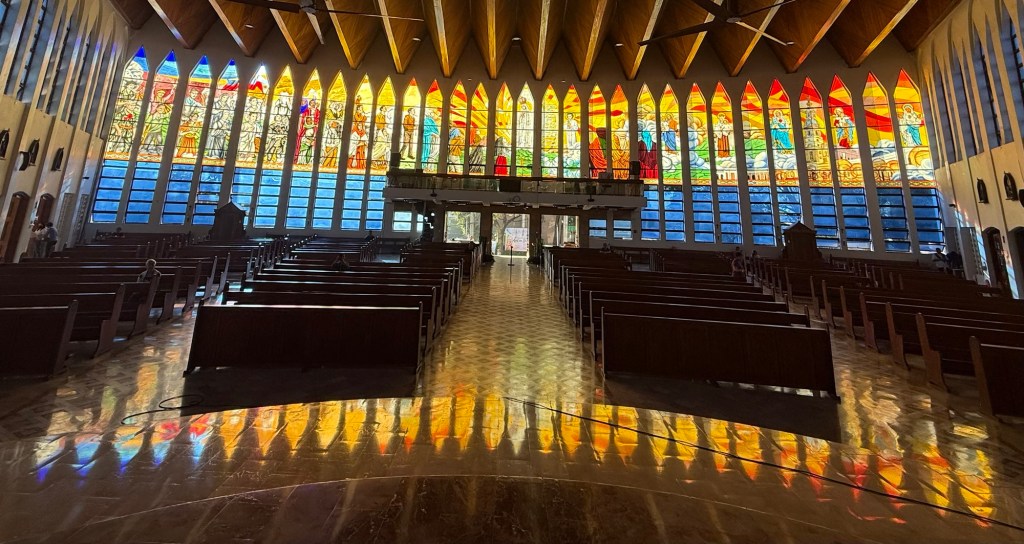
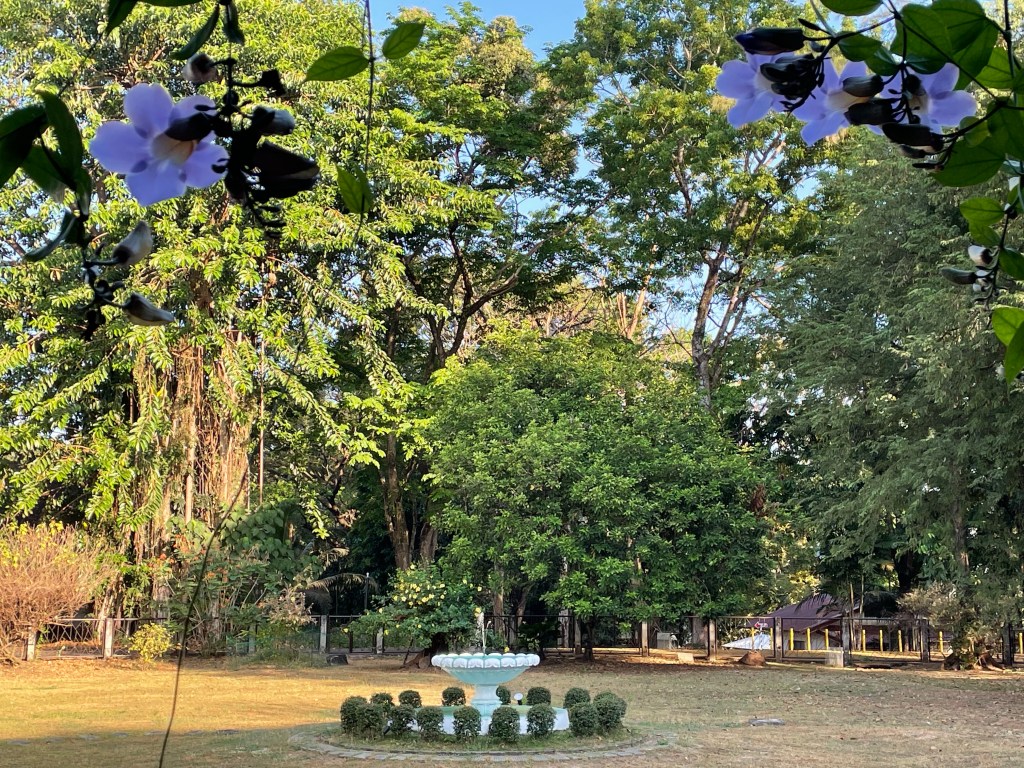
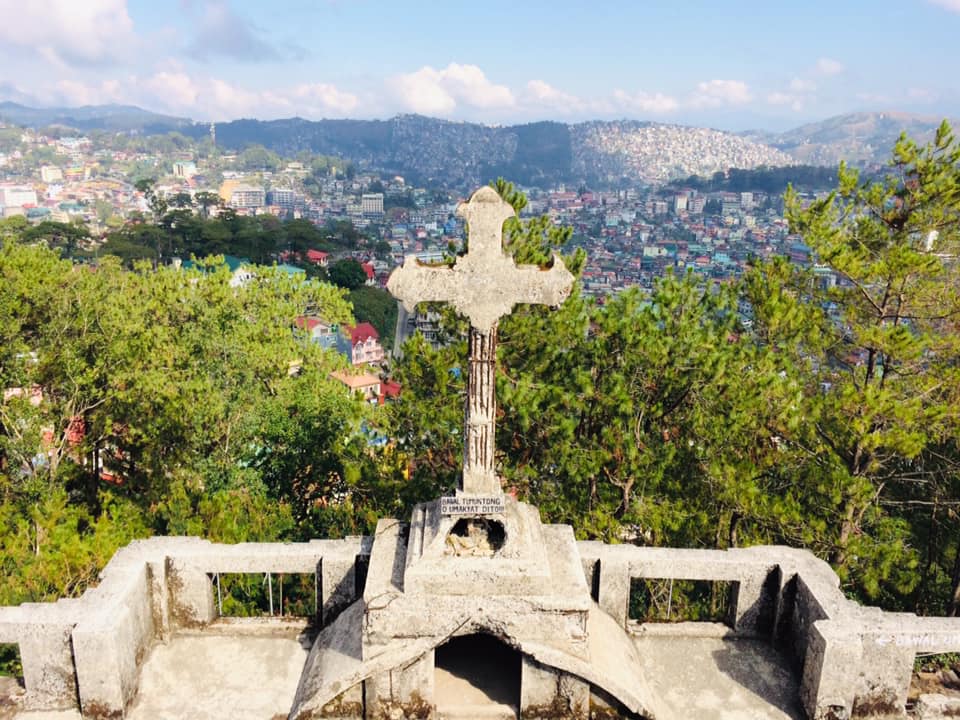
Photo by author, December 2021.

Let it be clear: like John, most often we doubt ourselves not really God when things happen not according to our plans or expectations. Inasmuch as life is a mystery, God is more mysterious! Most of the time, we cannot understand his ways because he moves so differently, even unpredictably from what we know and expect.

Perhaps, John had a different scenario in his mind about the arrival of the Messiah like in the Old Testament tradition of judgment day, of action-packed events punishing evil people. Recall how called the Pharisees and Sadducees “You brood of vipers…Even now the ax lies at the root of the trees. Therefore every tree that does not bear good fruit will be cut down and thrown into the fire (Mt.3:10). 

But something totally different was happening at that time as he heard while in prison – many people and their lives were being transformed. John realized something deeper than expected was going on in Judea and Galilee. And when his emissaries relayed to him the reply of Jesus, John realized that indeed the Christ he was proclaiming had arrived in Jesus. As a prophet well-versed with the scriptures, John found Jesus as the fulfillment of the prophecy by Isaiah when the blind can see, the lame can walk, dead are raised and the good news proclaimed to the poor.

It must have been a Nunc Dimittis experience of Simeon for John that soon enough, he died a martyr ahead of his Lord and Master Jesus Christ. John indeed prepared the way of the Lord in his birth and in his death, showing us the importance of patience in awaiting Christ and in experiencing the joy in his coming.

Be patient, brothers and sisters, until the coming of the Lord. See how the farmer waits for the precious fruit of the earth, being patient with it until it receives the early an the late rains. You too must be patient. Make your hearts firm, because the coming of the Lord is at hand (James 5:7-8).

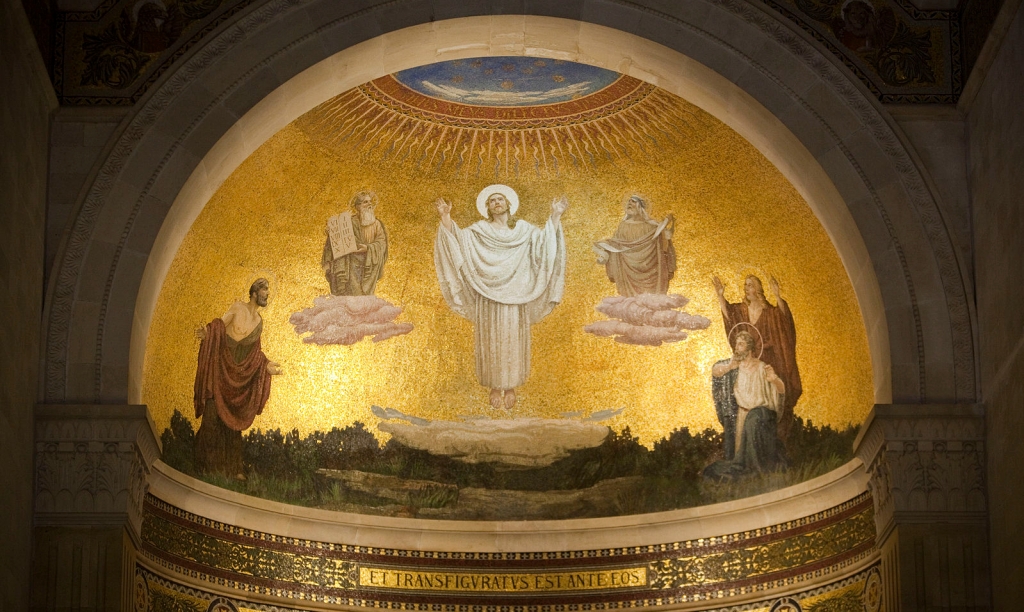
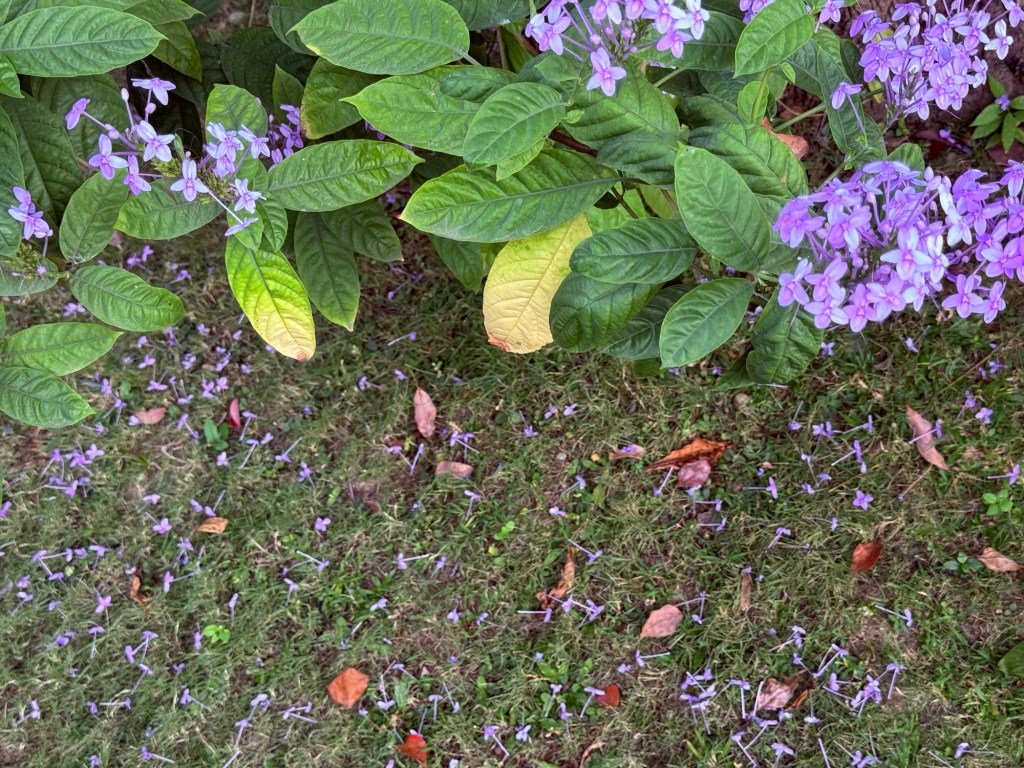
Photo by author, December 2020

Before the COVID pandemic, my brother and I used to rest at Camp John Hay in Baguio where he would buy in one of the shops there a line of local and organic perfumes. His favorite scent was called “Patience” but one time when we went there, it had ran out of stock that he said wryly, “maski ba naman pabango na patience, wala na rin?”

So true! Patience seems to have been almost extinct in this age of instants. Nobody wants to be patient anymore especially if one can have almost everything instantly. Even during the time of the early church, people have been impatient in life that St. James wrote them on the importance of patience in our journey of faith, in awaiting the Lord’s return.

From the Latin word patior that means to suffer, patience is a kind of suffering, of bearing the pain of waiting especially over a long period of time that we doubt if it is still worth the waiting at all. But we fail to “see” or realize as St. James pointed out like the farmer that waiting is never passive nor empty; there is always something wonderful happening that we do not see like the germination, growth and blooming of crops and plants. The more patient we are, the more suffering in waiting, the greater always the joy that comes when our waiting is finally fulfilled!

Advent teaches us this third Sunday that we need to be patient for waiting itself is a holy ground where we experience God’s coming and intimacy. Though patience tests our limits, it transforms us too!

Think of the stalactites and stalagmites in caves formed millions of years by drops of water. Or the great natural wonders of earth that took thousands of years of formation, transformation. Most of all, our very selves. Who we are and what we are today are long years of patient efforts to be healthy or successful or simply be alive. And that’s a great reason to rejoice.

Photo by author, December 2020.

Patience is so difficult to practice like in our daily experiences of horrendous traffic everywhere but with patience, we arrive at our destination. Patience transforms us into better persons and disciples of Jesus, enabling us to rejoice no matter what is the situation we are into. It is in the midst of sufferings and waiting, of patience and impatience that Jesus calls us to experience his silent and steady presence resting upon us like the rains every farmer is so familiar with. Our joy is doubled, becoming a rejoicing when we practice patience in our endeavors, in life itself.

Let me end this reflection with a quotation I memorized as a child on the wall of our former family dentist’s office in Meycauayan, Bulacan that said:

Time is fast for people who rush;
time is slow for people who wait;
time is not for people who love.

The most loving persons are also the most patient ones. Always. And first among them is Jesus Christ who patiently awaits us to return to him so we can experience his joy. Amen. Have a joyful week ahead!

Advent is conversion in the desert

Lord My Chef Sunday Recipe for the Soul by Fr. Nicanor F. Lalog II
Second Sunday in Advent-A, 07 December 2025
Isaiah 11:1-10 ><}}}}*> Romans 15:4-9 ><}}}}*> Matthew 3:1-12
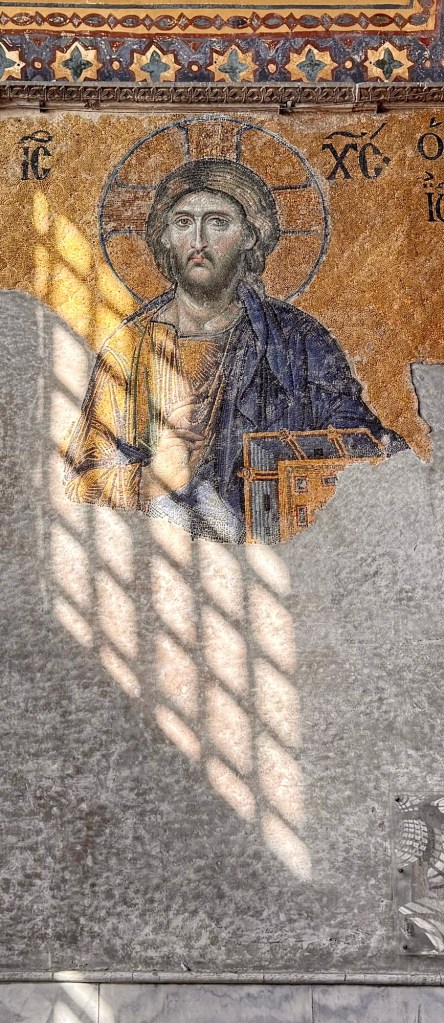
Photo by author, The Deesis Mosaic in the Hagia Sophia, Istanbul, Turkiye, 01 November 2025.

A few weeks before the Holy Father visited Turkiye recently, we were also in Istanbul and had the great chance of visiting the magnificent Hagia Sophia. And we wonder why Pope Leo XIV skipped the more historical and popular Hagia Sophia to visit instead the Blue Mosque just across.

The Hagia Sophia or “Holy Wisdom” was the largest church in the Eastern Roman Empire when Istanbul was called Constantinople until the Ottoman Turks conquered the city and converted the church into a mosque. More than a hundred years ago when Turkiye became a republic, the government made Hagia Sophia a museum until recently when it was reverted into a mosque again.

My initial feeling when I got inside Hagia Sophia was deep sadness. “Malaking panghihinayang” as in “sayang na sayang” in Filipino because it used to be ours but due to the Great Schism of 1054 when the Eastern Roman Church broke away from Rome, it fell into the hands of the Moslems who made it into a mosque, altering or hiding the many great works of art there that date back to the Byzantine era 1200 to 1400 years ago.

Photo by author, The Deesis Mosaic in the Hagia Sophia, Istanbul, Turkiye, 01 November 2025.

One of its many treasures you might be familiar found in history books and magazines is the “Deesis Mosaic” of Jesus flanked to his left by his Mother Mary and John the Baptist to his right.

From the Greek word “deesis” that means supplication or intercession, the mosaic features Mary and John beseeching Jesus to forgive mankind at his Second Coming. Though the three images have been badly deteriorated due to the elements passing through the window beside it, its beauty remains intact, especially the evocative faces of Mary, Jesus and John.

Seeing it personally, one could feel the pagsusumamo of John the Baptist and Mother Mary expressed in the softness of their face in earnestly asking Jesus to forgive mankind on the day of judgment. And it seems to be working so well as you could feel too the tender compassion of Jesus Christ’s look as he raised his right hand in a blessing position while holding with his other hand a thick book that is perhaps a Bible.

Detail of John the Baptist from the Deesis Mosaic in his abbreviated Greek name Ionnes Prodromos; photo by author, Istanbul, 01 November 2025.

The Deesis Mosaic is very Advent in character because it is about God’s mercy and forgiveness in Christ Jesus at his Second Coming at the end of time.

Here we find how early on in the ancient Church they have been preoccupied in this first aspect of Advent, the Second Coming of Christ at the end of time and of Advent’s essence – our conversion from sins. At the forefront of that call is the Lord’s Precursor, John the Baptist, that is why every second and third Sundays of Advent we hear in the gospel his ministry at Jordan.

John the Baptist appeared, preaching in the desert of Judea and saying, “Repent, for the kingdom of heaven is at hand!” It was of him that the prophet Isaiah had spoken when he said: A voice crying out in the desert, Prepare the way of the Lord, make straight his paths. … At that time Jerusalem, all Judea, and the whole region aroun d the Jordan were going out to him and were being baptized by him in the Jordan River as they acknowledged their sins (Matthew 3:1-3, 5-6).

John the Baptist remains relevant in preparing for the Lord’s coming, whether at the end of time or in preparation for our Christmas celebration. Like him, we are all called to be an Advent person, vigilantly preparing ourselves for Christ’s coming at the end of time that happens in every here and now, right in our own desert in this modern time.

Yes, we are like John the Baptist living in our own desert, a world we describe as a global village wired and connected by the internet yet so apart from each other. Instead of bringing us closer with one another, all these modern inventions have actually grown us more detached from one another like when eating in a fast food. It is so alienating especially for us seniors to be placing our orders on those tall electronic boards programmed for us to order more food and drinks not healthy at all.

Or, take those TNVS or Transport Network Vehicle Services like Grab. We no longer travel in the real sense as we just move to destinations with that desert feeling when inside a Grab car with the driver too far from us passengers in front, following instructions from apps while we at the back sit silently scrolling our phones or pounding a laptop. See also how driving has become going in the wilderness with the horrendous traffic where humans turn into monsters in road rage while machines and CCTVs monitor who’s violating traffic rules and who gets through the RFID.

Photo by author, Basic Education Department Chapel, Our Lady of Fatima University, Valenzuela City, December 2023.

This Second Sunday in Advent, John the Baptist invites us to be aware of the desert we are living into where we have become less personal, less human as we move away from God that we have lost our sense of sin, acting more on impulses without much thinking its effects and consequences.

We think more of ourselves than of God and others, overextending our rights insisting on our ways that actually destroy lives through abortions and gender manipulations. We no longer speak of what is true and good by simply following trends and what is convenient. No more feelings, no more compassion. No more others. No more God nor heaven and eternity.

“St. John the Baptist Preaching in the Wilderness” by German painter Anton Raphael Mengs (1728-1779) from commons.wikimedia.org.

We do not have to dress on camel’s hair nor eat locusts and wild honey like John but simply make a space within us for God and for others.

We would be gravely wrong to think John was only speaking to the people of his time especially to the Pharisees and Sadducees; Matthew wrote his gospel account at that time to nourish the faith of early Christians facing persecutions and many challenges in life like in our own time when it is so tempting to follow the evil ways of the world.

John continues to warn us today of the sure return of the Christ when everyone shall face judgment which is not something to be feared like a sword of Damocles hanging above our heads ready to strike us anytime. It is a call and a demand for concrete actions of conversion, of leaving our sinful ways to follow Christ’s path of holiness.

“Even now the ax lies at the root of the trees. Therefore every tree that does not bear good fruit will be cut down and thrown into the fire. I am baptizing you with water, for repentance, but the one who is coming after me is mightier than I. I am not worthy to carry his sandals. He will baptize you with the Holy Spirit and fire” (Matthew 3:10-11).

Advent assures us of Christ’s Second Coming when he shall purify and renew us to fulfill Isaiah’s prophecy in the first reading when “the wolf shall be a guest of the lamb, the leopard shall lie down with the kid… the calf and young lion shall browse together, with a little child to guide them… the cow and bear shall be neighbors, together their young shall rest, the lion shall eat hay like the ox… the baby shall play by the cobra’s den, and the child lay his hand on the adder’s lair”(Isaiah 11:6-8).

“Peaceable Kingdom”, a painting based on Is.11:1-10 by American Edward Hicks, a Quaker pastor (1780-1849) from wikimedia.org.

As we have reflected last Sunday, every coming of Jesus is a day of judgment but not a catastrophe. It becomes a disaster for those unprepared, living in sin. But for those like John the Baptist, striving to live the gospel amid the desert of this world, Christ’s coming is salvation and peace for Jesus is full of love and compassion and tenderness for his people.

Life is so difficult these days especially when we see our great disparities with the corrupt who simply steal our money and those we call “lumalaban ng patas sa buhay”. Imagine how in our country the world is like a desert, so hostile with the weak and the poor who have to wrestle with 500 pesos – if ever they have – to stretch it for a noche buena on Christmas Eve.

St. Paul reminds us in the second reading that in times like these, we look up to God and his Sacred Words, to keep hoping, trusting and believing in Christ’s coming already happening especially in the Sunday Eucharist. Let us gather together as one community, encouraging each other in Christ like John in Jordan while awaiting the Lord’s coming, rejoicing like the psalmist today who sang, “Justice shall flourish in his time, and fullness of peace forever” (Ps. 72:7). Amen. A blessed Second Week in Advent everyone!

God surely comes

Lord My Chef Sunday Recipe for the Soul, Fr. Nicanor F. Lalog II
First Sunday of Advent-A, 30 November 2025
Isaiah 2:1-5 ><}}}}*> Romans 13:11-14 ><}}}}*> Matthew 24:37-44
Photo by author, the Hagia Sophia, Istanbul, Turkiye, 01 November 2025.

I rarely travel abroad and though I am joyful and grateful for those rare occasions especially through the kindness of some friends, I feel so sad seeing how other countries are doing so well, so good – so unlike us in the Philippines.

After my recent trip to Turkiye and Romania, the more I am convinced I would never experience a better Philippines at least in my lifetime for sure.

Photo by author, Bucharest, Romania, 07 November 2025.

Look at Hong Kong: while firemen were still fighting the blaze in a high-rise housing complex last Wednesday that caused over 120 deaths with scores wounded and missing, authorities have already arrested in less than 24 hours at least three suspects linked with the deadly fires while here in the Philippines, all the key players in the multi-billion peso ghost project scam remain free with some already hiding abroad.

And just as we are about to end November for the merry month of December, the secretary of Trade and Industry came out in the news insanely insisting that anyone with 500 pesos can have a noche buena of ham, spaghetti and fruit salad?! What else can we say but a heavy sigh with OMG…

Sorry for the lamentations. In times like these you really can’t avoid wonder sometimes where is God? Has he forgotten us in the Philippines? So very sad.

Photo by author, Camp John Hay, Baguio City, 01 December 2018.

Oh, by the way, a blessed “Happy New Year” to everyone! We begin this first Sunday of Advent as the new year in our Church calendar.

From the Latin adventus that means “coming” that used to designate the arrival of the Roman emperor in the provinces and colonies of the ancient Roman empire, we have adopted it in the Church as a season of preparing for the coming of the true King of kings, Jesus Christ. Notice how we closed last Sunday our Church calendar with Christ the King and now opens it with preparations for the coming of Christ, the King of kings.

Advent has two aspects: from this Sunday until December 16, all readings and prayers are directed to the Second Coming of Christ or parousia at the end of time; from December 17-24, all prayers and readings shift our attention to look back and reflect at the first coming of Christ in Bethlehem more than 2000 years ago. That is the meaning of the four candles in our Advent wreath.

Photo by author, Basic Education Department Chapel, Our Lady of Fatima University, Valenzuela City, 2021.

Between these Second and First comings of Jesus that Advent prepares us, we celebrate every day Christ’s Third Coming according to St. Bernard of Clairvaux which is the meaning of the very words of the Lord to his disciples then and now as narrated this Sunday by Matthew in the gospel:

Jesus said to this disciples: “As it was in the days of Noah, so it will be at the coming of the Son of Man. In those days before the flood, they were eating and drinking, marrying and giving in marriage, up to the day that Noah entered the ark. They did not know until the flood came and carried them all away. So will it be also at the coming of the Son of Man” (Matthew 24:37-39).

Despite all the negative news we have in the country and from around the world, despite all the darkness and problems we have in our lives, we are still blessed today because Jesus has come, will come again, and always comes. Welcome!

Let us get that feeling therefore on this first Sunday of Advent of having “arrived” to another year of journey in our spiritual life with Matthew as guide every Sunday Mass, praying for God’s grace for us to prepare not only for the Second Coming of Christ at the end of time but most especially for his daily coming to us which could also mean our death.

Jesus comes every day and therefore, every day is judgment day.

But it does not mean catastrophe because Christ’s coming at the end of time is about our attitude in living as he pointed out to his disciples during the days of Noah. Jesus comes in the most ordinary circumstances without us even knowing at all that it could be the end just like when the floods came after Noah’s family have entered and locked the ark.

It is not being morbid nor pessimistic in life. We know for sure death’s certainty except its precise moment. Death is not something to be afraid of but something we have to prepare for as it leads us to eternal life in God. It is scary for those not living life fully in God. To meet Jesus Christ is to live fully and authentically, to find life’s meaning in him not in things. How sad that many people these days live superficially without any qualms at all about God and spirituality and morality. More sad is the fact that many practically live their lives in social media without even knowing it at all! Observe what we post, the language we speak, our line of thoughts that are all influenced by media. Reflect on the great amounts of screen time we make daily and weekly that eat up our very existence!

Photo by author, 2019.

Advent is the season of vigilance, of being awake. Jesus reminds us today never to doubt his coming for he surely comes. If we are negligent, we end in disaster and catastrophe like in his example:

“Two men will be out in the field; one will be taken, and one will be left. Two women will be grinding at the mill; one will be taken, and one will be left. Therefore, stay awake! For you do not know on which day your Lord will come” (Matthew 24:40-42).

The prophet Isaiah tells us in the first reading how the coming of the Messiah is so sure that it does not depend in the vagaries of history because our God is the God of history himself. He fulfills his promises according to his plans, not according to man’s designs and manipulations. Despite the many wars and natural calamities the world has experienced in history, Jesus had come and keeps on coming. How foolish governments spend billions of dollars and countless hours studying how to find life in outer space while working on how to annihilate each other, destroy life at its weakest moments of infancy and old age while forgetting the hungry and dying among us. If we could just open our minds and our hearts to Christ’s daily coming then we fulfill Isaiah’s prophecy, “They shall beat their swords into plowshares and their spears into pruning hooks” (Is.2:4).

Photo by author, 2018.

This can only happen when we recognize every here and now, every present moment as Christ’s coming that is already taking place in our midst as St. Paul reminds us in the second reading, “For our salvation is nearer now than when we first believed; the night is advanced, the day is at hand. Let us then throw off the works of darkness and put on the armor of light” (Rom. 13:11-12).

Aside from preparing for our salvation that happens in Christ’s coming, Advent is also the season when we are called to share the light of Jesus to those in darkness. This early, so many malls, offices and homes have already put up with their colorful Christmas decorations like lanterns and Christmas trees. May we not forget to share most of all the light of Jesus Christ that brings joy and peace from our firm faith, fervent hope and unceasing charity and love especially when times are dark and rough for that is when the Lord truly comes. Amen. A blessed Advent season to everyone!

Christ the King, the face of suffering

Lord My Chef Sunday Recipe for the Soul, 23 November 2025
Solemnity of Christ the King, Cycle C
2 Samuel 5:1-3 ><}}}}*> Colossians 1:12-20 ><}}}}*> Luke 23:35-43

I was teasing our campus ministry head for communication last Tuesday after he had presented to me this announcement for our Christ the King celebration today. “Para namang malnourished si Jesus diyan,” I told Darwin as he scratched his head laughing during our meeting.

But, that evening after praying our gospel, I changed my mind the following Wednesday and told Darwin to go ahead with his original artwork because I have realized that the face of Christ the King is also the face of us suffering.

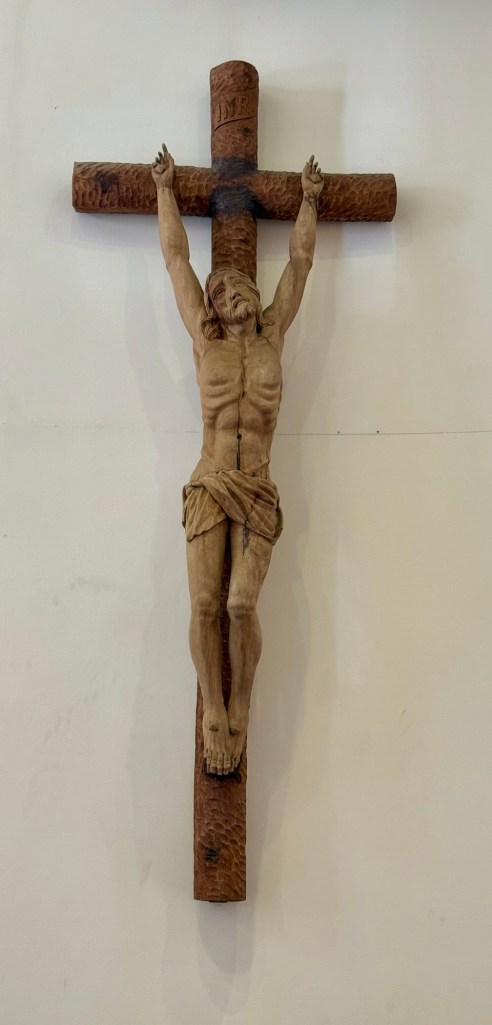
Photo by author, Holy Monday, 2025.

Are you not surprised that on this final Sunday of the liturgical year, we are not presented with an image of a victorious Jesus like that Cristo Rey found in every Catholic home but the gospel scene of Jesus suffering in excruciating pain there on the Cross on Good Friday?

Above him there was an inscription that read, “This is the King of the Jews.” Now one of the criminals hanging there reviled Jesus, saying, “Are you not the Christ? Save yourself and us.” The other, however, rebuking him, said in reply, “Have you no fear of God, for you are subject to the same condemnation? And indeed, we have been condemned justly, for the sentence we received corresponds to our crimes, but this man has done nothing criminal.” Then he said, “Jesus, remember me when you come into your kingdom.” He replied to him, “Amen, I say to you, today you will be with me in Paradise” (Luke 23:38-43).

Photo by author, Chapel of St. Francis Xavier, Sacred Heart Novitiate, Quezon City, 2024.

On this Solemnity of Christ the King, St. Luke invites us for the last time we hear his gospel this year to look at the face and into the eyes of Jesus crucified.

What do you see and feel in him?

Ever wondered what the rulers and soldiers saw on the face of Jesus crucified that they sneered and jeered him from below? They were so filled with pride in finally putting into shame and silence Jesus who had always spoken the truth and exposed their lies and hypocrisies.

What do we see when people are put on the spot and shamed like Jesus crucified or like the woman caught committing adultery Jesus forgave and saved from being stoned by the angry crowd? So sad that in this age of social media, public trials and condemnation have become a hobby for many without even checking the accusations are true or not.

Let us move closer to Jesus on the Cross like those two thieves hanging at each of his side: what do you see and feel about him?

Why did the other thief join those below in deriding and insulting Jesus crucified? Now one of the criminals hanging there reviled Jesus, saying, “Are you not the Christ? Save yourself and us” (Lk.23:39).

Have you ever found yourself in the ER or waiting for your turn at the doctor’s clinic with other patients also in pain and suffering? How do you see the other patients and sick people like you? Is there in your mind any tinge of suspicion why or how they got sick? The best and the worst in us come out in such times when we are so down beside another suffering brother or sister.

Or, do we choose the path of humility and sincerity of Dimas, the good thief? What did he see in Jesus there on the Cross? The other, however, rebuking him, said in reply, “Have you no fear of God, for you are subject to the same condemnation? And indeed, we have been condemned justly, for the sentence we received corresponds to our crimes, but this man has done nothing criminal” (Lk.23:40-41).

Most likely, Dimas must have heard a lot about the teachings and healings by Jesus but he felt something so unique and liberating, so personal during those dark moments of excruciating pains when he finally recognized Christ his Savior, the only true King that is why he asked to be remembered in his kingdom!

Finally, somebody greater than him there beside him, saying nothing to judge nor condemn him nor irritate him like his fellow criminal at the other side. In recognizing Jesus, Dimas also found himself as truly human, weak and finite who can only be whole and complete – saved and redeemed – in Christ who chose to be there on the Cross with him exactly as St. Paul had written in our second reading.

He is before all thing, and in him all things hold together. He is the beginning, the firstborn from the dead, that in all things he himself might be preeminent. For in him all the fullness was pleased to dwell, and through him reconcile all things for him, making peace by the blood of his cross through him, whether those on earth or those in heaven (Colossians 1:17, 18-20).

Photo by author, St. Scholastica Spirituality Center, Baguio City, August 2023.

Here we find the beauty of the Cross, of how God so perfect without any need to suffer and experience pain yet chose to go through it to express his solidarity and love for us humans.

It is on the cross when we are most able to identify and be one in Jesus Christ. That is why it is also on the Cross that we enter heaven with Jesus amid suffering and death. Jesus said today you shall be with me in Paradise – not later when we die or after three days at Easter. How lovely that Jesus never promised heaven when he was strong and freely moving around but when he was there on the cross, nailed and dying.

Jesus Christ is the King of the Universe not because of his powers and might but primarily of his being one of us in sufferings and death. It was the very feeling the tribes of Israel were telling David when they came to him in Hebron to reaffirm their allegiance to him as their king, “Here we are, your bone and your flesh” (2 Sm. 5:1).

The people we admire most are not always the best nor most powerful nor talented because often we envy them. On the other hand, we are more drawn with those down and burdened because we see in them our own brokenness, too, that it is part of life and of being human. That is why we easily empathize with those grieving or sad than with those happy or rejoicing.

Our humanity reaches its highest point and beauty when broken and weak as we realize our mortality and similarity with others in suffering needing for a Savior. We are most inhuman whenever we enjoy inflicting or causing pains on others or when rejoicing in their agonies. To proclaim Christ is the King of the Universe is to always see him in our sufferings and among those suffering too like us. Amen. A blessed week ahead of you!

Every ending a beginning

Lord My Chef Sunday Recipe for the Soul, 16 November 2025
Thirty-Third Sunday in Ordinary Time, Cycle C
Malachi 3:19-20 >><}}}}*> 2 Thessalonians 3:7-12 ><}}}}*> Luke 21:5-19
Photo by author, Bosphrus Strait, Istanbul, Turkiye, 02 November 2025.

We are now in the penultimate Sunday of our church calendar that is why our readings remind us of the Lord’s Second Coming at the end of the world.

While some people were speaking about how the temple was adorned with costly stones and votive offerings, Jesus said, “All that you see here – the days will come when there will not be left a stone upon another stone that will not be thrown down.” Then they asked him, “Teacher, when will this happen? And what sign will there be when all these things are about to happen?” He answered, “See that you not be deceived, for many will come in my name, saying, ‘I am he,’ and ‘The time has come.’ Do not follow them. When you hear of wars and insurrections, do not be terrified; for such things must happen first, but it will not immediately be the end” (Luke 21:5-9).

Imagine the scene. See that tinge of humor of Jesus in dousing his disciples with cold water as they marveled at the beauty and magnificence of the Jerusalem Temple only to tell them all shall perish. It reminded me of our recent pilgrimage to the home of the Blessed Mother and St. John the Beloved in Ephesus, Turkiye recently.

Ephesus was a coastal city in Turkiye founded by the Greek colonists hundreds of years before the birth of Christ and was later annexed by the Romans into their empire. It was a very prosperous city with a huge amphitheater that could seat 24,000 people. During the time of early Christianity, Ephesus was already a major city that is why St. Paul founded a Christian community there whom he later sent a letter now part of the New Testament. It was also in that city where the Church held its Council of Ephesus in the fifth century that defined Mary as the Mother of God because Jesus remained true God and true Man in his conception and birth.

Photo by author, original marble stone floors of Ephesus.

But, everything is now in ruins after Ephesus was overran by barbarians in year 600 and struck by massive earthquakes through the following years that literally pushed it farther away from the sea. Almost abandoned except for some locals selling good to tourists and pilgrims who come to visit this lovely ancient city designated in 2015 as a UNESCO World Heritage Site.

Jerusalem suffered the same fate minus the earthquakes that have kept it inhabited for thousands of years when it fell into the hands of the Romans in year 70AD, then to the Moslems and other invaders until 1948 when the state of Israel declared independence from British Mandate.

Countries and cities come and go along with their civilizations due to varied reasons. It is the normal course of life. This is what Jesus was trying to tell his disciples and us today with the destruction of the Jerusalem Temple.

But of course, there was more.

Christ’s coming is not a spectacle like a show that the world is so addicted with; Christ’s coming is a presence felt and experienced day in, day out right in our hearts. It is a movement of grace upon grace within our very selves that often go unnoticed because we are so obsessed with physical things seen and heard. Jesus reminds us to see beyond, to have vision not just sight. To pray more, to feel more of God, of his truth and justice not only in ourselves but also in others by witnessing his gospel more than ever.

Earthquake survivor Jesiel Malinao sits beside the coffins of her two sons on Thursday, Oct. 2, 2025 after a strong earthquake on Tuesday caused a landslide that toppled their hillside homes in Bogo city, Cebu Province, Central Philippines. (AP Photo/Aaron Favila)

This Sunday is designated by the Church as World Day of the Poor who are the ones who suffer most during calamities and man-made disasters as well as conflicts that abound where the powerful play and manipulate peoples for their own selfish ends.

For the poor, every day seems an end – last meal, last breath, last hope. For the poor, living is more of survival because so many of us have not only forgotten them but have totally disregarded them. They are the ones often used and fooled by the powerful like the corrupt politicians with some masquerading as religious leaders like in the aftermath of the ghost-project scam. See how those involved are now playing victims, diverting attention and misleading many of the poor with their calls for transparency and good-governance. It is to them that the words of Jesus are directed today – “Do not be deceived… Do not follow them!”

Let us heed the calls of Abp. Soc Villegas of Lingayen-Dagupan for us to be guided by “wisdom, vigilance, and virtue” in these times when our nation is deeply in crisis in almost every aspect of life. Here we find in the warnings and reminders of Jesus that the end of time with its destruction is not something we have to resign ourselves with. We have to take a more active role to play in the course of history by making the right choices always.

Photo by author, Cantacuzino Castle, Romania, 06 November 2025.

And that is choosing Christ by being truthful, just, and charitable.

These are the calls of the Prophet Malachi and St. Paul in the first and second readings respectively today. For them, every day is the day of the Lord, a day of salvation, a day of thanksgiving. It is not a call for alarm nor cause us to fear but a call for active waiting for the Lord wherein we must remain responsible with our duties as followers of Christ, not falling into doubts and discouragement especially when things are getting rough and tough. These are precisely what the Psalms speak too this Sunday:

Let the sea and what fills it resound, the world and those who dwell in it; let the rivers clap their hands, the mountains shout with them for joy (Psalm 98:7-8).

To let the rivers clap their hands, the mountains shout with them for joy is for us to witness Christ, to give testimony to him and his gospel. Nothing is permanent in this world and life except God. As such, every ending is also a beginning in God. We are not only preparing for the end but also embarking on a new journey in Jesus we must persevere to follow especially in this time of our nation’s history to secure our lives and better future for the next generation.

Our liturgical calendar is about to end next Sunday with the Solemnity of Christ the King; like our Psalm, we embark this Sunday on a new journey in Jesus by witnessing his presence in this world so confused, so noisy, so dark. Amen. Have a blessed week ahead and keep cool! Fr. Nicanor F. Lalog II, Our Lady of Fatima University, Valenzuela City.

Photo by author, Bucharest, Romania, 05 November 2025.

Pride of Place

Lord My Chef Sunday Recipe for the Soul, 26 October 2025
Thirtieth Sunday in Ordinary Time, Cycle C
Sirach 35:12-14, 16-18 ><}}}}*> 2 Timothy 4:6-8, 16-18 ><}}}}*> Luke 18:9-14
Photo by author, Alberione Center, Araneta Ave., QC, 11 September 2025.

We got our inspiration anew for this Sunday’s reflection from the blog of Sr. Renee Yann, RSM whom we follow at WordPress (https://lavishmercy.com/2025/10/18/pride-of-place-2/). Her blogs are so wonderfully written with reflections so deep, inspiring and uplifting.

In her recent blog, Sr. Renee tells of their parishioner they fondly called “Mamie” who sat on the same seat in their church they called “Pride of Place” for forty years until her death. And for a good reason. Despite her many trials and sufferings in life, Mamie never failed in helping those in need in their community.

Photo by author, Carmel of the Holy Family Monastery, Guiguinto, Bulacan, 25 September 2025.

As told by Sr. Renee’s dad, Mamie had always sat in the same pew through the Depression as she struggled to keep her grocery opened; after the death of her husband in an accident, Mamie never missed their Sunday Masses seated at the same spot – in fact, she was at the same pew on a Sunday Mass when her son was killed at Pearl Harbor. It was actually their community who “proudly awarded” the seat as a “pride of place” to Mamie following her life of Christian witnessing.

“Pride of Place” isn’t always something physical like a pew in church. More often it’s a moral or spiritual position that’s granted to us by others after we pay moral dues. These dues include trustworthiness, sacrifice, contribution, and wisdom…“Pride of Place” doesn’t come automatically with power or position.  It comes with respect. Unfortunately, not every parent, boss, teacher, pastor, elder, president, or champion deserves it.  It must be earned and kept as a trust. (https://lavishmercy.com/2025/10/18/pride-of-place-2/).

The story reminded me of our own “pride of place” in the church, of people always occupying the same pew or spot during the Mass that they are amazed how we priests get to know them simply with their “seating arrangement” like their coming late or being absent!

Photo by author, Carmel of the Holy Family Monastery, Guiguinto, Bulacan, 25 September 2025.

But, what struck me most with Sr. Renee’s piece is the spiritual meaning of “pride of place” which refers actually not to where we sit but where we stand. That standing is more than physical but spiritual and moral in nature. Where we stand is about our stance or conviction not only on issues but about our faith and relationship with God expressed in our dealings with others exactly what our gospel tells us this Sunday.

“Two people went to the temple area to pray; one was a Pharisee and the other was a tax collector. The Pharisee took up his position and spoke this prayer to himself, ‘O God, I thank you that I am not like the rest of humanity — greedy, dishonest, adulterous —- or even like this tax collector. I fast twice a week, and I pay tithes on my whole income.’ But the tax collector stood off at a distance and would not even raise his eyes to heaven but beat his breast and prayed, ‘O God, be merciful to me a sinner.’ I tell you, the latter went home justified, not the former; for whomever exalts himself will be humbled, and the one who humbles himself will be exalted” (Luke 18:10-14).

Painting by French artist James Tissot, “The Pharisee and the Tax Collector” (1886-1894) from commons.wikimedia.org.

For the second straight Sunday, we hear another teaching of Jesus about faith expressed in prayers in another parable only Luke has.

Last Sunday we reflected that to persist in prayer is not about wearing God down but of allowing our hearts to clarify our desires until we silently surrender to what God knows is best for us which is salvation or “justification”. See how we find that word again – justified – as the key to this parable at its end when Jesus declared that it was the prayer of the publican that was heard for “he went home justified”.

The object of every prayer is God because prayer is a relationship, not just a ritual. To be filled with God is what holiness is, not being sinless. In fact, holiness is finding our sinfulness before God. And that is the essence of our parable this Sunday.

That is why Jesus directs our attention in the “where” when we pray – not just the location when we pray but our “place” in that relationship with God who is our very foundation. When all we see is our self in prayer like in any relationship, it means it is a monologue, a one-way street. Worst, it is an indication of the absence of God, even of others because the pray-er is so preoccupied with his or her very self!

Photo by the author at the Wall of Jerusalem, May 2017.

The Pharisee was clearly not in God even if he were in front of the temple. His very self was very far from God and all he had was his bloated ego. He may be a very pious person but not really good at all for he has no space for God and for others. He is a very closed man without any room for others. Remember, Luke said that “Jesus addressed this parable to those who were convinced of their own righteousness and despised everyone else” (Lk.18:9).

The tax collector, on the other hand, may be physically far outside the temple but was the one actually nearest to God with his self-acceptance and admission of sins, of his need for God. He was closest to God because he was more open with God and with others by admitting his true self.

Prayer is more than entering a church or a prayer room, or finding our most suitable spot or space to pray. Prayer is being one with God, one in God. Prayer is losing our very self in God. The question now is, “where are we when we pray?

I have always loved this photo by friend from GMANews, Ms. JJ Jimeno who took this while she was praying inside the UP-Diliman Adoration Chapel in May 2019; she aptly captioned it as “losing one’s head in prayer.” True!

First, we become one with God in prayer when we admit our sinfulness, when we confess our sins to him, and own them without any “ifs” and “buts”. God always comes to those who truly open themselves to him by emptying themselves of their sins and inadequacies.

The tax collector was justified in his prayer more than the Pharisee because in confessing his sins, he admitted his need for God. He knew very well his place, so unlike the Pharisee who felt God owes him so much!

Second, we are in God in prayer when we are humble and have the conviction to leave everything behind and go down with God into the lowest point because one is so confident of the efficacy of prayer like what Ben Sirach tells us in the first reading.

The one who serves God willingly is heard; his petition reaches the heaven. The prayer of the lowly pierces the clouds; it does not rest till it reaches its goal (Sirach 35:16-17).

Most often in life, friendships and relationships are kept when we are willing to take the lower stance, not necessarily admitting fault or guilt in any misunderstanding because being lowly indicates the person’s need for the other person and of one’s love to work on that relationship despite its fragility. I tell couples that when they quarrel, the first who must first make the move to greet the other person is not the guilty one but the one with most love and self to give.

Third, we are in God in prayer when there is an offering daily of one’s self to God. It is not enough to be lowly and sorry for our sins in prayer. It has to be sustained because prayer is a discipline like any sport as St. Paul tells us in the second reading, calling us to persevere and endure until the end for Jesus Christ “who shall award us with the crown of righteousness in heaven.”

We are all sinners forgiven and beloved by God. When we find our right place in God in prayer, then we also find him. And meet him. Amen. Have a blessed week ahead into November! Fr. Nicanor F. Lalog II, Our Lady of Fatima University, Valenzuela City (lordmychef@gmail.com)

Photo by author, Carmel of the Holy Family Monastery, Guiguinto, Bulacan, 25 September 2025.

Prayer is what “the Lord said”

Lord My Chef Sunday Recipe for the Soul, 19 October 2025
Twenty-Ninth Sunday in Ordinary Time, Cycle C
Exodus 17:8-13 ><))))*> 2 Timothy 3:14-4:2 ><))))*> Luke 18:1-8
Photo by author, sunrise at Camp John Hay, Baguio City, November 2018.

There are just five more weeks remaining in our current liturgical calendar and soon after the Solemnity of Christ the King on November 23, we shall usher in the new year with the season of Advent on November 30 – the four Sundays before Christmas.

That is why today and next Sunday, as Jesus nears Jerusalem Luke tells us more teachings of the Lord about prayer not found in other gospel accounts, namely, the parables of the unjust judge and persistent widow, and the Pharisee and the tax collector.

Remember that prayer is so central in the message of Luke in his gospel account as well as in the Acts of the Apostles wherein we see Jesus and the early Church always at prayer. For Luke, prayer is more of a relationship with God than a ritual, an expression of our faith in God. Hence, the need to persist in prayer like that widow in today’s parable by Jesus.

Jesus told his disciples a parable about the necessity for them to pray always without becoming weary. He said, “There was a judge in a certain town who neither feared God nor respected any human being. And a widow in that town used to come to him and say, ‘Render a just decision for me against my adversary.’ For a long time the judge was unwilling, but eventually he thought…’because this widow keeps bothering me I shall deliver a just decision for her lest she finally come and strike me.'” (Luke 18:1-5).

Photo by author, Our Lady of Lourdes Chapel, Baguio City, 2019.

While we are all very familiar with this parable, one thing needs to be clarified: many times we are indeed “persistent” in our prayers like that widow in the Lord’s parable but after a long time of praying, we wonder, even doubt God as nothing seems to happen to our prayers that remain unanswered.

So, what is to persist in prayer like that widow in the Lord’s parable?

The answer lies not entirely in the parable but in the conclusion by Jesus as presented by Luke:

The Lord said, “Pay attention to what the dishonest judge says. Will not God then secure the rights of his chosen ones who call out to him day and night? Will he be slow to answer them? I tell you, he will see to it that justice is done for them speedily. But when the Son of Man comes, will he find faith on earth?” (Luke 18:6-8)

We reflected last Sunday in the healing of the ten lepers that faith is a relationship expressed when we are grateful to God who blesses us as shown by the Samaritan leper healed. This Sunday, Luke deepens that truth that prayer is an expression of faith when he called Jesus as “Lord” at the conclusion of the parable.

Photo from https://freebibleimages.org/photos/persistent-widow/
The Lord said...

First, we notice him telling us how “The Lord said”. Luke did not simply use his usual style of narration of “Jesus said” because in using the title “Lord”, he gives a solemn tone to the declaration by Jesus at the end of the parable where its lesson actually lies.

Moreover, it is the title “Lord” is what the disciples attributed to the Resurrected Christ; to call Jesus as “Lord” is to have complete faith in him.

Painting of “Parable of the Unjust Judge” by Pieter de Greber (1628) from Web Gallery of Art, http://www.wga.hu.

Second, when Luke wrote “The Lord said” in the conclusion of the parable, he was introducing a revelation to which we must all “pay attention” as the Lord demanded his listeners then. God is more than that unjust judge in the parable because as the Lord said, “he will see to it that justice is done for them speedily.”

Actually, the parable is not about praying unceasingly or persistently to obtain one’s favor because “the Lord said” God does not wait for his “chosen ones who call out to him day and night”; recall how Jesus had said in many instances that even before we ask God in prayers, he already knew what we needed. God is always speaking to us and we merely respond to him when we pray. That is why every time we pray, our prayer is already answered because we have responded to God. But, have we really listened to God in our prayers? This leads us to the important teaching of the Gospel this Sunday.

Third, the most important teaching in that conclusion of the parable of the persistent widow and unjust judge, Jesus our Lord teaches us that God does not only give justice but actually “does justice speedily” or swiftly.

“To do justice” in the Bible means more than rendering a fair judgment like in our courts; in fact, it means differently because “to do justice” biblically means “to justify”, “to renew”, and “to save” as Paul used extensively in his letters.

Therefore, to pray persistently is primarily to pray to be saved or justified. The main lesson of today’s parable is still faith – faith in God who saves us; faith in Jesus Christ our Lord who will come again to lead us to eternal life; and faith that must be reawakened in us always because without it, we cannot find salvation in God nor meaning in this life.

Photo from https://freebibleimages.org/photos/persistent-widow/

We pray not just to have things which God always knows so well even before we ask him. But, why still pray if God knows what we need? Because we do not know what God needs from us which is to pray always for him, to have him because he is our life, our salvation.

That is why we must persist in prayer and never lose heart because the moment we stop praying, the more we get discouraged in life, then we start doubting God and his love for us, his powers and beautiful plans for us. When this happens, everything falls and we alone suffer and lost.

Hence, the Lord’s challenge to each one of us today with his question at the end of the lesson of his parable, “But when the Son of Man comes, will he find faith on earth?”

To persist in prayer is not about wearing God down but of allowing our hearts to clarify our desires until we silently surrender to what God knows is best for us which is salvation, to be with him in eternity.

Since Jesus journeyed to Jerusalem, that has always been the most frequently asked question to him. And where can we find its answers? Right in the Sacred Scriptures as Paul reminded Timothy in the second reading: “All Scripture is inspired by God and is useful for teaching, for refutation, for correction, and for training in righteousness, so that one who belongs to God may be competent, equipped for every good work” (2Tim.3:16-17).

Photo by Mr. Nicko Timbol, Chapel of the Angel of Peace, OLFU-RISE, Valenzuela City, 03 October 2025.

When we fill ourselves with the Word of God, we are filled with God which is basically what holiness is. That is when we live in deep faith in God when our faith becomes so powerful and transformative because it is aligned with God and his Will as we reflected the other Sunday.

Therefore, to persist in prayers is also to align ourselves with God and his plans and agenda when we can declare like St. Paul that “It is no longer I who lives but Christ in me” (Ga. 2:20). As we have always said, prayer does not change things and situations; prayer changes the person primarily to be like Christ, to be faithful to God always.

Life is difficult, often like a battle with many enemies always attacking us. God is always with us, knows our needs so well but it is still us who shall fight the many battles in this life like the Israelites in the first reading. Without faith and prayer, we cannot fight our many battles in life like the Israelites who prevailed over the stronger forces of Amalek. We can only have the advantage in our many struggles and trials in life when we completely place ourselves under the banner of God in Jesus Christ. Amen. have a prayerful and faithful week ahead, everyone. Fr. Nicanor F. Lalog II, Our Lady of Fatima University, Valenzuela City (lordmychef@gmail.com)

Our Sabbath faith

Lord My Chef Sunday Recipe for the Soul, 12 October 2025
Twenty-Eighth Sunday in Ordinary Time, Cycle C
2 Kings 5:14-17 ><}}}}*> 2 Timothy 2:8-13 ><}}}}*> Luke 17:11-19
Photo by author, view of Israel from Mt. Nebo, Jordan, May 2019.

Our gospel setting this Sunday strikes a deep lasting impression on anyone who had been on a Holy Land pilgrimage: of those vast expanse of desert in Israel where dusty roads have been replaced by modern concrete or asphalted roads.

Perhaps the feelings remain the same today and during the time of Jesus when he and the Twelve were near the border between Samaria and Galilee, several figures who turned out to be ten lepers appeared at a distance, waving their hands to the Lord. It must have been a surprising sight, then and now, of being found in the desert. Imagine the desperation in their voices of those ten lepers, “Jesus, Master! Have pity on us!” (Lk.17:13).

Jesus right away told them to go show themselves to the priests, and as they went, they were healed. But only one—a Samaritan—returned to thank Jesus who wondered aloud: “Ten were cleansed, were they not? Where are the the other nine? Has none but this foreigner returned to give thanks to God?” Then he said to him, “Stand up and go; your faith has saved you” (Lk.17:17-19).

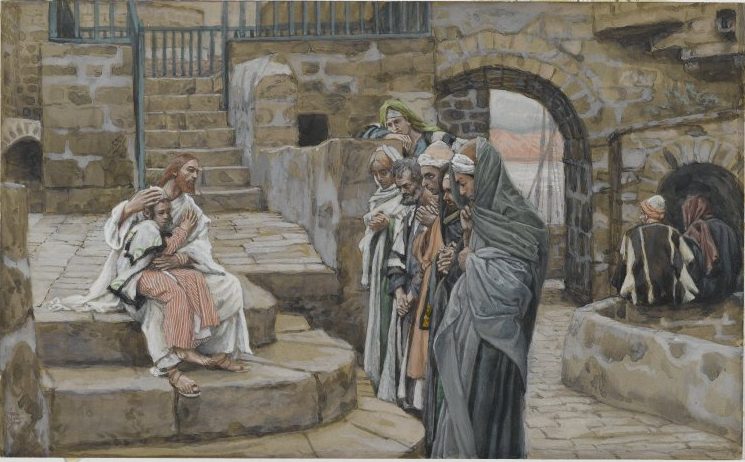
“The Healing of Ten Lepers” painting by James Tissot en.wikipedia.org

Last Sunday we reflected that faith is primarily a relationship with God; hence, its powers or efficacy will work only when aligned with God and his Holy Will. We will never know how strong we have grown in faith until we get into tests and trials. That is why, the need for us to imitate the Twelve in praying to Jesus, “Increase our faith” (Lk.17:5).

We grow best in faith when we worship God with our fellow believers in the celebration of the Holy Mass especially on Sundays which is our Sabbath. More than a day of rest, Sabbath is a day of restoration to God, with others and most of all, with one’s self. It is a return to Eden, a dress rehearsal of our entry into heaven to dwell in God’s presence eternally.

This is where lies the beauty and significance of this healing of ten lepers – they were not only restored to health but restored in God, to their families, and to their community and fellow believers.

Photo by author, Jerusalem, May 2017.

Those ten lepers have never known any rest at all since getting afflicted with the disease for they were cut off from homes, worship, and community. That is why they could not get near Jesus as they have to keep their distance from everyone according to their laws in order to prevent infecting others and spreading the disease. Likewise, it was the very reason that anyone healed of leprosy or any serious sickness must first present themselves to the priests who have the sole authority to declare one has been healed and therefore may be allowed to reintegrate with their family and community or society in general. Being declared as healed of sickness like leprosy at that time meant the restoration of one’s rights to worship in the temple or synagogue especially on Sabbath.

When Jesus healed them, he restored more than just their bodies and physical health. In sending them to the priests, Jesus invited them into the wholeness of what the Sabbath really is like peace, inclusion, and dignity. 

Or, salvation in short.

Sad to say, only one realized this when he returned to thank Jesus. The healed Samaritan leper knew and felt a deeper healing had taken place within him that he responded with heartfelt gratitude to God in Jesus. There was a deepening of his faith in Jesus when he decided to return to thank the Lord that also expressed his desire to enter into a relationship with Jesus.

Photo by author, Sacred Heart Novitiate, Novaliches, QC, 20 March 2025.

Whenever we thank people for their kindness no matter how little that may be, it is more than acknowledging the other person but most of all, of expressing our links with them as well as our desire to be one with them, especially with God who showers us with good things daily. That is why the Mass is also called Eucharist – from the Greek eucharistia meaning “thanksgiving”. After his skin was cleansed of leprosy in the first reading, Naaman the Syrian Army General declared before the Prophet Elisha that he would worship the Lord alone as he returned to his home with two mule-loads of Israeli soil.

Sorry to say but whenever we refuse to celebrate the Mass on Sundays, it means that we are one of those nine ungrateful lepers healed by Jesus! Don’t you feel being called like the Samaritan to return and give thanks to Jesus for the many blessings you have received this Sunday?

See how in this age of faith in a mass-mediated culture that we have become so impersonal, trusting more our gadgets and all those apps like Siri and Waze as if we have already lost faith in the human person. And God.

Photo by Mr. Nicko Timbol, Chapel of the Angel of Peace, OLFU-RISE, Valenzuela City, 03 October 2025.

We spend practically our entire days in front of all kinds of screens than with the face of a human person. Again, this sadly extends to the way we worship with many still stuck in the pandemic mode of online Masses not realizing the important and irreplaceable aspect of personal encounter of Jesus in the actual Mass with other believers.

God remains God even if we do not go to Mass every Sunday. It is us who are losing greatly whenever we skip Sunday Masses, our Sabbath. God specifically made his third commandment to “Remember to keep holy the sabbath day” because Sabbath reminds us that life itself is holy in the first place, a sharing in the life of God. What a tremendous blessing still that even if we forget God or disregard God every Sunday, Paul reminds us today of the beautiful truth and reality that “If we have died with Jesus we shall also live with him; if we persevere we shall also reign with him. But if we deny him he will deny us. If we are unfaithful he remains faithful, for he cannot deny himself” (2Tim.2:11-13).

Can you imagine that? If we are unfaithful to Jesus, he remains faithful?

Every Sunday, Jesus tells us to “Stand up and go; your faith has saved you” despite, in spite of our many sins and absences from the Sunday Masses in the past because he wants us to experience the deeper wholeness that comes with faith and gratitude as experienced by that Samaritan leper he had healed. As we continue to journey with Jesus toward Jerusalem facing many trials and sufferings along the way, he calls us to come to him in the Sunday Mass to deepen our faith by resting in his presence.

Is there a space in your life at this stage that you feel like one of those lepers, longing for healing and restoration? In the silence of this Sabbath day in our Sunday Mass, speak to Jesus especially after receiving him Body and Blood in the Holy Communion. Amen. Have a blessed week ahead! Fr. Nicanor F. Lalog II, Our Lady of Fatima University, Valenzuela City (lordmychef@gmail.com).

Our Lady of Fatima University-Valenzuela, June 2025.

Keeping the faith, our rich treasure

Lord My Chef Sunday Recipe for the Soul, 05 October 2025
Twenty-Seventh Sunday in Ordinary Time, Cycle C
Habakkuk 1:2-3; 2:2-4 ><}}}}*> 2 Timothy 1:6-8, 13-14 ><}}}}*> Luke 17:5-10
Photo by author, San Fernando, Pampanga, 03 October 2025.

With all the news happening in our country made worse by recent calamities, most of us Filipinos can identify these days with the Prophet Habakkuk, crying out the same things to God:

How long, O Lord? I cry for help but you do not listen! I cry out to you, “Violence!” but you do not intervene. Why do you let me see ruin; why must I look at misery? Destruction and violence are before me; there is strife, and clamorous discord (Habakkuk 1:2-3).

The book of Habakkuk does not really tell us the reasons for the prophet’s cries directed to God. But, does it really matter at all why he was crying in pain? Like Habakkuk, we know very well these days what it feels to be like him. There has always been and there will always be many situations in our personal lives and family, nation and even in the Church that provoke us to cry out to God in distress, complaining all the evil happening when he seems to be so far or not interested.

Photo by Mr. Nicko Timbol, Chapel of the Angel of Peace, Our Lady of Fatima University, Valenzuela City, 03 October 2025.

Of course, it is not really the case here for Prophet Habakkuk nor with us. We do not complain and cry to someone who could not do anything to our plight; we cry, we reach out to those we trust and know can help us like family and friends. And God!

We find many of such complete trust and faith in God expressed in cries and laments in the Book of Psalms. Despairing calls, questions and petitions to God in the Psalms do not actually endanger the faith and trust of the believer but actually affirm them. That is why it is always good to pray the Psalms. Our Lord Jesus Christ himself prayed Ps. 22:1 while on the cross, crying out “My God, my God why have you forsaken me?” to express his deep faith in the Father in his darkest moments.

Habakkuk’s cry is very much similar with those found in the Psalms.

Most of all, Habakkuk teaches us today of God’s response to our cries, calling on us to trust him more than ever, in his Word because it shall be fulfilled for “it will not disappoint; it it delays, wait for it, it will surely come, it will not be late. The rash man has no integrity; but the just one, because of his faith, shall live” (Habakkuk 2:3-4).

Photo by author, San Fernando, Pampanga, 03 October 2025.

Keep in mind God’s final words to Habakkuk for it remains true to these days especially when we are going through difficulties and trials in life – “we shall live because of faith in God”! What a beautiful catch phrase especially at this time.

Recall how we never realize how deep and strong our faith is until we have crossed over through life’s many challenges, often without others even knowing what we have gone through. As we go through life, we continue to realize too how imperfect is our faith until our next problems and tests come.

That is why we need to pray daily to Jesus like the Apostles in this Sunday’s gospel, “Increase our faith” (Lk.17:5). See how Jesus explained faith to his Apostles and to us today.

First, Jesus clarified that faith cannot be quantified because its power does not lie in its “amount” that can be increased like torque in motor engine or similar devices for it to be powerful. That is why Jesus explained to the Twelve that “If you have the faith the size of a mustard seed, you would say to this mulberry tree, ‘Be uprooted and planted in the sea,’ and it would obey you” (Lk.17:6). Just a little amount of faith for as long as it is aligned with God and his plans, we can achieve great things in life.

Photo by Mr. Nicko Timbol, Chapel of the Angel of Peace, Our Lady of Fatima University, Valenzuela City, 03 October 2025.

This, however, does not mean that the purpose of faith is to perform wonders which brings us to Christ’s second point about faith – it is a relationship.

Faith is for service, for love and charity that is why it can result into great wonders in our lives. That is why we mentioned earlier of faith being aligned with God, being one in God. It is a gift freely given to each one of us by God for our own good. Hence, even though faith cannot be quantified, its power can be impeded and rendered useless when we are separated from God. That is why Jesus narrated the parable of the “unprofitable servants”:

“Who among you would say to your servant who has just come from plowing or tending sheep in the field, ‘Come here immediately and take your place at table’? Would he not rather say to him, ‘Prepare something for me to eat…You may eat and drink when I am finished’? Is he grateful to the servant because he did what was commanded? So should it be with you. When you have done all you have been commanded, say, ‘We are unprofitable servants; we have done what we were obliged to do'” (Luke 17:7-8, 9-10).

Many will probably find it uncomfortable that faith as a relationship is between servant and master; but, aside from the gospel milieu, it is the reality of our faith in God for we are indeed his servants working for him who is our Lord and Master.

We cannot claim anything for ourselves in this life. Everything is God’s, even our very lives, our body that many today insist as “theirs” to which they can do whatever they want including abort babies. No. We own nothing in this life and we leave everything when we die. What remains are our good works and love that still came from God!

Unlike the masters of the world who think of their own good, God is a faithful Master who thinks only of the good of his servants, of us. He does not impose on us, giving us freedom so as not to force us in doing things but act out of love like him.

Photo by Mr. Nicko Timbol, Chapel of the Angel of Peace, Our Lady of Fatima University, Valenzuela City, 03 October 2025.

Separated from God, we become worthless or useless or unprofitable servants because we find meaning only in him. When we are aligned with God, faithfully obeying his will, we are able to do the seemingly impossible because it is God working in us like forgive those who have broken our trust, love someone so difficult to deal with, relieve hunger with simple acts of kindness, work on justice where the powerful exploit the weak, remain faithful to prayer even when God seems absent. These are all acts of faith that go beyond normal expectations that reveal to us the power of God, of how deep our faith can be. That faith cannot be quantified.

Truly, as God had told Habakkuk, we live because of faith. When crises and problems seem to overwhelm us, it is to God’s faithfulness we turn to with our cries with despairing overtones that are actually expressions of deep faith and trust in him.

From Paul’s letter to Timothy in the second reading this Sunday, we get our thrid point about faith: this gift of faith is our greatest treasure that we must keep and cultivate to grow deeper, to mature in us. It is this gift of faith that gives us the “spirit of power and love and self-control, not cowardice” (2Tm.1:7).

It is faith as our treasure that gives us the reason “to live on, to live for, and to die for” borrowing the thoughts of the late dissident Swiss theologian Hans Kung. It is faith that sets things right inn our lives because as it moves us closer to God, it likewise enables us to recognize others as brothers and sisters in Christ.

Recent turn of events in our country are so frustrating and yes, very tempting to resort to violent means and measures, including speaking and writing all those expletives and curses against the corrupt. It is normal to be angry but, do we have to be cruel and harsh?

Call me conservative or simply because I am a priest – but, that is what I am that is why I am very much against violence and harsh languages in the midst of all these corruption. I never tire telling people we have proven in 1986 that non-violence works. We have to try it again. However, what we missed after EDSA 86 is we separated from God. We thought we could do it our own ways. This Sunday, we are reminded of our greatest treasure as Filipinos, our gift of faith in God. Let us live in this faith in God. After all, these corruption we see and detest started in our homes, in our schools, in our hearts when we separated from God and one another. Amen. Have a blessed week ahead. Fr. Nicanor F. Lalog II, Our Lady of Fatima University, Valenzuela City (lordmychef@gmail.com)

Our Lady of Fatima University Marketing Dept., June 2025.

Be gentle to be in the banquet

Lord My Chef Sunday Recipe for the Soul, 28 September 2025
Twenty-Sixth Sunday in Ordinary Time, Cycle C
Amos 6:1, 4-7 ><}}}}*> 1 Timothy 6:11-16 ><}}}}*> Luke 16:19-31
Photo by author, Carmel of the Holy Family Monastery, Guiguinto, Bulacan, 25 September 2025.

But you, man of God, pursue righteousness, devotion, faith, love, patience, and gentleness (1Timothy 6:11).

How lovely and so apt these days are the qualities Paul required through Timothy every man and woman of God must have. Of the six qualities Paul had cited, I like most “gentleness” which Jesus also asked us to have, “learn from me, for I am meek and gentle ( or humble) of heart” (Mt. 11:29).

From the Greek word prauteis, gentleness implies consideration, meekness, humility, calmness and strength amid adversities and difficulties. True power is expressed kindly and gently, not with harshness. Parents and teachers know this so well as children learn discipline better when authority and power are expressed gently than harshly.

Photo by author, Carmel of the Holy Family Monastery, Guiguinto, Bulacan, 25 September 2025.

Lately we have been sliding towards this kind of arrogance in our anger and frustrations following the wholesale corruption in Congress. Everybody feels the weight and pains of the ghost flood control projects but cursing and wishing death upon the corrupt officials are off bounds because that make us just like Duterte and his followers whose mouths spew expletives and death to their detractors.

Our readings are so timely this Sunday again, calling us to be gentle with one another because eternal life begins in the here and now of our earthly existence. How we live today determines our entrance or not into the eternal banquet of the Lord.

Jesus said to the Pharisees: “There was a rich man who dressed in purple garments and fine linen and dined sumptuosly each day. And lying at his door was a poor man named Lazarus, covered with sores, who would gladly have eaten his fill of the scraps that fell from the rich man’s table. dogs even used to come and lick his sores. When the poor man died, he was carried away by angels to the bosom of Abraham. The rich man also died and was buried, and from the netherworld, where he was in torment, he raised his eyes and saw Abraham far off and Lazarus at his side” (Luke 16:19-23).

Photo by author, Carmel of the Holy Family Monastery, Guiguinto, Bulacan, 25 September 2025.

Our readings continue to pursue that thorny issue of money, of how we use and manage it for God’s greater glory in the service of others not for our shameful selfish interests.

That is why we find Paul’s admonition to Timothy and to us today as men and women of God to be gentle in the midst of too much materialism. In the preceding verses Paul warned Timothy of the dangers of false teachings and the love of riches which he concluded with an exhortation to rely more on God than in wealth in verse 17. It is a timely reminder from over 2000 years ago against this growing trend among us spawned by social media of people flaunting their wealth as if finding their own value as a person in possessions than in their very selves.


Gentleness like Jesus is first of all finding our being’s sacredness. It is an expression of our being loving and charitable because we are children of one loving God we relate with as a Father.

How tragic we no longer see each other’s worth as a person, as an image and likeness of God as we seek more the face of money than the face of God in every person. Pera pera na lang lahat – even in the church, sad to say. Every consideration boils down to money like leadership in church activities or hermanidad in fiestas being reserved for the rich and famous who are always the politicians to whom many priests and bishops have become beholden, consciously or unconsciously. We have too much collections and envelopes that further drive away the poor from celebrating our Sunday Eucharist which is essentially a foretaste of the Lord’s banquet in heaven.

Photo by author, Carmel of the Holy Family Monastery, Guiguinto, Bulacan, 25 September 2025.

Amos continues his tirades against the priests of the temple of his time with their hypocrisies of hiding selfish motives in religious celebrations and practices that sadly continue to this day among us in the church.

Thus says the Lord the God of hosts: “Woe to the complacent of Zion! Lying upon beds of ivory, stretched comfortably on their couches, they eat lambs taken from the flock, and calves from the stall! They drink wine from bowls and anoint themselves with the best oils; yet they are not made ill by the collapse of Joseph!” (Amos 6:1, 4, 6).

That “eating lambs from the flock” and “calves from the stall” are the animals reserved for offering in the temple their priests have taken for themselves while “drinking from bowls” and “anointing with the best oils” harp on our rituals we have taken as our own like commercialization of Masses and sacraments. It is the color of money perfectly described by the purple clothing of the rich man in the parable that pervades us in the church that people no longer see and experience God as they have become so cautious asking about the price or the fees that come with every service we give.

Photo by author, Carmel of the Holy Family Monastery, Guiguinto, Bulacan, 25 September 2025.

Gentleness like Christ is using our power and authority at the service of the poor and disadvantaged, ensuring our Eucharistic banquet is a reflection of the eternal banquet in heaven where everyone is welcomed.

How sad this parable is repeated daily in the church that is why Jesus directed it to the Pharisees, one of the ruling class in the Jewish society at that time associated with temple worship and religion. Though Jesus did not say at all if the rich man is a good person or not, it is very clear that he lacked gentleness in his flamboyance, wearing purple clothes as if screaming to be noticed by everyone as a somebody while everybody is a nobody.

Maybe we should add “nepo Fathers” to the list of nepo babies and nepo wives who flaunt their wealth, looking more like showbiz kids than priests, feeling superstars who are more like entertainers than preachers who relish the tag “influencer” than remain hidden doing the work of Christ. They refuse wearing the proper liturgical vestments due to our tropical climate but would not mind at all wearing signature clothes with their perfumes leaving traces in their favorite stomping grounds like malls and cafes during offs.

Where is our gentleness or concern and consideration for the majority of our people who are poor further pushed out of our churches literally and figuratively speaking simply because we do not smell and look like them our flock of sheep as Pope Francis reminded us early in his pontificate?

Photo by author, Carmel of the Holy Family Monastery, Guiguinto, Bulacan, 25 September 2025.

Gentleness of Jesus is solidarity with the people, especially the poor and suffering who experience being uplifted or empowered in his mere presence so filled with warmth and love.

People understand us priests for being strict even stern-looking but what they find so difficult is when pastors are detached from them, always out of the parish for so many reasons, when priests are selective in their company even having cliques. How sad when priests are unapproachable and indifferent like the rich man who was oblivious to the presence of Lazarus at his door, who never gave him any attention at all while still on earth when in fact, they knew each other as mentioned in the parable after they have both died. Kakilala naman pala niya si Lazaro pero doon na lang sa kabilang buhay siya kinausap at pinansin kung kailan huli na ang lahat.

Pope Francis used to describe the church as a hospital where the sick in body and soul come to find solace and comfort in the presence of God. But, instead of hospitality, many times it is hostility that people experience in our parish when they are held hostage by our many rules and regulations that they never feel welcomed at all. Some get scolded that instead of their burdens being eased, they are traumatized by the priests or the office staff and volunteers.

Photo by author, Carmel of the Holy Family Monastery, Guiguinto, Bulacan, 25 September 2025.

If we could be a little more gentle with every Lazarus, perhaps we could be truly rich as we find God in everyone in our doors that lead to our banquet table, whether here on earth or in the afterlife.

Let me end with this parable within me these past five years as a chaplain in the hospital.

Have you ever noticed how the rich with all their wealth and resources are often afflicted with rare diseases without any cure and medication at all while so many poor people without money at all could not avail of the many procedures and medications available for their illness?

It is a parable in this life that begs us to be gentle, even extra gentle many times to ease each other’s sufferings with the rich sharing their material wealth and the poor sharing their gift of self in the face of death. Amen. Have a gentle week ahead everyone. Fr. Nicanor F. Lalog II, Our Lady of Fatima University, Valenzuela City (lordmychef@gmail.com).