Immaculate Conception, Intimacy of God

Lord My Chef Daily Recipe for the Soul by Fr. Nicanor F. Lalog II
Monday, Solemnity of the Immaculate Conception, 08 December 2025
Genesis 3:9-15, 20 ><}}}}*> Ephesians 1:3-6, 11-12 ><}}}}*> Luke 1:26-38
“Cestello Annunciation” by Botticelli painted in 1490; from en.wikipedia.org.

We praise and thank God today on this Solemnity of the Immaculate Conception of Mary that formally kicked off the process of the fulfillment of his promised salvation in Jesus born by the Virgin Mother.

According to our official Church teaching called dogma, Mary was conceived by her mother St. Anne without any stain of original sin through the merits of Jesus Christ our Savior. Mary has to be pure and clean because she would bear the Son of God who is perfect and spotless.

God chose Mary to be the Mother of Jesus not because of her having any special traits but purely out of God’s goodness “who has blessed us in Christ with every spiritual blessing in the heavens” (Eph.1:3).

Hence, this feast reminds us too to imitate the Blessed Virgin in saying “yes” to God’s invitation to cooperate in his wonderful plans of bringing Jesus into this world so darkened by sin that has left us broken and fragmented from each other. Rejoice, therefore, because everyday, God sends us his angel to greet us with “Hail, full of grace! The Lord is with you” (Lk.1:26), inviting us into an intimacy with him like Mary.
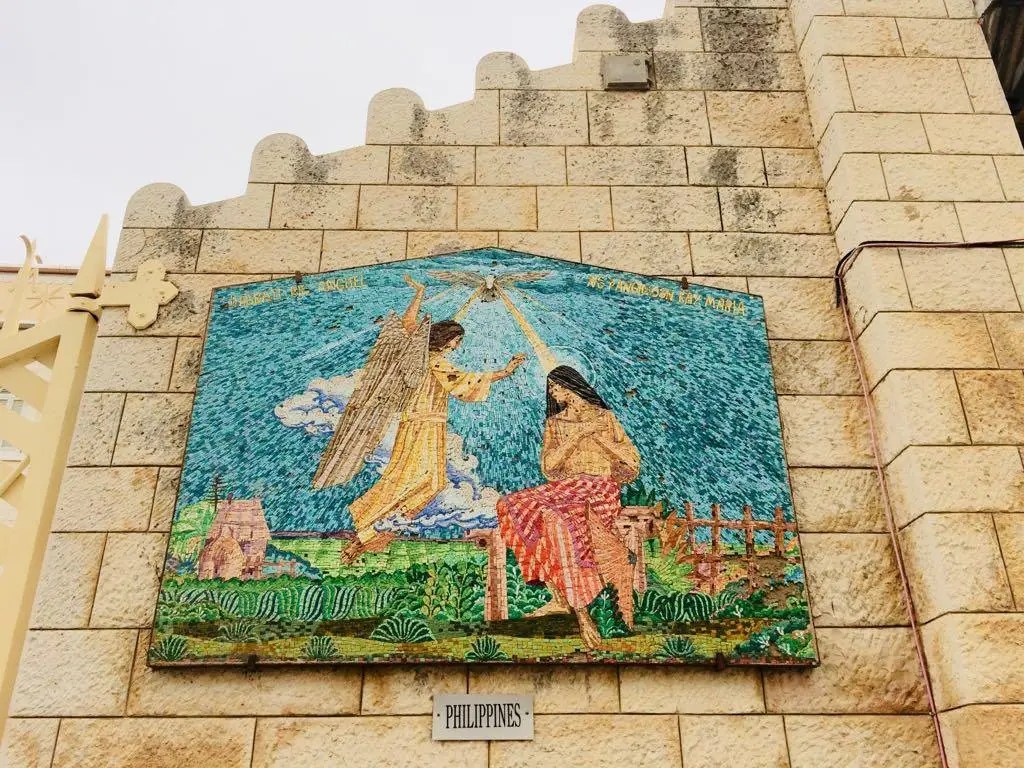
Photo by author, left side of the facade of the Basilica of the Annunciation in Nazareth, Holy Land, May 2019.

Intimacy is more than being close with another; it is an expression of love that is willing to sacrifice, to suffer and get hurt for the sake of the beloved.

God was the first to express his intimacy with us not just by expressing his immense love for us in words by the prophets in the Old Testament but by sending us his Son Jesus Christ who became human like us in everything except sin. Actually, God does not need to become human like us to save us but he chose to be one of us because he loves us so much. As an expression of his intimacy and solidarity with us, Jesus suffered and died on the Cross while going through every pain and hurt we go through in life like grief and sadness in losing a friend, betrayal by a friend, abandonment by friends, no to mention being terrified, going hungry and thirsty. Jesus became like us so that we may become like God – intimately loving him through others.

Actually, God does not need us but he chose to love us, to be with us, to be intimate with us because he loves us so much. God remains God even without us. When we do not pray, when we do not go to Mass on Sundays, when we are bad and not good, God is still God. It is us humans who are lessened when we turn away from from God.

That’s the intimacy of God with us.

How about us, are we willing to be intimate with God in Jesus Christ?

Sadly, many people “create” and “force” intimacy which is a grace, a gift of God freely given to everyone. Like friendship, we cannot force intimacy into someone not meant to be. And like friendship too, intimacy begins in Christ, blooms in Christ.
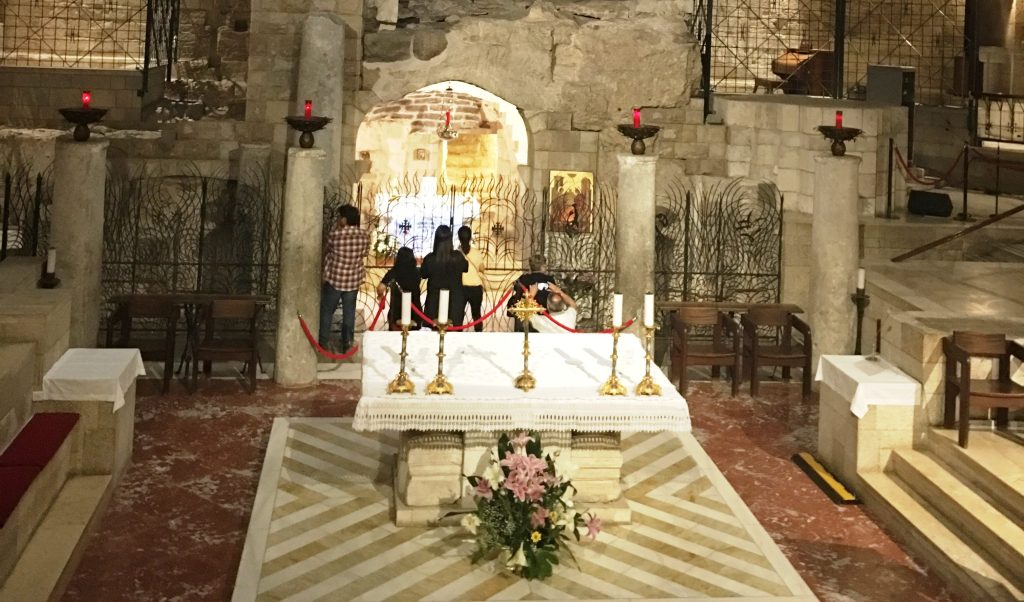
Photo by author, chapel beneath the Basilica of the Annunciation in Nazareth; see those pilgrims praying behind iron grills at the back of the sanctuary which is the site where the Angel announced to Mary the birth of Jesus Christ.

Underneath the Basilica of the Annunciation in Nazareth is a chapel near the very site where the angel is believed to have appeared to Mary to announce the coming of the Savior. At the back of the sanctuary of this chapel is that holy site of the Annunciation enclosed by iron grills with an altar table at the center with the declaration in Latin, Verbum Caro Hic Factum Est (The Word became flesh here).

Mary’s intimacy with God began long before the Annunciation to her by the Angel cultivated in her prayer life. Every time I pray this scene of the Annunciation, I always imagine Mary deeply absorbed in prayer. Most likely, she must be praying about her coming wedding to Joseph. Luke and Matthew were both consistent about their status as being “betrothed to each other” when God announced through the Angel the birth of the Christ.

Photo by author, close up of the Annunciation site beneath the Basilica of the Annunciation in Nazareth; written on the altar table that says in Latin, “The Word became flesh here.”

Imagine the excitement and joy of two faithful Jews getting married soon when suddenly the Angel appeared to them on separate occasions and diverse situations to announce God’s plan of sending his own Son Jesus Christ for the salvation of the world?

It must have been most painful to both Mary and Joseph but as being truly faithful and loving of God, they both agreed to the Divine plan! And that is the great sign of their immense love for God – eventually for each other. Moreover, in saying yes to God, both Mary and Joseph showed the kind of intimacy they have with the Divine.

Let us focus on the intimacy of Mary with God on this Solemnity of the Immaculate Conception found in our gospel account of the Annunciation.
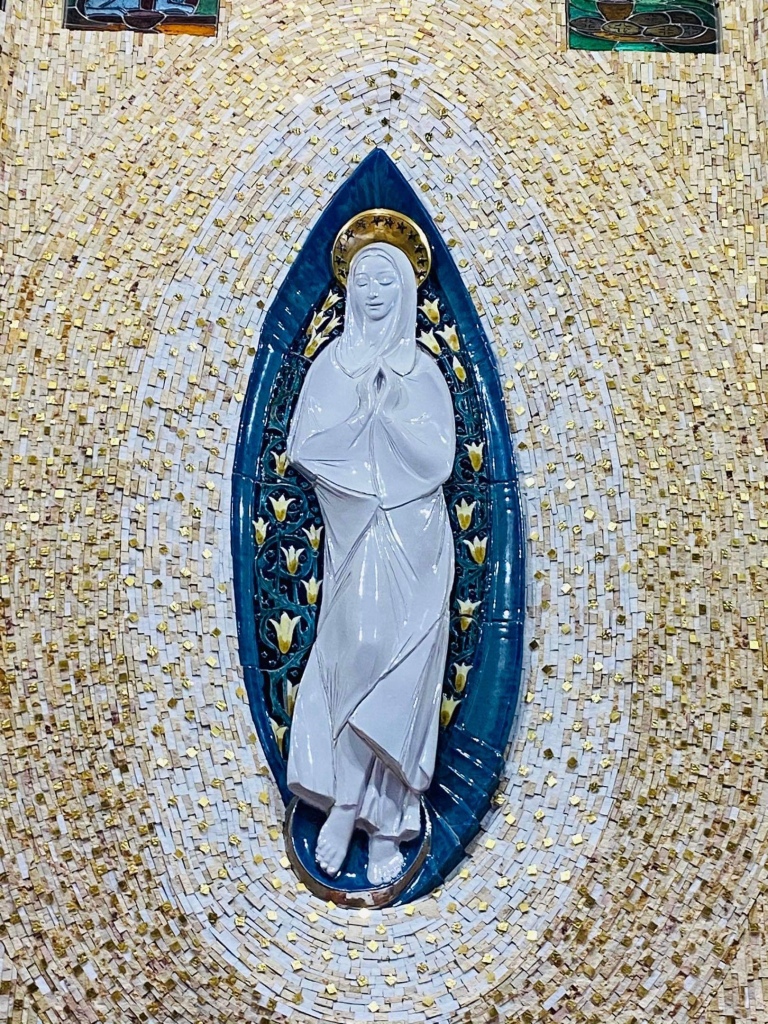
Photo by Rev. Fr. Gerry Pascual of Iba, Zambales at Santuario di Greccio, Rieti, Italy in 2019.

Then the angel said to her, “Do not be afraid, Mary, for you ahve found favor with God. Behold, you will conceive in your womb and bear a son, and you shall name him Jesus (Luke 1:30-31).

Notice that in many scenes and prayers about the Blessed Virgin Mary, we find the prominence of her “womb” like here in the Annunciation and when Elizabeth praised her during her Visitation as “blessed is the fruit of your womb” (Lk.1:42).

In Hebrew, the word for womb is “racham, rachamin” which is their word too for “mercy” because for them, God’s mercy comes from his innermost being. Hence, whenever the Jews speak of mercy of God, they point their fingers downward into the womb or uterus and moves it upward to the heart to indicate the flow of mercy of God from his innermost being expressed in love which is he’s very being and core.

This is the reason the Church Fathers translated mercy into “misericordia” from the Latin verb to move or to stir – “misereor” – and word for heart “cor” that literally means “to move or to stir one’s heart”. It is more than a feeling like compassion; mercy is deeper as it encompasses one’s being leading to intimacy that is a communion or oneness with others which is also intimacy.
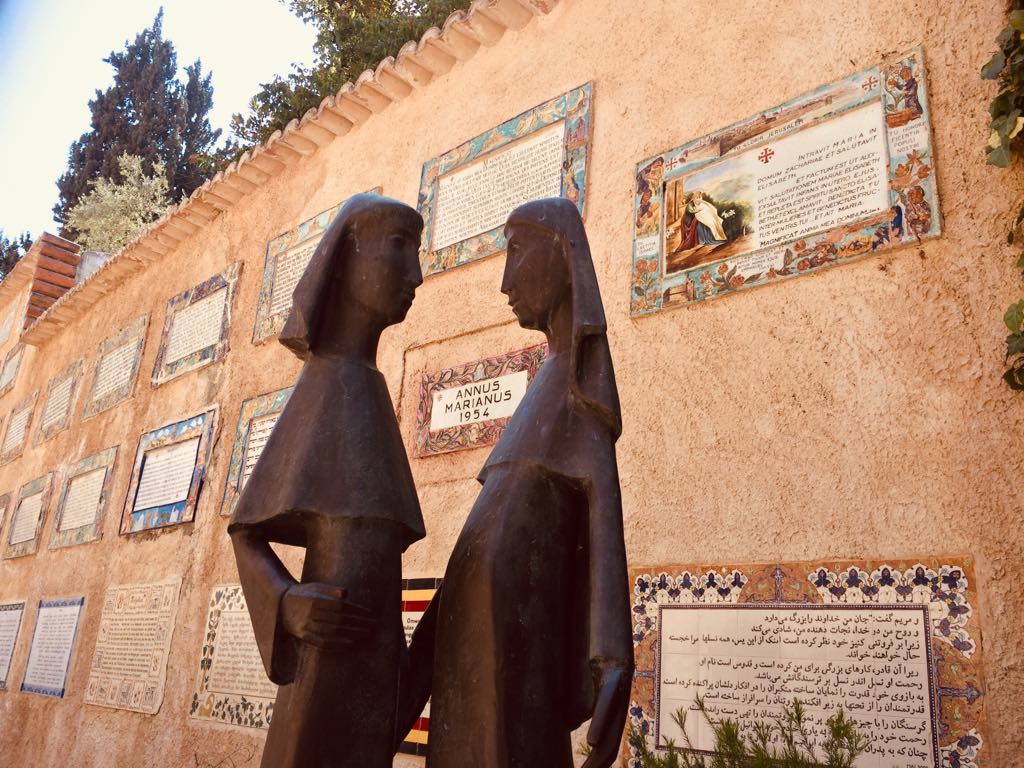
Photo by author, Church of the Visitation, Ein-Karem, Israel, May 2017.

Where there is love, there is always intimacy with the lover willing to bear all pains and hurts for the beloved. And vice versa. Like Jesus. Then Mary who was willing to sacrifice her wedding and marriage to Joseph by being the Mother of the Son of God.

But why? Because we have experienced too that true joy comes only when there is giving of self, when there is willingness to let go and suffer. At the Last Supper, Jesus described joy as like a mother in the pangs of childbirth when she goes through a lot of pains and worries and fears almost like dying but once the baby is delivered, joy happens because she had brought forth a new life into the world.

True joy is having the firm belief that no matter what happens even in the worst scenarios, God would never leave nor forsake us. Joy happens when we find new life, new directions because there is another person willing to remain with us, assuring us we are never alone. That again is intimacy when you feel not alone especially in the most trying times.

Without intimacy with God and another person, there can be no true joy because no one would dare to take risks in this life like mothers. This is what modern women are missing when they see childbearing more as a chore or a burden or a suffering they can always avoid than self-giving borne out of love which happens in the context of an intimacy. No wonder too that sex has been so trivialized, reduced to an activity and act instead of as a gift of self because there is no more responsibility and intimacy. We cannot have lasting and meaningful relationships without intimacy.

Photo by author, 2021.

On this Solemnity of the Immaculate Conception, we are reminded of God’s mercy and intimacy with us, of his loving relationship with us that continues in Christ Jesus with Mary.

Let us nurture this beautiful relationship with God that flows and bears fruit in our relationships with one another.

Like Mary, may we finally say yes to God into an intimate relationship with him through our selflessness. Like Mary, we are blessed and full of grace. The joy awaiting far outweighs the pains and sufferings we shall go through in our gift of self in our relationships. Have no fear for Jesus had suffered first before us so that we can love and be intimate like him. Amen. Have a blessed week.

Living Hope Amidst Suffering

Lord My Chef Daily Recipe by Fr. Nicanor F. Lalog II
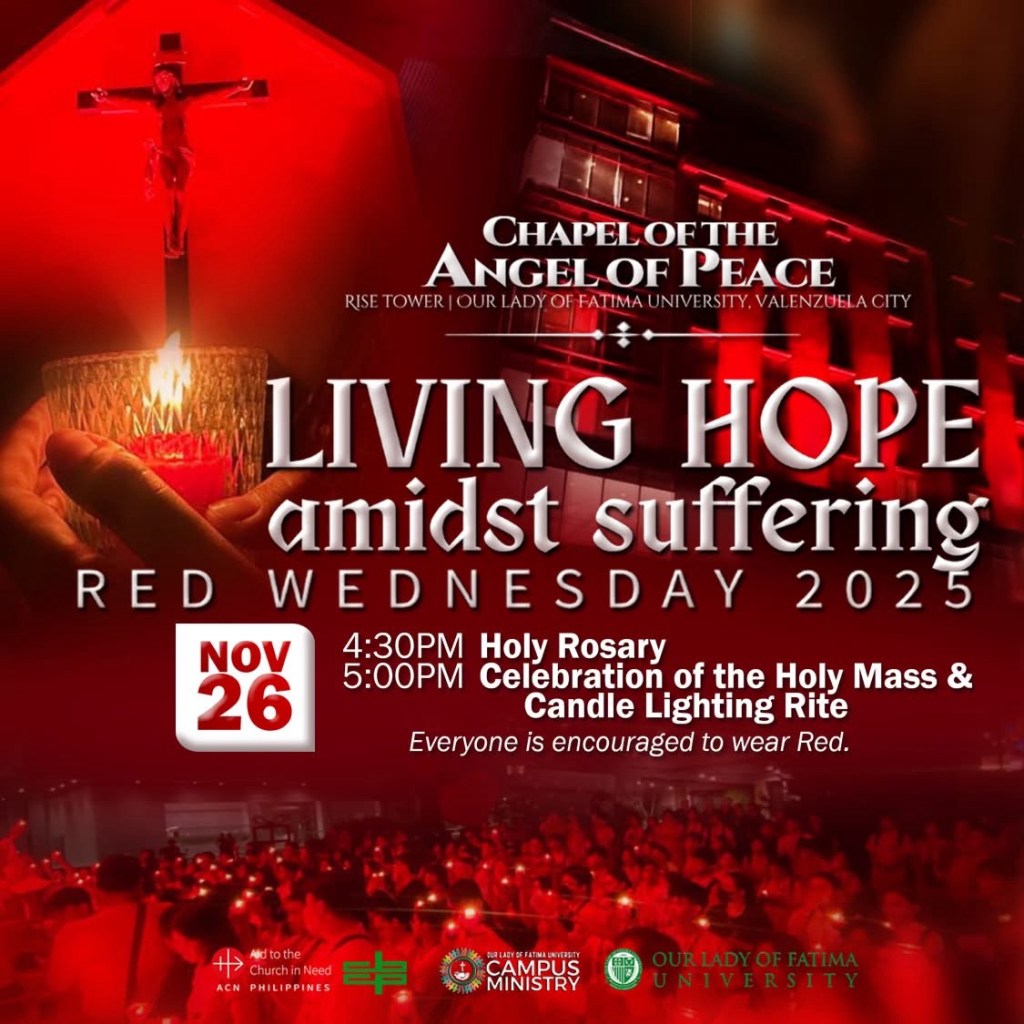
Red Wednesday, 26 November 2025
Daniel 5:1-6, 13-14, 16-17, 23-28 <*{{{>< + ><}}}*> Luke 21:12-19
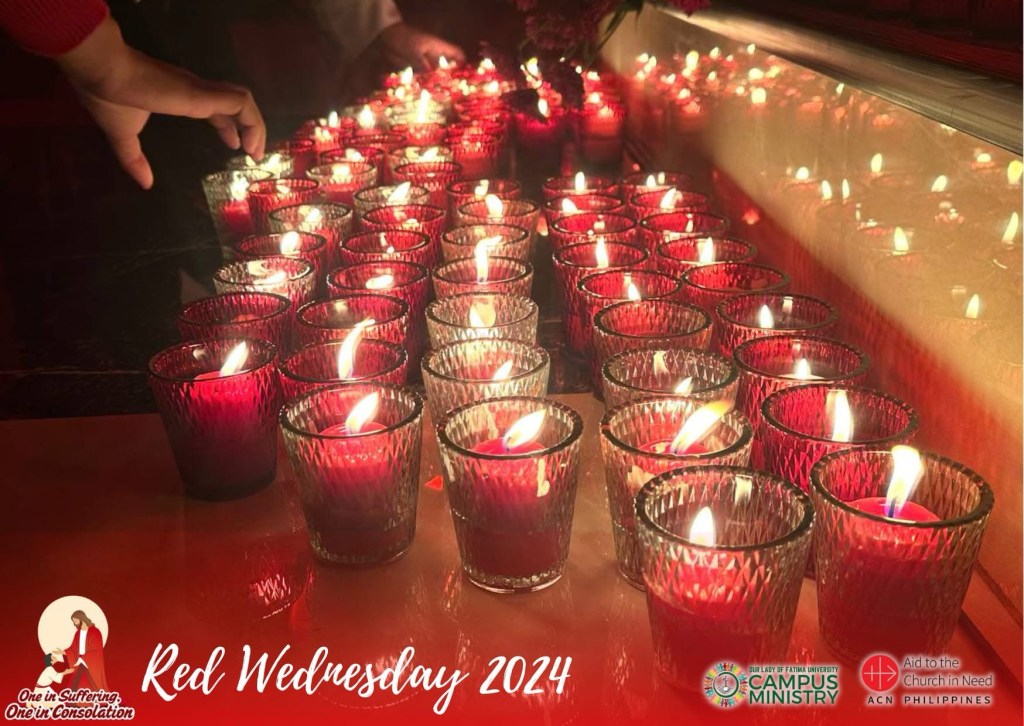
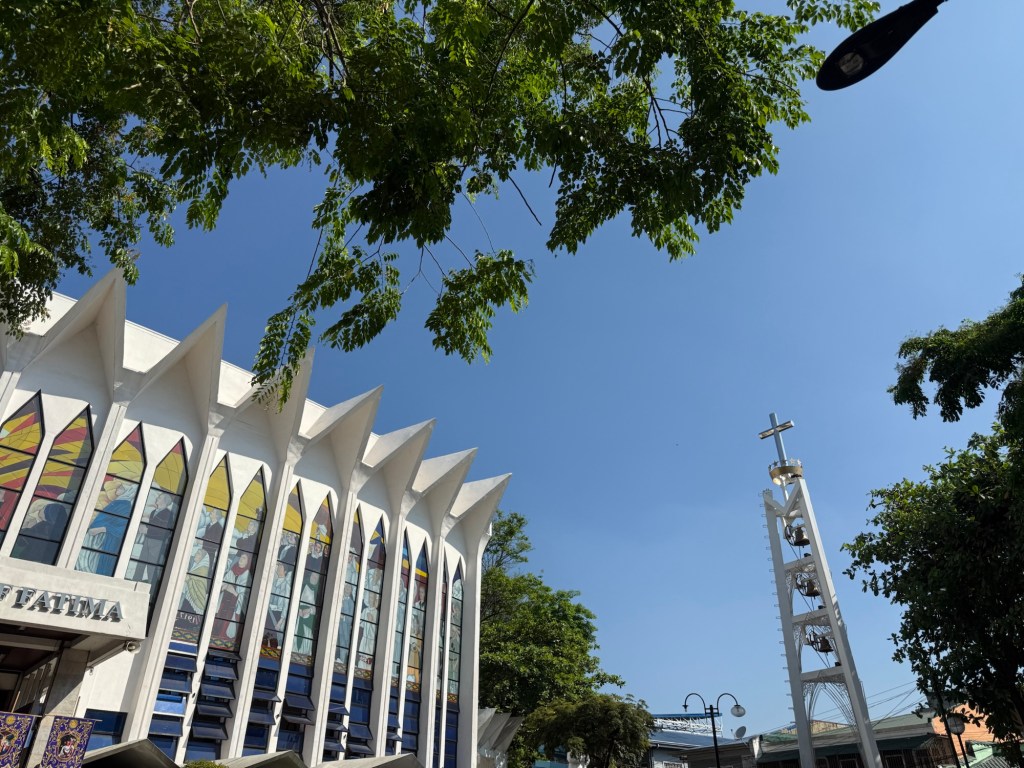
Photo from Fatima Tribune, 27 November 2024.

It’s the Wednesday after Christ the King when our churches and other religious buildings are lit in red to mark Red Wednesday, the annual campaign for persecuted Christians worldwide.

Started in 2016 by the Aid for Church in Need (ACN), it has been an annual Church celebration with other Christian groups and sects participating to heighten awareness of the continuing persecution of Christians in various parts of the world – exactly what Jesus had predicted to his disciples more than 2000 years ago.

Jesus said to the crowd: “They will seize and persecute you, they will hand you over to the synagogues and to prisons, and they will have you led before kings and governors because of my name. It will lead to your giving testimony… By your perseverance you will secure your lives” (Luke 21:12-13, 19).

Photo from Fatima Tribune, 27 November 2024.

For us in the Philippines that is majority a Christian nation, Red Wednesday is an opportune time to reflect about our “giving testimony” to Jesus Christ: how “bloody red” is our being a Christian?

Unlike in other countries in Africa or our neighbors in Asia where Christians are persecuted and harassed, we in the Philippines do not go through such sufferings and challenges. Think of any kind of opposition to the Christian faith we have encountered even in the last 100 years. None. The most serious threats ever made against our faith seem to be mere “peer pressures” of being teased as “conservative” in going to Mass and Confession frequently, or upholding the virtue of virginity. Perhaps, the most serious dilemma most of us Christians have ever had in our faith is whether or not we shall pray or at least make the Sign of the Cross when dining in a restaurant or fast food chain. In Europe and the States, chapels and churches are vandalized and burned but here in the country, those who have committed sacrileges in the past three years were “crucified” in social media with one being sued in court.

We do not wish that we also undergo similar religious persecutions like the other Christians abroad whom we pray for today on this Red Wednesday and send with our financial support as concrete actions of our solidarity with them.

In line with this year’s theme of “Living Hope Amidst Suffering” in conjunction with the Jubilee Year celebration “Pilgrims of Hope”, Red Wednesday invites us to simply witness the gospel of Jesus by standing on what is true and good especially these days our country is so deep into the ghost project scandals on flood control.

Giving testimony to Jesus Christ is letting our zeal for him burn anew within us by not bending into the ways of the world that promote a “culture of death” like abortion and contraceptives, or to the many forms of wokism that overextend personal rights contrary to God’s original plan and design like divorce, same sex marriage, and gender manipulation.

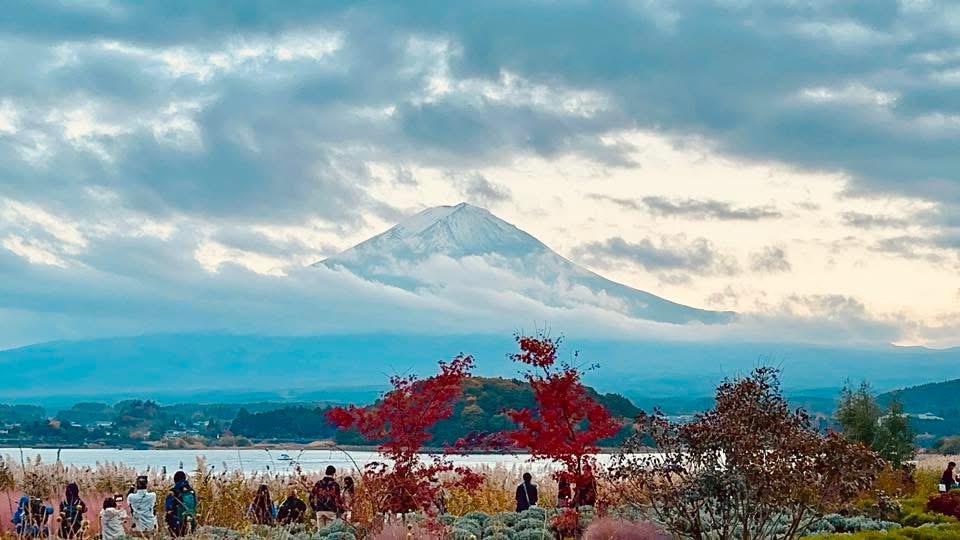
Photo by Ms. Kei Abad, Kawaguchiko Lake (Fujisan), 23 November 2025.

Witnessing Christ is being honest and just in a country of such impunity where graft and corruption is a family endeavor, a norm in public service.

Giving testimony to Christ in this time of social media where trending and viral are the new standards is to remain simple and modest even if it is looked down upon, being fair and just even if everyone chooses to disregard them while being concrete in our acts of mercy and charity for the weak and marginalized.

Red Wednesday is reigniting our hope in God which is an expression of our firm faith in him. Religious persecutions happen and abound anywhere God is negated and denied or when a particular group of people insist on their own perception of God.

We Christians are pilgrims of hope because we do believe in the one True and Only God in Heaven who was revealed to us by his own Son Jesus Christ made present up to this day until the end of time by the Holy Spirit. Hope is primarily having faith in God.

In this sense it is true that anyonbe who does not nknow God, even though he may entertain all kinds of hopes, is ultimately without hope, without the great hope that sustains the whole of life (cf. Eph. 2:12). Man’s great, true hope which holds firm in spite of all disappointments can only be God – God who has loved us and who continues to love us “to the end,” until all “is accomplished” (cf. Jn.13:1 and 19:30). (Pope Benedict XVI, Spe Salvi #27)

Hope is not optimism nor positive thinking, believing things will get better. On the contrary, true hope is actually accepting that things and situations could get worst as Jesus mentioned in his predictions of the coming upheavals and persecutions. Hope is putting all our trust in God that no matter what happens in the end when things get worst like death, there is Jesus Christ loving us, comforting us, and saving us.

That’s the kind of faith and hope Daniel expressed in our first reading despite the threats of sure death when he spoke of the God of Israel as the only true God, not the many idols and false gods of the Babylonians. Most of all, because of his fervent hope in God who would raise him up in the end, Daniel delivered his interpretation of the king’s dream of how his days were numbered as the Medians and Persians were soon to conquer them that eventually happened.

Photo by Ms. Kei Abad, Kawaguchiko Lake (Fujisan), 23 November 2025.

Many times in life, all we can have is hope in God especially when pains and sufferings become unbearable, when these get worst without any signs of getting any better.

That is why Red Wednesday’s theme this year is so appropriate, “living hope amidst suffering”.

Hope makes life more worthy and lofty because our sights are not only fixed on this world but even beyond as Jesus assured us in today’s gospel, “By your perseverance you will secure your lives” (Lk.21:19).

And there lies the beauty of hope – it is the most surprising of all virtues as the French poet, essayist and writer Charles Peguy wrote in 1911 in his long masterpiece called “The Portal of the Mystery of Hope.” In this poem, Peguy presents God as the speaker himself, reflecting about the virtue of hope in relation with the other two theological virtues of faith and love. It is so lovely because it is so true especially when I encountered it during my trying months of second year in theology in the seminary.

The faith that I love best, says God, is hope...
Faith itself does not surprise me...

Love, says God, that does not surprise me...

But Hope, says God, that is what surprises me.
I, myself, find it surprising
that my children see what happens and believe things will improve.
That is the most surprising, the most marvelous gift.
And it surprises me, myself, that my gift has such incredible strength
since it first flowed in creation as it always will.
Faith sees what is.
Hope sees what will be.
Love loves what is.
Hope loves what has not yet been
and what will be in the future and in eternity.

For those suffering, those in pain especially because of faith in Jesus Christ: keep believing, keep hoping and be ready to be surprised by God. Reignite that zeal in Christ and his gospel. Amen. A blessed Red Wednesday to you.

Photo by Ms. Kei Abad, Kawaguchiko Lake (Fujisan), 23 November 2025.

Christ the King, the face of suffering

Lord My Chef Sunday Recipe for the Soul, 23 November 2025
Solemnity of Christ the King, Cycle C
2 Samuel 5:1-3 ><}}}}*> Colossians 1:12-20 ><}}}}*> Luke 23:35-43

I was teasing our campus ministry head for communication last Tuesday after he had presented to me this announcement for our Christ the King celebration today. “Para namang malnourished si Jesus diyan,” I told Darwin as he scratched his head laughing during our meeting.

But, that evening after praying our gospel, I changed my mind the following Wednesday and told Darwin to go ahead with his original artwork because I have realized that the face of Christ the King is also the face of us suffering.

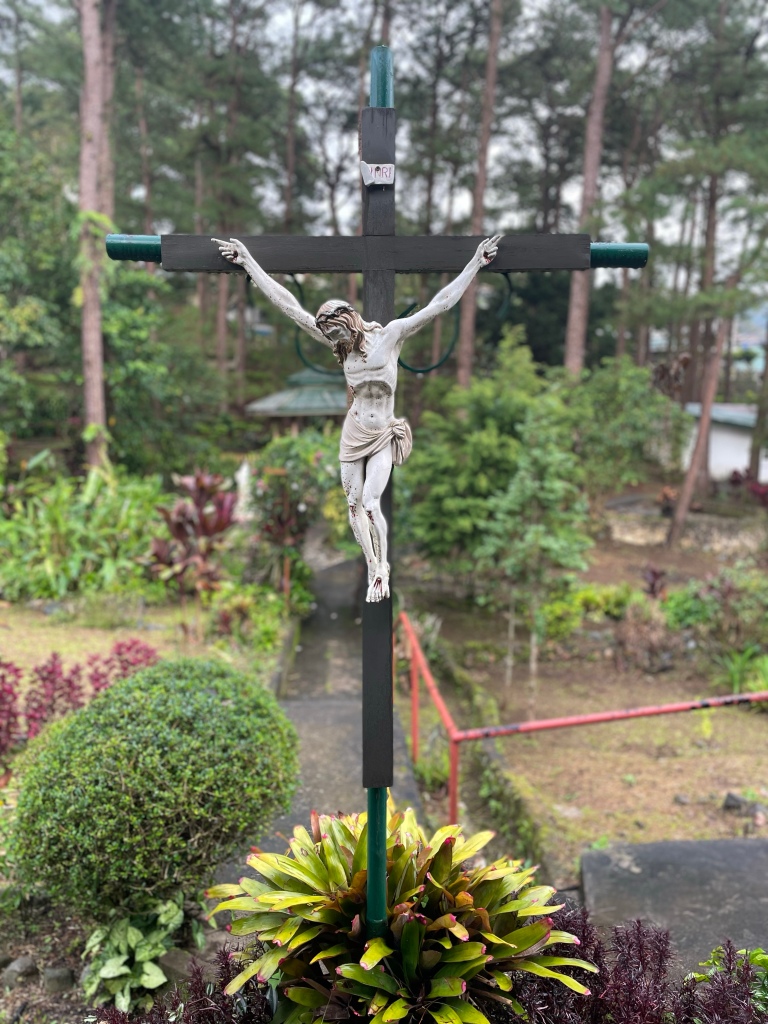
Photo by author, Holy Monday, 2025.

Are you not surprised that on this final Sunday of the liturgical year, we are not presented with an image of a victorious Jesus like that Cristo Rey found in every Catholic home but the gospel scene of Jesus suffering in excruciating pain there on the Cross on Good Friday?

Above him there was an inscription that read, “This is the King of the Jews.” Now one of the criminals hanging there reviled Jesus, saying, “Are you not the Christ? Save yourself and us.” The other, however, rebuking him, said in reply, “Have you no fear of God, for you are subject to the same condemnation? And indeed, we have been condemned justly, for the sentence we received corresponds to our crimes, but this man has done nothing criminal.” Then he said, “Jesus, remember me when you come into your kingdom.” He replied to him, “Amen, I say to you, today you will be with me in Paradise” (Luke 23:38-43).

Photo by author, Chapel of St. Francis Xavier, Sacred Heart Novitiate, Quezon City, 2024.

On this Solemnity of Christ the King, St. Luke invites us for the last time we hear his gospel this year to look at the face and into the eyes of Jesus crucified.

What do you see and feel in him?

Ever wondered what the rulers and soldiers saw on the face of Jesus crucified that they sneered and jeered him from below? They were so filled with pride in finally putting into shame and silence Jesus who had always spoken the truth and exposed their lies and hypocrisies.

What do we see when people are put on the spot and shamed like Jesus crucified or like the woman caught committing adultery Jesus forgave and saved from being stoned by the angry crowd? So sad that in this age of social media, public trials and condemnation have become a hobby for many without even checking the accusations are true or not.

Let us move closer to Jesus on the Cross like those two thieves hanging at each of his side: what do you see and feel about him?

Why did the other thief join those below in deriding and insulting Jesus crucified? Now one of the criminals hanging there reviled Jesus, saying, “Are you not the Christ? Save yourself and us” (Lk.23:39).

Have you ever found yourself in the ER or waiting for your turn at the doctor’s clinic with other patients also in pain and suffering? How do you see the other patients and sick people like you? Is there in your mind any tinge of suspicion why or how they got sick? The best and the worst in us come out in such times when we are so down beside another suffering brother or sister.

Or, do we choose the path of humility and sincerity of Dimas, the good thief? What did he see in Jesus there on the Cross? The other, however, rebuking him, said in reply, “Have you no fear of God, for you are subject to the same condemnation? And indeed, we have been condemned justly, for the sentence we received corresponds to our crimes, but this man has done nothing criminal” (Lk.23:40-41).

Most likely, Dimas must have heard a lot about the teachings and healings by Jesus but he felt something so unique and liberating, so personal during those dark moments of excruciating pains when he finally recognized Christ his Savior, the only true King that is why he asked to be remembered in his kingdom!

Finally, somebody greater than him there beside him, saying nothing to judge nor condemn him nor irritate him like his fellow criminal at the other side. In recognizing Jesus, Dimas also found himself as truly human, weak and finite who can only be whole and complete – saved and redeemed – in Christ who chose to be there on the Cross with him exactly as St. Paul had written in our second reading.

He is before all thing, and in him all things hold together. He is the beginning, the firstborn from the dead, that in all things he himself might be preeminent. For in him all the fullness was pleased to dwell, and through him reconcile all things for him, making peace by the blood of his cross through him, whether those on earth or those in heaven (Colossians 1:17, 18-20).

Photo by author, St. Scholastica Spirituality Center, Baguio City, August 2023.

Here we find the beauty of the Cross, of how God so perfect without any need to suffer and experience pain yet chose to go through it to express his solidarity and love for us humans.

It is on the cross when we are most able to identify and be one in Jesus Christ. That is why it is also on the Cross that we enter heaven with Jesus amid suffering and death. Jesus said today you shall be with me in Paradise – not later when we die or after three days at Easter. How lovely that Jesus never promised heaven when he was strong and freely moving around but when he was there on the cross, nailed and dying.

Jesus Christ is the King of the Universe not because of his powers and might but primarily of his being one of us in sufferings and death. It was the very feeling the tribes of Israel were telling David when they came to him in Hebron to reaffirm their allegiance to him as their king, “Here we are, your bone and your flesh” (2 Sm. 5:1).

The people we admire most are not always the best nor most powerful nor talented because often we envy them. On the other hand, we are more drawn with those down and burdened because we see in them our own brokenness, too, that it is part of life and of being human. That is why we easily empathize with those grieving or sad than with those happy or rejoicing.

Our humanity reaches its highest point and beauty when broken and weak as we realize our mortality and similarity with others in suffering needing for a Savior. We are most inhuman whenever we enjoy inflicting or causing pains on others or when rejoicing in their agonies. To proclaim Christ is the King of the Universe is to always see him in our sufferings and among those suffering too like us. Amen. A blessed week ahead of you!

Uniqueness of the Cross

Lord My Chef Sunday Recipe for the Soul, 14 September 2025
Feast of the Exaltation of the Cross
Numbers 21:4-9 ><}}}}*> Philippians 2:6-11 ><}}}}*> John 3:13-17
*This is an updated version of our reflection last year; pray for our Marriage Encounter this weekend.
Via Crucis at Fatima University Medical Center, Valenzuela City, 2025.

This Sunday we have a unique celebration, the Feast of the Exaltation of the Cross that falls on the 14th day of September. It is so important that even if it falls on a Sunday, the more it must be celebrated as it is most central in the teachings of Jesus Christ.

It is so unique because despite its being made up of two ordinary pieces of wood, the Cross is most unique with its deeply extraordinary in meaning as sign of God’s immense love for us humans through Jesus Christ’s Passion and Death.

From being the sign of the most inhuman punishment in history, the Cross is now the very sign of how God “so loved the world that he gave his only Son, so that he who believes in him might not perish but might have eternal life” (Jn.3:16). It encapsulates the whole mystery of Jesus Christ, of how this all-powerful God beyond the ordinary became weak like us in everything except sin so that we too may be like Him, divine and more than ordinary. In His suffering and death on the Cross, Jesus made the lowly wood so ordinary to be so exalted to become His sign of love and mercy, power and majesty.

Photo by author, Jerusalem, May 2017.

Hence, in the Cross is the power of God’s love to transform us to better persons.

In the Cross is God’s power to lead us closer to Him with its vertical beam and to others with its horizontal beam.

In the Cross is the power of good if we choose to embrace it with Christ Jesus as our Lord and Master.

The Cross is most unique of all signs in the world because underneath its ordinariness, that is where we see God’s glory and majesty. It was underneath the Cross of darkness and gloom on Good Friday that humanity began to see light and hope in life’s many absurdities. Most of all, it was underneath that Cross of suffering and death of Jesus Christ that we feel and experience the assurance of the Resurrection.

How?

Through our own pains and sufferings that are most uniquely ours too!

With their patience worn out by the journey, the people complained against God and Moses, “Why have you brought us up from Egypt to die in this desert, where there is no food or water? We are disgusted with this wretched food!” In punishment the Lord sent among the people saraph serpents, which bit the people so that many of them died (Numbers 21:4-6).

Photo by author, Dominican Hills, Baguio City, January 2018.

You must have heard that old story of a man who came to Jesus to return the cross given for him to carry; he asked Jesus to have it replaced with a lighter one. Jesus then led the man to a huge room with all kinds of crosses for him to choose which he prefers as the best one for him so that he would stop complaining.

After closely examining the specs of so many crosses, the man finally decided to pick one he deemed as perfect for him after considering its weight and other dimensions, only to find out from Jesus Himself that it was the same cross he had actually returned for exchange!

Many times in life we are like those people in the first reading, never ending in their complaints to God, even challenging Him, accusing Him of forsaking us, of being unfair when life becomes difficult and unbearable. There are times we feel being on the distaff side of life always like a flat tire, never on top. We cry foul to God especially with all our hurts and pains inflicted by others, asking Him where was He when most needed?

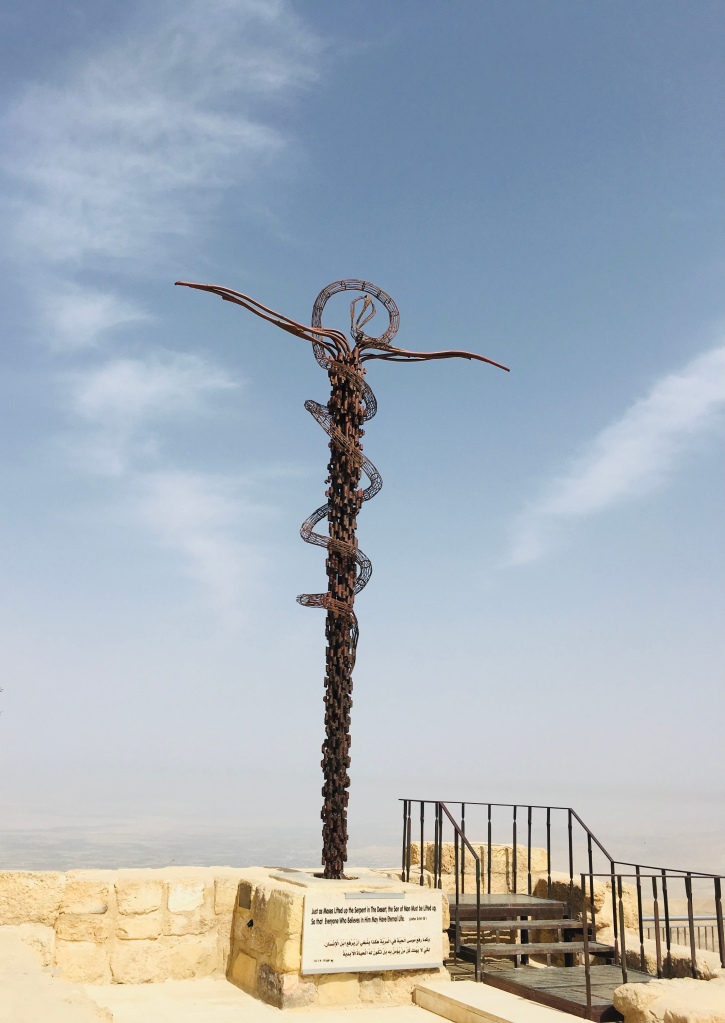
Photo by author in Jordan near the Israeli border where Moses put up the bronze serpent as instructed by God to heal those bitten by the snakes after they have complained of their conditions in the wilderness, May 2019.

While it is true life is indeed difficult, the cross reminds us of the fact that the pains and hurts we have are uniquely ours too, something we have to accept and most of all, own.

There are pains that are so deep and won’t go away that have in fact affected us dismally in our lives already. Instead of self-blaming and self-pity, we just have to ask for God’s grace to accept and own them like Jesus Christ. We just have to “bring it home” – that imagery of the Cross planted on the Calvary – into our very selves, in our being as something so true and real. And uniquely ours.

Stop thinking of others’ pains and hurts. We are not all the same. If ever we have similar experiences, the hues and shades even gravity and circumstances are not same because each pain and hurt, like the cross, is uniquely ours. Like every person, every cross is unique because it is also a gift, a mystery, and life. We have to “befriend” our pains and hurts, our own cross instead of resist it. It is in “befriending” our pains and hurts, our cross in life that we grow and mature, becoming more free to love and to be joyful because that is when the cross triumphs over its disgrace and shame in us and with others. That is when our pains and hurts, when our crosses begin to reveal to us the many beautiful truths of Easter awaiting us.

The Cross of Christ triumphed because Jesus carried it wholeheartedly, allowing those two pieces of wood to reveal not only to Him who knew everything beforehand its meaning but most of all to everyone of us the deeper truths the Cross signifies as St. Paul eloquently expressed in our second reading.

The Cross of Christ atop the church of our Lady of Lourdes in France. Photo by my former student Ar. Philip Santiago during his pilgrimage, September 2018.

One thing I realized after my mother died May last year is the fact that while there are so many pains and sufferings in this world, my own pain and suffering in losing her are most difficult to bear; hence, something I must carry because it is uniquely mine.

But, one thing so unique I noticed is that the more I see my cross following my mother’s death, the more I saw also the cross of others. The Cross of Jesus triumphed truly in me when I embraced and owned my cross, when I befriended my pains and hurts that eventually led me to recognize and see, to feel more and experience too the crosses of others.

When we become conscious of each one’s unique cross, slowly we are able to reveal to them the meaning of their personal crosses too because we become more sympathetic, more open, more silent to listen more, love more, care more and be more present with those in their own unique cross. No wonder, I find conversing more engaging with others who also grieve because we can see each other’s unique crosses!

Jesus calls us to imitate Him that by embracing and owning our cross, we too may lead others to finding the meaning of their own cross and thus experience Easter soon. Let us pray:

Give us the grace,
dear God
to always embrace the Cross
like your Son Jesus Christ
where we can all be empty
of ourselves to be filled
with your Holy Spirit
and make your love
visible in us.
Amen.
A blessed week to everyone!

Fr. Nicanor F. Lalog II
Our Lady of Fatima University
Valenzuela City
(lordmychef@gmail.com)

The heart of the priest

Lord My Chef Daily Recipe for the Soul, 04 August 2025
Monday, Memorial of St. John Baptiste Marie Vianney, Priest
Numbers 11:4-15 <*{{{{>< + ><}}}}*> Matthew 14:13-21
St. John Baptiste Marie Vianney from https://liturgiadashoras.online/.

People complain and ask me why our patron saint, St. John Baptiste Marie Vianney is always portrayed “unattractive” as old, balding and so thin who seemed to be so tired, even sad. Para daw hirap na hirap.

Usually I smile at them because when I entered the seminary, I felt the same way too upon seeing his images. But as I learned about his life and teachings, the more I realized St. John Baptiste Marie Vianney is actually one of the original “rock star” saints of the Church with his white, balding hair so much like Jimmy Page of Led Zeppelin!

There is something so deeply within him when we try to feel and observe his portrayals in the arts as more than images but a reality and experience of a man deemed weak yet so strong with an intensity of a Michael Jordan in his life and ministry. He was another St. Paul who had truly let “Christ lived in him” (Gal. 2:20), “strongest when weakest” (2Cor.12:10) who declared with conviction that “the priesthood is the love of the heart of Jesus.” Hence in my prayers last night and today, I asked Jesus to give me a heart “so big, so wide to welcome everyone and life’s many challenges” (https://lordmychef.com/2025/08/03/praying-with-our-patron-saint-john-baptiste-marie-vianney/).

Detail of a painting of the Sacred Heart of Jesus at Visitation Monastery, Marclaz, France from godongphoto / Shutterstock.

The readings this Monday of the eighteenth week in Ordinary Time perfectly jibed the celebration of the Memorial of St. John Baptiste Marie Vianney as they spoke of the heart of the priest.

In the first reading we heard of Moses lamenting to God of the difficulty in dealing with his people who were so stubborn and refused to recognize God’s immense love for them, so similar with us priests in many occasions when we feel so frustrated and sad when parishioners fail to see the good things we are doing for them.

When Moses heard the people, family after family, crying at the entrance of their tents, so that the Lord became very angry, he was grieved. “Why do you treat your servant so badly?” Moses asked the Lord. “Why are you so displeased with me that you burden me with all this people?”… I cannot carry all this people by myself, for they are too heavy for me. If this is the way you will deal with me, then please do me the favor of killing me at once, so that I need no longer face this distress” (Numbers 11:10-11, 14-15).

Many times, we priests feel like Moses who cannot voice out problems with the people who would never understand it at all. Worst, people would even blame us priests why we work so hard or why do we bother at all with their lives. “Pabayaan na lang ninyo kami…sanay na kami” are what they often say. It can be frustrating when people refuse to match the fire and ardor of their priests.

In this scene, we find one of the many instances in the life of Moses that was centered on God in prayers. The heart of the priest is a heart in prayer. The attitude of Moses in the first reading conversing with God in prayer shows us that in our life and ministry, there is no one to turn to except God alone with whom we can be our most personal self, even dare God to “take us” or “kill us” when we are so fed up. The good news is, God never took those words seriously as he knew Moses and the prophets including us who spoke to him that way never knew what we were saying at all.

There is a saying that goes, “if you can’t bear the heat, leave the kitchen”; but, it cannot be applied with the priesthood that is neither a profession nor a job one can easily walk out from and start into another venture or career. Priesthood is a call or a “vocation” from God; however, priesthood is more of the Caller than the call. It is a life centered on prayer to become like Jesus Christ who alone feels and understands and appreciates all our ups and downs in the ministry. The more we get closer to Jesus in the Cross, the more we experience fulfillment that we would never dare to trade it for anything or anyone else, not even the prettiest woman on earth.

Photo by author, Chapel of St. Francis Xavier, Sacred Novitiate, Novaliches, QC, March 2024.

Priesthood is the love of the heart of Jesus that continues to be wounded and hurt by sins of men and women in this modern age so selfish and materialistic. Thus, every priest is called to be a “wounded healer” too like Christ who in his woundedness healed the wounds of others. We remind people of the paradox and scandal of the Cross of Jesus, of life itself by taking into heart Christ’s teaching, “For whoever wishes to save his life will lose it, but whoever loses his life for my sake will find it” (Mt. 16:25).

Let us now reflect on our gospel.

When Jesus heard of death of John the Baptist, he withdrew in a boat to a deserted place by himself. the crowds heard of this and followed him on for from their towns. When he disembarked and saw the vast crowd, his heart was moved with pity for them, and he cured their sick (Matthew 14:13-14).

Observe the brevity of Matthew in narrating the situation at the scene without losing its very soul and meaning especially for us priests: Jesus did not have any intentions to go after Herod nor to challenge him for his execution of John the Baptist who spoke the truth.

Instead, Jesus sought solitude. Like Moses in the first reading, Jesus turned to God in his grief and anguish of the death of John the Baptist. He crossed the lake to pray and be one with the Father to pour out his sadness and most of all, to reflect on what to do next after John’s death.

Jesus shows us in this scene of his going into solitude that our low points in life as priests are also our high points like Christ’s Transfiguration. Every prayer moment is a transfiguration moment because that is when we get closest with Jesus. It has been consistently proven in our collective and personal experiences as priests verified by studies that crises in the priesthood happen when we stop praying because that is detaching from Jesus Christ, our Caller.

Priesthood is not only difficult but very difficult starting with the vestments we have to wear. What a shame when priests prefer to do away with the proper vestments as well as wearing of shoes during celebrations of the Mass and other sacraments because the weather is so hot. What then are we going to bear if the weather is already a big issue for us? One of the teachings of St. John Vianney that I have always followed is the value of putting on good vestments in the celebration of Sacraments because they are a homily in themselves, proclaiming the glory and love of God for us all.

Photo by FlickrBrett Streutker from catholic365.com.

Many times, people forget priests have personal concerns and problems too, that we get hurt, get lonely, get sick and grieve at the death of family and friends. Despite all these lows in our life as priests, we go and follow the Caller Jesus Christ when people come and ask for our help and service. Woe to our brother priests who forget this and think more of themselves especially of their comfort!

See how when Jesus was praying in solitude and the crowd followed him, it was not difficult for him to forget his own worries that his heart was moved with pity upon seeing them disembarked from their boats. Despite his sadness at the death of John, Jesus taught the crowd who have followed him and healed the sick among them. And when the Twelve told him to drive away the crowd to search for their own food and lodging, Jesus told them to give them food themselves. What followed was the great miracle of the feeding of over five thousand people from five loaves of bread and two pieces of fish. It was the event that prepared the Twelve and the people to the Last Supper of the Lord and the road to Emmaus where Jesus was recognized at his “breaking of bread”.

The whole life of St. John Baptiste Marie Vianney was a prayer of praise and thanksgiving to God in Christ’s priesthood. He had a heart so big and wide, hearing confessions daily up to 16 hours! Pray for us your priests to have big hearts too to bear all the wounds and hurts because only the heart that suffers, that is “broken” can truly sing of the joys and pains of living, of the sense and meaning of serving to the point of being emptied, and of the healing and transforming power of Christ’s love and mercy. Amen. Pray for us your priests. Salamuch. Fr. Nicanor F. Lalog II, Our Lady of Fatima University, Valenzuela City (lordmychef@gmail.com).

 have not been to France nor do I know French but while searching for images of St. John Marie Vianney, I found this from the French website, https://www.notrehistoireavecmarie.com/; it is perhaps the depiction of the new pastor speaking to the young Antoine whom he asked for directions to Ars.

Good Friday is thirsting for God

Good Friday Reflection by Fr. Nicanor F. Lalog II, 18 April 2025
Photo by author, Sacred Heart Novitiate, Novaliches, QC, 17 March 2025.

Twenty-seven years ago today, I was ordained as priest with my six other classmates at the Malolos Cathedral by Archbishop Rolando J. Tria-Tirona. I was 33 years old at that time (and less than 200 pounds in weight).

One thing prevailed in me on the eve of that most beautiful event in my life: Jesus Christ died on the Cross when he was 33 years old. Is my ordination my crucifixion too? Maybe. But due to the euphoria that followed after my ordination, I forgot all about it until I approached the age of 40 and my honeymoon stage in the priesthood waned with all the trials and difficulties – and crises – that followed.

It was at that time every year my birthdays and anniversaries came, I prayed only one thing from God – that I would have a more worry free year, that the following year would be a banner one for me. “Sana naman Lord ngayon ako naman ang panalo, ako naman ang bida, ayoko na sa ilalim ng gulong ng palad. Sana ako naman ang nasa itaas.”

God never heard my prayers. They never came. Actually, the opposite happened as I went through more trials, more difficulties, more pains and hurts that many nights in my prayers I felt like Jesus Christ crying on the Cross on that Good Friday, “I thirst” (John 19:28).

Photo by author, Sacred Heart Novitiate, Novaliches, QC, 17 March 2025.

Many times in life, our prayers to God are cries like that of Jesus on the Cross, “I thirst.”

Those are the times we thirst for love and kindness, for care and understanding, sometimes the most simplest recognition as a person or a brother/sister or a friend from our family and friends.

This is the second time Jesus felt thirsty in the fourth gospel. The first time was when he asked the Samaritan woman for water at Jacob’s well where in fact, it was Christ who gave her the “living water” – himself – in the wonderful conversation that followed.

See that in the fourth gospel, water is one of the significant signs used by the evangelist to portray Jesus Christ like in his first miracle at the wedding at Cana when he turned water into wine. In his conversation with Nicodemus one night, Jesus spoke of the power of water in cleansing us into a new person in Baptism.

The thirst of Jesus Christ on that Good Friday on the Cross is also our thirst for love, for kindness, for faith, for life and for one another. And here is the mystery and paradox: that thirst can only quenched by Christ if we too remain in him, with him on the Cross. That is why after he head died, blood and water flowed from his side pierced with a lance by a soldier. All throughout his life, especially while on the Cross, Jesus never ceased from being good, from doing good, from loving us all, giving us even at his death life and love.

After 27 years as a priest now on my senior year, I have realized this as the only thing I desire most in life – Christ, the only water who can quench all my thirst as a person, as a priest. Life is love which is following Jesus on the Cross. To thirst for love is to desire more the Cross which is to love more the one Crucified, Jesus Christ.

The joy and meaning, the peace and fulfillment we long for in life, we thirst for always are found in the Cross, not in material things nor in fame and glory as the soldiers had mistaken on the Good Friday. Unfortunately, many of us are exactly like those Roman soldiers who give money and material things to those crying “I thirst” to us.

Photo by author, Sacred Heart Novitiate, Novaliches, QC, 17 March 2025.

The Cross of Jesus Christ has always been described as a paradox. And that is really what the Cross is – a paradox and mystery of life at the same time.

When you are on the cross, like this sweltering summer, what is one thing you desire or cry for? Water, is it not?

It is during that time when we are on the Cross of intense pains and sufferings when we truly feel how valuable every drop of water is. It is when we are up against the wall when we realize the most important, the most essential in life like love found in persons who all enable us to feel God’s reality in his loving presence.

This Friday is called Good. The only Friday that is Good in the whole year because that is when we remember, when we make present again in our very lives our being one with Jesus at the Cross like the beloved disciple and his mother, the Blessed Virgin Mary when in our intense thirst, there we experienced the refreshing and life-giving living water Jesus Christ himself. This Good Friday as we reflect on the suffering and death of Jesus on the Cross, what is that one thing you also desire from God?

Photo by author, National Shrine of Our Lady of Fatima, Valenzuela City, Good Friday 2025.

We all thirst.

When we thirst, thank God because that means we desire him who is love himself. When we truly thirst like Jesus, that is when we too are on the Cross with him; then, you are at the right place at the right time because it is only on the cross can our thirst be truly quenched in Jesus. Let us follow him always in the Cross for that is what to be loving in the first place which is to be with the One who died on the Cross this Good Friday. Amen.

Embracing life’s paradox

The Lord Is My Chef Daily Recipe for the Soul by Fr. Nicanor F. Lalog II
Monday, Week II in Ordinary Time, Year I, 20 January 2025
Hebrews 5:1-10 <*((((>< + ><))))*> Mark 2:18-22
Photo by author, sunrise at St. Paul Spirituality Center, Pico, La Trinidad, Benguet, 06 January 2025.
Praise and glory to you,
God our loving Father!
Thank you for this wonderful
Monday as we pray for one
another, especially to those
still baffled with life's many
mysteries, its many
paradoxes beginning to
appear anew as we dive
into Ordinary Time.

Teach us to take into heart
Jesus Christ's teaching today:

“Likewise, no one pours new wine into old wineskins. Otherwise, the wine will burst the skins, and both the wine and the skins are ruined. Rather, new wine is poured into fresh wineskins” (Mark 2:22).

Help us change our attitudes in life,
Jesus: make us realize that like
your life, our life is always a
mixture of joy and sufferings;
most of all,
make us experience
in your coming into our human reality
as our Eternal High Priest,
you have brought newness and
significance in storage and taste
of wine that symbolizes life itself,
as you put a new vigor of spirit
in celebrating life.
Photo by author, sunset in Atok, Benguet, 27 December 2024.

“Son though he was, he learned obedience from what he suffered; and when he was made perfect, he became the source of eternal salvation for all who obey him…” (Hebrews 5:8-9).

How lovely and
wonderful to realize
how your true humanity,
dear Jesus, actually makes you
more than less an effective Priest
to truly "bridge" us
with the Father and one another;
like you Jesus,
we pray the Father to take away
our pains but in your example
on the Cross,
we learn how God
is actually found in pain!

Change our attitudes
to be like you, Jesus
who came to join
us in our many sufferings
to show us that in our dealing
with our own pain and the pain of others,
that is when we grow
in strength and maturity,
in love and compassion
that eventually lead us
to deeper and true joy
in you our Lord.
Help us embrace 
this paradox of life, Jesus,
that a life devoid of the challenge
of pain is an incomplete life;
and when we are puzzled
by the many sufferings in us
and around us, let us gaze into
your Cross to reflect,
"Why did God not spare
you his own Son?"
Amen.
Photo by author, St. Paul Spirituality Center, Pico, La Trinidad, Benguet, 04 January 2025.

Job, St. Francis of Assisi, and… Pocahontas

The Lord Is My Chef Daily Recipe for the Soul by Fr. Nicanor F. Lalog II
Friday, Memorial of St. Francis of Assisi, 04 October 2024
Job 38:1, 12-21; 40:3-5 <*{{{{>< + ><}}}}*> Luke 10:13-16
Photo by Fr. Bien Miguel, Diocese of Antipolo, 25 September 2024.

This is actually a rejoinder to our prayer earlier published today on the Memorial of St. Francis of Assisi. And how I love the first reading today, of God’s “speech” to Job’s lamentations that remind us all of the wonder and majesty of creation St. Francis of Assisi highly regarded in his life and teachings.

The Lord addressed Job out of the storm and said: “Have you ever in your lifetime commanded the morning and shown the dawn its place for taking hold of the ends of the earth, till the wicked are shaken from its surface? Have you entered into the sources of the sea, or walked about in the depths of the abyss? have the gates of death been shown to you, or have you seen the gates of darkness? Have you comprehended the breadth of the earth? Tell me, if you know all” (Job 38:1, 12-13, 16-18).

How interesting too these words written about 2700 years ago in the Middle East are echoed in our own time in theme song of the Disney movie Pocahontas, “The Color of the Wind”:

Have you ever heard the wolf cry to the blue corn moon
Or asked the grinning bobcat why he grinned?
Can you sing with all the voices of the mountain?
Can you paint with all the colors of the wind?
Photo by author, Sacred Heart Novitiate, Novaliches, QC, 20 March 2024.

Like Job, who was a fictional character, Pocahontas went through a lot of great sufferings beyond explanations which is the aim of the authors of the Book of Job – to reflect on the mystery of human sufferings and misery amid a loving God.

It is easy to understand our sufferings in life when we are the ones who have caused them like making wrong choices and decisions or simply not exerting enough efforts to our endeavors or projects.

The most painful sufferings that are really bothersome are those we feel “undeserved” at all like getting a rare cancer and disease, being offended by someone close to us despite our being good to them, or like Pocahontas who was then living in peace and quiet until the English colonizers came to America who kidnapped and gang raped her.

I have never seen that Disney movie Pocahontas that is loosely based on the life of a native American Indian woman Pocahontas whose actual name was Matoaka; she was the daughter of the Chief of the Powhatan tribe in Chesapeake, Virginia during the early 1600’s.

According to historians, there was really no romance at all between Pocahontas and the British colonizer Captain John Smith as portrayed in the Disney movie. After getting pregnant from that gangrape, Pocahontas was forced to marry the English explorer John Rolfe as a condition for her release that only made her life filled with great sufferings and humiliations until her death.

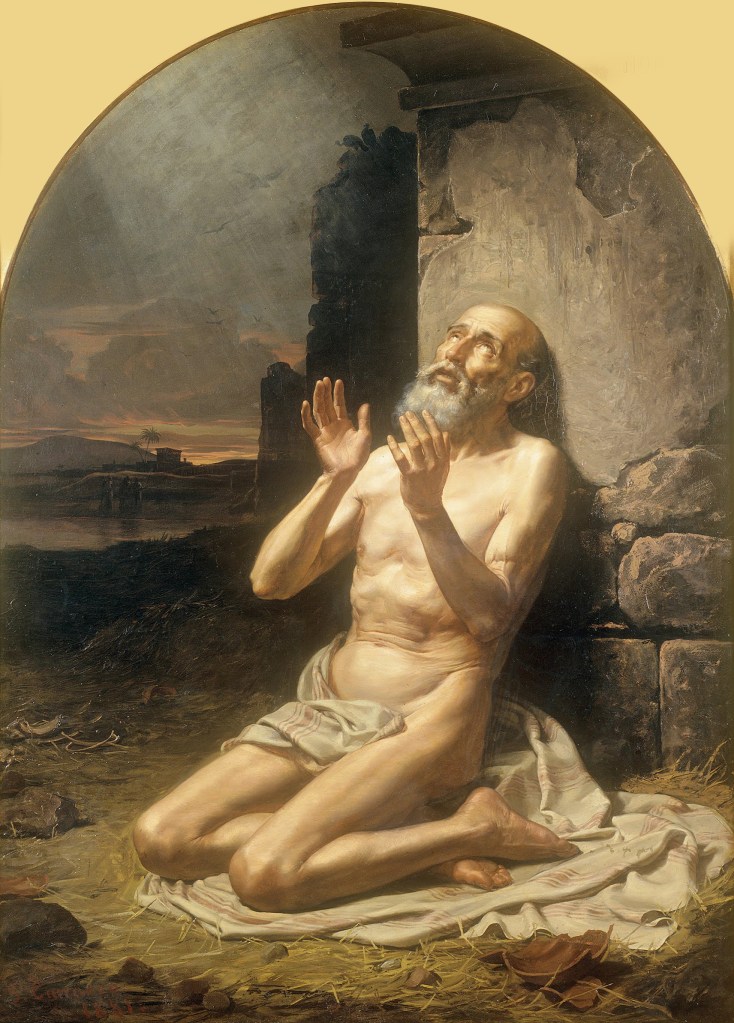
Though a work of fiction but a fruit of prayerful reflections about life’s realities unlike the Disney movie Pocahontas, Job suffered severely when he lost his children, properties and livestock in a single day. Worst of all, he was stricken with a rare disease and left to the care of a “nagging” wife and three friends who wanted him to curse God or admit his guilt for a sin for which God was punishing him.

But Job’s conscience was clear, remaining faithful to God throughout all his sufferings. His complaints and cries were actually a voicing out of his inner pains to God, an expression of his trust in Him, “But as for me, I know that my Vindicator lives, and that he will at last stand forth upon the dust… And from my flesh I shall see God; my inmost being is consumed with longing” (Job 19:25, 27).

Job like us today was not seeking any answer nor explanation at all for his sufferings; he cries to God like us because we believe only God can save us. We do not cry or air our pains to someone we do not trust or believe in; the same is true why we cry and complain to God!

God’s response to Job’s laments remind us today of the need for us to see the whole picture we are into in this vast universe, of how everyone and everything is interconnected in God through His own Son Jesus Christ.

Notice how the author structured the speech of God of seeming opposites in life: commanding the morning and being shown the dawn in verse 12; sources of the sea and depths of the abyss in verse 16; and, gates of death and gates of darkness in verse 17. Jewish thought at that time was so structured that they saw everything distinctly different like morning and dawn, sea and abyss, death and darkness. That explains why they were so strict with the letters of the law that they eventually forgot the primacy of the human person which Jesus tried to emphasized to them in His teachings and healings. Jesus came to show us how everything and everyone in this whole creation is linked together, interrelated in God through Him.

This He did when He died on the Cross.

Photo by Fr. Gerry Pascual of the fresco at the Assisi Basilica, Italy, 2019.

It is sad that St. Francis of Assisi is often “romanticized” by many nature lovers even by some “new agers” for his love for nature and animals. More than sentimental reasons, St. Francis’ love and concern for nature and animals were all the result of his deep love and devotion to Jesus Christ crucified found daily in the celebration of the Holy Eucharist.

St. Francis realized and experienced the interconnectedness of everything and everyone in his own sufferings and pains in life he humbly embraced and accepted as we see in that verse we pray at every Station of the Cross he had composed:

V. We adore You, O Lord Jesus Christ, and we bless you. R. Because by Your holy Cross, You have redeemed the world. 

For his love for the Cross and his own sufferings, Jesus blessed St. Francis with the stigmata, His five wounds at His crucifixion.

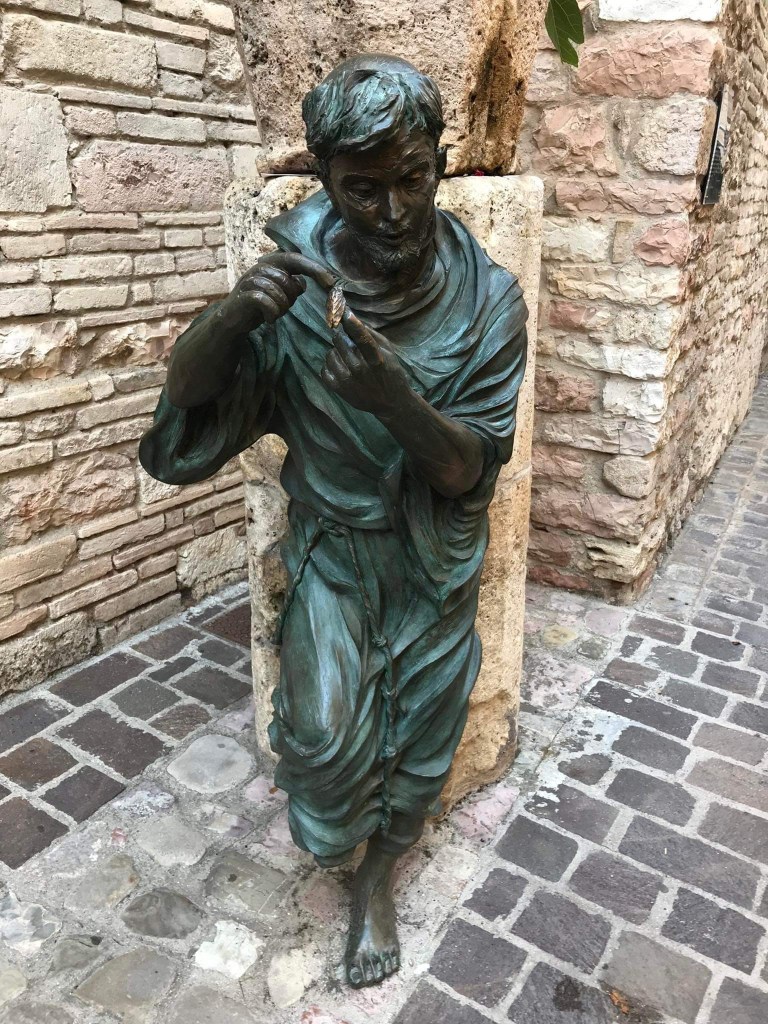
Photo by Fr. Gerry Pascual, Sculpture of the young St. Francis in Assisi, Italy, 2019.

After receiving those wounds, St. Francis was blinded as he went through severe sufferings after going through well-intentioned surgeries that went so bad. He was in his 40’s at that time and despite his great sufferings, it was during that period when he produced so many great writings we all cherish until now, notably the Canticle of the Sun where we find his famous expressions “brother sun, sister moon, and cousin death” – the very same things God expressed to Job in that speech out of the storm in our first reading today that is echoed by Disney’s Pocahontas in the theme “The Color of the Wind”.

But unlike that Disney movie that sugarcoats life’s realities of sufferings and pains, both Job and St. Francis of Assisi remind us today that the more we embrace our pains and sufferings in life like them, the more we see life’s wholeness, our oneness in God and the rest of His creations when seen in the light of the Cross of Jesus Christ.

When we see this oneness and interconnectedness in life, that is when we actually grow and mature, become fruitful as we find fulfillment in life despite the difficulties and pains we go through. Have a blessed weekend everyone! Happy feast day too to our Franciscan brothers and sisters!


From YouTube.com.

Have you…?

The Lord Is My Chef Daily Recipe for the Soul by Fr. Nicanor F. Lalog II
Friday, Memorial of St. Francis of Assisi, 04 October 2024
Job 38:1, 12-21, 40:3-5 <*{{{{>< + ><}}}}*> Luke 10:13-16
Photo by Ms. Marissa La Torre Flores in Switzerland, August 2024.
As we celebrate today the
memorial of St. Francis of Assisi
in the light of our first reading
from the Book of Job,
You open our eyes anew
O God our loving Father
into your unfathomable mystery
of majesty and love for us.

Like Job,
we ask many questions
not really because we complain
to You but simply we have no one else
to turn to; we have so many questions
in life and we are willing to wait if ever
there would be any answer at all
but one thing for sure,
we are certain You have all the answers.
Be patient with our many whys, 
O God, for we have no any reply
to any of your single question
"Have you ever in your lifetime commanded
the morning and shown the dawn its place...?
Have you entered into the sources
of the sea, or walked about in the depths
of the abyss?
Have the gates of death been shown to you,
or have you seen the gates of darkness?
Have you comprehended the breadth
of the earth? Tell me if you know all"
(Job 38:12, 16-18).
Like St. Francis of Assisi,
give us the grace to dare follow
your Son Jesus Christ not only
in humility and poverty
but most especially in His Cross;
forgive us, Father
and let us do away with all the
"sentimentality" cultivated by
nature lovers including "new agers"
on St. Francis' love for nature
rooted in Christ's sufferings and
commitment to a poor and simple life.
Like Job
and St. Francis who
lovingly embraced Jesus with
His Cross, may we also realize our
"smallness" before you, O Lord
in our trials and sufferings to experience
at the same time the joy and glory
in comprehending the "breadth
and length
and height
and depth"
of Christ's love
that surpasses knowledge
so that we may be filled with
your fullness,
dear God
(Ephesians 3:18).
Amen.
Photo by Ms. Marissa La Torre Flores in Switzerland, August 2024.

Praying for the patience of Job

The Lord Is My Chef Daily Recipe for the Soul by Fr. Nicanor F. Lalog II
Thursday in the Twenty-sixth Week of Ordinary Time, Year II, 03 October 2024
Job 19:21-27 <*((((>< + ><))))*> Luke 10:1-12
Photo by Mr. Jay Javier, 07 September 2024.
God our loving Father:
Grant me the "patience of Job".
Like him, everyday I go through many
trials and sufferings:
some are of my own-making,
some can be explained and understood,
but most often,
many of them are a mystery,
beyond explanations,
beyond comprehension.
Yes, Lord:
many times I have so many
questions in life that are left
unanswered but like Job,
I believe You alone knows
everything I am going through,
especially the pains and hurts,
the difficulties and hardships.

But as for me, I know that my Vindicator lives, and that he will at last stand forth upon the dust; Whom I myself shall see: my own eyes, not another’s, shall behold him, And from my flesh I shall see God: my inmost being is consumed with longing (Job 19:25-27).

Photo by Pixabay on Pexels.com
Lord Jesus Christ:
Thank you for calling me,
for sending me into your
great harvest;
how lovely are your words,
"The harvest is abundant
but the laborers are few;
so ask the master
to send out laborers
for his harvest" (Matthew 10:2);
so many times,
we think the solution to our
problems are found in things
without knowing nor realizing
what we need are more people
willing to labor with somebody else's
pains and hurts,
people willing to labor
for people so lost in the mysteries
of life saddled with many things
without clear explanations
except to be patient like Job,
trusting that in the end,
our vindication is in You.
Amen.