Bloodlines do not bring Christmas

Lord My Chef Simbang Gabi Recipe for the Soul by Fr. Nicanor F. Lalog II
Thursday, Simbang Gabi-III, 18 December 2025
Jeremiah 23:5-8 ><}}}}*> + ><}}}}*> + ><}}}}*> Matthew 1:18-25
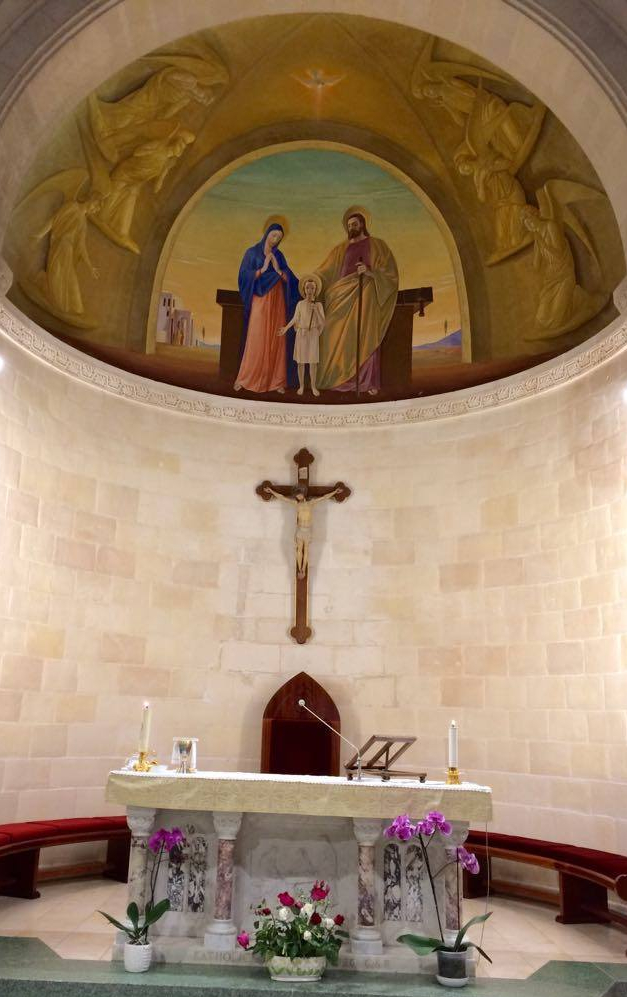
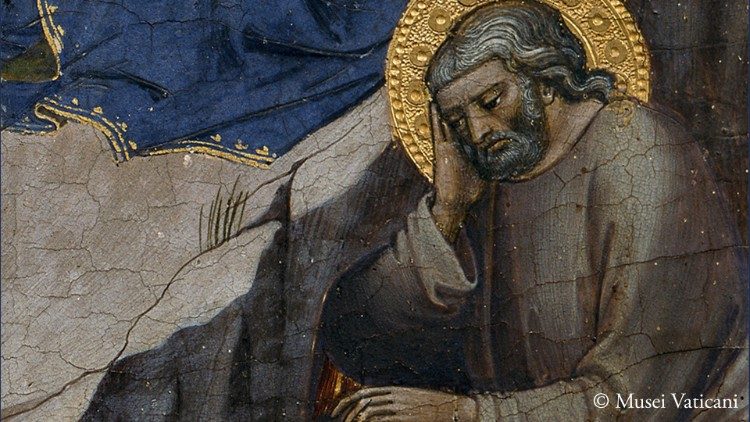
Photo of St. Joseph with Child Jesus from vaticannews.va.

After presenting to us the genealogy of Jesus, Matthew now gives us the very essence of Christ’s origin who is God himself making him truly Divine but at the same time coming from the lineage of Abraham and David, truly human like us in everything except sin.

But, in the light of the corruption so rampant in our country, I find Matthew’s genealogy so timely as it also shows us so clearly the need to break away from the much vaunted and abused powers of bloodlines and kinship so common in most nations and societies where key positions and status are considered as hereditary.

Sociologists call it “familism” which is too much emphasis on one’s family line that leads to abuses like nepotism in offices, dynasty in politics and even caste systems that all degrade of the value of every human person. We reflected yesterday how in the genealogy of Jesus, we are all beloved children of God; when some people cling to power and positions as if they are the only ones capable of doing things even in bringing Christmas, they are totally wrong.

See how in our country politicians shamelessly abuse their power in a family dynasty occupying all elective positions aside from controlling major businesses in their town or city, region or province. A classic example of kawalan ng kahihiyan. And thank God Jesus was not born in the Philippines!

Sorry for the rant but let us recall Matthew’s shift yesterday in the flow of Christ’s genealogy at the end: “Eliud the father of Eleazar. Eleazar became the father of Matthan, Matthan the father of Jacob, Jacob the father of Joseph, the husband of Mary, of her was born Jesus who is called the Christ” (Mt.1:15-16). See the break from the rhythmic cadence of “is the father of, is the father of” to stress that Jesus is from God, not from any man like St. Joseph, biologically speaking. This, I think, is crucial for Matthew so that no one can ever claim an exclusive family tie or bloodline in Jesus nor brag being a “relative” or even the “son” of God like that pastor now in jail in Manila.

Francisco Goya’s painting, “Dream of St. Joseph” (El Sueno de San Jose) done in 1772; from en.wikimedia.org.

With the birth of Jesus by Mary, all mankind by faith in Christ can now trace our origin in God – thanks to both St. Joseph and Blessed Virgin Mary! They showed us that Christmas did not happen by mere bloodlines but through active cooperation in the work of God.

This is how the birth of Jesus Christ came about. When his mother Mary was betrothed to Joseph, but before they lived together, she was found with child through the Holy Spirit. Joseph her husband, since he was a righteous man, yet unwilling to expose her to shame, decided to divorce her quietly. Such was his intention when, behold, the angel of the Lord appeared to him in a dream and said, “Joseph, son of David, do not be afraid to take Mary your wife into your home. For it is through the Holy Spirit that this child has been conceived in her (Matthew 1:18-20).

Photo by Deesha Chandra on Pexels.com

Men are seldom described by their relationship to a woman as it is more often the other way around like in the tradition of wives assuming their husband’s surnames.

Most notable exception anywhere in history is St. Joseph who is known more because of his connection to Mother Mary; however, it is in this unique aspect that we also find his greatness, his holiness.

Like in any patriarchal society, it is always the father who gives the identity to the child especially among the Jews. Every pilgrim who had gone to the Holy Land knows this so well when you look at the ID of tour guides and bus drivers that always include the lines that says “bar” followed by one’s father’s name as “son of so and so.” Unlike men, women easily claim motherhood for a child as part of her nature; a man would never give his name to any child not his.

But not Joseph who was really an exception for being “righteous” according to Matthew.

Photo from vaticannews.va, 2020.

Righteousness among the Jews is also holiness which is to keep and abide by the laws of God.

Here we find Matthew as a Jew writing to his fellow Jewish converts to Christianity that holiness is more than obedience to the Ten Commandments and its over 600 precepts every pious Jew must first follow.

For Matthew, righteousness or holiness is always complementary to justice which is more than legal fairness but having the character of God who is fair and merciful, compassionate and kind especially with the weak. In the first reading, we hear Jeremiah speaking about the coming Messiah to be called “the Lord is justice” who shall restore what’s broken, primarily his people.

Actually we got this thought on the complementarity of justice and righteousness from one of our favorite bloggers at WordPress, Sr. Renee Yann who in her “Lavish Mercy” issue in March 19, 2019 cited a Protestant exegete about the matter:

“Justice in the Old Testament concerns distribution in order to make sure that all members of the community have access to resources and goods for the sake of a viable life of dignity…. Righteousness concerns active intervention in social affairs, taking an initiative to intervene effectively in order to rehabilitate society, to respond to social grievance, and to correct every humanity-diminishing activity” (Walter Brueggemann, Journey to the Common Good).

That complementarity of justice and righteousness in St. Joseph is best expressed by Matthew when he said that “When Joseph awoke, he did as the angel of the Lord had commanded him and took his wife into his home.”

When Mary was found pregnant with a child not his, St. Joseph already displayed his righteousness when he took the concrete and painful step of quietly leaving her to spare her of all the shame and even punishment their laws imposed on such cases. And after the angel had explained to him everything about the pregnancy of Mary, St. Joseph all the more showed the depth and reality of his holiness or righteousness that was willing to forget his total self for the greater good of Mary and everyone!

Photo by author, “St. Joseph Protector of the Child Jesus”, 2024.

As a sign of his righteousness in accordance with his deep sense of justice, St. Joseph showed in his very life that true relationship with God is expressed in our love for others which would become later a major teaching by Jesus Christ.

Moreover, it was in accepting Mary as his wife that Jesus finally came into the world as our Savior. Today, St. Joseph is teaching us that Christmas happens whenever we respect and accept each other because that is when Christ comes in our midst like in their eventual marriage.

It was not the first time that St. Joseph displayed his kind of righteousness complemented by the virtue of justice. After the Nativity, St. Joseph took the difficult and perilous task of fleeing to Egypt to protect and save Mother Mary and the Infant Jesus from the murderous wrath of King Herod.

Twice St. Joseph acted as a righteous man in the temple: first at the presentation of Jesus when he allowed Simeon and Anna to take the Holy Infant into their arms and praised him; and second in the finding of Jesus in the temple when St. Joseph chose to step into the background to let the Child Jesus assume his teaching vocation among the learned men there, an apparent anticipation of the ministry of Jesus later. (Recall in that scene that St. Joseph was totally silent while it was the Blessed Mother who did all the talking by speaking to Jesus how worried they have been looking for him.)

Based on these few instances found in the gospel wherein the Holy Family were presented together, St. Joseph remained righteous and just during their hidden years in Nazareth as he worked hard to provide for Mary and Jesus, actively doing good for his family and community while silently fostering, forming the personality and ministry of Jesus Christ.

Let us imitate St. Joseph working hard in silence amid the great temptations of glamor in this social media age, always rooted in Christ, our only Savior and Mediator. True holiness is purely grace and part of that is our hard work in actively bringing Jesus into this world so sick, so dark with evil and sin. Amen. Have a blessed Thursday!
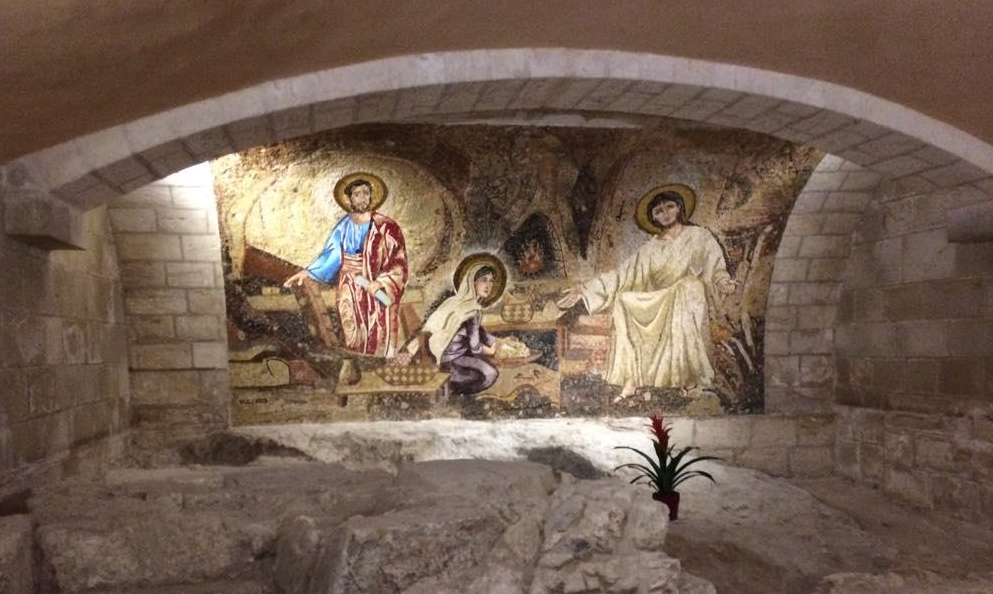
Photo by author, site of the Nazareth of the Holy Family underneath the Church of St. Joseph in Nazareth, Israel.

Lent is silence in the Lord like St. Joseph

40 Shades of Lent by Fr. Nicanor F. Lalog II, 19 March 2025
Solemnity of St. Joseph, Husband of the Blessed Virgin Mary
2 Samuel 7:4-5, 12-14, 16 + Romans 4:13, 16-18, 22 + Matthew 1:16, 18-21, 24
Photo by author, Sacred Heart Novitiate, Novaliches, QC, 17 March 2025.
God our most loving Father,
thank you for this Solemnity of St. Joseph,
the most chaste husband of the Blessed Virgin Mary
who witnessed to us with his life of faith
the important aspects of Lent
that have become a rarity these days -
silence and stillness in you.
In this world of 24-7
when everything is "instant",
we have lost the sense and beauty
of silence and stillness in you,
O Lord, making us to drift farther
away from you,
not believing you,
not obeying you
relying more in our powers
and control of everything.

But life is not about doing
and things as your Son Jesus
have shown us:
life is about being and loving,
of persons in whom we find you
and meaning of our lives.

Joseph her husband, since he was a righteous man, yet unwilling to expose her to shame, decided to divorce her quietly. Such was his intention when, behold, the angel of the Lord appeared to him in a dream and said, “Joseph, son of David, do not be afraid to take Mary your wife into your home…She will bear a son and you are to name him Jesus, because he will save his people from their sins.” When Joseph awoke, he did as the angel of the Lord had commanded him and took his wife into his home (Matthew 1:19-20, 21, 24).

Photo by author, Sacred Heart Novitiate, Novaliches, QC, 17 March 2025.
Teach us, Jesus
to be like St. Joseph
your foster father
to be holy and righteous:
obedient to your laws
but most of all,
faithful and loving to God
through one another.
Teach us, Jesus
to be like St. Joseph
your foster father
to be silent because
silence is the domain of trust:
let us trust you more 
than our selves,
than our gadgets,
than our modern thoughts
and beliefs;
teach us Jesus
to be like St. Joseph
to be still in this time
when everyone is easily
agitated foolishly
by the cacophony of
various shouts and cries
in social media that are mostly
not true.
Photo by author, Sacred Heart Novitiate, Novaliches, QC, 20 March 2024.
Teach us, Jesus,
that life is a daily Lent,
of being silent and still
in your presence,
in your voice,
in your plans
so that like St. Joseph
your foster father
we may take care of you
found in each one of us
especially the weak
and the poor.
Amen.

Family life is sacred

The Lord Is My Chef Easter Recipe for the Soul by Fr. Nicanor F. Lalog II
Wednesday, Memorial of St. Joseph the Worker, 01 May 2024
Colossians 3:14-15, 17, 23-24 >>> + <<< Matthew 13:54-58
“Childhood of Christ” painting by Gerard von Honthorst, franciscanmedia.org.
Praise and glory to You,
God our Father in entrusting
Your Son Jesus Christ to the most
noble and holiest of men,
St. Joseph who came from the
lineage of King David.
Though he never spoke a word
in the Gospel, St. Joseph's obedience
in doing everything as You had
commanded him (Mt. 1:24) proved
his being a model disciple too
of Jesus like his wife,
the Blessed Virgin Mary.
On this first day of May
when we celebrate his memorial as
St. Joseph the Worker,
our beloved Patron shows us how
family life is so sacred as part
of Your Divine plan, O gracious
Father in heaven.
St. Joseph worked as a carpenter,
a provider to the Holy Family who must
have also experienced every dad's problem
of never making enough for Mary and Jesus;
most likely, the Holy Family he headed
did not live a perfect idyllic life,
living through scandals and gossips
as our gospel today showed when
the people of Nazareth rejected
the adult Jesus Christ,
taking offense at him by asking,
"Is he not the carpenter's son?"
(Mt. 13:55, 57).
Photo by author, site of St. Joseph’s carpentry shop beneath St. Joseph’s Church in Nazareth, Israel, May 2017.
Dear God,
grant us the same grace
You gave St. Joseph who lived
through scandal and gossip in a
righteous way, just like what St. Paul
had told us in the first reading,
"And over all these put on love,
that is, the bond of perfection";
help us to be like St. Joseph
who "let the peace of Christ
controlled his heart" (Col.3:14-15)
in everything to show us that holiness
in life is not a poster card
but one lived in the ambiguity
and complexity of this world
rooted in Jesus our Lord.
Amen.

St. Joseph,
Protector of the Child Jesus
and Mary,
Pray for us!
Photo by author, Sacred Heart Novitiate, Novaliches, QC, 20 March 2024.

Praying to find meaning of life in our work

The Lord Is My Chef Daily Recipe for the Soul by Fr. Nicanor F. Lalog II
Monday, Feast of St. Joseph the Worker, 01 May 2023
Genesis 1:26-2:3   ><]]]]'> + <'[[[[><   Matthew 13:54-58
Photo by author, Sacred Heart Novitiate, Novaliches, QC, 20 March 2023.
Glory and praise to you,
God our loving Father
in giving us a share 
in your work in making
this world a better place;
despite our sinfulness and
turning away from you
in the time of Adam and Eve,
you still call us to participate
in your work of holiness
by calling St. Joseph to
marry the Blessed Virgin
Mary, the Mother of your Son
and our Lord Jesus Christ.
Despite the difficult situation
and work ahead of him, 
St. Joseph obeyed you,
working in silence,
doing your will, 
taking care of Jesus and Mary
that in his work, 
people recognized
Jesus!

Jesus came to his native place and taught the people in their synagogue. They were astonished and said, “Where did this man get such wisdom and mighty deeds? Is he not the carpenter’s son?”

Matthew 13:54-55
Like St. Joseph,
may we not find only
the labor and amount
of work to be done
in our tasks and jobs
but most of all,
that we may find
you in Jesus Christ,
the very meaning of 
our life and work.
Amen.

Hanap-buhay

Lawiswis Ng Salita ni P. Nicanor F. Lalog II, Ika-01 ng Mayo 2023
Larawan kuha ng may-akda noong 2017, ang tinuturing “gawaan” ni San Jose sa Nazareth sa ilalim ng isang kapilya sa kanyang ngalan ngayon.
O San Jose na aming
patron ng mga manggagawa
bagama't marami ang hindi
nakaka-unawa sa iyong
mga ginawa 
ng buong katahimikan
at katapatan
pangangalagaan
Panginoong Jesus 
Manunubos natin 
pati na Kanyang Ina,
ang Birheng Maria
upang matupad 
banal na layon ng Diyos
kaligtasan ng sangkatauhan;

Bagama't walang sinsasaad
mga Banal na Kasulatan
sa iyong katauhan
maliban sa iyong pagiging
matuwid na mula sa lahi
ni Haring David,
sa iyo San Jose
mababanaagan ang 
kabutihan at kadalisayan
ng kalooban nang si Jesus
ay kilalanin at ituring
"anak ng karpintero"
dahil marahil
kayo ay magkapareho
sa maraming aspekto.
Turuan kami
San Jose, aming pintakasi
higit sa mga gawain at
trabaho, aming hanapin 
diwa at kahulugan ng buhay;
lahat ng pagpapagal
ay isang pag-aalay
sa bawat obra
si Kristo ang taglay
sa Kanya lahat nakasalalay
dahil Siya ang buhay
kaya kami ay tulungan
gumawa ng kabutihan
sa gitna ng katahimikan
ng aming paghahanap-buhay!

Unang atas na gawain

Lawiswis ng Salita ni P. Nicanor F. Lalog II, Ika-27 ng Marso 2023
Larawan kuha ng may akda, 20 Marso 2023, Sacred Heart Novitiate, Novaliches, QC.
Ang unang atas nating gawain
bilang mga alagad ni Kristong Panginoon natin
ay katulad din ng gampaning hinabilin 
kay San Jose na butihin:
pangalanang "Jesus" isisilang ng Birhen
kahuluga'y ang Diyos Tagapagligtas natin!
O butihing San Jose
tulungan mo kami mapalalim
katauhan at kabanalan namin
upang nahihimbing man o gising 
Banal na Kalooban ng Diyos 
manaig palagi sa amin
gaya nang iyong sundin 
mga habilin ng anghel
sa loob ng iyong panaginip:
tuluyang pakasalan si Maria
at ibigay ang pangalang Jesus
sa Sanggol niyang isisilang
na ang kahuluga'y
ang Diyos ang Tagapagligtas natin.
 Ito ang ipinahayag ni Jesus
nang ipako sa Krus:
Diyos ating Tagapagligtas 
hindi kaagaw sa kapangyarihan 
na akala ng karamihan;
pinipigilan tayo sa kasalanan
upang di tayo masaktan 
para sa ating sariling kapakanan;
doon sa Krus pinatunayan
Diyos ating Tagapagligtas
sariling buhay inalay ni Jesus
upang huwag tayong mawalan
bagkus magkaroon ng
buhay na walang hanggan.
Atin gampanan unang atas
na ipakilala ang Diyos Tagapagligtas,
tularan katahimikan at katapatan ni San Jose
na kailanma'y hindi iniwan bagkus iningatan si Jesus
kaya sa kanyang pagpanaw nang di na magising,
katabi at kapiling Diyos Tagapagligtas natin!
Larawan kuha ng may akda, 20 Marso 2023, Sacred Heart Novitiate, Novaliches, QC.

Our first task

40 Shades of Lent by Fr. Nicanor F. Lalog II, 19 March 2023
Monday, Solemnity of St. Joseph, Spouse of Blessed Virgin Mary
2 Samuel 7:4-5, 12-14, 16 + Romans 4:13, 16-18, 22 + Matthew 1:16, 18-21, 24
Photo by author, Sacred Heart Novitiate, Novaliches, QC, 20 March 2023.
Praise and thanksgiving to you, God our Father
for the gift of calling me like St. Joseph
to bring your Son Jesus into the world
despite my many fears and doubts,
inadequacies, weaknesses 
and sinfulness, 
you entrusted me 
with the same task you gave St. Joseph 
of making known your Son
as “God Saves” - Jesus.

…the angel of the Lord appeared to him and said, “Joseph, son of David, do not be afraid to take Mary your wife into your home… She will bear a son and you are to name him Jesus, because he will save his people from their sins.”

Matthew 1:20, 21
Remind me always, dear God,
of this first task you gave us 
your beloved children
to make known to everyone 
that Jesus came to die on the Cross 
to show us “God saves” - 
that we are so wrong to think
you are domineering and ruthless God,
that you are not a God hungry of power,
that you are not insistent, and demanding God,
most of all, you are not a God who competes
with us your mere creatures like everyone thinks
from Adam and Eve down to us today.
Photo by author, Chapel of Holy Family, Sacred Heart Novitiate, Novaliches, QC, 2014.
Teach me to be silent, 
trustful of you, O Father, 
like St. Joseph not bothered at all
of how things would turn out 
with my task to make people realize and
experience Jesus Christ;
give me the courage and obedience 
of St. Joseph to do as you have
tasked me to witness this great mystery 
and wonder of your love
because “God saves”.
Amen.

Prayer to work centered on the Lord like St. Joseph

The Lord Is My Chef Breakfast Recipe for the Soul by Fr. Nicanor F. Lalog II
Memorial of St. Joseph the Worker, 01 May 2021
Genesis 1:26-2:3   <*(((>< + ><)))*>   Matthew 13:54-58
Photo by author, site of St. Joseph’s workshop in Nazareth beneath the chapel in his honor, May 2017.

God our loving Father, we praise and thank you for the gift of St. Joseph whom you have called to be the husband of Mary and the foster father of your Son Jesus Christ here on earth. In him, you have shown us the value of sharing in your work to nurture earth and its resources.

Most of all, in St. Joseph you have taught us to work centered on our Lord Jesus Christ by integrating work with family and with fatherhood to become truly a provider not only of food, clothing and other material needs but most of all in providing love and guidance to the family.

In St. Joseph, the motivation and the purpose of work is solely to serve Jesus Christ which is very evident in the gospel today.

Jesus came to his native place
and taught the people in their synagogue.
They were astonished and said,
"Where did this man get such wisdom and mighty deeds?
Is he not the carpenter's son?"
(Matthew 13:54-55)

How beautiful that in the “wisdom and mighty deeds” displayed by Jesus, the people remembered St. Joseph the carpenter – what a marvelous job he must have done in forming and providing for our Lord!

He must have worked diligently for you, dear God, never focusing attention to himself so unlike these days when we have categories of workers like those doing “white collar jobs” and “blue collar jobs”.

Dearest God our Father, in this time of the COVID-19 pandemic when so many people have lost work and are now suffering the adverse effects of quarantine, we pray in the most special way for our workers to please protect them from all harm and sickness especially those working in the hospital.

We pray for those trying to find work these days so they may continue to provide for their families.

Photo by author, Chapel of St. Joseph, Nazareth, Israel, May 2017.

Open our hearts on this year of St. Joseph as proclaimed by Pope Francis last December 8 on the occasion of the 150th anniversary of his proclamation as patron of the universal church:

The crisis of our time, which is economic, social, cultural and spiritual, can serve as a summons for all of us to rediscover the value, the importance and necessity of work for bringing about a new “normal” from which no one is excluded. Saint Joseph’s work reminds us that God himself, in becoming man, did not disdain work. The loss of employment that affects so many of our brothers and sisters, and has increased as a result of the Covid-19 pandemic, should serve as a summons to review our priorities. Let us implore Saint Joseph the Worker to help us find ways to express our firm conviction that no young person, no person at all, no family should be without work!

Pope Francis, “Patris Corde” #6

O most chaste St. Joseph, pray for us! Amen.

Loving like St. Joseph in the time of pandemic

40 Shades of Lent by Fr. Nicanor F. Lalog II
Friday, Solemnity of St. Joseph, Spouse of the Blessed Virgin Mary
2 Samuel 7:4-5, 12-14, 16  +  Romans 4:13, 16-18, 22  +  Matthew 1:16, 18-21, 24
Photo by author of the site believed to be the workshop of St. Joseph in Nazareth, 2017.

Today’s celebration of the Solemnity of St. Joseph as most chaste spouse of the Blessed Virgin Mary is a very special one being in the “Year of Saint Joseph” that began last December 8, 2020 until December 8, 2021 in commemoration of the 150th year anniversary of Pope Pius IX’s declaration of the beloved saint as Patron of the Universal Church.

In launching this Year of Saint Jospeh last year, Pope Francis wrote in his Apostolic Letter “Patris Corde” (With a Father’s Heart) how the COVID-19 pandemic has helped us see more clearly the importance of “ordinary” people who, though far from the limelight, exercise patience and offer hope every day.

The Holy Father explained that the “ordinary” people like those who kept our lives going especially during the lockdowns resemble Saint Joseph, “the man who goes unnoticed, a daily, discreet and hidden presence,” who nonetheless played “an incomparable role in the history of salvation” (Vatican News, 12 December 2020).

I really hope you can have time to read today this very short letter by Pope Francis who is a known devotee of Saint Joseph having popularized among us during his 2015 Papal Visit the image of “Sleeping Saint Joseph”.

In Patris Corde, Pope Francis gives us some helpful points on how we can love with the heart of God our Father like Saint Joseph during this time of the COVID-19 pandemic. One of these traits the Pope invites us to imitate from Saint Joseph is his “creative courage” in loving God and loving others.

If the first stage of all interior healing is to accept our personal history and embrace even the things in life we did not choose, we must now add another important element: creative courage. This emerges especially in the way we deal with difficulties. In the face of difficulty, we can either give up and walk away, or somehow engage with it. At times, difficulties bring out resources we did not even think we had.

Pope Francis, Patris Corde #5

A creative person is always someone who is deeply in love with another person or with one’s craft, art, career or whatever passion.

The most loving person is always the most creative like Saint Joseph who sought ways expressing his love for Mary and her child by deciding to silently divorce her as the gospel tells us.

This is how the birth of Jesus Christ came about. When his mother Mary was betrothed to Jospeh, but before they lived together, she was found with child through the Holy Spirit. Joseph her husband, since he was a righteous man, yet unwilling to expose her to shame, decided to divorce her quietly.

Matthew 1:18-19
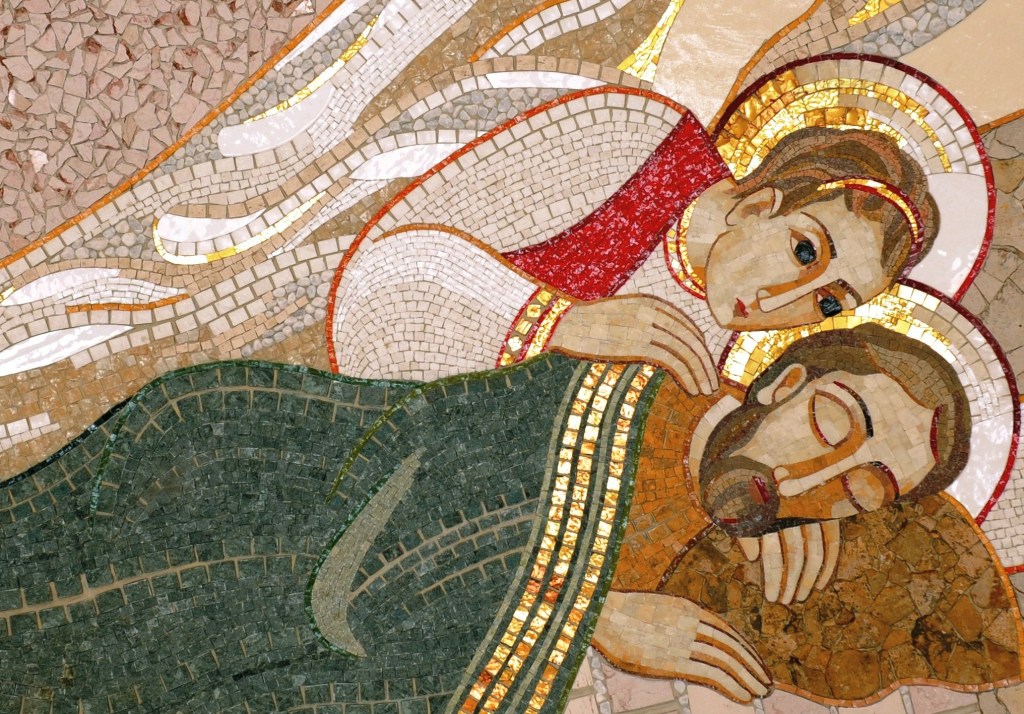
Photo by Arch. Philip Santiago of a mosaic at the San Padre Pio Shrine at Rotondo, Italy of the angel appearing to Saint Joseph in his dream.

Holiness is having creative courage like Saint Joseph.

Notice how the Pope’s description of Saint Joseph is not far from St. Matthew’s calling him a “righteous man” – a holy man – who obeys the Laws of God handed down to them by Moses, including their other traditions meant to keep them clean and pure before God.

Problem during that time is how people have lost sight of God and of others that they were so focused on the letters of the law than its spirit, becoming impersonal in the process as we have seen in instances when they would ask Jesus why he healed the sick even on sabbath day. Worst is when people brought to Jesus a woman caught committing adultery, reminding him of Moses’ instruction to stone her in public.

Such was the dilemma faced by Saint Joseph with Mary being pregnant with a child definitely not his!

In deciding to silently leave Mary, Saint Joseph expressed his righteousness or holiness wherein he showed the true interpretation of their Laws by upholding the dignity of every person, respecting life above all. Like Jesus Christ, Saint Joseph showed that real holiness is authentic love that is willing to sacrifice for the beloved by having the courage to be in pain in giving up or losing a beloved.

Here we find Saint Joseph was not only courageous in facing the painful truth about Mary having a baby not his but also very creative in the sense that because of his great love for the Blessed Virgin, he did not want her exposed to shame and public humiliation in allegedly breaking the seal of their betrothal.

Having courage is more than being able to do death-defying acts that is more on physical strength; courage is a spiritual virtue, a spiritual strength when we do extraordinary things because of higher ideals and values like the love of Jesus who offered us his life on the Cross.

Courage is from the Latin word “cor” for heart which is the seat of our being. And to have courage is to be true and loving that we have such expressions to speak from the heart, to listen to our heart, and to act from our heart when we dare to lose ourselves because of love.

Photo from Aleteia.org of “Let Mum Rest” image St. Joseph nursing the Infant Jesus while Mary sleeps, 2019.

A person who truly loves is always creative, 
finding ways in expressing one's love even sometimes 
it may be painful and difficult.

A “creatively courageous” person like Saint Joseph is someone so deeply in love with Mary and with God: after learning the circumstances surrounding Mary’s pregnancy, St. Matthew tells us “When Joseph awoke, he did as the angel of the Lord had commanded him and took his wife into his home” (Mt.1:24).

Saint Joseph’s love for Mary found ways to spare her all the pains and hurts that may result if found with a baby not his; but after learning the truth, the more we find him creatively courageous when he sought many ways to save Mother and Child from all harm and even death like bringing them to Egypt in the time of Herod.

See that when Saint Joseph accepted Mary, Jesus came forth to us while at the same time, when Saint Joseph accepted God through the angel as expression of his deep faith and love, he took Mary as wife.

And this is what Pope Francis further explains in Patris Corde that at the end of every account in which Saint Joseph plays a role, the Gospel tells us that he gets up and takes Jesus and Mary who are the most precious treasure of our faith.

Taking Jesus and Mary like Saint Joseph as creative courage calls us Christians to always love the Church and in loving the Church, we love the poor for whom Jesus came and Mary identified herself with in her Magnificat which she sang after accepting the Annunciation by the Angel of Christ’s birth which we celebrate next week on March 25.

In this time of the pandemic, we are called to be creatively courageous in finding Jesus among those people too familiar with us as well as with those so different from us. Don’t you find it so funny that the people we always take for granted are those either so close to us like family or completely strangers?

Being creatively courageous in this time of the pandemic means being more sensitive with others especially in our words and actions like Saint Joseph.

I was wondering during prayers why did he not ask Mary about the truth of her pregnancy so that he would have been spared with all the thinking and praying? That is when I realized the value of Saint Joseph’s silence: he did not speak at all to Mary as a sign of his love and oneness with her who must have been into some difficulties too with the situation of being the Mother of Christ. sympathy.

In his silence, Saint Joseph expressed his complete trust in Mary and in God. And in his being silent, Saint Joseph was creatively courageous expressing aloud his tenderness and care for Mary and her Child, something we need so much in this time of the pandemic.

Let us pray to Saint Joseph in this time of social distancing that like him, we may have the creative courage in touching others with the love of God, especially those who are sick and suffering, those in difficult situations, and those forgotten by their families and friends and even by the society. Have a blessed Friday, everyone!

Saint Joseph, Patron of the Universal Church, pray for us!

Photo from Vatican News, St. Joseph and the Child Jesus, 14 December 2020.

Loving “with a Father’s heart” like St. Joseph

The Lord Is My Chef Simbang Gabi Recipe-3 for the Soul
by Fr. Nicanor F. Lalog II 
Friday, Advent Week III, 18 December 2020
Genesis 49:2, 8-10     >><)))*> + >><)))*> + >><)))*>     Matthew 1:1-17
Photo from Vatican News, St. Joseph and the Child Jesus, 14 December 2020.

Today we continue the second part of Matthew’s genealogy that ended yesterday with a marked shift in its structure of begetting: “Eleazar became the father of Matthan, Matthan the father of Jacob, Jacob the father of Joseph, the husband of Mary. Of her was born Jesus who is called the Christ” (Mt.1:15-16).

Matthew now fortifies this fact and conviction that Jesus Christ is the fulfillment of the promise to the Patriarchs, the Son of God who became human like us. See his solemn pronouncement about the coming of Jesus Christ:

This is how the birth of Jesus Christ cam about. When his mother Mary was betrothed to Jospeh, but before they lived together, she was found with child through the Holy Spirit. Joseph her husband, since he was a righteous man, yet unwilling to expose her to shame, decided to divorce her quietly.

Matthew 1:18-19

It is so timely that on this rare occasion when we reflect on Joseph’s role in the coming of Jesus Christ that Pope Francis recently declared December 8, 2020 to December 8, 2021 as the “Year of Saint Joseph” in celebration of the 150th anniversary of the declaration of the beloved saint as Patron of the Universal Church with his Apostolic Letter “Patris Corde” (With a Father’s Heart).

A known devotee of Saint Joseph who popularized in 2015 during his visit to the country the image of the “Sleeping Saint Joseph”, Pope Francis said in writing Patris Corde how the COVID-19 pandemic has helped us see more clearly the importance of “ordinary” people who, though far from the limelight, exercise patience and offer hope every day.

The Holy Father explained that the “ordinary” people like those who kept our lives going especially during the lockdowns resemble Saint Joseph, “the man who goes unnoticed, a daily, discreet and hidden presence,” who nonetheless played “an incomparable role in the history of salvation” (Vatican News, 12 December 2020).

Let us reflect on two beautiful traits of St. Joseph that made him love Jesus and Mary with a father’s heart according to Pope Francis: creatively courageous and being in the shadows.

Photo from Vatican News, 12 December 2020.

Saint Joseph as a creatively courageous father

In describing Joseph as a “creatively courageous father”, Pope Francis showed us his deep devotion to this great saint described by Matthew as a “righteous man” or holy man who obeys the Laws of God.

Having courage is more than being able to do death-defying acts that is more on physical strength; courage is a spiritual virtue, a spiritual strength when we do extraordinary things because of higher ideals and values like love and gaining eternal life in Jesus Christ.

According to Pope Francis, “creative courage emerges especially in the way we deal with difficulties. In the face of difficulty, we can either give up and walk away, or somehow engage with it. At times, difficulties bring out resources we did not even think we had” (Patris Corde, 5).

The word courage is from the Latin “cor” for heart which is the seat of our being. To have courage according to the late Fr. Henri Nouwen means “to speak from the heart, to listen to our heart, and to act from our heart” when we dare to lose ourselves because of love.

A creative person is always someone who is deeply in love with another person or with one’s craft, art, career or whatever passion. See how people so in love become so creative that they can write songs and poems, do wonderful works, and accomplish so many wonderful things.

A “creatively courageous” person like Saint Joseph is someone so deeply in love with Mary and with God: after learning the circumstances surrounding Mary’s pregnancy, Matthew tells us “When Joseph awoke, he did as the angel of the Lord had commanded him and took his wife into his home” (Mt.1:24).

Photo by author, Gaudete Sunday 2020.

Matthew tells us how Saint Joseph from the very start has always been creatively courageous when he decided to quietly divorce Mary after learning of her pregnancy: here we find Saint Joseph not only very courageous to face the bitter truth about Mary having a baby not his but also very creative in the sense that because of his great love for her, he did not want her exposed to extreme shame and public humiliation in breaking the seal of their betrothal.

His love for Mary found ways to spare her all the pains and hurts that may result if found with a baby not his; but after learning the truth, the more we find him creatively courageous when Joseph found so many ways to save Mother and Child from all harm and even death.

See that when Joseph accepted Mary, Jesus came forth to us while at the same time, when Joseph accepted God through the angel as expression of his deep faith and love, he took Mary as wife.

And this is what Pope Francis further explains in Patris Corde that at the end of every account in which Saint Joseph plays a role, the Gospel tells us that he gets up and takes Jesus and Mary who are the most precious treasure of our faith.

Taking Jesus and Mary like Saint Joseph as creatively courageous calls us Christians to always love the Church and the sacraments and charity, and most of all in loving the Church, we also love the poor for whom Jesus came and Mary identified herself with in her Magnificat.

In this time of the pandemic, we are called to creatively courageous in finding Jesus among those people too familiar with us and those so different from us because too often, they are the people we always take for granted, those too close to us and the strangers.

Being creatively courageous in this time of the pandemic means also being more sensitive with others especially in our words and actions that many times lack any sympathy or empathy with those living at the margins like the poor and the sick, those living alone, and those forgotten by families and by society.

Saint Joseph, a father in the shadows

I love the way Pope Francis started his Apostolic Letter about Saint Joseph because it is something very much alike with Matthew’s unique style in beginning his gospel with the genealogy of Jesus: the Holy Father began by citing how Joseph loved Jesus according to the gospels “WITH A FATHER’S HEART” written in all caps!

Pope Francis must be stressing to us these days of the need to have a father’s heart which is also rarely heard because most often, the heart is more associated with the mother. But that is what the world precisely needs now, a father’s heart like that of God our Father.

In every exercise of our fatherhood, we should always keep in mind that it has nothing to do with possession, but is rather a “sign” pointing to a greater fatherhood. In a way, we are all like Joseph: a shadow of the heavenly Father, who “makes his sun rise on the evil and on the good, and sends rain on the just and on the unjust” (Mt 5:45). And a shadow that follows his Son.

Pope Francis, Patris Corde, 7
Photo is painting on acrylic (48×96) by Bulakenyo artist Aris Bagtas called “Luklukan ng Karunungan” (Seat of Wisdom) displayed at the second floor of the Library of the Immaculate Conception Major Seminary at Guiguinto, Bulacan.  A lively and beautiful rendition by Aris of Mary teaching her Son Jesus Christ while at the background is Joseph looking at them.  Used with permission.

To be with a heart of the father like God’s is to be “most chaste” like Saint Joseph which the Holy Father said is more than a sign of affection but the summation of an attitude that is the opposite of possessiveness.

Chastity is freedom from possessiveness in every sphere of one’s life. Only when love is chaste, is it truly love. A possessive love ultimately becomes dangerous: it imprisons, constricts and makes for misery. God himself loved humanity with a chaste love; he left us free even to go astray and set ourselves against him. The logic of love is always the logic of freedom, and Joseph knew how to love with extraordinary freedom. He never made himself the centre of things. He did not think of himself, but focused instead on the lives of Mary and Jesus.

Pope Francis, Patris Corde

I am so glad that Pope Francis mentioned the need to be “most chaste” as opposite of possessiveness because there is an ongoing crisis in fatherhood among us these days. Not just to biological fathers but also to fathers in the other institutions especially the Church.

Are we not priests in deep trouble with chastity these days not only with the scourge of sexual scandals and misconduct this century but also in how we have been lording it over in our parishes that we have remained an institution seen more in terms of power and control that we have never evolved to Avery Dulles’ other models of the Church like a community of disciples?

Are we not also guilty in the Church like fathers in the family and other institutions who “possessed” those below them, totally forgetting it is the Lord’s vineyard, that we are His stewards tasked to lead our flock to growth and maturity when all we think of is our own prestige and popularity that Jesus Christ is forgotten and put to the sidelights because we feel so good, so great?

In this time of pandemic amid the many temptations of social media, we priests must pause before doing all those online projects to keep in mind that we are shadows of the fatherhood of God, that like Saint Joseph, it is best for us to work in silence and as much as possible be at the background because we remain the shadows of the Son.

Fatherhood in the real and Christian sense is being a shadow not only of God the Father but also of his Son, Jesus Christ. Like John the Baptist, fathers must learn to decrease so that Jesus may increase.

Photo by author of the Chapel of St. Joseph in Nazareth (2017); below is the ancient site of his carpentry shop where Jesus grew up as a child.

Lately I have been dreaming of my late father due to so many problems coming my way. When people ask me about my vocation story, asking how it all started, I have always considered it all began with my dad. He never asked me to become a priest nor even taught me how to pray but I grew up seeing him pray daily before our altar before leaving for work and upon coming home. How I love waking up to the scent burning candles wafting through our home as he always lit candles at the altar and our grotto outside. It was from him that I learned that lesson I taught my students to have a rosary in the pocket so we may pray anywhere, any time.

The only other thing my dad taught me by personally telling me was to study hard so that we could be of service to the people and never a burden to the society.

I think that is the best thing any father can do — to form their children into another shadow of the Lord, not necessarily be like them.

A blessed day specially to all Fathers and dads!