Quiet Storm by Fr. Nicanor F. Lalog II, 25 October 2024
From left after me is Gic (Eric’s wife), her brother Allan with wife Mariel, Eric our host and Captain, and his sister Dra. Mayet.
After a sumptuous dinner and restful night that lovely Friday last week in Binictican Homes, we rose early the following morning, had a light breakfast and headed for Vasco’s port in Subic to await my kinakapatid Eric with his speedboat.
It was my first boat ride.
At the dockyard of Vasco’s Hotel in Subic.
Of course… I was scared because I do not swim; but, I have always loved the sea and it was a total bliss right after we have left port.
Immediately I felt an adrenaline rush within as we throttled our way into the open sea with Christopher Cross singing “Ride Like the Wind” in my head that felt being treated with a “natural” Japanese hair spa courtesy of the strong winds.
The ride and the sights were so relaxing.
The vast expanse of the sea was very calming and soothing, cleansing me of all negativities in my body, heart, and soul. Can’t contain my joy at that time as I felt all the free radicals in my system vanished.
It was so heavenly, so close with God and with nature. Life is so beautiful indeed that I kept thanking God for His gifts of life, of nature, and most especially, of good friends, so kind and loving.
The sea is so unique not only with the infinite horizon but most especially it is the only place on Earth where we do not leave any marks as in footprints. How I love those burst of waves and bubbles like saying goodbye to the past, looking forward to new day, new sights, new land.
After about 45 minutes from Subic, we reached Nagsasa Cove which is part of San Antonio, Zambales.
There are four other coves in the area: Agnain, Anawangin, Silanguin, and Talisayen. All are accessible only by boat. We hope and pray they remain that way, far from big businesses that always destroy nature.
All coves are self sustaining with abundant supply of mountain spring water, so much food on land and the sea so blessed with abundant fish. In fact, on our way home at about 3:30 PM, we chanced upon some fishermen and bought some of their catch!
Now I experienced first-hand Eric’s famed skill in fishing… with his magic bait, his wallet!
Nagsasa Cove is so lovely. And nakaka-in love really. Especially for those who want to touch base with Mother Nature, with one’s self. And with God very much present there.
Nagsasa Cove is a very “young” beach naturally reclaimed by Mount Pinatubo’s lahar flows in 1991.
According to our friend Mr. Benet Galang who owns Agojo Resort there, the actual beach was about 500 meters to the back that was actually rocky. Following Mount Pinatubo’s eruption in 1991, the beach was reclaimed by lahar (that’s why it is a white beach) along with its endemic tree called agojo.
I have been coming to Anvaya Cove the past three years courtesy also of Eric and another friend. I have come to love it that have brought my family too last summer. I felt at that time it was the best, even better than Boracay.
But now, my heart is already aching for Nagsasa Cove. So lovely, so peaceful. Perfect for “me time”.
The part of Nagsasa Cove for snorkeling.
Imagine watching the sunset here.
Imagine how it would look like when the glowing sun kisses the sea as it sets and at midnight or before dawn, the moon and the stars hugging the cove beneath them?
Whoa…!
More stories and photos as we explored the river and the mountains at the back of this paradise called Nagsasa Cove.
*All photos and videos by the author using iPhone 12. For those interested to visit Nagsasa Cove and Beach, check Agojo Beach Resort at Facebook. Very kind owner, Mr. Benet Galang, a true outdoorsman and nature lover.
Quiet Storm by Fr. Nicanor F. Lalog II, 24 October 2024
Photo by Maria Tan, ABS-CBN News, 27 July 2024.
Classes are still suspended due to severe tropical storm Kristine. While scrolling through Facebook, I chanced upon a funny post supposed to be the cry of many employees. And teachers as well:
"We are trained to work
under pressure but,
please, not in low pressure."
As we come to close October dedicated worldwide as “Teachers’ Month”, my thoughts are into this most noble profession of teaching during these two days of the storm, of how blessed I am to have been taught by selfless teachers and mentors now also a teacher myself being assigned 26 years ago in a school, now as a chaplain in the university.
I never dreamt of becoming a teacher for I am not the studious type – always the certified crammer, forever classified as “under-achiever” from elementary to graduate school. The only subjects I really loved were literature, social studies, and history.
But what a tremendous blessing from God my being assigned in a school and now a university, of meeting and working with teachers who have taught me so many valuable lessons in life and my ministry. Many of them have become some of my truest friends. Most of all, the academe opened my eyes to the wonderful ministry of teaching, of forming young people, of finding Jesus, bringing Jesus in the classroom.
Photo from wikipediacommons.org of Christ’s washing of feet of Apostles at Monreale Cathedral in Palermo, Italy.
Every time I give talks and recollections/retreats to teachers, I first remind them of the fact that when Jesus Christ came to the world more than 2000 years ago, He chose to be a teacher.
Jesus was never born to the class of priests and scholars of the scriptures nor any other professions like the physicians and accountants of His time except for a while, He worked with His foster-father St. Joseph as a carpenter. This alone is every teacher’s primary source of pride and honor in being called by Jesus to teach like Him.
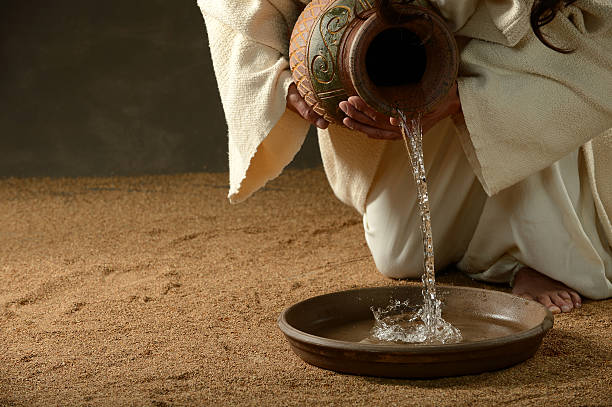
From Gettyimages.com.
So when he had washed their feet and put his garments back on and reclined at the table again, he said to them, “Do you realize what I have done for you? You call me ‘teacher’ and ‘master,’ and rightly so, for indeed I am. If I, therefore, the master and teacher, have washed your feet, you ought to wash one another’s feet. I have given you a model to follow, so that as I have done for you, you should also do” (John 13:12-15).
Unlike the teachers of His time, Jesus as a teacher was not for “hire” who got paid for His teachings. Jesus taught not for money but in fulfillment of His mission. He taught more than lessons in life but gave His very life to others.
And that is where the nobility of the teaching profession lies.
The best teachers are the ones who teach life by giving and sharing their very lives like Jesus Christ, our Good and Model Teacher. Teaching is both a mission and a vocation, a call. That is why there can never be a “pay” or “compensation” enough for teachers because they share life. What they teach cannot be quantified nor measured like in number of sales or length of roads built. Like Jesus, teachers give everything, never apiece. When a teacher repeats or elaborates a lesson, he/she cannot charge it as overtime or get an extra pay for their extra efforts in guiding students.
Jesus teaching his disciples, a painting by James Tissot from commons.wikimedia.org.
The true reward of every teacher is to find one’s students so fruitful in life! The more fruitful and successful they are, the more rewarding for us teachers. Now I know the feeling of parents having a son growing into a fine gentleman or a daughter blooming into a fine lady and woman.
For me, I feel so proud when I learn my students reaching great heights in life and in their careers like reading their works published here and abroad, even speaking other languages as professors and lecturers, diplomats, OFW’s and responsible parents raising great children with hobbies so varied making me wish I could be young again to join them. Our greatest joy as teachers is when our students are most joyful. They do not have to be rich and famous. Basta joyful with a loving wife or husband, lovely kids, fruitful life.
Photo from amazon.com.
During the fourth century in Carthage, a Deacon and catechist named Deogratias asked St. Augustine for some tips on teaching catechumens or people being prepared for Baptism.
A very talented teacher himself, St. Augustine wrote at length the methods and many other tips of teaching to Deogratias that these were compiled into a book now a Christian classic called “De Catechizandis de Rudibus” (On Instructing Beginners in Faith).
St. Augustine gave practical tips like first identifying the kind of audience or students so that the catechist and teacher may adjust his/her approach in teaching. He then told Deogratias to always narrate stories from the Bible, especially the creation, the lives of the great men and women in the Old Testament, and most of all, the many gospel scenes of Jesus Christ’s own teachings and parables.
At the end of the very long book of instructions, St. Augustine reminded Deogratias that the “catechist/teacher is always the lesson himself/herself.”
So true and beautiful!
The teacher is the lesson himself/herself because no book nor experiment nor equation will suffice to open the mind and heart of any student when the very person of the teacher is closed or worst, incongruent with wisdom and knowledge, virtues and life.
A true teacher is a witness of Jesus Christ, of how the Lord had transformed him/her into a better person now teaching others to grow and mature in life. A teacher is one who walks the talks, exactly what St. Pope Paul VI wrote in 1975, “Modern man listens more willingly to witnesses than to teachers, and if he does listen to teachers, it is because they are witnesses” (Evangelii Nuntiandi #41).
A true teacher as a lesson himself/herself is one who does not complicate but simplifies life, one who knows when to stop and be contented with what we have.
A true teacher is one who opens the minds and hearts of students to have that drive and passion to learn and find not just answer to questions but also to explore possibilities of finding meaning in life amid the many mysteries and unsolved problems that surround us.
A true teacher is one who does not compete with his/her students but journeys with them as companion, someone who breaks “bread” – life – with them.
A true teacher is one who sets students free from their many fears in life, showing them courage to tackle problems and situations, one who is not afraid to cry when sad and hurt, but always ready to smile and laugh with life’s simple joys and pleasures or kababawan.
A true teacher is one who shows students the realities of life such as failures and mistakes not as obstacles but launching pads for new lessons in life.
Photo by author, September 2024.
The teacher as the lesson himself/herself is one who brings out the giftedness of every student as a beautiful lesson in themselves too for others to learn.
The teacher as a lesson himself/herself need not be perfect, does not need to know an answer to all questions nor everything but someone who celebrates life, values life as a gift from God meant to be shared with others.
Think of your favorite teacher or unforgettable teacher. Most likely, she or he is the one who shares life with you. Thank a teacher today in sharing us, giving us his/her life especially during storms, when we are under low pressure areas. God bless all the teachers!
Quiet Storm by Fr. Nicanor F. Lalog II, 22 October 2024
Video by author using iPhone, 18 October 2024 near Floridablanca Exit, SCTEX bound to Subic.
Please, do not report me to the SCTEX Mobile Patrol. Promise… I won’t do this again, taking a video of sunset while driving. Blame “The Cure” playing on my playlist Friday I’m In Love…
That was last Friday as I drove – alone, as usual of course, going to a much-needed rest and mental health break at Subic. It was actually long-delayed vacation from repeated invitations over ten years from my kinakapatid Leah and Eric.
We planned it last September during a dinner in Makati after I had promised to visit my Ninang Lyn, Leah and Eric’s mom who was also grieving for her eldest we called Koyang Dindo who died in January; she felt too my grief in losing my mom later in May. I promised to visit her after my hospitalization in August when Leah and Eric learned it that they both offered for us to have dinner instead to “lend” me their mom.
How can I say no when Ninang Lyn told me to join Leah and Eric in their Subic homes after saying, “ako na mommy mo ngayon”?
At Makati Shangrila Hotel, September 2024.
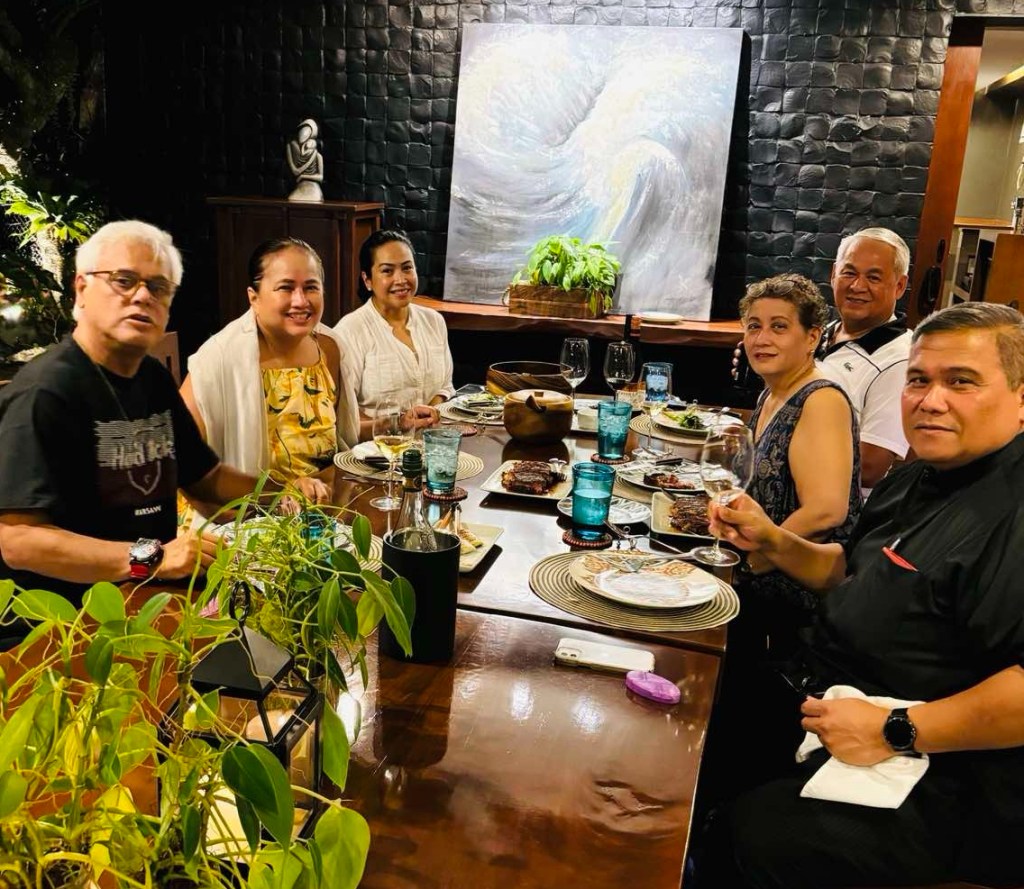
At Binictican home of Eric and Gic, 18-10-2024
Appetizing appetizers…
then salad, sirloin, prime rib and rice in steak’s drippings…
…and more wine.Cheers!
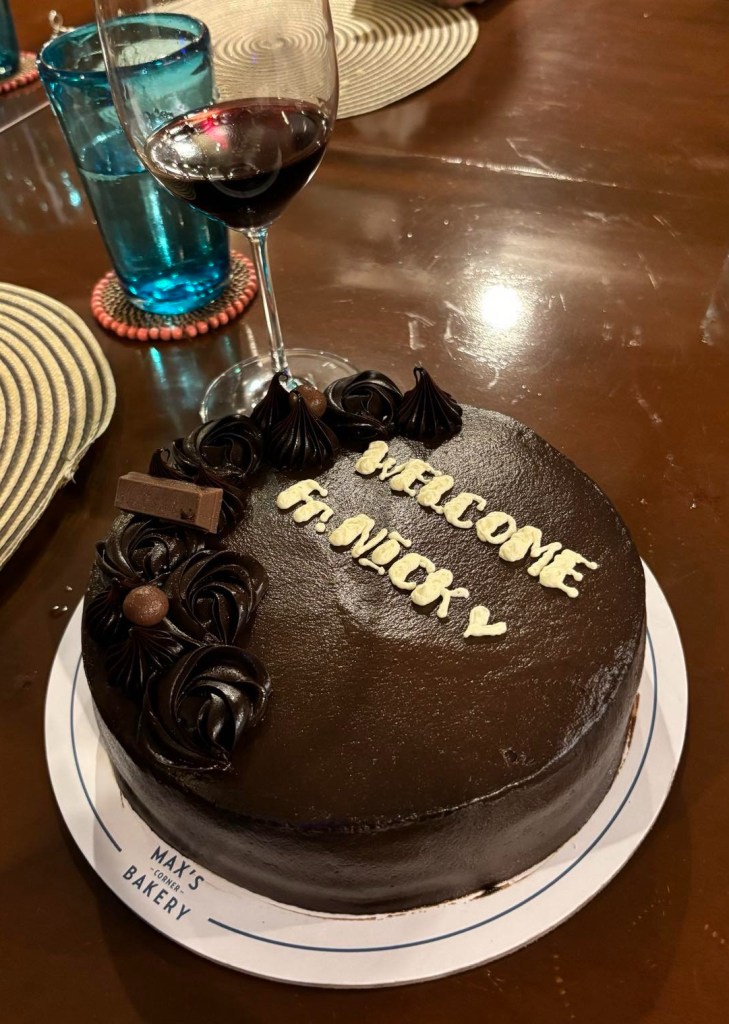
And whoa! What a Friday it was, truly a TGIF as I broke all rules not only in driving but also in eating and drinking! It was a wonderful evening of stories with great food and wine. Most of all, of love from true friends over 50 years!
Ninang Lyn’s husband, the late Atty. Fernando Ma. Alberto was a friend of my late dad. Unlike my siblings and friends, I only had just one pair of Ninong and Ninang in my baptism. Both have blessed me for being truly my “godparents”.
When my father passed away in 2000, it was Ninong Ding who helped me made a major decision in 2005, of whether I should stay or move to Canada to serve there instead. He told me to greatly consider the many experiences I have had in media and life that can greatly help more people here than abroad. True enough after six months in a parish in Toronto, I realized his wisdom, the great need of our countrymen mostly poor needing the love and care of pastors than the rich, ageing Catholics of Canada.
With Dindo aka Nando Alberto during our roadtrip in Rizal in January 2021, listening only to Steely Dan the whole day!
When Dindo’s condition worsened late last year, I got to see my Ninang more often along with her other children so united in those critical moments: Leah, Doc Mayette, Eric, Ricky and Toby with Joy sometimes joining us on Facebook live from California.
After Dindo died early this year, my mom died too in May. The Albertos were there coming all the way to Bulacan. And have remained until now.
What I like most with them is how they have never asked how I am doing because they knew so well what I am going through. Maybe that’s the gift and grace of over 50 years of friendship. They simply make themselves present, tenderly inviting me to go out and chillax. They so remind me of this passage from a Canadian author and poet who wrote in one of her books:
I overheard a conversation the other day.
He said, "But if you don't let people know
you are lost, how can they help you?"
She said, "Because the help I need is found
in the eyes of someone who sees I am lost.
Who stops to notice I have been gone,
or my pace has slowed or my smile is forced.
If they can see those things, then they will know
that I need caring, not help."
- Nausicaa Twila
Lately, so many friends including their siblings were texting me, inviting me out for lunch or coffee, simply making me feel of their care as I go through this grieving phase. So glad to have them. And so blessed in giving me a glimpse of Jesus Christ’s loving presence in them, teaching me firsthand about love and care.
Here is another video clip I did last Friday but this time I stopped by the roadside at SCTEX near Floridablanca exit on the way to Subic. See you again this Friday for the second part of our Subic adventure.
Video by author using iPhone, 18 October 2024 with natural sound from my car stereo playing The Cure “In Between Days.”
The Lord Is My Chef Daily Recipe for the Soul by Fr. Nicanor F. Lalog II
Friday, Feast of St. Luke, Evangelist, 18 October 2024
2 Timothy 4:10-17     <*((((><  +  ><))))*>     Luke 10:1-9
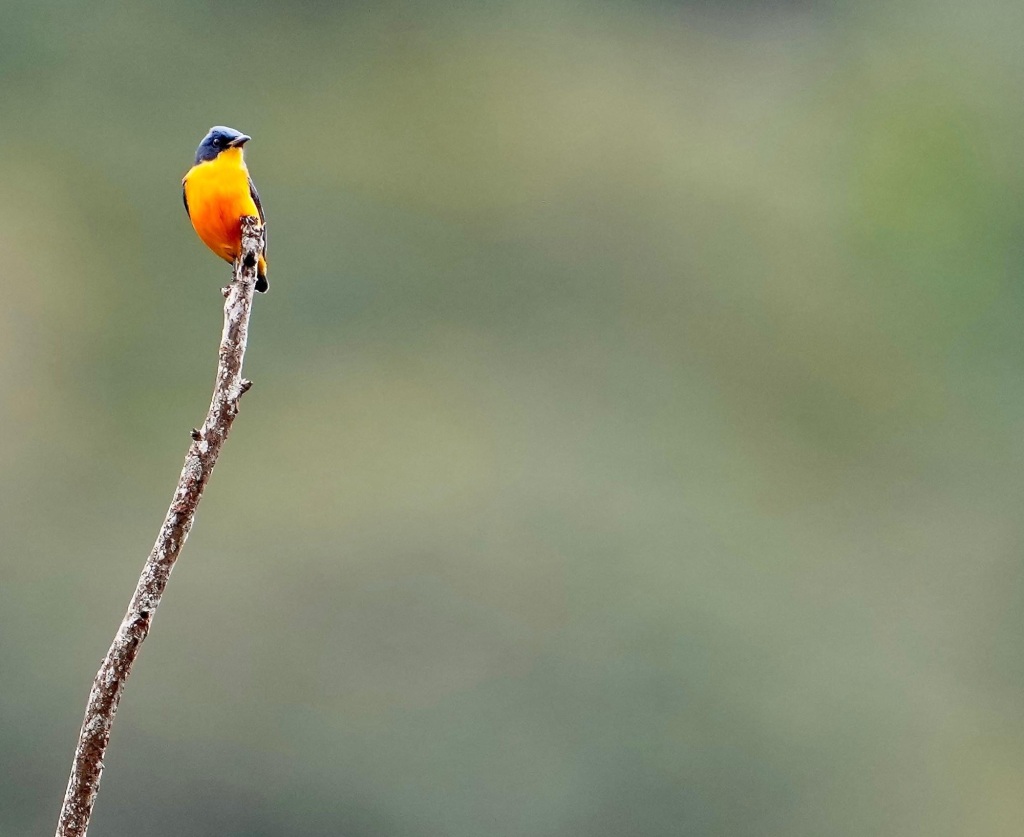
Photo by Dra. Mylene A. Santos, MD, an orange-bellied flowerpecker (Dicaeum trigonostigma), December 2023.
Beloved: Demas, enamored of the present world, deserted me and went to Thessalonica, Crescens to Galatia, and Titus to Dalmatia. Luke is the only one with me… (2 Timothy 4:10-11).
Lord Jesus Christ,
I pray on this beautiful Friday
for those friends and dearest
ones who are like St. Luke to me:
"the only one with me"
in my moments of darkness,
of trials and sufferings,
when everyone was so busy
and never noticed me,
of my need for company
and comfort,
most especially
who reminded me
of your fidelity
and love.
Thank you, Jesus
for those people You
sent me like St. Luke,
"the only one with me"
in prayers as I journeyed
through life's many adventures
and misadventures;
"the only with me"
who readily saw my points
of view;
"the only one with me"
who cheered me up
and let me cry;
"the only one with me"
in poverty;
"the only one with me"
who truly sought to understand
everything to bring out
the best in me,
to find the Christ in me.
O dear Jesus,
I pray for the other
St. Lukes You send us daily,
"the only ones" who care
and stand for women and children
still taken for granted in this world;
"the only ones" who work
to uplift the marginalized like
the poor and widows,
the sick and those old
people living alone and dying;
most especially,
"the only ones"
still believing in You
and your Church,
still praying and
still proclaiming
your Gospel,
still remaining in Your side
amid the many lures
of this selfish,
and godless world.
Amen.
The Lord Is My Chef Daily Recipe for the Soul by Fr. Nicanor F. Lalog II
Friday, Memorial of St. Francis of Assisi, 04 October 2024
Job 38:1, 12-21; 40:3-5     <*{{{{><  +  ><}}}}*>     Luke 10:13-16
Photo by Fr. Bien Miguel, Diocese of Antipolo, 25 September 2024.
This is actually a rejoinder to our prayer earlier published today on the Memorial of St. Francis of Assisi. And how I love the first reading today, of God’s “speech” to Job’s lamentations that remind us all of the wonder and majesty of creation St. Francis of Assisi highly regarded in his life and teachings.
The Lord addressed Job out of the storm and said: “Have you ever in your lifetime commanded the morning and shown the dawn its place for taking hold of the ends of the earth, till the wicked are shaken from its surface? Have you entered into the sources of the sea, or walked about in the depths of the abyss? have the gates of death been shown to you, or have you seen the gates of darkness? Have you comprehended the breadth of the earth? Tell me, if you know all” (Job 38:1, 12-13, 16-18).
How interesting too these words written about 2700 years ago in the Middle East are echoed in our own time in theme song of the Disney movie Pocahontas, “The Color of the Wind”:
Have you ever heard the wolf cry to the blue corn moon Or asked the grinning bobcat why he grinned? Can you sing with all the voices of the mountain? Can you paint with all the colors of the wind? Can you paint with all the colors of the wind?
Photo by author, Sacred Heart Novitiate, Novaliches, QC, 20 March 2024.
Like Job, who was a fictional character, Pocahontas went through a lot of great sufferings beyond explanations which is the aim of the authors of the Book of Job – to reflect on the mystery of human sufferings and misery amid a loving God.
It is easy to understand our sufferings in life when we are the ones who have caused them like making wrong choices and decisions or simply not exerting enough efforts to our endeavors or projects.
The most painful sufferings that are really bothersome are those we feel “undeserved” at all like getting a rare cancer and disease, being offended by someone close to us despite our being good to them, or like Pocahontas who was then living in peace and quiet until the English colonizers came to America who kidnapped and gang raped her.
I have never seen that Disney movie Pocahontas that is loosely based on the life of a native American Indian woman Pocahontas whose actual name was Matoaka; she was the daughter of the Chief of the Powhatan tribe in Chesapeake, Virginia during the early 1600’s.
According to historians, there was really no romance at all between Pocahontas and the British colonizer Captain John Smith as portrayed in the Disney movie. After getting pregnant from that gangrape, Pocahontas was forced to marry the English explorer John Rolfe as a condition for her release that only made her life filled with great sufferings and humiliations until her death.
Though a work of fiction but a fruit of prayerful reflections about life’s realities unlike the Disney movie Pocahontas, Job suffered severely when he lost his children, properties and livestock in a single day. Worst of all, he was stricken with a rare disease and left to the care of a “nagging” wife and three friends who wanted him to curse God or admit his guilt for a sin for which God was punishing him.
But Job’s conscience was clear, remaining faithful to God throughout all his sufferings. His complaints and cries were actually a voicing out of his inner pains to God, an expression of his trust in Him, “But as for me, I know that my Vindicator lives, and that he will at last stand forth upon the dust… And from my flesh I shall see God; my inmost being is consumed with longing” (Job 19:25, 27).
Job like us today was not seeking any answer nor explanation at all for his sufferings; he cries to God like us because we believe only God can save us. We do not cry or air our pains to someone we do not trust or believe in; the same is true why we cry and complain to God!
God’s response to Job’s laments remind us today of the need for us to see the whole picture we are into in this vast universe, of how everyone and everything is interconnected in God through His own Son Jesus Christ.
Notice how the author structured the speech of God of seeming opposites in life: commanding the morning and being shown the dawn in verse 12; sources of the sea and depths of the abyss in verse 16; and, gates of death and gates of darkness in verse 17. Jewish thought at that time was so structured that they saw everything distinctly different like morning and dawn, sea and abyss, death and darkness. That explains why they were so strict with the letters of the law that they eventually forgot the primacy of the human person which Jesus tried to emphasized to them in His teachings and healings. Jesus came to show us how everything and everyone in this whole creation is linked together, interrelated in God through Him.
This He did when He died on the Cross.
Photo by Fr. Gerry Pascual of the fresco at the Assisi Basilica, Italy, 2019.
It is sad that St. Francis of Assisi is often “romanticized” by many nature lovers even by some “new agers” for his love for nature and animals. More than sentimental reasons, St. Francis’ love and concern for nature and animals were all the result of his deep love and devotion to Jesus Christ crucified found daily in the celebration of the Holy Eucharist.
St. Francis realized and experienced the interconnectedness of everything and everyone in his own sufferings and pains in life he humbly embraced and accepted as we see in that verse we pray at every Station of the Cross he had composed:
V. We adore You, O Lord Jesus Christ, and we bless you. R. Because by Your holy Cross, You have redeemed the world.
For his love for the Cross and his own sufferings, Jesus blessed St. Francis with the stigmata, His five wounds at His crucifixion.
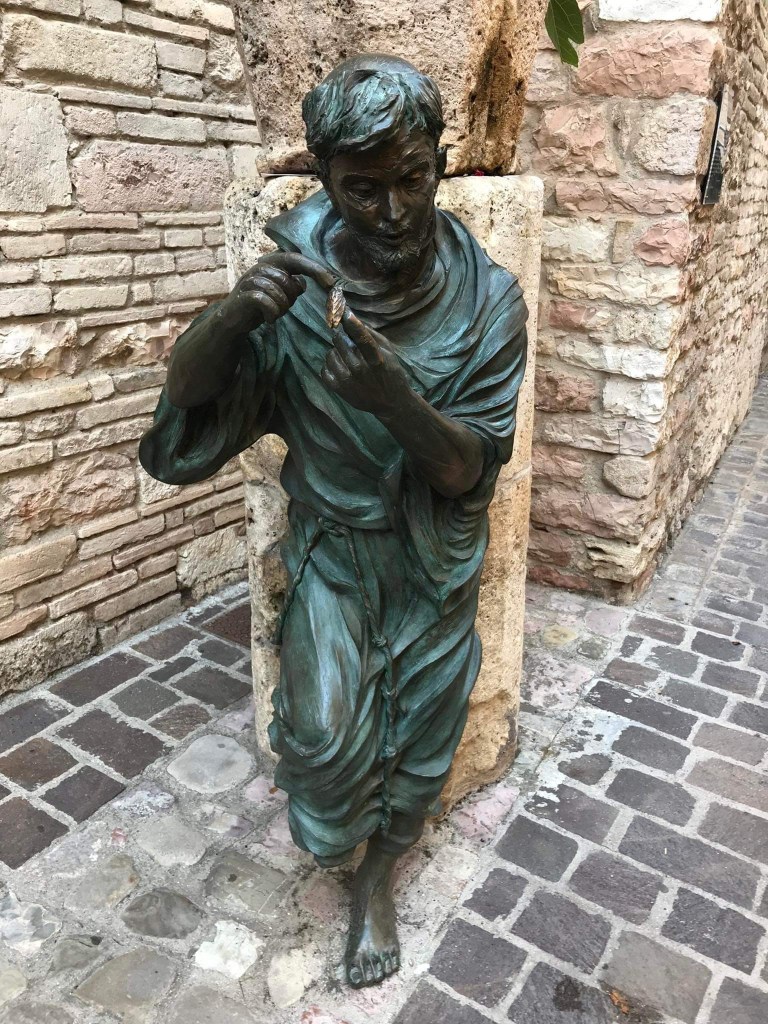
Photo by Fr. Gerry Pascual, Sculpture of the young St. Francis in Assisi, Italy, 2019.
After receiving those wounds, St. Francis was blinded as he went through severe sufferings after going through well-intentioned surgeries that went so bad. He was in his 40’s at that time and despite his great sufferings, it was during that period when he produced so many great writings we all cherish until now, notably the Canticle of the Sun where we find his famous expressions “brother sun, sister moon, and cousin death” – the very same things God expressed to Job in that speech out of the storm in our first reading today that is echoed by Disney’s Pocahontas in the theme “The Color of the Wind”.
But unlike that Disney movie that sugarcoats life’s realities of sufferings and pains, both Job and St. Francis of Assisi remind us today that the more we embrace our pains and sufferings in life like them, the more we see life’s wholeness, our oneness in God and the rest of His creations when seen in the light of the Cross of Jesus Christ.
When we see this oneness and interconnectedness in life, that is when we actually grow and mature, become fruitful as we find fulfillment in life despite the difficulties and pains we go through. Have a blessed weekend everyone! Happy feast day too to our Franciscan brothers and sisters!
The Lord Is My Chef Daily Recipe for the Soul by Fr. Nicanor F. Lalog II
Friday, Memorial of St. Francis of Assisi, 04 October 2024
Job 38:1, 12-21, 40:3-5     <*{{{{><  +  ><}}}}*>     Luke 10:13-16
Photo by Ms. Marissa La Torre Flores in Switzerland, August 2024.
As we celebrate today the
memorial of St. Francis of Assisi
in the light of our first reading
from the Book of Job,
You open our eyes anew
O God our loving Father
into your unfathomable mystery
of majesty and love for us.

Like Job,
we ask many questions
not really because we complain
to You but simply we have no one else
to turn to; we have so many questions
in life and we are willing to wait if ever
there would be any answer at all
but one thing for sure,
we are certain You have all the answers.
Be patient with our many whys,
O God, for we have no any reply
to any of your single question
"Have you ever in your lifetime commanded
the morning and shown the dawn its place...?
Have you entered into the sources
of the sea, or walked about in the depths
of the abyss?
Have the gates of death been shown to you,
or have you seen the gates of darkness?
Have you comprehended the breadth
of the earth? Tell me if you know all"
(Job 38:12, 16-18).
Like St. Francis of Assisi,
give us the grace to dare follow
your Son Jesus Christ not only
in humility and poverty
but most especially in His Cross;
forgive us, Father
and let us do away with all the
"sentimentality" cultivated by
nature lovers including "new agers"
on St. Francis' love for nature
rooted in Christ's sufferings and
commitment to a poor and simple life.
Like Job
and St. Francis who
lovingly embraced Jesus with
His Cross, may we also realize our
"smallness" before you, O Lord
in our trials and sufferings to experience
at the same time the joy and glory
in comprehending the "breadth
and length
and height
and depth"
of Christ's love
that surpasses knowledge
so that we may be filled with
your fullness,
dear God
(Ephesians 3:18).
Amen.
Photo by Ms. Marissa La Torre Flores in Switzerland, August 2024.
The Lord Is My Chef Daily Recipe for the Soul by Fr. Nicanor F. Lalog II
Thursday in the Twenty-fifth Week of Ordinary Time, Year II, 26 September 2024
Ecclesiastes 1:2-11     <*((((><  +  ><))))*>     Luke 9:7-9
Vanity of vanities, says Qoheleth, vanity of vanities! All things are vanity! What has been, that will be; what has been done, that will be done. Nothing is new under the sun (Ecclesiastes 1:2, 9).
How lovely are your words today,
God our Father:
"All things are vanity",
a mist,
a dew,
or breath
that vanish quickly,
no permanence,
and no real value at all
but because of You,
everything got meaning,
got value
especially in the coming
of Jesus Christ your Son,
our Lord and Savior.
You are no longer far from us,
dear God;
in Jesus Christ,
You have been among us,
most of all within us;
yet, many of us
could not find you
nor experience you.
Like Herod the tetrarch,
so many of us have heard
a lot about you, O God,
in Jesus Christ
but are still perplexed,
refusing to believe,
refusing to recognize,
refusing to accept
especially His Cross.
Bless us, dear Jesus,
especially those who keep
on trying to see you
but could not find you
because to see you
O Lord is to forget
one's self,
take up one's cross,
and follow You.
Amen.
The Lord Is My Chef Daily Recipe for the Soul by Fr. Nicanor F. Lalog II
Friday, Memorial of St. Andrew Kim Tae-gon & Companion Martyrs, 20 September 2024
1 Corinthians 15:12-20     <8{{{{><  +  ><}}}}8>     Luke 8:1-3
Photo by author in Bolinao, Pangasinan, 2022.
"And if Christ
has not been raised,
then empty too is our preaching;
empty, too, your faith"....

and empty too is our life!
St. Paul's words
to the Corinthians
echo so well in our own time
when many of us believers
live as though there will be no
resurrection of the dead;
so many of us believers today
see life limited only to this
temporal world
that we indulge in everything
that is material and pleasing,
avoiding all pains and sufferings,
simply subscribing to that dictum
to drink and be merry
for tomorrow
we shall die.
Forgive us,
Jesus, when we see
life's fullness is found only
in things and pleasures
of the world that we forget
the truth that life is empty
without your Cross
because it leads us to
Resurrection each day
like the sunrise;
life is empty when we have
more of the world
and less of God
whose ultimate reality
is in the resurrection
and life everlasting.
Grant us the grace
of those holy women
who followed you in your
ministry, giving up everything
they have especially their
sinful past because in you
they found and experienced
resurrection; most of all,
like the more than 100 martyrs
of Korea whom we remember today,
let us bear our cross of witnessing
to you and your gospel,
Jesus, so that people may
realize that truly,
life is most meaningful
most fulfilled
only in you.
Amen.
St. Andrew Kim Taegon, first Korean priest with his lay associate St. Paul Chong Hasan with 113 other Koreans died as martyrs between 1839 and 1867.
The Lord Is My Chef Sunday Recipe for the Soul by Fr. Nicanor F. Lalog II
Twenty-fourth Sunday in Ordinary Time, Cycle B, 15 September 2024
Isaiah 50:5-9  <*{{{{>< James 2:14-18  ><}}}}*>  Mark 8:27-35
There is something very striking with the similarities and differences in our gospel last Sunday and today that greatly reveal to us the person of Jesus Christ whom we all imitate and follow as His disciples.
In Decapolis last Sunday, Jesus separated a deaf man – “took him off by himself away from the crowd” – to heal him by putting his fingers into the man’s ears, then spitted and touched his tongue as he groaned “Ephphatha” – be opened – and the man was healed as “he spoke plainly”.
Further up north of Decapolis which is the chief pagan city of Caesarea Philippi, the Apostle Peter took Jesus away from the crowd after the Lord spoke openly of His coming Passion, Death, and Resurrection.
But unlike the deaf mute healed when separated from the rest, Jesus rebuked Peter as He returned to the crowd as He continued to speak openly of His coming Passion, Death, and Resurrection.
He began to teach them that the Son of Man must suffer greatly and be rejected by the elders, the chief priests, and the scribes, and be killed, and rise after three days. He spoke this openly. Then Peter took him aside and began to rebuke him. At this he turned around and, looking at his disciples, rebuked Peter and said, “Get behind me, Satan. You are thinking not as God does, but as human beings do” (Mark 8:31-33).
Photo by author at Petra in Jordan, May 2019.
I love the contrast of these two events Mark tells us so succinctly without missing details that speak so well of God’s ways and man’s ways, of what is to think and act like Jesus and how the devil tricks us into its devious and insidious ploys.
See also how last Sunday the healed deaf-mute “spoke plainly” in Christ while today we are invited by Mark to “openly speak” like Jesus of life’s sufferings and death.
When God separates us from the rest of the people and our usual routines like what happened at Decapolis last Sunday, it is because He wants us to experience Him more closely, for us to be healed, and for us to touch base with Him anew who is the very root of our being. Like that nameless deaf man, we need to separate once in a while from the world for us to be healed of our many deafness so that we may listen more intently to God’s voice and words right in our hearts, in the scriptures, and in the cries of the poor and suffering among us.
Actually, Jesus was continuing in Caesarea Philippi His method last Sunday of “separating” when He first asked the Twelve “Who do people say that I am?” that prompted them to tell Him the many misconceptions about His identity. In a similar way with the deaf at Decapolis, Jesus took off the Twelve in Caesarea Philippi when He asked them the more specific question “But who do you say that I am?” and Peter rightly answered Him, “You are the Christ.”
Matthew has a similar story probably with some additions from other sources that we find Jesus praising Peter for his answer, entrusting to him the church, and promising him with the key to heaven. The rebuke of Peter would happen later in their journey.
Mark had none of that considering his gospel was Matthew’s basis. We find in Mark’s brief account of Peter’s confession at Caesarea Philippi Perhaps how often just as when we feel so close with God like Peter, it is the same moment when the devil comes to trick us to break away from God and follow our own ways, not His.
Photo by author near ancient city of Caesarea Philippi, May 2017.
The event at Caesarea Philippi gives us clearest sign to identify Jesus as the Christ, that is when Jesus speaks openly of His coming Passion, Death, and Resurrection.
He began to teach them that the Son of Man must suffer greatly and be rejected by the elders, the chief priests, and the scribes, and be killed, and rise after three days. He spoke this openly (Mark 8:31-32).
Jesus never hides us from the realities of life as He speaks “openly” of His Pasch. From Caesarea Philippi, Jesus and the Twelve would head back south towards Jerusalem making a stop over on Mount Tabor for the Transfiguration where Christ’s glory was revealed to Peter, James and John.
It was during His Transfiguration that that Father and the Son made clear that Christ’s glory cannot be separated from the Cross. It was after Caesarea Philippi when Jesus announced thrice to the Twelve His coming Passion, Death, and Resurrection.
Notice too that qualifier “must” – that He “must suffer greatly”.
Just one word but so powerful, showing us the consistency of Jesus in speaking about His Pasch, the Cross, and later its relationship with discipleship, of the need for us to forget ourselves, take up our cross and follow Him.
Our motorized procession of the Blessed Sacrament in our previous Parish at the start of the COVID-19 lockdown in March 2020. Photo by Ms. Anne Ramos.
It saddens me when some priests and people in the Church shy away from talking openly about life’s many sufferings. We recognize their good intentions of not forgetting the beautiful and brighter side of being a Christian but to look at the Cross negatively and all its other implications is totally unChristian.
We cannot disregard the pains and darkness that come in being a disciple of Jesus; the Cross is the life of a disciple because it is the center of Christ’s person and teachings as expressed in yesterday’s Feast of the Exaltation of the Cross. All these “health and wealth” style of many preachers even in the Church are red flags of the devil’s ploy, of Peter separating Jesus from the Cross.
We act like Peter rebuking Jesus in Caesarea Philippi whenever we try to soften or hide, even cover the corruption and abuses going on in the society and families, the Church and our communities. That is clearly thinking in man’s ways not in God’s ways.
We cannot arrive at the truth and beauty of life disregarding the falsehoods and negativities around us. That was the problem with the people in mistaking Jesus as one of the prophets who were seen more as miracle workers who instantly healed them of their sickness.
Photo by author in my previous parish, 2017.
And here lies the danger too to us that we will never be able to have a good answer to Christ’s question “But who do you say I am?” if we avoid the many passion and death of this life in Jesus.
To openly speak like Jesus and embrace the sufferings and death we must endure is our first expression of faith with works we heard in the second reading from James.
To openly speak like Jesus and embrace the sufferings and death we must endure is the fulfillment of the first reading’s Song of the Suffering Servant who is Jesus Himself.
When we openly speak and embrace life’s daily sufferings and deaths like Jesus is to trust completely in God like Him. Let us speak openly of the Cross, of love and mercy, of God like Jesus Christ! Let us pray:
Lord Jesus Christ,
let me continue to follow
you closely by separating
from the rest often
to hear you more,
to love you more,
to trust you more;
let me know you more clearly
so that I may love you more dearly
and follow you more closely
speaking plainly,
speaking openly
without sugarcoating your call,
your Cross.
Amen.
The Lord Is My Chef Daily Recipe for the Soul by Fr. Nicanor F. Lalog II
Saturday, Feast of the Exaltation of the Cross, 14 September 2024
Numbers 21:4-9 ><}}}}*> Philippians 2:6-11 ><}}}}*> John 3:13-17
Photo by author in my previous parish, 2017.
Today we celebrate a most unique Feast, the Exaltation of the Cross.
It is so unique because first of all, the cross is perhaps the most unique thing on earth made up of two pieces of wood that are so ordinary yet so deeply extraordinary in meaning, a sign of God’s immense love for us humans through Jesus Christ’s Passion and Death.
From being the sign of the most inhuman punishment in history, the Cross is now the very sign of how God “so loved the world that he gave his only Son, so that he who believes in him might not perish but might have eternal life” (Jn.3:16). It encapsulates the whole mystery of Jesus Christ, of how this all-powerful God beyond the ordinary became weak like us in everything except sin so that we too may be like Him, divine and more than ordinary. In His suffering and death on the Cross, Jesus made the lowly wood so ordinary to be so exalted to become His sign of love and mercy, power and majesty.
Photo by author, Jerusalem, May 2017.
Hence, in the Cross is the power of God’s love to transform us to better persons.
In the Cross is God’s power to lead us closer to Him with its vertical beam and to others with its horizontal beam.
In the Cross is the power of good if we choose to embrace it with Christ Jesus as our Lord and Master.
The Cross is most unique of all signs in the world because underneath its ordinariness, that is where we see God’s glory and majesty. It was underneath the Cross of darkness and gloom on Good Friday that humanity began to see light and hope in life’s many absurdities. Most of all, it was underneath that Cross of suffering and death of Jesus Christ that we feel and experience the assurance of the Resurrection.
How?
Through our own pains and sufferings that are most uniquely ours too!
With their patience worn out by the journey, the people complained against God and Moses, “Why have you brought us up from Egypt to die in this desert, where there is no food or water? We are disgusted with this wretched food!” In punishment the Lord sent among the people saraph serpents, which bit the people so that many of them died (Numbers 21:4-6).
Photo by author, Dominican Hills, Baguio City, January 2018.
You must have heard that old story of a man who came to Jesus to return the cross given for him to carry; he asked Jesus to have it replaced with a lighter one. Jesus then led the man to a huge room with all kinds of crosses for him to choose which he prefers as the best one for him so that he would stop complaining.
After closely examining the specs of so many crosses, the man finally decided to pick one he deemed as perfect for him after considering its weight and other dimensions, only to find out from Jesus Himself that it was the same cross he had actually returned for exchange!
Many times in life we are like those people in the first reading, never ending in their complaints to God, even challenging Him, accusing Him of forsaking us, of being unfair when life becomes difficult and unbearable. There are times we feel being on the distaff side of life always like a flat tire, never on top. We cry foul to God especially with all our hurts and pains inflicted by others, asking Him where was He when most needed?
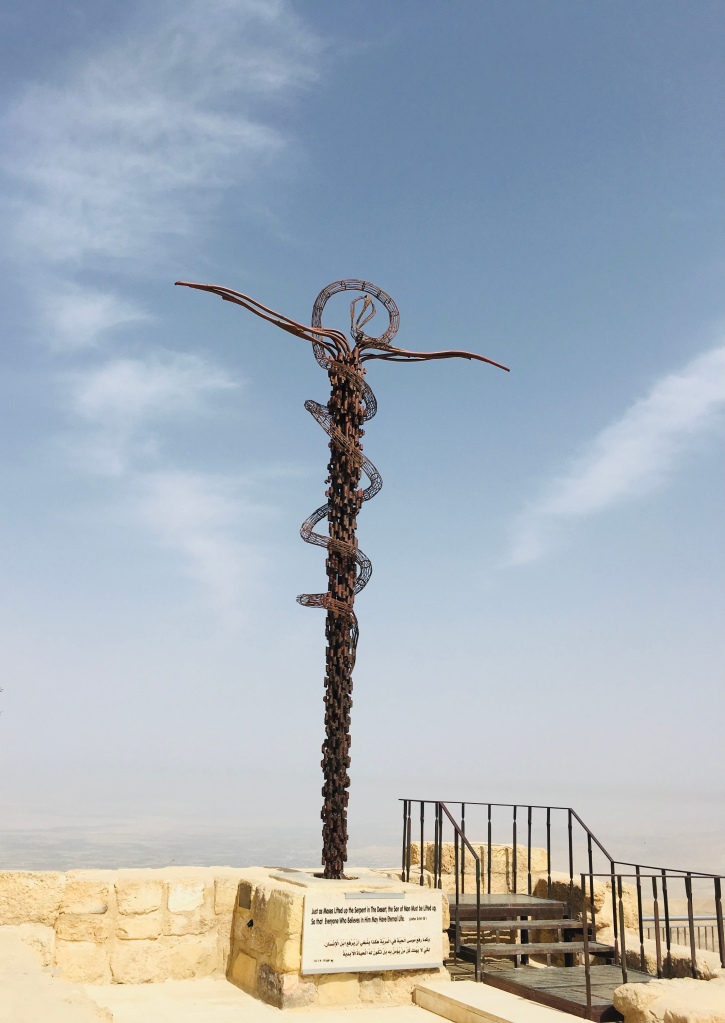
Photo by author in Jordan near the Israeli border where Moses put up the bronze serpent as instructed by God to heal those bitten by the snakes after they have complained of their conditions in the wilderness, May 2019.
While it is true life is indeed difficult, the cross reminds us of the fact that the pains and hurts we have are uniquely ours too, something we have to accept and most of all, own.
There are pains that are so deep and won’t go away that have in fact affected us dismally in our lives already. Instead of self-blaming and self-pity, we just have to ask for God’s grace to accept and own them like Jesus Christ. We just have to “bring it home” – that imagery of the Cross planted on the Calvary – into our very selves, in our being as something so true and real. And uniquely ours.
Stop thinking of others’ pains and hurts. We are not all the same. If ever we have similar experiences, the hues and shades even gravity and circumstances are not same because each pain and hurt, like the cross, is uniquely ours. Like every person, every cross is unique because it is also a gift, a mystery, and life. We have to “befriend” our pains and hurts, our own cross instead of resist it. It is in “befriending” our pains and hurts, our cross in life that we grow and mature, becoming more free to love and to be joyful because that is when the cross triumphs over its disgrace and shame in us and with others. That is when our pains and hurts, when our crosses begin to reveal to us the many beautiful truths of Easter awaiting us.
The Cross of Christ triumphed because Jesus carried it wholeheartedly, allowing those two pieces of wood to reveal not only to Him who knew everything beforehand its meaning but most of all to everyone of us the deeper truths the Cross signifies as St. Paul eloquently expressed in our second reading.
The Cross of Christ atop the church of our Lady of Lourdes in France. Photo by my former student Philip Santiago during his pilgrimage, September 2018.
One thing I realized after my mother died in May is the fact that while there are so many pains and sufferings in this world, my own pain and suffering in losing her are most difficult to bear; hence, something I must carry because it is uniquely mine.
But, one thing so unique I noticed is that the more I see my cross following my mother’s death, the more I saw also the cross of others. The Cross of Jesus triumphed truly in me when I embraced and owned my cross, when I befriended my pains and hurts that eventually led me to recognize and see, to feel more and experience too the crosses of others.
When we become conscious of each one’s unique cross, slowly we are able to reveal to them the meaning of their personal crosses too because we become more sympathetic, more open, more silent to listen more, love more, care more and be more present with those in their own unique cross. No wonder, I find conversing more engaging with others who also grieve because we can see each other’s unique crosses!
Jesus calls us to imitate Him that by embracing and owning our cross, we too may lead others to finding the meaning of their own cross and thus experience Easter soon. Let us pray:
Give us the grace, O God,
to always embrace the Cross
 like your Son Jesus Christ
where we can all be empty
of ourselves to be filled
with your Holy Spirit
to make your love visible in us.
Amen.



















 lordmychef.com