“Lord, to whom shall we go?” : Faith in Jesus in time of pandemic

The Lord Is My Chef Sunday Recipe for the Soul by Fr. Nicanor F. Lalog II
Sunday XXI-B in Ordinary Time, 22 August 2021
Joshua 24:1-2, 15-17, 18 ><}}}'> Ephesians 5:21-32 ><}}}'> John 6:60-69
Inquirer’s Friday front page tells us in essence the message of this Sunday’s Gospel – “Lord, to whom shall we go?” in this time of crisis. Photo from inquirer.net.

We conclude our series on the Lord’s discourse on bread of life with the same question he had posed to his disciples more than 2000 years ago at Capernaum, repeatedly asking us the same question daily, especially on Sundays: “Do you also want to leave?” (Jn. 6:67).

This is the first time in John’s gospel that the people have rejected Jesus Christ whom they have always admired and followed to listen to his teachings and most of all, to be healed of their sickness. When they were fed to their satisfaction at the wilderness, they wanted to take Jesus and make him their king but he evaded them, going to Capernaum where he was found the following day. All this time, religious leaders were the only ones against Jesus, challenging his authority especially when he cleansed the temple and healed on a sabbath day.

But today, in a sudden twist, people rejected and abandoned Jesus because they could not accept him as the Bread of Life who came down from heaven who would give his flesh as food and blood as drink for eternal life. Worse, this was led by those supposed to be close to him, his disciples.

Often used as a generic term for a follower or a believer, the word “disciple” is from the Greek word discipulos that literally means “one who comes after or follows the master” (also the root of discipline). In the gospels, disciples were the common followers of Jesus, distinct from the apostles often referred to as “the Twelve”. From another Greek word apostolein meaning “one who is sent forth ahead of a master”, an apostle is one who is close to Jesus, who personally knows him and have also seen him. That is why Paul insisted his being an apostle too.

This distinction between a disciple and an apostle is found in all four gospel accounts. It is important to know this especially in our gospel today which is the first time John had introduced to us the presence of disciples among the crowd with Jesus at Capernaum. They have all been silently listening to his discourse until Jesus said, “Whoever eats my flesh and drink my blood has eternal life, and I will raise him on the last day. For my flesh is true food, and my blood is true drink. Whoever eats my flesh and drinks my blood remains in me and I in him” (Jn.6:54-56).

It was from here where our gospel this Sunday picks up the story:

Many of Jesus’ disciples who were listening said, “This saying is hard; who can accept it?” Since Jesus knew that his disciples were murmuring about this, he said to them, “Does this shock you? What if you were to see the Son of Man ascending to where he was before? As a result of this, many of his disciples returned to their former way of life and no longer accompanied him. Jesus then said to the Twelve, “Do you also want to leave?”

John 6:60-62, 66-67
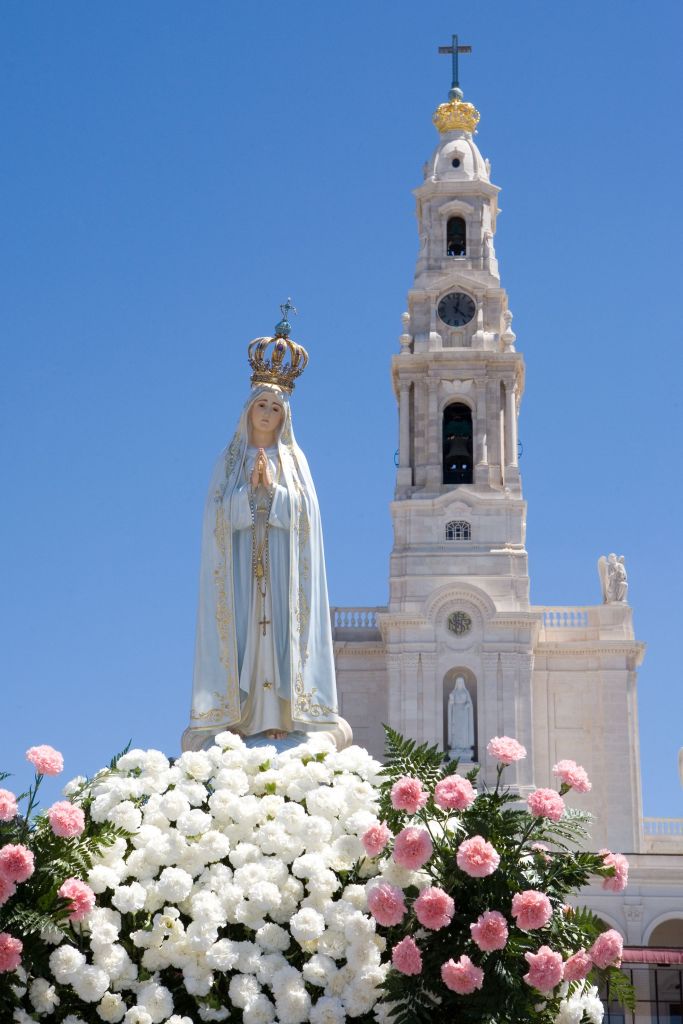
Photo by Fr. Howard John Tarrayo, National Shrine of Our Lady of Fatima on the eve of the ECQ, 05 August 2021.

Aversion vs. Conversion

Here we find a painful truth we all experience when following Jesus as our Lord and Master. Sometimes it can happen that those closest to us are the ones who cannot accept and understand us like those disciples of Jesus who have left home and family to listen to his teachings after witnessing many of his healings. Then all of a sudden, they abandoned him because he had said it is his flesh he shall give as food to eat and his blood as drink for eternal life.

They were thinking in the literal sense, more preoccupied with what they knew, with what they have in their minds, without any room for Jesus nor for others. They would rather stick with what they have heard and learned from the Old Testament, of Moses and the manna from heaven.


Refusing Jesus is always a refusal 
to grow and mature not only in faith 
but most of all in life and in our relationships. 
 It is pride and self-centeredness, 
a form of self worship and idolatry 
when one believes more to one's self
 than with God through others.

Refusing Jesus is always a refusal to grow and mature not only in faith but most of all in life and in our relationships. It is pride and self-centeredness, a form of self worship and idolatry when one believes more to one’s self than with God through others.

Jesus came to deepen our faith by experiencing himself, inviting us all to be converted back to God. But instead of conversion or turning back to God in the light of Jesus, we choose aversion, that is, turning away from God, returning to blindness and darkness like those disciples: As a result of this, many of his disciples returned to their former way of life and no longer accompanied him” (Jn.6:66).

They cannot accept and take Jesus personally and wholly as his very words implied the Eucharist where we receive Jesus, Body and Blood under “the perceptible signs of bread and wine” as explained by Vatican II’s Sacrosantum Concilium #7.

Every Sunday when we gather as the Body of Christ in the celebration of the Holy Eucharist prefigured in the time of Moses in the wilderness until their entry into the Promised Land under Joshua’s leadership, we likewise reaffirm and renew our commitment to love and “serve the Lord, for he alone is our God” (Jos. 24:18).

Photo by Ms. Ria De Vera, March 2020.

Yes, “this saying and teaching of the Lord is hard to accept” (Jn. 6:60) especially in this time of the pandemic when many among us have lost family and friends including sources of income and savings while things are expected to worsen before getting any better at all.

Then there is also the familiarity with the Holy Mass breeding contempt among us these days when all we have are virtual Masses.

It is very sad that many of us these days have “returned to our former way of life and no longer accompanied Jesus” like those disciples at Capernaum; there are some who have stopped believing in Jesus due to the many pains and sufferings of this prolonged pandemic!

We are in a time of severe crisis not only in faith but also in every aspect of life due to the worsening COVID-19 pandemic. As we moved Saturday to lower level of quarantine controls, new records were set in new infections and deaths while ICU’s and hospitals are almost if not at full capacity already.

Lest we forget, there is the severe stress on our medical frontliners and their families too, with some literally passing out of exhaustion.

Some major decisions really have to be made not only by leaders but by everyone. That is the literal meaning of the word “crisis” which is from the Greek krisis that means time for decision-making to prevent (more) disasters from happening.

Disasters are due to poor or wrongful decisions.

One of that is removing God from every equation in life, including in our political and social life, giving rise to a culture of impunity where corruption has become a way of life.

Despite our being a Christian nation, we have chosen to remain in our morally bankrupt style of politics based on popularity, compadrazgo system, and vote selling. No wonder that even while we are in a pandemic with thousands getting sick or dying and millions are suffering, public officials continue to plunder our nation’s coffers blatantly while candidates shamelessly campaign early with their giant tarpaulins and television ads to ensure they all remain in power.

To whom shall we go? With the corrupt officials and trapos who do not care at all for us?

The good news today is that even if we have abandoned Jesus many times in our lives and in our nation’s history, he remains with us, still asking us like the Twelve, “Do you also want to leave?” (Jn.6:67).

Let us tell Jesus like Peter, “Master, to whom shall we go? You have the words of eternal life. We have come to believe and are convinced that you are the Holy One of God” (Jn.6:68-69)?

Remaining in Jesus like Peter

Last Friday, the Inquirer eloquently showed on its front page the sad plight of our nation with a banner story on corruption at the DOH following the recent reports by Commission on Audit as well the arrogant display of powers-that-be in Cebu.

Then, a breath of fresh hopes with this photo by Grig C. Montegrande on how the QC General Hospital had converted its chapel into a COVID-19 ward to accommodate the growing number of patients. The photo summarizes our Sunday readings, that we are in a critical moment not only in our history but also in our lives, calling us to conversion or turning to God instead of aversion which is turning away from God.

From inquirer.net.

Remember the “I AM” declaration by Jesus first used in this bread of life discourse two weeks ago when he said “I am the bread that came down from heaven” (Jn.6:41)?

That must have lingered in Peter. His faith did not deepen right away but it had surely grown and matured while listening to Christ’s discourse on the bread of life which became clearer to him after Easter.

Let us try “to feel at home” in Peter’s company during this pandemic to be led to a similar faith insight and commitment in Jesus no matter how difficult it may be.

Faith is like love: we believe and love not because we are sure of ourselves but because we are sure of the one we believe and love. That is why we commit our lives to our beloved. It is not primarily because of us at the center but of the other. Like Jesus. Or a loved one.

This is Paul’s reminder to us in the second reading of having Jesus as the basis of our relationships: Brothers and sisters: Be subordinate to one another out of reverence for Christ (Eph. 5:21).

It is not a call to dominance over one another but mutual-subordination in Christ by imitating his self-sacrificing love for everyone in the giving of his total self, Body and Blood. This we can do these days by observing health protocols like social distancing, wearing masks, and washing hands frequently. Best is to stay home as much as possible by giving ourselves more to our family and loved ones. Amen.

Have a safe and blessed week, everyone!

Love, love, love!

The Lord Is My Chef Breakfast Recipe for the Soul by Fr. Nicanor F. Lalog II
Friday, Memorial of St. Bernard, Abbot and Doctor of the Church, 20 August 2021
Ruth 1:1, 3-6, 14-16, 22     ><]]]]'> + <'[[[[><     Matthew 22:34-40
Photo by Designecologist on Pexels.com
Loving Father, open
our eyes and our hearts
to the abounding love
you shower us daily;
take away our doubts
make us believe we are 
loved, that there is so much
love in this life, in this world
for us to experience, to take
and to share!
Vanish our fears 
of getting hurt, 
of being empty, 
of losing when we love
like Ruth to Naomi
her mother-in-law.

But Ruth said, “Do not ask me to abandon or forsake you! For wherever you go I will go, wherever you lodge I will lodge, your people shall be my people, and your God my God.” Thus it was that Naomi returned with the Moabite daughter-in-law, Ruth, who accompanied her back from the plateau of Moab. They arrived in Bethlehem at the beginning of the barley harvest.

Ruth 1:16, 22
Teach us, dear Father,
to love like your Son Jesus Christ,
loving somebody more than one's self
by loving you with our whole selves
and loving others as we love
ourselves (Mt.22:37-40).
Open ourselves
and allow us to be taken over
by your love, Lord, like St. Bernard
whose memorial we celebrate today;
let us learn and heed 
the meaning of his teaching:
"Love is fully sufficient to itself;
when it enters the heart,
it absorbs all other feelings.
The soul who loves,
loves and knows nothing more."
Amen.

“Pusuan” – higit pa sa “magustuhan”

Lawiswis ng Salita ni P. Nicanor F. Lalog II, Ika-19 ng Agosto 2021
Larawan kuha ni Bb. Jo Villafuerte sa Atok, Benguet, Setyembre 2019.
Ano nga ba ang pagkakaiba ng 
gusto kita at mahal kita?

Ayon kay Buddha:
kapag gusto mo ang bulaklak, 
ito ay iyong pinipitas.

Nguni't kapag mahal mo ang bulaklak,
ito ay iyong dinidiligan araw-araw.

Sino man aniya ang makaunawa nito
ay nakauunawa rin ng buhay.
(Hango sa "The Language Nerds", 28 Hulyo 2021.)
Kuha ni Bb. Jo Villafuerte sa Atok, Benguet, Setyembre 2019.
Sa lahat ng bahagi
ng ating katawan,
pinakamahiwaga
ang puso natin;
mahirap unawain
na tila may sariling
gawi at pag-iisip
nakahiwalay sa atin.
Kapirasong laman
ngunit kapangyarihan
kayang panaigan
maging katuwiran;
mahirap mapakinggan,
 maunawaan nilalaman
gayong tibok at pintig
naroon lang sa dibdib.
Mahirap unawain
 saloobin at damdamin
nitong yaring puso natin
kungdi sisikapin
ng isa pang puso rin
pasukin at damhin
nilalaman at nilalayon
na adhikain.
Higit pa sa mga kuwit
at sari-saring guhit
emoji at giphy ang pusuan
na ang kahulugan higit pa
sa pagkilala at pagkaakit
kungdi mahalin at kalingain
pamumukod-tangi
ng kapwa natin.

Words, words, words!

The Lord Is My Chef Breakfast Recipe for the Soul by Fr. Nicanor F. Lalog II
Thursday, Week XX, Year I in Ordinary Time, 19 August 2021
Judges 11:29-39   ><)))*> + ><)))*> + ><)))*>   Matthew 22:1-14
Photo by author, Jerusalem at dawn, May 2017.
God our loving Father,
please make me conscious
beginning today of every word
that I say, of its meaning and
implications; better, teach me
to be silent and still, to speak only
when necessary, avoiding especially
making any oath even before you.

Jephthah made a vow to the Lord. “If you deliver the Ammonites into my power,” he said, “whoever comes ot of the doors of my house to meet me when I return in triumph from the Ammonites shall belong to the Lord. I shall offer him up as a burnt offering. When Jephthah returned to his house in Mizpah (after defeating the Ammonites), it was his daughter who came forth, playing the tambourines and dancing. She was an only child: he had neither son nor daughter besides her. When he saw her, he rent his garments and said, “Alas, daughter, you have struck me down and brought calamity upon me. For I have made a vow to the Lord and I cannot retract.”

Judges 11:30-31, 34-35
"Words, words, words!" 
Like Hamlet, we read and say 
many words without meaning, 
falsely believing words become true
when multiplied and said over and over
not realizing the most powerful words
ever spoken where those borne out of
silence when you created everything.
Give us the grace, dear God,
to be like Jesus your Son, 
"the Word who became flesh"
to be a person of credibility
and integrity whose "yes" means "yes"
and "no" means "no" - always dressed
in "wedding garment" for your
banquet in heaven (cf.Mt.22:12-14).
Amen.

When the fault is in us

The Lord Is My Chef Breakfast Recipe for the Soul by Fr. Nicanor F. Lalog II
Wednesday, Week XX, Year I in Ordinary Time, 18 August 2021
Judges 9:6-15   ><]]]]*> ><)))'> ><]]]]*>   Matthew 20:1-16 
Photo by Mr. Jim Marpa, 2019.
Your words today, O God our Father
brought me back to my elementary days
when we read Aesop's fables and 
memorized lines from Shakespeare,
"The fault, dear Brutus, is not in our
stars/ But in ourselves that we are
underlings."  And how they both perfectly 
jibe together in your words!

So many times we are like the great
trees in the forest, so proud of our giftedness
and abilities that we cannot give our selves
to you and others to serve; we are so in love 
with our very selves, so proud or insecured 
that most often we uncannily put 
undeserving people to power
while we bear all the sarcasm in the end. 

“Then all the trees said to the buckthorn, ‘Come; you reign over us!’ But the buckthorn replied to the trees, ‘If you wish to anoint me king over you in good faith, come and take refuge in my shadow. Otherwise, let fire come the buckthorn and devour the cedars of Lebanon.'”

Judges 9:14-15
Most of the time, Lord, we know
the fault is in us - not in the stars
nor among others nor from you
who truly loves each of us perfectly
like the vineyard owner, always
giving the same perfect amount of
love and mercy to everyone;
cleanse our hearts and our minds
of selfish thoughts, of insisting on
what we believe, on what we want;
give us the grace of discernment
to see clearly your will so we may
choose wisely the options we have
to put your divine plan in place.
Loving Father,
make me grateful always to what I have;
most of all, let me focus more on what
you have given me, not on what others
have received for in the end,
it could very well happen that
"the last will be first,
and the first will be last." 
(Matthew 20:16)

And that, Lord, 
is something completely
our fault.  Amen.

Keep us calm, Lord

The Lord Is My Chef Breakfast Recipe for the Soul by Fr. Nicanor F. Lalog II
Tuesday, Week XX, Year I in Ordinary Time, 17 August 2021
Judges 6:11-24   ><]]]]'> + ><]]]]'> + ><]]]]'>   Matthew 19:23-30
Photo from Facebook, April 2020.
You know so well the hardships
we are all into these past months,
God our Father.
And you must have heard all our 
complaints to you, even those we
have kept in our hearts for you also 
know how we feel like Gideon.

Gideon said to him, “My lord, if the Lord is with us, why has all this happened to us? Where are his wondrous deeds of which our fathers told us when they said, ‘Did not the Lord bring us up from Egypt?’ For now the Lord has abandoned us and has delivered us into the power of Midian.”

Judges 6:13
You are so kind, dear God
in allowing us to bring out to you
what we feel which after all, we cannot
hide from you; and here lies your blessing:
after allowing us to recognize before you 
the problems and misery we are into, 
you send us to work on its solution.

The Lord turned to him and said, “Go with the strength you have and save Israel from the power of Midian. It is I who send you… Be calm, do not fear. You shall not die.” So Gideon built there an altar to the Lord and called it Yahweh-shalom.

Judges 6:14, 23-24
We all want peace,
we all desire a world with less
pains and sufferings like an end
to this pandemic but no one among us
would dare to follow your instructions,
your commands to do our part in finding
solutions to our many problems in life,
in doing our part in alleviating the pains
and sufferings of the sick and dying
for until now we have refused to give up
and surrender our selves to you, Lord.
We are afraid of detaching from whatever
or whomever attachments we have,
so we can be truly free for you and for others.
Most of all, we are afraid to get hurt,
to lose and to get lost in order to have you
and find life and fulfillment.
Give us the grace to realize
and keep in mind always
your Son's words today:
"For men this is impossible,
but for God all things are possible."
(Matthew 19:26)
Keep us calm, Lord, amid
the darkness and uncertainties
around us these days of the pandemic.
Amen.

When good is not good enough

The Lord Is My Chef Breakfast Recipe for the Soul by Fr. Nicanor F. Lalog II
Monday, Memorial of St. Rock (San Roque), 16 August 2021
Judges 2:11-19   ><]]]]'> ><]]]]'> ><]]]]'>   Matthew 19:16-22
Photo by author, October 2020.
Your words today, O God
our Father are just what we 
needed most in this time when
we feel we are good, when we
are so complacent that all is fine.
Thank you for reminding us today
that we are not that "good" at all!
And worst, so many times our 
being good are not even good enough! 

A young man approached Jesus and said, “Teacher, what good must I do to gain eternal life?” He answered him, “Why do you ask me about the good? There is only One who is good. If you wish to enter into life, keep the commandments.” The young man said to him, “All of these I have observed. What do I still lack?” Jesus said to him, “If you wish to be perfect, go sell what you have and give to the poor, and you will have treasure in heaven. Then come, follow me.” When the young man heard this statement, he went away sad, for he had many possessions.

Matthew 19:16-17, 20-22
So many times, dear Father,
 good is not good where better
is expected, when being good
is not enough because in life,
what matters is not only what
we do but also what we have;
like that young man, there is 
something or someone standing 
between us and you, or anything
we cannot let go to be totally yours!
Forgive us, merciful God,
when we think more of ourselves
and forget you and others.
Forgive us when our possessions
posses us; give us the strength
to give up and surrender to you
our many attachments and false
securities that prevent us from becoming
truly free and truly your followers
like St. Rock, the patron of pandemics.
Amen.

“Ale, Nasa Langit Na Ba Ako?” by Bodjie Dasig (+)

The Lord Is My Chef Sunday Music by Fr. Nick F. Lalog II, 15 August 2021
Photo by Mr. Vigie Ongleo, 05 August 2021, Singapore.

We continue this Sunday our Original Pilipino Music (OPM) featuring the genius and warmth of the late Bodjie Dasig in his playful yet meaningful early hit from the 1980’s called “Ale, Nasa Langit Na Ba Ako?” (Ma’am, Am I In Heaven?).

We find it perfectly matched with our celebration today of the Solemnity of the Assumption of the Blessed Virgin Mary that teaches us at the close of her life here on earth, Mary was taken body and soul to the glory of heaven (https://lordmychef.com/2021/08/14/mary-mirror-of-gods-greatness/). The same glory awaits us all in the end of time if we try to imitate the Blessed Virgin Mary in her faith, charity and unity with Christ Jesus her Son.

It is a very timely celebration giving us hope and inspiration in persevering in faith and charity as we enter our second week of lockdown with COVID-19 infections reaching record levels since the start of this pandemic last year.

And that is why we find Ale, Nasa Langit Na Ba Ako? so perfect on this cloudy and gloomy Sunday to uplift our sagging spirits, reminding us how after all the pains and darkness of life, there awaits us the glory of heaven which starts here on earth.

We were in college in the early 80’s when this song was first played on the airwaves in some select radio stations only.

Written by the late Bodjie Dasig (+2018) who also wrote the popular Sana Dalawa ang Puso Ko (I Wish I Have Two Hearts), Ale narrates the experience of a man who saw a pretty woman while driving in Cubao, causing him to get into an accident that he ended in a hospital. Upon waking up, he saw his nurse so lovely that he thought he was already in heaven!

When he was discharged from the hospital, he asked the nurse to marry him but unfortunately, she turned out to be happily married. The man was so dismayed that he did not notice the flight of stairs and fell, banging his head on the floor that he ended up being confined in the hospital again.

When he woke up in his new hospital room, he saw another lovely nurse but this time before asking if he was in heaven, he first asked if the nurse is married.

We do not know whatever happened to the man in the song but Ale tells us the common notion how a beautiful woman can always signify heaven and bliss in life. Of course, such beauty refers to more than the physical features of a woman for true beauty lies deep within the heart, mind and soul of anyone.

In her life of faith, charity, and communion in her Son Jesus Christ, the Blessed Virgin Mary is undoubtedly a woman of great beauty mirroring the greatness and goodness of God that she became the first to be assumed into heaven body and soul among humankind.

May we continue to persevere in life’s challenges to share God’s loving presence in this world filled with pains and sufferings, trials and difficulties.

We hope this song brings you some smiles and good vibes!

*We have no intentions of infringing on the copyrights of this song except to share its beauty and joy with others.

From YouTube.

Mary, mirror of God’s greatness

The Lord Is My Chef Sunday Recipe for the Soul by Fr. Nicanor F. Lalog II
Solemnity of the Assumption of the Blessed Virgin Mary, 15 August 2021
Revelation 11:19-12:1-6,10 ><}}}*> 1 Corinthians 15:20-27 ><}}}*> Luke 1:39-56
Photo by author, December 2020.

We take a break this Sunday from our readings in the bread of life discourse in John’s gospel to celebrate on this date the Solemnity of the Assumption of the Blessed Virgin Mary following Pope Pius XII’s dogma in 1950 that at the close of her earthly life, Mary was taken up body and soul into the glory of heaven.

Without telling the manner or the circumstances of time and place of the Assumption, its dogma forms part of the deposit of our faith received from the Apostles as attested by its long line of traditions since the Pentecost. It is so important that its celebration supersedes the liturgy of any Sunday because it invites us all to see in Mary raised to heaven the image of the Church and of all the faithful on our way to eternal glory with God.

It is a very timely celebration while we are in the midst of another lockdown due to a surge in COVID-19 cases, giving us hope and inspiration to persevere in all these difficulties and trials to become better disciples of Jesus like his beloved Mother.

Photo by author at the Assumption Sabbath, Baguio City, 2019.

Mary, a type of the Church

Our first reading today presents us with two images of a woman that seem to contradict each other with scenes that anti-climactic, flowing in the reverse mode. It could have been better as in most cases that the first scene depicting the woman in all glory should have been last instead of the woman in childbirth pains and dangers that comes in second. Is it not the sorrowful always comes first leading to glory?

A great sign appeared in the sky, a woman clothed with the sun, with the moon under her feet, and on her head a crown of twelve stars. She was with child and wailed aloud in pain as she labored to give birth. Then another sign appeared in the sky; it was a huge red dragon, with seven heads and ten horns, and on its heads were seven diadems.

Revelation 12:1-3

It is easy to see the Blessed Virgin Mary in that woman depicted in John’s vision especially if we continue reading on to find the title and authority attributed to her child as our Savior Jesus Christ. But modern biblical studies go deeper than that simplistic view: the scenes speak more of the birth of Christ among us his disciples. It is “painful” because it takes place amid many evil and sins like persecutions and temptations symbolized by the red dragon; but, amid all these, Jesus remains among us, leading us, protecting us, and blessing us. Hence, the woman in this passage becomes a symbol of the Church in the glory of God following Christ’s Resurrection while at the same time in the midst of many earthly battles.

Of course, no other woman can best fit that image than Mary who gave birth to Jesus, who has always been in the most intimate relationship with her son as disciple among all humankind. And because of her role in relationship to her Son, to us his disciples also his Body as community, Mary is the image or type of the Church still giving painful birth to believers like in this time of the pandemic while we are already assured of glory in heaven as children of God. Vatican II perfectly expressed it in declaring:

“By reason of the gift and role of divine maternity, by which she is united with her Son, the Redeemer, and with His singular graces and functions, the Blessed Virgin is also intimately united with the Church. As St. Ambrose taught, the Mother of God is a type of the Church in the order of faith, charity and perfect union with Christ.”

Lumen Gentium #63

With that, Mary has also become the mirror of God’s greatness in all time, the very reason we venerate her as first among the saints and angels because it is also the same call of holiness to us all as children of the Father and disciples of Christ. It is in this framework that we celebrate her Assumption, especially when we profess every Sunday: “I believe in the Holy Spirit, the holy Catholic Church, the communion of saints, the forgiveness of sins, the resurrection of body and life everlasting. Amen.”

Photo by author, Nazareth, 2019.

Greatness of God, lowliness of Mary

As we have mentioned at the start, the dogma of the Assumption of Mary does not go into details how it took place. What matters most is the fact of the Assumption of Mary, body and soul. Like with her Immaculate Conception, there are no direct nor explicit biblical references to her Assumption; however, from the collective meditations and contemplations in the Church, we find vast and rich sources in reflecting the beauty and wonder of the Blessed Mother’s unique place in our salvation history.

For the Mass of the day of the Solemnity, we contemplate on Mary’s canticle called Magnificat which she sang after being praised by her cousin Elizabeth during the Visitation.

And Mary said:
"My soul proclaims 
the greatness of the Lord;
my spirit rejoices in God my savior.
For he has looked upon his lowly servant.
From this day all generation will call me
blessed:  the Almighty has done 
great things for me, and holy is his Name."
(Luke 1:46-49)

It was the first proclamation of the gospel of salvation in Jesus Christ whom Mary first received and shared first with her cousin Elizabeth in a town in Judah. See how in the Visitation Elizabeth praised and admired Mary, becoming the first to call her “blessed among women” because “she believed the word spoken to her by the Lord would be fulfilled” (Lk.1:45). Instead of giving back her praise and admiration to Elizabeth who was pregnant with John the Baptist at that time despite her old age and being barren, Mary sang praises to God like the other great women in the Old Testament after experiencing God’s extraordinary acts in their personal lives and in Israel’s history.

Though we may never have the same personal experiences of the Blessed Virgin Mary, as members of the Church she represents, we can always look through her Magnificat the extent we have also become the mirror of the greatness of God especially at this time when everybody seems to doubt his loving presence in this time of the pandemic.


 It is the reason why we also sing the Magnificat 
during our evening prayers in the Church because 
before we can ever praise God for his kindness and majesty, 
we must first allow him to work in us by being lowly before him like Mary.

See how the Magnificat sings of the depths of Mary’s soul and her faith, of her perfect obedience to the word of God and the mission entrusted to her. Very clear in its lyrical expression, the focus and center is God, not Mary. It is the reason why we also sing the Magnificat during our evening prayers in the Church because before we can ever praise God for his kindness and majesty, we must first allow him to work in us by being lowly before him like Mary.

Have we truly been God’s lowly servant like Mary, allowing God to work his great wonders through us?

Three things I wish to share with you on Mary’s lowliness that enabled God to work his wonders through her:

First is her openness to the word of God like in the Annunciation of the birth of Jesus. Mary had a prayer life, a discipline of making time with God, setting her self aside for the Lord. Prayer is always the start of every relationship with God. That is when we truly become humble to lose control of ourselves, to forget our selves and let God in the Holy Spirit dwell into us. Even in the darkest moments of our lives, there will always be that glimmer of hope because the Holy Spirit enlightens us in our paths.

Second is Mary’s saying “YES” to God. She does not merely listen to God; she says “be it done unto me according to your word.” From the very start, Mary never doubted God in his wisdom and plans that she always said yes. One most beautiful expression by the evangelists of Mary saying yes to God is whenever Mary would “treasure in her heart” words of Jesus and of others.

But Mary’s greatest yes happened at the Cross, in her sharing in the Paschal Mystery of her Son Jesus Christ, being the only other disciple who remained with the Lord until his death. No wonder, it was to her based on tradition that the Risen Lord first appeared on Easter.

Third is Mary’s fidelity to God, her yes was not just a one-shot deal but an everyday yes to Jesus even after he had ascended into heaven. The Acts of the Apostles tells us explicitly how Mary was among the disciples present inside the upper room at Jerusalem when the Holy Spirit came on the day of Pentecost. Throughout the ages in her numerous apparitions, Mary said yes to God delivering Jesus Christ’s call for us to penance and conversion, to prayers and the Holy Eucharist especially at Fatima in Portugal.

“The Assumption of the Virgin” by Italian Renaissance painter Titian completed in 1518 for the main altar of Frari church in Venice. Photo from wikidata.org.

Mary went through many hardships and difficulties in her life and in the history of Israel, coming from an obscure town that was a butt of jokes of their time like when Nathanael asked Philip who claimed to have found Jesus Christ, “Can there any good thing come out of Nazareth? (Jn.1:45)”.

In this time of the pandemic, the vision of John in the first reading becomes more real when people refuse to recognize the spiritual dimension of COVID-19, of the need to be converted and to again nurture that relationship with God following decades of affluence and materialism. Like Mary, let us be humble to accept we are not the masters of this world nor of our own life but God almighty.

We are called to persevere with Mary, to be strong in our faith and charity that God will never forsake us so we can be present among the poor and marginalized including those spirits weakened by the prolonged quarantines.

With Mary, let us believe the words of St. Paul how all will come to life again – body and soul like Mary – in the final end of time that begins right now, right here in the midst of all these trials and sufferings. Amen.

Have a blessed week ahead!

Praying for holiness in the world

Reblogging our prayer last year as we honor St. Maximilian Kolbe on this date.

lordmychef's avatar

The Lord Is My Chef Breakfast Recipe for the Soul by Fr. Nicanor F. Lalog II

Friday, Memorial of St. Maximilian Mary Kolbe, Priest and Martyr, 14 August 2020

Ezekiel 16:1-15, 60, 63 >><)))*> || + || <*(((><< Matthew 19:3-12

From companionsofstanthony.org

“The most resplendent manifestation of God’s glory is the salvation of souls, whom Christ redeemed by shedding his blood. To work for the salvation and sanctification of as many souls as possible, therefore, is the preeminent purpose of the apostolic life.”

From the Letters of Maximilian Mary Kolbe, Office of Readings

Praise and thanksgiving to you our loving Father for a holy saint in our modern time, St. Maximilian Mary Kolbe whose memorial we celebrate today. His offering of his life in place of another prisoner at Auschwitz in 1941 was a fitting cap for his life of dedication in proclaiming the Gospel of Jesus Christ in words…

View original post 273 more words