Face-to-Face with Christ’s glory

The Lord Is My Chef Sunday Recipe for the Soul by Fr. Nicanor F. Lalog II
Feast of the Transfiguration of the Lord, Cycle A, 06 August 2023
Daniel 7:9-10, 13-14 ><}}}*> 2 Peter 1:16-19 ><}}}*> Matthew 17:1-9
Photo of the mosaic inside the Basilica of the Transfiguration on Mt. Tabor, Israel (from commons.wikimedia.org).

Today we take a break from our gospel readings to celebrate the Feast of Transfiguration (August 06) that falls on a Sunday this year. The segue fits perfectly the series of parables we heard these past three Sundays that mentioned judgment day at the end of time.

Recall how Jesus interpreted his parables especially the separation of the weeds and wheat at harvest time as well as keeping the good fish caught in the net, throwing the bad ones that all evoke of judgement day in the end of time. For Matthew, the transfiguration of Jesus is exactly about the end of time when Christ’s glory is revealed at his Resurrection and ultimately in his Second Coming.

Jesus took Peter, James, and his brother, John, and led them up a high mountain by themselves. And he was transfigured before them; his face shone like the sun and his clothes became white as light.

Matthew 17:1-2
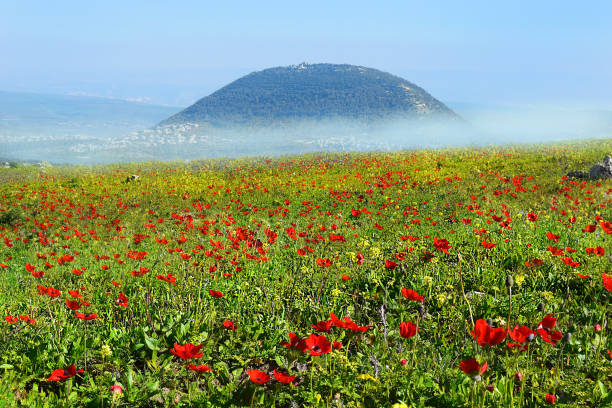
Mt. Tabor, believed to be the site of the Transfiguration of Jesus. Photo from iStockphoto.com.

In the Gospel according to Matthew, major events in the life of Jesus Christ mostly happened on a mountain: his temptation (Mt. 4:8), his inaugural teaching, the sermon on the mount (Mt. 5:1) and the sending of his apostles on their mission throughout the world until the end of time (Mt. 28:16).

Here at his transfiguration on top of the “high mountain” of Tabor we find glimpses of Christ’s explanation of the parable of the weeds among the wheat when he said that “the righteous will shine like the sun in the kingdom of their Father” (Mt. 13:43). See how this transfiguration of the elect at the end of time that was shown to Daniel in the first reading is expressed exactly in the same way as that of the face of Jesus on Mount Tabor that had “shone like the sun” as witnessed by the three apostles. Peter strongly attested to it later as we have heard in the second reading.

Last week in the daily readings from Exodus we have heard how the face of Moses also shone like the sun after he had conversed with God on Mount Sinai and every time he would see God at his tent called the dwelling in their journey in the desert. That is the context why Peter volunteered to build three tents for Jesus, Moses and Elijah during the transfiguration. The Jews have a celebration called feast of booths or tents they called sukkoth. The tent is the dwelling place of God in the wilderness that eventually became the temple of Jerusalem. It was the closest thing they have with God and with heaven. At the transfiguration of Jesus, the three apostles were enthralled at the experience and sight they did not want to go down because it was literally heaven, being with God. The transfiguration event itself for them was the fulfillment of their faith and everything in the Old Testament.

They would realize later that to dwell with God means to continue the journey in Christ, with Christ marked with many ascents and descents happening not just in space or physically but more of the interior kind. That is how we are transfigured, always inside. Right in our heart and soul. That was the deeper meaning of Moses entering God’s dwelling in the desert – of him being one in God, with God – that his face would shone after, prompting him to cover it because people were scared.

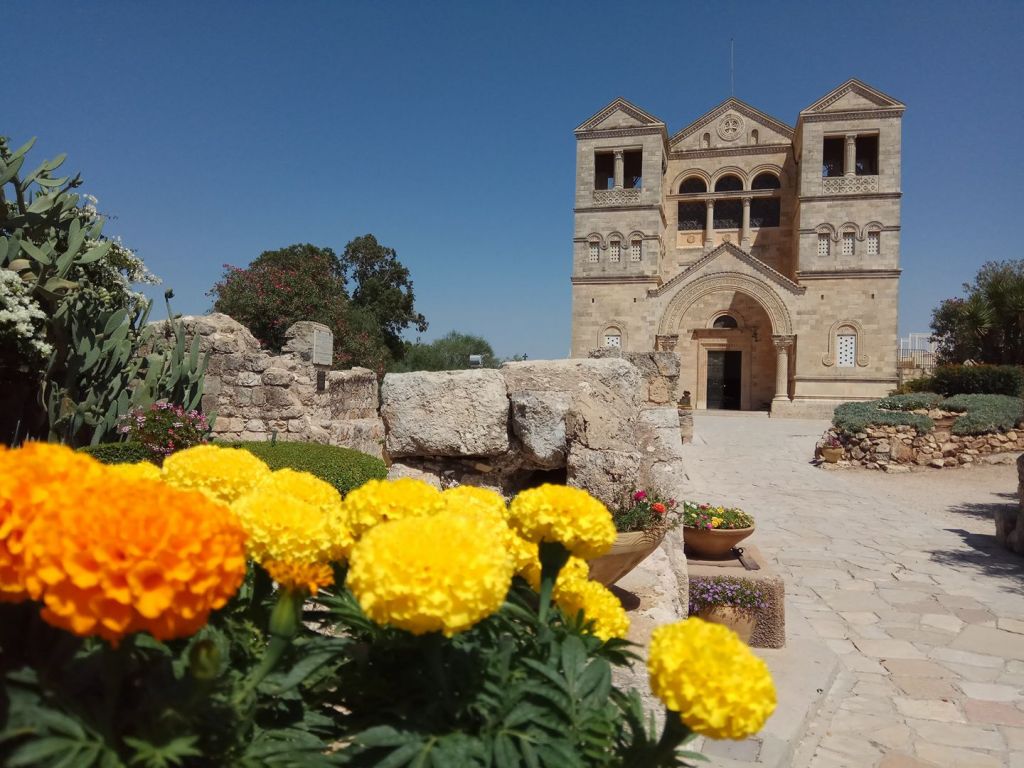
Photo from custodia.org, Basilica of the Transfiguration on Mt. Tabor, Israel.

Whatever is found on the face is always a reflection of what is in the heart and soul. No amount of cosmetics and beauty procedures can ever bring out that glow and radiance of anyone’s face beaming with joy and fulfillment, peace and contentment.

The face is the reflection of the depths – or shallowness – of one’s heart and soul. There is an English word used to describe this inner dynamics of the face – countenance. Any change in our countenance indicates something is being transformed within us as a result of our communion with God. That is why we describe some people even we do not know them as malalim or deep, or magaling magdala ng problema because of their countenance. In the same manner, we easily notice something rotting inside a person when despite one’s having good features like flawless skin or aquiline nose, beautiful eyes and the like. This is what the young people would call as “uma-aura” when they pose for FB or IG. Aura is the spirit within evoked by one’s face that cannot be manipulated.

The face of Jesus shone like the sun at his transfiguration primarily because deep inside him is his complete and perfect union in the Father. Jesus would always insist on this reality within him, his perfect communion in the Father from which also flows his total obedience which will reach its highest point at his Passion and Death on the Cross, his own Pasch or exodus.

There at Mount Tabor in his transfiguration, we are shown that Christ’s glory cannot be separated from the Cross. His majesty and triumph shall come from his pasch. And so are we his disciples. That is why the voice heard by the apostles said, “This is my beloved Son, with whom I am well-pleased; listen to him”. From now on, Christ would be speaking of his coming Passion, Death and Resurrection. All his lessons after Mount Tabor are about our participation in his paschal mysteries. Do we listen?

The apostles learned and embraced all these lessons in a process slowly with the guidance of the Holy Spirit after Pentecost. That is why Jesus told them to come down from Tabor to continue their journey to Jerusalem to fulfill his mission. Through them we have believed despite our not having seen Jesus that is how he would appear as “Lord” on the mountain that we the faithful are climbing to participate in the ultimate manifestation of his return at the end of time.

And there lies the good news of this Feast of Transfiguration happening in this dry month of August, often described as ghost month too. As we go through the last half of Ordinary Time’s remaining 17 weeks, may we continue to ascend in Christ, with Christ with his Cross in sharing his paschal mysteries in our daily lives. After the euphoria of Easter Season that had closed on Pentecost Sunday, we are reminded anew this sixth of August to never lose sigh of the Cross of Good Friday as our path to glorious transfiguration of Jesus Christ.

To journey with Christ, listening and obeying his voice is something of the inside and not just of space or place. Discipleship demands persistent practice of the Lord’s teachings and examples as we shall hear from the gospel these coming Sundays.

As COVID-19 virus wanes that we resume most of our activities minus the many protocols before while still being cautious and careful, may we face our inner issues in Christ and the Holy Spirit to be transfigured in him. Amen. Have a blessed week ahead. It is a Sunday, celebrate Mass with others in your Parish, pray for those still suffering from the effects of typhoon Egay and Falcon.

Painting of the Transfiguration by Italian artist Duccio di Buoninsegna between 1308 and 1311 from commons.wikimedia.org.

“Habang Buhay” by Zack Tabudlo (2021)

The Lord Is My Chef Sunday Music by Fr. Nicanor F. Lalog II, 30 July 2023
Photo by author in San Juan, La Union, 26 July 2023.

Finally we’re back! Sorry for being silent with our Sunday music blog relating secular songs with the Gospel of Jesus Christ.

For our return engagement since our last blog in June 11, 2023 with Stephen Bishop’s Parked Cars (https://lordmychef.com/2023/06/11/parked-cars-by-stephen-bishop/), we feature this Sunday one of our favorite local talents, Mr. Zack Tabudlo with his 2021 hit Habang Buhay from his album called Episode.

We can’t recall where and when we first heard this swinging OPM love song that sounds like from our era of VST & Co. Fact is, Tabudlo has other previous hits before Habang Buhay which struck us with two important things we find so close to our Sunday gospel.

First is its melodic upbeat tune teeming with profundity despite its being so light and refreshing to listening (and dancing). Though we find traces of influence from the late 1970 to1980’s disco era in Tabudlo’s music, Habang Buhay is so sincere with its Gen Z identity that is authentically so Pinoy especially with its shouts of Halika nga that is twice repeated.

Aking sinta, ano ba'ng mayro'n sa iyo?
'Pag nakikita ka na, bumabagal ang mundo

'Pag ngumingiti ka, para bang may iba
'Pag tumitingin sa 'kin, mapupungay mong mga mata
Wala akong takas sa nakakalunod mong ganda, ha
Halika nga (ha, ha, ha)

That shout of Halika nga is so typically Pinoy, so warm and genteel like Jesus Christ calling us to be open to his parables, to find God hidden in the most simplest things of ordinary life. Halika nga evokes those tender, loving calls of our Lola during summer vacation calling us to change clothes soaked in dirt and perspiration with a glass of Julep or Sunny Orange juice during those endless afternoons of fun and games.

Halika nga sometimes is an expression of playfulness masking as deeply serious. It is something we rarely hear these days because nobody seems to offer us with comfort and company, with love and concern anymore.

In Habang Buhay, Tabudlo is overjoyed, playfully or teasingly calling his beloved halika nga for them to bask and savor this wonderful love they have found. If we could just hear Jesus calling us too, telling us halika nga to stay with him to discover God as the only worthwhile love and treasure we could ever have in this life.

And where do we find that kind of love? In Christ’s dying for us on the Cross which Tabuldo had thought of as the true expression of his love that is faithful until the end.

Andito 'ko hanggang sa 'ting pagtanda
Mamahalin kita basta't 'pag nahulog
Nakahawak ako, 'wag ka lang bibitaw
Habang-buhay na ako'y iyo

Wala nang ibang nakagawa sa 'kin nang ganito
Kundi ikaw, nag-iisang diyosa ng buhay ko

'Wag ka nang matakot, 'wag kang mangamba
Andito ako 'pag ika'y mag-isa
Wala akong takas sa nakakalunod mong ganda, ha
Halika nga (ha, ha, ha)

This is the second thing that struck us in Habang Buhay, an amazing song that speaks of love that is pure and true, and most of all, willing to suffer and sacrifice. Like in the gospel today of the parables of the treasure buried in the field that prompted the farmer to sell all his possessions to acquire that property and of the fine pearl found by a merchant who also sold everything he had just to have it. The same is true with love, and with God: what are we willing to let go to have the love of our life?

It’s a rarity in this fast-paced world to hear from young people speaking about love in its deeper sense like the giving of self for a beloved, giving us deep sighs of relief that we’re leaving this world in good hands. Habang Buhay assures us not only of a love that is forever but invites us too to trust the next generation by witnessing to them Christ’s love found on the Cross. Amen.

From YouTube.com

On choosing well

The Lord Is My Chef Sunday Recipe for the Soul by Fr. Nicanor F. Lalog II
Sunday in the Seventeenth Week of Ordinary Time, Cycle A, 30 July 2023
1 Kings 3:5, 7-12 >><}}}}*> Romans 8:28-30 >><}}}}*> Matthew 13:44-46
Photo by author, San Juan, La Union, 24 July 2023.

We are now in the final installment of Jesus Christ’s parables this third consecutive Sunday of his teachings on the kingdom of heaven. It is hoped by this time we have learned and realized God is the only treasure we must have in this life.

And the good news is that God our treasure is found in the most ordinary things!

Many times he simply comes to us even without us looking for him while often would also appear if we truly seek him like in the two short parables we heard this Sunday.

Jesus said to his disciples: “The kingdom of heaven is like a treasure buried in a field, which a person finds and hides again, and out of joy goes and sells all that he has and buys that field. Again, the kingdom of heaven is like a merchant searching for fine pearls. When he finds a pearl of great price, he goes and sells all that he has and buys it.”

Matthew 13:44-46
Photo by author, San Juan, La Union, 25 July 2023.

Our gospel may be the shortest these past three Sundays but it challenges us to be wiser in making choices to acquire the only worthy treasure of all – God.

Both the farmer and the merchant exemplify to us this wisdom in letting go of their other possessions just to have the buried treasure and pearl they have found.

Note how the farmer merely chanced upon the treasure buried in a field not his, while the merchant finally found the fine pearl after years of searching all his life. Here we are reminded how God is not that difficult to find by those truly seeking him. The problem lies with us when we refuse to be the good soil so that the seeds sown in us may grow and bear fruit even amid the weeds! Many times, we have stopped having that sense of awe, of being surprised by God who is like a treasure buried in a field somewhere waiting to be found. Worst, a lot often we have simply given up searching for God as if it is impossible to find him like a fine pearl. God is with us in Jesus Christ, our Emmanuel.

This is the good news of our short parables today. Moreover, God even comes to ask us what we want in life like King Solomon in the first reading. Later in the gospel we find Jesus Christ also asking the blind Bartimaeus what does he want while passing by the city of Jericho. Notice how those healed by Jesus always had clear thoughts and focus, so wise in their choices of what they wanted in life like King Solomon. Can we be wise enough like Solomon in choosing well, in asking the right thing from God?

The Lord appeared to Solomon in a dream at night. God said, “Ask something of me and I will give it to you.” Solomon answered: “O Lord, my God, you have made me, your servant, king to succeed my father David; but I am a mere youth, not knowing at all how to act. Give your servant, therefore, an understanding heart to judge your people and to distinguish right from wrong. For who is able to govern this vast people of yours?” the Lord was pleased that Solomon made this request.

1 Kings 3:5-7, 9-10
Photo by author, San Juan, La Union, 25 July 2023.

What is so beautiful, even wonderful here is not just the nearness of God with us but his kindness in asking us what we want. Imagine God saying, “Ask something of me and I will give it to you.”

What shall we ask God if he were to come to us in a dream tonight like Solomon? Perhaps we would be at a loss! Remember, God is asking for just one thing we want. At least the genie usually gives three wishes, with only the third one as most crucial being the last for which we are told to always ask for three more wishes!

Here we find again Simon Sinek’s book Start with Why most useful because our whys give us the reason and meaning for whatever we wish to accomplish. Exactly what Solomon must have considered as he laid out to God his situation, his needs, most of all his weakness, “I am a mere youth, not knowing at all how to act.” See why Solomon asked for that grace instead of wealth or fame or strong army?

It is that consciousness of being small and weak before God that pleases him most in granting our prayers. Earlier before this scene Jesus praised and thanked God in giving wisdom to the little ones who accepted him than the wise and the learned who rejected him (Mt.11:25). That is the attitude of being a “good soil” who allows the seed to penetrate and absorb us!

God was so pleased with Solomon because he knew so well his whys that to govern Israel so well amid his many weaknesses, he needed God more than ever. Unlike Adam and Eve who tried to usurp God in his power in knowing right from wrong, Solomon recognized it as divine prerogative we can only share with God. Actually, what he asked for was God himself who is the treasure hidden in the field and the fine pearl found by the merchant. Solomon did not want to be like God inasmuch as he never thought of being wealthy and powerful nor famous that are of no value at all compared to having wisdom, in having a discerning heart to know right from wrong.

Photo by author, shore of the Lake of Galilee in Capernaum, Israel, May 2017.

I have realized in my 25 years as a priest that what we treasure most are not the ones that give us pleasure but the ones who complete us. We ask and pray to God for something or someone not because of need but more of fulfillment found only in Jesus Christ who promised that whatever we ask from his Father would be granted to us in his name if it is for the mission he had entrusted to us. That is why in my prayers, I no longer ask God for anything except of being with him in eternity because I am so sure that whatever I need, he would give. Most of all, if I have God, then I am complete.

The parables of Jesus are inexhaustibly rich yet so accessible to everyone with open minds and open hearts to meet God in Christ through the simple realities of life. That is why St. Paul tells us in the second reading today that “all things work for good for those who love God, who are called according to his purpose” (Rom. 8:28).

Let us pray for more zeal and enthusiasm in being the good soil, in choosing wisely the only treasure worthy in this life who is Jesus Christ, our Emmanuel or God-is-with-us. Let us welcome him in the many parables of life we take for granted that are all part of God’s plan of salvation for us leading to glory that is our destiny. Amen. Today is Sunday, go to Mass and pray for those severely affected by super typhoon Egay especially our brothers and sisters in northern Luzon.

Start with Why

The Lord Is My Chef Sunday Recipe for the Soul by Fr. Nicanor F. Lalog II
Sunday in the Sixteenth Week of Ordinary Time, Cycle A, 22 July 2023
Wisdom 12:13, 16-19 ><}}}*> Romans 8:26-27 ><}}}*> Matthew 13:24-30
Photo by author, Bgy. Alno, La Trinidad, Benguet, 11 July 2023.

Start with Why is Simon Sinek’s bestselling book written more than a decade ago about the need to focus on asking first “why” before making any choice and decision in life. I have found it very enlightening and useful even in matters of spirituality and prayers.

This is seen in our readings too this Sunday as we continue to listen to our Lord’s teachings using parables until next week. In all occasions of his teachings, his disciples asked him always Why do you speak to them in parables?” (Mt. 13:10).

As we have explained many times before, parables are simple stories we usually take for granted that reveal to us profound truths about life and our very selves, most especially of God and his kingdom which Jesus had come to proclaim.

The key to unlocking the beauty and lessons within parables is having that spirit of openness and sincerity of heart, especially in asking why which may often take different forms.

Jesus proposed another parable to the crowds, saying: “The kingdom of heaven may be likened to a man who sowed good seed in his field. While everyone was asleep his enemy came and sowed weeds all through the wheat, and then went off. When the crop grew and bore fruit, the weeds appeared as well. The slaves of the householder came to him and said, ‘Master, did you not sow good seed in your field? Where have the weeds come from?'”

Matthew 13:24-27
Photo by Onnye on Pexels.com

It is the question we ask most often, why is there evil at all if God our Creator is good? It is most difficult, even scandalizing when evil happens to us despite our efforts to be better and holy.

Today’s parable of the weeds among the wheat answers those many whys we have in life. It is a beautiful continuation of last Sunday’s parable of the sower that offers us Christians with many insights and challenges for the deepening of our faith and commitment to our mission.

First is our sense of sinfulness. It is one of the most serious problem Christianity, even the whole humanity is facing today. More and more people are losing that sense of sinfulness with so many becoming complacent in their faith and morals, always having reasons and alibis, worst, even justifications in committing sins. Or just about everything!

Today’s parable reminds us to always ask like the slaves, “Master, did you not sow good seed in your field? Where have the weeds come from?”

Photo by author, Bgy. Bahong, La Trinidad, Benguet, 12 July 2023.

Why all the evil in the world today?

How sad that many people have grown cynical with evil, simply accepting its existence in the world as a given reality, to be accepted wholly as if we can do nothing about it. Some even go to the extent of thinking the devil does not exist at all with evil simply existing like weeds?!

Here we find the importance of prayer life when we get to examine our conscience daily, asking why all the evils are happening. From there, we learn humility by examining too how we may have contributed in the commission of evil. Most of all, it makes us aware of that tricky “sins of omission”, of how we might have failed by omitting in doing what is good that have contributed to the spread of evil and sin. It is always easy to look outside blaming others, pointing at others for all the evil happening without seeing our own sins.

Second is the danger of neglect and complacency among us disciples of Christ. See the genius of Jesus as a storyteller when he mentioned that the planting of the bad seed or weeds happened while the Master was asleep, “The kingdom of heaven may be likened to a man who sowed good seed in his field. While everyone was asleep his enemy came and sowed weeds all through the wheat, and then went off. When the crop grew and bore fruit, the weeds appeared as well.”

From Pinterest.com.

In the New Testament, sleep is a metaphor for neglect. Jesus cautions us his disciples that if we are not vigilant and discerning of what we allow to influence us, bad seeds can get planted in our lives, families and relationships, even in the Church and in our ministry!

In some translations, the word used for the weeds is darnel, a kind of weed that looks like the wheat to show how evil works itself into our lives by masking itself to look something as good and harmless for a moment. “Wala namang masama” is our usual excuse until later when that evil is unmasked and revealed, its devastating impact had already wreak havoc on us because we have complacently tolerated its growth for some time.

Remember the saying, the devil is in the details. Likewise, keep in mind that the devil does not merely want us to sin but to eventually destroy our lives! “Be sober and vigilant. Your opponent the devil is prowling around like a roaring lion looking for someone to devour” (1 Pt. 5:8).

Third is Christ’s call for us to be patient but firm in dealing with evil and sin. We live in an imperfect world. There will always be evil and sin like this growing trend called liberalism and wokism that stress everyone’s rights without any regard at all with personal responsibility and accountability. These liberals and wokes who have infiltrated the media and government, maybe even the Church, want the natural order of things be changed like gender and marriage. For them, everything is relative. To each his own like praying the Our Father in a drag version.

Photo by Fr. Pop dela Cruz, San Miguel, Bulacan, 2022.

We have to be patient with them and fight them squarely with more reason and charity, to never stoop down to their level that only shows their weaknesses within.

The author of the Book of Wisdom tells us today how God in his power and might chose to be patient and moderate with us sinners precisely because he is strong; the exercise of strength like being noisy, the flexing of muscles with large gatherings actually indicate weakness.

That is why St. Paul in the second reading reminds us of our own weaknesses too in this time of hope and waiting for Christ’s Second Coming while in the midst of all these evils happening. Hence, our need to pray for the Holy Spirit to enable us to carry out our mission in this world marred by sin.

Here we find again the primacy of prayer life. Not just the recitation of prayers. What St. Paul envisions in our short reading today is the kind of prayer wherein God’s own Spirit is the one interceding for us according to God’s will. Teaching people to pray effectively is one of the most challenging of all pastoral duties because we priests and bishops must first be the ones deep into prayer. When we live in the Spirit, we would always be faithfully in prayer.

Sorry to mention here again our disappointment to our bishops in failing to reflect more on the reasons of upholding the rule that only the priest extends his hands in praying the Our Father. It is fidelity to the liturgy to prevent us from being misled by plain emotions that is already happening like in those “charismatic” Mass and gatherings with emphasis on health and wealth (gagaling, gagaling…siksik, liglig at umaapaw) interspersed with clapping of hands.

Photo by author, Bgy. Alno, La Trinidad, Benguet, 11 July 2023.

Jesus assures us in this parable there will be a time for separation, judgment, and punishment but it is not ours to carry out those actions in the present. Let us continue probing our hearts in prayer. Always start by asking why, not with what we think we know. Many times, as the parables of Jesus tell us, the kingdom of God is found in the simplest things in life like a simple word or a sentence we tend to interpret with our many assumptions. Amen. Have a blessed week ahead everyone!

When we drag words down

The Lord Is My Chef Sunday Recipe for the Soul by Fr. Nicanor F. Lalog II
Sunday in the Fifteenth Week of Ordinary Time, Cycle A, 16 
Isaiah 55:10-11 ><]]]]'> Romans 8:18-23 ><]]]]'> Matthew 13:1-23
Photo by author, Bgy. Bahong, La Trinidad, Benguet, 12 July 2023.

Surely you will hear in almost all homilies today something about that blasphemous drag version of the Lord’s Prayer trending in social media. What a coincidence that our Scripture readings this Sunday say a lot about words that teach us so much in dealing with this new kind of pandemic sweeping the world, the “LGBTQ+ woke” syndrome happening in the realm of words and languages.

In the light of recent things happening in our society, today’s readings tell us two important things we have forgotten or have deliberately disregarded: the power of God’s word and the need to listen.

Thus says the Lord: Just as from the heavens the rain and snow come down and do not return there till they have watered the earth, making it fertile and fruitful, giving seed to him who sows and bread to him who eats, so shall my word be that goes forth from my mouth; it shall not return to me void, but shall do my will, achieving the end for which I sent it.

Isaiah 55:10-11
Photo by author, Bgy. Alno, La Trinidad, Benguet, 11 July 2023.
The power of God's word

Our short reading from Isaiah perfectly introduces us to the sequence of Christ’s teachings in the next three Sundays beginning today about the power of God’s word, a preparation for us to understand the parable of the sower.

Here we find from the Prophet Isaiah God’s word as totally “other” – ibang-iba sa lahat – as it reveals and acts because it is the truth and effectiveness in one. See how Isaiah picturesquely expressed the power of God’s word, “Just as from the heavens the rain and snow come down and do not return there till they have watered the earth, making it fertile and fruitful… so shall my word be; it shall not return to me void, but shall do my will, achieving the end for which I sent it.

The Bible never fails in attesting to this conviction, of how God means what he says that has become the very basis of our hopes in him since the very beginning. Everything flows from God’s word, from the creation of the world and the universe to its fulfillment in Jesus Christ until he comes again at the end of time. God’s word creates history with power to renew and restore life, the power to save us as experienced by the thief on the Cross when he said, “Jesus, remember me when you come into your kingdom” (Lk.23:42).

Photo by author, Camp John Hay, Baguio City, 12 July 2023.

Contrast God’s word with our human experience aptly expressed by Shakespeare in Hamlet’s famous quote, “words, words, words!” – of how we use so many words in the belief more is powerful when in fact our words are vain and empty, lacking in substance. Instead of giving life, many times our words hurt and even kill others. In this age of social media, see how we use words to distort truth with lies and deceptions. Its worst aspect is not found in the words we use but in us who pronounce them when we say things without any commitment at all so that many times, our words never stood the test of time because they are easily forgotten when spoken or heard.

St. Paul said it so well in the second reading, of how “all creation is groaning in labor pains even until now” (Rom.8:22) especially when we distort the truth of our words, when we do not mean what we say, when we our words divide instead of unite, when our words destroy instead of build.

See how sin entered through the “words” of the devil that deceived Adam and Eve with the first “fake news” in history that they would not die if they ate the forbidden fruit but instead become like God. Sin took on its ugly face in the use of words again after the first crime of murder committed by Cain who dared to say to God “am I my brother’s keeper” when asked of the whereabouts of Abel.

Words continued to be the means through which sin permeated humans reaching its lowest point when people played God again by building the Tower of Babel to reach the heavens. God punished them by making them speak different languages that resulted in confusion and the collapse of the tower.

How sad that these days, human words are made louder, spread faster by technologies try so hard to undermine God’s word. There is no doubt on the power of the word of God for he himself had shown and assured it. For his words to be fully operational and experienced, we must first listen to Jesus, the word who became flesh.

Photo by author, Camp John Hay, Baguio City, 12 July 2023.
Listening to the word of God

“Whoever has ears ought to hear.”

Matthew 13:9

Jesus used these words seven times in the synoptic gospels, usually in connection with parables like in Matthew chapter 13 which we shall be using in the next three Sundays. We heard it first today and again next Sunday when Jesus explained the parable of the weeds.

His command to “hear” requires more than just taking in the words he speaks to us. To truly hear what Jesus is saying especially within the context of the parables, we must profoundly ponder what he wishes us to know. Just like in our prayers: what is essential is to be able to listen more to God than to tell him our needs which he already knew.

This can only happen in the spirit of silence and openness to God when we suspend our many preconceptions and other ideas especially about the parables we have been so familiar with.

Photo by author, Camp John Hay, Baguio City, 12 July 2023.

The seed is the word of God and Jesus is the Sower who comes to us everyday, speaking to us, telling us the most important things we need to know and do in this life for us to be fulfilled and joyful.

But, do we have our ears attuned to the word of God? Many of us practically live in media, so hooked with gadgets either or both the cellphone and headsets or pods. Nobody seems to listen anymore as we are so engrossed in our own little world centered in the endless me, me, me and I.

In the parable, it does not really matter where the seeds fell; it is always good, at least even as food for the birds! Wherever it fell, the seed always sprang into life! That is the power of the word of God! We just have to give it a chance to grow and mature to bear fruits of “a hundred or sixty or thirtyfold”.

To hear the word of God means also to have our hearts opened to receive God so we can gain insight into the kingdom of God. It is in our hearts where the word of God is sown. Stones and thorns refer to the hardness of our hearts, our refusal to welcome Jesus Christ because we have been dominated by fame and power and other cares of this modern world.

Receiving the word of God is a process, not just a one-shot deal. It is a relationship we have to cultivate in Jesus Christ, just like the ones we try to have with our plants. The Lord himself had warned us repeatedly in the gospels of how there would always be opposition and indifference, even mockery and blasphemy right in the very places where his word should manifest its effectiveness like in our country, the only Christian-nation in this part of the world. If ever the word is not fruitful, it is primarily due to our dispositions and attitudes to God and his word.

Photo by author, Camp John Hay, Baguio City, 12 July 2023.

How timely that at this particular moment in our country we heard again this classic parable of the sower by Jesus Christ.

We, especially in the Church, are being reminded anew to humbly open ourselves to God and his word, to give it a chance to grow and bear fruit, including our rules and other documents especially in the liturgy.

In spending so much time about the posture the laypeople should take in praying the Our Father in the Mass notwithstanding what the rubric says, the devil sneaked into the scene with this drag cover of the Lord’s Prayer. This is something we must reflect. Why even the drag queen had joined the discussion of the Our Father that have deeply hurt us all! With this recent decision by the bishops, the more it seems that the drag version of the Lord’s Prayer is partly our fault too. Let us go back to God and trust his word anew. And the words of the liturgy too. Amen. Have a blessed week ahead!

Imitating Jesus, meek and humble

The Lord Is My Chef Sunday Recipe for the Soul by Fr. Nicanor F. Lalog II
Sunday in the Fourteenth Week of Ordinary Time, Cycle A, 09 July 2023
Zechariah 9:9-10 ><}}}*> Romans 8:9, 11-13 ><}}}*> Matthew 11:25-30
Photo by Ms. Nikki Vergara, 2020.

Today we hear the final installment of Jesus Christ’s instructions to the Twelve as he sent them to their first mission which started two Sundays ago. Discipleship is essentially becoming like Jesus Christ, our Lord and Master who is meek and humble of heart.

“Come to me, all you who labor and are burdened, and I will give you rest. Take my yoke upon you and learn from me, for I am meek and humble of heart; and you will find rest for yourselves. For my yoke is easy, and my burden light.”

Matthew 11:28-30

For the third straight Sunday, Jesus has been teaching the Twelve including us today some important lessons in discipleship: first is to fear no one except God, then to be never influenced by others except God, and now, to learn from him who is “meek and humble” of heart.

Photo by author at the sacristy of the Manila Cathedral, 07 July 2023.

In the whole Bible, we find that “meekness” is the most remarkable quality of any one sent by God to his people, especially with Moses and King David.

Despite some instances of them getting angry and even being harsh sometimes, both were described as being meek especially Moses described as “the meekest man on the face of the earth” (Num.12:3).

When Jesus came and brought salvation to mankind by obediently dying on the Cross, he became the embodiment of meekness.

To be meek means being gentle and obedient, exactly who Jesus Christ is. All throughout his life, Jesus had repeatedly expressed everything he said and did were in total obedience to the Father who sent him to save us. That is why that we too find Christ’s words and actions as the fulfillment of the Old Testament prophecies of God coming to save his people, of sending someone so different from the other kings and servants before him. This is very evident in the gospel of Matthew who emphasized on the meekness of Jesus Christ that in narrating to us his version of the Palm Sunday entry of Jesus to Jerusalem, he actually cited (Mt. 21:4-5) our first reading today from Zechariah:

Thus says the Lord: Rejoice heartily, O daughter Zion, shout for joy, O daughter Jerusalem! See, your king shall come to you; a just savior is he, meek, and riding on an ass, on a colt, the foal of an ass.

Zechariah 9:9

Unlike the kings and other powerful men of the world who rode on prancing horses symbolic of their power and strength, here is Jesus Christ riding a placid donkey, symbolic of his meekness and humility, most especially of his message of peace.

Meekness in Tagalog is maamo, from the root word amo referring to “master”, connoting one’s recognition of master by being submissive in the positive sense. Maamo also means being tame as opposite with being wild. Hence, the English word of being gentle, or gentility.

The good news of Jesus being “meek and humble” is that we need not be afraid of becoming his disciples, of becoming truly Christians in this age relativism when anything goes, no more absolutes like God and morality. Now more than ever, St. Paul’s admonitions in the second reading are so real when we are challenged to live in solidarity with Christ empowered by the Holy Spirit, or to live in solidarity with the old humanity enslaved to sin.

Yes, the Gospel of Jesus is demanding. And so is true love which is most demanding.

Photo by author, La Mesa Forest Reserve seen from Our Lady of Fatima University-Quezon City with the Sierra Madre as background, January 2023.

There will always be pains and hurts but these occasions make our discipleship, our love for Christ and for others most meaningful and fulfilling. The Lord’s “yoke is easy and his burden is light” because it is naturally human and divine like him made possible with his paschal mystery. Being loving and kind, forgiving and merciful, caring and helpful are never painful nor tiring because they liberate us, setting us free from the imprisonment and shackles of sin due to our pride and self-centeredness, leading us to true freedom and fulfillment.

Why is it now life has become so complicated? It is not because of Jesus nor of his Church who simply echoes his teachings as he had commanded. Life has become complicated ever since we have allowed and accepted all these modern thoughts of freedom that actually “unfreed” us like these trends from the “sex revolution” that have spawned all the evils plaguing us, from divorce to contraceptions and abortions that not only destroy human life but most especially the family, society’s basic unit. There are some insisting on altering the most basic and natural of God’s creation like gender as either male or female, nothing in between; and, marriage solely between man and woman.

See how life has been reduced to lifestyle characterized by commercialization of everything including persons with sex casually portrayed as an act or activity and a mere part of the body. Everything has become relative, to each his own. That is why life has become so tiring, even empty despite all the comforts and modern amenities we now enjoy.

We have been removing God from everything, from all his creation. That is why Jesus comes to us today, calling us all to come to him, all who are burdened to find rest in him.

Find Christ in yourself, you find Christ in others. When we find Christ, we find God, we find truth, we find life, we find rest.

Our gospel this Sunday comes as a fitting closing to the Lord’s lessons on discipleship. It is never easy in becoming a Christian, of standing for what is right and true, just and fair, in being kind and forgiving, in lovingly serving others without expecting anything in return.

Let’s not make it more difficult on our part. Examine the demands of Christ are actually simple, love him by obeying him. What are the demands of those trying to lord over us these days like those so-called wokes and liberals who are so harsh in insisting their views that are self-serving and unnatural.

Remember, our series of these instructions came when “At the sight of the crowds, Jesus’ heart was moved with pity for them because they were troubled and abandoned, like sheep without a shepherd” (Mt.9:36, June 18, 11th Sunday). Jesus added that we pray for more laborers to work in the bountiful harvest, for more persons who are loving and warm, not demanding nor insistent on themselves and their beliefs. Have a restful week ahead! Amen.

Possessed by Christ

The Lord Is My Chef Sunday Recipe by Fr. Nicanor F. Lalog II
Thirteenth Sunday in Ordinary Time, Cycle A, 02 July 2023
2 Kings 4:8-11, 14-16 ><}}}}*> Romans 6:3-4, 8-11 ><}}}}*> Matthew 10:37-42
Photo by author, Our Lady of Fatima University-Quezon City with the La Mesa Dam Forest Reserve at the back, 01 July 2023.

Jesus continues to instruct the Twelve with important lessons on discipleship as he sent them on their first mission the other week. Last Sunday he taught them – including us today – to face all fears not to be fearless of anything or anyone but to fear only God.

Today, Jesus cautions us not to be unduly influenced by people especially those closest to us in fulfilling our mission in him. Very often, intimidation and influence can be used to adversely affect our ministry that eventually veer us away from our Lord Jesus Christ in the process. Hence, his encouragement too for us to persevere through those influences as we follow him.

Jesus said to his apostles: “Whoever loves father or mother more than me is not worthy of me, and whoever loves son or daughter more than me is not worthy of me; and whoever does not take up his cross and follow after me is not worthy of me. Whoever finds his life will lose it, and whoever loses his life for my sake will find it.”

Matthew 10:37-39
James J. Tissot, ‘The Exhortation to the Apostles’ (1886-94) from Getty Images.

Being a Christian is being possessed by Christ. That is why he told us last week to “be not afraid of those who kill the body but not the soul” so that we fear only him our Lord Jesus Christ in the sense that we lose all meaning in life without him.

To be possessed by Jesus Christ is to have a life centered in him, detached from undue influences including from our family and friends especially us priests and religious. When priests focus more with self and family or with other people instead of Jesus Christ, everything crumbles – pati sutana nalaglag na! That is when priesthood becomes a career and a means for social mobility and livelihood with money as the priest’s new “lord and master”.

Priesthood is Jesus Christ, the Caller, not the call as I have always insisted to seminarians I teach and direct. Problems happen when the Caller is dislodged from the top spot and focus shifts on the call or priesthood when priests literally and figuratively throw their weight around when we hear the notorious lines “matutulog ang pari, pagod and pari, unawain ang pari”.

Photo by Ka Ruben, National Shrine of Our Lady of Fatima, August 2022.

Discipleship in general of which the priesthood is just a part is indeed a very difficult life. Nobody said it would be easy as the opening instructions of Jesus to the Twelve clearly stated, “Whoever loves father or mother more than me is not worthy of me, and whoever loves son or daughter more than me is not worthy of me; and whoever does not take up his cross and follow after me is not worthy of me.”

Jesus is not asking us to disregard our family and friends. What Jesus is telling us is actually a warning against too much expectations that our family and friends would love and embrace him too inasmuch as we have given ourselves to him. Not true at all, sad to say.

There are times that those closest to us are the ones who could not accept Jesus Christ’s call of discipleship. There are times that the most difficult people to be catechized and evangelized are those dearest to us.

Many of us must have felt in many instances how our family or friends are the ones who reject the ways of Jesus, the values of Christ. In this highly competitive world so exaggerated by the social media when everyone feels so entitled and deserving for everything, people have become so impersonal in dealing with each other, forgetting the basic courtesies in life, especially respect and kindness. Many are blinded by fame and wealth forgetting God and the people around them.

Photo by Mr. Mon Macatangga, 12 May 2023.

This Sunday, Jesus is teaching us to always have him as the basis and foundation of our relationships. Remember the gospel two Sundays ago when upon seeing the crowds Jesus was “moved with pity because they were troubled and abandoned like sheep without a shepherd” that he taught us to pray for more workers in the harvest (Mt.9:36-37). The problems in the world can never be solved by money and any material thing but only by another person, by someone with the heart and face of Christ filled with his warmth and his loving presence, someone not afraid to love, not afraid to get hurt, not influenced by fads and trends or by what others say.

Everything in this life, in our ministry and in our discipleship has to be seen in the light of Jesus Christ. Things become cloudy or dull and shady when Jesus is absent that can greatly affect, for better or for worse, our relationships with one another. This we see in the first reading about the hospitality offered by that Shumenite woman to Elisha the prophet whom she recognized as a man of God. Elisha clearly saw the woman’s basis of hospitality – God – that he never abused it. In fact, we find a trace of humor when Elisha had to ask his servant what their graceful hostess most needed to reward her hospitality. Sometimes like Elisha in our being so focused in serving the Lord, we become so ignorant of the most obvious with those closest to us; imagine Elisha asking his servant what to reward the Shumenite woman, his seeming oblivious to the fact she and husband were childless! Eventually, Elisha would grant the couple the gift of a son whom he would later bring back to life.

At my 25th anniversary of ordination to the priesthood with friends from UST’s the Varsitarian, 18 April 2023.

To be possessed by Christ means to be “dead to sin and living for God in Christ Jesus” as St. Paul explained in our second reading today (Rom.6:11). For some it may sound foolish but that is the reality and mystery of life we have been reflecting since the resumption of Ordinary Time last month. It is what we call as Christian paradox when in our sharing in Christ’s paschal mystery of his suffering and death, that is also when we find and experience our resurrection and life.

Last Monday, a very dear friend died, Sr. Gina of the Religious of Good Shepherd. We met in 1984 when I joined UST’s the Varsitarian where she was an outgoing staff member. She was the one who proclaimed the first reading at my celebration of my 25th anniversary of ordination to the priesthood last April 18.

Photo by author, Chapel of the RGS Mother House in Quezon City, 29 June 2023.

When I first invited her to my anniversary, she declined due to a big retreat of priests at their spirituality center in Tagaytay; within a few hours, she texted me back and told me she would fix her schedule so she could come to my anniversary celebration. She later texted me twice to insist she had to be present at my silver anniversary.

Unknown to us all, her cancer had recurred and metastasized last November which we learned only June 28 when the RGS Sisters issued a health bulletin about her condition. Sr. Gina had decided to stop all medications to wait for the inevitable at their mother house in Quezon City two weeks earlier. June 29 she texted me to inform me of her condition. I was so happy to chat a few lines with her, asking her if I could visit her this week.

She never replied.

When I learned her condition the other Wednesday night, I cried as I realized the very reason why she insisted on coming to my anniversary in April: to remind me we are possessed by Jesus, only Jesus, always Jesus. Please pray for her beautiful soul. Thank you and God bless!

Facing our fears

The Lord Is My Chef Sunday Recipe for the Soul by Fr. Nicanor F. Lalog II
Twelfth Sunday in Ordinary Time, Cycle A, 25 June 2023
Jeremiah 20:10-13 ><]]]]'> Romans 5:12-15 ><]]]]'> Matthew 10:26-33
Photo from https://edition.cnn.com/2023/06/19/europe/titanic-shipwreck-vessel-missing-intl/index.html.

The recent news this week of the implosion of the submersible “Titan” with the death of its five passengers trying to reach the Titanic wreckage at the bottom of the Atlantic Ocean had elicited a lot of different reactions from various people around the globe.

While I wonder what’s really behind this obsession by some whites with the Titanic, they made me imagine the kind of courage those five men have to dare journey into the bottom of the sea on board their craft despite its highly questionable worth in safety and reliability. At least as I prayed over this Sunday’s gospel, OceanGate’s “Titan” passengers made me examine and contemplate my courage and fears in life both as a person and as a priest.

How much am I willing to risk in pursuing God, in serving his flock? Will I be able to give my life wholly like those five passengers in trying to see the wreckage of the Titanic that sank in 1912?

Jesus said to the Twelve: “Fear no one. Nothing is concealed that will not be revealed, nor secret that will not be known. What I say to you in the darkness, speak in the light; what you hear whispered, proclaim on the housetops. And do not be afraid of those who kill the body but cannot kill the soul; rather, be afraid of the one who can destroy both soul and body in Gehenna. So do not be afraid…

Matthew 10:26-28, 31
James J. Tissot, ‘The Exhortation to the Apostles’ (1886-94) from Getty Images.

Jesus chose his twelve Apostles last Sunday to proclaim his good news of salvation to “the lost house of Israel” after seeing them “tired and troubled, like sheep without a shepherd” (Mt.9:36).

As he sent them to their first mission, Jesus gave them some important instructions which the gospel tells us today and next Sunday. And leading the list of those instructions is the need to take courage when he told them to “fear no one” and twice to “do not be afraid”.

But first, let us clarify that courage is not the same with bravery that often refers to being able to do great feats like those extreme sports we see in social media. Most often, bravery is closely associated with skills like bungee jumping, sky diving, and skateboarding. Courage is different. It is from the Latin word cor or corazon in Spanish, the heart. To fear no one and be not afraid are expressions of courage, of drawing strength from one’s inner core – the heart – where God dwells. To draw strength from the heart which is the core of every person means to give one’s total self, more difficult than just risking a part of ourselves like an arm or a leg that is often the case with bravery.

Secondly, when Christ told his Apostles that included us today to fear no one and do not be afraid, he was not only instructing us to have courage but most of all showing us too the contrast of fear of human beings and the world with the fear of God.

Photo by author, Anvaya Cove, 19 May 2023.

What do I mean?

Courage is not everything. True courage is still having fears – of being afraid of God, of not being able to follow him, not being able to stand by him, of turning away from him in sin as St. Paul reminded us in the second reading. There will always be fears within us but with courage, we face all fears because we realize in our own weaknesses and shortcomings, there is the power and love of God who values us so much than sparrows and knows the number of our hair (vv.29-31).

Most beautiful example is the Prophet Jeremiah who revealed in his book his weaknesses like his being inadequate in himself due to his being timid and hypersensitive. Read the preceding verses before our first reading today to see how Jeremiah could not resist God who had duped/seduced him that he chose to remain faithful despite the great pains and sufferings he had to face as God’s prophet (Jer. 20:7ff). More than the fears of men who were actually his compatriots bent on hurting him, there was still that greater fear of turning away from God who gives him so much strength to overcome his trials in life. Here we find true courage in Jeremiah when amid his great fears for his life, his trust in God becomes a song of praise:

“O Lord of hosts, you who test the just, who probe mind and heart, let me witness the vengeance you take on them, for to you I have entrusted my cause. Sing to the Lord, praise the Lord, for he has rescued the life of the poor from the power of the wicked!”

Jeremiah 20:12-13
Photo by Dra. Mylene A. Santos, MD in San Antonio, Zambales, 05 June 2023.

What matters most in this life above all is God. Every pursuit we make, no matter how great are the dangers may be, may we have the courage to examine ourselves, our motives: is it for God or for myself? This is the essence of discipleship.

If what we pursue is for God, it would surely bring joy and fulfillment to people though it would entail sufferings and hardships, even death for us. By all means, go for it like Jeremiah and St. Paul and all the saints including the men and women of science and letters who toiled so hard amid great dangers and obstacles to serve God and people.

But, if our pursuit is for money or fame or position – for one’s self – it could bring only a little and fleeting joy, perhaps make a noise in the world or social media for a little while but we end up sorely losing everything, feeling disgusted and more fearful than ever in losing God.

May the Lord grant us the courage to be always true to him and his call. Amen. Have blessed week as you welcome July!

God our confidence

The Lord Is My Chef Sunday Recipe for the Soul by Fr. Nicanor F. Lalog II
Eleventh Sunday in Ordinary Time, Cycle A, 18 June 2023
Exodus 19:2-6 ><}}}}*> Romans 5:6-11 ><}}}}*> Matthew 9:36-10:8
Photo by Ms. April Oliveros at Mt. Pulag, March 2023.

I recently had a long lunch that extended to a longer dinner recently with a good friend who was widowed last January. It was the first time we met again after the funeral of her husband who died three weeks after I had anointed him last Christmas Day.

She was still grieving and yes, angry with God why her husband had to go at an early age. She told me how during her daily prayers she would complain to God, and how she wanted her husband to be still alive, not minding at all of nursing him again.

Likewise, she was worried God might be fed up with her, even mad and angry with her negative feelings and attitudes even though she prays and celebrates Mass more often these days since her husband’s demise.

Photo by Ms. April Oliveros at Mt. Pulag, March 2023.

Does God get angry with us?

The psalmist says, “But you, Lord, are a merciful and gracious God, slow to anger, most loving and true” (Ps. 86:15). If God is slow to anger, does it mean he gets angry, even sometimes?

No. Never.

God does not get angry at all because God is love. God is perfect unlike us who easily get angry and could remain angry over a long period of time because we are imperfect. But God, who is also spirit, does not have emotions, neither gets angry nor irritated with us and yet, always one with us in our feelings especially when we are down in pain and sufferings.

In Christ Jesus who became human like us in everything except sin, God became more one with us to prove his love and oneness for us.

At the sight of the crowds, Jesus’ heart was moved with pity for them because they were troubled and abandoned, like sheep without a shepherd. Then he said to his disciples, “The harvest is abundant but the laborers are few; so ask the master of the harvest to send our laborers for his harvest.”

Matthew 9:36-38
Photo by Mr. Raffy Tima, GMA-7 News, June 2020.

See how Matthew noted that “At the sight of the crowds, Jesus’ heart was moved with pity for them because they were troubled and abandoned, like sheep without a shepherd.” So beautiful. So powerful.

That expression his “heart was moved with pity” is the literal meaning of the Latin word misericordia – mercy in English – that means “a heart moved strongly” like disturbed or thrown off perhaps. More than just a feeling, that virtue of mercy is expressed into compassion which is another Latin word that means “to suffer with” or cum patior. Matthew here is telling us it was more than a feeling for Jesus to have his heart moved with pity but a firm resolve to uplift the crowds because in the first place he has that oneness with them.

Until now in our own time, that heart of Jesus is moved with pity for us whenever he sees us troubled and abandoned, like sheep without a shepherd. Just like my friend grieving the loss of her husband. Or anyone who had lost a beloved, a leg or a part of the body, maybe a job or a career, a dream or a future.

For Jesus, it is always the person who matters that is why his proposal has always been to send us another person, another companion, a fellow to accompany us in our brokenness and darkness. There is his move of gathering us, calling us, and sending us forth to a mission.

Jesus never taught us to ask for more money nor food nor gadgets to solve the problems of the world. Recall his temptation in the desert when he rejected the devil’s challenge to change stones into bread because man does not live by bread alone but with every word from God.

For the world, everything is a problem to be solved, including mysteries of God and of the human person. As we have reflected the past two Sundays, mysteries are not problems and therefore not solvable at all. Mysteries are non-logical realities we must embrace or even allow ourselves to be wrapped with to discover the richness and meaning of this life like God and persons.

When people are down and lost in this life, feeling troubled and abandoned, where do we focus more, to their woes and problems or their very persons? Try thinking of the people you consider as “heaven sent” and helped you in your darkest moments. Are they not the ones who brought out our giftedness as a person, as a beloved child of God with Christ’s gospel?

Photo by author, December 2022 at the National Shrine of Our Lady of Fatima, Valenzuela City.

Problem these days, many people no longer believe in God totally, not giving a care at all with the value and meaning of justification and salvation, of reconciliation and communion in Christ through one another that St. Paul explained in the second reading.

Modern man has become so complacent that he would be saved by a loving and merciful God. It is a wrong kind of confidence because it is a confidence in one’s own powers than in God’s saving act through Jesus Christ as St. Paul preached.

Sad to say, such kind of confidence afflicts mostly the so-called religious and pious ones in the Church, especially us priests and bishops who lose sight of the flock and of Christ in the process. No synod nor meetings and documents would make the local even Philippine Church attuned with the present time unless we the clergy and other disciples must first have our confidence in God, not in ourselves.

How tragic that we are still a Church so steeped in being a hierarchy, lightyears away from being any of the other models of the Church proposed by the late Jesuit Cardinal Avery Dulles: sacrament, herald, communion, and servant. Despite our many denials, priesthood is power and prestige where ministry is more of an office and a privilege. We are more concerned with the call, the vocation of priesthood totally ignoring the Caller, Jesus Christ. Visit any parish and chances are, you find the priest throwing his weight around – literally and figuratively speaking so that the sheep remain without a shepherd.

In the Old Testament, the image of Israel as a lost sheep was the result of failures and even of sins of infidelity of their religious and political leaders. History has proven not only in Israel but everywhere especially the Philippines that when there are failures in leadership in both the political and religious spheres, it is always the common people who suffer most.

Photo by Mr. Mon Macatangga, 12 May 2023.

If we think about it, Jesus could have reacted negatively at the sight of the crowds and even with us today. He could have felt angry and irritated, even annoyed, frustrated and disappointed with how we are wasting all his gifts and grace, his call and his mission. But Jesus chose empathy and sympathy because he always looks into our hearts, into our total person than to our sins and failures, mistakes and errors.

Let us return to our “desert of Sinai” spoken of in the first reading, a reminder of our turning point in life and history when God called and sent us to be a “kingdom of priests, a holy nation” whose confidence is in him alone, not in our very selves nor our programs and structures to find again the many lost sheep of our flock. It is never too late to make a U-turn for God is full of mercy and compassion, slow to anger, loving and true. Amen. Have a blessed week ahead!

“Parked Cars” by Stephen Bishop

The Lord Is My Chef Sunday Music, 11 June 2023
Photo by STANLEY NGUMA on Pexels.com

It has been raining for three days and had been listening too to my Stephen Bishop playlist while driving, playing over and over his 1976 hit Save It For A Rainy Day until I got fed up tonight on my way home from my last Mass.

As I let my playlist on, this tune came and reminded me of my homily this Sunday for the Solemnity of the Body and Blood of Jesus Christ:

Every time she looks my way
Heaven gets a little closer
And every time I feel that way
I want to be with her
Love is surely like a rose
Till you find a thorn to hurt you
The one thing she'll always know
My love is true

If you are above 50 years old and almost 60 like me, that’s from Stephen Bishop’s 1989 album Bowling in Paris called Parked Cars. It just hit me as so perfect for our Sunday Music blog today because the Solemnity of the Body and Blood of Christ is about his real presence among us. It is a continuation of our celebration last Sunday of the Solemnity of the Holy Trinity which is about relationships, of our one God in himself a perfect community of three Persons bound in love. This relationship is most real when expressed in giving of self, exactly what Jesus did when he came here for us to save us by offering his total self on the Cross which we make present in every celebration of the Eucharist.

It is a mystery of highest order that is most truest when we imitate Jesus in giving our very selves in loving service to others. Every time we touch those who are sick and afflicted, the lost and weary, those hurting inside, those broken, that is when become like Jesus in giving our very selves to others. Why we are able to love beyond measure like in taking care of our sick parents or family members in itself is a mystery with all the pains and difficulties that come.

And why do we continue giving our selves? Because we love.

Despite the many other meanings Parked Cars may convey as the last two stanzas show, the song reminds us so well of the meaning of Body and Blood of Jesus – that authentic living is being present to another, of giving one’s self in love.

Parked cars
Sittin' in the back seat
Somewhere down on Main St.
Talkin' to the moon
Parked cars
Holding her so close
Wondering if she knows...

That every time she looks my way
Every time she smiles my heart breaks
And all I really want to say
Is that my love is true

Yes all I really want to say is that
My love is true...

Here is Stephen Bishop with Parked Cars as well as our Sunday homily, https://lordmychef.com/2023/06/10/the-gift-of-self/. Have a blessed week ahead.

From YouTube.com.