The Lord Is My Chef Daily Recipe for the Soul by Fr. Nicanor F. Lalog II
Thursday, Memorial of  St. Elizabeth of Hungary, Religious, 17 November 2022
Revelations 5:1-10   ><))))*> + ><))))*> + ><))))*>   Luke 19:41-44
Lord Jesus Christ,
today I pray for those who cry,
for those who weep,
especially those who
are shedding tears
in silence.
You yourself wept over
Jerusalem when you saw it
for its hardness of her heart,
in rejecting you, O Lord,
as the Christ, our Savior:
"As Jesus drew near,
he saw the city and wept over it,
saying, 'If this day you only knew
what makes for peace ---
but now it is hidden from
your eyes'" (Luke 19:41-42).
Thank you, dear Jesus,
in making our tears blessed
that cleanse us inside,
washes away our guilt
and other dirt,
pains and sins
and everything not nice
from the past
to fill us with your joy
and life!
But most of all, Jesus,
thank you for suffering,
dying, and rising for us
that every time we cry and weep,
when there are tears rolling
down our cheeks,
we feel assured of your
loving presence
in times of grief and sadness,
failures and disappointments,
sickness and death
because in your pasch,
you have triumphed not only
over sin and evil here on earth
but also assured us of entrance
into heaven as seen by John:
I shed many tears because no one was found worthy to open the scroll or to examine it. One of the elders said to me, “Do not weep. The lion of the tribe of Judah, the root of David, has triumphed, enabling him to open the scroll with its seven seals.”
Revelation 5:4-5
Praise and glory to you,
dear Jesus, the lion of the tribe of Judah,
the root of David,
the Lamb who was slain and
found worthy to save us
and lead us back to the Father,
now and forevermore.
Amen.
The Lord Is My Chef Daily Recipe for the Soul by Fr. Nicanor F. Lalog II
Tuesday in the Thirty-Third Week of Ordinary Time, Year II, 15 November 2022
Revelation 3:1-6, 14-22   ><000'> + ><000'> + ><000'>   Luke 19:1-10
Forgive us, dear Jesus,
when many times in life
we appear to be so good and pious,
religious and devout in our religion
when in fact we lack faith in you
like the people of Sardis:
“I know your works, that you have the reputation of being alive but you are dead. Be watchful and strengthen what is left, which is going to die, for I have not found your works complete in the sight of my God. Remember then how you accepted and heard; keep it, and repent.”
Revelation 3:1c-3a
Your words are so timely, Lord,
as we ourselves often hear the same words,
of how our Church is dying
because we are already dead in our faith;
we have been so complacent in our faith,
so focused with
duties and obligations,
rites and rituals,
tasks and schedule
but so empty of YOU.

Come, Lord Jesus!
Maranatha!
Give us the holy longing
and desire of Zacchaeus to meet you,
to exert every effort to be with you
and to be filled with you!
But the most truest of your words today Lord
and most disturbing are your words to the
Church in Laodicea:
“I know your works; I know that you are neither cold nor hot. I wish you were either cold or hot. So, because you are lukewarm, neither hot nor cold, I will spit you out of my mouth.”
Revelation 3:15-16
Let us be clear with our stand in you, Jesus;
let us be firm in our faith and in our resolve
to follow you like Zacchaeus who gave
half of his wealth to the poor and repaid four times
those he had extorted money;
let us come to you with sincere hearts
and humility, empty us of our pretensions
and fill us with your presence and truth,
Lord Jesus!
Amen.
Quiet Storm by Fr. Nicanor F. Lalog II, 08 November 2022
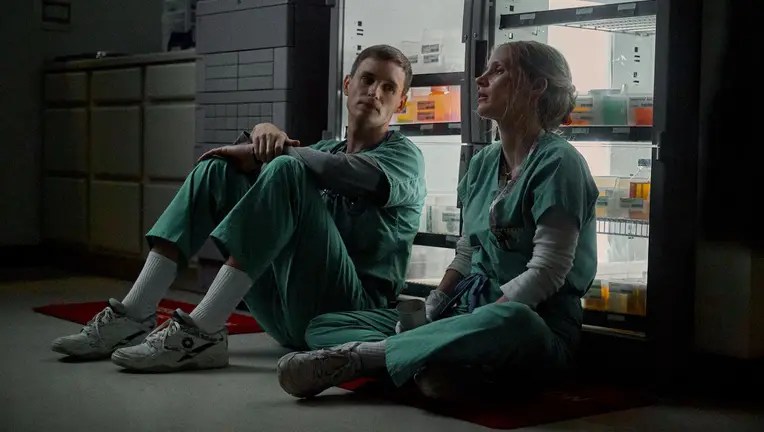
Still streaming in Netflix is The Good Nurse that will surely make you feel good that despite all the evil going on in this world, there are still good people who make our planet a safer place to live. Truly, St. Paul’s words ring so true in this Netflix movie, “where sin increased, grace overflowed all the more” (Rom. 5:20).
Based on the 2013 true-crime book of the same title by investigative journalist Charles Graeber, The Good Nurse is about how a good nurse named Amy Loughren stood her ground to cooperate with two hardworking detectives in New Jersey to arrest and eventually put into jail her fellow nurse Charles Cullen who is considered as one of America’s most prolific serial killers. According to the movie, Cullen admitted to have killed 29 patients by administering harmful drugs in nine different hospitals he had worked as nurse in a span of 16 years although authorities believe he may have killed up to 400 patients!
The only reason I watched The Good Nurse – in three installments while watching Black Butterflies two weeks ago – is because I am assigned as a chaplain in a University offering BS Nursing with a Medical Center. I was hoping to learn some “talking points” for my Masses and spiritual conferences with them from the movie; however, what actually happened was they prepared me to appreciate deeply this kind of movie with my many interactions with them both in school and the hospital.
I just have to warn you that the movie is too long, more than two hours. And very slow. But, it is well worth it especially in the last 50 minutes when tempo changes and shifts to high gear of action and suspense that you get so involved with the movie even if you are watching it alone on a laptop like me. There is that urge you actually talk to Amy not to fall in love with Charlie, especially in that part he was fired from their hospital and he suddenly spent the afternoon with her kids, sending their babysitter home as he prepared even their meal!
Yay…naku!!! I was really telling Amy to spit out that piece of meat Charlie had cooked as it may be laden with poison or insulin and digoxin!!! Hahaha!!!
Dramatic and suspenseful, most of all, feel good is what The Good Nurse is all about.
What I like most in the movie is the courage of Amy to secretly meet with the two detectives after realizing herself Charlie was not exactly true as himself – kind and diligent, silent and reserved. She eventually researched and discovered the many evidences that established Charlie’s culpability that finally put him behind bars serving 18 consecutive life sentences.
Most touching part was when Amy visited Charlie in the police headquarters after his arrest where the detectives have failed to extract any confession from him for the mysterious deaths of patients in their hospital. In one part of the interrogation it was revealed that Charlie had a deeply disturbed and dangerous personality similar with that kid in an old movie also streaming in Netflix, Primal Fear. He just kept shouting and shouting the answer “no” to every question given him, sounding like a deranged man with his face contorting and eyes so menacing.
Everything changed when Amy came inside the interrogation room. The detective warned her not to get near Charlie who was extremely dangerous. Despite that warning, Amy requested Charlie’s cuffs be removed as she sat near him at his side. When she noticed Charlie freezing inside the room, she took off her sweater and put it on him while the detective stood on guard, worried for any untoward incident to happen.
Charlie was at first cold toward Amy, refusing to look at her directly.
When Amy began speaking by apologizing to Charlie, telling him how she felt sorry that despite his being kind to her, despite their being friends, she had to tell everything to the cops. Actress Jessica Chastain who played the role of Amy was able to perfectly exude that kind of warmth and caring self despite the fears in being with a mysterious suspect that slowly, Charlie softened and confessed his crimes.
And that is where the high point of the movie is when Amy asked him to tell her the truth why he did it, Charlie simply said because “nobody stopped me”. He sobbed, covering his face.
Then, Amy asked him for names of his victims and Charlie readily identified them one by one with the next scene showing him being led down the hallway of the prison. The final scene showed Amy in bed with her two daughters, being awakened by the eldest daughter telling her it is a school day.
Amy told her, “today we stay in bed”, finally giving her daughters with the much needed quality time they sorely missed from her who had to work so hard for their needs. According to the notes after the movie, Amy now lives in Florida with her daughters and grandchildren. She eventually had her heart surgery.
The movie is very timely. In fact, I have been using it in my homilies. It is very Christian and Catholic as it presents our so-called universal call for holiness, of how each one of us must strive to be good or perfect and holy like our Father in heaven (Matt. 5:48), echoed by Vatican II’s Lumen Gentium over 50 years ago calling us all to strive in creating a more just and humane society in this imperfect world.
There was no mention of religion nor any scene from the church or of anyone praying but it is very clear in the movie about the need for us all to be good like the good nurse, Amy.
According to the movie based on Graeber’s book, Cullen went on a killing spree as a nurse for 16 years because none of the hospital where he used to work at acted decisively on his case despite their suspicions over the mysterious deaths of some patients. Ironically, according to the movie, those hospitals never bothered to take drastic steps and measures in solving the mysterious deaths of their patients amid the suspicions on Cullen because they were afraid of the legal cases that might be filed against them by the families of his victims that is now exactly happening as per the movie.
There is that quotation attributed routinely to Edmund Burke that says “the only thing necessary for evil to triumph is for good men to do nothing”.
The Good Nurse Amy Loughren did not let the evil of Charlie Cullen to triumph. Against all odds of losing her job as a nurse, of losing herself as she was afflicted with a heart ailment, Amy proved to be so good indeed that she did everything to stop Charlie who said it so well that he did all those killings “because nobody stopped me.”
Here comes the true relevance of this good movie that challenges us all in this time to be good as always, fighting and standing up against every form of evil, regardless of who is committing them. Of course, it is not enough to just speak and fight without any evidences and most especially efforts to personally confront the evil-doers like the good nurse.
Jesus himself reminded us that “If anyone comes to me without hating his father and mother, wife and children, brothers and sisters, and even his own life, he cannot be my disciple” (Lk.14:26).
This is most challenging for us in the Church, most especially among bishops and priests who chose to be silent, to let evil triumph right inside our hallowed houses of worship and apostolate when all these sex scandals occurred even a long time ago and still continues these days. We in the clergy must be above all most good than others in stopping evil from happening among our ranks. It is so sad and deplorable, even shameful when we priests and bishops are so vocal in denouncing injustices in the society perpetrated by civil authorities and politicians when we would not even raise our voices against the evil happening in our own turfs, of clergy and religious breaking all vows of chastity and poverty completely selling their souls to the devil for sex, money, power and fame.
The Good Nurse is a call for us all to return to being good, of saying no to sin and evil, of being truly human who respects and cares for life always which is at the core of our Lord’s teachings and of our humanity too. Happy viewing everyone!
The Lord Is My Chef Daily Recipe for the Soul by Fr. Nicanor F. Lalog II
Monday in the Thirty-Second Week in Ordinary Time, Year II, 07 November 2022
Titus 1:1-9   ><000'> + ><000'> + ><000'>   Luke 17:1-6
Jesus said to his disciples, “Things that cause sin will inevitably occur, but woe to the one through whom they occur. Be on your guard!
Luke 17:1, 3
Praise and glory to you,
Lord Jesus Christ for this great Monday!
Thank you for reminding us how sin
will inevitably occur in this life,
in this imperfect world.
Bless us, dear Jesus,
to be always on guard;
guide us and keep us strong
with clear mind and conscience
to never allow ourselves to
cause others to sin;
Like St. Paul reminding Titus today,
help us to be blameless before you
and others, "not arrogant,
not irritable, not a drunkard,
not aggressive, not greedy for sordid gain"
(Titus 1:7).
Help us, dear Jesus,
to be on guard by being good always
like being "hospitable, a lover of goodness,
temperate, just, holy, and self-controlled,
holding fast" (Titus 1:8)
to your Gospel message of
love and mercy,
kindness and justice.
Amen.
Quiet Storm by Fr. Nicanor F. Lalog II, 31 October 2022
Now streaming at Netflix is Black Butterflies which we find so perfect for this long weekend coinciding with the Halloween celebrations in the real sense. By that I mean the hallowed – which is the old English for “holy” – evening of saints not of demons and evil creatures as Hollywood had erroneously preferred to portray.
Based on a French original “Les papilons noirs”, Black Butterflies is a psychological thriller of superb storyline and cinematography. Despite its depiction of violence and nudity, it is unmistakably French artistry at its best. Every bit in the series is interesting and masterly crafted that you won’t dare to skip and advance to the next scenes.
Overall, Black Butterflies is excellent first of all because of its brevity. It is a six-part series of not more than 60 minutes each episode except for the final one that went four minutes overtime. Despite the many twists and turns in every episode, it is not boring because there are always new revelations from the past and present lives of each of the main characters. I would not say the series is addictive but it is more of interesting as it tickles the mind, including one’s heart and soul that you examine your value systems and philosophy in life especially how we see and judge people.
Black Butterflies is a story of a novelist named Adrien who had agreed to write into a novel the memoir of an elderly man named Albert who had specifically chosen him for the task. How and why he was chosen to write, I will not discuss here so as not to spoil your viewing pleasures but that is the main plot actually.
Creators Olivier Abbou and Bruno Merle seamlessly weaved into a beautiful tapestry the stories of three men around one woman named Solange — Albert who had loved her so much, so true and so passionately worthy of emulation to some extent; Adrien the writer whose inner self was so affected and disturbed, later altered upon uncovering the real persons behind Albert and especially Solange later; and Carrel, the police investigator who had pursued the cold case against Albert and Solange.
Another woman, a tattoo artist and painter named Nastya who turned out to be a half-sister of Solange suddenly joined the plot later in the series. Albert helped launch her career when he bought her first major work of art, a painting of black butterflies that adorned the entrance wall of his residence. Adrien would meet her once at Albert’s home and would sought her about thrice for sex and conversations, only to find out that she is the “missing link” in his novel, even to his life when Nastya turned out to be a vital witness in one of Albert and Solange’s series of murders!
Oh yes, Albert and Solange as couple had the most strange and deviant sexual fantasy that seemed so unbelievable even to Adrien at first.
According to Albert, he met Solange when they were both young kids barely in their teens; she was an outcast in their village being the daughter of a prostitute to a German soldier in World War II. As a consequence, both mother and daughter were mocked by everyone including young boys.
Albert would be her knight in the shining armor, the one who would always defend her until they fell in love with each other and got involved into a series of murders together. Even up to the end after their separation, Albert remained faithful and true to Solange, defending her, covering up for her. In fact, he must have loved and respected Solange so much even from the very start of their relationship that having sex with her never crossed his mind – until one afternoon after an incident at the beach.
They were spending a quiet afternoon at the beach when two American brothers arrived and fascinated with tourists because “they were just like them”, they befriended them. Albert and the two visiting brothers played at the sea while Solange retreated to lie and rest at the shore. The elder American followed her and tried raping her; Solange fought by stabbing him with a corkscrew to his back. Albert and the younger American saw everything from the sea and when the kid tried to flee, Albert killed him to ensure there were no witnesses to the crime. Albert and Solange then fled from the scene, running into the woods and that was only when they had their first sexual experience together. It was so passionate that from then on they would be inseparable, would have a lot of sex. And murders.
The couple opened a salon and were very successful that they could afford to go on vacations so often around France and even Italy. Solange would flirt with men and once they are turned on, she would suddenly back out; naturally, she would anger her target who would then try to rape her. That is when Albert would come into the scene, “rescuing” Solange from her rapist by killing him. After every murder – whether inside the victim’s home or mobile camper, or outside in the wilderness – Albert and Solange would passionately have sex right at the crime scene with all the blood still in their hands.
One of their victims they have met while vacationing was the father of Carrel the police investigator; after killing his father, Solange who had had two previous abortions took the baby left behind but Albert refused the idea of adopting him. He then placed the baby in a basket and left him in a cemetery. That explained the troubled childhood and memory of Carrel who became a police detective spending much of his career looking for the suspects behind his father’s murder who turned out to be Albert and Solange. He almost arrested Albert one night in his home but was overpowered by Albert, thus ending all his investigations into Albert and Solange that spanned 30 years! It would finally be put into conclusion by Carrel’s only friend and partner, Mathilde.
Black Butterflies may have many scenes of violence and nudity but overall, it is a feel good series where the virtues of justice and kindness are highly extolled in the most unusual way. It is a great story of love told in the most absurd way that makes us examine too in our post-modern time how we have become so relativistic without realizing that in the end, moralities and virtues would always remain true and valid and relevant even in our modern time. Despite new discoveries in the many effects of genetics even in human behavior as espoused by Adrien’s wife Nora who worked as a researcher, the series showed the importance of human freedom that enables us to choose what is good and better and best for us.
Most of all, despite all these trends in science and philosophy professing the concept of a “superman” even without claiming to be a follower of Nietzsche, Black Butterflies beautifully expressed in the end the reality of a personal and loving God in Jesus Christ. At a reception celebrating Adrien’s literary award for his novel based on Albert’s memoir, one of the guest reminds him that his favorite quotation in the novel was actually from the Book of Jeremiah, citing its complete quote as “In those days they shall say no more: the fathers have eaten sour grapes, and the children’s teeth are set on edge” (31:29). Albert used to tell Adrien the quotation as if it were his original, implying that his murderous tendencies were borne out of his father’s sins. The expression had an impact on Adrien especially whenever he, too, would remember his violent past. It was only after the guest had explained that this prophecy had long been fulfilled in Jesus Christ who had set us free from sin did Adrien come to his senses and decided to set everything in his life right by writing the final ending of his novel before turning himself over to the police for a murder too.
Incidentally, while the police were pursuing Adrien, his wife Nora was also chasing his mother who had kidnapped their son. She too would be arrested by the police for child kidnapping.
The series ends with Adrien seated inside the police interrogation room, finally stating his real name for the first time after it was hidden from him by his own mother for fears he might end up a murderer like his father. Or, mother?
Last interesting twist in this series is why it is called Black Butterflies?
It was never tackled in any of the six episodes though the term black butterflies and its images were mentioned and shown only in passing. It seems to me that while black butterflies are always considered as a bad omen in almost every culture like ours which often signify the dead and death itself, Black Butterflies the series is inviting us to examine anew what is really evil and bad, morally wrong by looking more into our hearts in the light of Jesus Christ and his teachings than putting its blame on somebody else, especially our dead ancestors. Have a blessed All Saints’ Day and All Souls’ Day!
Photo credits:
All from Netflix - Black butterfly in a frame, Adrien, Albert, and younger Albert and Solange at their Salon.
Last photo by Author, cemetery facing Jerusalem, 2019.
The Lord Is My Chef Sunday Recipe by Fr. Nicanor F. Lalog II
Thirty-First Sunday in Ordinary Time, Cycle C, 30 October 2022
Wisdom 11:22-12:2 ><000'> 2 Thessalonians 1:11-2:2 ><000'> Luke 19:1-10
You must have heard so many times that rap music called Moon used as background music in almost every video posted on social media. The lyrics and its beat are simply amusing, easy to follow so fitted on everything including this Sunday’s gospel!
Sa'n ka punta?  To the moon
Road trip, vroom, vroom
Skrr, skrr, zoom, zoom
So fake, no room, mga mata namumula
Asan ang trees, nadala mo ba?
Bawal ang tus at peke sa byahe
Kung isa ka d'yan, ika'y bumaba...
Written and performed by a certain Nik Makino, Moon speaks of a young man’s ambition of getting rich through rap music; he is also aware of the fact that his dream is so “high like the sky” with everyone’s eyes prying on him as he strives so hard in working while still young.
I gotta mission, pumunta sa top
Buhay mahirap, gawing masarap
Gawa ng milyon, gamit ang rap
Iwanan kasama na puro panggap
'Di mo 'ko magets, pangarap ay highs
Singtaas ng jets, tingala sa sky...
I have been asking some young people about the rap and mostly are stunned why I listen and so interested with it especially when I rap it too, saying how they find it so baduy (crass), meaningless or “walang kuwenta” with some calling it as ugly or “pangit”.
And that is how I realized this rap music Moon is so related with this Sunday’s gospel about Zacchaeus the tax collector who climbed a tree to see Jesus while passing by the city of Jericho.
At that time, Jesus came to Jericho and intended to pass through the town. Now a man there named Zacchaeus, who was a chief tax collector and also a wealthy man, was seeking to see who Jesus was; but he could not see him because of the crowd, for he was short in stature. So he ran ahead and climbed a sycamore tree in order to see Jesus, who was about to pass that way. When he reached the place, Jesus looked up and said to him, “Zacchaeus, come down quickly, for today I must stay at your house.” And he came down quickly and received him with joy.
Luke 19:1-6
Again, only Luke has this story about Zacchaeus met by Jesus in Jericho, his final stop before entering the city of Jerusalem for his Passion, Death, and Resurrection.
Keep in mind that Luke’s narration of the Lord’s journey to Jerusalem is more of an inner journey into ourselves than found in maps. What happened in Jericho shows the importance of the events that would take place at Jerusalem when Jesus offered himself for our salvation and how we can participate in his pasch through the example of Zacchaeus who reformed his life.
Unlike the parable last Sunday, here we have a real tax collector named Zacchaeus described by Luke as a “wealthy man”. Notice how Luke described Zacchaeus was “short in stature” which is not only literal but most of all figurative in meaning. Like the publican in last week’s parable by Jesus, tax collectors were despised by Jews at that time who were seen along the ranks of prostitutes as the worst of all sinners because they were not only thieves but also traitors who collaborated with their Roman colonizers.
Calling Zacchaeus as “short in stature” was really something else, that he was nothing at all. That is why he had to exert so much to see Jesus by climbing a sycamore tree. And there lies the beauty of the story, of how God had come in Jesus to meet us and save us.
When they all saw this, they began to grumble, saying, “He has gone to stay at the house of a sinner.” But Zacchaeus stood there and said to the Lord, “Behold, half of my possessions, I shall give to the poor, and if I have extorted anything from anyone I shall repay it four times over.” And Jesus said to him, “Today salvation has come to this house because this man too is a descendant of Abraham. For the Son of Man has come to seek and to save what was lost.”
Luke 19:7-10
This is the most startling move by Jesus in this event at Jericho that is repeated in many instances in Luke’s gospel account to show God’s loving mercy to all sinners who humbly make the efforts to come to him, to see him, and experience his healing and forgiveness.
Luke had repeatedly shown us this unexpected and even shocking gesture of Jesus to everyone – then and now – at how he would favor sinners and bad people like that sinful woman who poured oil on his feet while dining at the home of a Pharisee (Lk. 7:36-50) and Dimas, the “good thief” on the cross to whom he promised paradise (Lk.23:39-43).
Jesus always comes to meet us but are we willing to meet him too like Zacchaeus? How far are we willing to truly embrace and welcome Jesus by letting go of ourselves, of our sins and other possessions?
If we could just have that sense of sinfulness again, we would realize that in this world, we are all small in stature before God. All these titles and wealth that seem to give prestige to us are all temporary and nothing. What God looks in us is our admission of our being small in stature before him, of being powerless like the persistent widow the other Sunday and the publican last week begging his mercy for we are all sinful.
Imagine that beautiful image of Jesus passing through Jericho, coming to our daily lives, making a stop over right in our hearts to stay and dwell. Most of all, see at how Jesus looks up to find us!
I love that gesture of Jesus looking up to us so much. Normally, we are the ones who look up to God up in the sky, heavenwards when asking for his mercy and favors. But there are many times that it is Jesus our Lord and God who looks up to us mere mortals who are so small in stature before him! What happened at Jericho under that sycamore tree was a prefiguration of what would take place at the Last Supper when Jesus washed the disciples’ feet, of how he bowed down before them and looked up while wiping their feet dry. So wonderful! And that happens every day when we go back to him, when we do everything to get out of our way just to go to Mass, most especially to Confessions.
In the first reading, we are reminded how we are nothing before God but he chose to preserve us, to save us because he loves us so much:
“Before the Lord the whole universe is as a grain from a balance, or a drop of morning dew come down upon the earth. But you have mercy on all, because you can do all things; and you overlook the sins of men that they may repent. But you spare all things, because they are yours, O Lord and lover of souls.
Wisdom 11:22-23, 25
There is no doubt about the love of God for us, of his mercy and forgiveness expressed to us in his Son Jesus Christ who comes to us everyday in various events in our lives, in the people we meet and most especially in our individual and communal prayers like the Mass and Sacraments.
Jesus is always passing by and would surely come again as St. Paul assured us in the second reading.
The grace of this final Sunday of October as we go to the last stretch of the Church calendar this coming November is that God gives us freely the grace daily to make the efforts in meeting his Son Jesus. Every day.
Our desire to rise above our present state and status is an expression of that grace within us to become better although many times due to other factors, we misconstrue this in aspiring for material things like wealth and money as the rap Moon tells us. But on a deeper reflection as we continue in our journey in this life, we realize sooner or later that more than the things we can physically have, there are always more precious than these.
Like going to the moon, of being high up there in the sky, being one with God, enjoying his peace and salvation.
Like Zacchaeus and, Nik Makino, let us continue our roadtrip to the Moon in Jesus Christ by being true to ourselves – vroom, vroom, skrr, skrr, zoom, zoom – that we are beloved sinners and children of God.
Tara bumyahe pa-ulap
Sakto 'yung auto ko full tank
Pero kahit maubusan, paangat tayo tutulak
Bawal na muna ang pabigat
Lalo sa byahe na palipad
Kailangan kong makatiyak
Bago magka-edad, 'di na 'ko taghirap
Alam kong marami ang nakamasid
Dama ko marami ang naka-abang
Kung ano 'yung mga kaya kong gawin
Malamang ay 'di nila nagagawa
Kaya siguro lagi nakatingin
Kasi 'yon na lamang magagawa
Inaabangan ako na mawala
Kaso lang ang malala nadapa kakatingala.
Stay safe everyone and dry during these storms. Have a blessed week! Amen.
*Photo credits: Moon over the city by Mr. Raffy Tima of GMA-7 News (2022); second and third by the author at Jericho, Israel (2019); fourth and fifth also by author in Tanay and Pililla in Rizal (2021).
The Lord Is My Chef Sunday Recipe for the Soul by Fr. Nicanor F. Lalog II
Thirtieth Sunday in Ordinary Time, Cycle C, 23 October 2022
Sirach 35:12-14, 16-18 ><}}}}*> 2 Timothy 4:6-8, 16-18 ><}}}}*> Luke 18:9-14
Photo by Mr. Jim Marpa, 2018.
Standing is a very powerful posture. It expresses our stance or – stand – on everything. Where we stand tells who we are, both positively and negatively. It is always good to make a stand on our beliefs, defending them, making a “gallant stand” on whatever or whomever we hold so dearly. However, no matter how hard we make a stand on just about everything and everyone, we cannot fake our stand because people could surely recognize if it is just mere “grandstanding” or self-serving like what politicians always do.
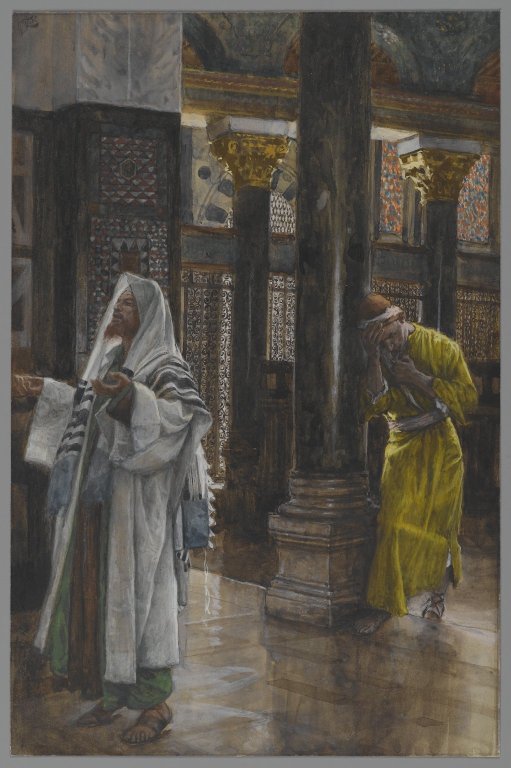
That is what Jesus is telling us today in his second series of teaching about prayer, the parable of the Pharisee and the tax collector, of how two men stood before God in prayer at the temple.
Painting by French artist James Tissot, “The Pharisee and the Tax Collector” (1886-1894) from commons.wikimedia.org.
Jesus addressed this parable to those who were convinced of their own righteousness and despised everyone else. “Two people went up to the temple area to pray; one was a Pharisee and the other was a tax collector. The Pharisee took up his position and spoke this prayer to himself, ‘O God, I thank you that I am not like the rest of humanity – greedy, dishonest, adulterous – or even like this tax collector. I fast twice a week, and I pay tithes on my whole income.’ But the tax collector stood off a distance and would not even raise his eyes to heaven but beat his breast and prayed, ‘O God, be merciful to me a sinner.’ I tell you, the latter went home justified, not the former; for everyone who exalts himself will be humbled, and the one who humbles himself will be exalted.”
Luke 18:9-14
Our lost sense of sinfulness
Right at the start, Luke tells us the purpose of this parable, “Jesus addressed this parable to those who were convinced of their own righteousness and despised everyone else.” But, we have to be careful in reading this parable lest we end up like the Pharisee of not seeing ourselves being addressed too by the Lord!
While the Pharisee is clearly in the bad light in his kind of prayer that revealed his self-centeredness, feeling so self-satisfied with his holiness that in fact he felt no need for God, his character invites us to guard against this temptation within us that we are not sinners. That is the sin of the Pharisee, the reason his prayer was not heard unlike that of the tax collector: the Pharisee saw himself as clean and spotless like God! And that is what we have to keep guard of ourselves in this time when we have lost our sense of sinfulness.
Photo by author, Jerusalem 2017.
We may not have the kind of self-righteousness of the Pharisee in public or in private, of claiming to be not like other people who are sinful and corrupt; but, still deep inside us is the temptation of forgetting that even a true saint remains a sinner who must constantly pray deep in his/her heart, “O God, have mercy on me, a sinner.”
Such attitude is the deeper meaning of why we must be powerless before God in praying like the persistent widow last Sunday. It is not that only God is capable of giving us whatever we need but most of all, we have to accept and own by embracing wholeheartedly the fact we are all sinners. Recall how in 2013 after being elected as Pope, on his first interview Pope Francis was asked to describe himself as a person and he simply said, “I am a sinner.” Beautiful!
Holiness is not being sinless but being filled with God. Anyone who is filled with God is one who is always aware of his/her sinfulness. The more we get nearer to God, the more we see our sinfulness, our being dirty and weak. Hence, the more we pray to become better persons, to be one with God; we cannot be one in him and with him unless we realize our sinfulness. That Pharisee in the parable comes so strongly, so proud to God as if he were God himself too! Worst, he wanted God to commend him, to reward him for being so good. Why prayed at all if he did not need God?
We pray because we need God and that is the prayer that “pierces the clouds; that does not rest till it reaches its goal” – God – as Ben Sirach tells us in the first reading. That is the reason we begin our Holy Mass first with admission of our sins, of being sorry for them. We come to Mass because we need God first of all to cleanse us of our sins.
How true are we in admitting our sinfulness before God?
Consistency and humility in prayer
On the surface, the Pharisee in the parable was really commendable as he tried to be a good person, avoiding all kinds of sins, piously observing the demands of his faith like fasting and tithing. However, he lacked consistency and humility.
Consistency in prayer means our lives become a prayer itself. The prayers we recite and say to God expressed in so many ways should make us become more like God – loving and caring, kind and understanding, merciful and forgiving of others, not judgmental like the Pharisee.
St. Paul in the second reading offers us an example of how he had considered his life his prayer, an offering of himself to God like a “libation”.
Beloved: I am already being poured out like a libation, and the time of my departure is at hand. I have competed well; I have finished the race; I have kept the faith.
2 Timothy 4:6-7
Photo by Ms. Mira Mandal Sibal, 2021.
Sometimes, people comment how they find St. Paul as too proud especially when he speaks of his virtues and works like when he wrote “Be imitators of me, as I am of Christ” (1 Cor. 11:1). But, reading all his letters, one finds his powerlessness before God like the persistent widow last Sunday as well as his being powerful in God like the unjust judge who was converted like him and channelled all his talents and energies in proclaiming the gospel to the Gentiles!
Most of all, in today’s parable, we find St. Paul who referred to himself as “the very least of the holy ones” (Eph.3:8) so much like the tax collector, sinful yet sorrowful for his sins. In short, not just consistent but most of all, filled with humility.
It will always be difficult to be consistent in life as every saint had proven to us. That is why we should never forget that reality – even the saints are sinful, needing God’s mercy and forgiveness. Nobody is perfect. When there is inconsistency in our lives and prayers, surely there is sin. But, are we humble enough to accept that fact like the saints?
That is why humility is so important as exemplified by the tax collector at the temple. He could not look up to heaven because he was so humbled by his sin, looking more into himself, into his heart, of how he had strayed so far from God that he longed to be near him again.
It is only in humility when we can realize also the sad truth that when we sin, we actually offend ourselves, not God! That is why our conscience bother us, we feel untidy. God remains God and perfect even if we sin. The Pharisee wrongly thought he was not offending God as he believed he was clean and sinless that is why he felt so entitled too. Unknown to him, the more he had sank deeper in misery in his lack of sense of sinfulness.
Photo by Mr. Red Santiago of his son, January 2020.
When we lost our sense of sinfulness, that is when we are most inconsistent, when we are most lost. Without humility, we live in our false selves, wrongly believing we can do everything, including earning our own salvation which only God had done in Jesus Christ.
This Sunday, let us pray for the grace and virtue of humility that St. Teresa of Avila described as “walking in truth.”
Being humble is not putting ourselves down but actually the path to true greatness, exaltation. When we humbly accept our sins and sinfulness, that is when we are forgiven by God and we are able to rise to greater heights as we lose ourselves in God and in his wonderful plans for us.
This Sunday, let us stand before God admitting our sins like the tax collector, our being poor and lowly, insufficient and weak as in the first reading needing his grace so that like St. Paul, we may compete well in this life to finish this race by keeping the faith in Jesus Christ. Amen. A blessed and fruitful week ahead for all of us!
The Lord Is My Chef Sunday Recipe for the Soul by Fr. Nicanor F. Lalog II
Twenty-Fourth Sunday in Ordinary Time, Cycle-C, 11 September 2022
Exodus 32:7-11, 13-14 ><}}}}*> 1 Timothy 1:12-17 ><}}}}*> Luke 15:1-10
Photo by author, 2018.
Last Wednesday morning during breakfast, we heard on television news the interview of the undersecretary of agriculture blaming our farmers for the recent oversupply of garlic in Batanes and cabbage in Benguet, saying “they plant crops but they don’t think about the market for their harvests.”
We have been so used to such comments by many heartless government officials ever since; and, they also happen everywhere like in our schools where teachers blame students, at homes with parents blaming children and siblings blaming one another and of course, not to be left out is our church where priests always blame people for whatever problems and mishaps that happen in the parish.
No wonder, we feel more comfortable with God depicted in the Old Testament like in our first reading today when God was so angry and instructed to immediately get down from the mountain to punish the people who have created a golden calf to worship.
We find it so difficult to fully and truly accept despite Christ’s words and assurances that God our Father finds joy in forgiving as depicted today in our gospel. So often, we are like the Pharisees and scribes who could not understand why we have to share in the joy of God when a sinner repents.
Tax collectors and sinners were all drawing near to listen to Jesus, but the Pharisees and scribes began to complain, saying, “This man welcomes sinners and eats with them. So to them he addressed this parable.
Luke 15:1-3
Photo by author, 2018.
Jesus reminded us these past two Sundays of the demands of discipleship, of the need for us to conform to his very person and not just with morality and even religiosity. Discipleship is being like Jesus, always having him as our top priority in life.
This progression of Christ’s teaching on discipleship reaches its peak as we move into the 15th chapter of Luke’s gospel account considered as the “heart” of the Gospel in presenting to us three parables showing God full of mercy and forgiveness for sinners. Actually, it does not merely present God as forgiving but in fact as the One who finds joy in forgiving, who is inviting us to share in his joy of forgiving repentant sinners.
There are three parables in Luke chapter 15: the lost sheep, the lost coin and the lost son known as prodigal son. We have opted to consider the shorter form of the gospel which skips the third parable which we have already reflected in the recent Season of Lent.
Photo by Dr. Mylene A. Santos, MD, in Quezon, July 2022.
The first two parables deal with things that are lost, a lamb and a coin; both deal with only one person like “one of you” and “a woman”. On surface, the two parables seem very ordinary but Jesus – and Luke – have a very captivating manner of narrating them, similarly ending each parable with great sense of rejoicing after finding the lost sheep and lost coin.
Simply put, Jesus is appealing to our common experience of how one lost item would surely claim our attention, no matter how small or even insignificant it may be compared with the rest of what we have.
How do you feel when after losing something you were so worried and disturbed searching for it then someone tells you, “para yun lang?”
We feel so mad, like being rubbed with salt on our wounds because such comment “para yun lang?” betrays their lack of concern and love for us, of not knowing at all or at least recognizing how much that missing thing means to us!
How much more with persons like family and friends who have gone wayward in life like the prodigal son and suddenly coming back to us, saying sorry, trying to pick up the broken pieces of our lives to be whole again as friends and family? Would we not also rejoice when they come home, when we finally find them again?
Photo by Dr. Mylene A. Santos, MD, 2020.
In narrating the two parables in such manner so common with us, Jesus now affirms the incomparable value of every repentant sinner. Moreover, Jesus is showing us in these parables the more deeper ties we have with each other that we must rejoice when a sinner is converted. Hence, the demand too on the part of the sinner, of everyone, to recognize our sinfulness first.
Notice how Luke began this new chapter by telling us how “Tax collectors and sinners were all drawing near to listen to Jesus, but the Pharisees and scribes began to complain, saying, ‘This man welcomes sinners and eats with them.’ So to them he addressed this parable.”
Look at the attitudes of the Pharisees and scribes that are not just snobbish but recriminating against the tax collectors and sinners; for them, those kind of people were hopeless, improbable to change that no one should be socializing with them like Jesus.
But, what really got to their nerves that they were complaining why Jesus was sharing meals with them was the fact that tax collectors and sinners were not turning to the Law but to Jesus himself, following him, and even preferring him more than everything! They felt left out when in fact they were the first to separate themselves from everyone.
That’s what they could not accept, that they were no longer relevant.
And the main stumbling block to that was their lost their sense of sinfulness as they have believed so much with themselves as if they were like God, so pure and so clean. Due to their lost sense of sinfulness, they have been totally detached from God and from others as well because they were playing gods, setting them apart from everyone even from God himself because they believed they were sinless. In that sense, they felt God had nothing to do with them because they were sufficient in themselves.
There is nothing God cannot forgive.
This is the grace of this 24th Sunday in Ordinary Time.
Whenever we admit and confess our sins to him,
it is God who is first of all filled with so much joy
 for he has long been searching
and waiting for us to return to him.
Photo by author, 2019.
This is the problem we have in this modern time, when we have all kinds of excuses and alibis, reasons and arguments in doing just everything, losing our sense of sin that unconsciously, we feel like God, in fact always playing God when we presume to know everything that we would neither rejoice when people change for the better nor sympathize with those suffering and in misery. Like the Pharisees and scribes and those heartless people in power and authority in government and schools, at home and in the church, they have no time to even see and review why and what have caused people to sin.
In the first reading, Moses is teaching us the attitude of a true disciple, of one who intercedes for the people by confessing the tender mercy and fidelity of God to his promises and to his people; Moses did not bargain with God to relent in punishing the people. Notice his language, his manner of praying to God, appealing to him as “Lord” filled with faith in God’s boundless mercy and forgiveness. We all know how in a twist of humor, it was Moses who was so furious later when he saw the people worshipping the golden calf that he threw on them the two tablets of stone of God’s Ten Commandments.
In the second reading, St. Paul reminds us through Timothy of God’s boundless love expressed in his mercy and forgiveness to us all sinners. We can never experience this unless we first realize and admit and own our sinfulness like St. Paul who may be considered the worst of sinners for having persecuted the early Christians. There are so many other saints who followed after him with so dark and sinful pasts but became great men and women of faith because they first admitted their sins and sinfulness. As the saying goes, there is no saint without a sinful past and there is no sinner who is denied of a saintly future.
There is nothing God cannot forgive. This is the grace of this 24th Sunday in Ordinary Time. Whenever we admit and confess our sins to him, it is God who is first of all filled with so much joy for he has long been searching and waiting for us to return to him. Amen.
Have a blessed week ahead!
Photo by author, Mount Sinai at the Monastery of St. Catherine, Egypt, 2019.
The Lord Is My Chef Sunday Recipe for the Soul by Fr. Nicanor F. Lalog II
Twentieth Sunday in Ordinary Time, Cycle C, 14 August 2022
Jeremiah 38:4-6, 8-10 ><}}}*> Hebrews 12:1-4 ><}}}*> Luke 12:49-53
Photo by author, Chapel of the Holy Family, Sacred Heart Spirituality Center, Novaliches, QC, 2017.
Following Jesus, being a true and good Christian is always difficult. This I realized on my first month as a priest 24 years ago when I gave a “marriage encounter” (ME) to several married couples from the parish of my former professor in the seminary.
Part of the marriage encounter is the writing of one’s sins on a piece of paper with a symbolic burning before going to confession later in the evening; problem was, as a new priest, I gave a wrong instruction asking the spouses to exchange paper with their partner to see each others sins. That was when a wife collapsed after reading the sins of her husband! Actually, she had long suspected him of infidelities but that afternoon, all her doubts and suspicions were proven very true that her blood pressure shoot up, losing her consciousness in anger and pain.
After she had been revived, she kept on saying, “akala ko ME magpapatatag sa aming samahan; ito na yata maghihiwalay sa aming dalawa ng tuluyan” (I thought the ME will make our marriage stronger but it seems this will finally cause our separation as husband and wife).
I tried explaining things to her, prayed so hard for her and eventually after six months, I met them at a wedding as they thanked me how their marriage had gone stronger after surrendering everything to Jesus Christ.
Photo by author, Chapel of the Holy Family, Sacred Heart Spirituality Center, Novaliches, QC, 2017.
"Every Christian is a prophet...
a sign of contradiction."
Many times in our lives we have experienced that our faithful service in the Lord often leads us to distressing and painful situations, even tragic choices. In the first reading, we have heard how Jeremiah’s own folks threw him into a cistern to die because they could not take his preaching against their sinfulness and prophecies of the impending fall of Jerusalem which eventually happened. He was momentarily rescued from the cistern but later was eventually killed by his own people for speaking against their sinful ways and life.
Every Christian is a prophet like Jeremiah, a sign of contradiction among the people, even in one’s own family and circle of friends. To live against the corrupt and sinful ways of the world, to uphold what is true and just, to stand for what is honorable and good surely earn a lot of criticisms and condemnation from everyone. Even in the Church!
Jesus said to his disciples: “I have come to set the earth on fire, and how I wish it were already blazing! There is a baptism with which I must be baptized, and how great is my anguish until it is accomplished! Do you think that I have come to establish peace on the earth? No, I tell you, but rather division
Luke 12:49-51
Photo by author, Chapel of the Holy Family, Sacred Heart Spirituality Center, Novaliches, QC, 2017.
With all of these words, we now wonder what is good with our Good News this Sunday? Remember, Jesus Christ is on his way to Jerusalem to face his suffering and death. Today he tells us three things to remember to remain focused with the End.
First is the fire he had brought into the world. It is not a fire of destruction but fire of heat and light that give life; fire that purifies and cleanses like silver and gold that bring out its beauty and magnificence; and most of all, the fire of God’s presence like in the burning bush of Moses and the pillars of fire/cloud that guided the Chosen People in the wilderness into the Promised Land.
Fire gives light and heat that lead into life; we can survive without food and water for several days but we cannot last even ten minutes without heat! This is the kind of fire we Christians need these days, fire that will lit us up with courage ands joy in Jesus Christ by witnessing his gospel in a world that seems to be dying and lifeless despite the noise and affluence around.
As a purifying fire, it always brings pains that lead into conversion and liberation like what that couple in my first Marriage Encounter have experienced. The fire of Christ’s mercy and forgiveness taught them to forgive each other and enabled them to lead holier lives. The more we get closer to Jesus our light, the more we see our sinfulness and weaknesses, then we change and mature. That is when we are filled with the light of Christ to become his presence in the world.
Second teaching of Jesus today is about his “other baptism” which is his Passion, Death, and Resurrection. This is the reason why he was “resolutely journeying to Jerusalem” – he was so eager, so decided to face his pasch not for the pains it would bring but for its glorious effects for us.
Photo by author, Chapel of the Holy Family, Sacred Heart Spirituality Center, Novaliches, QC, 2017.
That is the real meaning of baptism, from the Greek baptizein which is to immerse in water; hence, baptism before was a literal immersion in water. In our immersion into the passion and death of Jesus Christ, we enter into a communion in him and with him so that in his Resurrection, we too rise with him and in him into new life.
Third pronouncement by Jesus this Sunday is perhaps the most baffling, especially when we consider the statistics that more than half of the conflicts going on in the world today are due to religious beliefs.
Jesus never meant to bring people apart; in fact, he came to bring us all together, to gather us again as beloved children of the Father. However, it happens that the moment we stand for Jesus, for what is true and just, inevitably, we will be with odds even with those dearest to us. Jesus himself had said that “If anyone comes to me without hating his father and mother, wife and children, brothers and sisters, and even his own life, he cannot be my disciple” (Lk.14:26).
That is one of the beautiful imageries of the Cross of Jesus Christ: it marks the end of our sinfulness and the beginning of our oneness in God.
It is the difficult aspect of discipleship when our loved ones are into sins and evil, when they are in darkness and injustice. Are we going to side with them or side with Christ?
At the Last Supper, Jesus gave us his peace (Jn.14:27) that according to him is not like the peace offered by the world that is often based on compromises; Christ’s peace is the fruit of love, of sacrifices. Love and sacrifice are one, always together; when you love, there is sacrifice, there is pain and suffering. That is why it is love!
Parents and lovers know this very well: many times they suffer and cry in silence because of their great love for their children or beloved. It is no wonder that in the Beatitudes, Jesus called the peacemakers and the persecuted blessed because to work for peace entails persecution and division.
Photo by author, Chapel of the Holy Family, Sacred Heart Spirituality Center, Novaliches, QC, 2017.
"God is dangerous."
-Fr. Hans Urs von Balthasar (+)
Last Sunday we have reflected how Jesus used the setting of night for our vigilance because faith is tested and deepened in the darkness of life like during nighttime. And, the darker the night, the longer the night always.
But, we have so many people who have gone ahead of us in this life who have found light and life amid the darkness in life, emerging victorious in their faith in God, from the patriarchs in the Old Testament and in Jesus himself and his Apostles and saints as well.
Brothers and sisters: Since we are surrounded by so great a cloud of witnesses, let us rid ourselves of every burden and sin that clings to us and persevere in running the race that lies before us while keeping our eyes fixed on Jesus, the leader and perfecter of faith.
Hebrews 12:1-2
Wonderful! Jesus is the leader and perfecter of faith. Very often, we hear the gospels and the Bible speaking always of our having faith in Jesus. But, it is only here and in some instances in Paul we find Jesus having faith; how can Jesus, the Son of God have faith when he is the object of faith?
Let us remember that Jesus is truly human, truly divine. Like us, he also had faith as the gospels attest: he had faith in the Father who sent him. He is the best example of having faith, entrusting everything to the Father that he did not feel ashamed of the Cross. In that sense, Jesus is also the perfecter of faith because in him, with him and through him, we are able to walk in faith, sustain our faith in the most difficult and trying moments of life when we felt our relationships, our world falling apart because we have stood by his Cross. As we look back, we have emerged better, stronger, and most of all, joyful, free and faithful after all those trials in life. Thanks to our faith in Christ!
One of the friends of Pope emeritus Benedict XVI and St. John Paul II was the Swiss theologian and priest named Hans Urs von Balthasar who said in his 1945 book “The Heart of the World” that God is dangerous.
Photo by Mr. Jay Javier, Acacia trees in UP-Diliman, April 2022.
Indeed, it is very true especially when Fr. Balthasar noted how God “is inviting you to lose your soul in order to gain it. He always thinks in terms of love. He offers us the impossible… He presents his victory over death as an example to be imitated, he draws us beyond our limits, into his adventure, which is inevitably fatal.”
The blessedness of this Sunday is that Jesus had become like us to lead us the way in a life of faith, perfecting our faith in the process so that we may overcome all obstacles and trials in life like him and be with him in eternal glory in heaven in the End.
Let us keep in mind the worthy reminder of the author of the Letter to Hebrews that “In your struggle against sin you have not yet resisted to the point of shedding blood” (Heb.12:4). Amen.
Have a blessed, fiery week of faithful adherence in Christ!
The Lord Is My Chef Daily Recipe for the Soul by Fr. Nicanor F. Lalog II
Tuesday in the Eighteenth Week of Ordinary Time, Year II, 02 August 2022
Jeremiah 30:1-2, 12-15, 18-22   ><]]]]'> + <'[[[[><   Matthew 14:22-36
Photo by Mr. Jay Javier in Taal, Batangas, 15 February 2014.
I like your words today,
God our loving Father;
they are so true, and yes,
so hurting. They are a
bull's eye or "sapul" as
we say in Filipino.
Many times, I feel so
confident with myself,
with my goodness, or
holiness; many times I
feel I am so equipped
to hurdle everything in
life; and many times, I feel
so sure I have done nothing
wrong and sinful like Peter
in the gospel who asked
Jesus to make him walk
on water.
Thus says the Lord: Incurable is your wound, grievous your bruise; there is none to plead your cause, no remedy for your running sore, no healing for you. All your lovers have forgotten you; they do not seek you. I struck you as an enemy would strike, punished you cruelly; why cry out over your wound? Your pain is without relief. Because of your great guilt, your numerous sins, I have done this to you. Thus says the Lord: See! I will restore the tents of Jacob, his dwellings I will pity; city shall be rebuilt upon hill, and palace restored as it was.
Jeremiah 30:1-2, 12-15, 18
Give me courage, O Lord,
to look inside myself and
confront my true self;
build me up anew, Lord,
as your people and you
our God.

Forgive us, O God,
for the many times we
have misread your coming
in Jesus Christ as like a ghost
in the dark sea; so many times
we are so sure of our swimming
skills like Peter, confident we
would not drown, unaware
of the strong winds that can beat
and pummel us into pieces.

When overconfidence
drown us, let us shout like
the disciples in the boat,
"Truly, you are the Son of
God, Lord Jesus!"
Amen.






















 lordmychef.com