40 Shades of Lent by Fr. Nicanor F. Lalog II
Thursday After Ash Wednesday, 15 February 2024
Deuteronomy 30:15-20 +++ Luke 9:22-25
Photo from petalrepublic.com.
Our most loving
and merciful Father,
thank you
for this new season
of Lent,
in giving us this most
wonderful occasion to
reflect on life's meaning
we always confuse as
outside of us,
dependent on things,
and most of all,
perfect without pain
and sufferings.
Life is Lent.
It is the only season
that begins not on a Sunday
but on an ordinary day
of the week,
right in the midst
of our many duties
and worries
because Lent is something
within us, always asking us
to make the right choices,
of choosing life,
not death;
blessing,
not curse.

Many times, Father,
we are out of touch with
ourselves,
with life itself
which we see as outside
ourselves that we hardly live at all
without experiencing life
itself in its wholeness
that includes all the beauty
and scars,
the lights and darkness,
the glory and sorrows,
the defeats and victories,
the tears and laughter,
the Good Friday and Easter.
If, however, you turn away your hearts and will not listen, but are led astray and adore and serve other gods, I tell you now that you will certainly perish; you will not live a long life on the land that you are crossing the Jordan to enter and occupy.
Deuteronomy 30:17-18
The way to life
that you, Father, offers us
through the life and example
of Jesus Christ your Son
is the exact opposite
that the world
proposes;
help us realize that truth,
clear us of all doubts
and dilly-dallying,
of making excuses and alibis
that what the world sees
as God's ways are limiting
when in fact are liberating!
Then he said to all, “If anyone wishes to come after me, he must deny himself and take up his cross daily and follow me. For whoever wishes to save his life will lose it, but whoever loses his life for my sake will save it. What profit is there for one to gain the whole world yet lose or forfeit himself?”
Luke 9:23-25
We have seen
for ourselves many times
how the way of the world of
indulging in every desire
and pleasure like
 wealth and fame,
sex and drugs
have actually led to destruction
and death,
sorrows and miseries
than life and joy;
clear our minds
and hearts
to make the right
choice and decision
of following Jesus
to the Cross daily
because that is what
it means that life is lent,
a daily journey
 to Good Friday
that leads surely
to Easter.
Amen.
Lawiswis ng Salita ni P. Nicanor F. Lalog II, Ika-27 ng Disyembre 2023
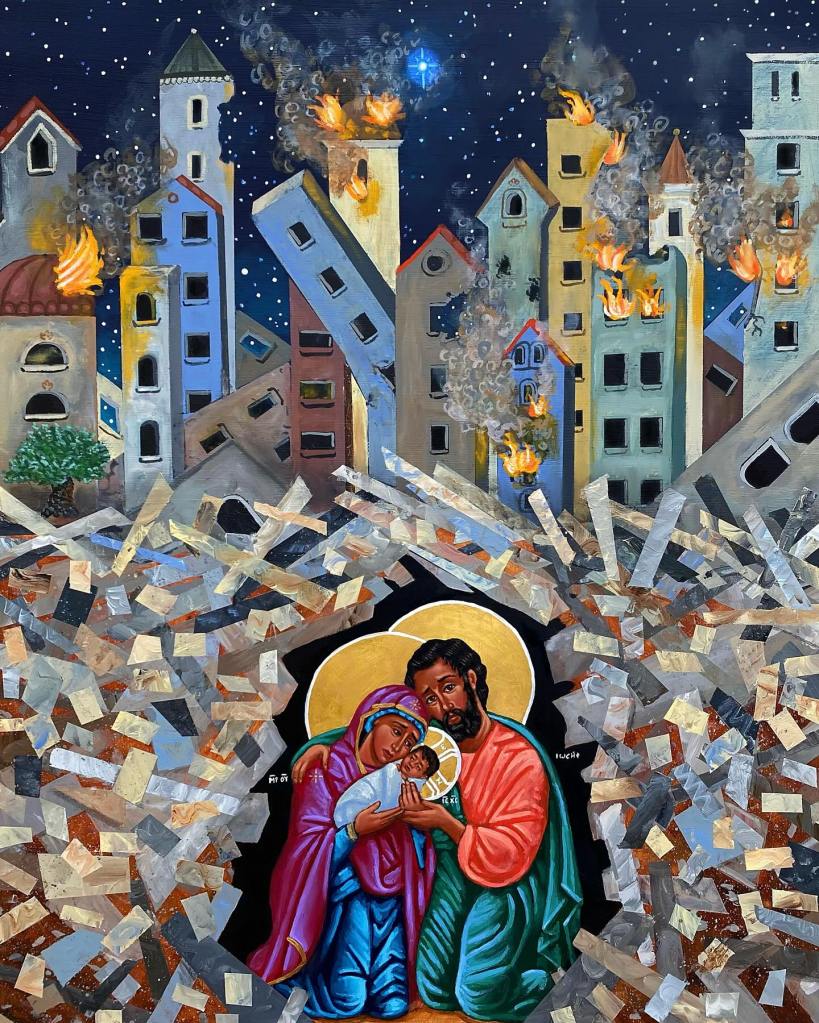
Larawan mula sa Facebook, 23 Disyembre 2023 ng pagtutulungan ng Red Letter Christians at ng artist na si Kelly Latimore ng @kellylatimoreicons upang lumikha ng bagong larawang ito na pinamagatang “Christ in the Rubble” nagsasaad na kung sakaling ngayong panahon isinilang si Jesus, malamang siya ay ipinanganak sa gitna ng mga durog na bato sanhi ng digmaan doon sa Gaza.
Maligayang Pasko!
Tayo raw mga Pilipino ang mayroong pinaka-tumpak na pagbati sa panahong ito dahil sinasaad ng salitang “pasko” ang buong katotohanan ng hiwaga ng pagkakatawang-tao (Incarnation) ng Diyos Anak na si Jesu-Kristo.
Mula sa wikang Hebreo na pesar o pesach na kahulugan ay “pagtawid”, ito ay pascua sa wikang Kastila na atin ding ginagamit na ugat ng Pasko at pasch naman sa Inggles.
Una natin itong natunghayan sa Matandang Tipan, sa Aklat ng Exodus nang itawid ng Diyos sa pamumuno ni Moises ang mga Israelita mula Egipto patungong lupang pangako. Iyon ang larawang paulit-ulit na tinutukoy sa ating kasaysayan ng pagliligtas, sumasagisag sa pagtawid mula sa kaalipinan patungo sa kalayaan, pagtawid mula kadiliman patungo sa liwanag, pagtawid mula kasalanan tungo sa kapatawaran, at higit sa lahat, pagtawid mula kaparusahan tungo sa kaligtasan.
Iyon din ang batayan ng tinutukoy na misteryo paskuwa o ng ating pananampalataya kay Kristo-Jesus na ating ipinahahayag tuwina sa Banal na Misa, “si Kristo ay namatay, si Kristo ay muling nabuhay, si Kristo ay babalik sa wakas ng panahon!“
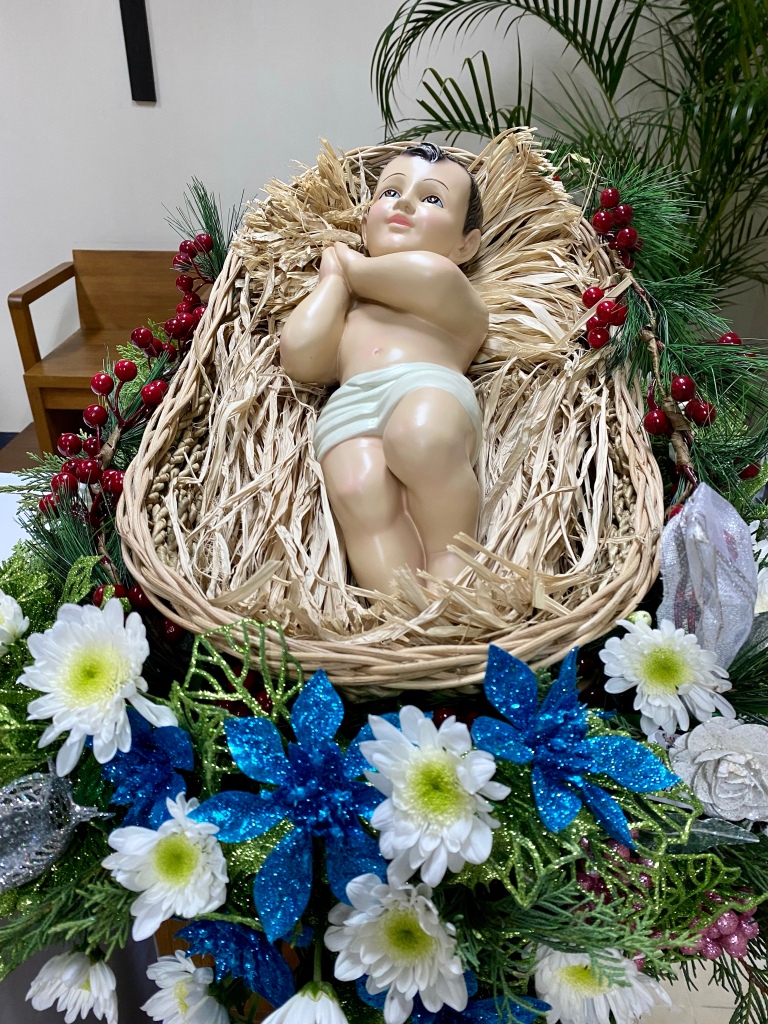
Larawan kuha ng may-akda, 2021.
Tumpak at ayon ang ating pagbati na Maligayang Pasko dahil nagsimula ang misteryo paskuwa ni Jesus nang Siya ay ipaglihi at isinilang ng Mahala na Birheng Maria sa Bethlehem mahigit 2000 tao na nakalilipas.
Sa pagkakatawang-tao ni Jesus, Siya ay tumawid mula sa kawalang-hanggan (eternity) tungo sa mayroong hanggan (temporal) dito sa lupa; mula sa kanyang ganap na pag-iral taglay ang lahat ng kapangyarihan tungo sa limitado niyang pagkatao tulad ng pagiging mahina at mahuna lalo na sa pagiging sanggol at bata. Kasama na doon ang kailangan Niyang mag-aral lumakad, magsulat, magbasa at magsalita na kung tutuusin ay alam Niya ang lahat.
Taong-tao talaga si Jesus bagamat hindi nawala ni nabawasan Kanyang pagka-Diyos sa Kanyang pagkakatawang-tao kaya lahat ng ating mga karanasan bilang tao ay Kanya ring naranasan maliban ang kasalanan at magkasala. Siya man ay nagutom, nauhaw, nahapis at tumangis nang mamatay ang kaibigan Niyang si Lazaro, nahabag sa mga tao mga may sakit at balo. Wika nga ni Papa Benedicto XVI na malapit na nating ipag-ibis luksa sa katapusan, ang Diyos na ganap na kung tutuusin ay hindi nahihirapan ni nasasaktan ay pinili na makiisa sa hirap at sakit nating mga tao pamamagitan ng pagkakatawang-tao ni Jesu-Kristo (Spe Salvi, #39).
Napaka-ganda at husay ng paglalahad ni San Pablo sa pagtawid o paskuwa na ito ni Jesus na kanyang tinaguriang kenosis, ang paghuhubad ni Jesus ng Kanyang pagka-Diyos bagamat para sa akin mas angkop ang salin na “pagsasaid” dahil sinimot ni Jesus ang lahat ng sa Kanya para sa atin doon sa Kanyang pagkakatawang-tao na ang rurok ay doon sa Krus.
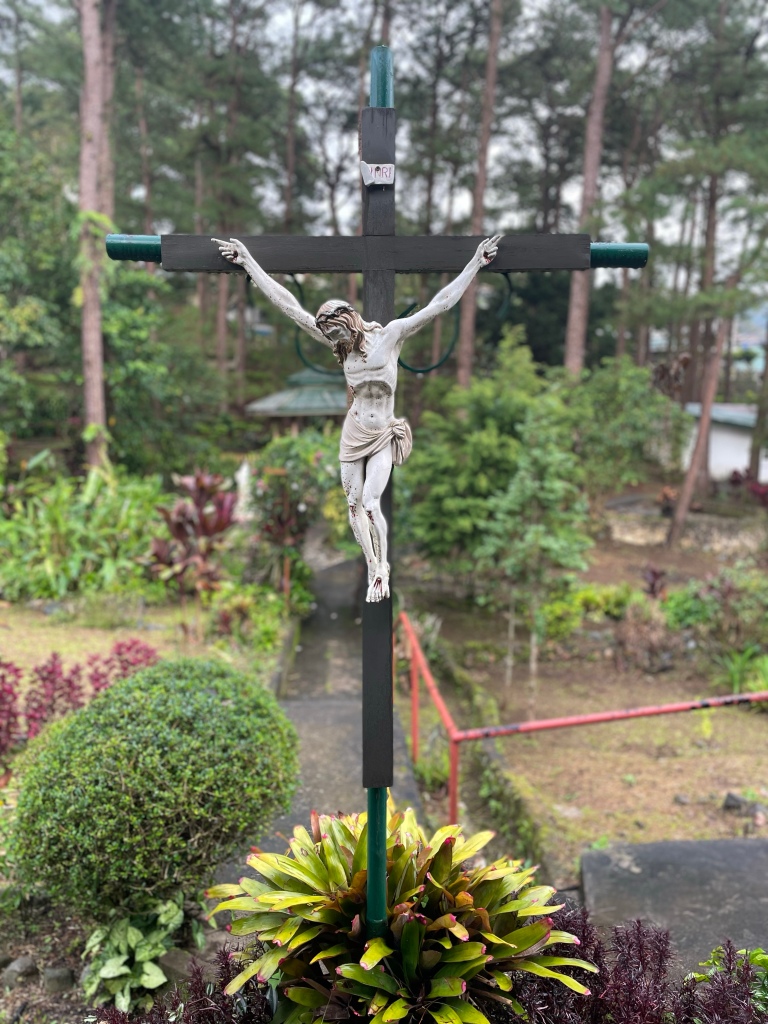
Larawan kuha ng may-akda, Baguio City, Agosto 2023.
Magpakababa kayo tulad ni Cristo Jesus: Na bagamat siya’y Diyos, hindi nagpilit na manatiling kapantay ng Diyos, Bagkus hinubad niya ang lahat ng katangian ng pagka-Diyos, nagkatawang-tao at namuhay na isang alipin. Nang maging tao, siya’y nagpakababa at naging masunurin hanggang kamatayan, oo, hanggang kamatayan sa krus.
Filipos 2:5-8
Naalala ko isang araw ng Pasko noong bata ako nang kami ay papaalis patungo sa mga Nanay at kapatid ng aking ama sa Maynila, masungit ang panahon at maulan. Hindi ko matanggap na umuulan at masama ang panahon sa araw ng Pasko kaya tinanong ko aking ina, “Bakit po ganun, birthday ni Jesus may ulan, may bagyo? E hindi ba God Siya? Di ba Niya puwede ipahinto mga ulan sa birthday Niya?”
Di ko matandaan sagot ng mommy ko pero malamang hindi malayo sa luku-luko at gago!
Nang magka-isip na ako, natutuhan ko sa mga pagbabasa na sa maraming pagkakataon mayroong mga bagyo at kalamidad, digmaan at kung anu-ano pang mga sigalot at paghihirap na nangyari kasaysayan tuwing Pasko.
Tayo man mismo, marahil sa ating personal na buhay, maraming pagkakataon na tayo ay lumuluha, nanlulumo, hapis na hapis sa buhay sa ilang mga masasakit na karanasan sa araw ng Pasko. Kaya marami sa ating habang tumatanda nasasabing para lamang sa mga bata ang Pasko na masaya.
Ngunit hindi po iyan totoo! Batid natin sa ating mga karanasan na sa padaraan ng panahon, lumalalim ding pag-unawa nating sa Paso.
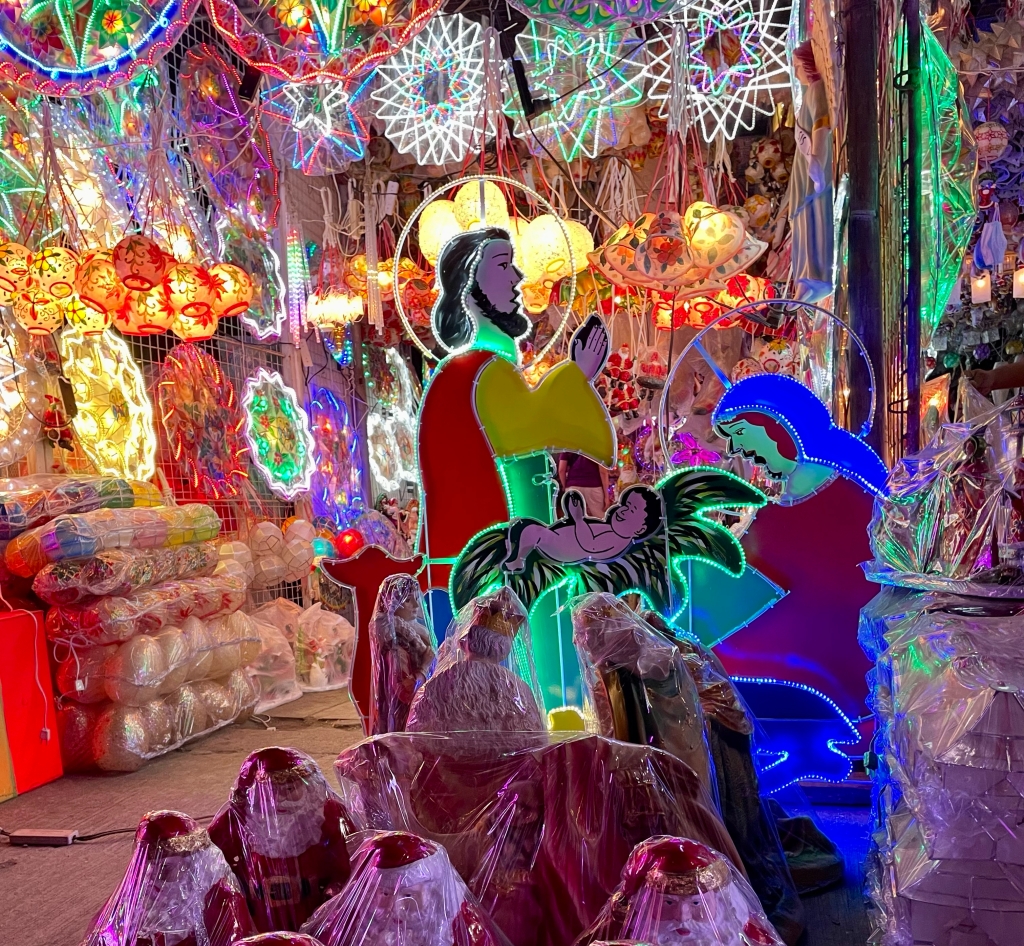
Larawan kuha ng may-akda, Setyembre 2023.
Balikan natin mga panahon ng ating pagsubok sa buhay lalo na sa panahon ng kapaskuhan, higit tayong namamangha at tiyak sasang-ayon ng lubos na tumpak nga ang bati nating mga Pinoy ng “Maligayang Pasko!” dahil mas malalim at makabuluhan ang pagdiriwang ito o ano pa mang selebrasyon sa buhay kapag ating napagdaanan at nalampasan mga hirap at sakit.
Ito ang kagandahan at katotohanan ng buhay natin na isang paulit-ulit na pasko, ng pagtawid at paglampas sa mga hirap at hilahil, pagbubulaanan sa ano mang sakbibi at pag-aaalinlangan ating ikinakakaba.
Hindi inalis ng Diyos ating hirap at sakit maging kamatayan bagkus tayo ay Kanyang sinamahan sa pagbibigay Niya sa atin ng Kanyang bugtong na Anak, ang Panginoong Jesu-Kristo na tumawid mula langit patungo dito sa atin sa lupa upang tayo naman Kanya ring maitawid patungong langit.
Kaya naman, pakiusap ko sa lahat na ipagpatuloy natin pagbati ng Maligayang Pasko hanggang ika-pito ng Enero 2024, ang Dakilang Kapistahan ng Pagpapakita o Epiphany ng Panginoon. Napakasama at malaking kahangalan na kay tagal inabangan ang Pasko na nagsisimula ng hapon ng ika-24 ng Disyembre at pagkatapos ng ika-25 ay biglang magbabatian ng Happy New Year!?
Kalokohan! At marahil, hindi naunawaan diwa ng Pasko. Mababaw at puro happy, happy gusto ng mga maraming tao, di batid ang diwa at lalim ng kahulugan ng Pasko na sa paglalagom ay iisang salita lamang: PAG-IBIG o PAGMAMAHAL. Ng Diyos sa atin.
Ano man ang mangyari sa buhay natin, sa ating mundo, hindi mapipigil ang Pasko, tuloy ang Pasko dahil kasama natin palagi si Kristo. At kung ikaw man ay mayroong pinagdaraanan, matuwa ka at magalak, ikaw ay nasa paskuwa – pasko – kasama, kaisa si Kristo! Amen.
The Lord Is My Chef Daily Recipe for the Soul by Fr. Nicanor F. Lalog II
Tuesday, Misa De Gallo IV, 19 December 2023
Judges 13:2-7, 24-25 <'[[[[>< + ><]]]]'> Luke 1:5-25
Here’s another beautiful story I got from a blogger I recently followed from Spain at wordpress.com. It is actually an analogy which may sound simple but very true.
You are holding a cup of coffee when someone comes along and bumps into you or shakes your arm, making you spill your coffee everywhere. Why did you spill the coffee?
"Because someone bumped into me!!!"
Wrong answer. You spilled the coffee because there was coffee in your cup. Had there been tea in the cup, you would have spilled tea. Whatever is inside the cup is what will spill out.
Therefore, when life comes along and shakes you - which surely happens all the time - whatever is inside you will come out. It's easy to fake it, until you get rattled. So, we have to ask ourselves, "what's in my cup?" When life gets tough, what spills over from me?
Photo by Mr. Boy Cabrido, Quiapo Church, Misa de Gallo, 17 December 2023.
My dear friends, we are now on the fourth day of our Misa de Gallo and I find that story/analogy so appropriate with our readings today.
How interesting that Zechariah with his wife Elizabeth – according to St. Luke – prayed so hard all their lives to have a child but when God was about to fulfill it, Zechariah doubted it despite being told by an angel from God. Like in that story/analogy we presented above, Zechariah was “rattled” by the angel’s good news. “What was inside Zechariah that he doubted the good news”?
Then Zechariah said to the angel, “How shall I know this? For I am an old man, and my wife is advanced in years.” And the angel said to him in reply, “I am Gabriel, who stand before God. I was sent to speak to you and to announce to you this good news. But now you will be speechless and unable to talk until the days these things take place, because you did not believe my words, which will be fulfilled at their proper time.”
Luke 1:18-20
Photo by author, Wailing Wall of Jerusalem, May 2017, the section of the remaining parts of the temple closest to the Holy of Holies where priests used to incense once a year.
Advent is the presence of God but sometimes when we are overburdened with so many things like anxieties and problems in life, frustrations and disappointments, sickness and death in the family, we become unaware of his divine presence even if we continue to pray and do our religious duties and devotions. Too often we lack the conscious awareness of God in our lives that we take him for granted, considering him more as a given than a presence and a reality.
This is exactly what we told you yesterday about some of us pretending to be real disciples of Christ when in reality we are merely dreaming in a sleepwalking existence. It is a kind of spiritual immaturity due to our lack of honesty and sincerity with one’s self and with God that we remain a spiritual dwarf. Like Zechariah who happened to be a priest who must be more attuned and rooted in God, we too hardly notice God’s coming or even doubt him and his powers because we want to hold on to our comfort zone or insist our own agenda.
God is never put off by our queries in life but what “irritates” him is when we question him, when we doubt him, when we ask about his character like Zechariah. That is a lack of faith in God, a lack of trust, and lack of personal relationship with him unlike St. Joseph in our reflection yesterday, truly a righteous man.
Contrast Zechariah with his wife Elizabeth who is presented by St. Luke in a better position despite her being barren. In the Bible, barrenness is a sign of lifelessness and absence of God’s blessings. Worst, it was seen as a punishment from God for one’s sins.
Yet in this opening scene of St. Luke’s infancy story beginning with the annunciation of John’s birth, we find God’s power at its fullest when we are most emptied which is exactly the imagery of Elizabeth being barren and old. She had nothing at all to be proud of unlike Zechariah who still had duties to perform as a priest.
As we have reflected yesterday too, we burst in great rejoicing actually in those moments filled with negativities, with a lot of “no” answers of rejections and failure. That was how Elizabeth felt after being pregnant with John.
After this time, his wife Elizabeth conceived, and she went into seclusion for five months, saying, “So has the Lord done for me at a time when he has seen fit to take away my disgrace before others.”
Luke 1:24-25
Earlier, we asked what was inside Zechariah that he doubted the good news of the angel; now, we imagine what was inside the barren Elizabeth who welcomed the good news rejoicing by voluntarily going into a seclusion?
The story of the elderly couple Zechariah and Elizabeth finally being blessed by God with a child shows us God’s consistency not only in keeping his promises but most of all in working best even in our worst conditions, in the most unusual circumstances. In these two stories, one from the Old Testament and in the New Testament, we find the importance of being filled with God always.
Recall our story/analogy above. What is inside us that comes out when we are shaken? What spills over from our cup, is it joy, gratitude, and peace? Or, anger, bitterness, harsh words and reactions long festering within?
In starting his Christmas story with the annunciation of the birth of John the Baptist, St. Luke is telling us an important aspect in celebrating this blessed season – the need to fill ourselves with God.
See how Zechariah was forced to be silent and made mute so that he could spend more time listening and rediscovering God anew in his heart, of filling himself with God. On the other hand, Elizabeth opted to go into seclusion also to contemplate God already dwelling in her though she may have never known before that is why she wanted to listen more intently to his other plans with the gift of John. Similarly like her in the first reading was the wife of Manoah who remained silent and open when a man of God told her she would bear a son to be called Samson, saying that “I did not ask him where he came from” (Jgs.3: 6). Advent invites us to simply be still to be filled by God, with God.
The other day I joined my nieces and nephew for lunch. After dropping me off at the parish, they asked for a nearby Starbuck’s because my nephew had to buy a coffee mug for his exchange gift in their class. When I asked him why he had to give a Starbuck’s mug as gift, it turned out that is now the way it is in class Christmas party – your exchange gift partner can make a wish for the gift to receive for as long as it is within the agreed budget by the class.
Anyway, our life gives us the cup or the mug. We make the decision, the choice to fill it with coffee or chocolate or tea, in the same manner we fill ourselves with joy or bitterness, anger or serenity, gratitude or complaints. Or God.
Like Zechariah in the gospel today, we could be so tired already of doing so much, of banging our heads on the wall to solve everything, to answer everything. In this final stretch before Christmas, let us empty our cups or mugs of our selves and fill it with God who alone can truly fill us with life despite our dryness and barrenness. Amen.Have a blessed Tuesday!
The Lord Is My Chef Daily Recipe for the Soul by Fr. Nicanor F. Lalog II
Wednesday in the First Week of Advent, 06 December 2023
Isaiah 25:6-10   ><))))*> + ><))))*> + ><))))*>   Matthew 15:29-37
Photo by author, St. Scholastica Retreat House, Baguio City, 23 August 2023.
God our loving Father,
may we go back to you our very life;
forgive us who have easily forgotten
you especially after these difficult years of the pandemic;
now that COVID has waned and life is back to "normal",
we are back to our unholy ways.
May we always search you, Father,
and dwell in you;
 destroy the “veil that veils all peoples,
the web that is woven over all nations” (Is.25:7)
that mislead and imprison us
with false hopes in superficial relationships
and materialistic briberies of this world.
Let us go "hungry and thirsty"
to realize the most essential in life
 are you, dear God and the people who truly
care for us and love us like our family and friends.
Like the crowd who have followed Jesus
in the wilderness for three days
with nothing to eat:
they experienced advent,
your coming, O God,
when Jesus fed them
after they were finally disposed
to desire the longings
of their soul than of their bodies;
it was only then when Jesus fed them
through the miraculous multiplication
of the loaves of bread for the second time.
May the darkness and gloom
that envelop us this season of Advent
like the wars in Gaza and Ukraine
and other military show of force
by other nations and groups elsewhere,
the barbaric terror attack last Sunday in Marawi
and the frequent earthquakes we have been experiencing
along with our other personal crises
dispose us to desiring you alone,
God our Father, so we may finally enter
your heavenly banquet in the Holy Eucharist
with “rich food and choice wines” (Is.25:6). Amen.
Lawiswis ng Salita ni P. Nicanor F. Lalog II, Ika-14 ng Nobyembre 2023
Larawan kuha ng may-akda, San Juan, La Union, Hulyo 2023.
Noong ako ay bagong pari, maraming pagkakataon na para ako nahihiya o nababagabag kapag iyong aking dinalaw na may sakit ay pumanaw pagkaraan ko siya pahiran ng Banal na Langis. Binibiro kasi ako palagi ng mga tao na huwag ko silang dadalawin kapag sila ay nagkasakit dahil sa halip na mabuhay pa, baka sila ay mamatay kaagad.
Napawi na lamang aking pagkabagabag nang ipaliwanag sa akin ng dati kong kura, ang yumaong Padre Nanding Ersando na ikagalak ko raw kung pumanaw ang pinahiran ko ng Banal na Langis dahil nakapaghatid ako ng kaluluwa sa langit.
Kaya mula noon ay iyon na aking pinanghawakan lalo na ngayong naglilingkod ako bilang chaplain sa Fatima University Medical Center sa Valenzuela kung saan kada araw ng Linggo ay dinadalaw ko lahat ng pasyente pagkaraan ng Banal na Misa. Madalas sinasabi sa akin ng mga duktor at nars kapag mayroong pumapanaw na “hinintay lang po kayo, Father” kasi matapos ko silang pahiran ng langis o bigyan ng komunyon, bigla silang pumapanaw kahit wala sa ICU.
At nakapagtataka rin naman na sa tuwing mayroong hihiling ng dasal, kumpisal at pagpapahid ng langis, palagi naman ako ay naririto. Bihirang-bihira na mayroong magrequest ng sick call na ako ay wala. Kung sakali mang wala ako sa ospital o pamantasan, tiyak aabutan ko pa ang pasyente pagdating ko at saka papanaw.
Para sa akin, ang mga ito ay malinaw na pagpapahayag ng pag-ibig ng Diyos sa atin na palagi niyang tinitiyak sa langit tayo uuwi sa kahuli-hulihan. Kaya sigurado din ako, mas maraming namamatay ang sa langit napupunta o kaya sa purgatoryo muna kesa sa impiyerno maliban na lamang talaga na ayaw ng sino man sa Diyos. Mismo si Jesus ang nagsabi noon:
“Lalapit sa akin ang lahat ng ibinibigay sa akin ng Ama. At hindi ko itataboy ang sinumang lumalapit sa akin. Sapagkat ako’y bumaba mula sa langit, hindi upang gawin ang kalooban ko, kundi ang kalooban ng nagsugo sa akin. At ito ang kanyang kalooban: huwag kong pabayaang mawala kahit isa sa mga ibinigay niya sa akin, kundi muling buhayin sila sa huling araw.”
Juan 6:37-39
Larawan kuha ng may-akda, San Juan, La Union, Hulyo 2023.
Hindi tatawag ang Diyos ng sino mang hindi handa. Maski ito sa mga namatay ng biglaaan at sa aksidente. Kaya nga sa mga lamayan, madalas makuwento ng mga kaibigan at kaanak kung paanong tila nagpapaalam o naghahabilin ang namatay ilang araw o linggo bago siya pumanaw.
Tayo mismo makakaramdam kung tayo ay papanaw na dahil iyon ay biyaya na kaloob ng Diyos. Totoong totoo ito sa mga nakaratay sa banig ng karamdaman, iyong mga mayroong malubhang sakit (https://lordmychef.com/2023/11/08/giving-permission-to-die/).
Gayon pa man, isa pa ring malaking hiwaga ang kamatayan na kung saan sadyang ang Diyos lamang ang nakababatid kailan darating kanino man. Kaya naman, ang kahalagahan ng pamumuhay ng tunay at ganap palagi sa pag-amin at pagtanggap ng ating pagkatao, kasama na ating mga pagkakasala sa isa’t isa.
Isang bagay napagtanto ko sa buhay na kung kelan natin tanggap na tanggap ang mabuhay, doon din natin natatanggap ang mamatay. Kadalasan takot tayong mamatay kasi marami tayong dapat gawin na hindi pa natin ginagawa o palaging ipinagpapaliban. O, hindi matanggap.
Mahirap kapag marami tayong mga bagahe na dala-dala sa buhay. Mabigat at maganit ang buhay. Walang tuwa at kaganapan. Pero kung mga ito ay ating haharapin at bibitiwan, doon tayo namumuhay ng tunay at ganap kaya sa mabuhay at mamatay, hindi na mahalaga sa atin gaya ng pahayag ni San Pablo (Fil. 1:21-23). Kung saan mayroong kaganapan, naroon ang Diyos, naroon din ang katiwasayan at kapayapaan. Kapag walang kaganapan, tiyak naroon ang mga takot at panghihinayang. Mahirap at mabigat.
Larawan kuha ng may-akda, San Juan, La Union, Hulyo 2023.
Ang langit, maging impiyerno, ay hindi lamang lunan kungdi katayuan sa buhay, kundisyon o sitwasyon. Kung habang tao nabubuhay at dama nating langit ang buhay sa kabila ng mga pasakit, langit nga ang tungo natin kapag namatay. Ngunit kung habang tayo ay nabubuhay at pakiramdam ay impiyerno ang buhay, kahit maraming pera at karangyaan, mga kaibigan at kung sinu-sino kasama natin, impiyerno nga ating tutunguhan.
Ang mabuting balita ay ito: nasa kamay natin ang pagpapasya. Lahat ay ibig pumunta sa langit ngunit, nakahanda ba tayo sa mga bagay-bagay, maging mga tao at kung sinu-sino na kaya nating talikuran at iwanan upang magkaroon ng kapayapaan at katiwasayan sa kalooban?
Madaling sabihin ngunit sa aking napagtanto, ang buhay ay araw-araw na munting pagkamatay sa ating sarili hanggang sa tayo ay masaid at mapuno ng Diyos. Iyon ang kabanalan – mapuno, mapuspos ng Diyos. Hindi ng mga bagay-bagay at kung sinu-sino. Kaya sa kahuli-hulihan, kapag nalagot na ating mga hininga at tayo ay pumanaw, doon na rin ang kaganapan ng pagpasok natin sa langit. Mapagpalang araw sa iyo, Bai!
*Narito isang awit na paborito ko noong dekada 90 mula sa AfterImage.
Quiet Storm by Fr. Nicanor F. Lalog II, 10 November 2023
Lady of Sorrows from a triptych by the Master of the Stauffenberg Altarpiece, Alsace c. 1455; photo from fraangelicoinstitute.com.
There’s a beautiful interplay between crying and living. And dying.
When we were growing up as kids, siesta was obligatory at home. It was a moral ought that my mom would tell us stories in bed to fall asleep, always holding a copy of the Reader’s Digest with its beautiful pictures and illustrations.
One siesta time, the image of a newborn baby being delivered caught my eyes from the copy of the Reader’s Digest my mom was holding. Then the next illustration struck me – I was about four or five years old – as it showed the doctor held the baby upside down, crying so hard after being spanked by the doctor! My mom explained to me that’s the way it is with babies when they are born: if they cry, that means they are alive but if they do not cry, the doctor had to spank the baby in order to cry and be alive.
That was my first lesson about life strongly etched in my mind. As I grew up and matured, especially after being ordained as priest, I realized deeper meanings from that simple explanation of my mom: crying is part of our lives. If we get hurt, if we suffer, if we cry, that means we are still alive.
Many times in life for us to live, we have to kick hard and cry so hard enough like newborn babies to breathe and be alive. It is in crying we realize so many things in life, about real friendships and relationships, about joy and sadness. There are times we cry not only when in pain and agony but even when we experience joy. In fact, our most profound experiences in life are best expressed with tears when we cry, best when in silence and alone.
But, death had also taught me something so amazing and lovely about crying. I consider it as the other side of crying. And of life.
Photo by author, Baguio City, August 2023.
It happened when my best friend, Gil died in 2015. He asked me in February that year to pray for his long-delayed medical checkup; that same night, he called me again that his doctor had him confined for suspected cancer. After a series of tests, he had radiation then surgery after which followed his series of chemotherapy.
Gil cried a lot when diagnosed with cancer. He was angry and bitter with his sickness. And for a good reason because among us from high school seminary, he was the healthiest and most health conscious! I knew it because when news of that mad cow disease from Europe broke in early 2000, he stopped eating beef even burgers!
In mid September, her Ate Lily called me that doctors had told them Gil’s cancer cells were very aggressive and would have a short time to live. It was a Sunday and we his friends rushed to Makati Med that afternoon. I came to visit him for another three days before he died early Sunday morning, September 22, 2015.
It was during his final week in the hospital when he asked me for a “permission to die” (see our blog, https://lordmychef.com/2023/11/08/giving-permission-to-die/). Gil simply told me he was ready to go. His face was radiant and light, he was so at peace on his hospital bed as he gave me other final instructions for his kids and ex-wife.
I could not say anything except cried. And I cried so hard, especially as I anointed him with holy oil and prayed the commendation to the dying. It was from Gil that I realized the dying receive that special grace of knowing the end, possibly even of seeing heaven that is why they are always so composed like Jesus Christ on the Cross on Good Friday. I told him how I wish I could have that same courage in facing death when my time comes. He assured me God would give me that grace too.
From that experience, I realized when people get sick, they cry because that’s when death faced them. Who would not cry and be terrified? We their friends and family in turn, console them. The inverse happens when they approach death: they are so composed, we their family and friends are the ones crying. And the one dying are the ones consoling us! When they die, we cry. Why? Because we do not know what happens next, of what lies ahead when our loved ones are gone. Paano na tayong naiwan? That’s the saddest and scariest part of life when someone dear to us dies.
In 1999, St. John Paul II wrote a letter to his fellow elderly where he said that the grace of getting old is to be able to look back to the past with gratitude and to look forward to the future with joyful anticipation of eternity. That holy Pope must have been seeing heaven while still here on earth!
Photo by author, National Shrine of Our Lady of Fatima, 06 November 2023.
It is in death when we see its strange contrast with life, of how when we were born, we cried and kicked hard to be alive while those around us rejoiced with the gift of life; when we die, we do not cry because we are already joyful with the coming bliss while those around us are filled with grief and sadness, crying not only with our demise but because they do not know what lies ahead.
In both instances, we find the grace of God so pronounced, so present that indeed, St. Paul was absolutely right:
None of us lives for oneself, and no one dies for oneself. For if we live, we live for the Lord, and if we die, we die for the Lord; so then, whether we live or die, we are the Lord’s.
Romans 14:7-8
When we were growing up, there was a baby shampoo that advertised itself so mild that would not hurt your eyes, marketing itself with the words “No more tears”. It also played a commercial of a young boy going to shampoo his hair declaring, “a man should not cry” to bolster that old belief that crying is weakness.
At the sermon on the mount, Jesus taught us one of the beatitudes as “Blessed are they who mourn, for they will be comforted” (Mt. 5:4). I love using this gospel in funeral Masses. Where is the blessedness of mourning the death of a loved one? What is good with mourning, with crying?
Answer: love.
Blessed are those who mourn because they have love in their hearts. We cry at the death of a beloved because we love them. But, the greatest blessing we have when we mourn is from the love we have experienced from the one who had died. It is said that “if you have love in your heart, you have been blessed by God; if you have been loved, you have been touched by God.”
We are blessed when we mourn, when we cry at the death of a beloved because they loved us, they gave us a glimpse of God, they made us experience God’s love in their love! Is it not a tremendous blessing indeed?
We are so blessed these days that crying is no longer considered as a sign of weakness but actually of strength – the strength to live and the strength to forge on in life after the death of a beloved. Cheers to our tears that keep us alive! Have a wonderful weekend!
Photo by author, National Shrine of Our Lady of Fatima, Valenzuela City, 2021.
Quiet Storm by Fr. Nicanor F. Lalog II, 08 November 2023
Photo by author, National Shrine of Our Lady of Fatima, Valenzuela City, 06 November 2023.
A very dear friend died last October 16 after more than three years of fighting cancer. She used to be one of our elementary teachers at the school I was first assigned after ordination. She later resigned to teach abroad but every year whenever she was home for summer vacation, she always invited me to join their mini-reunions of former co-teachers.
Everything changed in 2020 when she had to retire early to return home for her cancer treatment. We could not visit her during the pandemic lockdown, occasionally meeting her via zoom and video phone calls. When COVID subsided a little in late 2021 and early 2022, we finally met briefly. She seemed to be responding well to her chemotherapy except that she had lost hair that was natural. Last December, we were finally able to go out with other fellow co-teachers twice after Christmas and after New Year’s day last January. We were so glad she had regained weight and strength. And hair too!
Saw her again last June but in late August, she stopped answering our messages. It turned out that her cancer had metastasized to her lungs and liver. When I came to see her October 7, the first thing she told me was for me to “allow her to die”. According to her brothers and elder sister, she had also asked them for “permission to die” earlier that night because she said, she was already tired and was ready to go back to God.
Photo by author, National Shrine of Our Lady of Fatima, Valenzuela City, 06 November 2023.
It was not the first time somebody had asked me a “permission to die”, especially since I have become a hospital chaplain two years ago. But, I must confess, in all instances, there was always hesitancy on my part in giving “permission to die” especially when those dying are close to me like friends and relatives. In fact, the first person who asked me “permission to die” was my best friend from high school seminary. I just cried, said nothing when he calmly told me he was ready to go.
That scene remains vivid to my memory to this day, including the many lessons he had taught about life and dying.
By the way, let me put it clear that what we are referring here as giving “permission to die” is allowing death take its natural course, not mercy killing or euthanasia which is intrinsically evil we should never allow.
In my 25 years in the priesthood, two years as hospital chaplain since 2021, I have always felt the process of dying as a “grace-filled moment” too like in the birth of an infant or recovery of a sick person. Both the dying and their family and friends are blessed when death approaches or had come, like when Jesus visited Martha and Mary four days after the death of their brother Lazarus. That scene of Jesus speaking to Martha before bringing Lazarus back to life assures us of how God had turned death into a blessing in Christ: Jesus told her, “I am the resurrection and the life; whoever believes in me, even if he dies, will live, and everyone who lives and believes in me will never die. Do you believe this?” (Jn. 11:25-26)
Photo by author, National Shrine of Our Lady of Fatima, Valenzuela City, 06 November 2023.
If we believe Jesus and his words to Martha, we too shall find him coming to us when a beloved is dying, especially when they ask us that “permission to die” which is not actually a permission per se because only God decides when we are going to die.
When patients ask for “permission to die”, they are actually bidding us goodbye. Dying people always knew when they had to go because they have already accepted the reality. This is very noticeable at the serenity, even of joy, on their face. Despite their sickness, dying patients who have truly made peace with God and had given up everything to Him always have that grace of composure like Jesus when he died on the Cross, crying his same prayer, “Father, into your hands I commend my spirit” (Lk.23:46).
Photo by author, National Shrine of Our Lady of Fatima, Valenzuela City, September 2021.
Giving “permission to die” is a grace from God He gives to relatives and friends to accept and embrace that difficult reality.
“Permitting” our loved ones to die is to assure them of our love and forgiveness of their sins against us. It is our final act of love for them when we assist them to that great passageway onto eternity like when we would lead our guests out to the door to ensure them our separation is just temporary until we meet again soon.
Due to this great amount of love in our final goodbyes, some people sometimes “fake” their dying moments, creating a “drama” in asking “permission to die” when actually, they are not yet ready to die but merely demanding love and care from family and friends. One clear sign is they tend to be more cerebral than cordial, becoming bitter and angry than ever. Even amid sufferings, they think more of themselves than feel others around them. Like the boy who cried wolf, they have not yet really seen death approaching because most likely, they have not yet faced life and living truly. Coming to terms with death is coming to terms with life. When loved ones “fake” their dying, what they really seek is how to live fully and responsibly, to be their true self. But that’s a different topic…
Photo by author, Malagos Orchid Farm, Davao City, 2017.
Death is the most terrifying moment in life because we do not know what’s next, where we are going. That is why, when people truly mean that they have accepted death, that is also when they have accepted life in its fullness. They do not reason out. They just feel God and those around them. Most of all, they have peace within amid pains.
The same thing happens with us relatives and friends of the dying. We feel their sense of peace within, affecting us, infecting us. Hence, we get lost at how to express our giving them of that permission to die. Very often, we cry because our hearts overflow with love. When we feel their seeking of permission to die is genuine, our mouths and tongues are shut, incapable of expressing our love for them that is diverted into our eyes as tears, bursting forth like waters from a collapsed dam that cleanse also us of our fears and sadness at our impending loss.
Finally, giving permission to die to our beloved is an expression of our faith in God, affirming we all came from God and would someday go home to God in heaven. Thus, giving permission to die is actually to comfort – literally, “to give strength to” – the dying of their faith in God while facing their final tests and temptations in life, assuring them that soon, we shall join them in eternal joy.
Many times, our family and friends suffer so much before death because of our refusal to let them go too. We keep on holding them back that terrify them in making the great crossover. Giving them permission to die is easing and sharing their fears so they can finally let go and let God, that is, die – the meaning of the letter “d” that stands between the words “go” and “God”. According to the prayer by St. Francis of Assisi, it is in dying when we are born into eternal life. Amen.
*Aside from All Saints’ Day and All Souls Day, the whole month of November is a traditional time for visiting the graves of our loved ones. Go and offer them prayers, especially that “permission to die” if you are still holding them and have not yet let them go.
Lawiswis ng Salita ni P. Nicanor F. Lalog II, Ika-06 ng Nobyembre 2023
Larawan kuha ng may akda, bahagi ng Tarlac sa Central Luzon Link Expressway, 19 Hulyo 2023.
Natitiyak ko kay dami
ninyong kuwento sa araw na ito
matapos ang mahabang
"long weekend";
mula halalan
hanggang Undas
inyong pinag-uusapan,
magagandang tanawin
at pasyalang pinuntahan,
masasarap at malinamnam
na pagkaing natikman
habang binabalik-balikan
mga alaala
at gunita kapiling
mga minamahal natin.
Nguni't
hindi ba ninyo napansin
bakit kay huhusay natin
kapag mga bagay-bagay
ay papatapos
at magwawakas na rin?
Kung kailan patapos
na bakasyon,
ibig mo ay extension
dahil saka pa lamang
nararamdaman ang samahan;
kay hirap magpaalam
inaasam oras ay madagdagan
kahit kaunting sandali lang
huwag nang tigilan
kuwentuhan at tawanan;
kung kailan uwian na
saka matatagpuan
maganda at bagong
tanawin, pakiramdam
laging bitin.
Ngunit kung tutuusin,
buhay ay laging bitin
lahat ay paulit-ulit
na simulain dahil
walang natatapos
walang nagwawakas din.
Alalahanin turo
ng matatanda sa atin
huwag magsasalita
ng tapos dahil kung ating
susuriin, sa pag-alis
at paglisan natin,
tayo ma'y dumarating;
maging sa kamatayan
pananaw nati'y hindi wakas
kungdi simula ng buhay
na walang hanggan
kaya naman kapag mayroong
pumanaw, mga huling araw
nila ay puro habilin,
buhay ay kay husay.
Kaya alalahanin
bagaman ang wakas ay
nagbabadya palagi,
pagbutihin bawat sandali
upang sa bawat katapusan
mabakas mas magandang bukas!
Larawan kuha ng may-akda mula sa OLFU-Quezon City, Enero 2023.
Quiet Storm by Fr. Nicanor F. Lalog II, 23 October 2023
The president of our hospital where I serve as chaplain posted yesterday a beautiful reflection on his Facebook page about the war and hostilities in Gaza, calling on everyone to pray hard for its peaceful resolution.
What touched me was when he said, “I am a doctor and in my heart of hearts, I feel that hospitals should enjoy certain exemptions. I wish then as now, that hospitals should never have their electricity or water cut-off… I am thankful that the hospital I work in is not in any immediate danger of being bombed. Life is already fragile as it is.”
As I have been telling you, I am a hospital chaplain. And like our president, in my heart of hearts, hospitals should be exempted from any form of violent attacks at all times. Wherever.
The word “hospital” is from the Latin word hospis which means “to welcome” from which “hospitality” also came from.
Since my assignment as chaplain at the Fatima University Medical Center in Valenzuela in February 2021, I have realized it was only then have I truly “welcomed” human mortality, both as an individual and a member of the human race. I must confess that it was only when I became a hospital chaplain have I realized in the most existential manner the meaning of being mortal, that someday I could be one of those patients lying on those beds with tubes and monitors attached to my body, perhaps in coma. During these past two years of visiting our patients every Sunday, sometimes daily or at the middle of the night or early morning when that Latin phrase memento mori – “remember you must die” – has become so true like the sword of Damocles hanging over my head always.
But, it was also during these past two years as a hospital chaplain have I discovered the amazing beauty and wonder of human life, of every person. It is only now at age 58 I have experienced the true meaning of a baby as “a bundle of joy”, of how great are the love and courage of a mother in delivering an infant. It was in our hospital where I experienced that life, indeed, is precious because it is fragile and vulnerable that so moved me in pity, even cried at seeing patients so sick, so close to death, whether a new-born infant or a 90 year-old. I am most thankful to God in making me experience his mysterium fascinans in our hospital where I am awed in the most wonderful way of finding how the human spirit fight for life, assert life and choose or find life rather than death. And when it becomes inevitable, that great wonder of faith and hope within in facing and accepting life’s end here on earth to move on to eternity in God, whatever name he is called by anyone.
Photo by author, Sinai desert in Egypt, 2019.
When I saw the news of that bombing of a hospital in Gaza, I felt something deeply different within me. At first, I wanted to get angry and curse whoever did that. What the Hamas did in starting this war was totally inhuman and unacceptable but whoever caused that hospital attack is bringing this conflict including humanity in general, to the lowest level. (It is still disputed whether it was an airstrike by Israel which they deny or a misfired rocket of the Palestinian Islamic Jihad they also deny.)
Every time I would see footages of Gaza’s overcrowded hospitals said to be at their “breaking point” due to great number of patients, I could feel as if my heart is being rend apart, teared into pieces because every hospital is like a church building or a place of worship were everybody is supposed to be welcomed to be whole again, to be healed, and most of all, to be cared at. Like churches and any place of worship, a hospital is a sanctuary for humanity, a hallowed ground where a burning bush of Moses is planted somewhere. Any act of violence in a hospital anywhere in the world is a total disregard of life and the human person, a sad reminder not only of our inhumanity but also of how can be “unhuman” too.
Very close in sound to hospis is another Latin word, hostis, meaning “enemy” from which came the words “hostage” and “hostile”. When hospitals are held hostage in war or any other situation, then it becomes a most serious and severe blow to humanity because it means we have closed all doors in welcoming each other, that we have decided to live on our own in total disregard of one another. I pray that wherever there is a war going on, enemies spare hospitals of their hatred where they can always feel welcomed and hopefully, be reawakened of our being brothers and sisters in one God we call in different names.
May our hospitals remind us this whole planet we all share as our one home is a sacred ground, whether in war or in peace, where humanity triumphs even in small packets because life is held holy and divine, a gift and sharing in the life of God. Amen. Let us keep praying and working for peace everywhere.
Yes! I have proven this most truest when we pray for the sick, especially for babies and children. And when we are also sick or, very sick.
The late Fr. Henri Nouwen said in one of his writings that “life is precious because it is fragile.” I have gradually grasped and experienced this most wonderful truth of life only these past two years when I was assigned as chaplain at the Fatima University Medical Center in Valenzuela City.
Every Sunday after Mass at the University chapel, I visit our patients to bring them communion (viaticum), hear their confessions and anoint them with oil. One of our patients last Sunday was a young mother named Rachel who delivered a sickly baby boy Saturday with difficulties in breathing.
Rachel was crying when we entered her room. After receiving the Communion, she asked me to visit and pray over her baby at the Neonatal Intensive Care Unit (NICU). I readily said yes to her request then asked her if I can baptize her baby and what name would she like to give him. “Daniel Steven, Father,” she said softly as she wiped her tears.
After putting on my hairnet and gown and slippers, the nurse led me inside the NICU where I saw two doctors and three nurses gathered around Rachel’s baby. Soon enough, both doctors came to me to explain the delicate – “toxic” – situation of the infant as we walked closer to him.
It was “solemnly silent” inside the NICU that morning with the warm light above the baby giving that holy feel like being before a Belen or a creche; the scene was so “disarming” that I just felt praying to God deeply from my heart, begging him to please bless and heal this baby who is much like Jesus Christ who was right away subjected to dangers upon birth in Bethlehem. I prayed too to God to remember Christ’s special love and concern for children, warning anyone who would harm them that angels look after them (Mt. 18:10) to keep them safe always.
At that moment, the baby opened his eyes – and sparkled as I saw his face lit up despite the little tubes connected to him. At that instance, I just felt something like a giant wave gushing within me like a tsunami and, boom! I burst into tears as if that giant wave inside washed me.
It was a very good cry, like a catharsis, so pure that seemed to have cleansed me resulting in joy within with the baby seemed to be looking at me, making sounds from his little mouth.
“My God, did he hear me praying?” I asked myself while standing there, praying with my arms still outstretched as tears rolled profusely to my face mask. After a few minutes, I wiped my tears and came forward to pour Holy Water on his head, saying, “I baptize you, Daniel Steven, in the name of the Father and of the Son and of the Holy Spirit. Amen.”
I have visited many sick children in our hospital with the most unique even bizarre sickness and diseases and accidents. They have all moved me in pity but it was only Daniel Steven who had made me cry.
That moment when he opened his eyes and “looked” at me even though I knew infants could not recognize nor actually see, I felt God was ultimately the one really looking at me, listening to my prayers. At the same time, it was then when God fully opened my eyes and my heart to see him in baby Daniel as the One always listening to our prayers especially when we are facing dangers like death – the greatest and ultimate danger we all face in life. It is in such moments of great dangers when God is most closest to us in Jesus Christ who became human like us to be one with us in everything including death (but except sin).
Less than 80 days from now it would be Christmas but, have we realized this reality of how Jesus Christ have seriously faced death right after his birth being born in an “unsanitary” manger to being transported in harsh conditions to Egypt when Herod tried to kill him?
It is in sufferings and death when we truly experience the preciousness of life, the value of every person, no matter how small like a child or how old like any senior citizen. It is in the face of death when we are most human, truly and naturally weak and fragile that we also realize deeply, existentially the meaning of being alive when we are close to its end. That is when we feel life is precious because that is also when we feel it slipping away from us, slowly losing it.
That fragility of life is most evident when we struggle for breath, gasp for air, and reach out to someone’s hands to hold and clasp in order to rise again, to cling to another human and simply to be alive. From that we experience life’s meaning and value when it is shared and lived in God who is life himself through others. That is why we also feel closest to him at those moments when we see those sick and suffering and dying when we are close to God who comes most nearest to us in those grave moments.
Back in 2007 when I was in my first assignment as one of the teacher-administrators of a school in Malolos while we concurrently ran a parish, I felt burned out being there since 1998. One Friday afternoon during a Holy Hour, I begged God to give me one good reason why I should stay in that assignment when I was asked to answer a sick call in a nearby hospital. When I got in the hospital, the doctors and nurses were resuscitating the patient I was supposed to anoint.
Quickly upon seeing me, they let me come to the patient to pray over him and anoint him with oil. After that, I stayed in the room to watch the doctors and nurses struggled to revive the patient. Then another doctor arrived who turned out to be the son-in-law of the dying patient (also an ex-seminarian ahead of me in the minor seminary). After conversing with them, that doctor told them to stop the procedures as he would explain everything to his wife, the daughter of the patient.
Soon enough, the patient flatlined and died. His son-in-law called me and told me the patient had died and if I could bless him again. I did bless him again with Holy Water. As the doctor thanked me for being there at that crucial moment, I also thanked God for listening and answering my prayer in giving me a sign why I should remain in my assignment. What a precious sign he had given me, the first patient I have seen dying in front of me.
Now as a hospital chaplain, I have lost tracked of how many patients have died before me after praying and anointing them. But in each one of them, I have felt God present among us, saving their souls in eternity. But most of them, God had kept alive and healthy until now because he always listens to our prayers. Amen.
Photo by Mr. Red Santiago of his son Cayden praying in our former parish in January 2020.
*Daniel Steven is still in the NICU, fighting for his life that is so fragile, so delicate. And most precious. Doctors said these first 72 hours are very crucial. Please help us pray for him so he would get better and live life into maturity like most of us. Thank you.












 lordmychef.com