The Lord Is My Chef Breakfast Recipe for the Soul
Tuesday after the Epiphany of the Lord, 05 January 2021
1 John 4:7-10     >><)))*>  +  <*(((><<     Mark 6:34-44
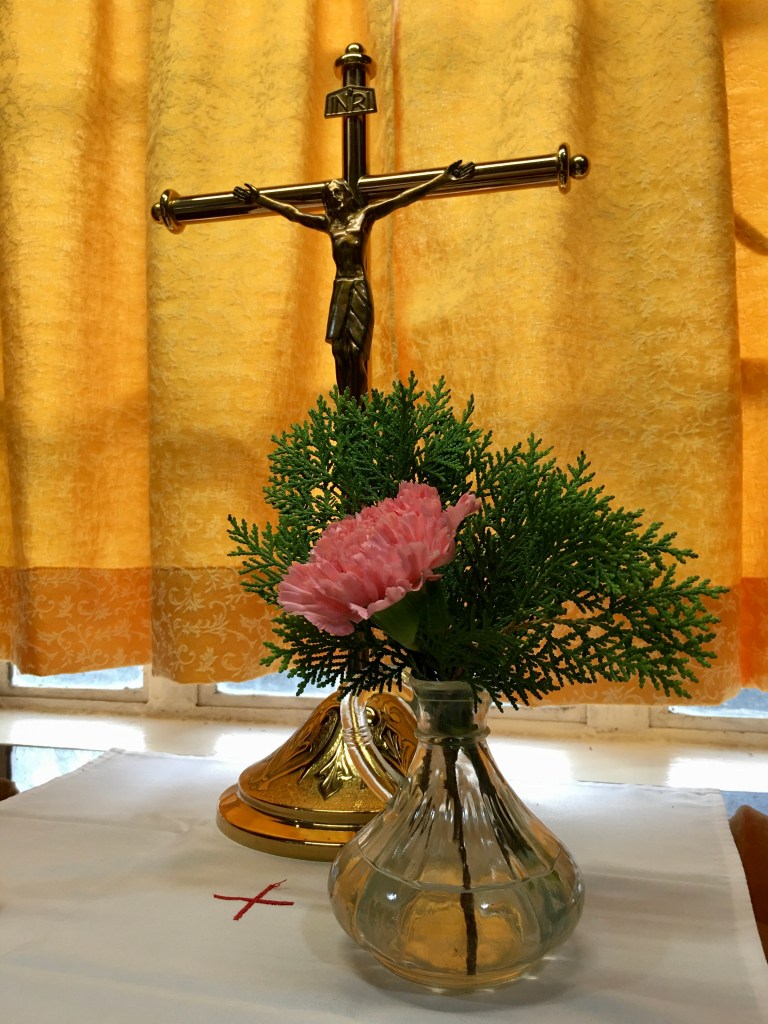
Photo by author, 12 December 2020.
Dearest God our Father:
Today my heart has only two things to say:
First is, “Thank you for being love, for loving me!”
Beloved, let us love one another; because love is of God; everyone who loves is begotten by God and knows God. Whoever is without love does not know God, for God is love.
1 John 4:7-8
Pope Emeritus Benedict XVI wrote in his first encyclical Deus caritas est which was taken from this letter of the beloved disciple, that, what makes Christianity so unique of all other faith is the statement, God is love.
Indeed, in all the stories told about you in the Bible, in all our experiences in life, there is only one thing you have shown and given us from the very beginning that shall continue in eternity — LOVE.
The very coming of your Son Jesus Christ is all because of LOVE. Christmas is a story of love. Epiphany is also love.
It is all love, love, love… dear God! Please open our hearts, our senses to experience this love of yours you continue to pour upon us. Touch our hearts, open our minds, let us stop denying this truth that we are loved by You.
And so, my second prayer to you today is this: as a sign of thanksgiving, let me to share your love. Let me love like Jesus your Son, thinking more of others than myself – so unlike his apostles who wanted to send home the crowd hungry, worried at where to find food for them:
By now it was already late and his disciples approached him and said, “This is a deserted place and it is already very late. Dismiss them so that they can go to the surrounding farms and villages and buy themselves something to eat.”
Mark 6:35-36
Just for me to start thinking and feeling and acting like you when you saw the crowd like sheep without a shepherd (Mk.6:34, 37), worried for their spiritual and material hunger that you taught them so many things and then fed them with food is a good lesson to start loving like you.
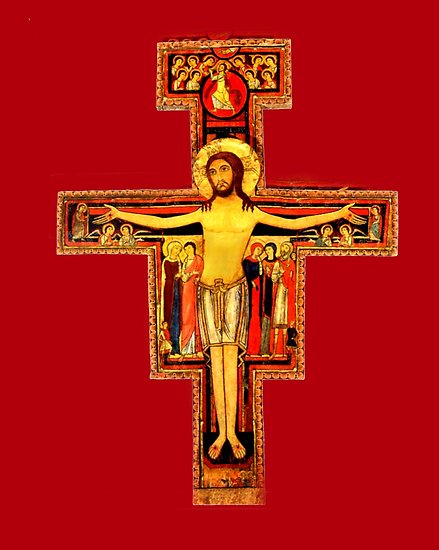
O dear Jesus, fill me with your warmth and enthusiasm whenever I would look at you on the Cross so I may pass on the love you have given me to others. Amen.
The Lord Is My Chef Christmas 2020 Recipe for the Soul by Fr. Nicanor F. Lalog II
“The Adoration of the Shepherds”, a painting of the Nativity scene by Italian artist Giorgione before his death at a very young age of 30 in 1510. From wikipediacommons.org.
A blessed Merry Christmas to you, my dear Reader! As I have been telling you these past weeks, this Christmas may be the bleakest and saddest we have in our lifetime due to the pandemic but at the same time it may be our most meaningful of all. Consider the following:
We may have less material things this Christmas, but we have more spiritual values
like faith, hope, and love along with kindness, compassion, and tenderness;
We may have less of ourselves but finally, we have more of others,
especially family;
 Most of all, we may have less of all the trimmings of the season
to have more of the Reason, Jesus Christ our everything!
Last Holy Week and Easter, I have told you that while we were so sad in the midst of a strict lockdown when COVID-19 hit us so bad, Jesus must be more sad than us with what we were going through at that time.
However, while many of us may still be sad this Christmas, Jesus must be happy not for our misery but because finally, He can have us completely as we continue to learn the many lessons of the pandemic, of finding the more important and essential and valuable in life.
But, can He finally have us completely this Christmas 2020 and hereafter?
How sad and alarming that after nine months in the pandemic, many of us have gone back to our old ways of not praying, not celebrating Sunday Mass, and worst, still emotionally distant from God and others.
Photo by author, Christmas 2019.
Christmas is Jesus reminding
us life is precious because it is fragile;
He came to us an infant born in precarious
situations like us.
In those days a decree went out from Caesar Augustus that the whole world should be enrolled. This was the first enrollment, when Quirinius was governor of Syria. So all went to be enrolled, each to his own town. And Joseph too went up from Galilee from the town of Nazareth to Judea, to the city of David that is called Bethlehem, because he was of the house and family of David, to be enrolled with Mary, his betrothed, who was with child. While they were there, the time came for her to have her child, and she gave birth to her firstborn son. She wrapped him in a manger, because there was no room for them in the inn.
Luke 2:1-7
If Luke were to write the gospel today, he would have surely mentioned the COVID-19 pandemic that has greatly altered our lives in less than a year. And that is the good news of Christmas: Jesus comes to us in the most trying time of our lives like 2000 years ago when He was born in Bethlehem.
See the beautiful contrast presented by Luke: the powerful Caesar Augustus of the Roman empire and the true King of kings being born like any infant in a manger for there was no room for them in the inn.
Yes, in our time there are so many women delivering their babies in difficult situations even worst like those fleeing their own countries due to wars and persecution. Here we find the Son of God from the moment of his birth had experienced the uncertainty and insecurity we ourselves are into. I have always told in my funeral Masses how easy it is these days to just die and pass away: recall the people we knew who simply died from COVID-19 and other sickness this year alone. Everybody says the difficulty of seeking medical attention due to the corona virus.
But that is how life is truly is: it is most precious because it is fragile, precarious, so delicate like an infant and a child.
That is what Jesus is showing us in coming to us born as an infant, in a manger, wrapped in swaddling cloth: the all-powerful and mighty God and King asking us to be tender and kind with Him born among everyone of us.
I love Zechariah’s description of God’s mercy in his Benedictus or canticle to God after he regained his speech when he confirmed the name of his son John:
“In the tender compassion of our God the dawn from on high shall break upon us, to shine on those who dwell in darkness and the shadow of death, to guide our feet into the path of peace.”
Luke 1:78-79
And that is perhaps one of the things we sorely miss so much these days from everyone, tender compassion. The tender compassion, tender mercy of Jesus. Recall how during His ministry all four evangelists would narrate how Jesus was moved with pity and compassion to the people who were lost, tired and sick “like sheep without a shepherd” that no matter how tired He may be, He would always find time to teach them, heal their sick, and even feed them.
Like courage, tenderness or mercy is a movement in the heart called misericordia in Spanish from the Latin mittere, meaning to be moved, to be stirred that is why it is soft. It is something dynamic, not static. It is a deep feeling that moves toward someone in pain and suffering — an identification of Jesus right at the moment of His birth with every person going through so much hardships and sufferings in life.
Let God stir your hearts this Christmas, especially for the poor and the weak, for those closest to us we have taken for granted. Share the joy of the newborn Jesus by considering always the fragility of this life we have, of being kind, not hurting others physically or verbally. Enough with all the violence and brutality around us.
Christmas is Jesus coming to us
to affirm our very first love:  God.
Photo by Marc Angelo Nicolas Carpio, 06 December 2020.
At the time of Jesus, rabbis used to teach that God had intervened in the history of the world during “four great nights”: the first night is the beginning of creation (Gen. 1); the second was when God made a covenant with Abraham (Gen. 15); the third night was the liberation of Israel from Egypt or Exodus.
The fourth is the future one, the night when God will break all chains to put an end to all kinds of misery, to create a new world and begin His kingdom here on earth. For us Christians, Christmas is that fourth night when Jesus was born in Bethlehem as well as when He rose from the dead.
December 24 is always believed to be the darkest night of the year, the perfect setting of the coming of our Savior Jesus Christ so vividly presented to us by Luke in his Christmas story when he juxtaposed the misery of humanity (darkness) and the glory from high of angels announcing His birth.
What a mysterious exchange, an eternal presence of the Son of God entering into our history as a human like us in everything except sin.
See the paradox of his birth: poverty and glory when Jesus was born into destittion under the decree of the pagan emperor, childbirth far from home without any help to His Mother, and then honored by the lowest kind of people of his time , the shepherds yet glorified by the angels of heaven!
All of these to affirm to us humans that we are God’s first love!
We may be living in the darkness of the night with no clear sight yet of the end of this pandemic despite the discovery of a vaccine. Both the government and big businesses do not give a damn on the people, not even provide the basic services like good internet or efficient toll system. Violence and vile becoming a daily staple among those in power.
It is so dark indeed but the love of Christ Jesus can brighten and illumine even the darkest corners of our lives if we come to Him in firm and consistent faith like Mary His Mother. Christmas reminds us that the night has been overcome and conquered by the love of Jesus Christ, our Savior.
Take note that Luke is the only evangelist who calls Jesus so often as “Savior”: 14 times in his gospel and at least 40 times in the Acts of the Apostles. Likewise, Luke insists in his Christmas story using the word “today” to show that God’s salvation continues to happen at this very moment because He loves us so much!
Photo by author, Gaudete Sunday 2020.
Let me end these reflections with a prayer as I tried to silence myself these past nine days of Simbang Gabi:
Dearest Lord Jesus Christ:

Thank you for still coming, not only today but every day, in good times and in bad times.
Thank you for loving us in spite and despite our sinfulness, especially when we have no time for you, when we are so busy with so many other things we claim for our loved ones and sometimes, for you.

Despite the clouds of darkness above us, you continue to come to us, bringing light to dispel the many darkness especially in our hearts, in our relationships.  So many times, we have lacked tenderness and mercy with one another despite our profession of faith and love for you.

In this time of COVID-19, help us go back to the basic truths and realities your birth and coming teach us:  the value of our family, of simplicity, of humility, of smallness or littleness, of love and mercy, kindness and sincerity.

O dear sweet child Jesus, move our hearts to be kind and loving to others; to always be careful not to hurt you in every person we meet so they may realize despite the miseries of this world, there is always your glory, your salvation to anyone who trusts in you.

Bless us with your grace and truth, Jesus, so that through us, through our lives of witnessing, God may dwell upon us and be made known to everyone not only this Christmas but all year through.
Amen.
The Lord Is My Chef Noche Buena Recipe for the Soul
by Fr. Nicanor F. Lalog II
Thursday, Mass at Christmas Eve, 24 December 2020
Isaiah 62:1-5  >><)))*>  Acts 13:16-17, 22-25  >><)))*>  Matthew 1:18-25
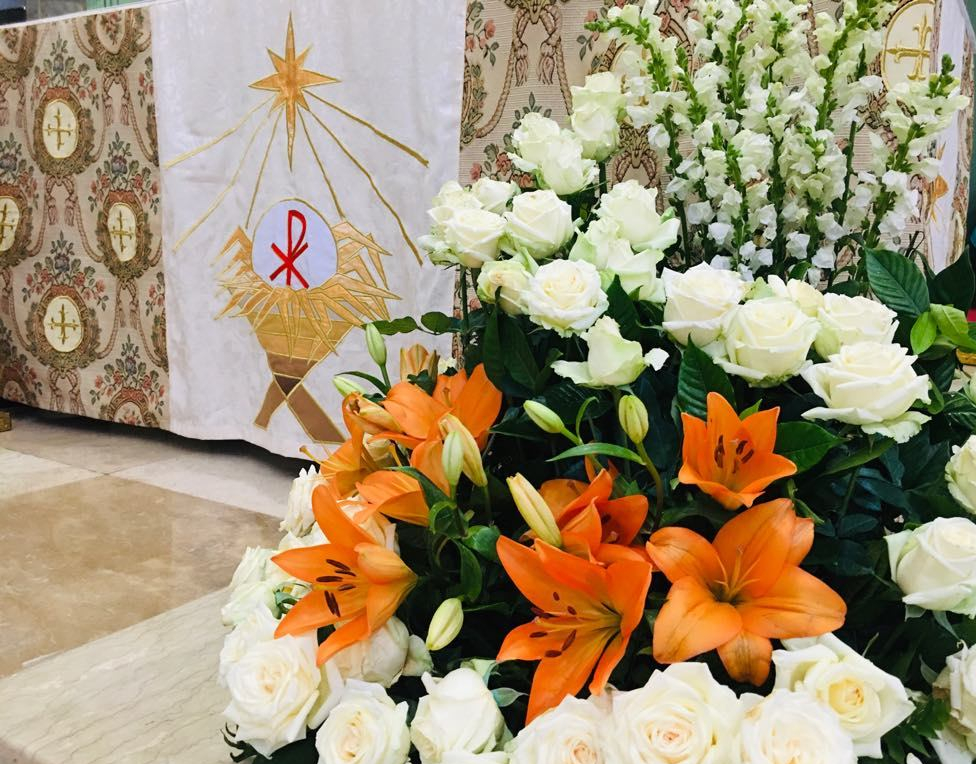
Photo by Ms. Jonna S. De Guzman, 06 December 2020.
A blessed Merry Christmas to everyone!
One good thing with this ongoing pandemic is the retrieval and return to the basic meanings of our many traditions, rites and rituals in the Church, beginning with Lent and Easter last summer. The same thing is happening this Christmas Season when we have to accommodate more people amid our health protocols that we have revived the oft-neglected Vigil Mass of the Nativity of the Lord.
It is partly true that our December 25 celebration of Christ’s birth has something to do with the Christianization of some ancient pagan practices in Rome like the “sol invictus” or “invincible sun” introduced in 274 by Emperor Aurelius. When Emperor Constantine rose to power whose mother was Queen Helen or Sta. Elena of our Santacruzan fame, Christianity was finally accepted in Rome giving rise to the new religion and the Church. After the Peace of Constantine of 313, the feast of the Nativity of the Lord replaced the pagan celebration of the sun. Jesus is now seen as the fulfillment of the prophecy as “Sun of justice” (Mal. 3:20) while at the same time, we find in John 8:12 Christ calling himself as “the Light of the world”.
Eventually in Rome developed the three Masses of Christmas: the night Mass referred to as Midnight Mass even if it does not have to be at midnight adapted from the Christian tradition in Bethlehem of having night Mass on January 6, the Epiphany; during the fifth century, the Pope brought this to Rome after the Council of Ephesus but celebrated it on December 24 at the Church of St. Mary Major to stress the divinity and humanity of Jesus Christ. On Christmas Day before dawn, the Pope would go to the Church of Anastasia to celebrate Mass for the anniversary of the Greek colony in Rome where the reading was taken from Luke about the visit of the shepherds to the newborn baby Jesus before celebrating the Mass at St. Peter’s where the reading was taken this time from the Gospel according to John.
Vatican II deemed it right that aside from these three traditional Masses of Christmas to add the Vigil Mass in the afternoon or early evening of the 24th as it has always been customary to have a vigil on the eve of every great feast “to prolong the day” like what we have on Saturday afternoon when we celebrate the Sunday Mass. Unfortunately, the Vigil Mass of Christmas is rarely celebrated due to practical reasons we have the three traditional Masses.
Now we have it again for practical purposes – the very same reason it used to be skipped before – to accommodate the expected large number of people going to Mass every Christmas while we observe the health protocols against COVID-19 that has been rapidly spreading again lately with the season.
It is perhaps providential that we need to celebrate anew this Vigil Mass of Christmas as a beautiful reminder to us not only of the birth of Jesus Christ but also of our own coming and birth. St. John Paul II said in 1995 that “every birthday is a small Christmas because with the birth of every person comes Jesus Christ” (Evangelium Vitae).
A figurine of the Holy Family with St. Joseph taking Baby Jesus while the Blessed Virgin Mary sleeps.
Our genealogy in Jesus and birth from God
For the Vigil Mass, we heard again Matthew’s genealogy of Jesus Christ, tracing the roots of our Lord and Savior from David and Abraham, the two most prominent people of Old Testament: it was to David that God promised from whom will come the eternal king while it was to Abraham who was given the promise of fatherhood to all nations (https://lordmychef.com/2020/12/16/the-problem-with-beginning/).
Recall in our reflection last December 17 how Matthew structured the genealogy of Jesus as well as the history of Israel around David by having three sets of 14 generations from Abraham to David, then from his son and successor Solomon to the Babylonian exile, and from their return to Israel to Christ’s coming.
But here is the more interesting part of the genealogy and history of Jesus by Matthew: with God’s sending of His Son Jesus Christ, there came a shift of focus in the structure of peoples and history from being centered on the imperfect King David to the perfect true King of the universe, Jesus Christ!
Whereas the world had to wait to three sets of fourteen generations to experience redemption and freedom, our lives are now centered and structured on Jesus Christ our eternal King with everyday a new beginning to rise again to new life.
See how from Christ’s day of birth, history became “His story” when our lives are all seen in relation to Him in the way we reckon time as “AD” for Anno Domini as Year of the Lord or “BC” for Before Christ. Lately, historians have preferred to use the initials CE for Christian Era or BCE for Before Christian Era but it is all the same with Jesus as point reference of history and time.
What does it mean to us today as we celebrate the Lord’s birth?
Christmas has given us our new origin with faith in Jesus Christ as our true genealogy for we are all birth from God our Father!
Photo by author, the Nativity Church in Bethlehem, 2019.
We remain as God’s first love
“You shall be called by anew name pronounced by the mouth of the Lord. No more shall men call you “Forsaken”, or your land “Desolate”, but you shall be called “My Delight”, and your land “Espoused”. For the Lord delights in you, and makes your land his spouse. As a young man marries a virgin, your Builder shall marry you; And as a bridegroom rejoices in his bride, so shall your God rejoice in you.”
Isaiah 62:2, 4-5
Our first reading tonight fits perfectly well Matthew’s story of how the birth of Jesus came about, telling us how the angel appeared to Joseph in a dream so he would marry her after explaining her pregnancy was due to the Holy Spirit.
The giving of name in the Bible always means authority that is why God tasked the first man He created to name every creature in paradise. The same is true with our parents giving us names or sweethearts calling us with other names exclusively theirs only like terms of endearment.
But in this part of Isaiah’s prophecy, God once again is demonstrating His all-powerful creativity to give a new breath of life to Israel His chosen people long held in captivity now set to go free, no longer called Forsaken or Desolate but now My Delight and the land Espoused.
In giving His people with new names, God reasserts His taking “possession” of not only Israel but of us all. The original meaning of the word “to espouse” as in “Espoused” found in Is. 62:4 can’t really be translated directly but very close “to possess” which is what a spouse means, the partner being possessed by the other. But possession here is not selfish; in fact, it is more of giving and sharing as indicated by the imagery of wedding, of unity that leads to joy. Recall also how Pope Francis explained in his recent letter “Patris Corde” (With a Father’s Heart) what is to truly “possess” persons based on the virtue of chastity like St. Joseph (https://lordmychef.com/2020/12/17/loving-with-a-fathers-heart-like-st-joseph/).
Tonight on this Vigil Mass we are reminded how the Son of God Jesus Christ came to live among us to remind us and conclude as well God’s covenant with mankind that we are His first love, a love that never dies, a love He continues to renew in us daily.
Like Joseph who gave the name Jesus to the child born by Mary, may we keep in mind and heart that we are from God, that we are His, that we must continue to relate with Him no matter what is our status in life like those imperfect, weak and sinful men and women in Christ’s genealogy.
Let us rejoice this Christmas in our first love too, God, our one and only. Amen.
A blessed Christmas to you!
Photo by Ms. Jonna S. De Guzman, 06 December 2020.
The Lord Is My Chef Simbang Gabi Recipe for the Soul-9
by Fr. Nicanor F. Lalog II
Thursday, Advent Week IV, 24 December 2020
2 Samuel 7:1-5, 8-12, 14, 16     >><)))*>  +  <*(((><<     Luke 1:67-79
Photo by author, altar at our sacristy, 19 December 2020.
One thing that have really made this pandemic so bad and so sad is the lack of tenderness of our many officials to the people they are supposed to serve. Consider all these pains and inconveniences they have caused us the public from the fatal shooting of that Marawi veteran in Quezon City to the detention of Mang Dodong at the height of the lockdown to the closure of the largest network in the country mid-year then on to stupidities of first the motorcycle barrier, then the closure of U-turn slots at EDSA capped by the insane RFID at NLEX and now the inhuman shooting of mother and son by an off-duty policeman.
As one of my friends wrote on his FB page last April, “bakit kung kailan panahon ng pandemya na dapat magtulungan at magmahalan saka puro karahasan?” (why all the the violence happening during pandemic when we are supposed to be helping and more loving to one another?).
What a year indeed of natural calamities worsened by some public officials so detached from the sufferings of the people.
And that, my friends, is why we have to celebrate all the more – meaningfully – Christmas.
God is perfect and cannot suffer; hence, He sent us His only Son Jesus Christ to be one with us in our sufferings and miseries, to suffer with us – cum passio – express His compassion.
On this last day of our novena to Christmas, we see how Zechariah comes into full circle singing praises to God (called Benedictus in Latin) after being forced by the angel into full silence becoming speechless when he doubted God’s gift of a child to him and his wife Elizabeth.
Zechariah his father, filled with the Holy Spirit, prophesied, saying: “Blessed be the Lord, the God of Israel; for he has come to his people and set them free. He has raised for us a mighty Savior, born of the house of his servant David.”
Luke 1:67-69
Photo by author, Advent Week IV, 20 December 2020.
Jesus already present among us in the coming of John
During the Visitation of the Blessed Virgin Mary, Luke never mentioned Zechariah around the house so that Elizabeth and her baby in her womb were the only ones were filled with the Holy Spirit upon hearing Mary’s greeting.
Now, after naming his son “John”, Luke tells us how Zechariah was filled with the Holy Spirit too that he prophesied the meaning of the coming of his son as “prophet of the Most High” in 1:76.
See the three verbs he used after blessing God in his canticle called Benedictus: “Blessed be the Lord… he has come to his people and set them free. He has raised for us a mighty Savior, born of the house of his servant David.” The verbs are all in the past tense when in fact, what he was saying was supposed to be of what would happen after the birth of John, the coming of Jesus Christ.
Here we find the complete faith and trust of Zechariah to the plan of God like Mary in her Magnificat. Zechariah had seen something so big, something momentous taking place while still in the midst of darkness of his time and world just like us in this pandemic and calamities, callous officials in government and police.
Dear friends: Jesus has come, had set us free (saved us), and had risen to work all His wonders! Let us keep our faith and hope like Zechariah that God has already started working in our favor to turn the tide and soon, things will surely get better if we remain consistent to our response to His calls, standing for life and dignity of every person through whom Jesus comes, for what is true and just.
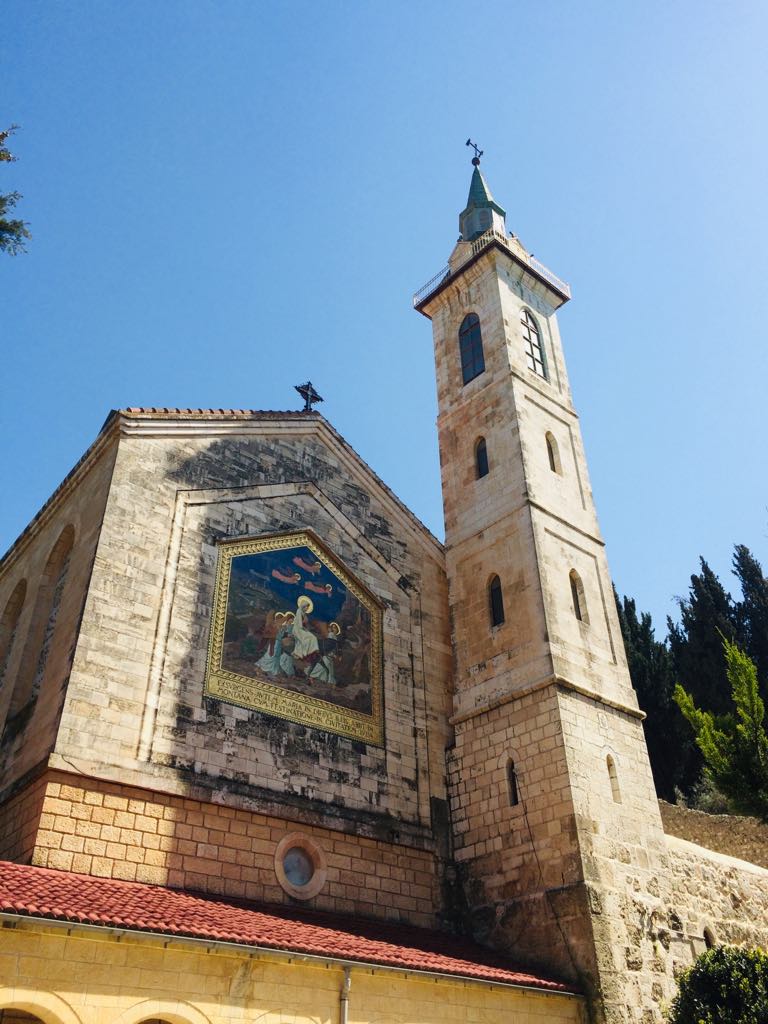
Photo by author, Church of St. John the Baptist at Ein-Karen, Israel (2019).
From the hand of God into the heart of God
Yesterday we reflected on how we have to allow ourselves to be “the hand of God”, to let Him do His work among us through our hands. Today in Zechariah’s Benedictus we find a movement from the hand of God to His very heart in Jesus Christ our Savior.
“In the tender compassion of our God the dawn from on high shall break upon us, to shine on those who dwell in darkness and the shadow of death, to guide our feet into the path of peace.”
Luke 1:78-79
After seeing the coming of the Christ in the birth of his son John, Zechariah now summarizes to us the very essence of Jesus our Savior, of God Himself: tender compassion or in the original Greek, splaghna or “tender mercy” of God.
It is not just compassion which is to suffer with us but at the same time be filled with tenderness that one is so moved to reach out, to do something by going down with the one suffering.
Like courage, mercy is a movement in the heart called misericordia in Spanish from the Latin mittere, meaning to be moved, to be stirred. It is something dynamic, not static. It is a deep feeling that moves toward someone in pain and suffering. An identification of Jesus with every person going through so much hardships and sufferings in life.
Zechariah’s heart is no longer hardened with negativity and cynicism – it was so stirred by God that he mentioned His tender mercy or compassion because he had personally felt it as he recovered his voice and speech. With the birth of John, he now believes that God’s love for his suffering people is deep and personal. As we say in Filipino, “tagos o sagad sa buto” which may be translated as “through and through”.
And that is perhaps one of the things we sorely miss so much these days from everyone, tenderness. The tender compassion, tender mercy of Jesus. Recall how during His ministry all four evangelists would narrate how Jesus was moved with pity and compassion to the people who were lost, tired and sick “like sheep without a shepherd” that no matter how tired He may be, He would always find time to teach them, heal their sick, and even feed them.
That is the mercy of God that Jesus had brought forth to us in His coming, experienced by Zechariah himself that he could foresee its coming at the birth of John.
Photo by author, Advent Week IV, 20 December 2020.
We priests and religious pray the Benedictus in our morning prayer called lauds (Latin for praises). It is so fitting because at the start of each day, that must be the one thing clear with us always – that the Lord is come to save us, to forgive us, to love us.
One saying I have always loved mentioning in my talks to people came from an anonymous writer I found on the table of a good friend long before I became a priest. It says: “If you have love in your heart, you have been blessed by god; if you have been loved, you have been touched by God.”
That is the Benedictus, the song of every faithful disciple of Jesus introducing His coming, His birth. So many people have forgotten God, do not know God, refused to believe in God because many among us He had lavishly loved have refused to share His love with others.
Have a blessed and meaningful Christmas! Thank you for following our reflections. Share it if you have been blessed.
The Lord Is My Chef Simbang Gabi Recipe-8 for the Soul
by Fr. Nicanor F. Lalog II
Wednesday, Advent Week IV, 23 December 2020
Malachi 3:1-4, 23-24     >><)))*>   +   <*(((><<     Luke 1:57-66
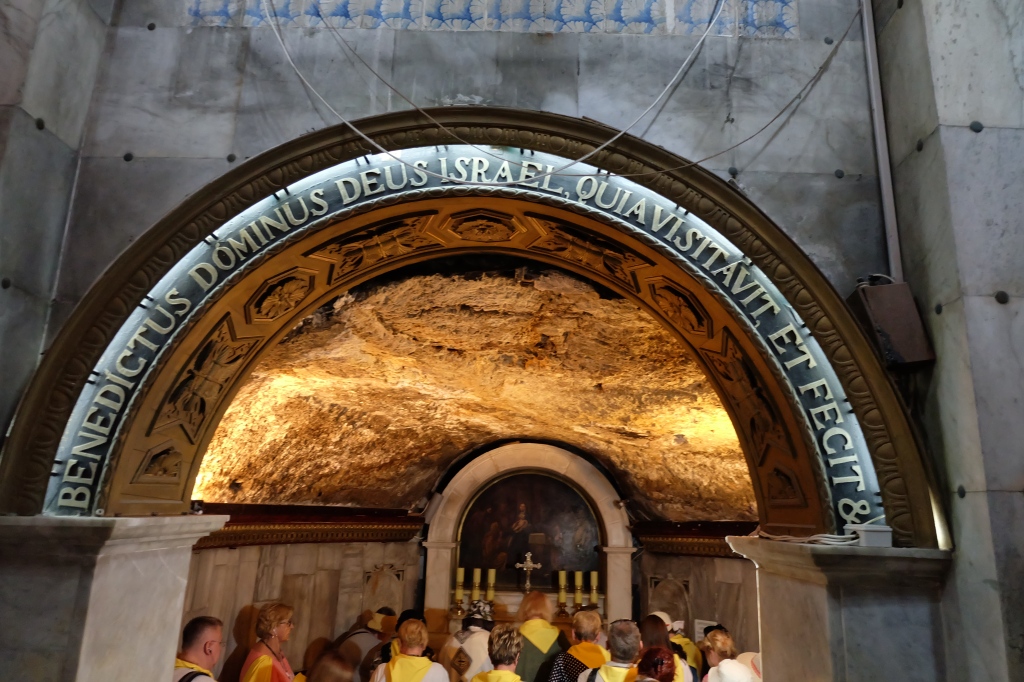
Photo by author of the entrance to the site believed to be where the Lord’s Precursor was born below the side altar of the Church of St. John the Baptist in Ein Karen, Israel (2019).
We are almost into the completion of our nine-day novena for Christmas as we heard today the story of the birth of the Lord’s Precursor, John the Baptist. It is a story narrated so simple by Luke but filled with beautiful meanings specially for us today in this time of the pandemic.
First thing we see is how Zechariah’s speech was restored upon declaring the name of his son is “John”:
He asked for a tablet and wrote, “John is his name,” and all were amazed. Immediately his mouth was opened, his tongue freed, and he spoke blessing God.
Luke 1:63-64
Luke did not tell us what kind of praise did Zechariah speak about God when his speech was restored but here we find that basic truth in our lives that for every blessing we receive from the Lord, right away – immediately! – we must praise and thank God first.
Moreover, this scene shows us the good effect of the “imposed quarantine” on Zechariah when he was made deaf and speechless after doubting God’s gift of a child to him and his wife Elizabeth during the annunciation by the angel while incensing the Holy of holies in Jerusalem.
God restored the power of Zechariah to speak again and greatly renewed him that this time, he had become obedient to the Father to his plan. In a sense, Zechariah was not merely freed to speak again but most of all, he was freed to believe and trust in God again!
As we have reflected last Saturday morning, Advent is quarantine. So many times in life, we have to step backwards, be silent to listen to God and just let Him do His work in us! Sometimes we think of so many things that are not really necessary and has nothing to do with God’s plans or work. With Zechariah able to speak now, he shows us that in the exercise of our powers we must first get in touch with God how to use His gifts to us.
This we shall see in our second point: allowing God to use us as His hand.
Photo by author, dome of the Church of St. John the Baptist at Ein-Karen, 2019.
Then fear came upon all their neighbors, and all these matters were discussed throughout the hill country of Judea. All who heard these things took them to heart, saying, “What, then, will this child be?” For surely the hand of the Lord was with him.
Luke 1:65-66
From rejoicing at the birth of Zechariah and Elizabeth’s son, their neighbors now moved to being amazed when the child is named “John” that coincided with the restoration of his father’s ability to speak.
Luke tells us how it was such a big thing, maybe so “viral” and “trending” like today that everybody was discussing it. They must have felt God so near, almost there that Luke used an Old Testament expression, “For surely the hand of the Lord was with him”.
It is a beautiful expression indicating power too, just like the ability to speak.
Our hands are so powerful that we are able to move and do so many things because of these.
To say “the hand of the Lord was with him” is to portray the image of God’s immense power, His omnipotence, of being able to do whatever He deems needed to life on earth.
In the Old Testament when Elijah was being pursued by the soldiers of Queen Jezebel after he had shamed the priests of baal for failing to light a pile of firewood for worship, the prophet escaped by running beyond human ability considering his old age because “the hand of the Lord was on Elijah” (1 Kgs. 18:46).
Sometimes, the “hand of the Lord” can be scary as it means judgment or punishment from God like when King David disobeyed God when he ordered a census of Israel to find out how many men can fight in their wars, doubting the power of the Lord. David was given with three options for his punishment by the seer Gad: a natural disaster or a victory by his enemies, or a time of God’s judgment. David chose the third option, saying “I am i dire straits. But I prefer to fall into the hand of the Lord, whose mercy is very great, than into the hands of men” (1Chronicles 13:21).
Photo by author, Chapel of the Holy Family, Sacred Heart Spirituality Center in Novaliches, QC (2014).
The late Jaime Cardinal Sin of Manila used to tell of the story about the hand of God: he said sometimes, the hand of God would “spank” or hit us with pains and trials in life to discipline us and make us strong; sometimes, the same hand of God would caress and soothe our tired bodies or give us that proverbial pat on the shoulder to affirm us. But what is most important to remember according to Cardinal Sin is the fact that whether we are being disciplined or touched by the hand of God, it is always loving and merciful, most of all grace filled.
The recent news of that trigger happy cop who brutally shot and killed Sonia and her son Antonio in Tarlac recently is a reminder to us all most especially this Christmas in the time of pandemic, of the need for us to let the hand of God take control of our lives, guide us to life through more patience, love, kindness, and understanding.
It seems that so often, whenever we let our hands do everything, they always go out of control like our mouth and lips that lead us to more disasters and even deaths.
Beginning this Christmas, may the hand of God lead us back to Him and with each other.
Let us imitate the praying hands, of two hands touching each other but always creating a space between. That space is for Jesus born in Bethlehem 2000 years ago, asking us everyday to take Him into our hands to care for Him, to protect Him through one another.
The Lord is My Chef Simbang Gabi Recipe-4 for the Soul
by Fr. Nicanor F. Lalog II
Saturday, Advent Week III, 19 December 2020
Judges 13:2-7, 24-25     <*(((><<   +   >><)))*>     Luke 1:5-25
Photo by author of our altar after a “private Mass” at the height of the lockdown last summer when public Masses were suspended.
I just realized the other day how fast really time flies after seeing photos of some of the couples I have married early this year now happily cuddling their babies… It did hit me hard that we have been in quarantine for nine months already, enough time to conceive and deliver a baby!
It sounds funny but it is the reality showing us how the birth of every child is a milestone not only to the parents but even to everyone and to history in general. We shall wait until next year to find out if there was a big increase in babies born this 2020 due to the long imposition of lockdowns and the quarantine we are into.
It is interesting to know that “quarantine” was actually borrowed from our Catholic practice of Lent, the 40 days of preparation for Easter called Quadragesima or Quaresma, from the Spanish word for forty.
When plagues became so common in Europe with devastating effects even before the middle ages, officials in the port of Venice in Italy ordered all incoming ships to spend “quaranta giorni” or 40 days of being moored first before entry to ensure they carry no plagues. Quarantine had always meant a period of time until lately it had also referred to a place or holding area as in “quaratnine area” to cleanse and disinfect people, animals, plants and things.
Advent 2019.
Its concept of spending days for purification had always been in our Judaeo-Christian traditions dating back to the Old Testament when the prophets of God would go to mountains and desert to meet Him who were later emulated by holy people including John the Baptist, Jesus, monks and hermits.
The Church imitated that practice that led to our Seasons of Lent and Advent. In fact, Advent used to be as long as Lent in duration, starting a day after the Martin Mass, the feast of St. Martin of Tours on November 11 but was later reduced to four Sundays to distinguish it from Lent that is meant to be more serious in preparation for Holy Week and Easter.
Now you see, my dear Reader, how interesting it is this year 2020 when we actually went back to our old practices of Lent, and now Advent in truly preparing for the Lord’s coming going through the quarantine.
Going back now to our gospel which is from Luke, we have heard how Zechariah doubted the good news he and Elizabeth would finally have a son after so many years of praying to God. For that, the angel Gabriel chastised Zechariah and made him speechless that people waiting outside the temple were amazed when he emerged from the Holy of holies unable to speak.
Then, when his (Zechariah) days of ministry were completed, he went home. After this time his wife Elizabeth conceived, and she went into seclusion for five months, saying, “So has the Lord done for me at a time when he has seen fit to take away my disgrace before others.”
Luke 1:23-25
Photo by author, Church of the Visitation at Ein Karem (2017) where Elizabeth and Zechariah had a summer residence where they stayed when Elizabeth went into seclusion after getting pregnant with John.
Opening our selves to God and others
I find our gospel today so timely: Zechariah went home while his wife Elizabeth went into seclusion. They went into an Advent preparation for their son John the Baptist. They both went into a quarantine but not for the same reason: it was imposed on Zechariah while Elizabeth went into it voluntarily.
To lose one’s voice is to lose power and ability to lead. Zechariah was forced into silence in order to meditate and reflect more on the good news he had received from the angel. He was forced to go into silence to listen more to his true self, to others and to God to find new perspectives in life. As a priest, he must have been much sought after in their town for his wisdom and intelligence. Now that he is speechless, Zechariah was confined inside his home, to his very self to listen and most of all, to renew himself in God.
On the other hand, Luke shows us how Elizabeth seem to know better than her husband in dealing with their unusual situation by going into seclusion for five months. Observe how Elizabeth right away prayed to thank God as she meditated His mystery in “taking away her disgrace before others”. Remember that during that time, the only reason why a woman marries was to bear a child; failure to have a baby was seen as an embarrassment, almost like a curse or punishment from God.
In the first reading, we have seen this reality too but unlike Zechariah, the wife of Manoah believed the angel from God who told her she would bear a child despite her old age and being a barren. She was also instructed to go through a quarantine during her pregnancy when she was instructed to “be careful to take no wine or strong drink and to eat nothing unclean” (Judges 13:4). Furthermore, she was told not to cut the hair of her son to be born and named Samson “for this boy is to be consecrated to God… who will begin the deliverance of Israel from the power of the Philistines” (Judges 13:5).
Here we find the concept of quarantine, of separation from the usual things and people because of a special mission from God. If we can just truly appreciate the rich lessons we can learn from this pandemic, how wonderful to see that we are being quarantined like Elizabeth and wife of Manoah because God is preparing us for something greater.
From these stories of two old, barren women bearing a child we find Advent as the season that reminds us God comes to us hidden in our very time and space when we need to go to quarantine to create a space within us where we can be silent and be transformed as we listen more to ourselves, to others, and to God.
How sad that in our 24/7 world where we have made nighttime like daytime earning money to have everything, we have become more empty, more alienated, more sad and incomplete. Quarantine is essentially a sabbath when we are supposed to rest and be breathed on by the Lord with His Spirit, exactly what we like Zechariah needed so much
Photo by Ms. Jonna S. De Guzman, 06 December 2020.
Christmas negativity or Nativity?
One of the blogs I have been following for the past one and a half years is by a young Catholic lady in New York who is so full of enthusiasm in sharing Jesus in her writings as well as in the tasty recipes she dishes out weekly. Last week I found her blog so interesting, titled: “Christmas — negativity or Nativity?” (https://beautybeyondbones.com/2020/12/10/christmas-negativity-or-nativity/).
How sad that we are missing a very rare opportunity today during this pandemic not only to spiritually prepare for Christmas but to truly understand the things going on around us and in our very lives amid this pandemic. I have always believed COVID-19 has a spiritual dimension that we must face and address lest it happens all over again despite the discovery of a vaccine.
And what is that spiritual ailment? Too much negativities like Zechariah!
Imagine the very rare opportunity to incense the Holy of holies of the Jerusalem temple once a year with many other priests present and Zechariah was “chosen by lot to enter the sanctuary of the Lord to burn incense” (Lk.1:9)? That in itself could have been a great sign for him that something good may be happening.
Then, while inside the sanctuary of the Lord, an angel appeared to him with the good news, his news of a lifetime, something he and Elizabeth must have been praying all their lives: “Do not be afraid, Zechariah, because your prayer has been heard. Your wife Elizabeth shall bear you a son, and you shall name him John (Lk.1:13).”
And we really wonder why did he doubt the angel’s good news? Did he not see it coming or at least, was it not the only thing he was always wishing for?
It is really so unthinkable. “Wow, ang labo naman” as teenagers would say.
What happened to Zechariah could also be going on to many among us these days that even if we have been praying and celebrating the Mass weekly or even daily with all of our professed faith, hope and love in God, we have also grown accustomed to the darkness of this pandemic with all its fears that unconsciously, we sully ourselves with many negativities, even cynicism and pessimism as if we would never make into better days.
Photo by Ms. Jonna S. De Guzman, 06 December 2020.
Sometimes it happens in our lives that our prayers have become mechanical and worst, our hearts have grown apart from God that we have become so resigned to our plight or predicament that we just pray and believe in God because we have to.
Here we need the creative courage of St. Joseph we reflected yesterday by keeping our love alive.
In telling us the story of the coming of John first before Jesus Christ, Luke is telling us to be ready for greater things about to happen with us if we become silent, take a few steps backwards and rest in the Lord to experience his presence in us and among us.
Whenever I feel low with my life, I just think of my other brother priests striving in the Lord’s vineyard or think of the cops and soldiers and simple folks who work so hard because they believe there is meaning in this life.
Let us drive away all negativities and focus more on the Nativity! Believe always in God and most of all, remain in love with Him, that He has plans for us and mission to make Him known into the world that has forgotten Him.
The fact that after almost a year of pandemic there are still so many women anywhere in the world delivering a baby every second, every minute means this planet is filled with life, is suffused in life that comes only from Life Himself, Jesus Christ.
Each one of us is a “John” – a grace of God, a reminder that Jesus Christ had come, will come again, most of all, is come! Cheer up, energize the sagging spirits of our many brothers and sisters who have become so negative this Christmas. Let them see the Nativity in our enthusiasm to live and to celebrate Christmas meaningfully despite the pandemic.
The Lord Is My Chef Simbang Gabi Recipe-2 for the Soul
by Fr. Nicanor F. Lalog II
Thursday, Advent Week III, 17 December 2020
Genesis 49:2, 8-10     >><)))*> + >><)))*> + >><)))*>     Matthew 1:1-17
Photo by author of sun beginning to shine over the mountain ranges Sinai Desert in Egypt, May 2019.
Yesterday we started our reflection with an old Christmas song, Do You Hear What I Hear? by Bing Crosby; today, it is Andy Williams turn to serenade us with the opening lines to the theme of the 1970 film Love Story:
Where do I begin
To tell the story of how great a love can be
The sweet love story that is older than the sea
The simple truth about the love she brings to me
Where do I start
No. I did not see that movie now a classic but I was old enough to remember its theme that became popular even for some more years during the 70’s that made Andy Williams so well-known when we were in elementary school. His song came to my mind as I grappled – which usually happened – on how to begin this reflection.
Where do I begin or how shall I begin? is one of our most common question in almost anything we start doing or telling because beginning any undertaking is always difficult. Experts have tackled it like Stephen Covey telling us to “begin with the end in sight” while Simon Sinek insists we always “start with why”.
Every beginning – like a homily or a speech, a business venture, or even an exercise program – means so much as it gives us a gist of where it is leading to, of what is going to happen.
The evangelists also wrestled with the same issue and they all have their own style in starting their gospel account but nothing beats Matthew in his most unique manner by beginning with a series of names in the genealogy of Jesus Christ. According to the late American biblical scholar Fr. Raymond Brown, he was willing to bet that if anyone is asked to tell the story of Jesus to a non-believer, no one will ever imitate Matthew by starting with Abraham begetting Isaac, Isaac is the father of…
The book of the genealogy of Jesus Christ, the son of David, the son of Abraham. Abraham became the father of Isaac, Isaac the father of Jacob, Jacob the father of Judah and his brothers. Judah became the father of Perez and Zerah, whose mother was Tamar…
Matthew 1:1-3
Photo by author of an oasis in the Dead Sea region of Israel, May 2017.
God the Prime Mover, the Beginning of everything
Today we shift our focus in our Advent preparations to the first coming of Jesus Christ when he was born in Bethlehem more than 2000 years ago. Strictly speaking, the Church’s official countdown to Christmas begins only today when all our weekday readings from December 17-24 are focused on how the birth of Jesus happened.
And what a way to start this series with the gospel by Matthew that begins with “The book of the genealogy of Jesus Christ, the son of David, the son of Abraham”! The Greek is more literal in stating it as “The book of the genesis of Jesus Christ, the son of David, the son of Abraham.”
That makes Matthew’s gospel so unique by starting it with names that all sound so weird to us today. So, what’s with the names? Of course, a name is everything!
Companies and organizations pay huge amounts of money for their trademarks and logos like Coca-Cola, IBM, and Apple. Some corporate or product names have in fact entered our vocabulary like Xerox for copiers, Colgate for toothpaste and Frigidaire for refrigerators.
Every name carries a story, a meaning, a mission, even a destiny. How sad that we Filipinos rarely take this seriously especially in giving names to children that often becomes a joke or a disaster, or both. But to foreigners especially the Jewish people, a name is more than an identification but also one’s mission.
When we examine each name in Matthew’s genealogy of Jesus, we discover it is just like our own family trees with some men and women not really that exceptional, even a shame and an embarrassment to the family. Behind each name we have heard is an imperfect person -except for Joseph and Mary – with so many sins and mistakes.
And that is the good news of today: God does not call the qualified but qualifies His call.
Everything begins with God – our lives and coming into being. In all eternity, God perfectly knows everything that will happen to us and yet He chose to believe in us, despite our imperfections and being prone to sin that He sent us to this world with a mission to make His Son our Lord Jesus come into the world through us, just like his ancestors.
Photo by author, Mt. St. Paul Spirituality Center, La Trinidad, Benguet, January 2020.
From the imperfect “house of King David” to Jesus Christ’s eternal kingdom
Let us take the first name mentioned by Matthew in starting his gospel, David who makes this genealogy so interesting. In fact, it was on him the whole genealogy is structured by Matthew. And we all know how imperfect was David, of how he had sinned when he took Bathsheba the wife of army officer Uriah whom he ordered placed in a position that got him killed in a battle.
But that is how God works – so unlike us! God is a God of surprises who works so unpredictably unlike us humans. Imagine after all the sex scandals with Bathsheba, God still promised an eternal kingdom coming from the house of David, that of Jesus Christ: “Your house and your kingdom shall endure forever before me; your throne shall stand firm forever” (2 Sam.7:16, first reading on Sunday and morning of Thursday).
At the end of his genealogy of Jesus, Matthew added this interesting note:
Thus the total number of of generations from Abraham to David is fourteen generations; from David to the Babylonian exile, fourteen generations; from the Babylonian exile to the Christ, fourteen generations.
Matthew 1:17
Matthew is up to something here! Why build around the history of Israel and genealogy of Jesus Christ around a person who had gravely sinned against God and others?
Most likely. Remember how Matthew experienced God’s mercy and forgiveness when Jesus came to call him while at his tax collection booth and he immediately stood and left everything behind to follow the Lord. Matthew knew well that God is not like humans who box people and label them like things.
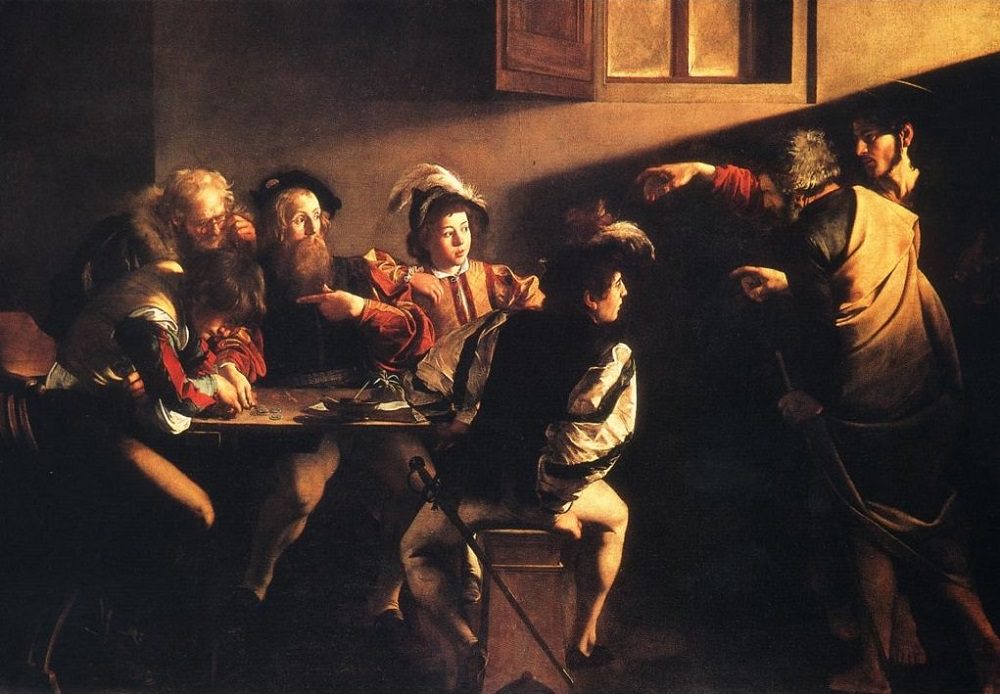
Caravaggio’s famous painting of the call of Matthew by Jesus from wikicommons.org.
In assembling to us three sets of fourteen generations that traced the coming of Jesus Christ from Abraham structured around David, Matthew shows us how God worked through this sinful man a series of new “beginnings” in life, both in grace and in sin. See the genealogy rising from Abraham to David, then its decline and descent from Solomon to the Babylonian Exile, and then rising again to the advent of Jesus.
Now try to imagine how great and loving is our God and Father who chose to believe in David, a person just like us with many imperfections and prone to sins! See His power and holiness in setting any sinful situation for new beginnings of grace and blessings.
Sometimes,
God uses our occasions of sins
as new beginnings
of His grace and blessings.
One thing I have realized in life is that our most unforgettable moments happen either when we are nearest, or farthest away from God.
This is very amazing. Consider when are we closest to God? Most often that is when we were high and good, feeling blessed and loved, when healthy and successful that were ironically the times we rarely thought of God. We only remember those moments as our closest with God after being away in fact from Him!
And when are we farthest from God? Quickly we say when we were deep in sin, when lost, or when unloved and misunderstood.
Between these two moments, it is most often when we are farthest from God that is always most unforgettable, the ones we remember always, the ones that have left the deepest cut in us because those times in turn have become occasions for us to begin anew in God!
Like David. Or Matthew known before as Levi the tax collector.
Photo by author of the Lake of Galilee shortly after sunrise, May 2019.
That is how God sometimes would make it for us to begin anew in Him! See how at the first set of fourteen generations from Abraham to David, we find the whole history of Israel so close with God punctuated by Egypt and Exodus when their sins “turned” into their favor. In the second set of fourteen generations from Solomon to the Babylonian exile, the Israelites sank into their lowest point in history when led by their kings they turned away from God, worshipping idols. But, God did not abandon them as we see in the third set of fourteen generations when things got better as the Israelites returned to God and to their Promised Land reaching its high point in Jesus Christ’s birth.
God is the beginning of everything and even if we try to “end” with our many sins what He had began, He always finds ways to begin anew even when we are so far away from Him.
This is also the meaning of the Jacob’s choice for Judah over his other sons in being the tribe to continue his family line leading to the fulfillment of the Davidic lineage in Jesus Christ. It was from Judah came the name of their religion “Judaism” even if Judah was not the best and holiest of Jacob’s sons. Joseph the Dreamer must have been the wisest choice as more suitable to have been blessed by their father or by God himself but, that is not the way of God.
By starting his gospel with the line “The book of the genealogy of Jesus Christ, the son of David, the son of Abraham”, Matthew shows us God’s total power and goodness as source and beginning of all good things who also has the last and final say in everything.
In the genealogy of Jesus, we are reminded that every day is a new beginning in God, right in our darkness and sin, in our sickness and pandemic. David like Judah may have sinned so great before God but His mercy and love proved greater than their sins that they were able to rise again to become better and holier in His grace.
That’s one great beginning we can start right here, right now in our Simbang Gabi! A blessed Thursday to you! Amen.
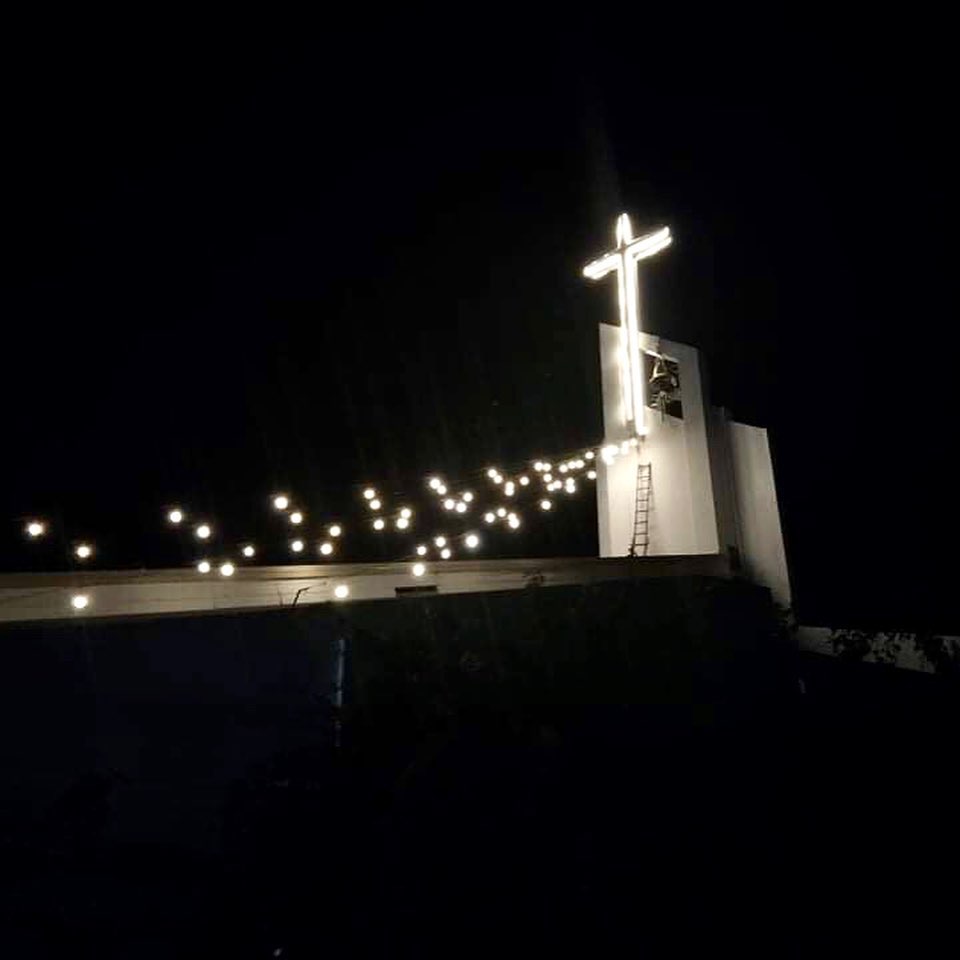
Photo by Marc Angelo Nicolas Carpio, our Parish at night, 29 November 2020.
The Lord Is My Chef Breakfast Recipe for the Soul by Fr. Nicanor F. Lalog II
Friday, Second Week of Advent, 11 December 2020
Isaiah 48:17-19     >><)))*> + >><)))*> + >><)))*>     Matthew 11:16-19
Photo by author, Advent 2019.
Forgive us, O Lord, for not being alert for your coming in our lives. Indeed, your words are so true!
Jesus said to the crowds: “To what shall I compare this generation? It is like children who sit in marketplaces and call to one another, ‘We played the flute for you, but you did not dance, we sang a dirge but you did not mourn.’ For John came neither eating nor drinking, and they said ‘He is possessed by a demon.’ The Son of Man came eating and drinking and they said, ‘Look, he is a glutton and a drunkard, a friend of tax collectors and sinners.’ But wisdom is vindicated by her works.”
Matthew 11:16-19
Being alert is more than being vigilant; it is being open to see and test everything, even take risks to verify whatever is at hand.
So many times, Lord, we are caught flat-footed not exerting any effort, even doing nothing, in being aware and conscious of your presence, of your coming.
Give us a healthy mistrust of our feelings and knowledge sometimes. May we try to listen in our hearts, to find where we are at peace for wherever there is peace, there you are found.
Being alert is also listening intently to you, O God, following your commands that lead us to fulfillment and fullness in life. So often, we find your voice too simple even repetitive without realizing your words are always borne out of love. Like the Israelites thrown into exile, we would rather follow the strange gods than You without noticing, without being alert, of the many dangers we are being led to.
Heighten our awareness of your presence in us, in others and in the things happening around us. Amen.
Quiet Storm by Fr. Nicanor F. Lalog II on the occasion of
the First Year Anniversary of Ordination
to the Priesthood of Rev. Fr. Howard Tarrayo
Cathedral-Basilica of the Immaculate Conception
Malolos City, 10 December 2020
Photo by author of Lake Tiberias (Galilee) at sunrise, May 2019.
This preaching should have been last year.
Fr. Howard was the very first person to have invited me to be his predicador at his Primera Missa Solemne while still a seminarian — and that is why I think he was delayed for almost two years before getting ordained exactly a year ago today!
That gospel scene you have chosen for this occasion at the shores of Lake Tiberias is something that happens everyday in our lives as priests, from day one of ordination way into our old age in with Jesus asking us, like, “Simon, son of Jonah, do you love Me?” (Jn.21:17)
Priesthood is essentially loving Jesus Christ first of all. That is why Jesus had to ask Simon Peter thrice with the same question, “Do you love me?” because we have to love him first before we can truly follow him.
When the priesthood or the Call becomes the very core and center of our lives and not Jesus our Caller, sooner or later, we replace Christ that we become the Lord and Master in our parish, in our ministry.
Today, we are celebrating Fr. Howard your remaining in love with Jesus, of loving Him first, a year after your ordination and we pray that every year, it will always be the very reason you celebrate your ordination anniversary.
When they had finished breakfast,
Jesus said to Simon Peter,
"Simon, son of John, do you love me
more than these?"
He said to him, "Yes, Lord, you know
that I love you."
He said to him, "Feed my lambs."
(John 21:15)
Loving Jesus first is growing deeper in our prayer life in him. People who love are always together; they have a ritual or a schedule that like the fox telling the Little Prince, an hour before their appointed meeting, his heart is already beating for him, excited with his presence that he is coming.
Photo by author, parish sacristy, 05 December 2020.
It is my hope that during this pandemic we priests have rediscovered the value and beauty of having that seminary schedule during our formation years that must have ingrained in us discipline. Like schedules, prayer is a discipline. Love goes through a process, it matures, becomes more disciplined. That is why a disciple is not only a follower but also a disciplined one, a true lover!
It is good to bond with brother priests and friends and family once in a while but not every night or every other night that we have practically made every Starbucks outlet a parish or even a diocese where 1/3 of the clergy get together religiously (pun intended)! Any loving husband would always be home at night to be with his wife. The same is true with every priest — be home at night in your parish to be with Jesus at prayer. He awaits you, He misses you!
Whenever people ask me what is the most difficult part of priesthood, I always tell them it is praying every day. And I mean real prayer when we have to strip ourselves naked before God in our truest selves. Kaya sabihin man nila walanghiya o salvahe ang sino mang pari, pero kung araw-araw lalo na sa gabi siya ay nananalangin, mabuting pari pa rin siya kasi maski minsan, nagiging totoo siya sa sarili at sa Diyos. And masama kapag hindi na siya nagdarasal nang tunay, iyon ang simula ng pagkaligaw ng sino mang pari.
Whatever is the fruit of our prayer, that is our homily and that is when all tests happen: the moment we deliver a homily, people measure us if we “walk our talk”. The priest is the homily himself. When a priest stops celebrating Mass, most especially refuses to give homilies, maybe Father is no longer praying. Baka may iba na siyang mahal kesa kay Jesus.
Remaining in love with Jesus is being a man of prayer.
He then said to him a second time,
"Simon, son of John, do you love me?"
He said to him,
"Yes, Lord, you know that I love you."
He said to him, "Tend my sheep."
(John 21:16)
Loving Jesus first means keeping in mind that everything is a gift from Jesus, that whatever we have, whatever we share, whether material or spiritual things, is always from Christ. We have nothing except Him. Even if sometimes we feel bad in our ministry like going on a sick call when we are so tired or blessing a dead cat or hearing confessions of a parishioner who have maligned you, just do it! Whatever you give them, it is not yours but Jesus’!
Photo by author, parish sacristy, 05 December 2020.
Huwag maging maramot, Father. Maging mapagmahal, matulunging, maunawain, mapagpasensiya, mapagbigay, mapagpatawad — kasi ano mang pagmamahal, tulong, pang-unawa, pagpapasensiya, kapatawaran o ano mang ating maibibigay kanino man ay hindi naman talagang atin kungdi kay Kristo at Kristo pa rin!
Here lies the danger when we are so focused with our call or vocation when we feel the one who must be understood and cared for — we turn the ones being served instead of the one serving! Kasi feeling natin magaling tayo kaya tayo naging pari! Para tayong artista at politiko na “FGLG”: feeling guapo, looking gago. Parang lahat may utang na loob sa atin. Kaya kung magmayabang tayo: ako nagpagawa niyan, ako nakaisip niyan, ako, ako, ako…. Nasaan si Jesus? Nandun sa tabernakulo, nabuburo.
I wish to share with you a prayer I have written during our retreat with a Cenacle sister at the Theologate when we were in third year: “Lord Jesus Christ, you have given me with so much and I have given so little; teach me to give more of my self and more of You to others. Amen.”
He said to him a third time,
"Simon, son of John, do you love me?"
Peter was distressed that he had said to him
a third time, "Do you love me?" and he said to him,
"Lord, you know everything; you know that I love you."
Jesus said to him, "Feed my sheep."
And when he had said this, he said to him,
"Follow me."
(John 21:17, 19)
Father Howard, we have learned in Holy Matrimony that a man and a woman marries not only each other but also their families; the same is very true in priesthood. Loving Jesus first means the priest’s family must love Jesus more than their priest son and Kuya Pari or Tito Pari.
Profession of faith by Rev. Fr. Howard with his mother and sister before Bishop Dennis, 10 December 2019.
Nanay Nelia and Mary Grace… kung mahal ninyo si Father Howard, mas mahalin ninyo si Jesus. Ang pagmamahal ng pamilya sa kanilang anak o kapatid na pari ay naroon din sa kanilang higit na pagmamahal kay Jesus. Kapag si Jesus ang minahal ninyo una at higit sa lahat katulad naming mga pari, manalig kayo lalong mamahalin ni Jesus si Father. Hindi siya pababayaan.
We are told that after this third question by Jesus “Do you love me?”, Simon Peter was distressed because he remembered how he had denied the Lord three times after His arrest on Holy Thursday evening.
What can be more distressing especially at this time of the pandemic for us priests than be caught between our family and ministry?
You were still preparing for your Diaconal ordination last year, Father Howard when your mother had a stroke, then followed by the death of your father. It must have been so difficult, so painful. But looking back, did God ever forget you, Father?
Ate Nelia and Mary Grace, give Father Howard to Jesus. Huwag ninyo siyang hahanapan. Magkusa na kayo sa inyong sarili kasi iba piniling buhay ni Father. And I address this to every parent, brother and sister, relatives and friends of Fr. Howard and every priest. Huwag ninyo siyang hanapan. Kung mayroon man kayong hahanapin palagi kay Father Howard, iyon si Jesus. Always Jesus, only Jesus.
There is still something more “distressing” for us priests with our family that I wish to share with you, Father Howard. When Jesus told us to leave our father and mother, brothers and sisters behind to follow Him, he never meant to turn our backs from them. We still have to love them but more on a different level as silent witnesses of Christ.
The most difficult part of our ministry is ministering to our own family with all our biases and past histories before us. We are so familiar with each other that inevitably, these would surely show on many occasions when least expected. Be on guard, for the pendulum swings to extremes when we sometimes become so lax or so harsh with them.
Most “distressing” is when Jesus asks us “Do you love me?” while we continue to hold on to the pains and hurts, frustrations and disappointments our families have inflicted on us.
It is in our own families when we are asked to be more like St. Francis of Assisi, of preaching the gospel, speaking only when necessary.
Father Howard, be the first to understand and to embrace the strains and the past in your family; Jesus called you despite your imperfect family to make you perfect and eventually, through your life of total love for Him, perfect your family too.
It is very difficult to love, most especially our Lord Jesus, Father Howard. How I wished you have never asked me to do this because so many times I have failed Jesus. And continues to fail Him, not loving him that much.
But that is exactly what happened at the shores of Tiberias that morning after breakfast when Jesus asked Simon Peter three times, “Do you love me?”
Don’t worry, Father. Jesus knows everything how much we love Him. You are never alone with Jesus and us. Let us keep saying “yes, Jesus, I love you” with our brother priests every day, specially during anniversaries like this. Amen.
The Lord Is My Chef Breakfast Recipe for the Soul by Fr. Nicanor F. Lalog II
Monday, Advent Week-II, 07 December 2020
Isaiah 35:1-10     >><)))*>  >><)))*>  >><)))*>     Luke 5:17-26
Photo by author, sacristy altar, 05 December 2020.
Your words today, O God are so uplifting, evoking in us springtime when everything is bursting into new life making this Season of Advent a prelude to Easter. And rightly so!
The desert and the parched land will exult; the steppe will rejoice and bloom. They will bloom with abundant flowers, and rejoice with joyful song. Then will the eyes of the blind be opened, ears of the deaf be cleared; then will the lame leap like a stag, the tongue of the dumb will sing. Streams will burst forth in the desert, and rivers in the steppe. The burning sands will become pools, and the thirsty ground, springs of water.
Isaiah 35:1-2, 5-7
But for us to see life bursting forth around us, let us in our selves first desire life, persevere our healing, and keep your gifts of mercy and forgiveness like the men who lowered through the roof a paralyzed man on a stretcher before Jesus while preaching inside a packed house.
Strengthen us to go out and find ways in meeting you, Jesus, like those men.
Forgive us for the many occasions of cynicisms and indifference, as well as arrogance and pride like the scribes and Pharisees who questioned your authority to forgive sins.
As we have reflected yesterday, Advent is a two-way street: you always come, Lord Jesus but we must also come to meet you. So many times you have come to our lives but we never met you, never experienced you nor even felt you because we have always been full of ourselves, of our sins, and of so many other people and things.
Keep us one with you always, Jesus – in your cross, in your humility, in your love.
Like St. Ambrose your great Bishop of Milan, may we lead more souls discover you, Jesus, and experience life anew like St. Augustine, his famous convert. Amen.