The Lord Is My Chef Daily Recipe for the Soul by Fr. Nicanor F. Lalog II
Friday, Week I, Year II in Ordinary Time, 14 January 2022
1 Samuel 8:4-7, 10-22   ><]]]]*> + <*[[[[><   Mark 2:1-12
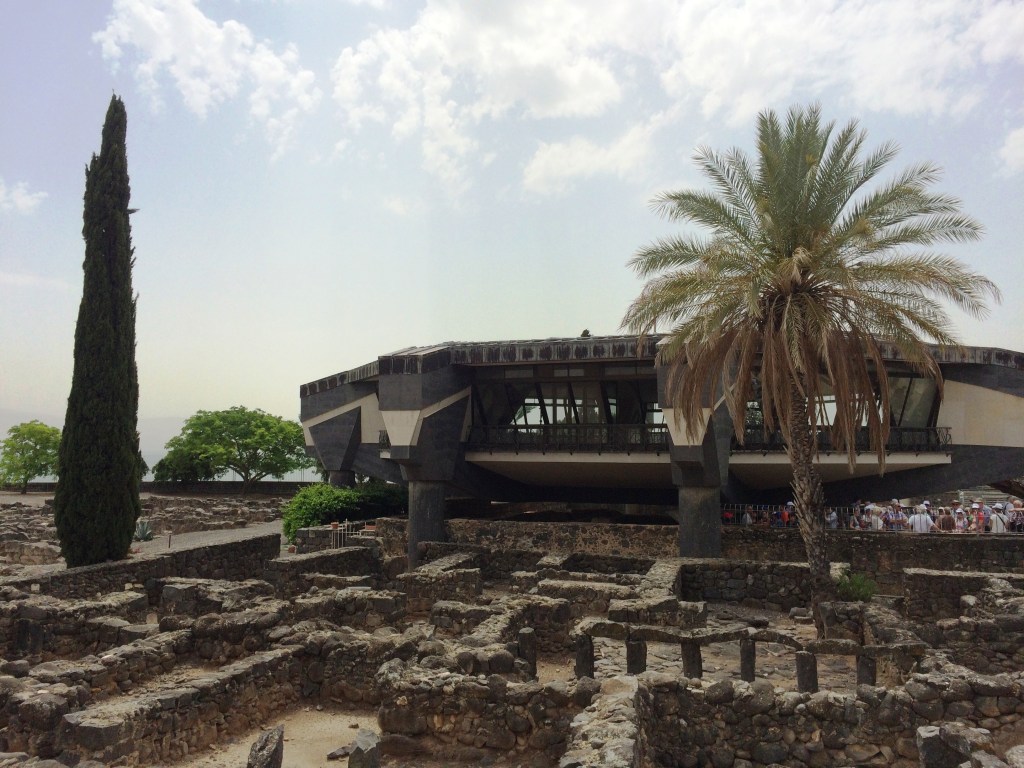
Photo by author, ruins at Capernaum where Jesus healed the paralytic, May 2017.
Today, O Lord, I remember
those days when I insisted on
what I wanted, without giving any
moment to dwell on your plans
and suggestions.
Today, dear God our Father,
your words clearly show us how
so apart are our thoughts and
your thoughts, of how wide and
encompassing at how you see
everything and everyone
compared to our very limited
and shallow perceptions that
are too little, hence, easier to insist on.
The people however, refused to listen to Samuel’s warning and said, “Not so! There must be a king over us. We, too, must be like other nations, with a king to rule us and to lead us in warfare and fight our battles.” When Samuel had listened to all the people had to say, he repeated it to the Lord, who then said to him, “Grant their request and appoint a king to rule them.”
1 Samuel 8:19-22
Widen our horizons to see
how you have made us in fact
different from others, so special and
beloved to be close to you and yet,
like those people to Samuel, we would
always insist to be just like others.
And the saddest part of belittling our
stature is how we also try to bring you
down to our own level:
Now some of the scribes were sitting there asking themselves, “Why does this man speak that way? He is blaspheming. Who but God alone can forgive sins?” Jesus immediately knew in his mind what they were thinking to themselves, so he said, “Why are you thinking such things in your hearts? Which is easier, to say to the paralytic, ‘Your sins are forgiven,’ or to say, ‘Rise, pick up your mat and walk?’ But that you may know that the Son of Man has authority to forgive sins on earth.” He said to the paralytic, “I say to you, rise, pick up your mat, and go home.”
Mark 2:6-11
Raise up our thoughts
and understanding, Lord Jesus!
Let us "level up" and "shift" to
your thoughts and the way you see
persons and situations that lead us
to claim our freedom from sins and
evil that have trapped us for so long
despite your victory since your rising
from the dead; open our eyes and our
hearts, Jesus, to see the new realities,
our restored dignity as beloved children
of the Father in you so that we stop
insisting with our little and unworthy
causes and demands.  Amen.
The Quiet Storm by Fr. Nick F. Lalog II, 10 January 2022
Photo by author, Ubihan Island, Meycauayan, 31 December 2021.
It is said that “life is a journey” but I have found through the years that as a journey, life is more of a direction than a destination. It is always easy to plot our life destination but upon reaching them, what do we do next?
If life is a journey that is more on destination, all we will be doing in life is keep on thinking of new places to visit and new goals to achieve until we ran out of destinations and we have nowhere else to go!
That is why life is more of a direction.
It does not mean we stop making plans or setting goals to reach; we just learn to be more open with the directions life is leading us into.
So often it can happen that while pursuing a goal or reaching a destination, we find many things and meet persons along the way who make us change directions in life for something better we never knew existed before.
Sometimes we discover while at the middle of a journey the many directions we have been seeing or noticing earlier that suddenly later make sense, opening new routes for us to take to something more fulfilling or clearer and better.
As we become open for directions in life, the more we become free to be our true selves, free to pursue what is best than be fixated and even held hostage by a previous goal or destination we have set before which we find no longer viable.
It is like using those travel apps Waze and Google Maps that give us the pertinent information like traffic conditions that help us choose the best routes to reach a specific destination.
However, as we travel, we find the apps taking us to longer routes or may even be misleading us because the data available are obsolete or the internet signal is unreliable. And so, we disregard the apps and try to find our way to our destination through directions provided by actual people and signages we check on the streets. Recall how the apps would continue to “speak” and even insist us to turn left or right as it is bent on reaching the destination. Travel apps are concerned merely with the place to reach, totally “unaware” of the person traveling.
That’s the problem with journeying more on destination when we forget persons that we miss the fun and adventures along the way.
When we journey more on directions, we are more concerned with persons and people that we experience fun and adventures, learning new things about peoples we meet or travel with as well as places we pass through on the way to our destination.
Sometimes, we have to scrap everything as the new directions lead us to more interesting places to visit.
In that way, we grow and mature as persons because we have become more free to be ourselves, more free to follow our inner voices within our hearts that lead us to far and exciting new places. In the process, we also discover our true friends and companions in life!
Ultimately, when we are free to follow directions than simply reach destinations, the more we also discover God – the most wonderful journey in life because ultimately he is our only destination and end.
God as a direction demands us a deepening of our faith, hope and love in him whose “invisible hands” guide us to persons and places and situations that seem to be unrelated at first but as we journey, we discover their many linkages, like tiny pieces of a mosaic creating a wonderful picture bigger than us.
God as a direction leads us to more freedom to discover life itself. That is the beauty of every new year: those twelve months of the calendar have no specific destinations but give us directions to follow by being sensitive to where God is leading us. It is totally senseless and useless to consult fortune-tellers for their fearless forecasts of what is going to happen for that will only make you “unfree” to seek and follow new directions in life. Besides, only God knows what will happen and that is why we follow his directions.
Above all, remember that the discovery of God is not the end of a journey but the beginning of a new one in him, with him, and through him. The journey never stops in Christ Jesus to God our Father in heaven. So, have life and be free to follow new directions from God this new year!
Keep traveling in Christ this 2022. Who knows, we might meet once or twice along the way. Amen.
The Lord Is My Chef Christmas Recipe for the Soul by Fr. Nicanor F. Lalog II
Sunday After January 1, Epiphany of the Lord, 02 January 2022
Isaiah 60:1-6 ><]]]'> Ephesians 3:2-3, 5-6 ><]]]'> Matthew 2:1-12
From Google.com.
Metro Manila’s main thoroughfare is called EDSA for Epifanio delos Santos Avenue. Its namesake is a famous scholar from the province of Rizal whose name means “manifestation” or “appearance” from the Greek epiphanes.
EDSA today may be considered as the epiphany of everything wrong in the country, from government inefficiency to people lacking in discipline and patriotism. Mention the word EDSA and you feel sad and gloomy all of a sudden.
But, the Epiphany we celebrate today brings joy and jubilation because it is the manifestation of the universal kingdom of Jesus Christ to the pagans symbolized by the magi from the East.
After the octave of Christmas on January 1, Epiphany reminds us on this joyous season of Christmas that while deep within each one of us is a natural search or inclination for God, it is actually God who looks for us and eventually finds us.
It is always a grace from God that we desire him and his grace is doubled even tripled when we are like the magi who search and follow God in his “epiphanies”!
When Jesus was born in Bethlehem of Judea, in the days of King Herod, behold, magi from the east arrived in Jerusalem, saying, “Where is the newborn king of the Jews? We saw his star at its rising and have come to do him homage.” When King Herod heard this, he was greatly troubled, and all Jerusalem with him.
Matthew 2:1-3
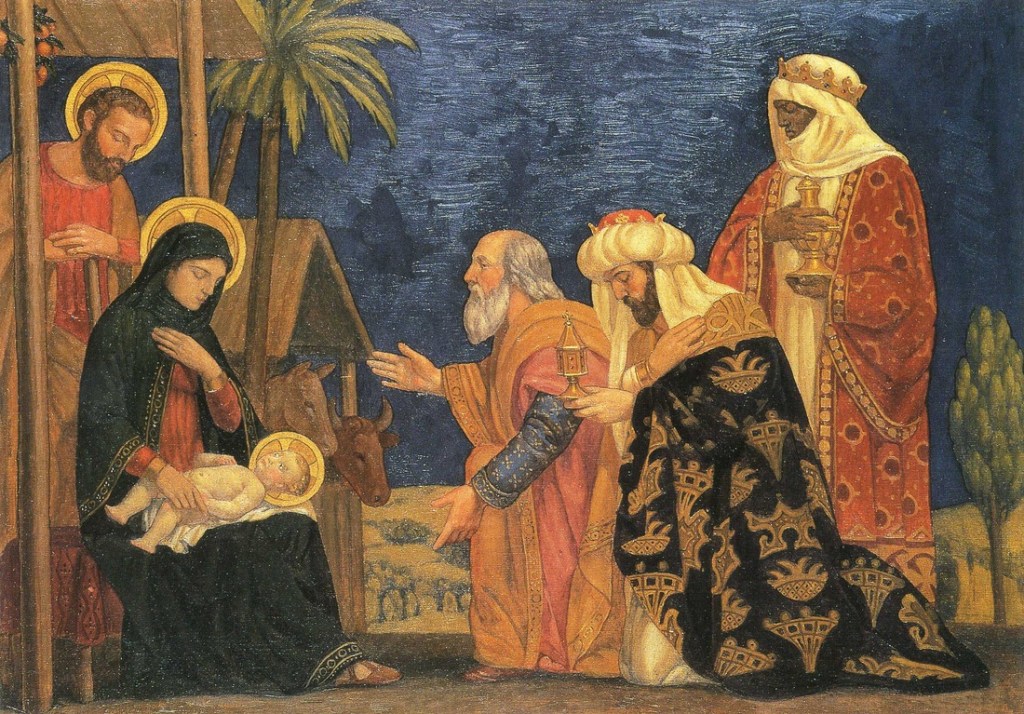
The Magi with baby Jesus, Mary and Joseph. Source: Henry Siddons Mowbray / Public domain
Nobody really knows for sure where and who were those magi who looked and came for the Child Jesus at Bethlehem. They are called kings as attested from our first reading, “Rise up in splendor! Your light has come, the glory of the Lord shines upon you… Nations shall walk by your light; kings by your shining radiance. Caravans of camels shall fill you, dromedaries from Midian and Ephah; all from Sheba shall come bearing gold and frankincense, and proclaiming the praises of the Lord” (Is.60:1, 4, 6).
From this part of Isaiah’s prophecy we also got that picture of the three wise men traveling as kings from the farthest parts of the world of that time riding on camels to show how everyone, from the most most powerful to the simplest of men and women of the world recognize Jesus as the King of Kings.
At the start of this new year 2022, our third year in this COVID-19 pandemic, we are invited to be wise like the magi to search for that Bethlehem where we could find rest and comfort, solace and consolation in the newborn king Jesus Christ. It takes a wise person to search for Jesus – and a wiser person to lead others to Him!
The Epiphany of the Lord reminds us that Christ came to the world to be the fulfillment of everyone and He had become human like us in everything except sin so we can find Him easily right within us, there in our hearts where he is born everyday, where he dwells.
Every new year, every day is a new beginning in Jesus, a day of his epiphany leading us to him. The wise men coming from the East where the sun rises show us Epiphany as a new beginning in our lives, representing our inner journey in life to find and follow Jesus Christ.
From Google.com.
It is said life is a journey; but, as a journey, life is more of a direction than a destination. So often in life, it is really the trip that matters most, the people we journey with as companions that make our life so meanignful.
What matters most in life is we keep on following Jesus Christ our light, our star. That is direction, where He is leading us. It never stops. We just keep on following Him until we reach our final destination in heaven for we are all “coheirs, members of the same body, and copartners in the promise in Christ Jesus through the gospel” (Eph. 3:6).
This direction we have to follow in life never stops for the discovery of God is not the end but the beginning of a journey. And in this journey in Jesus Christ, we do not simply go as followers but are expected to eventually become believers too. Matthew noted at the end of the gospel today how the magi “departed for their country by another way” (Mt. 2: 12) to show how they have become believers eventually of Christ. Their lives have changed and must have never been the same as before after finding Jesus because they have believed, so unlike Herod and the experts at Jerusalem who knew everything about the Messiah being born in Bethlehem but refused to believed him.
This is the danger with us today: many Christians today are mere followers but not wise enough to be believers of Christ.
We all dream to be fulfilled in life. And every lofty dream is always from above, from God as Matthew told us this Christmas the dreams of Joseph and now the dream of the magi. It is said that those who dream with their eyes wide open are the real dreamers, the trailblazers who change the world. That is because they did not only believe in their dreams and with themselves but most of all, they believed in God.
On this Solemnity of the Epiphany of the Lord, He is inviting us to dream and believe so that we may live fully in Him. Every day is a new beginning to search and follow and believe Jesus Christ our light. Today we are given with over 350 days to begin anew in Jesus. Be wise. Search Him. Follow Him. Believe Him. Happy Epiphany of the Lord! Amen.
Photo by author, Ubihan Island, Meycauyan, Bulacan, 31 December 2021.
The Lord Is My Chef Quiet Storm by Fr. Nicanor F. Lalog II
A Funeral Homily, 29 December 2021
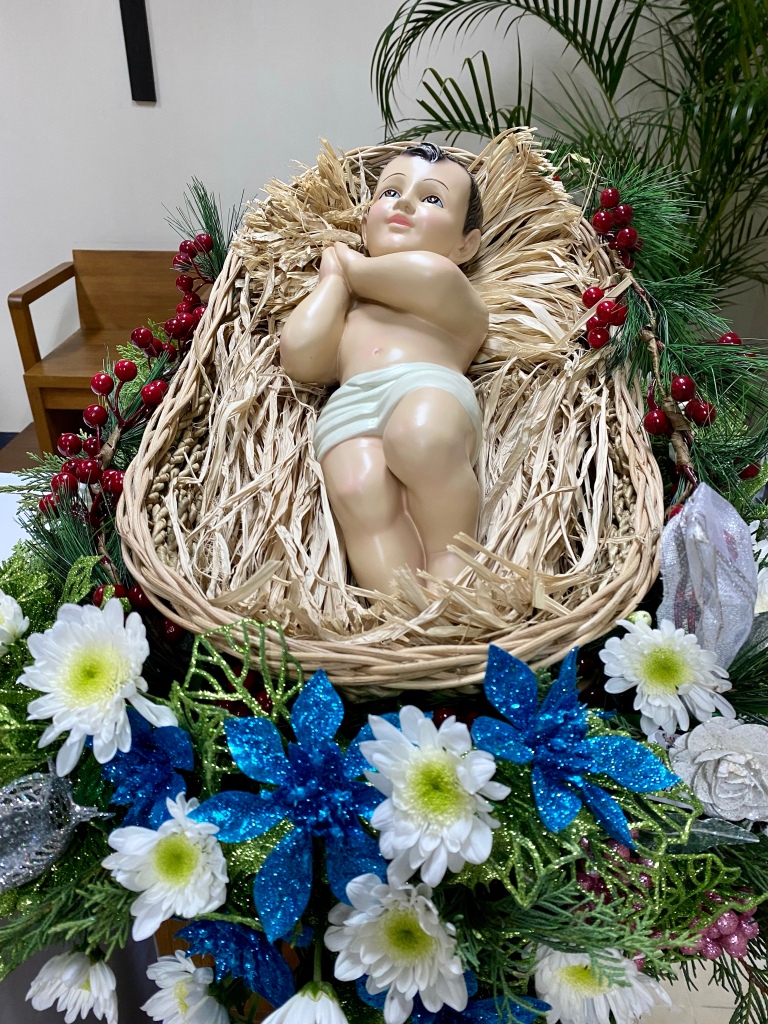
Photo by author, Basic Education Department chapel, Our Lady of Fatima University, Valenzuela City, 24 December 2021.
The Christmas liturgy offers us valuable lessons about life, of essentially the meaning of Christ’s coming into the world: He did not remove death and suffering but instead came to suffer and die with us so we may rise with him to eternal life.
Looming over the Nativity scene at Bethlehem is the Cross of the Calvary as we immediately see (except this year) the following day after Christmas on December 26 when we celebrate the feast of the first martyr of the Church, St. Stephen and again on the 28th when we wear red vestments during the Mass for the feast of the Holy Innocents massacred by Herod after being duped by the Magi.
These lessons of our Christmas liturgy become more real, even surreal for some, when there is death happening during this most joyous season of the year.
On this fifth day in the octave of Christmas, we heard from the gospel of Luke the story of the Presentation of the Child Jesus at the temple met by two elderly people promised by God to see the Christ before dying, Simeon and Anna.
Now there was a man in Jerusalem whose name was Simeon. This man was righteous and devout, awaiting the consolation of Israel, and the Holy Spirit was upon him. It had been revealed to him by the Holy Spirit that he should not see death before he had seen the Christ of the Lord. He came in the Spirit into the temple; and when the parents brought in the child Jesus to perform the custom of the law in regard to him, he took him into his arms and blessed God, saying: “Lord, now you let your servant go in peace; your word has been fulfilled: my own eyes have seen the salvation which you prepared in sight of every people, a light to reveal you to the nations and the glory of your people Israel.”
Luke 2:25-32
What a matter-of-fact story this Christmas of awaiting death, awaiting Christ’s coming!
What a beautiful scene reminding us of the realities of life and of death, coexisting side by side.
“Presentation at the Temple” painting by Italian Renaissance artist Andrea Mantegna done around 1455; Mary holding Baby Jesus while St. Joseph at the middle looks on the bearded Simeon. Photo from wikipedia.org.
Life is like our two hands, the left and the right, always with ironies and paradoxes: life and death, light and darkness, joy and sorrow, triumph and defeat, gains and losses.
That is how life is wonderfully portrayed today by Simeon who held in his arms the Child Jesus, filled with joy, basking in the sacred moment with the Savior, and the words that came from his mouth was about dying: “Lord, now you let your servant go in peace; your word has been fulfilled: my own eyes have seen the salvation which you prepared in the sight of every people.”
That is the “moment of Christmas” we mentioned last Saturday: “Christmas is therefore a blessed event, a most sacred moment of holy communion of man and God in Jesus Christ that continues to this day in the most regular yet miraculous reality of life going on amid many joys and pains, victory and defeats, prosperity and poverty, health and sickness, light and darkness and even in death” (https://lordmychef.com/2021/12/24/rejoicing-christmas-moments-all-year-through/).
Simeon shows us that it is only when we have fully appreciated this life we have in God do we fully accept and welcome death which is eternal union with God. Coming to terms with life is coming to terms with death and the same holds true vice-versa. That is why like Simeon we have to strive to live attuned to the Holy Spirit always to be aware of those sacred moments when Jesus comes to us in our daily living.
Photo by author, 18 November 2021.
I know, these are easier said than done… and, yes, it is doubly painful when our loved ones leave us during this Christmas season but when we try to reflect on it deeply, we find it more meaningful.
Ten years ago I met a family in my previous parish who have come to gather for 41 years every Christmas since their mother passed away on Christmas day. They told me how they were celebrating Mass on a bright sunny Christmas day when they have to immediately leave to rush to the hospital where their mother had died after a lingering illness. It was then I learned that their mother was born on March 24, the eve of the Solemnity of the Annunciation of the Birth of Jesus; that’s when I told them of how blessed they must be: their mother was born on the date we celebrate the Incarnation of the Son of God while she entered eternal life on the date we celebrate Jesus came to earth! They loved the imagery I have shown them and from then on until now, I have been invited to their family reunions….
That is the main blessing of Christ’s coming here on earth: he sanctified death that before was a curse. Recall how we have mentioned that Jesus Christ’s Pasch actually began at Christmas, when he passed over from heaven to earth, from eternal to temporal which reached its highest point in his Passion, Death and Resurrection that led to our salvation.
Photo by author, Basic Education Department chapel, Our Lady of Fatima University, Valenzuela City, 24 December 2021.
When the pandemic came last year, everybody laughed at the year 2020 with all kinds of memes and jokes, describing the year supposed to signify “perfect vision” as the worst and most disastrous. It was labelled so bad and almost cursed that everybody eagerly awaited 2021. Now, the jokes and memes are back, calling 2022 sounds like “2020 too”, insinuating another round of disasters as COVID surges happen in Europe and the States.
But, that is life.
As we have said at the start, it is like our two hands, the left and the right. There is always life and death, light and darkness, joy and sadness. That is why Jesus came and from then on we have reckoned time to his birth because every year is an Anno Domini, the year of the Lord.
Whenever we put our hands together at prayer, life and death becomes one along with joy and sorrow, light and darkness in Jesus Christ who gives meaning and fulfillment in everything.
The Lord Is My Chef Simbang Gabi Recipe for the Soul by Fr. Nicanor F. Lalog II
Friday, Simbang Gabi 9, 24 December 2021
1 Samuel 7:1-5, 8-12, 14, 16   ><]]]*> + <*[[[><   Luke 1:67-79
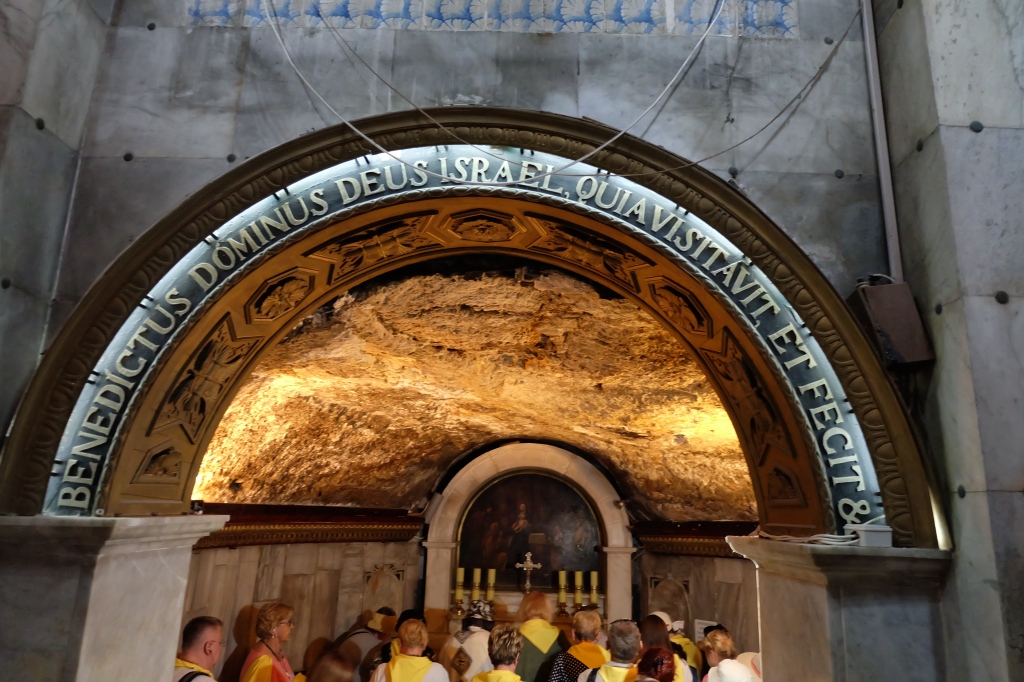
Photo by author, sunrise at the Lake of Galilee, the Holy Land, 2017.
As we complete today our nine-day novena to Christmas, Zechariah comes to full circle in the gospel when he sings the Benedictus (Latin for “Blessed”) to praise and thank God not only for restoring his speech but for the gift of a son John the Baptist and of the Messiah, Jesus Christ.
Last Wednesday we have mentioned to you how we priests, monks and the religious along with other dedicated lay people would sing or recite Mary’s Magnificat at the end of our Evening Prayer called Vespers, Zechariah’s Benedictus is what we pray at the end of our Morning Prayer called Lauds (Latin for praises).
It is a wonderful prayer welcoming the new day filled with God’s blessings of life and fulfillment, joy and peace, love and mercy. What a way to start each day already assured of being a blessed one for everyone.
As we prepare for Christmas tonight and tomorrow, it is worth praying the Benedictus today to pause at three important verbs we find at its beginning:
Zechariah his father, filled with the Holy Spirit, prophesied, saying, “Blessed be the Lord, the God of Israel, for he has come to his people and set them free. He has raised up for us a mighty Savior, born of the house of his servant David.
Luke 1:67-69
For Zechariah, God is blessed because “he has come (or visited) to his people, set them free (or worked redemption), and has raised up for us a mighty Savior from the house of David”. Like Mary’s Magnificat, we notice in Zechariah’s Benedictus the verbs are in the past tense when everything seems to be just starting with John’s birth who would herald the coming of Jesus still be born six months later.
But, Zechariah was filled with the Holy Spirit when he sang this that he must have perceived that early – like Mary – the many great things God had done to him personally and to them as a nation. Most of all, he had sensed- finally, after months of forced silence – the most unique wonderful things God is doing for him and everyone including us today.
This is the reason why we pray the Benedictus every morning for it affirms and not just awaits the tremendous blessings God has for us each new day.
Photo by author, altar of the Church of St. John the Baptist, the Holy Land, 2019.
Everyday, God comes to us, visiting us with his gift of life. A few months ago, former US Secretary of State and decorated soldier Colin Powell died of complications from COVID-19. An accomplished military officer and manager, one of his leadership lessons is that “It ain’t as bad as you think.”
Powell explains that after every disaster, there is always a solution and a way out of every mess in life. There is no need for us to worsen the situation with overthinking because in the coming of each new day, things get better.
So true! Zechariah had the worst days of his life of not having a child for the longest time then made mute by an angel for challenging the wisdom of God. After being forced into silence for nine months, he realized how each day is filled with blessings with God himself coming to us.
Rejoice every morning you wake up by first praying and connecting to God who comes to us daily before checking on your gadgets for messages and news that often dampen your mood. Like Zechariah, the first thing to come from his mouth and lips when his tongue was loosened was praise and thanksgiving to God.
When God comes, his first blessing is always our liberation from sins and baggages that have overburdened us, enslaving us for so long that we have practically stopped living. To experience God in Jesus Christ is always to experience freedom to do what is true and good. To be free in Jesus means to be free from sins and anxieties and fears brought about by our bondage to evil and darkness.
Zechariah felt so free that he was able to praise and thank God for his gifts of life and a child. And Savior, Jesus Christ who had come to his home when Mary visited Elizabeth earlier.
Everyday is blessed primarily because God raised up for us a mighty Savior in Jesus Christ. This is the most wonderful part of Zechariah’s Benedictus, “God has raised up for us a mighty Savior, born of the house of his servant David”. It was very clear with him the role of his son John, a herald of the coming of the Savior who is the fulfillment of God’s promise of old.
Photo by author, 2019.
Each day in Jesus promises us to make it better than yesterday. If we were sick yesterday, today we can recover our health. If yesterday we have failed, today we shall triumph. If yesterday we have lost, today we shall gain for Jesus has conquered everything even death for his love for us.
Likewise, we are invited to become a John the Baptist everyday not only to prepare the way of the Lord but most of all be the sign of the Lord’s presence.
As John the Baptist, we are challenged first to examine our very lives, our inner selves. So many times we get carried away with the many parties and activities of Christmas like gifts to give or receive as we focus on the wrong aspects of this most joyous feast of the year.
Like his father Zechariah, let us rejoice in the presence of God who became human like us so we may also rejoice in the presence of every person especially our loved ones who make Jesus present among us. Let us make this Christmas a true celebration of the presence of Jesus in us not only today but throughout the coming 2022 as God continues to bless us with lower COVID infections. Amen.May God bless you always, heal you of your sickness, and fulfill your prayers this Simbang Gabi!
The Lord Is My Chef Simbang Gabi Recipe for the Soul by Fr. Nicanor F. Lalog II
Thursday, Simbang Gabi 8, 23 December 2021
Malachi 3:1-4, 23-24   ><]]]'> + ><]]]'> + ><]]]'>   Luke 1:57-66
Photo author, chapel of Basic Education Department, Our Lady of Fatima University, Valenzuela City, 19 December 2021.
One of the series of jokes I have loved following at Facebook is about that actress always fuming mad as she points her finger at a white witty cat who would always harass and insult her with all kinds of jokes and sarcasms. Last week they were at it again: the white cat laughing at the actress with the caption that says “2022 is like 2020 too”!
Maybe I am just too shallow or mababaw but it is so aliw – delightful and funny that really tickled my bones to laughter. Remember how last year at this time that experts said 2021 would just be an extension of 2020 with COVID pandemic still staying with us. Though the virus is still with us, 2021 is definitely not like 2020 because we are better off this year, more protected with the various vaccines now available. Despite the many surges that have happened this 2021, we made great progress against COVID this year that promises a better 2022 for everyone.
We can all be hopeful that 2022 will not be “2020, too!” as we are now preparing for more opening of classes and businesses next year with better vaccines and more people receiving it despite the threats of the latest variant called Omicron.
Like the people at the time of the birth and circumcision of John the Baptist, we can all feel at this time “the hand of the Lord” clearly with us. Amen!
All who heard these things took them to heart, saying, “What, then, will this child be?” For surely the hand of the Lord was with him.
Luke 1:66-67
Photo by author, site of John’s birthplace underneath the Church of St. John the Baptist at Ein Karem, Israel, 2019.
We are now at the penultimate day of our Christmas Novena and just before Christmas comes, Luke reconnects us with the first personality of his Nativity story, Zechariah, the husband of Elizabeth and father of John the Baptist.
Recall how he was punished by the angel by becoming mute for doubting the good news that his old and barren wife would conceive a child who would prepare the way of the Lord; now, Luke tells us how that child was born and named under unusual circumstances that had everyone in their town wondering what that child would be for clearly “the hand of the Lord was with him”.
The term “hand of the Lord” is a description of God’s presence and power in the Old Testament. It is a vivid way of presenting God “intervening” in the daily lives of his people, saving them from all kinds of dangers like the prophets. There was Elijah who was hunted by the soldiers of Jezebel and the “hand of the Lord was on Elijah” (1 Kgs. 18:46) that he was spared from their murderous plots. Then there was Ezekiel who saw “the hand of the Lord” (Ez. 37:1) upon him at the vision of a valley of dry bones coming back to life.
Sometimes, the “hand the Lord” referred to God’s judgment like when King David had sinned against God in not trusting him that he ordered a census of soldiers; it angered God and he was given the choice which punishment he preferred: natural disaster or victory by his enemies or God’s judgment. David chose the third option, saying, “Let me fall into the hand of the Lord for his mercy is great…” (1 Chr. 21:13).
Again, we find here the artistry of Luke in using the phrase “hand of the Lord” in his account of the birth and circumcision of John: he merged together the two meanings of the expression for after all, every moment of judgment is also a moment of grace, especially when seen in the life of John the Baptist who “grew and became strong in spirit, and he was in the desert until the day of his manifestation to Israel” (Lk.1:80).
If we go back to Luke’s account of the annunciation of John’s birth, we also find the hand of God clearly at him with Elizabeth feeling vindicated with her pregnancy specially when visited by Mary.
Now, we have the building up of the drama just before the birth of Jesus with the circumcision and naming of John in the most unique manner not only because no one among their relatives have such name (Lk.1:61) but most of all when Zechariah his father wrote “John is his name” and “Immediately his mouth was opened, his tongue freed, and he spoke blessing God” (Lk.1:63).
Photo by author, the Church of St. John the Baptist at Ein Karem, Israel, 2019.
What a beautiful scene of Zechariah and Elizabeth wrapped in the arms of God, basking in his tremendous blessings with the people so amazed for evidently God was present among them, working in the most special ways albeit in silence that after looking back to the past and the present moment, they wondered what more good things God has in store for the three.
The same scene happens daily in our lives as individuals, as families and communities and as a nation – of how the hand of God saving us in so many occasions like during this pandemic and recent disasters through generous people coming to our side. There lies the greatness of Zechariah and Elizabeth – through them despite their weaknesses, the hand of the Lord worked wonders not only for them but for everyone including us in this time.
In this Season of Advent about to close soon on Friday, we are invited by the family of Zechariah, Elizabeth, and John along with their neighbors to pause and remember those moments the hand of the Lord was with us so we may start meditating too where God is leading us not only this Christmas but in the coming new year 2022. Have a blessed week ahead.
The Lord Is My Chef Simbang Gabi Recipe by Fr. Nicanor F. Lalog II
Saturday, Day 3, 18 December 2021
Jeremiah 23:5-8   ><}}}*> + <*{{{><   Matthew 1:18-25
Photo by author, Baguio Cathedral, January 2018.
We have just concluded the “Year of St. Joseph” last December 8 but it seems due to the pandemic, we have not celebrated truly enough to realize the virtues and person of the most silent character in the New Testament, St. Joseph.
We find no story in the gospels with St. Joseph either speaking or conversing with anyone at all. At least the Blessed Virgin Mary conversed with the angel during the Annunciation and spoke to Jesus her Son upon finding him at the Temple and at the wedding feast at Cana. St. Joseph was totally silent and most of all, could sleep soundly despite the tremendous stress he must have gone through! Truly a man of great faith and trust in God!
This is how the birth of Jesus Christ came about. When his mother Mary was betrothed to Joseph, but before they lived together, she was found with child through the Holy Spirit. Joseph her husband, since he was a righteous man, yet unwilling to expose her to shame, decided to divorce her quietly. Such was his intention when, behold, the angel of the Lord appeared to him in a dream and said, “Joseph, son of David, do not be afraid to take Mary your wife into your home. For it is through the Holy Spirit that this child has been conceived in her.”
Matthew 1:18-20
Photo from vaticannews.va, December 2020.
Notice how Matthew presented the climax of his genealogy not only with the coming of Jesus Christ at the end but also in his lineage to St. Joseph he described as “a righteous man” and addressed by the angel in a dream as “son of David”.
In him we find that expression “silent water runs deep” so very true. Imagine the maturity and deep spirituality of St. Joseph being called as a righteous man or a holy man which for the Jews is one who obeys the Laws of Israel.
But in this scene of the Annunciation of Christ’s birth to him in a dream, Matthew goes deeper into what is to be holy as more than obeying the the Laws but most of all, abiding by the will of God always as described in many instances in the Old Testament like the Book of Psalms. If holiness were simply an adherence to the Laws, St. Joseph would have not decided to silently leave Mary found pregnant with a child not his; in their laws, she would have been shamed in public which St. Joseph avoided in trying to leave her silently. For him, higher than the letters of the law was the welfare and well-being of Mary and her Child that until then he did not know was the Christ.
At the same time, here we find the deep spirituality of St. Joseph: compared with Mary to whom the angel appeared and spoke in person while with St. Joseph, the angel appeared only in a dream. He had a more difficult situation discerning whether his dream was real or not, which we all experience upon waking up from a dream so real!
Only a man with deep spirituality, so attuned with God like St. Joseph could perceive the divine in fact while at the same time discern it as very true the will of God that “When Joseph awoke, he did as the angel of the Lord had commanded him and took his wife into his home. He had no relations with her until she bore a son, and he named him Jesus” (Mt.1:24-25).
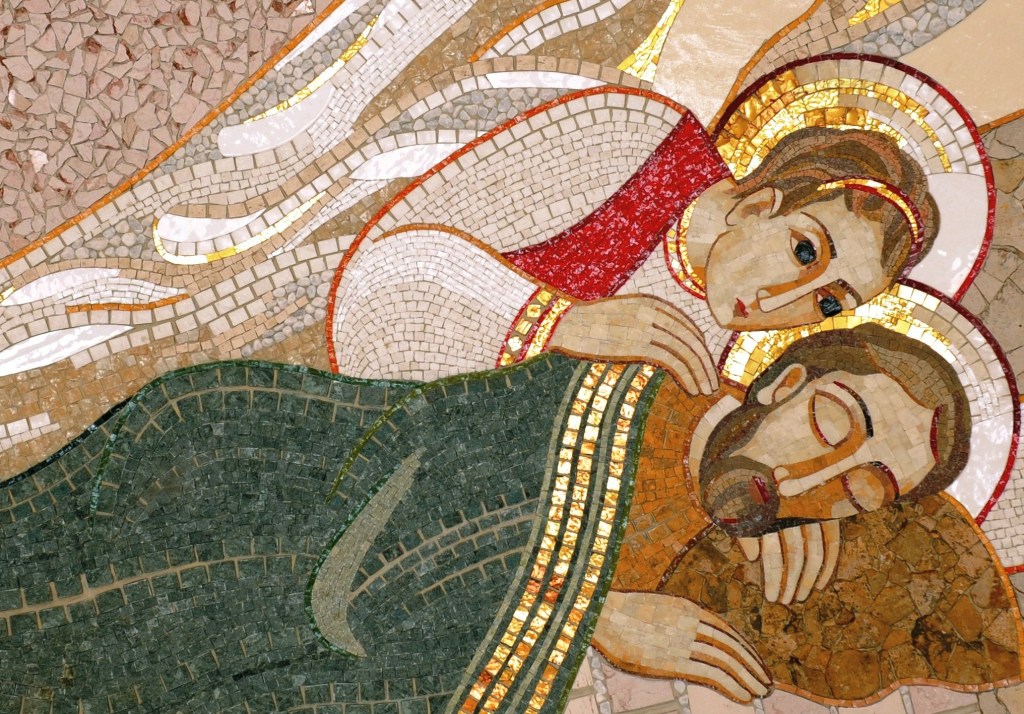
Photo by Arch. Philip Santiago, mosaic of the Annunciation to Joseph at the Shrine of St. Padre Pio in San Giovanni di Rotondo, Italy, 2017.
In a very concise manner – like our very silent saint and foster father of Jesus – Matthew presents to us in this short story of the Annunciation of the Birth of Jesus to St. Joseph all the critical and essential elements about the mystery of the Incarnation.
As we have reflected yesterday at the genealogy, Matthew now goes deeper into the humanity and divinity of Jesus Christ as the fulfillment of the Old Testament promises of God. This he beautifully presented also through the person of St. Joseph, a reminder of the need for us to be vessels of God’s graces and instruments of God’s works.
St. Joseph showed in this brief scene the true meaning of holiness, of being whole by seeking to find ways to bring into unity their laws and love and persons, something which Jesus Christ would keep on elaborating in his entire ministry, like his favorite expression “Sabbath was created for man, not man for sabbath.”
See how he tried to give more importance to Mary whom he loved so much that he was intent in not putting her to shame and harm. And upon listening and discerning the angel’s message to him in a dream, he obeyed everything, showing us the unity of the laws in love long before Jesus came to show it on the Cross himself. In accepting God and Jesus, St. Joseph had to take Mary; and in taking Mary, Jesus came into the world.
Here we are challenged by the example of St. Joseph that we too become an Emmanuel in the sense that in our lives, we become the sign that God-is-with-us specially in this time of the pandemic and with coming elections next year. We need to pray more deeply and be attuned with God for his divine will that always takes unexpected turns, so different from our own ways and methods.
Photo by author, 15 December 2021.
To be an Emmanuel like Jesus and St. Joseph, one has to be definitely pro-life, one who values life and every person, regardless of his/her status in life.
Like St. Joseph, let us learn to be silent for God and be louder with our actions, always choosing and standing for life and for every person’s dignity.
Like St. Joseph, he chose from the very start the value of Mary as a person which is the hallmark of Jesus as Emmanuel, the God who became human to be with us because it is good to be human. Amen.
The Lord Is My Chef Simbang Gabi Recipe for the Soul by Fr. Nicanor F. Lalog II
Friday, Day 2, 17 December 2021
Genesis 49: 2, 8-10   ><]]]]'>  +  <'[[[[><   Matthew 1:1-17
Photo by Dr. Mylene A. Santos, MD, 2019.
Today we officially start our countdown to Christmas as we enter the second phase of Advent when all readings and prayers beginning this December 17 to 24 will focus on the first coming of Jesus Christ more than 2000 years ago.
And what a way to start this every year with Matthew’s gospel that begins with the genealogy of Jesus Christ!
All four evangelists have their own style in addressing the two most important questions about Jesus, then and now: Who is Jesus? Where is he from? Both questions are inseparably linked that in the final analysis, they also apply very much with each one of us too!
Every person is a continuum – a work-in-progress who cannot be chopped or sliced like a sausage. Every person is a one whole made up of every minute and second and years from the very start of his existence in his/her mother’s womb. In fact, even before that when we see life in its entirety in the plan of God.
That is the meaning of the genealogy of Jesus Christ that speaks so well of our origins too, of who we are. Matthew uniquely started his gospel with the genealogy of Jesus not only to present the roots of Jesus in the past but also to tell us about him in the present and in the future.
The book of the genealogy of Jesus Christ, the son of David, the son of Abraham. Abraham became the father of Isaac, Isaac the father of Jacob, Jacob the father of Judah and his brothers. Judah became the father of Perez and Zerah, whose mother was Tamar. Perez became the father of Hezron, Hezron the father of Ram, Ram the father of Amminadab. Amminadab became the father of Nashon, Nashon the father of Salmon, Salmon the father of Boaz, whose mother was Rahab. Boaz became the father of Obed, whose mother was Ruth. Obed became the father of Jesse, Jesse the father of David the king. David became the father of Solomon, whose mother had been the wife of Uriah.
Matthew 1:1-6
Photo by Dr. Mylene A. Santos, MD, 2019.
The genealogy of Jesus by Matthew tells us the beauty of every person, of each one a mystery, a gift of God wrapped in so many stories involving people and events who have shaped us, for better or for worse, always precious and valuable, never to be taken in parts but always as a whole.
Ever noticed that the more we get to know another person – whether as family member or friend – the more we realize we do not really know that much about him/her?
I always tell couples during their wedding how they must continue to get to know each other after marriage, to be always surprised by new things about each other as they mature in their love.
We cannot have a full grasp of every person in just one scoop or one flash. Every person is made up of years and years even before his existence with great probabilities and possibilities of what he/she can be in the future!
See how the Son of God is so much like every one of us with a not so perfect background. Though he is from the lineage of Abraham and David, the two most prominent figures in Israel’s history, we find so many kinks and quirks behind each name mentioned in his genealogy. It was on Abraham God fulfilled his promise to make him the “father of all nations” while it was on David’s line came the King of kings, Jesus Christ.
But, as we go into details of the genealogy, we find bizarre things like how Jacob stole the birthright of his elder brother Esau from their father Isaac to become the ancestor of Jesus. Jacob in turn had 12 sons but instead of passing on the “scepter” we heard in the first reading to Joseph who was most qualified of his sons, Judah was chosen to be the leader of his sons from whom the Christ would later come from.
Judah was not that good at all being a part of the sinister plot of his brothers in selling their youngest brother at that time, Joseph, to Egypt; then, he got his daughter-in-law Tamar pregnant after she pretended to be a prostitute when her husband died without leaving her a son. Judah was already old and could not give her a son to her husband to have a child; hence, Tamar devised a plan of pretending as a prostitute to lure Judah into her. And it worked – much to the shame of Judah and family!
If Tamar pretended to be a prostitute, one of the five women mentioned in the genealogy was actually a whore, Rahab. When Joshua sent spies into Jericho led by Salmon, they hid inside a “red house” ran by Rahab. She offered them help in exchange for the safety of her entire family should they succeed in conquering Jericho and they did by just going around the city and blew their trumpets! Jericho fell and so did the heart of Salmon for Rahab and they had a child named Boaz.
A further twist into the genealogy of Jesus came with Boaz who married a pagan foreigner named Ruth, the daughter-in-law of Naomi who went back to Israel when her husband and two sons died. Ruth insisted in coming with her and while picking grains at the field of Boaz, the two were introduced to each other and love blossomed between them who were blessed with a son they named Obed who became the father of Jesse who was the father of the future King David.
Now, David was not that totally faithful to God at all: he sinned big time against the Lord!
First, in having an illicit relationship with the wife of his army officer Uriah named Bathsheba. When their forbidden love led to Bathsheba having a “love child”, David tried all means to avoid fatherhood but failed. So, he ordered Uriah positioned in a battle where he would surely get killed and it worked so well, giving David the free hand to take Bathsheba as his wife and their love child became his successor, King Solomon. King David suffered greatly from the grave consequences of his sins agains the Lord who forgave him and never took back the promise that from him would come the Christ.
Photo by author, San Fernando, Pampanga, 18 November 2021.
As we read on further in Matthew’s genealogy of Jesus Christ, the plot thickens as the drama unfolds further revealing to us the many colorful as well as controversial relatives and ancestors of the Lord who did not just appear as an isolated human being.
His genealogy shows us the important aspect of his Incarnation of not only coming from God but also intimately and crucially linked with the history of his own people, just like each one of us.
Notice how Matthew did not attempt to sanitize or “photoshop” the genealogy of Jesus to paint his better picture or that of his relatives. There was no shortage of “skeletons in the Lord’s closet” and yet, it was to Jesus Christ that the “scepter” of power ultimately belongs, the fulfillment of God’s promised salvation who also comes to us everyday among persons we meet, in our family, in the most unusual instances and peoples too.
Photo by author, San Fernando, Pampanga, 18 November 2021.
As we prepare to celebrate the birth of the Child Jesus in Bethlehem, today’s gospel reminds us how we too was the natural development of the long process of God’s relationships with people. In becoming truly human like us who had come from God, Christ’s birth reminds us that it is good to be human.
Most of all, for us to go back to God, to be closer to God, we have to be first truly a human person with no ifs nor buts because God loves us so much as he sees us. God believes in us that no matter how dark or painful or sinful our past may be, we can still have a brighter future in his Son Jesus Christ in whom we have our rootedness in the Father in faith.
This Christmas, let us remember our being a mystery in God and share this joy, this wonder with others. Like Jesus who became human to show us our blessedness in God, let us share with others too. Have a blessed Friday!
The Lord Is My Chef Daily Recipe for the Soul by Fr. Nicanor F. Lalog II
Wednesday, Solemnity of the Immaculate Conception, 08 December 2021
Genesis 3:9-15, 20 ><}}}*> Ephesians 1:3-6, 11-12 ><}}}*> Luke 1:26-38
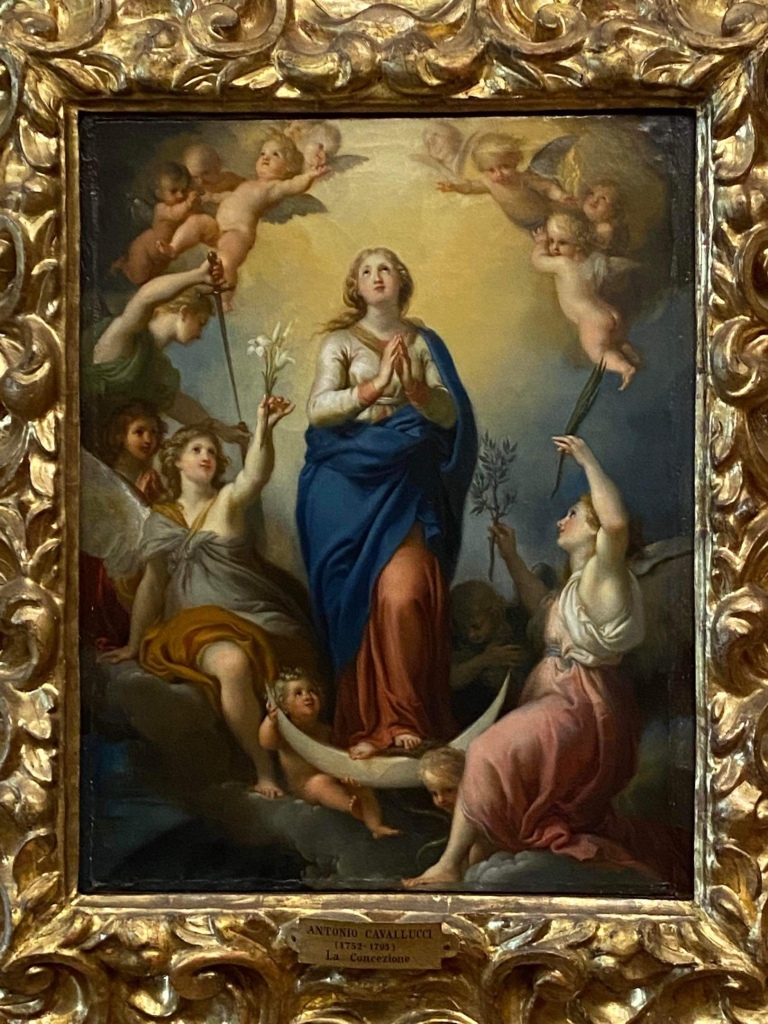
Photo by Rev. Fr. Gerry Pascual at Palazzo Borromeo, Isola Bella, Stresa, Italia, 2019.
Recently I saw on a Facebook post the photo of American model Kendall Jenner in a swimsuit showing what for many is the “perfect body” in a woman. The photo had reportedly gone viral last year.
What caught my attention was the other photo posted opposite Jenner: that of 19-year-old Alyssa Carson who became the youngest female in history to pass all NASA aerospace tests to train as astronaut for future travel to Mars! The caption said it so well, lamenting the fact how the world gives so much attention to “fashion models” with many going insane imitating their bodies forgetting the more essential like inner beauty and intelligence.
More sad is how we have fixed our human understanding and analogies of a “model” as someone who poses and remains still to be painted or photographed for glossy magazines and giant billboards that people are willing to buy or pay for just to view and let their senses feast on.
It may sound funny but those two photos accompanied me while praying and preparing for our celebration today of the Solemnity of the Immaculate Conception. Sorry, I am not going to show you the link to those photos but wha I want to share with you are the two beautiful expressions depicting Mary as “advocate of grace” and “model of holiness” found in the Preface of today’s Mass (that is the prayer before the Holy, Holy leading to the consecration): “She, the most pure Virgin, was to bring forth a Son, the innocent lamb who would wipe away our offenses; you placed herabove all others to be for your people an advocate of grace and a model of holiness.”
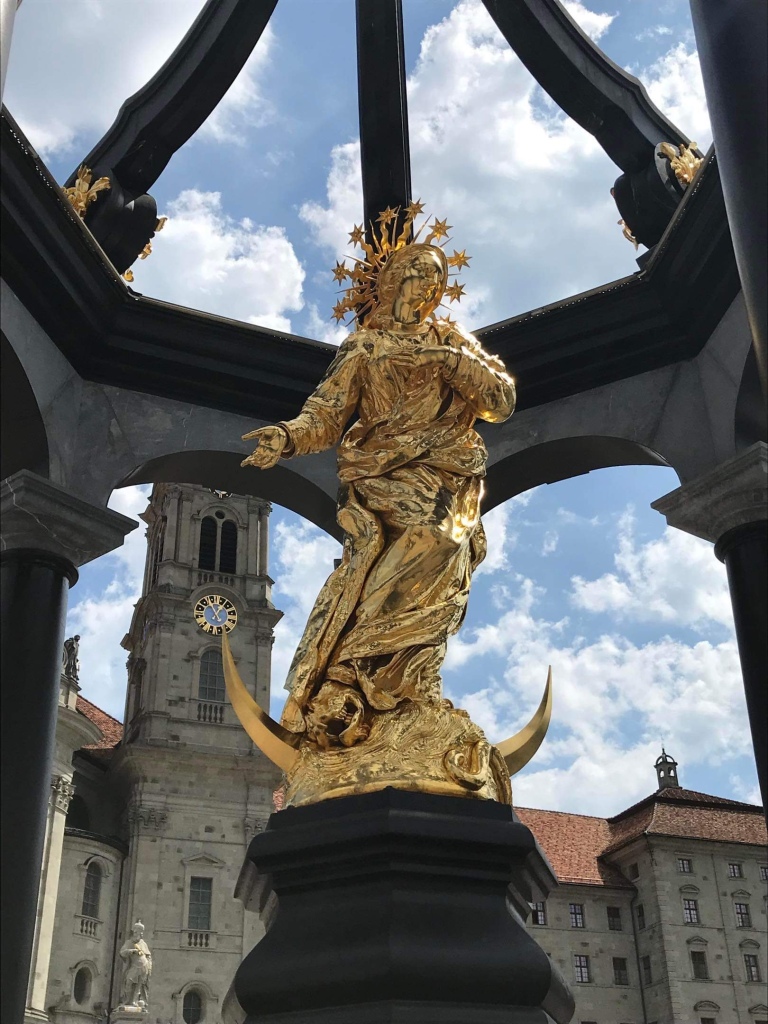
Photo by Fr. Gerry Pascual at Einsiedeln Abbey, Einsiedeln, Switzerland, 2019.
So often with Marian feasts, many people complain and find it hard to relate with the Blessed Virgin because they find them as celebrations of the privileges of Mary who was so blessed and unique, thinking she’s almost a god, not human anymore whom we cannot imitate and emulate.
That is totally untrue and baseless!
Of course, only she has the distinction of being immaculately conceived, one never stained by sin but, aside from that, Mary is like all of us, so human; and we too can be like her, full of grace and holy!
Brothers and sisters: Blessed be the God and Father of our Lord Jesus Christ, who has blessed us in Christ with every spiritual blessing in the heavens, as he chose us in him, before the foundation of the world, to be holy and without blemish before him. In love he destined us for adoption to himself through Jesus Christ, in accord with the favor of his will.
Ephesians 1:3-5
Very clear in this reflection by St. Paul in our second reading that our truest destiny is to be holy and without blemish – that is, immaculate. It is the plan of God since the beginning that we all become his people until sin came and destroyed momentarily that divine plan as we have heard in the first reading.
With the coming of Jesus through his sacrifice on the Cross, we were redeemed from sin to become God’s holy people which the same Preface mentions Mary as the “beginning of the Church”. The same prayer reiterates to us our universal calling from God which is to be holy and blameless before God through Jesus Christ. It is very doable and attainable “for nothing is impossible for God” as the Archangel Gabriel told Mary during the Annunciation (Lk.1:37). And Mary is our proof to that!
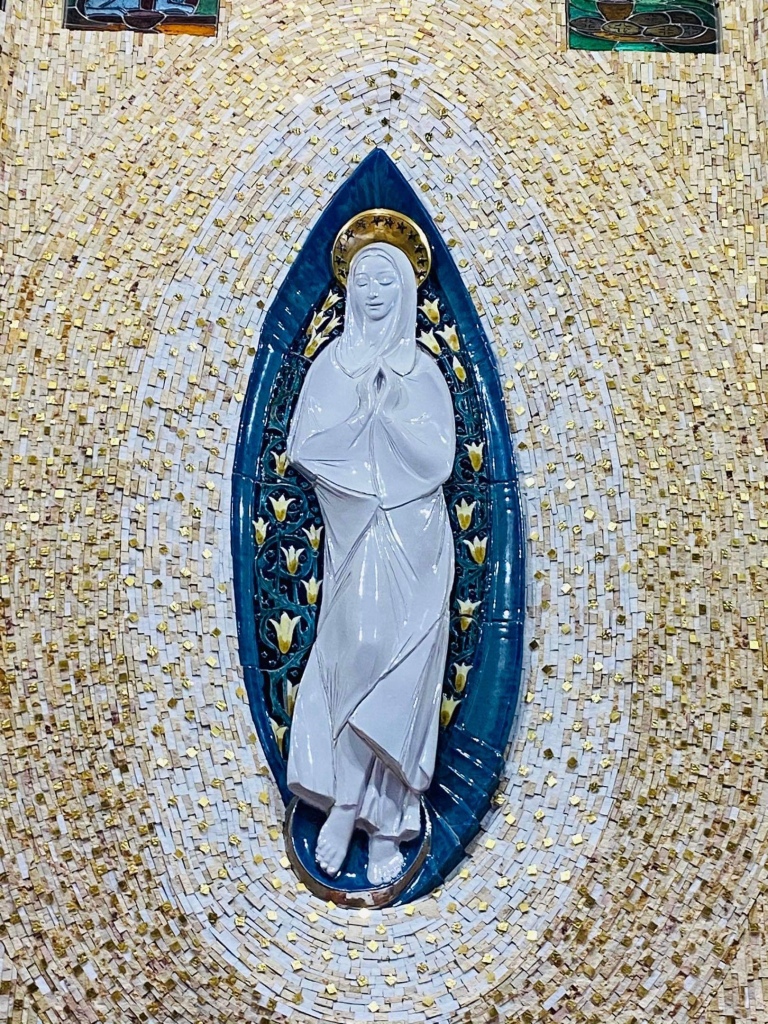
Photo by Rev. Fr. Gerry Pascual at Santuario di Greccio, Rieti, Italy in 2019.
While it is very true that nothing is impossible for God, today’s celebration of the Immaculate Conception reminds of how God “needs” us to cooperate and participate in his beautiful plans for us like Mary to be his instrument or seedbed for his Divine Word to receive and grow and bloom.
That is the meaning of Mary as “advocate of grace” who became the vessel in the coming of Jesus Christ. See how St. Luke was very clear in narrating Mary’s “supporting” role and place in the plan of God: she remains a human being – not God – like us except she was full of grace, that is, immaculately conceived.
Behold, you will conceive in your womb and bear a son, and you shall name him Jesus. He will be great and will be called Son of the Most High, and the Lord God will give him the throne of David his father, and he will rule over the house of Jacob forever, and of his kingdom there will be no end… The Holy Spirit will come upon you, and the power of the Most High will overshadow you. Therefore the child to be born will be called holy, the Son of God.”
Luke 1:31-33, 35
The Church Fathers used to call Mary as the “aquaeductus ecclesiae” or neck of the Church connecting Jesus the caput or head and us the corpus or body. Mary as an advocate of grace is that vessel of all blessings we now have in Jesus Christ because of her obedience and participation in that plan of God of sending Jesus.
Keep in mind that as advocate of grace, Mary brings us all to Jesus as the one Mediator, not away from him. True devotees of Mary bring others to Jesus not away from him for he alone is the Mediator. A true and authentic devotion to Mary always result in deeper knowledge and intimacy with Jesus and his gospel. Notice this in her apparitions especially at Fatima in 1911 where her messages call us to get closer to Jesus, not her.
Mary continues as our advocate of grace telling us the very same words she had told the servers at Cana to “do whatever he tells you” (Jn.2:5).
Do we do the same? Or, mislead others into putting Mary at par or even above Jesus her Son and Lord? In this time of pandemic, are we like Mary as an advocate of grace, a vessel and instrument of blessings to others or do we grab every credit of “charity” and “kindness”, grandstanding for more media mileage of “likes” and “followers” to be viral and trending?
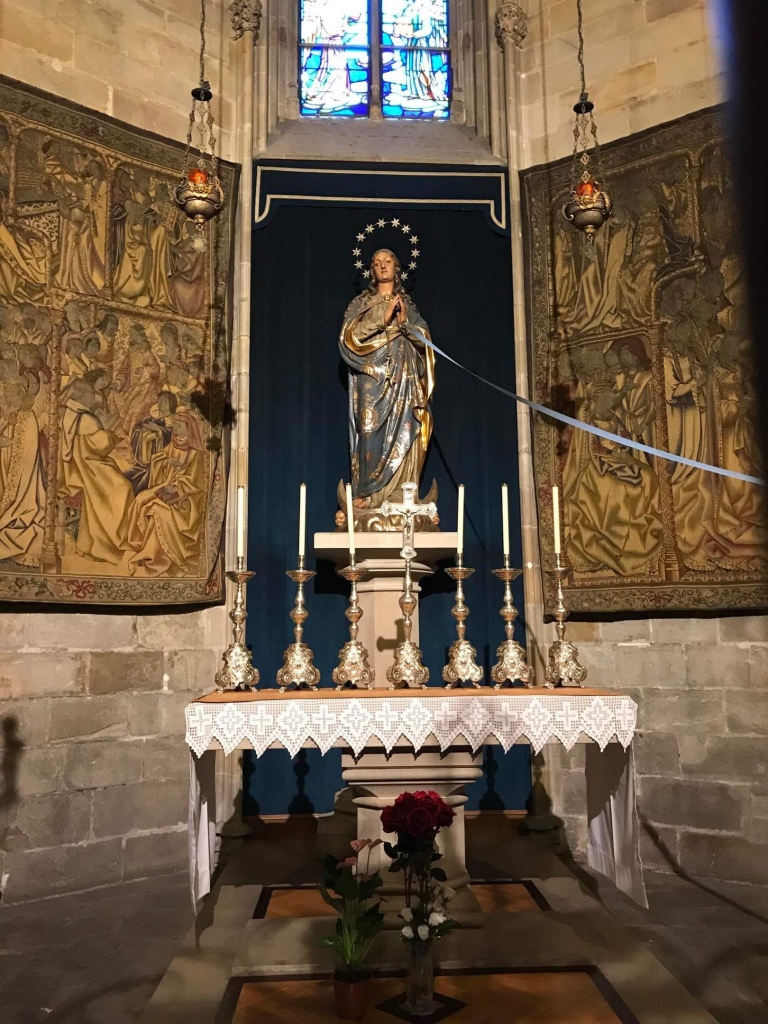
Photo by Fr. Gerry Pascual at the Cathedral of Barcelona, Spain in 2019.
From her being an “advocate of grace”, Mary thus becomes our “model of holiness” too as she reminds us of God’s original plan for us, created in his image and likeness destroyed by sin with the fall of Adam and Eve. See how God immediately promised salvation through the woman fulfilled in Mary as he reprimanded the serpent in tempting Eve:
“I will put enmity between you and the woman, and between your offspring and hers; He will strike you at your head, while you strike at his heel.”
Genesis 3:15
Because of her being the advocate of grace of God by giving birth to Jesus, Mary stands before us as the perfect reminder of Christ’s work of purification and recovery of the image of God in us. Described as the “perfect disciple” and “doer of the Word”, Mary had shown us in her very life which continues to this day in her intercessions and apparitions how discipleship is a life-long process and commitment of holiness. From giving birth to Jesus to his dying on the Cross until his burial, Mary had always been with Jesus that on Easter, it was to her that the Risen Lord first appeared because she was the first to believe totally in him.
At the Pentecost, Mary was with the Apostles awaiting the coming of the Holy Spirit that became the coming out party of the Church. In her life, Mary is the model of holiness because she keeps on working with us and in us, guiding us in following Jesus our Lord and Master so that we might be “conformed to his image” (Rom. 8:29).
Photo by author, Christmas 2020.
Holiness is not being sinless but being filled with God who is all-holy, being like Jesus Christ. Mary showed us the way to holiness is being humble before God, seeing herself as the “handmaid” or servant of the Lord.
If there is one thing the world needs now so badly in this time of the pandemic, it is holiness. Before the pandemic came, mankind was so filled with self, so arrogant and proud acting like god, manipulating everything.
How ironic that a microscopic virus with the simplest signs similar to the common colds made the world stood still for some time, reminding us that there is a God all-powerful who is in control of everything.
Through Mary, may this Solemnity of her Immaculate Conception lead us back to God to recover in us his image and likeness, cleansed and purified of our blemishes and wrinkles of sin by having an enlightened devotion to her, the servant of the Lord par excellence. Amen.
The Lord Is My Chef Sunday Recipe for the Soul by Fr. Nicanor F. Lalog II
First Sunday of Advent-C, 28 November 2021
Jeremiah 33:14-16 ><}}}*> 1 Thessalonians 3:12-4:2 ><}}}*> Luke 21:25-28, 34-36
Photo by author, Malolos Cathedral, 2019.
Blessed happy New Year, everyone!
Today we are celebrating a new calendar year in the Church with this First Sunday of Advent. From the Latin word adventus meaning arrival or coming, it was adapted by the early Christians from the Roman practice of preparing for the visits or assumption to power of their emperors then considered as “gods”.
It is most fitting that we prepare not only outside but most especially inside our very selves for the coming of the true God and King of kings, Jesus Christ our Lord and Savior!
Hence, Advent not only opens but also defines our whole liturgical year that is centered on Christ who has come, who comes now and will come again in the end of time. This is the reason why our gospel this Sunday is looking towards the end of time at the beginning of our Church calendar.
The three comings of Jesus Christ
Advent has two aspects: beginning today the First Sunday of Advent until December 16, all readings and prayers are oriented towards the Second Coming of Christ; from December 17 to the evening of the 24th, our focus shifts to the first coming of Jesus at Christmas.
Between these two comings of Jesus that the Season of Advent reminds us is what St. Bernard of Clairvaux called as the Lord’s “third coming” – his coming everyday into our lives, especially in the celebration of the Sacraments, particularly the Holy Eucharist.
Photo by author, 2019.
Again we find that tension of his being here but not yet. It is in that between his first coming more than 2000 years ago and his Second Coming which no one knows exactly when where we are situated daily, making everyday Christ’s Advent.
“And then they will see the Son of Man coming in a cloud with power and great glory. But when these signs begin to happen, stand erect and raise your heads because your redemption is at hand.”
Luke 21:27-28
It may sound frightening to hear Jesus spoke of the signs of his coming but at closer look and reflections, we find it filled with joy because our redemption is at hand!
Yes, every ending forebodes destruction and passing of the old but that is in order to give way to something new, something better which Jesus had promised his disciples then and us now.
The grace of this season of Advent is the reawakening of our hope in the salvation that has already come in Jesus, who still comes now, and will surely come again in the end of time which is happening in every here and now.
That is why, there is also the sense of urgency and vigilance this Advent.
We are already living in the end-time Jesus had predicted as we have seen in the wars and conflicts going on among nations, the natural calamities happening around the globe made worst by the climate change plus this pandemic we are now having. But, it does not mean the creation will end soon as portrayed in many Hollywood films because these signs are calls for us to be ready and prepared for the final end that will prelude the new beginnings of all.
The days are coming, says the Lord, when I will fulfill the promise I made to the house of Israel and Judah… In those days Judah shall be safe and Jerusalem shall dwell secure; this is what they shall call her: “The Lord our justice.”
Jeremiah 33:14, 16
Photo by author, 2018.
Meeting Jesus in Advent
Notice how Jeremiah’s prophecy so “pregnant” with meanings: more than the coming of the promised Messiah is the radical newness of the whole creation. Judah and Jerusalem, the main province and city of Israel at that time will be transformed, referring to John’s vision in the Book of Revelation of “new heaven and new earth”.
As we have said, Advent not only opens our liturgical calendar but also defines the whole year which is the daily coming of Jesus who had come over 2000 years ago and will come again at the end of time which nobody knows.
Meanwhile, in this “third coming” of Jesus everyday, we find God working in him silently and subtly in the human history and right in our individual lives.
It is in our faithful waiting when Jesus Christ comes. It is the beauty and joy expressed by Jeremiah’s words “the days are coming” that assure us no matter how dark and bleak are our days, despite all the destructions and even death around us, the days are coming when we see everything getting better because God never stops working in our midst in Jesus, the Emmanuel.
“Beware that your hearts do not become drowsy from carousing and drunkenness and the anxieties of daily life, and that day catch you by surprise like a trap. For that day will assault everyone who lives on the face of the earth. Be vigilant at all times and pray that you have the strength to escape the tribulations that are imminent and to stand before the Son of Man.”
Luke 21:34-36
Last Sunday in our celebration of the Solemnity of Christ the King we have reflected how Jesus spoke of the “truth” of his kingdom being among us, of how he had made us into his kingdom which is the reason why he was born and came into the world to testify to this truth (Jn.18:37).
See now the clearer picture of our life, of our time: we start our Church calendar preparing for the coming of Jesus our King and we end every year with the celebration of Christ the King. And we begin each new year with the end in sight of his Second Coming.
On this season of Advent, we are reminded how in our joyful waiting through prayers especially in the celebration of the Holy Eucharist that Christ’s presence is little by little being unveiled, unfolding before us, and being revealed.
It is a call for us of deepening our prayer life to truly experience Christ’s coming in our daily life. This new year in the Church, St. Luke will be our guide in our Sunday readings during the Ordinary Time; one distinction of his gospel is his portrayal of Jesus in prayer always.
Jesus comes to us first of all when we pray, when we enter into communion with him, when we listen to his voice and follow his instructions. In prayer, we are filled with God, allowing him to work his wonders in us and through us and thus make Christ’s coming a daily reality.
That is how prayer truly leads to holiness: when we are filled with God, our prayers are translated into a life of kindness and acceptance, mercy and forgiveness and most of all, of loving service to one another especially those in need.
There will always be sins and shortcomings on our part but in prayers and vigilance, we slowly “increase and abound in love for one another… strengthening our hearts to be blameless before our God our Father at the coming of our Lord Jesus with all his holy ones. Amen. (1 Thess. 3:12,13)
A blessed happy new year again and a more blessed first week of Advent to you!

















 lordmychef.com