Hindi ka nag-iisa

Lawiswis ng Salita ni P. Nicanor F. Lalog II, 24 Marso 2024
Ikaapat na Huling Wika ni Jesus
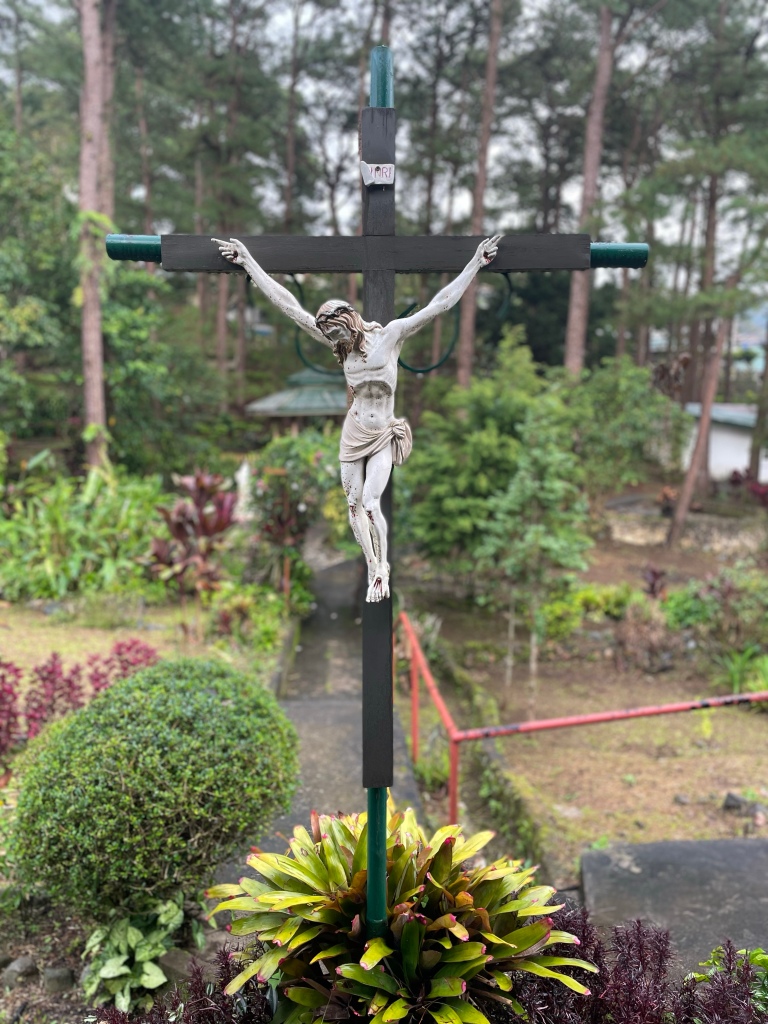
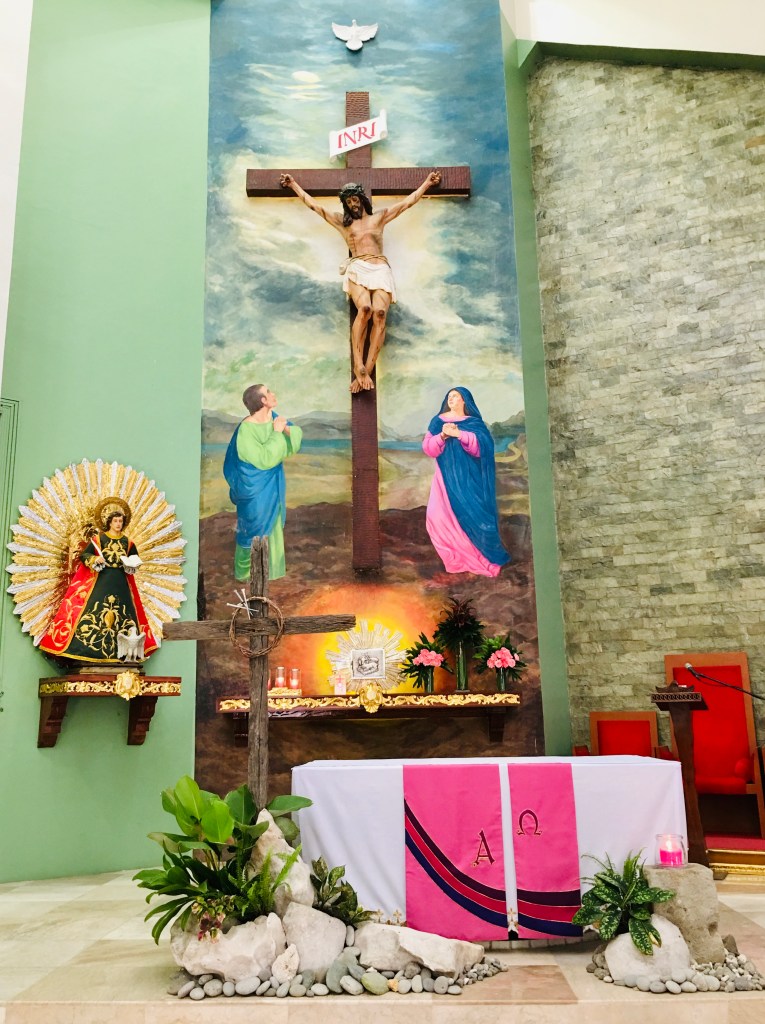
Larawan kuha ng may-akda, Kapilya ni San Francisco Javier, Sacred Heart Novitiate, Novaliches, 20 Marso 2024.

Mula sa tanghaling tapat hanggang ikatlo ng hapon ay nagdilim sa buong lupain. Nang mag-iikatlo ng hapon, sumigaw si Jesus, “ELOI, ELOI, LEMA SABACHTANI?” ibig sabihi’y “DIYOS KO, DIYOS KO, BAKIT MO AKO PINABAYAAN?”

Mateo 27:45-46

Sa tagpong ito ating mababanaagan kadakilaan ng pagmamahal sa ating lahat ng Diyos, Siya na ganap, walang kapintasan at kakulangan (perefect) ay piniling maging katulad nating hindi ganap (imperfect) bilang tao sa lahat ng bagay maliban sa kasalanan kay Kristo Jesus.

Pinili at mas inibig ng Diyos kay Kristo na maging tao upang maranasan hirap at sakit natin maging ang kamatayan, lalo’t higit ang magdusa at mamatay na nag-iisa at iniwanan ng lahat doon sa Krus.

Ano mang paghihirap at pagdurusa ay nagiging napakabigat kapag ika’y nag-iisa, na walang kasama ni karamay. Ito pinakamasaklap sa panahon natin ngayon maging sa ating bansa na dati rati’y walang mga bahay ampunan para sa matatanda ngunit nagyon ay naglipana na dahil sa maraming matatanda ang iniiwan, tinatalikuran di lamang ng mga kamag-anakan kungdi pati ng lipunan. Ito ang dahilan kung bakit si Santa Mother Teresa ay bumuo noon ng samahan na mag-aalaga sa mga tinaguriang “poorest of the poor” sa India nang makita niya maraming may-sakit sa Calcutta namamatay nang mag-isa. Hindi lamang ito totoo sa mga mahihirap na lugar kungdi maging sa mga mauunlad na lupain ay maraming matatanda ngayon ang namamatay na lamang ng mag-isa sa buhay.

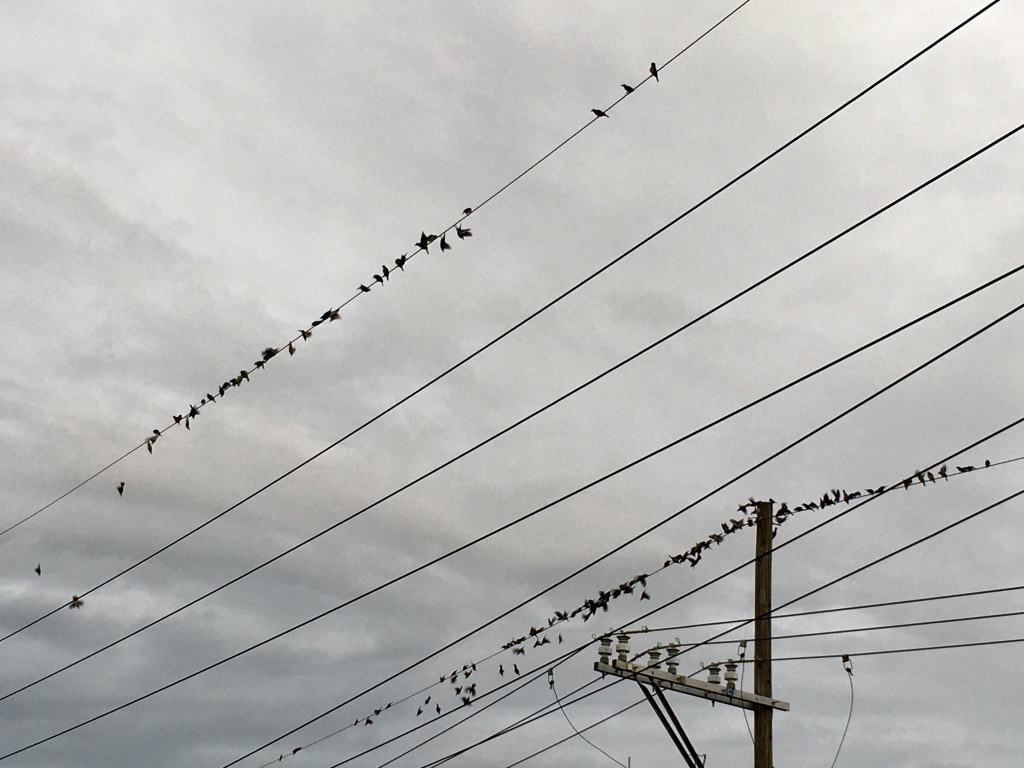
Larawan kuha ng may-akda, Baguio City, 2023.

Iyan man ay pinagdaanan ni Jesus lalo na noong ipinako siya sa krus na halos iwanan siya ng lahat. Sa labingdalawang alagad niya, naghudas ang isa habang ang pinuno naman nila ay ikinaila siya ng tatlong ulit kaya’t nagtago noon kasama ang iba pang mga alagad. Tanging si Juan na minamahal na alagad ang nanatili sa paanan ng krus ni Jesus kasama ang kanyang Ina na si Maria at ilan pang mga kababaihan.

Nasaan ang mahigit limang libong tao na pinakain ni Jesus sa ilang? Wala din doon ni isa sa mga pinagaling niyang mga may-sakit. Nawala at naglaho ang lahat ng tao na tuwang-tuwang sumalubong kay Jesus noong Linggo ng Palaspas.

Ngunit kailan man ay hindi naramdaman ni Jesus ang pagiging mag-isa doon sa Krus. Tulad ng sino mang mabuting Judio, dinasal ni Jesus noon ang Salmo 22, ang awit ng panaghoy, ng pagpapakasakit at buong pagtitiwala sa Diyos.

Ito ang mabuting balita ng pagkamatay ni Jesus sa Krus: mula noon tayong mga tao ay hindi na mag-iisa sa mga hirap at tiisin nitong buhay maging kamatayan dahil kasama na natin ang Diyos kay Jesus.

Ito ang ating consolation o consuelo, wika nga.

Mula sa dalawang katagang Latin na con (with) at solare (alone) na ibig sabihin ay samahan ang nag-iisa, naging pinakamalapit at tunay na kaisa tayo ng Diyos sa tuwing tayo ay nasa gitna ng mga tiisin at hirap sa buhay maging kamatayan dahil sa pagdamay sa atin ni Jesus doon sa Krus upang sa gayon sa kanyang muling pagkabuhay tayo man ay kanyang makasama at makaisa.

Sapagkat siya ma’y tinukso at nagbata, kaya ngayo’y matutulungan niya ang mga tiutukso.

Hebreo 2:18

Sa tatlong taon kong pagiging chaplain sa Our Lady of Fatima University at Fatima University Medical Center, nakita ko at naranasan sa maraming pagkakataon paano mga tao – bata man o matanda, mahirap at mayaman, may sakit o karamdaman maging mga malalakas at malusog ang pangangatawan – ay nararanasan ang pangungulila at pag-iisa sa gitna ng kanilang mga paghihirap at pagdurusa sa buhay. Marami sa kanila ang mag-isang umiiyak kasi maraming ginagawa o nasa kung saan-saan kanilang mga mahal sa buhay. Maraming pagkakataon nga naitatanong ko na lang kung mayroon pa bang umuuwi ng bahay o nakatira sa kanilang tahanan? Is anybody still home?

Larawan ng convolvulus tricolor mula BBC Gardeners World Magazine.

Halina at ipagdasal ang bawat isa, lalo na yaong mga nahihirapan, nagtitiis ng mag-isa sa buhay:

Diyos Amang mapagkalinga,
ibinigay mo sa amin
ang Iyong Anak na si Jesus
upang aming maranasan Iyong
pag-ibig at habag,
ang Iyong pagpapagaling at pagkandili,
ang Iyong kapanatilihan at kapayapaan
upang hindi na kami mag-isa pa sa buhay na ito;
maalala nawa naming palagi
na kung kami man ay dumaraan sa
napakatinding pagsubok sa buhay
na tila nag-iisa at walang karamay,
naroon si Jesus pinakamalapit sa amin
dahil Siya ang unang nagpakasakit
at namatay doon sa Krus
para sa amin.
Amen.

Our hands & the hands of God

40 Shades of Lent by Fr. Nicanor F. Lalog II
Solemnity of the Palm Sunday of the Lord's Passion-B, 24 March 2024
Isaiah 50:4-7 ]]+[[ Philippians 2:6-11 ]]+[[ Mark 15:1-39
From influencemagazine.com

As you all know by now, I turned 59 years old last Friday, March 22. For the second consecutive year, I have moved my personal annual retreat to my birthday so I can pray more, thank God more for his gift of life to me. This is one of my realizations in turning 59 years old:

"The more we enter the heart of Jesus
where we find peace and fulfillment,
joy and security,
the more we also discover
the dark and ugly sides of life. 
Darkness, pains, sickness, failures,
and other forms of sufferings
come to the fore when we are
in God’s loving presence,
and vice versa."

The more we see and experience God’s beauty, we also see and experience Christ’s agony and passion within our very selves and among our brothers and sisters. These two faces of life ever present in our earthly journey are perfectly shown to us by today’s celebration called “the Solemnity of the Palm Sunday of the Lord’s Passion.”

What we have this Sunday is actually a twin-celebration.

Palm Sunday came from the liturgy of the early Christians living in Jerusalem in the fourth century who started the Holy Week tradition with a procession of palm branches that later spread to France and Germany where the blessing of palms was introduced. Later in Rome in the 12th century, the Pope began the tradition of commemorating the Lord’s Passion on this Sunday with a proclamation of that long gospel narrating Christ’s entry into Jerusalem leading to His Last Supper until His Crucifixion and Death. It was only in 1965 during Vatican II when these two celebrations were combined into what we now have as the Solemnity of the Palm Sunday of the Lord’s Passion. 

The merging of these two celebrations sums up the mystery we celebrate during Holy Week as well as the mystery of our everyday life wherein we have the glory of Palm Sunday in one hand and at the other hand, the darkness of our own passion as a sharing in the Pasch of the Lord. 

Photo by author, Chapel of St. Francis Xavier, Sacred Heart Novitiate, Novaliches, 20 March 2024.

I have intended a play in the word “hand” there as I prayed over our gospel this Sunday during my recent retreat. As directed by my Jesuit guide, I reflected on the four gospel accounts of the Lord’s Passion where I found the word “hand over” used so many times.

“To hand over” is the more literal translation of the Greek word paradidomi used by the evangelists in the “betrayal”of Jesus by Judas Iscariot. In Filipino, it is ipasa and ibigay that are more picturesque than ipagkanulo which is our equivalent of “to betray”.

Now, look at how our Filipino word ipasa takes on a deeper meaning when we reflect on how Jesus was “handed over” first by Judas Iscariot to the chief priests who then “handed him over” to Pilate who eventually “handed him over” into death by crucifixion. Pinagpasa-pasahan nila si Jesus! And that is how evil we are humans with God and with one another, using our very own hands, handing them over by manipulating them for our own selfish ends.

Then Judas Iscariot, one of the Twelve, went off to the chief priests to hand him over to them. When they heard him they were pleased and promised to pay him money. Then he looked for an opportunity to hand him over… He (Judas Iscariot) came and immediately went over to him and said, “Rabbi.” And he kissed him. At this they laid hands on him and arrested him.

Mark 14:10-11, 45-46

As soon as morning came, the chief priests with the elders and the scribes, that is, the whole Sanhedrin, held a council. They bound Jesus, led him away, and handed him over to Pilate… So Pilate, wishing to satisfy the crowd, released Barabbas to them, and after he had Jesus scourged, handed him over to be crucified.

Mark 15:1, 15
Photo by author, Chapel of St. Francis Xavier, Sacred Heart Novitiate, Novaliches, 20 March 2024.

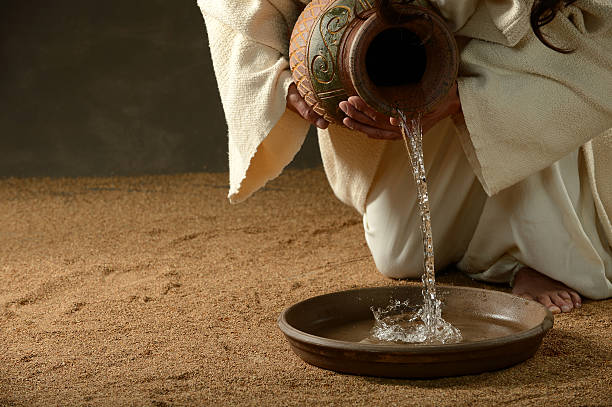
This handing over of Jesus – pinagpasa-pasahan si Jesus in Filipino took its lowest point in Matthew’s account when Pilate “took water and washed his hands in the sight of the crowd” (Mt. 27:24) to claim innocence in the Lord’s death. That’s how dirty our hands as humans have become! How ironic and tragic that the more we wash our hands in repeatedly handing over our family and friends, colleagues and even country, the more our hands have become dirty.

This Sunday, Jesus is inviting us to examine our hands, to clean our hands so that they become His hands of loving service, mercy and forgiveness, kindness and understanding and care for each other and nature. Let us remember the lessons of COVID-19 four years ago today when we constantly washed and disinfected our hands to be more responsible with each other, with nature and with life. Our problems are often the results of things getting off hand, out of control or too much control as we manipulate everything even God, persons and nations through elections as well as habits and patterns for economic and social reasons

“Ecce Homo” painting by Vicente Juan Masip (1507-1579) from masterapollon.com

It is so different with the hands of God expressed so beautifully in our first reading from the Prophet Isaiah’s Song of the Suffering Servant who was fulfilled in Jesus Christ our Lord and Savior.

The Lord God has given me a well trained-tongue, that I might know how to speak to the weary a word that will rouse them… and I have not rebelled, have not turned back.

Isaiah 50:4, 5

Here is a beautiful picture of God in Jesus Christ whose hands we have tied so many times as we insisted on our own ways, in seeking instant gratifications, in manifesting power through sheer strength. Here lies the beauty of God’s hands in Jesus Christ so opposite with our manipulating and controlling hands because His is of submission. Or passion.

The word “passion” is from the Latin patior that means to suffer or to undergo. It is related with the words passivity and patience – exactly like patients who just lie and wait on their beds, waiting for the doctors and nurses, for them to be healed and get better.

Passion here connotes passivity in the positive sense when we strip ourselves naked before God in order to be open to new possibilities like Jesus Christ eloquently expressed by St. Paul in the second reading when He “emptied and humbled himself, becoming obedient to the point of death, even death on a cross” (Phil.2:7, 8). 

Photo by author, Chapel of the Holy Family, Sacred Heart Novitiate, Novaliches, June 2016.

In his Passion, Jesus taught us that true power is in weakness like him dying on the Cross. Now here we find something so interesting with the synoptics account of Christ’s death when “he breathed his last” (Mk. 15:37) leading to the faith of a Roman soldier, a pagan.

When the centurion who stood facing him saw how he breathed his last he said, “Truly this man was the Son of God!”

Mark 15:39

What was in Christ’s final breath that convinced the Roman centurion that Jesus was indeed the Son of God? The fourth gospel gives us the answer: When Jesus has taken the wine, he said, “It is finished.” And bowing his head, he handed over the spirit (Jn. 19:30).

Here again we find the words “handing over” but this time in the positive sense. Jesus never betrayed the Father nor anyone; he instead handed over Himself to God and to us. That is passion when we suffer passively in the positive sense because we love, we care, we understand.

For us to enter into the heart of Jesus this Holy Week, we have to enter into His passion too. That is to submit, to surrender all our powers to God through our parents and superiors by emptying ourselves of our pride to be filled with Christ’s humility, justice and love. Amen. A blessed Holy Week to everyone!

Photo by author, Chapel of the Holy Family, Sacred Heart Novitiate, Novaliches, June 2016.

“Is It You?” by Lee Ritenour (1981)

The Lord Is My Chef Sunday Music by Fr. Nicanor F. Lalog II, 17 March 2024
Photo by Paco Montoya on Pexels.com

It is the final Sunday in Lent as we enter its final week with temperatures soaring into the 30’s as we get into the heat of summer in the country. To soothe us in our Sunday feature, we have chosen Lee Ritenour’s classic smooth jazz Is It You? from his 1981 album Rit.

An American jazz-guitarist, Ritenour is considered as one of the great movers in the jazz scene since the late 1960’s until now, being a part of so many groups and individual musicians in producing great music and tunes that unknown to many of us have were surely delighted and even uplifted.

Is It You? is one of those music by Ritenour with Eric Tagg doing the vocals as well as co-writing it along with Bill Champlin.

So characteristic of Ritenour’s jazz experiments fusing it with rock and pop, Is It You? speaks of a man’s feelings of doubts amid strong convictions of being ready to love a woman he is asking if she too is ready; hence, the question, Is It You?

Someone’s just outside, knocking at my door
A stranger, somebody unknown
Someone’s in my dreams, can’t get it off my mind, yeah
I’m tired of being alone
Someone’s trying to find an easy way inside
Come on, I’m right here at home, right at home
Is it you?
Is it you?
Is it you?
Is it you, you, you?
Who’s that deep inside me, sneaking around my heart?
Are you somebody in love?
Show me what you’re doing and tell me who you are
Hey, I’m ready for love, for love
Is it you?
Is it you?
Is it you?
Is it you, you, you?
If it’s you, come out in the open
You don’t need to hide your love
If it’s you, you know I’m hoping
‘Cause it’s way too late to run away
Don’t run away from love, my love
Is it you?
Photo of a convolvulus tricolor from BBC Gardeners World Magazine.

Many times we felt that way too that despite the uncertainties we feel, there is that strong thrust from within to dare step forward and make the move to find out like Ritenour if is it you?

In some ways, it must have been the feeling too of those Greek converts in Jerusalem that Palm Sunday who asked Philip if they could see Jesus. They too had that strong feeling towards Jesus after hearing the many good things about himself, his teachings and his miracles. When they said they wanted to see Jesus, it was more than seeing him literally because the Lord was never in hiding. The Greeks, like us and Ritenour in his song, were seeking something more, something deeper, something about faith (https://lordmychef.com/2024/03/16/lent-is-believing-in-order-to-see-jesus/).

There lies the beauty of life, of following Jesus: while the world tells us that to see is to believe, Jesus tells us that to believe so we would see; the world tells us to enjoy life without inhibitions one’s enjoyment, Jesus tells us that it is in dying that we truly live.

Both happens when we dare to ask, when we dare to step forward and take the plunge, of giving one’s self in love. To ask of seeing Jesus, of seeing somebody special, of asking if is it you is also believing in him or the other person.

Believe. And you shall see that indeed, it is you, Jesus!

Here is Lee Ritenour with Eric Tagg.

From Youtube.com

Lent: God “now here”, we “nowhere”?

40 Shades of Lent by Fr. Nicanor F. Lalog II
Monday in the Fourth Week of Lent, 11 March 2024
Isaiah 65:17-21 ><)))))*> + <*(((((>< John 4:43-54
Photo by author, September 2020.
God our Father,
you are so amazing!
You never fail to surprise us,
never runs out of mysteries
that convey deep truths so
difficult to dissect and understand
but just enough to be experienced
and savored to be delighted
again and again
when remembered
and realized
like when you said
through the Prophet Isaiah:

Thus says the Lord: Lo, I am about to create new heavens and a new earth; the things of the past shall not be remembered or come to mind. Instead, there shall always be rejoicing and happiness in what I create; for I create Jerusalem to be a joy and its people to be delight.

Isaiah 65:17-18
Later, John the Beloved
in his Book of Revelation linked
this idea of new heaven and new earth
with the new Jerusalem (Rev. 21:1-2)
with both passages speaking of a world
free of pain and sickness,
no weeping nor wailing
with no kids dying before
their time and no one living
below 100 years old.
Wonderful!

Of course, your words are
symbolic though we are sure
it would literally happen some day;
but what we are sure now is how
your words have paved the way
for the coming of Jesus Christ
who bridged the gaps
among us;
in Jesus Christ,
the reality of physics
is experienced daily like
in that remote healing of
a royal official's son in
Capernaum.
Our loving Father,
we do not expect to live
lives without pain,
sickness,
or tragedy
even though we wish
that so often;
grant us the grace
to remain committed
to Jesus and his Way of the
Cross to experience the peace
only he can give for he is always
NOW HERE, present in us
and among us
when so often
we are NOWHERE
by his side.

Let us remain in you,
O Lord,
let us stay with you,
in you,
even if nothing seems to happen
because
that is when
our faith and trust
in you are deepened
like with that royal official.
Amen.
Photo by author, September 2020.

Nicodemus and James Taylor

Lord My Chef Sunday Music by Fr. Nicanor F. Lalog II, 10 March 2024
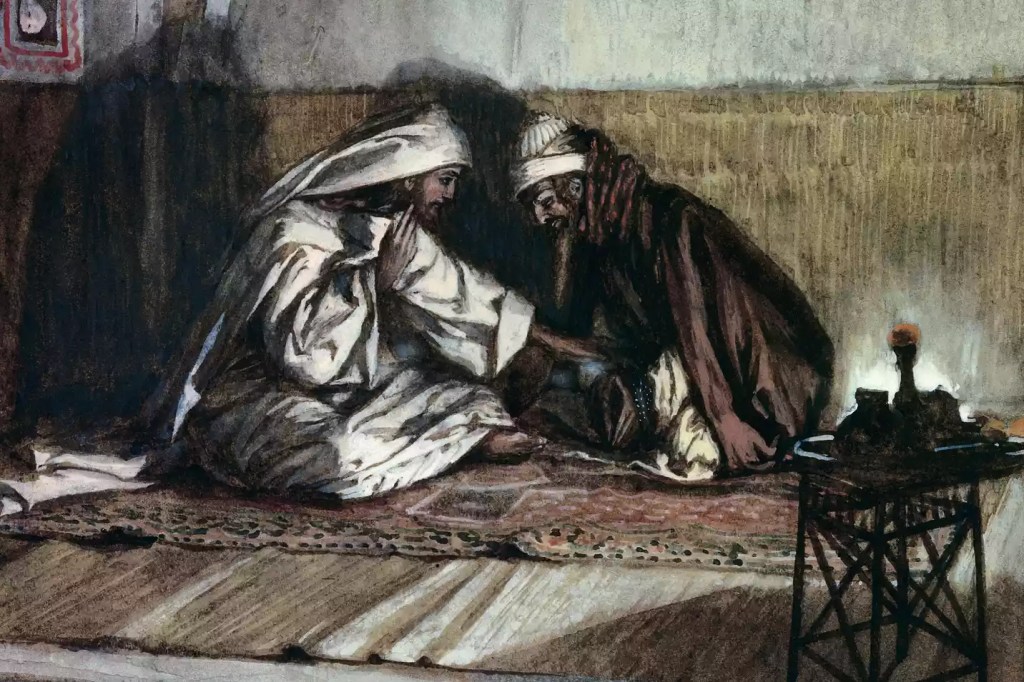
“Nicodemus and Jesus” painting by James Tissot (1836-1902) from SuperStock/GettyImages via learnreligions.com.

One of our favorite singer-songwriters James Taylor is coming next month for a one-night concert at the Mall of Asia Arena; hence, we are featuring two of his songs we find so related with the gospel message this fourth Sunday in Lent also known as Laetare or Rejoice Sunday.

But first, let us take a slight deviation from our usual manner of coming up with the music right away as we realized too the strong links between Nicodemus and James Taylor in their experiences.

Nicodemus belonged to the group of Pharisees, one of the enemies of Jesus at that time. But he admired and believed in Jesus that is why he chose to visit the Lord at night so that people would not notice. Eventually, Nicodemus became a disciple of Jesus after Good Friday after he and another Pharisee named Joseph of Arimathea took the body of Christ and buried him in a tomb (https://lordmychef.com/2024/03/09/lent-is-the-love-mercy-of-god-in-me/).

Nicodemus’ coming to see Jesus at night evoked his situation of being in the darkness of fears and confusions, trying to find directions in life which he found in Christ. It was similar with James Taylor’s plight he beautifully expressed in his 1970 hit Fire and Rain which is about the suicide of a childhood friend as well as his coping with his addiction and depression following his fame.

Just yesterday morning, they let me know you were gone.
Suzanne, the plans they made put an end to you.
I walked out this morning and I wrote down this song,
I just can’t remember who to send it to.
I’ve seen fire and I’ve seen rain. I’ve seen sunny days that I thought would never end.
I’ve seen lonely times when I could not find a friend, but I always thought that I’d see you again.

Won’t you look down upon me, Jesus, You’ve got to help me make a stand.
You’ve just got to see me through another day.
My body’s aching and my time is at hand and I won’t make it any other way.
Oh, I’ve seen fire and I’ve seen rain. I’ve seen sunny days that I thought would never end.
I’ve seen lonely times when I could not find a friend, but I always thought that I’d see you again.

Many times, we find ourselves in situations like Nicodemus when everything is all dark like the night, or James Taylor going through fire and rain.

Now look, Jesus is most present with us when we are in the darkest darkness of the night, right in the middle of a raging storm. Many times we could not see him because he hugs us, embraces us to shield us from more harms.

When Jesus told Nicodemus about his coming crucifixion – “when the Son of Man is raised up” – it was an assurance to us all too that Christ is with us in our worst situation because he suffered first for us on the Cross. I am so glad that JT mentioned Jesus in his song, pleading to the Lord to “look down upon me and help me make a stand.”

That is why we rejoice this Sunday: in the midst of our troubles and sufferings, there are bursts of joy and relief from Jesus within us dwelling in our hearts. And that is why, we find JT’s 1976 hit, Shower the People, so related too with our gospel this Sunday.

When Jesus told Nicodemus how “God so loved the world that he gave his only Son, so that everyone who believes in him might not perish but might have eternal life” (Jn.3:16), it was also a call for us all to be the love and mercy of Christ in the world.

Nicodemus eventually became a disciple of Jesus while JT is still very much around, having weathered so many fires and rains or storms in his life, both telling us how God finds ways to save us, even extricate us from our worst situation. Hence, the need for us to become the presence of Christ’s joy and mercy to people especially those closest to us so that they may realize and experience that God so loved the world because of the way we shower them with love through us.

You can play the game and you can act out the part,
even though you know it wasn’t written for you.
Tell me, how can you stand there with your broken heart ashamed of playing the fool?
One thing can lead to another; it doesn’t take any sacrifice.
Oh, father and mother, sister and brother, if it feels nice, don’t think twice,
just shower the people you love with love, show them the way that you feel.
Things are gonna work out fine if you only will do as I say, just
shower the people you love with love, show them the way you feel.
Things are gonna be much better if you only will.

Here is our doubleheader from the “Sweet Baby James”. Have a blessed, lovely week ahead!

*Both materials are not ours without any intentions at all of infringing its copyrights.

From YouTube.com
From YouTube.com.

Lent is the love & mercy of God in me

40 Shades of Lent by Fr. Nicanor F. Lalog II
Sunday Recipe for the Soul, Lent IV-B, 10 March 2024
2 Chronicles 36:14-16, 19-23 ><}}}}*> Ephesians 2:4-10 ><}}}}*> John 3:14-21
Photo of pink convolvulus from the Botanical Gardens of Jerusalem, flora.org.il.

Many times during prayer periods I banter with God especially when I feel overwhelmed by his kindness and love. Like last Thursday on my way to the adoration chapel when I passed by a row of banks.

As I knelt before the Blessed Sacrament to pray, I just felt like asking God: “BDO (Banco De Oro) ka ba, Lord? Kasi…you always find ways.”

That, for me, my dear friends is the meaning of this fourth Sunday in Lent – God never stops in finding ways to reach out to us, to be with us, to make us experience his love and mercy, kindness and forgiveness despite the hardness of our hearts.

Photo by author, 2019.

Our altars burst in shades of pink this Sunday called Laetare (Latin, rejoice) Sunday from the entrance antiphon that says, “Rejoice, Jerusalem, and all who love her. Be joyful, all who were in mourning; exult and be satisfied at her consoling breast.”

It is a misconception to see Lent as dull and drab due to its penitential nature; while there is the sober tone in our liturgy, let us keep in mind that it is also a season filled with joy and excitement for the coming Easter, the mother of all feasts in the Church.

And today we rightly rejoice because John reminds us in our gospel scene only him narrates – Nicodemus meeting with Jesus in the cover of the darkness of the night – of God’s immense love for us manifested in the dying of Jesus on the Cross.

Jesus said to Nicodemus: “Just as Moses lifted up the serpent in the desert, so must the Son of Man be lifted up, so that everyone who believes in him may have eternal life.” For God so loved the world that he gave his only Son, so that everyone who believes in him might not perish but might have eternal life.”

John 3:14-16
“Nicodemus and Jesus” painting by James Tissot (1836-1902) from SuperStock/GettyImages via learnreligions.com.

John saw a deeper meaning, of a sign pointing to Jesus as the Christ in this conversation with Nicodemus at night. Nicodemus was a Pharisee afraid to come out in the open to show his admiration and belief in Jesus. He eventually joined the disciples on Good Friday with another Pharisee, Joseph of Arimathea when they buried Jesus in a tomb.

See the deep perception of John in this recalling by Jesus to Nicodemus of the bronze serpent raised by Moses in the wilderness (see Num. 21:4-9) as a prefiguration of his own crucifixion.

In the gospel of John, the “lifting up” of the Son of Man refers to Jesus on the Cross. After that scene with the woman caught committing adultery, Jesus declared, “When you lift up the Son of Man, then you will realize that I AM…” (Jn.8:28). Then on Palm Sunday while in the temple area, Jesus told the crowd “‘And when I am lifted up from the earth, I will draw everyone to myself.’ He said this indicating the kind of death he would die” (Jn.12:32-33).

John’s gospel teems with other similar passages showing the inseparability of Christ’s Cross and glory. And so with our life, that is why in the middle of Lent, we rejoice this Sunday!

Photo by author in Petra, Jordan, May 2019.

Like last Sunday, here we find again early in the gospel of John how Jesus laid his vision-mission statement of coming to save us by dying on the Cross during his conversation with Nicodemus that night.

Jesus assured Nicodemus and us today that even while we are in the darkness of life’s many confusions and fears, problems and sufferings, we just have look up to him crucified lighting up our way to life and salvation. That night in their conversation, Jesus assured Nicodemus and us today that even in the worst situations in life when “darkness is our only light and hopelessness is our only hope” as T.S. Eliot wrote in his Four Quartets, God is in us, with us and for us in Christ. Just as when the world was covered in darkness on Good Friday when Jesus died on the Cross, it was the precise moment too of Christ’s glory when he conquered death and sin in obedience to the Father.

Yes, it is true these things are easier said than done but like Nicodemus, even in the darkness of the night we have to dare come close to Jesus, to speak to him and most of all, to hear and listen to him. As one poet had said, “only the brave who walk the darkness of the night shall see the brightness of the stars above.” Most of all, Jesus calls us today to be his love and mercy, his joy and light to the many other Nicodemus groping in the darkness of sin and evil.

In my three years as chaplain in a hospital, I have experienced personally and through others that truth so clear as crystal of God most closest with us in the worst days of our lives. Sometimes, we just sigh deeply as we feel him inside us, assuring us how everything is taken cared of, that everything would be fine.

Like the Israelites in the first reading, we too have to go through an “exile”, a kind of “punishment” not from God but as a result of own our sins and wrongdoing. Many times God let bad things happen to us because we insist on our ways; as God retreats to the back or sides of our lives, he never stops finding ways to save us, even “extricate” us from our imprisonment to sin and sufferings!

Indeed, as St. Paul had said in our second reading today, God is “rich in mercy, because of the great love he had for us” (Eph.2:4). Let us not waste that gift. Even though God forgives every sin no matter how bad it may be, do not forget some of our sins have irreversible consequences we shall face and suffer. Of course, God would still be there to help and guide us but, why wait for that to happen?

There lies the joy and grace – and challenge – of this fourth Sunday in Lent: even while we are in our worst situations in life, in our darkest nights, Jesus is always there for us, in fact, the first to have suffered and died for us so that with him on Easter, we may rise again to new life.

Be the sower of his love and mercy. Be his presence. Be another Nicodemus in the night leading others to the light of Jesus. Let us, therefore, rejoice in the Lord as we pray:

Praise and glory to you,
dearest Father
in giving us your Son
Jesus Christ our Lord,
our light,
our life,
our joy;
make us, O Lord,
your love and mercy
in this world
so everyone may experience
that indeed, God loves the world
that He gives us Jesus through me;
let your Holy Sprit enlighten
my mind and my heart
like Nicodemus
leading those in darkness
into the light of Christ.
Amen.

A joyful week to everyone!

From https://www.wildflowersprovence.fr/plant/convolvulus-lanuginosus/

Lent is acceptance

40 Shades of Lent by Fr. Nicanor F. Lalog II
Friday, Memorial of St. John of God, Religious, 08 March 2024
Hosea 14:2-10 ><]]]]]'> + ><]]]]]'> + ><]]]]]'> Mark 12:28-34
Photo of convolvulus sabatius from frustratedgardener.com
Your words today,
dear Father,
led me back to the
Monday reflection of another
blogger about the word
"acceptance":

“Acceptance” can be seen as a passive word suggesting that we just put up with something we cannot change.

On the other hand, it can be a positive condition in our spirituality by which we prepare ourselves to hospitably receive that which we had not expected. Such positive acceptance suggests a non-judgmental, wise, and discerning heart. 

Sr. Renee Yann, RSM, https://lavishmercy.com/2024/03/03/accepted/
Why are we so fond,
O God, of doing anything
except precisely what you want
us to do?
Why can't we just accept
your words,
your plans,
or your instructions
we always disregard,
"hoping" there could be
something better?

Forgive us, Father,
when even in the
quagmire of sin and evil,
we keep resisting you,
refusing to accept
your suggestions;
let us learn
beginning this Lent
when to just stop
and simply accept
you and your words.
Photo by author, Banaba Tree, 2020.

Thus says the Lord: Return, O Israel, to the Lord, your God; you have collapsed through your guilt. Take with you words, and return to the Lord; say to him, “Forgive all iniquity, and receive what is good, that we may render as offerings the bullocks from our stalls.”

Hosea 14:2-3
Draw us closer to you,
Lord Jesus Christ and your
kingdom by accepting
the basic truth of our faith
that the love of God is
always the love of others;
help us realize
life is more than searching
for what is the best
possible condition
or situation we can have
but to accept our whereabouts
where we can give our best selves
to you through others
to make this world a
better one.
'
Everything, O Lord,
begins in finding you
within each of us
so we may find you in others
especially the sick and
the weakest like St. John of God
who simply accepted
everything that came to his life
as coming from you;
it is in our acceptance
of you, O Lord,
that we begin to lovingly serve
you in others because that is
also when we are able to relate
our lives
with your Church,
with the world,
with our callings;
it is in accepting these
that we become
"not far
from the Kingdom
of God."
Amen.
Photo of a convolvulus tricolor from BBC Gardeners World Magazine.

Lent is reconciliation

40 Shades of Lent by Fr. Nicanor F. Lalog II
Thursday, Memorial of Sts. Perpetua & Felicity, Martyrs, 07 March 2024
Jeremiah 7:23-28 ><}}}}*> + ><}}}}*> + ><}}}}*> Luke 11:14-23
Your words today, O God,
are too strong,
that we are so bad
and, that is so true, too.

Thus says the Lord: When you speak all these words to them, they will not listen to you either; when you call to them, they will not answer you. Say to them: This is a nation which does not listen to the voice of the Lord, its God, or take correction. Faithfulness has disappeared; the word itself is banished from their speech.

Jeremiah 7:27-28
Though we are so bad,
you are still so good to us,
Father; you continue to speak to us
even if you know we do not listen
nor heed your voice.
What is worst,
even in the coming of your Son
Jesus Christ who offered himself
on the Cross, we still refused
to listen and heed his calls,
always asking for signs.

Some of them said, “By the power of Beelzebul, the prince of demons, he drives out demons.” Others, to test him, asked him for a sign from heaven. But he knew their thoughts and said to them, “Every kingdom divided against itself will be laid waste and house will fall against house. Whoever is not with me is against me, and whoever does not gather with me scatters.”

Luke 11:15-17, 23
Lord Jesus Christ,
in your dying on the the Cross,
you have expressed to us
the Father's immense love for us;
indeed, your Cross until now remains
a sign of contradiction in the world
as your calls to love and to forgive,
to be humble and be kind,
to give than to receive
remains a foolishness and weakness
for many of us;
but you continue to speak to us
despite our being deaf and hard-hearted
because by your Cross,
you have shown us too
it is the greatest sign of reconciliation,
reminding us of the many
contradictions within and around us,
of the many contradictions
in the world that can be
reconciled and be made one
in your self-giving in love
we must imitate like your martyrs
Saints Perpetua and Felicity.

Reconcile us
in you, dear Jesus,
make us one in you
on the Cross!
Amen.

Lent is remembering

40 Shades of Lent by Fr. Nicanor F. Lalog II
Wednesday in the Third Week of Lent, 06 March 2024
Deuteronomy 4:1, 5-9 ><}}}}*> + <*{{{{>< Matthew 5:17-19
Photo by Pixabay on Pexels.com
Lent is remembering
especially because we are
beings of forgetfulness;
but, teach us Father,
that to remember you
is not like in remembering
an equation or a formula
as a task of the mind
or intellect;
to remember you, O God,
in the spirit of Lent is
to surrender ourselves to
you whom we do not see
but present among our
brothers and sisters;
to remember you, dear God,
is to surrender ourselves
to your Holy Will
that are not mere laws
and decrees
but the very person
of your Son Jesus Christ.

Jesus said to his disciples: “Do not think that I have come to abolish the law or the prophets. I have come not to abolish but to fulfill. Amen, I say to yo, until heaven and earth pass away, not the smallest letter or the smallest part of a letter will pass from the law, until all things have taken place.”

Matthew 5:17-18
To remember and keep your laws,
dear God is to remember and keep you
found in our brothers and sisters
through your Son Jesus Christ;
indeed, the greatness of any
nation is measured to a large part
in its legal system, in how it is justly
implemented and observed:

Moses spoke to the people and said: “Observe them carefully for thus will you give evidence to your wisdom and intelligence to the nations, who will hear of all these statutes and say, ‘This great nation is truly wise and intelligent people.’ For what great nation is there that has gods so close to it as the Lord, our God, is to us whenever we call upon him? Or what great nation has statutes and decrees that are just as this whole law which I am setting before you today?'”

Deuteronomy 4:1, 6-8
Father, in this season of Lent,
may we recover and put into practice,
not just remember that your laws
are fulfilled in Christ when we love;
how sad that love of God
and love of neighbors
is your law we often forget,
and find hard to remember
because we keep it in our minds
than in our hearts where you dwell.

Most of all, to remember
means to make one a member
of the present moment again:
help us remember in making
you present always in our love
and good works.
Amen.

Lent is contrition with consistency

40 Shades of Lent by Fr. Nicanor F. Lalog II
Tuesday in the Third Week of Lent, 05 March 2024
Daniel 3:25, 34-43 <*((((>< + ><))))*> Matthew 18:21-35
Photo by Digital Buggu on Pexels.com
In this season of Lent,
teach us, Lord, to be
consistent in our contrition;
let us realize that true
contrition for our sins is
not only when we have cried,
nor when we have beaten
our breasts with mea culpa,
mea culpa, mea maxima culpa,
nor when we say sorry to
everyone we have sinned.
Being sorry for our sins
before you, God our Father,
is being consistent -
when our contrition leads us
to change our evil ways
and most of all, when we
become consistent in our
prayer and lives
that we stop with our
sins and evil ways.

Azariah stood up in the fire and prayed aloud: “For we are reduced, O Lord, beyond any other nation, brought low everywhere in the world this day because of our sins. But with contrite heart and humble spirit let us be received; as though it were burnt offerings of rams and bullocks, or thousands of fat lambs, so let our sacrifice be inn your presence today as we follow you unreservedly; for those who trust in you cannot be put to shame.

Daniel 3:25, 37, 39
Most of all,
O God,
to be contrite for our sins
is being consistent also
in being forgiving
with our fellow sinners;
every day, we call you
God "Our Father",
asking you to forgive us
our sins as we forgive
those who sin against us
but so often,
we just say these words
without really acting on them,
fulfilling them by forgiving
our fellow sinners;
to be sorry for our own sins
is to see also the pure
heart of another sinner
asking for forgiveness
of sins.

To be contrite
is to be consistent
in forgiving others
from one's heart
because a truly contrite heart
sees and feels
a fellow contrite heart too!
Amen.