Lord My Chef Daily Recipe for the Soul by Fr. Nicanor F. Lalog II
Thursday, Fifth Week in Ordinary Time, Year II, 12 February 2026
1 Kings 11:4-13     ><))))*> + ><))))*> + ><))))*>     Mark 7:24-30
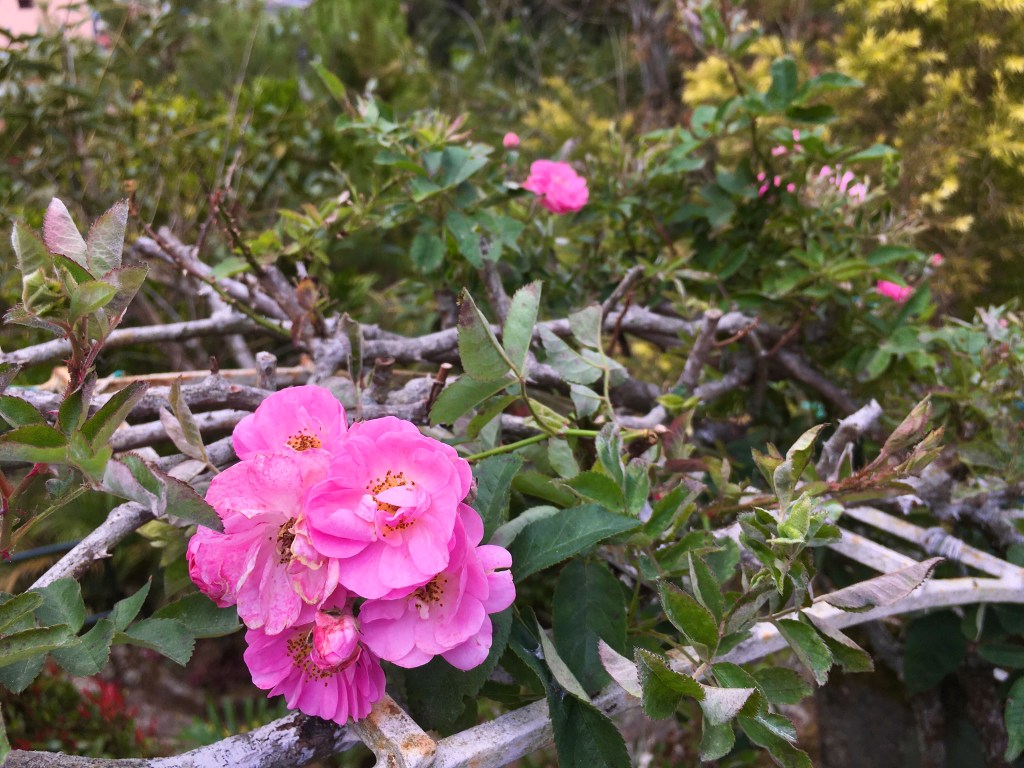
Photo by author, Mt. St. Paul Retreat House, La Trinidad, Benguet, February 2020.
Lord Jesus Christ,
help me find
my way back home
to you again;
I am like King Solomon
at this stage:
lost and empty,
confused despite being wise
in world's standards;
like Solomon,
I have been ruled by my
emotions and many other
considerations as I rationalise
everything that have all led
me to sin and bad behavior;
grant me O Lord Jesus
that wisdom found in your
way of the Cross where truth
and goodness reign.
Lord Jesus Christ,
grant me humility
that leads to intimacy
in you wherein I find my
true place in life
and in society like
that Syrophoenician woman
who begged you to heal her
daughter; what a beautiful
image of your love for us,
finding us,
going where we are;
how blessed are we like
that pagan woman
who recognized you,
Jesus, passing through
a foreign land!
Help us regain
the wisdom of Solomon
of knowing and doing
what is true and good
while remaining humble
and sincere like the
Syrophoenician woman.
Amen.
Photo by author, Mt. St. Paul Retreat House, La Trinidad, Benguet, February 2020.
Lord My Chef Daily Recipe by Fr. Nicanor F. Lalog II
Monday, First Week of Advent, 01 December 2025
Isaiah 4:2-6     ><]]]]'> + ><]]]]'> + ><]]]]'>     Matthew 8:5-11
Photo by author, Malolos Cathedral, December 2018.
Blessed are you,
O God our Father
for this first day of December,
the first working day in this
blessed Season of Advent
as we prepare for your Son
Jesus Christ's Second Coming;
cleanse our hearts, O Lord
so that you may dwell in us,
come to us as as we
dwell in you,
come to you,
"our shelter and protection;
shade from parching heat of day,
refuge and cover from storm
and rain" (Isaiah 4:6).
How lovely are your words today,
O Lord, as you fulfill in Jesus Christ
our gathering in you as your people,
this time not just in a building
like the old temple of Jerusalem
nor our modern churches;
teach us to be more humble
like that centurion in recognizing
your supreme authority for
you are Authority yourself;
despite his not being a Jew,
the centurion had the faith
and humility in Jesus Christ's
healing of his servant without
touching nor seeing him.
O dear Jesus,
you are the New Temple,
you are our Temple,
our dwelling no longer made
by hands: grant us the grace
of genuine faith and humility
in you especially during the Mass
right before we receive you in
the Holy Eucharist saying the
very same words of that centurion
you praised, "Lord, I am not worthy
that You should come under my roof,
but only say the word and my soul
shall be healed" (Matthew 8:8).
Amen.
Lord My Chef Sunday Recipe for the Soul, 26 October 2025
Thirtieth Sunday in Ordinary Time, Cycle C
Sirach 35:12-14, 16-18 ><}}}}*> 2 Timothy 4:6-8, 16-18 ><}}}}*> Luke 18:9-14
Photo by author, Alberione Center, Araneta Ave., QC, 11 September 2025.
We got our inspiration anew for this Sunday’s reflection from the blog of Sr. Renee Yann, RSM whom we follow at WordPress (https://lavishmercy.com/2025/10/18/pride-of-place-2/). Her blogs are so wonderfully written with reflections so deep, inspiring and uplifting.
In her recent blog, Sr. Renee tells of their parishioner they fondly called “Mamie” who sat on the same seat in their church they called “Pride of Place” for forty years until her death. And for a good reason. Despite her many trials and sufferings in life, Mamie never failed in helping those in need in their community.
Photo by author, Carmel of the Holy Family Monastery, Guiguinto, Bulacan, 25 September 2025.
As told by Sr. Renee’s dad, Mamie had always sat in the same pew through the Depression as she struggled to keep her grocery opened; after the death of her husband in an accident, Mamie never missed their Sunday Masses seated at the same spot – in fact, she was at the same pew on a Sunday Mass when her son was killed at Pearl Harbor. It was actually their community who “proudly awarded” the seat as a “pride of place” to Mamie following her life of Christian witnessing.
“Pride of Place” isn’t always something physical like a pew in church. More often it’s a moral or spiritual position that’s granted to us by others after we pay moral dues. These dues include trustworthiness, sacrifice, contribution, and wisdom…“Pride of Place” doesn’t come automatically with power or position. It comes with respect. Unfortunately, not every parent, boss, teacher, pastor, elder, president, or champion deserves it. It must be earned and kept as a trust. (https://lavishmercy.com/2025/10/18/pride-of-place-2/).
The story reminded me of our own “pride of place” in the church, of people always occupying the same pew or spot during the Mass that they are amazed how we priests get to know them simply with their “seating arrangement” like their coming late or being absent!
Photo by author, Carmel of the Holy Family Monastery, Guiguinto, Bulacan, 25 September 2025.
But, what struck me most with Sr. Renee’s piece is the spiritual meaning of “pride of place” which refers actually not to where we sit but where we stand. That standing is more than physical but spiritual and moral in nature. Where we stand is about our stance or conviction not only on issues but about our faith and relationship with God expressed in our dealings with others exactly what our gospel tells us this Sunday.
“Two people went to the temple area to pray; one was a Pharisee and the other was a tax collector. The Pharisee took up his position and spoke this prayer to himself, ‘O God, I thank you that I am not like the rest of humanity — greedy, dishonest, adulterous —- or even like this tax collector. I fast twice a week, and I pay tithes on my whole income.’ But the tax collector stood off at a distance and would not even raise his eyes to heaven but beat his breast and prayed, ‘O God, be merciful to me a sinner.’ I tell you, the latter went home justified, not the former; for whomever exalts himself will be humbled, and the one who humbles himself will be exalted” (Luke 18:10-14).
Painting by French artist James Tissot, “The Pharisee and the Tax Collector” (1886-1894) from commons.wikimedia.org.
For the second straight Sunday, we hear another teaching of Jesus about faith expressed in prayers in another parable only Luke has.
Last Sunday we reflected that to persist in prayer is not about wearing God down but of allowing our hearts to clarify our desires until we silently surrender to what God knows is best for us which is salvation or “justification”. See how we find that word again – justified – as the key to this parable at its end when Jesus declared that it was the prayer of the publican that was heard for “he went home justified”.
The object of every prayer is God because prayer is a relationship, not just a ritual. To be filled with God is what holiness is, not being sinless. In fact, holiness is finding our sinfulness before God. And that is the essence of our parable this Sunday.
That is why Jesus directs our attention in the “where” when we pray – not just the location when we pray but our “place” in that relationship with God who is our very foundation. When all we see is our self in prayer like in any relationship, it means it is a monologue, a one-way street. Worst, it is an indication of the absence of God, even of others because the pray-er is so preoccupied with his or her very self!
Photo by the author at the Wall of Jerusalem, May 2017.
The Pharisee was clearly not in God even if he were in front of the temple. His very self was very far from God and all he had was his bloated ego. He may be a very pious person but not really good at all for he has no space for God and for others. He is a very closed man without any room for others. Remember, Luke said that “Jesus addressed this parable to those who were convinced of their own righteousness and despised everyone else” (Lk.18:9).
The tax collector, on the other hand, may be physically far outside the temple but was the one actually nearest to God with his self-acceptance and admission of sins, of his need for God. He was closest to God because he was more open with God and with others by admitting his true self.
Prayer is more than entering a church or a prayer room, or finding our most suitable spot or space to pray. Prayer is being one with God, one in God. Prayer is losing our very self in God. The question now is, “where are we when we pray?
I have always loved this photo by friend from GMANews, Ms. JJ Jimeno who took this while she was praying inside the UP-Diliman Adoration Chapel in May 2019; she aptly captioned it as “losing one’s head in prayer.” True!
First, we become one with God in prayer when we admit our sinfulness, when we confess our sins to him, and own them without any “ifs” and “buts”. God always comes to those who truly open themselves to him by emptying themselves of their sins and inadequacies.
The tax collector was justified in his prayer more than the Pharisee because in confessing his sins, he admitted his need for God. He knew very well his place, so unlike the Pharisee who felt God owes him so much!
Second, we are in God in prayer when we are humble and have the conviction to leave everything behind and go down with God into the lowest point because one is so confident of the efficacy of prayer like what Ben Sirach tells us in the first reading.
The one who serves God willingly is heard; his petition reaches the heaven. The prayer of the lowly pierces the clouds; it does not rest till it reaches its goal (Sirach 35:16-17).
Most often in life, friendships and relationships are kept when we are willing to take the lower stance, not necessarily admitting fault or guilt in any misunderstanding because being lowly indicates the person’s need for the other person and of one’s love to work on that relationship despite its fragility. I tell couples that when they quarrel, the first who must first make the move to greet the other person is not the guilty one but the one with most love and self to give.
Third, we are in God in prayer when there is an offering daily of one’s self to God. It is not enough to be lowly and sorry for our sins in prayer. It has to be sustained because prayer is a discipline like any sport as St. Paul tells us in the second reading, calling us to persevere and endure until the end for Jesus Christ “who shall award us with the crown of righteousness in heaven.”
We are all sinners forgiven and beloved by God. When we find our right place in God in prayer, then we also find him. And meet him. Amen. Have a blessed week ahead into November! Fr. Nicanor F. Lalog II, Our Lady of Fatima University, Valenzuela City (lordmychef@gmail.com)
Photo by author, Carmel of the Holy Family Monastery, Guiguinto, Bulacan, 25 September 2025.
Lord My Chef Daily Recipe for the Soul, 15 October 2025
Wednesday, Memorial of St. Teresa of Avila, Virgin & Doctor of Church
Romans 2:1-11     <*{{{{><  +  ><}}}}*>     Luke 11:42-46
Photo by author, Mt. Arayat viewed from Angeles City, Pampanga, May 2022.
Your words,
O Lord Jesus
are sobering...
and so liberating.
You, O man, are without excuse, every one of you who passes judgment. For by the standard by which you judge another you condemn yourself, since you, the judge, do the very same things… Or do you hold his priceless kindness, forbearance, and patience in low esteem, unaware that the kindness of God would lead you to repentance? (Romans 2:1, 4)
How lovely are your words
through St. Paul today,
Jesus: "You, O man, are without
excuse, everyone of you"...
whoever you are.
And that's all of us!
What a beautiful reminder
in this time that
when it comes  to God's
judgment, not one of us
is any better than the other;
indeed, there is no partiality
in you, O Lord,
because you are so kind
to give each one of us
to have that chance
to change for the best,
to be able to enter into
a communion in you
in prayer.
On this Memorial
of St. Teresa of Avila,
teach us to strive in prayers,
to learn her ways of discipline
and humility,
of openness and trust
in you so that we may
enter into your very heart
O Lord where only you
would suffice.
Amen.

St. Teresa of Avila,
Pray for us!
Fr. Nicanor F. Lalog II
Our Lady of Fatima University
Valenzuela City
(lordmychef@gmail.com)
Lord My Chef Sunday Recipe, 31 August 2025
Twenty-Second Sunday in Ordinary Time, Cycle C
Sirach 3:17-18, 20, 28-29 ><}}}*> Hebrews 12:18-19, 22-24 ><}}}*> Luke 14:1,7-14
“Meal in the House of a Pharisee” 1886-1896 painting by James Tissot from brooklynmusueum.org.
For the next three Sundays beginning today, Luke gathered teachings of Jesus Christ all set on the dining table, a sort of some “table talks” about the great banquet in the end of time and how we could all get in to share in the eternal meal with the Father.
On a sabbath Jesus went to dine at the home of one of the leading Pharisees, and the people there were observing him carefully. He told a parable to those who had been invited, noticing how they were choosing the places of honor at the table (Luke 14:1, 7).
I love the way Luke presented this scene when he said “the people there were observing Jesus carefully” while the Lord told them a parable after “noticing how they were choosing places of honor at the table.”
How lovely! People observe, Jesus notices.
As it had happened in every instances of gatherings with Jesus, people carefully observed him, trying to find something to accuse him in of disregarding their traditions and laws like healing the sick on a sabbath day. They have “boxed” and judged Jesus as a dissident and a trouble-maker among them in his apparent disregard of laws and traditions.
Photo by author, Manila Club, BGC, June 2025.
In a funny twist, Luke tells us in this scene the immense love of Jesus then and now for everyone that despite his noticing and knowing everything in us, he neither counted those things against us nor ever judged us. How sad many of us with that habit of putting God in a box like a cop keeping tabs of our infractions when in fact God simply noticed our actions and behavior to invite us to become better without any judgment at all.
Keep in mind this scene reveals to us its context of the heavenly banquet which took place after the sabbath services at the synagogue where Jesus participated, hosted by a Pharisee, a VIP of the synagogue and of the society at that time. It was a party where every who’s who was supposed to be present, with everyone competing for the best seats closest to the host. And so, Jesus the keen observant but never judgmental used the occasion to teach us the essence of humility to make it to heaven or eternal life that is signified by a wedding banquet like that big meal he attended.
“When you are invited by someone to a wedding banquet, do not recline at table in the place of honor. A more distinguished guest than you may have been invited by him… For everyone who exalts himself will be humbled, but the one who humbles himself will be exalted” (Luke 14:8, 11)
These past Sundays, we have seen Christ’s insistence of the Father’s desire to have everyone welcomed into heaven by giving us some instructions of what to do to gain eternal life.
This Sunday while in a big party, Jesus took the occasion to teach us the value of humility to get into heaven. From doing, Jesus now moves into being, our disposition and attitude to make it into heaven where what matters most is not where we are seated but where we stand. Recall how Jesus reminded the brothers James and John with their mother that he has nothing to do with the seating arrangements prepared by the Father in heaven after she requested her two sons to be seated beside him when he comes into his glory.
Heaven is more of where we stand with Jesus where his virtue of humility is most pronounced when he “humbled himself, becoming obedient to death, even death on a cross” (Phil.2:8). That is why St. Augustine taught that “humility is a sign of Christ”, a revelation of Jesus that allows us to recognize him our Lord and Master leading us to the Kingdom of heaven without any feelings of inferiority and despair.
On the Cross which he prefigured at his Last Supper, Jesus showed himself as the most humble of all who went to life’s lowest point of suffering and dying to meet us as he noticed everything in us to lift us up and be like him, humbly standing in our sufferings. It is on the Cross that we find humility as the basic and essential requirement to get into the heavenly banquet of the Lord.
Very often when we examine our state of humility, what comes to our mind are the many negativities we have like our sins and failures, vices and weaknesses, our being unworthy. But, that is when we bow down most to beg for Christ’s mercy like before the Holy Communion when we pray, “Lord, I am not worthy to receive you under my roof but only say the word and I shall be healed.”
That is both the humility of Jesus and of us humans so vividly expressed at the washing of the feet after the Last Supper. Normally, we look up to Jesus in heaven but at the washing of feet, like every time we receive Holy Communion, we take the higher position, looking down at him not with pride but with all humility because Jesus humbled himself first before us. Here we find humility as seeing ourselves the way Jesus sees us – weak and sinful, yet so loved and forgiven. This is what Ben Sirach taught us in the first reading: humility is the fundamental attitude of wisdom because it opens us to the splendor of God when we find our self-worth and value too!
Without humility, it is either we see only the best or the worst in us as a person, without God, without others.
This is the bigger issue with the “nepo babies” now being bashed on social media after flaunting their wealth and ostentatious lifestyles. Their posts were far from inspiring, at most are tasteless and most convulsive. All we have noticed in their posts is their pride not only in lacking humility but most precisely in not finding value in themselves. Sadly but I dare say they are the ugliest and most pitiable persons because they find value only in wealth and things, not in themselves as persons. Hence, the flaunting of their possessions that only make them so pathetic because along that came their utter disregard for others especially the poor who suffer most with their parents’ greed for money through corruption.
Humility is always uplifting in the positive sense, not looking at others as below us but to realize despite our sins and weaknesses, we are loved, we are noticed as a person so worthy, so valuable. When we are humble, then we become joyful too because we are assured of love and acceptance despite our flaws. This is the gist of the message to us this Sunday of the author of the Letter to the Hebrews: unlike the Israelites in the Old Testament who were so fearful to approach God who spoke to them with thunder and lightning, we can get close to God in Jesus who humbled himself to be one with us by dying on the Cross.
True humility keeps us rooted with our selves, with others and with God. It is this rootedness best expressed in the Sunday Eucharist that we are able to follow Jesus in his journey to Jerusalem and eventually into heaven in all eternity. Amen.Have blessed Sunday and most blessed September too!
Photo by the Marketing Office, Our Lady of Fatima University, Valenzuela City, June 2025.
Lord My Chef Daily Recipe for the Soul, 15 August 2025
Friday, Solemnity of the Assumption of the Blessed Virgin Mary
Revelation 11:19, 12:1-6, 10 ><}}}*> 1 Corinthian 15:20-27 ><}}}*> Luke 1:39-56
“The Assumption of the Virgin” by Italian Renaissance painter Titian completed in 1518 for the main altar of Frari church in Venice. Photo from wikidata.org.
Thank you,
Most Blessed Virgin Mary
for being our Mother
and most of all,
our model disciple
in your Son Jesus Christ.
As we celebrate today
the Solemnity of your Assumption
into heaven,
we also celebrate our blessed
assurance and hope
that someday
we too may join you with God
body and soul
if we remain one and united
in Jesus Christ our Savior.
Pray for me,
O Blessed Mother
that I too may rejoice in God
for all that he does for me
while seeing my lowliness
not my pride.
Mary set out and travelled to the hill country in haste to a town of Judah, where she entered the house of Zechariah and greeted Elizabeth (Luke 1:39-40).
Pray for me,
Blessed Mother
to go in haste
filled with joy
and excitement in the Lord,
determined and committed
to the mission to proclaim
the coming of our Savior Jesus Christ;
pray for me, dear Mary
to go in haste
filled with joy
and excitement in the Lord
for his love for me I have to share
with everyone like you;
pray for me,
Blessed Mother
to go in haste
celebrating the Christ's
presence and coming,
our fulfillment in him.
When Elizabeth heard Mary’s greeting, the infant leaped in her womb, and Elizabeth, filled with the Holy Spirit, cried out in a loud voice and said, “Blessed are you among women, and blessed is the fruit of your womb…Blessed are you who believed that what was spoken to you by the Lord would be fulfilled.” And Mary said: “My soul proclaims the greatness of the Lord; my Spirit rejoices in God my Savior” (Luke 1:41-42, 45-47).
Dear Jesus,
forgive me when I am filled
with pride,
doubts,
and mistrust in you
that slow me
from sharing
you with others and
the world;
fill me with humility
like Mary,
that I may sing too
a magnificat to you,
singing your saving grace
because every time
we rejoice in you
and your works in us
that is when we experience
heaven
our ultimate end
when in body and soul
we shall celebrate you
with Mary our Mother too.
Amen.

Fr. Nicanor F. Lalog II
Our Lady of Fatima University
Valenzuela City
(lordmychef@gmail.com)
Lord My Chef Daily Recipe for the Soul, 28 July 2025
Monday in the Seventeenth Week of Ordinary Time, Year I
Exodus 32:15-24, 30-34     <*(((>< + ><)))*>     Matthew 13:31-35
Photo by Mr. Red Santiago of his son praying in our former parish, January 2020.
Lord Jesus Christ,
let me be like the mustard seed,
"the smallest of all the seeds,
yet when full grown
it is the largest of plants"
(Matthew 13:32);
let me be like yeast
"that a woman took
and mixed with three measures
of wheat flour until the whole batch
was leavened"
(Matthew 13:33);
let me be small,
dear Jesus
in this world where
the rule is to be big,
to be loud,
to be noticed.
Let me be small
silent,
and hidden,
 like the mustard seed
and the yeast
because life's fullness
lies in you, Jesus
who comes in emptiness
not fullness,
in darkness not klieg lights,
in silence not noise,
in poverty not wealth
and in simplicity
not popularity and fame;
true peace happens
only in your Kingdom, Jesus
not in the competing kingdoms
of the world.

When I look back in time,
I have realized how those
things I considered as small
and insignificant both
in my life and the world
were the things that have grown
into something that sustain
and shelter others,
of course with much faith,
hope and love in you!

Now I am older too,
I have realized the value
and benefits of bread
but bread cannot rise
 to become nourishing
 without the lowly yeast;
before I can become a bread
for others like you Jesus,
I need the grace to be
child-like,
to be little,
to decrease like the yeast
 so that you increase,
 Jesus.
Let me be small,
hidden and silent,
Jesus,
always patient
in waiting for you
unlike the Israelites in Sinai
who made a golden calf when
they became impatient with Moses'
meeting with God atop the mountain;
let me stop
comparisons so I remain
little and humble in you,
Jesus who has become human
and small like us to stir
us to true greatness
as beloved children
of the Father
to begin building
your kingdom.
Amen.

Fr. Nicanor F. Lalog II
Our Lady of Fatima University
Valenzuela City
(lordmychef@gmail.com)
The Lord Is My Chef Christmas Recipe for the Soul by Fr. Nicanor F. Lalog II
Our Christmas Homily, 25 December 2024
Isaiah 52:7-10 ><}}}}*> Hebrews 1:1-6 ><}}}}*> John 1:1-18
From LDS_Believer on X, 23 December 2016.
A blessed merry Christmas to you and your loved ones! On this most joyous season of the year that is also the most commercialized, let us reflect about gift-giving.
During Christmas, I hear a lot of people complaining of finding it difficult in giving gifts, in finding the most suitable gift to give to their family and friends. It is the other way around for me as I find it more difficult in receiving gifts than giving.
Don’t get me wrong. I have no claims to whatsoever except that I have always preferred to be a giver than a receiver. In fact, it is my favorite “love language”. Maybe it is part of my upbringing being the eldest in the family. My father taught me the value of hard work to be independent, never to rely on others unless necessary while my mother instilled in me the importance of sacrifice and contentment as she would say, “magtiis kung ano lang mayroon at hindi lahat ng kaya ay bibilhin.”
Friends know me so well of not opening gifts immediately that so often, food given to me end up expired. That is why I always ask people if their gift is food that needs to be consumed immediately like cakes, chocolates and ice cream!
Recently I gifted a religious priest with vestments for his silver anniversary of ordination three weeks ago. Just before the Simbang Gabi started as I shopped for my Christmas vestment, I messaged him for his chasuble size (the vestment we put on top of our alb). It turned out he goes too to the same shop and told me how he had always loved one of those Roman albs made there, a surplice alb with black lining. Since he had celebrated his silver anniversary as priest, I bought one of the alb too with the chasuble delivered to him via courier that day. That afternoon, Father almost shouted in joy in his messages, thanking me for the gifts of a chasuble and a Roman alb, asking, “akala ko yung alb lang bakit may chasuble pa, Father?” I simply told him “because you are a good priest; just pray for me and don’t mention it in your posts.”
During the Simbang Gabi last week while checking on my Facebook, I saw his posts wearing my gifts in his Misa de Gallo. It looked so good on him, the nice off-white chasuble with a V-shaped design on the chest with a classic cross underneath it the surplice alb with black lining he liked. He looked so holy. And I felt so good at myself having made a brother priest so happy.
At that moment, I felt the deep sense of joy of Christmas whatever it meant, as if Jesus were touching me, speaking to me in His most genteel voice an important lesson about gifts.
Through that priest, Jesus answered my prayer at the start of the Simbang Gabi, “how can I truly share you, Lord, this Christmas?”
Through that priest, I felt Jesus speaking into my heart that for me to be able to truly share Him this Christmas, I must first receive Him. We can only be a true giver when we are a sincere and humble receiver first.
I must confess that aside from my upbringing, it is largely pride that is the reason I prefer giving than receiving. As a giver, there is that sense of pride, of having the upper-hand with power and control especially when some gifts I have received are not of my size or I already have like books. It is easier to give especially when we have so much of things without really feeling deep inside the love and freedom why we give. Very often we give to show we don’t need others because we have.
Being a receiver requires humility in the first place, that we are incomplete and dependent on others. When we are able to receive, our giving becomes meaningful because when we receive gifts, we first receive the giver, the gift of every person we must always warmly receive with joy. As I relished my joy in seeing that priest appreciating my gifts – and me – I felt God patting my shoulder, as if telling me, that is how He feels when we receive and appreciate His Christmas gift, the child Jesus on the manger, asking us to receive Him, to love Him, to take care of Him.
He came to what was his own, but his own people did not accept him (John 1:11).
Photo by author, Christmas 2022.
This Christmas, let us first realize that we are first of all receivers of God’s gift in Jesus Christ. Let us receive Him so we can share and give Him as we pray:
A most blessed happy birthday to You,
Lord Jesus Christ!
You are our most precious,
the most important gift
we have received from the Father.

Forgive me
when I refuse to receive and accept You
 among the people who love and care for me,
for the people you send me to love and care too.

Forgive me
 when I refuse to receive and accept You
among those who have hurt and offended me
that until now I have not truly forgiven,
having grudges against them.

Forgive me
 when I refuse to receive and accept You
 in my own giftedness, always doubting my goodness,
my talents that I cannot be bold enough
in sharing You because I might fail,
I might err, I might not measure up to others' standards.

Grant me the grace this Christmas,
Lord Jesus, to be small and fragile like You
as an infant, so vulnerable, trustingly accepting
even the unfavorable situations where I am
so that I can share and give You truly
to those who are willing to welcome You like me.
Amen.
The Adoration of the Shepherds”, a painting of the Nativity scene by Italian artist Giorgione before his death at a very young age of 30 in 1510. From wikipediacommons.org.
The Lord Is My Chef Daily Recipe for the Soul by Fr. Nicanor F. Lalog II
Simbang Gabi-5 Homily, 20 December 2024
Isaiah 7:10-14     <*((((><  +  ><))))*>     Luke 1:26-38
Photo by Mr. Boy Cabrido, National Shrine of Our Lady of Mt. Carmel, QC, 16 December 2024.
Last Monday at the start of Simbang Gabi, one of our priests became viral when at the recessional of their Mass while the choir was joyfully singing “Pasko na! Pasko na!”, he sarcastically sang “Hindi pa! Hindi pa!”
Many people laughed at the viral video with some commenting that Father was right because it wasn’t Christmas yet while a liturgist advised choirs to check the many choices of Advent songs now available online. But, sad to say, the people missed the whole point of the incident.
What our brother-priest did was not funny at all in putting to shame his own choir members and most of all, in destroying the solemnity of the Mass.
And the problem was not really the choir at all but the priest himself. What the priest did at the end of the Mass was a self-indictment of his lack of formation for his choir members and of any dialogue at all.
Photo by author, Advent in previous parish, 2018.
Advent is a dialogue between God and humans that led to the presence of God among us in Jesus Christ on Christmas. It is a process that continues in our own time as we are all called to be open to God and with others for dialogue like Mary in the annunciation of Christ’s birth by Archangel Gabriel.
Dialogue is more than conversing to improve relationships among people in a community or organization but a way of being with others as opposed to a way of thinking through issues and problems only. Dialogue is being present with others, of giving one’s self to feel and listen and experience the other person.
Luke shows us in his second Christmas story today how this true meaning of dialogue between God and Mary happened.
In the sixth month, the angel Gabriel was sent from God to a town of Galilee called Nazareth, to a virgin betrothed to a man named Joseph, of the house of David, and the virgin’s name was Mary. And coming of her, he said, “Hail, full of grace! Then Lord is with you.” But she was greatloy troubled at what was said and pondered what sort of greeting this might be. Then the angel said to her, “Do not be afraid, Mary, for you have found favor with God… But Mary said to the angel, “How can this be, since I have no relations with a man?” And the angel said to her in reply, “The Holy spirit will come upon you, and the power of the Most High will overshadow you. Therefore the child to be born will be called holy, the Son of God. And behold, Elizabeth, your relative, has also conceived a son in her old age, and this is the sixth month for her who was called barren; for nothing will be impossible for God” (Luke 1:26-30, 34-37).
“Cestello Annunciation” by Botticelli painted in 1490; from en.wikipedia.org.
See the artistry and genius of Luke as a storyteller. Yesterday he presented to us the annunciation of the birth of John the Baptist to his father Zechariah while incensing the Holy of Holies in the temple of Jerusalem.
Notice the great differences in the flow of conversations and dialogue in the two annunciations narrated by Luke. Both Zechariah and Mary were troubled at the coming of the angel. And who would not be in a such unprecedented event? However, there is one minute detail we find in Luke’s narration of the two annunciations that reveal something so big and deep in meaning.
According to Luke, “Zechariah was troubled by what he saw, and fear came upon him” (Lk. 1:12) while Mary “was greatly troubled at what was said and pondered what sort of greeting this might be” (Lk. 1:29). Both were troubled which is normal but their reactions differed so great with Zechariah becoming proud while Mary was humbled.
I believe that it was more than their age and differences in social status that Zechariah was simply “troubled” while Mary was “greatly troubled” but it was largely due to their dispositions and openness to God.
Zechariah was proud of his stature and of his intelligence, trying to take hold and control of everything that is why he was seized with fear. When he told the angel, “How shall I know this? For I am an old man, and my wife is advanced in years” (Lk.1:18), Zechariah was troubled and fearful because he felt challenged as a priest much respected in the community, choosing to stand proud of his position and intelligence as if having a child is all an effort of man and woman alone! There was no dialogue as Zechariah was proud that is why he was made mute by the angel. He had forgotten all about God!
Photo by author, Basilica of the Annunciation, Nazareth, Israel, May 2019.
Compare Mary’s reaction to the annunciation, “But she was greatly troubled at what was said and pondered what sort of greeting this might be.”
Luke always portrayed Mary as the listener and doer of the word, the one who ponders at the words spoken to her not only by the angel here but later at the birth of Jesus those spoken by the shepherds, then by Simeon at the Presentation and by Jesus Himself at the wedding in Cana. Mary has always been open to dialogue, to feeling the other person conversing with her. She was not concerned only with the news and information but with the persons involved.
In that sense, there is her remarkable humility and great courage at the same time. True humility is not really about being submissive but most of all being filled with courage, not with fear. Mary as the very young virgin from a poor family in a town nobody gave importance stood fearless before the angel as she took hold of herself to ponder on the words spoken to her. Despite the very unprecedented moment with an angel, Mary had that inner engagement with the words she had just heard without any violent reactions.
Photo by author, December 2018.
Unlike Zechariah, Mary was the one actually in control of herself and of her emotions. The Jedi Master Yoda of Star Wars said it so well, “fear leads to anger, anger leads to destruction”. Zechariah was afraid of losing power and control but Mary was not bothered at all. In fact, she faced the challenge head on, reflecting deep in her what is this going on? Am I awake, is this a dream would most likely be the words playing in her mind and heart. Mary had presence as she tried to feel the angel and later God that no wonder, Jesus came to her womb and we have Christmas!
The humility and courage of Mary became more evident when she said to the angel, “How can this be, since I have no relations with a man?”
She was not afraid at all to be become the Mother of God! There was already her willingness to submit, as if telling the angel, “OK let’s do it but tell me how?” whereas Zechariah was argumentative, trying to escape responsibilities? Such was the attitude too of Ahaz in the first reading, denying he won’t test God when in fact he had already aligned with other kings in the region as he feared the invading enemies near his borders.
It was at this moment when the good news became most closest to us through Mary when the angel explained of the coming of the Holy Spirit, of how the power of God would overshadow her, assuring her that nothing is impossible with God.
How wonderful is this scene for us to emulate Mary so that we experience Christmas daily in our lives, not only of God coming but being present in us and among us. Can we dare to be open before God like Mary? Have a blessed Friday!
Photo by author, Fatima Avenue, Valenzuela City, December 2024.
The Lord Is My Chef Daily Recipe for the Soul by Fr. Nicanor F. Lalog II
Wednesday in the Thirty-Third Week of Ordinary Time, Year II, 20 November 2024
Revelation 4:1-11         <*((((><  +  ><))))*>         Luke 19:11-28
Photo by author, sunrise in Dumaguete City, 11 November 2024.
How lovely are your words
these past days, dear Lord,
of Bartimaeus gaining his sight
and Zacchaeus being raised in his
stature before you in his conversion.

We are Bartimaeus and Zacchaeus!

Grant us, Jesus vision more than sight
to see beyond material things
so that we may aspire always to rise
above our many shortness in life.
Open our hearts and our minds like John
to experience a vision of God,
of heaven amid all the darkness
and sufferings in this life.
I, John, had a vision of an open door to heaven, and I heard the trumpetlike voice that had spoken to me before, saying, “Come up here and I will show you what must happen afterwards” (Revelation 4:1).
You are beyond descriptions,
God our Father like what John saw
in his vision; teach us to submit
ourselves to You in prayer and silence
than manipulate who You really are
so beyond understanding!
“He replied, ‘I tell you, to everyone who has, more will be given, but from the one who has not, even what he has will be taken away. Now as for those enemies of mine who did not want me as their king, bring them here and slay them before me.'” After Jesus had said this, he proceeded on his journey up to Jerusalem (Luke 19:26-28).
Like Zacchaeus yesterday,
he realized that to rise in one's stature
is actually to go down,
to be humble
to allow Jesus raise us up
in His loving mercy;
take away our worldly thoughts
about "Jerusalem"
and learn to lose ourselves in You,
Jesus, to truly see
the glory awaiting us
in You.
Amen.
Photo by author, Bohol Sea from Salum Dive Resort, Dauin, Negros Or., 10 November 2024.









 lordmychef.com