Be gentle to be in the banquet

Lord My Chef Sunday Recipe for the Soul, 28 September 2025
Twenty-Sixth Sunday in Ordinary Time, Cycle C
Amos 6:1, 4-7 ><}}}}*> 1 Timothy 6:11-16 ><}}}}*> Luke 16:19-31
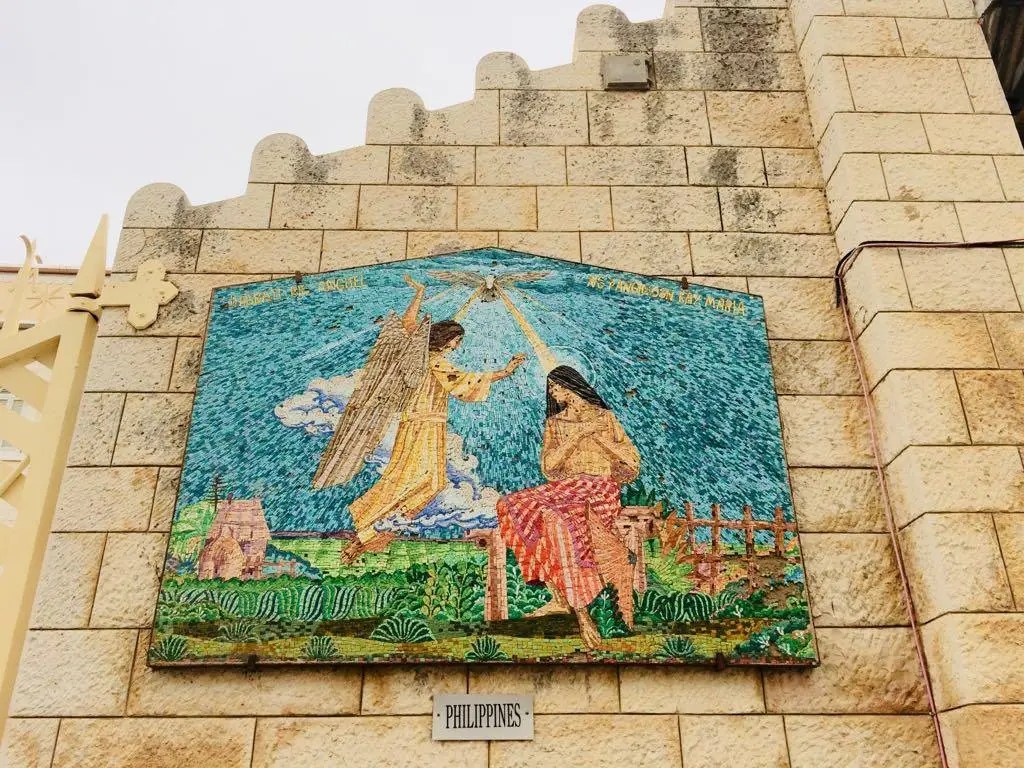
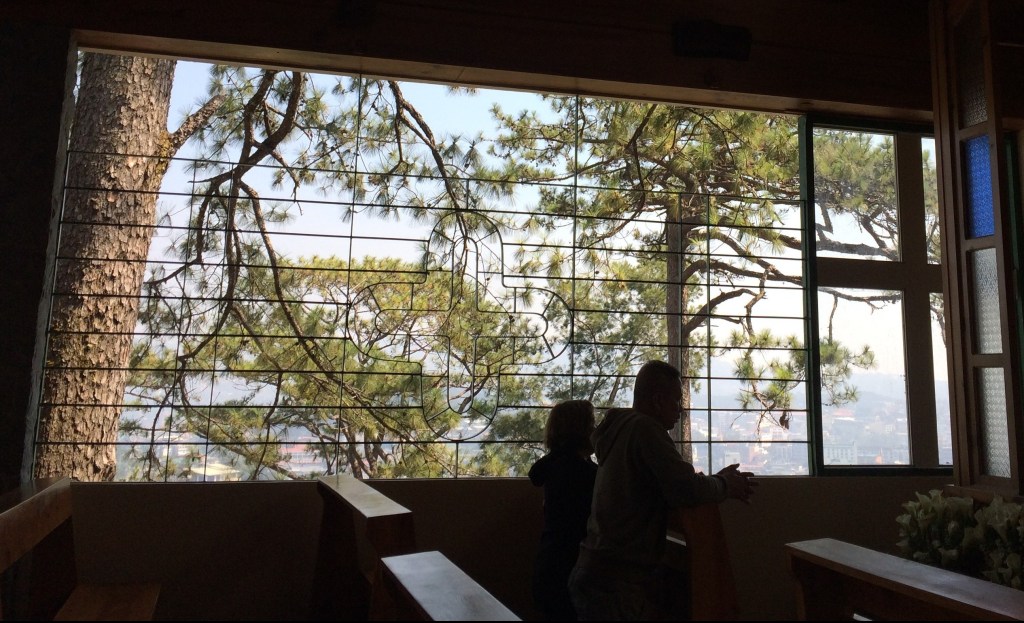
Photo by author, Carmel of the Holy Family Monastery, Guiguinto, Bulacan, 25 September 2025.

But you, man of God, pursue righteousness, devotion, faith, love, patience, and gentleness (1Timothy 6:11).

How lovely and so apt these days are the qualities Paul required through Timothy every man and woman of God must have. Of the six qualities Paul had cited, I like most “gentleness” which Jesus also asked us to have, “learn from me, for I am meek and gentle ( or humble) of heart” (Mt. 11:29).

From the Greek word prauteis, gentleness implies consideration, meekness, humility, calmness and strength amid adversities and difficulties. True power is expressed kindly and gently, not with harshness. Parents and teachers know this so well as children learn discipline better when authority and power are expressed gently than harshly.

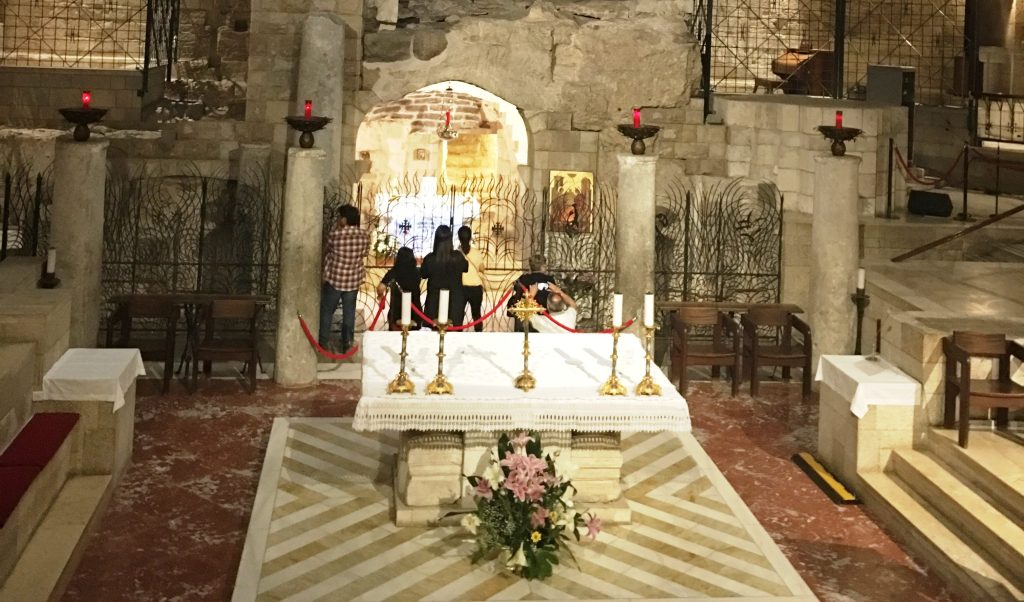
Photo by author, Carmel of the Holy Family Monastery, Guiguinto, Bulacan, 25 September 2025.

Lately we have been sliding towards this kind of arrogance in our anger and frustrations following the wholesale corruption in Congress. Everybody feels the weight and pains of the ghost flood control projects but cursing and wishing death upon the corrupt officials are off bounds because that make us just like Duterte and his followers whose mouths spew expletives and death to their detractors.

Our readings are so timely this Sunday again, calling us to be gentle with one another because eternal life begins in the here and now of our earthly existence. How we live today determines our entrance or not into the eternal banquet of the Lord.

Jesus said to the Pharisees: “There was a rich man who dressed in purple garments and fine linen and dined sumptuosly each day. And lying at his door was a poor man named Lazarus, covered with sores, who would gladly have eaten his fill of the scraps that fell from the rich man’s table. dogs even used to come and lick his sores. When the poor man died, he was carried away by angels to the bosom of Abraham. The rich man also died and was buried, and from the netherworld, where he was in torment, he raised his eyes and saw Abraham far off and Lazarus at his side” (Luke 16:19-23).

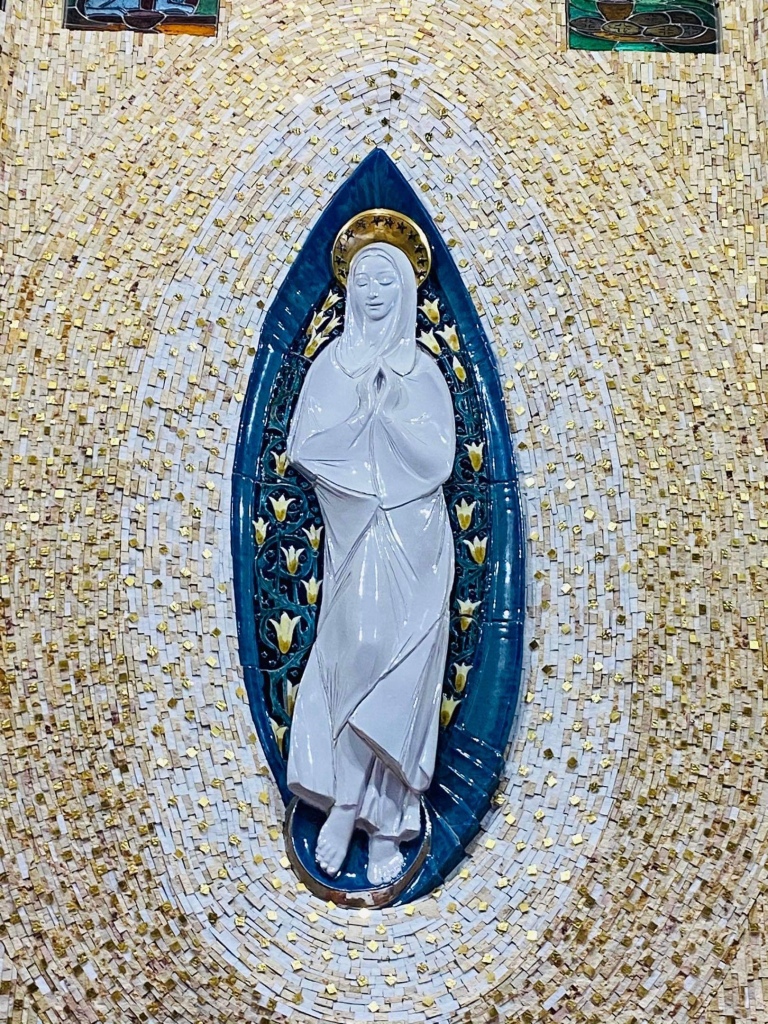
Photo by author, Carmel of the Holy Family Monastery, Guiguinto, Bulacan, 25 September 2025.

Our readings continue to pursue that thorny issue of money, of how we use and manage it for God’s greater glory in the service of others not for our shameful selfish interests.

That is why we find Paul’s admonition to Timothy and to us today as men and women of God to be gentle in the midst of too much materialism. In the preceding verses Paul warned Timothy of the dangers of false teachings and the love of riches which he concluded with an exhortation to rely more on God than in wealth in verse 17. It is a timely reminder from over 2000 years ago against this growing trend among us spawned by social media of people flaunting their wealth as if finding their own value as a person in possessions than in their very selves.


Gentleness like Jesus is first of all finding our being’s sacredness. It is an expression of our being loving and charitable because we are children of one loving God we relate with as a Father.

How tragic we no longer see each other’s worth as a person, as an image and likeness of God as we seek more the face of money than the face of God in every person. Pera pera na lang lahat – even in the church, sad to say. Every consideration boils down to money like leadership in church activities or hermanidad in fiestas being reserved for the rich and famous who are always the politicians to whom many priests and bishops have become beholden, consciously or unconsciously. We have too much collections and envelopes that further drive away the poor from celebrating our Sunday Eucharist which is essentially a foretaste of the Lord’s banquet in heaven.

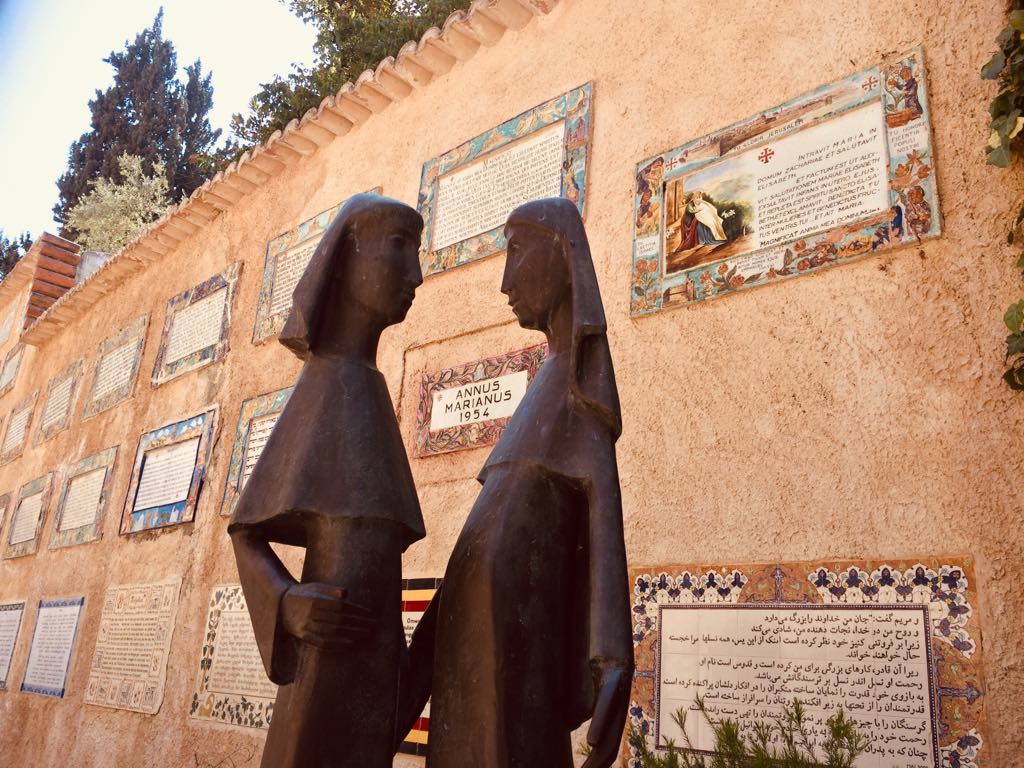
Photo by author, Carmel of the Holy Family Monastery, Guiguinto, Bulacan, 25 September 2025.

Amos continues his tirades against the priests of the temple of his time with their hypocrisies of hiding selfish motives in religious celebrations and practices that sadly continue to this day among us in the church.

Thus says the Lord the God of hosts: “Woe to the complacent of Zion! Lying upon beds of ivory, stretched comfortably on their couches, they eat lambs taken from the flock, and calves from the stall! They drink wine from bowls and anoint themselves with the best oils; yet they are not made ill by the collapse of Joseph!” (Amos 6:1, 4, 6).

That “eating lambs from the flock” and “calves from the stall” are the animals reserved for offering in the temple their priests have taken for themselves while “drinking from bowls” and “anointing with the best oils” harp on our rituals we have taken as our own like commercialization of Masses and sacraments. It is the color of money perfectly described by the purple clothing of the rich man in the parable that pervades us in the church that people no longer see and experience God as they have become so cautious asking about the price or the fees that come with every service we give.

Photo by author, Carmel of the Holy Family Monastery, Guiguinto, Bulacan, 25 September 2025.

Gentleness like Christ is using our power and authority at the service of the poor and disadvantaged, ensuring our Eucharistic banquet is a reflection of the eternal banquet in heaven where everyone is welcomed.

How sad this parable is repeated daily in the church that is why Jesus directed it to the Pharisees, one of the ruling class in the Jewish society at that time associated with temple worship and religion. Though Jesus did not say at all if the rich man is a good person or not, it is very clear that he lacked gentleness in his flamboyance, wearing purple clothes as if screaming to be noticed by everyone as a somebody while everybody is a nobody.

Maybe we should add “nepo Fathers” to the list of nepo babies and nepo wives who flaunt their wealth, looking more like showbiz kids than priests, feeling superstars who are more like entertainers than preachers who relish the tag “influencer” than remain hidden doing the work of Christ. They refuse wearing the proper liturgical vestments due to our tropical climate but would not mind at all wearing signature clothes with their perfumes leaving traces in their favorite stomping grounds like malls and cafes during offs.

Where is our gentleness or concern and consideration for the majority of our people who are poor further pushed out of our churches literally and figuratively speaking simply because we do not smell and look like them our flock of sheep as Pope Francis reminded us early in his pontificate?

Photo by author, Carmel of the Holy Family Monastery, Guiguinto, Bulacan, 25 September 2025.

Gentleness of Jesus is solidarity with the people, especially the poor and suffering who experience being uplifted or empowered in his mere presence so filled with warmth and love.

People understand us priests for being strict even stern-looking but what they find so difficult is when pastors are detached from them, always out of the parish for so many reasons, when priests are selective in their company even having cliques. How sad when priests are unapproachable and indifferent like the rich man who was oblivious to the presence of Lazarus at his door, who never gave him any attention at all while still on earth when in fact, they knew each other as mentioned in the parable after they have both died. Kakilala naman pala niya si Lazaro pero doon na lang sa kabilang buhay siya kinausap at pinansin kung kailan huli na ang lahat.

Pope Francis used to describe the church as a hospital where the sick in body and soul come to find solace and comfort in the presence of God. But, instead of hospitality, many times it is hostility that people experience in our parish when they are held hostage by our many rules and regulations that they never feel welcomed at all. Some get scolded that instead of their burdens being eased, they are traumatized by the priests or the office staff and volunteers.

Photo by author, Carmel of the Holy Family Monastery, Guiguinto, Bulacan, 25 September 2025.

If we could be a little more gentle with every Lazarus, perhaps we could be truly rich as we find God in everyone in our doors that lead to our banquet table, whether here on earth or in the afterlife.

Let me end with this parable within me these past five years as a chaplain in the hospital.

Have you ever noticed how the rich with all their wealth and resources are often afflicted with rare diseases without any cure and medication at all while so many poor people without money at all could not avail of the many procedures and medications available for their illness?

It is a parable in this life that begs us to be gentle, even extra gentle many times to ease each other’s sufferings with the rich sharing their material wealth and the poor sharing their gift of self in the face of death. Amen. Have a gentle week ahead everyone. Fr. Nicanor F. Lalog II, Our Lady of Fatima University, Valenzuela City (lordmychef@gmail.com).

Seek the face of God

Lord My Chef Sunday Recipe for the Soul, 21 September 2025
Twenty-Fifth Week in Ordinary Time, Cycle C
Amos 8:4-7 ><}}}}*> 1 Timothy 2:1-8 ><}}}}*> Luke 16:1-13
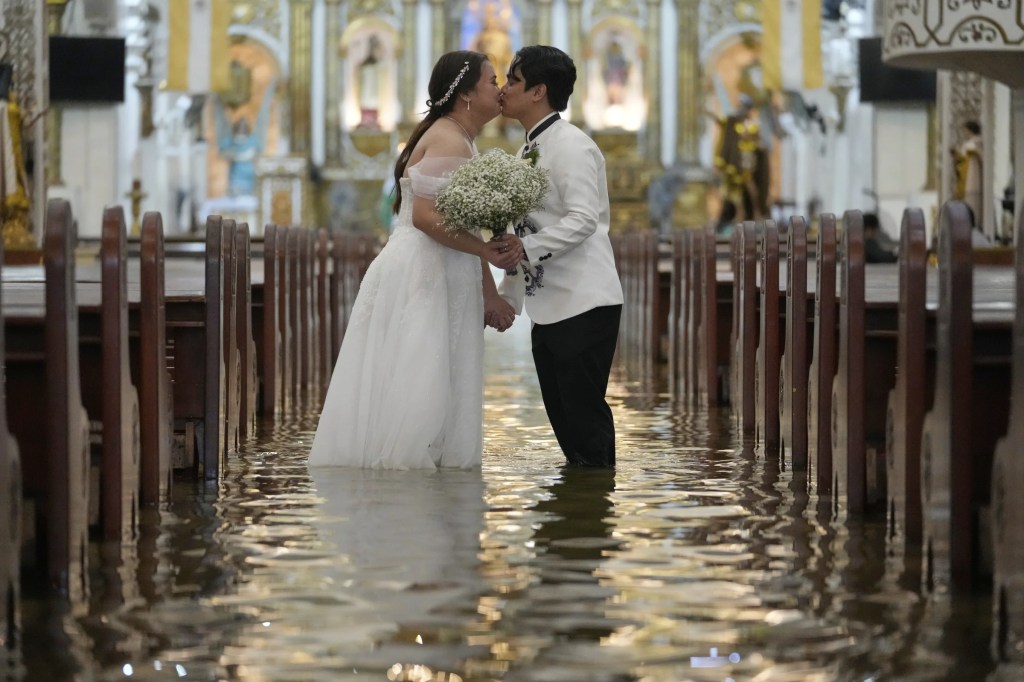
Scene at a wedding inside the flooded Barasoain Church in Malolos City, 22 July 2025; photo by Aaron Favila of Associated Press.

Our readings today are so timely like today’s headlines of rampant corruption – actually looting – of tax payers money by DPWH officials in connivance with some lawmakers and contractors.

The scriptures are very challenging for us, especially the first reading from the Prophet Amos.

Hear this, you who trample upon the needy and destroy the poor of the land! “When will the new moon be over,” you ask, “that we may sell our grain, and the sabbath, that we may display the wheat? We will diminish the ephah, add to the shekel, and fix our scales for cheating! We will buy the lowly for silver, and the poor for a pair of sandals; even the refuse of the wheat we will sell!” The Lord has sworn by the pride of Jacob: Never will I forget a thing they have done! (Amos 8:4-7)

Photo by author, Malagos Garden Resort, Davao City, 2018.

The Prophet Amos is telling us something so true today that he had noticed in his own time almost 3000 years ago.

More than the growing economic disparity among the rich and the poor as well as the growing consumerism during his time still happening today, Amos is not promoting a political agenda nor advocating a revolt against the wealthy and powerful. Moreover, Amos is not like other demagogues encouraging the people to turn away from Money that has become the new god of so many in his time and today.

Amos is a prophet because he speaks in the name of God, denouncing what is inside the hearts of the greedy rich, of their perverse intentions that they keep hidden while observing religious rituals and celebrations – a hypocrisy so rampant even these days. But, with a new twist as it is happening inside the church, among us the clergy.

Workers of a new subcontractor of a flood control structure in Barangay Sipat in Plaridel, Bulacan, lay cement and steels on September 6, 2025 amidst the downpour of rain. Photo by Michael Varcas / The Philippine STAR

In the midst of these shameless flood control scams drowning us, let us take a closer look this Sunday where Amos is directing his strong preaching.

It is not merely to the abusive rich and powerful people but also to us inside the Church – we the priests and bishops and volunteers as Amos warns us how religious practices are easily used by everyone to cover one’s selfish motives especially those inside the church.

How sad that our own diocese is so late in denouncing the flood control scams when the DPWH office that orchestrated the shameful looting is right here in our province of Bulacan, under our pastoral care.

Residents of Hagonoy Bulacan walk their way to flooded portions of premise surrondings St. Anne Parish as they protest this was following exposes of flood control anomalies. The Bulacan has been under scrutiny for receiving multi million worth of flood control projects but still suffers severe flooding. (Photo by Michael Varcas)

Except for the National Shrine of St. Anne in Hagunoy that is worst hit by the floods, it came out way ahead with a call to action that culminated in a rally on their flooded streets this Saturday led by their Parish Priest, Fr. Rodel Ponce prophetically leading his flock in their town’s flooded streets. Another Amos in our midst the other day was Msgr. Dars V. Cabral who led an ecumenical prayer rally in Malolos City with a letter that is bolder than our statement against the corruption.

Why we find the preaching of Amos directed to us in the church are the many connections and links of the involved DPWH officials with so many priests who have asked them for donations in their parish projects, asking them to be the fiesta hermano and donors of funds for church construction which is all over social media.

Check every treasury office of any LGU in the province and city and surely one could find “receipts” or photos of local executives and politicians with priests and bishops on vacation in expensive resorts or dinner in five-star restaurants. And that’s not just once or twice with some of them acting exactly like the nepo babies in flaunting the “good life” in social media, oblivious to the many implications of their actions like the many poor people who are denied of a decent funeral Mass for their departed loved ones when we are always out with politicians and the rich.

From Facebook, 17 September 2025.

Amos reminds us too in the church of our double standards when we are so quick in condemning corruption and sins of those in government and society but we are so slow, even protective of our own brothers involved in sex and financial scams. And just like in the news, we are willing to sacrifice our lay people to take all the beatings just for the sake of our brothers in cloth lest they be put to shame.

The most pathetic double standard we have in the church is when we patronize politicians friendly to our crusades like pro-life and anti-divorce but ostracize those on the other side of the fence.

What a shame! Are they not all tainted with graft and corruption, not to mention immoralities we are so quick to point out in the church? Why can’t we stop asking politicians for favors? Why can’t we be contented with what we have and what we can?

If there is one thing we in the church must stop right away is asking politicians for any favors because that give them the reason, no matter how askew and flimsy, to commit graft and corruption. When we in the church like priests and bishops keep on pleasing the rich and powerful we teach them the wrong notion that corruption is acceptable, that being rich is the key to be close to God through priests and bishops celebrating Mass and sacraments for them.

This is where the very essence of the preaching of Amos is still so relevant today for us: like the people of his time, we too have stopped seeking the face of God in our lives. Like the people of the time of Amos, what we focus is money, money, and more money, a Mammom or false god we unconsciously worship.

Residents of Hagonoy Bulacan walk their way to flooded portions of premise surrondings St. Anne Parish as they protest this was following exposes of flood control anomalies. Bulacan has been under scrutiny for receiving multi million worth of flood control projects but still suffers severe flooding. (Photo by Michael Varcas)

This Sunday, Amos and the Lord Jesus Christ remind us all especially in the church to seek the face of God always – not the face of Mammon that has become the god of many these days.

Let us live in simplicity by being content with what we have. No need to bother the governor or any politician as well as parishioners just for us to have a grand party or a spiritual renewal and retreat out-of-town.

Seek the face of God, not the face of Mammon. That’s the point of Jesus in his parable today of the shrewd steward: the Lord praised the attitude not the person. If we could just be as eager and passionate like him in seeking the face of God in the church, corruption in our government and society would be lessened. Our country would be more humane and decent because in the process, the poor and suffering would realize too that it is God too whom we must first seek, not the face of money.

This Sunday as we all prepare for the rallies in Luneta and EDSA, let us first seek the face of God, let us go to Mass first to pray for our leaders as St. Paul tells us in the second reading. Amen. Have a blessed week ahead!

*We have no claims for holiness or being pure and clean but we have tried as much as possible since our seminary days never to ask donations from politicians that they may construe it as a permission to steal.

Cross my heart?

Lord My Chef Sunday Recipe for the Soul, 14 September 2025
Feast of the Exaltation of the Cross
Numbers 21:4-9 ><]]]]'> Philippians 2:6-11 ><]]]]'> John 3:13-17
*This is a reissue of our 2023 reflection. Salamuch.
Photo by Mr. Gelo Carpio, 27 January 2020, Bagbaguin, Sta. Maria, Bulacan.

The cross is one of the most widely used but also abused and misunderstood sign in almost every generation. In fact, we are so accustomed with the cross of Jesus Christ found everywhere like in homes and offices, churches and classrooms, hospitals, restaurants and vehicles. Almost everybody carries it in our persons as an object of veneration, as a badge, or as a jewel.

On the cross we find Jesus shown in glory, peacefully sleeping in death, sometimes with his body broken by suffering. Hence, many times we use the word “cross” like in “cross my heart” to indicate our sincerity and truthfulness. But, are we truly aware of its meaning and significance in our faith, of its centrality as the symbol of God’s love for us expressed by the self-sacrificing death of Jesus Christ his Son?

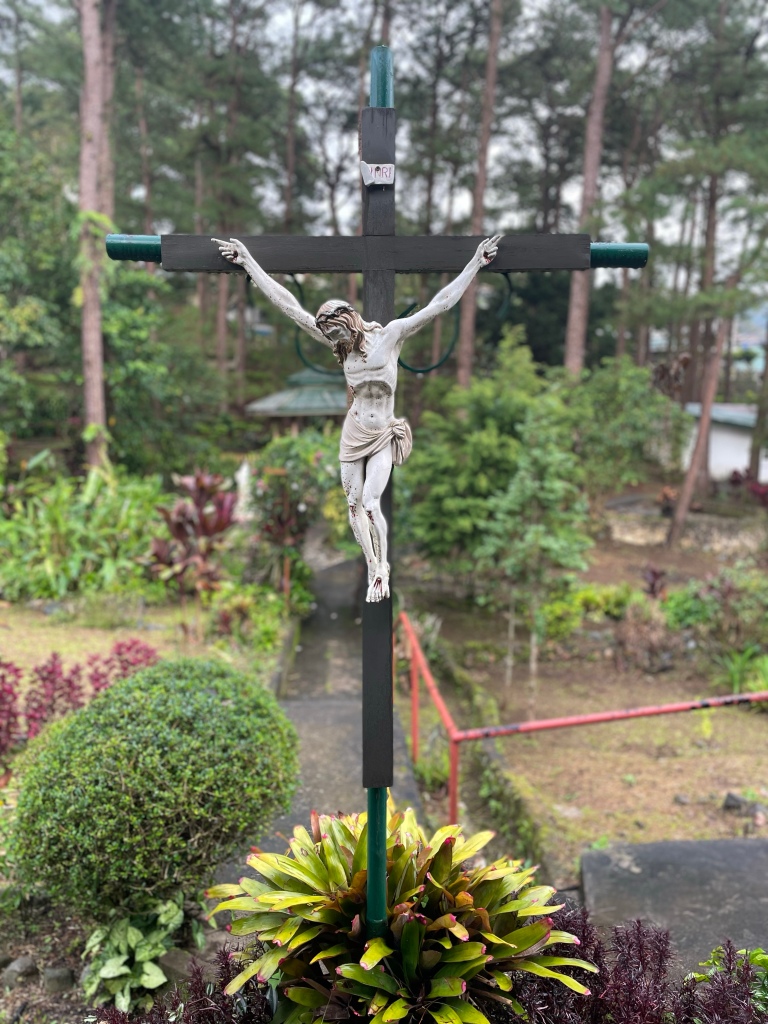
Photo by author, St. Scholastica Convent, Baguio City, 23 August 2023.

This Sunday we take a break from our cycle of readings to celebrate this Feast of the Exaltation of the Cross which falls on September 14. Due to its centrality in our faith, it is still celebrated even if the date falls on a Sunday like today.

This feast started in the fourth century with the miraculous discovery of the True Cross by Helena, mother of the Emperor Constantine, on 14 September 326, while she was on a pilgrimage to Jerusalem. She then ordered through her son the emperor the building of the Church of the Holy Sepulchre that was dedicated nine years later with a portion of the True Cross placed inside it in September 13, 335. The following day, the Cross was brought outside of the church to be venerated by the clergy and the faithful.

In the year 627, during the reign of the Emperor Heraclius I of Constantinople, the Persians conquered the city of Jerusalem and removed a major part of the Cross from its sanctuary. The emperor then launched a campaign to recover the True Cross which he regarded as the new Ark of the Covenant for the new People of God. Before embarking into war, Emperor Heraclius went to church wearing black as a sign of penance, then prostrated himself before the altar and begged God for courage. His prayer was granted as he won the war and recovered the Cross from the Persians. He brought the Cross back to Jerusalem in 641 amid great celebrations by carrying it on his shoulders. Upon reaching the gate leading to Calvary, the emperor could not go forward! Heraclius and his retinue were astonished and could not understand what had happened until the Patriarch Zachary of Jerusalem told him, “Take care, O Emperor! In truth, the imperial clothing you are wearing does not sufficiently resemble the poor and humiliated condition of Jesus carrying His cross.”

Upon hearing those words, the emperor removed his shoes and bejewelled robes, put on a poor man’s clothing and was eventually able to proceed to Calvary and replaced the Cross inside the Church of the Holy Sepulchre where a number of miracles happened during the occasion: a dead man returned to life, four paralytics were cured, ten lepers were healed, 15 blind men were given their sight, with several possessed people exorcised and many sick people totally healed!

Photo by author, Mirador Jesuit Villa & Retreat House, Baguio City, 24 August 2023.

Very notable in this story were the words of the Patriarch of Jerusalem. It was only after the emperor had taken off his royal clothings and put on those of the poor was he able to carry the Cross.

It is the same thing that is asked of us today: it is so easy to display the cross inside our homes and cars, or wear it as a jewelry or even as a tattoo on our skin. But, that amounts to nothing unless we have the cross inside our hearts, our very being. More than the many signs of the cross and imaginary drawing of its lines we draw on our chest is the need for us to empty ourselves of our pride and sins so that we can be filled with Jesus Christ.

Brothers and sisters: Christ Jesus, though he was in the form of God, did not regard equality with God something to be grasped. Rather, he emptied himself, taking the form of a slave, coming in human likeness; and found human in appearance, he humbled himself, becoming obedient to death, even death on a cross (Philippians 2:6-8).

Called kenosis in Greek, self-emptying is the way of the Cross of Christ. It is choosing love and mercy than self-centeredness and self-righteousness; sacrifice than satisfaction; fairness and justice than greed and possession; bearing all the pains and perseverance than complaining and whining about difficulties and trials in life like the Israelites in the wilderness (first reading); and, thinking more of others than of one’s self.

Photo by author, 02 September 2023.

The recent COVID-19 pandemic had taught something very amusing about the positivity of being negative, when negative was actually positive – healthy and COVID free! Remember how during those days when we would always wish we would yield negative results in our swab tests for COVID?

When we look at the sign of the cross (+), it is a positive sign, a plus sign. Though the cross calls us to let go, to be detached and dispossessed, it is actually an invitation to have more of God, of life and fulfillment! In this time of affluence when everything is easily available for as long as you have the means and the resources, the sign of the Cross reminds us that life is more of letting go and of giving than of having like God who “so loved the world that he gave his only Son, so that he who believes in him might not perish but might have eternal life” (Jn.3:16). St. Francis of Assisi said it perfectly why the Cross is an exaltation, a triumph:

For it is in giving that we receive,
it is in pardoning that we are pardoned.
and it is in dying that we are born to eternal life.

Amen. Enjoy Sunday and have a blessed week ahead!

Fr. Nicanor F. Lalog II
Our Lady of Fatima University
Valenzuela City
(lordmychef@gmail.com)

Uniqueness of the Cross

Lord My Chef Sunday Recipe for the Soul, 14 September 2025
Feast of the Exaltation of the Cross
Numbers 21:4-9 ><}}}}*> Philippians 2:6-11 ><}}}}*> John 3:13-17
*This is an updated version of our reflection last year; pray for our Marriage Encounter this weekend.
Via Crucis at Fatima University Medical Center, Valenzuela City, 2025.

This Sunday we have a unique celebration, the Feast of the Exaltation of the Cross that falls on the 14th day of September. It is so important that even if it falls on a Sunday, the more it must be celebrated as it is most central in the teachings of Jesus Christ.

It is so unique because despite its being made up of two ordinary pieces of wood, the Cross is most unique with its deeply extraordinary in meaning as sign of God’s immense love for us humans through Jesus Christ’s Passion and Death.

From being the sign of the most inhuman punishment in history, the Cross is now the very sign of how God “so loved the world that he gave his only Son, so that he who believes in him might not perish but might have eternal life” (Jn.3:16). It encapsulates the whole mystery of Jesus Christ, of how this all-powerful God beyond the ordinary became weak like us in everything except sin so that we too may be like Him, divine and more than ordinary. In His suffering and death on the Cross, Jesus made the lowly wood so ordinary to be so exalted to become His sign of love and mercy, power and majesty.

Photo by author, Jerusalem, May 2017.

Hence, in the Cross is the power of God’s love to transform us to better persons.

In the Cross is God’s power to lead us closer to Him with its vertical beam and to others with its horizontal beam.

In the Cross is the power of good if we choose to embrace it with Christ Jesus as our Lord and Master.

The Cross is most unique of all signs in the world because underneath its ordinariness, that is where we see God’s glory and majesty. It was underneath the Cross of darkness and gloom on Good Friday that humanity began to see light and hope in life’s many absurdities. Most of all, it was underneath that Cross of suffering and death of Jesus Christ that we feel and experience the assurance of the Resurrection.

How?

Through our own pains and sufferings that are most uniquely ours too!

With their patience worn out by the journey, the people complained against God and Moses, “Why have you brought us up from Egypt to die in this desert, where there is no food or water? We are disgusted with this wretched food!” In punishment the Lord sent among the people saraph serpents, which bit the people so that many of them died (Numbers 21:4-6).

Photo by author, Dominican Hills, Baguio City, January 2018.

You must have heard that old story of a man who came to Jesus to return the cross given for him to carry; he asked Jesus to have it replaced with a lighter one. Jesus then led the man to a huge room with all kinds of crosses for him to choose which he prefers as the best one for him so that he would stop complaining.

After closely examining the specs of so many crosses, the man finally decided to pick one he deemed as perfect for him after considering its weight and other dimensions, only to find out from Jesus Himself that it was the same cross he had actually returned for exchange!

Many times in life we are like those people in the first reading, never ending in their complaints to God, even challenging Him, accusing Him of forsaking us, of being unfair when life becomes difficult and unbearable. There are times we feel being on the distaff side of life always like a flat tire, never on top. We cry foul to God especially with all our hurts and pains inflicted by others, asking Him where was He when most needed?

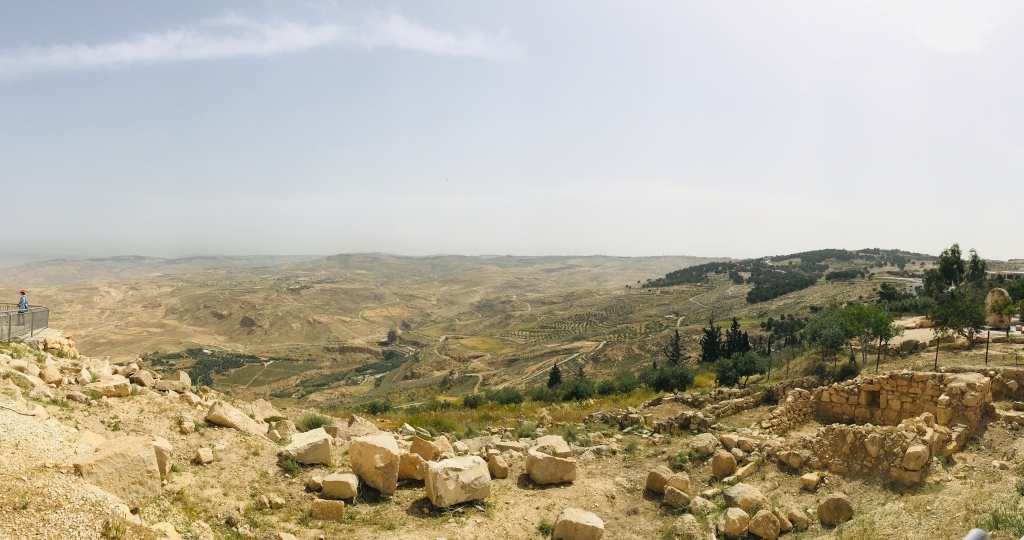
Photo by author in Jordan near the Israeli border where Moses put up the bronze serpent as instructed by God to heal those bitten by the snakes after they have complained of their conditions in the wilderness, May 2019.

While it is true life is indeed difficult, the cross reminds us of the fact that the pains and hurts we have are uniquely ours too, something we have to accept and most of all, own.

There are pains that are so deep and won’t go away that have in fact affected us dismally in our lives already. Instead of self-blaming and self-pity, we just have to ask for God’s grace to accept and own them like Jesus Christ. We just have to “bring it home” – that imagery of the Cross planted on the Calvary – into our very selves, in our being as something so true and real. And uniquely ours.

Stop thinking of others’ pains and hurts. We are not all the same. If ever we have similar experiences, the hues and shades even gravity and circumstances are not same because each pain and hurt, like the cross, is uniquely ours. Like every person, every cross is unique because it is also a gift, a mystery, and life. We have to “befriend” our pains and hurts, our own cross instead of resist it. It is in “befriending” our pains and hurts, our cross in life that we grow and mature, becoming more free to love and to be joyful because that is when the cross triumphs over its disgrace and shame in us and with others. That is when our pains and hurts, when our crosses begin to reveal to us the many beautiful truths of Easter awaiting us.

The Cross of Christ triumphed because Jesus carried it wholeheartedly, allowing those two pieces of wood to reveal not only to Him who knew everything beforehand its meaning but most of all to everyone of us the deeper truths the Cross signifies as St. Paul eloquently expressed in our second reading.

The Cross of Christ atop the church of our Lady of Lourdes in France. Photo by my former student Ar. Philip Santiago during his pilgrimage, September 2018.

One thing I realized after my mother died May last year is the fact that while there are so many pains and sufferings in this world, my own pain and suffering in losing her are most difficult to bear; hence, something I must carry because it is uniquely mine.

But, one thing so unique I noticed is that the more I see my cross following my mother’s death, the more I saw also the cross of others. The Cross of Jesus triumphed truly in me when I embraced and owned my cross, when I befriended my pains and hurts that eventually led me to recognize and see, to feel more and experience too the crosses of others.

When we become conscious of each one’s unique cross, slowly we are able to reveal to them the meaning of their personal crosses too because we become more sympathetic, more open, more silent to listen more, love more, care more and be more present with those in their own unique cross. No wonder, I find conversing more engaging with others who also grieve because we can see each other’s unique crosses!

Jesus calls us to imitate Him that by embracing and owning our cross, we too may lead others to finding the meaning of their own cross and thus experience Easter soon. Let us pray:

Give us the grace,
dear God
to always embrace the Cross
like your Son Jesus Christ
where we can all be empty
of ourselves to be filled
with your Holy Spirit
and make your love
visible in us.
Amen.
A blessed week to everyone!

Fr. Nicanor F. Lalog II
Our Lady of Fatima University
Valenzuela City
(lordmychef@gmail.com)

We are God’s masterpiece

Lord My Chef Sunday Recipe for the Soul, 07 September 2025
Twenty-Third Sunday in Ordinary Time, Cycle C
Wisdom 9:13-18 ><}}}}*> Philemon 9-10, 12-17 ><}}}}*> Luke 14:25-33
Photo by Thiago Matos on Pexels.com

“Napasarap ang kuwentuhan” is how we would describe the scene last Sunday continuing to today’s gospel as Jesus pushed through in his journey to Jerusalem.

Recall Jesus dined at the home of a leading Pharisee last Sunday where “people observed him carefully” while “he noticed them” choosing seats of honor at the party that he told them a short parable on humility. One of the guests liked it that Jesus narrated another parable about coming to a banquet where everybody is invited. Many were impressed with his second parable that Luke now tells us great crowds followed Jesus after that dinner on a sabbath.

Great crowds were traveling with Jesus, and he turned and addressed them, “If anyone comes to me without hating his father and mother, wife and children, brothers and sisters, and even his own life, he cannot be my disciples. Whoever does not carry his own cross and come after me cannot be my disciple. Which of you wishing to construct a tower does not first sit down and calculate the cost to see if there is enough for its completion? Otherwise, after laying the foundation and finding himself unable to finish the work the onlookers should laugh at him and say, ‘This one began to build but did not have the resources to finish'” (Luke 14:25-30).

Photo by Mr. Jay Javier in Quiapo, 09 January 2020.

Keep in mind that Jesus “resolutely determined to journey to Jerusalem” (Lk.9:51) to fulfill his mission of offering himself on the cross. This is the second time since he embarked on that journey that he had told those wishing to become his disciples must forget themselves, take up their cross and follow him.

During that time, the cross was the Roman empire’s worst punishment – most humiliating and excruciatingly painful leading to a slow death. Imagine how the audience of Jesus must have felt hearing his words about taking up one’s cross, whether in its literal or figurative meaning. Jesus completely changed that on Good Friday when he totally and freely offered himself to die on the cross because of his immense love for us and the Father. From being a sign of cruelty and shame, the Cross became the sign of love and honor as Jesus the Son of God became one of us in passion and death so that we may be like him in his glorious resurrection.

And that is what Jesus wants for us, to be holy like him that is why he invites us to do the same, “take up your cross and follow me” which we may call as the “Christ project” wherein destruction leads to new creation, death to life, and self-giving to true love.

Here we find the wisdom and gentle mastery of Jesus as a teacher in using a “building project” as an example of discipleship, a world apart from the shameless, scandalous ghost projects of DPWH with some contractors through manipulations by lawmakers stole billions of pesos from the poor people without doing any flood control facilities at all.

Photo by author, Church of St. Anne in Jerusalem, May 2017.

The Christ project is the most noble “building project” of all where everyone becomes God’s masterpiece: “Which of you wishing to construct a tower does not first sit down and calculate the cost to see if there is enough for its completion? Otherwise, after laying the foundation and finding himself unable to finish the work the onlookers should laugh at him and say, ‘This one began to build but did not have the resources to finish'” (Lk.14:28-30).

What is Jesus longing to “construct” in your life?

We have all been disciples of Christ since baptism but many times in life, we have taken for granted his call to follow him and journey in him, with him, and through him. See that in his two parables today, Jesus did not say that we have to be “like them” in preparing to build a tower or go to war; instead at the ending, Jesus said, “In the same way, anyone who does not renounce all his possessions cannot be my disciple” (Lk.14:33).

We are all disciples of Christ. It is an inescapable reality in life, an honor and a responsibility because whether we like it or not, our discipleship in Christ plays a major role in our life direction. Or lack of direction. If you are feeling lost, most likely you have veered away from Christ in life’s journey. When life is in a mess, Christ is missing.

The author of the Book of Wisdom tells us how God in his infinite wisdom slowly unfolds to us his grand plans for us as his disciples, his beloved children. See that our most meaningful and fulfilling moments in life were those we were closest to God – not really when we were drowning in wealth and fame and material things. See the simplicity and sincerity of the common folks betrayed by this system of corruption – they can look straight the camera lens without hiding not like the fake, empty fronts of the the well dressed senators, contractors and DPWH officials in the hearings.

Photo by author, Our Lady of Fatima University, Valenzuela City, September 2023.

All our lives we must become a disciple of Christ that is why we must constantly reflect on his demands not only to examine how far we have gone by looking in the past but most especially to renew our commitment to him so we can move forward, nearer to the Father and to one another in loving service. This is what St. Paul was asking Philemon in accepting anew his escaped slave Onesimus.

Jesus invites us this Sunday to stop and reflect about his plans, his project for us to be God’s masterpiece. Discipleship is a call to self-emptying, to daily crucifixion of forgetting one’s self, of always choosing Jesus, choosing what is true and good and just. Of course it is easier said than done but that is the way it is. Better to make the choice freely than wait later when it would be imposed on us by the circumstances.

This is the meaning of our Care for Creation celebration this Sunday when we are called to see the unity of everyone and everything in “Christ Jesus… the image of the invisible God… in him were created all things in heaven and earth, the visible and invisible… For in him all the fullness was pleased to dwell, and through him to reconcile all things for him, making peace by the Blood of his cross through him, whether those on earth or those in heaven” (Col.1:15, 16, 19-20).

Caring for creation and environment is discipleship in action as Pope Francis called on us in his 2015 encyclical Laudato Si of the need to have an inner change, an “ecological conversion” wherein we do our individual part of sacrifice and care for God’s creation. It is always easy to join the many green movements and environmental crusades but if deep in our hearts remain our own comfort and convenience, nothing would ever change in the world around us as we continue with our insatiable consumption of so much goods. What we need is a “shift” in our perspectives in life, to see it wholly as interconnected.

We require a new and universal solidarity. As the bishops of Southern Africa have stated: “Everyone’s talents and involvement are needed to redress the damage caused by human abuse of God’s creation”. All of us can cooperate as instruments of God for the care of creation, each according to his or her own culture, experience, involvements and talents. (Laudato si’, #14)

Caring for creation is discipleship when we choose to follow Jesus in implementing his grand design and project for a better world where peace truly reigns in all creation. Amen. A blessed week ahead of everyone. Fr. Nicanor F. Lalog II, Our Lady of Fatima University, Valenzuela City (lordmychef@gmail.com)

Photo by Mr. Raffy Tima of GMA7 News in Batanes, September 2018.

People observe, Jesus notices

Lord My Chef Sunday Recipe, 31 August 2025
Twenty-Second Sunday in Ordinary Time, Cycle C
Sirach 3:17-18, 20, 28-29 ><}}}*> Hebrews 12:18-19, 22-24 ><}}}*> Luke 14:1,7-14
“Meal in the House of a Pharisee” 1886-1896 painting by James Tissot from brooklynmusueum.org.

For the next three Sundays beginning today, Luke gathered teachings of Jesus Christ all set on the dining table, a sort of some “table talks” about the great banquet in the end of time and how we could all get in to share in the eternal meal with the Father.

On a sabbath Jesus went to dine at the home of one of the leading Pharisees, and the people there were observing him carefully. He told a parable to those who had been invited, noticing how they were choosing the places of honor at the table (Luke 14:1, 7).

I love the way Luke presented this scene when he said “the people there were observing Jesus carefully” while the Lord told them a parable after “noticing how they were choosing places of honor at the table.”

How lovely! People observe, Jesus notices.

As it had happened in every instances of gatherings with Jesus, people carefully observed him, trying to find something to accuse him in of disregarding their traditions and laws like healing the sick on a sabbath day. They have “boxed” and judged Jesus as a dissident and a trouble-maker among them in his apparent disregard of laws and traditions.

Photo by author, Manila Club, BGC, June 2025.

In a funny twist, Luke tells us in this scene the immense love of Jesus then and now for everyone that despite his noticing and knowing everything in us, he neither counted those things against us nor ever judged us. How sad many of us with that habit of putting God in a box like a cop keeping tabs of our infractions when in fact God simply noticed our actions and behavior to invite us to become better without any judgment at all.

Keep in mind this scene reveals to us its context of the heavenly banquet which took place after the sabbath services at the synagogue where Jesus participated, hosted by a Pharisee, a VIP of the synagogue and of the society at that time. It was a party where every who’s who was supposed to be present, with everyone competing for the best seats closest to the host. And so, Jesus the keen observant but never judgmental used the occasion to teach us the essence of humility to make it to heaven or eternal life that is signified by a wedding banquet like that big meal he attended.

“When you are invited by someone to a wedding banquet, do not recline at table in the place of honor. A more distinguished guest than you may have been invited by him… For everyone who exalts himself will be humbled, but the one who humbles himself will be exalted” (Luke 14:8, 11)

Photo by Pixabay on Pexels.com

These past Sundays, we have seen Christ’s insistence of the Father’s desire to have everyone welcomed into heaven by giving us some instructions of what to do to gain eternal life.

This Sunday while in a big party, Jesus took the occasion to teach us the value of humility to get into heaven. From doing, Jesus now moves into being, our disposition and attitude to make it into heaven where what matters most is not where we are seated but where we stand. Recall how Jesus reminded the brothers James and John with their mother that he has nothing to do with the seating arrangements prepared by the Father in heaven after she requested her two sons to be seated beside him when he comes into his glory.

Heaven is more of where we stand with Jesus where his virtue of humility is most pronounced when he “humbled himself, becoming obedient to death, even death on a cross” (Phil.2:8). That is why St. Augustine taught that “humility is a sign of Christ”, a revelation of Jesus that allows us to recognize him our Lord and Master leading us to the Kingdom of heaven without any feelings of inferiority and despair.

On the Cross which he prefigured at his Last Supper, Jesus showed himself as the most humble of all who went to life’s lowest point of suffering and dying to meet us as he noticed everything in us to lift us up and be like him, humbly standing in our sufferings. It is on the Cross that we find humility as the basic and essential requirement to get into the heavenly banquet of the Lord.

Very often when we examine our state of humility, what comes to our mind are the many negativities we have like our sins and failures, vices and weaknesses, our being unworthy. But, that is when we bow down most to beg for Christ’s mercy like before the Holy Communion when we pray, “Lord, I am not worthy to receive you under my roof but only say the word and I shall be healed.”

That is both the humility of Jesus and of us humans so vividly expressed at the washing of the feet after the Last Supper. Normally, we look up to Jesus in heaven but at the washing of feet, like every time we receive Holy Communion, we take the higher position, looking down at him not with pride but with all humility because Jesus humbled himself first before us. Here we find humility as seeing ourselves the way Jesus sees us – weak and sinful, yet so loved and forgiven. This is what Ben Sirach taught us in the first reading: humility is the fundamental attitude of wisdom because it opens us to the splendor of God when we find our self-worth and value too!

Without humility, it is either we see only the best or the worst in us as a person, without God, without others.

This is the bigger issue with the “nepo babies” now being bashed on social media after flaunting their wealth and ostentatious lifestyles. Their posts were far from inspiring, at most are tasteless and most convulsive. All we have noticed in their posts is their pride not only in lacking humility but most precisely in not finding value in themselves. Sadly but I dare say they are the ugliest and most pitiable persons because they find value only in wealth and things, not in themselves as persons. Hence, the flaunting of their possessions that only make them so pathetic because along that came their utter disregard for others especially the poor who suffer most with their parents’ greed for money through corruption.

Humility is always uplifting in the positive sense, not looking at others as below us but to realize despite our sins and weaknesses, we are loved, we are noticed as a person so worthy, so valuable. When we are humble, then we become joyful too because we are assured of love and acceptance despite our flaws. This is the gist of the message to us this Sunday of the author of the Letter to the Hebrews: unlike the Israelites in the Old Testament who were so fearful to approach God who spoke to them with thunder and lightning, we can get close to God in Jesus who humbled himself to be one with us by dying on the Cross.

True humility keeps us rooted with our selves, with others and with God. It is this rootedness best expressed in the Sunday Eucharist that we are able to follow Jesus in his journey to Jerusalem and eventually into heaven in all eternity. Amen. Have blessed Sunday and most blessed September too!

Photo by the Marketing Office, Our Lady of Fatima University, Valenzuela City, June 2025.

Strive in discipline

Lord My Chef Sunday Recipe for the Soul, 24 August 2025
Twenty-first Sunday in Ordinary Time, Cycle C
Isaiah 66:18-21 ><}}}*> Hebrews 12:5-7, 11-13 ><}}}*> Luke 13:22-30
Phot by author of pilgrims trying to enter through the narrow door of the Church of the Nativity in Bethlehem, the Holy Land.

Anyone who had gone on a pilgrimage to the Holy Land must have heard the story of the fabled “narrow door” at the entrance of the Church of the Nativity in Bethlehem, of how it was reduced into that small door a very long time ago to prevent pilgrims from bringing their horses and camels inside the church that made a lot mess and stench.

Photo by author, narrow doors from the inside of the Church of the Nativity in Bethlehem, the Holy Land, May 2019.

That little door of the Church of the Nativity later became symbolic of the humble gesture of bowing low first to enter and see the Savior’s birthplace, eventually heaven as Jesus had been teaching us these past Sundays.

We are now in the final installment of the teachings by Jesus about the coming End, of what must we do to gain eternal life. He is now halfway through his long journey to Jerusalem since he started eight Sundays ago.

Along the way, he had met every kind of people, proclaiming to them the same message – that the kingdom of God is at hand where everyone is welcomed like what Isaiah prophesied in the first reading.

Jesus passed through towns and villages, teaching as he went and making his way to Jerusalem. Someone asked him, “Lord, will only a few people be saved?” He answered them, “Strive to enter through the narrow gate, for many, I tell you, will attempt to enter but will not be strong enough. After the master of the house had arisen and locked the door, then will you stand outside knocking and saying…” (Luke 13:22-25).

Photo by author, Angels’ Hills Retreat Center, Tagaytay City, April 2025.

In his teachings these past three Sundays, Jesus had been warning us against too much focus on things of the world that perish like material wealth, telling us to be more concerned of things of heaven that lead to eternal life. He had been clear that it would not be easy at all with the demands of being his disciples.

It was in this context that someone in the crowd asked Jesus today on his way to Jerusalem if only a few people would be saved. The question sounds very amusing not only because Jesus had always been clear that heaven does not come cheap as we must learn to renounce our self, take up his cross and follow him. That someone in the crowd who asked that question is actually us! And we know so well why until now we keep asking that same question: because we lack the discipline within to truly follow Christ. We always want what is easy and convenient, preferring shortcuts, avoiding sacrifices, as much as possible, no pains and sufferings. Hence, despite our knowing what it takes to gain eternal life, we still keep on doing the opposite.

It is the same with our physical well-being wherein we know so well what is healthy but we still keep doing, eating and drinking what is unhealthy. The sad truth of this lack of discipline in our body and soul is how we start shaping ourselves only when we are already sick and close to dying! That is when we feel sorry and start telling God like those in the parable that “we ate and drank in your company.”

Jesus had no intentions of dodging the question of that someone – and us in many occasions when we realize how difficult it is to follow his path of simplicity and humility, of love and kindness, of mercy and forgiveness. See how he neither gave a number nor a percentage of those who would be saved in the End. Jesus simply told the people including us today to do everything to make it into the Kingdom of God that is like a “narrow gate” and a “locked door”.

Following Jesus is more than being in his company but more of being like him. On this final Sunday of his teaching on the End, of entering the Kingdom of God in eternity, Jesus reminds us to shape up, body and soul so that we can squeeze ourselves into heaven’s “narrow gate” and “locked door”. Here we find again the second reading giving us more light into the meaning of the gospel this Sunday.

Brothers and sisters, you have also forgotten the exhortation addressed to you as children: “My son, do not disdain the discipline of the Lord or lose heart when reproved by him; for whom the Lord loves, he disciplines; he scourges every son he acknowledges.” Endure your trials as discipline… At the time, all discipline seems a cause not for joy but for pain, yet later it brings the peaceful fruit of righteousness to those who are trained by it. So strengthen your drooping hands and your weak knees. Make straight the paths for your feet, that what is lame may not be dislocated but healed (Hebrews 12:5-7, 11-13).

Photo by Life Of Pix on Pexels.com

Discipline is a word so misunderstood these days that too often, it is frowned upon, even feared by many. In this age of so much “freedom” without any regard to “responsibility”, discipline has become its main casualty.

From the Latin verb discere which is “to learn” and “to follow”, its noun form disciplina means teaching or learning from which came the word discipulus for disciple, a follower or a pupil. Therefore, a person of discipline is one who follows or obeys teachings. Contrary to the wrong idea of many today that discipline limits freedom which they see as the ability to do whatever one wishes, the more disciplined a person is, the more free the person actually becomes!

When we discipline ourselves in every aspect of our lives like in food and drink intake, in using our time wisely, in budgeting our money and resources among other things, the more we become free to many other things in life. Remove discipline and do whatever you like in your life, eventually you become “unfree” because definitely you will miss your responsibilities and obligations like studies in school and duties at home and the office.

The same is true in our spiritual life: without discipline like prayer life, disorder and sin happen. It is discipline that literally and figuratively shapes us into persons able to squeeze through the narrow gate and locked door of freedom and salvation!

Photo by author, St. Catherine Monastery, Mt. Sinai, Egypt, May 2019.

In following the reflection of the author of Hebrews, we find that discipline is not just a human effort but the work of God too. As St. Augustine wrote, “grace builds on nature” – the more we discipline ourselves, the more blessed we become because God’s grace and gifts in us are perfected. See how discipline is like a built-in “app” God installed in each of us to ensure that we have all the means to reach heaven in Jesus Christ.

Looking back to the past four weeks, we find Jesus as the perfect example of a disciplined person, of leading a disciplined life focused on the mission from the Father. Since he started this long journey, Luke noted in chapter nine how Jesus was “resolutely determined” to go to Jerusalem, teaching us along the way to be like him focused on things of heaven than of earth, always vigilant of the coming End. Since the resumption of Sundays in Ordinary Time last July 06, Luke showed Jesus frequenting the synagogue on sabbath to worship and to preach. Most of all, Jesus prayed a lot which prompted his disciples to ask him to teach them how to pray too. Our celebrating the Sunday Mass in the church is a discipline of highest order because every Eucharistic celebration is a dress rehearsal of our entrance into heaven. Always come until we all gather together in eternity. Amen. Have a blessed and disciplined week ahead everyone. Fr. Nicanor F. Lalog II, Our Lady of Fatima University, Valenzuela City (lordmychef@gmail.com).

Faith of Jesus, faith we imitate

Lord My Chef Sunday Recipe for the Soul by Fr. Nicanor F. Lalog II
Twentieth Sunday in Ordinary Time, Cycle C, 17 August 2025
Jeremiah 38:4-6, 8-10 ><}}}*> Hebrews 12:1-4 ><}}}*> Luke 12:49-53
Photo by author, Archdiocesan Shrine of Nuestra Señora De Guia, Ermita, Manila, 28 November 2024.

We Christians believe in and trust in Jesus but seldom think of him as a man of faith because very often our concept of faith is always in terms of creeds and beliefs.

As we have reflected last Sunday in the second reading from the Letter to the Hebrews, faith is more than of the mind; faith is more of the heart, of the relationship one has with God or with whomever one believes in. Hence, “Faith is the realization of what is hoped for and evidence of things not seen” (Heb.11:1).

This Sunday we start anew our reflections from the second reading, the letter to the Hebrews that supports today’s gospel where Jesus is asking us to have more faith in him because following him can lead to distressing situations and painful, or even tragic choices. In identifying Jesus as “the leader and perfecter of faith”, Hebrews insisted on the human side of Jesus we rarely consider – that he was sustained by faith, who trusted God in vindicating him as he died on the Cross.

Brothers and sisters: Since we are surrounded by so great a cloud of witnesses, let us rid ourselves of every burden and sin that clings to us and persevere in running the race that lies before us while keeping our eyes fixed on Jesus, the leader and perfecter of faith… Consider how he endured such opposition from sinners, in order that you may not grow weary and lose heart. In your struggle against sin you have not yet resisted to the point of shedding blood (Hebrews 12:1-2, 3-4).

Photo by author, Malagos Garden Resort, Davao City, August 2018.

Every time I face difficulties and trials in life, I always think of my mom and dad, my “cloud of witnesses” of faith like those mentioned in Hebrews who have attained faith’s goal in the Old Testament.

Usually, I would ask my departed parents for prayers, asking them for guidance on how to deal with difficult situations I am facing. It is therapeutic for me because after that, my memory would waft into those days and nights I used to listen to mom and dad tell their many struggles and hardships they both endured early in life like dropping out from school in order to find work early and eventually why they married late.

“Mahirap ang buhay noon, anak” they would always tell me, followed by a litany of not having enough money for food, clothes and shoes and various forms of leisure and comforts we take for granted these days. After that short trip in memory lane with my parents, I feel better, inspired and energized knowing that I have poor souls praying for me.

Think of those people like family, friends, and mentors who have been part of this “cloud of witnesses” in your life. Include your favorite saints too. And of course, Jesus Christ our Lord and God who, as perfecter of faith shocks us with his teachings this Sunday:

Jesus said to his disciples: “I have come to set the earth on fire, and how I wish it already blazing! There is a baptism with which I must be baptized, and how great is my anguish until it is accomplished! Do you think that I have come to establish peace on the earth? No, I tell you, but rather division (Luke 12:49-51).

Photo by author, St. Paul Spirituality Center, La Trinidad, Benguet, January 2025.

Unlike in the fourth gospel, it is very rare in Matthew, Mark and Luke to hear Jesus speaking of himself in the first person like today when he said “I have come… I wish… I must.” These are “involved expressions” where Jesus not only reveals to us the nature of his mission but especially his determination to fulfill it as Luke had earlier noted this at the start of this long journey to Jerusalem, “When the days for his being taken up were fulfilled, he resolutely determined to journey to Jerusalem” (Lk.9:51).

Feel in these expressions the ardent desire of Jesus, the burning fire within him to transform us and the world in his coming Passion, Death and Resurrection which is the baptism he must undergo.

The fire he mentioned here is the fire of the Holy Spirit he sent on Pentecost that filled his disciples with zeal to spread the gospel and the nascent Church as well. Luke knew so well in how those tongues of fire that hovered over the disciples’ heads on Pentecost was also the same fire Jesus referred here that dissolves our old selves to convert us into his disciples filled with zeal and enthusiasm in witnessing the gospel in the world that has gone cold and dark with sin and evil.

As fire purifies metals like gold, fire leads to divisions so to speak. It is a positive division that builds and perfects, not destroys. It is the kind of fire Jesus meant here as he continued his teachings on the way to Jerusalem to prepare us for the End with a capital “E”. It is a fire that sets apart truth from falsehoods and lies and most of all, of good from evil and sin so necessary in making it to eternal life. To fully appreciate this shocking lesson of Jesus today, we need to go back to the second reading where the author of Hebrews called us to “rid ourselves of every burden and sin that clings to us and persevere in running the race that lies before us while keeping our eyes fixed on Jesus, the leader and perfecter of faith” (Heb.12:1-2).
What are those burdens and sin that cling to us or we carry that make it difficult to imitate Jesus, to have faith in Jesus?

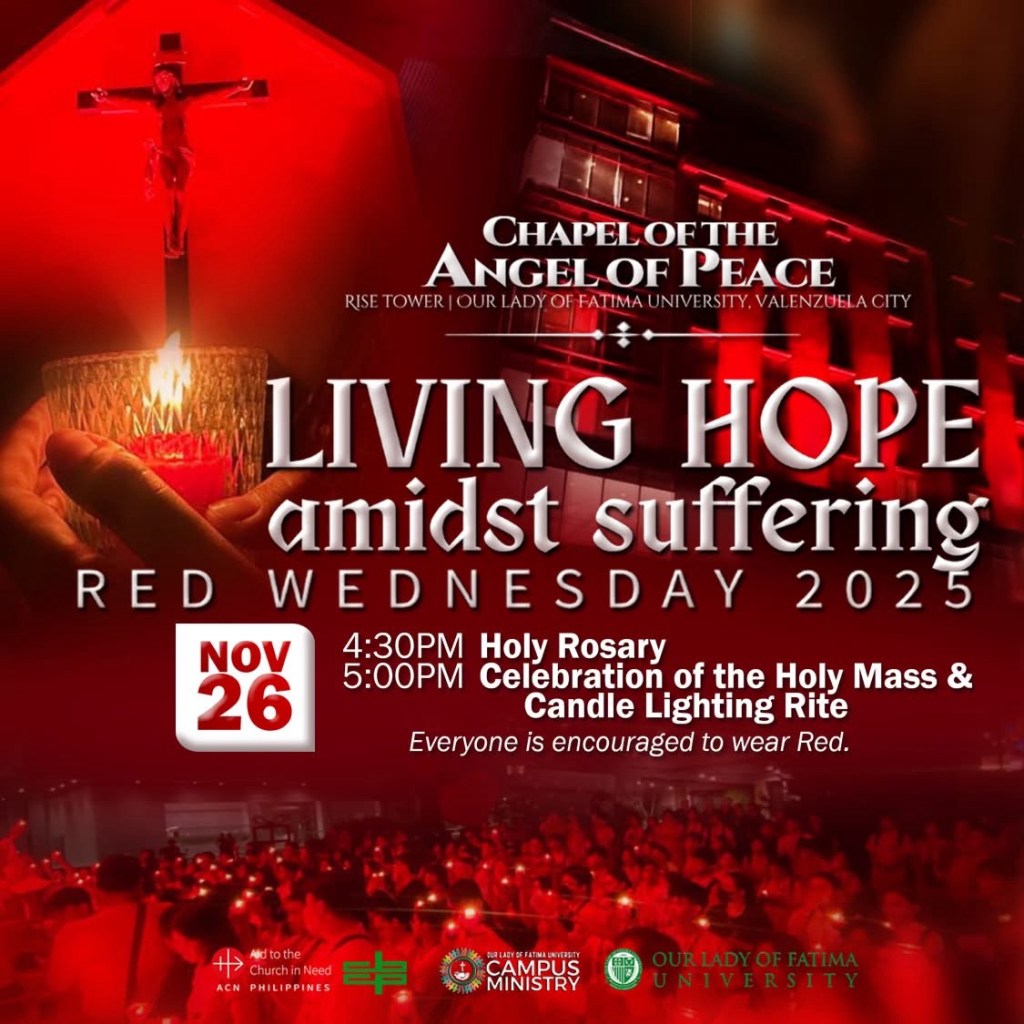
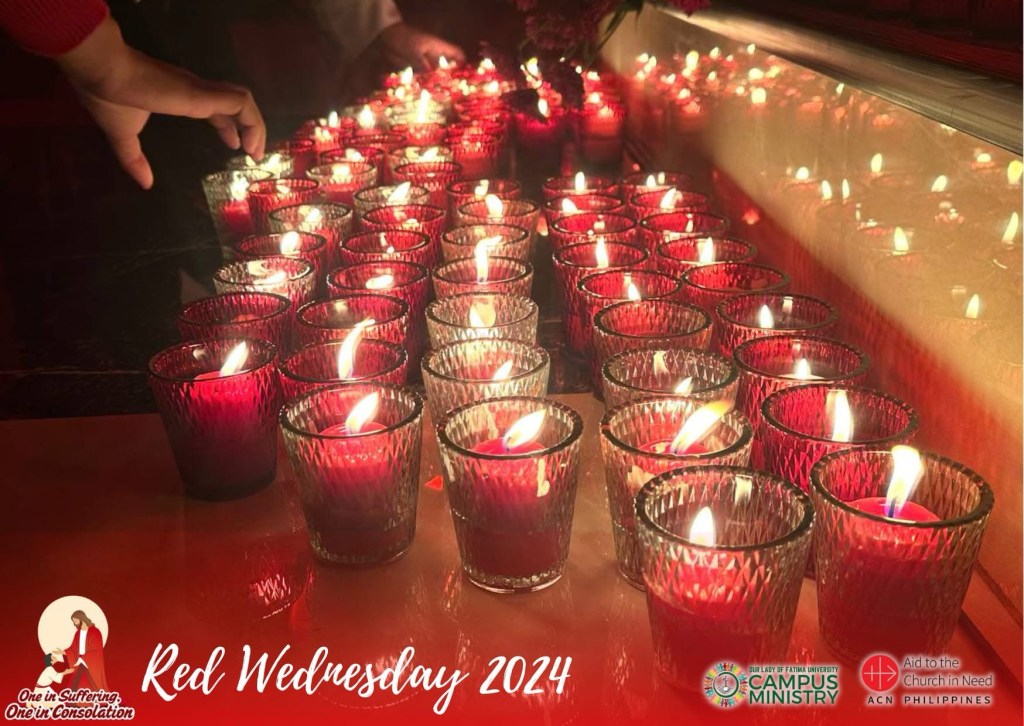
Photo from Fatima Tribune, Red Wednesday, Chapel of the Angel of Peace, Our Lady of Fatima University, 27 November 2024.

Very often, we are the ones who make our problems and sufferings worse with the excess baggage we keep on carrying like bitterness and resentments, self-doubts and self-rejection, and many other negative feelings that we allow to fester within us. Sometimes, we are like that man who asked Jesus to tell his brother to give his share of inheritance when we refuse to look more into our own sins, preferring to look more into other’s faults and failures. Or, maybe like Martha we are so busy and preoccupied with many other things that we not only forget God but even our very selves in the process.

Focus on Jesus alone, let him perfect our faith by purifying us with his fire of love.

Photo by author, Archdiocesan Shrine of Nuestra Señora De Guia, Ermita, Manila, 28 November 2024.

Be on guard, however, that the more we follow Jesus on his path of the Cross, the more we experience “complexities” in life like Jeremiah in the first reading. He found enemies among his own people who tried to put him into death because he spoke the truth. Discipleship in Christ is being a prophet – a sign of contradiction especially in today’s world where sin and profanity are extolled while rights are exaggerated and truth and morals are relativized. There are strong temptations for us to withdraw to one’s corner, refusing to choose a side or take a stand especially when loved ones or those dear to us get involved.

This Sunday, Jesus invites us to focus on him alone, to have faith in him, to be like him. He perfects our faith in him, enabling us to choose and stand for what is true and good, fair and just. Let us pray to Jesus for more fire and warmth in our faith in him, remembering those words of the author of Hebrews that “In your struggle against sin you have not yet resisted to the point of shedding blood.” Amen. Have a blessed week ahead everyone!

Begin with the End in sight

Lord My Chef Sunday Recipe for the Soul by Fr. Nicanor F. Lalog II
Nineteenth Sunday in Ordinary Time, Cycle C, 10 August 2025
Wisdom 18:6-9 ><}}}}*> Hebrews 11:1-2, 8-19 ><}}}}*> Luke 12:32-48
Our new College of Medicine Building with the lovely flowers of Banaba trees welcoming the new academic year this Monday, 11 August 2025.

One of the remarkable trends in management these past two decades is the emphasis on values-based approaches like The Seven Habits of Highly Effective People by the late Dr. Stephen Covey. Second in his list is the title of our reflection this Sunday, “Begin with the end in sight.”

Actually we mentioned that in our reflection last Sunday but we stressed the word “end” begins with a capital “E” to refer to things of God and eternal life as in the End of all in death. This is the theme of the Lord’s teaching today he presented in three parables with the last two calling us to be faithful stewards awaiting their Master’s return in the End while the first one expressing the summary of his lessons, “For where your treasure is, there also will your heart be” (Lk.12:34). But unlike most Sundays, we reflect today on the second reading from the Letter to the Hebrews that shows us Abraham’s faith journey as an expression of Christ’s teachings on setting our sights with the End.

Faith is the realization of what is hoped for and evidence of things not seen. Because of it the ancients were well attested. By faith Abraham obeyed when he was called to go out to a place that he was to receive as an inheritance; he went out, not knowing where he was to go (Hebrews 11:1-2, 8).

Photo by author, RISE Tower, Our Lady Fatima University, Valenzuela City, 06 August 2025.

We all believe in something, whether it is something good or something bad. However, what or who we believe in makes the difference because what or who we believe in determines how we live.

That is why Dr. Covey’s declaration is most true, especially when we talk of our End that is actually a Who – God. It is our faith in God who drives us in this life especially when it is dark and difficult, even painful so that we may achieve our End to be with him in eternity. The author of Hebrews found Abraham’s faith journey so remarkable as it enlightens too our own faith journey in God through Jesus Christ our High Priest as a context.

First, the author of Hebrews defined faith as “the realization of what is hoped for and evidence of things not seen.” Faith is more than trusting God in Jesus Christ. For the author of Hebrews, faith is more of knowing and understanding of what lies ahead though it cannot be seen. Faith here is more of having vision than sight, of seeing beyond things, so convinced of its existence even not seen like Noah who built an ark on God’s command even if there were no dark clouds nor rains visible at all. Faith for the author of Hebrews is like our Filipino expression “a…basta!” of having the conviction God created the universe even though no one saw the act of creation. It is something real that “only the heart can see” because it is also borne out of a deep relationship with God and with those we love. See now the three instances cited by the author of Hebrews in Abraham’s faith journey that are similar with our own experiences.

Photo by author, RISE Tower, Our Lady Fatima University, Valenzuela City, 06 August 2025.

“By faith he sojourned in the promised land as in a foreign country, dwelling in tents… for he was looking forward to the city with foundations, whose architect and maker is God” (Heb.11:9-10). Abraham was a “pilgrim” – a wayfarer – not only from his place of birth into the promised land but also on the journey from the present into the future and eternity. See how Abraham looked into the End at the start of his journey in God and with God walking on the path of what is to come.

All he had was faith in God. Surely there were times of darkness and distress along the way which the author of the Book of Wisdom in our first reading accurately described as “night of the passover” that reminds us of darkness hovering the path of God. Jesus reiterated this “night of passover” literally and figuratively speaking. Have faith in Christ whenever our journey gets tough and rough, when there are detours or when we actually get lost. God will find us to reach his city he made for us.

“By faith he received power to generate, even though he was past the normal age – and Sarah herself was sterile – for he thought that the one who made the promise was trustworthy” (Heb.11:1). We all know the story of Abraham and Sarah having their own son in old age, of the many twists and turns in their lives before Isaac was finally born and thus fulfilled God’s promise that Abraham became the father of all nations. In Matthew’s genealogy of Jesus Christ, Abraham is mentioned first as a testament of his faith in God that led to the birth of the Messiah.

Photo by author, RISE Tower, Our Lady Fatima University, Valenzuela City, 06 August 2025.

Many times we ask why God takes so long in fulfilling his promises to us. We wonder if God really called us to a certain vocation or profession or wanted this and that for us especially when in our prayers we are convinced of God’s will. Why does God keep us waiting?

Experience had taught us that more than a test of our faith, those waiting moments for God’s answer to our prayers were grace-filled moments of our own transformation into better persons so that we may value more his gifts to us, whether they are persons or things or moments. God is faithful. Remember the words of St. Paul, “God’s gifts and call are permanent and irrevocable” (Rom.11:29).

“By faith Abraham, when put to the test, offered up Isaac, and he who had received the promises was ready to offer his only son…He reasoned that God was able to raise even from the dead, and he received Isaac back as a symbol” (Heb.11:17, 19). This is the most moving and touching in the story of Abraham’s faith: he never doubted nor questioned God at all when he was asked to offer his son Isaac. Imagine how Abraham must have felt after waiting for so long for a son, then suddenly God asked him to offer him back Isaac?

See the unfolding of this scene in Genesis 22 with Abraham totally silent going up the mountain with Isaac who asked what shall they offer to God? Abraham simply assured him God will provide. Everything proceeded in silence until Abraham was to kill Isaac when an angel stopped him and told him how God was so pleased with his fidelity. This scene reminds me of the pain of many parents, especially mothers at the funeral of their son or daughter. It is the most difficult Mass for me to celebrate; normally, it is the children who bury their parents, not the other way around. When parents bury their children, no matter how young or old they may be, it is beyond words. I just try to believe more, to have more faith in God that he would bless and comfort the grieving parents.

Photo by author, RISE Tower, Our Lady Fatima University, Valenzuela City, 06 August 2025.

Abraham’s faith is a gift from God we too have all received and must deepen. It is easier said than done but we have to accept that nothing in this life is really ours to keep for all is God’s. And if ever God takes something from us, it is because he is giving us something even more than what we already have. That is why Jesus asks us in the gospel this Sunday to give up everything for him for he is our only End.

Jesus said to his disciples: “Do not be afraid any longer, little flock, for your Father is pleased to give you the kingdom. Sell your belongings and give alms. Provide money bags for yourselves that do not wear out, an inexhaustible treasure in heaven that no thief can reach nor moth destroy. For where your treasure is, there also will your heart be” (Luke 12:32-34).

This Sunday, Jesus invites us to examine where our treasure is for that is where our heart is, giving himself to be our treasure for he alone can lead us to our final End. Like Abraham, Jesus asks us to see beyond the present moment, to give up whatever we have, whether good or bad, people or things, even memories. It is very difficult and even painful but with faith in God, it could be our most liberating and grace-filled moment in life when we learn to forgive and be sorry, to be content, and finally start living by loving and be convinced we are loved because these are all we need in the End. Amen. A blessed week to everyone!

Photo by author, RISE Tower, Our Lady Fatima University, Valenzuela City, 06 August 2025.

The heart of the priest

Lord My Chef Daily Recipe for the Soul, 04 August 2025
Monday, Memorial of St. John Baptiste Marie Vianney, Priest
Numbers 11:4-15 <*{{{{>< + ><}}}}*> Matthew 14:13-21
St. John Baptiste Marie Vianney from https://liturgiadashoras.online/.

People complain and ask me why our patron saint, St. John Baptiste Marie Vianney is always portrayed “unattractive” as old, balding and so thin who seemed to be so tired, even sad. Para daw hirap na hirap.

Usually I smile at them because when I entered the seminary, I felt the same way too upon seeing his images. But as I learned about his life and teachings, the more I realized St. John Baptiste Marie Vianney is actually one of the original “rock star” saints of the Church with his white, balding hair so much like Jimmy Page of Led Zeppelin!

There is something so deeply within him when we try to feel and observe his portrayals in the arts as more than images but a reality and experience of a man deemed weak yet so strong with an intensity of a Michael Jordan in his life and ministry. He was another St. Paul who had truly let “Christ lived in him” (Gal. 2:20), “strongest when weakest” (2Cor.12:10) who declared with conviction that “the priesthood is the love of the heart of Jesus.” Hence in my prayers last night and today, I asked Jesus to give me a heart “so big, so wide to welcome everyone and life’s many challenges” (https://lordmychef.com/2025/08/03/praying-with-our-patron-saint-john-baptiste-marie-vianney/).

Detail of a painting of the Sacred Heart of Jesus at Visitation Monastery, Marclaz, France from godongphoto / Shutterstock.

The readings this Monday of the eighteenth week in Ordinary Time perfectly jibed the celebration of the Memorial of St. John Baptiste Marie Vianney as they spoke of the heart of the priest.

In the first reading we heard of Moses lamenting to God of the difficulty in dealing with his people who were so stubborn and refused to recognize God’s immense love for them, so similar with us priests in many occasions when we feel so frustrated and sad when parishioners fail to see the good things we are doing for them.

When Moses heard the people, family after family, crying at the entrance of their tents, so that the Lord became very angry, he was grieved. “Why do you treat your servant so badly?” Moses asked the Lord. “Why are you so displeased with me that you burden me with all this people?”… I cannot carry all this people by myself, for they are too heavy for me. If this is the way you will deal with me, then please do me the favor of killing me at once, so that I need no longer face this distress” (Numbers 11:10-11, 14-15).

Many times, we priests feel like Moses who cannot voice out problems with the people who would never understand it at all. Worst, people would even blame us priests why we work so hard or why do we bother at all with their lives. “Pabayaan na lang ninyo kami…sanay na kami” are what they often say. It can be frustrating when people refuse to match the fire and ardor of their priests.

In this scene, we find one of the many instances in the life of Moses that was centered on God in prayers. The heart of the priest is a heart in prayer. The attitude of Moses in the first reading conversing with God in prayer shows us that in our life and ministry, there is no one to turn to except God alone with whom we can be our most personal self, even dare God to “take us” or “kill us” when we are so fed up. The good news is, God never took those words seriously as he knew Moses and the prophets including us who spoke to him that way never knew what we were saying at all.

There is a saying that goes, “if you can’t bear the heat, leave the kitchen”; but, it cannot be applied with the priesthood that is neither a profession nor a job one can easily walk out from and start into another venture or career. Priesthood is a call or a “vocation” from God; however, priesthood is more of the Caller than the call. It is a life centered on prayer to become like Jesus Christ who alone feels and understands and appreciates all our ups and downs in the ministry. The more we get closer to Jesus in the Cross, the more we experience fulfillment that we would never dare to trade it for anything or anyone else, not even the prettiest woman on earth.

Photo by author, Chapel of St. Francis Xavier, Sacred Novitiate, Novaliches, QC, March 2024.

Priesthood is the love of the heart of Jesus that continues to be wounded and hurt by sins of men and women in this modern age so selfish and materialistic. Thus, every priest is called to be a “wounded healer” too like Christ who in his woundedness healed the wounds of others. We remind people of the paradox and scandal of the Cross of Jesus, of life itself by taking into heart Christ’s teaching, “For whoever wishes to save his life will lose it, but whoever loses his life for my sake will find it” (Mt. 16:25).

Let us now reflect on our gospel.

When Jesus heard of death of John the Baptist, he withdrew in a boat to a deserted place by himself. the crowds heard of this and followed him on for from their towns. When he disembarked and saw the vast crowd, his heart was moved with pity for them, and he cured their sick (Matthew 14:13-14).

Observe the brevity of Matthew in narrating the situation at the scene without losing its very soul and meaning especially for us priests: Jesus did not have any intentions to go after Herod nor to challenge him for his execution of John the Baptist who spoke the truth.

Instead, Jesus sought solitude. Like Moses in the first reading, Jesus turned to God in his grief and anguish of the death of John the Baptist. He crossed the lake to pray and be one with the Father to pour out his sadness and most of all, to reflect on what to do next after John’s death.

Jesus shows us in this scene of his going into solitude that our low points in life as priests are also our high points like Christ’s Transfiguration. Every prayer moment is a transfiguration moment because that is when we get closest with Jesus. It has been consistently proven in our collective and personal experiences as priests verified by studies that crises in the priesthood happen when we stop praying because that is detaching from Jesus Christ, our Caller.

Priesthood is not only difficult but very difficult starting with the vestments we have to wear. What a shame when priests prefer to do away with the proper vestments as well as wearing of shoes during celebrations of the Mass and other sacraments because the weather is so hot. What then are we going to bear if the weather is already a big issue for us? One of the teachings of St. John Vianney that I have always followed is the value of putting on good vestments in the celebration of Sacraments because they are a homily in themselves, proclaiming the glory and love of God for us all.

Photo by FlickrBrett Streutker from catholic365.com.

Many times, people forget priests have personal concerns and problems too, that we get hurt, get lonely, get sick and grieve at the death of family and friends. Despite all these lows in our life as priests, we go and follow the Caller Jesus Christ when people come and ask for our help and service. Woe to our brother priests who forget this and think more of themselves especially of their comfort!

See how when Jesus was praying in solitude and the crowd followed him, it was not difficult for him to forget his own worries that his heart was moved with pity upon seeing them disembarked from their boats. Despite his sadness at the death of John, Jesus taught the crowd who have followed him and healed the sick among them. And when the Twelve told him to drive away the crowd to search for their own food and lodging, Jesus told them to give them food themselves. What followed was the great miracle of the feeding of over five thousand people from five loaves of bread and two pieces of fish. It was the event that prepared the Twelve and the people to the Last Supper of the Lord and the road to Emmaus where Jesus was recognized at his “breaking of bread”.

The whole life of St. John Baptiste Marie Vianney was a prayer of praise and thanksgiving to God in Christ’s priesthood. He had a heart so big and wide, hearing confessions daily up to 16 hours! Pray for us your priests to have big hearts too to bear all the wounds and hurts because only the heart that suffers, that is “broken” can truly sing of the joys and pains of living, of the sense and meaning of serving to the point of being emptied, and of the healing and transforming power of Christ’s love and mercy. Amen. Pray for us your priests. Salamuch. Fr. Nicanor F. Lalog II, Our Lady of Fatima University, Valenzuela City (lordmychef@gmail.com).

 have not been to France nor do I know French but while searching for images of St. John Marie Vianney, I found this from the French website, https://www.notrehistoireavecmarie.com/; it is perhaps the depiction of the new pastor speaking to the young Antoine whom he asked for directions to Ars.