Fullness of person, fulfillment of law

The Lord Is My Chef Sunday Recipe for the Soul, Week VI-A, 16 February 2020

Sirach 15:15-20 ><)))*> 1 Corinthians 2:6-10 ><)))*> Matthew 5:17-37

Photo by author of pilgrims entering the Church of the Beatitudes with a painting of the Sermon on the Mount above the door, May 2019.

Jesus continues his Sermon on the Mount this Sunday, expounding the meaning of his teachings called the Beatitudes. As we have reflected last week, the Beatitudes tell us the person of Jesus Christ as being “poor, merciful, clean of heart” whom we must all imitate to become the salt and the light of the world.

Most important of all, Matthew presents to us at the Sermon on the Mount that Jesus is more than the new Moses as giver of laws like at Mt. Sinai in the Old Testament: Jesus himself is the Law, who is both our Teacher and Redeemer.

This we see in his teachings today when he claims to be the fulfillment of the Laws and the Prophets from God in the Old Testament.

Jesus said to his disciples: “Do not think that I have come to abolish the law or the prophets. I have come not to abolish but to fulfill it. Amen, I say to you, until heaven and earth pass away, not the smallest letter or the smallest part of a letter will pass from the law, until all things have taken place.”

Matthew 5:17-18

Essence of the Laws: reflection of God, the good of man

Today, Jesus is teaching us to see the laws in the right perspectives, in the light of the will of God for the good of every person. Throughout his ministry, Jesus has always been consistent in reminding everyone that the laws were made for man, not the other way around.

During Christ’s time, people have lost the real meaning of the Commandments of God as priests and religious leaders focused more on its letters than in its essence and spirit that in the process, the laws have become burdensome. It has continued in our own generation with laws taking precedence over God and persons.

Photo by author of the Church of the Beatitudes at the Holy Land, May 2019.

At the Sermon on the Mount, we find Jesus restoring and recalibrating the laws so that these become more relevant and powerful as reflections of God in the service of man.

Jesus “relectures” us the laws in this part of his Sermon on the Mount by adding more righteousness (holiness), declaring that,

“I tell you, unless your righteousness surpasses that of the scribes and Pharisees, you will not enter the kingdom of heaven.”

Matthew 5:20

By using a pattern where he would cite Laws, saying, “You have heard that it was said”– Jesus shows us his fidelity and obedience to Judaism, contrary to his enemies’ accusations that he had abolished their laws. Moreover, in fulfilling the laws, Jesus put himself in the midst of every law and precept by declaring, “Amen, I say to you” or “but I say to you”.

In following that formula, Jesus gave the laws with a human face and a human heart in himself as its fulfillment so that from then on at his Sermon on the Mount, Christ made every law, every tradition, everything else to be seen always in his person.

Black and white photo by Mr. Jay Javier in Quiapo, 09 January 2020.

Performative powers of the laws in Jesus Christ

With Jesus in the midst of every law and precept as its fulfillment, God’s laws then become not only informative but most of all, performative to borrow one of Pope Emeritus Benedict XVI’s favorite expression. This we find Jesus teaching us in three stages in our long gospel this Sunday.

  1. Education of the heart.

The first two laws cited by Jesus in this long list of commandments are “You shall not kill” and “you shall not commit adultery”. Both laws bring us to the very core of our personhood, of what is in our hearts and in our minds. The Lord explains that being angry as well as saying bad words against another person is like murder while looking lustfully at a woman is a form of adultery because in both cases, we have ceased to regard the other individuals as persons to be loved and respected, created in the image and likeness of God.
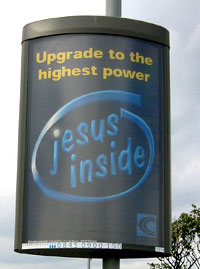
From Google.

It is an invitation for us to purify our hearts and minds for what defiles man is not what enters him but what comes out from him (Mt.15:11). Whatever is within us will always have an effect in all of our actions, for better or for worse.

What a tragedy that right here in the middle of our wired world of social media and instant communications, we have actually grown apart than together in the last 35 year with so much animosities fed on by lies and misinformation.

How ironic also that despite the information explosion from the Net, we have more benighted souls today than ever before who have actually gone to schools who know nothing of our history and geography?!

Education of the heart is formation of the whole person, not just a training of skills. One problem we have these days is when information is geared on data and facts without integration that we forget our relationships as well as the values we keep like respect, kindness, and dedication. Unless we have an education of the heart, a wholistic and integral formation, we can never be transformed into like Jesus Christ.

2. Get into the roots of our sins.

In telling us to pluck out our right eye or cut off our right hand if these cause us to sin, Jesus is inviting us again to probe deep into our hearts and being to understand what causes us to sin.

Photo by author, water plants in my room at the Fatima Parish and National Shrine, Valenzuela City, 2010.

The key here is to be totally free. In the first reading, Ben Sirach counsels us to “choose” rightly what is good and avoid what is evil.

We can only exercise our true freedom when we have clearer knowledge and understanding of ourselves and of things within us. We fall into vices and sins because we do not know what is going on inside us; hence, we are enslaved by our desires and sins to be not free at all.

Once we understand our sins, we commit them less often. Most of all, when we understand our sins, our struggles against committing these become more persevering, resulting to more triumphs than defeats.

The Season of Lent is near. Once again, we shall be busy with fasting and abstinence, contrition and confession of sins, almsgiving and other spiritual works that make us holy. But too often, these acts become mechanical that sooner, we sometimes reach that point when we cannot find meaning in doing them anymore that we sink deeper into sins and evil.

This happens when we get focused with letters of the laws and we forget its spirit that we become mechanical because we have failed to understand our very selves as well as our sins.

3. Be true.

Jesus said it perfectly well at the end of his teachings today,

“Let your ‘Yes’ mean ‘Yes’ and your ‘No’ mean ‘No.’ Anything more is from the evil one.”

Matthew 5:37

In this last installment of reviewing the laws, Jesus underscored the problems with divorce as well as with lies that continue to this day because we always choose not to be true at all with ourselves, with God, and with others.

Photo by author of the last two Stations of the Cross at the chapel of my niece Ms. Babs Sison in Los Baños, Laguna 13 February 2020.

See the wisdom of Jesus in putting together divorce and oaths, the two great lies that until now continue to mislead so many among us who refuse to accept and carry the cross of Christ, preferring only the Easter Sunday minus the Good Friday.

Being true is embracing the Cross of Jesus Christ like St. Paul in the second reading. It is something we cannot deny in this life. There will always be pain and sufferings. As Dr. Scott Peck put it in his book The Road Less Travelled, “life is difficult.”

At his Sermon on the Mount, Jesus clearly showed in his Beatitudes that he and his values are in sharp contrast to the wisdom of the world. And this wisdom is only accessible to those willing to embrace the crucified Christ and the scandal of the cross.

It is there on the Cross with Jesus Christ we truly find the fulfillment of the laws as well as our fullness as persons. Amen.

Have a blessed Sunday, everyone!

Spiritual decluttering and tidying

The Lord Is My Chef Breakfast Recipe for the Soul

Wednesday, Week V, Year II, 12 February 2020

1 Kings 10:1-10 ><)))*> 0 <*(((>< Mark 7:14-23

Photo by author, Baguio Cathedral, January 2019.

Thank you for coming to us, Lord Jesus Christ, to save us, to cleanse us of our sins. What a tremendous grace and gift from you who are sinless to own up and wash away our sins!

Long before Mari Kondo had come advocating decluttering and tidying our homes, you were there first, O Lord, spiritually cleansing us, our inner selves in order to experience your peace and wisdom like King Solomon.

What must have impressed the Queen of Sheba in meeting King Solomon was more of his inner peace and stability, sincerity and honesty in answering all her questions: he was not hiding anything negative inside himself as he exuded with positive vibrations.

Precisely what Jesus was telling the people of his time and us today:

“Hear me, all of you, and understand. Nothing that enters one from outside can defile that person; but the things that come out from within are what defile… From within the man, from his heart, come evil thoughts, unchastity, theft, murder, adultery, greed, malice, deceit, licentiousness, envy, blasphemy, arrogance, folly. All these evils come from within and they defile.”

Mark 7:14-15, 21-23
From Google.

Cleanse our hearts, our inner selves, Lord Jesus Christ.

Please do some spiritual “Mari Kondo-ing” into our souls to discard all filth and negative vibes we have been senselessly keeping, even nurturing, holding on in the hope of avenging for the wrongs done against us.

Cleanse us inside, Lord, so we may be filled with your light of reason and sparks of joy. Amen.

Every good seed is from God

The Lord Is My Chef Breakfast Recipe for the Soul

Wednesday, Week 3, Year 2, 29 January 2020

2 Samuel 7:4-17 ><)))*> ><)))*> ><)))*> Mark 4:1-20

An oasis near the Dead Sea, Israel. Photo by author, May 2017.

God our Sower, every good seed is from you.

Thank you very much in giving us the best seed of all, your Son Jesus Christ, the “Word who became flesh”, himself the very fruit of the “seed” you promised to King David long, long ago.

That night the Lord spoke to Nathan and said: “Go, tell my servant David, ‘The Lord also reveals to you that he will establish a house for you. And when your time comes and you rest with your ancestors, I will raise up your heir after you, sprung from your loins, and I will make his Kingdom firm. It is he who shall build a house for my name. Your house and your kingdom shall endure forever before me; your throne shall stand firm forever.'”

2 Samuel 7: 11-13, 16

Cultivate us, O Lord, to become good soil who will be open to receive your seed to make it sprout and grow and bear fruits.

So many times in our lives, we choose to be like the “path” where seeds fall and we do not mind at all. Likewise, we sometimes choose to be like the rocky ground who joyfully received Jesus for a while but when trials come, we give up on him because we have not taken him into our hearts to take root in us.

There are those among us, O Lord, who choose to be among the thorns, who choose to believe in science and technology, in materialism that choke the word in us until it dies out and bear no fruit.

In all instances, the problem is with the soil, never with the seed that is so good if given a chance to grow on rich soil would surely be fruitful.

Teach us to be a rich soil, one who is patient and still, willing to wait for your coming each day sowing us the good seed who value silence, and most of all, who uphold the sanctity of life itself so that YOU, O Lord will grow in us, be nurtured by us, be loved and embraced by us.

Show us anew the beauty of your words, O Lord, so we may immerse ourselves in you, be still in your presence to receive and digest your words as food that delights us and strengthens us. Amen.

Wanted: Prayer from the heart!

The Lord Is My Chef Breakfast Recipe for the Soul

Thursday, Week 1, Year 2, 16 January 2020

1 Samuel 4:1-11 ><)))*> ><)))*> ><)))*> Mark 1:40-45

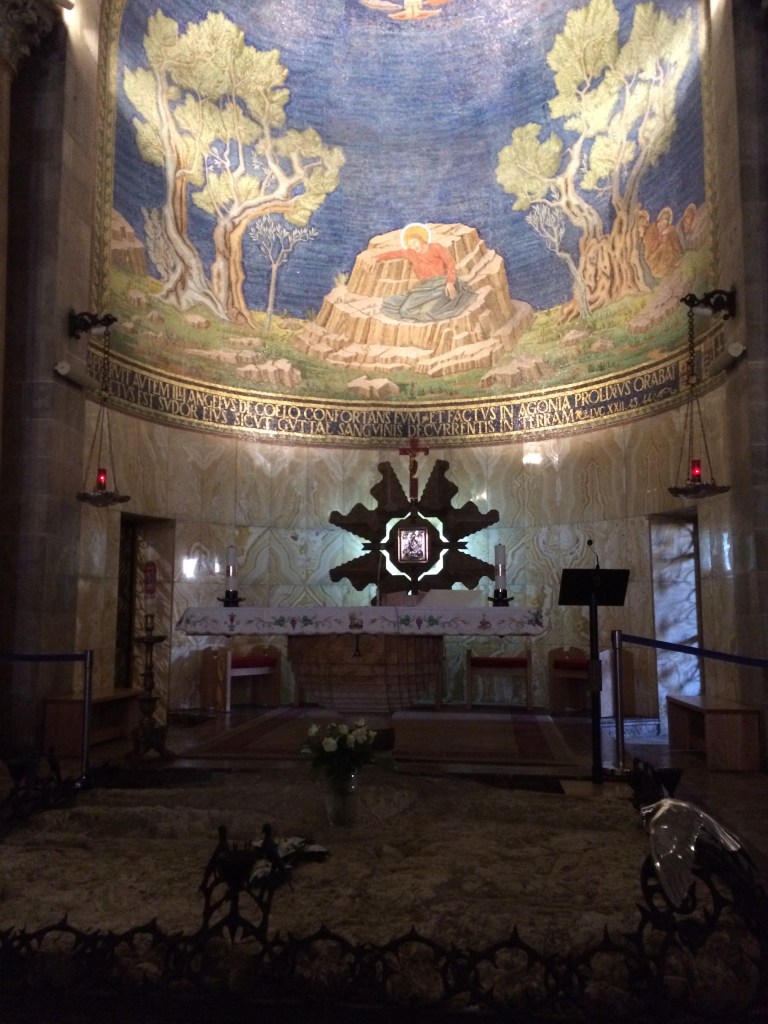
Altar of the Church of All Nations beside the Garden of Gethsemane in Jerusalem where Jesus prayed before his arrest on Holy Thursday. Photo by author May 2019.

Lord Jesus Christ, our Master and Divine Teacher, please teach us how to pray like you. Teach us how to truly pray that is pleasing to the Father not in the social media as many of us seem to be doing these days amid the eruptions of Taal Volcano recently.

May we be reminded of the experience of the Israelites in the first reading that despite the presence of God’s Ark of the Covenant in their battle with the Philistines, they were defeated.

Worst, the Ark of the Covenant was captured and among those dead were Eli’s sons, Hophni and Phinehas (1Sm.4:10-11)!

Remind us that it is the Holy Spirit within us who prays and calls out to you, O God, because we do not really know how to pray. Dispose ourselves unto your will, O God, like that who came and knelt to beg before Jesus, saying,

“If you wish, you can make me clean.” Moved with pity, Jesus stretched out his hand, touched the leper, and said to him, “I do will it. Be made clean.” The leprosy left him immediately, and he was made clean.

Mark 1:40-42

Dear God, may we heed the calls of Pope Francis in Laudato Si that each of us seriously change our own ways of living, to have a shift in our lifestyles that respects nature as part of your creation, part of our lives.

We have long disrespected you and nature, O God.

Cleanse our hearts, strengthen us in facing Taal’s fury and heed her voice hereafter to take care of her. Amen.

Advent is for healing

The Lord Is My Chef Sunday Recipe for the Soul

Second Sunday of Advent-A, 08 December 2019

Isaiah 11:1-10 ><}}}*> Romans 15:4-9 ><}}}*> Matthew 3:1-12

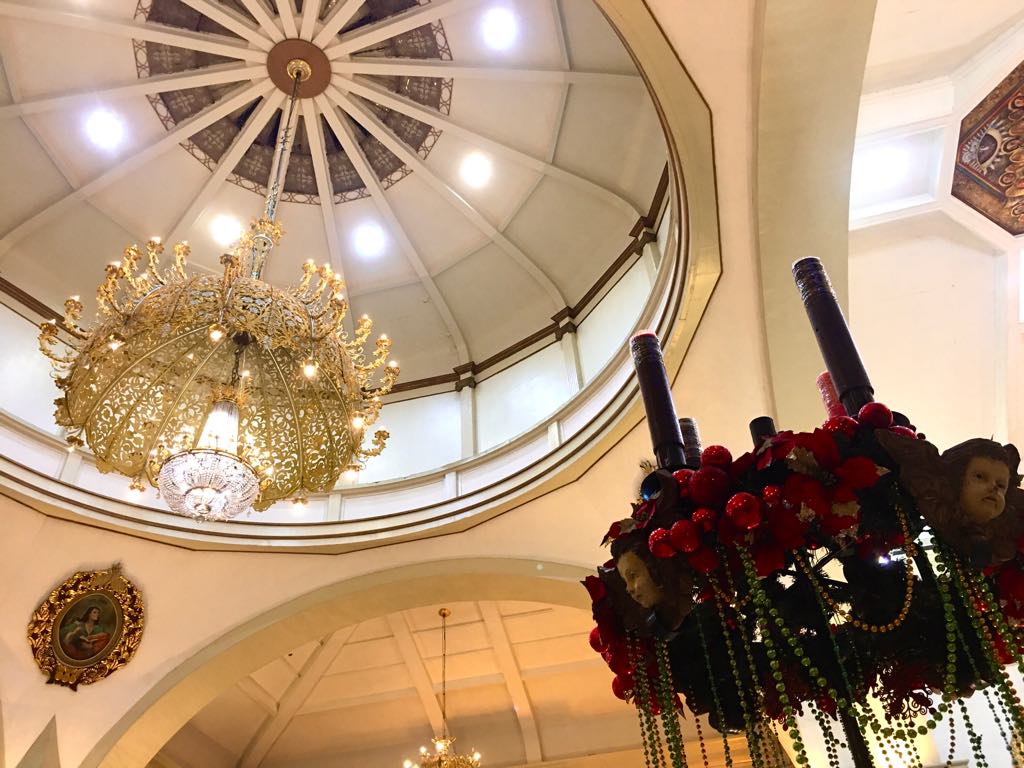
Cathedral Basilica Minore of the Immaculate Conception, Malolos City, Advent 2019.

Advent is a season we are invited to look forward, to dream of the ideal, of the best things we wish we all have in this destructive world we live in.

It is the time for healing our wounds and brokenness as we look forward to the fulfillment of God’s promise of lasting peace brought by Jesus Christ’s coming more than 2000 years ago.

On that day, a shoot shall sprout from the stump of Jesse, and from his roots a bud shall blossom. The spirit of the Lord shall rest upon him… Not by appearance shall he judge, nor by hearsay shall he decide, but he shall judge the poor with justice, and decide aright for the land’s afflicted… Justice shall be the band around his waist, and faithfulness a belt upon his hips. Then the wolf shall be a guest of the lamb, and the leopard shall lie down with the kid; the calf and young lion shall browse together, with a little child to guide them. The cow and the bear shall be neighbors, together their young shall rest; the lion shall eat hay like ox. The baby shall play by the cobra’s den, and the child lay his hand on the adder’s lair. There shall be no harm or ruin on my holy mountain; for the earth shall be filled with knowledge of the Lord, as water covers the sea.

Isaiah 11:1-2, 3, 4, 5-9
“Peaceable Kingdom”, a painting based on Is.11:1-10 by American Edward Hicks, a Quaker pastor (1780-1849).

Jesus is coming again to heal our destructive world

Last November 28 we celebrated Red Wednesday to remember the more than 300 million Christians worldwide persecuted in various forms because of their faith in Jesus Christ. Many of them were tortured and/or murdered while others were denied of work, housing and liberty for carrying the cross and confessing their faith and love for Jesus Christ.

According to some reports, about 80% of wars and conflicts in the world today are due to religion. How tragic – and scandalous – that religion is tearing us apart than bringing us together as peoples believing in a God who is loving and merciful!

But despite all these destructions going on, Isaiah’s prophecy challenges us to keep our hopes alive for a better future, to look forward for the coming again of Jesus Christ, “the shoot that shall sprout from the stump of Jesse” to heal our destructive world.

Advent assures us that it is never too late for the Lord to make peace and justice spring forth in our dying world like a stump of tree.

Isaiah’s vision is an imagery of God’s test of faith to us all to make it Jesus Christ’s peace a reality in this fragmented world, calling us into conversion so that we shall be “filled with knowledge of the Lord, as water covers the sea.”

It is a call made louder and clearer by St. John the Baptist at the wilderness that still echoes to our own time today.

Healing our destructive world starts within me

Photo by Mr. Jim Marpa, September 2019.

When he saw many of the Pharisees and Sadducees coming to his baptism, he said to them, “You brood of vipers! Who warned you to flee from the coming wrath? Produce good fruit as evidence of your repentance… Even now the ax lies at the root of the trees. Therefore every tree that does not bear good fruit will be cut down and thrown into the fire.

Matthew 3:7-8,10

The season of Advent is not only inviting us to look forward for a new world order where there would be lasting peace and justice, when all our tears would be wiped out, with perfect joy replacing our pains and sufferings. Advent is calling on us to look forward in renewing our relationships with God and with one another by beginning within our own hearts.

And make no mistake that St. John’s preaching and call were not only meant for the Pharisees and Sadducees of his time but also to us all Christians of today to “produce good fruit of our repentance” because being sorry for our sins is just the first step to conversion.

Whenever there is true repentance in our hearts, there must also be a change in our very selves, in our living. And only then can we expect of a better and more beautiful world coming like Isaiah’s vision because from true repentance comes justice and mercy.

St. John was very clear: it is Jesus Christ who is coming whom we shall await and prepare to meet right in our hearts. He is coming not to destroy the world – and us – but to restore everything into life anew.

Skies over the desert of Sinai in Egypt, May 2019.

Meeting Christ in the desert

Sometimes we get discouraged by some people and many situations that throw us off-balanced, tempting us to abandon all our efforts to be healed of our wounds and brokenness, in striving to become better persons.

Like St. John the Baptist, we have our own desert of desolation and bareness that purifies us further in preparing the way of the Lord, in meeting the Lord to be healed.

It is in our own desert of desolation and bareness where we are healed as we learn to be empty of ourselves like St. John in order to conquer first our selfish desires with silence and prayer, not with activities as we are all bent in doing these days.

In our world saturated in media with cacophony of voices telling us to do everything to be rich and popular and famous, the more we become empty and lost, broken and wounded.

“St. John the Baptist Preaching in the Wilderness” by German painter Anton Raphael Mengs (1728-1779). From Google.

Like St. John the Baptist, we have to break free from the trappings of the world by retreating into our own desert right inside our hearts in order to listen more to the voice of the coming Christ we must proclaim fearlessly in words and in deeds.

St. Paul assures us that all that scripture foretold in the past has been fulfilled in Jesus Christ who is coming again at the end of time. Despite the many destructions in this world, despite the many setbacks we have in life, may we imitate St. John the Baptist in awaiting Christ in our own desert for he is most faithful in his promise and presence. Amen.

Joy to the world

The Lord Is My Chef Breakfast Recipe for the Soul

Wednesday, Advent Week I, 04 December 2019

Isaiah 25:6-10 ><)))*> ><)))*> ><)))*> Matthew 15:29-37

The Manor House, Camp John Hay, Baguio City, 2017.

Praise and glory to you, O Lord Jesus Christ for coming to us, in fulfilling our lives, in making our joy complete. Unfortunately, no one seem to be waiting for you or worst, we live as if you have not come at all.

How sad, O Lord, that often even if we are so excited with Christmas, it does not necessarily mean we are excited of you as a person coming to us. Even if we love to sing and hear that carol “Joy to the World”, we are not really joyful because our hearts are far from you.

Forgive us, Jesus, in being focused with time and dates, than with your person and with your coming.

The more we get focused with dates and gifts and carols and other trimmings of Christmas, the less we think of you and of others too.

Open our hearts to receive you in us.

On that day it will be said: “Behold our God, to whom we looked to save us! This is the Lord for whom we looked; let us rejoice and be glad that he has saved us!” For the hand of the Lord will rest on this mountain.

Isaiah 25:9-10

Open our hearts to you, Jesus, that you are more than enough than anything we could wish for.

Make us desire more of you than of things so we may always have an abundance of you as our “bread” or everything in this life. Amen.

Womanly heart, Manly courage

The Lord Is My Chef Breakfast Recipe for the Soul

Wednesday, Week XXXIII, Year I, 20 November 2019

2 Maccabees 7:1, 20-31 ><)))*> <*(((>< Luke 19:11-28

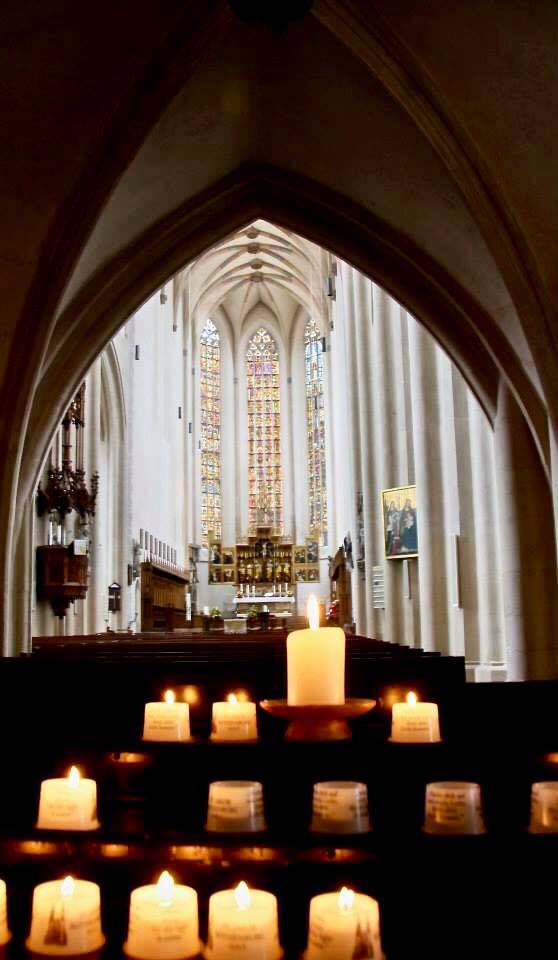
Candle and ordo in our sacristy, 17 November 2019.

Today’s first reading is very interesting, Lord, especially that part describing the disposition of the mother of the seven Maccabean brothers facing execution:

Filled with a noble spirit that stirred her womanly heart with manly courage, she exhorted each of them in the language of their forefathers…

2 Maccabees 7:21

I really wonder the meaning of “womanly heart with manly courage” but something tells me it is exactly what we need these days.

A womanly heart is a faithful heart, like a mother who would never forsake her child (Is. 49:15). It is a heart willing to bear all pains in life, suffering in silence, totally empty for the beloved and filled with God.

In this age of “instants” where lines are always moved to accommodate our whims and selfish desires, we need a womanly heart that is rooted and inclined to you O God.

Like the mother of the Maccabean brothers, she freely gave up her sons and exhorted them to look more intently to you, God, than to her herself, insisting that in the end, we are all answerable to you alone, O Lord.

Our sacristy table, 17 November 2019.

Manly courage, on the other hand, Lord is perhaps our ability to muster our strength to be truthful about our very selves.

It is something that still pertains to the heart because the word “courage” is from “cor” or heart.

A manly heart is a sincere heart that gallantly accepts one’s limitations than pretend to be somebody else.

In our suffocating world of social media where everybody is blowing out of proportion everything including one’s self, it is very ironic that while everybody claims to be the best, the more our lives are in a mess.

Like those servants in your parable, O Lord, grant us a manly heart so we may graciously accept our role and mission in this life to please you than pretend to be somebody else who really has nothing at all. Amen.

“Where” we pray

The Lord Is My Chef Sunday Recipe for the Soul, Wk. XXX-C, 27 October 2019

Sirach 35:12-14. 16-18 ><}}}*> 2 Timothy 4:6-8. 16-18 ><}}}*> Luke 18:9-14

Photo by the author. Baguio City Cathedral, January 2019.

We have reflected last Sunday that prayer is an expression of our faith.

Where there is faith and prayer, there is always love.

And when we have prayer, faith and love, we have a relationship and community of two or three and more persons together as one, rooted in God.

Today we hear another parable by Jesus only St. Luke has, that of the Pharisee and the tax collector to show us another dimension of faith expressed in prayer.

Photo by the author at the Wall of Jerusalem, May 2017.

Like last week, St. Luke tells us anew the Lord’s purpose in narrating this parable:

Jesus addressed this parable to those who were convinced of their own righteousness and despised everyone else.

Luke 18:9

Were you moved or affected in any way upon hearing our parable today?

Did you feel a silent but swift, sharp thud inside your heart while your mind tried to reason out that the parable is not meant for you?

Listen again and pause, let the Lord’s words sink deeper into your heart:

“Two people went to the temple area to pray; one was a Pharisee and the other was a tax collector. The Pharisee took up his position and spoke this prayer to himself, ‘O God, I thank you that I am not like the rest of humanity — greedy, dishonest, adulterous —- or even like this tax collector. I fast twice a week, and I pay tithes on my whole income.’ But the tax collector stood off at a distance and would not even raise his eyes to heaven but beat his breast and prayed, ‘O God, be merciful to me a sinner.’

Luke 18:10-13

If prayer creates a relationship, Jesus is teaching us today the right attitude we must have to keep this communion we have in faith and love. Any relationship is bound to fail, or would not even exist at all despite the formalities of having ties and links like what we see or even have in our various social circles where roles are just acted out.

We call it “plastic” or fake. Untrue!

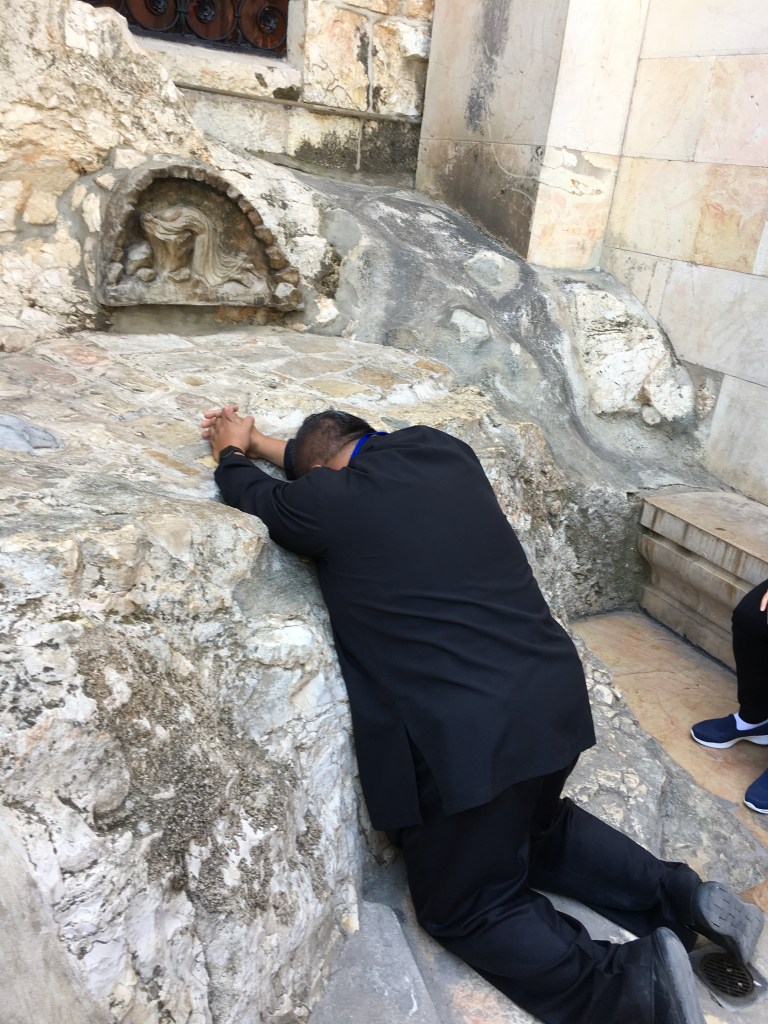
Praying at the Garden of Gethsemane, May 2019.

Prayer to be efficacious like any relationship must always be true.

Here Jesus directs our attention in the “where” when we pray – not just the location or locus of our prayer but our “place” in that relationship first with God who is our very foundation.

When all we see is our self in prayer like in any relationship, there is always a problem. It is clearly a one way street, a monologue.

Worst of all, it is an indication of the absence of God or even others because the pray-er is so preoccupied with his or her very self!

The Pharisee was clearly not in God even if he were in front of the temple. His very self was very far from God and all he had was his bloated ego. He may be a very pious person but not really good at all for he has no space for God and for others. He is a very closed man without any room for others.

The tax collector, on the other hand, may be physically far outside the temple but was the one actually nearest to God with his self-acceptance and ownership of his sinfulness, of his need for God. He was closest to God because he was more open with God and with others by admitting his own sinfulness.

Again we find the key to tis Sunday’s parable towards the end:

(Jesus said) ‘I tell you, the latter (tax collector) went home justified, not the former; for whoever exalts himself will be humbled, and the one who humbles himself will be exalted.'”

Luke 18:14
Photo by Dra. Mai B. Dela Pena, Germany, 2016.

Prayer is more than entering a church or a prayer room, or finding our most suitable spot or space to pray.

Prayer is being one with God, of being suffused in God.

“Where” are we when we pray?

First, we become one with God, one in him in prayer when we first admit our sinfulness, when we confess our sins to him, and own them without any “ifs” and “buts”.

God always comes to those who truly open themselves to him by emptying themselves of their sins and inadequacies.

The tax collector was justified in his prayer more than the Pharisee because in confessing his sins, he admitted his need for God. He knew very well his place, so unlike the Pharisee who felt God owes him so much!

When Pope Francis granted his first media interview (to their Jesuit Magazine!), the first question asked of him was, “who is Jose Mario Bergoglio?”

The Holy Father quickly answered, “I am a sinner.”

No wonder when he was elected Pope on March 13, 2013 at the Vatican, he first asked for prayers from the huge crowd gathered before he bestowed his apostolic blessing to them. It clearly showed that despite his holding the highest post in the Church, he considers himself a sinner, so weak needing prayers from the people.

I always tell couples during weddings that when they have a quarrel, the first one to speak and make the move for reconciliation is the one with most love, the one who is most willing to bow to start anew.

Most often in life, friendships and relationships are kept when we are willing to take the lower stance, not necessarily admitting fault or guilt in any misunderstanding because being lowly indicates the person’s need for the other person and of one’s love to work on that relationship despite its fragility.

Ordination of deacons, Malolos Cathedral, 12 June 2019.

Second, we are in God and with God in prayer when we have that attitude and inner disposition of being poor and lowly. Being lowly or poor means having the conviction to leave everything behind and go down with God into the lowest point because one is so confident of the efficacy of prayer like what Ben Sirach tells us in the first reading.

Most of all, like Mary the Mother of Jesus during the Annunciation of the Christ’s birth.

The one who serves God willingly is heard; his petition reaches the heaven. The prayer of the lowly pierces the clouds; it does not rest till it reaches its goal.

And thirdly, we are in God in prayer when there is an offering daily of one’s self to God.

It is not enough to be lowly and sorry for our sins in prayer. It has to be sustained because prayer is also a discipline like any sport. In the second reading, St. Paul calls us to persevere and endure until the end for Jesus Christ.

We need to be passionate with our prayer life, willing to go to all extent to offer everything for the Lord, to fulfill his will “who shall award us with the crown of righteousness in heaven.”

We are all sinners forgiven and beloved by God.

May we find ourselves in God and with God always both in our sinfulness and lowliness. Amen.

What Jesus looks for and how we see

The Lord Is My Chef Breakfast Recipe for the Soul

Friday, Week XXIX, Year I, 25 October 2019

Romans 7:18-25 ><)))*> ><)))*> ><)))*> Luke 12:54-59

Photo by Noelle Otto on Pexels.com

What a beautiful way to end the week of work and studies, O Lord, when you asked us to read the signs of the times.

Jesus said to the crowds, “When you see a cloud rising in the west you say immediately tat it is going to rain — and so it does; and when you notice that the wind is blowing from the south you say that it is going to be hot — and so it is. You hypocrites! You know how to interpret the appearance of the earth and the sky; why do you not know how to interpret the present time? Why do you not judge for yourselves what is right?”

Luke 12:54-57

In this age of social media where everything is being shown and seen by everyone, it is very unfortunate that we still fail to see beyond the physical realities.

In an age when everything and everyone is seen, we have become more superficial than ever and have refused to see more deeper than what appears to the eyes.

We look outside of us to explain everything like in the news and in the internet, at YouTube and Facebook, Google and Wikipedia.

Rarely do we look deep inside ourselves like St. Paul to realize the greater battle going on deep within each one of us between good and evil.

Teach us Lord to see more the spiritual meanings of the things happening in us and around us, to always look deep into our hearts to see and realize the need to be good and just, kind and loving.

Maybe if we can look more often into our hearts and look piercingly into the heavens to find you, perhaps we can have a better world with lesser crimes and hatred among peoples. Amen.

Love: the great little way!

The Lord Is My Chef Breakfast Recipe for the Soul

Tuesday, Memorial of St. Therese of the Child Jesus, 01 October 2019

Zechariah 8:20-23 ><)))*> ><)))*> ><)))*> Luke 9:51-56

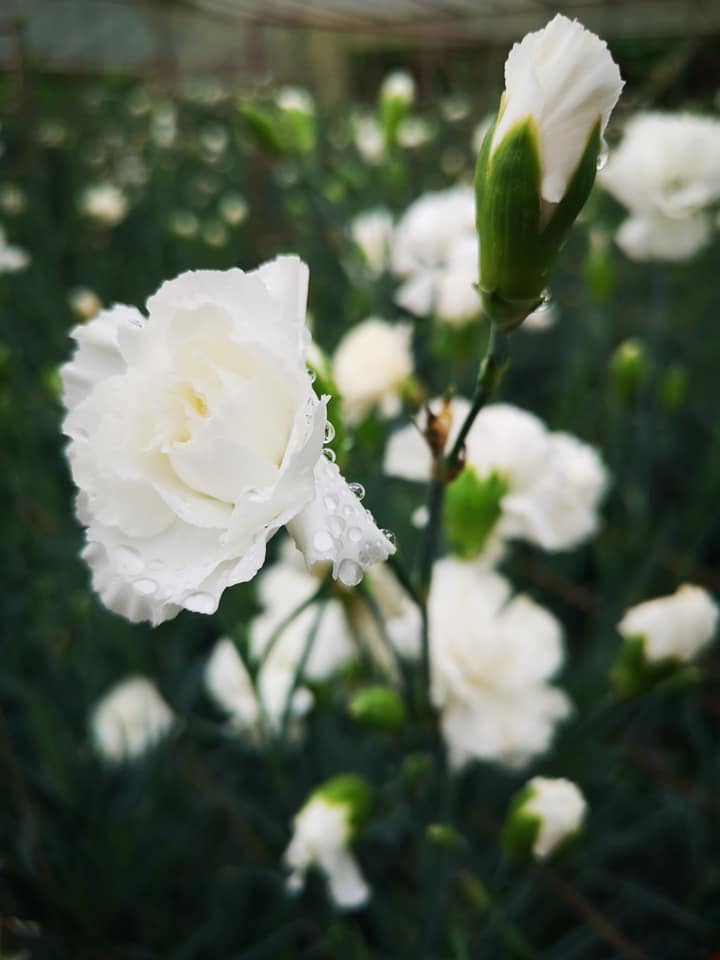
White roses for you, dearly beloved devotee of St. Therese of the Child Jesus. Christ heard your prayers and had asked St. Therese to send you these white roses as the sign you have been asking regarding what you have been praying for through our daily prayer blog, The Lord Is My Chef Breakfast Recipe for the Soul. God bless you more today, my friend! (Photo by Ms. Jo Villafuerte at the Atok Blooms, Benguet, 01 September 2019.)

On behalf, O Lord, of the many people praying for a “little miracle” today through St. Therese of the Child Jesus, thank you very much for these beautiful white roses. And most especially for answering our prayers!

Thank you again for the gift of another saint today close to our modern time, a woman so young, and most of all, so simple in her faith and in her ways. Just like you, God, when she proclaimed…

“O Jesus, my love, at last I have found my calling: my call is love. Certainly I have found my proper place in the Church, and you gave me that very place, my God. In the heart of the Church, my mother, I will be love, and thus I will be all things, as my desire finds its direction.”

St. Therese of the Child Jesus, from the Liturgy of the Hours

It is this simple yet profound truth of being love, of doing everything in love that we always forget or take for granted that elevated St. Therese to be the youngest and one of the only five women Doctors of the Church.

In her life you have showed us the need to find the points of convergence of doctrine and experience, of teaching and practice in order to truly be holy and filled with God that fulfilled the Lord’s own words spoken among the crowds more than 2000 years ago:

“I thank you Father, Lord of heaven and earth, that you have hidden these things from the wise and understanding, and revealed them to babes.”

Matthew 11:25
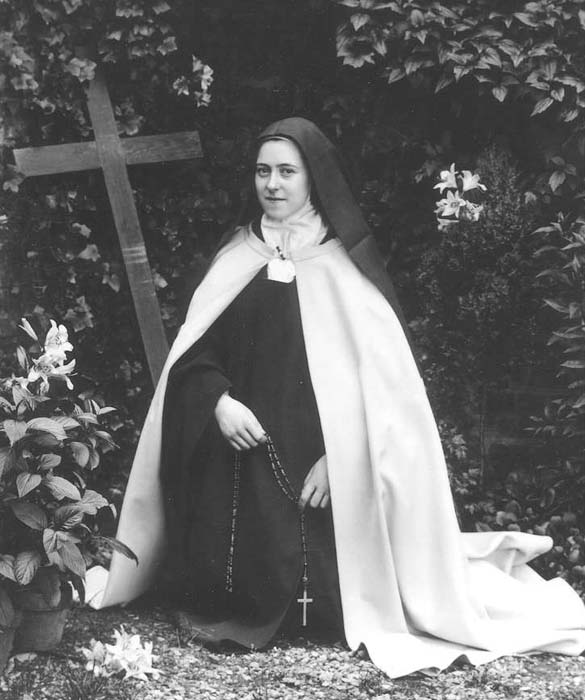
Born Marie-Francoise-Therese Martin at Alencon, France in 1873, St. Therese entered the Carmelite monastery of Lisieux at the age of 15 following a special permission from Church officials. She claimed no visions or extraordinary moments except that she followed a simple path to faith, especially after contracting TB that caused her death in 1897 at the young age of 24. Photo from Google.

Open our minds and our hearts, our very selves, Lord, like St. Therese to humbly embrace this simple truth of love by intensely and passionately living in love, doing ordinary things in the most extraordinary way of love. May we follow your Son Jesus as “he resolutely determined to journey to Jerusalem”(Lk.9:51) to face his passion, death, and resurrection out of love for you and for us. Amen.