The Lord Is My Chef Breakfast Recipe for the Soul by Fr. Nicanor F. Lalog II
Tuesday, Week X, Year II in Ordinary Time, 09 June 2020
1 Kings 17:7-16 ><)))*> ><)))*> ><)))*> Matthew 5:13-16
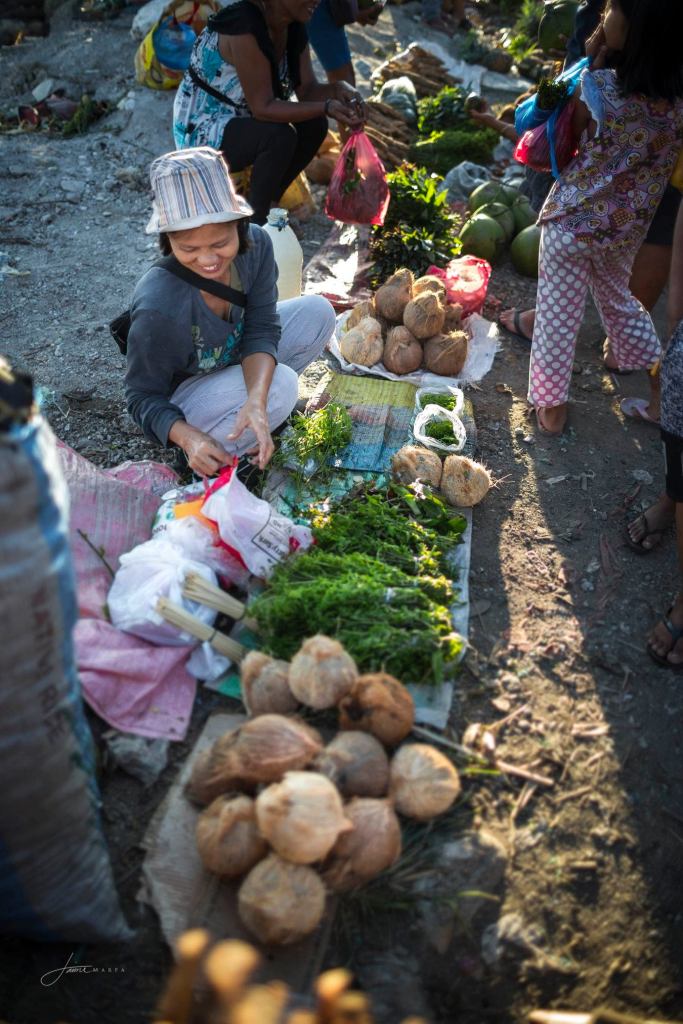
“Tiangge” in Carigara, Leyte; photo by Mr. Jim Marpa, 2019.
When this pandemic struck us and kept us home for two months, Lord, you never failed to bless us with food on our tables. It does not really matter whatever was served but the most important thing is how we have shared meals with family and friends, even with strangers.
And what makes food so glorious and wonderful, Lord, is not merely the food itself, be it meat or poultry, vegetables or fish but the things we take for granted like the people who prepared and gathered together, and not to forget, ingredients that bring out the flavor like the lowly salt.
Jesus said to his disciples: “You are the salt of the earth. But if salt loses its taste, with what can it be seasoned? It is no longer good for anything but to be thrown out and trampled underfoot.”
Matthew 5:13
Like the food we prepare and share, we are good in ourselves because of you, Lord.
But our real goodness comes out when we become kind and generous with others, even a single smile or a pat on a shoulder of someone else can always make a world of difference. Indeed, a small deed is better than the best intention.
Like that widow at Zarephath of Sidon who was so kind and generous enough first to give your prophet Elijah some water and later with a bit of bread.
And you rewarded her kindness with overflowing goodness:
She was able to eat for a year, and Elijah and her son as well; the jar of flour did not go empty, nor the jug of oil run dry, as the Lord had foretold through Elijah.
1 Kings 17:15-16
Teach us, O Lord, to be generous like St. Ignatius of Loyola and make life here on earth more flavorful with just a pinch of salt.
Dearest Lord, teach me to be generous,
teach me to serve you as you deserve.
To give and not to count the cost,
to fight and not to heed the wounds,
to toil and not to seek for rest,
to labor and not to seek reward,
except that of knowing that I do your most holy will.
Amen.
Photo by author, Our Lady of Mt. Carmel Monastery, Guiguinto, Bulacan, 2019.
Sana ay huwag ninyong masamain
itong aking puna at pansin
sa marami nating kababayan
ngayong panahon ng COVID-19
palaging daing walang makain
ating sinasambit
saan mang bahagi ng mundo sumapit
kapag tayo ay nagigipit.
Hindi naman sa kung ano pa man
pagkain lamang ba ang sadya nating kailangan
na siyang laging pinahahalagahan
kaya naman kadalasan ito ang sanhi
ng ating mga alitan at di pagkakaunawaan?
Anong sakit mapakinggan, malaman na
nag-aagawan, pinag-aawayan
ay pagkain lamang?
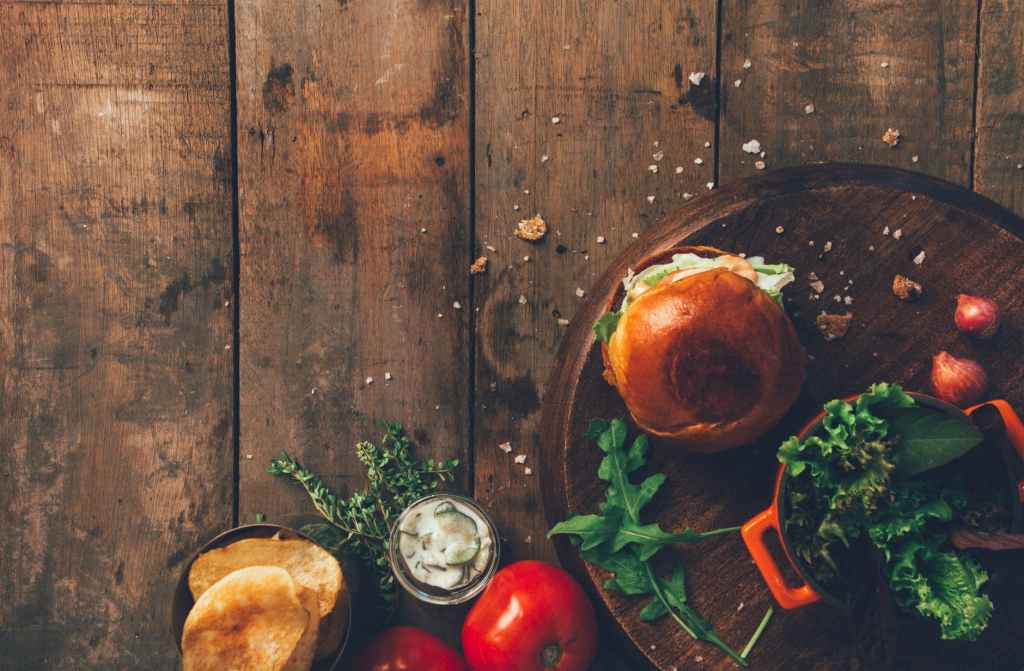
Larawan mula sa Google.
Sa Banal na Kasulatan ating matutunghayan
habilin ng Diyos sa ating unang magulang
maari nilang kainin mga munting butil
pati na rin mga bunga ng punong kahoy sa hardin
huwag na huwag lamang nilang kakanin
mahigpit Niyang bilin
bunga ng puno ng karunungan
dahil magiging sanhi ng ikasasawi natin.
Hindi napigilan kanilang tinikman
pinagbabawal na bunga kaya lumuwa mga mata
sa katotohanang lumantad sa kanila na di nakaya
kaya't dating kapwa hubad ay nagdamit na!
Nang pumarito si Jesu-Kristo upang tubusin ang tao
unang tukso na kanyang pinagdaanan sa ilang
sa gitna ng kanyang kagutuman
ay gawing tinapay mga bato upang busugin Kanyang tiyan.
Hindi nalito si Kristo nang sagurtin niya ang diyablo
na hindi lamang sa tinapay nabubuhay ang tao
kungdi sa bawat salitang namumutawi sa bibig ng Diyos;
kaya noong gabing ipagkanulo siya habang kumakain sila,
nangunsap Siya sa mga alagad Niya
habang hawak-hawak ang tinapay na pinaghati-hati
"Tanggapin ninyong lahat ito at kanin
ito ang aking katawan na ihahandog para sa inyo."
Mula noon hanggang ngayon
nakikilala, naaalala natin ang Panginoon
sa hapag ng kanyang piging, sa mesa ng Misa
nang kanyang inangat katayuan at kahulugan
nitong pangkaraniwang gawain natin na kumain:
hindi lamang upang busugin mga tiyan at laman natin
kungdi upang punuin din kamalayan at kaluluwa natin
ng diwa ng piging na mismo tayo ay maging pagkain din!
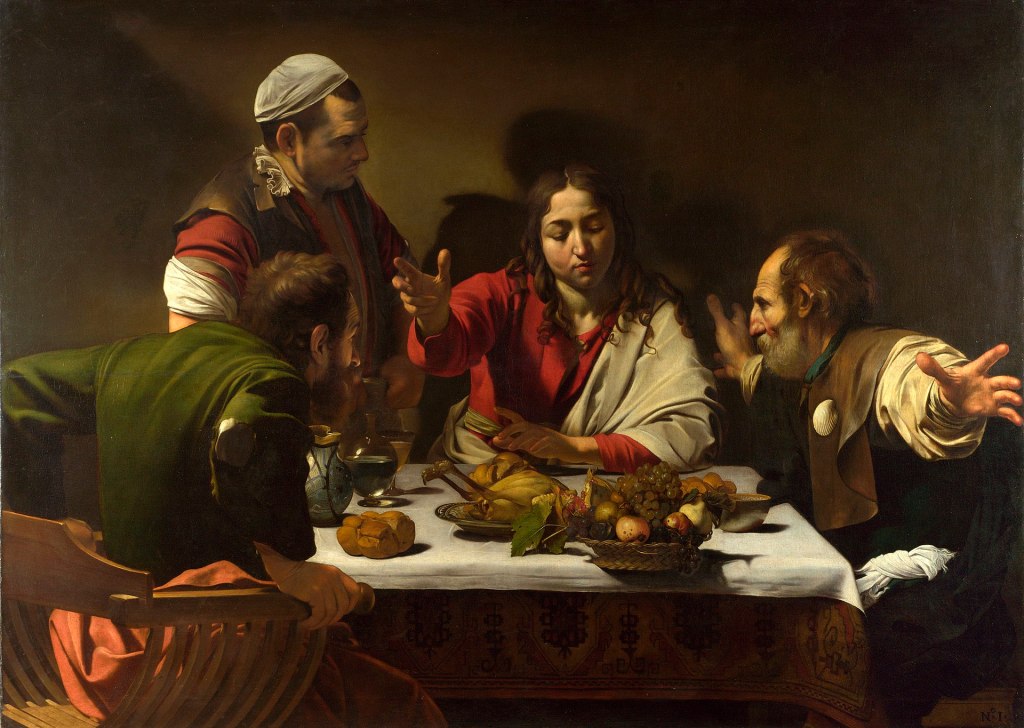
Larawan ng “Supper at Emmaus” ni Caravaggio mula sa Google.
Nakikila pag-uugali ng tao
kapag nakita paano siyang kumain
sapagkat doon lamang sa mesa ng piging
nawawala mga pagkukunwari natin
nabubunyag tunay nating saloobin
kaya naman sa bawat pagdiriwang natin
palaging mayroon pagkain upang
magkasalu-salo, magkaniig at magkaisa mga kumakain.
Alalahanin si Hudas noong Huling Hapunan
lumisan na kaagad dahil siya ay tumiwalag
di lamang sa hapag kungdi sa kaisahan at
pakikipag-kaibigan kay Jesus at mga kasamahan;
iyon din ang sinasaad sa bawat piging ng mga
dumadalo at hindi dumarating
mga kumakain at nanginginain
kay daming pagkain ngunit makasarili pa rin!
Sa tuwing tayo ay kumakain
laging alalahanin kaisa palagi natin
Diyos na bukal ng lahat ng pagpapala sa atin:
huwag mangangamba o mag-aalinlangan
kung sakali mang tayo ay gutumin
sapagkat hindi iyan ikamamatay natin
kungdi pagkabunsol sa labis na pagkain
lahat-lahat ay inaangkin.
Ang tunay na sarap ng pagkain
nalalasap pa rin
maski tapos nang kumain
kapag nabusog di lamang tiyan
kungdi puso at kalooban;
mga alitan nahuhugasan sa inuman
mapanghahawakan pagsasamahan at pagkakapatiran
upang huwag masabi ninuman na wala silang makain!
Lawiswis ng Salita ni P. Nicanor F. Lalog, Parokya ni San Juan Apostol at Ebanghelista, Bagbaguin, Santa Maria, Bulacan
Martes, Ika-5 Linggo ng Kuwaresma, 31 Marso 2020
Bilang 21:4-9 ><)))*> +++ <*(((>< Juan 8:21-30
Ang eskultura ng ginawang ahas na tanso ni Moises sa tikin sa lugar kung saan mismo nangyari na ngayon nasa pangangalaga ng mga Paring Franciscano sa Jordan. Larawan kuha ng may-akda, Mayo 2019.
Batay sa salaysay ng aklat ng buhay
nainip mga Israelita sa paglalakbay sa ilang
nang sila ay dumaing, nagreklamo
kay Moises ng ganito:
"Kami ba'y inialis mo sa Egipto
upang patayin na ilang na ito?
Wala kaming makain ni mainom!
Sawa na kami sa walang kwentang pagkaing ito."
Bakit nga ba hindi na naubos
ating mga reklamo
lalo na kapag mayroong krisis
walang mintis yaring mga bibig
walang hanggang daing
tila hindi aabutin, napakamainipin
nakakasakit na ng damdamin
pati Diyos sinusubok, hinahamon natin?
Kung inyong mapapansin
yung talagang walang makain
hindi na makuhang dumaing
tanging isipin saan hahanapin
kanilang isasaing, lakas ay iipunin
sa pagbabaka-sakaling dinggin
dalanging tulong dumating
kanilang hahatiin at titipirin.
Ang masakit na kapansin-pansin
ngayong panahon ng COVID-19
marami sa mga daing ng daing
sa Facebook pinararating!
Akala mo walang makain
bakit nasa harapan ng computer screen?
Katulad nilang nagmamagaling
ibang natulungan may reklamo pa rin!
Magandang pagkakataon
kaloob nitong COVID-19 sa ating panahon
mabuksan puso at kalooban sa katotohanan
"Hindi lamang sa tinapay nabubuhay ang tao"
na kung uunahin natin si Kristo
makikilala natin bawat kapwa tao
ka-patid at ka-putol na dapat bahaginan
ano man mayroon ako.
Madalas sa maraming reklamo
puso ay sinarahan, pinanlalabuan ang isipan
bibig ang laging binubuksan, hindi mawalan ng laman
pinababayaan kaluluwa at kalooban
tiyan lamang nilalagyan
kaya walang kahulugan ni katuturan
ano mang karanasan hindi mapagyaman
kaunting hirap at tiisin, puro daing at hinaing.
Quiet Storm by Fr. Nick F. Lalog II, 20 November 2019
A chef is basically a person who loves people. And that is why for any chef, cooking is both a passion and an art. His menu are not only meant to feed the body but most especially enrich the heart and soul of every diner.
Welcome to Netflix original series “Midnight Diner: Tokyo Stories”!
Each episode is exactly like every recipe the main character called “Master” dishes out to his patrons and customers who come from all walks of life with their unique burdens and story to share and eventually, resolve after tasting his fresh and easy to cook meals.
Midnight Diner is as Japanese as the ramen and sake the Master serves his guests. Everything is in Nihongo with English subtitles that demand one’s total attention to understand the conversations briefly interspersed with first person accounts by the Master.
At the opening, the Master gives us the warm and nice ambience of the series set at midnight until seven in the morning for people who do not wish to go home straight after their office hours.
It turns out that they are not only looking for good food but for warm company as well which the Master ably provides with his total attention and communion.
Very interesting to note that the Master is a celibate, reason why he can devote himself wholly to his diners, listening to their joys and sorrows, victories and defeats. So far, from what I have seen in its two seasons, he has no love interests although it won’t be surprising if in the third season he turns out to be a character from one of Murakami’s novels or short stories.
Though he is a fictional character, he is rightly called “Master” for his commanding presence that is not intimidating but so warm and gentle, so unlike the celebrity chefs we see on TV.
The Master can cook anything, including fancy corndogs and pancakes that are very American. He always has a “menu of the day” as title of each episode.
Should anyone ask for any kind of dish, he willingly prepares it subject to availability of ingredients that turns out he always has or sometimes, like a true chef, finds other alternatives just to fulfill a customer’s cravings. In one episode, a patron comes nightly with his own three pieces of bread so the Master can make him “yakisoba sandwiches” — exactly how we Filipinos eat pancit with another carbohydrate!
What makes the series so good is that the Master is more than a chef — he is the Tokyo counterpart of Paris’ Cafe Anglais famed lady chef “Babette” of the 1987 Danish film “Babette’s Feast” and James Taylor’s 1977 hit single “Handy Man” rolled into one.
More than the food he passionately serves, the Master delights and comforts every troubled heart and lonely soul longing for love and relationships, forgiveness and kindness they finally find in his Midnight Diner.
Most of all, neither the Master nor his food is the main focus of each episode but the story of every customer who comes to his diner at the most unholiest hours – between 12 midnight and seven in the morning – searching for food for their souls!
Mainstays of the Midnight Diner.
Helping the Master in processing every customer are his interesting mix of characters of regular patrons: LGBTQ members, career ladies mostly single, retirees, professional gamblers and of course, Yakuza gang members.
They are the Master’s “secret spices” who bring out all the flavors and aroma of every customer’s life story like a widowed lawyer searching for his lost step brother to a nightclub stripper sought and saved from miserable life by her high school teacher suffering the early stage of Alzheimer’s disease. Sometimes they act like the Master’s garnishings, adding taste and beauty with some sprinklings of life lessons to lost customers.
Though most stories are understandably peculiar to Japanese culture, they all touch a common chord within us for our basic need of acceptance which the Master warmly provides like his steaming hot dishes.
Unlike most TV series, Midnight Diner’s pacing is so fast and without any pretensions that prevent it from becoming dragging and boring. In less than 30 minutes, each episode is deftly resolved just as magically how the Master came out with a superb meal from his limited resources and tiny kitchen.
But the best attraction of the show is how the viewer eventually finds one’s self warmly welcomed into the diner, laughing or crying, sympathizing or objecting to whatever situation is presented by every guest.
It is a very lovely series that transcends language barriers and cultures because it nourishes and warms our soul that never rest nowadays due to the demands of modern living. Somehow, inside the little Midnight Diner, there is always a space welcoming everyone including us viewers to unwind and be fulfilled with good food, nice people, and meaningful conversations.
Tuesday after Epiphany of the Lord, 08 January 2019
1 John 4:7-10///Mark 6:34-44
“In this is love: not that we have loved God, but that he loved us and sent his Son as expiation for our sins” (1 Jn. 4:10).
Today as we move on to new directions and new beginnings this 2019 on this first full week of work and school – when we claim to be back to “normal” in life – you remind us also Lord Jesus Christ of the nature of love: that everything is because of you because “God is love.”
As we return to the usual grind of life, teach us always Lord to feel with the people like you when you were moved with pity upon seeing the vast crowd following you. Most of all, teach us Lord that love is being a food myself for others to receive, to share with. Yes, this is precisely what you meant when you told your disciples in the wilderness to “give the crowd some food yourselves” (Mk.6:37). Whenever we share food and drinks to others, when we offer them to partake of our meals, we actually share ourselves with them. That is the meaning of your sacred meal, the Eucharist. And that is why such meal is also called agape, the highest form of love when nothing is expected in return.
Give us the grace O Lord this New Year to be more loving, more caring with others by giving more of ourselves to others. AMEN. Fr.Nicanor F. Lalog II, Parokya ng San Juan Apostol at Ebanghelista, Gov. F. Halili Ave., Bagbaguin, Sta. Maria, Bulacan.





 lordmychef.com