Standing before God

The Lord Is My Chef Sunday Recipe for the Soul by Fr. Nicanor F. Lalog II
Thirtieth Sunday in Ordinary Time, Cycle C, 23 October 2022
Sirach 35:12-14, 16-18 ><}}}}*> 2 Timothy 4:6-8, 16-18 ><}}}}*> Luke 18:9-14
Photo by Mr. Jim Marpa, 2018.

Standing is a very powerful posture. It expresses our stance or – stand – on everything. Where we stand tells who we are, both positively and negatively. It is always good to make a stand on our beliefs, defending them, making a “gallant stand” on whatever or whomever we hold so dearly. However, no matter how hard we make a stand on just about everything and everyone, we cannot fake our stand because people could surely recognize if it is just mere “grandstanding” or self-serving like what politicians always do.

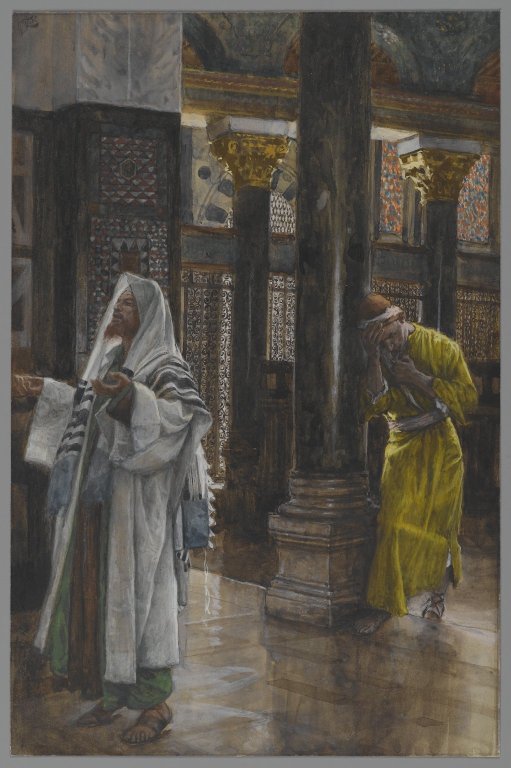
That is what Jesus is telling us today in his second series of teaching about prayer, the parable of the Pharisee and the tax collector, of how two men stood before God in prayer at the temple.

Painting by French artist James Tissot, “The Pharisee and the Tax Collector” (1886-1894) from commons.wikimedia.org.

Jesus addressed this parable to those who were convinced of their own righteousness and despised everyone else. “Two people went up to the temple area to pray; one was a Pharisee and the other was a tax collector. The Pharisee took up his position and spoke this prayer to himself, ‘O God, I thank you that I am not like the rest of humanity – greedy, dishonest, adulterous – or even like this tax collector. I fast twice a week, and I pay tithes on my whole income.’ But the tax collector stood off a distance and would not even raise his eyes to heaven but beat his breast and prayed, ‘O God, be merciful to me a sinner.’ I tell you, the latter went home justified, not the former; for everyone who exalts himself will be humbled, and the one who humbles himself will be exalted.”

Luke 18:9-14

Our lost sense of sinfulness

Right at the start, Luke tells us the purpose of this parable, “Jesus addressed this parable to those who were convinced of their own righteousness and despised everyone else.” But, we have to be careful in reading this parable lest we end up like the Pharisee of not seeing ourselves being addressed too by the Lord!

While the Pharisee is clearly in the bad light in his kind of prayer that revealed his self-centeredness, feeling so self-satisfied with his holiness that in fact he felt no need for God, his character invites us to guard against this temptation within us that we are not sinners. That is the sin of the Pharisee, the reason his prayer was not heard unlike that of the tax collector: the Pharisee saw himself as clean and spotless like God! And that is what we have to keep guard of ourselves in this time when we have lost our sense of sinfulness.

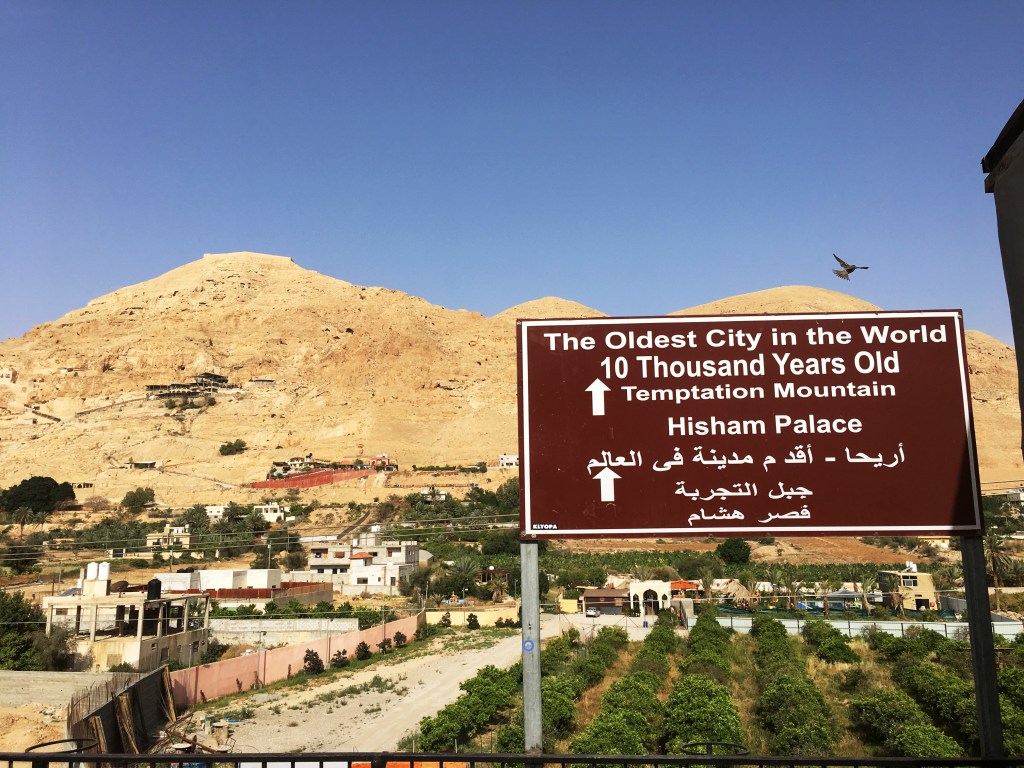
Photo by author, Jerusalem 2017.

We may not have the kind of self-righteousness of the Pharisee in public or in private, of claiming to be not like other people who are sinful and corrupt; but, still deep inside us is the temptation of forgetting that even a true saint remains a sinner who must constantly pray deep in his/her heart, “O God, have mercy on me, a sinner.”

Such attitude is the deeper meaning of why we must be powerless before God in praying like the persistent widow last Sunday. It is not that only God is capable of giving us whatever we need but most of all, we have to accept and own by embracing wholeheartedly the fact we are all sinners. Recall how in 2013 after being elected as Pope, on his first interview Pope Francis was asked to describe himself as a person and he simply said, “I am a sinner.” Beautiful!

Holiness is not being sinless but being filled with God. Anyone who is filled with God is one who is always aware of his/her sinfulness. The more we get nearer to God, the more we see our sinfulness, our being dirty and weak. Hence, the more we pray to become better persons, to be one with God; we cannot be one in him and with him unless we realize our sinfulness. That Pharisee in the parable comes so strongly, so proud to God as if he were God himself too! Worst, he wanted God to commend him, to reward him for being so good. Why prayed at all if he did not need God?

We pray because we need God and that is the prayer that “pierces the clouds; that does not rest till it reaches its goal” – God – as Ben Sirach tells us in the first reading. That is the reason we begin our Holy Mass first with admission of our sins, of being sorry for them. We come to Mass because we need God first of all to cleanse us of our sins.

How true are we in admitting our sinfulness before God?

Consistency and humility in prayer

On the surface, the Pharisee in the parable was really commendable as he tried to be a good person, avoiding all kinds of sins, piously observing the demands of his faith like fasting and tithing. However, he lacked consistency and humility.

Consistency in prayer means our lives become a prayer itself. The prayers we recite and say to God expressed in so many ways should make us become more like God – loving and caring, kind and understanding, merciful and forgiving of others, not judgmental like the Pharisee.

St. Paul in the second reading offers us an example of how he had considered his life his prayer, an offering of himself to God like a “libation”.

Beloved: I am already being poured out like a libation, and the time of my departure is at hand. I have competed well; I have finished the race; I have kept the faith.

2 Timothy 4:6-7
Photo by Ms. Mira Mandal Sibal, 2021.

Sometimes, people comment how they find St. Paul as too proud especially when he speaks of his virtues and works like when he wrote “Be imitators of me, as I am of Christ” (1 Cor. 11:1). But, reading all his letters, one finds his powerlessness before God like the persistent widow last Sunday as well as his being powerful in God like the unjust judge who was converted like him and channelled all his talents and energies in proclaiming the gospel to the Gentiles!

Most of all, in today’s parable, we find St. Paul who referred to himself as “the very least of the holy ones” (Eph.3:8) so much like the tax collector, sinful yet sorrowful for his sins. In short, not just consistent but most of all, filled with humility.

It will always be difficult to be consistent in life as every saint had proven to us. That is why we should never forget that reality – even the saints are sinful, needing God’s mercy and forgiveness. Nobody is perfect. When there is inconsistency in our lives and prayers, surely there is sin. But, are we humble enough to accept that fact like the saints?

That is why humility is so important as exemplified by the tax collector at the temple. He could not look up to heaven because he was so humbled by his sin, looking more into himself, into his heart, of how he had strayed so far from God that he longed to be near him again.

It is only in humility when we can realize also the sad truth that when we sin, we actually offend ourselves, not God! That is why our conscience bother us, we feel untidy. God remains God and perfect even if we sin. The Pharisee wrongly thought he was not offending God as he believed he was clean and sinless that is why he felt so entitled too. Unknown to him, the more he had sank deeper in misery in his lack of sense of sinfulness.

Photo by Mr. Red Santiago of his son, January 2020.

When we lost our sense of sinfulness, that is when we are most inconsistent, when we are most lost. Without humility, we live in our false selves, wrongly believing we can do everything, including earning our own salvation which only God had done in Jesus Christ.

This Sunday, let us pray for the grace and virtue of humility that St. Teresa of Avila described as “walking in truth.”

Being humble is not putting ourselves down but actually the path to true greatness, exaltation. When we humbly accept our sins and sinfulness, that is when we are forgiven by God and we are able to rise to greater heights as we lose ourselves in God and in his wonderful plans for us.

This Sunday, let us stand before God admitting our sins like the tax collector, our being poor and lowly, insufficient and weak as in the first reading needing his grace so that like St. Paul, we may compete well in this life to finish this race by keeping the faith in Jesus Christ. Amen. A blessed and fruitful week ahead for all of us!

Guided by the Holy Spirit

The Lord Is My Chef Daily Recipe for the Soul by Fr. Nicanor F. Lalog II
Wednesday in the Twenty-Eighth Week of Ordinary Time, 12 October 2022
Galatians 5:18-25     ><000'> + ><000'> + ><000'>     Luke 11:42-46
Photo by Dr. Mylene A. Santos, MD, 2020.
Come, O Holy Spirit,
guide us in our daily life;
give us the courage 
to do what is good,
to follow what is true,
to practice justice,
most of all, to love
until it hurts.
So often
we are focused 
with the flesh 
with the corporeal
with the material
aspects of life that
only lead to dissension
and divisions among us
because of our pride
and selfishness
that evil thoughts form
and preoccupy our minds
that we eventually express in
our words and then in deeds.

Now the works of the flesh are obvious: immorality, impurity, licentiousness, idolatry, sorcery, hatreds, rivalry, jealousy, outbursts of fury, acts of selfishness, dissensions, factions, occasions of envy, drinking bouts, orgies, and the like.

Galatians 5:19-21
Be the "silent guest 
of our soul" (St. Augustine),
O Holy Spirit so we may
fulfill the law of Jesus Christ,
the law of love; 
overshadow us
with your fire and zeal,
power and wisdom,
gentleness and kindness
so we may remain with
Christ crucified
witnessing his loving
service to one another
without imposing 
heavy burdens on them
as we bring out your goodness
and presence within them.
Amen. 

Bless our (stubborn) generation

The Lord Is My Chef Daily Recipe for the Soul by Fr. Nicanor F. Lalog II
Monday in the Twenty-Eighth Week of Ordinary Time, 10 October 2022
Galatians 4:22-24, 26-27, 31-5:1     ><]]]]'> + <'[[[[><     Luke 11:29-32   
Photo by Dr. Mylene A. Santos, MD, in France, March 2022.

While still more people gathered in the crowd, Jesus said to them, “This generation is an evil generation; it seeks a sign, but no sign will be given it, except the sign of Jonah.”

Luke 11:29
I could feel your words,
Lord Jesus, today:
so strong,
so direct,
so true;
yes, dear Jesus,
your words are
meant for us 
today.
What an evil generation
we are in still seeking
signs from you
for even those entrusted
to witness your presence,
your love and mercy
are nowhere to be found,
seeking signs of you
and worst,
creating so many conflicting
signs of you!
We have been so stubborn
like the Galatians;
we prefer going back to
old, evil ways
as we insist on what 
we believe as true,
on what we have been used to
that until now so many of us
are still trapped 
and enslaved to sins 
of bigotry and prejudice,
refusing to find you
among everyone
especially the sick,
the poor,
and disadvantaged.
Bless us, dear Jesus,
and set us free from
our stubbornness;
soften our hardened hearts,
open wide our constricted
minds and perceptions
to find you present 
in our lives daily,
both in our joys and pains,
in our ease and struggles,
and especially
with everyone we 
meet each day.
Amen.

Faith in Jesus, perfecter of faith

The Lord Is My Chef Sunday Recipe for the Soul by Fr. Nicanor F. Lalog II
Twentieth Sunday in Ordinary Time, Cycle C, 14 August 2022
Jeremiah 38:4-6, 8-10 ><}}}*> Hebrews 12:1-4 ><}}}*> Luke 12:49-53
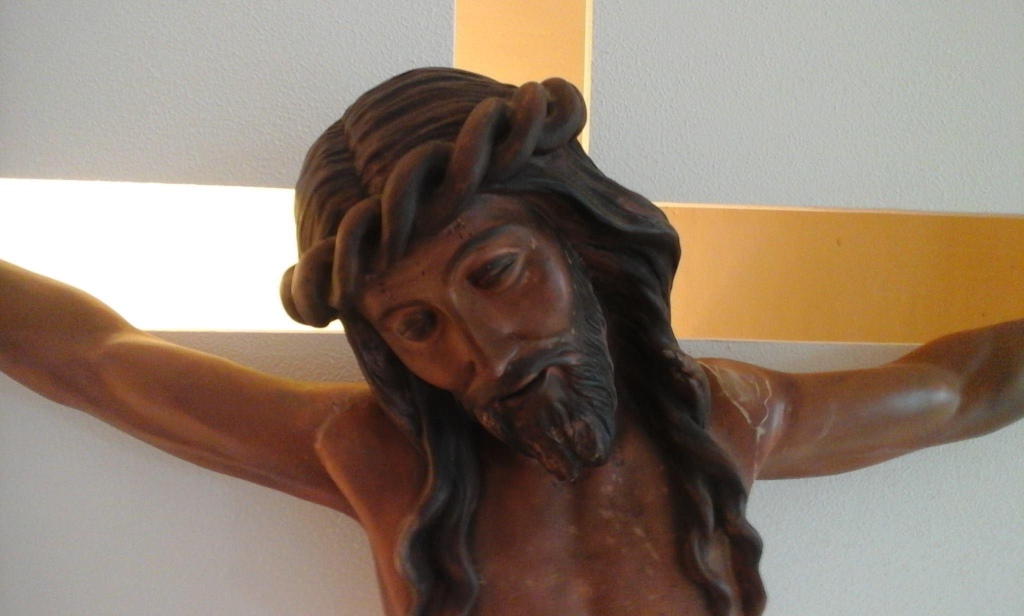
Photo by author, Chapel of the Holy Family, Sacred Heart Spirituality Center, Novaliches, QC, 2017.

Following Jesus, being a true and good Christian is always difficult. This I realized on my first month as a priest 24 years ago when I gave a “marriage encounter” (ME) to several married couples from the parish of my former professor in the seminary.

Part of the marriage encounter is the writing of one’s sins on a piece of paper with a symbolic burning before going to confession later in the evening; problem was, as a new priest, I gave a wrong instruction asking the spouses to exchange paper with their partner to see each others sins. That was when a wife collapsed after reading the sins of her husband! Actually, she had long suspected him of infidelities but that afternoon, all her doubts and suspicions were proven very true that her blood pressure shoot up, losing her consciousness in anger and pain.

After she had been revived, she kept on saying, “akala ko ME magpapatatag sa aming samahan; ito na yata maghihiwalay sa aming dalawa ng tuluyan” (I thought the ME will make our marriage stronger but it seems this will finally cause our separation as husband and wife).

I tried explaining things to her, prayed so hard for her and eventually after six months, I met them at a wedding as they thanked me how their marriage had gone stronger after surrendering everything to Jesus Christ.

Photo by author, Chapel of the Holy Family, Sacred Heart Spirituality Center, Novaliches, QC, 2017.

"Every Christian is a prophet...
a sign of contradiction."

Many times in our lives we have experienced that our faithful service in the Lord often leads us to distressing and painful situations, even tragic choices. In the first reading, we have heard how Jeremiah’s own folks threw him into a cistern to die because they could not take his preaching against their sinfulness and prophecies of the impending fall of Jerusalem which eventually happened. He was momentarily rescued from the cistern but later was eventually killed by his own people for speaking against their sinful ways and life.

Every Christian is a prophet like Jeremiah, a sign of contradiction among the people, even in one’s own family and circle of friends. To live against the corrupt and sinful ways of the world, to uphold what is true and just, to stand for what is honorable and good surely earn a lot of criticisms and condemnation from everyone. Even in the Church!

Jesus said to his disciples: “I have come to set the earth on fire, and how I wish it were already blazing! There is a baptism with which I must be baptized, and how great is my anguish until it is accomplished! Do you think that I have come to establish peace on the earth? No, I tell you, but rather division

Luke 12:49-51
Photo by author, Chapel of the Holy Family, Sacred Heart Spirituality Center, Novaliches, QC, 2017.

With all of these words, we now wonder what is good with our Good News this Sunday? Remember, Jesus Christ is on his way to Jerusalem to face his suffering and death. Today he tells us three things to remember to remain focused with the End.

First is the fire he had brought into the world. It is not a fire of destruction but fire of heat and light that give life; fire that purifies and cleanses like silver and gold that bring out its beauty and magnificence; and most of all, the fire of God’s presence like in the burning bush of Moses and the pillars of fire/cloud that guided the Chosen People in the wilderness into the Promised Land.

Fire gives light and heat that lead into life; we can survive without food and water for several days but we cannot last even ten minutes without heat! This is the kind of fire we Christians need these days, fire that will lit us up with courage ands joy in Jesus Christ by witnessing his gospel in a world that seems to be dying and lifeless despite the noise and affluence around.

As a purifying fire, it always brings pains that lead into conversion and liberation like what that couple in my first Marriage Encounter have experienced. The fire of Christ’s mercy and forgiveness taught them to forgive each other and enabled them to lead holier lives. The more we get closer to Jesus our light, the more we see our sinfulness and weaknesses, then we change and mature. That is when we are filled with the light of Christ to become his presence in the world.

Second teaching of Jesus today is about his “other baptism” which is his Passion, Death, and Resurrection. This is the reason why he was “resolutely journeying to Jerusalem” – he was so eager, so decided to face his pasch not for the pains it would bring but for its glorious effects for us.

Photo by author, Chapel of the Holy Family, Sacred Heart Spirituality Center, Novaliches, QC, 2017.

That is the real meaning of baptism, from the Greek baptizein which is to immerse in water; hence, baptism before was a literal immersion in water. In our immersion into the passion and death of Jesus Christ, we enter into a communion in him and with him so that in his Resurrection, we too rise with him and in him into new life.

Third pronouncement by Jesus this Sunday is perhaps the most baffling, especially when we consider the statistics that more than half of the conflicts going on in the world today are due to religious beliefs.

Jesus never meant to bring people apart; in fact, he came to bring us all together, to gather us again as beloved children of the Father. However, it happens that the moment we stand for Jesus, for what is true and just, inevitably, we will be with odds even with those dearest to us. Jesus himself had said that “If anyone comes to me without hating his father and mother, wife and children, brothers and sisters, and even his own life, he cannot be my disciple” (Lk.14:26).

That is one of the beautiful imageries of the Cross of Jesus Christ: it marks the end of our sinfulness and the beginning of our oneness in God.

It is the difficult aspect of discipleship when our loved ones are into sins and evil, when they are in darkness and injustice. Are we going to side with them or side with Christ?

At the Last Supper, Jesus gave us his peace (Jn.14:27) that according to him is not like the peace offered by the world that is often based on compromises; Christ’s peace is the fruit of love, of sacrifices. Love and sacrifice are one, always together; when you love, there is sacrifice, there is pain and suffering. That is why it is love!

Parents and lovers know this very well: many times they suffer and cry in silence because of their great love for their children or beloved. It is no wonder that in the Beatitudes, Jesus called the peacemakers and the persecuted blessed because to work for peace entails persecution and division.

Photo by author, Chapel of the Holy Family, Sacred Heart Spirituality Center, Novaliches, QC, 2017.

"God is dangerous."
-Fr. Hans Urs von Balthasar (+)

Last Sunday we have reflected how Jesus used the setting of night for our vigilance because faith is tested and deepened in the darkness of life like during nighttime. And, the darker the night, the longer the night always.

But, we have so many people who have gone ahead of us in this life who have found light and life amid the darkness in life, emerging victorious in their faith in God, from the patriarchs in the Old Testament and in Jesus himself and his Apostles and saints as well.

Brothers and sisters: Since we are surrounded by so great a cloud of witnesses, let us rid ourselves of every burden and sin that clings to us and persevere in running the race that lies before us while keeping our eyes fixed on Jesus, the leader and perfecter of faith.

Hebrews 12:1-2

Wonderful! Jesus is the leader and perfecter of faith. Very often, we hear the gospels and the Bible speaking always of our having faith in Jesus. But, it is only here and in some instances in Paul we find Jesus having faith; how can Jesus, the Son of God have faith when he is the object of faith?

Let us remember that Jesus is truly human, truly divine. Like us, he also had faith as the gospels attest: he had faith in the Father who sent him. He is the best example of having faith, entrusting everything to the Father that he did not feel ashamed of the Cross. In that sense, Jesus is also the perfecter of faith because in him, with him and through him, we are able to walk in faith, sustain our faith in the most difficult and trying moments of life when we felt our relationships, our world falling apart because we have stood by his Cross. As we look back, we have emerged better, stronger, and most of all, joyful, free and faithful after all those trials in life. Thanks to our faith in Christ!

One of the friends of Pope emeritus Benedict XVI and St. John Paul II was the Swiss theologian and priest named Hans Urs von Balthasar who said in his 1945 book “The Heart of the World” that God is dangerous.

Photo by Mr. Jay Javier, Acacia trees in UP-Diliman, April 2022.

Indeed, it is very true especially when Fr. Balthasar noted how God “is inviting you to lose your soul in order to gain it. He always thinks in terms of love. He offers us the impossible… He presents his victory over death as an example to be imitated, he draws us beyond our limits, into his adventure, which is inevitably fatal.”

The blessedness of this Sunday is that Jesus had become like us to lead us the way in a life of faith, perfecting our faith in the process so that we may overcome all obstacles and trials in life like him and be with him in eternal glory in heaven in the End.

Let us keep in mind the worthy reminder of the author of the Letter to Hebrews that “In your struggle against sin you have not yet resisted to the point of shedding blood” (Heb.12:4). Amen.

Have a blessed, fiery week of faithful adherence in Christ!

Praying to change the situation

The Lord Is My Chef Daily Recipe for the Soul by Fr. Nicanor F. Lalog II
Tuesday in the Fourteenth Week of Ordinary Time, 05 July 2022
Hosea 8:4-7, 11-13   ><)))*> + ><)))*> + ><)))*>   Matthew 9:32-38
Photo by Dr. Mylene A. Santos, MD, 2021.
Your words today, O God,
are very disturbing, reminding
us of how the situations in the time
of the Old Testament until the
coming of Jesus have remained
unchanged even in our own time:
idolatrous practices abound even
among us supposed to be believers.

Thus says the Lord: They made kings in Israel, but not by my authority; they established princes, but without my approval. With their silver and gold they made idols for themselves, to their own destruction.

Hosea 8:4
Forgive us, Father, for still
acting on our own, totally 
disregarding you as we detach
you from our daily lives, creating
and following our own "gods";
Forgive us, Father, for lacking the
sincerity in our offerings to you, when
we are "Ephraim made many altars
to expiate sin, his altars became 
occasions of sin" (Hosea 8:11).
Most of all, forgive us, Father
because until now the situation
has not changed:  "the harvest is 
abundant and the laborers are
so few" (Matthew 9:37) with people
still so lost like sheep without
a shepherd because we have been
so blinded by the world, failing
to bring the light and healing of
Jesus Christ your Son.
Help us, O God,
to change this situation;
give us the courage to make
Jesus present among us by
first exorcising ourselves of 
the evils of sin reigning in us
so we may be filled with the 
light and power of the Holy Spirit.
Amen.

The sins of others we always see

The Lord Is My Chef Daily Recipe for the Soul by Fr. Nicanor F. Lalog II
Monday in the Twelfth Week of Ordinary Time, 20 June 2022
2 Kings 17:5-8, 13-15, 18   ><)))*> + ><)))*> + ><)))*>   Matthew 7:1-5
Photo by Jenna Hamra on Pexels.com
Help up with your right hand, 
O Lord, and answer us.
(Responsorial Psalm today.)
Help us, dear Father,
to see more our many sins
than the tiny sins of others;
Help us, dear Father,
to control our lips in
being so quick to judge
and speak so much of others;
Help us, dear Father,
to change our ways and
leave our sins.
So many times in life
when bad things happen to
us, we look on others to
blame, including you,
O Lord, without looking 
first into our very selves
at how we have indulged
in evil and sins that started 
so small that we have dismissed
as simple and nothing at all.
Forgive us, Father,
in always blaming others
without ever looking into
our hearts and ways 
that have been so disordered
and strayed from your paths
of love and justice, mercy
and kindness, humility and 
sincerity.  Amen.

The wages of sin

The Lord Is My Chef Daily Recipe for the Soul by Fr. Nicanor F. Lalog II
Tuesday in the Eleventh Week of Ordinary Time, 14 June 2022
1 Kings 21:17-29   ><))))*> + ><))))*> + ><))))*>   Matthew 5:43-48
Photo by author, Ubihan Island, Meycauayan, Bulacan, 31 December 2021.
"For the wages of sin
is death;but the gift of God
is eternal life through 
Jesus Christ " (Romans 6:23).
Although your words today,
dear God are not from St. Paul,
his words to the Romans immediately
came to me as I prayed on the sins of
King Ahab and his queen Jezebel
in the first reading.
Though you have forgiven Ahab for
his sins after he had confessed 
having caused the death of Naboth
to have his vineyard, you never took back'
his punishments which fell upon his whole
family line.
Although I feel it a bit unfair,
your Son's teachings in the gospel
cleared all questions in me. 

Jesus said to his disciples: “You have heard that is was said, You shall love your neighbor and hate your enemy. But I say to you, love your enemies, and pray for those who persecute you, that you may be children of your heavenly Father, for he makes his sun rise on the bad and the good, and causes rain to fall on the just and the unjust.”

Matthew 5:43-45
Yes, your words O God are so
difficult to comprehend, even insane
when we come to think about them;
but the more I dwell on your words,
the more I try to follow you in Jesus Christ,
the more I realize you are not only holy but
also practical.
Holiness is being practical.
Staying holy, being good, being loving
and forgiving are the most practical
and sanest things to do:  so often, life
becomes miserable for us because of 
our own making, of our wrong choices 
to do what is sinful, what is unjust,
what is wrong.
In the case of Ahab and Jezebel, there were
the clear results of death due to sin
because sin begets sin; unless a sin is
rectified, it will destroy every person
perpetuating it.
And that is why we have to love our enemies;
it is for practical reasons too because to return evil
for evil increases evil and sin.
Only love can stop sin and all the follies
of mankind.
Today, dear God, help me to bring more
love in this world, to bring more peace
and mercy to stop the spread of evil and
sin further.  Amen.

Lent calls us to be free

40 Shades of Lent by Fr. Nicanor F. Lalog II
Wednesday in the Fifth Week of Lent, 06 April 2022
Daniel 3:14-20, 91-92, 95   <'((((>< + ><))))'>   John 8:31-42
Photo by author, sunrise at Camp John Hay, Baguio City, 2018.
Dear God our Father:
I have heard it so often
from your Son Jesus Christ
that "the truth will set you free"
but I must admit how I feel 
too far from that reality of
being truly free.
So many times in my life, despite
my strong profession of being free
like the Pharisees asserting 
to Jesus they have never been
"enslaved to anyone", that is really
when I am enslaved - to sin, to ego,
to the world, to my past especially
my hurts and pains, and to a lot of
other people expecting a lot from me, 
demanding so much from me 
that, ironically and funnily,  
I work so hard to please and fulfill
without realizing how I am in fact
enslaved!  

Jesus then said to those Jews who believed in him, “If you remain in my word, you will truly be my disciples, and you will know the truth, and the truth will set you free.” They answered him, “We are descendants of Abraham and have never been enslaved to anyone. How can you say, ‘You will become free’?”

John 8:31-33
To be free, O God, 
is to belong to you alone, 
our loving and eternal Father;
from the very start, Jesus had
always professed his belonging to
you like when he was found by
his parents in the temple when he
told them "why are you looking for me, 
don't you know I should be in my 
Father's house?"; during his ministry, 
he repeatedly declared his oneness with you;
to be free, therefore, is to owe nothing
to anyone at all but to you alone.
It is when I feel I owe others when I
begin to cheat and lie, when I sin
because I cannot express freely and
truly what is in me - YOU whom I 
disown and betray always.
Give me, O Lord, the courage to be
my true self like Shadrach, Meshach,
and Abednego who boldly declared
to King Nebuchadnezzar they would
rather be thrown into the fiery furnace
than worship false gods; true freedom is
when we are able to accept death gladly
and wholeheartedly because that is when
nothing and no one holds us back;
we are truly free when we are able to 
express our deepest longing and desires
in life which is to finally be one with our
source and end - YOU!
In these remaining days of Lent,
grant us dear Father through Jesus
the grace to shed off the many layers 
of false freedom we convince ourselves
to have so that we may finally be free
to love you and follow you, free to be our
true selves as your beloved children.
Amen.

That sin called “adultery”

40 Shades of Lent by Fr. Nicanor F. Lalog II
Monday in the Fifth Week of Lent, 04 April 2022
Daniel 13:41-62   <*(((>< + ><)))*>   John 8:12-20
Photo by author, 2019.
For the second straight day,
we hear the story of adultery:
yesterday the woman was guilty,
today the woman is accused wrongly
but in both instances, your justice
and kindness prevailed, O God our Father!
But what is really with adultery 
that it is a favorite sin and topic in
your Sacred Scriptures, dear Lord?
More than its nature of infidelity, 
adultery also speaks deeply of our 
broken relationships with women:
like those two old men accusing Susana
wrongly of having a tryst with another man,
so often we have forgotten, even refused
to recognize adultery involves another man,
not just the woman.
Open our eyes, Father, especially the
"chauvinist pigs" and misogynists among us;
may the light of Jesus Christ your Son
enlighten the darkness within us and
enable us to see "where we came from" 
and "where we are going" so that we 
stop accusing and judging each other
of sins we ourselves are guilty too.

“You judge by appearances, but I do not judge anyone. And even if I should judge, my judgment is valid, because I am not alone, but it is I and the Father who sent me. Even in your law it is written that the testimony of two men can be verified. I testify on my behalf and so does the Father who sent me.”

John 8:15-18
How funny, dear God,
that the root of this word
adultery means to pollute
or defile when in fact, that is
also the root of our sinfulness
when we defile others because
we have defiled our very selves
first when we turn away from you
as our origin and destination.
Amen.

The joy of meeting God

40 Shades of Lent by Fr. Nicanor F. Lalog II
Fifth Sunday in Lent-C, 03 April 2022
Isaiah 43:16-21 ><}}}*> Philippians 3:8-14 ><}}}*> John 8:1-11
Photo by Ms. Jo Villafuerte, Atok, Benguet, 20 February 2022.

From the joy of coming home to the Father last Sunday in the parable of the merciful father, we now celebrate the joy of meeting God in Jesus Christ in the story of the woman caught in adultery.

We are now into the final week of Lent, getting closer to the innermost room of the Father’s house but this time with John as our guide as we skip Luke’s gospel. The shift is hardly noticeable as the story of the woman caught in adultery seamlessly jibe with Luke’s parable last Sunday. The Pharisees and scribes are again present but this time more bold in their opposition to Jesus.

From pinterest.com.

Then the scribes and the Pharisees brought a woman who had been caught in adultery and made her stand in the middle. They said to him, “Teacher, this woman was caught in the very act of committing adultery. Now in the the law, Moses commanded us to stone such women. So what do you say?” They said this to test him, so that they could have some charge to bring against him. Jesus bent down and began to write on the ground with his finger.

John 8:3-6

Only John records this story of the woman caught in adultery but one can clearly recognize its similar tone and perspective with the parable last Sunday that only Luke had, the parable of the merciful father, more known as parable of the prodigal son. Both stories tell us the gospel of God’s mercy proclaimed in words and in deeds by our Lord Jesus Christ.

But what makes this story of the woman caught in adultery a stand out is its simplicity amidst the profound texts by John often identified as the beloved disciple. He was able to compact in few words and simple gestures the many realities in life we forget and take for granted.

As I prayed over this scene, one word persisted in my reflections: kindness.

Photo by author, 2018, Davao City.
The kindness of God.

The word “kind” is from kin or kindred as in family or tribe. When we say a person is kind, we mean that person treats us as one of his family, of his same kind, that he deals with us like we are not “others” or iba as we say in Filipino (hindi ka naman iba).

How sad that at the start of this pandemic in 2020, that was when all news and stories spread of how we have become so unkind with each other especially the poor, the sick and the old, children and women treated unkindly like Mang Dodong of Caloocan.

How sad that in our country, it has become a sin, an error or a failure to be poor and disadvantaged that even the poor and disadvantaged look down at each other, too! There is always that feeling among us that we are different, that we are not of the same kind that it has become so difficult to find kindness among everybody. We have forgotten we are all human, imperfect and sinful but also beloved children of God.

This is what the Sunday gospel is telling us: the woman caught in adultery is not the only sinner in this scene. John described her as “caught in adultery”, not merely an “adulteress” to show that she was in fact caught into adultery. It is a serious sin but there’s more to be caught in that act than meets the eyes. Here, there is no mention about the woman’s “lover”.

Like in our gospel last Sunday, we have the Pharisees and scribes present again, forgetting their very roles in the story itself. Recall that Jesus told the parable of the merciful father for them last Sunday to remind them that they were both the prodigal son and elder son. And that included us today, of course. Today, they are back and we wonder what were the evidence they have against that woman. Where were they while the woman was committing the sin of adultery? Were they peeping toms? Or worst, have they had some trysts with her too in the past?

Both the woman caught in adultery and her accusers, the Pharisees and the scribes stand for us all – we are sinners. We have all sinned and how dare are we to act like the Pharisees and scribes pretending to be different from others, to be so clean and pure when deep inside us are also rotten with sins that could even be worst than the people we accuse.

This is the reason why Jesus bent twice to show everyone how God had chosen to go down to us, to be like us in everything except sin so we can see again everyone as our kin, our same kind as children of the Father.

But when they continued asking him, he straightened up and said to them, “Let the one among you who is without sin be the first to throw a stone at her.” Again he bent down and wrote on the ground. And in response, they went away one by one, beginning with the elders. So he was left alone with the woman before him.

John 8:7-9
Photo by news.ag.org, Jesus writing on the sand in the story of the woman caught in adultery.
Bending to washing of feet to dying on Cross.

In bending down twice, Jesus showed everyone – the accused and the accusers – the kindness of God, his being our kin, his being one of us even if he is Divine. To bend down is to go down, like Jesus coming down from heaven, being born as a child to show us that the path back to God is in being human which is underscored by Matthew in his genealogy of Jesus Christ at the start of his Gospel which is proclaimed every December 17 and December 24 Christmas Eve.

Here in this scene we are reminded by his bending as an imagery of the mystery of Incarnation just like his coming down to Jordan River at his baptism by John.

This bending of Jesus will happen again on Holy Thursday when he washed the feet of his apostles where he gave his commandment to love (hence, it is called as Maundy Thursday, from Latin mandatum for commandment). It will reach its highest point when he bent lowest on Good Friday by offering himself on the Cross for us all out of his immense love and mercy. And kindness.

That is the greatest expression of God’s love and mercy, in his kindness, in his becoming one of us in Jesus Christ who took upon himself our sins so we may be clean again and be able to rise and stand with dignity and honor as beloved children of the Father.

This is the fulfillment of Isaiah’s words in the first reading that God is doing something new for us.

Jesus is not telling us to stop fighting sin and evil, to cease from pursuing criminals and people who have committed crimes and grave sins against us and others. The fight goes on but should always be tempered with being humane.

Photo by Pixabay on Pexels.com

The beautiful story of how Jesus resolved the case against the woman caught committing adultery assures us of the endless mercies of God to us sinners, not a passport to sin. See how Jesus recognized the sinfulness of the woman when he told her, go and sin no more – the most humane reprimand perhaps in history.

It is only in our being kind like Jesus that we become truly human and humane.

According to John, the first to leave the site after Jesus challenged them to cast the first stone were the elders that may stand for having wisdom, not necessarily being aged. The first to leave the site were the wise, those who must have realized their own sinfulness and saw how gravely wrong they were in being so harsh with the woman.

Many times in life, it is difficult to be kind in this unkind world because we have stopped seeing our commonality, our shared humanity, our links with one another, our relationships. We have become so competitive that we always want to be distinct from everyone to the point that we have ceased becoming humans, playing gods most of the time.

Photo by Ms. Jo Villafuerte in Atok, Benguet, 2019.

The grace of this final week of Lent is the kindness of God that remains with everyone, even with the most harsh among us, the most sinful. Jesus is inviting us to bend down with him, see him even down below when we are in sins. He is not condemning us nor hurting us with words nor actions. Ever the most humble and gentle of all, our most kind Lord Jesus is telling us today to take up his yoke and learn from him, always kind with everyone.

And that begins with our very selves. Many times, we cannot be kind with others because in the first place we are so unkind with our very selves. We cannot see our true selves that we compete within ourselves, that we should be somebody else.

What a wonderful gift to be our true selves again and still loved by God.

Let us heed Paul’s call in the second reading: “forgetting what lies behind but straining forward to what lies ahead. I continue my pursuit toward the goal, the prize of God’s upward calling, in Christ Jesus” (Phil. 3:13-14).

Have a blessed week ahead, be kind to yourself first of all. Amen.