Lord My Chef Daily Recipe for the Soul, 30 October 2025
Thursday in the Thirtieth Week of Ordinary Time, Year I
Romans 8:31-39     ><))))*> + ><))))*> + ><))))*>     Luke 13:31-35
Brothers and sisters: If God is for us, who can be against us? What will separate us from the love of Christ? Will angusih, or distress, or persecution, or famine, or nakedness, or peril, or the sword? As it is written: For your sake we are being slain all the day; we are looked upon as a sheep to be slaughtered. No, in all these things we conquer overwhelmingly through him who loved us (Romans 8:31, 35-37).
What else can I say
to these profound words
by St. Paul?

They are so true even
with us until now
with a new kind of paganism
hostile to the official teachings
of the Church as they prefer to
worship self in their body and
in their thoughts,
overextending their rights,
redefining even gender and
other natural institutions,
glorifying wealth and fame,
protecting animal rights
and environment without
any regard for persons especially
in their weakest stages in the
womb and old age...
the list goes on, Lord
but what's most sad,
even tragic
the attacks and hostilities
are not really from unbelievers
but from those who claim to be
Christians and Catholics.
Keep us strong
and faithful, Lord Jesus,
never let us separate from you;
fill us with courage too
to remain steadfast
in your ways and teachings,
to speak the truth,
to protect fellow believers
and defenders of faith
and most of all,
to keep loving your
beloved Body,
the Church.
Amen.
Lord My Chef Sunday Recipe for the Soul by Fr. Nicanor F. Lalog II
Solemnity of the Most Holy Body & Blood of Christ, Cycle C, 22 June 2025
Genesis 14:18-20 ><}}}}*> 1 Corinthians 11:23-26 ><}}}}*> Luke 9:11b-17
From the highest truth of our faith last Sunday which is the Blessed Trinity in one God, we now celebrate in the resumption of Sundays in Ordinary Time the Solemnity of the Most Holy Body and Blood of Christ.
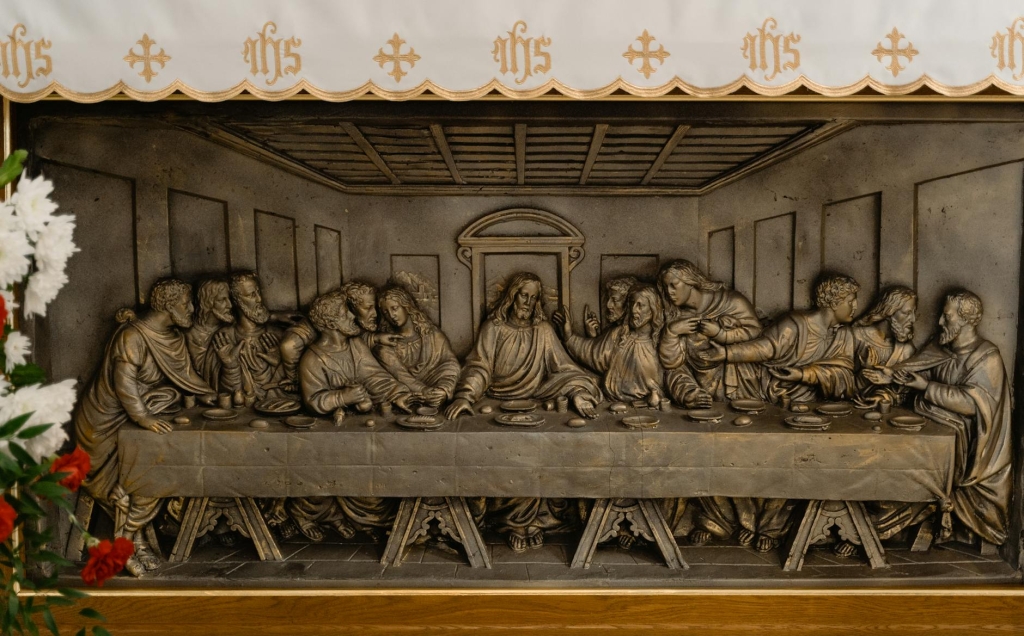
This feast highlights our faith in God who truly exists and had come to us in Christ Jesus, the Second Person of the Holy Trinity. In Christ through the Sacrament of the Eucharist he established at the Last Supper, we are given the “taste” of heaven literally speaking under the signs of bread and wine that become his Body and Blood we share. This was his command on that Holy Thursday evening to always remember him as St. Paul tells us in the second reading, the oldest account of the institution of Eucharist:
Brothers and sisters: I received from the Lord what I also handed on to you, that the Lord Jesus, on the night he was handed over, took bread, and after he had given thanks, broke it and said, “This is my body that is for you. Do this in remembrance of me.” In the same way also the cup, after supper (1 Corinthians 11:23-25).
Two words I wish to share with you on this Solemnity of the Body and Blood of Christ.
First is the word “remembering” or to remember. A very common word we use often but perhaps never aware of its deeper meaning from its root word “member” which means a part. Literally, to remember means “to make part again”. When we remember a person, an event in life, a thing from the past or long gone or not with us, we make them a part of the present moment.
The Eucharist is the highest form of remembering because literally speaking, we make Jesus a member of our present moment. When we re-remember Jesus in the Eucharist, he truly comes to us in Body and Blood! Truly present with us, in us after receiving him in the Holy Communion. Whenever we remember a loved one or a friend long gone or not with us at the moment, all we have is a memory. They become a member of the present but only in the mind unlike Jesus truly present with us, in us, and before us in his words, in his Body and Blood and in one another celebrating the Eucharist.
Photo by author, Old Jerusalem seen from Church of Dominus Flevit, May 2017.
It is not magic but a work of faith, a gift through and through from God in Jesus Christ. By his dying on the Cross and Resurrection at Easter, Jesus superseded and transcended time and space, sharing with us that sacred reality.
St. John Paul II beautifully called that “cosmic reality” when he described in his encyclical Ecclesia De Eucharistia how he felt transported in time and space when the temporal becomes divine because of God’s true presence anywhere he celebrated the Eucharist. We too experience the same cosmic reality in every Mass we celebrate when we are properly disposed, especially the priest and the servers.
That is why I always demand the highest order from priests and servers in celebrating most solemnly as possible the Holy Mass. I can stand kids playing inside the church but what gets to my nerves are servers talking or moving unnecessarily during the Mass and worst of all, when lectors proclaim the word of God incoherently and wrongly. Lest we forget also the choir members feeling so magaling forgetting they are in the Mass not in a concert that they make it a show, forgetting all about God and the people.
What a tragedy when we priests and liturgical ministers are the ones who forget to re-member Jesus in the Eucharist with our too much attention to ourselves. Exactly like the Twelve in our gospel!
As the day was drawing to a close, the Twelve approached him and said, “Dismiss the crowd so that they can go to the surrounding villages and farms and find lodging and provisions; for we are in a deserted place here.” He said to them, “Give them some food yourselves.” They replied, “Five loaves and two fish are all we have, unless we ourselves go and buy food for all these people” (Luke 9:12-13).
Imagine that scene of how the Twelve have totally “forgotten” the more than five thousand people gathered there with them. They were just thinking of themselves because they were in a “deserted place”. What a disrespect!
Respect is lost and disregarded when there is no remembering of others, when we forget others. Respect is from two Latin words re (again) and specere (to look/see) from which the words spectacle and spectacular came from. Re + specere or “respect” means to look again in order to see!
The Twelve were just concerned with themselves, not only forgetting but without respect at all with the people they have failed or refused to recognize as humans too who get tired and hungry like them. As we have cited in earlier, this continues right in our eucharistic celebrations when priests and ministers celebrate unprepared, unmindful of the sanctity of the Mass.
Remembering is not merely “thinking” of others in our mind and memory.
Remembering is making others present in our very selves!
Remembering is making every-body a some-body by giving our very selves to them to be the Body of Christ. Unless we are able to truly share our very selves in person, in body and blood too, then every Mass will remain merely a rite or a ritual. Worst, an activity we just have to fulfill.
The Eucharist is the summit of our Christian life because of this aspect of remembering Jesus Christ that leads us into a true communion of sharing of persons and experiences, in our joys and sorrows, in our hopes and belief. When this happens, then every remembering becomes a thanksgiving too.
And that is our second word I wish to instill in you today – thanksgiving which is the meaning of the Greek word eucharistia.
When there is a real experience of each others’ presence in love and mercy, kindness and care, justice and fairness, gratitude flows naturally resulting in peace and harmony. It is the whole meaning of our first reading when the priest of God named Melchizidek who was also the king of Salem which means “peace” blessed Abram after winning in a battle.
This short scene is a story of remembering God’s goodness to Abram who thanked Melchizidek by giving him a tenth of everything he had won in the battle. In the Holy Mass, what do we really share from our very selves? Not just treasures but even our very time to give totally to Christ without texting.
Now we see the series and cycle of remembering and thanksgiving in sharing of gifts of self which the Body and Blood of Christ signify to us.
This coming Friday we shall celebrate the third consecutive Solemnity in the resumption of Ordinary Time with that of the Most Sacred Heart of Jesus, a reminder to us all to make Jesus present always in ourselves with others especially at this time the world has been deleting from its every aspect God.
Lord Jesus Christ,
transform me like the
bread and wine
into your Body and Blood
to be offered and shared
with others
especially those
in most need.
Amen.
Lord My Chef Breakfast Recipe by Fr. Nicanor F. Lalog II
Wednesday in the Third Week of Easter, 07 May 2025
Acts 8:1-8     ><))))*> + ><))))*> + ><))))*>     John 6:35-40
Painting by Frenchman James Jacques Tissot (1836-1902), “Jesus Eats Breakfast with Disciples” from http://www.jofullheart.com.
Dearest Jesus,
teach us today to be
truly a "devout" person:
a "devout" disciple,
a "devout" Christian
a "devout" believer in you
like those "Devout men (who)
buried Stephen and made a loud
lament over him" (Acts 8:2).
How interesting, O Lord
that only St. Luke used the word
"devout" in the whole Bible
to describe some persons in
four instances: in describing Simeon
as a "devout" Jew who praised God
upon seeing the child Jesus at his
presentation at the temple;
the "devout" Jews from all over the world
who came to worship in Jerusalem on
Pentecost day; the "devout" men who
buried Stephen in the first reading
today; and lastly, Ananias as a "devout"
man who sought Saul after his conversion
to bring him to the early Church.
You know so well, dear Jesus
how we as a nation is said to be
"devout" Christians but lagging behind
in every aspect of development:
where is our being devout in
electing into office corrupt candidates?
where is our being devout in
fulfilling our duties and responsibilities
when bridges fall and bollards fail
that kill people especially children?
where is our being devout in
being reckless on the streets
and dirt roads, demeaning total
strangers and local inhabitants?
Oh Jesus, we are doomed by our
own hypocrisies when our being devout
is self-serving when we merely open
our eyes for things seen outside like
the many devotions and practices
we have filled with pomp and pageantry
because we look more into ourselves than
into seeing Christ in other persons
must love and respect and care;
what a tragedy that the persecutions
still going on against Christians are
perpetrated by supposed to be your
devout disciples, devout Christians
who do not care at all in their daily
dealings that could result in deaths
and injuries of so many people
including children like in the recent
series of road accidents, not to mention
vulgarities and obscenities spewed in the
countless road rages.
Teach us Lord
that a true devout believer
in you is one who always
seeks you among the least
among our brethren,
one who seeks your Body
in somebody
to be loved
and upheld
as a brother and a sister
so that our being devout
to your Body and Blood
in the Eucharist
becomes a reality
in our dealing with
one another.
Amen.
The Lord Is My Chef Sunday Recipe for the Soul by Fr. Nicanor F. Lalog II
Solemnity of the Body and Blood of Christ-B, 02 June 2024
Exodus 24:3-8  ><}}}}}*>  Hebrews 9:11-15  ><}}}}}*>  Mark 14:12-16, 22-26
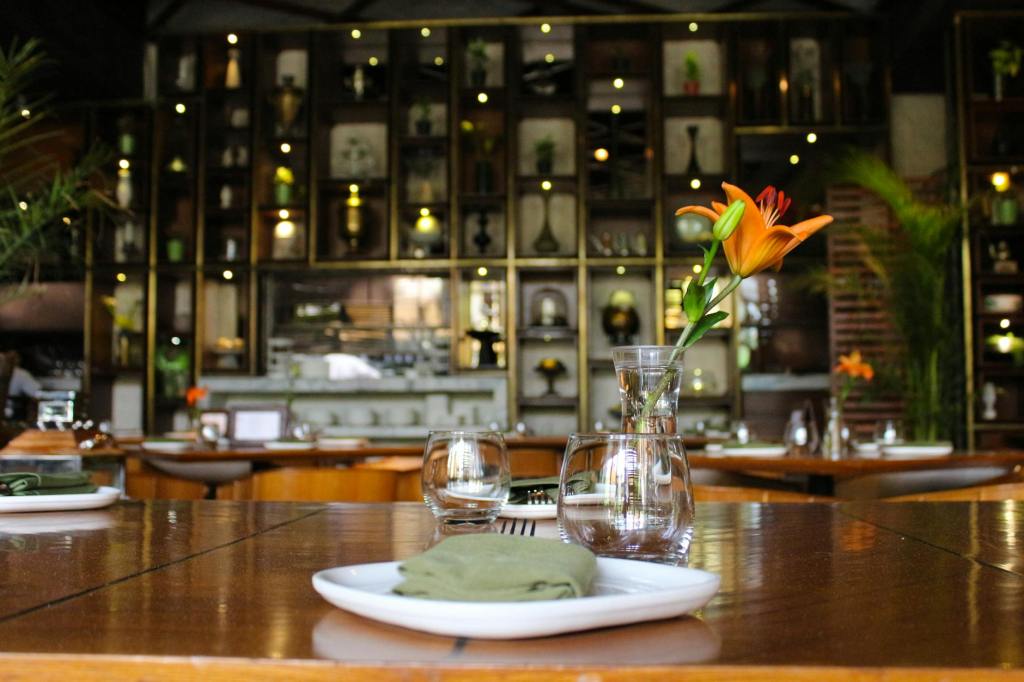
When I was a teacher-administrator of the Immaculate Conception Schoo for Boys (ICSB) in Malolos during my early years in the priesthood, I used to tell my students that in every first date they would have, always bring their girlfriend to a restaurant because what matters most is not the food and drinks but the moments we share together to know each other.
That’s the spirit behind every gathering we host with family and friends. What we really offer our guests are not food and drinks and desserts but our very selves, expressing to them our desire to be closer and intimate in our relationships as family and friends. When we tell them to have more food and drinks including sending home with tons of “Sharon Cuneta”, we actually share to them our selves as food and drinks in the same manner they nourished us with their coming. That’s Filipino hospitality so known even abroad, so appreciated by foreigners as we see in many reels and TikTok in social media.
Photo by author, 24 May 2024.
Universally speaking, every meal is more than eating and drinking but of togetherness, of deepening of our bonds as family and friends nourishing each other, becoming food and drinks for one another.
It is the same thing the happens in a more complete and perfect manner whenever we celebrate the Holy Eucharist.
By giving us His very self as Body and Blood, Jesus Christ our host in this sacred meal not only nourishes our spiritual and deepest longings but most of all offers us the most intimate communion possible with others and with God. Jesus is the one who makes everything possible for us to be together, calling us to “come to me, all you who are weary and burdened, and I will give you rest…for I am humble and gentle of heart” (Mt.11:28-30).
On the first day of the Feast of Unleavened Bread, when they sacrifice the Passover lamb, Jesus’ disciples said to him, “Where do you want us to go and prepare for you to eat the Passover?” He sent two of his disciples and said to them, “Go into the city and a man will meet you, carrying a jar of water. Follow him. Wherever he enters, say to the master of the house, “The Teacher says, ‘Where is my guest room where I may eat the Passover with my disciples?’ Then he will show you a large upper room furnished and ready. Make the preparations for us there.” The disciples then went off, entered the city, and found it just as he had told them; and they prepared the Passover.
See how Jesus personally prepared everything for their Passover meal when He arranged everything with coded messages like following “a man carrying a jar of water” because at that time, it was the woman who fetched water. You cannot find a man carrying a jar of water unless there is something extraordinary like in our gospel today. And that is how much God loves us, always taking the initiative to meet us, to encounter us, to be closest with us.
It is always Jesus Christ who takes the initiative to meet us and bless us like in the Holy Eucharist. Imagine at the start of the Mass, right away He welcomes us even if we are sinners, granting us pardon even before we have asked forgiveness. In the Eucharist, we receive Jesus Christ personally like the apostles at the Last Supper this time under the signs of bread and wine as His Body and Blood, drawing us closer to Him.
That is what really happens in the sacred meal of the Holy Eucharist, a divine communion!
I tell people that after receiving Jesus in the Holy Communion, speak to Him in the most personal manner, tell Him everything whatever you want, including your cries and complaints. But, like in every meal, listen too to Jesus who has always has something so personal to tell us.
Here we find an essential element in every meal, in every conversation, in a covenant: our responsibility, our response to the offer of our host Jesus Christ. This is the meaning of Moses splashing the blood of the animal offerings to the people in sealing their covenant with God: the blood symbolized life or gift of self, our giving of ourselves to God our Lord. Jesus perfected this in the sacrament of the Holy Eucharist as the Letter of the Hebrews tells us:
Brothers and sisters: When Christ came as high priest of the good things that have come to be, passing through the greater and more perfect tabernacle not made by hands, that is, not belonging to this creation, he entered once for all into the sanctuary, not with the blood of goats and calves but with his own blood, thus obtaining eternal redemption. For this reason he is mediator of a new covenant: since a death has taken place for deliverance from transgressions under the first covenant, those who are called may receive the promised eternal inheritance.
Hebrews 9:11-12, 15
Photo by author, Chapel of St. Francis Xavier, Sacred Heart Novitiate, Novaliches, QC, 20 March 2024.
Here we find the element and essence of sacrifice of Jesus as sacrifice of the Mass. From the Latin words sacra facere that means to make holy or sacred, Jesus offered Himself as a sacrifice for us to make us holy like Him. In the Mass, we do not repeat His sacrifice but makes it present, actual in ourselves.
For us to receive Jesus Body and Blood in the Eucharist, we too give ourselves to Him to become His very presence in the world not only in the community gathered as His mystical Body or Church but most of all, in our union as family and friends like in Marriage. But, remember that the sacrament is not everything. We have responsibilities to nurture, deepen and protect the grace every Sacrament bestows us. What do we give? What do we sacrifice?
My dear friends, that aspect of mortification in sacrifice is accidental. We do not sacrifice or give up something merely to deny ourselves of something good. To sacrifice is not to deprive oneself of life but actually to offer oneself to a higher life. That is why we sacrifice for our loved ones and even for ourselves to achieve our dreams and aspirations. God asks us to sacrifice not because He needs us but in order to make us better, to make us holy, more equipped to keep our end in His covenant. Hence, divorce is contrary to the Eucharist, to the covenant of God.
Photo by Ka Ruben, National Shrine of Our Lady of Fatima, Valenzuela City, 2022.
There is no perfect marriage nor perfect couples but every marriage is made in heaven, blessed by God. Problems do happen indeed in many marriages or in life in general but these are of human origins – the hardness of our hearts as Jesus declared, not with the sacrament or with life itself.
Everybody has got to give, has to sacrifice. The best things in life are not free, especially a happy marriage. Or a fulfilling ministry or career or whatever. We have to give ourselves too in the same manner Jesus gave us Himself on the Cross. Problem is we no longer sacrifice in these days of instants that even that most wonderful union of man and woman called marriage is being destroyed by some in the pretext of a solution with divorce.
In celebrating the Solemnity of the Body and Blood of Jesus Christ today, we experience the love and unity of God expressed in last week’s celebration of the Blessed Trinity, of how the three Persons in their mutual giving of self to each other outpoured upon us life and abundant blessings.
Like the three Persons bonded in love, we too can achieve that unity with God and with others through the Holy Eucharist when we too learn to sacrifice, assuring us of God’s presence among us in the ordinary instances in life. Experience God in every movement, in every step as He always takes the initiative to meet us, to be with us so we become like Him.
Let us pray:
Lord Jesus Christ,
You have given me Your total self
in love, Body and Blood
on the Cross and daily in
the sacrifice of the Mass;
You never asked me to give
myself literally: You merely ask me
to be more loving and kind,
to be more forgiving and merciful,
to be more charitable;
what's more, every good deed
I am able to do actually comes from You!
I practically just have to be Your lips,
Your hands, Your limbs, Your Body and Blood
and yet, I could not give up myself to You!
Help me Jesus
to learn to sacrifice,
to offer my body,
my total self to You
through the loving service of others.
Amen.
The Lord Is My Chef Sunday Recipe for the Soul by Fr. Nicanor F. Lalog II
Solemnity of the Body & Blood of Jesus Christ, 11 June 2023
Deuteronomy 8:2-3, 14-16 ><}}}}*> 1 Corinthians 10:16-17 ><}}}}*> John 6:51-58
Photo by author, 2018.
There is a weird British series in Netflix called the Inside Man about a professor of criminology at the death row in the States for the murder of his own wife. He had deep perceptions and analysis of events that people came to see him in prison to consult in locating their missing loved ones. One of them is an American journalist trying to do a story about him while at the same time seeking his expertise in locating her missing friend, a math tutor in England held hostage in the basement by a pastor and his wife.
Though the series is weird, it has some interesting lines about life and death like when the wife of the pastor told him how she had spent the whole afternoon searching the internet how to kill their son’s math tutor they have thrown in their basement. The wife found it unusual there was nothing in Google that tells of ways of killing another person (so weird, is it not?); however, she was surprised that almost everything she had found in the internet and social media was mainly about sex as he teased her husband that it is not love that makes the world go round but sex!
Yes, it is very funny and weird but her observations seem to be true because nobody in his right mind would ever want to destroy life except terrorists and lunatics. People generally love life that our social media are saturated with contents that try to show how we can enjoy this life through sex, food, and travels in that order. Also with cars for boys aged 5 to 95.
Photo by author, March 2020.
Of course, we all know that is not what life is all about that is filled with mysteries.
Last Sunday we reflected in the Solemnity of the Holy Trinity that mysteries are not problems to be solved but realities to embrace to discover life’s truest meaning found in our relationships with God and with others
This Sunday we celebrate the second most important doctrine and mystery of our faith, the Incarnation of the Son of God Jesus Christ. It is a mystery not only how the Son of God became human like us in everything except sin but most of all, of how he has given us his very flesh and blood as our food and drink in this journey called life.
Jesus said to the crowds: “I am the living bread that came down from heaven; whoever eats this bread will live forever; and the bread that I will give is my flesh for the life of the world.” The Jews quarreled among themselves saying, “How can this man give us his flesh to eat?” Jesus said to them, “Amen, amen, I say to you, unless you eat the flesh of the Son of Man and drink his blood, you do not have life within you. For my flesh is true food, and my blood is true drink.”
John 6:51-53, 55
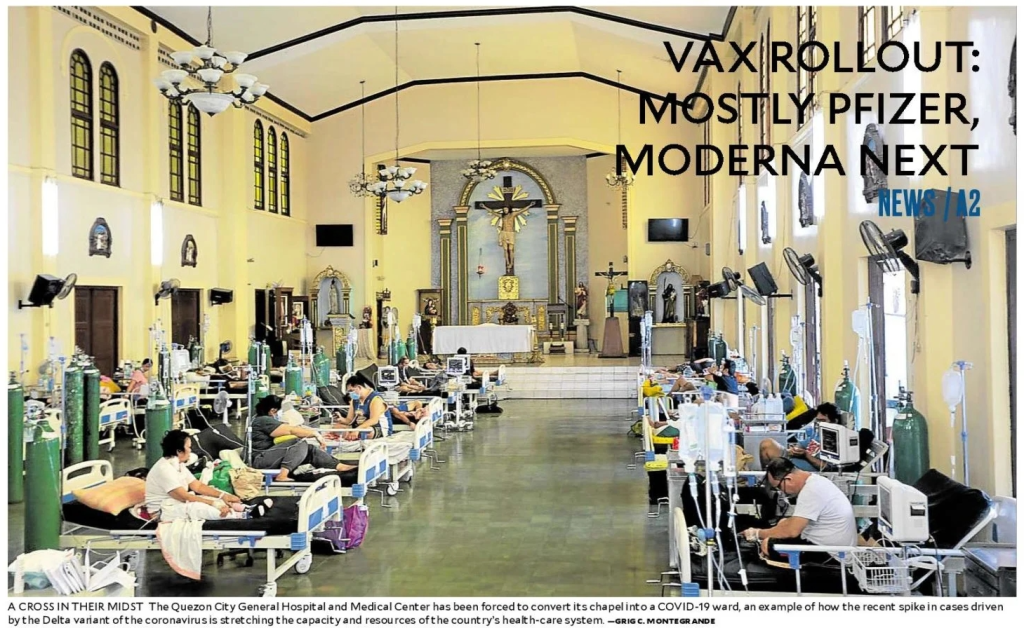
My favorite front page photo during the Delta outbreak of the COVID-19 pandemic published by the Inquirer on 20 August 2021. So evocative of the truth of Jesus himself being our true food and drink – and medicine.
As we have reflected last Sunday, a mystery is a divine truth revealed by God we learn through the gift of faith. It is non-logical but not illogical. It can be explained and understood but not fully.
Here in the mystery of the Body and Blood of Christ we call as the Eucharist, the mystery of our Triune God becomes a reality in our life truly present in perceptible signs of bread and wine. From relating, we now come to the mystery of sharing of our selves like God who shared us his Son Jesus Christ who in turn gave himself for us on the Cross that continues today in the Holy Eucharist as his everlasting sign of his loving presence and service.
See how Jesus spoke clearly in this passage of his giving us his physical body and blood that to receive it, we have to actually eat it too.
First we notice is how in other parts of the New Testament that the term soma is used to refer to the Eucharist which is the Greek word for “body” that may have symbolic meanings; but in this passage, Jesus used the word sarx which means “flesh” in Greek that means only one thing, the corporeal reality of his physical body. Jesus is telling us in no uncertain terms in this passage after the miracle feeding of more than 5000 in the wilderness that he himself is truly and really present as flesh and blood in the Eucharist. Recall that at his Prologue to his gospel, John also used the same term sarx in declaring “the Word became flesh” (Jn.1:14) to correct misunderstandings and doubts that were already developing during the first century of Christianity regarding the physical Incarnation of Jesus the Eternal Word and his true presence in the Eucharist.
Second term used by Jesus four times as he emphasized the reality of his Body and Blood in the Eucharist is the word trogein which in Greek means “to munch” or “bite”; the other Greek word for the verb to eat is phragein which evokes many symbolic meanings like “digesting” a book or “assimilating” the culture. Again, when Jesus said we have to eat his flesh and drink his blood, he truly meant himself as a true food and true drink to nourish and sustain us in this life and hereafter.
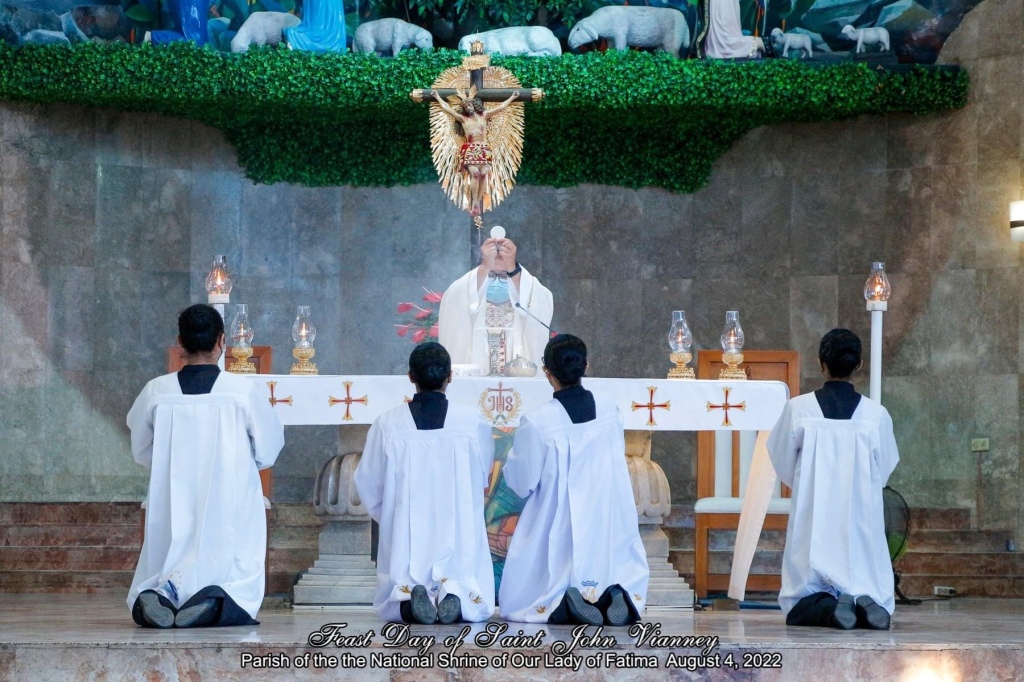
Photo by Kuya Ruben, 04 August 2022.
There lies the beauty of this mystery of the Eucharist: Jesus himself is the one we receive, who comes to us personally, physically to be one with us in our very selves. We do not have to wait for death and be in heaven to experience fullness of life in Christ because he comes truly to us while in this life when we receive him in the Holy Communion.
St. Paul reminds us in the second reading with his rhetorical questions, “The cup of blessing that we bless, is it not a participation in the blood of Christ? The bread that we break: is it not a participation in the body of Christ?” (1 Cor. 10:16) of this reality of Christ’s presence in us and among us. He was not waiting for answers of yes or no but posed those questions to affirm the very truth we all know that Jesus is really present in us and among us especially when we are broken like the Israelites in the first reading. This is where the mystery deepens, becomes more real and more fascinating. Jesus the Son of God emptying himself to be like us in everything except sin so that we may become like him, holy and divine.
This I have learned in my two years of being a chaplain in the hospital. Admittedly, it is difficult especially for me as I could easily be carried away by emotions in seeing the sick and suffering while at the same time, can often have my stomach overturned by sights of blood and wounds of others. But, there is always that indescribable feelings of joy and fulfillment after visiting and anointing our sick patients.
Photo by Kuya Ruben, June 2022.
I have no claims to holiness as I am a sinner too but the Eucharist has become most truest to me these past two years in the hospital and university as well as I get into contact with the sick and the students. When I touch patients to pray over them or help in moving them, when students cry to me or ask for hugs after confessions, they all flash to me during the consecration as I raise and say, This is my Body… This is my Blood. Jesus is most truest in the Eucharist when we too imitate him in giving ourselves to others to be broken and shared.
The Eucharist is the most wonderful gift of God to us when we receive his Son Body and Blood to make us strong and holy like him in this life.
That is why we have to go to Mass every Sunday. That is why a priest has to celebrate Mass daily for the people to be strengthened like him in this journey of life filled with trials and sufferings. That is why Moses kept on reminding the Israelites of their many hardships from their exodus into their wandering in the wilderness. That is why this coming Friday, we cap these three weeks of transition into the Ordinary Time with the Solemnity of the Most Sacred Heart of Jesus, another mystery of Christ truly among us and within us as we experience his love most truly right here in our hearts.
What an awesome God we have indeed who has become so small and so simple like us so we can be great like him. Like the simple bread and wine, in the Mass through the Holy Spirit, they become Christ’s Body and Blood. Let’s make it happen this Sunday in our celebration of the Mass. Amen.Have a blessed week ahead.
The Lord Is My Chef Daily Recipe for the Soul by Fr. Nicanor F. Lalog II
Wednesday in the Third Week of Easter, 26 April 2023
Acts 8:1-8   ><]]]]'> + ><]]]]'> + ><]]]]'>   John 6:35-40
Photo by Mr. Jim Marpa, 2019.
Lord Jesus,
teach me to be a "devout"
person; not just righteous or
holy but devout as well
like those "Devout men (who)
buried Stephen and made a loud
lament over him" (Acts 8:2).

Yesterday, you taught us dear Lord
that whatever is in our heart is
reflected on our face;
today you teach us that
to be "devout" is still of the heart
which is to be of a good heart
ready to believe and act openly
with courage on that belief.
Only St. Luke used the adjective
"devout" to describe some persons
like Simeon who praised God upon
seeing Jesus when presented to the
temple by his parents; the Jews from
all over the world who came to observe
Pentecost day in Jerusalem;
the men who buried Stephen, and
Ananias who sought Saul while
still blind to bring him to the Church.
Many times dear Lord
our being devout is
self-serving when we merely
open our eyes for things
that are seen in our many
devotions, seeing more our selves
failing to see Christ in
the other persons
who have to be loved
and cared for, understood
and forgiven, accepted and
affirmed.
No wonder until now,
though we receive you Jesus
in the Eucharist, we do not
experience and feel your Body,
your Person because our hearts
are not open at all to you through
others especially the sick and
suffering.  Amen.
40 Shades of Lent by Fr. Nicanor F. Lalog II
Palm Sunday of the Lord's Passion, 02 April 2023
Isaiah 50:4-7 > + < Philippians 2:6-11 > + < Matthew 27:11-54
Photo by author, Palm Sunday of the Lord’s Passion 2019, Parokya ni San Juan Apostol at Ebanghelista, Bagbaguin, Sta. Maria, Bulacan.
We now enter the holiest week of the year, the height of our Lenten preparations for Easter. What we have today are two ancient celebrations merged by Vatican II in 1963: the blessing of palms practiced in Jerusalem as early as the fourth century and the papal tradition of proclaiming the very long gospel of the Lord’s Passion in Rome about year 500. Hence, the title “Palm Sunday of the Lord’s Passion”.
And it is a beautiful innovation in our liturgy showing us so many truths in our lives like we begin Holy Week with the triumphal entry of Jesus to Jerusalem, leading to the Holy Triduum of Passion and Death on Maundy Thursday and Good Friday into the bursting joy and glory on Easter.
That for me is life itself.
We come into this world in triumph like Jesus with everybody rejoicing with our birth until we grow up, going through a lot of pains and sufferings with little deaths right in the hands of those supposed to love us but always, there is the joy of maturity, of fulfillment in Christ with many Easter moments of triumphs and consolations. Today’s celebrations remind us that while there will always be the disappointing manifestations of sin and evil in life, overall, there is always the immense and immeasurable love of God expressed in Jesus Christ dying on the Cross.
“Ecce Homo” painting by Vicente Juan Masip (1507-1579) from masterapollon.com
Our gospel is very long even in its shorter version. Let us focus on the Lord’s silence from his arrest to His crucifixion.
The Lord God has given me a well-trained tongue, that I might know how to speak to the weary a word that will rouse them. I gave my back to those who beat me, my cheeks to those who plucked my beard; my face I did not shield from buffets and spitting. The Lord God is my help, therefore, I am not disgraced; I have set my face like flint, knowing that I shall not be put to shame.
Isaiah 50:4, 6-7
Jesus is the fulfillment of the so-called Suffering Servant of God in the Book of Isaiah. What is striking is how he claims to have been given with a well-trained tongue but He rarely spoke when tried and crucified, choosing to be silent in the midst of great sufferings. What a great display of love for us!
In a world drowning in a cacophony of sounds and noise with everyone and everything speaking like elevators and cellphones, the more God is silent, waiting for us to stop and listen to Him in Jesus Christ who speaks within us. From Pilate to the soldiers to the Pharisees and priests with their rabid packs of demagogues who ceaselessly mocked Jesus even while slowly dying on the Cross, Jesus remained silent.
Because He loves us.
Because He waits for us to stop and listen.
Because life is more true and fulfilling in silence, not in sounds and noise.
Last Monday we celebrated the Feast of St. Joseph where we heard in the gospel how an angel told him to take Mary as wife with the specific task of naming her child “JESUS” which means “God saves”. See how God gave that specific mission to the most silent man in the Bible, St. Joseph who must have taught Jesus the value of silence!
That is how God saved us in Jesus by remaining silent even on the Cross. If ever He spoke, it was mostly to pray the psalms. In Jesus, God saves us in silence while we are in the din of noises of sin. Oh how we speak a lot these days against God, still putting Him on trial, blaming Him for all the problems and woes we have in our lives and in the world.
Photo by author, August 2020.
Like Pilate and the crowd with their religious leaders, we say a lot about God that are often not true but He never argued nor debated with us just like then because Jesus loves us, because His name means “God saves” and that was exactly the meaning of His silence.
How could be God so demanding as many would claim with His many words of instructions and commandments of things to do and not to do plus warnings against sin just to obey Him when He has always been silent?
Today we are reminded how we talk too much and accomplish so little, even nothing, while Jesus is silent because His name means “God saves”, witnessing it in fact in silent sufferings that was a scandal for many at that time.
Moreover, Jesus showed us today in His sufferings how silence is ultimately the expression of trust in God. When we are able to slow down and be silent in the face of many trials, that is a clear indication of our deep faith and trust in God. People who trust are the most silent because simply wait for their deliverance or salvation. Like Jesus Christ.
Christ Jesus, though he was in the form of God, did not regard equality with God something to be grasped. Rather, he emptied himself, taking the form of a slave, coming in human likeness; and found human in appearance, he humbled himself, becoming obedient to death, even death on a cross.
Philippians 2:6-8
Photo by author, Betania-Tagaytay City, 2018.
More scandalous than the silence of Jesus Christ during His trial was His crucifixion, the supreme expression of His name’s meaning, “God saves”. See how since the fall of Adam and Eve, sin has always been an attempt by humans in becoming like God. There has always been that conscious or unconscious feeling of competition with God whom many see as controlling, manipulative and even power-hungry.
But right there on the Cross, Jesus showed us that indeed, in His very Person how God saves by utterly being weak and powerless.
God saves us in Jesus through the path of powerlessness and weakness, docility and humility, of simplicity before men and before His Father.
That is why even at His triumphal entrance to Jerusalem, He rode a lowly donkey never been used by anyone, a fulfillment of many Old Testament allusions and prophecies that “your king comes to you, meek and riding on an ass, and on a colt, the foal of a beast of burden (donkey)” (Mt. 21:5; Zech. 9:9). His triumphal entry into Jerusalem was the fulfillment of the words of God to his prophets, showing us that indeed, everything Jesus did and said were in accordance with the Father’s will, never on His own.
Photo by author, 2018.
Because His name Jesus means, “God saves”.
What is most beautiful in the reading earlier at the blessing of palms was how Matthew described the Lord’s triumphal entry into Jerusalem – exactly just like the coming of the wise men from the East!
And when he entered Jerusalem the whole city was shaken…
Matthew 21:10
Imagine how a very large crowd welcomed Jesus, spreading their cloaks on the road where He passed, chanting “Hosanna to the Son of David” (Mt.21:9).
Like when Jesus was born and Magis from the East came to Jerusalem inquiring about the newborn king of Israel, they were also shaken! And the irony then at His birth and at His triumphal entry, the learned have refused to recognize Him despite their having all the knowledge and writings available to them.
Is it not the same thing continues to happen to us in our lives, when despite all the kindness and mercy of God, we refuse to recognize His Son’s coming Jesu Christ including the salvation He had gained for us? Where have all the people gone on Sundays? Does God still matter to us? Do we not care at all whenever Jesus comes to us most especially in the Eucharist during the Sunday Mass?
Both the rites of the blessing of palms with the procession and the Mass on this Palm Sunday of the Lord’s Passion are not merely a recalling of a past event, but a making present, a re-membering of Jesus our King triumphantly coming daily – still in silence – to us in the simplicity of bread and wine to become His Body and Blood for us to offer and share in order to experience Him, our Resurrection and Life because His name means “God saves”.
In the Eucharist, Jesus comes to us as “God saves us”, fulfilling us, blessing us.
This Holy Week, especially at the Holy Triduum of Holy Thursday, Good Friday and Easter Vigil, we are reminded of our task to witness to everyone the meaning of the name of Jesus, “God saves” by being present to Him in the Eucharist. Inside the church. With our family. Not in the beach nor a resort unmindful of history’s greatest moment when God saved us from sins by dying on the Cross. Amen. Please, have a meaningful Holy Week to experience the joy of Easter!
The Lord Is My Chef Daily Recipe for the Soul by Fr. Nicanor F. Lalog II
Wednesday, Feast of the Dedication of the Lateran Basilica in Rome, 09 November 2022
Ezekiel 47:1-2, 8-9, 12 ><}}}*> 1 Corinthians 3:9-11, 16-17 ><}}}*> John 2:13-22
Photo of the Lateran Basilica by Fr. Gerry Pascual.
On this feast of the Dedication
of the Lateran Basilica in Rome
which is "the mother and mistress
of all churches in Rome and the world"
being the Pope's church as Bishop of Rome,
we praise and thank you O God
for the gift of the Church.
So often, we rarely think of the
Church as your gift, dear God;
sadly, many times we hurt the Church
not only with our attacks that defame
the Body of Christ here on earth
but most especially when we your
priests cause it to bleed with so many
wounds following our sins of
infidelities.
Help us realize this holy giftedness
of the Church as a means for us
to be closer to you, O God,
for us to be saved in Christ,
for us to be blessed and made holy
as your people finally gathered
as one in your Most Holy Name;
most of all, in giving life
and sustaining life abundantly in Christ.
The angel brought me back to the entrance of the temple, and I saw water flowing out from beneath the threshold of the temple toward the east, for the facade of the temple was toward the east; the water flowed down from the southern side of the temple, south of the altar. He said to me, “Wherever the river flows, every sort of living creature that can multiply shall live, and there shall be abundant fish, for wherever this water comes the sea shall be made fresh. Along both baqnk of the river, fruit trees of every kind shall grow; their leaves shall ot fade, nor their fruit fail. Every month they shall bear fresh fruit, for they shall be watered by the flow from the sanctuary. Their fruit shall serve for food, and their leaves for medicine.”
Ezekiel 47:1, 9, 12
Since Jesus had ascended into heaven,
his Church has always been his sign of unity,
of communion that has continued to exist to this day
despite so many efforts by many men and women
to destroy it both from within and from outside;
all these years, the Church has remained like that
beautiful vision by Prophet Ezekiel from
which all life springs forth.
Cleanse us, dear Jesus,
whip us with your cords,
overturn our various tables of
comforts and new thoughts
especially our attachment with
the ways of the world
so that we may truly be called
"the Father's house" (Jn.2:15-16).
Most dear Jesus,
let us stop hurting your Church,
let us stop lording over your Church,
let us stop desecrating your Church
as we keep in mind and heart
that it is you, O Lord,
who is the true foundation
of this Church
that begins right in our hearts.
Amen.
Photo of the Cathedra of the Lateran Basilica by Fr. Gerry Pascual.
The Lord Is My Chef Sunday Recipe for the Soul by Fr. Nicanor F. Lalog II
Solemnity of the Body and Blood of Jesus Christ, 19 June 2022
Genesis 14:18-20 ><}}}}*> 1 Corinthians 11:23-26 ><}}}}*> Luke 9:11-17
Photo by Ms. Ria De Vera in Bagbaguin, Sta. Maria, Bulacan, November 2020.
A week after celebrating the Solemnity of the Blessed Trinity, we celebrate today the reality of this mystery of our personal God who relates with us with the Solemnity of the Body and Blood of Jesus Christ.
This Solemnity of the Body and Blood of Jesus Christ reminds us of the great honor of every person, of everybody as a part of the Body of Christ who became human like us to share his very self so that we too may become food for everyone. It is a very timely and appropriate feast when we are deluged with news here and abroad of how people are treated as nobody.
The recent viral video of an SUV driver bumping a security guard in a busy intersection in Mandaluyong remains a hot trending topic precisely because it is a story of how poor people are disregarded in this nation. Although the suspect had surrendered to authorities after a week of “no-show” to summons, statements especially by his mother ignited only more fire into the blazing topic. Adding insult to injuries to the nation is the press conference called by the police in presenting and speaking for the suspect which is absurd and directly opposite to how they deal with poor people involved in similar offenses.
Over in the United States where one loses count of victims of shootings happening almost every week, lawmakers grandstand for more gun controls for the protection of children when in fact, the same lawmakers refuse to consider the child in the mother’s womb as a person with a right to life that they have legalized abortion. Almost everywhere in the world, see how people take some people as somebody and others as nobody. So contrary to what Jesus is telling us in the gospel today, that everybody is a somebody. Observe how the disciples of Jesus acted in the gospel:
Jesus spoke to the crowds about the kingdom of God, and he healed those who needed to be cured. As the day was drawing to a close, the Twelve approached him and said, “Dismiss the crowd so that they can go to the surrounding villages and farms and find lodging and provisions; for we are in a deserted place here.” He said to them, “Give them some food yourselves.” They replied, “Five loaves and two fish are all we have, unless we ourselves go and buy food for all these people.” Now the men there numbered about five thousand. Then he said to his disciples, “Have them sit down in groups of about fifty. They all ate and were satisfied. And when the leftover fragments were picked up, they filled twelve wicker baskets.
Luke 9:11-14, 17
Photo from istock-studios.com by Getty Images.
We have heard this story so many times and yet, we continue to miss its whole meaning that it continues to happen in our lives minus the miracle of Jesus. See how Luke tells us first that Jesus spoke to the people about the kingdom of God.
We will never experience Jesus in his person, in his Body and Blood unless we listen first to his words, to his teachings of the kingdom of God. That is why in the Mass, the first part is the liturgy of the word to prepare us for the liturgy of the eucharist. So many times in life, we dismiss right away anything that is spiritual in nature like prayers and the sacred scriptures, of faith in God.
Luke does not tell us how Jesus multiplied the loaves and fish; we have to leave it to him how he did it. After all, he is the Son of God. Recall how during his temptation by the devil to turn stones into bread and he answered that “one does not live by bread alone but by every word that comes forth from the mouth of God” (Mt.4:4). Here in this scene, his words were precisely fulfilled when he fed the people after they have opened themselves to God’s words, to God himself.
Miracles happen in our lives when we first open ourselves to God himself. And opening to God means opening to others too by seeing everyone as a brother and sister in Christ whom we must care for.
Photo by Fr. Howard John Tarrayo, August 2021.
Too often, we tend to isolate ourselves from others, thinking only of ourselves and own good and comfort like the Twelve who asked Jesus to dismiss the crowds so they would find food and lodging for themselves in the wilderness.
What a sad reality still happening today, of how even parents and couples would proudly say how difficult it is to have another child because it is expensive. We have become so utilitarian in our perspectives in life that we compute everything as a cost, forgetting God except when praying which is precisely for asking for more blessings without even seeing the overflowing abundance of gifts from God.
Notice that despite the affluence of many these days, both as individuals and as nations, many are afflicted with the scarcity mentality, of not having enough, fearful of losing money and other resources like oil that we now have this exorbitant fuel prices.
When Jesus told the Twelve to “give the crowds some food yourselves”, he is telling us to look at God first for he is a God of abundance. Abraham in the first reading gives us the best example of always trusting God, of finding God behind every blessings we have. Abraham had just won a war with several kings in the region by the power of God who sent his priest named Melchizedek to bless him with bread and wine after. But unlike other victors in war, Abraham never had intentions of taking all the wealth and treasures of the kings he had beaten and instead gave Melchizedek the priest of God “a tenth of everything” (Gen.14:20).
Our response to God’s many blessings to us is to “tithe” ourselves like Abraham but not just ten percent as the Old Testament had taught but like Jesus in the New Testament by giving all of our very selves. This is the meaning of Paul’s words in the second reading of “proclaiming the death of the Lord until he comes” as often as we eat this bread and drink the cup (1 Cor.11:26).
We have learned and realized (hopefully) during the past Lenten and Easter seasons that death leads to new life in Jesus Christ when we share our very selves like him. God blesses us abundantly daily with his life and other blessings. There is enough for everyone. That is the meaning of the leftovers of twelve wicker baskets, one each for every apostle of the Lord who represented us.
This Solemnity of the Body and Blood of Jesus we receive in the Eucharist reminds us not only of the sublime gifts of God to each of us but also of our ultimate response of dying to ourselves so we may share Christ’s life to the world so dead with ego and selfishness, a world of “I” and “me” and “my” and “mine” totally disregarding everybody as nobody.
As we celebrate today the Body and Blood of Christ honoring him with Masses, vigils and processions, remember how not everybody in the world is considered a somebody unless one has wealth and power. It is the new meaning given by modern man to the golden rule – he who has gold rules, implying that the poor are always taken as a nobody, bearing all the abuses of those in power and authority.
Let us examine ourselves how we have contributed to these abuses still going on, even in our thoughts at the way we perceive others, especially those not like us in status and beliefs and colors.
After receiving Jesus Christ’s Body and Blood in the Eucharist, silently pray:
Dearest Lord Jesus Christ:
empty myself of pride and
fill me with your humility, justice and love;
reign in my heart now and always.
Amen.
The Lord Is My Chef Daily Recipe for the Soul by Fr. Nicanor F. Lalog II
Friday, Week XXXIII, Year I in Ordinary Time, 19 November 2021
1 Maccabees 4:3-37, 52-59   ><)))*> + <*(((><   Luke 19:45-48
Photo by Ms. Ria De Vera, November 2020.
Today you remind us, dear God
our Father, of the need to keep our
house of worship always in order,
clean and sacred; like Judas and
his brothers who rededicated and purified
your Temple in Jerusalem after driving
away the pagans, may we also keep
in mind that your house of worship is
always indicative of the kind of relationship
and faith we have in you.
While it is very true you dwell in us
your people, O God, for we are indeed
your temple, we cannot discount the fact
that the way our church buildings and facilities
look like show the kind of people we are,
of how much care and respect we have for you
and for one another; buildings and material
structures of any church and house of worship
always reflect the spirituality or lack of it
of the pastors who minister and the
people who celebrate and worship there.
It is in this manner we become truly
your very temple!
Cleanse our hearts in Jesus Christ,
may he dwell in our hearts and reign
over us so that we the people, the
body of believers become your true
temple dear God, no matter what others
may say for or against us like the chief
priests, scribes and leaders of the
people during the time of Jesus.
Amen.











 lordmychef.com