Becoming like a lamp shining in the dark, the path of Transfiguration

Lord My Chef Daily Recipe for the Soul, 06 August 2025
Wednesday, Feast of Transfiguration of the Lord, Cycle C
Daniel 7:9-10, 13-14 ><)))*> 2Peter 1:16-19 ><)))*> Luke 9:28-36
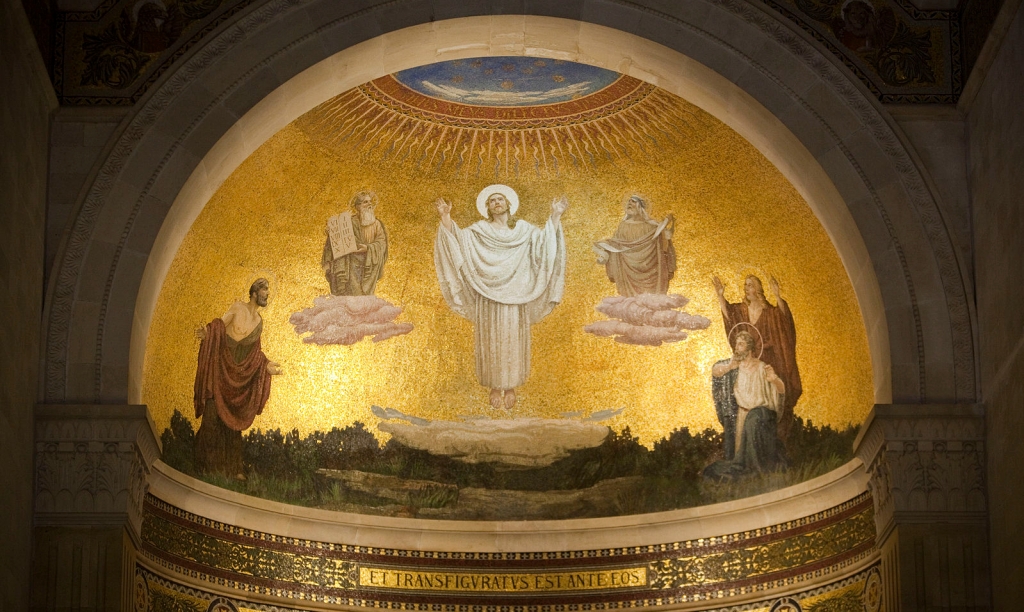
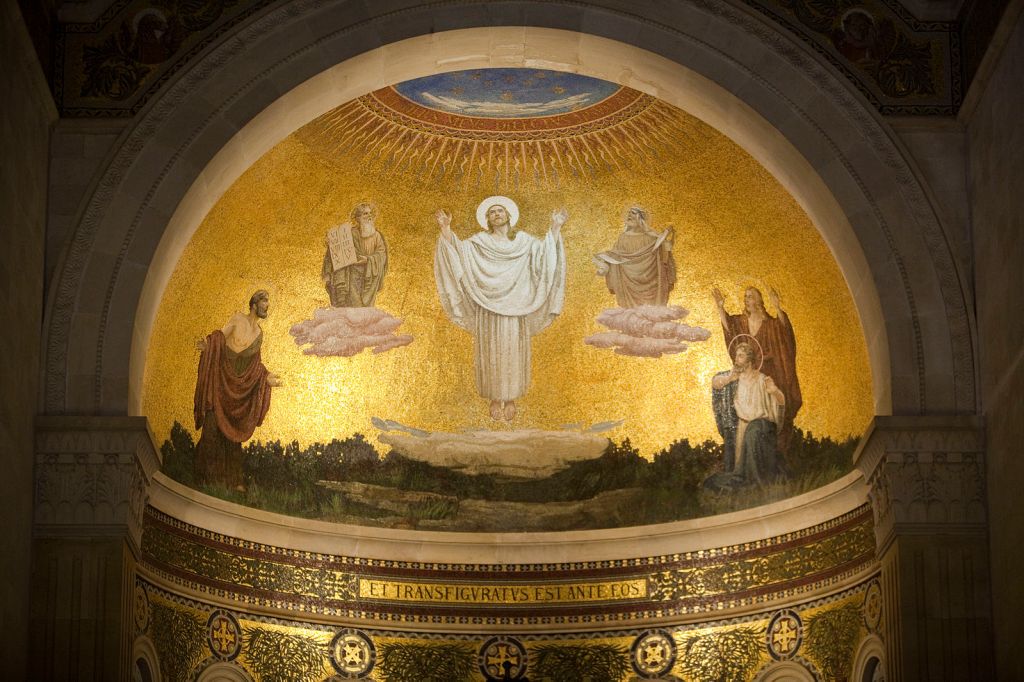
Apse of the Transfiguration Church at the Holy Land from wikimedia.org.

Jesus took Peter, John, and James and went up the mountain to pray. While he was praying his face changed in appearance and his clothing became dazzling white. And behold, two men were conversing with him, Moses and Elijah, who appeared in glory and spoke of his exodus that he was going to accomplish in Jerusalem (Luke 9:28-31).

Lord Jesus,
I feel afraid in this scene;
how difficult it must have
been to the three Apostles
privileged to join you up on
Mount Tabor at your Transfiguration
for it was not all glory -
I could imagine the fear
and sadness hearing
Moses and Elijah speaking
about your coming
"exodus",
your Passion,
Death, and Resurrection.
Why do you have to go through
those sufferings and death?
Why do you have to leave
and depart from us?

Like Peter,
I would have said the
same to you, "Master,
it is good that we are here;
let us make three tents,
one for you,
one for Moses,
and one for Elijah"
so that we could just stay
and remain up there in glory.
You know it so well,
Jesus how when we are
so wrapped in joy and glory
and mystery,
we hardly understand
a thing except the experience
of being overwhelmed,
of finding you,
of seeing you,
and being with you;
lead us down the mountain
into life's daily realities
where we you want us to
bring that light to many others
going through darkness in life.

We ourselves heard this voice come from heaven while we were with him on the holy mountain. Moreover, we possess the prophetic message that is altogether reliable. You will do well to be attentive to it, as to a lamp shining in a dark place, until day dawns and the morning star rises in your hearts (2 Peter 1:18-19).

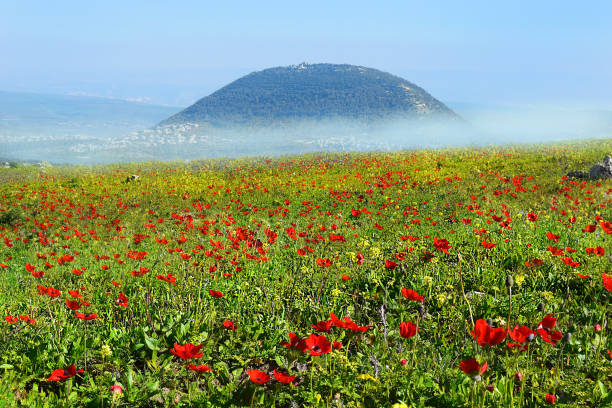
Spring blooming of poppies in Galilee near the Nazareth, against the background biblical Mount Tabor, Israel; photo from iStockphoto.com.
Enlighten our minds
and our hearts,
Jesus, like Peter
to realize the deeper truths
of your transfiguration
and of our own transfiguration
that begin always in a prayer life,
an intimate relationship with you
that gets clearer
when we are in darkness,
when with you at the Cross;
let us take seriously
every Mount Tabor experience
proclaiming it as
"altogether reliable"
like Peter because
we experienced you,
we heard you
and was with you;
guide and strengthen us,
Jesus
when we are in darkness
for that is when you transfigure us
into yourself,
when you speak to us of our
own "departure";
most of all,
keep us "attentive" to you
in those dark moments
to be like a
"lamp shining in a dark place"
(2 Peter 1:19).
Amen.

Fr. Nicanor F. Lalog II
Our Lady of Fatima University
Valenzuela City
(lordmychef@gmail.com)
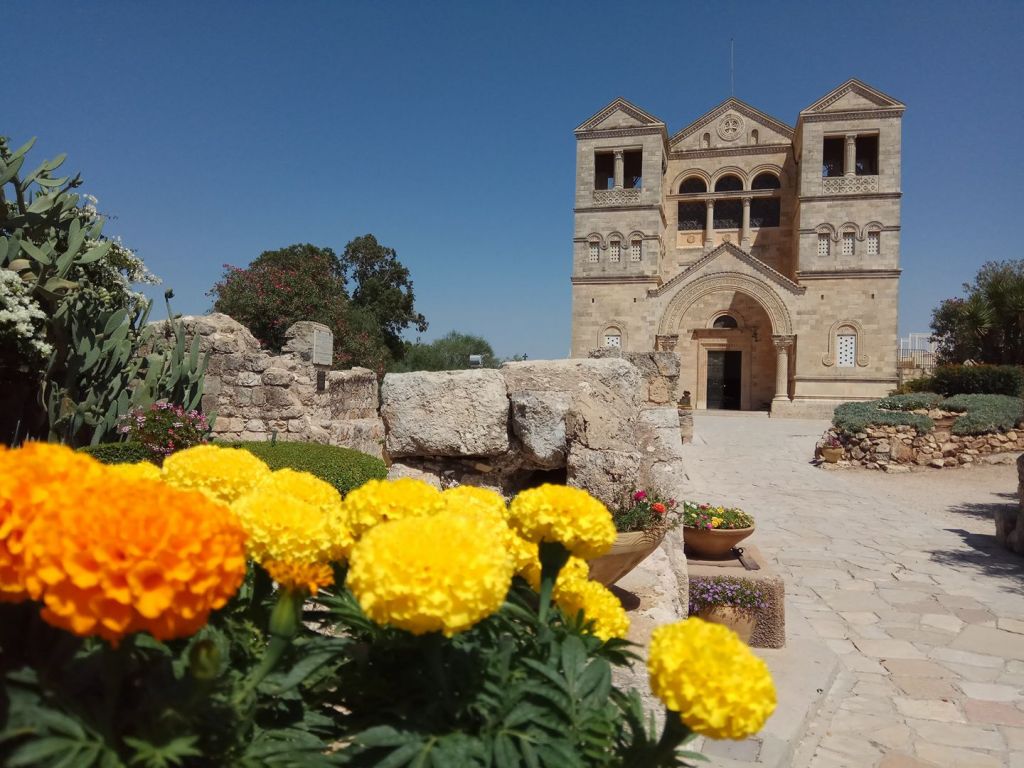
Church of the Transfiguration, Mount Tabor, Holy Land; from custodia.org.

Transfiguration is more of ears than lips to lead to our hearts

The Lord Is My Chef Daily Recipe for the Soul by Fr. Nicanor F. Lalog II
Tuesday, Feast of the Transfiguration of the Lord, 06 August 2024
Daniel 7:9-10, 13-14 ><}}}}*> 2 Peter 1:16-19 ><}}}}*> Mark 9:2-10
Photo from commons.wikimedia.org of mosaic inside the Basilica of the Transfiguration on Mt. Tabor, Israel.
Thank you very much, Lord Jesus,
"in taking us always with You,
apart from others by ourselves
like Peter, James, and his brother John
to a high mountain” (cf. Mark 9:2);
many times You set us apart from others
amid many darkness like that night
on Mount Tabor
just to be with You,
to experience You;
how ironic in this age of
so much light everywhere
with a world running 24/7,
the more we are plunged
in darkness
that we feel lost and empty.
Continue to invite us
to detach from so much
worldly attachments
that are so irresistible
due to social media
and the glamor that come with them.

And he was transfigured before them, and his clothes became dazzling white, such as no fuller on earth could bleach them… Then a cloud came, casting a shadow over them; then from the cloud came a voice, “This is my beloved Son. Listen to him” (Mark 9:2-3, 7).

Like Peter, James, and John
we also wonder at the meaning
of your Passion and Death when You
are the Christ?
Why all the sufferings happening
in us and among us with all
the confusions and divisions going on?
Like Peter during the Transfiguration,
we do not know what we are saying to you, Lord;
whether we are filled with joy or burdened
with sorrow, we speak without thinking much
even if you know what is in our hearts.
Open our hearts, dear Jesus,
to always listen to You by remaining with You
on the path to Your Cross;
let us listen more than talk
or click more without much reflections;
two ears form the image of heart,
never the mouth nor the lips.
Let us heed Peter in his words today:

Moreover, we possess the prophetic message that is altogether reliable. You will do well to be attentive to it, as to lamp shining in a dark place, until day dawns and the morning star rises in your hearts (2 Peter 1:19).

Bring us back to your path of faith, Jesus;
amidst all these noise and divisions
of relativism and wokism,
open our hearts by listening intently
to your voice when all is dark
and even dead or as it happens these days,
blindingly so bright with artificial lights
because for as long as we return to You,
sin and failures become means for us
to be changed and transformed -
or transfigured
when we rise in your Resurrection.
Amen.
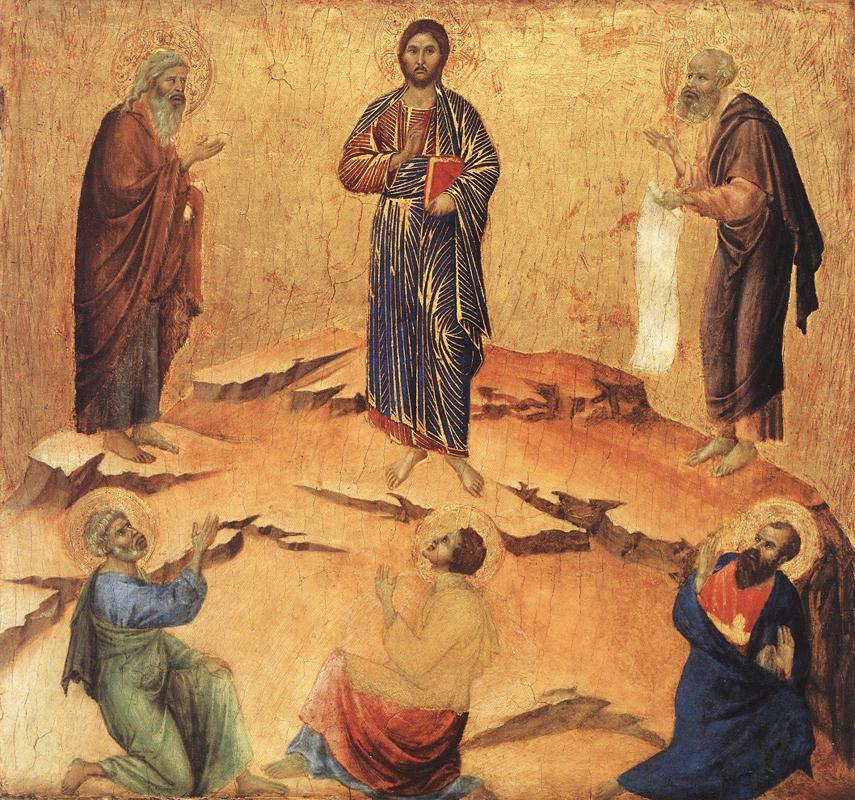
A 1311 painting of the Transfiguration by Italian artist Duccio di Buoninsegna from commons.wikimedia.org.

Troubles on the road to Easter

40 Shades of Lent by Fr. Nicanor F. Lalog II
Sunday Recipe for the Soul, Lent II-B, 25 February 2024
Genesis 22:1-2, 9, 10-13, 15-18 ><}}}}*> Romans 8:31-34 ><}}}}*> Mark 9:2-10
Photo by Ms. Analyn Dela Torre, 12 February 2024 in Bgy. Caypombo, Santa Maria, Bulacan.

While praying our gospel this Second Sunday in Lent, the song Yesterday by the Beatles kept playing at the back of my mind, especially the first two stanzas that say:

Yesterday all my troubles seemed so far away.
Now it looks as though they're here to stay.
Oh, I believe in yesterday.

Suddenly, I'm not half the man I used to be.
There's a shadow hanging over me.
Oh, yesterday came suddenly.

Written by Paul McCartney and recorded by the Beatles in 1965, Yesterday is a sad love song about break up that greatly changed the lost lover who was “Suddenly, I’m not half the man I used to be.”

Beautiful music, beautiful lyrics on this beautiful Sunday with another beautiful gospel as Mark leads us from the wilderness last week to Mount Tabor with Jesus Christ and his three disciples whose experiences were like the Beatles in Yesterday.

Jesus took Peter, James, and John and led them up a high mountain apart by themselves. And he was transfigured before them, and his clothes became dazzling white, such as no fuller on earth could bleach them.

Mark 9:2-3
Basilica of the Transfiguration on Mt. Tabor, Israel from custodia.org.

See how the three apostles were overjoyed with the sight of Jesus transfigured, conversing with Moses and Elijah with Peter feeling so “high” that he offered to make three tents for them to remain there. It was the same experience of joy in the Beatles’ Yesterday when McCartney had that great feeling of being loved he thought would last forever.

But, both moments of joy were so brief with the transfiguration cut off immediately after Peter had spoken while McCartney felt his troubles came “suddenly”.

Like his account of Christ’s temptation last Sunday, Mark’s version of the transfiguration is so short unlike those by Matthew and Luke; however, Mark never lost attention to important details that showed the solemnity of the scene from start to finish despite a sudden shift in the mood as they went down the mountain.

As they were coming down from the mountain, he charged them not to relate what they had seen to anyone, except when the Son of Man had risen from the dead. So they kept the matter to themselves, questioning what rising from the dead meant.

Mark 9:9-10

For Mark, the transfiguration of Jesus led the disciples to deepen their faith in Jesus amid his growing mystery especially in the light of his oft-repeated Passion, Death and Resurrection, as if telling us of the many troubles ahead on the road to Easter.

Hence, it is no coincidence that like the transfiguration, Mark ended abruptly his gospel account when Mary Magdalene, Mary the mother of James and Salome saw an angel who spoke to them inside the empty tomb of Jesus very early on Easter: Then they went out and fled from the tomb, seized with trembling and bewilderment. They said nothing to anyone, for they were afraid (Mk. 16:8). Both in the transfiguration and in the Resurrection, the disciples were dared to reflect deeply on those events that later enabled them to make a firm response in their faith in Christ.

Mosaic inside the Basilica of the Transfiguration on Mt. Tabor, Israel from commons.wikimedia.org..

The same thing applies to us today. Many troubles lie ahead our lives, inviting us to follow Jesus more closely in prayers and reflections to find the meanings and lessons of life’s light and darkness, joy and sadness, triumph and defeat, even of death that keep on hovering above us, even enveloping us at times. We need to deepen our faith in God who had sent us his Son Jesus never stops doing to be our companion in this journey of life especially when we are passing through mountains and valleys, rivers and seas. In the song Yesterday, McCartney sang of our most common experience of having loved and lost yet taught us so much lessons in life. And music.

One thing was clear with the Apostles – and McCartney too – that even though troubles and problems were always with them along the way, they just lived through it and made the most out of them like the Church, including a classic love song!

How about us today, what is our faith response to the many darkness and light we have gone through in life’s journey?

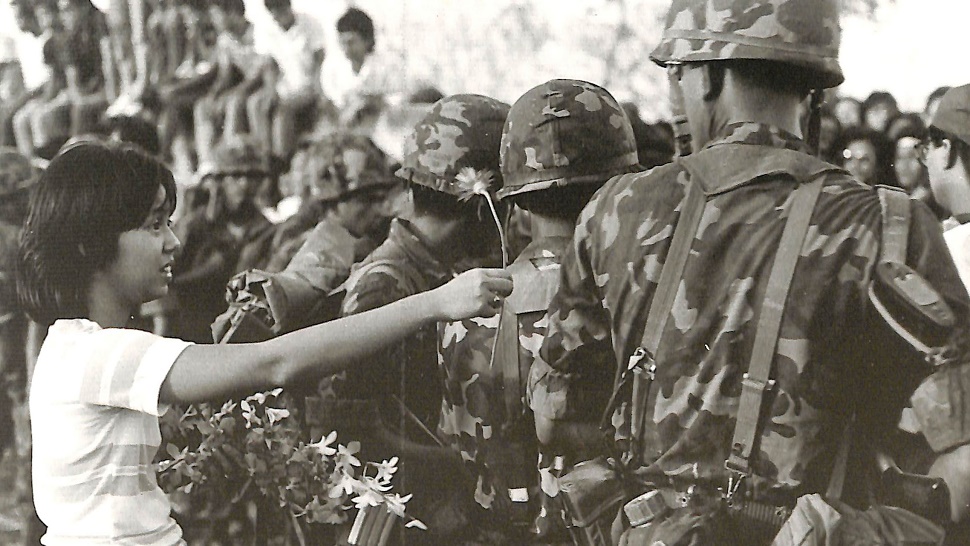
Photo by Roger Buendia/Presidential Museum and Library via esquiremag.ph.

It is always easy to blame others for our many woes in life as we fail to see our own moments of transfiguration. Jesus gifts us with a personal transfiguration event to make us better to be like him but, do we welcome or, run away from them?

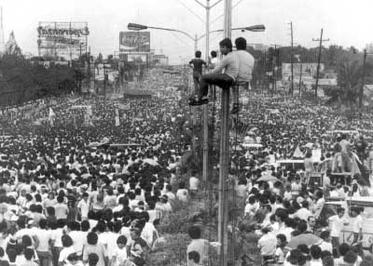
Today is the 38th anniversary of the EDSA People Power Revolution when we must ask ourselves how we have personally responded to that great moment of grace from God, a transfiguration in itself, a pasch like the Lord’s. Have we truly valued EDSA 1986, until now?

How unfortunate that EDSA now stands for everything that is wrong with us, especially our wrong choices and wrong decisions in the past 38 years. EDSA invites us to examine our very selves as a Filipino and as a Christian, a disciple of Christ.

Photo from iStockphoto.com of Mount Tabor in Israel where Jesus is believed to have transfigured.

At his transfiguration, Jesus showed the inseparability of the mystery of the Cross and of his glory on Easter, the closeness of Mount Tabor with Golgotha. The mountain in the bible is always a coming to God, a communion in him.

Every nature lover knows very well the mountain is life itself, difficult to climb, easy to descend. Here now is the beautiful part of the gospel. And song Yesterday. Mountains surely change us but the choice is ours if we want to become better or bitter.

Set on what is believed to be Mount Tabor, the transfiguration was a passage, a foretaste of Christ’s pasch that not only brought him to his glory but transformed too the whole human race and the world itself. In the same manner, McCartney expressed poetically in Yesterday his transformation when “Suddenly, I’m not half the man I used to be.”

From en.wikipedia.org.

This is the good news of this Sunday: every mountain in life is a grace of transfiguration, of being better persons than before. We never come out – or down – the same persons every time we enter through whatever passages or climb any mountain in life. We are always changed, we always emerge different than who we were before after each passages we came through in life.

God gives us the grace and power to choose to be better and stronger, wiser and holier than bitter or resentful with every trials we hurdle in life. This was the experience of Abraham in the first reading when he completely trusted God who asked him to offer his son Isaac on a mountain. It was a very tough test for Abraham who waited in his old age to have a son only to be sacrificed later? But Abraham never doubted God that he still went up the mountain, and as he was about to sacrifice Isaac, an angel stopped him, telling him how God was so delighted with his faith and obedience that he was eventually blessed abundantly after.

Each of us is passing through different trials at this very moment. Many times we feel we suffer more than others, that our tests are tougher than the rest. It is useless and a waste of time to compare ourselves with others. One thing is clear: God does not stop doing something good for us in Jesus, ensuring we get better each day than yesterday. Let the words of St. Paul today assure us that “If God is for us, who can be against us? He who did not spare his own Son but handed him over for us all, how will he not give us everything else along with him? (Rom. 8:31-32)” Have a blessed week ahead, fellow traveler in Christ! Let us pray:

God our loving Father,
thank you for the gift of
this Season of Lent so we may
experience more your Son
Jesus Christ's coming to us
in this journey of life,
our companion amid the
darkness and light
and many troubles
including the little deaths
we experience in life;
give us the faith and trust
of Abraham to offer you those
dearest to us because
if ever you ask something from us,
it is to make more room in ourselves
for your abounding grace
and gifts of transformation
in Christ Jesus with Mary,
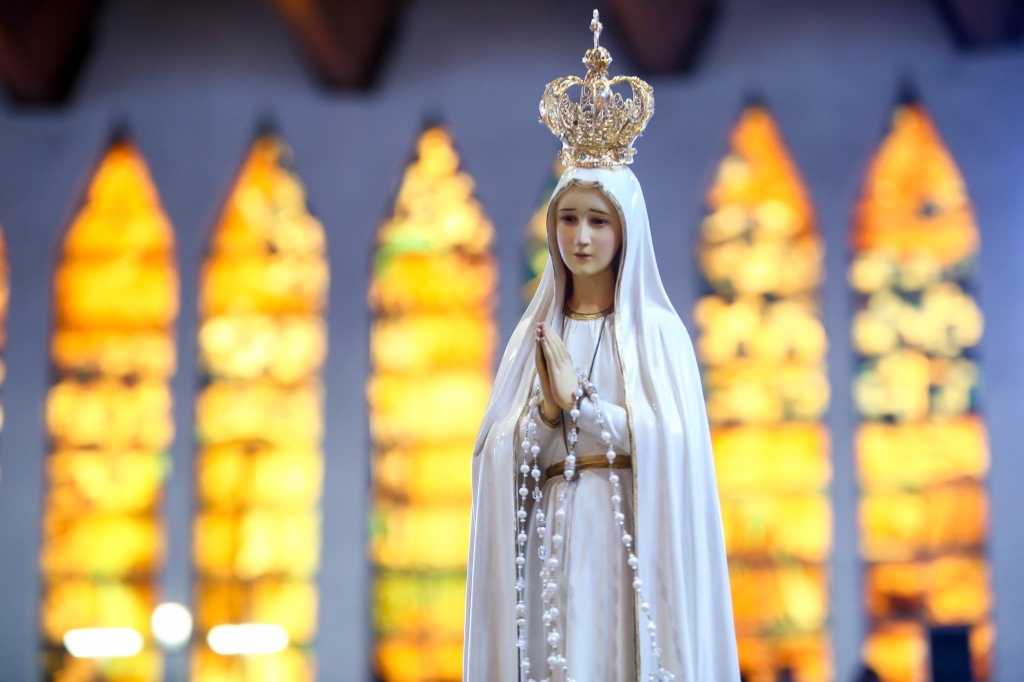
our Lady of Fatima.
Amen.
This Sunday, 25 February 2024, is also the Canonical Coronation of the National Pilgrim Image of Fatima here in Valenzuela City, the very image raised at EDSA in 1986. Photo from cbcp.net.

Face-to-Face with Christ’s glory

The Lord Is My Chef Sunday Recipe for the Soul by Fr. Nicanor F. Lalog II
Feast of the Transfiguration of the Lord, Cycle A, 06 August 2023
Daniel 7:9-10, 13-14 ><}}}*> 2 Peter 1:16-19 ><}}}*> Matthew 17:1-9
Photo of the mosaic inside the Basilica of the Transfiguration on Mt. Tabor, Israel (from commons.wikimedia.org).

Today we take a break from our gospel readings to celebrate the Feast of Transfiguration (August 06) that falls on a Sunday this year. The segue fits perfectly the series of parables we heard these past three Sundays that mentioned judgment day at the end of time.

Recall how Jesus interpreted his parables especially the separation of the weeds and wheat at harvest time as well as keeping the good fish caught in the net, throwing the bad ones that all evoke of judgement day in the end of time. For Matthew, the transfiguration of Jesus is exactly about the end of time when Christ’s glory is revealed at his Resurrection and ultimately in his Second Coming.

Jesus took Peter, James, and his brother, John, and led them up a high mountain by themselves. And he was transfigured before them; his face shone like the sun and his clothes became white as light.

Matthew 17:1-2
Mt. Tabor, believed to be the site of the Transfiguration of Jesus. Photo from iStockphoto.com.

In the Gospel according to Matthew, major events in the life of Jesus Christ mostly happened on a mountain: his temptation (Mt. 4:8), his inaugural teaching, the sermon on the mount (Mt. 5:1) and the sending of his apostles on their mission throughout the world until the end of time (Mt. 28:16).

Here at his transfiguration on top of the “high mountain” of Tabor we find glimpses of Christ’s explanation of the parable of the weeds among the wheat when he said that “the righteous will shine like the sun in the kingdom of their Father” (Mt. 13:43). See how this transfiguration of the elect at the end of time that was shown to Daniel in the first reading is expressed exactly in the same way as that of the face of Jesus on Mount Tabor that had “shone like the sun” as witnessed by the three apostles. Peter strongly attested to it later as we have heard in the second reading.

Last week in the daily readings from Exodus we have heard how the face of Moses also shone like the sun after he had conversed with God on Mount Sinai and every time he would see God at his tent called the dwelling in their journey in the desert. That is the context why Peter volunteered to build three tents for Jesus, Moses and Elijah during the transfiguration. The Jews have a celebration called feast of booths or tents they called sukkoth. The tent is the dwelling place of God in the wilderness that eventually became the temple of Jerusalem. It was the closest thing they have with God and with heaven. At the transfiguration of Jesus, the three apostles were enthralled at the experience and sight they did not want to go down because it was literally heaven, being with God. The transfiguration event itself for them was the fulfillment of their faith and everything in the Old Testament.

They would realize later that to dwell with God means to continue the journey in Christ, with Christ marked with many ascents and descents happening not just in space or physically but more of the interior kind. That is how we are transfigured, always inside. Right in our heart and soul. That was the deeper meaning of Moses entering God’s dwelling in the desert – of him being one in God, with God – that his face would shone after, prompting him to cover it because people were scared.

Photo from custodia.org, Basilica of the Transfiguration on Mt. Tabor, Israel.

Whatever is found on the face is always a reflection of what is in the heart and soul. No amount of cosmetics and beauty procedures can ever bring out that glow and radiance of anyone’s face beaming with joy and fulfillment, peace and contentment.

The face is the reflection of the depths – or shallowness – of one’s heart and soul. There is an English word used to describe this inner dynamics of the face – countenance. Any change in our countenance indicates something is being transformed within us as a result of our communion with God. That is why we describe some people even we do not know them as malalim or deep, or magaling magdala ng problema because of their countenance. In the same manner, we easily notice something rotting inside a person when despite one’s having good features like flawless skin or aquiline nose, beautiful eyes and the like. This is what the young people would call as “uma-aura” when they pose for FB or IG. Aura is the spirit within evoked by one’s face that cannot be manipulated.

The face of Jesus shone like the sun at his transfiguration primarily because deep inside him is his complete and perfect union in the Father. Jesus would always insist on this reality within him, his perfect communion in the Father from which also flows his total obedience which will reach its highest point at his Passion and Death on the Cross, his own Pasch or exodus.

There at Mount Tabor in his transfiguration, we are shown that Christ’s glory cannot be separated from the Cross. His majesty and triumph shall come from his pasch. And so are we his disciples. That is why the voice heard by the apostles said, “This is my beloved Son, with whom I am well-pleased; listen to him”. From now on, Christ would be speaking of his coming Passion, Death and Resurrection. All his lessons after Mount Tabor are about our participation in his paschal mysteries. Do we listen?

The apostles learned and embraced all these lessons in a process slowly with the guidance of the Holy Spirit after Pentecost. That is why Jesus told them to come down from Tabor to continue their journey to Jerusalem to fulfill his mission. Through them we have believed despite our not having seen Jesus that is how he would appear as “Lord” on the mountain that we the faithful are climbing to participate in the ultimate manifestation of his return at the end of time.

And there lies the good news of this Feast of Transfiguration happening in this dry month of August, often described as ghost month too. As we go through the last half of Ordinary Time’s remaining 17 weeks, may we continue to ascend in Christ, with Christ with his Cross in sharing his paschal mysteries in our daily lives. After the euphoria of Easter Season that had closed on Pentecost Sunday, we are reminded anew this sixth of August to never lose sigh of the Cross of Good Friday as our path to glorious transfiguration of Jesus Christ.

To journey with Christ, listening and obeying his voice is something of the inside and not just of space or place. Discipleship demands persistent practice of the Lord’s teachings and examples as we shall hear from the gospel these coming Sundays.

As COVID-19 virus wanes that we resume most of our activities minus the many protocols before while still being cautious and careful, may we face our inner issues in Christ and the Holy Spirit to be transfigured in him. Amen. Have a blessed week ahead. It is a Sunday, celebrate Mass with others in your Parish, pray for those still suffering from the effects of typhoon Egay and Falcon.

Painting of the Transfiguration by Italian artist Duccio di Buoninsegna between 1308 and 1311 from commons.wikimedia.org.

Lent is arising, not being afraid

40 Shades of Lent by Fr. Nicanor F. Lalog II
Second Sunday in Lent-A, 05 March 2023
Genesis 12:1-4 >+< 2 Timothy 1:8-10 >+< Matthew 17:1-9
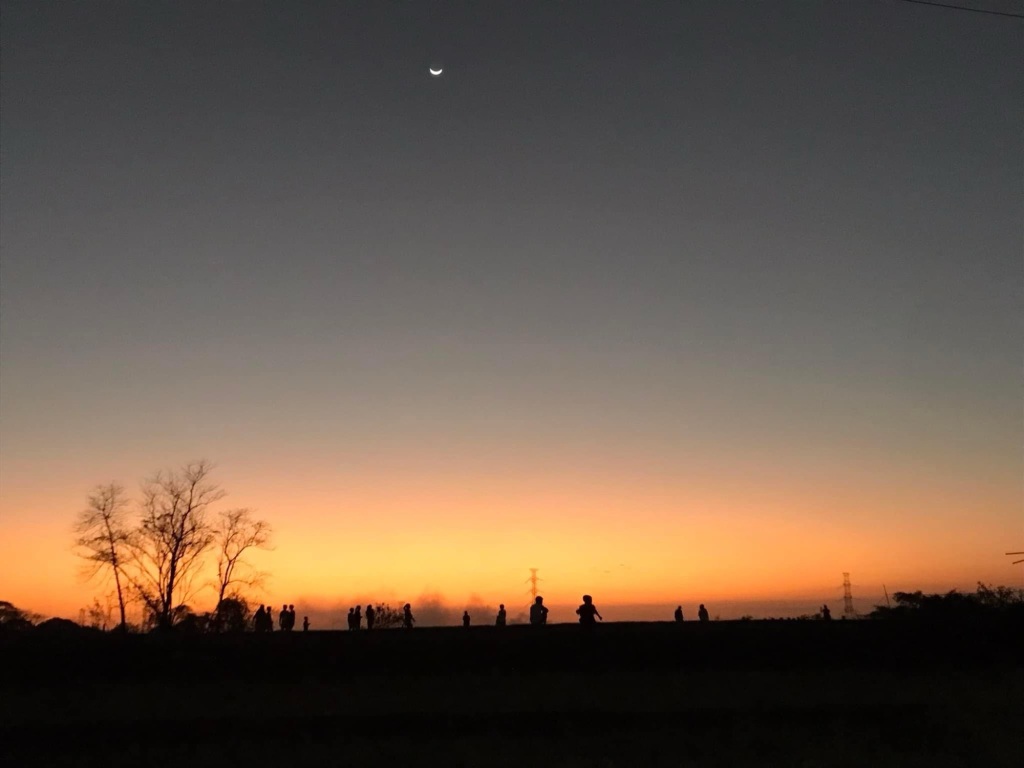
Photo by author, sunrise at Taal Lake, 08 February 2023.

Something so personal has happened with me this past week. It is something that is still unfolding, making me realize so many things in my life and ministry that as I continue to reflect on the death last Sunday of our elderly priest, Msgr. Vicente Manlapig, at the Fatima University Medical Center where I serve as its chaplain.

I was out when told about Msgr. Manlapig’s passing shortly before 3PM. It was the First Sunday of Lent. After saying a prayer for him, it suddenly dawned upon me that he was the second elderly priest I had taken cared of who also died in this blessed Season of Lent. The first was Msgr. Macario Manahan who died 16 March 2014, the Second Sunday of Lent at that time. I was with him when he died that afternoon as he lived very near my former parish assignment.

What a tremendous blessing God has given me to have attended to their spiritual needs preparing them for their deaths, of how life indeed is a daily Lent preparing for Easter when we have to go through many difficult series of temptations and sufferings that lead us to our transfiguration (https://lordmychef.com/2023/02/27/deaths-in-lent/).

It is the very path of life and death of every disciple of Jesus, from temptations in the wilderness to transfiguration on the high mountain. It is something we all have to go through in Christ, with Christ and through Christ.

Jesus took Peter, James and John his brother, and led them up a high mountain by themselves. And he was transfigured before them; his face shone like the sun and his clothes became white as light. And behold, Moses and Elijah appeared to them, conversing with him. Then Peter said to Jesus in reply, “Lord, it is good that we are here…” While he was still speaking, behold, a bright cloud cast a shadow over them, then from the cloud came a voice that said, “This is my beloved Son, with whom I am well pleased; listen to him.” When the disciples heard this, they fell prostrate and were very much afraid. But Jesus came and touched them, saying, “Rise, and do not be afraid.” And when the disciples raised their eyes, they saw no one else but Jesus alone. As they were coming down from the mountain, Jesus charged them, “Do not tell the vision to anyone until the Son of Man has been raised from the dead.”

Matthew 17:1-4, 5-9
Photo from commons.wikimedia.org of mosaic inside the Basilica of the Transfiguration on Mt. Tabor, Israel.

Unlike Luke’s account that was set in the context of a prayer, Matthew’s version of the transfiguration of Jesus Christ illuminates the Lenten pilgrimage of the Church that is the tragedy of the Cross being seen always in the perspective of the Easter radiance. It is the oneness and inseparability of Christ’s divinity and glory with the Cross through which we get to know Jesus correctly.

Recall that the transfiguration happened after Peter’s confession of Jesus as “the Messiah, the Son of the living God” at Caesarea Philippi (Mt.16:16) where Jesus also made the first prediction of his passion, death and resurrection. From that day on, Jesus began instilling into the Twelve his conditions of discipleship, “Whoever wishes to come after me must deny himself, take up his cross and follow me” (Mt. 16:24). It was a very difficult lesson for them to learn and accept that triggered Judas to betray Jesus. The remaining disciples would only fully appreciate it after the Easter event with the help of the Holy Spirit on Pentecost.

That is why the transfiguration was actually some sort of a “teaching aid” for this most difficult lesson of his disciples when Jesus gave Peter, James and John a glimpse of his coming glory after his pasch. See that very clearly, Matthew recorded Christ’s instruction not to tell the “vision” to anyone until Easter; the transfiguration did happen and was seen by everyone there as Matthew used the word vision to describe it.

Like the three disciples, many of us are given with this unique privilege by Jesus to have a glimpse and vision of Easter, of glory when we join him on the Cross with our own sufferings and trials and when we accompany those in severe tests in life like the sick and dying.

Photo from iStockphoto.com of Mount Tabor in Israel where Jesus is believed to have transfigured.

Amid the pain and hurts we go through or see in others, we “see” Jesus, we feel Jesus, we experience Jesus.

Many times like Peter we speak and do things without really thinking well about them because we are overwhelmed by the experience as well as the vision and sight.

And most of the time, the sight and experiences are very frightening when God speaks to us, telling us to listen to Jesus his Son, to simply obey him and trust him.

Here we have a deepening of our reflection last Sunday of the need to fix our eyes on Jesus son that we may not fall into temptations and sin. Many times we do not see everything clearly but if we close our eyes and have faith in Christ, things get clearer until it is him alone do we see with us especially after passing over a turmoil or a test in life. Like the first man and woman, our eyes are misled by so many things that look so good but not good at all. In fact, there are things that look bad that could really be good after all like pains and sufferings in life!

In the second reading, St. Paul tells us through St. Timothy to “bear your share of hardship for the gospel with the strength that comes from God” (2 Tim. 1:8) which matches directly the instruction in the voice heard during the transfiguration, “This is my beloved Son, with whom I am well pleased; listen to him” (Mt. 17:5). After the transfiguration, everything that Jesus would tell his disciples and everyone that include us today is his coming passion, death and resurrection as well as the conditions of discipleship we mentioned earlier. God wants us to listen and follow his Son Jesus Christ to the Cross in order to join him in the glory of Easter.

We are transfigured and transformed into better persons by our pains and sufferings. That is the irony and tragedy of this age: we have everything like gadgets and money and other resources to make lives easier and comfortable but we have become more lost and alienated, empty and no direction in life. There cannot be all glory without sorrow; no Easter Sunday without Good Friday.

Lent is a journey back home to God who wants us all to share in his glory through Jesus Christ’s passion, death and resurrection. It is a blessed season we are reminded to always arise in Christ, to have courage and be not fearful of failures because right now, we are already assured of victory and glory in Jesus. Let us ascend with him the high mountain of sacrifices and hard work, of prayers and patience, mercy and forgiveness to be transfigured and glorified like him. Let us imitate Abraham in the first reading to respond to this call by God with faith and hope, obedience and perseverance. Amen. Have blessed and transformative week ahead.

Photo from custodia.org of Basilica of the Transfiguration on Mt. Tabor, Israel.

Easter is “levelling up” in Christ

The Lord Is My Chef Daily Recipe for the Soul by Fr. Nicanor F. Lalog II
Tuesday in the Second Week of Easter, 26 April 2022
Acts 4:32-37   ><}}}}*> + <*{{{{><   John 3:7-15
Photo by author, Puerto del Dol, Bolinao, Pangasinan, 19 April 2022.
Praise and glory to you,
my Lord and my God, Jesus Christ!
Your Resurrection remains a mystery
that is so beyond descriptions
and reasons because it is of 
another dimension, of another world;
yet, I am so convinced of its truth
and reality because I have experienced
you so many times in simple occasions
in life that deep inside, I burst with
joy and conviction like Thomas
and the disciple you love.
Grant me the grace, dear Jesus,
to level up in my understanding and
looking at things in myself and around
me; help me to level up, to be "born from 
above" as you have told Nicodemus:

Jesus answered and said to him, “You are the teacher of Israel and you do not understand this? Amen, amen, I say to you, we speak of what we know and we testify to what we have seen, but you people do not accept our testimony. If I tell you about earthly things and you do not believe, how will you believe if I tell you about heavenly things?”

John 3:10-12
By your Resurrection, 
you have paved the way for us
to enter into new levels of 
living, of seeing things like
"the community of believers
who were of one heart and mind,
and no one claiming any of his
possessions as his own as they
had everything in common";
most of all, "there was no needy
person among them" as they
cared for one another (Acts 4:32-34).
Continue to transform me,
dear Jesus, deepen my faith
in you by further going down
in humility and simplicity to
be uplifted in you on your Cross.
Amen.

Lent – when “staying” and “going” merge in Christ

40 Shades of Lent by Fr. Nicanor F. Lalog II
Second Sunday in Lent-C, 13 March 2022
Genesisn15:5-2, 17-18 ><}}}*> Philippinas 3:17-4:1 ><}}}*> Luke 9:28-36
Spring blooming of poppies in Galilee near the Nazareth, against the background biblical Mount Tabor, Israel, from iStockphoto.com.

From the desert where Jesus was tempted by the devil last Sunday, Luke now takes us on top of Mount Tabor for the Lord’s Transfiguration.

In the Bible, the mountain is like the desert that signifies a deeper reality and meaning. It is more than a place that shows communion and oneness with God, indicating an inner ascent within us to unite with God especially in this season of Lent.

And like in the temptation of Jesus in the desert last Sunday, it is very interesting how Luke tells us again two important details not mentioned by Mark and Matthew in their versions of the Lord’s Transfiguration:

Jesus took Peter, John, and James and went up the mountain to pray. While he was praying his face changed in appearance and his clothing became dazzling white. And behold, two men were conversing with him, Moses and Elijah, who appeared in glory and spoke of his exodus that he was going to accomplish in Jerusalem.

Luke 9:28-31

First, only Luke tells us the reason why Jesus went up the mountain which is to pray. Here we find that the transfiguration of Jesus is a prayer event. That is why we need to pray always because prayer transfigures us like Jesus Christ.

Second, as Jesus transfigured while praying, only Luke informs us the topic Moses and Elijah discussed with the Lord which is his coming “exodus” or passion, death, and resurrection on Good Friday. When we pray, the more we accept and embrace the Cross that truly transfigures us into becoming like Jesus Christ.

But the problem is, we always refuse and avoid prayer because it is always difficult to pray. Prayer is a discipline. Despite its being a grace from God to be able to pray which he freely gives to each one of us, it is gift that also requires from us total surrender and consistency.

Prayer does not necessarily change things like stop calamities or sickness; prayer primarily changes the person, enabling us to respond properly to problems, trials and sufferings that come to us; hence, prayer in itself is an exodus, a pasch that leads us to transfiguration.

Usually, when we pray we feel nothing is happening, that it is a “waste” of time, of being “idle” in one place that could have been used to other productive activities like fixing one’s problems. But it is in prayer when we first experience how “staying” and “going” merge to become one in Jesus Christ.

This we find in the only detail that Luke shared with Matthew and Mark when Peter woke up and saw Jesus transfigured, conversing with Moses and Elijah.

As they were about to part from him, Peter said to Jesus, “Master, it is good that we are here; let us make three tents, one for you, one for Moses, and one for Elijah.” But he did not know what he was saying.

Luke 9:33
Photo from commons.wikimedia.org, mosaic inside the Basilica of the Transfiguration on Mt. Tabor, Israel.

The Transfiguration, a preview of Christ’s glory via his pasch

Very often in life, we want every beautiful and good experience we have to be preserved, wishing they would never end, like Peter asking Jesus if they could just stay on top of the mountain to keep their “cloud nine” experience.

On the other hand, we are quick to beg Jesus to end soonest every pain and suffering, trials and difficulties we are going through in life that if possible, have them erased or deleted from our memories too!

For us, “staying” and “going” are opposites but Jesus is telling us in his transfiguration that these two come together.

In his transfiguration, Jesus is telling us that discipleship is both “staying” and “going” in him. It is only in Christ that we can “keep” the good time of being one with him while we “passover” from life’s many darkness, trials and sufferings by remaining one with him.

After assuring us last Sunday that we can overcome life’s many temptations through him, Jesus tells us today that our transfiguration and glory can only come through the Cross like him. Before Easter comes, there is Good Friday first.

At his transfiguration, Jesus showed us that his divinity belongs with the Cross and cannot be separated because that is his identity as the Suffering Messiah whose glory and pasch are always together. Hence, his transfiguration was the “preview” to his coming glory whereby he remained one in the Father in prayer expressed perfectly in his exodus on Good Friday which Moses and Elijah discussed with him on Mount Tabor.

Recall that his transfiguration occurred after he was recognized by Peter as the Christ while they were at Caesarea Philippi where Jesus also bared for the first time to the Twelve his coming passion, death and resurrection. It was also at that time when Jesus laid to the Twelve the very foundations of discipleship in him which is to forget one’s self, take up one’s cross daily, and follow him.

From Caesarea in Philippi, Jesus and the Twelve made a U-turn to go back to Jerusalem with a stop-over at Mount Tabor for his transfiguration where he reiterated his teachings about himself and his mission. See that during the transfiguration as Peter, James, and John watched in awe, they were frightened when a voice was heard from the cloud that declared “this is my chosen one; listen to him” (v.35).

And what do we hear from Jesus after his transfiguration? His two other predictions of his coming passion, death and resurrection plus his repeated calls to everyone to deny one’s self, to take up one’s cross daily and to come follow him!

It is interesting to note that while the fourth gospel does not have this story of the transfiguration, John rightly refers to the Crucifixion as the “exaltation” of Jesus Christ – his going down, his suffering and dying on the Cross is actually his rising to glory!

The same thing is true to us disciples of Jesus.

Photo from custodia.org, Basilica of the Transfiguration on Mt. Tabor, Israel.

Staying and going in Christ, with Christ

The grace of this second Sunday in Lent when we hear every year the story of Christ’s transfiguration is his assurance of his love for us by going through his exodus which is his self-offering on the Cross.

The question is not whether we should stay or go but are we willing to both stay and go in Jesus, with Jesus? Discipleship is remaining in Jesus, going with Jesus up to the Cross!

According to Luke, Peter, James, and John did not tell to anyone what they saw and heard on Mount Tabor. Like Mary, they kept everything in their hearts as they remained with Jesus, going with him in all his journeys especially at the Garden of Gethsemane before he was arrested, listening to his words and teachings, witnessing and experiencing his many healings and exorcisms including his passion and death from afar except for John.

They never fully understood everything they saw and heard from Jesus until the coming of the Holy Spirit on Pentecost day but, their “staying” and “going” with him transfigured them without realizing how the Lord was already transforming them inside.

The same thing happens to us when we “stay” and “remain” in Jesus through prayers and reflections of the Sacred Scriptures, through the Sacraments especially the Holy Eucharist every Sunday, through the guidance of other faithful disciples like our family and friends who witness Christ to us with their living examples. Akala natin wala namang nangyayari pero mayroon palagi dahil kasama natin ang Panginoon!

As we stay in the glorious presence of Jesus in prayers and penance, the more we go forward in our dying to self and rising to life in our loving service to everyone, in our kindness, in our patience and understanding, and in our mercy and forgiveness. When we offer ourselves wholly to Jesus, he does everything like what God did to the animals offered by Abraham in the first reading. Notice how Abraham on that night fell into a trance as if he could not believe what was happening while in the presence of the Lord. Palagi naman ganoon sa harap ng Diyos – nakakapangilabot, nakakatakot kasi totoong-totoo!

Lent is not just a preparation for Easter but also a journey for us all to purify and renew and rekindle our faith in Christ’s resurrection by remaining in him, ascending with him through mountains of sacrifices, and being tested in the desert of temptations.

These 40 days of Lent involve many stopovers where we are invited to examine our hearts, our inner selves to see who is inside us, of who are we dwelling with, of who we are going with. Let us heed Paul’s call in the second reading to “stand firm in the Lord” (Phil. 4:1) because our “citizenship is in heaven and Jesus will change our lowly body to conform with his glorified body” (Phil. 3:20, 21).

Let me end this reflection with a quote I got and memorized as a child waiting in our former family dentist, Dr. Eddie Calalec of Meycauayan, Bulacan:

Time is fast for those who rush;
Time is slow for those who waith;
Time is not for those who Love.

Have a blessed week and please say a prayer for me on Wednesday (March 16) when I go through a surgery. Thank you and God bless you!

COVID-19, our transfiguration

Quiet Storm by Fr. Nicanor F. Lalog II, 06 August 2021
Homily for Baccalaureate Mass, Our Lady of Fatima University
Daniel 7:9-10, 13-14  ><}}}'>  2 Peter 1:16-19  ><}}}'>  Mark 9:2-10

I know. Just like everybody, I have that surreal feeling this could not be happening again: another lockdown with a strong probability of being extended that will definitely cement our position as world record holder in having the most and longest lockdown in this pandemic.

And of all the dates for the start of this new lockdown, it begins right on this day of our Baccalaureate Mass, right on this week of our Graduation rites, and still, so close to our school opening!

Talaga naman… talagang-talaga!

But, don’t be sad.

If we examine the situation leading to the Transfiguration of Jesus Christ on Mount Tabor witnessed by his selected apostles Peter, James and John, you will discover that the Lord is also leading us to another transfiguration.

This pandemic is definitely not from God. Nothing bad can come from God. And whenever something bad happens to us, especially for those who strive to become good people, God would always ensure that any dismal situation would turn out to work in our favor like your graduating this year.

Prelude to the Transfiguration

See, my dear graduates, the apostles were feeling very sad too before Jesus was transfigured. They have just made a U-turn at the pagan city of Caesarea Philippi to head south to Jerusalem after Jesus asked them what do the people say about him, his identity. Their answers were varied and the people clearly did not know who Jesus really is.

Then, Jesus turned to the Twelve and asked them, “But who do you say that I am?” Peter said to him in reply, “You are the Messiah.” Then he warned them not to tell anyone about him” (Mk.8:28-30).

Immediately after admitting to them that indeed he is the Messiah or Christ that means the Anointed One of God, Jesus told them for the first time about his coming Passion, Death and Resurrection. That is in fact the reason they were going to Jerusalem – in order for him to suffer and die and rise again on the third day.

The apostles were disturbed. They could not understand how could Jesus Christ, the Son of God, would be rejected by their leaders and would suffer greatly and be killed but rise again on the third day. It was too much for them.

Like this pandemic.

How could this be happening to us if God is love, if God is merciful? Why all these pains and sufferings?

Where is Jesus Christ now that we need him most?

A 1311 painting of the Transfiguration by Italian artist Duccio di Buoninsegna from commons.wikimedia.org.

Our transfiguration in time of pandemic

Congratulations, dear graduates! You hold that great distinction of graduating in time of the pandemic. Do not be ashamed nor listen to what others are saying about your going through online classes, of not having much exposures like on-hand training.

On the contrary, be proud because you are so blessed and privileged by the Lord to go through all these difficulties and still finish your courses. You are like the three apostles – Peter, James, and John – Jesus had selected to join him up a very high mountain to witness his transfiguration and be transfigured themselves too in the process.

That is your main distinction, graduates of 2021: you are privileged. Many years from now you will realize that and be thankful to God, to your parents, to your professors, and even to COVID-19 pandemic in letting you go through this process of transformation and transfiguration.

You were privileged to experience and witness so many unique and new opportunities in learning and in life in general that were never known before. You were in fact shown like the apostles with Jesus on that mountain with a glimpse of the future glory to come.

Jesus took Peter, James, and John and led them up a high mountain apart by themselves. And he was transfigured before them, and his clothes became dazzling white, such as no fuller on earth could bleach them. Then Elijah appeared to them along with Moses, and they were conversing with Jesus.

Mark 9:2-4

In the most concrete way, Jesus tells you today in the same manner he had shown the three apostles that the surest way to any glory is is the path of the Cross, of being one with Jesus Christ in life and in prayers. That is the beautiful imagery of going up a high mountain. In the bible, the mountain is the presence of God; ascending a mountain is being one with God in prayer.

Study hard, work harder, pray hardest, my dear graduates and students of Our Lady of Fatima University.

Transfiguration in Christ means learning the importance of what is basic and necessary, of not basic and unnecessary.


In this one and a half years of the pandemic, 
we have all learned the most essential in life 
are not our gadgets nor grudges 
but our family and friends, God and life itself.

In this one and a half years of the pandemic, we have all learned the most essential in life are not our gadgets nor grudges but our family and friends, God and life itself.

The pandemic is a transfiguration moment most especially to you graduates and students because now more than ever, we learn the essence of education, of educare from the Latin “e ducere” that literally means to lead out of darkness and ignorance which is as we say in Our Lady of Fatima University, “to rise to the top” by “improving man as man”.

That is “pagpapakatao”. It is in our being human and humane we become true to our ideals of Veritas et Misericordia, Truth and Mercy.

Therefore, fall in love, stay in love with humanity, dear graduates and students.

Of what use are our degrees, our years of studies if we do not serve and care for every person, if in the process of our profession we kill people, destroy lives instead of inspiring them, transforming them and the society?

What matters most in life is not what we have achieved nor done but what have we become.

Have we become better persons?

See the clothes of Jesus dazzling white, an expression of his very person that is pure and clean. In Matthew and Luke, they both mentioned the face of Jesus shining to indicate his holiness.

To love God is to love humanity.

And that can only be through listening.

Then a cloud came, casting aa shadow over them; then from the cloud came a voice, “This is my beloved Son. Listen to him.” Suddenly, looking around, they no longer saw anyone but Jesus alone with them.

Mark 9:7-8

After admitting to his apostles that he is indeed the Christ at Caesarea Philippi, God the Father now himself affirmed on Mount Tabor before Peter, James and John that Jesus is his beloved Son to settle once and for all the question of his identity.

The only question remaining is what kind of a Messiah is Jesus?

At his Transfiguration, the answer was laid before us: Jesus is the suffering Messiah of God, the one who had come not to remove but be one with us in our pains and sufferings to be one with him in his Resurrection.

After this event, everything that Jesus would be teaching is all about being good, of being loving by forgetting one’s self, carrying one’s cross and following him every day.

Doing our share in the vaccination program with our volunteers. Photo from FB/OLFU.

We have learned in this pandemic that life is a daily dying to one’s self, of forgetting our selves, letting go of our self-centeredness and selfishness to allow the Holy Spirit to work in us and through us.

We cannot know everything, we cannot do everything.

But Jesus knows everything and he needs us to cooperate with him in order to effect the changes and transformations in us and in the world.

That is why we have to listen to him always. In school and at home, you must have been so tired of listening but as you go into the world to practice your profession, you will be doing a lot of listening to be successful.

Listening is not just hearing but acting on what you have listened to.

It is in listening we are transfigured like Peter, James, and John who after the event continued to ask among themselves, wondering what was “rising from the dead” meant. It would only be after Easter and the Pentecost when everything would be clearer to them.

That is the beauty of this story of the transfiguration of the Lord: the three apostles were also transfigured in a process after that as they went down the high mountain, discussing the experience and eventually living it out for the rest of their lives.

Peter as the leader of the Twelve would treasure this experience so much and most likely must have learned a lot from it too that he keeps on telling the story to everyone until his martyrdom.

Moreover, we possess the prophetic message that is altogether reliable. You will do well to be attentive to it, as to a lamp shining in a dark place, until day dawns and the morning star rises in your hearts.

2 Peter 1:19

Treasure this trying time of the pandemic, my dear graduates of 2021 of the Our Lady of Fatima University.

Remember and be attentive to the voices of God and of one another not only in this time of COVID-19 but throughout your career so that someday, a new day dawns and the morning star of love and joy rises in your hearts. Amen.

Transfiguration in time of corona

The Lord Is My Chef Breakfast Recipe for the Soul by Fr. Nicanor F. Lalog II
Friday, Feast of the Transfiguration of the Lord, 06 August 2021
Daniel 7:9-10, 13-14  ><}}}'>  2 Peter 1:16-19  ><}}}'>  Mark 9:2-10
A 1311 painting of the Transfiguration by Italian artist Duccio di Buoninsegna from commons.wikimedia.org.
God our loving Father,
as we celebrate today the Feast
of your Son Jesus Christ's Transfiguration,
we come to you amid the same darkness
that enveloped them that night atop Mount Tabor
as we enter another series of lockdown
in this COVID-19 pandemic that has shaken
faith in you among many of us.
Like the apostles before his Transfiguration,
we too are wondering the meaning of Christ's  
Passion and Death when he is your Son, the Messiah.
"How could he suffer and die?", they must have wondered.
In the same manner, we too wonder, could not stop
the questions coming from deep within us why are you
allowing these sufferings and trials, Lord?
Have you been angry with us, Lord, that these happen?
Jesus took Peter, James,
and John and led them up a high
mountain apart by themselves.
And he was transfigured before them,
and his clothes became dazzling white,
such as no fuller on earth could bleach
them... Then a cloud came, casting
a shadow over them; then from the
cloud came a voice, "This is my beloved
Son.  Listen to him." (Mark 9:2-3, 7)
Like Peter during the Transfiguration,
we do not know what we are saying to you, Lord;
whether we are filled with joy or burdened
with sorrow, we speak without thinking much
even if you know what is in our hearts.
Open our hearts, dear God, to always
listen to your Son by remaining with him
in his journey on the path to his Cross.
Moreover, we possess
the prophetic message that is
altogether reliable.  You will do well
to be attentive to it, as to a lamp
 shining in a dark place, until day dawns
and the morning star rises
in your hearts. (2 Peter 1:19) 
Bring us back to the path of faith in you, Father;
despite our dismal progress or lack of faith this year due to 
the many trials and difficulties by this pandemic, 
open our hearts to let us go back to you in Jesus, 
listening to him intently when all is dark and even dead 
because for as long as we return to you, sin and failures
become means for us to be changed and transformed -
transfigured when we rise in Jesus Christ's Resurrection.
Amen.

The ups and downs from Lent to Easter

40 Shades of Lent by Fr. Nicanor F. Lalog II
Second Sunday of Lent in Cycle B, 28 February 2021
Genesis 22:1-2, 9, 10-13, 15-18  +  Romans 8:31-34  +  Mark 9:2-10
Photo by author, the Sinai Mountain Range in Egypt, May 2019.

As we have been saying, life is a daily Lent: from the desert of our lives last Sunday, today we ascend a mountain with Jesus to be with God and be transformed, transfigured in him. Our efforts to become holy and better persons in itself is like going up a mountain symbolizing God as expressed in many instances in the Bible.

This is the reason that every year following the temptation of Jesus in the desert, the Second Sunday of Lent tells us the story of the transfiguration of Jesus at Mount Tabor to stress anew this lenten character of coming and meeting God in our selves and in our daily lives through many ups and downs in life like in climbing a mountain.

Our readings this Sunday give us some tips on how ascend the mountain of God with Jesus so we may be transformed and transfigured in him.


First important step is to leave everything behind, to travel light. The key to approach a mountain is to bring nothing except one’s self and other essentials only like faith in God. There are many detours with no permanent path going up the mountain like what Abraham realized when God asked him to offer his son Isaac.

Photo by author, Sonnen Berg Mountain View, Davao City, 2018.

Feel the drama of the scene when Isaac sensed something unusual while Abraham remained confident in God…

As the two walked on together, Isaac spoke to his father Abraham: “Father!” he said. “Yes, son,” he replied. Isaac continued, “Here are the fire and the wood, but where is the sheep for the holocaust?” “Son,” Abraham answered, “God himself will provide the sheep for the holocaust.” Then the two continued going forward.

When they came to the place of which God had told him, Abraham built an altar there and arranged the wood on it. Then he reached out and took his knife to slaughter his son. But the Lord’s messenger called to him from heaven, “Abraham, Abraham!” “Here I am!” he answered. “Do not lay your hand on the boy,” said the messenger. “I know now how devoted you are to God, since you did not withhold from me your own beloved son.” As Abraham looked about, he spied a ram caught by its horns in the thicket. So he went and took the ram and offered it up as a holocaust in place of his son.

Genesis 22:7-13

In the gospel, we find a similar situation after Peter had confessed at Caesarea Philippi that Jesus is the Messiah, thus expressing the faith of the Twelve in Christ while making a U-turn back to Jerusalem. It was at that time when Jesus made his first prediction of his coming Passion and Death that confused Peter.

As they travelled to Jerusalem, Jesus preached to the crowds and the Twelve the three conditions of discipleship: deny one’s self, take up his cross, and follow him. It was something Jesus would be teaching repeatedly until they reached Jerusalem to underscore the importance of that instruction from the voice during his transfiguration, “Listen to him”.

After six days Jesus took Peter, James, and John and led them up a high mountain apart by themselves. And he was transfigured before them, and his clothes became dazzling white, such as no fuller on earth could bleach them. Then a cloud came, casting shadow over them; then from the cloud came a voice, “This is my beloved Son. Listen to him.”

Mark 9:2-3, 7
Photo by Atty. Grace Polaris Rivas-Beron atop Mt. Sinai in Egypt, May 2019.

Observe my dear reader how Jesus separated the three disciples from the rest so as to be by themselves like Abraham in the first reading in order to be empty and obedient to God.

An obedient person is first of all a good listener, one who is willing to forget one’s self, to be empty and open to instructions from those above him. From the two Latin words “ob audire” that mean to listen attentively, obedient men and women from Abraham to Jesus Christ to Peter and all the saints were first of all attentive listeners to the leading of the Holy Spirit.

One cannot follow unless he/she first listens. That is why it is in obedience when our faith in God is tested, where we grow deeper in our faith in him too! Every act of obedience is an ascend to God our mountain because to obey the Lord is to trust him especially at times when God seems to contradict himself.

Imagine how painful it must have been for Abraham after waiting for so many years for the birth of his own son by his wife Sarah when God suddenly asked him to offer Isaac as a sacrifice!? Or with Peter, James, and John. After learning that Jesus is finally the awaited Messiah during their conversations at Caesarea Philippi, suddenly the Lord gave his first prediction of his passion and death, to be repeated after his transfiguration.

So many times God can be too much for us to understand that we just have to believe and trust him, to ride on or make sakay. Most of the time we find God so “malabo” or “bomalabs” —- so unclear but at the same time very clear of his great plans for us that we feel him deep inside us that we continue to push ourselves higher to him, believing and hoping he is up to something for us. And that is when he surprises us with the bestest things in life!


When we trust God, when we dare to walk the darkness ascending to the mountain with him with nothing else except our very selves and faith, that is when we are transformed and transfigured in Christ. That is when we are opened to new possibilities we have never imagined. That is when we become fruitful and fulfilled.

Photo by Ms. Jo Villafuerte, Atok, Benguet, September 2019.

As any mountaineer would tell, the best sights are seen from above, from the top when our horizons are widened as we journey to the summit, giving us new perspectives and views on everything, especially in our selves and life in general.

Even if we climb with somebody else like Abraham with Isaac or Peter with James and John, God touches us in the most personal and unique way.

See when Abraham was about to strike Isaac, an angel stopped him that he saw a ram caught by its horns in the thicket which he eventually offered as holocaust instead of his son. Peter hardly knew what to say as they were terrified when Jesus transfigured while conversing with Moses and Elijah until suddenly, they no longer saw anyone with them except Jesus.

Like Abraham and Peter and his companions, we have wondered many times what happened after feeling so lost and confused, when we felt “game over” but suddenly everything turns out perfectly well by the grace of God. We’re not only saved like Isaac but we also begin thinking deeper inside us of many things like the three disciples “questioning what rising from the dead meant” (Mk.9:10).

Go back to those moments of hardships and emptiness with nothing to hold on except God, when climbing up to him in faith was the only thing left to take when great things happen unexpectedly and joyously for us! How we wish to remain up there on cloud nine, in ecstasy, hoping those moments would never end, but….


The challenge of life and of Lent especially when seen in the light of our baptismal promises of being holy like God is not to remain on top of the mountain but to bring that mountain experience down into our daily living. It is an ongoing process of trusting, of being faithful to God especially in prayers, in ascending his mountain daily.

In this age of instants when everything has become so efficient and easy, more and more people are finding prayer and God in general as useless waste of time. We have reduced our lives and existence to mere activities for social media like Facebook, Instagram, and Tweeter flooding them with our photos and words empty of meaning. We have stopped living meaningfully as we have ceased probing deeper into life, exploring what’s inside ourselves who can truly lead us to fulfillment, Jesus Christ. How tragic that after quantifying everything in life to save so much precious time in doing so many things, we still lack quality time.

God is greater than our minds and our hearts (1John 3:30) that not everything can be measured in human success and failure. Sometimes, human success is failure with God while human failure can be success in God as we have seen in the experience of Abraham today.

In this time of Lent, we are encouraged to pray and sacrifice, to strive ascending the mountain of God to deepen our faith in him who has given us Jesus his Son to save us, to make us like him, divine and sublime.

Transfiguration is a process, a call to be faithful to God that to reach our glory, we have to go through a lot of pain and sufferings like the scandal of the cross of Jesus Christ. If we are faithful to God especially in our prayers, in our ascent to his mountain of purifications, we realize in the process we are not alone, that we have God by our side as St. Paul assures us in the second reading: “If God is for us, who can be against us?” (Rom.8:31)

This Sunday, let us be confident and trust in God that everything would be right. Amen.

Photo by author, sunset at Marcos Highway, 2019.