Lord My Chef Daily Recipe for the Soul, 25 September 2025
Thursday in Twenty-Fifth Week of Ordinary Time, Year I
Haggai 1:1-8     <*((((><  +  ><))))*>     Luke 9:7-9
God our loving Father,
give us humility and courage
to admit our sins
and faults
for all the mess
we are into today
as a nation:
the wholesale corruption
and looting of government
money that resulted in more
floods,
substandard facilities,
inefficient services
and shameless servants;
painful but true,
these are all because
of our misplaced priorities
in life.
Now thus says the Lord of hosts: Consider your ways! You have sown much, but have brought in little; you have eaten, but have not been satisfied; you have drunk, but have not been exhilarated; have clothed yourselves, but not been warmed; and whoever earned wages earned them for a bag with holes in it (Haggai 1:5-6).
Like the people
at the time of your
Prophet Haggai,
we have been preoccupied
with our selves,
of gaining so much
money and material
things forgetting you,
O God, and things of the
above like decency,
morality,
and spirituality;
for the right price,
many among us
have brought into power
not just corrupt
but inept officials
to run our government;
many among us
have glorified thievery,
of amassing wealth
even in sinful ways
that everything is now
measured in terms of
money and gold;
many among us
have forgotten you,
Lord, to live in your ways
and precepts
following more of the world
that led us to destruction
and emptiness;
let us prioritize you
again, Lord
so that we too
may see how you
see things and
persons unlike Herod
in the gospel;
let us prioritize you,
Lord so that we may
start planting
and building
things you want in life
that delight you
and perfect us
in the process.
Amen.
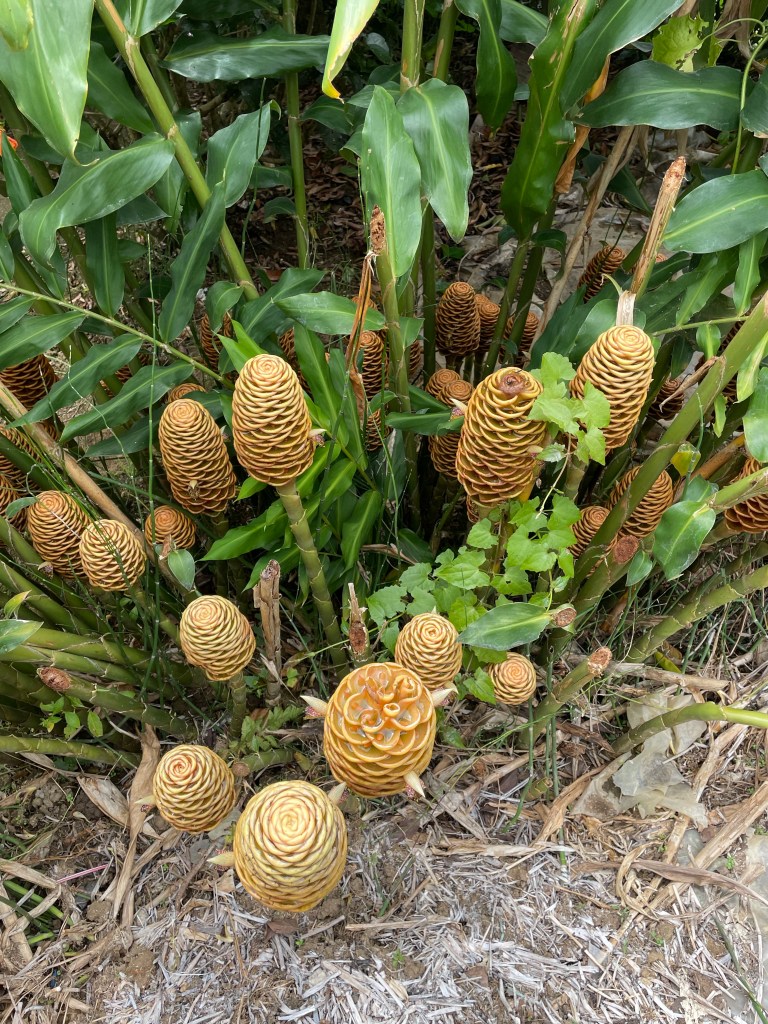
Photo by author, Dangwa Flower Center, Manila, September 2018.
Lord My Chef Daily Recipe for the Soul, 22 July 2025
Tuesday, Feast of St. Mary Magdalene, Sixteenth Week in Ordinary Time
Song of Songs 3:1-4     ><}}}*> + ><}}}*> + ><}}}*>     John 20:1-2, 11-18
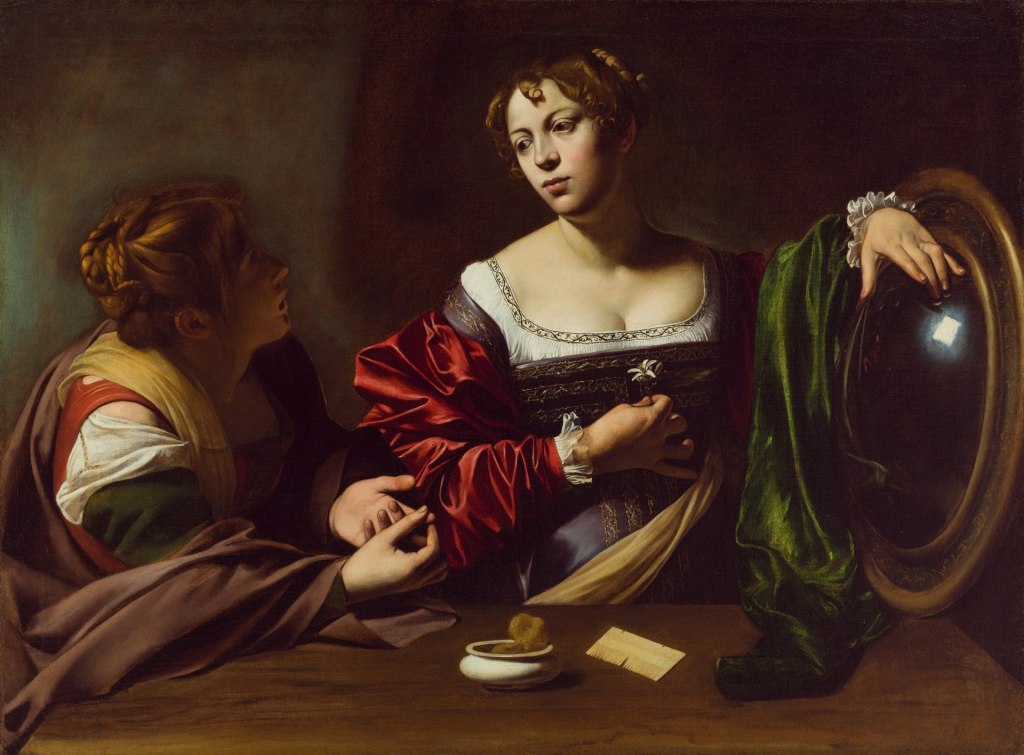
“Martha and Mary Magdalene” painting by Caravaggio (1598). The painting shows Martha of Bethany and Mary Magdalene long considered to have been sisters. Martha is in the act of converting Mary from her life of pleasure to the life of virtue in Christ. Martha, her face shadowed, leans forward, passionately arguing with Mary, who twirls an orange blossom between her fingers as she holds a mirror, symbolising the vanity she is about to give up. The power of the image lies in Mary’s face, caught at the moment when conversion begins (from en.wikipedia.org).
Thank you dear Jesus
in giving us a chance to revisit
your Resurrection with this Feast
of St. Mary Magdalene,
the Apostle to the Apostles;
she whom you love so much
by forgiving her sins and later
called her by name on that
Easter morning reminds us of
your lavish mercy and love
for each of us; how lovely that
in that crucial moment of darkness
as she grieved your death
with your body missing,
she suddenly burst into deep joy
filled with life
upon seeing you!
Mary Magdalene went and announced to the disciples, “I have seen the Lord,” and what he told her (John 20:18).
“The Appearance of Christ to Mary Magdalene” painting by Alexander Ivanov (1834-1836) at the Russian Museum, St. Petersburg, Russia from commons.wikimedia.org.
"I have seen the Lord."
I have seen you,
Jesus when I stop
 clinging to my sinful past,
when I stop doubting
your mercy and forgiveness,
wondering how I could move
 the huge and heavy stone of my
weaknesses and failures,
addictions and vices
that make me mistake
you into somebody else
 like the gardener
 because I am so preoccupied
 with many things in life.

Teach me, Jesus
to stop clinging to you,
"touching" you and having you
according to my own view
and perception not as
 who you really are
 so that I may meet you
 to personally experience you
right here inside my heart
like St. Mary Magdalene
that Easter.
The Bride says: The watchmen came upon me as they made their rounds of the city. Have you seen him whom my heart loves? I have hardly left them when I found him whom my heart loves (Song of Songs 3:1, 3-4).
"I have seen the Lord."
I have seen you,
 Jesus when I love truly
like the Bride in the first reading
when I seek you in persons
not in wealth and power,
 in silence not in the noise
and cacophony of vanity and fame;
let me see you Jesus
by being still,
patiently
waiting
and listening
for your coming
and calling of my name
to proclaim You are risen
to others who believe in You,
also searching You,
waiting for You.
Amen.

Fr. Nicanor F. Lalog II
Our Lady of Fatima University
Valenzuela City
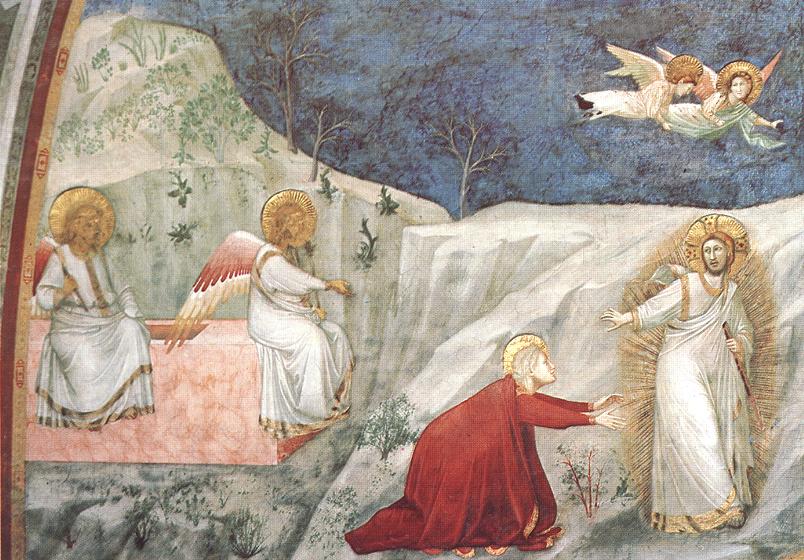
Painting by Giotto of the Risen Lord Jesus Christ appearing to St. Mary Magdalene from commons.wikimedia.org.
Quiet Storm by Fr. Nicanor F. Lalog II, 10 June 2025
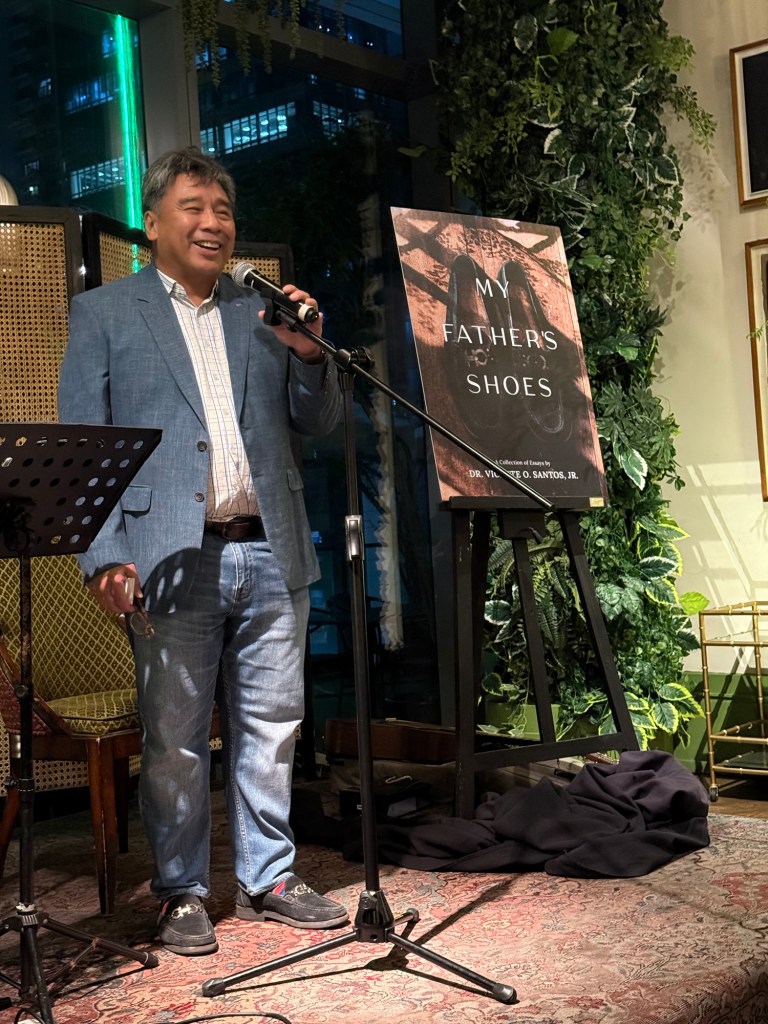
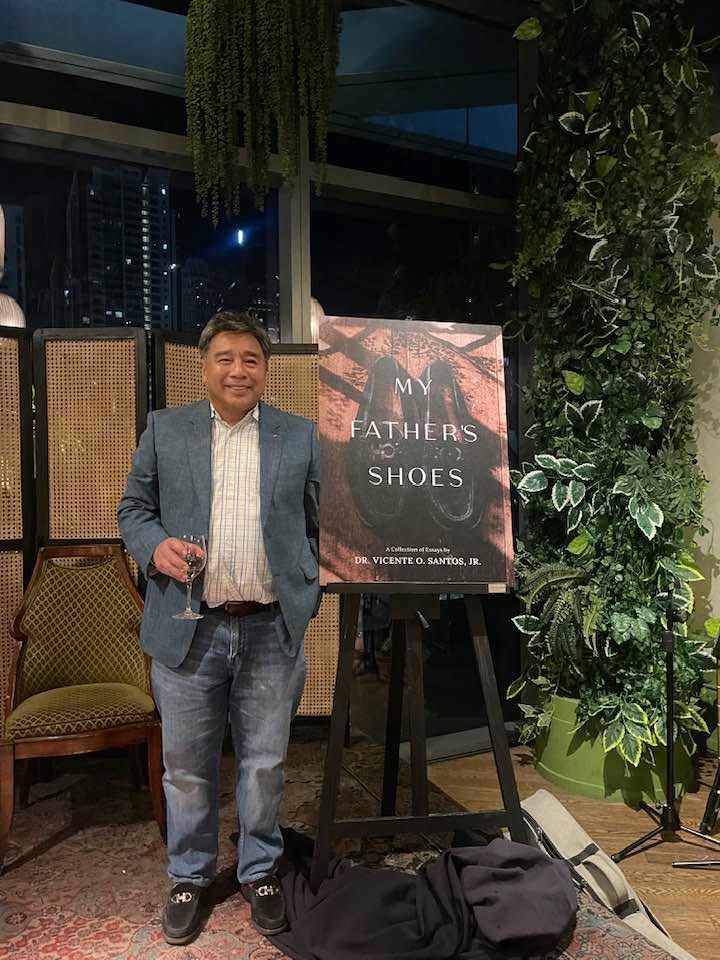
Homily on the advanced birthday celebration and book launching last June 4 of Dr. Vic Santos Jr., President of Fatima University Medical Center in Valenzuela and Antipolo
Photo by author, Manila House, BGC, Taguig, 04 June 2025.
We heard today in the first reading St. Luke’s account of St. Paul’s departure from Miletus to Rome for his trial and eventual martyrdom. We are told how the priests and leaders of the Ephesus community cried as St. Paul bid goodbye. It was a major turning point in the Apostle’s life.
We too are gathered tonight at a major turning point in the life of Dr. Vic as he officially becomes an elder among us, a senior sixty cent. There are no crying as we so filled with joy celebrating his gift of life. Like the Ephesians who were so glad in being a part of the life and mission of St. Paul, we praise and thank God for Dr. Vic’s gift of self especially to us, his family and friends and colleagues.
I’d like to focus your attention to St. Paul’s speech where he discussed how he had used his hands in his ministry, “You know very well that these very hands have served my needs and my companions. In every way I have shown you that by hard work of that sort we must help the weak, and keep in mind the words of the Lord Jesus who himself said, ‘It is more blessed to give than to receive'” (Acts 20:34-35).
What a beautiful imagery of the hardworking hands of St. Paul who was a tent maker by profession who earned money for his own needs so as not to be a burden to the community.
With his caring and loving hands, people accepted Jesus Christ and Christianity.
With his gentle and kind hands the people saw and experienced the love of God, felt more convinced than ever of God’s presence among them.
With his strong hands as an Apostle of Jesus, the people felt the discipline of God.
Photo by author, Manila House, BGC, Taguig, 04 June 2025.
It is the same thing why we are here tonight. So many sights were restored by the gentle hands of Dr. Vic that helped us to better or even see again.
Dr. Vic’s hands toiled not only in the clinic and OR but also in the tennis court and golf course as well as the kitchen that reminded us of God’s loving presence among us, of the Divine grip that everything will be fine so we can enjoy life. The hands of Dr. Vic as an ophthalmologist, as a husband and a dad, a brother and a friend and a colleague tell us we are in good hands. Like the hands of St. Paul, his hands allowed us to be touched by God’s love and mercy, kindness and forgiveness.
But there is something else about the hands of Dr. Vic I would like you to reflect upon. Like St. Paul, Dr. Vic’s hands not only restored sight but most of all allowed us to have vision, of seeing beyond physical or material things.
St. Paul’s hands were so gifted that more than half of the New Testament writings were from him; in fact, he was the first to write about Jesus Christ, way ahead of the gospel writers. By his writings, we are able to have a glimpse about God in Jesus Christ and eternal life.
Photo by Dra. Mary Anne Santos, Manila House, BGC, Taguig, 04 June 2025.
With his gifted hands in writing not just prescriptions but also elegant prose and essays, Dr. Vic opened our eyes to see the deeper realities and truth behind our many common experiences in life. His hands seem to have eyes too that he can weave a beautiful tapestry of the joy of living side by side with its many pains and hurts, even losses and griefs, failures and disappointments. Dr. Vic’s hands are so precise not only in surgery but especially in writing, giving us hope to never give up, to always forge on, and be open to many possibilities in life.
Like St. Paul, Dr. Vic can boldly proclaim of the timeless truth of Christ’s teaching that “it is better to give than receive” because he had experienced God’s abundant blessings through his very hands that were always opened, ready to work and take on new tasks, willing to hold others hands to lead and guide them to healing and new life.
Salamuch po, Dr Vic in sharing with us your blessed hands that taught us to find God we rarely see due to our many blindness in life.
Your hands did not only heal our sight but gave us a vision of God present in us and among us always. We pray like Jesus in the gospel tonight that the Father may consecrate you with his sacred hands in order to bless you with more fulfillment and fruitfulness on your 60th birthday. With Dra. Mary Anne and your sons – Angelo, Francis, and Vince – may God fill your hands with his blessings, holiness and healing. Amen.
Photo by author, Manila House, BGC, Taguig, 04 June 2025.
The Lord Is My Chef Sunday Recipe for the Soul by Fr. Nicanor F. Lalog II
Thirtieth Sunday in Ordinary Time, Cycle B, 27 October 2024
Jeremiah 31:7-9 ><}}}}*> Hebrews 5:1-6 ><}}}}*> Mark 10:46-52
Photo by author, Nagsasa Cove, San Antonio, Zambales, 19 October 2024.
“Seeing” is a word with so many meanings for us. More than its literal sense of having eyesight, “seeing” is used as a metaphor like referring to understanding when we say “I see your point” or poetically as in to see with one’s heart.
Filipino mothers have a very funny, unique expressing about seeing when telling us children to look for something that if we could not find it, every Nanay fumes with a warning saying, “kapag hindi mo nakita iyan, makikita mo sa akin!”
Whatever that means, it shows “seeing” reveals to us a lot about ourselves and others, of life and most especially of God.
Illustration from linkedin.com.
As Jesus was leaving Jericho with his disciples and a sizable crowd, Bartimaeus, a blind man, the son of Timaeus, sat by the roadside begging. On hearing that it was Jesus of Nazareth, he began to cry out and say, “Jesus, son of David, have pity on me”… he kept calling out all the more, “Son of David, have pity on me.” Jesus stopped and said, “Call him”… Jesus said to him in reply, “What do you want me to do for you?” The blind man replied to him, “Master, I want to see.” Jesus told him, “Go your way; your faith has saved you.” Immediately he received his sight and followed him on the way (Mark 10:46-48, 49, 51-52).
See Mark’s gift in storytelling in this second crucial teaching by Jesus on discipleship sandwiched between His third prediction of His Pasch and entrance to Jerusalem.
See the contrast between James and John “wanting” fame and power by seating beside Jesus in glory and Bartimaeus “wanting” to see Jesus: the brothers were rejected after being told “you do not know what you are asking” whereas the beggar’s plea was granted after asking him “what do you want me to do for you?”
Clearly, this is about what we see in Jesus, of how ironic like James and John that we who have eyesight and closer to Jesus do not have the vision of a blind beggar like Bartimaeus asking to see more of Jesus, more of faith, more of life!
The scene has many layers so beautifully assembled together by Mark for us to see beyond our sight in order to have a clearer vision of discipleship and ultimately of God in eternal life.
On hearing that it was Jesus of Nazareth,
he began to cry out and say,
"Jesus, son of David, have pity on me."
And many rebuked him,
telling him to be silent.
But the more he kept calling out all the more,
"Son of David, have pity on me."
Photo by author, Jericho City, the Holy Land, May 2019.
Though blind, Bartimaeus “saw” Jesus, calling Him “Son of David” which is the messianic title of the coming Savior so awaited by the Jewish people. It is a title so unique among them, referred with David in the Old Testament being their greatest king and deliverer. Jeremiah tells us in the first reading today of how “the Lord has delivered his people… gathering the blind and the lame” (Jer. 31:7,8) now fulfilled in Jesus Christ.
How amazing that Bartimaeus without eyesight staying at the sides of the road of Jericho being able to “see” Jesus as his Savior, asking most especially the vision to see eternity like that man who approached Jesus two Sundays ago. The big difference is that Bartimaeus was convinced of his faith in Jesus based on what have heard about Him.
Very crucial here are the cries of Bartimaeus to Jesus as “Son of David”. See how the crowds around him tried to silence him but the more he shouted aloud to Jesus. That is more than persistence in prayer but a conviction in the very person of Jesus as Savior, as Messiah, as God, truly a Brother and a Friend.
Bartimaeus reminds us to go back to Caesarea Philippi where Jesus asked the Twelve and us everyday, “who do you that I am?” Our answer to that question is essential because it is on that conviction and faith in Jesus where our prayers and prayer life itself are essentially hinged on. Now, compare what James and John saw in Jesus last Sunday with their request and with what the blind Bartimaeus saw in asking for his sight.
When we truly know Jesus, then we know what we want from Him. Many times in life, when we feel so blinded, when everything seems so dark we could not see where we are, who our friends are, when all we can do is simply cry like Bartimaeus, whispering Jesus, Jesus… that is when we unconsciously see Him right beside us.
Photo by Dra. Mylene A. Santos, MD, Katmon Nature Sanctuary & Beach Resort, Infanta, Quezon, 2020.
As Jesus was leaving Jericho
with his disciples and a sizable crowd,
Bartimaeus, a blind man, the son of Timaeus,
sat by the roadside begging...
And many rebuked him,
telling him to be silent.
See my dear friends how in this scene those traveling with Jesus looked upon Bartimaeus as an interruption on the journey to Jerusalem. It seemed like a distraction but the truth is, Jesus saw Bartimaeus as the very point itself of His journey!
We have seen this year how Jesus visited even the most unlikely places of pagan territories, of where lepers are even Samaritans to heal and speak to them. Jesus is always passing by in our lives but, are we there to meet Him?
Recall those failures and disasters that punctuated our lives, when we saw them as distractions and interruptions that have delayed and even set aside many of our plans, but, look now how those disasters were actually providential that led us to success.
When we review our lives, we see God truly writing straight with crooked lines with those countless times when He turned our failures into triumphs, sadness into joy, losses into gains. It was during those blinding moments in life when we were actually able to see clearly our selves, our family and friends, and most especially, God in Jesus Christ.
This is what the author of the Letter to the Hebrews is telling us in the second reading, of Jesus the Son of God, our eternal high priest exceedingly better and perfect than any high priest “able to deal patiently with the ignorant and erring, for he himself is beset by weakness” (Heb. 5:2). Jesus is the Son of God who transforms not only water into wine or bread into His Body but most especially us like the blind Bartimaeus into whole persons again. The key is to keep our sights on Him, to see Him more clearly so that we can follow Him closely.
Photo by Dra. Mylene A. Santos, MD, Katmon Nature Sanctuary & Beach Resort, Infanta, Quezon, 2020.
Jesus said to him in reply,
"What do you want me to do for you?"
The blind man replied to him,
"Master, I want to see."
Jesus today is asking us too, “What do you want me to do for you?” What would our request be? What do we want? Jesus wants us to focus our sights to Him alone.
Discipleship is never about us but always Jesus, only Jesus who invites this Sunday to take a sincere look into ourselves like Bartimaeus, without alibis and excuses to root out whatever that keeps us from seeing Him truly like self-centeredness and selfishness or preoccupation with wealth and fame, or pleasures and comfort.
To see Jesus truly like Bartimaeus is to be like a child, to die into one’s self by “throwing aside” whatever we have, “springing up to come to Jesus”. That is when we discover too that the more we see Jesus, the more we realize that Jesus gives us more than what we ask Him because He is actually never far from us especially when we cry out to Him!
To see Jesus truly like Bartimaeus is to leave the sides and walk the main roads with Jesus to Jerusalem, up to His crucifixion. In doing so, we must learn to always stop for others struggling in their blindness to see Jesus too.
Most of all, to see Jesus like Bartimaeus is to keep on asking Him, “Master, I want to see” so that we keep on experiencing a new way of seeing Jesus in life’s many complexities these days that have rendered so many of us blinded by the enticing lures of the world. Amen.And, see yah! Have a new way of seeing life and others this week in Jesus!
Photo by the author, Pundaquit Mountains in San Antonio, Zambales at the back of Nagsasa Cove, 19 October 2024.
It is the final Sunday in Lent as we enter its final week with temperatures soaring into the 30’s as we get into the heat of summer in the country. To soothe us in our Sunday feature, we have chosen Lee Ritenour’s classic smooth jazz Is It You? from his 1981 album Rit.
An American jazz-guitarist, Ritenour is considered as one of the great movers in the jazz scene since the late 1960’s until now, being a part of so many groups and individual musicians in producing great music and tunes that unknown to many of us have were surely delighted and even uplifted.
Is It You? is one of those music by Ritenour with Eric Tagg doing the vocals as well as co-writing it along with Bill Champlin.
So characteristic of Ritenour’s jazz experiments fusing it with rock and pop, Is It You? speaks of a man’s feelings of doubts amid strong convictions of being ready to love a woman he is asking if she too is ready; hence, the question, Is It You?
Someone’s just outside, knocking at my door A stranger, somebody unknown Someone’s in my dreams, can’t get it off my mind, yeah I’m tired of being alone Someone’s trying to find an easy way inside Come on, I’m right here at home, right at home
Is it you? Is it you? Is it you? Is it you, you, you?
Who’s that deep inside me, sneaking around my heart? Are you somebody in love? Show me what you’re doing and tell me who you are Hey, I’m ready for love, for love
Is it you? Is it you? Is it you? Is it you, you, you?
If it’s you, come out in the open You don’t need to hide your love If it’s you, you know I’m hoping ‘Cause it’s way too late to run away Don’t run away from love, my love Is it you?
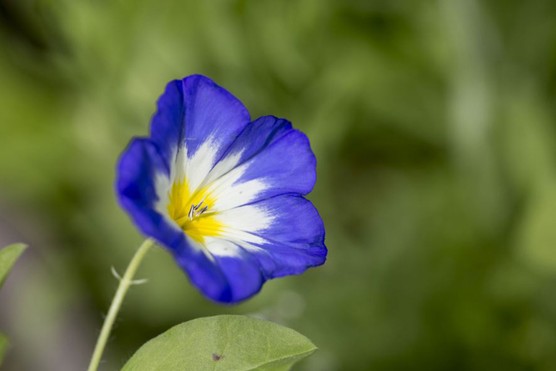
Photo of a convolvulus tricolor from BBC Gardeners World Magazine.
Many times we felt that way too that despite the uncertainties we feel, there is that strong thrust from within to dare step forward and make the move to find out like Ritenour if is it you?
In some ways, it must have been the feeling too of those Greek converts in Jerusalem that Palm Sunday who asked Philip if they could see Jesus. They too had that strong feeling towards Jesus after hearing the many good things about himself, his teachings and his miracles. When they said they wanted to see Jesus, it was more than seeing him literally because the Lord was never in hiding. The Greeks, like us and Ritenour in his song, were seeking something more, something deeper, something about faith (https://lordmychef.com/2024/03/16/lent-is-believing-in-order-to-see-jesus/).
There lies the beauty of life, of following Jesus: while the world tells us that to see is to believe, Jesus tells us that to believe so we would see; the world tells us to enjoy life without inhibitions one’s enjoyment, Jesus tells us that it is in dying that we truly live.
Both happens when we dare to ask, when we dare to step forward and take the plunge, of giving one’s self in love. To ask of seeing Jesus, of seeing somebody special, of asking if is it you is also believing in him or the other person.
Believe. And you shall see that indeed, it is you, Jesus!
40 Shades of Lent by Fr. Nicanor F. Lalog II
Fifth Sunday in Lent-B, 17 March 2024
Jeremiah 31:31-34  +  Hebrews 5:7-9  +  John 12:20-33
From Google.com.
We now come to the penultimate Sunday of Lent before entering the Holy Week on Palm Sunday as we listened to the final installment of John’s narration of Jesus Christ’s final six days in Jerusalem before his Passion, Death, and Resurrection.
Our gospel today is actually set on Palm Sunday when Jesus triumphantly entered Jerusalem.
Some Greeks who had come up to worship at the Passover Feast came to Philip, who was from Bethsaida in Galilee, and asked him, “Sir, we would like to see Jesus.” Philip went and told Andrew; then Andrew and Philip went and told Jesus. Jesus answered them, “The hour has come for the Son of Man to be glorified. Amen, amen, I say to you, unless a grain of wheat falls to the ground and dies, it remains just a grain of wheat; but if it dies, it produces much fruit. Whoever loves his life loses it, and whoever hates his life in this world will preserve it for eternal life. Whoever serves me must follow me, and where I am, there also will my servant be. The Father will honor whoever serves me.
John 12:20-26
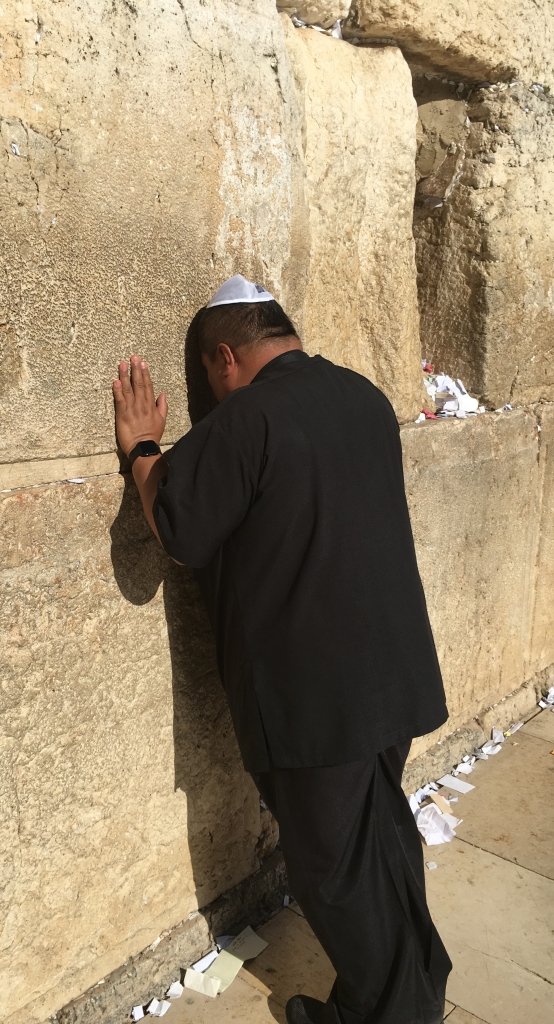
Praying at the wailing wall of Jerusalem, May 2019.
As we have been telling you, John’s gospel teems with many symbolisms and hidden meanings in the way he narrated events and scenes like when those Greeks asked Philip and Andrew to see Jesus.
If they simply wanted to catch a glimpse of Jesus, they could have easily satisfied themselves because Jesus never hid at that time. He had just entered Jerusalem, so warmly welcomed by the people, even by those Greeks perhaps. Most likely, they must have heard many things about Jesus that they wanted to go farther in requesting to see him. Hence, it was more than a request to have an audience with Jesus but something about their faith in him as they were pagans converted to Judaism.
We have to remember here that John used the verb “to see” to also mean “to believe” in his gospel account like when he narrated on Easter morning how Peter and the “other disciple” ran to the empty tomb “and he saw and believed” (Jn.20:8).
Keeping that detail on Easter morning at the empty tomb, we now understand why John never told us if Jesus met at all the Greeks requesting to see him because to see and believe Jesus is to accept and embrace wholly his Passion and Death on the Cross. This is why John jumped into Christ’s monologue upon being told by Philip and Andrew on the Greeks’ request.
Photo by author, 2018.
What a beauty we have here because we are those Greek converts too, constantly searching, seeking to go farther in our faith in Jesus despite our sins. As we get older and mature, we realize how our days are numbered, that we will definitely die someday and meet God.
Lately I have been thinking why do we really have to be happy on our birthday – much less why greet celebrators a happy birthday when in fact every birthday is a step closer to death, is it not? I am not being morbid but it is the truest matter of fact in life. Life is a lifelong process of preparation for death. What comes next when we age? Death.
However, our faith in Jesus tells us it is not simply death as an end but a blessed death that leads to fullness in life, literally and figuratively speaking.
That is where the beauty of Christ’s parable of the grain of wheat lies, “Amen, amen, I say to you, unless a grain of wheat falls to the ground and dies, it remains just a grain of wheat; but if it dies, it produces much fruit.”
We do not simply die in the end or even in the in-betweens of life through those failures and losses, defeats and wrong moves. We get better in life as we forge on.
It is the undeniable truth written in our hearts as God told Jeremiah in the first reading, that we are God’s, we solely belong to him no matter how hard we try to flee from him and disobey him in our sins, he would always find us even if we get lost. St. Augustine said it so well, “You have made us for yourself, O Lord, and our heart is restless until it rests in you.”
There is always that inner longing for God our Creator and End. That is why God sent us Jesus his Son as the author of the Letter to the Hebrews explained in the second reading so that through all our darkness and confusions, sufferings and trials, especially in those daily deaths that weaken us in our desire to search and follow him we may still find to have the strength and courage to forge on in wanting to see him by being with him where he is always – at the Cross.
Photo by author, 2018.
This is the grace of this fifth Sunday in Lent: we believe so we may see, we die in order to live. Both believing and dying in order to see and to live are grace from God freely given to us even if we are not worthy at all.
The world tells us always that to see is to believe but Christ tells us that first we must believe so that we would see; it is the same thing with living – die to one’s self in order to live fully because “whoever loves his life loses it.”
When we read or watch the news, many times we feel so exasperated and hopeless with the world. Imagine a resort right in a natural wonder there in the Chocolate Hills of Bohol? Or, land developers covering swamps without any considerations for others and the environment? Or, the mess and wastage happening in our offices, schools and homes? Do not forget us your priests living far from witnessing Christ in charity and service?
It’s a crazy world! And in all these abuses, the more we have become empty and lost that is why in the process, more and more of us never stop to believe and see, to hope and pray like those Greek converts seeking Jesus, for only in him we find rest and peace. Let us pray:
Lord Jesus Christ,
many times I really do not know
where I am going;
I cannot see
the road ahead of me
while many times
I wonder if I am really
following you and doing your will;
but at least, Jesus,
I am sure it is still you
whom I wish to see,
it is you I always desire
even if many times
it does not show
because this time
I am sure
 you alone
is my God,
my life,
my fulfillment.
Therefore, like the psalmist,
"Create a clean heart for me,
O God, and a steadfast spirit
renew within me.
Cast me not out
from your presence,
and your Holy Spirit
take not from me"
(Psalm 51:12-13).
Amen.
Quiet Storm by Fr. Nicanor F. Lalog II, 17 July 2023
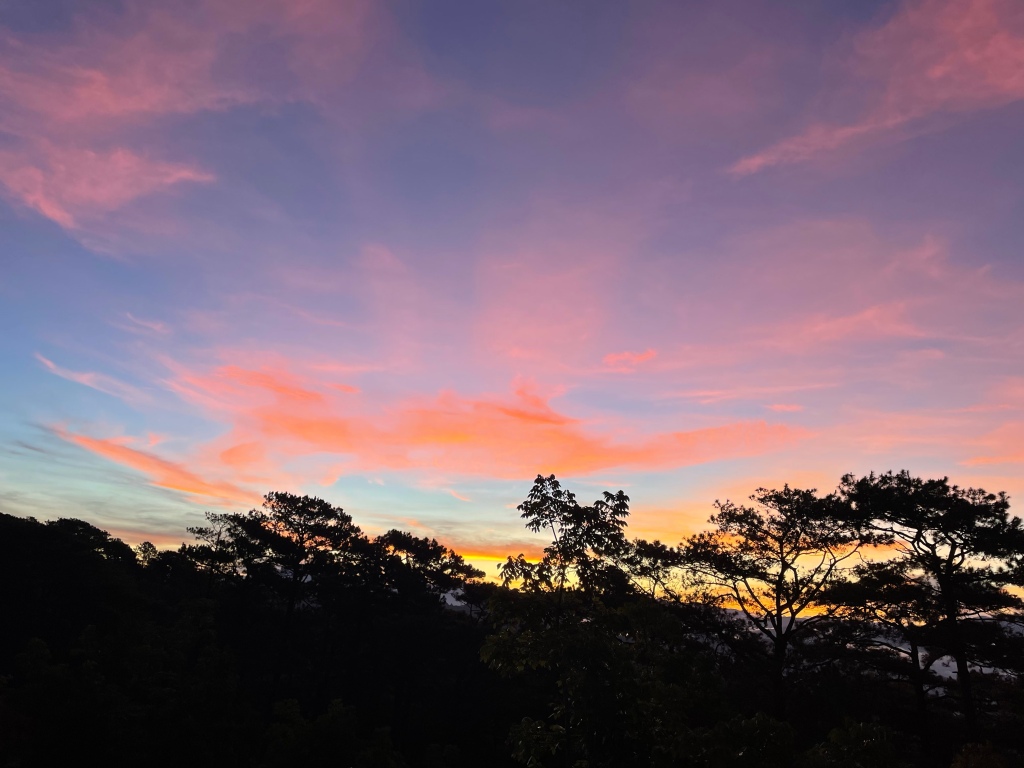
Photo by author, sunrise at Camp John Hay, 12 July 2023.
If there is one thing I have truly learned and finally got convinced more than ever, never trust “media”: what you see and hear especially in social media are not true at all. I have known it all along having worked there. Have been teaching it too for so long. But sometimes, just because I was with the bagets and younger siblings who all relied with WAZE and Tiktok while listening endlessly to Spotify, sigue na nga, maniwala na nga ako sa media.
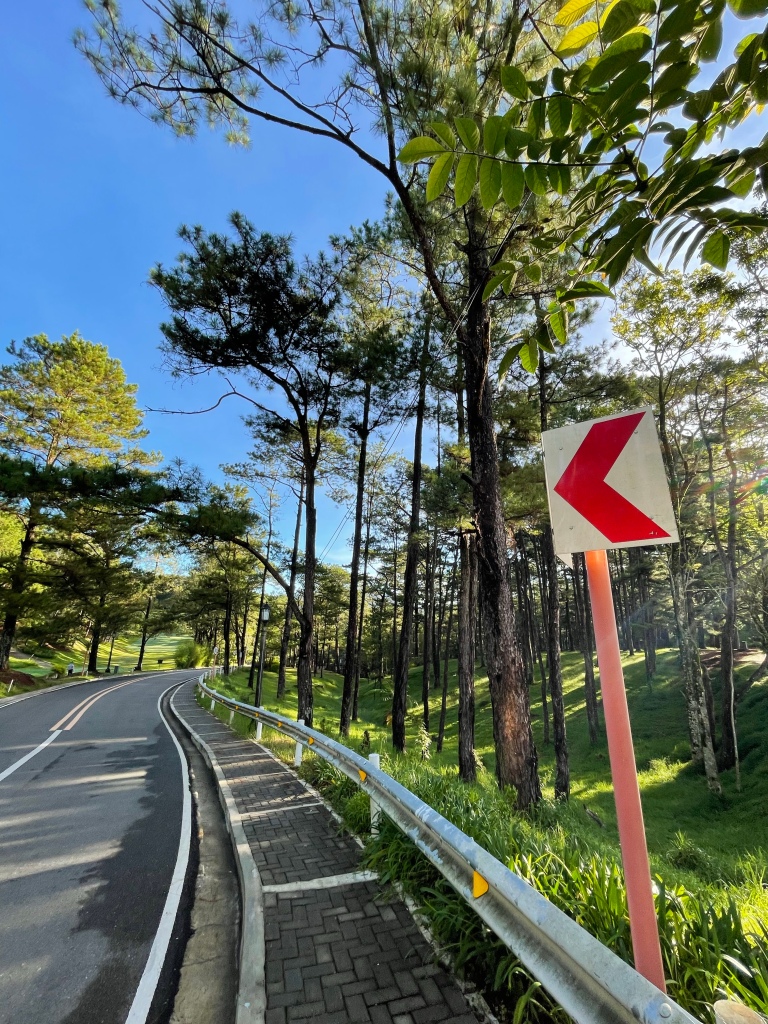
Photo by author, Camp John Hay, 12 July 2023.
And so, we got lost again on our final day in Baguio City.
But, still thankful for the experience, the fun and new discoveries not only outside but inside ourselves as siblings, as a family.
Went to bed earlier the night before hoping I could sleep longer in the city of pines. Unfortunately, I was already up before 5am, as usual, the following morning.
Sad to say, too, the weather is no longer that cold anymore in Baguio as before. Though the temperature readings indicated 19 degrees, I could hardly feel it except at about 2am.
Walked a kilometer with my only nephew Tommy and his mother, my sister Meg who enjoyed identifying the various plants and flowers with her phone app. She’s the only one among us four who had inherited our mother’s green thumb, a certified plantita as she would prove later in our misadventure.
Admiring the “naturally” thriving flowers on a street near the Good Shepherd Convent in Baguio, 12 July 2023.
After a sumptuous breakfast at the Manor House and endless pictorials, we packed our things to check out half an hour before 12 noon for the second most important itinerary of any Baguio vacation: Good Shepherd and Mines View Park shopping for pasalubong!
Traffic was not heavy when we went there, a Tuesday and Wednesday. And Baguio’s new traffic scheme with many “one ways” seem to be working well, even better than before the pandemic period.
Photo by author, 12 July 2023.
We were supposed to visit the Living Gifts Nursery also in La Trinidad town but, WAZE and Google Maps seem to be at a loss where that is located that we ended up at the Bahong Sunflower Garden.
I was already getting impatient after several misses and turns, refreshing Google map over and over when on our third try, we saw signs to a tourism office and the Bahong Sunflower Garden.
That was when we decided to forget the Living Gifts Nursery as we convinced ourselves it had changed its name to Bahong Sunflower Garden after the TikTok reel was uploaded.
Maybe next time, TikTok should also incorporate a GPS app for its featured destination spots for directions. Or, I better stop acting as navigator at all.
Photo by our youngest niece, Catherine Darla Lalog.
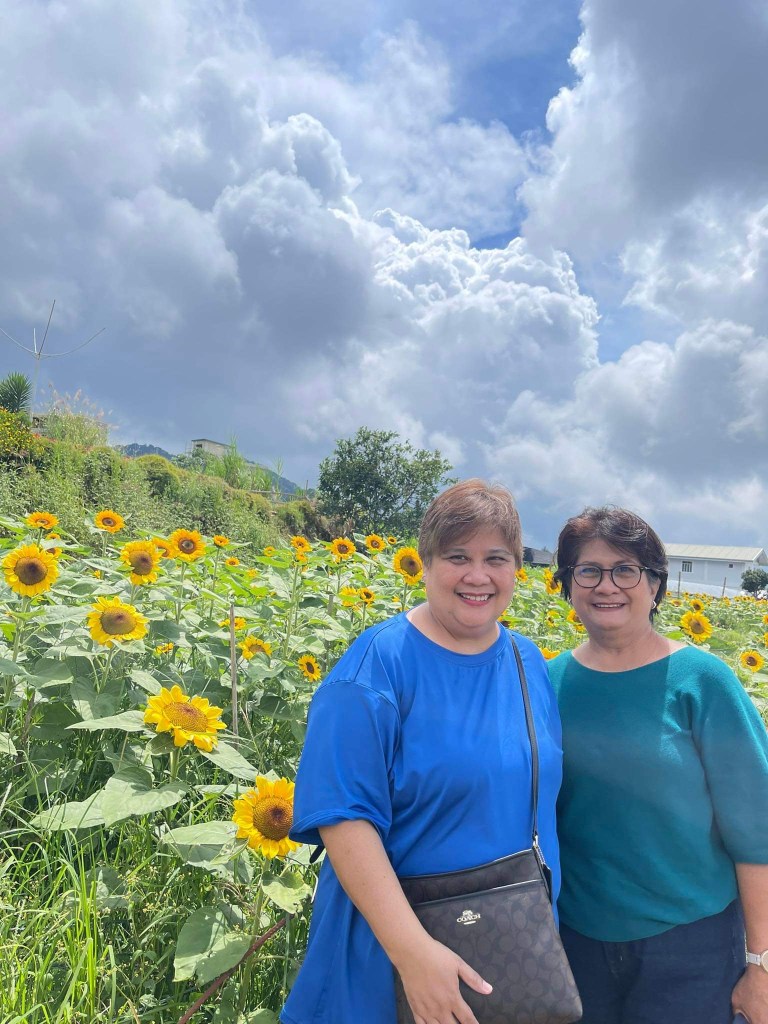
There’s an entrance fee so minimal, not less than 100-pesos but again, the sights are worth all the efforts. And patience.
Photo by our birthday celebrator, Bing-Bing.
Of course, first thing we looked for upon arrival was the “CR” that was “comfortable” enough to make us smile and laugh in enjoying each other with nature made better by its cool, sometimes chilly, breeze.
Photo by author, still at Bahong Sunflower Garden, 12 July 2023.
We left Bahong Sunflower Garden after an hour with a lot of fond memories as a family. Shortly before boarding our car, Meg could not contain herself not buying a plant from there. And the more she became insistent after finding out what she wanted cost only 300 pesos which according to her could easily fetch a price of over 3000-pesos in Bulacan.
Despite protests from her kids that there was no more space for her second plant, like my mom, Meg found a way of arranging everything at the back of her Innova with still some space – just in case – like additional pasalubong along the way.
Photo by author, still at Bahong Sunflower Garden, La Trinidad, Benguet, 12 July 2023.
How true indeed that once in a while, it is good to get lost in our trips. After all, it is the journey that matters most and not the destination. Most especially, the company you keep. Primary of them is our own family.
Photo by author, 12 July 2023.
Being the eldest in the family, there were times I wished I have an Ate, an elder sister, someone I could turn to in times of difficulties. Someone to look up to. Hindi yung ako lang palagi tinitingala nila especially after Dad had passed away in 2020.
But, up there in La Trinidad, I have realized that in life, it is not really about looking up and looking down. The only time we ought to look up is to God who is above all else and everything. Our semper major. The rest, in my view, is not about looking up nor looking down but of seeing more each one as a person, a beloved. Life is about seeing – not looking – to find the giftedness of everyone that has always been ever present.
Truly, “persons are gifts of God to me, that come all wrapped so differently” as we used to sing in our daily Masses in the high school seminary. This was most true as we left the garden when we have to ascend.
Photo by author, 12 July 2023.
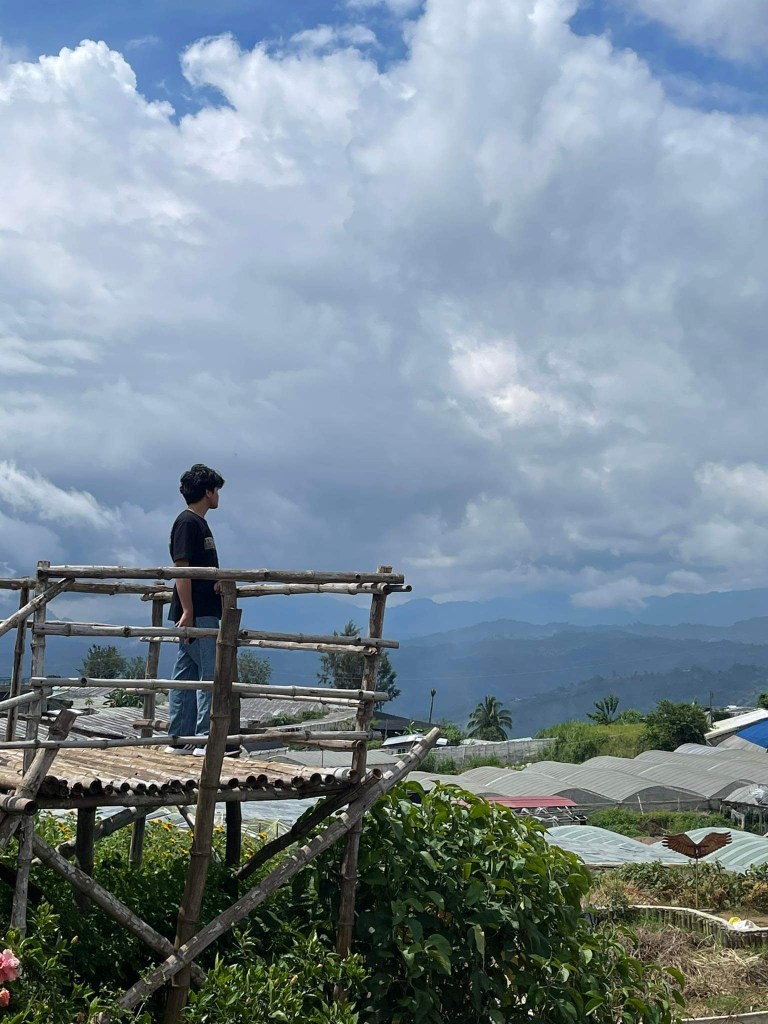
It was our only nephew Tommy who was most gracious and kind, and strong enough, to pull us up from the steep and sometimes slippery pathways.
Along the way, he found these plants which he called as nature’s “chocolate batirol”.
Despite his denials, he seemed disappointed when Camp John Hay’s Chocolate de Baterol was still closed when we walked there earlier.
We shall definitely go back to Baguio City to relax and unwind. And get lost again.
Thank you for joining us in our trip. God bless everyone! May you also have a great vacation soon! Amen.
40 Shades of Lent by Fr. Nicanor F. Lalog II
Fourth Sunday in Lent-A, 19 March 2023
1 Samuel 16:1, 6-7, 10-13 + Ephesians 5:8-14 + John 9:1, 6-9, 13-17,34-38
Photo by author, sunrise at Katmon Nature Sanctuary & Beach Resort, Bgy. Binulusan, Infanta, Quezon (04 March 2023)
We continue to journey with Jesus and his disciples towards Jerusalem for the fulfillment of his mission and like last Sunday, we take on a short stop-over today with him in the healing of a man born blind. It is another long story in these last three weeks of Lent that we hear from the gospel by St. John, filled with so many layers of meaning about our sense of sight or seeing which we often take for granted. Many of us are misled by the world’s insistence that to see is to believe when so often, we still fail to really see persons, things, and situations.
Experience has taught us that it is not enough for us to have eyes to be able to see, that after all, what Jesus has been teaching us is most true – believe and you shall see which is what our story of his healing of a man born blind is all about.
As Jesus passed by he saw a man blind from birth. He spat on the ground and made clay with the saliva, and smeared the clay on his eyes, and said to him, “Go wash in the Pool of Siloam” – which means Sent. So he went and washed, came back able to see. His neighbors and those who had seen him earlier as a beggar said, “Isn’t this the one who used to sit and beg?” Some said, “It is,” but others said, “No, he just looks like him.” He said “I am.” They brought the one once blind to the Pharisee.
John 9: 1, 6-9, 13
Photo from freebibleimages.org
Like last Sunday, let us just focus at the beginning of this long, beautiful story with many details still relevant to our own time like the apostles asking Jesus who’s to be blamed for the man being born blind, himself or his parents? Jesus clearly tells us how we must stop our blaming game and start believing and trusting God who makes himself visible even in unfortunate circumstances.
In the story of Jesus with the Samaritan woman, St. John revealed to us how God would come to our lives at “noontime” when we are hot or in the heat of our worldly pursuits including sins; in this healing of the man born blind, we are shown how God through Jesus comes to us right in our most sorry plight in life, when we are in darkness. See how so disadvantaged is that man born blind who not only had no sight but practically a nobody as he had nothing in life, begging for food and money in order to live.
And that is when Jesus Christ comes to us, when we are nothing and practically down in the dumps.
Photo from freebibleimages.org
And here the story gets better. In the original Greek text, we find that “he was blind from his genesis” which has double meaning of both birth and creation. In using the term genesis, St. John is telling us that Jesus is not someone who had come to bring back the world to its original set up before the Fall of our first parents by destroying earth.
Jesus came not to destroy earth and us to start anew but to restore us to our original status of blessedness by being like us so we could be like him. Here in this instance, Jesus created a new beginning for the man when he touched the man’s eyes with mud and having him wash in the waters of Siloam which mean the “Sent One”. We are reminded how Adam the first man was formed from the dust of the earth as Ash Wednesday would always tell us at the start of Lent.
In Genesis, after forming man from dust, God breathed on Adam and he became alive.
Photo from freebibleimages.org
In today’s gospel, Jesus spat on the mud and “smeared the clay on his eyes” to show the process of new creation. Spitting is Jesus infusing himself on the mud or earth that was put on the eyes of the man born blind. He then instructed the man to “Go wash in the Pool of Siloam – which means Sent” (Jn.9:7), a complete reference to him too as the Christ or the Messiah long awaited.
Clearly in this scene we find the sign of water like last Sunday, an image of the Sacrament of Baptism where we are all re-created into new persons in Jesus Christ who is himself the water who cleanses us of our sins and impurities, re-creating us into new persons with unlimited possibilities and chances in life because of our union with God.
The healing of the man born blind was his salvation, his being saved through his union with God in Jesus Christ.
The man born blind represents us all who need cleansing by Jesus Christ. Everyday, Jesus comes to us in our lowest points in life, when we are so sick and weak, when we are losing all hopes and inspiration in life, when we are lost and defeated, when we are deep into sin. Jesus gives us himself as our saving gift.
But it is just the beginning.
See how the man born blind did not have his sight right away with Jesus putting mud on his eyes; it happened after obeying the Lord’s instruction to wash himself in Siloam. We have to cooperate with Jesus Christ like the man born blind.
Recall how Jesus reminded Peter on Holy Thursday of the need for him to wash his feet in order to have “inheritance with me” (Jn.13:8). We have been washed and cleansed by Jesus in our Baptism which is perfected in our celebration of the Holy Eucharist he established on Holy Thursday. The more we immerse ourselves in Jesus in the Eucharist, the more we are cleansed, the more we have faith in him, enabling us to see clearer not just have sights of things before us but its meanings in the light of Christ.
We need to go back to Jesus in the Eucharist to be washed clean, especially our eyes to be able to see clearly.
How funny if you have entirely read this story of how the people could not believe with their eyes what they saw after the man born blind was healed by Jesus. They could not agree among themselves they have to consult their authorities, the Pharisees to verify if he was really the man born blind who was healed; but, when summoned the Pharisees questioned the man, they too refused to believe him, even insulted him. The worst part of the story was when the parents of the man born blind were called to verify if he was really their son who was born blind and now can see. Unfortunately, the parents refused to vouch for him, insisting they ask him personally for he was old enough to speak.
There are times in our lives that we could be left alone standing for Jesus Christ for what is true, what is right, what is just, and what is good because it is only us who could see everything clearly like that man born blind after his healing. That is why, it is not enough to have sights only but also insight to see the meaning of things happening at present, as well as hindsight to see the meaning of the past and foresight to find its meaning in the future. We need faith in God in order to see beyond the surface and superficial, to see the deeper meaning of persons and events like what God told Samuel in anointing Jesse’s youngest son David to be Israel’s new king.
But the Lord said to Samuel: “Do not judge from his appearance or from his lofty stature, because I have rejected him. Not as man sees does God see, because man sees the appearance but the Lord looks into the heart.”
1 Samuel 16:7
To see things and events including persons, of finding Jesus working in the present moment (insight), in the past (hindsight) and the future (foresight) requires a lot of courage too to stand for Christ and his values of truth and justice, mercy and love, life and persons like that man born blind and later healed. Here we find American writer Helen Keller’s words ringing so truly, “The only thing worse than being blind is having sight but no vision.” Visionaries are people who dream with eyes wide opened, those who dare to see beyond because of their deep faith and conviction in their beliefs or whatever they held as true. Very much like our saints too who gave their lives for the sake of Jesus Christ.
Beginning this Sunday, let us heed St. Paul’s call for us to “Live as children of light”(Eph. 5:8) by following the light of Jesus Christ. Let us leave our blindness and darkness as well as shortsightedness by seeing to it we “Take no part in the fruitless works of darkness” (Eph. 5:11). Amen.Enjoy a blessed and insightful week ahead, everyone!
Photo by author, early morning rains at Katmon Nature Sanctuary & Beach Resort, Bgy. Binulusan, Infanta, Quezon (04 March 2023)
The Lord Is My Chef Daily Recipe for the Soul by Fr. Nicanor F. Lalog II
Wednesday in the Sixth Week of Ordinary Time, Year I, 15 February 2023
Genesis 8:6-13, 20-22   ><)))*> + <*(((>< _ ><)))*> + <*(((><   Mark 8:22-26
Photo by author, Tagaytay City, 07 February 2023.
In the six hundred and first year of Noah’s life, in the first month, on the first day of the month, the water began to dry up on the earth. Noah then removed the covering of the ark and saw that the surface of the ground was drying up. Noah built an altar to the Lord, and choosing from every clean animal and every clean bird, he offered burnt offerings on the altar.
Genesis 8:13
Have we thanked you already,
O Lord God our loving Father,
since this COVID-19 pandemic
had subsided in our country?
How beautiful was Noah's gesture
upon seeing the floods gone and
the earth drying up when he first
built an altar to you to offer you
burnt offerings from among the best
animal and bird he had in the ark.
It has been a year since things
have gone better for us though
there is still the pandemic but,
it seems we have not thanked you
so well yet; we have been so eager
and so busy attending to recover
our material losses due to the
lockdowns of the pandemic that
we have already forgotten the many
beautiful lessons of COVID-19
like the value of every person,
the importance of prayer,
and most of all, your presence
among us in these most troubled
years of modern history.
May times in life
we fail to see your goodness
and blessings around us, Lord,
that we keep on looking for what
we do not have, what we have lost,
what have been taken from us;
through Jesus Christ,
take us aside from our busy
schedules and crazy rat race
to recover our losses from these
three years of hardships;
like that blind man in the gospel,
cleanse our eyes
to see the big difference
we now have than before
since this pandemic started;
help us see clearly one another
as brothers and sisters in Christ
and most of all,
let us see everything distinctly,
especially those that matter most,
especially you,
our very essence.
Amen.
The Lord Is My Chef Daily Recipe for the Soul by Fr. Nicanor F. Lalog II
Thursday in the Twenty-Fifth Week of Ordinary Time, Year II, 22 September 2022
Ecclesiastes 1:2-11   ><]]]]'> + ><]]]]'> + ><]]]]'>   Luke 9:7-9
Photo by author, sunrise at Our Lady of Fatima University in Antipolo City, August 2022.
Your words today,
O Lord our God are
"greatly perplexing"
that I feel like Herod
the tetrarch in the gospel
"trying to see" you,
Jesus (Lk.9:7-9).
So many times
I have prayed before
asking you how I
wanted to see you
because "all is vanity
in this world; nothing is new
under the sun.  Even the
thing we say as new has already
existed in the ages that
preceded us" (Eccl.1:2,9-10);
and so, what else is there
for us to see in this world,
in this life but you,
dear Jesus!
But, how can we see you
truly, O Lord Jesus, so that
we may also find the meaning
of this life amid all the vanities
around us?
When a group of Greeks
came to Jerusalem and
requested to see you
just before Good Friday,
you replied through Philip
with the falling and dying
of a grain of wheat
(Jn.12:20-26) to show us
that in order to see you,
we have to learn to look
through your Cross;
that we can only see you,
Jesus, in your Passion
and Death to see your glory
in your Resurrection.
Forgive us, Lord,
when so many times
we wax our desire to see you
with novelties and sentimentalities
of the world that are simply
vanities like Herod the Tetrarch;
let us go down to our knees
before you on the Cross,
commune with you in
prayers before the Blessed
Sacrament and most especially,
live by witnessing your pasch
in a world so fascinated with
drama and effects
than with essence
that is love willing to
suffer and die like you
on the Cross.
Amen.

















 lordmychef.com