What moves you?

The Lord Is My Chef Sunday Recipe for the Soul by Fr. Nicanor F. Lalog II
Twenty-Second Sunday in Ordinary Time, Cycle B, 01 September 2024
Deuteronomy 4:1-2, 6-8 ><}}}*> James 1;17-18, 21-22, 27 ><}}}*> Mark 7:1-8, 14-15, 21-23
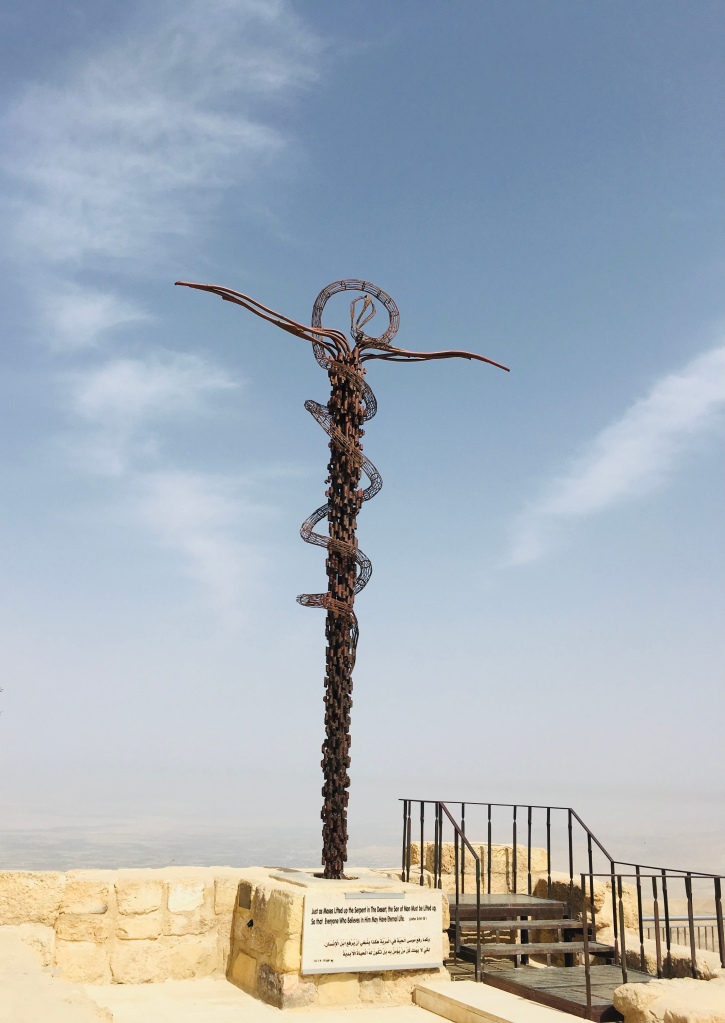
Photo by author, Sacred Heart Novitiate, Novaliches, QC, 20 March 2024.

After five Sundays of journeying with John, we now return to Mark’s Gospel and shall continue to read it through the 33rd Sunday before we cap the current liturgical calendar with the Solemnity of Christ the King on November 24, 2024.

Oh yes! It’s beginning to feel like Christmas but the liturgy cautions us this Sunday through Mark that there are still many things we have to fix and cleanse in our hearts in the remaining stretch of the year, particularly our motivations in doing things. After dwelling on the “bread of life discourse” from John for five Sundays that gave us time to examine our faith, Mark brings us now to the other side of the lake in Gennesaret to listen to a discussion about the Jewish customs and traditions of ritual cleansing and washing in chapter seven.

When the Pharisees with some scribes who had come from Jerusalem gathered around Jesus, they observed that some of his disciples ate their meals with unclean, that is, unwashed, hands. For the Pharisees and, in fact, all Jews, do not eat without carefully washing their hands, keeping the tradition of the elders. So the Pharisees and scribes questioned him, “Why do your disciples not follow tradition of the elders but instead eat a meal with unclean hands?” He responded, “Well did Isaiah prophesy about you hypocrites, as it is written: This people honors me with their lips, but their hearts are far from me; in vain do they worship me, teaching as doctrines human precepts. You disregard God’s commandment but cling to human tradition” (Mark 7:1-3, 5-8).

Photo by author, St. Scholastica Spirituality Center, Tagaytay City, 20 August 2024.

It is easy to see in this scene how Mark must have tried to explain the many Jewish rituals and traditions that was a source of clashes among Jewish and pagan converts to Christianity in the early Church like circumcision and of eating of meat offered to gods. These were finally resolved in the Council of Jerusalem in year 50 when the Apostles acted upon instructions by the Holy Spirit “not to place on the pagan converts any burden beyond these necessities” (Acts 15:28).

However, it is unfair and a misreading to limit ourselves to this as a lesson in history because the practices criticized in this scene continue among us when we focus on the externalities of any ritual and tradition while missing their more essential and deeper meanings. Worst of all is the strong temptation among us to believe that by our actions and good deeds, like the Pharisees and scribes of that time, we make ourselves worthy of God or of anyone!

That is why Christ’s teaching in this Sunday gospel on the hypocrisy of the Pharisees and scribes of that time refers also for us today.

From Facebook, 29 August 2024.

From the halls of Congress to our own homes, classrooms and offices, pulpits and parish halls, we find many of us acting like the Pharisees and scribes who have come from Jerusalem to test and intimidate Jesus through people around us and under us by flexing their muscles in insisting strict adherence to their rituals and traditions that were passed on from Moses we have heard in the first reading. Observe how the Pharisees and scribes capitalized on these as “tradition of the elders” without really going into its very core and essence because they have forgotten or were totally unaware of Moses’ reminder that faithful observance of the Law and its tradition and rituals is a form of witnessing to God before all the peoples.

Observe them carefully, for thus you will give evidence of your wisdom and intelligence to the nations, who will hear of all these statues and say, “This great nation is truly wise and intelligent people. For what great nation is there that has gods so close to it as the Lord our God, it is to whenever we call upon him? Or what great nation has statutes and decrees that are as just as this whole law which I am setting before you today?” (Deuteronomy 4:6-8)

Photo by author, St. Scholastica Spirituality Center, Tagaytay City, 20 August 2024.

Every adherence and compliance to the Laws, to its accompanying rites and rituals must come from the heart, a result of the conversion of heart, of purification of one’s heart, especially the celebration of the liturgy we refer to as “the summit and font of our Christian life”. Every Mass celebration is an outflowing of what is in our hearts, beginning with the priest as celebrant.

But, what is the reality we have? As we concluded last Sunday Jesus Christ’s “bread of life discourse”, we realized the “shocking truths” of so many Catholics who have totally stopped coming to Sunday Masses, of some priests not giving the proper respect in prayerfully celebrating the Eucharist and the other Sacraments, and of most faithfuls just simply coming without seriously taking part in the Mass. That is why this gospel scene applies to us this time too as Jesus asks us, do we understand the things we are doing in the Church? What is in our hearts in doing these?

He summoned the crowd again and said to them, “Hear me, all of you, and understand. Nothing that enters one from outside can defile that person; but the things that come out from within are what defile. “From within people, from their hearts, come evil thoughts, unchastity, theft, murder, adultery, greed, malice, deceit, licentiousness, envy, blasphemy, arrogance, folly. All these evils come from within and they defile” (Mark 7:14-15, 21-23).

Photo by author, St. Scholastica Spirituality Center, Tagaytay City, 20 August 2024.

This Sunday, Jesus is inviting us to a new perspective at looking at things, not just from what is clean and not clean, or simply what is good and evil, what is traditional and modern; Jesus wants us to examine our motivations, of what is in our hearts in doing things, anything and everything.

Ultimately, it is a question of who is in our heart, Jesus or somebody else or another thing?

It is reality versus hypocrisy. Reality is the truth and meaning that things, events, persons, most of all, of our very selves have before God and for God. It is in this reality that we must scrutinize to strip ourselves naked of the hidden hypocrisies, the many masks and alibis we use to justify our selves.

Photo by author, 13 August 2024.

I have something to confess to you, my dear followers: I have been sick these past three weeks with different ailments. All my lab tests were good. Doctors find nothing wrong with my body with everything normal.

Last Tuesday I saw my longtime doctor for my scheduled check-up. As I explained everything to her, I broke down in tears as I admitted the fact I am in denial stage of my mom’s passing last May. I have repressed my griefs, trying to fill in the void within me with workloads as if I am still young that finally, it manifested in my body. That same Tuesday evening, I dreamt of my mom: she looked younger and healthier without signs of stroke but she wore a black dress and looked to have cried. I hugged her tightly in my dream, we cried together as I said sorry to her, promising that I would finally come home even if it hurts me to see her room empty.

Two days after that, we celebrated John the Baptist’s passion with a reading from Mark telling us of the “grudge” Herodias had on him that led to his beheading. Many times, grudges and other negative things that Jesus cited in today’s gospel not only cover us but actually destroy us, eating us up in the process. The festering negativities in our hearts cannot be hidden, eventually erupting like blisters, not only hurting others around us but most especially us.

In the Mass, Jesus knows very well we are not worthy with our hypocrisies to receive Him but only say the word, we are healed. And blessed to cleanse ourselves. Let us pray:

God our loving Father,
"all good giving and every perfect gift
is from You with whom there is no
alteration or shadow caused by change";
empty our hearts of pride and evil
to welcome Jesus your Word
who became flesh to dwell inside us
so that we may be "doers of the word
not just hearers" (James 1:17, 22)
by being more loving to others
without any strings attached.
Amen.

True Wisdom

The Lord Is My Chef Daily Recipe for the Soul by Fr. Nicanor F. Lalog II
Friday in the Twenty-first Week of Ordinary Time, Year II, 30 August 2024
1 Corinthians 1:17-25 <*((((>< + ><))))*> Matthew 25:1-13
Photo by author, Chapel of angel of Peace, Our Lady of Fatima University, Valenzuela City.

For Jews demand signs and Greeks look for wisdom, but we proclaim Christ crucified, a stumbling block to Jews and foolishness to Gentiles, but to those who are called, Jews and Greeks alike, Christ the power of God and the wisdom of God. For the foolishness of God is wiser than human wisdom, and the weakness of God is stronger than human strength (1 Corinthians 1:22-25).

One of the most enduring
and endearing
words by the great St. Paul,
O Lord this final Friday
of August.
In a milieu
when even the Church
is threatened by interest groups
and ideologies running down to
the many parishes
sowing distractions and divisions,
let us find our unity anew
in the crucified Jesus Christ;
let us be like the five wise virgins
who brought extra oil in waiting
the groom's coming,
accepting the situation of darkness
and bringing along extra oil
of faith, hope, and love
in Christ;
make us humble, O Lord,
that whatever we have achieved
and gained are all
by your grace, O God;
let us not be complacent like
the five foolish virgins;
let us choose
whatever is difficult like Christ crucified
allowing each of us to change
for the best in God;
let us choose
whatever is painful like Christ crucified
allowing us to empathize more;
let us choose
always Christ crucified
because the Cross is a plus sign,
an addition than a subtraction
in this life
through eternity.
Amen.

Grudge

The Lord Is My Chef Daily Recipe for the Soul by Fr. Nicanor F. Lalog II
Thursday, Memorial of the Passion of John the Baptist, 29 August 2024
Jeremiah 1:17-19 <*{{{{>< + ><}}}}*> Mark 6:17-29
Photo from catholicworldreport.com, “The Beheading of St. John the Baptist” (1869) by Pierre Puvis de Chevannes.
A precursor of the Lord's birth,
a precursor of the Lord's death.
What a great task you have entrusted,
O God, to John the Baptist and to us
as well; many times, we forget this
role of our being like John in life
and in death, always standing
and speaking what is true and just.
Forgive us, O God,
when more often we
have allowed ourselves
to be like Herodias who
"harbored a grudge
against John."

Herod was the one who had John the Baptist arrested and bound in prison on account of Herodias, the wife of his brother Philip, whom he had married. John had said to Herod, “It is not lawful for you to have your brother’s wife.” Herodias harbored a grudge against him and wanted kill him but was unable to do so (Mark 6:17-19).

Take away, O Lord Jesus, 
the many grudges we have,
festering in our hearts,
eating up our very selves,
and poisoning our relationships
especially with those closest to us;
heal us, most merciful Jesus,
of the grudges that have tore
us apart and make us whole
again as persons, family
and friends; take away within us
whatever vestiges of grudges
we have against anyone
so we may move forward
in life, let go of revenge
and ill desires for those
who may have hurt us.
"In you, O Lord,
I take refuge;
let me never be put
to shame. In your justice
rescue me, and deliver me;
incline your ear to me,
and save me" (Psalm 71:1)
instead of harboring
grudges inside me against
anyone.
Amen.
“Salome with the Head of John the Baptist” painting by Caravaggio (1607) at the National Gallery of London; photo from en.wikipedia.org.

Holiness of work

The Lord Is My Chef Daily Recipe for the Soul by Fr. Nicanor F. Lalog II
Wednesday, Memorial of St. Augustine, Bishop & Doctor of the Church, 28 August 2024
2 Thessalonians 3:6-10, 16-18 <*{{{{>< + ><}}}}*> Matthew 23:27-32
Commuters hang from the back of a jeepney as it travels along a road in Manila, the Philippines, on Sunday, April 9, 2017. Photographer: Veejay Villafranca/Bloomberg via Getty Images.
Glory and praise to you,
God our loving Father
for the gift of this great Saint,
Augustine, son of St. Monica,
Bishop and Teacher of the Church;
in him, O God,
you showed us every saint
has a sinful past
and that no sinner
can be denied of a saintly future.
It was St. Augustine who taught us
among his so many teachings that
"grace builds on nature"
which he must have learned from
his own experiences,
from his conversion to Christianity
to becoming a priest then a bishop
that did not happen like a magic trick
by God but with hard work wrapped in
intense prayers by him and St. Monica;
what a tremendous blessing that
as we honor him today,
our first is from a letter by his inspiration,
St. Paul:

For you know how one must imitate us. For we did not act in a disorderly way among you, nor did we eat food received free from anyone. On the contrary, in toil and drudgery, night and day we worked, so as not to burden any of you. Not that we do not have the right. Rather, we wanted to present ourselves as a model for you, so that you might imitate us. In fact, when we were with you, we instructed you that if anyone was unwilling to work, neither should that one eat (2 Thessalonians 3:7-10).

Remind us, O God
in Jesus Christ like St. Augustine,
what is essential is the inside
not the outside;
let us not be like the Pharisees
and scribes, hypocrites,
looking like "whitewashed tombs
that appear beautiful on then outside
but inside are full of dead men's bones
and every kind of filth"
(Matthew 23:27).
Grant us the zeal and
enthusiasm like St. Augustine
to strive in becoming a better person,
most of all a better Christian
by working hard in cultivating
the prayer life,
love for the Sacred Scriptures
so that Jesus may dwell always
in our hearts.
Amen.
From Pinterest.com.

Handle life with prayer

The Lord Is My Chef Daily Recipe for the Soul by Fr. Nicanor F. Lalog II
Tuesday, Memorial of St. Monica, Married Mother, 27 August 2024
2 Thessalonians 2:1-3, 14-17 <*((((>< + ><))))*> Matthew 23:23-26
Photo by author, St. Scholastica Spiritual Center, Tagaytay City, 20 August 2024.
I thank you today,
dear God our Father
for the gift of mothers
as we celebrate today
the Memorial of St. Monica,
mother of St. Augustine.

Therefore, brothers and sisters, stand firm and hold fast to the traditions that you were taught, either by an oral statement or by a letter of ours. May our Lord Jesus Christ himself and God our Father, who has loved us and given us everlasting encouragement and good hope through his grace, encourage your hearts and strengthen them in every good deed and word (2 Thessalonians 2:15-17).

How wonderful to find 
St. Monica handled her life with prayer,
the most beautiful tradition
the Church had always taught
and passed on since its beginning;
it was St. Monica's life of prayer
that flowed out into the grace of
patience and perseverance
as well as kindness to others
leading ultimately to undying hope
in God's goodness in converting
first her pagan husband Patricius
and then their three sons
led by the eldest St. Augustine.
Thank you dear God 
for our mothers who shed tears
when we go wayward as children
so lost in a life of sin,
and for us aching and hurting deep
inside only mothers can detect
and empathize with.

Thank you dear God
for our mothers who have
taught us the importance of prayer
and goodness to others
and most especially of the value
of sincerity than hypocrisy.
Bless all mothers today, merciful Father,
may they find comfort in Jesus always.
Amen.
Photo of St. Monica from the cover of the book “St. Monica Club: How to Wait, Hope and Pray For Your Fallen-away Loved Ones by Maggie Green, Sophia Institute Press, 2019.

Twice worthy

The Lord Is My Chef Daily Recipe for the Soul by Fr. Nicanor F. Lalog II
Monday in the Twenty-first Week of Ordinary Time, Year II, 26 August 2024
2 Thessalonians 1:1-5, 11-12 <*((((>< + ><))))*> Matthew 23:13-22
Photo by author, St. Scholastica Spirituality Center, Tagaytay City, 21 August 2024.
Thanks be to God,
our loving Father,
the month of August
is about to end,
always a difficult time
of the year for various reasons
that some have called it
a "ghost month";
of course, it is not true at all!
August is the month of so many
great saints and celebrations
that remind us of your presence
among us amid the many
hardships and difficulties.

We ought to thank you God always for you, brothers and sisters, as is fitting, because your faith flourishes ever more, and the love of every one of you for one another grows ever greater… This is evidence of the just judgment of God, so that you may be considered worthy of the kingdom of God for which you are suffering. We always pray for you, that our God may make you worthy of his calling and powerfully bring to fulfillment every good purpose and every effort of faith, that the name of our Lord Jesus Christ may be glorified in you, and you in him, in accord with the grace of our God and Lord Jesus Christ (2 Thessalonians 1:3, 5, 11-12).

Dear God our Father,
make us twice worthy like
the Thessalonians
in the midst of many trials this August:
to be worthy of the kingdom of God
who is Jesus Christ our Lord,
and to be worthy of your calling
in His most Holy Name;
many times, we have become
the modern scribes and Pharisees,
modern hypocrites who "lock the
Kingdom of heaven before men"
with so many of us, especially
in the clergy without any desires
at all of getting closer to Jesus
nor entering heaven!
Make us worthy of Jesus Christ,
the Kingdom of God
by embracing and carrying our cross,
of suffering with the people,
most especially praying
and sacrificing with the people.

Make us worthy of your calling,
dear Father to be your presence
among men and women in this
turbulent times when ironically,
as we advance in science and technology,
that more we grow apart from
each other and from our very selves.
Help us find our way back to You,
Father in Jesus Christ
through the Holy Spirit
with Mary and your Saints.
Amen.
Photo by author, St. Scholastica Spirituality Center, Tagaytay City, 21 August 2024.

Pahingalay

Lawiswis ng Salita ni P. Nicanor F. Lalog II, Ika-22 ng Agosto 2024
Larawan kuha ng may-akda, Sacred heart Novitiate, Novaliches, QC, 20 Marso 2024.
Halina't magpahingalay
hindi lamang upang mapawi
pagod at hirap
kungdi sarili ay mabawi
sa kawalang kabuluhan
at mga kaguluhan,
pagkawindang mapigilan
kaayusan ng buhay
ay mabalikan;
limang tanong
sana makatulong
upang landas ng
makatuturang buhay
ating masundan:
Larawan kuha ng may-akda sa Alfonso, Cavite, Abril 2024.
"Nasaan ka?"

Kay gandang balikan
nang ang Diyos ay unang
mangusap sa tao,
ito ang kanyang tanong
sa lalaking nagkasala
at nagtago, "nasaan ka?"
Nang maganap unang krimen,
Diyos ay nagtanong din
kay Cain, "nasaan
kapatid mong si Abel?"

"Nasaan" lagi nating tanong
lalo na't sarili ang nawawala
tumutukoy di lamang sa lunan
kungdi sa kalagayan
at katayuan ng sarili
madalas ay sablay
at mabuway;
magpahingalay
upang tumatag at maging
matiwasay.
Larawan kuha ng may-akda sa Camp John Hay, Baguio City, 12 Hulyo 2023.
Susunod na dalawang tanong
ay magkadugtong:
"Saan ka pupunta?" at
"Paano ka makakarating doon?"

Walang mararating
at kahihinatnan
sino mang hindi alam
kanyang pupuntahan
maski na moon na tinitingala
hindi matingnan, magroadtrip
broom broom man lamang!
Muling mangarap
libre at masarap
higit sa lahat
magkaroon ng layon
na inaasam-asam!
Larawan kuha ni Bb. Ria De Vera sa Banff, Alberta, Canada, 07 Agosto 2024.
Nasaan ka?
Saan ka pupunta?
Paano ka makakarating doon?
Ang mga unang tatlong tanong
sa ating pamamahingalay nitong
paglalakbay ng buhay;
ika-apat na tanong naman dapat
nating pagnilayan ay
"Ano aking dadalhin sa paglalakbay?"

Marahil pinakamahalagang
dalhin ang ating sarili
hindi mga gamit
o kasangkapan
dahil kaalinsabay
ng mga dalahin
ay ating mga iiwanan din;
huwag nang magkalat ng gamit
bagkus iwanan ay bakas
ng mabuting katauhan
pagmamalasakit sa iba pang
naglalakbay sa landas nitong buhay!
Larawan kuha ng may-akda, St. Scholastica Spiritual Center, Tagaytay, 21 Agosto 2024.
Ngayo'y dumako tayo
sa huling tanong nitong
pagpapahingalay upang
mabawi ating sarii
di lamang pagod ay mapawi:
"Sino iyong kasama sa paglalakbay
sa buhay?"

Ito marahil pinakamahirap
sagutin maski harapin
dahil problema natin
hindi naman mga nabigong
pangarap at adhikain
kungdi nasira at nawasak
nating mga ugnayan
bilang pamilya
at magkakaibigan;
may kasabihan mga African,
kung ibig mong maglakbay
ng mabilis, lumakad kang mag-isa
ngunit kung ibig mong malayo marating,
magsama ka ng kasabay sa paglalakbay.
Dito ating makikita
diwa at buod ng tunay
na pagpapahingalay
o pagpapahinga:
mula sa salitang "hinga"
ang magpahinga
ay mahingahan ng iba,
mapuno ng iba;
mauubos tayo parang upos
sa dami ng ibig nating
maabot at marating,
huwag mag-atubiling
tumigil,
mamahinga,
magpahingalay
sa Panginoong Diyos
na Siya nating buhay
at kaganapan
na tiyak din nating
hahantungan
sa walang hanggang
pahingalay.
Hayaang Siya
sa ating umalalay
at pumuno ng hininga ng buhay!

Vacare Deo

Quiet Storm by Fr. Nicanor F. Lalog II, 21 August 2024
Photos and poem, annual clergy retreat, 19-23 August 2024
St. Scholastica Spiritual Center in Tagaytay City
Vacare Deo:
A vacation with God
a most awaited Sabbath
when He is truly Lord and God,
and we are His children;
He the Creator,
we His creature
so beloved
coming home to Him,
back in Paradise.
Vacare Deo:
A vacation with God
to be with Him,
to experience Him,
to find and listen to Him,
not that He is lost
but because
we have drifted
and turned away
from Him.
Thank you for finding me,
O God,
in making me stop
to find myself anew
to enjoy this beautiful journey
with your gift of company;
breathe in me your Holy Spirit
to fill and animate me
with love and passion
in finding and following
Jesus Christ in everything
especially within!


Sad Jesus

Quiet Storm by Fr. Nicanor F. Lalog II, 19 August 2024
“Christ and Rich Young Ruler” by Heinrich Hofmann from en.wikipedia.org.

The volcanic smog from Taal that has shrouded the south since early Monday morning inspired me tonight to share with you this short reflection from the gospel:

Jesus said to him,”If you wish to be perfect, go, sell what you have and give to the poor, and you will have treasure in heaven. Then come, follow me.” When the young man heard this statement, he went away sad, for he had many possessions (Matthew 19:21-22).

I have been trying to imagine not only the sad face of the young man but most of all, the sadness of Jesus. Most often, the first image of a sad Jesus who comes to our mind is when he was in His Passion and Crucifixion.

That’s understandable.

Try imagining, reflecting Jesus sad when we are sad like at the death of His friend Lazarus. The beloved disciple tells us in his gospel account that upon seeing the sisters Mary and Marta, Jesus became more sad not only with the death of a good friend.

If there is one thing we can always be sure of, Jesus shares our feelings too! When we are sad, Jesus must be most sad too. And how unfair when we fail to see the sadness too of Jesus as if we suffer or grieve alone. Perhaps, it is a part of our pa-victim syndrome, of us being on the distaff side always of the story. Let us not forget Jesus because failing to experience and realize the sadness of Christ means we are still filled with pride, so self-centered and most likely, after overcoming our sadness, we would still keep our “possessions”. What a tragedy that has become a vicious circle with us priests.

Photo by author, Chapel of the Angel of Peace, 25 June 2024.

When is Jesus sad?

As we begin our retreat tonight here in Tagaytay, I feel Jesus saddest when we His priests are sad in celebrating the Mass and other sacraments, in doing our ministry. Jesus cries so hard in shame when we priests are not only sad but also angry, even insolently ministering to the people especially when they are poor.

How easy it is for us priests to readily identify with the young man being sad even with our admission or confession of having many possessions. That’s very easy, like saying sorry from the nose. But, are we ready to let go of our attachments so we become joyful in Christ again as seen in the way we celebrate especially the Mass?

When we priests are sad in our ministry, people are more sad that makes Jesus most sad of all! In the first place, no one – nobody – among the people must be saddened by priests or by the Church as an institution. Priesthood is the joy of Jesus Christ!

It is a grave contradiction that we ever be that rich young man in the gospel portrayed as sad due to many possessions. Its deepest pain and cut is found in the very reason of this sadness: Jesus is most sad when we priests are sad because He knows very well we are no longer His.

Photo by author, St. Scholastica Spiritual Center, Baguio City, August 2023.

This kind of sadness which is so negative (because we can be sad too like everyone) starts subtly when we priests are inconvenienced, when we have to sacrifice and suffer, forgetting that it is the life we have freely embraced in the first place. Some priests presumed we can suspend for a while our commitments and vows, and simply be human, whatever that means. So, they stop praying, stop sacrificing, stop living out the vows of poverty, obedience and celibacy.

As priests sink deeper into sadness, they find themselves already trapped in a festering evil and sin, becoming angry and lazy, making so many alibis and excuses from celebrating the Mass especially funerals for poor parishioners.

When there is the confluence of sloth and anger, then it becomes a point of no return because sadness detaches us priests from Jesus and His people. That is the saddest part of this sadness, of priests living in their make-believe world of vanities and all kinds of possessions. Worst part of this is how the sad priests are totally oblivious to the fact they have infected with their sadness the people they were sent to help liberated from burdens and miseries. That is when people come to the Mass and sacraments because they just have to fulfill an obligation to God that is most sad because God sent priests to bring joy, not sadness.

If a priest is making you sad, pray hard for that priest. You are not alone. Priests are sad when their brother-priests are sad in the ministry too.

But, Jesus is most sad when His priest is sad. Pray hard for His priests especially those who seem to enjoy and laugh with the “good life” but sadly empty inside. A priest is supposed to be a leaven to the people, someone who would help others to rise and grow. And glow in Jesus. Let us pray:

Lord Jesus Christ,
our Eternal Priest,
sorry for making you sad;
most of all,
for being sad because
of my many possessions;
help me find my way back
to you to be filled anew with
your joy.
Amen.

Eating well, living well

The Lord Is My Chef Sunday Recipe for the Soul by Fr. Nicanor F. Lalog II
Twentieth Sunday in Ordinary Time, Cycle B, 18 August 2024
Proverbs 9:1-6 ><}}}}*> Ephesians 5:15-20 ><}}}}*> John 6:51-58
Photo by author, James Alberione Center, QC, 15 August 2024.

It is our fourth consecutive Sunday listening to the sixth chapter of John’s gospel that opened with the miraculous feeding by Jesus of more than five thousand people in a deserted place; Jesus fled from there, went back in Capernaum where people caught with Him and disciples as He began three Sundays ago His “Bread of Life” discourse now getting deeper while the drama among the crowd is heating up.

From murmuring last Sunday about Jesus who said “I am the bread that came down from heaven” (Jn.6:41), the people today quarreled among themselves after Jesus said “I am the living bread that came down from heaven; whoever eats this bread will live forever; and the bread that I will give is my flesh for the life of the world” (Jn. 6:51).

Photo by author, James Alberione Center, QC, 15 August 2024.

Notice the beautiful contrast of reactions by people to Jesus: from murmuring last Sunday, they sank deep into quarreling while Jesus leveled up to “the living bread from heaven” from merely “the bread from heaven” last week. For us to live well, we have to eat well by having Jesus Himself as our food and drink.

The Jews quarreled among themselves, saying, “How can this man give us his flesh to eat?” Jesus said to them, “Amen, amen, I say to you, unless you eat the flesh of the Son of Man and drink his blood, you do not have life within you. Whoever eats my flesh and drinks my blood has eternal life, and I will raise him on the last day. For my flesh is true food, and my blood is true drink. Whoever eats my flesh and drinks my blood remains in me and I in him. Just as the living Father sent me and I have life because of the Father, so also the one who feeds on me will have life because of me” (John 6:52-57).

Photo by Ms. Ria De Vera in Banff, Alberta, Canada, 07 August 2024.

Eating is the most common human activity anywhere, any time. Human life basically revolves around eating as we have seen since time immemorial how we have progressed following our search for food. We work to feed ourselves and loved ones. Without food, we die. Food is so essential that there is always food to share in our gatherings.

That is why Jesus chose the bread and wine as the signs of His living presence among us in the Holy Eucharist He established during the Last Supper on Holy Thursday. In the Eucharist, Jesus elevated the most ordinary human activity of eating as most sublime and Divine. In the Holy Mass, we share in Christ’s Body and Blood so we too may share our very selves with one another.

When Jesus said in Capernaum that the bread He is giving is His own flesh with His blood as drink, He was already preparing the people for the Eucharist while at the same time teaching them that eating is not everything. We have to eat well to live well. When tempted by the devil in the wilderness, Jesus right away taught us to remember that man does not live by bread alone but with every word from God. At the start of this discourse last August 04, Jesus challenged the people, “Do not work for the food that perishes but for the food that endures for eternal life, which the Son of Man will give you” (Jn.6:27).

Photo by Ms. Ria De Vera in Banff, Alberta, Canada, 07 August 2024.

Many times, we get so used in our many activities that unconsciously, we miss life itself as we punish ourselves with exhaustion and sickness as well as emptiness.

Food is not just something that fills our stomach but must also lead into our heart and soul. Observe any cuisine and you get a taste of the culture and people it represents, even with strong hints of its geographical origin. In the first reading we find how the Book of Proverbs personified Wisdom as God to remind us that though He is transcendent and so above us, God is easily accessed even in the most ordinary instances like eating.

Wisdom has built her house, she has set up her seven columns; she has dressed her meat, mixed her wine, yes, she has spread her table. She has sent out her maidens; she calls from the heights out over the city: “Let whoever is simple turn in here; to him who lacks understanding, I say, Come, eat of my food, drink of the wine I have mixed! Forsake foolishness that you may live; advance in the way of understanding” (Proverbs 9:1-6).

How lovely is that part of God calling us to come like Jesus in the gospel when He said “come to me all who are burdened” or when He ordered to “let the children come to me”. Is it not the same thing we say when we are about to eat, to come and get it?

Sadly these days, we seem to have retrogressed in our manner of eating. Social media rightly labeled it as “food porn” when we are flooded with everything about food and drinks minus its deeper meanings. Food is sadly seen in its material aspect that eating is more on filling the stomach, forgetting the soul because we have totally forgotten God and the people around us. No wonder that despite the growing food production and plethora of food we have these days, many still starve while the rest of us remain lost in life, more sick.

Photo by Ms. Ria De Vera in Banff, Alberta, Canada, 07 August 2024.

See, my dear friends, the great coincidence on the very Sunday Jesus began his bread of life discourse, it was also the opening of the Paris Olympics with a mockery of the Last Supper that led us into a kind of “quarrel” as organizers and their supporters insisted it wasn’t the Last Supper at all despite the clear indications and proofs.

“How can this man give us his flesh to eat?” Suddenly, we heard anew that same question by the people in Capernaum to Jesus reechoed in the Olympics at the capital city of the Church’s so-called “eldest daughter”, France. Of course, we know this bread of life discourse by Jesus refers to the Holy Eucharist and surely, the many defenders of the Paris Olympics are aware for many of them are Catholics. But, Jesus must have willed this gospel be proclaimed at this time coinciding with the Olympics for us to evaluate anew our faith in Him because at the very core of this bread of life discourse is the mystery of faith.

“How can this man give us his flesh to eat?” In the gospel of Luke, we find a similar question by Mary at the Annunciation that is filled with faith, “How can this be?” (Lk.1:34); but today, like in Capernaum as exemplified by the Paris Olympics, that question is a renewed refusal to believe in the words of Jesus Christ. Worst of all as we noted earlier in our perceptions of food and eating these days, that question shows modern man’s insistence on everything material, totally disregarding our spiritual nature.

Photo by Ms. Ria De Vera in Banff, Alberta, Canada, 07 August 2024.

Like in Capernaum, many people today who refuse to believe Christ’s words resort to malicious and insidious arguments that it becomes useless to really converse with them as they would rather insist on their grossly material understanding and perception of life these days. Many prefer to quarrel these days than accept life’s many mysteries not merely seen nor tasted by the senses but experienced and realized through faith in God.

Life for them has become merely material which in Greek is bios as in biology. There is another Greek word for life which is zoe that refers to the eternal, divine life of God that Jesus repeatedly used in our gospel today.

Like last Sunday, Jesus did not engage Himself into debating with the crowd in Capernaum by simply repeating the words living and life to emphasize the total acceptance of Him – Body and Blood – in faith: “I am the living bread… my flesh for the life of the world. Just as the living Father sent me and I have life because of the Father, so also the one who feeds on me will have life because of me.” These are the very same words too, life and living that Jesus would mention before His Passion and Death as well as after His Resurrection because eating His flesh and drinking His blood is to share in His life that is also the fullness of life. It is only in Christ Jesus can we find fulfillment in life. Let us pray:

Lord Jesus Christ,
help me watch carefully
how I live, not as a fool
but as wise as St. Paul taught
us today in his letter to the Ephesians;
let us not be intoxicated
with life's pleasures and worldly pursuits
but let us be filled with the Holy Spirit.
Amen.

Photo by author, 15 August 2024.