Our Sabbath faith

Lord My Chef Sunday Recipe for the Soul, 12 October 2025
Twenty-Eighth Sunday in Ordinary Time, Cycle C
2 Kings 5:14-17 ><}}}}*> 2 Timothy 2:8-13 ><}}}}*> Luke 17:11-19
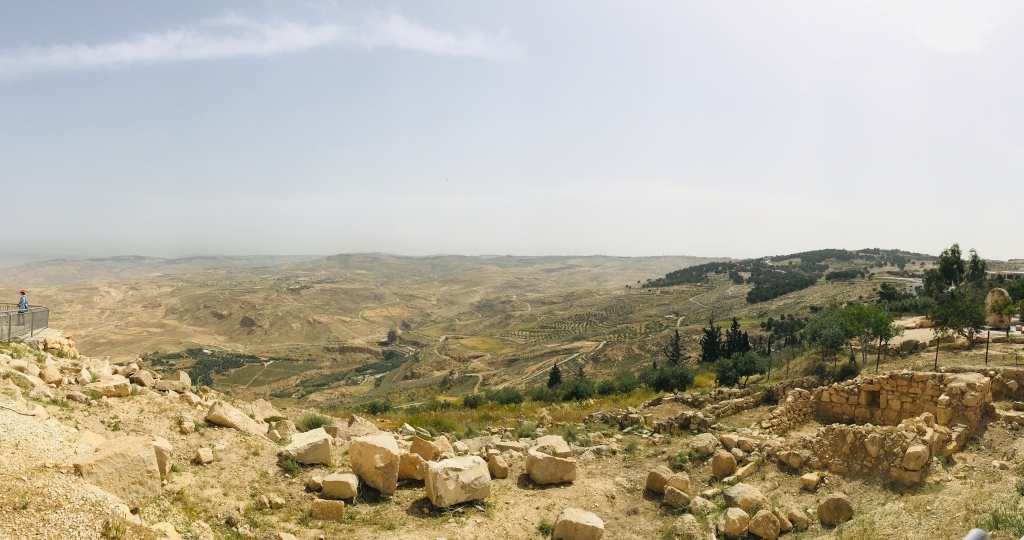
Photo by author, view of Israel from Mt. Nebo, Jordan, May 2019.

Our gospel setting this Sunday strikes a deep lasting impression on anyone who had been on a Holy Land pilgrimage: of those vast expanse of desert in Israel where dusty roads have been replaced by modern concrete or asphalted roads.

Perhaps the feelings remain the same today and during the time of Jesus when he and the Twelve were near the border between Samaria and Galilee, several figures who turned out to be ten lepers appeared at a distance, waving their hands to the Lord. It must have been a surprising sight, then and now, of being found in the desert. Imagine the desperation in their voices of those ten lepers, “Jesus, Master! Have pity on us!” (Lk.17:13).

Jesus right away told them to go show themselves to the priests, and as they went, they were healed. But only one—a Samaritan—returned to thank Jesus who wondered aloud: “Ten were cleansed, were they not? Where are the the other nine? Has none but this foreigner returned to give thanks to God?” Then he said to him, “Stand up and go; your faith has saved you” (Lk.17:17-19).

“The Healing of Ten Lepers” painting by James Tissot en.wikipedia.org

Last Sunday we reflected that faith is primarily a relationship with God; hence, its powers or efficacy will work only when aligned with God and his Holy Will. We will never know how strong we have grown in faith until we get into tests and trials. That is why, the need for us to imitate the Twelve in praying to Jesus, “Increase our faith” (Lk.17:5).

We grow best in faith when we worship God with our fellow believers in the celebration of the Holy Mass especially on Sundays which is our Sabbath. More than a day of rest, Sabbath is a day of restoration to God, with others and most of all, with one’s self. It is a return to Eden, a dress rehearsal of our entry into heaven to dwell in God’s presence eternally.

This is where lies the beauty and significance of this healing of ten lepers – they were not only restored to health but restored in God, to their families, and to their community and fellow believers.

Photo by author, Jerusalem, May 2017.

Those ten lepers have never known any rest at all since getting afflicted with the disease for they were cut off from homes, worship, and community. That is why they could not get near Jesus as they have to keep their distance from everyone according to their laws in order to prevent infecting others and spreading the disease. Likewise, it was the very reason that anyone healed of leprosy or any serious sickness must first present themselves to the priests who have the sole authority to declare one has been healed and therefore may be allowed to reintegrate with their family and community or society in general. Being declared as healed of sickness like leprosy at that time meant the restoration of one’s rights to worship in the temple or synagogue especially on Sabbath.

When Jesus healed them, he restored more than just their bodies and physical health. In sending them to the priests, Jesus invited them into the wholeness of what the Sabbath really is like peace, inclusion, and dignity. 

Or, salvation in short.

Sad to say, only one realized this when he returned to thank Jesus. The healed Samaritan leper knew and felt a deeper healing had taken place within him that he responded with heartfelt gratitude to God in Jesus. There was a deepening of his faith in Jesus when he decided to return to thank the Lord that also expressed his desire to enter into a relationship with Jesus.

Photo by author, Sacred Heart Novitiate, Novaliches, QC, 20 March 2025.

Whenever we thank people for their kindness no matter how little that may be, it is more than acknowledging the other person but most of all, of expressing our links with them as well as our desire to be one with them, especially with God who showers us with good things daily. That is why the Mass is also called Eucharist – from the Greek eucharistia meaning “thanksgiving”. After his skin was cleansed of leprosy in the first reading, Naaman the Syrian Army General declared before the Prophet Elisha that he would worship the Lord alone as he returned to his home with two mule-loads of Israeli soil.

Sorry to say but whenever we refuse to celebrate the Mass on Sundays, it means that we are one of those nine ungrateful lepers healed by Jesus! Don’t you feel being called like the Samaritan to return and give thanks to Jesus for the many blessings you have received this Sunday?

See how in this age of faith in a mass-mediated culture that we have become so impersonal, trusting more our gadgets and all those apps like Siri and Waze as if we have already lost faith in the human person. And God.

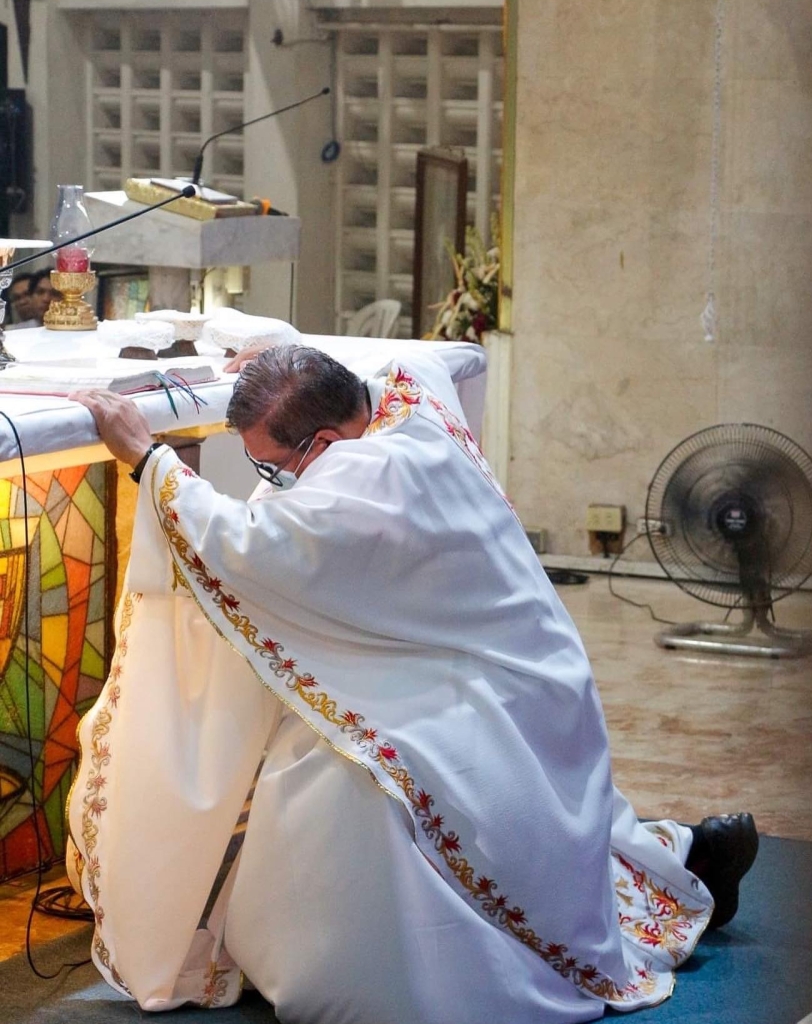
Photo by Mr. Nicko Timbol, Chapel of the Angel of Peace, OLFU-RISE, Valenzuela City, 03 October 2025.

We spend practically our entire days in front of all kinds of screens than with the face of a human person. Again, this sadly extends to the way we worship with many still stuck in the pandemic mode of online Masses not realizing the important and irreplaceable aspect of personal encounter of Jesus in the actual Mass with other believers.

God remains God even if we do not go to Mass every Sunday. It is us who are losing greatly whenever we skip Sunday Masses, our Sabbath. God specifically made his third commandment to “Remember to keep holy the sabbath day” because Sabbath reminds us that life itself is holy in the first place, a sharing in the life of God. What a tremendous blessing still that even if we forget God or disregard God every Sunday, Paul reminds us today of the beautiful truth and reality that “If we have died with Jesus we shall also live with him; if we persevere we shall also reign with him. But if we deny him he will deny us. If we are unfaithful he remains faithful, for he cannot deny himself” (2Tim.2:11-13).

Can you imagine that? If we are unfaithful to Jesus, he remains faithful?

Every Sunday, Jesus tells us to “Stand up and go; your faith has saved you” despite, in spite of our many sins and absences from the Sunday Masses in the past because he wants us to experience the deeper wholeness that comes with faith and gratitude as experienced by that Samaritan leper he had healed. As we continue to journey with Jesus toward Jerusalem facing many trials and sufferings along the way, he calls us to come to him in the Sunday Mass to deepen our faith by resting in his presence.

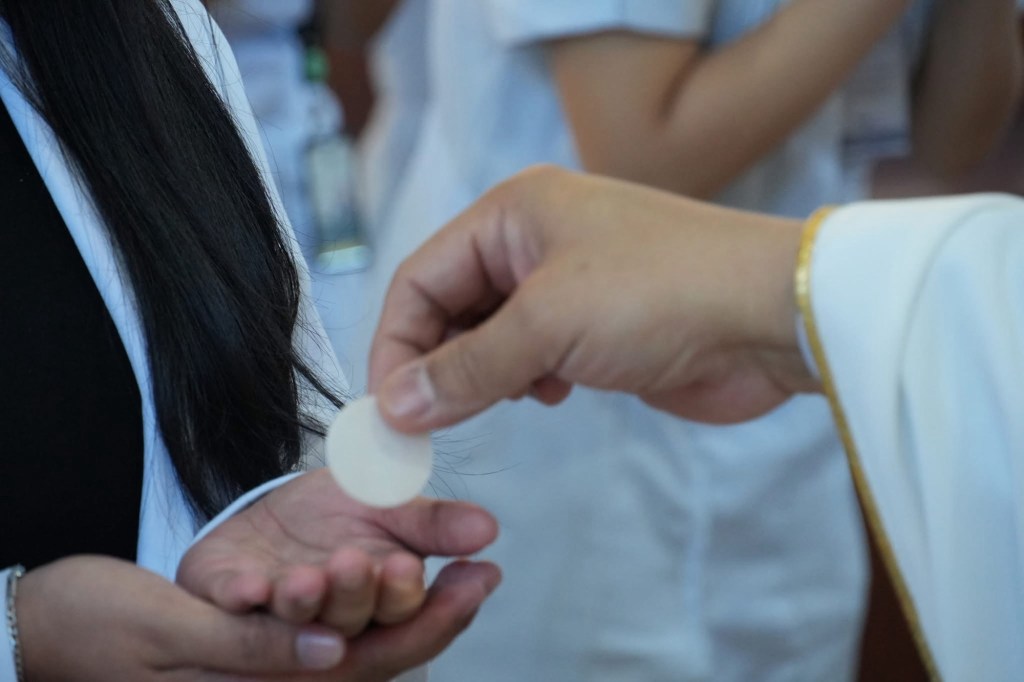
Is there a space in your life at this stage that you feel like one of those lepers, longing for healing and restoration? In the silence of this Sabbath day in our Sunday Mass, speak to Jesus especially after receiving him Body and Blood in the Holy Communion. Amen. Have a blessed week ahead! Fr. Nicanor F. Lalog II, Our Lady of Fatima University, Valenzuela City (lordmychef@gmail.com).
Our Lady of Fatima University-Valenzuela, June 2025.

Re-membering Jesus, Body & Blood

Lord My Chef Sunday Recipe for the Soul by Fr. Nicanor F. Lalog II
Solemnity of the Most Holy Body & Blood of Christ, Cycle C, 22 June 2025
Genesis 14:18-20 ><}}}}*> 1 Corinthians 11:23-26 ><}}}}*> Luke 9:11b-17
Photo by FlickrBrett Streutker from catholic365.com.

From the highest truth of our faith last Sunday which is the Blessed Trinity in one God, we now celebrate in the resumption of Sundays in Ordinary Time the Solemnity of the Most Holy Body and Blood of Christ.

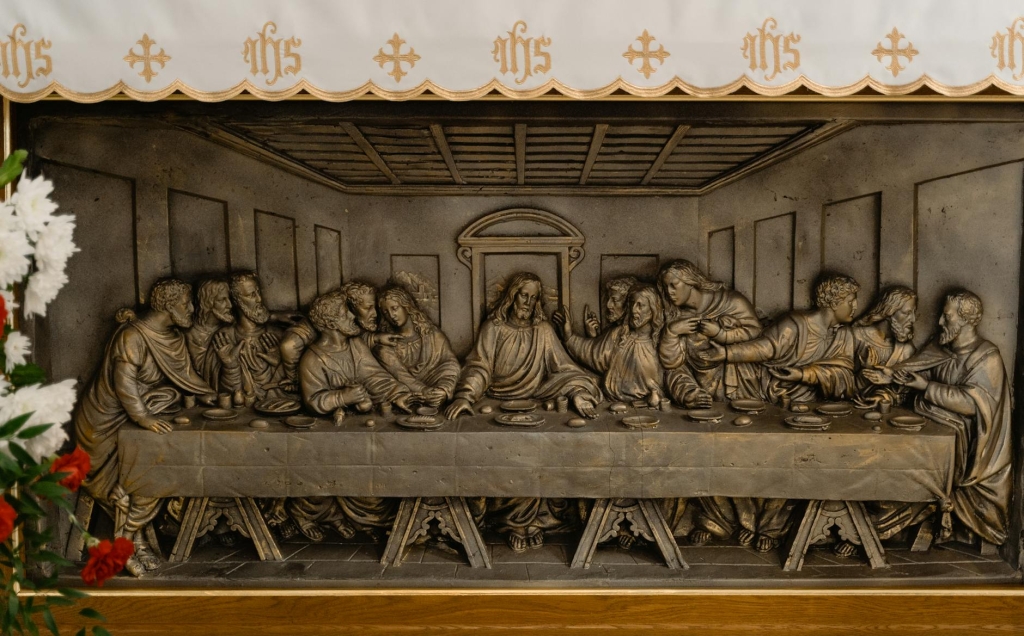
This feast highlights our faith in God who truly exists and had come to us in Christ Jesus, the Second Person of the Holy Trinity. In Christ through the Sacrament of the Eucharist he established at the Last Supper, we are given the “taste” of heaven literally speaking under the signs of bread and wine that become his Body and Blood we share. This was his command on that Holy Thursday evening to always remember him as St. Paul tells us in the second reading, the oldest account of the institution of Eucharist:

Brothers and sisters: I received from the Lord what I also handed on to you, that the Lord Jesus, on the night he was handed over, took bread, and after he had given thanks, broke it and said, “This is my body that is for you. Do this in remembrance of me.” In the same way also the cup, after supper (1 Corinthians 11:23-25).

Photo by MART PRODUCTION on Pexels.com

Two words I wish to share with you on this Solemnity of the Body and Blood of Christ.

First is the word “remembering” or to remember. A very common word we use often but perhaps never aware of its deeper meaning from its root word “member” which means a part. Literally, to remember means “to make part again”. When we remember a person, an event in life, a thing from the past or long gone or not with us, we make them a part of the present moment.

The Eucharist is the highest form of remembering because literally speaking, we make Jesus a member of our present moment. When we re-remember Jesus in the Eucharist, he truly comes to us in Body and Blood! Truly present with us, in us after receiving him in the Holy Communion. Whenever we remember a loved one or a friend long gone or not with us at the moment, all we have is a memory. They become a member of the present but only in the mind unlike Jesus truly present with us, in us, and before us in his words, in his Body and Blood and in one another celebrating the Eucharist.

Photo by author, Old Jerusalem seen from Church of Dominus Flevit, May 2017.

It is not magic but a work of faith, a gift through and through from God in Jesus Christ. By his dying on the Cross and Resurrection at Easter, Jesus superseded and transcended time and space, sharing with us that sacred reality.

St. John Paul II beautifully called that “cosmic reality” when he described in his encyclical Ecclesia De Eucharistia how he felt transported in time and space when the temporal becomes divine because of God’s true presence anywhere he celebrated the Eucharist. We too experience the same cosmic reality in every Mass we celebrate when we are properly disposed, especially the priest and the servers.

That is why I always demand the highest order from priests and servers in celebrating most solemnly as possible the Holy Mass. I can stand kids playing inside the church but what gets to my nerves are servers talking or moving unnecessarily during the Mass and worst of all, when lectors proclaim the word of God incoherently and wrongly. Lest we forget also the choir members feeling so magaling forgetting they are in the Mass not in a concert that they make it a show, forgetting all about God and the people.

What a tragedy when we priests and liturgical ministers are the ones who forget to re-member Jesus in the Eucharist with our too much attention to ourselves. Exactly like the Twelve in our gospel!

As the day was drawing to a close, the Twelve approached him and said, “Dismiss the crowd so that they can go to the surrounding villages and farms and find lodging and provisions; for we are in a deserted place here.” He said to them, “Give them some food yourselves.” They replied, “Five loaves and two fish are all we have, unless we ourselves go and buy food for all these people” (Luke 9:12-13).


Imagine that scene of how the Twelve have totally “forgotten” the more than five thousand people gathered there with them. They were just thinking of themselves because they were in a “deserted place”. What a disrespect!

Respect is lost and disregarded when there is no remembering of others, when we forget others. Respect is from two Latin words re (again) and specere (to look/see) from which the words spectacle and spectacular came from. Re + specere or “respect” means to look again in order to see!

The Twelve were just concerned with themselves, not only forgetting but without respect at all with the people they have failed or refused to recognize as humans too who get tired and hungry like them. As we have cited in earlier, this continues right in our eucharistic celebrations when priests and ministers celebrate unprepared, unmindful of the sanctity of the Mass.

Remembering is not merely “thinking” of others in our mind and memory.

Remembering is making others present in our very selves!

Remembering is making every-body a some-body by giving our very selves to them to be the Body of Christ. Unless we are able to truly share our very selves in person, in body and blood too, then every Mass will remain merely a rite or a ritual. Worst, an activity we just have to fulfill.

The Eucharist is the summit of our Christian life because of this aspect of remembering Jesus Christ that leads us into a true communion of sharing of persons and experiences, in our joys and sorrows, in our hopes and belief. When this happens, then every remembering becomes a thanksgiving too.

And that is our second word I wish to instill in you today – thanksgiving which is the meaning of the Greek word eucharistia.

When there is a real experience of each others’ presence in love and mercy, kindness and care, justice and fairness, gratitude flows naturally resulting in peace and harmony. It is the whole meaning of our first reading when the priest of God named Melchizidek who was also the king of Salem which means “peace” blessed Abram after winning in a battle.

This short scene is a story of remembering God’s goodness to Abram who thanked Melchizidek by giving him a tenth of everything he had won in the battle. In the Holy Mass, what do we really share from our very selves? Not just treasures but even our very time to give totally to Christ without texting.

Now we see the series and cycle of remembering and thanksgiving in sharing of gifts of self which the Body and Blood of Christ signify to us.

This coming Friday we shall celebrate the third consecutive Solemnity in the resumption of Ordinary Time with that of the Most Sacred Heart of Jesus, a reminder to us all to make Jesus present always in ourselves with others especially at this time the world has been deleting from its every aspect God.

Lord Jesus Christ,
transform me like the
bread and wine
into your Body and Blood
to be offered and shared
with others
especially those
in most need.
Amen.
Photo by Pixabay on Pexels.com

Eating well, living well

The Lord Is My Chef Sunday Recipe for the Soul by Fr. Nicanor F. Lalog II
Twentieth Sunday in Ordinary Time, Cycle B, 18 August 2024
Proverbs 9:1-6 ><}}}}*> Ephesians 5:15-20 ><}}}}*> John 6:51-58
Photo by author, James Alberione Center, QC, 15 August 2024.

It is our fourth consecutive Sunday listening to the sixth chapter of John’s gospel that opened with the miraculous feeding by Jesus of more than five thousand people in a deserted place; Jesus fled from there, went back in Capernaum where people caught with Him and disciples as He began three Sundays ago His “Bread of Life” discourse now getting deeper while the drama among the crowd is heating up.

From murmuring last Sunday about Jesus who said “I am the bread that came down from heaven” (Jn.6:41), the people today quarreled among themselves after Jesus said “I am the living bread that came down from heaven; whoever eats this bread will live forever; and the bread that I will give is my flesh for the life of the world” (Jn. 6:51).

Photo by author, James Alberione Center, QC, 15 August 2024.

Notice the beautiful contrast of reactions by people to Jesus: from murmuring last Sunday, they sank deep into quarreling while Jesus leveled up to “the living bread from heaven” from merely “the bread from heaven” last week. For us to live well, we have to eat well by having Jesus Himself as our food and drink.

The Jews quarreled among themselves, saying, “How can this man give us his flesh to eat?” Jesus said to them, “Amen, amen, I say to you, unless you eat the flesh of the Son of Man and drink his blood, you do not have life within you. Whoever eats my flesh and drinks my blood has eternal life, and I will raise him on the last day. For my flesh is true food, and my blood is true drink. Whoever eats my flesh and drinks my blood remains in me and I in him. Just as the living Father sent me and I have life because of the Father, so also the one who feeds on me will have life because of me” (John 6:52-57).

Photo by Ms. Ria De Vera in Banff, Alberta, Canada, 07 August 2024.

Eating is the most common human activity anywhere, any time. Human life basically revolves around eating as we have seen since time immemorial how we have progressed following our search for food. We work to feed ourselves and loved ones. Without food, we die. Food is so essential that there is always food to share in our gatherings.

That is why Jesus chose the bread and wine as the signs of His living presence among us in the Holy Eucharist He established during the Last Supper on Holy Thursday. In the Eucharist, Jesus elevated the most ordinary human activity of eating as most sublime and Divine. In the Holy Mass, we share in Christ’s Body and Blood so we too may share our very selves with one another.

When Jesus said in Capernaum that the bread He is giving is His own flesh with His blood as drink, He was already preparing the people for the Eucharist while at the same time teaching them that eating is not everything. We have to eat well to live well. When tempted by the devil in the wilderness, Jesus right away taught us to remember that man does not live by bread alone but with every word from God. At the start of this discourse last August 04, Jesus challenged the people, “Do not work for the food that perishes but for the food that endures for eternal life, which the Son of Man will give you” (Jn.6:27).

Photo by Ms. Ria De Vera in Banff, Alberta, Canada, 07 August 2024.

Many times, we get so used in our many activities that unconsciously, we miss life itself as we punish ourselves with exhaustion and sickness as well as emptiness.

Food is not just something that fills our stomach but must also lead into our heart and soul. Observe any cuisine and you get a taste of the culture and people it represents, even with strong hints of its geographical origin. In the first reading we find how the Book of Proverbs personified Wisdom as God to remind us that though He is transcendent and so above us, God is easily accessed even in the most ordinary instances like eating.

Wisdom has built her house, she has set up her seven columns; she has dressed her meat, mixed her wine, yes, she has spread her table. She has sent out her maidens; she calls from the heights out over the city: “Let whoever is simple turn in here; to him who lacks understanding, I say, Come, eat of my food, drink of the wine I have mixed! Forsake foolishness that you may live; advance in the way of understanding” (Proverbs 9:1-6).

How lovely is that part of God calling us to come like Jesus in the gospel when He said “come to me all who are burdened” or when He ordered to “let the children come to me”. Is it not the same thing we say when we are about to eat, to come and get it?

Sadly these days, we seem to have retrogressed in our manner of eating. Social media rightly labeled it as “food porn” when we are flooded with everything about food and drinks minus its deeper meanings. Food is sadly seen in its material aspect that eating is more on filling the stomach, forgetting the soul because we have totally forgotten God and the people around us. No wonder that despite the growing food production and plethora of food we have these days, many still starve while the rest of us remain lost in life, more sick.

Photo by Ms. Ria De Vera in Banff, Alberta, Canada, 07 August 2024.

See, my dear friends, the great coincidence on the very Sunday Jesus began his bread of life discourse, it was also the opening of the Paris Olympics with a mockery of the Last Supper that led us into a kind of “quarrel” as organizers and their supporters insisted it wasn’t the Last Supper at all despite the clear indications and proofs.

“How can this man give us his flesh to eat?” Suddenly, we heard anew that same question by the people in Capernaum to Jesus reechoed in the Olympics at the capital city of the Church’s so-called “eldest daughter”, France. Of course, we know this bread of life discourse by Jesus refers to the Holy Eucharist and surely, the many defenders of the Paris Olympics are aware for many of them are Catholics. But, Jesus must have willed this gospel be proclaimed at this time coinciding with the Olympics for us to evaluate anew our faith in Him because at the very core of this bread of life discourse is the mystery of faith.

“How can this man give us his flesh to eat?” In the gospel of Luke, we find a similar question by Mary at the Annunciation that is filled with faith, “How can this be?” (Lk.1:34); but today, like in Capernaum as exemplified by the Paris Olympics, that question is a renewed refusal to believe in the words of Jesus Christ. Worst of all as we noted earlier in our perceptions of food and eating these days, that question shows modern man’s insistence on everything material, totally disregarding our spiritual nature.

Photo by Ms. Ria De Vera in Banff, Alberta, Canada, 07 August 2024.

Like in Capernaum, many people today who refuse to believe Christ’s words resort to malicious and insidious arguments that it becomes useless to really converse with them as they would rather insist on their grossly material understanding and perception of life these days. Many prefer to quarrel these days than accept life’s many mysteries not merely seen nor tasted by the senses but experienced and realized through faith in God.

Life for them has become merely material which in Greek is bios as in biology. There is another Greek word for life which is zoe that refers to the eternal, divine life of God that Jesus repeatedly used in our gospel today.

Like last Sunday, Jesus did not engage Himself into debating with the crowd in Capernaum by simply repeating the words living and life to emphasize the total acceptance of Him – Body and Blood – in faith: “I am the living bread… my flesh for the life of the world. Just as the living Father sent me and I have life because of the Father, so also the one who feeds on me will have life because of me.” These are the very same words too, life and living that Jesus would mention before His Passion and Death as well as after His Resurrection because eating His flesh and drinking His blood is to share in His life that is also the fullness of life. It is only in Christ Jesus can we find fulfillment in life. Let us pray:

Lord Jesus Christ,
help me watch carefully
how I live, not as a fool
but as wise as St. Paul taught
us today in his letter to the Ephesians;
let us not be intoxicated
with life's pleasures and worldly pursuits
but let us be filled with the Holy Spirit.
Amen.

Photo by author, 15 August 2024.

Walking with Jesus

The Lord Is My Chef Holy Thursday Recipe, 28 March 2024
Exodus 12:1-8, 11-14 > + < 1 Corinthians 11:23-26 > + < John 13:1-15
Photo from wikipediacommons.org of Christ’s washing of feet of Apostles at Monreale Cathedral in Palermo, Italy.

Tonight we start the Easter Triduum – the three holy days of the Passion, Death, and Resurrection of Jesus Christ with the Mass of the Lord’s Supper and Washing of the Feet. 

In our Mass tonight, there will be no dismissal after Holy Communion that is immediately followed by a short procession inside the church of the Blessed Sacrament to its repository that will be the focus of “Visita Iglesia” (not Stations of the Cross) when people “visit” at least seven churches to pray to the Divine Presence of Jesus. Tomorrow in most parishes is the “via Crucis” or Way of the Cross then in the afternoon after the Veneration of the Holy Cross is the Procession of the Burial of the Lord. 

See how on these most holy days of the year, much of our activities involve a lot of walking – and rightly so because Jesus Christ was always walking even to His Crucifixion and after Resurrection.

Hence, on the night He was betrayed after Supper, He washed the feet of His disciples including us today because He had also known how difficult and tiring it is to always walk in this life.

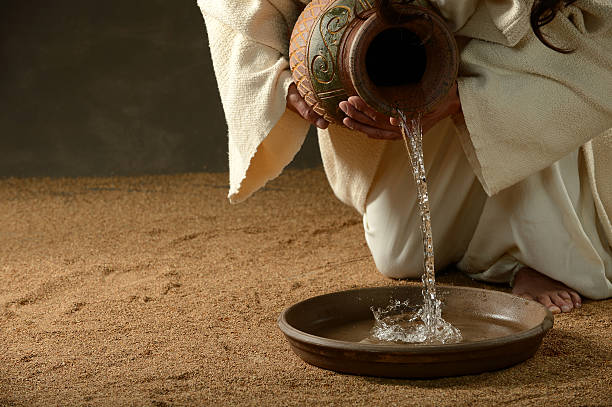
“…fully aware that the Father had put everything into his power and that he had come from God and was returning to God, he rose from supper and took off his outer garments.  He took a towel and tied it around his waist.  Then he poured water into a basin and began to wash the disciples’ feet and dry them with the towel around his waist.”

John 13:3-5
From IStock/GettyImages.

More than reenacting the washing of the feet, tonight we are reminded by Jesus of the journey ahead to his Crucifixion when – with apologies to Robert Frost – we still have to walk “miles to go before we sleep” by choosing the road less travelled “that made the difference.”

And here lies the problem of our time: with the advancement of technology, our modes of transportation like communication have greatly affected our relationships with others, for better and for worse.  From being peripatetic persons, we have become more accustomed to riding, of getting fast and effortless to our destination that we no longer walk that much unlike before that has affected even our relationships with one another.  How can we continue the work of Jesus when we no longer walk that much? 

Photo by Mr. Raffy Tima of GMA-7 News, 2020.

Observe how it has become so difficult to ask for directions these days because nobody is walking anymore.  Most of us are ensconced in our own vehicles that have become our own little world and tiny universe every time we travel even if it were just a “walking distance”.  Aside from breaking apart from the rest of humanity, we have also become very impersonal in the sense that we now rely more with Google maps and other travel apps than with the ordinary “man on the street.” Worst, we rarely touch the ground with our bare feet that if ever we would walk, it has been relegated to mere physical fitness often done alone with earphones as companions.  We have not only grown apart from others but have also lost touch with earth because we no longer walk that much like Jesus and His disciples.

Two weeks ago during my retreat, I walked around the vast grounds and mini-forests of the Sacred Heart Novitiate in Novaliches when I realized that priesthood is peripatetic in nature because it is a ministry that walks to reach out, search for the missing sheep as per instruction of the Lord.  Jesus even added that in fulfilling our mission, we must carry nothing when we walk except a staff and sandals. 

Walking with our parishioners in the Via Crucis, 01 March 2024.

Moreover, priesthood is a ministry of being companions as shepherds in the journey of the people. That is why Jesus is our Good Shepherd because He is the One who truly journeys with us in this life.  He is the One who continues to walk with us in our many ups and downs, in the many dusty trails and harsh realities of life that no gadget or wealth or media platform could bring comfort and security to any weary traveler. 

It is only in walking when we could truly journey with others in life to converse with them and listen to their doubts and frustrations like the two disciples walking back to Emmaus three days after Good Friday.  It is only in walking can we truly meet the sick, the orphaned and the widowed, the blind and the lame, the sinners and the misfits the world had left behind or pushed onto the margins of the society, far from our superhighways. 

Most of all, when we walk we touch ground, we feel the earth called “humus” in Latin, the origin of the words human and humility.  Could it be that we have become less humble today partly because of our refusal to walk more often?

Forgive us your priests when we have refused to walk with you especially when you are troubled and lost.  Forgive us your priests as we have ceased to be like Jesus who walked most of the time because we have been so obsessed riding and travelling most of the time in our cars and SUV’s as well as mountain bikes and big bikes that have insulated us from your cries and anguish.  We have not only lost the art of walking but have totally forgotten about walking the extra mile to pray and commune with our Lord and Master Jesus Christ found among the poor and the sick, the marginalized peoples forgotten in our upwardly, mobile society. 

Photo by author, Sacred Heart Novitiate, Novaliches 20 March 2024.

We always hear the expression “life is a journey.”  Our first reading tonight attested to this reality when God reminded the chosen people preparing for exodus from Egypt “to eat and dress like those who are in flight”(Ex.12:11). 

The original concept of the restaurant is not just a place where people stop to eat during a long journey.  Restaurants were truly “rest stops” where travelers could rest their feet by soaking them in warm water so that they could travel again to reach their destination. 

The Holy Eucharist is a “sacred restaurant” where we eat and drink the Body and Blood of Christ who nourishes us in our life journey.  Most of all, in the Eucharist and Sacrament of Reconciliation, Jesus continues to wash our feet to cleanse us from our sins and burdens to make this journey of life lighter and easier.  When we receive Him in the Holy Communion, we make Him our “companion” in life filled with darkness and pains, uncertainties and lack of direction.  The word companion literally means “someone you break bread with” – a beautiful picture of the Eucharist described to us by St. Paul in the second reading. 

From istock/GettyImages.

In washing the feet of His disciples, Jesus Christ showed us in His humble gesture that He is indeed our Savior who went down so low even unto death on the Cross to express His immense love and mercy for each of us.  Everything that transpired on the night He was betrayed prefigured the events of Good Friday which we make present every time we celebrate the Eucharist that is summed up in loving service for one another. 

Do we still walk?  And if we walk, who is our companion, the one we break bread with?  Likewise, do we walk our talk of our faith?

May we never leave behind Jesus among our family and friends as we walk through this life.  A blessed Holy Thursday to everyone. Amen.

Praying to be a “devout” person

The Lord Is My Chef Daily Recipe for the Soul by Fr. Nicanor F. Lalog II
Wednesday in the Third Week of Easter, 26 April 2023
Acts 8:1-8   ><]]]]'> + ><]]]]'> + ><]]]]'>   John 6:35-40
Photo by Mr. Jim Marpa, 2019.
Lord Jesus,
teach me to be a "devout"
person; not just righteous or
holy but devout as well
like those "Devout men (who)
buried Stephen and made a loud
lament over him" (Acts 8:2).

Yesterday, you taught us dear Lord
that whatever is in our heart is
reflected on our face;
today you teach us that
to be "devout" is still of the heart
which is to be of a good heart 
ready to believe and act openly
with courage on that belief.
Only St. Luke used the adjective
"devout" to describe some persons
like Simeon who praised God upon
seeing Jesus when presented to the
temple by his parents; the Jews from
all over the world who came to observe
Pentecost day in Jerusalem;
the men who buried Stephen, and
Ananias who sought Saul while 
still blind to bring him to the Church.
Many times dear Lord
our being devout is 
self-serving when we merely
open our eyes for things 
that are seen in our many 
devotions, seeing more our selves
failing to see Christ in 
the other persons
who have to be loved
and cared for, understood
and forgiven, accepted and
affirmed.  
No wonder until now,
though we receive you Jesus
in the Eucharist, we do not 
experience and feel your Body,
your Person because our hearts
are not open at all to you through
others especially the sick and
suffering.  Amen.

Loving to the end

The Lord Is My Chef Recipe for the Soul by Fr. Nicanor F. Lalog II
Maundy Thursday, 06 April 2023
Exodus 12:1-8, 11-14  +  1 Corinthians 11:23-26  +  John 13:1-15
Photo by author, Holy Thursday 2019, Parokya ni San Juan Apostol at Ebanghelista, Bagbaguin, Sta. Maria, Bulacan.

Tonight we begin the most solemn days of the year called the “Holy Triduum” of Maundy Thursday, Good Friday, and Easter Vigil. All roads rightly lead to the Parish Church at sundown for the celebration of the Holy Eucharist that begins with the Tabernacle empty. There will be no dismissal at the end of the Mass, it is open ended. Most of unique of all in tonight’s Mass is the ritual of the washing of feet of some members of the community.

But there is something more beautiful to the ritual washing of feet. It is the context and words from John’s gospel that set the mood of tonight’s mood and tone of celebration as well as the hint of the meaning of Good Friday too.

Before the feast of Passover, Jesus knew that his hour had come to pass from this world to the Father. He loved his own in the world and he loved them to the end.

John 13:1
Photo by author, Holy Thursday 2019, Parokya ni San Juan Apostol at Ebanghelista, Bagbaguin, Sta. Maria, Bulacan.

First thing we have to consider here is the fact that “Jesus knew his hour had come to pass from this world to the Father.” He was never caught by surprise. Jesus knew everything, was never taken over by events. Luke said it beautifully after his identification as the Christ at Caesarea Philippi, When the days for his being taken up were fulfilled, he resolutely determined to journey to Jerusalem (Lk. 9:51).

We have heard in the first reading the story of the exodus of the Israelites, their passover from Egypt to the Promised Land, their passover from slavery to freedom that was perfected by Christ’s own pasch beginning tonight with his Passion, Death and Resurrection. This is our call, to live Christ’s Paschal Mystery daily, to be one in him, one with him, one through him in passing over life’s many challenges and trials.

To passover means to grow, to mature, to overcome, to hurdle. Every day we go through many series of passovers, from sickness to health, from sinfulness to forgiveness, from failures to victory, from our little deaths to our daily rising to new life in Jesus. This we can only accomplish with love, the kind of love by Jesus Christ.

That is the second, most important thing we must consider in John’s brief introduction to our gospel tonight, Jesus “loved his own in the world and he loved them to the end”. The Greek word for the “end” is telos which is not just a terminal end in itself but indicates or connotes direction. Or fulfillment and perfection, not just a ceasing or end or stoppage of life or any operation. Jesus knew everything that is why his life here on earth had direction which is back to the Father, with us. Everything he said and did was out of love for the Father and for us.

From google.

Love is the sole reason Jesus came to the world to save us because we have failed to love from the very beginning. It is love that Jesus showed us on that Holy Thursday evening to be fully expressed on Good Friday when he died on the Cross. His whole life was love because he himself is love. This he showed when he washed the apostles feet and after that, asked them and us to do the same with each other. That is love’s highest point when we are able to get to our lowest point of service and love. In our daily passover, it is love that moves us to keep on going with life’s many ups and downs because we love our parents, our siblings, your wife or husband, your children. Our vocation and the people entrusted to us. We go through our passover we because we love.

When Jesus died on the Cross, he said, “It is finished” – meaning, he had fulfilled his mission, that is, he had perfectly loved us to the end by giving us his very life. At his death on the Cross, Jesus showed us perfectly his love for us, the Father’s love for us that he had told to Nicodemus at the start of John’s gospel that “God so loved the world that he gave his only Son” (Jn. 3:16).

This is the love Jesus spoke of during that supper that rightly prompted St. Paul to put into writing, the very first one to do so in the New Testament:

Photo by author, 2019.

Brothers and sisters: I received from the Lord what I also handed on to you, that the Lord Jesus, on the night he was handed over, took bread, and, after he had given thanks broke it and said, “This is my body that is for you…” In the same way also the cup, after supper, saying, “This cup is the new covenant in my blood. Do this in remembrance of me.”

1 Corinthians 11:23-24, 25

There on the Cross this was definitively fulfilled and perfected more than ever. Jesus did not have to die on the Cross but he chose to go through it because of his love for us.

Here we find the beautiful meaning of love expressed to us in the celebration of the Holy Eucharist. More than obedience to commandments and keeping the laws of God by being good and kind with everyone, love is the perfection of life.

Love is our true destiny – end – in life, our call to life from the very beginning.

Keep on loving until it hurts. Until the end because God is love as John wrote in his first letter where he beautifully expressed, Beloved, if God so loved us, we also must love one another. No one has ever seen God. yet, if we love one another, God remains in us, and his love is brought to perfection in us (1 Jn. 4:11-12).

Love, love, love.

Photo by Ms. April Oliveros, Mt. Pulag, 25 March 2023.

My dear friends, only God can love us perfectly. Only Jesus can love us perfectly like what he did on the Cross.

Human love is always imperfect. That is why Jesus showed us the example of washing the feet of his apostles at the Last Supper.

In the Holy Mass, we all bow down before God and with everyone at the start to confess our sins, to admit our sinfulness “in what we have done and failed to do.”

In the Eucharist, Jesus fills up, completes our imperfect love with his love found in his words, in his peace we share with others, and most especially in his Body and Blood we receive.

St. Paul rightly reminded us of this meaning of the Eucharist, For as often as you eat this bread and drink the cup, you proclaim the death of the Lord until he comes (1 Cor. 11:26). This is why we have to celebrate Mass every Sunday. Most especially on holy days like tonight and Easter. Please, complete the Holy Triduum until Easter. Go on vacation some other date. Give these days to God who gave us his Son Jesus Christ by dying on the Cross for us.

Let us pray silently, be wrapped and awed by that mystery of the Eucharist Jesus established on that Holy Thursday evening at the Upper room.

Dearest Jesus,
teach us to love you more
by imitating your love,
of humbly going down to serve
even those who betray us,
of bending our hearts
to forego all bitterness
and festering anger within,
"let our tongues sing the 
mysteries telling of your Body, 
price excelling of your Blood"
in a life of loving service,
of daily dying in you
with you and
through you.
Amen.

Have a blessed and meaningful Holy Triduum. Please pray and reflect on God’s love for us these days at home, in the church.

God saves

40 Shades of Lent by Fr. Nicanor F. Lalog II
Palm Sunday of the Lord's Passion, 02 April 2023
Isaiah 50:4-7 > + < Philippians 2:6-11 > + < Matthew 27:11-54
Photo by author, Palm Sunday of the Lord’s Passion 2019, Parokya ni San Juan Apostol at Ebanghelista, Bagbaguin, Sta. Maria, Bulacan.

We now enter the holiest week of the year, the height of our Lenten preparations for Easter. What we have today are two ancient celebrations merged by Vatican II in 1963: the blessing of palms practiced in Jerusalem as early as the fourth century and the papal tradition of proclaiming the very long gospel of the Lord’s Passion in Rome about year 500. Hence, the title “Palm Sunday of the Lord’s Passion”.

And it is a beautiful innovation in our liturgy showing us so many truths in our lives like we begin Holy Week with the triumphal entry of Jesus to Jerusalem, leading to the Holy Triduum of Passion and Death on Maundy Thursday and Good Friday into the bursting joy and glory on Easter.

That for me is life itself.

We come into this world in triumph like Jesus with everybody rejoicing with our birth until we grow up, going through a lot of pains and sufferings with little deaths right in the hands of those supposed to love us but always, there is the joy of maturity, of fulfillment in Christ with many Easter moments of triumphs and consolations. Today’s celebrations remind us that while there will always be the disappointing manifestations of sin and evil in life, overall, there is always the immense and immeasurable love of God expressed in Jesus Christ dying on the Cross.

“Ecce Homo” painting by Vicente Juan Masip (1507-1579) from masterapollon.com

Our gospel is very long even in its shorter version. Let us focus on the Lord’s silence from his arrest to His crucifixion.

The Lord God has given me a well-trained tongue, that I might know how to speak to the weary a word that will rouse them. I gave my back to those who beat me, my cheeks to those who plucked my beard; my face I did not shield from buffets and spitting. The Lord God is my help, therefore, I am not disgraced; I have set my face like flint, knowing that I shall not be put to shame.

Isaiah 50:4, 6-7

Jesus is the fulfillment of the so-called Suffering Servant of God in the Book of Isaiah. What is striking is how he claims to have been given with a well-trained tongue but He rarely spoke when tried and crucified, choosing to be silent in the midst of great sufferings. What a great display of love for us!

In a world drowning in a cacophony of sounds and noise with everyone and everything speaking like elevators and cellphones, the more God is silent, waiting for us to stop and listen to Him in Jesus Christ who speaks within us. From Pilate to the soldiers to the Pharisees and priests with their rabid packs of demagogues who ceaselessly mocked Jesus even while slowly dying on the Cross, Jesus remained silent.

Because He loves us.

Because He waits for us to stop and listen.

Because life is more true and fulfilling in silence, not in sounds and noise.

Last Monday we celebrated the Feast of St. Joseph where we heard in the gospel how an angel told him to take Mary as wife with the specific task of naming her child “JESUS” which means “God saves”. See how God gave that specific mission to the most silent man in the Bible, St. Joseph who must have taught Jesus the value of silence!

That is how God saved us in Jesus by remaining silent even on the Cross. If ever He spoke, it was mostly to pray the psalms. In Jesus, God saves us in silence while we are in the din of noises of sin. Oh how we speak a lot these days against God, still putting Him on trial, blaming Him for all the problems and woes we have in our lives and in the world.

Photo by author, August 2020.

Like Pilate and the crowd with their religious leaders, we say a lot about God that are often not true but He never argued nor debated with us just like then because Jesus loves us, because His name means “God saves” and that was exactly the meaning of His silence.

How could be God so demanding as many would claim with His many words of instructions and commandments of things to do and not to do plus warnings against sin just to obey Him when He has always been silent?

Today we are reminded how we talk too much and accomplish so little, even nothing, while Jesus is silent because His name means “God saves”, witnessing it in fact in silent sufferings that was a scandal for many at that time.

Moreover, Jesus showed us today in His sufferings how silence is ultimately the expression of trust in God. When we are able to slow down and be silent in the face of many trials, that is a clear indication of our deep faith and trust in God. People who trust are the most silent because simply wait for their deliverance or salvation. Like Jesus Christ.

Christ Jesus, though he was in the form of God, did not regard equality with God something to be grasped. Rather, he emptied himself, taking the form of a slave, coming in human likeness; and found human in appearance, he humbled himself, becoming obedient to death, even death on a cross.

Philippians 2:6-8
Photo by author, Betania-Tagaytay City, 2018.

More scandalous than the silence of Jesus Christ during His trial was His crucifixion, the supreme expression of His name’s meaning, “God saves”. See how since the fall of Adam and Eve, sin has always been an attempt by humans in becoming like God. There has always been that conscious or unconscious feeling of competition with God whom many see as controlling, manipulative and even power-hungry.

But right there on the Cross, Jesus showed us that indeed, in His very Person how God saves by utterly being weak and powerless.

God saves us in Jesus through the path of powerlessness and weakness, docility and humility, of simplicity before men and before His Father.

That is why even at His triumphal entrance to Jerusalem, He rode a lowly donkey never been used by anyone, a fulfillment of many Old Testament allusions and prophecies that “your king comes to you, meek and riding on an ass, and on a colt, the foal of a beast of burden (donkey)” (Mt. 21:5; Zech. 9:9). His triumphal entry into Jerusalem was the fulfillment of the words of God to his prophets, showing us that indeed, everything Jesus did and said were in accordance with the Father’s will, never on His own.

Photo by author, 2018.

Because His name Jesus means, “God saves”.

What is most beautiful in the reading earlier at the blessing of palms was how Matthew described the Lord’s triumphal entry into Jerusalem – exactly just like the coming of the wise men from the East!

And when he entered Jerusalem the whole city was shaken…

Matthew 21:10

Imagine how a very large crowd welcomed Jesus, spreading their cloaks on the road where He passed, chanting “Hosanna to the Son of David” (Mt.21:9).

Like when Jesus was born and Magis from the East came to Jerusalem inquiring about the newborn king of Israel, they were also shaken! And the irony then at His birth and at His triumphal entry, the learned have refused to recognize Him despite their having all the knowledge and writings available to them.

Is it not the same thing continues to happen to us in our lives, when despite all the kindness and mercy of God, we refuse to recognize His Son’s coming Jesu Christ including the salvation He had gained for us? Where have all the people gone on Sundays? Does God still matter to us? Do we not care at all whenever Jesus comes to us most especially in the Eucharist during the Sunday Mass?

Both the rites of the blessing of palms with the procession and the Mass on this Palm Sunday of the Lord’s Passion are not merely a recalling of a past event, but a making present, a re-membering of Jesus our King triumphantly coming daily – still in silence – to us in the simplicity of bread and wine to become His Body and Blood for us to offer and share in order to experience Him, our Resurrection and Life because His name means “God saves”.

In the Eucharist, Jesus comes to us as “God saves us”, fulfilling us, blessing us.

This Holy Week, especially at the Holy Triduum of Holy Thursday, Good Friday and Easter Vigil, we are reminded of our task to witness to everyone the meaning of the name of Jesus, “God saves” by being present to Him in the Eucharist. Inside the church. With our family. Not in the beach nor a resort unmindful of history’s greatest moment when God saved us from sins by dying on the Cross. Amen. Please, have a meaningful Holy Week to experience the joy of Easter!

Corpus Christi: Everybody a somebody

The Lord Is My Chef Sunday Recipe for the Soul by Fr. Nicanor F. Lalog II
Solemnity of the Body and Blood of Jesus Christ, 19 June 2022
Genesis 14:18-20 ><}}}}*> 1 Corinthians 11:23-26 ><}}}}*> Luke 9:11-17
Photo by Ms. Ria De Vera in Bagbaguin, Sta. Maria, Bulacan, November 2020.

A week after celebrating the Solemnity of the Blessed Trinity, we celebrate today the reality of this mystery of our personal God who relates with us with the Solemnity of the Body and Blood of Jesus Christ.

This Solemnity of the Body and Blood of Jesus Christ reminds us of the great honor of every person, of everybody as a part of the Body of Christ who became human like us to share his very self so that we too may become food for everyone. It is a very timely and appropriate feast when we are deluged with news here and abroad of how people are treated as nobody.

The recent viral video of an SUV driver bumping a security guard in a busy intersection in Mandaluyong remains a hot trending topic precisely because it is a story of how poor people are disregarded in this nation. Although the suspect had surrendered to authorities after a week of “no-show” to summons, statements especially by his mother ignited only more fire into the blazing topic. Adding insult to injuries to the nation is the press conference called by the police in presenting and speaking for the suspect which is absurd and directly opposite to how they deal with poor people involved in similar offenses.

Over in the United States where one loses count of victims of shootings happening almost every week, lawmakers grandstand for more gun controls for the protection of children when in fact, the same lawmakers refuse to consider the child in the mother’s womb as a person with a right to life that they have legalized abortion. Almost everywhere in the world, see how people take some people as somebody and others as nobody. So contrary to what Jesus is telling us in the gospel today, that everybody is a somebody. Observe how the disciples of Jesus acted in the gospel:

Jesus spoke to the crowds about the kingdom of God, and he healed those who needed to be cured. As the day was drawing to a close, the Twelve approached him and said, “Dismiss the crowd so that they can go to the surrounding villages and farms and find lodging and provisions; for we are in a deserted place here.” He said to them, “Give them some food yourselves.” They replied, “Five loaves and two fish are all we have, unless we ourselves go and buy food for all these people.” Now the men there numbered about five thousand. Then he said to his disciples, “Have them sit down in groups of about fifty. They all ate and were satisfied. And when the leftover fragments were picked up, they filled twelve wicker baskets.

Luke 9:11-14, 17
Photo from istock-studios.com by Getty Images.

We have heard this story so many times and yet, we continue to miss its whole meaning that it continues to happen in our lives minus the miracle of Jesus. See how Luke tells us first that Jesus spoke to the people about the kingdom of God.

We will never experience Jesus in his person, in his Body and Blood unless we listen first to his words, to his teachings of the kingdom of God. That is why in the Mass, the first part is the liturgy of the word to prepare us for the liturgy of the eucharist. So many times in life, we dismiss right away anything that is spiritual in nature like prayers and the sacred scriptures, of faith in God.

Luke does not tell us how Jesus multiplied the loaves and fish; we have to leave it to him how he did it. After all, he is the Son of God. Recall how during his temptation by the devil to turn stones into bread and he answered that “one does not live by bread alone but by every word that comes forth from the mouth of God” (Mt.4:4). Here in this scene, his words were precisely fulfilled when he fed the people after they have opened themselves to God’s words, to God himself.

Miracles happen in our lives when we first open ourselves to God himself. And opening to God means opening to others too by seeing everyone as a brother and sister in Christ whom we must care for.

Photo by Fr. Howard John Tarrayo, August 2021.

Too often, we tend to isolate ourselves from others, thinking only of ourselves and own good and comfort like the Twelve who asked Jesus to dismiss the crowds so they would find food and lodging for themselves in the wilderness.

What a sad reality still happening today, of how even parents and couples would proudly say how difficult it is to have another child because it is expensive. We have become so utilitarian in our perspectives in life that we compute everything as a cost, forgetting God except when praying which is precisely for asking for more blessings without even seeing the overflowing abundance of gifts from God.

Notice that despite the affluence of many these days, both as individuals and as nations, many are afflicted with the scarcity mentality, of not having enough, fearful of losing money and other resources like oil that we now have this exorbitant fuel prices.

When Jesus told the Twelve to “give the crowds some food yourselves”, he is telling us to look at God first for he is a God of abundance. Abraham in the first reading gives us the best example of always trusting God, of finding God behind every blessings we have. Abraham had just won a war with several kings in the region by the power of God who sent his priest named Melchizedek to bless him with bread and wine after. But unlike other victors in war, Abraham never had intentions of taking all the wealth and treasures of the kings he had beaten and instead gave Melchizedek the priest of God “a tenth of everything” (Gen.14:20).

Our response to God’s many blessings to us is to “tithe” ourselves like Abraham but not just ten percent as the Old Testament had taught but like Jesus in the New Testament by giving all of our very selves. This is the meaning of Paul’s words in the second reading of “proclaiming the death of the Lord until he comes” as often as we eat this bread and drink the cup (1 Cor.11:26).

We have learned and realized (hopefully) during the past Lenten and Easter seasons that death leads to new life in Jesus Christ when we share our very selves like him. God blesses us abundantly daily with his life and other blessings. There is enough for everyone. That is the meaning of the leftovers of twelve wicker baskets, one each for every apostle of the Lord who represented us.

Photo by Pixabay on Pexels.com

This Solemnity of the Body and Blood of Jesus we receive in the Eucharist reminds us not only of the sublime gifts of God to each of us but also of our ultimate response of dying to ourselves so we may share Christ’s life to the world so dead with ego and selfishness, a world of “I” and “me” and “my” and “mine” totally disregarding everybody as nobody.

As we celebrate today the Body and Blood of Christ honoring him with Masses, vigils and processions, remember how not everybody in the world is considered a somebody unless one has wealth and power. It is the new meaning given by modern man to the golden rule – he who has gold rules, implying that the poor are always taken as a nobody, bearing all the abuses of those in power and authority.

Let us examine ourselves how we have contributed to these abuses still going on, even in our thoughts at the way we perceive others, especially those not like us in status and beliefs and colors.

After receiving Jesus Christ’s Body and Blood in the Eucharist, silently pray:

Dearest Lord Jesus Christ:
empty myself of pride and 
fill me with your humility, justice and love;
reign in my heart now and always.
Amen.

A blessed week to everyone!

Photo by author, 2019.

Easter is “re + membering”

The Lord Is My Chef Daily Recipe for the Soul by Fr. Nicanor F. Lalog II
Thursday within the Octave of Easter, 21 April 2022
Acts 3:11-26   ><)))*> + <*(((><   Luke 24:35-48
Photo by author, Easter 2018.
Praise and glory to you,
Lord Jesus Christ, for the
most wonderful gift of memory:
more powerful than any memory
card or computer chip, you have
made our memories so powerful
not only in keeping the past alive
within us but most of all, enabling
us to make these memories present
again in every here and now - the gift
of "re + membering".
Thank you dear Jesus for this most
wonderful gift of all that even if 
our memories fail due to age and
sickness, we always re + member
those dearest people to us from
the past:  we make them a member
of today, that is, re-member!

The disciples of Jesus recounted what had taken place along the way, and how they had come to recognize him in the breaking of the bread. While they were still speaking about this, he stood in their midst and said to them, “Peace be with you.”

Luke 24:35-36
Before Easter happened,
during supper on the night you
were betrayed, you commanded 
your disciples to always remember,
to "do this in memory of me":
at Emmaus, the two disciples did
remember and recognized you,
Lord Jesus and from then on, we have
always re-memebered your commandment
and you yourself who becomes present
most especially in the Holy Eucharist and
when we live its essence of love.
Refresh always our memories,
Jesus, so we may keep re-membering you,
making you a member anew in every
present moment in our witnessing to
your very person and your most loving act
of self-giving.  Amen.

Love is going down, not up

The Lord Is My Chef Recipe for Holy Thursday by Fr. Nicanor F. Lalog II, 14 April 2022
Exodus 12:1-8, 11-14  ><}}}}*>  1 Corinthians 11:23-26  ><}}}}*>  John 13:1-15
Photo from aleteia.org, Cathedral of Monreale, Italy.

Tonight we enter the holiest three days of the year, the Triduum of the Passion, Death and Resurrection of Jesus Christ with the Mass of the Lord’s Supper that leads us into Easter on Sunday, the mother of all our feasts.

It was during the Lord’s Supper on Thursday evening before he was arrested when he gave us the commandment to “do this in memory of me” referring to the celebration of the Holy Eucharist which is the sacrament of love because on that Supper of the Lord, it was then when Jesus gave himself to us in signs what he would do on Good Friday. It was during that supper known as the Last Supper when Jesus showed His “love in action” for us in all time made present in every celebration of the Eucharist. This is the reason why Holy Thursday is also known as “Maundy Thursday” from the Latin word mandatus, mandatum or commandment/law.

Unlike in the Gospel accounts of Matthew, Mark, and Luke along with Paul who mentioned the institution narrative of the Eucharist in our second reading tonight, John opted to tell us what we might describe as a “sidelight” to Holy Thursday, the washing of the feet of the disciples; but for John, the “beloved disciple” of Jesus, the washing of the feet is the core and essence of the Last Supper – not a sidelight – for it shows us and even makes us experience how Jesus “loves us to the end.”

“Before the feast of Passover, Jesus knew that his hour had come to pass from this world to the Father. He loved his own in the world and he loved them to the end…He rose from supper and took off his outer garments. He took a towel and then tied it around his waist. Then he poured water into a basin and began to wash the disciples’ feet and dry them with the towel around his waist.”

John 13:1, 4-5
The lower we go down, the greater our love is.

True love is always a downward movement. Unlike in our society today when love is equated with selfish interests and materialism that calls for “upward mobility” for more wealth and power, knowledge and freedom and fame measured in likes and followers, true love is actually a “passing over”, a pasch or a passion like that with Jesus Christ.

When we let go of our positions, of our titles, of our very selves to go down with the rest, to go down with our students, with our followers, with our subordinates — that is when we truly love like Jesus Christ. It is what we mentioned last Fifth Sunday in Lent (03 April 2022) when Jesus bended down twice, first before the woman caught committing adultery and second to her accusers who left the scene when Jesus dared the sinless among them to cast the first stone on her. Now at the washing of his disciples’ feet at the last supper, Jesus again bended down reaching his lowest bending tomorrow on the Cross.

In all the bending down by Jesus – to the woman caught committing adultery, to her accusers, to the washing of feet of the Twelve and to his crucifixion – he shows us his immense love and mercy to us sinners, bending down to save our face and uplift those down in shame and pain among us (https://lordmychef.com/2022/04/02/the-joy-of-meeting-god/).

Note the movements by Jesus at the washing of his disciples’ feet were in itself a “passing over”, expressions of his love: “he rose from supper, took off his outer garments, took towel then tied it around his waist, poured water into a basin and began to wash his disciples’ feet and dry them with the towel around his waist.”

In Israel at that time, washing their master’s feet was not part of the servants’ “job description” because it was – and still – demeaning. But for those who truly love, for those who love to the end like Jesus, the most demeaning acts can also be the highest expression of love! When you take care of your sick parent, when you give yourself in service to people you hardly know and would not care for at all, when you try to bear all the pains and hurts in silence – these can be all so demeaning but meaningful to others and to God.

Photo from GettyImages/iStockPhotos.

Imagine the great love of Jesus for us, no matter how sinful we may be like Judas Iscariot whose feet Jesus still washed before betraying him. In its original Greek, “to betray” means to hand over a beloved to extreme pain and suffering, the opposite of Passover when we go down to love; to hand over is to break away, to break ties, to discard, to stop loving.

And this is the good news of this Holy Thursday: we have all been cleansed by Jesus in his pasch, in our baptism, and for those who have gone to confession, in the Sacrament of Reconciliation. Would we still remain to be in sin, outside of Jesus?

Tonight, there are two persons with supporting roles in the Supper of Jesus Christ: Peter and Judas. The former denied the Lord thrice while the latter betrayed Jesus. Peter repented and thus became the Rock of the Church while Judas grieved and took his own life.

We too can be either Peter or Judas when we deny or betray friends and loved ones or when they deny or betray us. It may have taken some time for Peter to finally stoop down before Jesus at the shore of the Lake of Tiberias to admit his sin of denying the Lord three times. But the fact remains that he bent low before Jesus in repentance that before the flock could be entrusted to him, the Lord asked him thrice if he loves Him. In Peter we have seen that before we could love the Church, the sheep, we must first of all love the Lord. Judas remained high in his pride; though he felt sorry for his sins, he could not go down on his knees before Jesus for he had lost his love for Him that made him decide to take his life instead.


Lord Jesus Christ, you love us so much 
and yet we love you so little;
you have gone so low for us, 
not only emptying yourself 
by taking the form of a slave 
to come in our human likeness 
but even humbled yourself in obedience until death. 
We always try to look so strong and powerful, 
refusing to bend our knees to go down before You and others, 
always trying to save face and honor; 
but, the truth is we are so weak inside, 
so ashamed to admit our faults and sinfulness. 
Give us the grace this Holy Thursday 
to be one with you again, 
to go down in you with our brothers and sisters, 
especially those whom we have denied or betrayed. 
Give us the grace to imitate your love 
and be heralds of your gospel of salvation to others. 
Amen.

Photo by author, 2016.