The Lord Is My Chef Sunday Music by Fr. Nicanor F. Lalog II, 12 May 2024
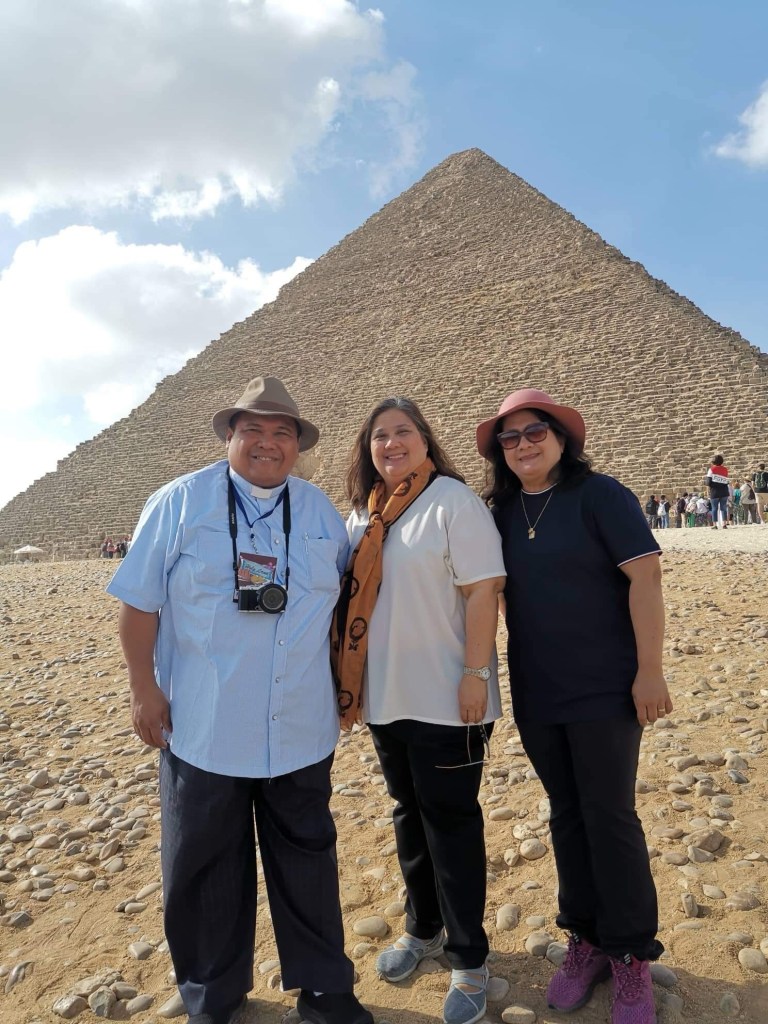
With my sisters Bing and Meg in Egypt, part of our Holy Land pilgrimage in 2019.
Since it is a Mother’s Day this Sunday, we are featuring my late mom’s favorite music as far as I can remember, Jo Stafford’s You Belong To Me that was released in 1952. I am not really sure if it was her favorite music in fact or simply one of the few old records (78 RPM) of my dad she kept playing in our Radiowealth phonograph.
I remembered the song very well because of its opening line “See the pyramids along the Nile” she would sing to my dad. Sometimes they would duet as they danced in our large sala. Truth is, it was only recently when I learned its title You Belong To Me courtesy of YouTube.
I was four years old in 1969 and we have moved to a spacious, two storey apartment of Aling Metring in Alibangbang Street, Project 7 when mommy finally had dad’s old stereo phonograph brought to QC from Bulacan along with albums of 45 rpm records with some LP’s and those rare 78’s. That was how I got hooked with music and radio early in childhood. Through my parents.
It was mommy who made an important impact on my tastes for music. During that time, there was record peddler who came to our apartment once a month offering the latest records. Mommy was so kind to have allowed me to choose and buy a record album I was so fascinated with the jacket design and music. She never said anything negative about my choice, that it was the music of the devil. From Santana, I came to love Led Zep, Steely Dan and the rest. Of course, Beatles was a staple during that time at home and in my elder cousins.
Back to her favorite… You Belong To Me.
Early this morning in my room, I saw the many posts of relatives and friends about Mother’s Day. I cried and remembered mommy. My first motherless Mother’s Day. But, I realized, even after mothers have died, we never become motherless. Mothers are like God: they are always present everywhere!
And that is the meaning of Ascension: Jesus did not go to any place but leveled up in His relationships with the Father and us. Ascension is Jesus sitting at the right hand of the Father to assert we all belong to Him. That is what Ascension is, our belonging to God and with each other as Jo Stafford said so well:
See the pyramids along the Nile Watch the sun rise on a tropic isle Just remember, darling, all the while You belong to me
See the marketplace in old Algiers Send me photographs and souvenirs Just remember when a dream appears You belong to me
I’ll be so alone without you Maybe you’ll be lonesome too, and blue
See how every stanza is closed with the line You belong to me, reminding her beloved that no matter wherever he may go, she would still be loving him. So motherly!
Her chorus line speaks well of the Ascension: we’ll be so alone without Jesus who came here to bring us all back to God the Father. Like God, mothers love us her family so much that even in heaven, we still have that invisible umbilical cord connecting us to them.
Blessed happy mother’s day, Mommy and my others moms! This is for you.
The Lord Is My Chef Easter Recipe for the Soul by Fr. Nicanor F. Lalog II
Solemnity of the Ascension of the Lord, Cycle B, 12 May 2024
Acts 1:1-11 ><}}}}*> Ephesians 4:1-13 ><}}}}*> Mark 16:15-20
“The Ascension of Christ” (1304-1306) by Giotto, a fresco at the Arena Chapel, Padua, Italy from wikimediacommons.org.
We laid mommy to rest Saturday morning, the eve of today’s Ascension Sunday which happens to be a Mother’s Day too. I really can’t describe my feelings except having that emptiness in me amid a sense of joy too. Let me explain…
In my 26 years in the priesthood, I have always reflected the Ascension scene from Luke’s gospel in the many funeral Masses I have presided as something unusual to weird, even impossible: “As he blessed them he parted from them and was taken up to heaven. They did him homage and then returned to Jerusalem with great joy and they were continually in the temple praising God” (Lk.24:51-53).
How could anybody be with great joy after a funeral that is very much like the Ascension where there is a departure or a leaving of a beloved?
Photo by author, inside the chapel built over the site of the Ascension of Jesus outside of Jerusalem, May 2017.
But, after our guests have left at my mom’s funeral yesterday, that was exactly how we felt! Of course we are sad, we are in grief yet joyful with some sense of lightness within us. Like the death of our loved ones, Ascension is more than just the moving of Jesus to somewhere up in the heavens or to any location and place in the universe. Both the Ascension and death are about new state and level of relationships of Jesus and our departed loved ones hopefully entering into final union with God the Father. It is a leveling up not only of their existence with God but also of our own existence with God and one another.
Ascension is newness in our very selves to experience the glory of Jesus Christ now seated at the right hand of the Father in heaven. It is a breaking free from our many presuppositions and fears about life and dying.
When they had gathered together they asked him, “Lord, are you at this time going to restore the kingdom to Israel?” He answered them, “It is not for you to know the times or seasons that the Father has established by his own authority. But you will receive power when the Holy Spirit comes upon you, and you will be my witnesses in Jerusalem, throughout Judea and Samaria, and to the ends of the earth.” When he had said this, as they were looking on, he was lifted up, and a cloud took him from their sight.
Acts 1:6-9
From the the Catholic Diocese of Little Rock, Arkansas, dolr.org.
We have long been reflecting since Lent into Easter of how Jesus in becoming truly human like us in everything except sin had made us like Him, holy in His resurrection. If we have remained in Christ on His Cross, we have been made new in Him.
That is the lesson of His transfiguration in the second Sunday of Lent. Being new in Jesus, being transfigured in Him is getting out of the trappings of the worldly concerns like Peter offering to build three tents on Mount Tabor. Or worst, even after Easter like the disciples in the first reading today asking Jesus about the restoration of the kingdom of Israel.
Being new in Jesus following His Passion, Death and Resurrection is leveling up in our perceptions and outlook in life wherein we become simpler, taking life’s lessons bravely. We no longer go for “drama” like the disciples asking the restoration of the kingdom of Israel because we have grown in our faith in Christ as we hurdled life’s light and darkness, joy and sadness, triumph and defeat, even death that keeps on hovering above us, enveloping us at times. All these experiences of hardships and difficulties have changed us into better persons in the grace of God in times we did not even realize at all.
Photo by author at the site believed to be the Ascension site of Jesus outside Jerusalem, May 2017.
My ministry as a chaplain Fatima University Medical Center have greatly reshaped and affected my views on life and death, sickness and sufferings that enabled me to decide prudently when my younger sister was diagnosed with cancer in 2022 and lately this time with my mom when she had her second stroke that led to her recent death. As a chaplain face to face daily with the dying, I have come to terms with death by coming to terms with life at the same time. No more false hopes of getting any better but simply following the flow of life by having more meaningful moments especially with everyone, especially my late mom and siblings.
That is what St. Paul was saying in the second reading on the meaning of “he ascended” as the “one who also descended into the lower regions of the earth” (Eph.4:9). The more we go down into pains and sufferings, darkness and failures including sin or even death, the more we get closer to Jesus because we also get closer with our true selves and with others. To ascend with Jesus is to leave behind all those toxic topics and concerns, including persons who saddle our backs with extra luggages that prevent us from being light.
Ascension is also living in the present than wasting precious time and energy on past’s mistakes and failures or worrying about the the coming future. See how Jesus commissioned us all His disciples to be His witnesses to the ends of the earth with two angels later reiterating the Lord’s command.
While they were looking intently at the sky as he was going, suddenly two men dressed in white garments stood beside them. They said, “Men of Galilee, why are you standing there looking at the sky? This Jesus who has been taken up from you into heaven will return in the same way as you have seen him going into heaven.”
Acts 1:10-11
“Why are you standing there looking at the sky?” is a beautiful reminder for us to live in the present moment, to be vigilant always in doing what is true and good, just and kind in this world so marred by the darkness of evil and sin. Remember, the Ascension is not about a place nor a location where Jesus went up to but a “leveling up” or a “shift_” in our relationship with Him and with others.
Therefore, it is also something that happens in the present moment. It is more than a distant moment in history but a reality happening daily.
Following His Ascension, Jesus has become more accessible than ever because He remains with us on a deeper, personal level. Recall how He asked Mary Magdalene not to touch Him upon appearing to her on Easter Sunday; that was to remind her and everyone that our relationships with Him is more than the physical level, that He cannot be bounded by time and space anymore as He is really present in us and among us in the most personal and spiritual manner.
Jesus lives in us that we have to keep on doing His work here on earth. The gospel clearly says it all, of the urgency for us to “stop standing, looking up” to start proclaiming the gospel to everyone. See how mothers are always busy doing something at home for us her family. Mothers never get tired cooking and doing everything for us family members because they love us so much that even after death, unknown to us, we imitate them by being so busy loving too.
Blessed Sunday to all mothers, especially those in heaven! Amen.
Photo by author, pilgrims waiting their turn to enter site of Ascension outside Jerusalem, May 2019.
The Lord Is My Chef Easter Recipe by Fr. Nicanor F. Lalog II
Sixth Sunday in the Easter Season, Cycle B, 05 May 2024
Acts 10:25-26, 34-35, 44-48 ><}}}*> 1 John 4:7-10 ><}}}*> John 15:9-17
Photo by author, Sacred Heart Novitiate, Novaliches, QC, 22 March 2023.
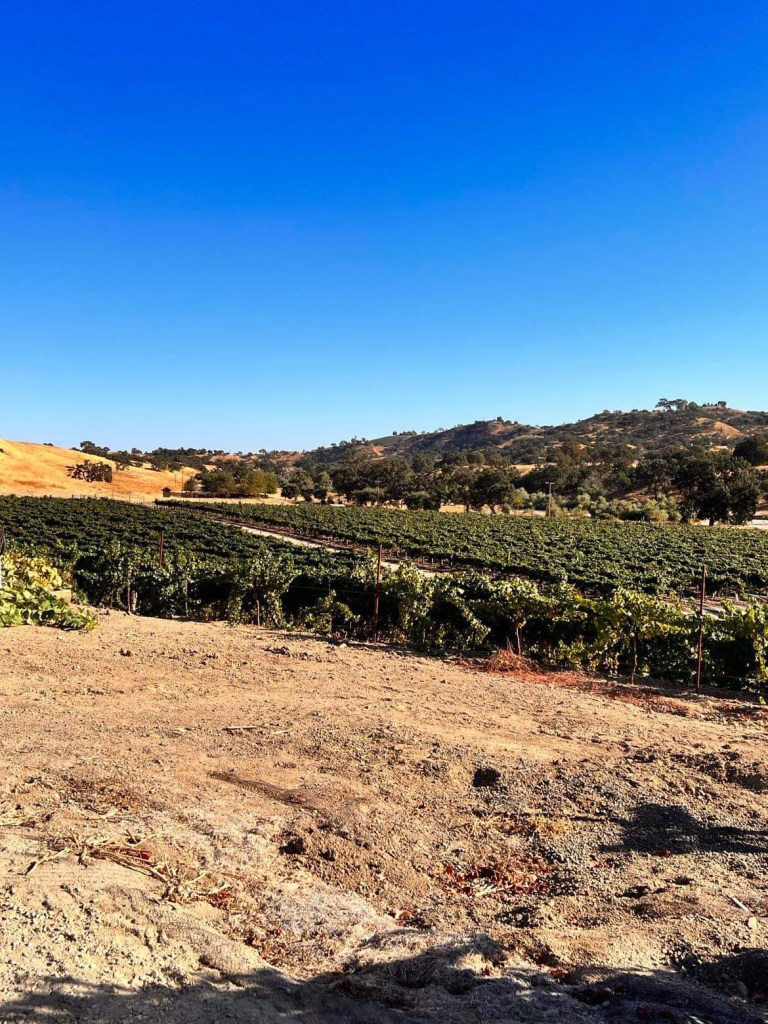
Imagine that beautiful imagery of Jesus last Sunday, of Him saying “I am the true vine… you are the branches” calling us to remain in Him to be fruitful (Jn.15:1, 5, 8). What a lovely sight to behold are the vines, climbing and winding up or creeping on the ground with its vast network of leaves and stems, tiny tendrils and shoots, flowers and fruits.
Jesus identified Himself with the vine to show us the immensity and profundity of His love for us as this plant species sprawls widely with its strong roots and stem system extending to its branches that reach out to its flowers and clusters of fruits like grapes. It is as if in every turn of the vine, there is so much life, full of love like God who is both Life and Love Himself.
Photo by Dra. Carol Reyes-Santos, MD at Napa Valley in California, September 2023.
And that is the essence of Jesus as He had explained during their Last Supper, showing its meaning on Good Friday when He died on the Cross, summarizing everything on Easter when He rose again and appeared later to His disciples.
It is love, love, and still, love in every turn just like the vine.
In being the true vine, we find God’s immense love for us expressed in His Son Jesus Christ who now tells us clearly to love one another shortly before He showed and proved that love for us on Good Friday at the Cross.
Jesus said to his disciples: “As the Father loves me, so I also love you. Remain in my love. This is my commandment: love one another as I love you. This I command you: love one another.”
John 15:9, 12, 17
See how Jesus speaks of and lives in love in every turn in this gospel scene this Sunday which is a continuation of His discourse last week during their Last Supper. Nine times Jesus used the word “love” in nine verses.
He began his discourse by laying down the foundation of this love which is the Father’s love in verse 9: it is in “remaining” in His love that we truly have joy which is more than happiness but firm assurance that no matter what happens to us even in the worst situations including death as Jesus went through, there is always God loving us to the end and beyond.
After that, Jesus twice mentioned love as His commandment to us. Actually, Christ’s command to love one another seems pretty simple, and easy if you say so; but, what He added makes it so difficult – “love one another as I love you.”
That part “as I love you” is the challenge of Jesus to each one of us every day because He loved even unto death, literally and figuratively speaking. We do not need to die literally as martyrs but even dying figuratively speaking is already so difficult when we have to make many sacrifices, when we have to love somebody else more than our very selves!
Loving one another like Christ is more than to “feeling good” because…
To love like Jesus is to forget ourselves, to think less of our own good and comfort like a mother despite her being sick would still rise early to prepare her family to school and work or a dad going abroad in order to have food, clothing and shelter for his family.
Loving like Christ is giving up our wants and needs, including our dreams sometimes like the many Ate and Kuya who remain single in order to send their younger siblings to school until they graduate and be able to stand on their own.
To love like Jesus is to die in our own POV (point-of-view) and other long held beliefs in order to find Christ in everyone especially those different from us or from those who hurt us.
Loving one another like Jesus Christ is choosing the Father above all every day.
Admittedly, to love like Jesus is very difficult indeed but, the good news this Sunday is that it is doable as the beloved disciple explains in the second reading, “In this is love: not that we have loved God, but that he loved us and sent his Son as expiation for our sins” (1Jn.4:10).
And the best part of this Sunday’s gospel is when Jesus declared twice He loves us, “As the Father loves me, so I also love you… This is my commandment: love one another as I love you” (Jn. 15:9,12).
Wow! Everyone knows so well the deep joy one feels in hearing someone say “I love you”. For as long as it is the true kind of love, these words of “I love you” are not only transformative but also performative because they are powerful, filled with the powers of God that can change us, heal us and inspire us.
The words “I love you” are the nicest and most life-changing things one can always hear but unfortunately we rarely say these words to others because we are afraid of running out of love. The truth is, the more love we give, the more we share love in words and in deeds like Jesus, the more we are filled with His love but by those around us too!
Never say nor claim we cannot love like Christ because we are humans like that cheesy Filipino love song of yore, sapagkat ako’y tao lamang. That ability to love like Jesus is already here in our hearts, in our being, in us because He had lavishly loved us first so that we too can love. Every day Jesus repeats those words of the Last Supper whenever we wake up, telling us, “I love you”.
It was the same experience Peter and later the household of Cornelius have experienced in our first reading when the Holy Spirit came down upon them to fill them with the love of God that prompted Peter to realize earlier how “In truth, I see that God shows no partiality” (Acts 10:34), meaning, God loves everyone lavishly regardless of color, gender, and creed. The problem is with us when we love only those “like us”; hence, the need to remain in Christ to be able to find Him in everyone.
Let us immerse ourselves into that amazing reality that we are personally loved by Jesus as we pray:
Dearest Jesus:
let me remain in Your love
so I may learn to forget myself,
set aside my plans and agenda
so that I may love like You
by keeping Your commandments,
laying down my life for others,
echoing Your very words of
"I love you"
to those who hardly know You
because they have
never felt being loved
as they suffer alone in
 diseases, poverty, and injustice;
let me bask in Your love, Lord
to lead others back to You
in my loving service and kindness
especially those who have lost faith
in You and humanity.
Amen.
The Lord Is My Chef Sunday Music by Fr. Nicanor F. Lalog II, 28 April 2024
Photo by author, somewhere in Bgy. Kaysuyo, Alfonso, Cavite, 27 April 2024.
It is a “frying Sunday” as heat index rose to over 40 degrees today and there’s no stopping at temperature rising in this final week of April. And so, we offer you this Sunday one of the coolest music we have grown up with courtesy of Ms. Carole King.
From her beautiful Tapestry album released in 1971, we find So Far Away perfectly expressing the essence of Jesus Christ’s call for us to remain in him, our true vine:
To remain is more than physical like to stay. A branch remaining, staying intact with the vine but had turned yellow and dried up is clearly not one with the vine. We can be inside the church but be detached with everyone and the celebration. We may be staying or residing in the same address and home but our heart and very self may be so far away from our siblings or parents, or from your wife or husband.
Remaining implies something more than physical presence. To remain is to have a relationship, a bonding that is deep and intimate. To remain is to be of one heart as GMA7 claims to be a kapuso which is more important than being a kapamilya or a kapatid. There is no sense of being a family (kapamilya) when there is no love in the family or at the other hand, a sibling (kapatid) is nothing if the brother or sister is your enemy. We remain with God and everyone when our hearts are attuned or inclined to God and with others in love which is the fruit of the vine, Jesus Christ.
So Far Away is a gospel in itself about love which is about oneness. Even if we are apart – temporarily or eternally – for as long as we have that communion and bonding of our hearts, that love will always be truly felt. Perhaps, one reason for the saying “absence makes the heart grow fonder” when lovers are apart. Remaining and presence are more than physical but a bonding of the hearts that Ms. King beautifully sings to us in her classic So Far Away:
So far away Doesn’t anybody stay in one place anymore? It would be so fine to see your face at my door Doesn’t help to know you’re just time away Long ago, I reached for you and there you stood Holding you again could only do me good How I wish I could, but you’re so far away
One more song about movin’ along the highway Can’t say much of anything that’s new If I could only work this life out my way I’d rather spend it bein’ close to you
In this age of modern communications, how ironic that we are brought closer with those so far from us by distance but have caused us too to be distant from those nearest to us. The Risen Jesus Christ tells us this Sunday that being close, remaining in love happens even without seeing the other person for as long as our heart is attuned with the one we love. What really happens is that for as long we keep that love in our hearts, even if our beloved is gone or far from us, the more we experience his/her presence in their absence.
Let Ms. Carole King bring back those loving moments we had.
The Lord Is My Chef Easter Recipe for the Soul by Fr. Nicanor F. Lalog II
Fifth Sunday in the Easter Season, Cycle B, 28 April 2024
Acts 9:26-31 ><}}}}*> 1 John 3:18-24 ><}}}}*> John 15:1-8
From the Good Shepherd last Sunday, Jesus today declares himself as the “true vine”. Notice that qualifier true vine similar with last Sunday’s good shepherd because Jesus “lays down his life for the sheep” (Jn. 10:11, 17, 18); so we ask, was there an untrue vine?
Yes. Jesus was referring to Israel, God’s vineyard lavished with all his care but produced wild grapes as portrayed in Isaiah’s “Vineyard Song” that he vowed to take it away and plant a new vine fulfilled in Christ (Is. 5:1-7). Jesus as the true vine is an expression of his Incarnation, of how God in Jesus Christ became human like us in everything except sin so that we in turn would become like him, holy and divine. This can only be when keep that union intact by remaining in Christ.
Jesus said to his disciples: “I am the true vine, and my Father is the vine grower. He takes away every branch in me that does not bear fruit, and every one that does he prunes so that it bears more fruit. You are already pruned because of the word that I spoke to you. Remain in me, as I remain in you. Just as a branch cannot bear fruit on its own unless it remains on the vine, so neither can you unless you remain in me.
Our scene is now at the Last Supper, after the washing of the feet of the disciples. Judas had already left and Jesus began his series of discourses capped with his high priestly prayer after which they proceeded to Gethsemane for his betrayal and arrest.
Imagine the solemnity of the scene, of how Jesus had shown the Twelve the meaning of his being the good shepherd laying down his life by taking the bread and wine as his Body and Blood given to everyone. All these will have its fullness on Good Friday at the Cross while it would take some time after Easter and Pentecost when the disciples will finally grasp and understand its meanings.
We are not just going back to a past event, to what Jesus had done. In declaring himself as the true vine, Jesus reveals to us himself truly God and Risen from the dead, telling us how we can share in the joy and mystery of his Resurrection. And that is by remaining in Jesus first above all, “Remain in me, as I remain in you. Just as a branch cannot bear fruit on its own unless it remains on the vine, so neither can you unless you remain in me.”
Photo by Dra. Carol Reyes-Santos, MD at Napa Valley, California, 2023.
See how in eight verses, Jesus used the word “remain” eight times because it is not enough Jesus is the true vine in whom we are blessed and become fruitful; we must remain in him too.
There is no doubt of Jesus remaining in us which is what his being a true vine is all about; unlike Israel in the Old Testament that produced wild grapes, Jesus can no longer be uprooted because he is God himself who had become one in us. But, are we one in him and with him?
To remain is more than physical like to stay. A branch remaining, staying intact with the vine but had turned yellow and dried up is clearly not one with the vine. We can be inside the church but be detached with everyone and the celebration. We may be staying or residing in the same address and home but our heart and very self may be so far away from our siblings or parents, or from your wife or husband.
Remaining implies something more than physical presence. To remain is to have a relationship, a bonding that is deep and intimate. To remain is to be of one heart as GMA7 claims to be a kapuso which is more important than being a kapamilya or a kapatid. There is no sense of being a family (kapamilya) when there is no love in the family or at the other hand, a sibling (kapatid) is nothing if the brother or sister is your enemy. We remain with God and everyone when our hearts are attuned or inclined to God and with others in love which is the fruit of the vine, Jesus Christ.
We can only bear much fruit, be more loving, if we remain in Jesus Christ. It is an imperative, therefore in this life that we remain in Christ for without him, separated him, we can do nothing. Fruit and love are always together as shown in the institution narrative and on Good Friday.
Being fruitful is more than being successful that is often seen and measured in material things. Being fruitful, being more loving is spiritual in nature, can never be measured with what we have but what have we given. Most of all, being fruitful is depending, relying more in Jesus Christ than in one’s self. That is why remaining in Christ is a prerequisite to be fruitful.
We remain in Jesus in prayer when he said, “If you remain in me and my words remain in you, ask for whatever you want and it will be done for you” (Jn. 15:7). But, prayer here as in most parts of the gospel does not mean asking God for anything; to remain in Jesus in prayer is to ask for God himself. It is only in having God we can truly love and experience joy and peace within despite the many trials and pains we go through in life.
In the first reading we have heard how Paul, still known as Saul arrived in Jerusalem and “tried to join the disciples, but they were all afraid of him, not believing that he was a disciple” (Acts 9:26). It must have been so difficult for Saul as well as for the early Christians too to welcome him! Saul must have a hard time convincing them he had really changed, that he had been converted in Christ while he must also understand the feelings of the Christians whom he persecuted before.
Photo by Dra. Carol Reyes-Santos,MD, at Napa Valley, California, 2023.
Let us keep in mind too that Saul’s conversion did not necessarily mean an end of their persecution; in fact, persecutions would turn more fierce later but it was during that time when the church grew so fast and wide too! That was because they remained in Christ who caused their efforts to bear much fruits no one expected.
Look back into our lives and see how when we remained in Christ and problems never stopped but that is when we are more fruitful, more fulfilled in life. Like our responsorial psalm this Sunday, “we praise the Lord in the midst of the assembly” to thank God from our hearts for all the blessings he bestows us like inner growth and maturity, feeling fruitful not just successful. Indeed, as the beloved disciple rightly noted in our second reading today, “God is greater than our hearts and knows everything” (1 Jn. 3:20).
This Sunday, Jesus is telling us “I am the true vine” to show us how God’s life is now in us through Christ and how our life is in God still through Christ. Let us remain in Jesus as he continues to reveal to us who he really is, our Lord and God, so we can share in the many joys and mysteries of his Resurrection. Let us pray:
Lord Jesus Christ,
let me remain in You;
let me stay in You
when things are so difficult
and let me still remain in You
when life is so beautiful;
let me be near  and close
to You as You are in me,
speaking Your words,
doing Your will;
in my remaining in You,
may I be fruitful by bringing
others closer to You so that
in the end, we all remain
one in You.
Amen.
The Lord Is My Chef Sunday Music by Fr. Nicanor F. Lalog II, 21 April 2024
Photo by author, Anvaya Cove in Morong, Bataan, 15 April 2024.
Today is the Good Shepherd Sunday and we take a classic number from the lovely shepherdess of R&B and Soul, Ms. Chaka Khan with her 1975 hit Sweet Thing as vocalist of the group Rufus.
What I like most with Ms. Khan’s music next to her great voice and instrumentations being a percussionist herself is her ability to open us up to the woman’s heart and feelings. Her songs are so womanly that reveal the inner dynamics of womanhood we take for granted. (See our other piece, https://lordmychef.com/2021/06/27/through-the-fire-by-chaka-khan-1984/). That is why we find her so much like a good shepherdess leading us to find expressions of our love.
When Jesus Christ declared “I am the good shepherd who lays down his life”, He was expressing something more than His mission but His very being as “the Gift and the Giver” at the same time of this most precious thing called love.
The same thing is true when friends and lovers separate either because they have found other loves to pursue or worst, have fallen out of love with us despite all our love for them. It is the most unkindest cut of all breakups and separations, excruciatingly painful as we blindly give up our relationships ironically for love. More than the persons and circumstances involved, we freely choose to let go – magparaya in Filipino – because deep in our wounded and hollowed heart is the hope they may grow in their new love.
Here we are like Jesus the Good Shepherd because even in the death of our relationships is still found our love. Like Jesus Christ, we do not simply give something but our very selves. The Jesuit theologian Karl Rahner beautifully expressed this when he described Jesus is both “the Gift and the Giver.”
This is very evident in Sweet Thing which Ms. Khan co-wrote with Tony Maiden.
I will love you anyway Even if you cannot stay I think you are the one for me Here is where you ought to be I just want to satisfy you Though you’re not mine I can’t deny you Don’t you hear me talking baby? Love me now or I’ll go crazy
Oh sweet thing Don’t you know you’re my everything? Oh sweet thing Don’t you know you’re my everything? Yes, you are
I wish you were my lover But you act so undercover To love you child my whole life long Be it right, or be it wrong I’m only what you make me, baby Don’t walk away, don’t be so shady Don’t want your mind, don’t want your money These words I say, they may sound funny, but
Isn’t it so sweet!? Beginning with its guitar intro lately making rounds in social media courtesy of Prince’s unplugged cover, Sweet Thing is an overload of love and self-giving, of how a woman in her great love for a man is willing to let go of him because of love.
When we speak of love, we use comparisons and analogies and yet, they are not enough. How much more when we speak of the love of God, a love so sublime like Ms. Khan’s Sweet Thing?
In that case, we sing like Ms. Khan and her other co-shepherds of souls with their music that captures our deepest feelings and convictions in life. Like Jesus in saying “I am the good shepherd” which is more than a declaration of His mission but of His self-giving in love, Ms. Khan’s Sweet Thing reminds us of this tremendous grace to love like God despite the pains and hurts we go through in loving selflessly.
The Lord Is My Chef Easter Recipe for the Soul by Fr. Nicanor F. Lalog II
Fourth Sunday in the Easter Season, Cycle B, 21 April 2024
Acts 4:8-12 ><}}}}*> 1 John 3:1-2 ><}}}}*> John 10:1-10
Photo by author, dusk at Anvaya Cove in Bataan, 15 April 2024.
My kinakapatid is turning 60 this week with a dinner to be prepared by an Italian chef. His sister texted me for my main course and I chose lamb chops. And immediately she replied, “Pareho tayo. Mary’s little pet… the one who takes away the sins of the world.” Her wit floored me that I had to agree with a text, “Right. The most biblical and holiest food.”
Sorry for some little bragging as we celebrate this fourth Sunday in Easter as “Good Shepherd Sunday”…
We Filipinos have a hard time getting the “feel” of the shepherd because we have never had that image in our culture. Hence, it is a most welcomed development that there is now a growing popularity in tending sheep in the country while the Filipino palate had finally discovered a taste for lamb.
Come to think of this: the sheep exists only for two reasons, for food and clothing. They are meant to be slaughtered unlike dogs or cats or birds kept as pets. Another notable thing with sheep is the fact it is the only land animal that go against the flow when crossing a river like the salmon!
Photo by Dra. Mylene A. Santos, MD, at Katmon Nature Sanctuary & Beach Resort in Infanta, Quezon, 03 April 2024.
I love those characteristics of the sheep, for slaughtering which is almost like offering and always going against the tide. Exactly just like our Lord Jesus Christ who identified Himself as the good shepherd.
Jesus said: “I am the good shepherd. A good shepherd lays down his life for the sheep… This is why the Father loves me, because I lay down my life in order to take it up again. No one takes it from me, but I lay it down on my own. I have power to lay it down, and power to raise it up again. This command I have received from my Father (John 10:11, 17-18).
First we notice here His use of the “I AM” which for the Jews refers to God when He told Moses “I AM WHO AM.” Clearly, Jesus was declaring to the people at that time that He is the Son of God, the awaited Messiah or Christ.
This scene was shortly before the feast of the dedication of the Jews after Jesus had healed a man born blind, a miracle never heard of at that time. It was a big issue then as authorities refused to accept that Jesus did indeed healed the man born blind.
Secondly, Jesus mentioned four times in just three verses the act of “laying down his life for the sheep” (vv. 11, 17, and 18). It sounded so good to hear how Jesus loves us so much that He would lay down His life for us his sheep; but, those were not just mere words Jesus expressed but a reality that happened at the Cross on Good Friday that He actually explained after this discourse at their Last Supper!
Keep in mind that we are now going back to the earlier discourses and teachings of Jesus that only became clear to the disciples including us today after Easter. We shall be having a lot of these “flashbacks” to understand and love Jesus more and His teachings.
According to Pope Benedict XVI in his first book of the Jesus of Nazareth series, “The Cross is at the center of the shepherd discourse” (page 280). When Jesus said “This is my Body… This is my Blood”, He meant really Himself being given for us; Jesus did not merely give something for us but His very self as seen on the Cross on Good Friday.
That is how Jesus gives life – by giving up His life for us so that when He arose, we then share in His being a good shepherd through our little dying to ourselves because of love, giving life to those around us.
As the good shepherd, Jesus was the first to enter death, to be slaughtered but this time minus the violence and gore of the Cross that was the worst punishment of all time when He said “I lay down my life in order to take it up again”. No one takes it from me, but I lay it down on my own.”
Yes, there was victimhood but more than that was His being an offering never forced nor imposed by anyone or by circumstances. Jesus did it all for love!
Though He was handed over (paradidomi) and betrayed by Judas, Jesus was totally free, actively passive went to his Passion and Death because He was very certain of His Resurrection.
We experience the same thing many times in life when we have to make great sacrifices like when we have to allow a loved one to die after a long illness. Death is a grace and a blessing when freely given too by those around the dying, freeing the dying person of any guilt when he/she finally goes.
The same thing is true when friends and lovers separate either because they have found other loves to pursue or worst, have fallen out of love with us despite all our love for them. It is the most unkindest cut of all breakups and separations, excruciatingly painful as we blindly give up our relationships ironically for love. More than the persons and circumstances involved, we freely choose to let go – magparaya in Filipino – because deep in our wounded and hollowed heart is the hope they may grow in their new love.
Here we are like Jesus the Good Shepherd because even in the death of our relationships is still found our love. Like Jesus Christ, we do not simply give something but our very selves. The Jesuit theologian Karl Rahner beautifully expressed this when he described Jesus is both “the Gift and the Giver.”
Photo by Dra. Mylene A. Santos, MD of the sheep’s wool, 03 April 2024.
Love is better shown than said. Love cannot be defined but only be described for it is so wide and vast in its nature and scope. Love simply shows itself. That is why when we speak of love, we use comparisons and analogies and yet, they are not enough. How much more when we speak of the love of God?!
This Sunday, Jesus spoke of His love like every human being using the language of parable and allegories. But truly Divine, we find so much more when He claimed “I AM the good shepherd.” It is His total person and self, His being both the Gift and the Giver.
The good news is, because of His giving of self, we too have become like Him able to give ourselves wholly in love. Like Peter in the first reading, we experienced great powers within us not innately ours but God working in us, enabling us to empower others by healing them not literally but figuratively speaking.
When Jesus declared “I AM the good shepherd”, He reminds us of being the children of God, His indwelling, our being an “I AM” of God Himself. Like Him, we are good shepherds able to love in Christ to the point of being foolish as St. Paul experienced.
Like the sheep, let us continue to forge on with life’s many difficulties, even if many times we have to go against the flow of the world that is always selfish and misleading. Let us pray:
Dearest Jesus,
help me to give more of myself
not just of something from me;
help me to lay down my life
for my friends even if it means
not just losing myself but
losing them in order to gain You;
help me to remain in You,
my Good Shepherd,
to never go astray
because life and love
are found only in You,
the Gift and Giver.
Amen.
Have a blessed week ahead!
The Lord Is My Chef Easter Recipe for the Soul by Fr. Nicanor F. Lalog II
Third Sunday in Easter-B, 14 April 2024
Acts 3:13-15, 17-19 ><}}}}*> 1 John 2:1-5 ><}}}}*> Luke 24:35-48
Photo by Dra. Mylene A. Santos, MD, 27 March 2024 at Katmon Nature Sanctuary & Beach Resort, Infanta, Quezon.
More than ten years ago, there used to be a billboard at the C3-Banaue area in Quezon City that said, “True love is like ghosts, which everybody talks about and only a few have seen.”
I googled the saying and found it was from French moralist Francoise de la Rochefoucauld (1613-1680). Nonetheless, we remembered that billboard because in our gospel today, we have heard how the Apostles thought upon seeing the Risen Lord that He was a ghost!
While they were still speaking about this, he stood in their midst and said to them, “Peace be with you.” But they were startled and terrified and thought that they were seeing a ghost. Then he said to them, “Why are you troubled? And why do questions arise in your hearts? Look at my hands and my feet, that it is I myself. Touch me and see, because a ghost does not have flesh and bones and you can see I have.”
Luke 24:36-39
“The Road to Emmaus” painting by American Daniel Bonnell from fineartamerica.com.
This is the last Sunday we shall hear a story of the Risen Lord’s appearance to His disciples; beginning next Sunday, our gospels will be the accounts of Jesus Christ’s discourses at their Last Supper.
It is not really important to count how many times the Risen Lord had appeared to His disciples who in the first place never bothered themselves with it. John explained it last Sunday why only a few of these were written so that we may believe and have life in Him (Jn.20:31). There are two things we find always in these few Resurrection stories that convince us the Lord is risen.
First, there is always the intensity we feel in the Resurrection stories we have. Even though there is no account of how it happened, we could feel in the whole New Testament that it actually happened. It is historical but beyond the physical and ordinary. So real yet surreal. That is why initially, there is the incredulity not only among the disciples but even among us at this time. As we say in Filipino, “hindi makapaniwala” as opposed to “hindi maniwala” because Jesus Christ’s Resurrection opened new possibilities in our human existence that only faith in Him can explain though not fully. It is when all we can say in Filipino is “a…basta!”
From this intensity of His Resurrection, there is always that movement to gather together as a community of the risen Lord’s disciples. Easter is always in the context and setting of a community. See how Jesus would always tell or lead His disciples to gather together as a community, always appearing to them when there are at least two of them gathered like Clopas and companion on the way to Emmaus on the evening of Easter. And we see its effect – once they recognized Jesus at His breaking of bread, they both hurried back to Jerusalem to join the other disciples to share the good news!
That’s the beauty and mystery of Easter. It is so intense, so true we can feel and experience, always leading us to gather together as a community, as a family. It is never selfish nor personal. Do we have the same intensity today as individuals and as a community especially in our Sunday Masses?
From Facebook, 04 April 2021: “There is an urgency to announce the Joy, the joy of the Risen Lord.”
Today’s gospel scene is the continuation of that Emmaus story. While Clopas and companion were telling the disciples their experience, Jesus suddenly came into their room and again, they were startled and terrified.
But Luke added that one word “ghost” that was used twice in this scene: first in v.37, “But they were starteld and terrified and thought that they were seeing a ghost” and in v. 39 when Jesus read His disciples’ minds, telling them to “Look at my hands and my feet, that it is I myself. Touch me and see, because a ghost does not have flesh and bones as you can see I have.”
Sorry for the long introduction as I wish to direct our attention to that word ghost.
When we were growing up, there was a cartoon show on TV called “Casper the friendly ghost.” In Filipino, we always refer to ghost as multo, something scary because like the aswang, they look terrible and would always harm people. That is why the Church later on changed the name Holy Ghost to Holy Spirit because of the very negative connotation of the word ghost.
These days, the young people are using again the word ghost, turning it into a verb form that means so negative: ghosting as in “iniwan sa ere”. At first, I thought to be ghosted is the equivalent of what we used to say “na-Indian” when a date or someone stood you up in a meeting or coming together.
But ghosting is more than just not appearing nor coming to a meeting or get together. It is almost like betrayal or infidelity. Precisely what the youth say, to be left hanging on air not knowing at all what is next. Very disappointing. Most of all, painful as it hurts us deeply when ghosted. The Filipino expression says it all completely, iniwan sa ere which is worst than the English expression “dropped like a hot potato”. To be ghosted is to be betrayed, to be taken for granted, to be discarded like a thing. It is utter lack of respect to another person. Worst, it is lack of life fulln of pessimism and indifference to life itself.
Photo by author, Sacred Heart Novitiate, 18 March 2024.
Jesus Christ is not a ghost. Had never and would never ever ghost us because He is faithful, truly alive and truly present with us especially in our darkest and emptiest moments in life. Many times, we do not see nor recognize Him because we are so focused at how we were ghosted especially by loved ones.
In the first reading, we heard Peter’s second discourse on Pentecost Sunday about the Resurrection of Jesus as the summit of everything that was written in the Old Testament, the fulfillment of salvation history. But at the same time, he was telling the people of how they have ghosted the Lord “whom you handed over and denied in Pilate’s presence, when he decided to release him” (Acts 3:13).
Peter was not accusing the people then or anyone today for being accomplices in Jesus Christ’s death because he himself denied the Lord thrice, remember? Peter ghosted Jesus too but repented. And that was his point to everyone including us today of how may times we too have ghosted Jesus when we sin against each other, when we betray our loved ones, when we are remiss in our duties and responsibilities, when we are unfaithful that people fail to experience the Risen Lord coming to them.
Peter is asking us this Sunday to look into ourselves at how we continue to ghost each other that we contribute to the vicious circle of violence happening in the world that often starts right in our family and community, even in the Church.
That is why the beloved disciple asks us in the second reading “to keep his commandments so that we may not commit sin” by rejecting the lusts of the flesh not only in the sexual sense but in all of our selfish interests. Most of all, to imitate Jesus Christ by living like Him full of love and kindness, always understanding and forgiving and caring especially of the weak and marginalized.
Photo by author, 09 April 2024.
The Resurrection remains a mystery. It is a call for us to be real with flesh and bones not like a ghost. Easter is an invitation to live our lives as Easter people, full of joy and hope in Christ even when the chips are down.
Being real as opposed to ghosting means proclaiming Jesus Christ with our very own witnessing of His loving presence and service to others with our very lives.
Being real as opposed to ghosting is avoiding “back burning” those dearest to us.
Being real as opposed to ghosting is not “bread crumbing”, of being mediocre that we do only the bare minimum.
Easter is Jesus faithfully present with us especially in the most trying and difficult moments of our lives because He assures us nothing can keep us nor hostage us in whatever darkness or emptiness we are in.
Not being able to see someone does not mean that someone does not exist. Many times in life, it is after our loved ones are gone – permanently or temporarily – when we actually experience them closest. That’s because of the Resurrection of Jesus!
Let’s get real by praying:
Lord Jesus Christ,
open my mind and my heart
to Your words;
let me develop that prayer life
You have always been inviting me
to get into a relationship with You;
let me find You in my wounds
so I may find Your glory too;
let me find You in my many hurts
and scars in my heart so I may
find and share Your healing and
comfort with those still in the
darkness of Good Friday
or silence of Holy Saturday;
dearest Jesus,
fill me with life and joy
so that people may see You
in me alive
and not like a ghost.
Amen.
The Lord Is My Chef Sunday Music by Fr. Nicanor F. Lalog II, 07 April 2024
Photo by author at the refectory of Sacred Heart Novitiate, Novaliches, QC, 18 March 2024.
We turn to jazz this Second Sunday in Easter in order to express the meaning of Jesus Christ’s Resurrection that is simply too deep for words because of its intense nature. Unlike Christmas that lights up our minds with so many images, Easter is different in the sense that it is something we have to feel and dig deep down inside us to really appreciate. Like jazz music that stirs our souls with its unique sounds that enable us to touch our very being.
For this Sunday we have chosen David Sanborn’s Love Will Come Someday from his 1982 album As We Speak because it captures the spirit of this Easter Octave also known as Divine Mercy Sunday when Jesus appeared to His disciples inside a locked room for fears from the Jews on the very night of His Resurrection. We reflected in our previous blog that the Resurrection of Jesus opened a new dimension in human existence when we could no longer be held hostage or captive by even the most difficult plight in life with Jesus opening many possibilities for us even while in this life (https://lordmychef.com/2024/04/06/easter-is-new-existence-in-christ/).
Sanborn’s almost two minutes of sax introduction to his Love Will Come Someday gives us the feel of the prevailing setting of Easter and life wherein there is the constant presence of darkness and emptiness where we also find Christ’s light and fullness. Sanborn has been a session musician collaborating with almost every big name in the music scene across all genres. His sax is so soothing yet penetrating that brings out even those things we have been hiding deep inside us resulting in a sort of catharsis which is very Easter too!
Written by Michael Sembello and David Batteau with the latter doing the vocals, Love Will Come Someday is a poignant song of the ups and downs not only of love but of life itself. Very often, like the darkness and emptiness we find in the Easter stories since last week, we find our lives in the same setting too when we could not figure out exactly or right away at why or how certain things happen in our lives despite our best efforts.
Funny how the legends die When heroes never come alive in the day time Funny we can be sad It doesn’t have be so bad in the night time
You want know where they The songs all go in your life time One of these we’ll go And find out where they stay
Once upon a lovers song There was a boy who sang along in the night time Once upon a lovers dream There was a tale of broken wings in the day time
But, there are times when suddenly, Jesus comes to us amid all locked doors, appearing to us, extricating us from difficult situations that amid great joy, we could not believe it happening at all that we doubt like Thomas simply because they are so surreal!
And there lies the mystery of life and love, of Easter: visions and images are not so important because it is the intensity within us which makes Jesus and those we love so present that we respond with more love and adoration.
Catch a piece falling star Try to keep in a jar till the morning Catch a summer firefly Willing it’ll stay alive till the morning
You want to know where did the songs all go In your life time One of these days we’ll go and find out Where they stay
Love will come someday Love will find a way Love will come someday Love will find a way
The songs that I sing, the songs that I bring The songs that I sing, the songs that I bring The songs that I sing, the songs that I bring, yeah, yeah
As we mature and journey in this life, the more we find God and our very selves and those we know more real, more loved and lovable. In the end, love always finds a way someday. Like Thomas, we just have to believe in order to see. Here is David Sanborn and to those belonging to my generation, cheers to the music we grew up with, hoping the younger ones find these treasures too.
The Lord Is My Chef Easter Recipe by Fr. Nicanor F. Lalog II
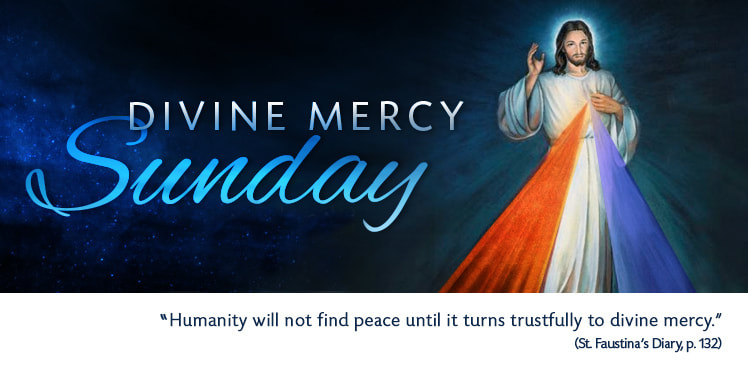
Second Sunday in Easter, Divine Mercy Sunday, 07 April 2024
Acts 4:32-35 ><))))*> 1 John 5:1-6 ><))))*> John 20:19-31
Photo by author, Mirador Jesuit Retreat House, Baguio City, 2018.
We celebrate today the Octave – eighth day – of Easter which coincides with the Feast of Divine Mercy. Both Christmas and Easter observe an octave signifying eternity because when you count from Easter Sunday to this Sunday, there are actually eight, not seven days. That is why there is no such thing as weekend for us Christians because the week never ends but continues on and on every Sunday.
And that is also the mystery, beauty and reality of Jesus Christ’s Resurrection that according to Pope Benedict XVI, “a life that opens up a new dimension of human existence” (Jesus of Nazareth, Part Two, p. 244).
Photo by author, view the refectory, Sacred Heart Novitiate, Novaliches, QC, 18 March 2024.
From now on, nothing can hold us nor keep us locked in sadness and grief, suffering and misery as well as sin and death because in rising from the dead, Jesus had opened up for us new possibilities in the future not only in eternal life but right here on earth.
Like the apostles on that same evening of Easter, we also find it so difficult to grasp and understand, even believe and explain right away though we could feel and experience deep down within us that Jesus is risen.
On the evening of that first day of the week, when the doors were locked, where the disciples were, for fear of the Jews, Jesus came and stood in their midst and said to them, “Peace be with you.” When he had said this, he showed them his hands and his side. The disciples rejoiced when they saw the Lord. Jesus said to them again, “Peace be with you. As the Father has sent me, so I send you.” And when he had said this, he breathed on them and said to them, “Receive the Holy Spirit.”
John 20:19-22
Photo by author, dusk at Sacred Heart Novitiate, 20 March 2024.
Since Sunday we have the prevalence of darkness and emptiness in our Easter stories, reminding us how often that it is in the darkness of our lives when we find light, when in the midst of emptiness when there is fullness.
This Sunday we find the presence of Jesus but still in an unusual manner. There was still darkness for it was night but more than that was the darkness within each disciple who locked themselves inside the Upper Room for fears from Jewish officials who might arrest and put them to death like Jesus.
Many times in life we feel locked in, imprisoned in some situations, feeling resigned as there is no way out from our troubles and miseries but through faith in Jesus, out of nowhere and without any explanation at all, we find ourselves extricated from our inescapable situations.
When my youngest sister was diagnosed with cancer the other year, she told me how she prayed on the eve of her surgery asking God to simply give her the grace to accept whatever the results of her tests would be. But after her surgery, it turned out her cancer was at its earliest stage that required no treatment at all except constant medical checkups! Last February on her major checkup again, doctors found no traces of cancer in her while her surgery had healed so well.
Hope is not positive thinking that things could get better; in fact, to hope is even to expect things to get worst like when the disciples were hiding in fear, expecting to be arrested too. Or my sister resigning to God her fate, just asking for the grace to accept she had cancer.
But it was in that darkness when Christ came and brought light to His disciples and my sister and our family. Strangely enough, it was after seeing the wounds of Jesus when they rejoiced because that proved that the Lord had risen. It was in my sister’s cancer we found ourselves together more in love and care for each other.
In life, our wounds will remain with us but most important of all for Easter to lead us into new existence in Christ, we must first remain in Him and with one another amid our wounds and darkness around us. And for us to remain or stay in Jesus with each other, we must first come.
Now a week later his disciples were again inside and Thomas was with them. Jesus came, although the doors were locked, and stood in their midst… Then he said to Thomas, “Put your finger here and see my hands”… Thomas answered and said to him, “My Lord and my God!” Jesus said to him, “Have you come to believe because you have seen me?”
John 20:26, 27, 28-29
Caravaggio’s painting “The Incredulity of St. Thomas” (1602) from en.wikipedia.org.
My dear friends, while praying over the gospel this week, this line by the Lord kept on echoing within me. And every time it would echo, the Lord shortened the sentence like these:
“Have you come to believe because you have seen me?”
“Have you come to believe because…?”
“Have you come to believe…?”
“Have you come…?”
Before we can stay and remain in the Lord, we must first come. Like Thomas.
What he had asked as proofs to believe in the Lord’s Resurrection were not really doubts to be taken negatively. John referred to him being known as Didymus for Twin. We were the ones who gave him that nickname Doubting Thomas. Like us, there are times we feel at a loss like Thomas with our faith and with ourselves when extraordinary things happen to us. It was not that he did not believe but in fact, he wanted to believe more. That is why he came the following Sunday.
Though I have always loved Caravaggio’s paintings, I don’t think Thomas ever touched the Lord’s wounds. Thomas must have been overwhelmed with the presence of Jesus that all he could say was “my Lord and my God” which we repeat during consecration of the bread and wine into Christ’s Body and Blood.
Photo by Ka Ruben, Easter Vigil 2024, National Shrine of Our Lady of Fatima, Valenzuela City.
Easter leads us into community life centered in the Eucharist. See how since Sunday when Jesus appeared to Mary Magdalene, He instructed her to tell Simon Peter and others of His Resurrection; after appearing to Cleopas and companion on the road to Emmaus, they hurried back to Jerusalem to proclaim the good news of seeing the risen Lord at the breaking of bread; and while they were together which would be the gospel next Sunday, Jesus appeared to them again as a community.
In His rising to life, Jesus brought us together, fellow wounded healers to heal each other, to remain with each other amid our poverty and sufferings because together in Christ, that is when we open new dimensions in existence, in living as a community. We grow into an I-Thou person from the selfish ego. That is what the first reading is telling us in how “the community of believers was of one heart and mind, and no one claimed that any of his possession was his own, but they had everything in common” (Acts 4:32).
It is the risen Lord who comes and stays among us in darkness and woundedness whenever we come and reach out to others like Thomas in the gospel. Even in our doubts, Jesus comes for us to believe more in Him. That is when great things start to happen, many so unbelievable and too deep for words. Basta.
That is why St. John Paul II rightly made the eighth day in Easter as the feast of Divine Mercy too because it is the love of God poured out to us in Jesus Christ’s suffering and death on the Cross when Blood and Water flowed out from His heart as an ocean of mercy for us. This is the love of God John was reflecting in the second reading that was too deep for words to explain except that it is the power that also “conquers the world” (1 Jn.5:3-4). Like St. Faustina in her Diary number 163, let us also pray:
"Help me,
O Lord,
that my heart may be merciful"
by being more loving,
by coming
and remaining in Jesus
among our brothers and sisters
in their many darkness
and emptiness
and wounds in life.
Like You,
Lord Jesus,
let me come
to reach out
to those in doubts
to be Your very proof
of Your having risen
from the dead.
Amen.


















 lordmychef.com