Prayer is what “the Lord said”

Lord My Chef Sunday Recipe for the Soul, 19 October 2025
Twenty-Ninth Sunday in Ordinary Time, Cycle C
Exodus 17:8-13 ><))))*> 2 Timothy 3:14-4:2 ><))))*> Luke 18:1-8
Photo by author, sunrise at Camp John Hay, Baguio City, November 2018.

There are just five more weeks remaining in our current liturgical calendar and soon after the Solemnity of Christ the King on November 23, we shall usher in the new year with the season of Advent on November 30 – the four Sundays before Christmas.

That is why today and next Sunday, as Jesus nears Jerusalem Luke tells us more teachings of the Lord about prayer not found in other gospel accounts, namely, the parables of the unjust judge and persistent widow, and the Pharisee and the tax collector.

Remember that prayer is so central in the message of Luke in his gospel account as well as in the Acts of the Apostles wherein we see Jesus and the early Church always at prayer. For Luke, prayer is more of a relationship with God than a ritual, an expression of our faith in God. Hence, the need to persist in prayer like that widow in today’s parable by Jesus.

Jesus told his disciples a parable about the necessity for them to pray always without becoming weary. He said, “There was a judge in a certain town who neither feared God nor respected any human being. And a widow in that town used to come to him and say, ‘Render a just decision for me against my adversary.’ For a long time the judge was unwilling, but eventually he thought…’because this widow keeps bothering me I shall deliver a just decision for her lest she finally come and strike me.'” (Luke 18:1-5).
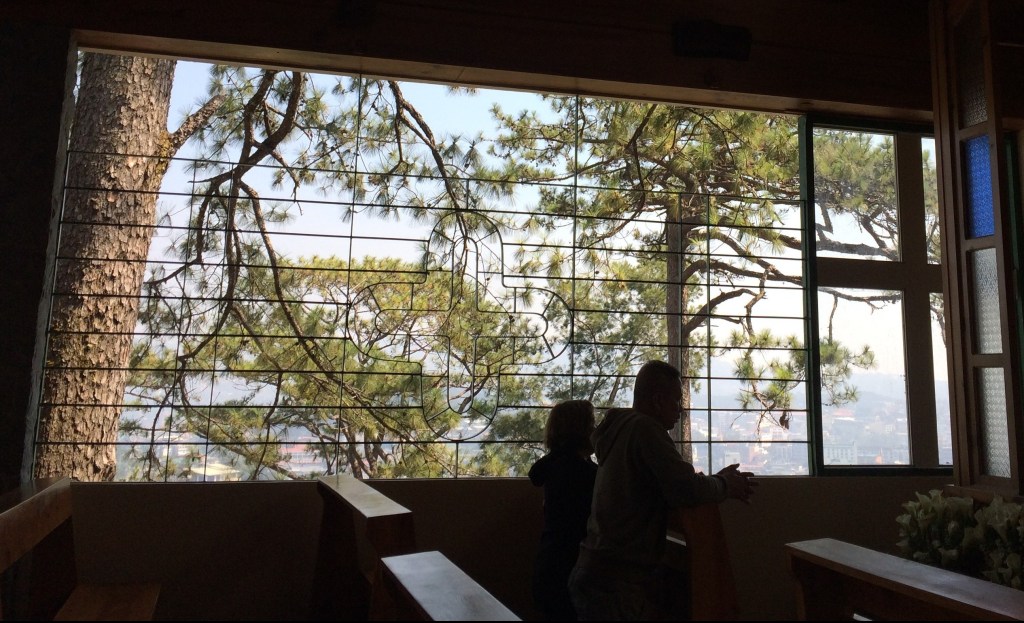
Photo by author, Our Lady of Lourdes Chapel, Baguio City, 2019.

While we are all very familiar with this parable, one thing needs to be clarified: many times we are indeed “persistent” in our prayers like that widow in the Lord’s parable but after a long time of praying, we wonder, even doubt God as nothing seems to happen to our prayers that remain unanswered.

So, what is to persist in prayer like that widow in the Lord’s parable?

The answer lies not entirely in the parable but in the conclusion by Jesus as presented by Luke:

The Lord said, “Pay attention to what the dishonest judge says. Will not God then secure the rights of his chosen ones who call out to him day and night? Will he be slow to answer them? I tell you, he will see to it that justice is done for them speedily. But when the Son of Man comes, will he find faith on earth?” (Luke 18:6-8)

We reflected last Sunday in the healing of the ten lepers that faith is a relationship expressed when we are grateful to God who blesses us as shown by the Samaritan leper healed. This Sunday, Luke deepens that truth that prayer is an expression of faith when he called Jesus as “Lord” at the conclusion of the parable.

Photo from https://freebibleimages.org/photos/persistent-widow/
The Lord said...

First, we notice him telling us how “The Lord said”. Luke did not simply use his usual style of narration of “Jesus said” because in using the title “Lord”, he gives a solemn tone to the declaration by Jesus at the end of the parable where its lesson actually lies.

Moreover, it is the title “Lord” is what the disciples attributed to the Resurrected Christ; to call Jesus as “Lord” is to have complete faith in him.

Painting of “Parable of the Unjust Judge” by Pieter de Greber (1628) from Web Gallery of Art, http://www.wga.hu.

Second, when Luke wrote “The Lord said” in the conclusion of the parable, he was introducing a revelation to which we must all “pay attention” as the Lord demanded his listeners then. God is more than that unjust judge in the parable because as the Lord said, “he will see to it that justice is done for them speedily.”

Actually, the parable is not about praying unceasingly or persistently to obtain one’s favor because “the Lord said” God does not wait for his “chosen ones who call out to him day and night”; recall how Jesus had said in many instances that even before we ask God in prayers, he already knew what we needed. God is always speaking to us and we merely respond to him when we pray. That is why every time we pray, our prayer is already answered because we have responded to God. But, have we really listened to God in our prayers? This leads us to the important teaching of the Gospel this Sunday.

Third, the most important teaching in that conclusion of the parable of the persistent widow and unjust judge, Jesus our Lord teaches us that God does not only give justice but actually “does justice speedily” or swiftly.

“To do justice” in the Bible means more than rendering a fair judgment like in our courts; in fact, it means differently because “to do justice” biblically means “to justify”, “to renew”, and “to save” as Paul used extensively in his letters.

Therefore, to pray persistently is primarily to pray to be saved or justified. The main lesson of today’s parable is still faith – faith in God who saves us; faith in Jesus Christ our Lord who will come again to lead us to eternal life; and faith that must be reawakened in us always because without it, we cannot find salvation in God nor meaning in this life.

Photo from https://freebibleimages.org/photos/persistent-widow/

We pray not just to have things which God always knows so well even before we ask him. But, why still pray if God knows what we need? Because we do not know what God needs from us which is to pray always for him, to have him because he is our life, our salvation.

That is why we must persist in prayer and never lose heart because the moment we stop praying, the more we get discouraged in life, then we start doubting God and his love for us, his powers and beautiful plans for us. When this happens, everything falls and we alone suffer and lost.

Hence, the Lord’s challenge to each one of us today with his question at the end of the lesson of his parable, “But when the Son of Man comes, will he find faith on earth?”

To persist in prayer is not about wearing God down but of allowing our hearts to clarify our desires until we silently surrender to what God knows is best for us which is salvation, to be with him in eternity.

Since Jesus journeyed to Jerusalem, that has always been the most frequently asked question to him. And where can we find its answers? Right in the Sacred Scriptures as Paul reminded Timothy in the second reading: “All Scripture is inspired by God and is useful for teaching, for refutation, for correction, and for training in righteousness, so that one who belongs to God may be competent, equipped for every good work” (2Tim.3:16-17).

Photo by Mr. Nicko Timbol, Chapel of the Angel of Peace, OLFU-RISE, Valenzuela City, 03 October 2025.

When we fill ourselves with the Word of God, we are filled with God which is basically what holiness is. That is when we live in deep faith in God when our faith becomes so powerful and transformative because it is aligned with God and his Will as we reflected the other Sunday.

Therefore, to persist in prayers is also to align ourselves with God and his plans and agenda when we can declare like St. Paul that “It is no longer I who lives but Christ in me” (Ga. 2:20). As we have always said, prayer does not change things and situations; prayer changes the person primarily to be like Christ, to be faithful to God always.

Life is difficult, often like a battle with many enemies always attacking us. God is always with us, knows our needs so well but it is still us who shall fight the many battles in this life like the Israelites in the first reading. Without faith and prayer, we cannot fight our many battles in life like the Israelites who prevailed over the stronger forces of Amalek. We can only have the advantage in our many struggles and trials in life when we completely place ourselves under the banner of God in Jesus Christ. Amen. have a prayerful and faithful week ahead, everyone. Fr. Nicanor F. Lalog II, Our Lady of Fatima University, Valenzuela City (lordmychef@gmail.com)
Our Sabbath faith

Lord My Chef Sunday Recipe for the Soul, 12 October 2025
Twenty-Eighth Sunday in Ordinary Time, Cycle C
2 Kings 5:14-17 ><}}}}*> 2 Timothy 2:8-13 ><}}}}*> Luke 17:11-19
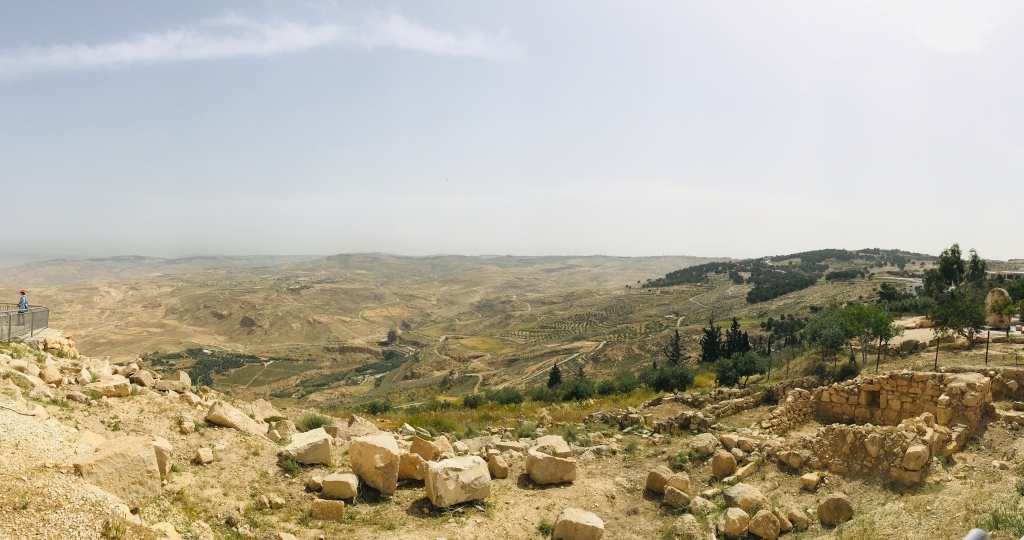
Photo by author, view of Israel from Mt. Nebo, Jordan, May 2019.

Our gospel setting this Sunday strikes a deep lasting impression on anyone who had been on a Holy Land pilgrimage: of those vast expanse of desert in Israel where dusty roads have been replaced by modern concrete or asphalted roads.

Perhaps the feelings remain the same today and during the time of Jesus when he and the Twelve were near the border between Samaria and Galilee, several figures who turned out to be ten lepers appeared at a distance, waving their hands to the Lord. It must have been a surprising sight, then and now, of being found in the desert. Imagine the desperation in their voices of those ten lepers, “Jesus, Master! Have pity on us!” (Lk.17:13).

Jesus right away told them to go show themselves to the priests, and as they went, they were healed. But only one—a Samaritan—returned to thank Jesus who wondered aloud: “Ten were cleansed, were they not? Where are the the other nine? Has none but this foreigner returned to give thanks to God?” Then he said to him, “Stand up and go; your faith has saved you” (Lk.17:17-19).

“The Healing of Ten Lepers” painting by James Tissot en.wikipedia.org

Last Sunday we reflected that faith is primarily a relationship with God; hence, its powers or efficacy will work only when aligned with God and his Holy Will. We will never know how strong we have grown in faith until we get into tests and trials. That is why, the need for us to imitate the Twelve in praying to Jesus, “Increase our faith” (Lk.17:5).

We grow best in faith when we worship God with our fellow believers in the celebration of the Holy Mass especially on Sundays which is our Sabbath. More than a day of rest, Sabbath is a day of restoration to God, with others and most of all, with one’s self. It is a return to Eden, a dress rehearsal of our entry into heaven to dwell in God’s presence eternally.

This is where lies the beauty and significance of this healing of ten lepers – they were not only restored to health but restored in God, to their families, and to their community and fellow believers.

Photo by author, Jerusalem, May 2017.

Those ten lepers have never known any rest at all since getting afflicted with the disease for they were cut off from homes, worship, and community. That is why they could not get near Jesus as they have to keep their distance from everyone according to their laws in order to prevent infecting others and spreading the disease. Likewise, it was the very reason that anyone healed of leprosy or any serious sickness must first present themselves to the priests who have the sole authority to declare one has been healed and therefore may be allowed to reintegrate with their family and community or society in general. Being declared as healed of sickness like leprosy at that time meant the restoration of one’s rights to worship in the temple or synagogue especially on Sabbath.

When Jesus healed them, he restored more than just their bodies and physical health. In sending them to the priests, Jesus invited them into the wholeness of what the Sabbath really is like peace, inclusion, and dignity. 

Or, salvation in short.

Sad to say, only one realized this when he returned to thank Jesus. The healed Samaritan leper knew and felt a deeper healing had taken place within him that he responded with heartfelt gratitude to God in Jesus. There was a deepening of his faith in Jesus when he decided to return to thank the Lord that also expressed his desire to enter into a relationship with Jesus.

Photo by author, Sacred Heart Novitiate, Novaliches, QC, 20 March 2025.

Whenever we thank people for their kindness no matter how little that may be, it is more than acknowledging the other person but most of all, of expressing our links with them as well as our desire to be one with them, especially with God who showers us with good things daily. That is why the Mass is also called Eucharist – from the Greek eucharistia meaning “thanksgiving”. After his skin was cleansed of leprosy in the first reading, Naaman the Syrian Army General declared before the Prophet Elisha that he would worship the Lord alone as he returned to his home with two mule-loads of Israeli soil.

Sorry to say but whenever we refuse to celebrate the Mass on Sundays, it means that we are one of those nine ungrateful lepers healed by Jesus! Don’t you feel being called like the Samaritan to return and give thanks to Jesus for the many blessings you have received this Sunday?

See how in this age of faith in a mass-mediated culture that we have become so impersonal, trusting more our gadgets and all those apps like Siri and Waze as if we have already lost faith in the human person. And God.

Photo by Mr. Nicko Timbol, Chapel of the Angel of Peace, OLFU-RISE, Valenzuela City, 03 October 2025.

We spend practically our entire days in front of all kinds of screens than with the face of a human person. Again, this sadly extends to the way we worship with many still stuck in the pandemic mode of online Masses not realizing the important and irreplaceable aspect of personal encounter of Jesus in the actual Mass with other believers.

God remains God even if we do not go to Mass every Sunday. It is us who are losing greatly whenever we skip Sunday Masses, our Sabbath. God specifically made his third commandment to “Remember to keep holy the sabbath day” because Sabbath reminds us that life itself is holy in the first place, a sharing in the life of God. What a tremendous blessing still that even if we forget God or disregard God every Sunday, Paul reminds us today of the beautiful truth and reality that “If we have died with Jesus we shall also live with him; if we persevere we shall also reign with him. But if we deny him he will deny us. If we are unfaithful he remains faithful, for he cannot deny himself” (2Tim.2:11-13).

Can you imagine that? If we are unfaithful to Jesus, he remains faithful?

Every Sunday, Jesus tells us to “Stand up and go; your faith has saved you” despite, in spite of our many sins and absences from the Sunday Masses in the past because he wants us to experience the deeper wholeness that comes with faith and gratitude as experienced by that Samaritan leper he had healed. As we continue to journey with Jesus toward Jerusalem facing many trials and sufferings along the way, he calls us to come to him in the Sunday Mass to deepen our faith by resting in his presence.

Is there a space in your life at this stage that you feel like one of those lepers, longing for healing and restoration? In the silence of this Sabbath day in our Sunday Mass, speak to Jesus especially after receiving him Body and Blood in the Holy Communion. Amen. Have a blessed week ahead! Fr. Nicanor F. Lalog II, Our Lady of Fatima University, Valenzuela City (lordmychef@gmail.com).

Our Lady of Fatima University-Valenzuela, June 2025.

Advent is the joy of our union in the Lord

The Lord Is My Chef Sunday Recipe for the Soul by Fr. Nicanor F. Lalog II
Third Sunday in Advent (Gaudete Sunday), Cycle C, 15 December 2024
Zephaniah 3:14-18 ><}}}}*> Philippians 4:4-7 ><}}}}*> Luke 3:10-18
Photo by author, Gaudete Sunday, Advent 2018.

Our altars are bursting in shades of pink this third Sunday in Advent known as Gaudete Sunday from the entrance antiphon in Latin of today’s Mass meaning “Rejoice in the Lord”.

To rejoice means to intensify joy which is a world apart from “happiness” many have mistaken as synonym for joy and rejoicing. Happiness is fleeting and superficial, dependent on the outside “stimulus” that makes us happy while joy comes from within one’s heart.

Joy is that feeling of certainty that no matter what happens to us, God would never forsake us, leading us to serenity and peace. That is why one can still rejoice and be joyful even in pain and sufferings like the elderly, the sick, or those struck with tragedy and failures. We can only rejoice when we have that deep faith in God, filled with hope that even if things get worst, our final salvation is in Jesus Christ who had come, would come again, and continues to come to us.

Photo by author, Advent 2021, BED Chapel, Our Lady of Fatima University, Valenzuela City.

Joy and salvation always come together as expressed by the Prophet Zephaniah in the first reading today which is fulfilled in Jesus Christ who renewed us all in the love of God our Father.

Shout for joy, O daughter Zion! Sing joyfully, O Israel! Be glad and exult with all your heart, O daughter Jerusalem! The Lord has removed the judgment against you, as he turned away your enemies… The Lord, your God, is in your midst, a mighty savior; he will rejoice over you with gladness, and renew you in his love (Zephaniah 3:14-15, 17).

True rejoicing can only happen in Jesus our Savior as St. Paul insisted in our second reading today, “Brothers and sisters: Rejoice in the Lord always. I shall say it again: rejoice!” (Phil. 4:4).

In His sermon on the mount about the beatitudes, Jesus taught us that true blessedness that leads to joy is not in having everything but in being empty and poor for God, being free from the trappings of this material world. Just ask those above 50 years old today: we have less of material things when growing up but we have so much fun so unlike these days of so many gadgets and things when suicides and mental cases are on the rise. People may be happy today but not joyful.

With our Campus Ministry members after our Advent Recollection, 12 December 2024, Chapel of the Angel of Peace, RISE Tower, Our Lady of Fatima University, Valenzuela City.

At His Last Supper as well as after Easter in His appearances to His disciples, Jesus assured us of joy and peace if we remain in Him by keeping His commandments especially the celebration of the Eucharist until He comes again. But, in a recent Christmas party I attended, a parlor game surprised me when the host asked participants to “bring him” the first thing we look for upon waking up when everybody rushed to him bringing their cellphones!

I thought the answer were eye glasses which I first look for upon waking up to check the time. As a result, I made an informal survey when I took the elevator and during our Mass at the university when I asked the students, “what is the first thing you look for upon waking up?”

And, cellphone again was their unanimous answer which I find very alarming. Is the cellphone the new god of our modern time, replacing not only Jesus but even ourselves! It has slowly robbed us of our true joy, often caused many of our sorrows and breakdown of relationships.

We rejoice because of Jesus Christ and in our union in Him, we become one with others in whom we experience joy and rejoicing too.

Photo by Mr. Jim Marpa, 2018.

Now we go to another dimension of joy and rejoicing – its personal and relational aspect. Have you experienced there are times we find it difficult to rejoice with others having fun or enjoying something while on the other hand, we are easily moved to sympathize with anyone crying or feeling api and forlorn even if we do not know them?

Is it not ironic we easily unite with strangers in sadness but not in joy? I think that perhaps, God designed us to sympathize with anyone in pain because there is a thread that connects and binds us together in times of sorrow. It is a lot different with rejoicing which presupposes a relationship, a sort of oneness to experience the others’ joy. Joy is never solitary unlike sadness that is often kept inside by the person. Joy to be really joyful has to be made known. That is why we can easily share in the joy of others when we know them. We turn sarcastic even jealous when we find others we do not know rejoicing simply because we are not part of them nor of their joys.

Photo by author, Gaudete Sunday, Advent 2019.

Rejoicing is not about what we or anyone can do but all about relationships as Luke shows us in his account on John’s baptism at Jordan that is so upbeat that we too could feel the rejoicing of the people in John’s coming and preaching that some of them thought John was the Messiah. The people felt a deep sense of belonging, of relating and knowing that they asked John what they must do to continue rejoicing!

The crowds asked John the Baptist, “What should we do?” Even tax collectors came to be baptized and they said to him, “Teacher, what should we do?” Soldiers also asked him, “And what is it that we should do?” Now the people were filled with expectation, nd all were asking in their hearts whether John might be the Christ… Exhorting them in many other ways, he preached good news to the people (Luke 3:10, 12, 14, 15, 18).

In telling us how John answered the queries of the people on what they must do to experience the coming of the Messiah, Luke teaches us that God is not asking great things from us but only simple acts of charity and mercy for one another like being kind and loving because we are already related in Him in the first place. Hence, we all can rejoice in Christ!

Here is our common misconception that if we do what is good and right, then we shall be filled with joy. Wrong. We are already filled with joy and we just have to intensify that into rejoicing because we are already God’s beloved children in baptism. When we live out our status as beloved children of God in Christ, everything follows.

Don’t you feel rejoicing just before communion, praying, “Lord, I am not worthy to receive you under my roof but only say the word and I shall be healed”?

Imagine that immense love of God in Christ for us when nobody among us even the priest officiating the Mass is worthy to receive Jesus and yet, He came and made it a reality because He loves us so much! All we have to do is be sorry for our sins, reform our lives, apologize to those we have wronged, forgive those who have sinned against us… it is God who does everything for us in Jesus Christ. We do only so little but sadly, we could not even do the little things so well like coming on time for the Mass every Sunday, much less be silent to pray and listen to Jesus coming to us in Holy Communion because we are so busy conversing with those beside us or checking our cellphones.

This third Sunday in Advent, Jesus invites us to imitate John the Baptist His precursor who “preached good news to the people” with his warm and joyful presence. Spread the joy of Jesus by being kind and warm to others especially those in pain, those alone, those who are lost. After all, we are all one in Christ who is our joy and salvation. Amen.

Photo by author, Gaudete Sunday, Advent 2019.

When we do not know what “we want”

The Lord Is My Chef Sunday Recipe for the Soul by Fr. Nicanor F. Lalog II
Twenty-ninth Sunday in Ordinary Time, Cycle B, 20 October 2024
Isaiah 53:10-11 ><}}}}*> Hebrews 4:14-16 ><}}}}*> Mark 10:35-45
The Jewish Cemetery of Mount of Olives facing the Eastern Gate of Jerusalem where the Messiah is believed would pass through when He comes, exactly where Jesus entered on Palm Sunday over 2000 years ago (photo by author taken in May 2019).

Jesus Christ’s three predictions of His coming Passion, Death, and Resurrection punctuate Mark’s narration of the Lord’s journey to Jerusalem. They were already fast approaching Jerusalem when Jesus revealed His third prediction of His Pasch to His followers.

According to Mark, the Twelve and the crowd were “amazed and were afraid” after hearing for the third time Christ’s coming Passion, Death, and Resurrection.

Photo by author, Via Dolorosa in Jerusalem, April 2017.

And this was the prevailing mood among the followers of the Lord as they approached Jerusalem; beginning today and next Sunday, Mark reminds us of the need to have a clear sight and understanding of Jesus and His mission so that we may not be blinded by fame and glory in following Him like the brothers James and John:

James and John, the sons of Zebedee, came to Jesus and said to him, “Teacher, we want you to do for us whatever we ask of you.” He replied, “What do you wish me to do for you?” They answered him, “Grant that in your glory we may sit one at your right and the other at your left.” Jesus said to them, “You do not know what you are asking… but to sit at my right or at my left is not mine to give but is for those for whom it has been prepared” (Mark 10:35-38, 40).


Jesus said to them, 
"You do not know what you are asking."

Photo by author, Betania Tagaytay, 2018.

Whoa…! We might all exclaim with some indignation like the other ten Apostles upon hearing this request by James and John, two of the most intimate friends of Jesus with Simon Peter.

Were they trying to ease their worries and fears that they made the request without thinking it so well, a case of mema, me masabi lang? Or, do they really understand nothing at all of the Lord’s teachings especially last Sunday of the need to let go of our possessions to enter eternal life?

Whatever may be the reason, we could just imagine the treachery of the two who left the group behind, trying not to be noticed by the ten, and approached Jesus who was walking ahead. They have both belittled Jesus who reads the minds and the hearts of everyone. And most sad is the fact that many times, we too act like James and John.

Oh yes! We know so well of the sufferings and trials, of the “cup we have to drink and baptism we have to undergo” Jesus told the brothers. Very much like the two, we also know Christ always triumphs! Jesus never fails!

And that’s the crux of the matter here not only with James and John but with us: we bet on Jesus like in gambling casinos for we know Jesus wins all the time, hoping for some rewards following His glory.

James and John like us today believed so much in Jesus that despite His coming Passion and Death, they knew as we do that He would rise again and be King. Long before the Passion of Jesus had begun, still far from entering Jerusalem, James and John were already betting on the success and glory of Christ because they wanted a guarantee of a reward. It was a sort reminding Jesus they have always been with Him since the beginning like Peter last Sunday who bragged about having left everything to follow Him.

Are we not like them? It is the same attitude found among many of us not only in politics and government but even at home, in school and offices, or the church! Be the first to register to make it known how well qualified we are for commendations and rewards simply because of being in the company of every journey or advocacy or struggle.

It is the tragedy that happens even in our faith journey as Christians when we are blinded by so many worldly things about Jesus whom we see merely as a miracle-worker or worst, an ATM who never runs out of cash. We believe in Jesus as the Son of God, all-powerful and merciful who can do everything, especially the impossible as He had assured us last Sunday but many times, we do not know what we are asking like James and John.

When the ten heard this, they became indignant at James and John. Jesus summoned them and said to them, “You know that those who are recognized as rulers over the Gentiles lord it over them, and their great ones make their authority over them felt. But it shall not be with so among you. Rather, whoever wishes to be great among you will be your servant; whoever wishes to be first among you you will be slave of all. For the Son of God did not come to be served but to serve and to give his life as a ransom for many” (Mark 10:41-45).

Photo by author, wailing wall of Jerusalem, May 2019.

Jesus clarifies today with us that His glory has nothing in common whatsoever with those things we gain here on earth by claiming our rights or resorting to undue favors, by competing with others to get the better of them or even push them away or step on them to crush them for us to be on top.

We cannot be Christ’s disciples if we are preoccupied with rewards. We serve Jesus because we love that we want to be with Him in eternal life. And in loving Him, we serve lovingly others without expecting anything in return simply because we love.

See how in calling together the Twelve, Jesus reminded them and us today of His central teaching of becoming like a child, confidently entrusting everything into the Father’s hands, exactly like Him, the Suffering Servant of God referred to by the Prophet Isaiah in the first reading who “gave his life as a ransom for many” (Mk.10:45).

Photo by author, 2021.

Jesus reminds us this Sunday that love alone – like His self-sacrificing love on the Cross – is the basis of our relationships with each other, unlike the world where relations are based on power and domination.

Noteworthy too is the reminder of the author of the Letter to the Hebrews today about Jesus our High Priest who entered the sanctuary of heaven through the Cross so that we may be saved and receive mercy from the Father.

What else do we want Jesus to do for us when He had done everything for our salvation? Let us pray for a clearer vision of Jesus, to always see and find Him in our lives so that we desire only Him and share only Him. And follow Him like the blind Bartimaeus next Sunday. Amen. Have a blessed week ahead!

Faith is hope

The Lord Is My Chef Daily Recipe for the Soul by Fr. Nicanor F. Lalog II
Wednesday in the Eighteenth Week of Ordinary Time, Year II, 07 August 2024
Jeremiah 31:1-7 <*((((>< + ><))))*> Matthew 15:21-28
Photo by author, Sacred Heart Novitiate, Novaliches, QC, 20 March 2024.

Yes, a day will come when the watchmen will call out on Mount Ephraim: “Rise up, let us go to Zion, to the Lord, our God.” For thus says the Lord: Shout with joy for Jacob, exult at the head of the nations; proclaim your praise and say: The Lord has delivered his people, the remnant of Israel (Jeremiah 31:6-7).

How refreshing are your words
today, God our loving Father;
so upbeat with hope
for the divided nation of
Judah and Israel to finally
be one just like us today:
so divided recently with all
the mockery and sacrilege
in the Paris Olympics
only to be united
by Carlos Yulo's
recent harvest of two gold medals;
what a beautiful lesson in faith in You
that is also hope itself;
from being the least supported
and known sport in the country,
Yulo remained faithful
filled with hope in You
while persevering in gymnastics;
like Yulo and Jeremiah's command,
let us shout with joy to You,
proclaiming your redemption
that literally means "Hosanna"
in Hebrew, the very shouts of joy
when Jesus entered Jerusalem
on Palm Sunday.

She said, “Please, Lord, for even the dogs eat the scraps that fall from the table of their masters.” Then Jesus said to her in reply, “O woman, great is uyour faith! Let it be done for you as you wish.” And her daughter was healed from that hour (Matthew 15:27-28).

Like that Canaanite woman
who begged Jesus,
even bantered with Him
about dogs and puppies,
bread and crumbs
for mercy and healing to her
sick daughter,
help us realize that faith is hope;
that hope is more than positive thinking
of how things would get better
but could even get worse
yet still believe in God!

Thank you Jesus
for always coming to "pagan"
territories like Tyre and Sidon;
keep our faith and hope burning
to await You,
to recognize You,
to meet You
coming in the midst of our
many darkness and brokenness.
Amen.

God, our dew of light

The Lord Is My Chef Daily Recipe for the Soul by Fr. Nicanor F. Lalog II
Thursday in the Fifteenth Week of Ordinary Time, Year II, 18 July 2024
Isaiah 26: 7-9, 12, 16-19 <'[[[[>< + ><]]]]'> Matthew 11:28-30
Photo by Pixabay on Pexels.com
Your words today,
O God, are so refreshing
that I wish to pray like your
Prophet Isaiah:
"The way of the just is smooth;
the path of the just you make level.
My soul yearns for you in the night,
yes, my spirit within me keeps vigil
for you;
For your dew
is a dew of light,
and the land of shades
gives birth"
(Isaiah 26:7, 9, 19).
Freshen us, O Lord,
from our dirt and exhaustion
from sin!

Refresh our thoughts
and our feelings, make them
crystal clear like the dew
in the morning to see your
kindness and mercy!

Gladden our hearts,
uplift our souls
with your presence in
Christ Jesus who calls us
daily to come to Him
and have rest,
because His yoke is easy,
His burden is light
(Matthew 11:28-30).
Let us surrender to You
in Jesus Christ
for there is no salvation
outside from You except in Him;
so true are the words of Isaiah:
"As a woman about to give birth
writhes and cries out in pains,
so were we in your presence, O Lord.
We conceived and writhed in pain,
giving birth to wind; salvation
we have not achieved for the earth,
the inhabitants of the world
cannot bring it forth.
But your dead shall live,
their corpses shall rise;
awake and sing,
you who lie in the dust"
(Isaiah 11: 17-19).
Teach us to appreciate
and value the little things in life
we take for granted
like the droplets of dew in the morning
enough to set our face aglow again
of new beginnings; in coming to us,
Jesus taught us the value of being
small, being little,
being silent, being humble
when life begins
and regenerates always.
Let us arise anew in Jesus
from our deep sleep in sin
through His dew of light,
a glimmer of better days ahead.
Amen.
Photo by Cosmin Petrisor on Pexels.com

Lent, a pilgrimage to God

40 Shades of Lent by Fr. Nicanor F. Lalog II
Sunday Recipe for the Soul, Lent I-B, 18 February 2024
Genesis 9:8-15 + + 1 Peter 3:18-22 + + Mark 1:12-15
Photo by Walid Ahmad on Pexels.com

Pope Benedict XVI eloquently described Lent in his first papal Lenten message in 2006 when he wrote, “Lent is a privileged time of interior pilgrimage towards Him Who is the fount of mercy. It is a pilgrimage in which He Himself accompanies us through the desert of our poverty, sustaining us on our way towards the intense joy of Easter.”

What a beautiful picture too of the short gospel from Mark we heard this first Sunday in Lent that briefly describes the temptation of Jesus so unlike the detailed versions by Matthew and Luke. Nonetheless, Mark’s terse account is loaded heavily in rich symbols and meanings.

The Spirit drove Jesus out into the desert, and he remained in the desert for forty days, tempted by Satan. He was among the wild beasts, and the angels ministered to him. After John had been arrested, Jesus came to Galilee proclaiming the gospel of God: “This is the time of fulfillment. The kingdom of god is at hand. Repent, and believe in the gospel.”

Mark 1:12-15

This scene comes right after the baptism of Jesus by John at the Jordan. It is sad that our liturgical texts have not yet adopted the new revised editions of major Catholic bibles wherein Mark noted how “immediately” or “at once” after his baptism, Jesus was tempted in the desert.


(At once) The Spirit drove Jesus out into the desert tempted by Satan. 

“Temptation in the Wilderness” painting by Briton Riviere (1840-1920) from commons.wikimedia.org.

Do we not experience the same thing daily in life when even right in the moment we are trying to pray, trying to become better when temptations come our way like when we decided to pray or go celebrate the Mass, something else would distract or prevent us from fulfilling it?

See how difficult it is to go on diet when suddenly mother cooks your favorite meal or somebody comes for a visit with burgers and sodas and cakes! Just when you have decided to quit a vice, at once the temptation comes to pick it up again, as we plea to make it our “last” cigarette or joint, last shot of alcohol, last look at pornography, last gamble and so many other lasts that never really ended! Recall those times we decided to finally embark on any religious or spiritual endeavor when at once we are intensely challenged by carnal and material desires.

It is a reality of life that Jesus faced too like us, being tempted immediately by Satan after his baptism when God identified him as his beloved Son with whom he is well pleased. Mark warns us today how Satan is bent on tempting us to abandon God, be lost and just be ordinary without meaning and fulfillment in life and existence. The five Sundays in Lent depict to us our internal pilgrimage and journey into God’s inner room to be with him in Christ Jesus. It is a pilgrimage as we return to our very root and grounding who is God. Let us not waste the grace of this blessed season to become like God again, truly his image and likeness marred by sin and evil.

Oh what a joy to be one with God again, to regain our true selves – contented and fulfilled in our very selves minus all the trappings of this world’s artificialities of fake selves with fake faces and skin, of fake lives glamorized in social media. It is a pilgrimage in the desert where we are invited to leave everything behind, to be bare and nothing for we solely need only God to truly see again our selves as true, good, and beautiful. Not with cosmetics nor food nor even modern thoughts and ideas pretending to be just and fair that deceive us and leave us more empty and lost.


He was among the wild beasts, and the angels ministered to him.

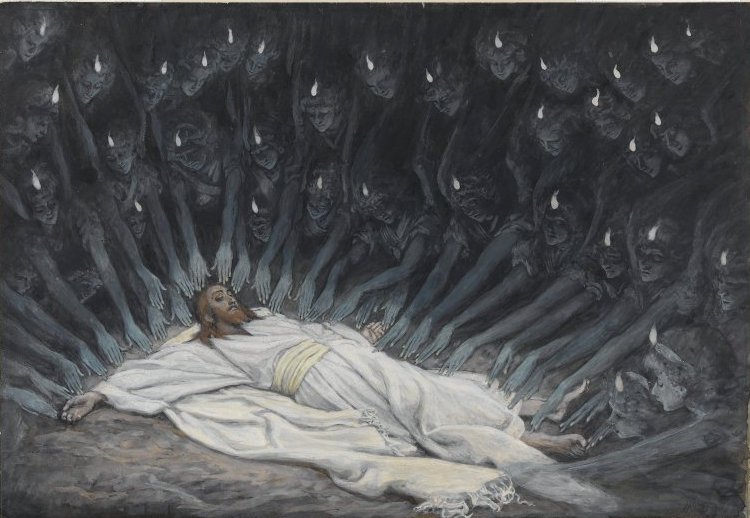
“Jesus Ministered to by Angels” painting by James Tissot (1836-1902) from commons.wikipedia.org.

Lent is an interior pilgrimage to God lived in the wilderness too, an invitation for us to go back to Paradise even in the midst of the chaos around us. This we do every Sunday in the Mass when we go back to God, to his Church and the sacraments.

This is why Lent is the time for more prayers, fasting and alms-giving as they all strengthen our spiritual resolve to become better persons, to become who we really are – beloved children of God with dignity, meaning and purpose found in him.

Despite the fall of Adam and Eve, God never abandoned us because he loves us so much that he sent us Jesus Christ his Son to accompany and show us how among the wild beasts around us, there are angels attending to our needs at all times. Everyone has a struggle, a problem dealing with. Nobody is without any crisis nor lives perfectly. That’s the imagery of the desert, a wilderness with the wildest beasts that are most ferocious and most poisonous.

Yet, God has assured us even right after the Fall that we are his most precious creation that he takes the initiative always to save us from every danger of sickness and death. Most of all, of sin like when Cain was so jealous of his brother Abel, the Lord said to him, “Why are you angry? Why are you dejected? If you act rightly, you will be accepted; but if not, sin lies in wait at the door; its urge is for you, yet you can rule over it” (Gen. 4:6-7).

In the first reading we heard how God acted like human, so fed up with our sinfulness that he sent a great flood to wipe the earth clean again. However, do not forget that before sending the great flood, God sent first Noah and his family. Again, that is exactly how our life is!

Unknown to us, long before any problem and sufferings come to us, there is always God preparing already a remedy, a solution, an exit plan for us in the first place like when he sent Noah and his family to ensure there would still be good people left after the flood. This reached its highest point in Jesus whom the Father sent to become the new rainbow of the sky when Christ stretched out his arms on the Cross to save us. Peter beautifully explained this truth in our second reading today, reminding us how the great flood at Noah’s time was a prefiguring of our baptism in Jesus Christ when we become the Father’s beloved and forgiven children.

Never lose hope when things seem to be so bad and miserable in life. Remember how the silver linings appear always after the heavy rains or how the leaves are greenest after the storm. Yes, life is like a desert, a wilderness with so many wild beasts that may times we could not escape temptations and fall into sins. But God is greater than our hearts, sending us more than enough angels even his only begotten Son so we may overcome temptations and sins, downfalls and defeats in life. Go back to God, go back to paradise in prayers and the Mass. Handle life with prayer, always PUSH, that is, Pray Until Something Happens.


After John had been arrested, 
Jesus came to Galilee proclaiming the gospel of God:
"This is the time of fulfillment.
The kingdom of God is at hand.
Repent, and believe in the gospel."
Photo by shy sol on Pexels.com

This is the most unique feature in Mark’s brief account of the temptation of Jesus by Satan. Mark began his gospel just like the three other evangelists linking the life and mission of Jesus with John the Baptist; however, he abruptly removed John from this scene by simply saying “after John had been arrested, Jesus came to Galilee proclaiming the gospel of God.”

“Ganun lang yon?” we might ask in Filipino. It would take five more chapters before Mark explains to us the fate of John the Baptist.

And yes, that’s the way it is with us too! We never stop with our mission like Jesus amid all the storms and darkness hovering above us. There will always be sufferings and trials coming and these in itself are the reasons for us to continue with our mission like Jesus.

Inasmuch as the lives and fate of Jesus and John are intertwined, so are our lives and fate as disciples of Christ with him! It is during trials and difficulties when our proclamation of God’s kingdom are loudest and most credible. Most of all, it is in our sufferings when we go back to our internal desert when we truly experience the time of fulfillment if we remain faithful to God like Jesus Christ.

Let us pray:

Dearest Jesus:
accompany us
on this first week of Lent
into the Father's house;
make us stop all whining
and complaining on the many
desert experiences we are going
through for that is how life is -
like a wilderness with many wild beasts!
Let us never lose sight of your
loving presence among us, Lord,
of your angels ministering to us,
assuring us of the colorful rainbow
of life in the horizon if we remain
faithful and true.
Amen.
Photo by Ms. Annalyn Dela Torre, Bgy. Caypombo, Santa Maria, Bulacan, 14 February 2024.

Real power empowers

The Lord Is My Chef Sunday Recipe for the Soul by Fr. Nicanor F. Lalog II
Fifth Sunday in Ordinary Time, Cycle B, 04 February 2024
Job 7:1-4, 6-7 ><}}}}*> 1 Corinthians 9:16-19, 22-23 ><}}}}*> Mark 1:29-39
Photo by The Good Brigade/Digital Vision/Getty Images via cnn.com.

There’s another “war” happening that had actually started a long time ago but only now recognized by the powerful US Senate in Washington DC when they summoned last week the owners of big tech companies to a hearing on the harmful effects of social media.

It is a war that at first seemed to have been neglected or even unrecognized when parents and experts have long been complaining about the ill effects of social media. Finally, authorities are doing something about it. 

“Great power comes with great responsibilities.”- Spiderman. Photo from peakpx.com.

Though the issues at hand are very contentious because of the many benefits too of social media, the US Senate hearings are a big step in demanding more social responsibilities from tech owners who have become so powerful with their products’ wide reach and influence.

Of course, much responsibilities are also in the hands of parents and users of social media but one thing has always been clear these past 20 years when experts and ordinary folks have been raising the red flag on social media being so impersonal in nature where persons are often considered as objects than subjects to be loved and respected.

Our ability to communicate is a sharing in the power of God, a sharing in his authority meant to foster union among peoples as persons. Despite the efficiency of social media, it cannot and must not replace the human person in every communication. This we have seen last Sunday when people were “astonished” and “amazed” one sabbath as Jesus spoke with authority in their synagogue in Capernaum. From there, Jesus moved into the home of Simon Peter, staying for a while in Capernaum before moving on to other locations to continue his ministry of teaching and healing.

On leaving the synagogue Jesus entered the house of Simon and Andrew with James and John. Simon’s mother-in-law lay sick with a fever. They immediately told him about her. He approached, grasped her hand, and helped her up. Then the fever left her and she waited on them.

Mark 1:29-31
Photo by author, ruins of the neighborhood around the synagogue of Capernaum where Jesus used to preach; underneath the Church are believed to be the ruins of the home of Simon Peter where Jesus healed his mother-in-law.

It was still the day of sabbath and we could feel the great joy and pride of the four disciples with Jesus that they “immediately told him” about Simon’s mother-in-law who “lay sick with a fever.”

Notice Mark’s detailed report on the healing of Simon’s mother-in-law by Jesus: He approached, grasped her hand, and helped her up. Then the fever left her and she waited on them. In this continuation of a slice in the life of Jesus last Sunday, Mark is presenting us again another important aspect of Christ’s authority and power that is personal which empowers others. 

To empower means to raise up a person from one’s lowliness in order to restore his/her well-being. To empower means to make a person whole again as he/she discovers and experiences anew his/her giftedness in God and as a person. 

Photo from kimaldrich.com

Now, imagine this in the light of the powers of social media made possible by the internet through various devices: Jesus could have healed anybody who was sick within a 100 or 200 meter radius from the synagogue of Capernaum with his great powers being the Son of God. He could have just sent off signals like a router to heal more sick people instead of making them flock to the home of Simon Peter. Even today, perhaps, we could just come to the church, stay in a specific spot like the confessional to get connected to Jesus and voila – get healed!

But, Jesus never did that kind of healing and would never do it. Recall how Jesus would always approach and touch, speak and meet the sick before healing them. When a woman was healed of her hemorrhages after touching his clothes while they were in a crowd, Jesus stopped and searched for her to have a personal relationship. Unlike the internet, Jesus came in order to personally connect with us and connect us with the Father in the most personal manner.

In every healing by Jesus, there is always something deeper than restoration of one’s health which is salvation, a personal encounter with the Christ who leads us to fulfillment as persons. In every healing of body, there is the forgiveness of sins in one’s soul and being. Healing is more wholistic in nature than being being relieved of headache or any discomfort. Many times, our sickness can leave us deformed, disabled and even invalid without any cure at all yet deep inside us we still experience freedom and joy. That is healing because we are assured of being loved and cared for by another person and most of all by Jesus, personally.

So unlike the powers of any human or professional nor even by the social media so much around us that may be indeed so strong and efficient with its great speed but could never uplift us or restore our well-being. For sometime, they can offer us with relief but the deep longings and emptiness within us lingers on. Why? St. Augustine expressed it perfectly when he wrote in his Confessions, “You have made us for yourself, O Lord, and our hearts are restless until they rest in you.”

From Pinterest.com

This Sunday, Mark is telling us that Jesus comes to us daily right in our hearts where our home is, always “approaching us, grasping our hands, helping us up” from all our burdens and pains, sufferings and miseries. Are we present to meet Jesus? Do we “immediately” tell him our problems like Simon Peter when his mother-in-law had fever?

The only essential and vital connection we must keep and maintain in this life is our personal connection with God in Jesus Christ who exemplified this well at the end of this Sunday’s gospel when “Rising very early before dawn, he left and went off to a deserted place, where he prayed” (Mk. 1:35).

Last Friday we celebrated the Feast of the Presentation where Simeon and Anna showed us too how they remained personally connected with God in their daily prayers and fasting at the temple so that when Joseph and Mary came with the Child Jesus, both were led by the Holy Spirit to meet them. Imagine the crowd at the temple at that time plus Simeon and Anna being both old with the usual woes but were both never distracted in their focus on God and his promise of salvation in Christ before dying.

Photo by Vigie Ongleo in Virginia, USA, 02 February 2024.

There will always be suffering in life as the first reading reminds us. Like Job, we go through many setbacks in life, making us wonder all the more at the mystery – and scandal – of human sufferings, of how it could befall us if we have a powerful and loving God. St. Paul meanwhile tells us in the second reading how imperfect our world is when we sometimes have to make sacrifices to keep the unity of our family and community.

Both Job and St. Paul in their sufferings and sacrifices remained connected with God, bore everything in silence to become “all things to all men” (omnia omnibus) by sharing God’s power and authority in their weaknesses even in death that have empowered countless men and women through the ages including us in our own time.

Let us pray:

Lord Jesus Christ,
our true healer of all sickness
in body, heart, mind and soul:
keep us connected in you
especially in moments of trials
and difficulties so that we may
be filled with your personal powers
as we too empower others
when they are weakest.
Amen.

A blessed weekend to everyone!

Facing evil

The Lord Is My Chef Daily Recipe for the Soul by Fr. Nicanor F. Lalog II
Monday in the Fourth Week of Ordinary Time, Year II, 29 January 2024
2 Samuel 15:13-14, 30; 16:5-13  <*((((>< + ><))))*>  Mark 5:1-20
An illustration of the healing of the Gerasenes demoniac from Pinterest.
On this final week of January
as we approach in two weeks the
Season of Lent,
you teach us today,
dear Father with many
lessons about "facing" evil;
at first, I felt evil is always
"confronted", something we always
fight head on but from the
two readings today,
your words tell me O Lord
there are times we just have
to stand firm against evil without
necessarily fighting it out right away
but not condoning it either.

But the king replied: ”What business is it of mine or of yours, sons of Zeruiah, that he curses? Suppose the Lord has told him to curse David; who then will dare say to, ‘Why are you doing this'” Then the king said to Abishai and to all his servants: ”If my own son, who came forth from loins, is seeking my life, how much more might this Benjaminite to do! Let him alone and let him curse, for the Lord has told him to. Perhaps the Lord will look upon my affliction and mae it up to me with benefits for the curses he is uttering this day.”

2 Samuel 16:10-12
Give me, O God, the same
patience of David to accept the
evils happening to me as I am guilty
of so many evils too;
like David, let me be mindful always
of my own evil ways and sins that
definitely will haunt me,
will chase me,
and will charge me later
in recompense for my own
sins too.
There are times, Lord,
that I must accept
how I deserve some evil to befall me
as a result of my own sinfulness
like David.
If ever the evils that come to me
are undeserved,
keep my cool and patience,
as well as goodwill
like Jesus Christ your Son
and our Lord;
after healing the Gerasenes demoniac,
he was driven out from the town
by the people;
many times,
people do not understand
anything at all when evils
befall us and others;
maintain my peace
within me, Lord,
that I may not react against
my accusers like you
especially when they all get it wrong;
let me tower over everyone else
with firm faith in you,
dignity in silence,
and clear conscience
when people wrongly
accuse me of deeds
I am not guilty of
for you alone is my
salvation.
Amen.

Authority is when we claim God whom we proclaim

The Lord Is My Chef Sunday Recipe for the Soul by Fr. Nicanor F. Lalog II
Fourth Sunday in Ordinary Time, Cycle B, 28 January 2024
Deuteronomy 18:15-20 ><}}}}*> 1 Corinthians 7:32-35 ><}}}}*> Mark 1:21-28
Photo by Dra. Mylene A. Santos, MD, an orange-bellied flowerpecker (Dicaeum trigonostigma) somewhere in the Visayas, December 2023.

The gospel makes us wonder anew this Sunday on the mystery of Jesus, on what was with his person and speech. Remember how we wondered the other Sunday on what he had told Andrew and his companion who “went and see” Jesus at his dwelling at “four in the afternoon” (Jn. 1:39) that they realized he was indeed the Messiah, the Christ. 

Reading further in that portion of the fourth gospel, we find how Andrew and companion brought two others to Jesus, Simon Peter and Nathanael to become disciples too. This Sunday as we return to Mark’s gospel, the evangelist tells us the start of Jesus Christ’s public ministry on a sabbath in the synagogue of Capernaum with his first four “fishers of men”:

Then they came to Capernaum, and on the sabbath Jesus entered the synagogue and taught. The people were astonished at his teaching, for he taught them as one having authority and not as the scribes.

Mark 1:21-22
Photo by author of ruins of parts of the synagogue at Capernaum where Jesus taught, May 2017.

Every time we hear the word “authority” especially among us Filipinos, it often evokes the sense of power, of superiority over persons and things. In Tagalog, we translate it as “power” or kapangyarihan, kakayanan mapangyari ano mang bagay.

But, Jesus is now telling us something deeper about true authority. People compared his kind of authority with their scribes, men of power and authority in their time along with the priests and Pharisees who were considered experts in scriptures being learned men, highly regarded and feared. Their authority flowed only from their position and name, from the outside and not from within.

Jesus shows us today that real authority flows from within, from a person’s inner self, from one’s heart, not from designations nor positions. True authority is felt even without the titles nor any forms of externalities. True authority comes from people who “walk their talk” so to speak.

Photo by author, tourists and pilgrims at the ruins of the synagogue at Capernaum where Jesus taught, May 2017.

People of true authority “actualize” their words and their thoughts, making them a “reality” that everyone not just notices but even feels their authority. True authority creates a certain sense of aura, of positive vibes (arrive or “dating”) and a lot of mysteries that even in just reading Mark’s account of Jesus in the synagogue, we too could feel it and be astonished with the people there 2000 years ago!

What is most amazing here is that Mark did not tell us what Jesus spoke of nor what he taught nor even described how he spoke. What was so unheard of from Jesus that people and even us today are astonished with his words?

Keep in mind how Mark narrated this scene in the context of the synagogue on a sabbath – a beautiful reminder to us of Jesus continuing the Jewish tradition that had come into fulfillment in him. Recall also that at the start of Mark’s gospel After John had been arrested, Jesus came to Galilee proclaiming the gospel of God: ”This is the time of fulfillment. The kingdom of God is at hand. Repent, and believe in the gospel” (Mk.1:14-15).

Photo by author in May 2019 of a signage at the entrance of the ruins of the synagogue in Capernaum where Jesus taught more than 2000 years ago.

In the synagogue, Jesus continued this preaching. He claimed what he proclaimed for he is in fact – his very person – is the kingdom of God who had come as we reflected last Sunday. 

People felt God in him as he spoke, very similar with the experience of the chosen people in the wilderness with Moses in the first reading. There in the synagogue on that sabbath day, Mark presents to us how Jesus is indeed the “Word who became flesh” that people felt God in him because he claimed what he proclaimed. As the first reading from Deuteronomy reminds today, the surest criterion for recognizing a prophet is being a spokesperson of God like Moses now fulfilled in Jesus Christ.

We all share in this prophetic ministry of Christ when we were baptized but, are we rooted in God’s words that we speak only God’s words like Jesus? 

Can we claim what we proclaim that after celebrating the Sunday Mass, people experience Christ’s authority within us when we go home and go back to work and school because we actualize, we make God real in ourselves in our words and deeds?

How sad that we – especially us your priests – speak more of our selves and of the world, making the Mass a videoke and a variety show rolled into one that God is hardly felt by the people except be entertained.

Photo from https://santoninodecebubasilica.org/chronicles/viva-pit-senor-viva-senor-santo-nino/

The second time Mark mentioned the people being amazed with Jesus in his speaking with authority in the synagogue on that sabbath day was when he exorcised a man with an unclean spirit.

In their synagogue was a man with an unclean spirit… Jesus rebuked him and… And the unclean spirit convulsed him and with a loud voice came out of him. All were amazed and asked one another, “What is this? A new teaching with authority. He commands even the unclean spirits and they obey him.” His fame spread everywhere throughout the whole region of Galilee.

Mark 1:23, 25, 26-28

The surest sign of God speaking through us or anyone is when healing and repentance happen just like in the synagogue on that sabbath day. Notice how Mark recorded the words of the people about Jesus, “A new teaching with authority.”

In John’s gospel during the Last Supper we heard Jesus telling his disciples about his new command or teaching too which is to “love one another as I have loved you” (13:34).

True authority is about love and healing, kindness and compassion, mercy and forgiveness. Definitely not about subjugation nor manipulation nor use of force as we always experience from those with authority who display their powers and literally throw their weight around even amid heavy traffic with their security escorts blaring with sirens.

People were amazed at Jesus in healing the man with unclean spirit and called it a new teaching with authority because they felt God present among them because there was healing and exorcism which only God can do.

Most of all, the people in the synagogue felt God with them because Jesus was one of them unlike the scribes and other people of authority who were above them, detached from them. 

The same thing is most true with us these days. Whatever authority we have is to help and comfort people, not to scare them nor burden them. We are most moved by people in authority – whether at home or in school, at work or in the community and in the church – when they are kind and approachable, caring and understanding. 

Photo by author at the shore of the Lake of Galilee in Capernaum, Israel, May 2017.

Jesus teaches us today that true authority is making God present in us by offering comfort and consolation to those suffering like the poor and the weak who merely survive as they try to make ends meet daily. 

True authority is being prophetic, making God and his words our very own, becoming ourselves his presence and his healing hands with our loving service to everyone, offering hope and inspiration to those down in sins and miseries. 

True authority leads to salvation and liberation from sins. This begins with our communion in God through Jesus Christ in our personal and communal prayers, especially the Sunday Mass. 

We are all blessed with the same kind of authority of Jesus Christ. Let us claim it by being free from all anxieties in this life (second reading) by joining Jesus in his journeys like the four disciples with him in the synagogue in Capernaum. Amen. Have a blessed week ahead.