Holiness is being true

Quiet Storm by Fr. Nicanor F. Lalog II
Holy Wednesday, 13 April 2022
Isaiah 50:4-9   +   Matthew 26:14-25
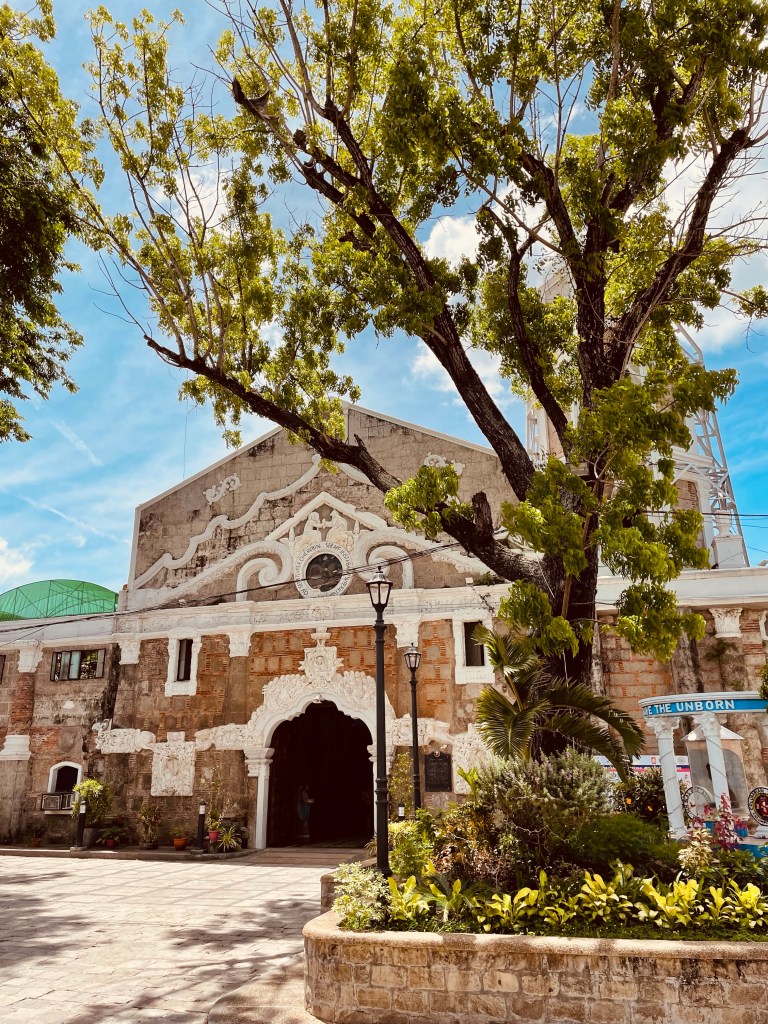
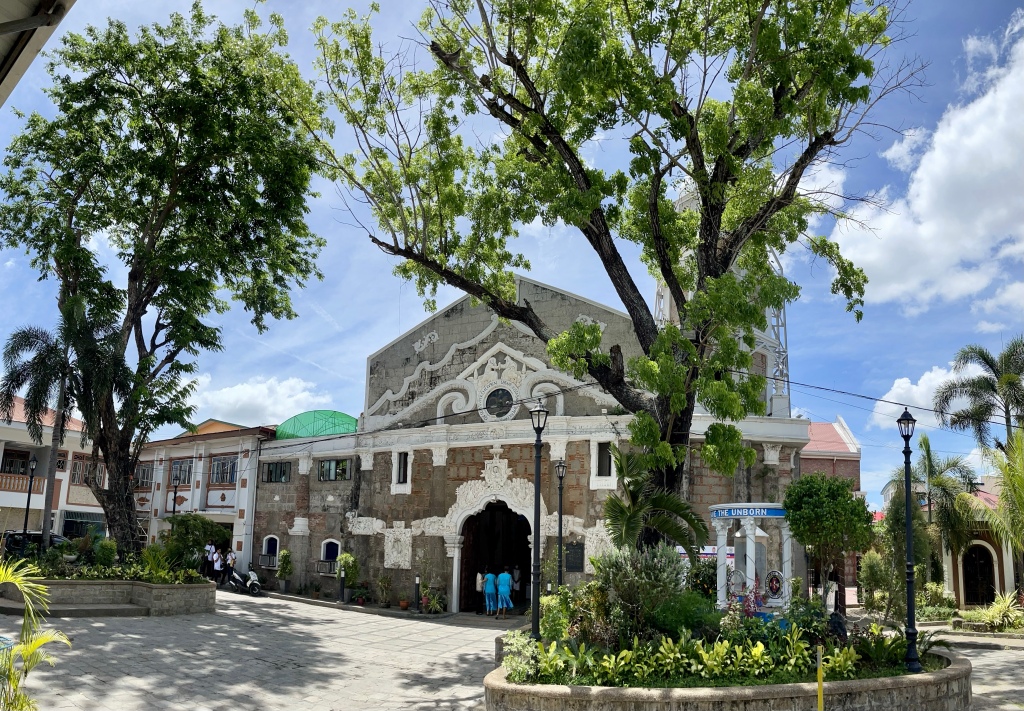
Photo by author, St. John the Baptist Parish, Calumpit, Bulacan, 31 March 2022.

It’s Holy Wednesday, also known as Spy Wednesday, the night Judas Iscariot agreed to betray Jesus Christ to the chief priests in exchange of 30 pieces of silver (Mt.26:14-15). Tonight is the night of traitors, of betrayers, of those not true to us!

This is the reason why in most parishes after the Mass tonight, there is the ritual of tenebrae or gradual turning off of lights and extinguishing of candles in the church to show how momentarily darkness and evil prevailed in the world when Judas sold Jesus for 30 pieces of silver.
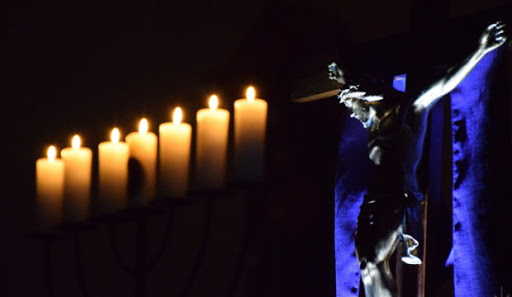
Photo from saopedroesaopaolo.com.br.

To betray literally means to hand over a loved one to pain and sufferings like when a husband is unfaithful to his wife, when we spill the secrets of our friends, when we answer back our parents or refuse to obey them, when children waste their money on their vices and other non-essential things instead of studying their lessons while their mother or father is toiling day and night abroad as an OFW.

Betrayal is so painful and most unkind because we exchange or “sell” our loved ones like commodities for someone or something less in value; imagine the pain a betrayer inflicts on the someone who gave everything, with all the love and care only to be “traded” for lesser value? It is said that during the time of Jesus, a slave can be bought for 30 pieces of silver; how foolish Judas must have been in exchanging Jesus who loved and cared for him for a slave! And that is what we are too when we betray God and our loved ones – fools to replace someone so precious for anything else!

Betrayal is rebelling against a loving God, a beloved one, turning our back from them who are most true to us. And that is the short of it: betrayal is not being true.

Holiness is being true; holiness and truth always go together.

The word true is from the Anglo-Saxon treowe or tree. For them, truth is like a tree that evokes a sense of firmness, of being rooted in the ground. When our words and actions are not firm, shaky and always changing, flimsy or “pabago-bago” as we say in Filipino, then it must not be true. It must be a lie and not true at all because it is always changing or shifting.


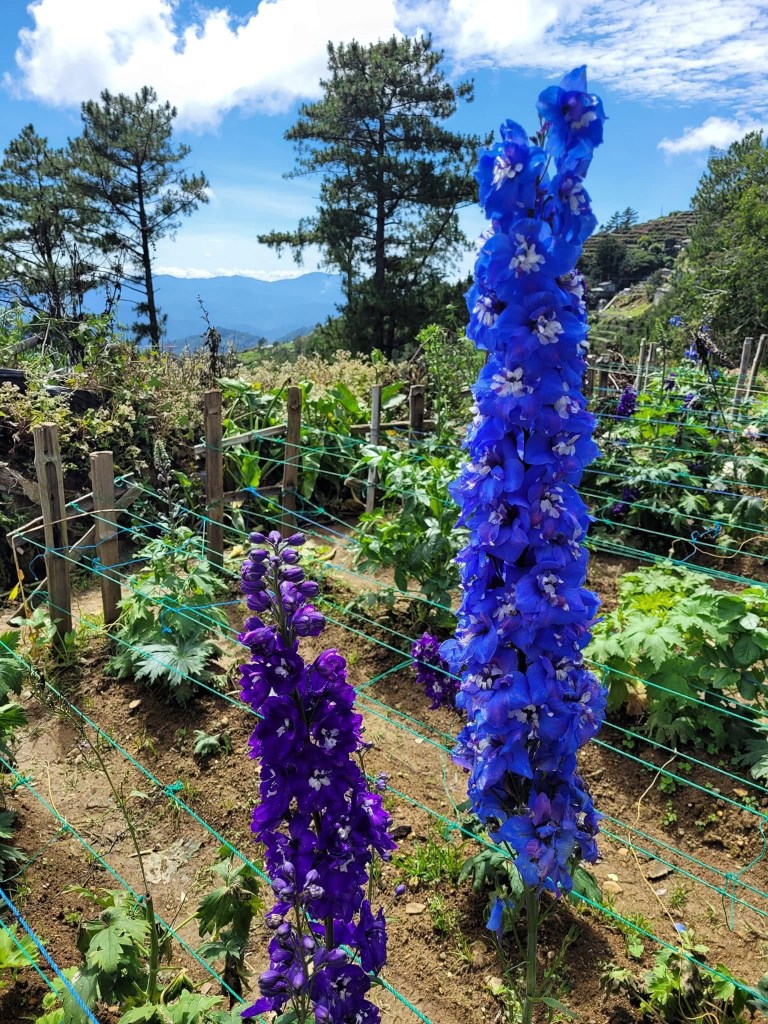
Photo by author, St. Paul Spirituality Center, La Trinidad, Benguet, 2019.

Truth is always firm, does not change and remains true forever. It may be concealed or covered by lies for sometime but sooner or later, truth will always come out. It cannot be deleted. That is why the Greeks referred to truth as aletheia or phusis, the blooming of a flower that cannot be hidden and would always manifest or show. Jesus himself assured us that “nothing that is hidden will not be revealed; nor anything secret that will not be known and come to light” (Lk.8:17).

Closely linked with the word true is trust which also came from treowe: the Anglo-Saxons saw in the tree not only firmness but also rootedness or connectedness. The firmer the tree, the deeper are its roots. And that is what a true person is – always trustworthy, someone who can be trusted, someone who values relationships or ties and links. Traitors betray their loved ones because they do not value their relationships; a true person is always trustworthy because he values his relationships. A true and trustworthy person is one who would always listen to God and others, not insisting on his own plans and agenda like the Suffering Servant of God.

The Lord God has given me a well-trained tongue, that I might know how to speak to the weary a word that will rouse them. Morning after morning he opens my ear that I may hear, and I have not rebelled, have not turned back. I gave my back to those who beat me, my cheeks to those who plucked my beard; my face I did not shield from buffets and spitting.

Isaiah 50:4-6
Photo from Pinterest.

Remember the scene of the scourging at the pillar in the film The Passion of the Christ (2004)? Biblical experts say that gory scene was very true as it was the most painful aspect of the Lord’s passion next to the crucifixion; every time the knuckles would hit the body of Jesus, a piece of his flesh is torn off. Pilate ordered Jesus to be flogged in the belief that people might pity him when seen so tortured and bruised, perhaps agree to let him go freely.

But it did not happen as the people shouted more for his crucifixion.

And that is what happens when we betray our loved ones, including Jesus: the more we become indecisive in life like Pilate, the more we also betray them because we could not stand for what is true. That is also when we hurt them more and ourselves in the process too.

So often, traitors are not aware of their betrayals, believing in their wrongful and misplaced convictions, forgetting the people who love them most. Many times, we absolutize the truth, forgetting that only God is absolute. Most of all, that truth is a Person, Jesus Christ who said “I am the way, the truth and the life” (Jn.16:6). Being true, being holy is always directed to a person, not just a conviction.

So be careful by being true always with one’s self, with others and with God.

What makes you forget the truth and be untrue to others?


Lord Jesus Christ,
teach me to be true and holy
not only to you but most especially
to the people you give me,
those who love me truly and dearly;
make me like a tree,
firm and reliable, 
dependable and trustworthy,
most of all, deeply rooted in you
through then people I love and care and serve.
Amen.

Photo by Mr. Raffy Tima of GMA7-News, January 2022.

Holiness is being faithful

Quiet Storm by Fr. Nicanor F. Lalog II
Holy Tuesday, 12 April 2022
Isaiah 49:1-6   +   John 13:21-33, 36-38
Photo by Ms. Ria De Vera, Christ the King Procession, 2020.

Maybe so many times you have felt nothing seems to be happening with all your efforts in school or office, in your relationships, and even in your prayers and devotions. Everything seems to be going to nothing at all.

Have a heart. Just be faithful in your studies, in your work, with your family and friends, most especially with God.

Though I thoughts I had toiled in vain, and for nothing, uselessly, spent my strength, yet my reward is with the Lord, my recompense is with my God.

Isaiah 49:4

When I was still a seminarian, there was a moment after our class when I went straight into our chapel and slouched on a pew, complaining and whining to God for the many problems that never stopped coming my way despite my efforts to be good. With my head bowed down, I had a litany of complaints to God that I felt like packing my things, go home and forget all about the priesthood. But after getting tired with my monologue and as I raised my head, something struck me that I felt so good while looking at our huge image of the Crucifixion at the altar of the chapel. As I looked in silence, I felt myself praying,

"Lord Jesus Christ, 
before all these pains and sufferings came, 
before all these problems happened, 
you were there first on the Cross - 
suffering for me, dying for me first."
Photo by author, ICMAS Chapel (Theology Dept.), 2020.

My dear friends, holiness is being faithful to God in Jesus Christ. St. Mother Teresa perfectly said that, “We are called to be faithful, not successful.” In my 24 years in the priesthood, I have realized that many times, our success are actually failures with God while our failures are what he often considers as success!

Of course, we need to plan and set goals in life and in work but we need to focus more on Jesus Christ as center of our lives, trying to see everything in his light not in our own limited views and perceptions. There so many things in life that cannot be quantified like our spiritual and emotional well-being on which actually depend many of our other aims in our personal and professional life.

Notice how in our gospel today the Apostles were so focused on themselves instead with Jesus that they totally missed what he was telling them about his coming betrayal by “one of them”. Particularly interesting was Simon Peter who asked the beloved disciple, John, to clarify it with Jesus since he was seated closest to him.

He leaned back against Jesus’ chest and said to him, “Master, who is it?” Jesus answered, “It is the one to whom I had the morsel after I have dipped it.” So he dipped the morsel and took it and handed it to Judas, son of Simon the Iscariot. After Judas took the morsel, Satan entered him. So Jesus said to him, “What you are going to do, do quickly.” Now none of those reclining at table realized why he said this to him.

John 13:25-28

Did you see the comedy, the humor?

Everybody was so focused on everyone and with each self except with Jesus! Were they so dumb not to understand the words of Jesus that to whomever he would give the morsel dipped in wine is the one who would betray him? Not really. Most likely, they were not listening, they were not focused on Jesus but with their very selves.

Being faithful is first of all being focused on God, in Jesus.

How can God fill us with his holiness when our thoughts and our being are always somewhere else or with somebody else? How can God fill us with his holiness when we cannot spend time with him every day in prayer?

Photo by author, Mass by the shore of Galilee, the Holy Land, 2017.

How lovely is the context of Simon Peter’s question that it happened during their Last Supper because that is where our fidelity to God is first nurtured to grow and deepened – at the Holy Eucharist of the Mass.

Remember, the minimum requirement for anyone to be called a good, practicing Catholic is to go Mass every Sunday. That is the most minimum but, have we kept it? It has been more than two months since we returned to alert level 1 in this time of the pandemic with almost everybody going to the malls and many vacation spots but what a shame when many still refuse to go to churches for the Sunday Mass!

Being faithful to Jesus to become holy begins with the Sunday Eucharist where we are nourished by the words of God and by the Body and Blood of Jesus Christ himself who enables us to overcome the many trials and difficulties of this life and make it into the Father’s house in eternity.

Have you gone back to your parish church for the Sunday Masses?

Forgive us, Lord Jesus Christ,
for being unfaithful to you, 
for betraying you like Judas Iscariot
right in the context of the Holy Eucharist
when we skip Sunday Masses;
when we come to Mass not for you 
but for our friends to whom we listen more; 
and most especially when we refuse or fail 
to practice the essence of the Eucharist
of sharing the love of Christ to everyone.
Amen.
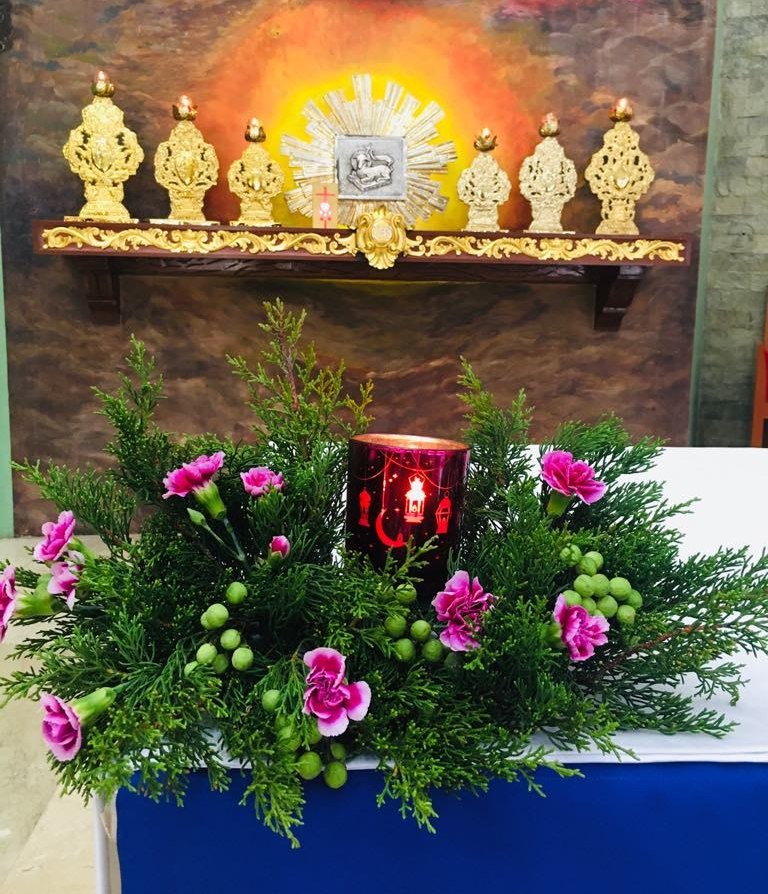
Photo by author, Parish of St. John the Baptist in Calumpit, Bulacan, 31 March 2022.

Holiness is being gentle

Quiet Storm by Fr. Nicanor F. Lalog II
Holy Monday, 11 April 2022
Isaiah 42:1-7   +   John 12:1-11
Photo from Pinterest.

A blessed Holy Monday to you and your loved ones!

Every year beginning with the Palm Sunday of the Passion of the Lord until the morning of Holy Thursday, the Church has regarded since the fourth century these days as holy and sacred in commemoration of the Lord’s Passion in Jerusalem.

These days, people frown and withdraw from any discussions about holiness, believing it is just for a selected few like saints and angels, and religious men and women like priests and nuns. For many, holiness is being sinless like God.

Not really.

The word holy came from the Greek holos meaning whole or perfect; holiness is being filled with God who fills in the gaps and broken corners in us, making us whole, a person of integrity and character. Holiness is an ongoing process, never a one-shot deal. That is why Jesus said “be perfect (or holy) as your heavenly Father is perfect (or holy).”

Photo by Ezra Acayan/Getty Images.

One beautiful aspect of holiness is being gentle, something that has become so rare in our highly competitive world today. Jesus described himself as being “humble and gentle of heart” in whom we can find rest for his “yoke is easy” and his “burden is light” (cf. Mt. 11:29).

Being gentle means being open to everyone, especially those burdened in life like the poor and the sick, the elderly, the orphans, the widowed, the marginalized.

Being gentle is to be welcoming or hospitable and caring of others instead of threatening and indifferent. Hospitality is from the Latin word hospis which means to welcome like hospital while hostility is from the Latin word hostes which means to hostage.

Just like Jesus who was prefigured as the Suffering Servant in today’s first reading described by God as one who “shall bring forth justice to the nations, not crying out, not shouting, not making his voice heard in the street. A bruised reed he shall not break, and a smoldering wick he shall not quench” (Is.42:1-3).

Photo by author, Sacred Heart Center for Spirituality, Novaliches, QC, 2016.

In our world where everyone has all the means to be heard and seen loudly and clearly in high definition, gentleness has become so rare, almost extinct! Lahat na lang “mema” may masabi. What is sad is how we speak and get our messages across in every media platform, from the simple text messages to the giant tarps and screaming stickers on vehicles that are always harsh and laden with insults and sarcasms.

In this world where “size always matters” while power is expressed in force and violence, gentleness is being one with the weak and the suffering, the broken ones like the “bruised reed” that the Suffering Servant “would not break or smoldering wick he shall not quench.”

Wherever there is gentleness, there is always hospitality, there is God; without gentleness, we get hostilities like war and violence.

See the attitude of Jesus in today’s gospel, how he welcomed Mary at a dinner in Bethany who anointed his feet with a liter of costly perfumed oil and later dried them with her hair that the house was filled with fragrance. Notice the hostile attitude of Judas Iscariot pretending to care for the poor when he asked “Why was this oil not sold for three hundred days’ wages and given to the poor?” (Jn.12:5).

Jesus simply told Judas to leave Mary alone with what she was doing that was a preparation for his burial soon to happen, adding, “You always have the poor with you, but you do not always have me” (Jn.12:8).

Very loaded words from the Lord, telling us to be gentle with everyone’s devotion and expression of faith and love in God while reminding us all how the poor must always be welcomed and cared for even after he had gone back to the Father.

Photo by author, Sacred Heart Center for Spirituality, Novaliches, QC, 2016.

Gentleness is more than offering a seat to an elderly or opening the door for a woman; being gentle is having that disposition to care for everyone, consciously guarding against hurting them physically and emotionally.

Gentleness is holiness because it is an act of loving others, of finding Christ in everyone because whatsoever you do to the least of his brethren, that you do unto him.

There is a beautiful saying I have found from an unknown author who said “if you have love in your heart, you have been blessed by God; if you have been loved, you have been touched by God.” So many among us could not know nor experience God because many of us refuse to be gentle with everyone; many could not understand nor imagine a loving and merciful God when everybody is hostile and violent.

This Holy Monday, let us examine ourselves, our attitude with others, if we have been welcoming, hospitable and caring. It costs us nothing to adjust ourselves, to be more gentle in words and in deeds – and looks, too! It could be your step closer to simple holiness as God fills you with himself in Christ who is humble and gentle of heart.

Lord Jesus Christ,
teach us to be gentle like you;
make us feel more our being human
and stop feeling superior with others,
always analyzing, always thinking
that in the process we have forgotten 
to feel the persons around us.
Make us gentle in our thoughts
and in our words.  Amen.
Photo by author, Baguio Cathedral, 2018.

Lent is seeing Jesus in everyone

40 Shades of Lent by Fr. Nicanor F. Lalog II
Monday in the First Week of Lent, 07 March 2022
Leviticus 19:1-2, 11-18  <*(((>< + ><)))*>  Matthew 25:31-46
Photo by author, the Holy Land, 2019.
On this blessed Monday,
I join dear God our Father
the psalmist in proclaiming
“Your words, Lord, are Spirit and Life” 
for it summarizes the two long
readings for today:  your instruction
to Moses telling us to “be holy, for I, 
the Lord your God, am holy (Lev.19:2)” 
and Jesus reminding us that
“whatever you did/did not do 
for one of these least brothers of mine, 
you did/did not do for me (Mt.25:40,45).”  
Beginning this Lent as we slowly
begin to go back to some semblance 
of normalcy in our lives, help us 
recover our lost identity of being
your beloved children, of being 
the dwelling-place of your Holy Spirit
who animates us to do what is good,
avoid what is evil, always seeing Jesus
Christ in everyone, especially those
silently suffering among us like the poor
and the sick.
Help us, Lord Jesus, to learn again 
that it is our nature to share and 
give life in you who is our Life; 
how wonderful it would be that on
judgment day, we shall all be surprised, 
asking “when were you Lord hungry 
we gave you something to eat, 
when were you Lord…?” in doing good
to everyone who turns out to be your
very presence!
The blessed ones, the holy ones 
like the saints are never bothered 
to think of anything else upon seeing 
the poor and suffering except to love 
and practice charity like St. Francis 
of Assisi who taught his disciples 
to preach always Jesus Christ, 
speaking only when necessary.  
Make us holy, like you,
O God, who is our life
present in everyone 
we meet.  Amen.

Lent is being filled with God

40 Shades of Lent by Fr. Nicanor F. Lalog II
Friday after Ash Wednesday, 04 March 2022
Isaiah 58:1-9   ><]]]]'> + <'[[[[><   Matthew 9:14-15
Photo by author, Lent 2019.
Thank you for this gift of first Friday
in March, a Friday after Ash Wednesday
as we begin our 40 day journey of Lent;
forgive us, dear God our Father, that
gone are the days when we your children
religiously observed fasting and abstinence; 
we have ceased fasting not only on the 
prescribed days of Ash Wednesday 
and Good Friday but even before receiving 
the Holy Communion in the Sunday Mass, 
making all kinds of excuses with bold claims 
of having sacrificed so much in doing "good deeds" 
that we need not fast from food anymore. 
Make us realize these are the same mistakes 
of the people in the Old Testament 
of having themselves as the focus of fasting 
than you, O God, through others:  
“Why do we fast, and you do not see it?  
Afflict ourselves, and you take no note of it?”  
Lo, on your fast day you carry out your own pursuits, 
and drive all your laborers.  
Yes, your fast ends in quarreling and fighting, 
striking with wicked claw.  
Would that today you might fast 
so as to make your voice heard on high!” 
(Isaiah 58:3-4)
In this age of affluence even in the midst
of a pandemic, make us realize, Lord Jesus
your mystery of Incarnation through "kenosis" -
of self-emptying which is what fasting is all about.
Teach us not to be always adequate, not to be
too self-sufficient that we forget the value of 
being empty and in need of others and most 
especially of you; let us rediscover this Lent 
the beauty of denying ourselves of things 
that give us pleasures and comfort 
that we forget you and others; may we realize
that it is only in emptiness through fasting
that you can fill us with yourself, almighty God;
it is only in emptiness through fasting 
we can learn to truly trust and believe
in you, dear Lord, as our only strength
and sustenance.
Surprise us, O Lord, of the many
benefits of self-denial, primary of
which is becoming better persons
without us really knowing it and most
of all, unconsciously becoming your 
very presence among other people:
“Then your light shall break forth 
like the dawn, and your wound 
shall quickly be healed; your vindication 
shall go before you, 
and the glory of the Lord shall be your rear guard.  
Then you shall call, and the Lord will answer, 
you shall cry for help, 
and he will say, Here I am!”
(Isaiah 58:9).
How wonderful it is 
when eventually we become 
your presence, O God, 
speaking through us, 
saying, “Here I am”! for it is
only then your Son Jesus
is indeed the groom celebrating
with us.  Amen.

Praying with Pope Francis this Lent 2022

40 Shades of Lent by Fr. Nicanor F. Lalog II
Ash Wednesday, 02 March 2022
Prayer based on Papal Message for Lent 2022
Photo by author, an oasis near the Dead Sea, May 2017.
For the third straight year
since 2020, we enter the season
of Lent, O Lord, in the most realistic
or surreal manner as our lives were thrown 
off-balance, altered in so many ways,
and some ruined by this COVID-19 
pandemic made worst recently by
Russia's invasion of Ukraine.
As we begin our 40-day journey
back to you, loving God our Father,
we pray to you on this Ash Wednesday
to raise us up "from the ash heap, 
to make us sit with princes and 
inherit a seat of honor" (Ps.113:7-8) because
"now is the acceptable time" (2 Cor. 6:2)
of salvation in Jesus Christ.
Together with Pope Francis,
help us "not to grow tired of 
doing good, while we have the
opportunity to do good to all"
(Galatians 6:9-10) despite the
great difficulties especially 
in this time of the pandemic, 
elections fever, and war in Ukraine.
Let us not grow tired of praying
because in these times of trials,
the more we need you, dear God;
help us remember the lesson of this
pandemic that we are fragile
as individuals and as a society,
that without you, O Lord, we cannot
stand firm and make it to this Lent again.
Let us not grow tired of uprooting
evil in our lives through our lenten practice
of fasting to fortify our spirit in the fight
against sin; let us not grow tired of
fighting against all forms of addictions
that drive us to selfishness and all
kinds of evil like too much social media that
has made us forget to cultivate authentic
human communications based in
"authentic encounters", face-to-face,
and personal.
Let us not grow tired of doing good
in active charity towards our neighbors
especially the poor and needy,
the marginalized and abandoned
in whom Jesus is most present.
Give us the patient perseverance
of a farmer who awaits the fruits
of the earth (James 5:7), always
persevering in doing good, 
one step at a time; may we realize
that in cultivating fraternal love to
one another, we become united to Christ
who gave his life for our sake and enabled us
to have a foretaste of the joy of heaven
when you, O God, 
will be "all in all" (1 Cor. 15:28).
Amen.

*For the full text of Pope Francis’ Lenten Message 2022, see https://www.vatican.va/content/francesco/en/messages/lent/documents/20211111-messaggio-quaresima2022.html

Taking Jesus to the heart

The Lord Is My Chef Sunday Recipe for the Soul by Fr. Nicanor F. Lalog II
Sunday Week VIII-C in Ordinary Time, 27 February 2022
Sirach 27:4-7 ><}}}}*> 1 Corinthians 15:54-58 ><}}}}*> Luke 6:39-45
Photo by author, 2016.

We enter the Season of Lent this week with Ash Wednesday as the Ordinary Time takes on a long break until June; hence, our gospel this Sunday is a fitting cap to the teachings of Jesus these past three weeks about discipleship.

After expounding on the need to love like God full of mercy even to enemies, Jesus now speaks in parables citing ordinary experiences in life to underscore “wholeness” in one’s self that is rooted in one’s heart where speech and being go together.

True discipleship in Christ is taking into heart his words by putting them into practice – of walking the talk – to bear fruits in our lives of holiness.

Jesus told his disciples a parable: “Can a blind person guide a blind person? Will not both fall into a pit? A good person out of the store of goodness in his heart produces good, but an evil person out of a store of evil produces evil; for from the fullness of the heart the mouth speaks.”

Luke 6:39, 45
Photo from news.abs-cbn.com, 2020.

Our heart, our center of being

People often make various gestures of the heart to convey the message of love especially when posing for pictures. But of all these gestures, nothing beats those two hands shaped like ears and put together to look like a heart.

It is the best sign of the heart, of two ear lobes joined together because a loving heart is one that listens, never judges just like what Jesus taught us last Sunday.

Most of all, one’s heart is always known by its words and actions wherein the actions speak louder than words! In this symbolism, we find the inner dynamics of speech and being perfectly together.

See in the three parables of Jesus in today’s continuation of his sermon on the plains, we find this primacy of listening to his words and putting them into practice: guides cannot guide others unless they have clear eyesight; the hypocrisy of seeing other’s faults unmindful of one’s own faults; and, how every tree is known by its fruit.

Jesus is calling us today to an “education of the heart” so that we may have open ears, open hearts, open minds, and open arms to be truly his disciples!

It is with the heart that one must listen to the Word to produce good and plentiful fruit, it is in the heart where every disciple of the Lord must meditate and treasure his Word like his Blessed Mother Mary “who kept all these things, reflecting on them in her heart” (Lk.2:19).

When the heart is cleansed of its impurities, it opens to God and to others, gets filled with the Holy Spirit to become like the Father who is merciful and loving as revealed by Jesus Christ.

Recall how in Genesis God created everything by simply speaking because his speech and being are one. In the prologue of the fourth gospel, we find how the Logos – the Word who is Jesus Christ became flesh to save us and make us experience God himself which he fully expressed while proclaiming the Book of Isaiah in the synagogue at Nazareth while launching his ministry (Third Sunday, 23 January 2022).

This Sunday we find everything coming to full circle, showing us the whole picture of Jesus and his mission, of his plans for us to be like the Father.

And here lies our problem so often when our words betray our true character, when our speech and being do not match, when what we say is far from what we live.

Image from Google.

Our sharing in the power of God to love

Of all that God has created, only humans were gifted with the ability to communicate intelligibly. Unlike the animals and other creatures, only us humans can speak to express what we feel, what we know, what we want.

Our ability to communicate is in fact a sharing in the power of God, a power to serve in love like Jesus, not power to dominate or lord it over upon others as the world sees and uses it.

This is why Ben Sirach reminds us in the first reading to hold our praises of any person, especially the eloquent speakers because words are empty unless supported by actions. One’s real worth is found in times of trials and tests like “what the potter molds in the furnace” (Sir. 27:5).

It is Jesus Christ himself, his very words who purify us his disciples to be able to preach his good news of salvation to others in words and in deeds without any duplicity and hypocrisy.

Photo by Ms. Jo Villafuerte, 21 February 2022.

The Lord is not asking us to stop criticizing nor be silent in the midst of so many injustices and evil around us. That remains an integral part of preaching the good news, of standing for what is true and just; however, Jesus is demanding us his disciples to always examine our very selves to see the kind of deeds that arise from our hearts.

Our actions, our very lives reveal the purity of our hearts, of our intentions and of our sentiments.

This is the reason why we priests and bishops are always doubted and even questioned by so many faithful whenever we denounce the many ills in the society, when we speak against social injustices, against corruption in government because our lives do not match our words. The worst and most painful part of it is when people see our “double-standard” with priests who lead lives so far from the Good Shepherd, that instead of taking care of the flock, there are some of us who take advantage of the poor sheep entrusted to us!

Today’s gospel challenges us, especially us your priests, if we lead a truly Christian life with preferential options for the poor?

Let us not be contented with outside appearances only, especially this coming Lenten Season. Take Jesus and his words into our hearts.

Discipleship is not about frequenting the church, reciting all the prayers, observing all the rites and rituals and devotions nor just denouncing the wrongs in the society nor fund-raising for so many projects for the benefit of the poor.

Discipleship is bringing to fruition all our prayers and faith expressions to loving service for one another. If not, we might just stay home so as to minimize the damages and hurts to the Body of Christ.

Let us continue to strive in purifying our hearts with the Word so that we may bear much fruits of good works in our lives, to “be firm, steadfast, always fully devoted to the work of the Lord, knowing that in the Lord your labor is not in vain” (1 Cor. 15:58). Amen.

Have a blessed week ahead!

Photo by Ms. Jo Villafuerte, 21 February 2022.

Catching Jesus, catching for Jesus

The Lord Is My Chef Sunday Recipe for the Soul by Fr. Nicanor F. Lalog II
Sunday Week V-C in Ordinary Time, 06 February 2022
Isaiah 6:1-2, 3-8 ><}}}}*> 1 Corinthians 15:1-11 ><}}}}*> Luke 5:1-11
Photo by Mr. Jim Marpa, 2018.

The word catch is a very catchy one, like when we catch our breath. Or, when we catch a train or bus or catch a ball. Recently, we have been catching colds and have also started catching movies. But the most beautiful of all is catching a glimpse of someone special until we catch a person, like a bride or a groom.

To catch means “to have”. It may be something. Or someone. Wholly or partially.

There is always that sense of possession in catching. This Sunday, Jesus wants to catch us all by making us catch others for him, too!

After he had finished speaking, he said to Simon, “Put out into deep water and lower your nets for a catch.” Simon said in reply, “Master, we have worked hard all night and have caught nothing, but at your command I will lower the nets.” When they had done this, they caught a great number of fish and their nets were tearing. When Simon Peter saw this, he fell at the knees of Jesus and said, “Depart from me, Lord, for I am a sinful man.” For astonishment at the catch of fish they had made seized him and all those with him, and likewise James and John, the sons of Zebedee, who were partners of Simon. Jesus said to Simon, “Do not be afraid; from now on you will be catching men.”

Luke 5:4-6, 8-10

From their synagogue at Nazareth, Jesus came to the nearby shore of Galilee Lake at Capernaum preaching his good news of salvation. A large crowd of people followed him, listening to his teachings as he sat on the boat of Simon he had borrowed.

Simon and company were washing their nets, on their way home after a fruitless night of fishing when Jesus came. Simon Peter must have heard – “caught” – the words of Jesus while teaching and soon enough, he was caught with fear with their miraculous catch.

Photo by author, Lake of Galilee, 2017.

Again, we have Jesus with his powerful words making such impact on the people, being fulfilled in their hearing most especially to Simon: After he had finished speaking, he said to Simon, “Put out into deep water and lower your nets for a catch.” Simon said in reply, “Master, we have worked hard all night and have caught nothing, but at your command I will lower the nets.”

The fish has always been there in the lake but what made the big difference that morning was Jesus – he was not only with them but most of all, Simon believed in the words of the Lord!

Here we find again the words of Jesus being fulfilled because somebody listened and believed.

Last week we heard how Jesus was driven out of the synagogue by his own folks who doubted him and his words despite their amazement at the start; today, here at the shore of Capernaum, the people came to Jesus to listen to his words again.

But, the most beautiful part of our story this Sunday is how Jesus came at the most ordinary time and circumstances of the lives of the people. Too often, many people think Jesus comes only in dramatic and miraculous ways to invite us to come and follow him.

Not really. In fact, he comes when we least expect him like in this scene when Simon must have been feeling so down, coming home empty with nothing to feed his family after a fruitless night of fishing.

The good news of our Gospel this Sunday is how Jesus makes us all his worthy followers when we allow him to catch us. That is how the Gospel works – let yourself be caught by the Lord first and soon you shall find yourself being caught up in so many wonderful surprises: When Simon Peter saw this, he fell at the knees of Jesus and said, “Depart from me, Lord, for I am a sinful man.” For astonishment at the catch of fish they had made seized him and all those with him.

Photo by author, statue of Simon Peter after the miraculous catch of fish,asking the Lord to depart from him at the shore of Galilee in Capernaum, 2017.

Jesus does not ask us for great things and deeds; he knows us very well and loves us so much, believing in us that he simply invites us to respond to his calls, to his words in the little everyday things of our lives like being faithful to your husband or wife, being obedient to our parents, being true to our friends, being honest in our work and studies, being kind and open to others. When bad things happen to us, all Jesus asks us is to go deeper in him in faith by being more patient or even uncomplaining to our pains and difficulties.

Of course, these are all easier said than done but this is what we always tell Jesus just before receiving him in the Holy Communion like that Roman official who said, “Lord, I am not worthy that you should enter under my roof, but only say the word and I shall be healed”.

Nobody is truly worthy before the Lord but that is why Jesus came to invite us personally to let ourselves be caught by him like Simon and his brother Andrew along with their fishing partners, the sons of Zebedee, James and John, who left everything to follow him.

Every encounter with Jesus and his words always result in a self-discovery of our unworthiness and sinfulness like Simon Peter and Isaiah in the first reading. But, the good news is that every time God comes to call us, he also gives us the strength and gifts necessary to accomplish his mission for us. What is important is our willingness to follow, like Isaiah who said, “Here I am, send me” (Is.6:8) and be ready to leave everything behind like the first four disciples.

Photo by Dr. Mylene A. Santos, MD, 2020.

At the center of every call and mission is Jesus Christ, our Lord and Master, the Word who became flesh and dwelled among us by being one with us in our pains and sufferings, even in death, so that we may become like him, holy and blessed.

To be holy like God is to share in his work of gathering his people into the Body of Christ which St. Paul had reflected these past three Sundays to remind us of the preeminence of love in fulfilling our mission from Jesus.

Every day, Jesus comes, trying to catch us, asking us to cast our nets, inviting us to catch others for him so we may all be one in him in his love.

Let us all be caught by Jesus, be totally his and experience his amazing love and mercy. Amen.

Have a blessed and COVID-free week ahead!

Photo by Mr. Jim Marpa, 2018.

Mary, advocate of grace and model of holiness

The Lord Is My Chef Daily Recipe for the Soul by Fr. Nicanor F. Lalog II
Wednesday, Solemnity of the Immaculate Conception, 08 December 2021
Genesis 3:9-15, 20 ><}}}*> Ephesians 1:3-6, 11-12 ><}}}*> Luke 1:26-38
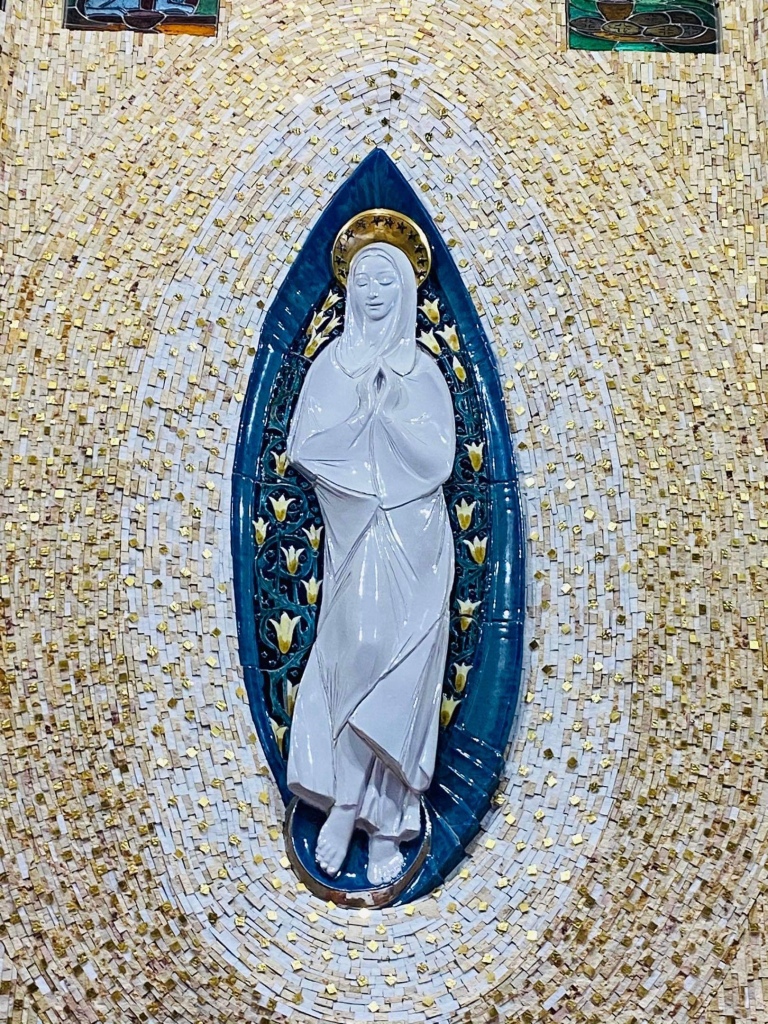
Photo by Rev. Fr. Gerry Pascual at Palazzo Borromeo, Isola Bella, Stresa, Italia, 2019.

Recently I saw on a Facebook post the photo of American model Kendall Jenner in a swimsuit showing what for many is the “perfect body” in a woman. The photo had reportedly gone viral last year.

What caught my attention was the other photo posted opposite Jenner: that of 19-year-old Alyssa Carson who became the youngest female in history to pass all NASA aerospace tests to train as astronaut for future travel to Mars! The caption said it so well, lamenting the fact how the world gives so much attention to “fashion models” with many going insane imitating their bodies forgetting the more essential like inner beauty and intelligence.

More sad is how we have fixed our human understanding and analogies of a “model” as someone who poses and remains still to be painted or photographed for glossy magazines and giant billboards that people are willing to buy or pay for just to view and let their senses feast on.

It may sound funny but those two photos accompanied me while praying and preparing for our celebration today of the Solemnity of the Immaculate Conception. Sorry, I am not going to show you the link to those photos but wha I want to share with you are the two beautiful expressions depicting Mary as “advocate of grace” and “model of holiness” found in the Preface of today’s Mass (that is the prayer before the Holy, Holy leading to the consecration): “She, the most pure Virgin, was to bring forth a Son, the innocent lamb who would wipe away our offenses; you placed her above all others to be for your people an advocate of grace and a model of holiness.”

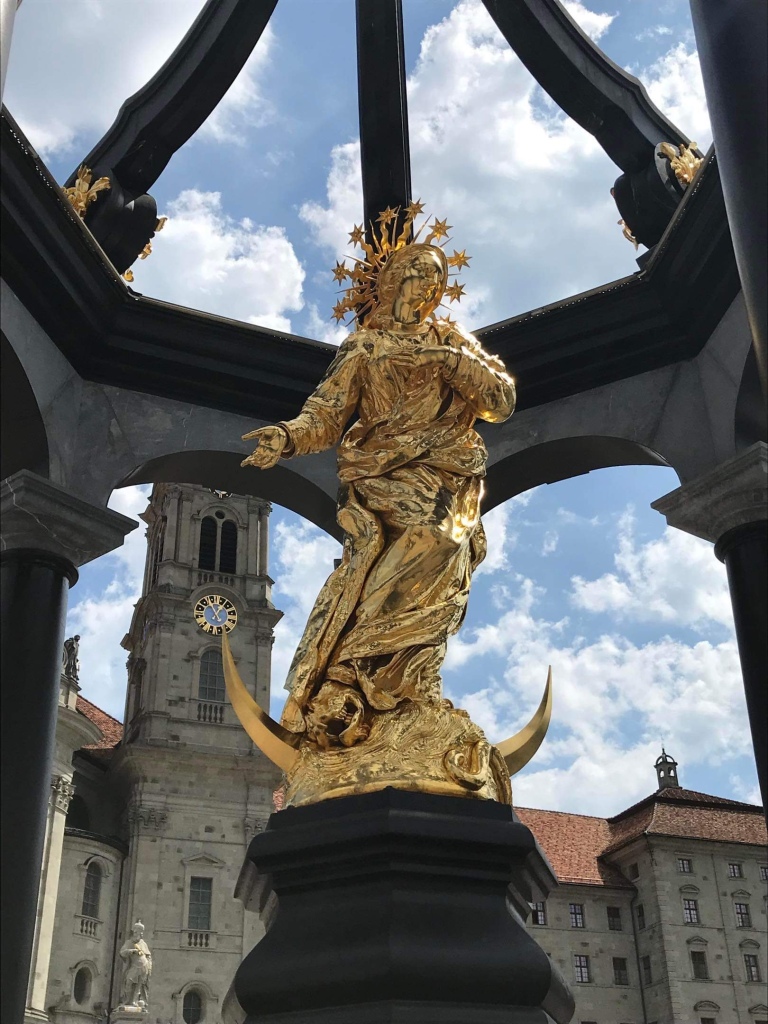
Photo by Fr. Gerry Pascual at Einsiedeln Abbey, Einsiedeln, Switzerland, 2019.

So often with Marian feasts, many people complain and find it hard to relate with the Blessed Virgin because they find them as celebrations of the privileges of Mary who was so blessed and unique, thinking she’s almost a god, not human anymore whom we cannot imitate and emulate.

That is totally untrue and baseless!

Of course, only she has the distinction of being immaculately conceived, one never stained by sin but, aside from that, Mary is like all of us, so human; and we too can be like her, full of grace and holy!

Brothers and sisters: Blessed be the God and Father of our Lord Jesus Christ, who has blessed us in Christ with every spiritual blessing in the heavens, as he chose us in him, before the foundation of the world, to be holy and without blemish before him. In love he destined us for adoption to himself through Jesus Christ, in accord with the favor of his will.

Ephesians 1:3-5

Very clear in this reflection by St. Paul in our second reading that our truest destiny is to be holy and without blemish – that is, immaculate. It is the plan of God since the beginning that we all become his people until sin came and destroyed momentarily that divine plan as we have heard in the first reading.

With the coming of Jesus through his sacrifice on the Cross, we were redeemed from sin to become God’s holy people which the same Preface mentions Mary as the “beginning of the Church”. The same prayer reiterates to us our universal calling from God which is to be holy and blameless before God through Jesus Christ. It is very doable and attainable “for nothing is impossible for God” as the Archangel Gabriel told Mary during the Annunciation (Lk.1:37). And Mary is our proof to that!

Photo by Rev. Fr. Gerry Pascual at Santuario di Greccio, Rieti, Italy in 2019.

While it is very true that nothing is impossible for God, today’s celebration of the Immaculate Conception reminds of how God “needs” us to cooperate and participate in his beautiful plans for us like Mary to be his instrument or seedbed for his Divine Word to receive and grow and bloom.

That is the meaning of Mary as “advocate of grace” who became the vessel in the coming of Jesus Christ. See how St. Luke was very clear in narrating Mary’s “supporting” role and place in the plan of God: she remains a human being – not God – like us except she was full of grace, that is, immaculately conceived.

Behold, you will conceive in your womb and bear a son, and you shall name him Jesus. He will be great and will be called Son of the Most High, and the Lord God will give him the throne of David his father, and he will rule over the house of Jacob forever, and of his kingdom there will be no end… The Holy Spirit will come upon you, and the power of the Most High will overshadow you. Therefore the child to be born will be called holy, the Son of God.”

Luke 1:31-33, 35

The Church Fathers used to call Mary as the “aquaeductus ecclesiae” or neck of the Church connecting Jesus the caput or head and us the corpus or body. Mary as an advocate of grace is that vessel of all blessings we now have in Jesus Christ because of her obedience and participation in that plan of God of sending Jesus.

Keep in mind that as advocate of grace, Mary brings us all to Jesus as the one Mediator, not away from him. True devotees of Mary bring others to Jesus not away from him for he alone is the Mediator. A true and authentic devotion to Mary always result in deeper knowledge and intimacy with Jesus and his gospel. Notice this in her apparitions especially at Fatima in 1911 where her messages call us to get closer to Jesus, not her.

Mary continues as our advocate of grace telling us the very same words she had told the servers at Cana to “do whatever he tells you” (Jn.2:5).

Do we do the same? Or, mislead others into putting Mary at par or even above Jesus her Son and Lord? In this time of pandemic, are we like Mary as an advocate of grace, a vessel and instrument of blessings to others or do we grab every credit of “charity” and “kindness”, grandstanding for more media mileage of “likes” and “followers” to be viral and trending?

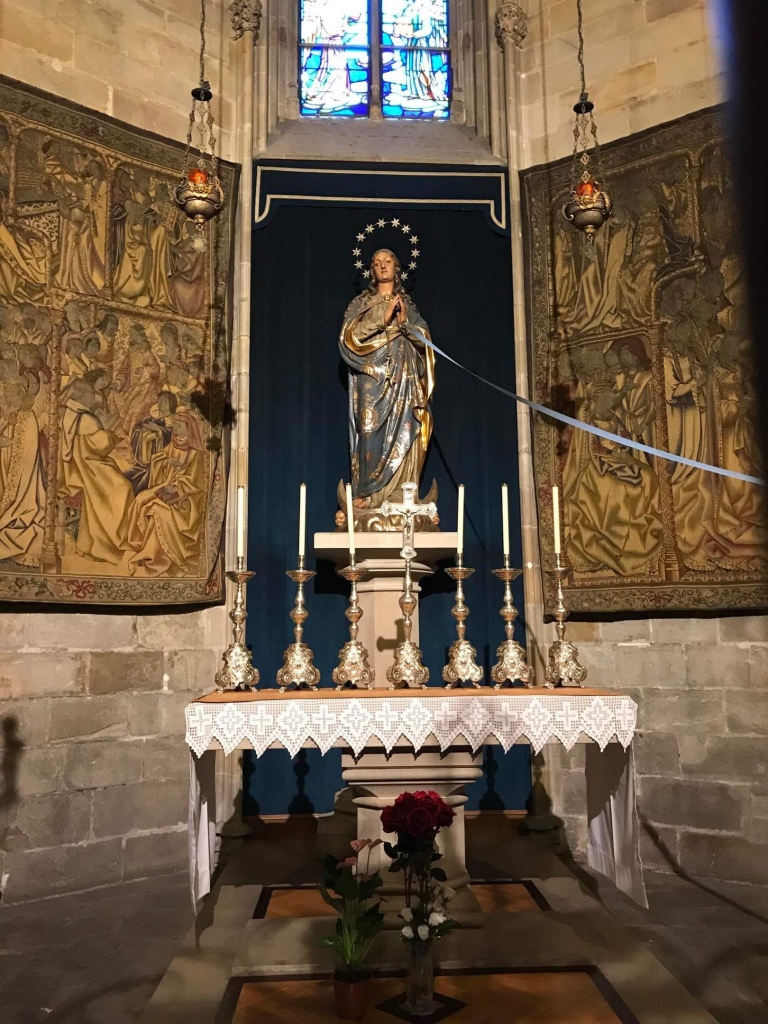
Photo by Fr. Gerry Pascual at the Cathedral of Barcelona, Spain in 2019.

From her being an “advocate of grace”, Mary thus becomes our “model of holiness” too as she reminds us of God’s original plan for us, created in his image and likeness destroyed by sin with the fall of Adam and Eve. See how God immediately promised salvation through the woman fulfilled in Mary as he reprimanded the serpent in tempting Eve:

“I will put enmity between you and the woman, and between your offspring and hers; He will strike you at your head, while you strike at his heel.”

Genesis 3:15

Because of her being the advocate of grace of God by giving birth to Jesus, Mary stands before us as the perfect reminder of Christ’s work of purification and recovery of the image of God in us. Described as the “perfect disciple” and “doer of the Word”, Mary had shown us in her very life which continues to this day in her intercessions and apparitions how discipleship is a life-long process and commitment of holiness. From giving birth to Jesus to his dying on the Cross until his burial, Mary had always been with Jesus that on Easter, it was to her that the Risen Lord first appeared because she was the first to believe totally in him.

At the Pentecost, Mary was with the Apostles awaiting the coming of the Holy Spirit that became the coming out party of the Church. In her life, Mary is the model of holiness because she keeps on working with us and in us, guiding us in following Jesus our Lord and Master so that we might be “conformed to his image” (Rom. 8:29).

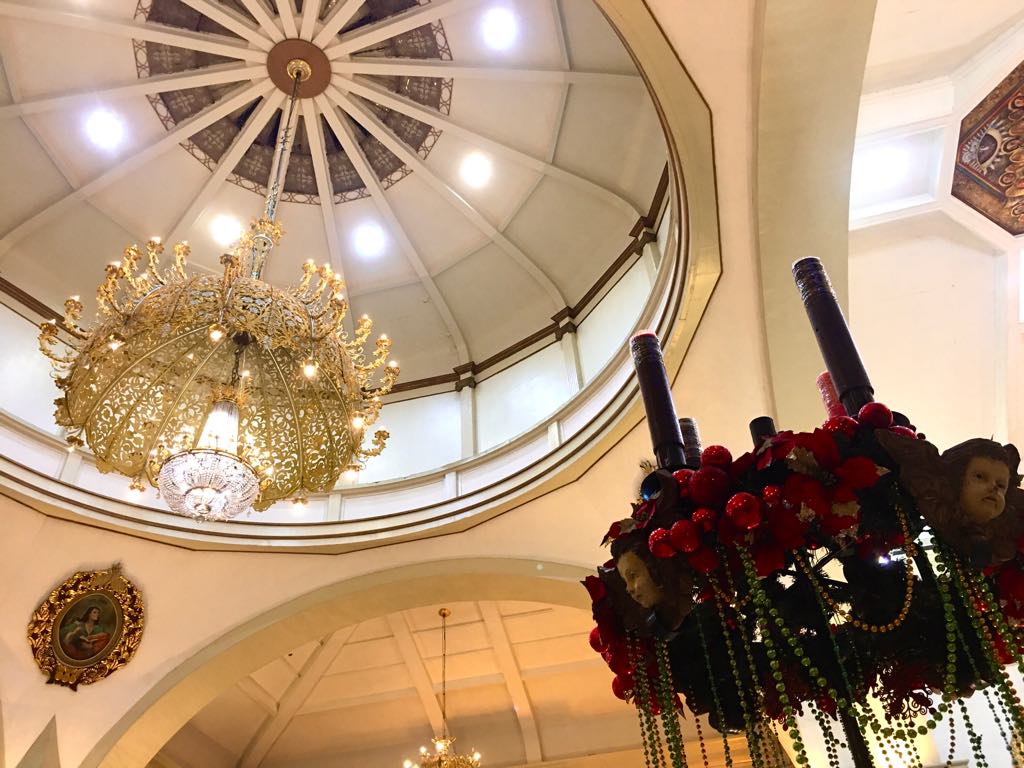
Photo by author, Christmas 2020.

Holiness is not being sinless but being filled with God who is all-holy, being like Jesus Christ. Mary showed us the way to holiness is being humble before God, seeing herself as the “handmaid” or servant of the Lord.

If there is one thing the world needs now so badly in this time of the pandemic, it is holiness. Before the pandemic came, mankind was so filled with self, so arrogant and proud acting like god, manipulating everything.

How ironic that a microscopic virus with the simplest signs similar to the common colds made the world stood still for some time, reminding us that there is a God all-powerful who is in control of everything.

Through Mary, may this Solemnity of her Immaculate Conception lead us back to God to recover in us his image and likeness, cleansed and purified of our blemishes and wrinkles of sin by having an enlightened devotion to her, the servant of the Lord par excellence. Amen.

A blessed day to everyone!

Advent is beginning with the end in sight

The Lord Is My Chef Sunday Recipe for the Soul by Fr. Nicanor F. Lalog II
First Sunday of Advent-C, 28 November 2021
Jeremiah 33:14-16 ><}}}*> 1 Thessalonians 3:12-4:2 ><}}}*> Luke 21:25-28, 34-36
Photo by author, Malolos Cathedral, 2019.

Blessed happy New Year, everyone!

Today we are celebrating a new calendar year in the Church with this First Sunday of Advent. From the Latin word adventus meaning arrival or coming, it was adapted by the early Christians from the Roman practice of preparing for the visits or assumption to power of their emperors then considered as “gods”.

It is most fitting that we prepare not only outside but most especially inside our very selves for the coming of the true God and King of kings, Jesus Christ our Lord and Savior!

Hence, Advent not only opens but also defines our whole liturgical year that is centered on Christ who has come, who comes now and will come again in the end of time. This is the reason why our gospel this Sunday is looking towards the end of time at the beginning of our Church calendar.

The three comings of Jesus Christ

Advent has two aspects: beginning today the First Sunday of Advent until December 16, all readings and prayers are oriented towards the Second Coming of Christ; from December 17 to the evening of the 24th, our focus shifts to the first coming of Jesus at Christmas.

Between these two comings of Jesus that the Season of Advent reminds us is what St. Bernard of Clairvaux called as the Lord’s “third coming” – his coming everyday into our lives, especially in the celebration of the Sacraments, particularly the Holy Eucharist.

Photo by author, 2019.

Again we find that tension of his being here but not yet. It is in that between his first coming more than 2000 years ago and his Second Coming which no one knows exactly when where we are situated daily, making everyday Christ’s Advent.

“And then they will see the Son of Man coming in a cloud with power and great glory. But when these signs begin to happen, stand erect and raise your heads because your redemption is at hand.”

Luke 21:27-28

It may sound frightening to hear Jesus spoke of the signs of his coming but at closer look and reflections, we find it filled with joy because our redemption is at hand!

Yes, every ending forebodes destruction and passing of the old but that is in order to give way to something new, something better which Jesus had promised his disciples then and us now.

The grace of this season of Advent is the reawakening of our hope in the salvation that has already come in Jesus, who still comes now, and will surely come again in the end of time which is happening in every here and now.

That is why, there is also the sense of urgency and vigilance this Advent.

We are already living in the end-time Jesus had predicted as we have seen in the wars and conflicts going on among nations, the natural calamities happening around the globe made worst by the climate change plus this pandemic we are now having. But, it does not mean the creation will end soon as portrayed in many Hollywood films because these signs are calls for us to be ready and prepared for the final end that will prelude the new beginnings of all.

The days are coming, says the Lord, when I will fulfill the promise I made to the house of Israel and Judah… In those days Judah shall be safe and Jerusalem shall dwell secure; this is what they shall call her: “The Lord our justice.”

Jeremiah 33:14, 16
Photo by author, 2018.

Meeting Jesus in Advent

Notice how Jeremiah’s prophecy so “pregnant” with meanings: more than the coming of the promised Messiah is the radical newness of the whole creation. Judah and Jerusalem, the main province and city of Israel at that time will be transformed, referring to John’s vision in the Book of Revelation of “new heaven and new earth”.

As we have said, Advent not only opens our liturgical calendar but also defines the whole year which is the daily coming of Jesus who had come over 2000 years ago and will come again at the end of time which nobody knows.

Meanwhile, in this “third coming” of Jesus everyday, we find God working in him silently and subtly in the human history and right in our individual lives.

It is in our faithful waiting when Jesus Christ comes. It is the beauty and joy expressed by Jeremiah’s words “the days are coming” that assure us no matter how dark and bleak are our days, despite all the destructions and even death around us, the days are coming when we see everything getting better because God never stops working in our midst in Jesus, the Emmanuel.

“Beware that your hearts do not become drowsy from carousing and drunkenness and the anxieties of daily life, and that day catch you by surprise like a trap. For that day will assault everyone who lives on the face of the earth. Be vigilant at all times and pray that you have the strength to escape the tribulations that are imminent and to stand before the Son of Man.”

Luke 21:34-36

Last Sunday in our celebration of the Solemnity of Christ the King we have reflected how Jesus spoke of the “truth” of his kingdom being among us, of how he had made us into his kingdom which is the reason why he was born and came into the world to testify to this truth (Jn.18:37).

See now the clearer picture of our life, of our time: we start our Church calendar preparing for the coming of Jesus our King and we end every year with the celebration of Christ the King. And we begin each new year with the end in sight of his Second Coming.

On this season of Advent, we are reminded how in our joyful waiting through prayers especially in the celebration of the Holy Eucharist that Christ’s presence is little by little being unveiled, unfolding before us, and being revealed.

It is a call for us of deepening our prayer life to truly experience Christ’s coming in our daily life. This new year in the Church, St. Luke will be our guide in our Sunday readings during the Ordinary Time; one distinction of his gospel is his portrayal of Jesus in prayer always.

Jesus comes to us first of all when we pray, when we enter into communion with him, when we listen to his voice and follow his instructions. In prayer, we are filled with God, allowing him to work his wonders in us and through us and thus make Christ’s coming a daily reality.

That is how prayer truly leads to holiness: when we are filled with God, our prayers are translated into a life of kindness and acceptance, mercy and forgiveness and most of all, of loving service to one another especially those in need.

There will always be sins and shortcomings on our part but in prayers and vigilance, we slowly “increase and abound in love for one another… strengthening our hearts to be blameless before our God our Father at the coming of our Lord Jesus with all his holy ones. Amen. (1 Thess. 3:12,13)

A blessed happy new year again and a more blessed first week of Advent to you!