The Lord Is My Chef Daily Recipe for the Soul by Fr. Nicanor F. Lalog II
Friday, Seventh Week in Ordinary Time, Year I, 28 February 2025
Sirach 6:5-17     ><}}}}*>  +  ><}}}}*>  +  ><}}}}*>     Mark10:1-12
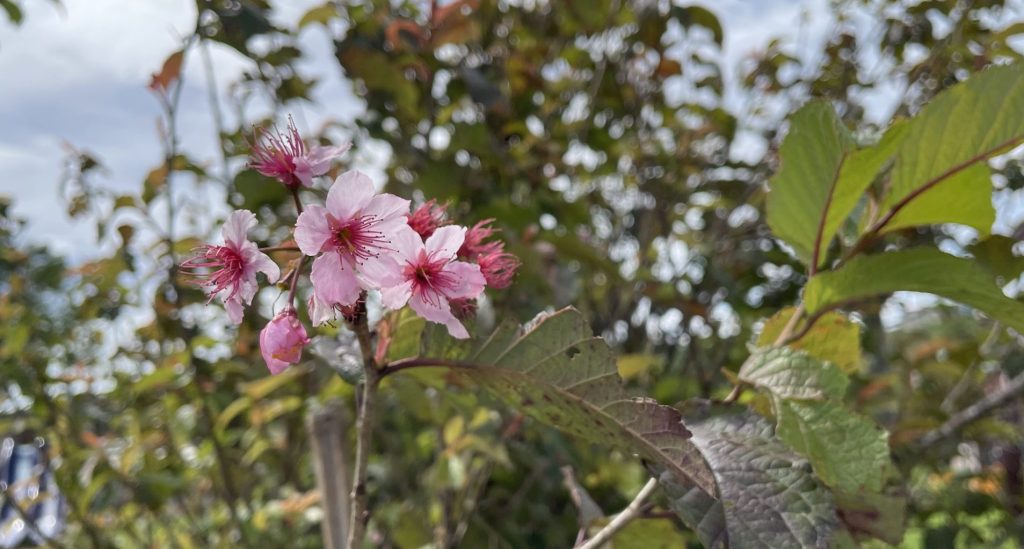
Photo by author, Sakura Farm, Atok, Benguet, 27 December 2024.
Thank you very much
dear Father for February
and most especially
for the gift of friends
you gave us.
Your servant Ben-Sirach
was so right after all,
"Let your acquaintances be many,
but one in a thousand your confidant.
When you gain a friend,
first test him,
and be not too ready to trust him"
(Sirach 6:6-7).
Heal us in Jesus,
Father,
of the many hurts
and pains some friends
have caused us:
those who have left us in time
of distress;
those who have become an enemy;
the boon companion who left us
in time of our sorrow;
those who have turned against us
and avoided us when we were down;
and those who took advantages
of our goodwill
(cf. Sirach 6:8-12).
For our friends who came
for reasons and seasons
and now gone,
bless them, Jesus;
and for those friends
who have remained
because of love,
bless them more!
Friends come from you,
Jesus, one of the greatest gifts
one can receive for it is a unity of souls
that give nobility and sincerity to love,
a kind of love only you Lord
had designed;
therefore,
let us work on our friendships
but never change our friends
into someone they are not
gifted to be;
it is only then a friend
becomes a treasure
we cherish and nourish,
never to be given away
like in divorce and
adultery that Mark tells us
today in the gospel
(Mark 10:1-12).
Amen.
Photo by author, Sakura Farm, Atok, Benguet, 27 December 2024.
The Lord Is My Chef Daily Recipe for the Soul by Fr. Nicanor F. Lalog II
Tuesday, Memorial of St. Thomas Aquinas, Priest & Doctor of the Church, 28 January 2025
Hebrews 10:1-10     ><))))*>  +  ><))))*>  +  ><))))*>     Mark 3:31-35
Photo by author, St. Joseph Friary, Order of Friars Minor Conventual, Tagaytay City, 16 January 2025.
Lord Jesus Christ,
I pray for one thing today:
for us to be made whole again,
for us to be one in union in God
in you and through you;
forgive us O Lord
for being so fragmented,
so divided with each to his/her own;
everyone insisting one's self
and many beliefs and views
often truncated and far from you.
Make us realize that in
your life, death and rising again,
you have greatly changed
the way we look at everything
that was so fragmented before
but it seems, we have returned
to that situation again;
worst, many of us have chosen
to be separated,
to be on our own,
to remain fragmented.
Brothers and sisters: Since the law has only a shadow of the good things to come, and not the very image of them, it can never make perfect those who come to worship by the same sacrifices that they offer continually each year…Then he says, “Behold, I come to do your will.” He (Jesus) takes away the first to establish the second. By this “will”, we have been consecrated through then offering of the body of Jesus Christ once and for all (Hebrews 10:1, 9-10).
Like yesterday in our prayer,
let us put on your lenses, Jesus
so that we can see life and persons
in your light not in our distorted
and colored views;
open us to see more
of you and of your will
so that "whoever does the will
of God is my brother and sister
and mother" (Mark 3:35)!
Grant us the humility and simplicity
of St. Thomas Aquinas,
the Angelic Doctor whose memorial
we celebrate today
that we may always turn away from sin
in order to be in union with you always
so we may have that peace
because as he had taught us,
 "from the union of different appetites
in man tending towards the same object
that peace results"
(Unio autem horum motuum
est quidem de ratione pacis)
Amen.
Photo by author, St. Joseph Friary, Order of Friars Minor Conventual, Tagaytay City, 16 January 2025.
The Lord Is My Chef Daily Recipe for the Soul by Fr. Nicanor F. Lalog II
Wednesday, Week I in Ordinary Time, Year I, 15 January 2025
Hebrews 4:12-16     ><))))*> + ><))))*> + ><))))*>     Mark 2:13-17
Photo by author, Northern Blossom Farm, Atok, Benguet, 27 December 2024.
therefore, he (Jesus) had to become like his brothers and sisters in every way, that he might be a merciful and faithful priest before God to expiate the sins of the people. Because he himself was tested through what he suffered, he is able to help those who are being tested (Hebrews 2:17-18).
How lovely are your words today,
dearest Jesus!
They are so true!
While others are still wondering,
asking "what if God is one of us",
we have always believed
and have experienced
God truly one of us,
among us,
and within us
in you,
Jesus Christ.
How sad that many of us humans
are more inclined to believe
in things and persons bigger than
than ourselves,
not realizing our greatness
in being small that even you,
O Son of God,
chose to be like us,
little and vulnerable
so that we can be like you,
divine and eternal.
Teach us to see more of your
person, of your being one of us,
dearest Jesus,
for us to experience your
authority and power;
like Simon and Andrew,
teach us to have that intimacy
with you Lord that,
"immediately" they told you about
Simon's mother-in-law being sick;
most of all, let me be one with
my own brothers and sisters
like you, Jesus,
"approaching them,
grasping them,
and helping them
rise up when they are
down"
(Mark 1:31)
Amen.
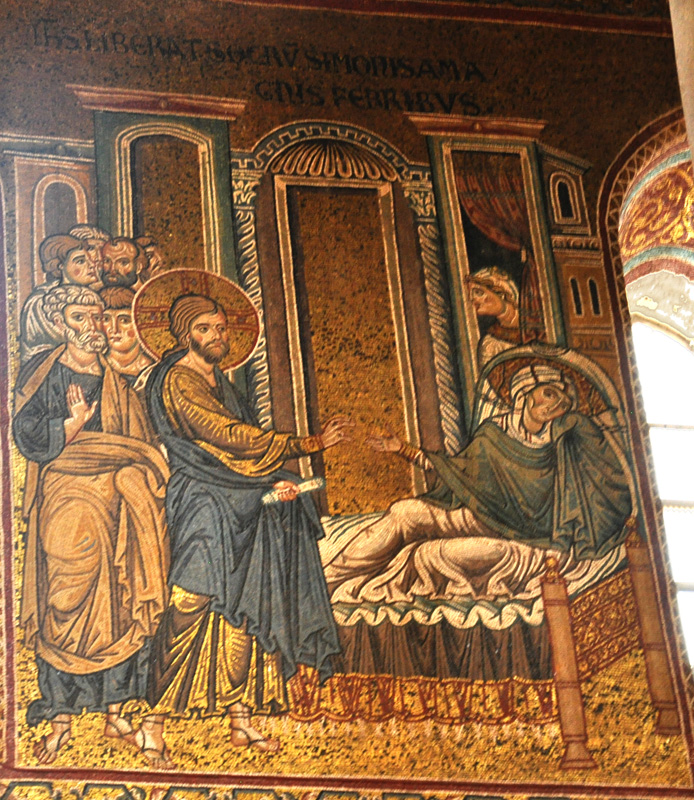
Jesus Heals Peter’s Mother-in-Law, a mosaic in the Cathedral of the Assumption, Monreale, Sicily, from christianiconography.info.
The Lord Is My Chef Sunday Recipe for the Soul by Fr. Nicanor F. Lalog II
Feast of the Holy Family, Cycle C, 29 December 2024
1 Samuel 1:20-22, 24-28 ><)))*> 1 John 3:1-2, 21-24 ><)))*> Luke 2:41-52
Photo by author of a depiction of the Holy Family near the main door of St. Joseph the Worker Parish in Pacdal, Baguio City, 28 December 2024.
You must have heard of the classic song “A House Is Not A Home” composed by the great tandem of Burt Bacharach and Hal David recorded by Dionne Warwick in 1964 for a movie of the same title. It went back to charts in 1981 when the late Luther Vandross covered it in his first album.
It is a very lovely ballad of a love lost, teaching us that indeed, “a house is made of walls and beams while a home is made of love and dreams”.
A chair is still a chair
Even when there's no one sitting there
But a chair is not a house
And a house is not a home
When there's no one there to hold you tight
And no one there you can kiss good night

A room is still a room
Even when there's nothing there but gloom
But a room is not a house
And a house is not a home
When the two of us are far apart
And one of us has a broken heart
But, in the Hebrew language and Jewish thought, the word “house” in itself connotes relationships. There are no distinctions between a house and a home for them that is why we find Jesus claiming the temple as His Father’s house.
Pope Francis opening the Jubiliee Door at St. Peter’s in Rome to launch the start of the Jubilee Year of 2025. Photo by Maurix/Gamma-Rapho via Getty Images.
In fact, the first letter of the Hebrew word for God (Yahweh) is actually shaped as a door or a house. That is why there is the blessing of church doors in dioceses today worldwide following the blessing and opening of the Jubilee Door at St. Peter’s in the Vatican by Pope Francis last Christmas Eve to launch the Jubilee Year. The Jubilee Door signifies our passing through, an entering into a relationship with God.
In John’s gospel we find Jesus as an adult using the word “house” twice when He cleansed the temple, telling everyone to “stop making my Father’s house a marketplace” (Jn.2:16) and at their last supper when He assured the disciples, “In my Father’s house there are many dwelling places or rooms” (Jn.14:2).
The only other occasion Jesus used the word “house” to mean the same thing as John was when He was found by His parents in the temple as we heard today on this Feast of the Holy Family.
Each year Jesus’ parents went to Jerusalem for the feast of Passover, and when he was twelve years old, they went up according to festival custom. After they had completed its days, as they were returning, the boy Jesus remained behind in Jerusalem, but his parents did not know it. After three days they found him in the temple… When his parents saw him, they were astonished, and his mother said to him, “Son, why have you done this to us? Your father and I have been looking for you with great anxiety?” And he said to them, “Why were you looking for me? Did you not know that I must be in my Father’s house?” But they did not understand what he said to them (Luke 2:41-43, 46, 48-50).
“The Finding of the Savior at the Temple” painting by William Holman Hunt (1860) from en.wikipedia.org.
We find in the story of the finding of Child Jesus in the temple that even at a very young age, Jesus had always been clear with His oneness in God by always referring to the temple as His “Father’s house”.
As we have reflected in December 19 in Luke’s first Christmas story, the annunciation of John’s birth to his father Zechariah while incensing at the temple in Jerusalem during a major Jewish feast that Christmas begins in the church where we gather to praise and worship God as a community. See how this Sunday after Christmas our many empty pews in the church. How sad that many Catholics after Christmas have totally disregarded the Sunday Mass, going to all the vacation spots here and abroad with many of them having no qualms at all that this is the “day of the Lord”, a Sunday obligation.
Again, here is Luke in his artistic narration of Christmas into Christ’s adolescence insisting on us the importance of communal worship and prayer. Not surprising that of the four evangelists, Luke is the one who presented Jesus always at prayer as an expression of His oneness or communion in the Father and he wants us hearers of his gospel account to cultivate that same communion with God in Jesus, with Jesus, and through Jesus.
Christmas is essentially Jesus Christ becoming human so that God may be “at home” with us humans as John beautifully wrote in his prologue we heard last Christmas Day, “And the Word became flesh and made his dwelling among us” (Jn.1:14).
But, are we at home with God in Jesus?
Photo by author, the small entrance door leading to the Church of the Nativity in Bethlehem where one needs to bow low literally and figuratively to enter Christ’s birthplace.
On this Feast of the Holy Family, our gospel reminds us this Sunday of how even Mary and Joseph had trouble with their adolescent son Jesus like most parents these days, a kind of family conflict so familiar with many people everywhere.
What a lovely scene today this Christmas season amid widespread reports of child kidnappings and so many children caught in the middle of many conflicts among adults like wars in many parts of the world and worst, right inside every family, right in their house, or homes where there are no relationships at all.
Luke was a physician who understood very well the anguish and sufferings of many people, especially parents during his time that continue to these days. In narrating to us this sad episode of his Christmas stories when Jesus was lost but eventually found in the temple, Luke is assuring us that despite all the darkness and troubles that engulf many families today, we have a very loving, personal God in Christ always with us.
Photo by author, picture taken from the inside of the Church of the Nativity in Bethlehem of its small entrance door.
Mary and Joseph did not understand what Jesus meant that He must be at His Father’s house but it did not deter them from exploring its meaning so that only Mary with John and two other women remained with Christ at the foot of the Cross on that Good Friday.
How lovely that Mary and those others at the foot of the Cross were the ones truly “at home” with the Lord, in the Lord! The same thing speaks so true with Joseph who in his silence was so “at home” with God in Jesus, whether awake or asleep. He kept that relationship with God alive through Mary and those others around him especially Jesus.
As an adult approaching His pasch, Jesus assured His disciples including us today of having a dwelling place or room in His Father’s house in heaven – that, despite our many sins, God would never cut off His ties with us in Jesus, with Jesus! That is how God loved us so much as the author of the Letter to the Hebrews reminds us “God is greater than our hearts and knows everything” (1Jn.3:20).
Like Hanna the mother of the child Samuel, let us start cultivating this relationship with God even while still very young. It does not really matter if we destroy and cut it so often; what matters is we keep on trying to let it grow anew for it is and would never ever get lost again. Thanks to Christmas!
That is why I personally insist in my homilies and writings that we keep greeting everyone with a Merry Christmas until January 12, the Feast of the Baptism of the Lord that closes the Christmas season. It is still Christmas after all!
Photo by author, Chapel of the Angel of Peace, RISE Tower, Our Lady of Fatma University, Valenzuela City, Christmas 2024.
Like Mary and Joseph, let us keep coming back to God symbolized by Jerusalem and its temple now replaced with our churches. Let us go back to prayer and to Sunday Masses to find Jesus again present in the signs and symbols of the liturgy and most of all, in everyone present celebrating His coming.
Let us continue the story of Christmas with our relationships with God through others, of our being at home with the Father in Jesus Christ who “advanced in wisdom and age and favor before God and man” (Lk.2:52) after this episode which closed Luke’s Christmas account.
Let us be at home with God and with one another in Jesus, with Jesus, and through Jesus. May you continue to have blessed Christmas Season. Amen.
The Lord Is My Chef Daily Recipe for the Soul by Fr. Nicanor F. Lalog II
Simbang Gabi-6 Homily, 21 December 2024
Zephaniah 3:14-18     ><}}}*> + ><}}}*> + ><}}}*>     Luke 1:39-45
From Clergy Coaching Network, posted on Facebook 13 December 2023.
Advent and Christmas are a story of love of God’s love for us all that “He gave us His only Son.” No wonder, it is on this blessed Season when we share gifts, and most of all, our gift of self to others.
My youngest sister Bing works as an area manager of a Jollibee franchise in Bulacan. A few years ago before Christmas during our family conversations over dinner, she told us of a story shared by the Jollibee manager at NLEX. According to her story, two nuns entered their store there with some Dumagats with their driver. Right away, the store manager noticed how the two nuns were busy “calculating” the meal they have to take until settling for the cheapest, a rice meal of shanghai rolls. Obviously, the religious sisters have limited budget which did not escape the intuition of the lady manager who offered to treat them to a ChickenJoy meal for free. But the nuns felt shy and refused the manager’s offer, asking her not to be bothered at all until another woman with two kids in tow interrupted them, giving them ChickenJoy buckets with extra rice enough for the religious sisters and their companions! The woman refused to be identified and simply said that she too had noticed the nuns trying to budget their limited money that she ordered right away the food. For her part, the kind manager treated them instead for desserts to complete their meal.
That’s when my sister said “talagang Pasko na nga” (it’s really Christmas).
Yesterday in our reflection on the annunciation of the birth of Christ, we said of the need for us to enter in a dialogue with others to let Christmas happen. Dialogue is not just about improving relationships with others by thinking through issues and problems but more of a way of being with others, of being present with others to experience and feel their situations, exactly what Jesus did in being human like us in everything except sin.
At the annunciation of the Lord’s birth, Mary dialogued with Gabriel unlike Zechariah who was eventually silenced in order to be open to God. True dialogue as an incarnation like Jesus with God and with others can only happen when we are convinced of God’s love for us. Mary went in haste to visit Elizabeth because she felt God’s love in her that she wanted to share it with her cousin right away.
Mary set out in those days and travelled to the hill country in haste to a town of Judah, where she entered the house of Zechariah and greeted Elizabeth(Luke 1:39).
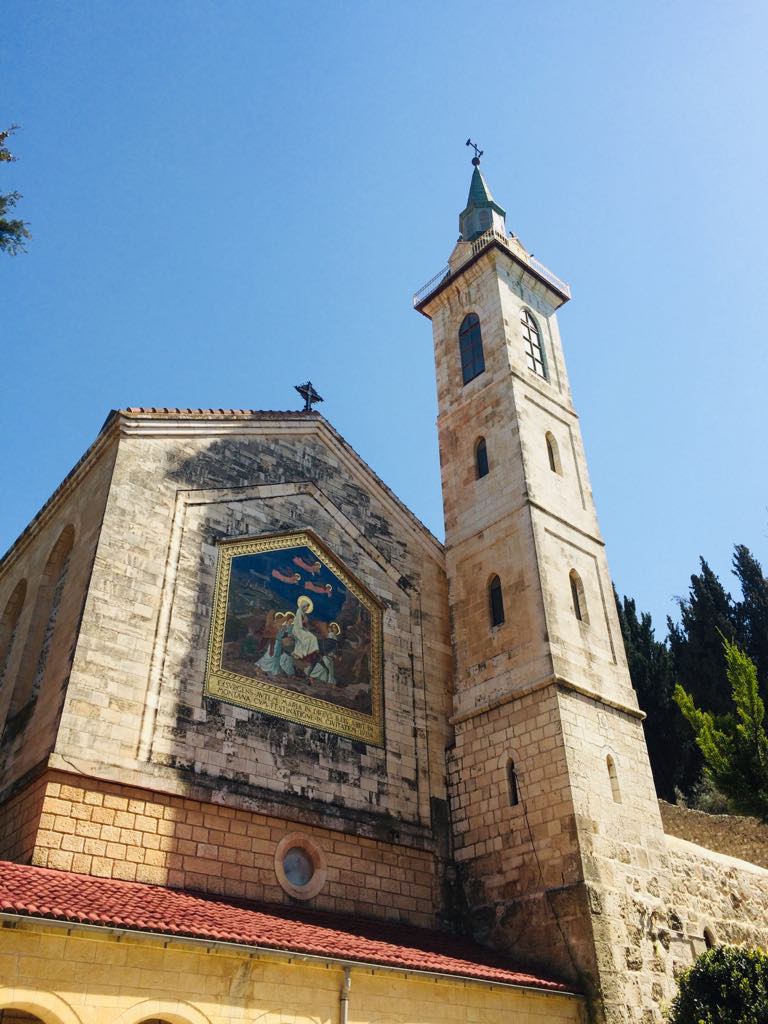
Photo by author, Church of the Visitation, the Holy Land, May 2017.
Try imagining that scene of Mary’s Visitation of Elizabeth. What did you feel? Did you feel some sense of tenderness, of being loved, of being touched by God?
While praying over this scene as I recalled my second pilgrimage to the Holy Land when we went to the Church of Visitation, I remembered my early years in the ministry when I always felt ashamed accepting invitations for dinners because I could not bring a gift.
Maybe part of our upbringing, I have always felt inadequate coming to another home bringing nothing. That is why I keep cards and stampitas in my desk along with some chocolates so that when I visit families, I could bring a little something for them.
It was only in 2011 after being assigned to a parish of my own when I was able to let go of this feeling of inadequacy after a parishioner told me how they deeply appreciated priests visiting them at home, sharing in their meal because they felt so blessed. That is why most of us priests are fat – we always get invited to meals and gatherings that sometimes I wonder if people really love me when they “force” me to eat more of their cholesterol-laden food and sugary desserts they serve!
It was during these home visitations especially of the sick and for simple meals I felt “rootedness” or oneness with people, of being “a member of each family yet belonging to none” as the famous French Dominican Fr. Lacordaire said a hundred years ago about priesthood. The more I visit families, bidden or unbidden, the more I feel the joy of my priesthood because of the family and community that I belong to. That is when I realized too that celibacy is lived in a community both of priests and laity.
For 26 years in schools and the parish and now the hospital, the more I felt Jesus present in me as a priest as I live among brother priests and lay people. Tenderness and intimacy take on a new dimension that is spiritual in nature because I don’t just touch people but am also being touched by them. Every time they thank me, I also thank them for blessing me with their warm welcome. It is like Mary and Elizabeth during the Visitation blessed abundantly by God and still sharing that same blessing with each other.
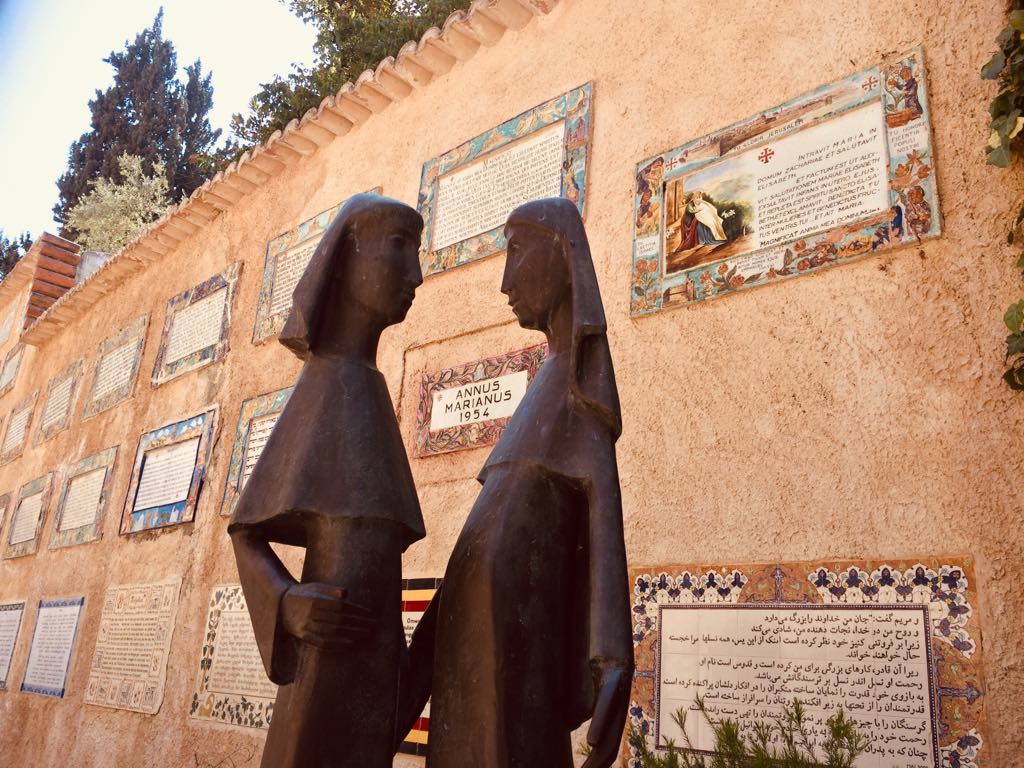
Photo by author, bronze statues of Mary and Elizabeth at the patio of the Church of Visitation, May 2017.
That is the meaning and significance of the Visitation: inasmuch as Christ comes to us individually, He behooves us to share Him also with others to form a community.
Mary visited Elizabeth not merely to help her out in her pregnancy nor to confirm what Gabriel had told her but simply because she was so convinced of God’s love that she wanted to share it with her cousin.
Mary visited Elizabeth because she felt touched by God in the Annunciation and wanted so much her cousin to be touched also by the Lord! And indeed when Luke wrote that “When Elizabeth heard Mary’s greeting, the infant leaped in her womb, and Elizabeth, filled with the Holy Spirit, cried out in a loud voice and said, ‘Most blessed are you among women, and blessed is the fruit of your womb'” (Lk.1:41-42).
Faith in Christ leads to love that moves us to bond with one another to form Christ’s body, a community of believers, a community of beloved, a community of lovers.
After receiving Jesus, like Mary, we have to move to the Visitation and share Him with others. To be able to do this, we must first be convinced that God loves us so much like what the Prophet Zephaniah said in the first reading and what Elizabeth told Mary in the Visitation, “Blessed are you who believed that what was spoken to you by the Lord would be fulfilled” (Lk.1:45).
There’s a saying, “If you have love in your heart, you have been blessed by God; if you have been loved, you have been touched by God.”
Let God touch somebody today with your visitation… believe and feel the love of Jesus! Amen.
The Lord Is My Chef Daily Recipe for the Soul by Fr. Nicanor F. Lalog II
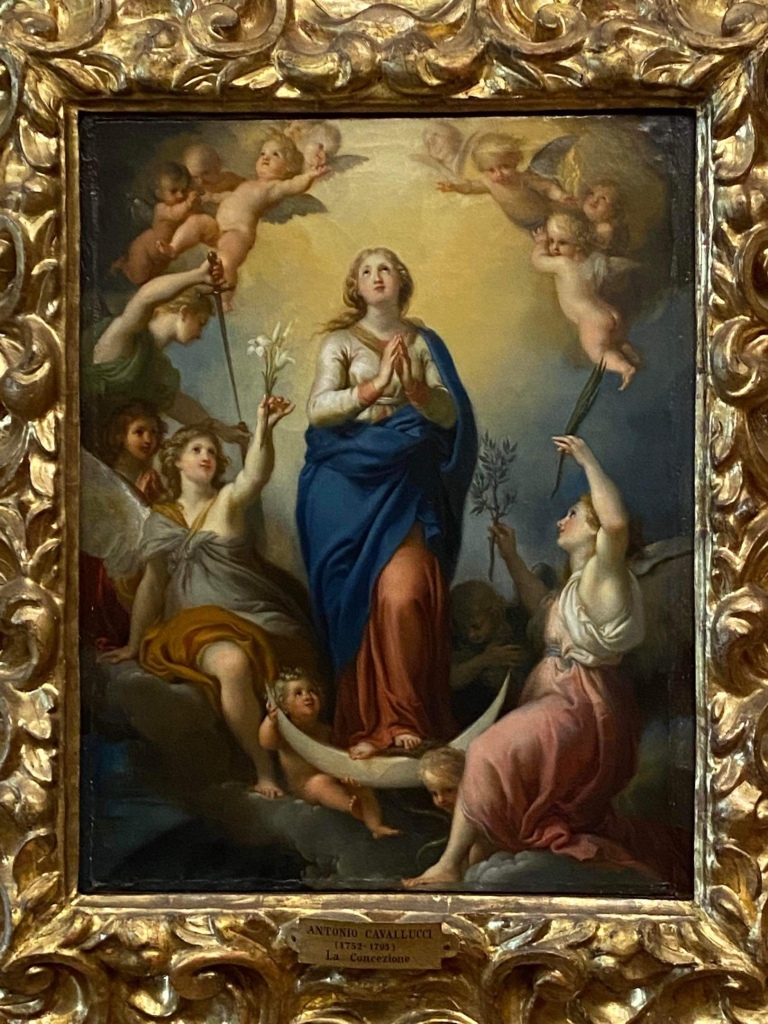
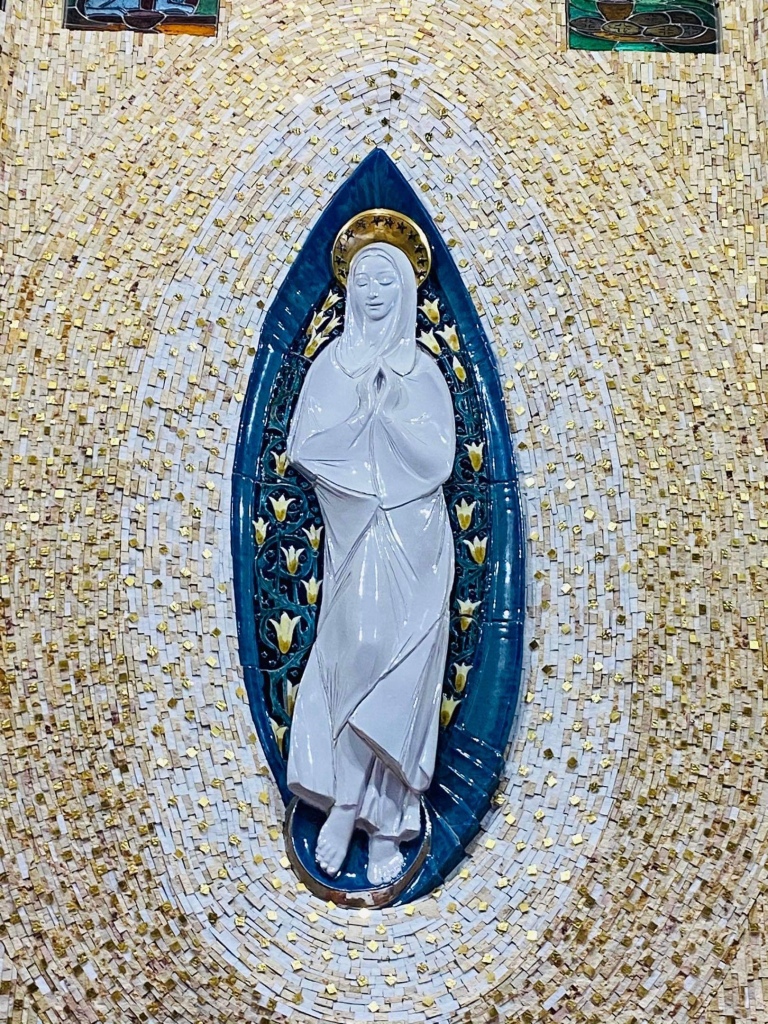
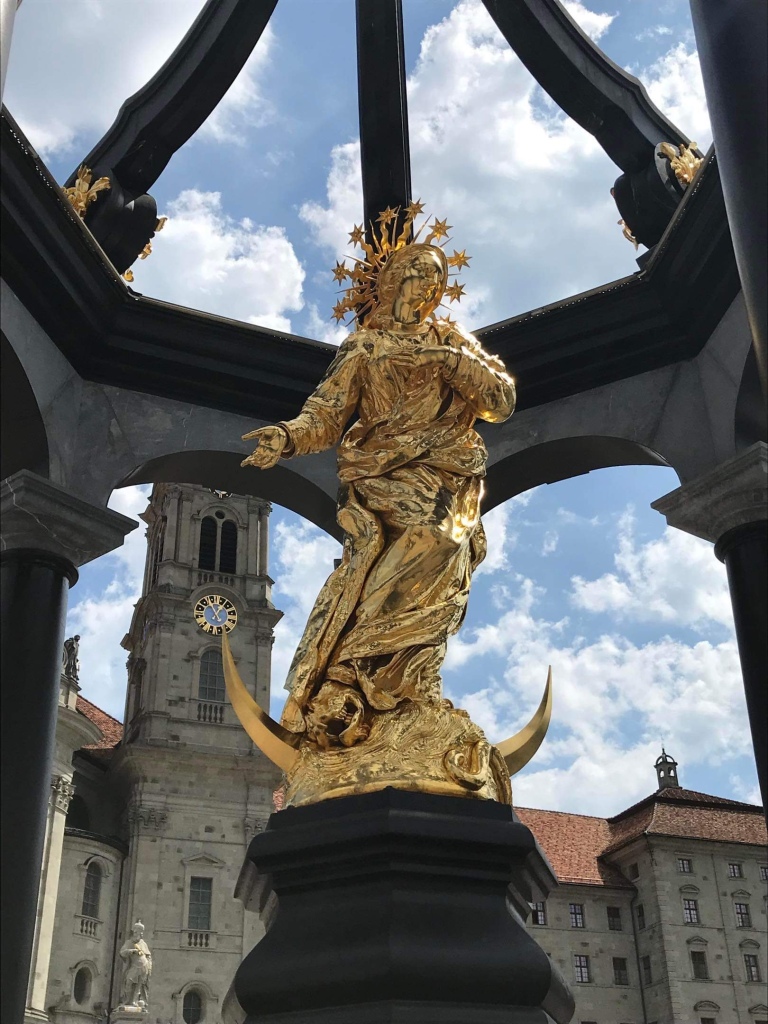
Monday, Solemnity of the Immaculate Conception of Mary, 09 December 2024
Genesis 3:9-15, 20 ><}}}}*> Ephesians 1:3-6, 11-12 ><}}}}*> Luke 1:26-38
Photo by Rev. Fr. Gerry Pascual at Palazzo Borromeo, Isola Bella, Stresa, Italia 2019.
The Solemnity of the Immaculate Conception of the Blessed Virgin Mary is one of the most awaited feasts in our predominantly Catholic Christian country due to its timing that is so close to Christmas as well as our deep devotion to the Blessed Mother.
Yet, it is also the most problematic because every year, the biblical passage we hear in its celebration is the Annunciation of the Birth of Jesus Christ that is held on March 25 so that people often confuse the December 8 Solemnity as Mary’s Immaculate Conception of Jesus. Of course, there is no direct quotation in the bible of Mary’s Immaculate Conception for it is a fruit of long process of deliberations and reflections in the Church that was finally made official in 1854 as a Dogma.
For those still confused, today’s celebration is when Mary was immaculately conceived in St. Anne’s womb through the merits of Jesus in all eternity, being freed from any stain of original sin so that she may bear our Savior, the Son of God, all-perfect, into the world who is the Christ.
Photo by Rev. Fr. Gerry Pascual of Iba, Zambales at Santuario di Greccio, Rieti, Italy in 2019.
Mary was chosen by God to be His Son’s Mother not because of her having any special traits but purely out of God’s goodness. It is a beautiful story that continues to happen daily we hardly notice nor recognize when God intervenes into our time to bless us not because we deserve to be blessed but simply out of His immense love for us.
This is what we celebrate in the Immaculate Conception of the Blessed Virgin Mary: we have a very loving God making a room among us so we may dwell and live in His grace since the very beginning of time.
In the bible and in spirituality, the words room and dwelling actually refer to communion of man and God. In fact, the first letter of God’s name “Yahweh” is shaped like a door of a house in Hebrew writing. At the last supper, Jesus told the Twelve that in His Father’s house are many rooms where He shall go first to prepare one for us all. It is not a literal room but a relationship with God that begins here.
In Genesis, paradise as dwelling place of Adam and Eve was more of their oneness with God they have destroyed with sin.
God truly loves us, never gave up on us when He sent Jesus Christ to redeem us to take us back to Him by renewing that relationship with Him. It had always been part of the divine plan even before the fall of man as reflected by St. Paul in the second reading, “as he chose us in him, before the foundation of the world, to be holy and without blemish before him” (Eph. 1:4).
Every December 8 (or 9, like today when the solemnity falls on a Sunday), we hear Luke’s beautiful account of the annunciation of Christ’s birth because it also conveys to us the same message of the Immaculate Conception of Mary who made a room too for God in her self.
The angel Gabriel was sent from God to a town of Galilee called Nazareth, to a virgin betrothed to a man named Joseph, of the house of David, and the virgin’s name was Mary (Luke 1:26-27).
“Cestello Annunciation” by Botticelli painted in 1490; from en.wikipedia.org.
The scene preceding this is the annunciation of John’s birth to Zechariah during the Jewish major feast of Yom Kippur or Day of Atonement at the temple in Jerusalem. Observe Luke’s account and we see how God entered through human activities in that scene. Nakisabay, naki-ride on ang Diyos sa takbo ng panahon noon nang ibalita ang pagsilang ni Juan Bautista.
In the Annunciation of the birth of Jesus, it was different: it was God setting everything on His own as we feel from Luke’s solemn reportage. The five major “W’s” of news were there present, namely, who (Mary), what (birth of Jesus), where (Nazareth), when (sixth month of Elizabeth’s pregnancy) and why (Jesus to save the world).
With Mary in Nazareth, the major event was the Annunciation itself of Christ’s birth. It is the entrance of the eternal God into the temporal and finite time of man. That is why we pray the Angelus thrice a day, to sanctify our day as we remember that great event of God becoming human like us in Jesus. (Sadly, so few people pray the Angelus these days, giving more importance to social media, video games and noon time shows or news programs.)
Mary’s Immaculate Conception actually had its fullness in the Annunciation when Mary said yes to God by making a room for Jesus in herself and in her life that led to Christ’s birth and fulfillment of His mission of salvation for us. We see this also in Joseph as narrated by Matthew.
God made everything possible to restore this relationship through Mary who had to be immaculately conceived in order to be the room who would receive His Son Jesus Christ.
Photo by author, left side of the facade of the Basilica of the Annunciation in Nazareth, Holy Land, May 2019.
Nazareth is the only major place in the New Testament never mentioned in the Old Testament unlike Bethlehem, the birthplace of Jesus and actually His very root being from the lineage of King David was mentioned many times in the Old Testament.
Nazareth was Mary’s hometown, obscured and unknown like her. After returning from Egypt, the angel told Joseph to bring the Holy Family there to avoid Herod, son and namesake of his father who ordered the massacre of children in Bethlehem upon learning from the Magi the birth of the new king of Israel, Jesus Christ. Though officially from Bethlehem, Jesus grew up in Nazareth that is why the people refused to acknowledge Him as the Messiah who would come from Bethlehem.
Nazareth was so insignificant at that time that it was the butt of jokes in Israel. When one of the Lord’s early disciples Philip told Nathanael (Bartholomew) that they have found “the one about whom Moses wrote in the law” as the Messiah, Jesus of Nazareth, Nathanael replied, “Can anything good come from Nazareth?” (Jn.1:45-46). Jesus did not reprimand Nathanael for his comment because it was true, even praising him as a true Israelite without guile!
Photo by author, Nazareth Square, Holy Land, may 2019.
In the first reading, it was God who chose paradise as dwelling of Adam and Eve; in the New Testament, it was God anew who chose the obscured town of Nazareth as the room and dwelling of His Son Jesus Christ, so perfectly jibed with Mary also obscured, so young and perhaps no voice nor say in the Jewish society at that time.
That is how God works, always in silence, often choosing people and places so insignificant in human standards to eventually display His glory like in Mary.
Inasmuch as the Immaculate Conception is God making a room for us to dwell in Him in Mary, God needs also our cooperation and participation in the process. It is not a one-shot deal but an ongoing process, something that continues and most of all, we cultivate and nurture. It is a gift freely given by God, reminding us of our original state and being as clean and pure.
Like Mary, do we have a room for Jesus within us to come especially in this world so preoccupied with man’s pride and achievements? Let us reclaim our original status and pure and clean children of God in making a room for Him in our lives today. Amen.
Photo by Fr. Gerry Pascual of Iba, Zambales at Einsiedeln Abbey, Einsiedeln, Switzerland, 2019.
The Lord Is My Chef Sunday Recipe for the Soul by Fr. Nicanor F. Lalog II
Twenty-seventh Sunday in Ordinary Time, Cycle B, 06 October 2024
Genesis 2:18-24  ><}}}}*>  Hebrews 2:9-11  ><}}}}*>  Mark 10:2-16
With our student sacristans in our San Fernando Campus in Pampanga during the Mass of the Holy Spirit last year.
One of the joys of my ministry as chaplain in a university and a hospital is the daily interaction I have with young people who keep me young like them, always updated with the many trends happening among them especially in the languages they speak. In them I continue to find the many faces of Jesus Christ who continues to pass by even in this modern world so swiftly changing due to social media.
Two terms I have recently learned from them are “love language” and “situationship”. Let’s just talk about “love language” this Sunday that is more appropriate with our gospel and reserve that other word “situationship” when the setting is more apt. Lately I have noticed the term “love language” mentioned quite often in social media posts and reels. I never bothered to know it until somebody asked me what is my “love language” that threw me off balance with many wild things rushing into my mind, thinking what is it!
It turned out that “love language” is a term coined in 1992 by Baptist pastor Gary Chapman in his book of the same title where he identified five love languages we give and (prefer) to receive: words of affirmation, acts of service, receiving gifts, quality time, and physical touch. It was an amazing moment of learning from me when I realized that everyone – including us priests – has a favorite love language in expressing our love to everyone. And in our gospel today, we find that even God who is love Himself has a love language in the very person of His Son Jesus Christ!
The Pharisees approached Jesus and asked, “Is it lawful for a husband to divorce his wife?” They were testing him. He said to them in reply, “What did Moses command you?” They replied, “Moses permitted a husband to write a bill of divorce and dismiss her.” But Jesus told them, “Because of the hardness of your hearts he wrote you this commandment. But from the beginning of creation, God made them male and female. For this reason a man shall leave his father and mother and be joined to his wife, and the two shall become one flesh. So they are no longer two but one flesh. Therefore what God has joined together, no human being must separate” (Mark 10:2-9).
Photo by author, 2024; I have loved mosses that thrive even with little sunlight, reminding us of God’s grace especially when we are in darkness and tribulations.
Jesus and the Twelve continued their journey to Jerusalem with His teachings not only getting more exciting but actually more difficult and hard as He addressed the thorny issue of divorce which continues to divide us in this modern age.
Interestingly enough, this scene happened while Jesus and the Twelve were in Judea, the province governed by King Herod who had John the Baptist arrested and later beheaded upon the instigation of his wife Herodias. John spoke against Herod’s taking of Herodias as wife because she used to be the wife of his own brother Philip then governing another province. One can just imagine the grave danger the Pharisees have exposed Jesus in discussing divorce right in the turf of an evil ruler living with an adulteress!
As usual, Jesus did not fall into the test by the Pharisees because He had no intentions of joining our endless debates about divorce as He knew very well that it is something so complicated that has continued to ruin human relationships as a result of the “hardness of our hearts”. Recall too similar instances when Jesus was asked for an opinion in politics like the paying of taxes to Caesar and the settlement of disputes among brothers regarding their inheritance. See how Jesus would always make it clear that His mission is not to settle our disputes in economics and politics nor personal relationships but to always reveal to us the will of God.
Instead of giving a simple answer of “yes” or “no” on the lawfulness of a divorce or the paying of taxes to the Romans, Jesus would always bring us to God our Father, the very core of our being and relationships. It is only in being rooted again in God when we realize personally, existentially why we have to strive in choosing what is true, good and beautiful no matter how difficult it may be.
This Sunday, Jesus is not offering compromises to us weak human beings about divorce but rather proposes the ideal of marriage by going back to its very source and beginning, God Himself who is love.
That is why our first reading was taken from Genesis to remind us and make us realize that everything, most especially man and woman – is created by God. Everything in this world was from God, especially our desire for union and communion which we also find expressed even by trees and plants as well as animals.
However, what makes us distinct from the rest of creation as we see in other parts of Genesis is God breathing on us His breath of life that gives us the consciousness of our oneness, of that transcendent otherness called humanity that makes us realize our deeper reality in the “I-Thou” relationship. Plants and animals do not have that consciousness.
Photo by author, St. Scholastica Retreat Center, Tagaytay City, August 2024.
The creation of a woman as suitable partner of man is not a result of an after-thought of God as if He never knew man would never be fulfilled without a woman. The creation of woman being taken from one of the ribs of man cast into a deep sleep by God reminds us of each person being a gift to everyone. No pet nor plant can bring that kind of ecstasy and joy of finding somebody like us, of bringing unity in every one who is incomplete in one’s self.
See how Jesus repeated the Genesis account “that is why” or “for this reason” a man leaves his father and mother and be joined with his wife to become one.
This tendency of ours towards one another, a consciousness of then other person, is a gift and a grace indicating our origin who is God who always relates with us. Every time we destroy this unity, whenever we upset this complementarity among us in God, that is when disorder happens, generating competitions among us that lead to our endless conflicts that only leave us with more pains and sorrows. Hence, back in the house again towards the end of our gospel scene this Sunday, Jesus reiterated the example of the child after His disciples drove them away.
Photo by author, statue of the Child Jesus hugging St. Joseph, Sacred Heart Novitiate, Novaliches, QC, March 2024.
How lovely and ironic that despite the weaknesses and incompleteness of children, we find in them all five love languages too. What a joy to play and converse with children, especially carry babies despite their lack of language skills we find each one a love language in himself/herself – exactly like Jesus Christ, the love language of God who gave us everything to experience oneness in love.
God knows everything that He created us in His own image and likeness. Nothing, not even sin could ever destroy His grand design for us since creation so that right after the Fall, God right away promised salvation fulfilled in Jesus Christ whom He had sent to remind us anew of His wonderful plan for us.
I have a similar image like this in my room, my most favorite statue of St. Joseph as protector of the Child Jesus and Mary. But most of all, we find Jesus being the love language of God even in his childhood with His all-encompassing love that reached its highest point at the Crucifixion.
God knows everything, especially our weaknesses in keeping our relationships. Jesus is not judging us and knows very well the pains many are enduring as a result of separation and divorce. The Letter to the Hebrews we heard in the second reading tells us how Jesus in suffering death has become like us in order to share with us the grace we need to keep our human relationships strong.
Every Sunday, I visit our patients in the hospital to give them Holy Communion, hear their confessions and often, anoint most of them with Oil for the sick.
Whenever I meet couples especially those already old and with debilitating sickness, I praise God for the tremendous grace he gives them. In them I always find God so truly present among us, especially in every husband and wife lovingly serving each other in sickness and in health. Let us pray for all couples that they may cooperate with God’s grace in keeping their marriage alive. Amen. Have a blessed week ahead!
The Lord Is My Chef Daily Recipe for the Soul by Fr. Nicanor F. Lalog II
Friday, Memorial of St. Francis of Assisi, 04 October 2024
Job 38:1, 12-21; 40:3-5     <*{{{{><  +  ><}}}}*>     Luke 10:13-16
Photo by Fr. Bien Miguel, Diocese of Antipolo, 25 September 2024.
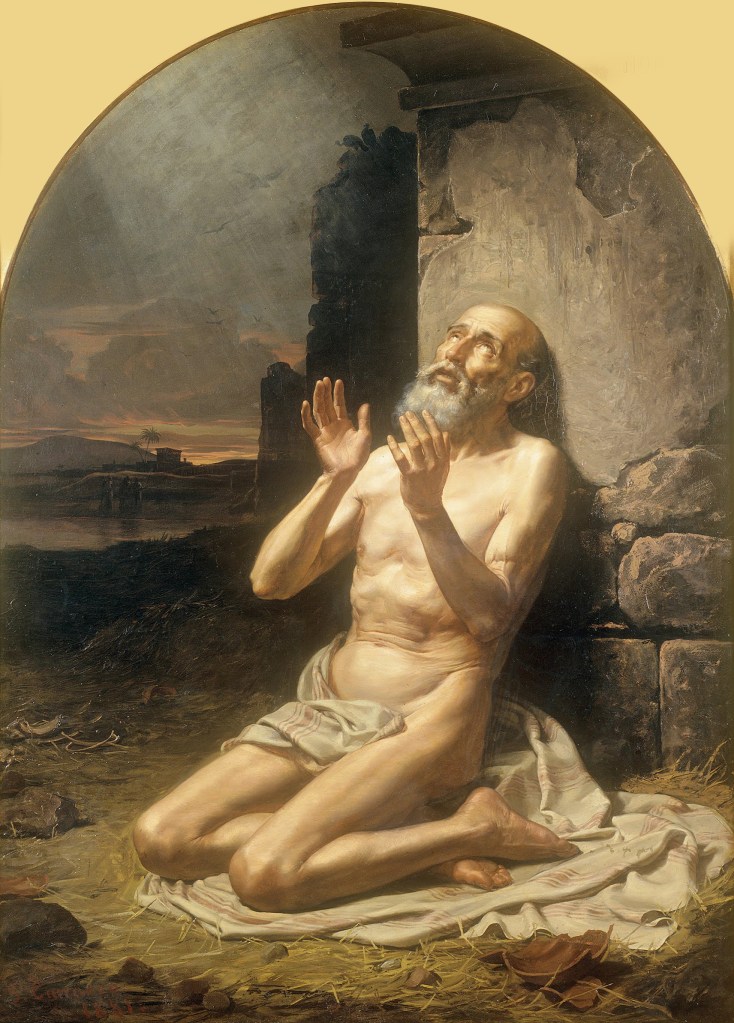
This is actually a rejoinder to our prayer earlier published today on the Memorial of St. Francis of Assisi. And how I love the first reading today, of God’s “speech” to Job’s lamentations that remind us all of the wonder and majesty of creation St. Francis of Assisi highly regarded in his life and teachings.
The Lord addressed Job out of the storm and said: “Have you ever in your lifetime commanded the morning and shown the dawn its place for taking hold of the ends of the earth, till the wicked are shaken from its surface? Have you entered into the sources of the sea, or walked about in the depths of the abyss? have the gates of death been shown to you, or have you seen the gates of darkness? Have you comprehended the breadth of the earth? Tell me, if you know all” (Job 38:1, 12-13, 16-18).
How interesting too these words written about 2700 years ago in the Middle East are echoed in our own time in theme song of the Disney movie Pocahontas, “The Color of the Wind”:
Have you ever heard the wolf cry to the blue corn moon Or asked the grinning bobcat why he grinned? Can you sing with all the voices of the mountain? Can you paint with all the colors of the wind? Can you paint with all the colors of the wind?
Photo by author, Sacred Heart Novitiate, Novaliches, QC, 20 March 2024.
Like Job, who was a fictional character, Pocahontas went through a lot of great sufferings beyond explanations which is the aim of the authors of the Book of Job – to reflect on the mystery of human sufferings and misery amid a loving God.
It is easy to understand our sufferings in life when we are the ones who have caused them like making wrong choices and decisions or simply not exerting enough efforts to our endeavors or projects.
The most painful sufferings that are really bothersome are those we feel “undeserved” at all like getting a rare cancer and disease, being offended by someone close to us despite our being good to them, or like Pocahontas who was then living in peace and quiet until the English colonizers came to America who kidnapped and gang raped her.
I have never seen that Disney movie Pocahontas that is loosely based on the life of a native American Indian woman Pocahontas whose actual name was Matoaka; she was the daughter of the Chief of the Powhatan tribe in Chesapeake, Virginia during the early 1600’s.
According to historians, there was really no romance at all between Pocahontas and the British colonizer Captain John Smith as portrayed in the Disney movie. After getting pregnant from that gangrape, Pocahontas was forced to marry the English explorer John Rolfe as a condition for her release that only made her life filled with great sufferings and humiliations until her death.
Though a work of fiction but a fruit of prayerful reflections about life’s realities unlike the Disney movie Pocahontas, Job suffered severely when he lost his children, properties and livestock in a single day. Worst of all, he was stricken with a rare disease and left to the care of a “nagging” wife and three friends who wanted him to curse God or admit his guilt for a sin for which God was punishing him.
But Job’s conscience was clear, remaining faithful to God throughout all his sufferings. His complaints and cries were actually a voicing out of his inner pains to God, an expression of his trust in Him, “But as for me, I know that my Vindicator lives, and that he will at last stand forth upon the dust… And from my flesh I shall see God; my inmost being is consumed with longing” (Job 19:25, 27).
Job like us today was not seeking any answer nor explanation at all for his sufferings; he cries to God like us because we believe only God can save us. We do not cry or air our pains to someone we do not trust or believe in; the same is true why we cry and complain to God!
God’s response to Job’s laments remind us today of the need for us to see the whole picture we are into in this vast universe, of how everyone and everything is interconnected in God through His own Son Jesus Christ.
Notice how the author structured the speech of God of seeming opposites in life: commanding the morning and being shown the dawn in verse 12; sources of the sea and depths of the abyss in verse 16; and, gates of death and gates of darkness in verse 17. Jewish thought at that time was so structured that they saw everything distinctly different like morning and dawn, sea and abyss, death and darkness. That explains why they were so strict with the letters of the law that they eventually forgot the primacy of the human person which Jesus tried to emphasized to them in His teachings and healings. Jesus came to show us how everything and everyone in this whole creation is linked together, interrelated in God through Him.
This He did when He died on the Cross.
Photo by Fr. Gerry Pascual of the fresco at the Assisi Basilica, Italy, 2019.
It is sad that St. Francis of Assisi is often “romanticized” by many nature lovers even by some “new agers” for his love for nature and animals. More than sentimental reasons, St. Francis’ love and concern for nature and animals were all the result of his deep love and devotion to Jesus Christ crucified found daily in the celebration of the Holy Eucharist.
St. Francis realized and experienced the interconnectedness of everything and everyone in his own sufferings and pains in life he humbly embraced and accepted as we see in that verse we pray at every Station of the Cross he had composed:
V. We adore You, O Lord Jesus Christ, and we bless you. R. Because by Your holy Cross, You have redeemed the world.
For his love for the Cross and his own sufferings, Jesus blessed St. Francis with the stigmata, His five wounds at His crucifixion.
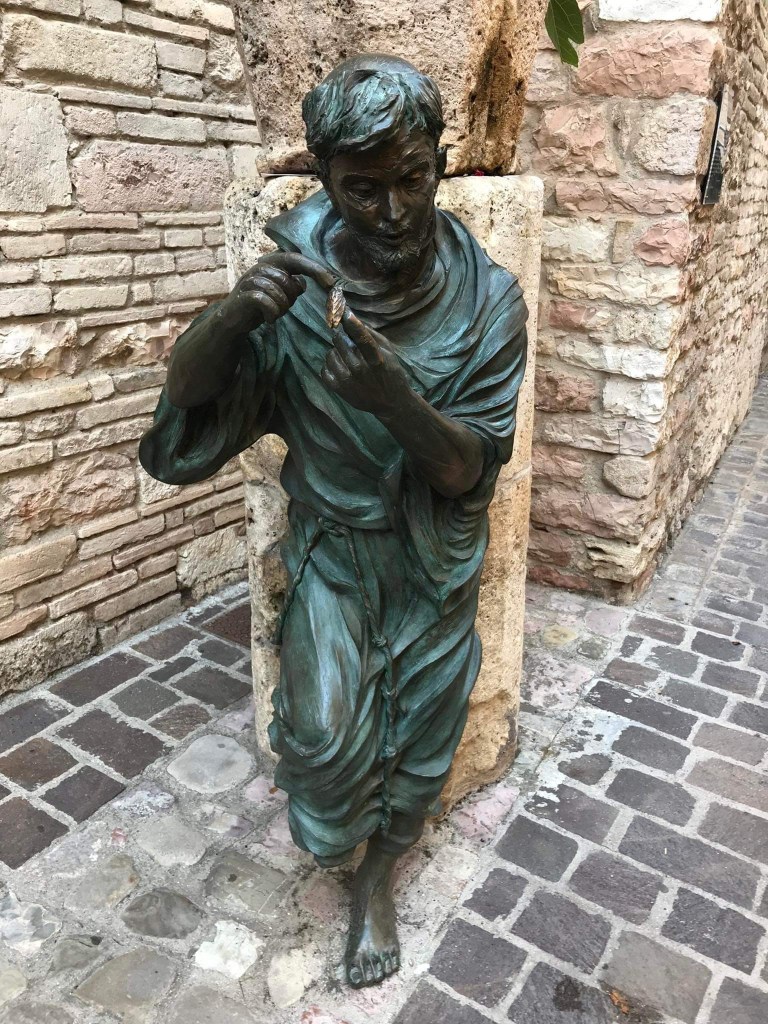
Photo by Fr. Gerry Pascual, Sculpture of the young St. Francis in Assisi, Italy, 2019.
After receiving those wounds, St. Francis was blinded as he went through severe sufferings after going through well-intentioned surgeries that went so bad. He was in his 40’s at that time and despite his great sufferings, it was during that period when he produced so many great writings we all cherish until now, notably the Canticle of the Sun where we find his famous expressions “brother sun, sister moon, and cousin death” – the very same things God expressed to Job in that speech out of the storm in our first reading today that is echoed by Disney’s Pocahontas in the theme “The Color of the Wind”.
But unlike that Disney movie that sugarcoats life’s realities of sufferings and pains, both Job and St. Francis of Assisi remind us today that the more we embrace our pains and sufferings in life like them, the more we see life’s wholeness, our oneness in God and the rest of His creations when seen in the light of the Cross of Jesus Christ.
When we see this oneness and interconnectedness in life, that is when we actually grow and mature, become fruitful as we find fulfillment in life despite the difficulties and pains we go through. Have a blessed weekend everyone! Happy feast day too to our Franciscan brothers and sisters!
The Lord Is My Chef Daily Recipe for the Soul by Fr. Nicanor F. Lalog II
Monday, Memorial of St. Peter Claver, Priest, 09 September 2024
1 Corinthians 5:1-8     <*((((><  +  ><))))*>     Luke  6:6-11
God our loving Father,
make me a yeast,
a leaven for your people,
bringing them into
a community,
a communion.
Do you not know that a little yeast leavens all the dough? Clear out the old yeast, so that you may become a fresh batch of dough, inasmuch as you are unleavened. For our Paschal Lamb, Christ, has been sacrificed. Therefore, let us celebrate the feast, not with the old yeast, the yeast of malice and wickedness, but with the unleavend bread of sincerity and truth (1 Corinthians 5:6-8).
Many times,
we in the Church fail
to recognize the importance
of corporate witness to
the Gospel as one body;
many times,
we pretend to be blind
and deaf and mute
in the evil pervading among us,
afraid of hurting others feelings,
worst, afraid of being unmasked
in living a double standard life;
straighten our lives,
Lord Jesus like that man
with a withered hand in the synagogue;
straighten our paths to your
righteousness as we discern
justice and mercy and love
whenever there are some
of us on the wrong side of the road.
Like St. Peter Claver
who called himself a
"slave of the slaves forever"
in his pioneering work among the
 African slaves in in Colombia,
grant us the grace of courage
and strength to dare start the
impossible of being a yeast,
a leaven to the people
transforming them into
witnesses of your Gospel.
Amen.
The Lord Is My Chef Sunday Recipe for the Soul by Fr. Nicanor F. Lalog II
Sixteenth Sunday in Ordinary Time, Cycle B, 21 July 2024
Jeremiah 23:1-6 ><}}}}*> Ephesians 2:13-18 ><}}}}*> Mark 6:30-34
Photo by author, Katmon Nature Sanctuary &Beach Resort, Infanta, Quezon March 2023.
After being sent“two by two” last Sunday, the Apostles now return to Jesus, reporting “all they had done and taught.” What a beautiful gospel scene this Sunday, supposed to be our day of rest that begins in God and must be rooted in God.
The apostles gathered together with Jesus and reported all they had done and taught. He said to them, “Come away by yourselves to a deserted place and rest a while.” People were coming and going in great numbers, and they had no opportunity even to eat. So they went off in the boat by themselves to a deserted place (Mark 6:30-32).
Last Sunday we were reminded to rediscover the family and friends sent with us “two by two” in this life while today the Lord wants us to be aware of our need to rest in order to rediscover Him first of all, then one’s self and others.
Unfortunately, many people today have entirely forgotten the meaning and importance of rest that we succumb to all kinds of sickness related with stress and fatigue. In fact, Filipino workers were recently ranked as the second worst in terms of work-life balance in a worldwide survey. One factor it cited is the lesser paid vacation leaves our workers have compared with their counterparts in other countries.
Photo by author, Sonnenberg Resort, Davao City, 2017.
Rest is not only stopping from work to be recharged like cellphone batteries; we are not things like robots and drones sent out simply for a task that once achieved, no more. We are inter-related persons meant to form bonds and unity, a family and a community. That is the result of our being sent on a mission to share God’s creative works leading to our union in Him with others.
God rested and made Sabbath holy after creation because He had completed all His works that were all good; we, on the other hand, merely participate in His creative works. That is why no matter how hard we push ourselves with our work, we can’t completely finish them as more things to do come along the way, making us bored or stressed out because we could no longer find life but simply routine. We have been so focused on accomplishing many things as if we are the savior of the world (messianic complex) that we feel so important, bloating our ego. That is when we start literally throwing our weight to those around us like in those reels of road rage. The sad part of this is how we eventually hurt the people we love and supposed to serve like the shepherds of the Old Testament that God through Jeremiah had accused to have “misled and scattered” the people of Israel (Jer.23:1).
Photo by author, border between Jordan and Israel, May 2019.
Today, Jesus is inviting us to “Come away by yourselves to a deserted place and rest a while (Mk.6:31)” to remind us that in everything we do in this life, what matters most is not the task but us, the persons we love and care for, and Christ who is our only fulfillment in life.
Like the apostles, we have to return to Jesus precisely because our mission, our work is not ours but Christ’s. We need to return to Jesus every Sunday in the Eucharist when we are nourished by His words and strengthened by His Body and Blood to sustain us in our mission.
Rest is neither doing nothing like sleeping all day or doing anything we like that we forget God and in the process, our very self and others. Rest is a time of conversion when we lay aside our plans and agenda by returning to God so that we could have focus again in this life. Rest is actually to be filled with God, to be holy.
This we find expressed perfectly in our Filipino word for rest which is pahinga from the root hinga or breath that is spiritus in Latin. To rest in Filipino is mag-pa-hinga that literally means hingahan, to be breathed on. Genesis tells us how God breathed on man to be alive after creating him while in John’s Gospel we find Jesus breathed on His apostles after greeting them with peace twice on the night of Easter when He appeared to them at the Upper Room. From here we get that beautiful imagery of rest as being breathed on by God – mag-pa-hinga sa Diyos – which is to be closer with God!
Here now is the challenge and best part of the good news this Sunday: the more closer we get to God in Jesus and through Jesus especially on Sunday our day of rest, the more we must get closer with others. The more we pray, the more we rest in the Lord, the more we serve, the more we love.
Mark told us how Jesus invited the Twelve to “come away by yourselves to a deserted place and rest a while” but the people saw them and even got earlier to the other side of the lake!
When he disembarked and saw the vast crowd, his heart was moved with pity for them, for they were like sheep without a shepherd and he began to teach them many things (Mark 6:34).
Photo by author in the Holy Land, 2019.
Rest is more than the amount of time spent “resting” but the disposition to be with the Lord, to be one with Him that we become holy like Him. That moment when Jesus led the Twelve to rest was already a “rest” for Him that resulted in serving more the people who have followed them.
Jesus being moved with pity for the people indicated His rest and communion with the Father expressed in His oneness with the suffering people who were like sheep without a shepherd. Jesus has always been one with the Father right from the very start until His death on the Cross where He declared “It is finished” and commended His total self to the Father.
The truest sense of us having a real rest, of getting closer with God is when we get closer with others especially those entrusted to our love and care like our loved ones and those who are poor and sick.
Problem these days among us priests including laypeople is our wrong idea about rest; we do not really rest at all but simply indulge in pleasures that are many times scandalous for being godless and unmindful of other people. True rest makes our hearts natural to be aware of the sufferings of others, to be one with them or at least take their plight into consideration in our rest.
We can only say “mission accomplished” to rest when we are one with God through others that St. Paul explains in the second reading at how Jesus Christ reconciled us all through the Cross, “putting an enmity to death by it” (Eph. 2:16). Next Sunday, this we shall see when after teaching and healing the people in that deserted place, Jesus would feed the crowd of over 5000 people from just a few loaves of bread and pieces of fish.
Let us rest in the Lord to prepare our hearts and souls as well as our tired body to be filled with God so we can fill others too with Him. Let us pray:
Lord Jesus Christ,
we live in a highly competitive world
of 24/7 wherein everyone is so busy
that we forget You and the persons
You have entrusted to us;
remind us we are not the Messiah
nor a superhero to save the world;
we can only do as much in this life
as God had accomplished all for us
 in You, the Christ;
let us take two or three
even five steps backwards
to let You, Jesus,
do your work in us.
Amen.

















 lordmychef.com