Light a candle to pray better.

Quiet Storm by Fr. Nicanor F. Lalog II, 08 February 2024
Photo by Irina Anastasiu on Pexels.com

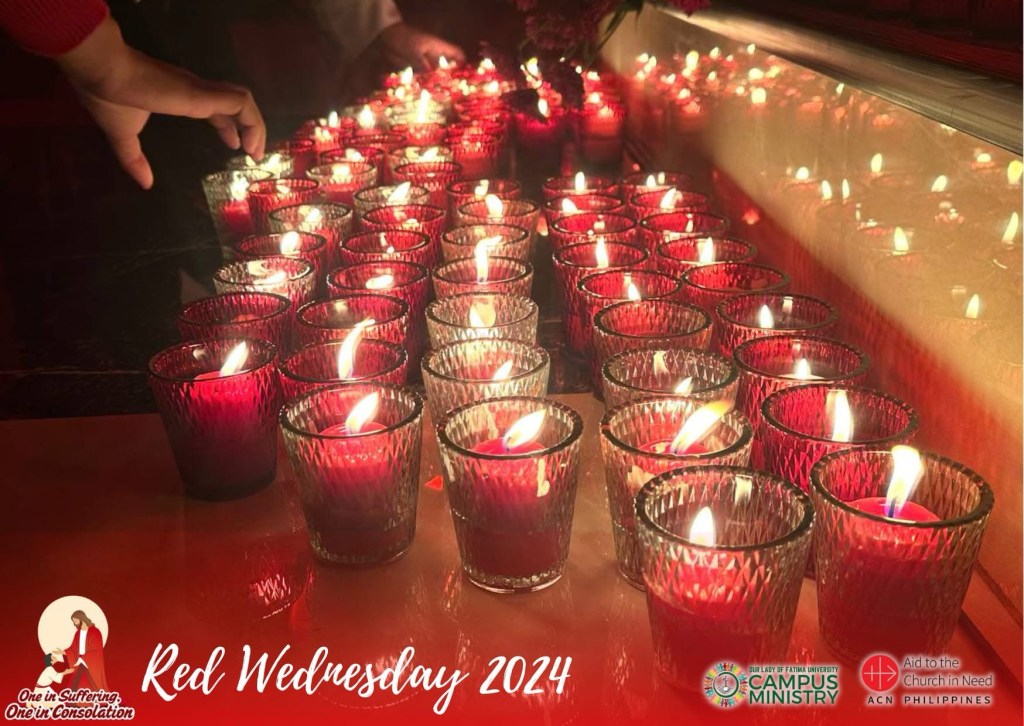
Last Friday was the Feast of the Presentation of Jesus to the Temple (February 2) also known as the Feast of the Candlemass wherein candles were blessed outside the church after which the people led by the priest enters to begin the Mass in a procession with lighted candles. 

Candlemass is a beautiful celebration, especially when done properly by priests. Its origin dates back to more than 1500 years ago in France where it started when people incorporated the blessing of candles into the Feast of the Presentation then known with its Eastern title as “the Encounter” to refer to how Simeon with the Prophetess Anna met the child Jesus being offered by his parents Joseph and Mary to the temple 40 days after Christmas. According to St. Luke, Simeon sang the following upon meeting the child Jesus Christ.

Presentation in the Temple painting by Fra Angelico from fineartamerica.com.

“Now, Master, you may let your servant go in peace, according to your word, for my eyes have seen your salvation, which you have prepared in sight of all the peoples, a light for revelation to the Gentiles, and glory for your people Israel.”

Luke 2:29-32

In proclaiming Jesus Christ as the “light” of salvation for the nations, the early French Christians thought of having the blessing of candles and procession of lighted candles to signify Jesus as the only and true light of the world. Thanks be to God for those pious early French Christians!

Photo by icon0.com on Pexels.com

Though candles are no longer used as a major source of lighting in homes and other places, it is still used in almost all churches, monasteries and other houses of worship around the world, gaining a renewed popularity among the younger generation. It is a most welcomed development in our modern time as more and more people are rediscovering the need for spiritual growth of whatever label. And right in the midst of this is the candle as a tool for better prayer periods. 

Unfortunately, this beautiful tradition of the candles is dying in our country. How ironic that we who belong to the Third World have switched to electric vigil lamps and candles while those in the First World still use the traditional candles in their homes and churches. 
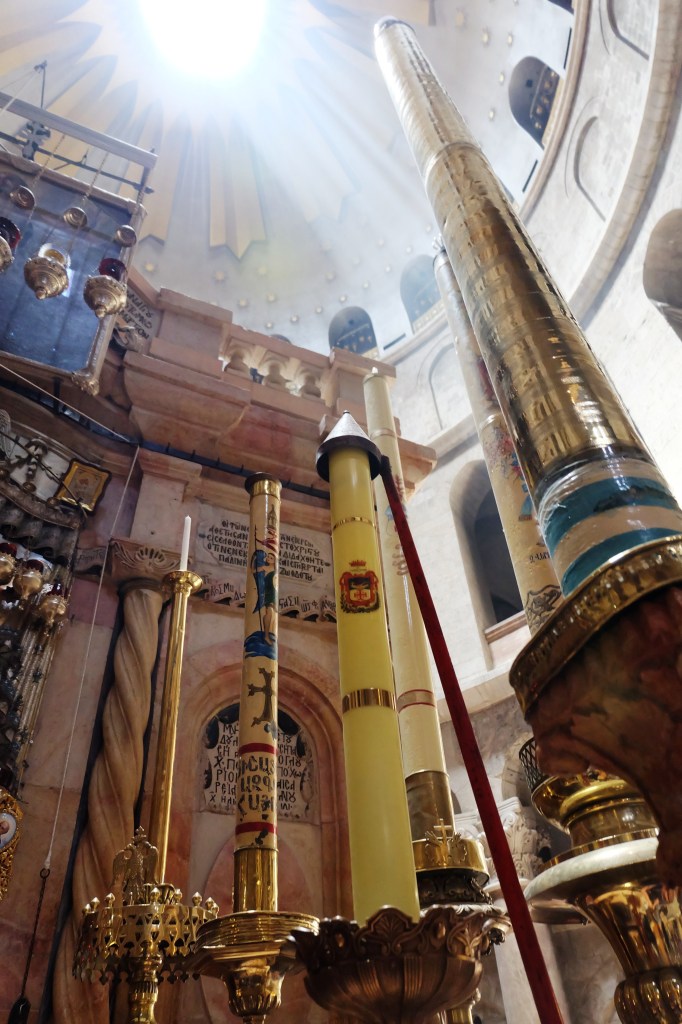
Go abroad like in North America and Europe, one finds a plethora of all kinds of beautiful candles used and sold even in the simplest churches and stores! During a Holy Land pilgrimage in the 2017 Easter Season, one of the things I appreciated and admired next to the pilgrim sites were the lovely and regal designs of paschal candles in the churches we visited that made me wonder why nobody makes them here in our predominantly Catholic country. 

Candles have always have a special place in the life of our faith and the Church since its early beginnings. From the Latin words candere and candela that mean “to shine”, it evolved into the Middle and Old English words candele and candel.

Aside from lighting the gatherings of the early Christians especially in the catacombs to evade arrests during the persecution, candles have always been used to signify Christ as the light of the world guiding our paths as Christians in every celebration, from Baptism to Weddings and Funerals.

Candles do not only make rooms shine but most especially the souls and the hearts of those who cultivate a prayer life. It has that unique warmth that can soothe and calm those who are agitated or worried with life’s many trials and challenges.

Every time we light a candle during prayer periods, our inner selves are made brighter as they evoke in us so much feelings of the Divine presence. Their little lights that flicker remind us of our feeble selves whose life could be easily snuffed out with a single blow. 

The scent of burning candle permeates our senses, calming us within, inviting us to leave all our worries in life as we lay our cards out in the open to God. A candles warmth can dissolve every hardness within us, purifying us within and becoming empty and open for God’s grace to work in us.

Photo by Emre Kuzu on Pexels.com

In a sense, candles may be considered as a sacrament too which is defined as a visible sign with invisible power.  

The very act of lighting a candle is already the start of prayer, something like the making of the sign of the Cross. I strongly recommend for those who wish to aid their prayer periods with candles to use matches not lighters that are artificial. 

Lighting up a candle for prayer especially in the morning can rouse our senses. The striking of the match with its sudden burst of light to kindle the candle is like an angel had suddenly come down to assure us that our prayer is heard by God, that God is with us at the very moment or at least reminds us we have turned into the mode of praying. 

The strong scent of the burning matchstick also adds flavor and aroma to the prayer period especially in the early morning when the whole world is still dark and everyone still asleep with you as the only one awake with God. Lighting a candle first thing first upon waking up can help us avoid from getting our cellphones or turning on the radio or the TV. A lighted candle can prevent us from being distracted by these modern gadgets that keep us away from God and from one another.

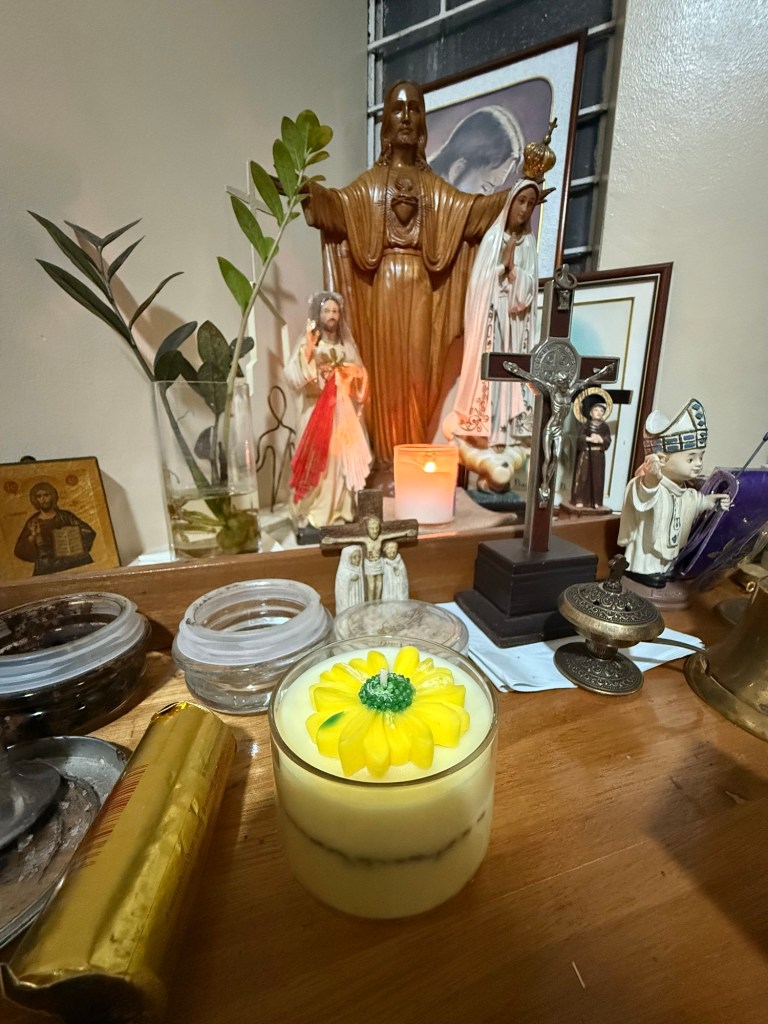
My altar with lighted candle at night; see the candle snuffer at the foreground.

Lighting a candle during a prayer period in our room or home works like the candlelight dinner that sets us to a lovely communion with God our beloved. The slow burning of a candle reminds us even in our busiest morning that we are at prayer in the presence of God, that we need to slow down too in our lives, to be conscious of our selves, surroundings and time so we can set our sights to God alone like a beloved in a candlelight dinner date.

At night time, the sight of the candle burning in one’s room is most dramatic as we close the day. Actually, it is during night time that the Church prays the Canticle of Simeon. 

Imagine that scene at the temple when Simeon sang as he held the Child Jesus in his arms – of his readiness to die, to go in peace, after seeing Christ the light of salvation. In the darkness of the night punctuated only by a burning candle, we are able to examine our hearts of the many things we have done and failed to do the whole day. These become clearer in the light of the candle that penetrates our hearts and conscience, piercing and rending our souls to remove the darkness within us, exposing the festering anger or bitterness and sadness hiding inside, melting them away with its warmth so we may go to sleep clean and ready to continue with life – here or hereafter like Simeon.

By Kay Bratt in Facebook, 13 December 2023.

One last note about candles as we end this reflection. Monks use a candle snuffer in extinguishing candles in their chapels and monasteries.  These are long metal instruments with tips like a bell that monks hover above a candle, slowly covering it until its light is snuffed out, hence, the name candle snuffer. 

If you want to be serious in praying better with lighted candles, you may buy those small candle snuffers for home use available at some candle shops in the malls. If there is no candle snuffer, one may use the cover of the candle to snuff out the light. What is important is that as we close our prayers with the lighted candle as companion, we don’t simply blow its light to abruptly end its glow. 

When blowing the candle used in prayer, do it slowly as if you are whispering. Do it with solemnity. Every candle used at prayer becomes blessed, demanding some sort of reverence as companions in our prayer life and journey. Of course, it would be good if you can have your candles blessed by the priest for use at home to ward off negative vibes but more important than that is we grow in our prayer life, we become like lighted candles who give light to others in Christ. Like our candles, we also become a prayer to God in our very selves. Amen.Have a blessed Thursday.

Bringing Jesus

The Lord Is My Chef Daily Recipe for the Soul by Fr. Nicanor F. Lalog II
Thursday, Feast of the Presentation of the Child Jesus, 02 February 2023
Malachi 3:1-4 ><}}}*> Hebrews 2:14-18 ><}}}*> Luke 2:22-32
It has been 40 days since
your birth, Lord Jesus Christ
that today we celebrate your
Presentation at the temple;
how lovely it is to contemplate
how on that day your parents,
the Blessed Mother and St. Joseph
obeyed the law that "Every male that
opens the womb shall be consecrated
to the Lord, and to offer the sacrifice
of a pair of turtledoves or two young 
pigeons," in accordance with the 
dictate in the law of the Lord (Lk. 2:23-24)
when you are the Lord Himself,
the Son of God!
But more lovely too are the presence
of Simeon and Anna who both waited 
for your coming, the promised Messiah
of Old; inasmuch as we are challenged 
to share you Jesus with others like your
parents, we are likewise challenged more
to be like Simeon and Anna in receiving
you our Savior into our arms and hearts.
Teach me, Jesus, to be like
Simeon and Anna who patiently 
waited for your coming,
staying attuned with the Holy Spirit
in silent prayer and fasting,
quickly recognizing your coming
as the "light for revelation to the
Gentiles" (Lk.2:31) amid the many
other infants presented on that day;
grant me the discerning spirit of
Simeon and Anna to recognize Christ
among the so many infants there at
that time; strengthen my will and spirit
to endure the day of your coming, 
Lord (Malachi 3:2) so I may recognize 
you and take you to my hands and arms
to raise you up for all to see like Simeon
and Anna proclaiming your coming to
everyone.
Most of all, Lord Jesus,
let me take you to my heart,
like Simeon who prophesied how
you would be a sign of contradiction to many,
piercing hearts like a sword to bare
the truth within us (Lk.2:34-35);
give me the courage, O Lord,
like Simeon to embrace death and
suffering for that it is indeed the 
meaning of your presentation
at the temple; it is only in presenting
myself to you, Jesus, will I be able to
bring you too to others when like you
I go through what they suffer.

In your light, Jesus, lead me.
Amen.

Malapit sa Diyos, naglalapit sa Diyos

Lawiswis Ng Salita ni P. Nicanor F. Lalog II, Ika-02 ng Pebrero 2022
Kapistahan ng Paghahandog kay Jesus sa Templo
Malakias 3:1-4 ><}}}}*> Hebreo 2:14-18 ><}}}}*> Lucas 2:22-40
Larawan mula sa crossroadinitiative.com.

Ngayon ang ika-40 araw mula ng Pasko ng Pagsilang ng Panginoong Hesus sa Bethlehem, Kapistahan ng Paghahandog sa Kanya sa Templo ng kanyang mga magulang na sina Maria at Jose.

Bukod tangi lamang itong salaysay na matatagpuan sa ebanghelyo ni San Lucas sapagkat ibig niyang ipakita noon sa kanyang mga mambabasa at mga taga-sunod na pumarito si Hesus para sa lahat ng tao, hindi lamang sa mga Hudyo.

Una itong pinagdiwang ng mga Kristiyano sa Jerusalem at lumaganap sa Silangan noong taong 500 kung saan ito tinawag sa wikang Griyego na “Ypapante” na ibig sabihi’y ang “Pagtatagpo” nina Hesus at ng dalawang matanda sa templo na sina Simeon at Anna.

Mula Silangan, umabot ang pagdiriwang na ito sa Europa na nakilala bilang kapistahan din ng Paglilinis ni Maria o “Purification of Mary”. Sa France, nagkaroon ng seremonyas ang mga Kristiyano ng pagbabasbas at pagsisindi ng mga kandila bago pumasok ng simbahan bilang pagkilala kay Hesus na tanglaw ng mundo ayon sa pahayag ni Simeon sa templo, “Liwanag itong tatanglaw sa mga Hentil, At magbibigay-karangalan sa iyong bayang Israel” (Luc. 2:32).

Kaya nang makarating sa Roma ang tradisyong ito noong taong 800, ito rin ang ginawang seremonya ni Papa Sergio I kaya tinagurian itong Candelaria (kandila). Makalipas ang mahigit isang libong taon noong 1962 sa Vatican II, ibinalik sa tunay na pangalan ito bilang Kapistahan ng Paghahandog sa Templo ngunit pinanatili ng mga obispo ang tradisyon ng pagbabasbas at pagsisindi ng mga kandila upang ipakita na si Hesus ang tunay na liwanag sa mundo sa aakay sa atin pabalik sa Diyos.

Kuha ni G. Cristian Pasion, Pasko ng Pagkabuhay, 2021.

Mahalaga na ating mapagnilayang muli at makita sa panahong ito na si Hesus ang tanging liwanag sa ating buhay na tumatanglaw sa gitna ng maraming artipisyal na mga ilaw, mga ilaw na ang binibigyang liwanag ay mga tao at kung sinu-sinong ibig na maging sikat o ibig kilalanin.

Ito yaong mga artipisyal na ilaw ng mga kamera at media na ang pinakikita o ang tinatampok bilang “highlight” ay mga karangyaan, kapangyarihan, katanyagan at mga kapalaluan sa mundo.

Inaanyayahan tayo ng kapistahang ito na tularan sina Simeon at Anna na inabangan buong buhay nila si Hesus na siyang tunay na liwanag ng ating buhay na dapat din nating hanapin, lapitan at sundan.

May isang tao noon sa Jerusalem, ang pangala’y Simeon. Matapat at malapit sa Diyos ang lalaking ito at naghihintay sa katubusan ng Israel. Sumasakanya ang Espiritu Santo na nagpahayag sa kanya na hindi siya mamamatay hangga’t hindi niya nakikita ang Mesiyas na ipinangako ng Panginoon.

Lucas 2:25-26

Bukod sa tanging si San Lucas lamang ang may kuwento ng tagpong ito, mayroon din siyang ginamit na kataga na hindi ginamit ng sinumang manunulat ng Bagong Tipan o maging ng alin mang aklat sa buong Bibliya.

Ito yung salitang naglalarawan kay Simeon bilang , “malapit sa Diyos” na sa Inggles ay “devout”.

Alam na natin yung salitang “righteous” o “matapat” na ginamit din ni San Mateo upang ilarawan si San Jose bilang taong matuwid o banal na tumutupad sa mga batas at alituntunin ng kanilang relihiyon.

“Simeon’s Moment” ni American illustrator Ron DiCianni mula sa  http://www.tapestryproductions.com.

Ngunit iyong “malapit” o “devout” sa Inggles o “deboto” sa pangkaraniwang pananalita, tanging si San Lucas lamang ang gumamit niyon sa buong Bibliya. Apat na ulit niya itong ginamit: minsan sa ebanghelyo na ating napakinggan at tatlong ulit sa ikalawang aklat niyang sinulat, Gawa ng mga Apostol.

Mas maliwanag ito sa Inggles nang tawagin ni San Lukas ang mga Hudyong pumunta sa Jerusalem noong Pentecostes bilang mga “devout Jews” o “mga taong palasamba sa Diyos” (Gawa 2:5); tinawag din niyang mga “devout men” o “mga taong may takot sa Diyos” yaong mga naglibing sa ating unang Martir na si San Esteban (Gawa 8:2); at sa pagsasalaysay ni San Pablo ng kanyang pagbabalik-loob, ginamit na salita muli ni San Lucas sa kanyang kuwento upang ilarawan si Ananias bilang “a devout observer of the law” o “taong may takot sa Diyos” (Gawa 22:12).

Alalaong-baga, para kay San Lucas, ang isang “devout” na tao, o wika nga natin deboto ay isang taong malapit sa Diyos dahil siya ay mayroong takot sa Diyos kaya tumutupad sa Kanyang mga utos! Hindi lamang sila matapat o faithful kungdi mayroong malinis na puso at laging handang tumupad ng buong tapang sa kalooban ng Diyos.

Kaya nga sa ating mga Pinoy, ang deboto ay taong malapit, yaong mayroong matalik na ugnayan sa Diyos at sa kapwa!

Sila yaong mga kaibigang maaasahan, mayroong sariling kusa at hindi naghihintay na pagsabihan pa kung ano ang gagawain. Mayroong sariling-palo katulad nina Simeon at Anna na kusang naghihintay, lumalapit sa Diyos at Panginoon.

“Presentation at the Temple” painting ng Italian Renaissance artist Andrea Mantegna noong 1455; hawak ni Mari ang Banal na Sanggol habang si San Jose naman sa gitna ay nakatingin kay Simeon na mayroong balbas na puti. Larawan buhat sa wikipedia.org.

Nadadalisay ang ating pagiging malapit sa Diyos sa isang buhay-panalangin na kung saan mayroong disiplina sa pagdarasal na hindi lamang mga salitang inuusal ng bibig kungdi sinasapuso.

Masdan paanong sinabi ni San Lucas sina Simeon at Anna na palaging nasa templo nananalangin. Higit sa lahat, ang pananalangin ay kaisahan sa Diyos kaya nabatid kaagad ng dalawang matanda na dumating na si Hesus sa pag-uudyok sa kanila ng Espiritu Santo.

Katulad din yan ng pagkakaroon ng matalik na kaibigan: palagi kayong nag-uusap, nagbabahaginan at nag-uunawaan kaya mayroong kaisahan.

Ang pagiging malapit sa Diyos o deboto ay hindi lamang pagaalaga at pagkolekta ng mga imahen at aklat dasalan kungdi pumapaloob sa kalooban ng Diyos na siyang sinasabi ni propeta Malakias sa unang pagbasa na biglang darating ang Panginoon sa kanyang templo na siyang ating mga sarili.

Gayun din naman, ang taong malapit sa Diyos palaging malapit sa kapwa, lalo na sa mga maliliit at nahihirapan sa buhay gaya ng mga may-sakit at kapansanan. Pagmasdan paanong kinilala ni Simeon mga magulang ni Hesus sina Maria at Jose. Binigyan niya ng halaga kanyang mga kapwa-tao hindi lamang ang Panginoong Hesus.

Ang tunay na kaibigang matalik ay yaong naglalapit sa atin sa Diyos at kabutihan, hindi kasalanan at kapahamakan. Nakakatagpo natin si Hesus sa ating mga kapwa tao gaya ng sinasabi ng may-akda ng sulat sa mga Hebreo na ating napakinggan.

Higit sa lahat, ang taong malapit sa Diyos o isang deboto ay puno ng tuwa at kagalakan. Damang-dama ang tuwa at galak nina Simeon at Anna nang makatagpo at makalong si Hesus na sa sobrang tuwa nila sila’y handa nang mamatay.

Iyon ang tunay na palatandaan ng malapit at nakatagpo sa Diyos: puno ng tuwa na anuman ang sapitin sa buhay, hindi niya alintana ang mga takot at pangamba, maging kamatayan sapagkat ito ang maghahatid sa tunay na paglapit at pagbuklod sa Ama kay Kristo Hesus. Amen.

Larawan kuha ng may-akda, Santo Niño Exhibit sa katedral ng Malolos, Enero 2022.

Our “Nunc Dimittis” experience

Quiet Storm by Fr. Nick F. Lalog II, 03 February 2020

Detail of the Presentation painting by Italian artist Andrea Mantegna (1431-1506) with Mary handing the Child Jesus to Simeon at the temple of Jerusalem (man at the middle Mary’s husband, Joseph).

As we come to close today’s Feast of the Presentation of the Lord, I wish to share with you a Quiet Storm brewing within me which I call “the Nunc Dimittis experience”.

Nunc dimittis is the Latin opening line of Simeon’s Canticle that says “Now you dismiss” when he was filled with joy by the Holy Spirit upon meeting our Lord and Savior on his presentation at the temple.

According to St. Luke’s account, God had promised Simeon that “he would not see death before he had seen the Christ of the Lord” (Lk. 2:26). Hence, the overflowing joy of Simeon when he finally met the Child Jesus at the temple 40 days after Christmas!

Part of St. Luke’s artistry in his Christmas story is to put songs on the lips of some of its important characters to express their profound joys in their unique experiences of the coming of Christ.

The Nunc Dimittis is the fourth canticle in the Lucan Christmas story: first is Mary’s Magnificat when she visited her cousin Elizabeth who was six months pregnant with St. John the Baptizer; second is the Benedictus by Zechariah when he regained his speech after naming his son John; and third is the Gloria sang by the angels when Christ was born in Bethlehem.

Simeon bursting in joy as depicted by American illustrator Ron DiCianni’s “Simeon’s Moment”. From http://www.tapestryproductions.com

Of these four canticles recorded by St. Luke, Simeon’s Nunc Dimittis sounds the highest level of all, the fulfillment of time within each one of us when we personally recognize and meet Jesus the Christ our Savior like Simeon.

And so often, when we are overjoyed in experiencing Jesus Christ, that is also when we feel like saying “now I am ready to go, ready to die” exactly like Simeon because we have met the Lord.

That is why I call it “the Nunc Dimittis experience”: real joy can only come from that experience and intimacy with Jesus Christ, when we feel so close with him. It does not really matter whether we experience him here in this life or hereafter. What matters most is we feel so close with him, as if embracing him, here and now.

This may be a religious experience like after listening to a homily that really touched us, or after a good confession, or while attending a wonderful retreat or recollection. It may also happen when we feel so loved and accepted, when we are vindicated, or when assured of support and trust and confidence while going through difficult trials in life.

Our Nunc dimittis experience always comes at the end of each day, when we feel despite our failures and shortcomings, we are in God’s loving presence.

Simeon’s Canticle, our Night Prayer

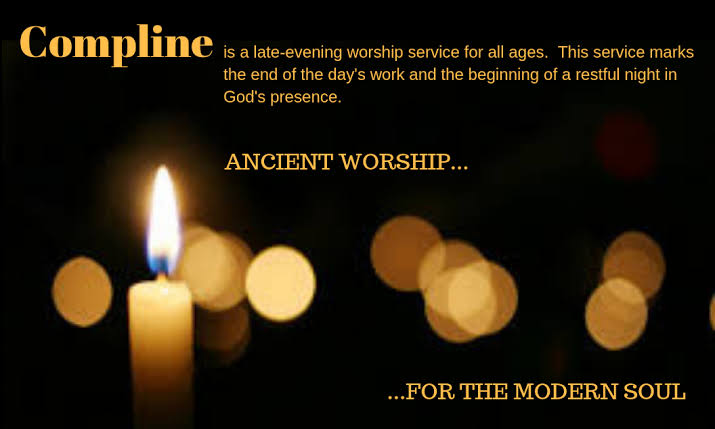
Since the early sixth century during the time of St. Benedict, the “Nunc Dimittis” has been sung in the monks’ night prayer or “compline” from the Latin completorium or completion of the working day. Eventually, it was adopted into the Liturgy of the Hours or the prayers of the Church usually recited by priests and religious. (St. John Paul II had suggested in his encyclical Novo Millennio Innuete after the Great Jubilee of 2000 that the lay faithful also pray the Liturgy of the Hours.)

After the praying of the psalms and meditation of the Sacred Scriptures, there is a Responsory that declares, “Into your hands, Lord, I commend my spirit.” Like Jesus before he died on the Cross, we offer to God our very selves. This is takes on a beautiful dimension especially if we have done a good examination of conscience at the start of the compline, before the psalms and readings.

Then, we recite the antiphon that introduces the Nunc dimittis: “Protect us, Lord, as we stay awake; watch over us as we sleep, that awake, we may keep watch with Christ, and asleep, rest in his peace.”

The antiphon in itself is already a prayer!

It is after the antiphon that we chant or recite Simeon’s Canticle:

Lord, now you let your servant go in peace; your word has been fulfilled: my own eyes have seen the salvation which you have prepared in the sight of every people: a light to reveal you to the nations and the glory of your people Israel.

From the Compline of the Breviary

The antiphon is repeated and immediately followed by the Closing Prayer.

The cross atop our parish church at night with the moon above taken with my iPhone camera, 02 February 2020.

Capping the compline is the blessing at the end that says: “May the all-powerful Lord grant us a restful night and a peaceful death. Amen.”

Usually, a hymn to Mary is sung, then all the lights are turned off and the great silence (magnum silencium) begins until the morning prayers or lauds (Latin for praise).

See how our night prayer or the compline is oriented towards meeting God, or to put it bluntly, towards death.

Yes, it is always easy to say we are ready to die. It is a lot whole different when we are already face to face with death itself.

But, when we come to think of it, we realize that indeed, in death, “there is nothing to fear but fear itself”.

When we die, everything happens so fast. We may not even feel anything at all. And unknown to us, every night when we go to sleep, we rehearse our death, so to speak!

And what a tremendous joy to keep in mind how every night, the Lord fills us with joy and faith within us even if we often forget him. Every night when we sleep, it is automatic within us to entrust everything to God “unconsciously” without even thinking we may never wake up!

It is a “Nunc Dimittis” experience too because most of us go to bed filled with joy, full of hope the following morning would be a better day than today. And that is Jesus still coming to us at the end of the day to assure us of his love and concern, never bothering us at all of this tremendous grace gratuitously given to us.

Next time you sleep, remember how blessed you are to have come to the end of another day, blessed and loved.

Pray, and start experiencing Jesus more from the beginning to the end of each day and forevermore. Amen.

“I Saw the Light” by Todd Rundgren (1972)

The Lord Is My Chef Sunday Music, 02 February 2020

Photo by Mr. Jim Marpa, Bohol, 2019.

Welcome, followers and readers to this Sunday edition of our The Lord Is My Chef Sunday Music as we feature a double-header from singer-composer Todd Rundgren: his first solid hit “I Saw the Light” and “Hello It’s Me” that are both from his 1972 album Something/Anything?

We are featuring two songs today because both are related with our celebration of the Feast of the Presentation of the Lord which falls on February second.

And besides, Todd’s music has always been my favorite while growing up in the 1970’s.

First, we choose I Saw the Light because it is very close to our liturgical feast today also known as Candlemass or Candelaria with Jesus Christ being the Light of the world. St. Luke tells us when Joseph and Mary brought the child Jesus to the temple in Jerusalem 40 days after Christmas, an old man of God named Simeon carried him in his arms and sang:

“Now, Master, you may let your servant go in peace, according to your word, for my eyes have seen your salvation, which you prepared in sight of all the peoples, a light for revelation to the Gentiles, and glory of your people Israel.”

Luke 2:29-32

Jesus is the Light of the world, the only one who can dispel all darkness in our lives.

In I Saw the Light, Todd tells us the story of a young man probably groping in some darkness in his relationship – actually a fling according to the song – with a girl and he does not know if that is really love.

Though we had our fling
I just never would suspect a thing
‘Til that little bell began to ring in my head
In my head
But I tried to run,
though I knew it wouldn’t help me none
‘Cause I couldn’t ever love no one, or so I said
But my feelings for you
were just something I never knew
‘Til I saw the light in your eyes
But I love you best
It’s not something that I say in jest
‘Cause you’re different, girl, from all the rest
In my eyes
And I ran out before but I won’t do it anymore
Can’t you see the light in my eyes

Meanwhile, in our second song Hello It’s Me, we find another man so in love with a woman who is also into some darkness.

Like in I Saw the Light, there is no recognition and hence, no meeting here in Hello It’s Me.

Hello, it’s me
I’ve thought about us for a long, long time
Maybe I think too much but something’s wrong
There’s something here that doesn’t last too long
Maybe I shouldn’t think of you as mine
Seeing you, or seeing anything as much as I do you
I take for granted that you’re always there
I take for granted that you just don’t care
Sometimes I can’t help seeing all the way through
It’s important to me
That you know you are free
‘Cause I never want to make you change for me

Both songs show us the important lesson taught to us by the Feast of the Presentation of the Lord: like anyone else, Jesus also comes but we on our part have to cultivate a relationship with him in order to always recognize him and eventually meet him to be one with him.

Just like the people we love.

Have a wonderful Sunday of prayer, food and drinks, and good music.

Recognizing, meeting, and sharing Jesus, the Light of the world

The Lord Is My Chef Sunday Recipe for the Soul, Feast of the Presentation of the Lord, 02 February 2020

Malachi 3:1-4 ><)))*> Hebrews 2:14-18 ><)))*> Luke 2:22-40

Photo by author of Baby Jesus at the Bishop’s Chapel, Malolos Cathedral, 07 January 2020.

We take a break from our Ordinary Sunday to celebrate today the Feast of the Presentation of the Lord at the temple, 40 days after Christmas. It is a prolongation of the celebration of the Lord’s Nativity with a paschal undertone recognizing Christ as Light who had come to us to lead us back to the Father through his Passion, Death, and Resurrection.

This feast used to be known in the East as the Ypapante or the Encounter of Jesus by the two elderly people at the temple, Simeon and Anna. When it reached Europe, it came to be known as the “Purification of the Blessed Virgin Mary” based on St. Luke’s description, evolving into Candlemass or Candelaria when Pope Sergius I in Rome adopted in the eighth century the French tradition of procession of lighted candles at dawn before the Mass to signify Jesus as the light of the world who had come to bring us back to the Father expressed by Simeon in his canticle.

“Now, Master, you may let your servant go in peace, according to your word, for my eyes have seen your salvation, which you prepared in sight of all the peoples, a light for revelation to the Gentiles, and glory for your people Israel.”

Luke 2:29-32

Despite its evolution through the ages with its many names and practices, the Feast of the Presentation of the Lord is a good reminder to us in recognizing, meeting, and sharing Jesus Christ to everyone as the light of the world.

Photo by author of a view from the Temple of Jerusalem, May 2017.

Being devout leads us to recognize and meet Jesus

Only St. Luke reports the story of the Presentation of Jesus at the temple because he wanted to show his audience who were Gentiles or pagan converts that Jesus came not only for the Jews but for everyone.

This remains true to us especially in these modern times when people live in artificial lights and “Klieg lights” that put us on the centerstage only to leave us later groping in the dark, even blinded to false hopes of virtual realities.

St. Luke invites us today to emulate both Simeon and Anna in recognizing and meeting Jesus, the only Light of the world who dispels darkness within and around us.

Now there was a man in Jerusalem whose name was Simeon. This man was righteous and devout, awaiting the consolation of Israel, and the Holy Spirit was upon him. It had been revealed to him by the Holy Spirit that he should not see death before he head seen the Christ of the Lord. He came in the Spirit into the temple; and when the parents brought in the cild Jesus to perform the custom of the law in regard to him, he took him into his arms and blessed God.

Luke 2:25-28
“Simeon’s Moment” by American illustrator Ron DiCianni. From http://www.tapestryproductions.com

Recall how during our Simbang Gabi that for the Jews, a “righteous” person is someone who is holy because he faithfully keeps the Laws of God like St. Joseph, the husband of Mary.

But more than being holy and just, St. Luke also described to us Simeon – as well as Anna implicitly – as “devout” Jews. It is a word rarely used in the Bible. In fact, St. Luke used it only four times: once here in this scene and thrice in the Acts of the Apostles.

In Acts 2:5, St. Luke called the Jews who came to Jerusalem for Pentecost as “devout” ones; then in 8:2, he said “devout men buried” the first martyr of the Church, St. Stephen; and finally in 22:12, he gave the distinction to Ananias as “a devout observer of the law” who came upon instructions from God to pray over and heal Saul who was blinded by Christ’s light on the way to Damascus.

In all four instances, St. Luke described people as “devout” including Simeon and Anna as those of “good heart, ready to believe, and then to act openly and with courage” (Timothy Clayton, Exploring Advent with Luke; page 125). Devout people or devoted persons are a notch higher than just being faithful because they do not merely wait but look forward to the fulfillment of what they believe.

Devoted people make things happen; they do not wait for things to unfold. And that is why they are always at the right place in the right time. Like Simeon and Anna, they give themselves to God wholly to stay attuned with the Holy Spirit and be ready to follow its promptings and leads.

Anna meeting Jesus from catholicfunfacts.com.

See the common trait of both Simeon and Anna as devout people — the presence of the Holy Spirit in them that amid the crowd in the temple on that day, they were able to spot the Child and Savior Jesus Christ being presented by his parents Mary and Joseph!

There was also a prophetess, Anna, the daughter of Phanuel, of the tribe of Asher. She was advanced in years, having lived seven years with her husband after her marriage, and then as a widow until she was eighty-four. She never left the temple, but worshipped night and day with fasting and prayer. And coming forward at that very time, she gave thanks to God and spoke about the child to all who were awaiting the redemption of Jerusalem.

Luke 2:36-38

Jesus comes to us everyday in various ways, in many occasions. He is always passing by, calling us. We have to be on guard in these moments so that we do not miss him. Like reporters following the news, we have to be focused or “tutok” and immersed or “babad” so that nothing or no one escapes us.

Three ways of being devout like Simeon and Anna

It is imperative that we have to be devout first with God so that we recognize and meet his Son Jesus Christ coming to us so we may eventually share him to enlighten everyone. Simeon and Anna show us three important things to keep for us to be devoted to God to encounter Jesus Christ.

First, we have to be faithful in our prayer life. There is no other way in meeting Christ except in having a life of prayer which is a discipline. It is something we do as a habit, every day, every night. Not just once a year like those going to Quiapo every January 9 or completing any novena and then the whole year does nothing.

Devotion is more than collecting images of Jesus, the Virgin Mary, and the saints, joining processions during fiesta or Holy Week, then nothing. Devotion is life, not a show.

Like Simeon and Anna, we have to grow intimately with the Lord by cultivating personal prayers and joining communal activities like the Sunday Mass so that we may know personally and vibrantly God who always leads us to various directions and mission. God is never static but dynamic, unlike us people who keep on insisting on some of our traditions and ways no longer applicable.

Notice how in the first reading the Prophet Malachi said the Lord will suddenly come in the temple, calling on people to always await him (Mal.3:1).

The Old Jerusalem from the inside of the Church of Dominus Flevit (The Lord Cried) at the Mount of Olives, Jerusalem. Photo by author, May 2017.

Second, we can only recognize, meet and share Jesus Christ as Light when we care, love, and respect others. See how Simeon spoke to Mary about his coming mission and its harsh realities. He recognized not only Jesus but also Mary and Joseph. Simeon’s speaking to Mary and Joseph means he recognized the important roles of the parents in being instrumental that he met the Lord.

Any devotion to God and his saints and the blessed Mother Mary without any concern for the people especially the poor and the needy is merely a show and a pageantry of clerical and liturgical excesses. It is triumphalism in its purest sense and hypocrisy at its worst.

We meet Jesus among other people not only within us. This is the gist of the author of the Letter to the Hebrews today when he claimed how Jesus suffered and endured sufferings and death to help those facing trials and tests in life.

Third, we can only recognize, meet, and share Jesus Christ as Light when there is joy in our hearts. And not just being joyful but overflowing with joy like Simeon and Anna that upon encountering the Child Jesus, the more they felt eager to share the good news with others. In fact, they were overjoyed that they even felt so ready to die.

Our parish church on a Sunday afternoon. Photo by Angelo Nicolas Carpio, 12 January 2020.

Fruit of devotion is finally embracing Jesus Christ

Every night before we priests and religious pray Simeon’s Canticle in our Compline (Night prayer), we recite a responsory that says, “Into your hands, Lord, I commend my spirit”. And after that, the antiphon: “Protect us, Lord, as we stay awake; watch over us as we sleep, that awake, we may keep watch with Christ, and asleep, rest in his peace.”

It is only then that we recite or chant Simeon’s Canticle or Nunc Dimittis. It is then followed by the final prayer closed with a blessing that says, “May the all-powerful Lord grant us a restful night and peaceful death. Amen.”

Without sounding morbid or anything, it is my most favorite prayer of all our prayers because it is filled with joy, filled with Jesus, filled with Light. At the end of the day, what a consolation to be filled with joy of Christ that you have had a glimpse of him that you rest in peace hoping to meet him again as well as share him with others too.

I think it is only when we are overflowing with joy that we realize its fullness is found only in Christ, whether in this life or in eternal life. Amen.

Blessed Sunday to you!

Meeting Christ, the Light of the Nations

presentationtemple
14 Giotto Presentation of Christ in the Temple 1310s Fresco North transept, Lower Church, San Francesco, Assisi….Web Gallery Of Art

The Lord Is My Chef Special Recipe, 02 February 2019
Feast of the Presentation of the Lord at the Temple
Malachi 3:1-4//Hebrews 2:14-18//Luke 2:22-40

            Here’s good news to those who have not yet removed their Christmas decors:  today’s Feast of the Presentation of the Lord is the actual end of Christmas Season when the Child Jesus was presented at the Temple in Jerusalem 40 days after Epiphany.  According to this tradition, it is also on this day when the Vatican removes its giant Christmas tree at the St. Peter’s Square.   And so, after this day and you still have your Christmas tree and other decors hanging, then you must be a certified slob or simply one who refuses to move on to meet Jesus Christ.

            Today’s feast has many names because it has many facets.  This was first celebrated in Jerusalem in the early year 300 as “the Feast of Presentation at the Temple” based on the Gospel account of St. Luke we have heard earlier.  The Syrians adopted the feast 300 years later, reaching the seat of the Eastern Church in Constantinople where it came to be known as “the Encounter” or Ypapante in Greek, emphasizing the “meeting” of the Savior and the two elderly people, Simeon and Ana.  At about that same time in Rome, Pope Sergius I adapted the same feast from Jerusalem with a procession of lighted candles to show Jesus as the “light for revelation” to Simeon and everyone.  When it reached France in the year 800, the French adapted it further with a new designation as “Feast of the Purification of the Blessed Virgin Mary” or“Chandeleur” which came to be known as “Candlemass” in English-speaking countries and “Candelaria” in Spain and her colonies like the Philippines.  Over a thousand years later in 1969 during the Vatican II reform of the liturgy, the Church decreed it to be known in its original name, Feast of the Presentation of the Lord.

            That’s the beauty of our Catholic faith when certain feasts evolved depending on the various emphases of the many periods in history yet remaining true to its very essence who is Jesus Christ our Savior and Son of God.  Anyone who truly meets or encounters Jesus is always enlightened by Him to meet Him among other peoples.  Recall how we started the celebration with the paschal candle also at the entry to our church.  It is the same paschal candle we have lighted and blessed during the Easter Vigil last year to symbolize the risen Christ lighting our path of salvation.  Today in our procession, the light of Candlemass announces that paschal candle:  inasmuch as we celebrate today the presentation of Jesus at the Temple by His parents, 33 years later or a little more than two months from now, Jesus would be back in Jerusalem to offer – or present – Himself to the Father in fulfilling His pasch or Passion, Death, and Resurrection.  This is the meaning of Simeon’s beautiful canticle we all sing at bedtime:  “Now, Master, you may let your servant go in peace, according to your word, for my eyes have seen your salvation, which you have prepared in sight of all peoples, a light for revelation to the Gentiles, and glory for your people Israel” (Lk. 2:29-32).

            Jesus is the light of the nations – lumen gentium – or light of men or peoples because He enables us to see the face of every human being as a brother and a sister in Him.  How sad that this human face has so often been disfigured, trying to hide or even remove the face of Christ in whose image we have all been created.  Imagine how Simeon and Anna were able to recognize Christ among the many infants being offered that day at the Temple in Jerusalem because both have always been opened with God.  We can never meet God unless we also meet others as brothers and sisters.  Remember during our Simbang Gabi how we reflected about true holiness through St. Joseph who always found God in everything so that upon learning Mary’s pregnancy, he decided to divorce her silently so as not to put her into shame.  But upon learning from an angel in a dream the circumstances about her pregnancy, St. Joseph took her as wife and Christmas happened with him standing as the Lord’s legal father.  When Joseph saw God in Mary, Jesus came; when he saw Jesus coming, Joseph accepted Mary.  That is the light of Candlemass when we are able to see God in each one’s face – most especially among our senior citizens.

            In a society where old age is seen like a disease with ads telling everyone to “arrest ageing”, giving so much premium on being young and looking young so glorified in media, we all fail to see the significance of this stage in life.  Worst, we abhor it, refusing to talk about it as if it is a curse.  Wrong!  Actually, most of the people God called for His mission in the Old Testament were mostly old people starting with Noah and Abraham as well as Moses who all performed great wonders for Him in their advanced ages!  Today’s gospel is no exception as it invites us to see Christ among our elderly brethren in the church and community, especially in the family whom we often take for granted.  See how St. Joseph and Mary shared Jesus with Simeon and Anna.  In 1999, St. John Paul wrote a letter to his fellow elders, saying that “The line separating life and death runs through our communities and moves inexorably nearer to each of us.  If life is a pilgrimage to towards our heavenly home, then old age is the most natural time to look towards the threshold of eternity (14).”

             Today’s Feast of the Presentation of the Lord at the Temple reveals to us the mystery of every encounter with God is often preceded with an encounter with another person, even strangers.  Every encounter with God is often verified by our encounter with others because through them, we experience that “invisible line” that seems to bind all of us as one big family.  And this is most true when we encounter the elderly people, especially those who have “aged gracefully” who often confirm with us the presence of God in our lives which they have already started to experience.  Every encounter with an elderly is an encounter with Jesus Christ because it is a prelude to our final encounter with Him in eternity.  And all these encounters are made possible by the grace and light only of Jesus Christ.  Remember:  the moment we are able to recognize the face of the person next to us as the face of a brother and sister in Jesus Christ, then we are sure that darkness has ended and day has begun.  Amen.  Fr. Nicanor F. Lalog II, Parokya ng San Juan Apostol at Ebanghelista, Gov. F. Halili Ave., Bagbaguin, Sta. Maria, Bulacan.

Photos from Google.

protectusolord