The Lord Is My Chef Breakfast Recipe for the Soul
by Fr. Nicanor F. Lalog II
Tuesday, Fifth Day in the Octave of Christmas, 29 December 2020
1 John 2:3-11     >><)))*>  +  <*(((><<     Luke 2:22-35
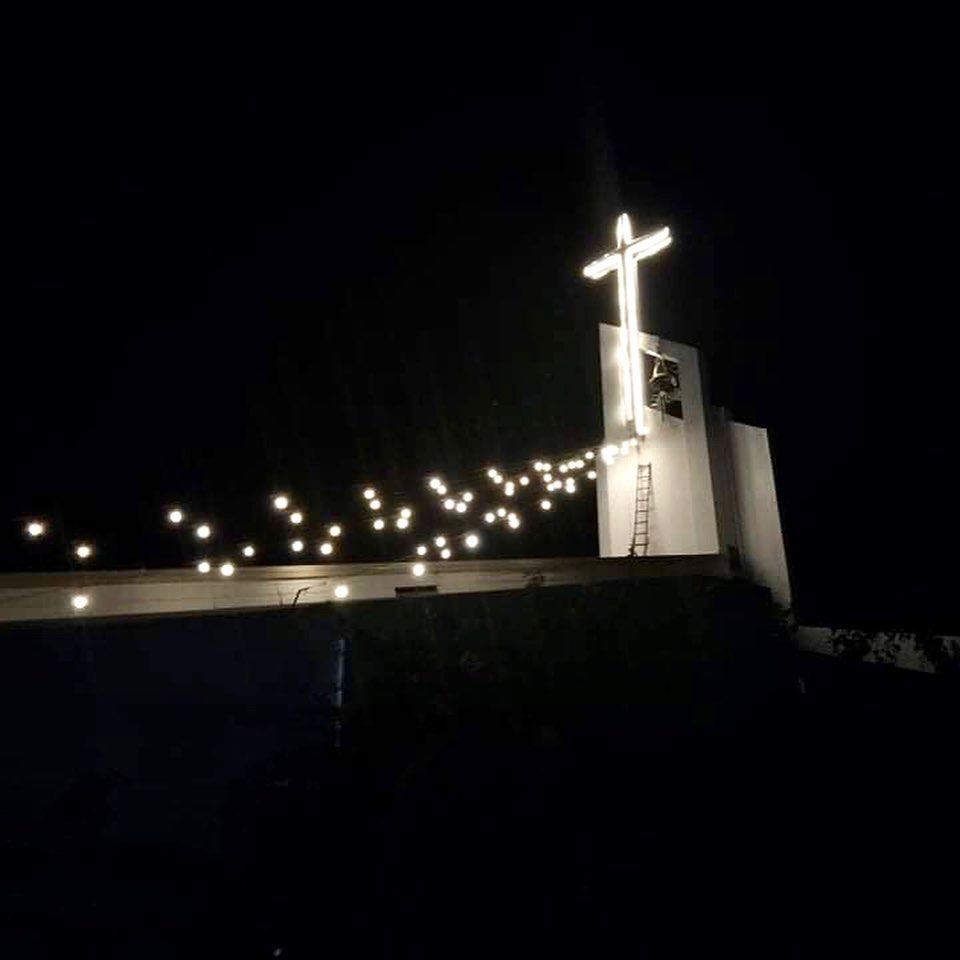
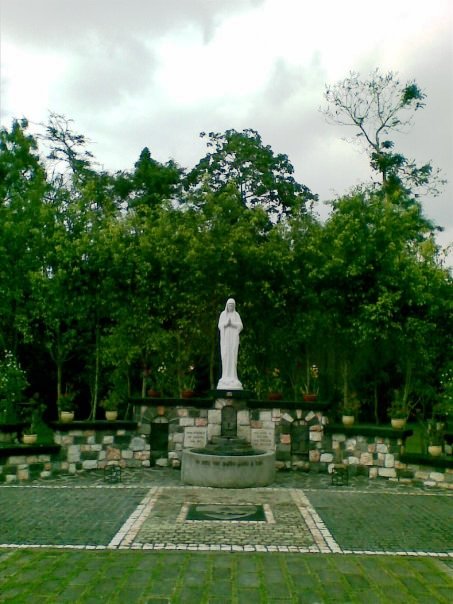
Photo by Mr. Marc Angelo Nicolas Carpio, 06 December 2020.
As we leave 2020 and approach the new year, we pray dear Jesus to let us walk and live in your light of love. Your beloved disciple is right in saying that it is not enough that we know you in our minds, in our intellect; that we must keep most of all your commandments.
Whoever says he is in the light, yet hates his brother, is still in the darkness. Whoever loves his brother remains in the light, and there is nothing in him to cause a fall. Whoever hates his brother is in darkness; he walks in darkness and does not know where he is going because the darkness has blinded his eyes.
1 John 2:9-11
How sad, O Lord, that these days everybody is claiming to be speaking of the truth, of having the light, of knowing you and yet all they do is spread lies and animosities among people, instead of bringing together they draw us apart from each other.
And worst, is how many of those in authorities disregard the laws of the land, selecting only to follow whatever suits their personal needs and agenda.
We pray, O Lord, to please end this darkness looming above us. Enlighten the perpetrators and supporters of all these lies and inanities being spread by those in powers.
Purify us with your light and law of love, of loving like you even if we have to suffer and die for what is true, just, and good.
Give us the courage to abide always in you, sweet Jesus, to remain faithful to what is true and just. Amen.
Quiet Storm by Fr. Nicanor F. Lalog II, 28 December 2020
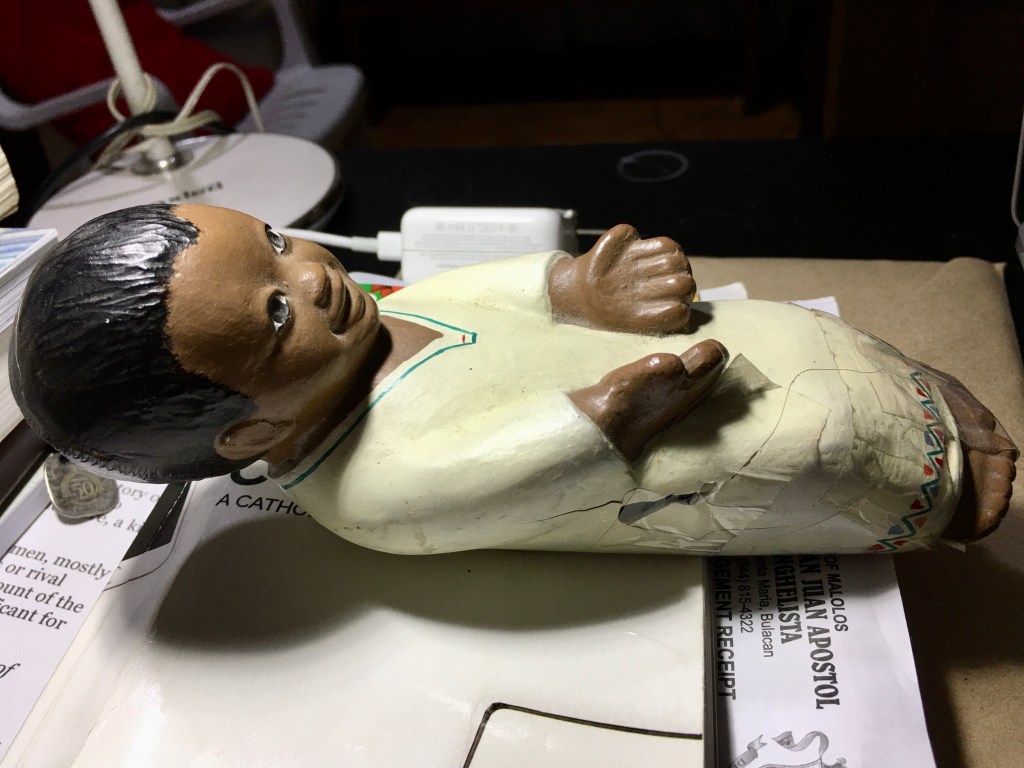
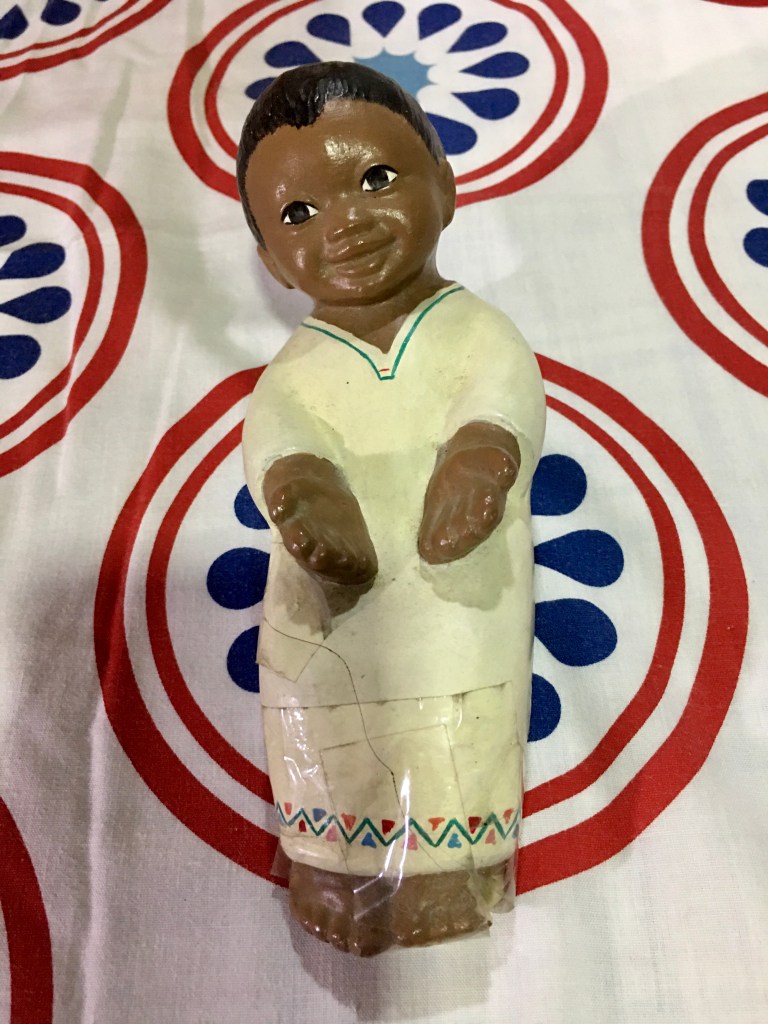
Photo by author, 28 December 2020.
“Welcoming Jesus”.
It is not really the title of this piece but the name of this image of the baby Jesus above.
See His smiles and open hands with eyes exuding with warmth and joy to anyone who sees Him. Even with the dusts and cracks held intact by scotch tapes, it is one of my most loved and cherished possessions I would never trade for anything.
Given to me by a brother priest in Christmas 2017, Welcoming Jesus measures about eight inches and seems to be Mexican or African inspired with his dark skin and lively colorful design of baby dress. I have always loved this Baby Jesus who seems so alive that I have kept Him on my desk, giving me so many inspirations and “kicks” in my studies in the past three years.
Small and handy, and so fragile, I have always imagined Him to be just like the infant Jesus when He was born in Bethlehem more than 2000 years ago.
As I turned off my lamp last night before retiring, I saw Him, smiling and yes, “welcoming” to remind me of a story I have read ten years ago about St. Mother Teresa of Calcutta, India when one of their patients threw to her a crucifix in a fit of tantrum. After pacifying the patient, St. Mother Teresa picked the crucifix and pieced together with a scotch tape an arm of Jesus that was broken. She then gave it to one of her nuns with instructions to hang it again on their wall with a note that says, “Let me heal your broken arm”.
In the same manner, as I looked onto my little image of “Welcoming Jesus”, I felt it my Christmas message for 2020 as we celebrate Holy Innocents’ Day: “Let me show you tenderness, Baby Jesus.”
If there is one thing we all need at this time of the pandemic, this Christmas 2020, it must be tenderness. Like the tender compassion of God, His mercy.
Tenderness is being merciful, being soft in the heart in a very positive sense. Some people think that being tender, being merciful and forgiving is a sign of weakness; on the contrary, it is pure power and strength.
The former US President Theodore Roosevelt who was a military officer before getting into politics used to tell that in any argument or discussion, the first to use one’s fist is always the one with less intelligence, less power who resort to force because they have ran out of reasons to argue.
Very true! Exactly with that off-duty cop who brutally shot and killed mother and son in Paniqui, Tarlac whose tiny brain could not control his humongous body much less understand everything that was going then.
Mercy and tenderness, like courage, are movements within the heart. The Latin word for mercy perfectly captures its meaning: misericordia or a stirring of the heart, a moving of the heart. More than a feeling, it is taking concrete actions to bow down and be one with those suffering.
That is why the Son of God became human, chose to be born as an infant like everybody else, to be one with us, to suffer with us, that is, compassion from cum and passio, to suffer with.
The eminent theologian Fr. Hans urs Von Balthasar, a good friend of Pope Emeritus Benedict XVI, wrote before he died that “the central mystery of Christianity is our transformation from a world-wise, self-sufficient ‘adults’ into abiding children of the Father of Jesus by the grace of the Holy Spirit. All else in the Gospel – the Lord’s Incarnation, his hidden and public lives, his miracles and preaching, his Passion, Cross, and resurrection – has been for this” (Unless You Become Like This Child).
A baby is always welcoming to almost everyone, and vice versa, anyone even the most hardened criminal would always welcome and be moved by the sight of a baby or a child.
How sad that until now, there are still King Herods among us who are insecured with children and infants. Worst are those who abuse and molest children, the single most damning crime by some in the clergy this century because it is directly opposite the central theme of Christ’s teachings and warning – “See that you do not despise one of these little ones, for I say to you that their angels in heaven always look upon the face of my heavenly Father” (Matt.18:10).
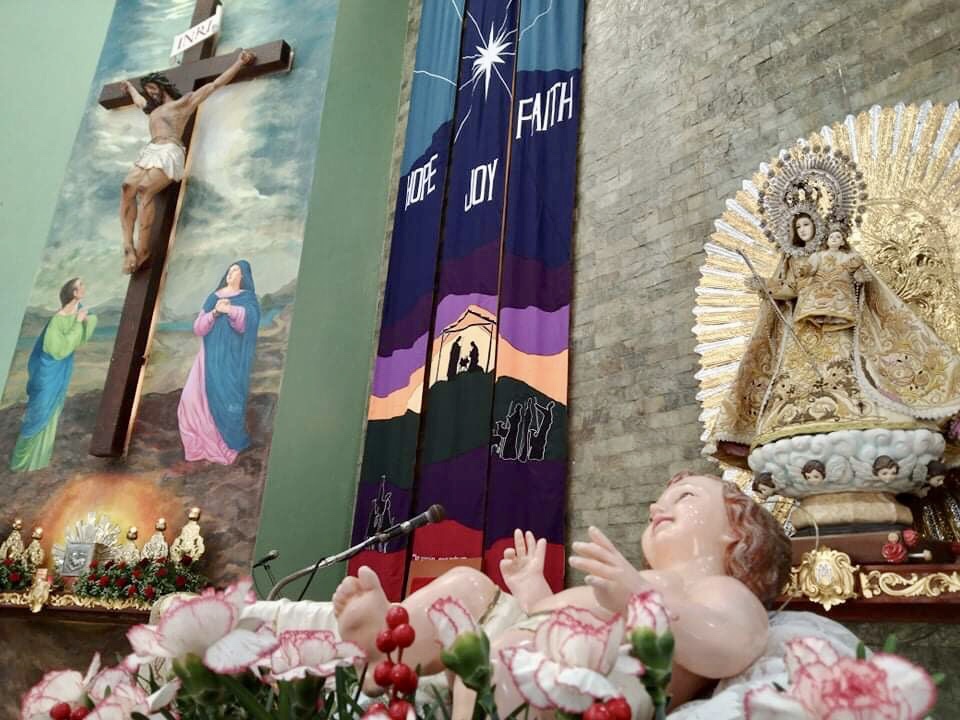
Photo by Mr. Marc Angelo Nicolas Carpio, Baby Jesus in our Parish, Christmas 2020.
Due to COVID-19 pandemic, for the first time in our churches, the traditional kissing (pahalik) of the image of the Baby Jesus is scrapped. Perhaps it is a good reminder to us all to meditate more in our hearts the meaning of Jesus being born an infant – so weak, so dependent to adults like us.
It is a call for us too to do something concrete about the many sufferings children have to go through in this time, on one end those denied of basic goods and services while on the other extreme are the children with all the material needs except the warmth and love of their parents.
One saint I have discovered before our ordination more than 20 years ago is St. Charles de Foucauld, a French priest who lived among the Tuaregs of the Sahara desert in the early 20th century. In his room, he always had a baby Jesus and an altar for the Blessed Sacrament to adore daily.
His core value is founded on “littleness” – of finding Jesus among the little ones, of being little before the Lord.
Have that tender care that expresses itself in the little things that are like a balm for the heart… With our neighbours go into the smallest details, whether it is a question of health, of consolation, of prayerfulness, or of need. Console and ease the pain of others through the tiniest of attentions. Be as tender and attentive towards those whom God puts on our path, as a brother towards brother or as a mother for her child. As much as possible be an element of consolation for those around us, as soothing balm, as our Lord was towards all those who drew near to him.
St. Chrales de Foucauld
What a beautiful reminder of the Child Jesus this Christmas and hereafter. If we can be tender with one another in the most minute detail like Jesus, then we can truly experience His coming to us, fulfilling us with His presence and love which is the spirit of Christmas. Amen.
The Lord Is My Chef Breakfast Recipe for the Soul
Monday, Feast of the Holy Innocents, 28 December 2020
1 John 1:5-2:2   >><)))*> + >><)))*> + >><)))*>     Matthew 2:13-18
Photo by Ms. Janine G. Lloren, metal engraving of the flight to Egypt by the Holy Family on one of the doors of a church in Florence, Italy taken in 2015.
In this time of COVID-19 pandemic with news of a new and more vicious strain possibly now spreading, I have come to realize this Christmas how you also went through worst scenarios during your birth and infancy.
From the moment of your birth, Lord, you have experienced so much dangers and uncertainties just like us today with many women giving birth in harsh and hostile situations like in the middle of an armed conflict or in a refugee camp, or maybe while being held hostage in human trafficking.
When I imagine how difficult it must have been during your time when you fled to Egypt because of Herod’s murderous ways, I feel so sad at how things have not really changed yet, of how such things continue to happen daily in so many parts of the world.
But with your coming, Lord Jesus, though there are still those dark clouds looming above us as Pope Francis had noted in his latest encyclical, hope and joy abound.
Beloved: This is the message that we have heard from Jesus Christ and proclaim to you: God is light, and in him there is no darkness at all.
1 John 1:5
So consoling are the words of your beloved disciple, Lord! Let your light shine on us! May our love and kindness to one another dispel the many darkness around us specially this year. And yes, forgive us too, Lord Jesus, at how we have been “treating” and calling this year 2020 with so many taunts and ridicules.
If there is one thing we have always been good at, it is the blaming game – we keep on blaming others except ourselves. Like Herod. At such great costs.
As we near the closing of this year, help us to remember how with your coming you have sanctified and made us all holy like you. Each year is always a blessed and good year from you. It is us who make it so bad, so defiled. We caused this pandemic. Long before it came, we have been distant from one another, have always washed hands, refusing to take a stand for what is true and just. Most of all, we have stopped looking at each other’s face to see you again.
May this pandemic be an “Egypt” for us all —- a time to pray and reflect about your light and coming, Lord Jesus. Amen.
The Lord Is My Chef Recipe for the Soul by Fr. Nicanor F. Lalog II
27 December 2020, Feast of St. John the Apostle and Evangelist, Patron of our Parish
1 John 1:1-14  >><)))*> John 20:2-8
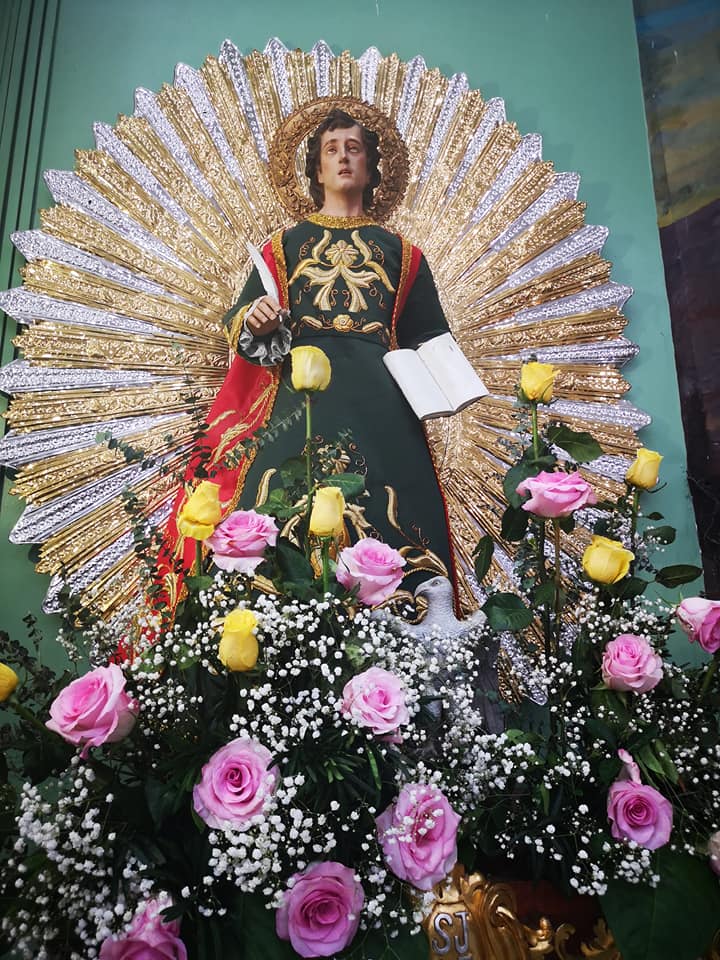
Our Parish Patron, the beloved disciple of the Lord, St. John the Apostle and Evangelist (Photo by Ms. Jo Villafuerte, Sept. 2018).
Today we celebrate in our Parish the feast of our Patron Saint, John the Apostle and Evangelist also known as “the beloved disciple of the Lord”. Although it is a Sunday in the Christmas octave when the Feast of the Holy Family is celebrated by the universal Church, parishes and dioceses with the beloved disciple as patron as exempted. Perhaps, it is St. John’s gift to me before I move to my new assignment in February next year that I celebrate his feast for the last time this Sunday.
I tell my parishioners to love St. John; that is their first task as parishioners, to love and support their Patron Saint. Moreover, I have always stressed to them how St. John the Apostle is so special, and not an ordinary saint or Apostle. Next to his being the beloved disciple of Jesus, he is the only Apostle to have not died a martyr but grew old to witness the growth of the Church; he was the one who took care of the Blessed Virgin Mary as per instruction by the Lord Himself before He died on the Cross on Good Friday; and though there are only a few parishes dedicated to him, mostly are Cathedrals like the one at Dagupan-Lingayen in Pangasinan, at Naga City in Camarines Sur, and of course, the Cathedral of Rome, the St. John Lateran, the Mother of all churches in the world.
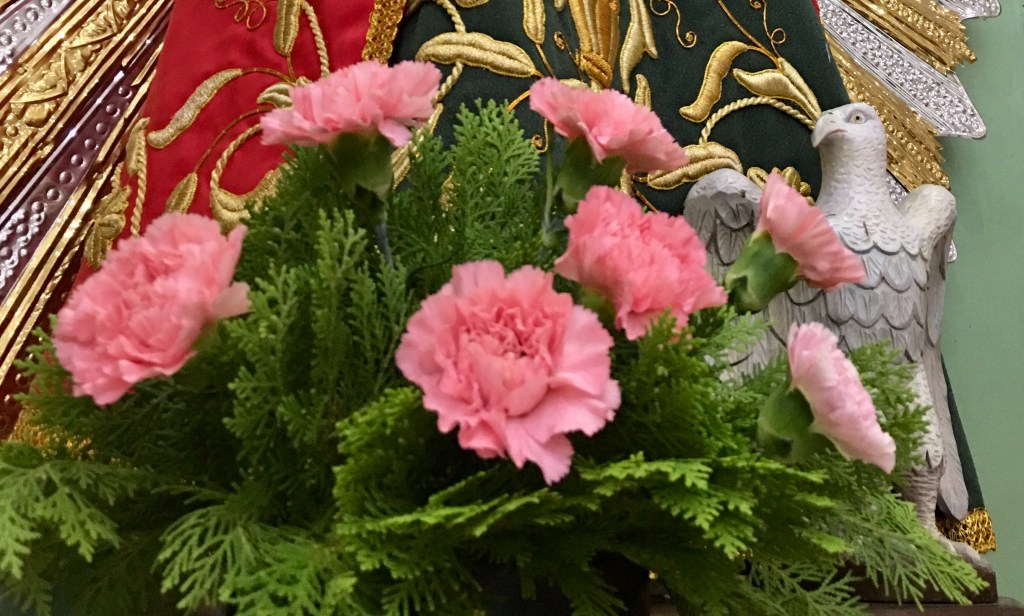
He is often symbolized by the eagle for his sharp and incisive way of looking at things and events in the life of teachings of Jesus that he is the only one able to tell us about the wedding feast at Cana, the man born blind, the raising of Lazarus as well as the more detailed account of the teachings after the feeding of five thousand people.
The great American writer Helen Keller, a blind woman, said it so well, “The only thing worse than being blind is having sight but no vision.”
I wish to reflect on that vision of St. John, on what had he seen in our Lord Jesus that hopefully we may always try to look into in our own lives.
Photo by author, Gaudete Sunday 2020.
Seeing Jesus, a real man among us
I used to say in my wedding homilies that women should always look for men who not only has sights but also vision. We all have sights but not everyone has a vision, the ability to see and look beyond what is on the surface, on what can only be seen but also perceived further.
St. John the Evangelist had a great vision of who Jesus Christ is. No wonder towards the end of his life while a prisoner at the island of Patmos off Greece, the Lord offered him a vision of heaven which he had recorded to us in the most difficult book of the Bible, the Revelation; his other four writings, the Gospel and three letters are also difficult to understand due to the different layers of meaning that only the beloved disciple was able to perceive.
Such is the kind of the vision of St. John said to be like the eagle, believed to be the only creature that can stare directly into light without getting blinded — very sharp and keen, as we say in Filipino, “matang-lawin” or eagle sight.
Being the only Apostle of the Lord to have grown old and spared from dying a martyr like the rest, St. John witnessed the first errors or heresies of early Christians concerning the humanity of Jesus Christ. They could not accept the Son of God took on a genuinely human body so that in a mistaken zeal for spirituality, they condemned everything material as evil, claiming the humanity of Jesus was just an appearance. As a result, these heretics like the gnostics taught that to be fully united with God meant to withdraw as much as possible from everything material.
St. John wrote his letters primarily to address this wrongful and erroneous views (which would persist for 400 years, still echoing in our present time), insisting that Jesus Christ is true God, and true man. We have heard him declare that on Christmas day when his prologue was proclaimed when he claimed “the Word became flesh and dwelled among us” – that Jesus Christ fully entered into our humanity and material condition by blessing and making it holy!
Today St. John insists on this contact with the real, bodily Jesus, repeating the words “seen” and “visible” about five times in four verses, emphasizing contact with a real, bodily Christ.
What was from the beginning, what we have heard, what we have seen with our eyes, what we looked upon and touched with our hands concerns the Word of life — for the life was made visible…
1 John 1:1-2
Here we find what St. John tells us also after the Resurrection in his gospel account how Jesus invited the doubting Thomas to touch and feel him, “Put your finger here and see my hands, and bring your your hand and put it into my side, and do be unbelieving, but believe” (Jn.20:27).
It is this physical, truly human, touchable Jesus that the Church proclaims every Christmas. Yet, how tragic that through the ages, we in the Church had always had that tendency to withdraw from the material that perhaps had led to so many problems with the human body and sexuality so that we have all these sex scams happening even long before.
Part of the mystery of the Incarnation is for us to be at home with our humanity like Jesus our Lord because everything God had made is good. Mention SEX, even in seminaries or Catholic schools, you hear for sure that rising crescendo of whispers and impish laughters.
Everything that God made is good. That is why Jesus became human to show us it is good to be a human being, it is the path back to God, into heaven. If we cannot accept Jesus as truly human, how can we truly love God whom we do not see? Hence, we find this beautiful flow of reason and reflection of St. John in his first letter:
No one has ever seen God. Yet if we love one another, God remains in us and his love is brought o perfection in us. God is love, and whoever remains in love remains in God and God in him. We love because he first loved us. If anyone says, “I love God,” but hates his brother, he is a liar; for whoever does not love a brother whom he has seen cannot love God whom he has not seen.
1 John 4:12, 16, 19-20
Photo by Mr. Marc Angelo Nicolas Carpio, Christmas 2020.
In short, to love God and to love others, we must first love our very selves, accept our “human-ness” like Jesus, a real man in everything except sin. The more we accept each other, the more we “see” God among us as a community, as a Church, the Body of Christ.
The Church, the Body of Christ
This vision of the Church as the body of Christ by St. John came from the empty tomb of Jesus at Easter, when the Lord was paradoxically not in sight!
When Simon Peter arrived after him, he went into the tomb and saw the burial cloths there, and the cloth that had covered his head, not with the burial cloths but rolled up in a separate place. Then the other disciple also went in, the one who had arrived at the tomb first, and he saw and believed.
John 20:6-8
What did our Patron Saint “see” that he believed, not like Simon Peter who was the leader of the Apostles?
Photo by author, August 2020.
This is the best example of St. John’s vision, of seeing beyond the physical, of seeing the significance of the folded cloth that covered the Lord’s face that has its basis in the story of Moses who had to put on a veil whenever he would converse with God face to face (cf. Exodus 34) due to the immense brightness of God, of His overwhelming presence. This the Israelites have seen every time after Moses had spoken with God, his face shone so brightly.
With the cloth that covered the head of Jesus folded and separated from the burial cloths, it meant that Jesus had met the Father, the veil to cover His face was no longer needed.
At that instance, everything became clearer for St. John – from the cleansing of the temple to His conversations with that Samaritan woman at Jacob’s well – convincing him that Jesus had risen to new life, to new level of existence. Years later, we find Jesus appearing to Saul on his way to Damascus, asking him, “Saul, Saul, why are you persecuting me?(Acts 9:1-5)” to indicate that whatsoever you do anyone, you do unto Jesus (Matt. 25:40).
In His glorified body, we are now able to look at God also in the new body of Jesus, the Church. It is in this aspect that we have to learn so much from the beloved disciple, St. John. Our lack of any sense of community like the collective effort in stopping the spread of COVID-19 shows of the great need for us to have wider and sharper vision of Jesus among us especially in the Church. May we strive to love more Jesus to find Him in our humanity. Amen.
Photo by author, Malolos Cathedral, September 2020.
Lawiswis ng Salita ni P. Nicanor F. Lalog II, Ika-25 ng Disyembre 2020
Larawan kuha ni G. Marc Angelo Nicolas Carpio, Pasko 2020 sa aming parokya.
Pasko na naman.
Yan palaging sambit ng karamihan
minsan hindi maintindihan
palaging inaabangan
pero kapag nariyan na
parang tinatabangan
inaayawan
maski kinaiinisan.
Kapag natutuwa, nakangiti mga labi
sabay sabi, "(Yehey!) Pasko na namann!!!"
Pero kung nagagalit, mata'y nanglilisik:
"Pasko na naman!?!"
Kapag nagtataka, nagugulat,
mabilis pagbigkas, sa dulo umiigkas
"Pasko na naman???"
At kung walang pakialam,
malamlam mukha, halos ibulong
"Pasko na naman."
Larawan kuha ni G. Marc Angelo Nicolas Carpio, Pasko 2020 sa aming parokya.
Iisang pangungusap
nababago dating
kung saan ang diin
kung bigkasin
batay sa damdamin
nababago ibig sabihin
ngunit kahulagan
at aral nananatili pa rin.
Hindi maililihim
sa likod ng mga katagang
"na naman"
nararamdaman
panghihinayang, pagsisi
tila mayroong gustong aminin;
ang iba naman pilit walang kibit
dahil sa sakit at pait na sinapit
kunwa'y walang pakialam
Pasko kinakalimutan.
Larawan kuha ni G. Marc Angelo Nicolas Carpio, Pasko 2020 sa aming parokya.
Pasko ay higit pa sa petsa
pera, damit at mga regalo
magarbong pagsasalo-salo;
Pasko ay pagparito sa mundo
ng Diyos na nagkatawang-tao
pangalan ay Jesu-Kristo
upang iligtas tayo
mahango sa pagkakasala.
Mababago pagbigkas
pagbati ng "Maligayang Pasko"
ngunit kahulugan mananatili
magpakailanman
ang pag-ibig na walang hanggan
ng Diyos na atin unang nagmahal
gumawa ng paraan
kaya sumilang sa sabsaban
sa ilalim ng malaking kadiliman
Kanyang Anak upang tayo samahan, damayan!
Larawan kuha ni G. Marc Angelo Nicolas Carpio, Pasko 2020 sa aming parokya.
The Lord Is My Chef Christmas 2020 Recipe for the Soul by Fr. Nicanor F. Lalog II
“The Adoration of the Shepherds”, a painting of the Nativity scene by Italian artist Giorgione before his death at a very young age of 30 in 1510. From wikipediacommons.org.
A blessed Merry Christmas to you, my dear Reader! As I have been telling you these past weeks, this Christmas may be the bleakest and saddest we have in our lifetime due to the pandemic but at the same time it may be our most meaningful of all. Consider the following:
We may have less material things this Christmas, but we have more spiritual values
like faith, hope, and love along with kindness, compassion, and tenderness;
We may have less of ourselves but finally, we have more of others,
especially family;
 Most of all, we may have less of all the trimmings of the season
to have more of the Reason, Jesus Christ our everything!
Last Holy Week and Easter, I have told you that while we were so sad in the midst of a strict lockdown when COVID-19 hit us so bad, Jesus must be more sad than us with what we were going through at that time.
However, while many of us may still be sad this Christmas, Jesus must be happy not for our misery but because finally, He can have us completely as we continue to learn the many lessons of the pandemic, of finding the more important and essential and valuable in life.
But, can He finally have us completely this Christmas 2020 and hereafter?
How sad and alarming that after nine months in the pandemic, many of us have gone back to our old ways of not praying, not celebrating Sunday Mass, and worst, still emotionally distant from God and others.
Photo by author, Christmas 2019.
Christmas is Jesus reminding
us life is precious because it is fragile;
He came to us an infant born in precarious
situations like us.
In those days a decree went out from Caesar Augustus that the whole world should be enrolled. This was the first enrollment, when Quirinius was governor of Syria. So all went to be enrolled, each to his own town. And Joseph too went up from Galilee from the town of Nazareth to Judea, to the city of David that is called Bethlehem, because he was of the house and family of David, to be enrolled with Mary, his betrothed, who was with child. While they were there, the time came for her to have her child, and she gave birth to her firstborn son. She wrapped him in a manger, because there was no room for them in the inn.
Luke 2:1-7
If Luke were to write the gospel today, he would have surely mentioned the COVID-19 pandemic that has greatly altered our lives in less than a year. And that is the good news of Christmas: Jesus comes to us in the most trying time of our lives like 2000 years ago when He was born in Bethlehem.
See the beautiful contrast presented by Luke: the powerful Caesar Augustus of the Roman empire and the true King of kings being born like any infant in a manger for there was no room for them in the inn.
Yes, in our time there are so many women delivering their babies in difficult situations even worst like those fleeing their own countries due to wars and persecution. Here we find the Son of God from the moment of his birth had experienced the uncertainty and insecurity we ourselves are into. I have always told in my funeral Masses how easy it is these days to just die and pass away: recall the people we knew who simply died from COVID-19 and other sickness this year alone. Everybody says the difficulty of seeking medical attention due to the corona virus.
But that is how life is truly is: it is most precious because it is fragile, precarious, so delicate like an infant and a child.
That is what Jesus is showing us in coming to us born as an infant, in a manger, wrapped in swaddling cloth: the all-powerful and mighty God and King asking us to be tender and kind with Him born among everyone of us.
I love Zechariah’s description of God’s mercy in his Benedictus or canticle to God after he regained his speech when he confirmed the name of his son John:
“In the tender compassion of our God the dawn from on high shall break upon us, to shine on those who dwell in darkness and the shadow of death, to guide our feet into the path of peace.”
Luke 1:78-79
And that is perhaps one of the things we sorely miss so much these days from everyone, tender compassion. The tender compassion, tender mercy of Jesus. Recall how during His ministry all four evangelists would narrate how Jesus was moved with pity and compassion to the people who were lost, tired and sick “like sheep without a shepherd” that no matter how tired He may be, He would always find time to teach them, heal their sick, and even feed them.
Like courage, tenderness or mercy is a movement in the heart called misericordia in Spanish from the Latin mittere, meaning to be moved, to be stirred that is why it is soft. It is something dynamic, not static. It is a deep feeling that moves toward someone in pain and suffering — an identification of Jesus right at the moment of His birth with every person going through so much hardships and sufferings in life.
Let God stir your hearts this Christmas, especially for the poor and the weak, for those closest to us we have taken for granted. Share the joy of the newborn Jesus by considering always the fragility of this life we have, of being kind, not hurting others physically or verbally. Enough with all the violence and brutality around us.
Christmas is Jesus coming to us
to affirm our very first love:  God.
Photo by Marc Angelo Nicolas Carpio, 06 December 2020.
At the time of Jesus, rabbis used to teach that God had intervened in the history of the world during “four great nights”: the first night is the beginning of creation (Gen. 1); the second was when God made a covenant with Abraham (Gen. 15); the third night was the liberation of Israel from Egypt or Exodus.
The fourth is the future one, the night when God will break all chains to put an end to all kinds of misery, to create a new world and begin His kingdom here on earth. For us Christians, Christmas is that fourth night when Jesus was born in Bethlehem as well as when He rose from the dead.
December 24 is always believed to be the darkest night of the year, the perfect setting of the coming of our Savior Jesus Christ so vividly presented to us by Luke in his Christmas story when he juxtaposed the misery of humanity (darkness) and the glory from high of angels announcing His birth.
What a mysterious exchange, an eternal presence of the Son of God entering into our history as a human like us in everything except sin.
See the paradox of his birth: poverty and glory when Jesus was born into destittion under the decree of the pagan emperor, childbirth far from home without any help to His Mother, and then honored by the lowest kind of people of his time , the shepherds yet glorified by the angels of heaven!
All of these to affirm to us humans that we are God’s first love!
We may be living in the darkness of the night with no clear sight yet of the end of this pandemic despite the discovery of a vaccine. Both the government and big businesses do not give a damn on the people, not even provide the basic services like good internet or efficient toll system. Violence and vile becoming a daily staple among those in power.
It is so dark indeed but the love of Christ Jesus can brighten and illumine even the darkest corners of our lives if we come to Him in firm and consistent faith like Mary His Mother. Christmas reminds us that the night has been overcome and conquered by the love of Jesus Christ, our Savior.
Take note that Luke is the only evangelist who calls Jesus so often as “Savior”: 14 times in his gospel and at least 40 times in the Acts of the Apostles. Likewise, Luke insists in his Christmas story using the word “today” to show that God’s salvation continues to happen at this very moment because He loves us so much!
Photo by author, Gaudete Sunday 2020.
Let me end these reflections with a prayer as I tried to silence myself these past nine days of Simbang Gabi:
Dearest Lord Jesus Christ:

Thank you for still coming, not only today but every day, in good times and in bad times.
Thank you for loving us in spite and despite our sinfulness, especially when we have no time for you, when we are so busy with so many other things we claim for our loved ones and sometimes, for you.

Despite the clouds of darkness above us, you continue to come to us, bringing light to dispel the many darkness especially in our hearts, in our relationships.  So many times, we have lacked tenderness and mercy with one another despite our profession of faith and love for you.

In this time of COVID-19, help us go back to the basic truths and realities your birth and coming teach us:  the value of our family, of simplicity, of humility, of smallness or littleness, of love and mercy, kindness and sincerity.

O dear sweet child Jesus, move our hearts to be kind and loving to others; to always be careful not to hurt you in every person we meet so they may realize despite the miseries of this world, there is always your glory, your salvation to anyone who trusts in you.

Bless us with your grace and truth, Jesus, so that through us, through our lives of witnessing, God may dwell upon us and be made known to everyone not only this Christmas but all year through.
Amen.
The Lord Is My Chef Noche Buena Recipe for the Soul
by Fr. Nicanor F. Lalog II
Thursday, Mass at Christmas Eve, 24 December 2020
Isaiah 62:1-5  >><)))*>  Acts 13:16-17, 22-25  >><)))*>  Matthew 1:18-25
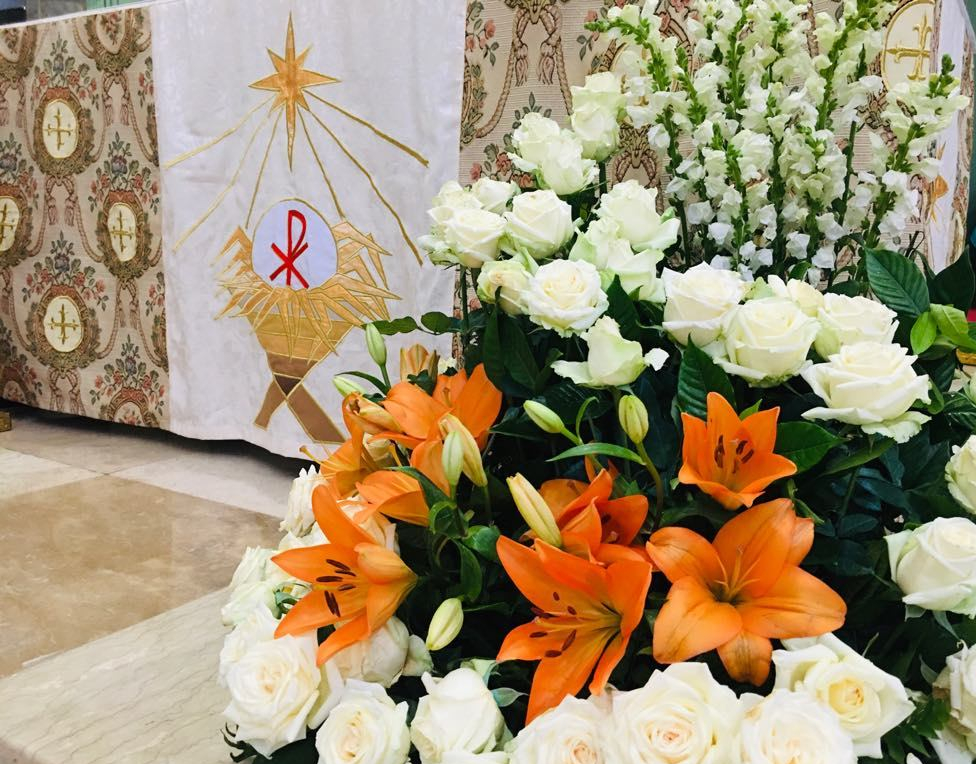
Photo by Ms. Jonna S. De Guzman, 06 December 2020.
A blessed Merry Christmas to everyone!
One good thing with this ongoing pandemic is the retrieval and return to the basic meanings of our many traditions, rites and rituals in the Church, beginning with Lent and Easter last summer. The same thing is happening this Christmas Season when we have to accommodate more people amid our health protocols that we have revived the oft-neglected Vigil Mass of the Nativity of the Lord.
It is partly true that our December 25 celebration of Christ’s birth has something to do with the Christianization of some ancient pagan practices in Rome like the “sol invictus” or “invincible sun” introduced in 274 by Emperor Aurelius. When Emperor Constantine rose to power whose mother was Queen Helen or Sta. Elena of our Santacruzan fame, Christianity was finally accepted in Rome giving rise to the new religion and the Church. After the Peace of Constantine of 313, the feast of the Nativity of the Lord replaced the pagan celebration of the sun. Jesus is now seen as the fulfillment of the prophecy as “Sun of justice” (Mal. 3:20) while at the same time, we find in John 8:12 Christ calling himself as “the Light of the world”.
Eventually in Rome developed the three Masses of Christmas: the night Mass referred to as Midnight Mass even if it does not have to be at midnight adapted from the Christian tradition in Bethlehem of having night Mass on January 6, the Epiphany; during the fifth century, the Pope brought this to Rome after the Council of Ephesus but celebrated it on December 24 at the Church of St. Mary Major to stress the divinity and humanity of Jesus Christ. On Christmas Day before dawn, the Pope would go to the Church of Anastasia to celebrate Mass for the anniversary of the Greek colony in Rome where the reading was taken from Luke about the visit of the shepherds to the newborn baby Jesus before celebrating the Mass at St. Peter’s where the reading was taken this time from the Gospel according to John.
Vatican II deemed it right that aside from these three traditional Masses of Christmas to add the Vigil Mass in the afternoon or early evening of the 24th as it has always been customary to have a vigil on the eve of every great feast “to prolong the day” like what we have on Saturday afternoon when we celebrate the Sunday Mass. Unfortunately, the Vigil Mass of Christmas is rarely celebrated due to practical reasons we have the three traditional Masses.
Now we have it again for practical purposes – the very same reason it used to be skipped before – to accommodate the expected large number of people going to Mass every Christmas while we observe the health protocols against COVID-19 that has been rapidly spreading again lately with the season.
It is perhaps providential that we need to celebrate anew this Vigil Mass of Christmas as a beautiful reminder to us not only of the birth of Jesus Christ but also of our own coming and birth. St. John Paul II said in 1995 that “every birthday is a small Christmas because with the birth of every person comes Jesus Christ” (Evangelium Vitae).
A figurine of the Holy Family with St. Joseph taking Baby Jesus while the Blessed Virgin Mary sleeps.
Our genealogy in Jesus and birth from God
For the Vigil Mass, we heard again Matthew’s genealogy of Jesus Christ, tracing the roots of our Lord and Savior from David and Abraham, the two most prominent people of Old Testament: it was to David that God promised from whom will come the eternal king while it was to Abraham who was given the promise of fatherhood to all nations (https://lordmychef.com/2020/12/16/the-problem-with-beginning/).
Recall in our reflection last December 17 how Matthew structured the genealogy of Jesus as well as the history of Israel around David by having three sets of 14 generations from Abraham to David, then from his son and successor Solomon to the Babylonian exile, and from their return to Israel to Christ’s coming.
But here is the more interesting part of the genealogy and history of Jesus by Matthew: with God’s sending of His Son Jesus Christ, there came a shift of focus in the structure of peoples and history from being centered on the imperfect King David to the perfect true King of the universe, Jesus Christ!
Whereas the world had to wait to three sets of fourteen generations to experience redemption and freedom, our lives are now centered and structured on Jesus Christ our eternal King with everyday a new beginning to rise again to new life.
See how from Christ’s day of birth, history became “His story” when our lives are all seen in relation to Him in the way we reckon time as “AD” for Anno Domini as Year of the Lord or “BC” for Before Christ. Lately, historians have preferred to use the initials CE for Christian Era or BCE for Before Christian Era but it is all the same with Jesus as point reference of history and time.
What does it mean to us today as we celebrate the Lord’s birth?
Christmas has given us our new origin with faith in Jesus Christ as our true genealogy for we are all birth from God our Father!
Photo by author, the Nativity Church in Bethlehem, 2019.
We remain as God’s first love
“You shall be called by anew name pronounced by the mouth of the Lord. No more shall men call you “Forsaken”, or your land “Desolate”, but you shall be called “My Delight”, and your land “Espoused”. For the Lord delights in you, and makes your land his spouse. As a young man marries a virgin, your Builder shall marry you; And as a bridegroom rejoices in his bride, so shall your God rejoice in you.”
Isaiah 62:2, 4-5
Our first reading tonight fits perfectly well Matthew’s story of how the birth of Jesus came about, telling us how the angel appeared to Joseph in a dream so he would marry her after explaining her pregnancy was due to the Holy Spirit.
The giving of name in the Bible always means authority that is why God tasked the first man He created to name every creature in paradise. The same is true with our parents giving us names or sweethearts calling us with other names exclusively theirs only like terms of endearment.
But in this part of Isaiah’s prophecy, God once again is demonstrating His all-powerful creativity to give a new breath of life to Israel His chosen people long held in captivity now set to go free, no longer called Forsaken or Desolate but now My Delight and the land Espoused.
In giving His people with new names, God reasserts His taking “possession” of not only Israel but of us all. The original meaning of the word “to espouse” as in “Espoused” found in Is. 62:4 can’t really be translated directly but very close “to possess” which is what a spouse means, the partner being possessed by the other. But possession here is not selfish; in fact, it is more of giving and sharing as indicated by the imagery of wedding, of unity that leads to joy. Recall also how Pope Francis explained in his recent letter “Patris Corde” (With a Father’s Heart) what is to truly “possess” persons based on the virtue of chastity like St. Joseph (https://lordmychef.com/2020/12/17/loving-with-a-fathers-heart-like-st-joseph/).
Tonight on this Vigil Mass we are reminded how the Son of God Jesus Christ came to live among us to remind us and conclude as well God’s covenant with mankind that we are His first love, a love that never dies, a love He continues to renew in us daily.
Like Joseph who gave the name Jesus to the child born by Mary, may we keep in mind and heart that we are from God, that we are His, that we must continue to relate with Him no matter what is our status in life like those imperfect, weak and sinful men and women in Christ’s genealogy.
Let us rejoice this Christmas in our first love too, God, our one and only. Amen.
A blessed Christmas to you!
Photo by Ms. Jonna S. De Guzman, 06 December 2020.
The Lord Is My Chef Simbang Gabi Recipe for the Soul-9
by Fr. Nicanor F. Lalog II
Thursday, Advent Week IV, 24 December 2020
2 Samuel 7:1-5, 8-12, 14, 16     >><)))*>  +  <*(((><<     Luke 1:67-79
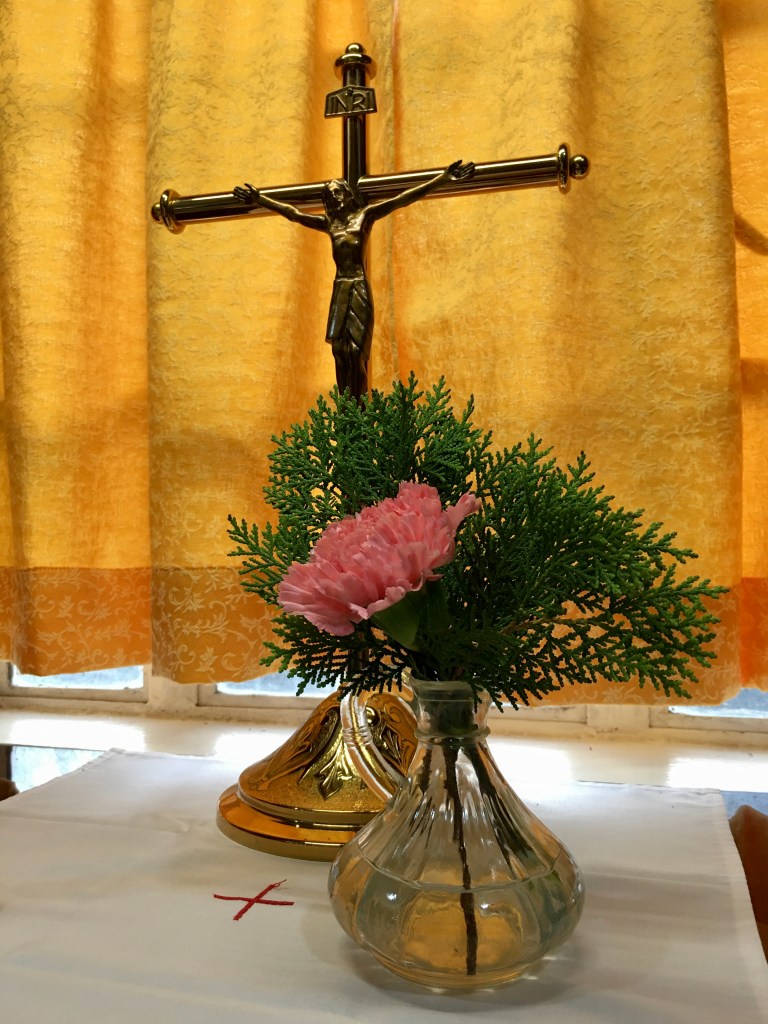
Photo by author, altar at our sacristy, 19 December 2020.
One thing that have really made this pandemic so bad and so sad is the lack of tenderness of our many officials to the people they are supposed to serve. Consider all these pains and inconveniences they have caused us the public from the fatal shooting of that Marawi veteran in Quezon City to the detention of Mang Dodong at the height of the lockdown to the closure of the largest network in the country mid-year then on to stupidities of first the motorcycle barrier, then the closure of U-turn slots at EDSA capped by the insane RFID at NLEX and now the inhuman shooting of mother and son by an off-duty policeman.
As one of my friends wrote on his FB page last April, “bakit kung kailan panahon ng pandemya na dapat magtulungan at magmahalan saka puro karahasan?” (why all the the violence happening during pandemic when we are supposed to be helping and more loving to one another?).
What a year indeed of natural calamities worsened by some public officials so detached from the sufferings of the people.
And that, my friends, is why we have to celebrate all the more – meaningfully – Christmas.
God is perfect and cannot suffer; hence, He sent us His only Son Jesus Christ to be one with us in our sufferings and miseries, to suffer with us – cum passio – express His compassion.
On this last day of our novena to Christmas, we see how Zechariah comes into full circle singing praises to God (called Benedictus in Latin) after being forced by the angel into full silence becoming speechless when he doubted God’s gift of a child to him and his wife Elizabeth.
Zechariah his father, filled with the Holy Spirit, prophesied, saying: “Blessed be the Lord, the God of Israel; for he has come to his people and set them free. He has raised for us a mighty Savior, born of the house of his servant David.”
Luke 1:67-69
Photo by author, Advent Week IV, 20 December 2020.
Jesus already present among us in the coming of John
During the Visitation of the Blessed Virgin Mary, Luke never mentioned Zechariah around the house so that Elizabeth and her baby in her womb were the only ones were filled with the Holy Spirit upon hearing Mary’s greeting.
Now, after naming his son “John”, Luke tells us how Zechariah was filled with the Holy Spirit too that he prophesied the meaning of the coming of his son as “prophet of the Most High” in 1:76.
See the three verbs he used after blessing God in his canticle called Benedictus: “Blessed be the Lord… he has come to his people and set them free. He has raised for us a mighty Savior, born of the house of his servant David.” The verbs are all in the past tense when in fact, what he was saying was supposed to be of what would happen after the birth of John, the coming of Jesus Christ.
Here we find the complete faith and trust of Zechariah to the plan of God like Mary in her Magnificat. Zechariah had seen something so big, something momentous taking place while still in the midst of darkness of his time and world just like us in this pandemic and calamities, callous officials in government and police.
Dear friends: Jesus has come, had set us free (saved us), and had risen to work all His wonders! Let us keep our faith and hope like Zechariah that God has already started working in our favor to turn the tide and soon, things will surely get better if we remain consistent to our response to His calls, standing for life and dignity of every person through whom Jesus comes, for what is true and just.
Photo by author, Church of St. John the Baptist at Ein-Karen, Israel (2019).
From the hand of God into the heart of God
Yesterday we reflected on how we have to allow ourselves to be “the hand of God”, to let Him do His work among us through our hands. Today in Zechariah’s Benedictus we find a movement from the hand of God to His very heart in Jesus Christ our Savior.
“In the tender compassion of our God the dawn from on high shall break upon us, to shine on those who dwell in darkness and the shadow of death, to guide our feet into the path of peace.”
Luke 1:78-79
After seeing the coming of the Christ in the birth of his son John, Zechariah now summarizes to us the very essence of Jesus our Savior, of God Himself: tender compassion or in the original Greek, splaghna or “tender mercy” of God.
It is not just compassion which is to suffer with us but at the same time be filled with tenderness that one is so moved to reach out, to do something by going down with the one suffering.
Like courage, mercy is a movement in the heart called misericordia in Spanish from the Latin mittere, meaning to be moved, to be stirred. It is something dynamic, not static. It is a deep feeling that moves toward someone in pain and suffering. An identification of Jesus with every person going through so much hardships and sufferings in life.
Zechariah’s heart is no longer hardened with negativity and cynicism – it was so stirred by God that he mentioned His tender mercy or compassion because he had personally felt it as he recovered his voice and speech. With the birth of John, he now believes that God’s love for his suffering people is deep and personal. As we say in Filipino, “tagos o sagad sa buto” which may be translated as “through and through”.
And that is perhaps one of the things we sorely miss so much these days from everyone, tenderness. The tender compassion, tender mercy of Jesus. Recall how during His ministry all four evangelists would narrate how Jesus was moved with pity and compassion to the people who were lost, tired and sick “like sheep without a shepherd” that no matter how tired He may be, He would always find time to teach them, heal their sick, and even feed them.
That is the mercy of God that Jesus had brought forth to us in His coming, experienced by Zechariah himself that he could foresee its coming at the birth of John.
Photo by author, Advent Week IV, 20 December 2020.
We priests and religious pray the Benedictus in our morning prayer called lauds (Latin for praises). It is so fitting because at the start of each day, that must be the one thing clear with us always – that the Lord is come to save us, to forgive us, to love us.
One saying I have always loved mentioning in my talks to people came from an anonymous writer I found on the table of a good friend long before I became a priest. It says: “If you have love in your heart, you have been blessed by god; if you have been loved, you have been touched by God.”
That is the Benedictus, the song of every faithful disciple of Jesus introducing His coming, His birth. So many people have forgotten God, do not know God, refused to believe in God because many among us He had lavishly loved have refused to share His love with others.
Have a blessed and meaningful Christmas! Thank you for following our reflections. Share it if you have been blessed.
The Lord Is My Chef Simbang Gabi Recipe-8 for the Soul
by Fr. Nicanor F. Lalog II
Wednesday, Advent Week IV, 23 December 2020
Malachi 3:1-4, 23-24     >><)))*>   +   <*(((><<     Luke 1:57-66
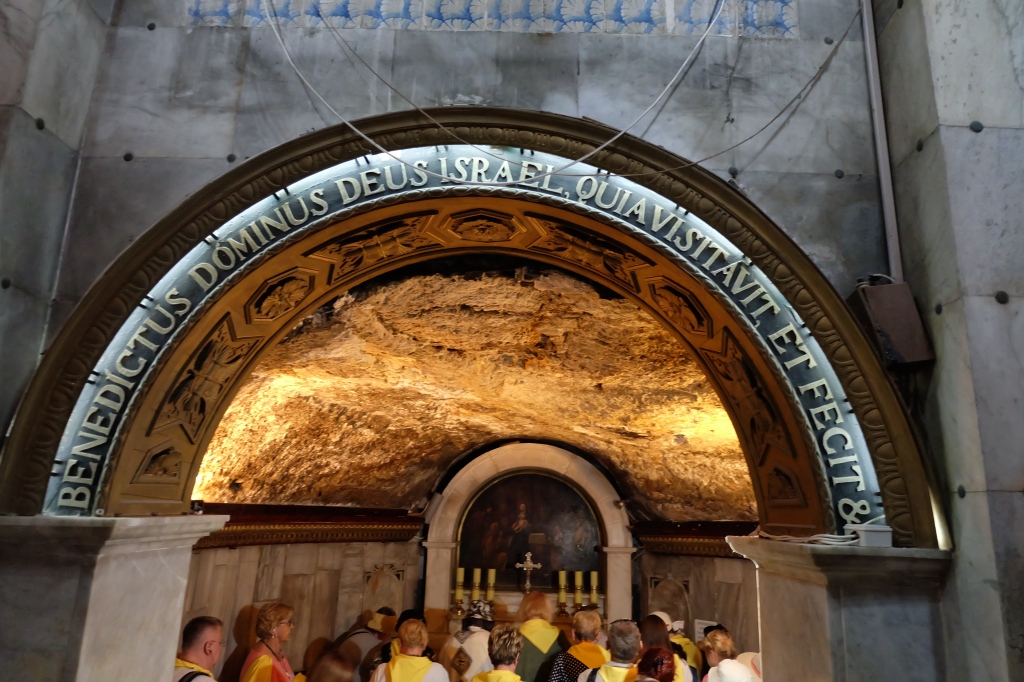
Photo by author of the entrance to the site believed to be where the Lord’s Precursor was born below the side altar of the Church of St. John the Baptist in Ein Karen, Israel (2019).
We are almost into the completion of our nine-day novena for Christmas as we heard today the story of the birth of the Lord’s Precursor, John the Baptist. It is a story narrated so simple by Luke but filled with beautiful meanings specially for us today in this time of the pandemic.
First thing we see is how Zechariah’s speech was restored upon declaring the name of his son is “John”:
He asked for a tablet and wrote, “John is his name,” and all were amazed. Immediately his mouth was opened, his tongue freed, and he spoke blessing God.
Luke 1:63-64
Luke did not tell us what kind of praise did Zechariah speak about God when his speech was restored but here we find that basic truth in our lives that for every blessing we receive from the Lord, right away – immediately! – we must praise and thank God first.
Moreover, this scene shows us the good effect of the “imposed quarantine” on Zechariah when he was made deaf and speechless after doubting God’s gift of a child to him and his wife Elizabeth during the annunciation by the angel while incensing the Holy of holies in Jerusalem.
God restored the power of Zechariah to speak again and greatly renewed him that this time, he had become obedient to the Father to his plan. In a sense, Zechariah was not merely freed to speak again but most of all, he was freed to believe and trust in God again!
As we have reflected last Saturday morning, Advent is quarantine. So many times in life, we have to step backwards, be silent to listen to God and just let Him do His work in us! Sometimes we think of so many things that are not really necessary and has nothing to do with God’s plans or work. With Zechariah able to speak now, he shows us that in the exercise of our powers we must first get in touch with God how to use His gifts to us.
This we shall see in our second point: allowing God to use us as His hand.
Photo by author, dome of the Church of St. John the Baptist at Ein-Karen, 2019.
Then fear came upon all their neighbors, and all these matters were discussed throughout the hill country of Judea. All who heard these things took them to heart, saying, “What, then, will this child be?” For surely the hand of the Lord was with him.
Luke 1:65-66
From rejoicing at the birth of Zechariah and Elizabeth’s son, their neighbors now moved to being amazed when the child is named “John” that coincided with the restoration of his father’s ability to speak.
Luke tells us how it was such a big thing, maybe so “viral” and “trending” like today that everybody was discussing it. They must have felt God so near, almost there that Luke used an Old Testament expression, “For surely the hand of the Lord was with him”.
It is a beautiful expression indicating power too, just like the ability to speak.
Our hands are so powerful that we are able to move and do so many things because of these.
To say “the hand of the Lord was with him” is to portray the image of God’s immense power, His omnipotence, of being able to do whatever He deems needed to life on earth.
In the Old Testament when Elijah was being pursued by the soldiers of Queen Jezebel after he had shamed the priests of baal for failing to light a pile of firewood for worship, the prophet escaped by running beyond human ability considering his old age because “the hand of the Lord was on Elijah” (1 Kgs. 18:46).
Sometimes, the “hand of the Lord” can be scary as it means judgment or punishment from God like when King David disobeyed God when he ordered a census of Israel to find out how many men can fight in their wars, doubting the power of the Lord. David was given with three options for his punishment by the seer Gad: a natural disaster or a victory by his enemies, or a time of God’s judgment. David chose the third option, saying “I am i dire straits. But I prefer to fall into the hand of the Lord, whose mercy is very great, than into the hands of men” (1Chronicles 13:21).
Photo by author, Chapel of the Holy Family, Sacred Heart Spirituality Center in Novaliches, QC (2014).
The late Jaime Cardinal Sin of Manila used to tell of the story about the hand of God: he said sometimes, the hand of God would “spank” or hit us with pains and trials in life to discipline us and make us strong; sometimes, the same hand of God would caress and soothe our tired bodies or give us that proverbial pat on the shoulder to affirm us. But what is most important to remember according to Cardinal Sin is the fact that whether we are being disciplined or touched by the hand of God, it is always loving and merciful, most of all grace filled.
The recent news of that trigger happy cop who brutally shot and killed Sonia and her son Antonio in Tarlac recently is a reminder to us all most especially this Christmas in the time of pandemic, of the need for us to let the hand of God take control of our lives, guide us to life through more patience, love, kindness, and understanding.
It seems that so often, whenever we let our hands do everything, they always go out of control like our mouth and lips that lead us to more disasters and even deaths.
Beginning this Christmas, may the hand of God lead us back to Him and with each other.
Let us imitate the praying hands, of two hands touching each other but always creating a space between. That space is for Jesus born in Bethlehem 2000 years ago, asking us everyday to take Him into our hands to care for Him, to protect Him through one another.
The Lord Is My Chef Simbang Gabi Recipe-7 for the Soul
by Fr. Nicanor F. Lalog II
Tuesday, Advent Week IV, 22 December 2020
1 Samuel 1:24-28     >><)))*>   +   <*(((><<     Luke 1:46-56
Photo by Marc Angelo Nicolas Carpio, 20 December 2020.
When I was about to enter the high school seminary, an aunt would always comment on our way to school how I would become a priest when I am a big fan of rock and roll music. You know, the usual stuff ever since with old folks about rock music as evil and everything…
Looking back, I just imagine what if I had told her and my other relatives the meaning of Steely Dan that is my most favorite band? Most likely they would have fainted! And I would tell tell them too that I am the only priest who had played Stairway to Heaven in Radio Veritas where I used to co-anchor a show, playing only good, old rock n’ roll to the delight of many listeners despite protests from management.
Lately I have been blogging every week linking secular music with the Sunday gospel that had enabled me to reach new and younger generations I hope had rediscovered Jesus in the music I had offered them.
The German philosopher Arthur Schopenhauer had said that “music is the food of the soul” and it is very true for it transcends cultures and languages that even if you do not understand the lyrics, music always touches the soul.
Meanwhile, the great English playwright William Shakespeare is said to tell his audience at the start of his plays that “If music be the food of love, play on.” That’s very beatiful. Like love, music is best served with another person; when we sing, it is always to pour our hearts out. We let others hear our song even if we sing alone because that is what music is all about – it is meant to be shared.
This is the reason why Mary sang her Magnificat during her Visitation of Elizabeth, not by herself in Nazareth after the angel had left after announcing to her the birth of Jesus.
Mary said: “My soul proclaims the greatness of the Lord; my spirit rejoices in God my savior. For he has looked upon his lowly servant. From this day all generations will call me blessed: the Almighty has done great things for me, and holy is his Name.”
Luke 1:46-49
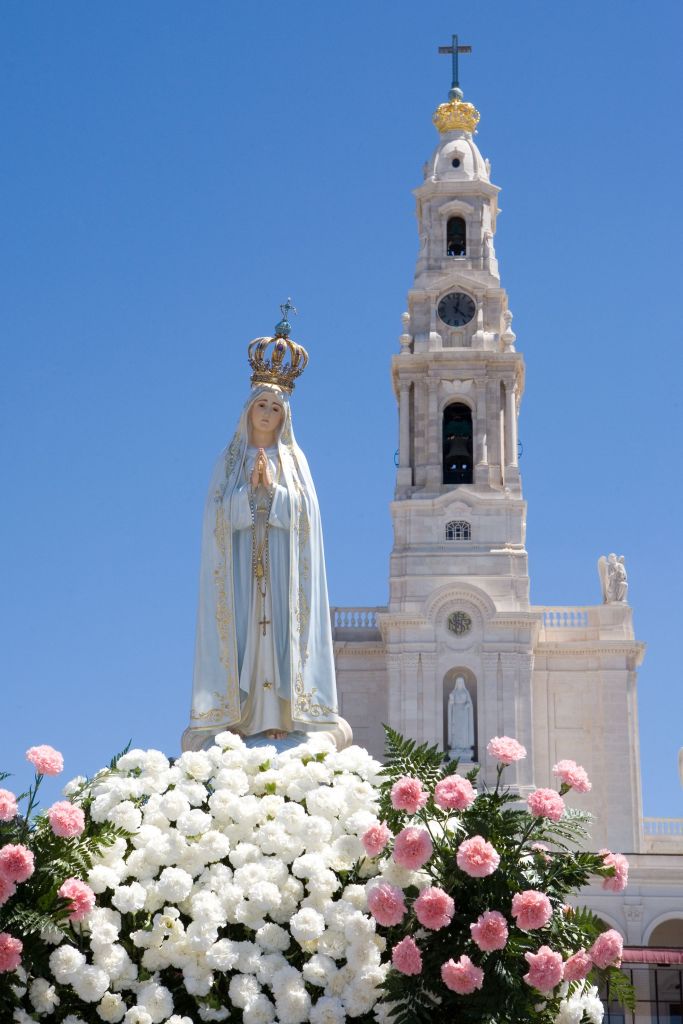
Photo from Pinterest, Our Lady of Fatima Centennial in Portugal, 17 May 2017.
Mary praised and thanked God with her “Magnificat”
Recall how Elizabeth praised Mary twice and her baby Jesus in the womb once yesterday at the Visitation. Naturally for us, when we are praised we always return it by praising too whoever spoke nicely of us.
But that was not the case with Mary. She took the occasion to praise and thank God for all His goodness and salvific work in her and in Elizabeth. Like Hanna in the first reading and responsorial psalm today who sang praises to God in giving her a son in the prophet Samuel, Mary while filled with the Holy Spirit sang this canticle, narrating how God worked in her and through her.
Our lives is a song of thanksgiving always to God who never stops doing great things for us not to make us famous but to bring His divine will into fulfillment. Mary affirmed this when she admitted her own blessedness, “From this day all generations will call me blessed: the Almighty has done great things for me, and holy is his Name.”
Yesterday we have reflected that true blessedness is to trust in God. Likewise, Mary added another dimension in what is to be blessed before God and that is being His servant, His slave or in her very words to the angel at the annunciation, “Behold, I am the handmaid of the Lord. May it be done to me according to your word.”
A handmaid is the feminine form of “slave” but more than being poetic in her identification as a female slave of God, Mary through her Magnificat showed us a glimpse of the lives of the early Christians at that time who were considered “weird” and “odd”, even “bizarre” among the Roman pagans who could not understand why they worshipped Jesus Christ they saw as “a crucified criminal”.
Worst of all for the pagans, they could not understand why the early Christians who were mostly poor would give themselves to Jesus in loving service to others like the sick, the elderly, the hungry, widows and orphans and those living in the margins.
In fact, the Roman historian Pliny recorded in his writings how during the persecution the emperor’s soldiers rounded up Christians in every town and city by looking for anybody doing good, serving the poor and needy! It is something to think about for us Christians today: Would any one of us be arrested because we are doing something good like serving the less fortunate?
Photo by author, Our Lady of the Poor at Boys Town in Cavite (2009).
Mary, the first model disciple, the first to live out the Gospel
In singing her blessedness by God, Mary had assumed her being the spokeswoman of the early Christians, the poor ones or anawim of Israel who were truly poor materially, trusting entirely on God.
Here lies her challenge to us who love to sing her Magnificat: do we allow God to work in us His salvation?
“He has mercy on those who fear him. He has shown the strength of his arm, and has scattered the proud in their conceit. He has cast down the mighty from their thrones and has lifted up the lowly. He has filled the hungry with good things, and the rich he has sent away empty. He has come to the help of his servant Israel, for he remembered his promise of mercy…”
Luke 1:50-54
Again, we find many similarities in the Mary’s Magnificat and Hanna’s song we heard in the responsorial psalm. But, more than that is the striking similarity of Magnificat with the Beatitudes to be preached by Jesus according to Luke.
In Matthew’s gospel, there are eight Beatitudes preached by Jesus at his sermon on the mount; Luke narrated it differently by citing only four Beatitudes he paired with four woes that Jesus preached in His sermon on the plain (this is due to the different audience Luke and Matthew addressed):
Blessed are you who are poor… Blessed are you who are now hungry… Blessed are you who are now weeping… Blessed are you when people hate you…
Woe to you who are rich… Woe to you who are filled… Woe to you who laugh now… Woe to you when all speak well of you…
Luke 6:20-26
Magnificat is the Gospel in a nutshell. See the works of God cited by Mary perfectly jibing with the Beatitudes of Jesus. Here we find again how Luke has shown us the consistency of Mary as a disciple of her Son Jesus Christ by witnessing to His teachings, living them out for which she was crowned as Queen of heaven and earth.
This is the reason why I love so much the image of Fatima and of Banneux known as Lady of the Poor with Mary portrayed as so simple yet so lovely and beautiful. What a scandal for the Church in our time with all those lavish processions and coronations of the Blessed Virgin Mary where the poor are left out, becoming more of a social function among the rich and famous. What a shame most especially amid the pandemic when some parishes can spend so much fortune in these rituals that look more as a show which the Blessed Virgin would definitely disapprove. Keep in mind how Mary identified herself as “handmaid of the Lord” — do away all those pomp and pageantries please!
Every night, we priests and the religious sing the Magnificat in our Evening prayers to examine ourselves if we have lived out the Gospel message of the Lord, if we have been poor and hungry, if we have allowed ourselves to be used by God to effect His salvation among the suffering.
The same is true with every disciple of Jesus: when we sing the Magnificat or “Ang Puso ko’y nagpupuri”, we have to do some soul searching how consistent we have been as a disciple of the Lord like His Mother Mary.
From the Philippine Daily Inquirer, 24 July 2016.
How sad late yesterday when some people -whether they are trolls or not – had come out expressing support to that cop who brutally shot and killed Sonya Gregorio and her son Anton in their home in Paniqui, Tarlac Sunday afternoon.
How can some people be not affected and even defend or belittle such unspeakable crime of a man supposed to uphold the law, protect civilians?
What had gone wrong with us as the only Christian nation in this part of the world?
Can we sing “Ang puso ko’y nagpupuri sa Panginoon, nagagalak ang aking espiritu, sa aking Tagapagligtas” while we rejoice and defend all forms of brutalities and violence around us?
As we strongly condemn this unspeakable crime and demand justice for Sonya and Anton, let us work hard and pray hardest to imitate Mary to effect change in the society we live in and create by being a voice of the poor and vessel of God’s salvation. Amen.