Lord My Chef Daily Recipe for the Soul by Fr. Nicanor F. Lalog II
Friday, Third Week in Ordinary Time, Year II, 30 January 2026
2 Samuel 11:1-4, 5-10, 13-17     <*((((>< + ><))))*>     Mark 4:26-34
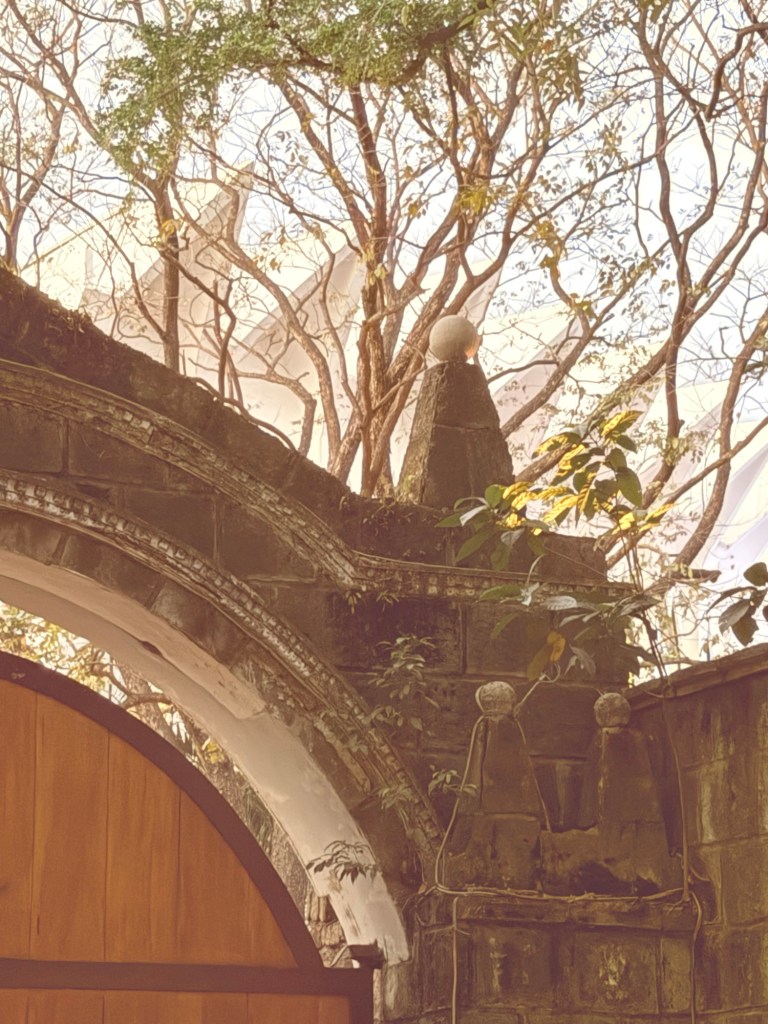
Photo by author, Museo Valenzuela & the National Shrine of Our Lady of Fatima, Valenzuela City, 21 January 2026.
Thank you Lord Jesus
for the Friday break,
the penultimate day of this month
of January 2026;
it was a heavy week
and a very long month
for most of us we thought
would never end.
We are thankful Lord
today because we are still
with you with many of us
struggling in our prayer lives,
persevering in being good
and everything like being king
and understanding and forgiving;
indeed, like your parable today,
everything good begins so small
like the seed scattered in the field
that sprout and grow while the farmer
sleeps and rises night and day
without really knowing how;
but that is how it is also with
sin and evil that always begins
so small, so subtle
like in the experience of
David in the first reading:
he had been complacent
in his life falling into temptations
of lust that led into murder.
Dear Jesus,
remind us always
to never take little things
for granted -
whether small deeds that
lead to holiness or small
sins that may leave us stuck in
a moment we can't get out of
according to Bono of U2:
You've got to get yourself together
You've got stuck in a moment
And now you can't get out of it
Don't say that later will be better
Now you're stuck in a moment
And you can't get out of it
We pray, Lord Jesus
for those feeling stuck in
a moment or a sin or a vice
or a relationship that they can't
get out of;
give them the courage to quit
and return to you,
even little by little.
Amen.
*I know what you are thinking but this is a good piece from U2's 2000 album "All That You Can't Leave Behind"... it might help you pray better.
Lord My Chef Daily Recipe for the Soul, 13 November 2025
Thursday in the Thirty-Second Week of Ordinary Time, Year I
Wisdom 7:22-8:1     <*((((><  +  >><))))*>     Luke 17:20-25
Photo by author, Bucharest, Romania, 05 November 2025.
Fill me with your Wisdom,
Lord that I may find
and experience you
within me; fill me with
Wisdom, Lord, that I may be
"not baneful, loving the good,
keen, unhampered"
(Wisdom 7:22) in realizing
and living your very presence
within me; fill me with Wisdom,
Lord, so I may not seek you
in spectacle but feel you more
in your presence.
Asked by the Pharisees when the Kingdom of God would come, Jesus said in reply, “The coming of the Kingdom of God cannot be observed, and no one will announce, ‘Look, here it is,’ or, ‘There it is.’ For behold, the Kingdom of God is among you” (Luke 17:20-21).
Guide me, Jesus
with your Holy Spirit
to be open and sensitive
with God's hidden ways of working
in our lives,
in our communities,
in our history;
let me continue to seek
God in all things
especially in my life where
the hidden presence of
God's Kingdom is most felt
but often unnoticed
because it happens
in silence
even emptiness
"For Wisdom is mobile
beyond all motion,
and she penetrates
and pervades all things
by reason of her purity"
(Wisdom 7:24).

Help me realize
and treasure the reality
of God's kingdom
not a spectacle
like a dazzling show
the world so loved
that is momentary and empty;
let me realize that
God's kingdom is presence,
a movement of grace
after grace
after grace.
Amen.
Photo by author, sunset at Istanbul, Turkiye, 02 November 2025
Lord My Chef Sunday Recipe for the Soul, 24 August 2025
Twenty-first Sunday in Ordinary Time, Cycle C
Isaiah 66:18-21 ><}}}*> Hebrews 12:5-7, 11-13 ><}}}*> Luke 13:22-30
Phot by author of pilgrims trying to enter through the narrow door of the Church of the Nativity in Bethlehem, the Holy Land.
Anyone who had gone on a pilgrimage to the Holy Land must have heard the story of the fabled “narrow door” at the entrance of the Church of the Nativity in Bethlehem, of how it was reduced into that small door a very long time ago to prevent pilgrims from bringing their horses and camels inside the church that made a lot mess and stench.
Photo by author, narrow doors from the inside of the Church of the Nativity in Bethlehem, the Holy Land, May 2019.
That little door of the Church of the Nativity later became symbolic of the humble gesture of bowing low first to enter and see the Savior’s birthplace, eventually heaven as Jesus had been teaching us these past Sundays.
We are now in the final installment of the teachings by Jesus about the coming End, of what must we do to gain eternal life. He is now halfway through his long journey to Jerusalem since he started eight Sundays ago.
Along the way, he had met every kind of people, proclaiming to them the same message – that the kingdom of God is at hand where everyone is welcomed like what Isaiah prophesied in the first reading.
Jesus passed through towns and villages, teaching as he went and making his way to Jerusalem. Someone asked him, “Lord, will only a few people be saved?” He answered them, “Strive to enter through the narrow gate, for many, I tell you, will attempt to enter but will not be strong enough. After the master of the house had arisen and locked the door, then will you stand outside knocking and saying…” (Luke 13:22-25).
Photo by author, Angels’ Hills Retreat Center, Tagaytay City, April 2025.
In his teachings these past three Sundays, Jesus had been warning us against too much focus on things of the world that perish like material wealth, telling us to be more concerned of things of heaven that lead to eternal life. He had been clear that it would not be easy at all with the demands of being his disciples.
It was in this context that someone in the crowd asked Jesus today on his way to Jerusalem if only a few people would be saved. The question sounds very amusing not only because Jesus had always been clear that heaven does not come cheap as we must learn to renounce our self, take up his cross and follow him. That someone in the crowd who asked that question is actually us! And we know so well why until now we keep asking that same question: because we lack the discipline within to truly follow Christ. We always want what is easy and convenient, preferring shortcuts, avoiding sacrifices, as much as possible, no pains and sufferings. Hence, despite our knowing what it takes to gain eternal life, we still keep on doing the opposite.
It is the same with our physical well-being wherein we know so well what is healthy but we still keep doing, eating and drinking what is unhealthy. The sad truth of this lack of discipline in our body and soul is how we start shaping ourselves only when we are already sick and close to dying! That is when we feel sorry and start telling God like those in the parable that “we ate and drank in your company.”
Jesus had no intentions of dodging the question of that someone – and us in many occasions when we realize how difficult it is to follow his path of simplicity and humility, of love and kindness, of mercy and forgiveness. See how he neither gave a number nor a percentage of those who would be saved in the End. Jesus simply told the people including us today to do everything to make it into the Kingdom of God that is like a “narrow gate” and a “locked door”.
Following Jesus is more than being in his company but more of being like him. On this final Sunday of his teaching on the End, of entering the Kingdom of God in eternity, Jesus reminds us to shape up, body and soul so that we can squeeze ourselves into heaven’s “narrow gate” and “locked door”. Here we find again the second reading giving us more light into the meaning of the gospel this Sunday.
Brothers and sisters, you have also forgotten the exhortation addressed to you as children: “My son, do not disdain the discipline of the Lord or lose heart when reproved by him; for whom the Lord loves, he disciplines; he scourges every son he acknowledges.” Endure your trials as discipline… At the time, all discipline seems a cause not for joy but for pain, yet later it brings the peaceful fruit of righteousness to those who are trained by it. So strengthen your drooping hands and your weak knees. Make straight the paths for your feet, that what is lame may not be dislocated but healed (Hebrews 12:5-7, 11-13).
Discipline is a word so misunderstood these days that too often, it is frowned upon, even feared by many. In this age of so much “freedom” without any regard to “responsibility”, discipline has become its main casualty.
From the Latin verb discere which is “to learn” and “to follow”, its noun form disciplina means teaching or learning from which came the word discipulus for disciple, a follower or a pupil. Therefore, a person of discipline is one who follows or obeys teachings. Contrary to the wrong idea of many today that discipline limits freedom which they see as the ability to do whatever one wishes, the more disciplined a person is, the more free the person actually becomes!
When we discipline ourselves in every aspect of our lives like in food and drink intake, in using our time wisely, in budgeting our money and resources among other things, the more we become free to many other things in life. Remove discipline and do whatever you like in your life, eventually you become “unfree” because definitely you will miss your responsibilities and obligations like studies in school and duties at home and the office.
The same is true in our spiritual life: without discipline like prayer life, disorder and sin happen. It is discipline that literally and figuratively shapes us into persons able to squeeze through the narrow gate and locked door of freedom and salvation!
Photo by author, St. Catherine Monastery, Mt. Sinai, Egypt, May 2019.
In following the reflection of the author of Hebrews, we find that discipline is not just a human effort but the work of God too. As St. Augustine wrote, “grace builds on nature” – the more we discipline ourselves, the more blessed we become because God’s grace and gifts in us are perfected. See how discipline is like a built-in “app” God installed in each of us to ensure that we have all the means to reach heaven in Jesus Christ.
Looking back to the past four weeks, we find Jesus as the perfect example of a disciplined person, of leading a disciplined life focused on the mission from the Father. Since he started this long journey, Luke noted in chapter nine how Jesus was “resolutely determined” to go to Jerusalem, teaching us along the way to be like him focused on things of heaven than of earth, always vigilant of the coming End. Since the resumption of Sundays in Ordinary Time last July 06, Luke showed Jesus frequenting the synagogue on sabbath to worship and to preach. Most of all, Jesus prayed a lot which prompted his disciples to ask him to teach them how to pray too. Our celebrating the Sunday Mass in the church is a discipline of highest order because every Eucharistic celebration is a dress rehearsal of our entrance into heaven. Always come until we all gather together in eternity. Amen. Have a blessed and disciplined week ahead everyone. Fr. Nicanor F. Lalog II, Our Lady of Fatima University, Valenzuela City (lordmychef@gmail.com).
Lord My Chef Sunday Recipe, 06 July 2025
Fourteenth Sunday in Ordinary Time, Cycle C
Isaiah 66:10-14 ><}}}*> Galatians 6:14-18 ><}}}*> Luke 10:1-12
Photo by author, Atok, Benguet, 27 December 2024.
Finally, we hit the fourteenth Sunday in Ordinary Time with Luke as our guide after a month of Solemnities.
We are at the turning point in the gospel of Luke – chapter 9 and first half of chapter 10 – where Jesus was identified by Peter as the Messiah (9:20) while Jesus for the first time made known his coming pasch (9:22). From this point on, Luke tells us of how Jesus “resolutely determined to journey to Jerusalem” (9:51) to fulfill his mission as they took a detour from a Samaritan town that had refused them passage (9:53). After this scene comes our gospel this Sunday.
At that time the Lord appointed seventy-two others whom he sent ahead of him in pairs to every town and place he intended to visit. He said to them, “The harvest is abundant but the laborers are few; so ask the master of harvest to send out laborers for his harvest. Go on your way; behold, I am sending you like lambs among wolves. Carry no money bag, no sack, no sandals; greet no one along the way. Into whatever house you enter, first say, ‘Peace to this household’… Stay in the same house and eat and drink what is offered to you, for the laborer deserves his payment. Do not move about from one house to another. Whatever town you and enter and they welcome you, eat what is set before you, cure the sick in it and say to them, ‘The kingdom of God is at hand for you.'” (Luke 10:1-5, 7-9)
First thing we notice about discipleship according to Jesus is that it is never easy, “behold, I am sending you like lambs among wolves.” Disciples need to be “resolutely determined” in the mission like Jesus, focused only on Jesus.
Early in his teachings during the Sermon on the Plain, Jesus enunciated in his Beatitudes the contradictions of his life and teachings to the ways of the world his followers have to imitate. Hence, his list of “do’s” and “don’ts” of discipleship in today’s gospel.
Do’s: greet peace every household they entered; stay in same house; eat and drink whatever is offered; cure the sick; and proclaim “the kingdom of God is at hand.”
Don’ts: no money, no sack, no sandals, no greetings along the way, and do not move about from one house to another.
Notice there are five do’s and five don’ts. And there are only two “do’s” that require speaking: to greet every household with peace and then the other is to proclaim to everyone the kingdom of God is at hand (10:5, 9) which is the sum of discipleship in Christ.
Photo by author, Sacred Heart Novitiate, Novaliches, QC, 20 March 2025.
“Into whatever house you enter, first say, ‘Peace to this household'”…
The only valuable we as disciples of Christ must have is peace that we have to offer generously to everyone.
Peace is the work of the Holy Spirit, a sign of the coming of the Kingdom of God as the angels proclaimed on Christmas, “on earth peace to those on whom his favor rests” (Lk. 2:14). Most of all, peace is the fruit of Easter that the Risen Lord offered his disciples upon seeing them on that evening, “Peace be with you” (Jn.20:19).
Vatican II defined peace “is not merely the absence of war… but the fruit of love which goes beyond what justice can provide” (Gaudium et Spes 78). Peace is something we all have to work and strive for, entailing wounds and sacrifices for us to achieve it by cooperating with the grace of Jesus Christ in overcoming sin and evil. It is a process that never stops, calling for perseverance and daily conversion on our part.
Peace comes when we disciples are open for Christ, for others, and for change and transformation. That is why Jesus insisted us his disciples not to bring anything material that may influence our dealings with others, especially with those who are poor.
The great irony of our time is that the more we have grown affluent with wealth and material things, the more we have become empty in meaning and directions in life. So many are disturbed, longing for peace but could not have it because we the disciples are also lost in the things and the ways of the world.
Photo by author, Sacred Heart Novitiate, Novaliches, QC, 20 March 2025.
“…cure the sick in it and say to them, ‘The kingdom of God is at hand for you.'”
In the Luminous Mysteries of the Holy Rosary introduced by St. John Paul in 2002 is its third mystery, the proclamation of the Kingdom of God.
It is truly a mystery of light because Jesus is the Kingdom of God! To proclaim the coming of the Kingdom of God is to proclaim the coming of Jesus Christ in our midst. When John the Baptist’s disciples asked Jesus if he was the One they were waiting for or had to wait for another, Jesus said in reply, “Go and tell John what you have seen and heard: the blind regain their sight, the lame walk, lepers are cleansed, the deaf hear, the dead are raised, the poor have the good news proclaimed to them” (Lk.7:22).
Where there is healing, there is new life, there is proclamation of the good news, there is Jesus Christ! Proclaiming the Kingdom of God is representing Jesus in our lives, in our mission.
From vaticannews.va
In the previous chapter and scenes before our gospel this Sunday, Jesus asked his disciples what people said about him, the very same gospel we have last Sunday during the Solemnity of Sts. Peter and Paul.
Recall how Jesus was mistaken for John the Baptist, Elijah and Jeremiah or one of the prophets.
That’s the problem we still have today: many followers of Jesus do not represent him well that people are lost at who he really is! And it first happens right in the Sunday Eucharist as noted by a Facebook group called Catholic Fortress in its series this past week.
Many reacted positively for the series that was really good and timely for us priests and ministers at the altar who have unconsciously abused the Mass, unknowingly deviating from Christ himself who could no longer be found and experienced by the people. Truly the Mass is about Jesus; but, when it becomes like a showbiz with so many ek-ek and palabas by the priest, the servers and ministers and the choir, then it leads us away from Jesus who is paloob or inside our hearts.
In 400 AD, St. Augustine wrote the first manual for catechism called De Catechizandis De Rudibus (On Instructing Beginners) detailing, step by step the many things to consider and lessons to teach people being prepared for Baptism. From a simple request by his deacon named Deogratias, St. Augustine came up with an entire book on how to catechize with a final lesson that is the heart of his book when he wrote, “Remember, the catechist is the lesson himself.”
The same thing is very true with us priests and altar ministers and every disciple of Jesus Christ! Do we have Jesus Christ or not especially in the celebration of the Holy Mass where we proclaim the Kingdom of God is at hand and share peace with everyone?
How can there be peace of Christ among us when priests fail to love first of all Jesus in prayers as reflected in his love for the people by preparing for the Mass so that the sick and the burdened may experience Jesus – not an actor or actress of a telenovela no matter how popular it may be?
Where is the Kingdom of God when people have to bear the tantrums and antics and hangups of their priest as they already have so much burdens in life? Or, when people have a hard time tightening their belts and the priest keeps on asking for collections without any reports?
Where is the Kingdom of God when priests play favorites among the parishioners and servers, when some support Pride Movement and corrupt officials?
How can there be peace when all we have in the Mass is clapping of hands that we never have time to listen to God speaking to us in silence?
Photo by author, St. Joseph’s Chapel of the Order of Friars, Tagaytay City, 17 January 2025.
This Sunday, Jesus invites us to examine our faith journey in him if we are still following him or somebody else.
Let us pray for that grace to represent Jesus well always in our lives as priests and laity alike that we truly become the Body of Christ, his presence on earth.
It is the relationships that we have with God that matters in discipleship which Isaiah likened to that of a mother and child in the first reading. This finds it fulfillment when like St. Paul in the second reading, it is Christ’s Cross that we carry in ourselves – not bags nor money nor self and fame. Amen. Fr. Nicanor F. Lalog II, Our Lady of Fatima University, Valenzuela City.
40 Shades of Lent by Fr. Nicanor F. Lalog II
Palm Sunday of the Lord's Passion, Cycle C, 13 April 2025
Isaiah 50:4-7   ++   Philippians 2:6-11   ++   Luke 22:14-23:56
Photo by author, Palm Sunday in our previous parish, 2019.
If we were given one wish with a guarantee that it would be fulfilled, what would that wish be?
Of course, each of us would have different wishes depending on what really matters for us like healing or good health for someone who is sick, wealth for one who is poor, even youth for someone already old. No matter what our wish, it is always a desire for a better future, a chance to change any dissatisfaction we have in our present condition.
However, many times whether in our wishful thinking or future-looking and planning, it is highly probable that what we long for is already present to us.
As we begin the Holy Week with the celebration of Palm Sunday in the Lord’s Passion, we are reminded by the liturgy with its long readings how so often in life, we just need to see with different eyes, hear with different ears, expect with different hearts to find fulfillment, peace and joy.
The sad truth is that many times, we really do not know what we want and most of all, we also do not know what we are doing because we are so far from Jesus Christ.
Then Jesus said, “Father, forgive them, they know not what they do.”(Luke 23:34)
Photo by author, Chapel of the Holy Family, Sacred Heart Novitiate, Novaliches, QC, 2016.
Consistent with his theme of the mercy and forgiveness of God to us as shown the other Sunday in the parable of the prodigal son, Luke presents to us again this most wondrous and touching trait of God in Christ even while crucified.
Again, only Luke has this detail of Jesus praying for forgiveness for his enemies while being reviled and mocked by them on the cross. It is one of the many examples of Luke’s artistry in presenting to us God’s mercy and forgiveness in Christ in a sort of play of words, “Father, forgive them, they know not what they do” as we confront our selves with the question, “what do we really know?”
What do we really know at all that we continue to crucify Jesus today, nailing him on the cross with our many sins as we pretend and assume to know so many things in life?
To know in the Jewish mind is to have a relationship, an activity more of the heart than of the mind. To know is to love, to care. Therefore, when Jesus prayed to the Father to forgive them for they know not what they do is to forgive them because they refuse to love which is what sin is all about. And that is what we still do not know until now – to love, to care for one another that we keep on crucifying Jesus Christ.
Photo by author, Chapel of the Holy Family, Sacred Heart Novitiate, Novaliches, QC, 2016.
Until now we pretend to know the truth by waging wars in various parts of the world with more than half of them ironically due to our different religious beliefs! Debates continue on who must live and who must die as lawmakers pretend to know the truth with their proposals for abortions and artificial contraceptives as well as capital punishment.
Until now we pretend to know the truth as some sectors push for divorce and same sex marriage that destroy the family. Out in the streets are the daily road rage happening with everyone pretending to know the truth on who has the right of way even at the cost of life and dignity of a person.
Until now we pretend to know the truth in all those fake news and speeches defending immoralities and crimes committed against many poor people never given a fair chance to defend themselves from accusations as drug users and pushers. What a shame when some people claim to know the truth asserting freedom of expression by making fun of women and sex as well as those terminally sick or taking advantage of those with disabilities just to win votes in the coming elections.
See how almost everyone would claim to know the truth but what we actually show is our ignorance and lack of any knowledge at all of the realities around us as our problems become more complex that lead to more deaths, more disillusions, more anxieties and more emptiness in life.
Until now as we pretend to know the truth when in fact we know nothing at all that we continue to crucify Jesus Christ who – thankfully continues to pray to the Father to forgive us for we do not know what we are doing.
Photo by author, Chapel of the Holy Family, Sacred Heart Novitiate, Novaliches, QC, 2016.
See how in his passion narrative Luke invites us to enter every scene, to find our roles, of whether we are on the side of Jesus or not because neither the Jewish leaders nor the Roman officials even the Apostles understood anything at all. Jesus was crucified because they did not know what they were doing.
Notice how Luke shuffled different scenes, contrasting the ignorance of characters with the certain knowledge of Jesus: Peter denied him thrice while he blanked all lying efforts of the Sanhedrin; Pilate sent Jesus to Herod to find the truth but both were too coward to acquit him that though enemies for a long time, they eventually became friends because of Jesus(!); and while crucified there on the cross, the people who reviled Jesus are contrasted with the centurion who realized him as the Christ at his death.
See? Who knows anything at all? And the most wonderful part of the passion narrative of Luke, he tells us about that beautiful conversations of the three men crucified on that day. One insulted Jesus while the other, the good thief, had a conversion by calling out, “Jesus remember me in paradise” and thereby stole heaven for himself!
Here we find what we were saying at the start: we keep on projecting ourselves to a better future but right here with us is Jesus Christ not knowing he is our fulfillment.
We do not know like the Jewish leaders, the Roman officials and soldiers as well as the Apostles who kept on pinning their hopes in the worldly kingdom, totally unmindful of the kingdom of God that had come in Jesus Christ’s coming.
This Palm Sunday of the Lord’s Passion invites us to slow down in our lives.
Photo by author, Palm Sunday in our previous parish, 2019.
In this Holy Week, let us empty ourselves of our pride, of everything we know about life, of ourselves and of others for us to listen really to God’s voice within us. The kingdom of God is Jesus Christ. It is not a territorial domain protected by armies and navies or tariffs and laws; we become a part of God’s kingdom in Jesus Christ when we learn to commend our spirit like him to the Father amid our crosses in life.
Please, the Holy Week is meant for God, for us to meditate and pray his great love for us in Jesus Christ who suffered and died for us on the Cross. Let us return to him so we may know him, love him and follow him. Amen.
The Lord Is My Chef Daily Recipe for the Soul by Fr. Nicanor F. Lalog II
Monday in the Twenty-first Week of Ordinary Time, Year II, 26 August 2024
2 Thessalonians 1:1-5, 11-12     <*((((><  +  ><))))*>     Matthew 23:13-22
Photo by author, St. Scholastica Spirituality Center, Tagaytay City, 21 August 2024.
Thanks be to God,
our loving Father,
the month of August
is about to end,
always a difficult time
of the year for various reasons
that some have called it
a "ghost month";
of course, it is not true at all!
August is the month of so many
great saints and celebrations
that remind us of your presence
among us amid the many
hardships and difficulties.
We ought to thank you God always for you, brothers and sisters, as is fitting, because your faith flourishes ever more, and the love of every one of you for one another grows ever greater… This is evidence of the just judgment of God, so that you may be considered worthy of the kingdom of God for which you are suffering. We always pray for you, that our God may make you worthy of his calling and powerfully bring to fulfillment every good purpose and every effort of faith, that the name of our Lord Jesus Christ may be glorified in you, and you in him, in accord with the grace of our God and Lord Jesus Christ (2 Thessalonians 1:3, 5, 11-12).
Dear God our Father,
make us twice worthy like
the Thessalonians
in the midst of many trials this August:
to be worthy of the kingdom of God
who is Jesus Christ our Lord,
and to be worthy of your calling
in His most Holy Name;
many times, we have become
the modern scribes and Pharisees,
modern hypocrites who "lock the
Kingdom of heaven before men"
with so many of us, especially
in the clergy without any desires
at all of getting closer to Jesus
nor entering heaven!
Make us worthy of Jesus Christ,
the Kingdom of God
by embracing and carrying our cross,
of suffering with the people,
most especially praying
and sacrificing with the people.

Make us worthy of your calling,
dear Father to be your presence
among men and women in this
turbulent times when ironically,
as we advance in science and technology,
that more we grow apart from
each other and from our very selves.
Help us find our way back to You,
Father in Jesus Christ
through the Holy Spirit
with Mary and your Saints.
Amen.
Photo by author, St. Scholastica Spirituality Center, Tagaytay City, 21 August 2024.
The Lord Is My Chef Sunday Recipe for the Soul by Fr. Nicanor F. Lalog II
Feast of the Sto. Niño, Cycle B, 21 January 2024
Isaiah 9:1-6 ><}}}*> Ephesians 1:3-6, 15-18 ><}}}*> Mark 10:13-16
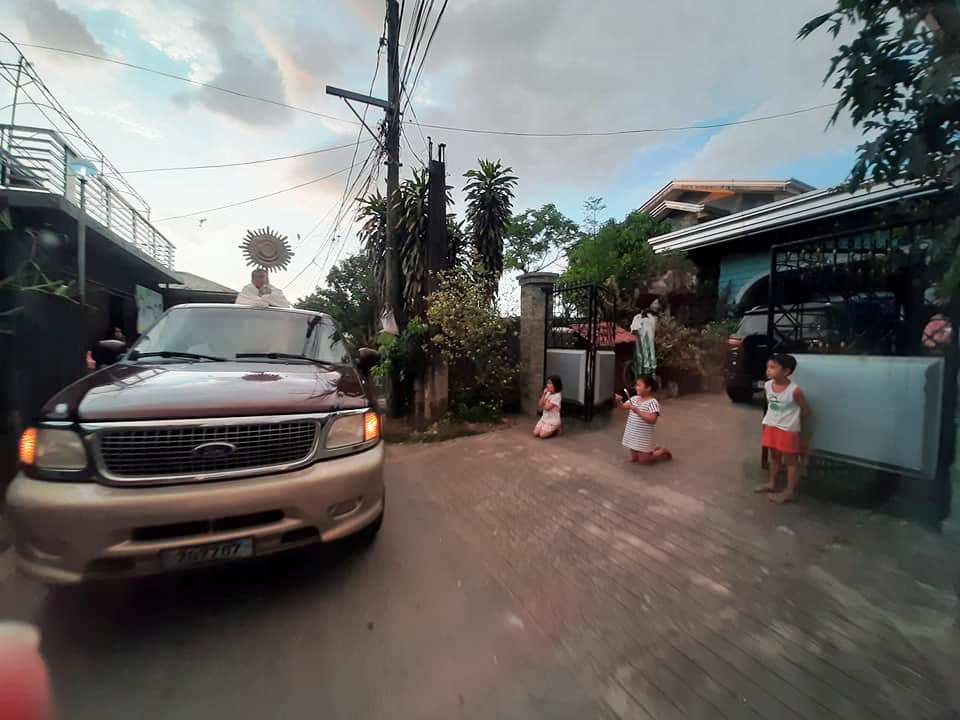
Photo by Ms. Anne Ramos, 22 March 2020 in Bagbaguin, Sta. Maria,Bulacan during our “libot” of the Blessed Sacrament at the start of the COVID-19 lockdown.
Our Lord Jesus Christ’s attitude to children is perfectly clear in our gospel this Sunday, “Let the children come to me; do not prevent them, for the kingdom of God belongs to such as these. Amen, I say to you, whoever does not accept the kingdom of God like a child will not enter it” (Mk 10:15).
Being like a child is actually the main teaching of Jesus Christ who came to us precisely as one. Right at his infancy like most babies these days, Jesus faced a lot of great risks of being harmed or even getting killed.
See how Jesus insisted in all his teachings on this need to become like a child, to go back to one’s beginnings in order to get into God’s kingdom which is actually him, his very person. Keep in mind that the kingdom of God is not a territorial domain but the very person of Jesus Christ himself. It is from this fact we realize that being a child as taught by Jesus is a mystery that can never be explained nor solved in our minds and mental faculties. This we find in that occasion when Nicodemus, a Pharisee, came to Jesus hiding in the darkness of the night to discuss the kingdom of God. When Jesus told him of the need to be born from above (or, be born again in earlier translations) which is to become like a child, he thought it to be in the literal manner.
Jesus chided Nicodemus by saying, “You are the teacher of Israel and you do not understand this?” (Jn. 3:9-10). It was not sarcasm nor an insult by Jesus but a clarification to everyone including us today that being a child to enter the kingdom of God is a mystery we have to embrace and experience and feel in the heart not deduced in the mind.
And this is exactly what the Feast of the Sto. Niño is all about that we celebrate every third Sunday in January.
The Vatican has given us this special celebration as an extension of the Christmas season in recognition of the great role played by the image of Sto. Niño Magellan gifted Queen Juana of Cebu in 1521.
After leaving our shores after Magellan was killed in Mactan, the Spaniards returned in 1565 under Miguel Lopez de Legazpi to claim our islands for the King of Spain. Upon their arrival in Cebu, they found the Sto. Niño enshrined in a house of worship prominently displayed as the main God of the natives along with their other idols and gods. Historians say the people of Cebu during those years between 1521 to 1565 have found the Sto. Niño as the most powerful and effective in granting their prayers for children (fertility), rains and bountiful harvests that rightly it was the Sto. Niño who actually conquered the Philippines that we have become the only Christian nation in this part of the world. In those 44 years after Magellan and his men left the Philippines, the Sto. Niño had remained and stayed with the natives keeping them safe and secured all those years until the Spaniards returned to be colonized through Legazpi.
What a beautiful imagery of the Sto. Niño staying behind with our forefathers conquering them not with swords nor force but with love and mercy, and youthfulness of the Child Jesus!
Recall how last Sunday we have reflected the words stay and remain when Andrew asked Jesus where he was staying: to stay, to dwell mean more than its spatial nature as a place or location but also in a deeper sense, a communion. It is in dwelling in Jesus who is the kingdom of God that we belong, we become a part of that kingdom.
When Jesus spoke of “being born from above” to Nicodemus, he was not only referring to the Sacrament of Baptism but to the very fact how he as the Christ from the very start has always dwelled and remained in the Father.
Three days after being found in the temple in Jerusalem when Jesus was 12 years old, he told Mary his Mother, “Why were you looking for me? Did you not know that I must be in my Father’s house?”(Lk.2:49). What a beautiful expression of that union in “being in my Father’s house” to show us this mystery of Jesus being like a child, the Son of God who has remained the Father’s beloved One into his adulthood because he had always been in union with the Father. Jesus is inseparable from the Father because he himself takes abode and dwelling in God.
“The Finding of the Savior at the Temple” painting by William Holman Hunt (1860) from en.wikipedia.org.
When Jesus was approaching his Passion and Death, he repeatedly told everyone how everything he had said and done were not his but his Father’s to indicate his communion and union in him. Ultimately there on the Cross, his final words expressed the same truth that he is the Son of God obedient unto death especially when he called out, “Father, into your hands I commend my spirit” (Lk.23:46).
Therefore, to accept and welcome a child in Jesus’ name is not just an act of charity nor of a simple finding of Jesus among children. It is ultimately being one, of remaining in the Father because Jesus also said “whoever welcomes such a child in my name, welcomes me” (Mt 18:5).
Photo by author, 2022.
That is why the kingdom of God is for those who are like children always one with God like Jesus.
To be a child is to remain in God, to always love expressed in kindness and care for others especially the weak, being forgiving and merciful and compassionate with those lost like the Father.
To be like a child is being a light who brightens the life of others just like a babies whose very sight and smiles can ease our pains and sorrows, giving us the much needed boost to forge on in life. We are filled with hope whenever we encounter or see infants because they remind us too of God dwelling in them, of a God who assures and ensures us with s bright future.
This the reason we have in our first reading that part of the Book of Isaiah we heard proclaimed on Christmas day to remind us that Jesus is the light born on the darkest night of the year to illumine our lives and the world darkened by sins and evil like wars, poverty, and diseases. We see light in being like a child because that is when we are one in the Father too in being like a child.
Let me cite again that beautiful movie Firefly where the main character, the child named Tonton loved his mother so much that he totally believed her stories that sent him into a journey to search for the magical island filled with fireflies. Tonton dwelled in his mother’s love that he eventually found the magical island with the many fireflies that in the process also brought light into the darkness within the three adults he befriended in the bus going to Bicol.
Many times in my ministry as chaplain in our hospital, I have seen the great powers within every child – of how a sick baby, a sick child could send his/her parents to summon all their faith in God to heal them, to save them.
Listen to the stories of those who join the Traslacion every year in Quiapo: most of them had their panata borne out of answered prayers for their sick children. Every parent knows it so well how they have moved mountains and did the most extraordinary for the sake of their infants and children.
That is the mystery of the kingdom of God belonging to children when God gives us every spiritual blessing we need to achieve the impossible (second reading) to become like children by remaining in God as the only power and salvation in this life.
Be with a child, stay with a child and you shall find God’s kingdom.
Be like a child and you shall experience the kingdom of God! Amen. Have a blessed week ahead!
The Lord Is My Chef Daily Recipe for the Soul by Fr. Nicanor F. Lalog II
Wednesday, Memorial of St. John Chrysostom, Bishop & Doctor of the Church, 13 September 2023
Colossians 3:1-11   <*{{{>< + ><}}}*> = <*{{{>< + ><}}}*>   Luke 6:20-26
Photo by author, St. Scholastica Convent, Baguio City, 23 August 2023.
Direct our thoughts
this day to you O Lord,
our loving God and Father
in heaven!

Let us seek what is above
where Christ is seated
at your right hand, O God;
let us think of what is above,
not of what is on earth
for we have already died
in sin with our life now hidden
with Christ in you, dear God;
most of all, let us put to death,
then, the parts of us that are earthly:
immorality, impurity, passion,
evil desire and the greed that
is idolatry (Colossians 3:1-3, 5).
Many times we forget these,
dear God, spending too much time
and efforts that later amount to nothing
as we pursue things of the earth;
we not only destroy our selves
but also the people you have gifted us
to be our companions in this life;
how easy for us to profess our love
for mankind without recognizing
those people we meet each day
as our beloved, missing the trees
for the forest!
How lovely when your Son
Jesus our Lord came,
he looked up to us so often,
as if telling us to look up too,
not down on ourselves and
to one another; normally, we
look up to you, dear God
because you are above us
but Jesus looked up to us
to show us how blessed we are:
Raising his eyes toward his disciples Jesus said: “Blessed are you who are poor, for the Kingdom of God is yours.”
Luke 6:20
Loving Father,
let me remember that
true blessedness is having
nothing except you;
true blessedness is
being looked up to
by Jesus,
remembered,
cared for,
and
accompanied
in this life back to you
in Heaven.
Indeed, as St. John Chrysostom
had taught us,
you, O God, ask us
so little
but gives us
so much!
Amen.
Photo by author, Mount St. Paul, La Trinidad, Benguet, 2017.
The Lord Is My Chef Sunday Music by Fr. Nicanor F. Lalog II, 30 July 2023
Photo by author in San Juan, La Union, 26 July 2023.
Finally we’re back! Sorry for being silent with our Sunday music blog relating secular songs with the Gospel of Jesus Christ.
For our return engagement since our last blog in June 11, 2023 with Stephen Bishop’s Parked Cars (https://lordmychef.com/2023/06/11/parked-cars-by-stephen-bishop/), we feature this Sunday one of our favorite local talents, Mr. Zack Tabudlo with his 2021 hit Habang Buhay from his album called Episode.
We can’t recall where and when we first heard this swinging OPM love song that sounds like from our era of VST & Co. Fact is, Tabudlo has other previous hits before Habang Buhay which struck us with two important things we find so close to our Sunday gospel.
First is its melodic upbeat tune teeming with profundity despite its being so light and refreshing to listening (and dancing). Though we find traces of influence from the late 1970 to1980’s disco era in Tabudlo’s music, Habang Buhay is so sincere with its Gen Z identity that is authentically so Pinoy especially with its shouts of Halika nga that is twice repeated.
Aking sinta, ano ba'ng mayro'n sa iyo?
'Pag nakikita ka na, bumabagal ang mundo

'Pag ngumingiti ka, para bang may iba
'Pag tumitingin sa 'kin, mapupungay mong mga mata
Wala akong takas sa nakakalunod mong ganda, ha
Halika nga (ha, ha, ha)
That shout of Halika nga is so typically Pinoy, so warm and genteel like Jesus Christ calling us to be open to his parables, to find God hidden in the most simplest things of ordinary life. Halika nga evokes those tender, loving calls of our Lola during summer vacation calling us to change clothes soaked in dirt and perspiration with a glass of Julep or Sunny Orange juice during those endless afternoons of fun and games.
Halika nga sometimes is an expression of playfulness masking as deeply serious. It is something we rarely hear these days because nobody seems to offer us with comfort and company, with love and concern anymore.
In Habang Buhay, Tabudlo is overjoyed, playfully or teasingly calling his beloved halika nga for them to bask and savor this wonderful love they have found. If we could just hear Jesus calling us too, telling us halika nga to stay with him to discover God as the only worthwhile love and treasure we could ever have in this life.
And where do we find that kind of love? In Christ’s dying for us on the Cross which Tabuldo had thought of as the true expression of his love that is faithful until the end.
Andito 'ko hanggang sa 'ting pagtanda
Mamahalin kita basta't 'pag nahulog
Nakahawak ako, 'wag ka lang bibitaw
Habang-buhay na ako'y iyo

Wala nang ibang nakagawa sa 'kin nang ganito
Kundi ikaw, nag-iisang diyosa ng buhay ko

'Wag ka nang matakot, 'wag kang mangamba
Andito ako 'pag ika'y mag-isa
Wala akong takas sa nakakalunod mong ganda, ha
Halika nga (ha, ha, ha)
This is the second thing that struck us in Habang Buhay, an amazing song that speaks of love that is pure and true, and most of all, willing to suffer and sacrifice. Like in the gospel today of the parables of the treasure buried in the field that prompted the farmer to sell all his possessions to acquire that property and of the fine pearl found by a merchant who also sold everything he had just to have it. The same is true with love, and with God: what are we willing to let go to have the love of our life?
It’s a rarity in this fast-paced world to hear from young people speaking about love in its deeper sense like the giving of self for a beloved, giving us deep sighs of relief that we’re leaving this world in good hands. Habang Buhay assures us not only of a love that is forever but invites us too to trust the next generation by witnessing to them Christ’s love found on the Cross. Amen.
The Lord Is My Chef Daily Recipe for the Soul by Fr. Nicanor F. Lalog II
Thursday in the Ninth Week of Ordinary Time, Year I, 08 June 2023
Tobit 6:10-11, 7:9-17   <*((((>< + ><))))*>   Mark 12:28-34
Photo by author, January 2023.
God our loving Father,
cleanse our hearts,
purify us of our desires
and intentions in life;
make us like Tobiah
who could wholeheartedly
declare before you of his
noble intentions in marrying
Sarah:
Now, Lord, you know that I take this wife of mine not because of lust, but for a noble purpose. Call down your mercy on me and on her, and allow us to live together to a happy old age.” They said together, “Amen, amen,” and went to bed for the night.
Tobit 8:7-8
Like the man who inquired
Jesus about the first of all
commandments, grant us
dear God same pure heart
that leads to "understanding"
so that we may be "no longer
far from the Kingdom of God"
(cf. Mark 12:34).
Amen.













 lordmychef.com