Fatima and the number “13”

The Lord Is My Chef Daily Recipe for the Soul by Fr. Nicanor F. Lalog II
Homily for the 106th Anniversary of Last Apparition in Fatima, 13 October 2023
Isaiah 61:9-11 ><}}}}*> Galatians 4:4-7 ><}}}}*> Luke 11:27-28

Today – October 13, 2023 – is the 106th anniversary of the last apparition of the Blessed Virgin Mary at Fatima, Portugal when the “Miracle of the Sun” happened, witnessed by about 70,000 people. It was her sixth apparition to the three young children at Cova da Iria that started in May 13, 1917.

Except for the month of August when authorities jailed the three children on August 13 on their way to Cova da Iria to force them to recant their earlier statements of the apparition, the Blessed Mother appeared to them on August 19 at the nearby Valinhos where she repeated her calls for prayers and sacrifices as well as the request for them to come every 13th day until the coming October when she reveals herself after a great miracle.

What is significant with the 13th day of each month that Mary appeared in Fatima from May to October 1917 that we have continued with this 13th Day Devotion?

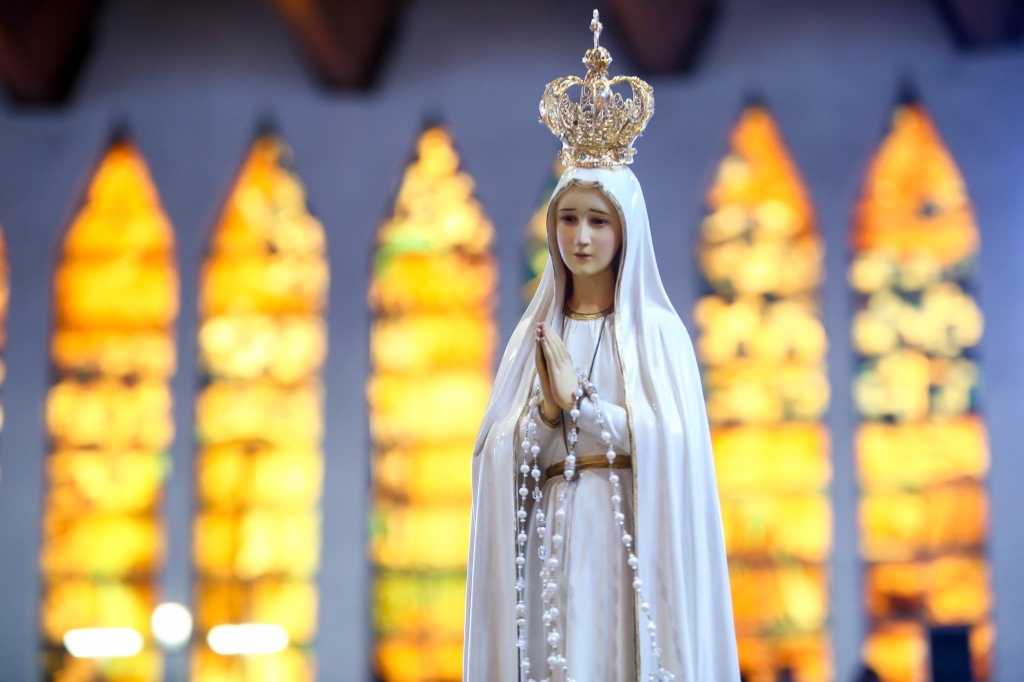
From Pinterest.com.

The Blessed Mother never explained to the three children, now St. Francisco and his sister St. Jacinta Marto and their cousin Sr. Lucia dos Santos why she appeared to them every 13th day of each month.

According to later interviews with Sr. Lucia who became a Carmelite sister and the last to die of the three children in 2005, she believed as the fruit of her prayers that the number 13 signified the Blessed Trinity. Sr. Lucia explained that number “13” illustrates to us that there is one (“1”) God in three (“3”) Persons (she was recently declared Venerable by Pope Francis to pave the way for her sainthood).

Here we find anew in the Fatima apparitions the consistency of truths found in our Church teachings and doctrines, specifically, the Blessed Trinity, that there is One God in Three Persons. Saints have also tried to explain the Blessed Trinity in simple analogies like the number 13 reflection of the Venerable Sr. Lucia.

In a 2022 article by Catholic author Joseph Pronechen that appeared in Soul magazine (see, https://www.bluearmy.com/the-significance-of-fatimas-13th-day/), he presented how the number “13” has many biblical foundations to be chosen by the Blessed Mother in Fatima as date of her apparitions. Foremost of this is found in the Old Testament Book of Esther.

Esther was among the Jewish exiles living in Persia after the Babylonian captivity. She was said to be so lovely and beautiful that the Persian king, Ahasuerus chose her to be his Queen among his many wives. Her uncle named Mordecai was the King’s most trusted adviser too that earned the jealousy among Persians in the royal court. Both Mordecai and Queen Esther remained faithful to God despite their royal positions. Esther then discovered a plot by some of the King’s men to exterminate all the Jews in Persia, especially her uncle Mordecai. It was at this instance that she prayed so hard to God for her to be able to warn her King of his men’s evil plot against the Jews even it could have cost her own life.

By the grace of God, Esther was able to muster all the strength and courage to speak to King Ahasuerus to foil the evil plot of his men set on “the 13th day of the twelfth month of Adar” (Esther 3:7).

The Persian king truly loved Queen Esther and ordered the arrest and execution of his aide (Haman) to prevent the murder of so many Jews. Queen Esther thus saved her fellow Jews on the 13th day of the Jewish month of Adar! And because of her intervention, King Ahasuerus ordered Jews in his kingdom to freely worship their God with assurance of protection from enemies.

Like Queen Esther, the Blessed Virgin Mary is also our Queen being the Mother of the King of kings, Jesus Christ. Every August 22 we celebrate her Queenship and in the Glorious Mysteries, we meditate her being Queen of heaven and earth.

Most of all, like Queen Esther, the Blessed Virgin Mary in Fatima intervened on October 13, 1917 to save the world from the ongoing WWI that began in 1914 and ended the following year in 1918. Sad to say, the world was plunged anew into the darkness of WWII that was more deadlier in 1939-1945 as predicted by our Lady at Fatima if the world would not heed calls for repentance and conversion of sinners. In recent history we have witnessed how our Queen Mother Mary saved St. John Paul II on May 13, 1981 – her feast day as our Lady of Fatima – from a deadly assassination attempt at St. Peter Square in the Vatican. Again, the world is in the darkness of deadly wars right in the Holy Land and in Ukraine by Russia whom the Virgin Mary had specifically mentioned in her October 13, 1917 apparition at Fatima.

When are we going to follow her maternal instructions of repentance and conversion, something which she merely repeated from similar calls by Prophets in the Old Testament and by her Son Jesus Christ in the gospels?

If we truly consider Mary is our Queen, why can’t we obey her and follow her instructions more than 100 years ago?

See how in today’s gospel Jesus underscored the importance of listening and following his words as main component of being part of his family. Mary was the first to listen and act on his word at the Annunciation and until now, she does the same thing so we may be saved from the wraths of evil caused by man’s inhumanity to one another.

Page from Ilustração Portuguesa, 29 October 1917, showing the people looking at the Sun during the Fátima apparitions attributed to the Virgin Mary. From en.wikipedia.org.

Going back to the Sacred Scriptures, we find more bases of the significance of number “13” used by the Blessed Mother at Fatima in 1917. In the Book of Acts, we find that when the Holy Spirit came on Pentecost, the 12 Apostles (Matthias replaced Judas Iscariot) were with “Mary the mother of Jesus” (Acts 1:14). Here we find 12 (Apostles) + 1 (Mary) = 13!

In the gospel accounts, we know Jesus Christ’s choice of 12 apostles was from the “12 tribes of Israel” or 12 sons of Jacob who was also called by God as “Israel”. Again, 12 + 1 = 13.

According to an interview by Pronechen of a Jewish rabbi, the meaning of number 13 in Hebrew is “bonding of many into one”. Every time we pray the Apostle’s Creed, we profess our faith not only in God in Three Persons but also to the Catholic Church that bonds us into Christ’s body who was born of the Virgin Mary. In Fatima on October 13, 1917, our Lady called on us to be one in God through Jesus in prayers, fasting and sacrifices, and commitment to live as true Christians.

Most of all, Pronechen explained that according to the Jewish rabbi he had interviewed, every letter in the Hebrew language has a numeric value. The word “love” which is ahava in Hebrew is connected with God with a numeric value of 13. Now, consider that when the Virgin Mary first appeared at Fatima on May 13, 1917, it was the original feast of Our Lady of the Blessed Sacrament. Here we find another intimate link in our Lady of Fatima’s insistence in celebrating Mass and receiving Jesus in the Holy Communion often because the Holy Eucharist is the Sacrament of Love.

How wonderful to meditate that our Blessed Mother Mary appeared in Fatima 106 years ago today with that singular message and expression of God’s love for us all!

When are we going to listen to her call for us to truly live in the love of God expressed by Jesus Christ on the Cross? Amen. Have a blessed weekend everyone!

From cbcpnews.net, 13 May 2022, at the Parish of the National Shrine of Our Lady of Fatima, Valenzuela City.

Cross my heart?

The Lord Is My Chef Daily Recipe for the Soul by Fr. Nicanor F. Lalog II
Thursday, Feast of the Exaltation of the Cross, 14 September 2023
Numbers 21:4-9 ><]]]]'> Philippians 2:6-11 ><]]]]'> John 3:13-17
Photo by author, Sacred Heart Novitiate, Novaliches, QC, 2017.

The cross is perhaps one of the most widely used but also abused and misunderstood sign in almost every generation. In fact, we are so accustomed to the cross of Jesus Christ found everywhere like in churches and cemeteries, offices and classrooms, hospitals, inside every kind of vehicle and, of course, houses. Almost everybody carry it on our persons for various reasons: as an object of veneration, as a badge, or as a jewel.

On the cross we find Jesus shown in glory, peacefully sleeping in death, sometimes with his body broken by suffering. Hence, many times we use the word “cross” like in “cross my heart” to indicate our sincerity and truthfulness. But, are we truly aware of its meaning and significance in our faith, of its centrality as the symbol of God’s love for us expressed by the self-sacrificing death of Jesus Christ his Son?

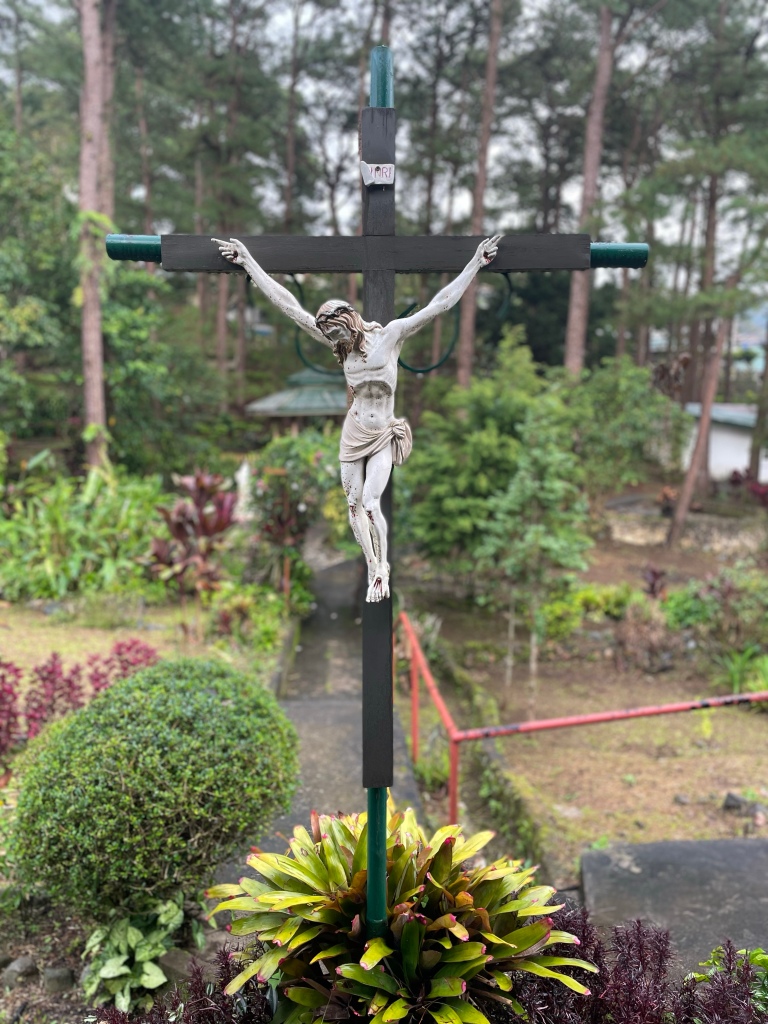
Photo by author, St. Scholastica Convent, Baguio City, 23 August 2023.

Today we celebrate the Exaltation of the Cross which started in the fourth century. According to legend it began with the miraculous discovery of the True Cross by Helena, mother of the Emperor Constantine, on 14 September 326, while she was on a pilgrimage to Jerusalem. She then ordered through her son the emperor the building of the Church of the Holy Sepulchre that was dedicated nine years later with a portion of the True Cross placed inside it in September 13, 335. The following day, the Cross was brought outside of the church to be venerated by the clergy and the faithful.

In the year 627, during the reign of the Emperor Heraclius I of Constantinople, the Persians conquered the city of Jerusalem and removed a major part of the Cross from its sanctuary. The emperor then launched a campaign to recover the True Cross which he regarded as the new Ark of the Covenant for the new People of God. Before embarking into war, Emperor Heraclius went to church wearing black as a sign of penance, then prostrated himself before the altar and begged God for courage. His prayer was granted as he won the war and recovered the Cross from the Persians. He brought the Cross back to Jerusalem in 641 amid great celebrations by carrying it on his shoulders. Upon reaching the gate leading to Calvary, the emperor could not go forward! Heraclius and his retinue were astonished and could not understand what had happened until the Patriarch Zachary of Jerusalem told him, “Take care, O Emperor! In truth, the imperial clothing you are wearing does not sufficiently resemble the poor and humiliated condition of Jesus carrying His cross.”

Upon hearing those words, the emperor removed his shoes and bejewelled robes, put on a poor man’s clothing and was eventually able to proceed to Calvary and replaced the Cross inside the Church of the Holy Sepulchre where a number of miracles happened during the occasion: a dead man returned to life, four paralytics were cured, ten lepers were healed, 15 blind men were given their sight, with several possessed people exorcised and many sick people totally healed!

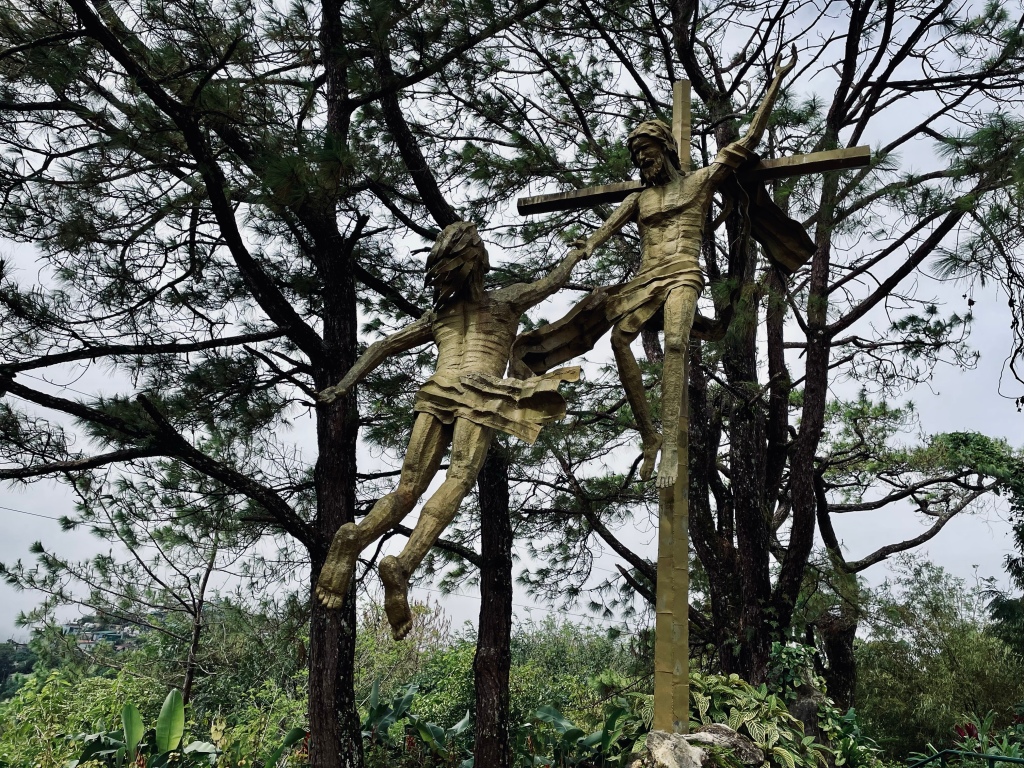
Photo by author, Mirador Jesuit Villa & Retreat House, Baguio City, 24 August 2023.

Very notable in this story were the words of the Patriarch of Jerusalem. It was only after the emperor had taken off his royal clothings and put on those of the poor was he able to carry the Cross.

It is the same thing that is asked of us today: it is so easy to display the cross inside our homes and cars, or wear it as a jewelry or even as a tattoo on our skin. But that would amount to nothing unless we have the cross inside our hearts, our very being. More than the many signs of the cross and imaginary drawing of its lines we draw on our chest is the need for us to empty ourselves of our pride and sins so that we can be filled by Jesus Christ.

Brothers and sisters: Christ Jesus, though he was in the form of God, did not regard equality with God something to be grasped. Rather, he emptied himself, taking the form of a slave, coming in human likeness; and found human in appearance, he humbled himself, becoming obedient to death, even death on a cross.

Philippians 2:6-8

Called kenosis in Greek, self-emptying is the way of the Cross of Christ. It is choosing love and mercy than self-centeredness and self-righteousness; sacrifice than satisfaction; fairness and justice than greed and possession; bearing all the pains and perseverance than complaining and whining about difficulties and trials in life like the Israelites in the wilderness (first reading); and, thinking more of others than of one’s self.

Photo by author, 02 September 2023.

The recent COVID-19 pandemic had taught something very amusing about the positivity of being negative, when negative was actually positive – healthy and COVID free! Remember how during those days when we would always wish we would yield negative results in our swab tests for COVID?

When we look at the sign of the cross (+), it is a positive sign, a plus sign. Though the cross calls us to let go, to be detached and dispossessed, it is actually an invitation to have more of God, of life and fulfillment! In this time of affluence when everything is practically easily available for as long as you have the means and the resources, the sign of the Cross reminds us that life is more of letting go and of giving than of having like God who “so loved the world that he gave his only Son, so that he who believes in him might not perish but might have eternal life” (Jn.3:16). St. Francis of Assisi said it perfectly why the Cross is an exaltation, a triumph:

For it is in giving that we receive,
it is in pardoning that we are pardoned,
and it is in dying that we are born to eternal life.  

Amen.  Have a blessed Thursday!

Maria, Kaban ng Tipan

Lawiswis ng Salita ni P. Nicanor F. Lalog II, Ika-15 ng Agosto 2023
Larawan kuha ng may-akda, bukang-liwayway sa Camp John Hay, Baguio noong 12 Hulyo 2023.

Kamakailan ay naglathala ako dito sa aking blog na wala nang birthday pang ipinagdiriwang sa langit. Ito rin ang dahilan kaya tama ang mga tambay at tomador sa kanto sa kanilang awitin na “sa langit ay walang beer” kasi nga walang birthday sa langit!

Tunghayan aking paliwag, https://lordmychef.com/2023/07/26/may-birthday-pa-ba-sa-langit/.

Ito ang dahilan kaya ang kapistahan ng ating mga banal ay ipinagdiriwang sa kanilang araw ng kamatayan o kaya sa petsa kung kailan inilipat kanilang mga labi o bangkay. Ito rin ang dahilan kaya sa araw na ito, ika-15 ng Agosto ay ating ipinagdiriwang ang pag-aakyat sa langit sa Mahal na Birheng Maria bagamat hindi siya namatay na katulad ng ibang mga santo at santa o ng mga tao.

Ipinapahayag sa ating pananampalataya batay sa mga tradisyon at pagninilay, hindi dumanas ng “kamatayan” tulad ng ating nalalaman ang Birheng Maria. Sa ating kamalayan at kaalaman, nakakatakot ang kamatayan dahil ito ay mahirap, masakit at malagim. Iyan ay dahil sa ating kasalanan. Sabi ni San Agustin noon, kahit hindi nagkasala ang tao, daranas pa rin siya ng kamatayan ngunit hindi ito mahirap o masakit at malagim. Kumbaga, sa isang kisap-mata maaring mangyari ang kamatayan na walang kahirap-hirap.

Iyon ang dinanas ni Maria, nakatulog kaya sa Inggles ang tawag ay dormition of Mary.

Icon ng “Dormition” o Pagtulog ni Maria na iginuhit ni El Greco noong ika-16 na siglo mula sa en.wikipedia.org.

Gayon din naman, sa kanyang pagtulog, iniakyat ng Diyos si Maria sa langit katawan at kaluluwa upang maging kauna-unahan sa mga nilalang na magtamo ng kaganapan ng pangako ni Jesus na muling mabubuhay ang mga namatay sa wakas ng panahon. Dahil hindi naman “namatay” si Maria kaya hindi rin naagnas o nawasak kanyang katawan kaya siya naman ay kaagad na ring iniakyat ng Diyos sa langit. Ito rin ang ating sasapitin na siyang ating inaasam-asam balang araw sa wakas ng panahon kapag tayo ay papasok din ng langit, katawan at kaluluwa.

Larawan kuha ni Fr. Gerry Pascual sa Santuario di Greccio, Rieti, Italy, 2019.

Kaya naman sa araw na ito ay ipinaalala sa ating ng Dakilang Kapistahan ng Pag-aakyat sa langit kay Maria na ang landas patungong langit ay nagsisimula dito sa lupang ibabaw.

Pagmasdan kung paano sa ating Ebanghelyo ating napakinggan ang pagdalaw ni Maria sa kanyang pinsang Elizabeth na tuwang-tuwang at nagpupuri sa kanyang pagpapalang tinanggap sa Diyos. Sa halip na papurihan din niya si Elizabeth, ang pinuri ni Maria ay ang Diyos sa pag-awit ng Magnificat.

At sinabi ni Maria, “Ang puso ko’y nagpupuri sa Panginoon, at nagagalak ang aking espiritu dahil sa Diyos na aking Tagapagligtas. Sapagkat nilingaop niya ang kanyang abang alipin! At mula ngayon, ako’y tatawaging mapalad ng lahat ng salinlahi.”

Lukas 1:46-48

Dito pa lamang atin nang makikita kung paanong sa buhay ng Mahal na Birheng Maria ay magkatali at hindi mapaghihiwalay kanyang tuwa at galak sa pagliligtas ng Diyos at ang kanyang hapis sa paanan ng Krus ni Jesus.

Si Maria ang una at pangunahing alagad ni Kristo sapagkat siya ang unang tumanggang at tumalima sa Salita na naging tao, si Jesus. Sa buong buhay niya, si Jesus ang kanyang dinala at binahagi sa lahat maging sa pagsisimula ng Inang Simbahan nang kasama si Maria ang mga apostol na nananalangin sa silid nang bumaba ang Espiritu Santo noong Pentekostes.

Kaya naman tinagurian din si Maria bilang Kaban ng Tipan o Ark of the Covenant dahil siya ang nagdala ng Diyos Anak sa kayang sinapupunan.

Matatandaan na noong nasa ilang ang mga Israelita, nagpagawa ang Diyos kay Moises ng kaban upang doon ilagak ang dalawang tapyas ng bato na kinasusulatan ng kanyang Sampung Utos. Itinatago noon sa tolda o kubol ang Kaban ng Tipan bilang tanda ng kapanatilihan ng Diyos. Tuwing papasok si Moises sa tolda kung saan naroon ang Kaban ng Tipan, bumababa ang ulap ng Diyos tanda na naroon siya sa tolda kausap si Moises. Tanging mga pari mula sa lahit ni Levi (kaya Levita ang tawa sa kanilang pari) lamang ang maaring magpasan ng Kaban ng Tipan ng Diyos.

Nang mayari ang templo ng Jerusalem, doon inilagak ang Kaban ng Tipan kaya naman hindi lamang kapitolyo ng mga Hudyo ang lungsod na ito kungdi ito rin ang gitna ng sandaigdigan at maging ng kalawakan sapagkat naroon ang Diyos sa templo sa Jerusalem. Nang mawasak ang templo ng Jerusalem, nawala na rin ang Kaban ng Tipan. Iyong “wailing wall of Jerusalem” na dinarasalan ng mga Hudyo at mga peregrinong Kristiyano ang natitirang labi ng bahagi ng templo na pinakamalapit sa pinaglagyan ng Kaban ng Tipan ng Diyos. Banal na lunan iyon sapagkat iyon ang pinakamalapit sa pinaglagyan ng Kaban.

Larawan kuha ng may-akda, Jerusalem, 2017.

Ngayong Dakilang Kapistahan ng Pag-aakyat kay Maria sa langit ay maganda ring balikan ang litanya ng Birheng Maria na nagsasabi sa kanya bilang “Kaban ng Tipan” na siya ring nakita ni Juan sa kanyang pangitain ukol sa mga magaganap sa wakas ng panahon.

Nabuksan ang templo ng Diyos sa langit, at nakita ko ang Kaban ng Tipan.

Pahayag 11:19

Nakakatawang isipin na mula sa Hollywood sa pelikulang Raiders of the Lost Ark kung saan bida si Harrison Ford bilang Prof. Indiana Jones, kalaban niya ang mga Aleman noong ikalawang digmaang pandaigdig sa paghahanap sa Kaban ng Tipan dahil sa paniniwalang ito ang pinaka-mabisang sandata sa lahat dahil sa angking kapangyarihan.

Hindi na natin kailangan pang hanapin iyon o ano mang anting-anting upang maging makapangyarihan. Tularan lamang natin si Maria sa pagiging kaban o lagakan ni Jesus sa ating pagkatao ay sapat na. Wala tayong hindi mapagtatagumpayanan kung ang Diyos ang nananahan sa ating katawan at katauhan.

“The Assumption of the Virgin” ng Italian Renaissance painter na si Titian, ginawa sa isang simbahan sa Venice noong 1518. Larawan mula sa wikidata.org.

Sa Banal na Misa ang Diyos ay ating napakikinggan sa kanyang mga salita ngunit ito ba ay ating naisasabuhay tulad ni Maria?

Sa Banal na Misa ating tinatanggap si Jesus, Katawan at Dugo sa Banal na Komunyon ngunit siya ba ang nababanaagan sa ating sarili at pamumuhay, salita at gawa?

Sa panahong ito na lumalayo na at binabale-wala ng maraming tao ang Diyos, maging paalala sa atin nawa na maging katulad ni Maria sa pagiging Kaban din ng Tipan ng Diyos, tagapagdala at tagapaghatid ni Jesus sa mga tao hindi lamang sa salita kungdi sa gawa.

Nawa sa ating pagdiriwang ng Dakilang Kapistahan ng Pag-aakyat sa Langit kay Maria, masalamin din sa atin ang inaasam-asam nating buhay na walang hanggan sa langit sa pamumuhay natin sa mapagmahal na paglilingkod lalo sa mga may-sakit at nahihirapan. Sila nawa ay mabuhayan ng loob na magwawakas din kanilang pagdurusa at balang araw makakamit buhay na walang hanggan sa tulong at panalangin ng ating Mahal na Ina si Maria. Amen.

“Switching on” the grace of God

The Lord Is My Chef Daily Recipe for the Soul by Fr. Nicanor F. Lalog II
Friday, Homily on Solemnity of the Birth of John the Baptist, 23 June 2023
Isaiah 49:1-6 ><}}}}*> Acts 13:22-26 ><}}}}*> Luke 1:57-66.80
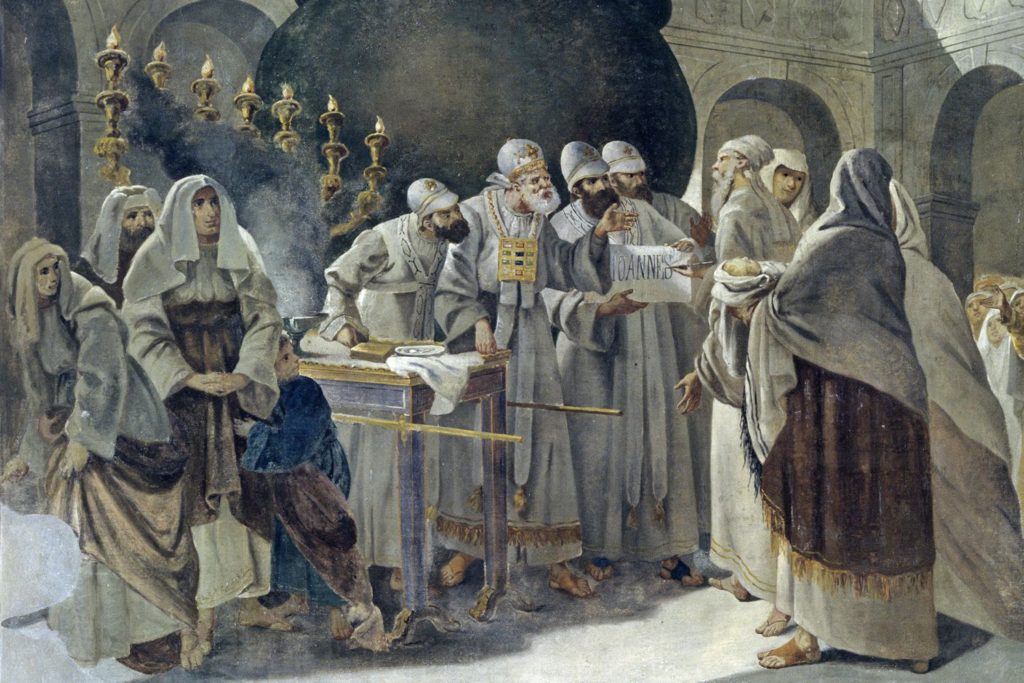
Painting of Zechariah giving name to his son John by Italian painter Riccardo Cessi (1892) from commons.wikimedia.org.

You must have heard a lot of “Dad jokes” from Instagram. Let me now share with you a “Father joke” or priest joke. The world’s first techie was the Jewish priest Zechariah, father of St. John the Baptist because he “asked for a tablet and wrote, ‘John is his name'”.

Ok. It is corny and dry but may I invite you, friends, on something wonderful about this gospel scene in celebration today of the Solemnity of the Birth of St. John the Baptist, the precursor of our Lord Jesus Christ.

Remember how Zechariah was punished by Archangel Gabriel by becoming deaf and mute after he had doubted the good news that he and his wife Elizabeth would soon have a son to be named John. Actually, Zechariah not only doubted but even questioned “how” his barren wife could still bear a child at an old age. As a result, he was forced into silence by the Lord’s angel until everything he had announced was fulfilled.

Photo by author, May 2019, Church of St. John the Baptist, Ein Karem, Israel.

When the time arrived for Elizabeth to have her child she gave birth to a son. Her neighbors and relatives heard that the Lord had shown his great mercy toward her, and they rejoiced with her. When they came on the eighth day to circumcise the child, they were going to call him Zechariah after his father, but his mother said in reply, “No. He will be called John,” But they answered her, “There is no one among your relatives who has this name.” So they made signs, asking his father what he wished him to be called. He asked for a tablet and wrote, “John is his name,” and all were amazed. Immediately his mouth was opened, his tongue freed, and he spoke blessing God.

Luke 1:57-64

Imagine the sight narrated to us by St. Luke: everybody so happy, trying to take a piece of action while Zechariah, father of the new-born child, old and deaf and mute was so silent like a nobody in a corner. In the Jewish society, it is the father who gives name to the children, especially to the son; but, due to Zechariah’s condition, nobody bothered to ask him so that their neighbors, like the typical epal or pakialamera we call in Filipino, assumed the role.

But Elizabeth the mother who had gone into a self-imposed silence upon bearing her child, declared their son would be called “John” or Jehohanan that means “God is gracious” or “graciousness of God” in Hebrew.

Finally amid all the noise and talk, Zechariah made the bold move by writing on a tablet “John is his name” to confirm and reaffirm the name given by his wife Elizabeth. It was a crucial moment when Zechariah boldly made a stand about his faith in God, obeying the angel’s instruction to name his son “John”.

Photo by author of the site believed to be the birthplace of St. John the Baptist at the side of the Church of St. John the Baptist in Ein Karem, Israel, May 2019.

What really happened was the assertion of the plan of God when Zechariah faithfully wrote “John is his name”. That’s what amazed the people so that “fear came upon the neighbors for surely the hand of the Lord was with him” (Lk.1:65, 66).

With a single stroke of hand, everyone felt God present among them as they realized something very special with the child. So amazing too as experienced by the people was when Zechariah asserted God’s plan by naming his son “John”, he was finally able to speak and hear again!

Whenever we assert the plan of God in our lives, in our community, in our family and country, new possibilities open as we break free from all obstacles and hindrances that prevent us from growing and maturing, from being joyful and fulfilled.

Whenever we assert the plan of God in our lives, in our community, in our family and country, that is when we “switch on” the grace of God, when we make God’s blessings operable among us and thus we become like John, a precursor of the Lord whose name means “God is gracious”.

Whenever we obey and assert the plan of God in our lives, in our community, in our family and country, that is when we take that leap of faith, believe again and experience God again.

Many times we could not see nor experience nor realize God’s blessings around us and within us because we do not actually believe and trust him. God’s grace is like a “switch” we have to turn on to operate like the electric light or any appliance and gadget. And the good news is, that grace and “switch” is in us already! We just have to switch it on.

Here we find anew the importance of silent, deep prayer.

Photo by author, Anvaya Cove, 19 May 2023.

The imposed silence on Zechariah made him realize how he had been held prisoner by his disappointments and frustrations over a long period of time when God did not hear his prayers for a child. Imagine their shame being childless despite their being good persons and as husband and wife. At that time, childlessness was seen as a punishment from God, a curse. It must have been a strong blow too to Zechariah’s ego as a priest consulted by everyone for advise and prayers yet could not sire his wife with a child!

All those negative feelings of humiliation and dejection could have caused Zechariah’s trust and faith in God to wane that even his priestly duties have become perfunctory that he never saw the tremendous grace and blessing of incensing the Holy of Holies of the temple. Such duty was a pure grace in itself because it happens only once a year during the holiest celebration of the Jewish of Yom Kippur or Day of Atonement. Priests went through a long process of drawing lots on who among them would incense the Holy of Holies because they were so many in number.

Many times we have been like Zechariah, numb and even indifferent to the movements and works of God in our lives following our many failures in life. Though we may be praying with many devotions doing so many religious activities, we have actually become “spiritual dwarfs” who never grew and matured in faith. Our prayers and devotions have become mere “habits hard to break” that are empty and meaningless.

Photo by author taken in May 2022, Parish of St. John the Baptist in Calumpit, the oldest church in Bulacan province.

Today God is calling us to do a Zechariah, to take that bold step of asserting and insisting God’s plan like when Zechariah boldly declared in writing “John is his name”. The first reading beautifully reminds us of one reality we all go through by wrongly thinking God does not care at all for us when nothing seems to happen with our prayers and efforts in life, in our ministry and mission.

Hear me, O coastlands; listen, O distant peoples. The Lord called me from birth; from my mother’s womb he gave me my name. Though I thought I had toiled in vain, and for nothing, uselessly, spent my strength, yet my reward is with the Lord, my recompense is with my God.

Isaiah 49:1, 4

We cannot be another John – a graciousness of God within us and for others unless we rediscover the courage and clarity to do a Zechariah by asserting God’s command and plans entrusted specifically to us.

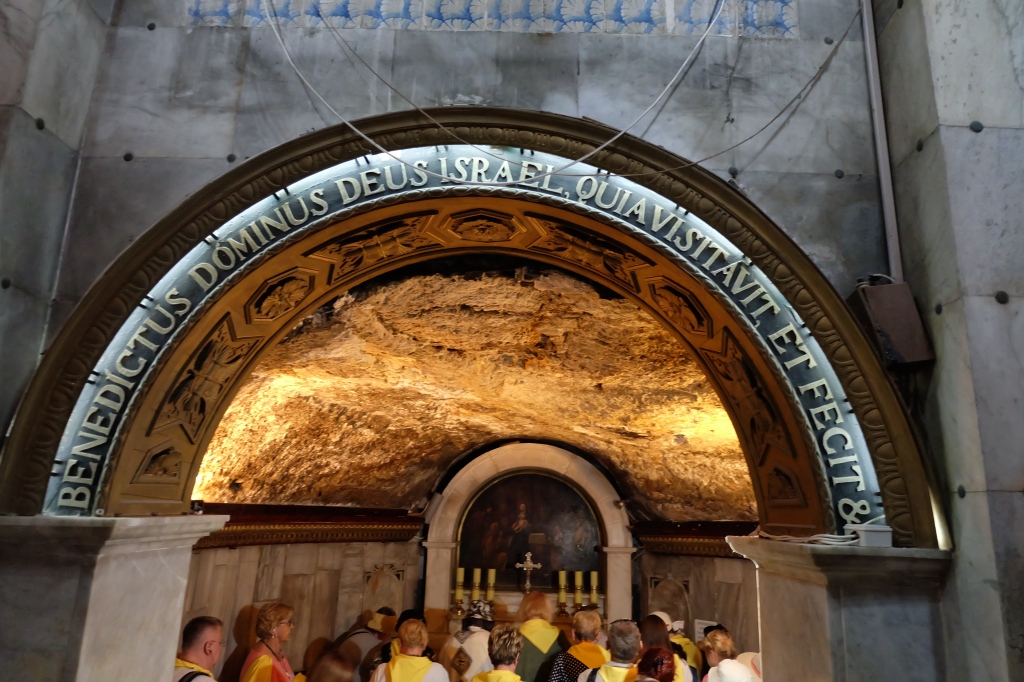
See also that upon regaining his sense of hearing and ability to speak, Zechariah “spoke blessing God” by singing the Benedictus in the following verses. The Benedictus is the morning hymn of praise to God we priest sing or recite daily in praying the Liturgy of the Hours. It mentions the blessedness of God and his many blessings to Israel while towards its end, we find Zechariah sending forth his son John to fulfill his mission from God in preparing the way of Jesus Christ. It is prayed in the morning to make us aware of our mission to prepare the way of the Lord Jesus.

Let us be patient, never lose hope and enthusiasm in doing the works of God even if nothing seems to happen at all. Everything we do matters a lot with God and with those around us as St. Paul explained in the second reading on the role of St. John the Baptist in salvation history.

Let us keep in mind that God remembers and keeps his promise always because he is gracious all the time. The name Zechariah in Hebrew means “God remembers” while Elizabeth is “God has promised”. John, as we have earlier said, means “God is gracious.” Let us do our part to bring Jesus into this world so fragmented and tired. Have a grace-filled weekend! Amen.

Photo by author taken in May 2022, altar of the Parish of St. John the Baptist in Calumpit, the oldest church in Bulacan province.

The riches of Christ

The Lord Is My Chef Daily Recipe for the Soul by Fr. Nicanor F. Lalog II
Homily, Solemnity of the Most Sacred Heart of Jesus, 16 June 2023
Deuteronomy 7:6-11 ><}}}*> 1 John 4:7-16 ><}}}*> Matthew 11:25-30
Photo by author, Sacred Heart Novitiate, Novaliches, Quezon City, 20 March 2023.

It has been two months since I celebrated by silver anniversary of ordination to the priesthood. Until now, I still continue to reflect and relish on this immense gift of priesthood, still asking with the same sense of awe and wonder since ordination day, “why me, Lord?”

As I reflected this week the Solemnity of the Most Sacred Heart of Jesus which is dedicated for the sanctification of us priests, I have realized how I have remained the same sinful, insecure and fearful man ordained 25 years ago with my six other classmates. As I get closer to becoming a senior citizen in 2025, the more my past sins and stupidities, carelessness and vices are coming back like “Facebook Memory”, reminding me how I have them kept under control, that they could burst and be out in the open if I get careless.

But in the midst of all these darkness and weaknesses still in me, the more I feel so blessed and consoled, and overjoyed by the fact that I still have that same desire to proclaim Jesus Christ to everyone, of how beautiful this life is because of the Lord’s immeasurable love for each of us. Whenever I look back to my past with all my sinfulness and weaknesses amid my getting older, the more I am eager to make Jesus known to everyone while I am still strong and able. There is that feeling of being like St. Paul in saying, “To me, the very least of all the holy ones, this grace was given, to preach to the Gentiles the inscrutable riches of Christ, and to bring to light for all what is the plan of the mystery hidden from ages past in God who created all things” (Eph. 3:8-9).

Or, like in our first reading, I could identify with the Israelites being reminded by Moses in the wilderness that “You are a people sacred to the Lord, your God; he has chosen you from all the nations on the face of the earth to be his people peculiarly his own. It was not because you are the largest of all nations that the Lord set his heart on you and chose you, for you are really the smallest of all nations. It was because the Lord loved you” (Dt.7:6-8).

Beautiful!

Love, love, and love!

That is the “inscrutable riches of Christ”, his immense love for us, dying for us, coming for us even if we are worth nothing at all. And it is because of that love of God for us that we have become so worthy that he gave us even his only Son, Jesus Christ.

That is the essence of this celebration of the Solemnity of the Most Sacred Heart of Jesus.

Love.

A reality we all experience and know but could not define for it has no limits. Love can only be described and best expressed in actions than in words.

See this Solemnity of the Most Sacred Heart of Jesus comes right after the Solemnities of the Most Holy Trinity and of the Most Precious Body and Blood of Jesus these past two Sundays. Both celebrations speak of love: the latter is about relationships based on love and the former is about giving of self in love.

Now that we are well into the Ordinary Time of our liturgical calendar, our celebration today tells us to remember throughout this year this most basic truth and reality of our faith – that we are so loved by God.

Beloved, let us love one another because love is of God; everyone who loves is begotten by God and knows God. Whoever is without love does not know God, for God is love. In this way the love of God was revealed to us: God sent his only Son into the world so that we might have life through him.

1 John 4:7-9

Love is symbolized by the heart, the very core of every person. That is why I love the Spanish word for heart which is corazon, evocative of the core, of the deeper self. And of course, love is the very the person of God.

Of all the writers in the Bible, St. John is the one who most frequently used the word “love”, an indication of its centrality in his thoughts. Moreover, he clarified that this love is not human love because its origin, motives and effects are supernatural in nature who is God himself.

Being the very self and also the riches or wealth of Christ, love is for sharing, for giving. Never for keeping. Because of its supernatural nature, love is inexhaustible. The more you give it, the more you share, the more you have it!

In this is love: not that we have loved God, but that he loved us and sent his Son as expiation for our sins. Beloved, if God so loved us, we also must love one another. No one has ever seen God. Yet, if we love one another, God remains in us, and his love is brought to perfection in us.

1 John 4:10-12
Photo by Ms. April Oliveros, March 2023 at Mt. Pulag.

Let me repeat that last sentence, “if we love one another, God remains in us, and his love is brought to perfection in us.”

The more we love, the more we are able to see and recognize God and other people amidst the darkness around us. Likewise, the more we love the more we see our true selves too despite dark spots within us.

Love is the law of life. To love God by loving ourselves and others is not an obligation imposed from outside. It is the very proof of our faith and union with God in Jesus Christ.

Jesus makes this very clear to us today in the gospel that opens with him praising the simple people, those who were child-like who welcomed him and his preaching. They were the ones Jesus referred at his sermon on the mount, “Blessed are the poor” because love is not an intellectual structure or system to be learned or analyzed. Love is a call to be disarmed of everything we hold onto so we can totally love and follow Jesus Christ.

“Come to me, all you who labor and are burdened, and I will give you rest. Take my yoke upon you and learn from me, for I am meek and humble of heart; and you will find rest for yourselves. For my yoke is easy, and my burden is light.”

Matthew 11:28-30

Jesus came to reveal to us God our Father. And to know the Father is not through the head or intelligence but through our heart that is like Christ’s, meek and humble, filled with love.

By becoming human like us in everything except sin, Jesus who is the image of the invisible God (Col. 1:15) enables us to feel and experience God now closest to us than ever. Most of all, we are able to love and still love especially when the going gets tough and rough.

Here Jesus shows us that love is not absence of sufferings. In fact, love is truest and noblest when there are sacrifices and sufferings as exemplified by Jesus in his life and death on the Cross.

There are times we feel grouchy, so sensitive when people seem to ask even demand so much from us.

From Facebook, 2021.

Sometimes we wonder why are we the ones always giving, always loving, always forgiving. Sometimes we even ask God why are we the ones going through all these trials in life, why are we the ones afflicted with this sickness, why are we given with a special child, why your child had gone ahead of you to eternal life?

So many whys, so many questions.

Rest today in Christ. Feel his embrace. Listen to his silence. Be filled with his love. As you ask Jesus with all those questions, realize that each cry, each lamentation is the “inscrutable riches of Christ”, his very love perfected in your labors and burdens. Amen.

Jesus, meek and humble of heart,
Make my heart like thine!

On being kind

40 Shades of Lent by Fr. Nicanor F. Lalog II
Friday in the Second Week of Lent, 10 March 2023
Genesis 37:3-4, 12-13, 17-28   >>> + <<<   Matthew 21:33-43, 45-46 
Photo by author, Anvaya Cove, Bataan, January 2023.

Being kind is more than being good. The word “kind” is from the old English kin – as in kindred or kinsfolk or same family, clan, or tribe. A kind person is someone who treats you as a kin, a family and not as an alien or a stranger. “Hindi ka naman iba sa amin” as we would say in Tagalog (“You are not different from us”). It is perhaps the most Christian word in the English language as it refers to our belonging to one big family with God as our Father and everyone a brother and a sister in Christ.

Unfortunately, kindness has become a rarity in our world today that has become so unkind where we feel so “different” as in “iba” in Tagalog even right in our own family like in the experience of Joseph in our first reading today.

They said to one another: “Here comes the master dreamer! Come on, let us kill him and throw him into one of the cisterns here; we could say that a wild beast devoured him. We shall then see what comes of his dreams.”

Genesis 37:19-20

Most often, it is jealousy that makes people unkind like with the elder brothers of Joseph. This is expressed in our name-calling as we refuse to acknowledge someone as our kin by giving them aliases like Joseph referred to by his brothers as “master dreamer”. We Filipinos have all kinds of aliases and codes for the family members we hate like “bruha”, “demonyo”, “Hudas” or even “Hitler”. The more mean, the better, without us realizing how our jealousies expressed in name-calling deteriorate into sinister plots against our own kin. It is the most unkindest kind of unkindness demonstrated in the selling of Joseph:

Judah said to his brothers, “What is to be gained by killing our brother and concealing his blood? Rather, let us sell him to these Ishmaelites, instead of doing away with him ourselves. After all, he is our brother, our own flesh.” His brothers agreed. They sold Joseph to the Ishmaelites for twenty pieces of silver. (Gen.37:26-28).

Genesis 37:26-28
Photo by author, Infanta, Quezon, 04 March 2023.

This is the tragedy now going on in our family when we call our parents and siblings as “mom” and “dad”, “kuya” and “ate” yet at the same time, disrespect them in our thoughts and deeds! See the absurdity of Judah in concluding, “after all, he is our brother, our own flesh” that they sold him! He miserably missed the whole point that if Joseph were their brother and own flesh, all the more he should have cared and saved him even from being sold to slavery right there!

This is the curse of many fraternities in our universities. Even worst than Judah, there are some fratmen blinded by their rites and rituals of initiations that they have forgotten or have become oblivious to the meaning of brotherhood or fraternity. The most incomprehensible of all is with every death happening among their brods, still the same story of silence and cowardice happening with all attempts to hide their heinous crimes.

It is a tragedy we also participate daily in our homes when we regard our family as kin yet at the same time disregard all kindness and respect due to our parents and brothers and sisters, or to husband and wife. What an unkind world we have when we cheat on one another with our infidelity and betrayals, when we stab each other with harsh words of suspicions without bases at all as well as our never ending sumbatan.

Jesus himself shows us in his parable of the wicked tenants the face of this “unkindest kind of being unkind” springing not only from jealousy but from our self-centeredness and self-righteousness.

“when the tenants saw the son, they said to one another, ‘This is the heir. Come, let us kill him and acquire his inheritance.’ They seized him, threw him out of the vineyard, and killed him.”

Matthew 21:38-39
Photo by author, Infanta, Quezon, 04 March 2023.

What an unkind world when after recognizing one another as a kindred, instead of being kind and respectful, of having malasakit, like the wicked tenants we use our ties and kinships as bases for murderous and other evil plots against those we know and closest to us.

It is disheartening and frustrating when our social media are filled with moral aspersions as well as downright accusations so harsh that could sometimes get into one’s nerves, hurting our sensibilities. True, charity is never imposed and respect has to be earned but kindness is demanded of us because being kind is the hallmark of a person’s goodness.

Our responsorial psalm captures the reason why we must always be kind, “Remember the marvels the Lord has done.” And here lies the warning to those unkind, “When the Lord called down a famine on the land and ruined the crop that sustained them, he sent a man before them, Joseph, sold as a slave” (Ps. 105:16-17).

The story of Joseph the Dreamer never fails to move us of how in the end, his brothers wept in shame upon meeting him as their brother whom they have sold into Egypt. As Jesus said too to the chief priests and Pharisees of his time, “Did you never read in the Scriptures: the stone that the builders rejected has become the cornerstone; by the Lord has this been done, and it is wonderful in our eyes?” (Mt.21:42).

This season of Lent, let us try to bring back kindness in our hearts, in our words, in our thoughts and in our deeds even if others are not kind to us. Sometimes, kindness has a way of teaching us the importance of this virtue that may not be always be so kind at all. Amen.

Photo by author, Infanta, Quezon, 04 March 2023.

Christmas is saying “NO”

The Lord Is My Chef Simbang Gabi Recipe for the Soul by Fr. Nicanor F. Lalog II
Friday in the Fourth Week of Advent, Eighth Day of Christmas Novena, 23 December 2022
Malachi 3:1-4, 23-24     ><000'> + ><000'> + ><000'>     Luke 1:57-66

We are now in the penultimate day to Christmas and Luke is getting more dramatic in his narration of the events leading to the birth of our Savior Jesus Christ. The scene is still in Judea, the house of Zechariah when Elizabeth finally gave birth to John the Baptist, the Lord’s precursor.

Everyone rejoiced and something so wonderful happened during the child’s circumcision when he was named.

When the time arrived for Elizabeth to have her child she gave birth to a son. Her neighbors and relatives heard that the Lord had shown his great mercy toward her and they rejoiced with her. When they came on the eighth day to circumcise the child, they were going to call him Zechariah after his father, but his mother said in reply, “No. He will be called John.”

Luke 1:57-60

I love that part when Elizabeth suddenly spoke to her relatives and neighbors on the name to be given to her son, but his mother said in reply, “No. He will be called John.”

Beautiful! Another example of Luke’s artistry.

Recall that when Elizabeth was put into the scene by Luke last Monday after the annunciation of John’s birth to his father Zechariah, she was portrayed as soft and somewhat passive. In fact, after conceiving John, Luke tells us Elizabeth went into seclusion for five months to reflect on God’s wondrous deed to her, not to mention the “embarrassment” of an 80-year old woman getting pregnant. That was when Mary visited her.

Elizabeth was all praises to her younger cousin Mary and of course, to God. At the Visitation, we got a picture of Elizabeth as a kind and genteel woman until today when she suddenly roared like a lioness, standing her ground to protect her child! From being passive, Elizabeth is now portrayed as a very active person, a woman in the fullest sense, standing her ground on what she firmly believes and thinks best for her and her child when she adamantly declared to everyone “No. He will be called John.”

One of the things my mother had told me is learning to say NO especially if it has something do with sin and evil, something very bad, including expensive things. Later in life I realized the great value she had instilled in me of knowing to say NO, even of standing by it.

Many times in our modern time, we just go on with the flow, approving without even thinking whatever the world tells us as seen in many commercials and logo like “Just do it!” and “Obey your thirst”. It is what Pope emeritus Benedict XVI called as “dictatorship of relativism” – no more absolutes like God, almost everything is allowed from morals to fashion that many have lost any sense of truth and good, of beauty and decency and propriety.

Elizabeth showed us in the naming of her son something very vital in Christ’s coming: she herself was the finest example and model for John the Baptist in his mission of preparing the way of the Lord, of cleansing the world of its sins and excesses that nobody seemed to fight anymore. In the first reading, Malachi prophesied how the precursor would be like a “refiner’s fire, or like the fuller’s lye” (Mal.3:2) cleansing the people, preparing their hearts to receive Jesus Christ.

Any cleansing or conversion or repentance begins first with a decisive NO to sin and evil, to useless traditions and beliefs that forget God and his people.

See how Luke brought out this strong character of Elizabeth perfectly in the timing of the circumcision and naming of her child – right at the moment of the “cutting” of the foreskin, Elizabeth intervened and insisted on God’s plan that was contrary to everyone’s thought and belief. It was Elizabeth who “cut off” or broke off John and her self from the traditions and old rituals of the people at that time. She was a trailblazer in fact, a trait John must have acquired from her from the very start of his life.

Most beautiful scene here is when Elizabeth stood her ground to the point that her relatives and neighbors protested to her naming her child John. She really meant her NO despite their protests that they asked Zechariah to write on a tablet the child’s name.

And everyone was amazed, even shocked, when Zechariah who was deaf-mute at that time, affirmed that “John is his name” (Lk.1:63), affirming Elizabeth’s choice of name.

Immediately his mouth was opened, his tongue freed, and he spoke blessing God. Then fear came upon all their neighbors, and all these matters were discussed throughout the hill country of Judea. All who heard these things took them to their heart, saying, “What, then, will this child be?” For surely the hand of the Lord was with him.

Luke 1:64-66

Imagine how those things happened simply because Elizabeth said “NO”.

John eventually would offer his life for saying NO to Herod’s taking of his brother’s wife, Herodias.

Lastly, our Lord Jesus Christ suffered and died on the Cross for saying NO too to the ways of the world, to sin and to evil. In a sense, he came to teach us to say NO to the world so that we may experience his love and mercy, freedom and peace and prosperity. Let us pray:

Lord Jesus Christ,
as your birthday fast approaches,
give me the courage to say NO like
Elizabeth, the mother of your precursor,
John the Baptist;
teach me to say NO to traditions and rituals
without meaning, full of pomp and pageantry,
most especially of our very selves and ego,
empty of meaning, and worst, disregard you 
who are among the poor and suffering;
let us say NO to death and injustice;
NO to reducing life into mere lifestyle,
NO to divorce,
NO to abortion,
NO to same sex union,
NO to deviation from you,
our Lord and God.
Amen.

Christmas is being grateful

The Lord Is My Chef Simbang Gabi Recipe for the Soul by Fr. Nicanor F. Lalog II
Thursday in the Fourth Week of Advent, Seventh Day of Christmas Novena, 22 December 2022
1 Samuel 1:24-28     ><000'> + ><000'> + ><000'>     Luke 1:46-56

Christmas is a call for us to be grateful. Only a grateful heart can truly be emptied and be filled with Jesus Christ. A heart that truly praises God is first of all a grateful heart. Mary’s song, the Magnificat is a both a song of thanksgiving and gratitude to God for all his wondrous blessings to her and to mankind in general.

Yesterday we heard how Mary hastily went to visit her cousin Elizabeth in Judea to share with her the Good News she had received, our Lord Jesus Christ Himself. After being praised by Elizabeth, Mary responded today not by praising her cousin as we would always do; she instead praised and thanked God.

Again, we hear today wonderful stories of women – not just two like yesterday but three! – who were so blessed by God, thanking and praising God for blessing them with sons: Hannah in the first reading for her son Samuel who became one of Israel’s greatest prophet, Mary pregnant with Jesus Christ while visiting her cousin Elizabeth who was sixth month pregnant with John.

See how Hannah as a sign of her gratitude to God through the priest Eli who promised to pray for her to conceive a son gave Samuel at a very young age to serve in the Lord’s altar. The same is true with Mary in singing the Magnificat when she reaffirmed her fiat to God, of being his ever-faithful handmaid doing his will always.

“My soul proclaims the greatness of the Lord; my spirit rejoices in God my savior. For he has looked upon his lowly servant. From this day all generations will call me blessed: the Almighty has done great things for me, and holy is his Name.”

Luke 1:46-49
Photo by Mr. John Ryan Jacob, 20 December 2022, Paco, Obando, Bulacan.

Gratitude is a virtue that works great wonders for everyone because it makes us live in the present moment. A grateful person is one who lives in the here and now, not in the past nor in the future. Look at the structure of Mary’s Magnificat that is in the present tense.

When our heart is filled with gratitude, we have no time to complain and nurse old wounds and pains in the past but simply learn from them and move on with life. Living in the present moment means making things happen, working hard on our dreams and aspirations to become a reality, exactly what the Magnificat is telling us! How are we going to continue God’s wondrous works like Mary? By remaining faithful to Jesus Christ all the way to his Cross on Good Friday.

People who refuse to be grateful in life are busy wishful thinking of how things should be or would be, always looking at the future as a fantasy that would just pop out of nowhere instead of working for it in the present moment.

Unknown to many, gratitude is the fount of all good vibes in life, enabling us to be more positive than negative. It helps us accept the reality we are into – whether it is good or bad.

And that is when we start growing and maturing as persons when we learn to accept our present realities.

Most of all, gratitude disposes us to more blessings and grace from God because a thankful heart is always the one that seeks relationships, with God and with others. See that Mary did not sing her Magnificat while with the angel Gabriel after announcing the birth of Christ nor after he had left, right in the comforts of her home. Mary went in haste to Judea to celebrate and thank God’s gifts with her cousin Elizabeth.

People who go out of their way to say thank you, 
to express gratitude are person-oriented. 
They see more the persons 
not just the kind deeds done to them 
and beautiful gifts given them. 

Very often, people thank us priests especially for praying for them, enlightening and guiding them. That is why people lavish us with all kinds of gifts. Every time people thank me, I tell them, “kami po ang dapat magpasalamat sa inyo kasi lumalago kami kay Kristo!” In my 24 years as a priest, I have realized that the more faithful we are in serving God through his people, the more we are blessed and hence, the more we must be grateful!

People who go out of their way to say thank you, to express gratitude are person-oriented. They see more the persons not just the kind deeds done to them and beautiful gifts given them. When we say thank you, when we let others know of how grateful we are, we recognize their personhood that is why we reach out to them, trying to connect with them and befriend them. Or, to keep our ties alive and strong. As the old song says, “People who need people are the luckiest people in the world.”

Remember the ten lepers healed by Jesus Christ on his way to Jerusalem?

Only one returned – a Samaritan – to thank Jesus. He was the only one who was “saved” when Jesus told him, “Stand up and go; your faith has saved you” (Lk.17:19).

Photo by Mr. John Ryan Jacob, 20 December 2022 in Paco, Obando, Bulacan.

Gratitude is a very practical virtue, “the parent of all virtues” according to the Roman scholar and statesman Cicero. It is the one virtue we need to recapture and reacquire in this time to make through the many challenges and trials this pandemic has brought us. Instead of complaining and being so sorry with the plight we are into due to COVID-19, let us start counting our many blessings in life to see the vast opportunities and lessons this crisis has given us. In fact, the more this pandemic has persisted, the more blessings we can find that we must be thankful too.

Because of the pandemic, we have learned to cherish more one another as we come to value persons and life again more than things. There are so many things we have to be grateful in life during this time of the pandemic, perhaps even more than the sufferings and trials we have gone through as it opened to us new views and perceptions about life itself.

Most of all, it had brought us back to the grounding of our being, to God who is life himself, the source of all good things we have long forgotten and now remember. And rightly praise and thank. That is why I keep on telling everyone, God willed Christmas 2022 falls on a Sunday so we may personally, face-to-face celebrate together. And thank him through the people he has given us! Let us pray:

My soul also proclaims 
your greatness, O Lord Jesus Christ
like Mary your Mother!
Thank you for the gift of life
with all of its pains and hurts
that have strengthened me,
for all the joys that have enriched me.
Most of all, for the call to serve you.
Who am I, O Lord, to be called
and visited by you?
Many times I have failed you
yet you keep on coming, still calling me,
still believing in me, still trusting me.
What else can I say except 
thank you from the bottom of my heart.
As your birthday approaches,
as my gift to you dearest Jesus,
enable me to remain faithful to you
like Mary your Mother and our Mother too
even up to your Cross.  
Here am I, Lord, send me.
Amen.
Photo by Mr. John Ryan Jacob, 19 December 2022 in Paco, Obando, Bulacan.

More than a visit, Christmas is a visitation!

The Lord Is My Chef Simbang Gabi Recipe by Fr. Nicanor F. Lalog II
Wednesday in the Fourth Week of Advent, Sixth Day of Christmas Novena, 21 December 2022
Song of Song 2:8-14     ><))))*> + ><))))*> + ><))))*>     Luke 1:39-45
Photo by Mr. John Ryan Jacob, 20 December 2022.

Did you know that there is a funny story behind that lovely entrance hymn in all our Masses we have been singing since the start of the Advent Season rightly called Halina Jesus, Halina?

According to the story, when Jesus turned seven years old – that’s the seventh Christmas of the world! – the Blessed Mother decided to bake him a beautiful birthday cake. The child Jesus was busy playing with his cousins when his Mother asked him to buy some flour, eggs, butter, and sugar. Of course, the young Messiah obeyed her and went to the store to buy the ingredients for his birthday cake. But, as the Catholic Catechism of the Church attests that Jesus is truly human like us, he suddenly forgot the most important ingredient needed in his cake, the flour. He rushed back home and asked Mama Mary again what was he supposed to buy. This happened thrice that for the third time, Mary was exasperated, wrote it on a piece of paper, telling the child Jesus, “Harina, Jesus, harina!”

For our non-Filipino followers, harina is flour, very close to halina which is come as the song tells us.

Christmas is a story of people, real persons like you and me meeting, encountering God. So far since Sunday we have heard stories of encounters by Joseph, Zechariah and Mary with an angel.  Today, we hear the beautiful encounter between two women so blessed by God, two mothers whose sons would usher in a new beginning of life on earth. 

Mary set out in those days and travelled to the hill country in haste to a town of Judah, where she entered the house of Zechariah and greeted Elizabeth.  When Elizabeth heard Mary’s greeting, the infant leaped in her womb, and Elizabeth, filled with the Holy Spirit, cried out in a loud voice and said, “Most blessed are you among women, and blessed is the fruit of your womb.  And how does this happen to me that the mother of my Lord should come to me?”

Luke 1:39-43

The Visitation of the Blessed Virgin Mary to her cousin Elizabeth is in itself a proclamation of the Good News of Jesus Christ that presents us with the beautiful personages of two women who are “beloved ones of God” as well as “lovers of God.” 

Both of them “believed” in the promised salvation from God through their mysterious maternity, Mary being a virgin while Elizabeth in her being old and barren. 

They both love God so much that they were gifted with exceptional vocations, Elizabeth bore the Precursor of the Lord Himself born by Mary. 

Most of all, both women waited patiently for the coming of the promised salvation in Christ Jesus.

Visit and visitation may seem to be one and the same in the sense that both have a common Latin root word, the verb to see or vidi, videre from which came the word video.  But, a visit is more casual and informal without intimacy because it is just “a passing by” or merely to see.  It is more concerned with the place or the location and site and not the person to be visited.   We say it clearly in Filipino as in “napadaan lang” when it just so happened you were passing by a place and even without any intentions, you tried seeing someone there. 

On the other hand, visitation is more commonly used in church language like when a bishop or priests come to see the parishioners in remote places.  This is the reason a chapel is more known as a visita in our country because that is where priests visit and check on the well-being of people living in areas very far from the parish usually at the town proper.  Aside from being the venue for the celebration of Masses, the visita serves as classroom for catechism classes and other religious even social gatherings in a particular place. 

Thus, visitation connotes a deeper sense in meaning because there is an expression of care and concern among people, a kind of love shared by the visitator/visitor and the one visited like Mary and Elizabeth. 

Visitation is more of entering into someone’s life or personhood as reported by Luke on Mary’s visitation to Elizabeth where Mary “entered the house of Zechariah and greeted Elizabeth” (Lk.1:40), implying communion or the sharing of a common experience.  In this case, the two women shared the great experience of being blessed with the presence of God in their wombs! 

Visitation, therefore, is a sharing or oneness in the joys and pains of those dear to us.  The word becomes more meaningful when we try to examine its Filipino equivalent which is “pagdalaw” from the root word “dala” that can be something you bring or a verb to bring.  When we come for a visitation, we dala or bring something like food or any gift.  But most of all we bring our very selves like a gift of presence wherein we share our total selves with our time and talents, joys and sadness, and everything to those being visited.  And that is what Mary did exactly in her visitation of Elizabeth where she brought with her the Lord Jesus Christ in her womb, becoming the first monstrance of the Lord as well as His first tabernacle. 

Today we are invited to become like Mary in the visitation of others to bring Christmas and Jesus Himself to others by allowing our very selves, our body, to be the “bringer” or taga-dala of Christ.  The Lord Himself is the highest good we can bring as pasalubong in every visitation we make.  And if we can only be like Mary in our visitations and dealings with one another sharing Jesus Christ, then we also bring with us God’s tenderness and sweetness to others. 

That is why we have to rush, we have to go in haste like Mary for we have the best good of all – Jesus Christ – to share for everyone!

Come, Lord Jesus Christ!
Come in haste like your Mother Mary
so we may also have a visitation of
persons we have forgotten,
we have taken for granted
all these years!
Come into my heart, Jesus,
and let me see my connections
and links with everyone in you!
We do not need so many presents to give,
just our presence is more than enough
for others to experience your coming
especially on this Christmas.
Amen.