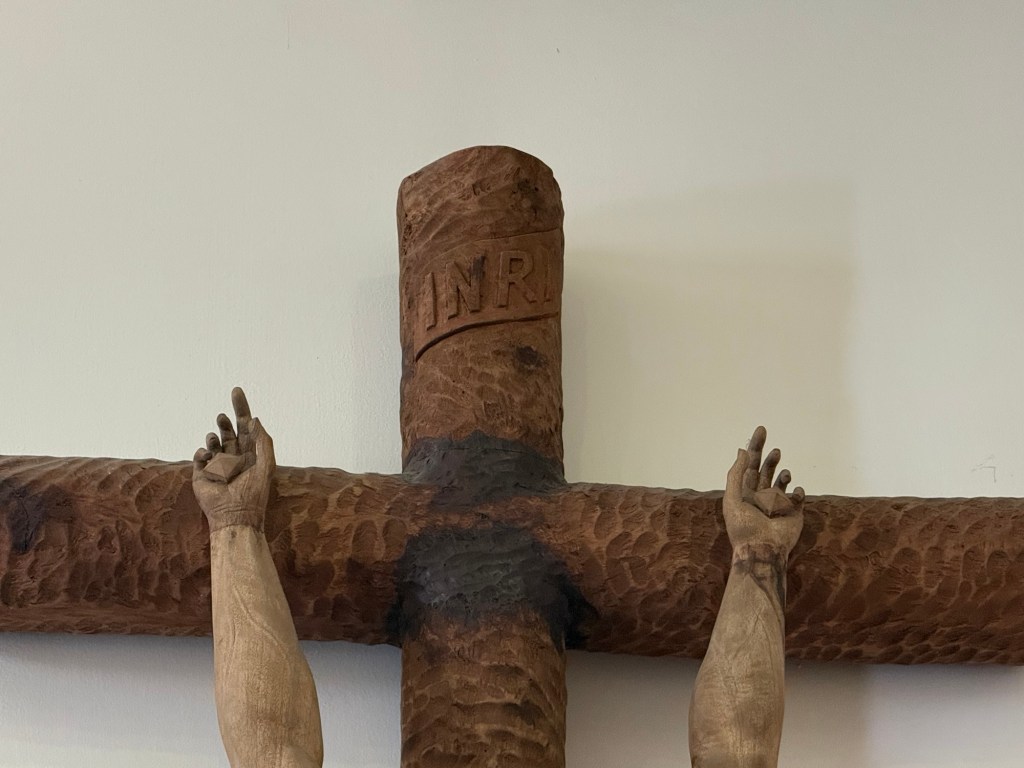
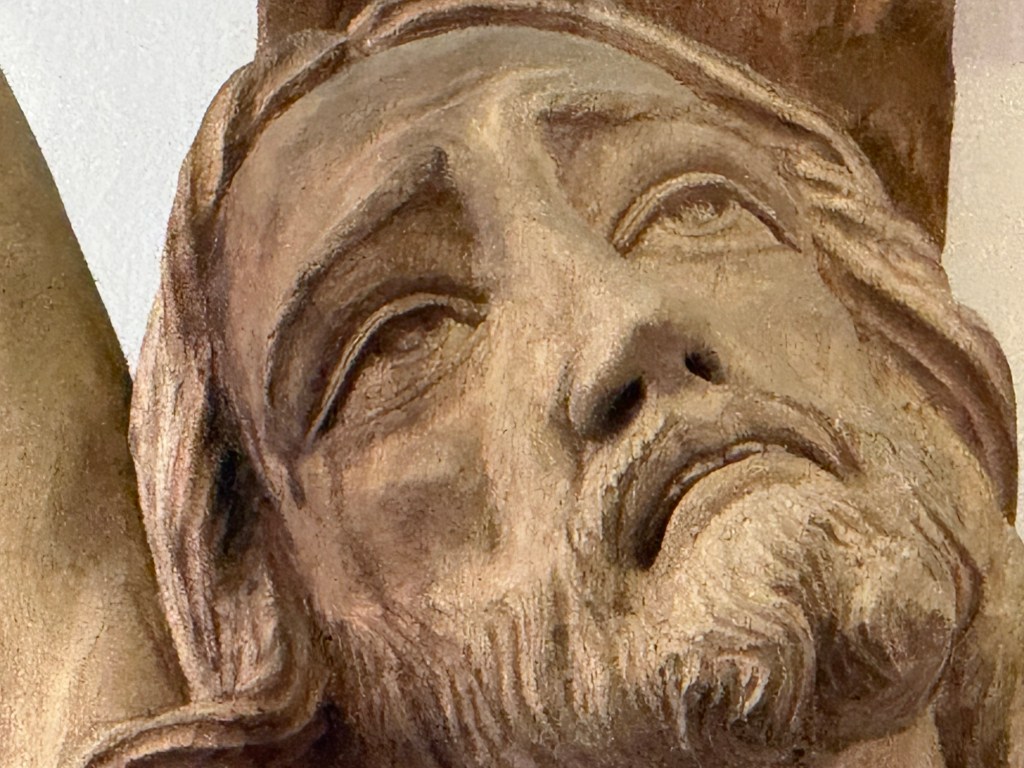
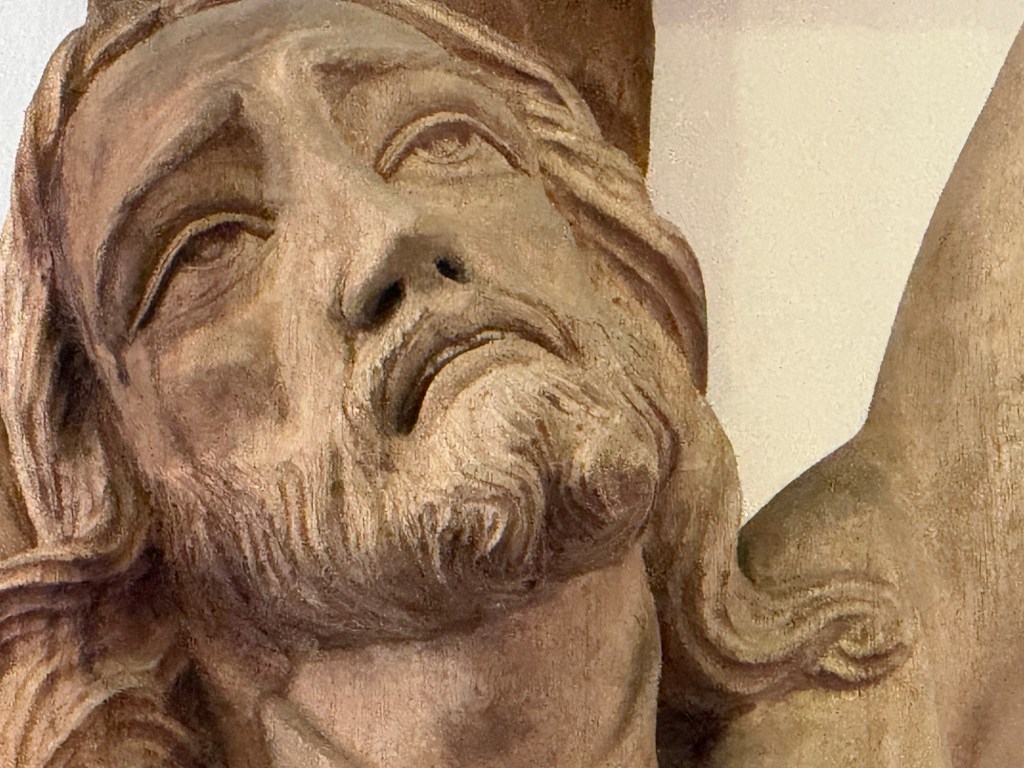
The heart of the priest

Lord My Chef Daily Recipe for the Soul, 04 August 2025
Monday, Memorial of St. John Baptiste Marie Vianney, Priest
Numbers 11:4-15 <*{{{{>< + ><}}}}*> Matthew 14:13-21
St. John Baptiste Marie Vianney from https://liturgiadashoras.online/.

People complain and ask me why our patron saint, St. John Baptiste Marie Vianney is always portrayed “unattractive” as old, balding and so thin who seemed to be so tired, even sad. Para daw hirap na hirap.

Usually I smile at them because when I entered the seminary, I felt the same way too upon seeing his images. But as I learned about his life and teachings, the more I realized St. John Baptiste Marie Vianney is actually one of the original “rock star” saints of the Church with his white, balding hair so much like Jimmy Page of Led Zeppelin!

There is something so deeply within him when we try to feel and observe his portrayals in the arts as more than images but a reality and experience of a man deemed weak yet so strong with an intensity of a Michael Jordan in his life and ministry. He was another St. Paul who had truly let “Christ lived in him” (Gal. 2:20), “strongest when weakest” (2Cor.12:10) who declared with conviction that “the priesthood is the love of the heart of Jesus.” Hence in my prayers last night and today, I asked Jesus to give me a heart “so big, so wide to welcome everyone and life’s many challenges” (https://lordmychef.com/2025/08/03/praying-with-our-patron-saint-john-baptiste-marie-vianney/).

Detail of a painting of the Sacred Heart of Jesus at Visitation Monastery, Marclaz, France from godongphoto / Shutterstock.

The readings this Monday of the eighteenth week in Ordinary Time perfectly jibed the celebration of the Memorial of St. John Baptiste Marie Vianney as they spoke of the heart of the priest.

In the first reading we heard of Moses lamenting to God of the difficulty in dealing with his people who were so stubborn and refused to recognize God’s immense love for them, so similar with us priests in many occasions when we feel so frustrated and sad when parishioners fail to see the good things we are doing for them.

When Moses heard the people, family after family, crying at the entrance of their tents, so that the Lord became very angry, he was grieved. “Why do you treat your servant so badly?” Moses asked the Lord. “Why are you so displeased with me that you burden me with all this people?”… I cannot carry all this people by myself, for they are too heavy for me. If this is the way you will deal with me, then please do me the favor of killing me at once, so that I need no longer face this distress” (Numbers 11:10-11, 14-15).

Many times, we priests feel like Moses who cannot voice out problems with the people who would never understand it at all. Worst, people would even blame us priests why we work so hard or why do we bother at all with their lives. “Pabayaan na lang ninyo kami…sanay na kami” are what they often say. It can be frustrating when people refuse to match the fire and ardor of their priests.

In this scene, we find one of the many instances in the life of Moses that was centered on God in prayers. The heart of the priest is a heart in prayer. The attitude of Moses in the first reading conversing with God in prayer shows us that in our life and ministry, there is no one to turn to except God alone with whom we can be our most personal self, even dare God to “take us” or “kill us” when we are so fed up. The good news is, God never took those words seriously as he knew Moses and the prophets including us who spoke to him that way never knew what we were saying at all.

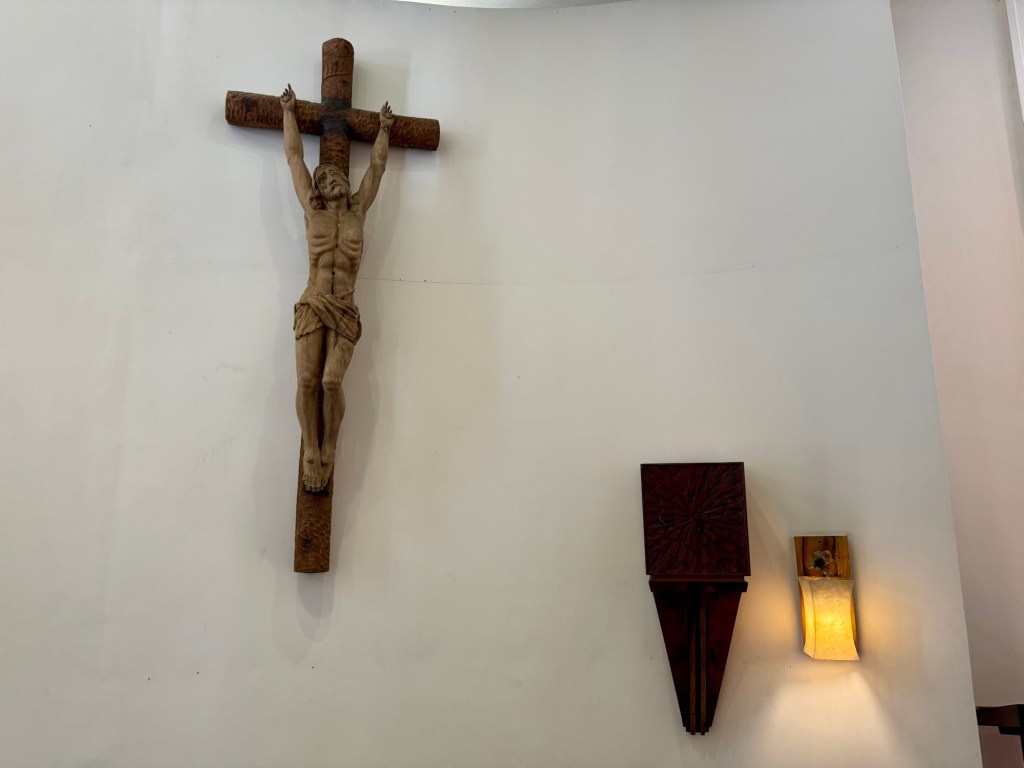
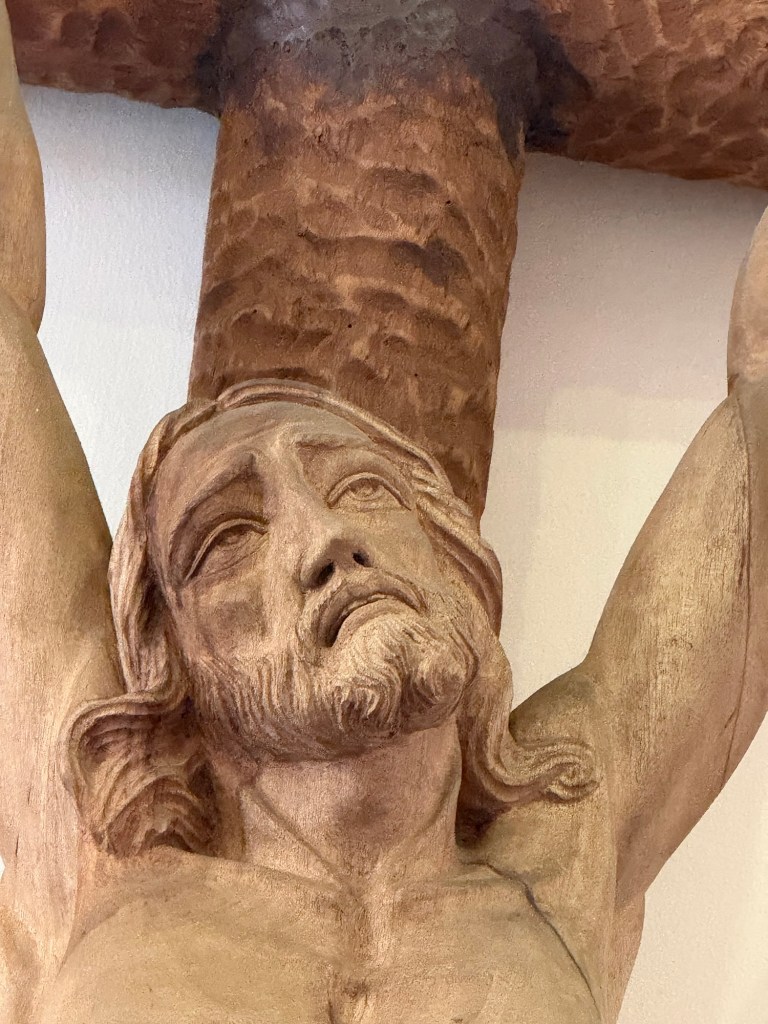
There is a saying that goes, “if you can’t bear the heat, leave the kitchen”; but, it cannot be applied with the priesthood that is neither a profession nor a job one can easily walk out from and start into another venture or career. Priesthood is a call or a “vocation” from God; however, priesthood is more of the Caller than the call. It is a life centered on prayer to become like Jesus Christ who alone feels and understands and appreciates all our ups and downs in the ministry. The more we get closer to Jesus in the Cross, the more we experience fulfillment that we would never dare to trade it for anything or anyone else, not even the prettiest woman on earth.

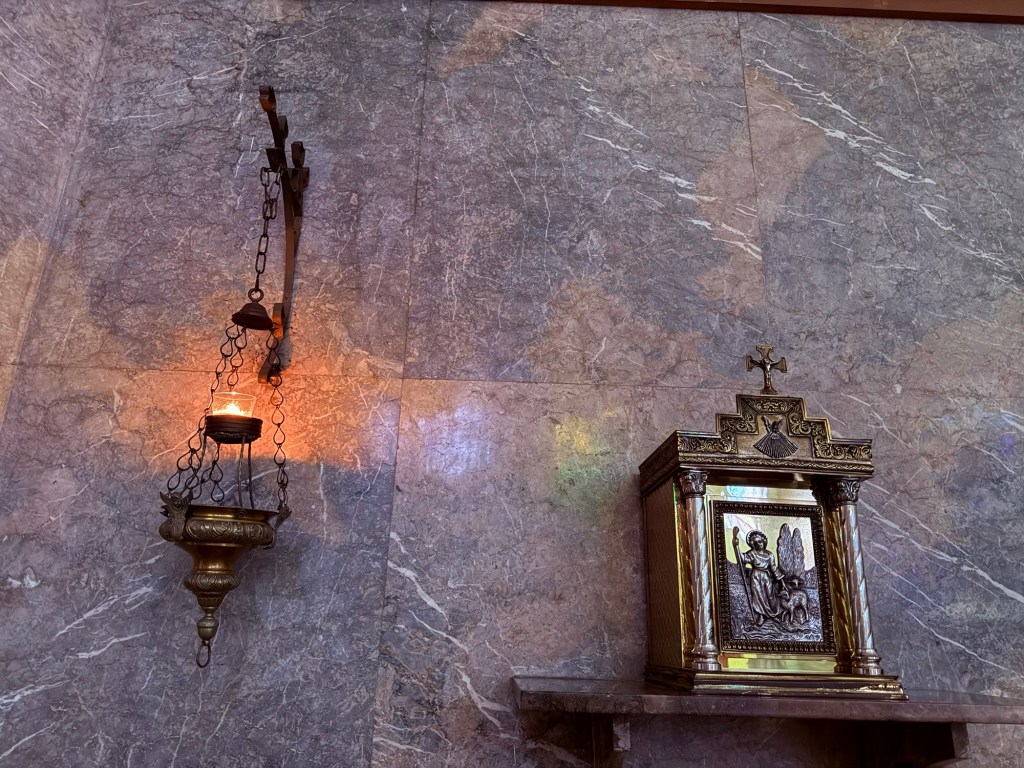
Photo by author, Chapel of St. Francis Xavier, Sacred Novitiate, Novaliches, QC, March 2024.

Priesthood is the love of the heart of Jesus that continues to be wounded and hurt by sins of men and women in this modern age so selfish and materialistic. Thus, every priest is called to be a “wounded healer” too like Christ who in his woundedness healed the wounds of others. We remind people of the paradox and scandal of the Cross of Jesus, of life itself by taking into heart Christ’s teaching, “For whoever wishes to save his life will lose it, but whoever loses his life for my sake will find it” (Mt. 16:25).

Let us now reflect on our gospel.

When Jesus heard of death of John the Baptist, he withdrew in a boat to a deserted place by himself. the crowds heard of this and followed him on for from their towns. When he disembarked and saw the vast crowd, his heart was moved with pity for them, and he cured their sick (Matthew 14:13-14).

Observe the brevity of Matthew in narrating the situation at the scene without losing its very soul and meaning especially for us priests: Jesus did not have any intentions to go after Herod nor to challenge him for his execution of John the Baptist who spoke the truth.

Instead, Jesus sought solitude. Like Moses in the first reading, Jesus turned to God in his grief and anguish of the death of John the Baptist. He crossed the lake to pray and be one with the Father to pour out his sadness and most of all, to reflect on what to do next after John’s death.

Jesus shows us in this scene of his going into solitude that our low points in life as priests are also our high points like Christ’s Transfiguration. Every prayer moment is a transfiguration moment because that is when we get closest with Jesus. It has been consistently proven in our collective and personal experiences as priests verified by studies that crises in the priesthood happen when we stop praying because that is detaching from Jesus Christ, our Caller.

Priesthood is not only difficult but very difficult starting with the vestments we have to wear. What a shame when priests prefer to do away with the proper vestments as well as wearing of shoes during celebrations of the Mass and other sacraments because the weather is so hot. What then are we going to bear if the weather is already a big issue for us? One of the teachings of St. John Vianney that I have always followed is the value of putting on good vestments in the celebration of Sacraments because they are a homily in themselves, proclaiming the glory and love of God for us all.

Photo by FlickrBrett Streutker from catholic365.com.

Many times, people forget priests have personal concerns and problems too, that we get hurt, get lonely, get sick and grieve at the death of family and friends. Despite all these lows in our life as priests, we go and follow the Caller Jesus Christ when people come and ask for our help and service. Woe to our brother priests who forget this and think more of themselves especially of their comfort!

See how when Jesus was praying in solitude and the crowd followed him, it was not difficult for him to forget his own worries that his heart was moved with pity upon seeing them disembarked from their boats. Despite his sadness at the death of John, Jesus taught the crowd who have followed him and healed the sick among them. And when the Twelve told him to drive away the crowd to search for their own food and lodging, Jesus told them to give them food themselves. What followed was the great miracle of the feeding of over five thousand people from five loaves of bread and two pieces of fish. It was the event that prepared the Twelve and the people to the Last Supper of the Lord and the road to Emmaus where Jesus was recognized at his “breaking of bread”.

The whole life of St. John Baptiste Marie Vianney was a prayer of praise and thanksgiving to God in Christ’s priesthood. He had a heart so big and wide, hearing confessions daily up to 16 hours! Pray for us your priests to have big hearts too to bear all the wounds and hurts because only the heart that suffers, that is “broken” can truly sing of the joys and pains of living, of the sense and meaning of serving to the point of being emptied, and of the healing and transforming power of Christ’s love and mercy. Amen. Pray for us your priests. Salamuch. Fr. Nicanor F. Lalog II, Our Lady of Fatima University, Valenzuela City (lordmychef@gmail.com).

 have not been to France nor do I know French but while searching for images of St. John Marie Vianney, I found this from the French website, https://www.notrehistoireavecmarie.com/; it is perhaps the depiction of the new pastor speaking to the young Antoine whom he asked for directions to Ars.

Praying with our patron saint, John Baptiste Marie Vianney

Lord My Chef Daily Recipe for the Soul, 04 August 2025
Monday, Memorial of St. John Baptiste Marie Vianney, Priest
Numbers 11:4-15 <*((((>< + ><))))*> Matthew 14:13-21
I have not been to France nor do I know French but while searching for images of St. John Marie Vianney, I found this from the French website, https://www.notrehistoireavecmarie.com/; it is perhaps the depiction of the new pastor speaking to the young Antoine whom he asked for directions to Ars.
On this feast of our Patron Saint,
John Baptiste Marie Vianney,
I praise and thank you dear Jesus
for the gift of vocation to the priesthood;
thank you for calling me to become your priest;
thank you for the courage and strength
to accept your call;
most of all, thank you for your patience
in me despite my repeated sins
and failures as your priest.

Onn this feast of our Patron Saint,
John Baptiste Marie Vianney,
I pray to you Lord Jesus
our Eternal Priest to give me
a big heart,
a heart so wide to welcome
everyone and life's many
challenges.

When Jesus heard of death of John the Baptist, he withdrew in a boat to a deserted place by himself. the crowds heard of this and followed him on for from their towns. When he disembarked and saw the vast crowd, his heart was moved with pity for them, and he cured their sick (Matthew 14:13-14).

Photo by FlickrBrett Streutker from catholic365.com.
O Jesus,
only a heart so wide
like yours can take those
kind of "beatings" -
to withdraw in silence,
perhaps cry in silence,
to be hurting alone with
the pain of the suffering and
death of a brother in ministry;
you bore all our pains
and went straight to the Father
to find solace and strength
for the terrible news nobody else
would really feel nor understand;
make me a good,
loving brother to other priests,
Jesus;
on the other hand,
despite your grief and sadness,
you did not drive away the crowd
so eager to have you in feeding them
with your words and teachings,
in healing their sick notwithstanding
the pains you have in the death of
John the Baptist; where did you get
that kind of immense feeling of
oneness with the crowd
that when you saw them,
your "heart was moved with pity
for them" and cured their sick
and eventually fed them not only
with your words but with true bread!
That is why I pray
for a bigger heart as your priest,
Lord Jesus -
a heart so big to willingly accept
and bear every pain
and hurt in your name
because only a wounded heart
like yours can truly sing
of the joys and pains of living,
of the sense and meaning of serving,
of the healing power of your love.
Detail of a painting of the Sacred Heart of Jesus at Visitation Monastery, Marclaz, France from godongphoto / Shutterstock.
Forgive me, Jesus,
when many times I feel like
giving up,
complaining to you
like Moses
in today's first reading,
hurting deep inside
when your people could not
see and realize
all the good things you have
been doing for them;
hence,
I pray for a big heart
to bear the pains and
disappointments of your people
even if they are not reasonable
nor valid at all;
most of all,
give me a big heart,
Lord,
because according to
St. John Baptiste
Marie Vianney,
"the priesthood
is the love
of the heart
of Jesus."
Amen.

St. John Baptiste Marie Vianney,
Pray for us priests!
Amen.

Fr. Nicanor F. Lalog II, Our Lady of Fatima University, Valenzuela City (lordmychef@gmail.com).

From https://liturgiadashoras.online/.

The inner journey in Christ of St. James the Greater

Lord My Chef Daily Recipe for the Soul, 25 July 2025
Friday, Feast of St. James the Greater, Apostle
2 Corinthians 4:7-15 <*{{{>< + ><}}}*> Matthew 20:20-28

Something struck me while praying the gospel for today’s feast of St. James the Greater – of how his mother approached Jesus with a request for him and his brother James “that these two sons of mine sit, one at your right and the other at your left, in your Kingdom” (Mt. 20:21).

It must be a very interesting company that Jesus had organized during his ministry composed not only of the Twelve and other disciples but most likely with so many others too that included their families like the mother of James and John believed to be the beloved disciple of Jesus. Traditionally known as Salome, their mom could easily be the patroness of “stage mothers” that abound most especially in the Philippines!

But kidding aside, it must be wonderful to tag along with them in following Jesus where everyone is welcomed. It is a journey not meant to cover distances and places but actually an inner journey inside one’s self that we shall see in the life of James the Greater. It is a journey that begins right here in our heart when we too, like James leave everything to follow Jesus.

For astonishment at the catch of fish they had made seized him and all those with him, and likewise James and John, the sons of Zebedee, who were partners of Simon. Jesus said to Simon, “Do not be afraid; from now on you will be catching men.” When they brought their boats to the shore, they left everything and followed him (Luke 5:9-11).

Photo by author, San Juan, La Union, 26 July 2023.

It must have been difficult for James to leave everything including their father Zebedee and follow Jesus. See that in the description by Luke of their call by Jesus, James and John as well as the brothers Simon and Andrew were all “rich kids” with their own fishing boats with hired men as workers at that time!

Clearly, money was not a problem with James and his buddies; however, one thing was missing in them – meaning and direction in life which they found in Jesus while listening to his preaching and finally in that miraculous catch of fish. I have always felt that perhaps, Zebedee allowed his two sons to leave him and their business for the same reasons so that they mature in life and be more responsible. We find this trace of attitudes or sense of entitlement in the brothers James and John when they asked Jesus to rain fire upon a Samaritan village that have refused them passage on their way to Jerusalem (Lk.9:54-56). Hence, Jesus named them as Boanerges for “sons of thunder” (Mk.3:17) due to their temperament.

In following Jesus, James had to learn the hard way the process of formation and transformation in Jesus that began in his heart. All along their journey from the shores of Galilee to Jerusalem, James remained by the side of Jesus Christ, probably unaware of that inner journey taking place right inside his heart to truly become a part of God’s Kingdom by sharing in the Lord’s Passion, Death and Resurrection. He had seen and experienced along with the other Apostles the great powers of Jesus not only in preaching but most especially in calming the storms, walking on sea, exorcising evil spirits, healing all kinds of sickness, and even raising to life some who have died.

Most of all, James was privileged to have witnessed along with his brother John and Peter the two important stops in Jesus Christ’s journey to the Calvary: first, on Mount Tabor for the Transfiguration and second, at Gethsemane for the agony in the garden. In both events in the life of our Lord, James was a privileged witness of his coming glory and then of his passion and death. Our gospel today on his Feast is sandwiched between these two major events of the Transfiguration and Agony in the Garden as this is set shortly before Palm Sunday when Jesus entered Jerusalem that led to his sacred pasch.

Jesus said in reply, “You do not know what you are asking. Can you drink the chalice that I am going to drink?” They said to him, “We can.” He replied, “My chalice you will indeed drink, but to sit at my right and at my left, this is not mine to give but if for those for whom it has been prepared by my Father.” When the ten heard this, they became indignant of the two brothers. But Jesus summoned them and said, “You know that the rulers of the Gentiles lord it over them, and the great ones make their authority over them felt. But it shall not be also among you. Rather, whoever wishes to be great among you shall be your servant; whoever wishes to be first among you shall be your slave. Just so, the Son of Man did not come to be served but to serve and to give is life as a ransom for many” (Matthew 20:22-28).

Painting by El Greco, “Pentecostes” (1597) from commons.wikimedia.org.

It would only be after Easter and the Pentecost when all these major stops in James’ personal journey with Christ would become clear to him and the other Apostles. Eventually, he became the first Apostle to be martyred as Bishop of Jerusalem during the persecution by King Herod of Agrippa in 40 AD (Acts 12:1-2), fulfilling Christ’s words to him that he would indeed “drink from his chalice” to be with him in his Kingdom.

A thousand years later, devotion to James the Greater would spread far and wide in Spain after relics of his body were discovered in Santiago de Compostela. It is one of the world’s oldest and most popular pilgrimage site known as the Camino de Santiago de Compostela (the way of St. James).

Every year, pilgrims from all over the world do the camino from various points of Europe to the Cathedral of Santiago de Compostela where the Apostle’s body is buried as a spiritual hike or retreat and journey for spiritual growth.

Like James the Greater, the camino is more than the kilometers or miles covered but the journey within one’s self that leads to deeper faith in Christ by living out his gospel as portrayed in its marker and symbols of a staff and scroll of the gospel proclaimed by the Apostle .

A marker along the camino de Santiago de Compostela.

It is my fervent prayer that some day I will be able to do a camino de Santiago de Compostela but for the mean time, we strive to continue in following the steps of James the Greater in making that inner journey within one’s self, beginning in our heart by leaving our “boats” of security to remain always at the side of Christ even if he has to smoothen our rough edges as a person and cleanse us of our sins that prevent us in drinking his chalice to be one in his Kingdom. The key is to serve, not to be served as Jesus insisted.

Sometimes in life, we just have to make “sakay” as we used to say as in “sakay lang ng sakay” or “ride on, man, ride on” without really knowing where our trip would lead us.

James the Greater simply made “sakay” in Jesus without knowing Christ was already fulfilling his wish of “drinking from his chalice” which proved that, indeed, the longest journey in life is the distance between the mind and the heart (Dag Hammarskjold). Amen. Have a blessed weekend! Fr. Nicanor F. Lalog II, Our Lady of Fatima University, Valenzuela City (lordmychef@gmail.com).

*All photos from Camino de Santiago de Compostela courtesy of Fr. Jigs Sta. Rita.

Sacred Heart para sa “cold heart” at “heartless world”

Lord My Chef Daily Recipe, Fr. Nicanor F. Lalog II
Solemnity of Sacred Heart, 27 June 2025
Detalye ng painting ng Sacred Heart of Jesus sa Visitation Monastery, Marclaz, France mula sa godongphoto / Shutterstock.

Nag-senior citizen ako noong Marso at masasabi ko na sa tanang buhay ko, itong 2025 ang pinaka-mainit at maalinsangang taon sa lahat. Mula pa man noong dati, gabi lang ako gumagamit ng aircon ngunit mula nitong Abril, maghapon na ako kung mag-aircon sa silid. Kung minsan nga ay pati electric fan binubuksan ko kapag gabi sa labis na init ng panahon nitong nagdaang tag-araw.

Hindi lamang minsan ko narinig ang maraming nagsabing parang “impierno” ang summer 2025 dahil para sa atin, sukdulan ang apoy sa impierno kaya napaka-init.

Subalit ayon kay Dante Alighierri, isang batikang makata ng Italya noong unang panahon na sumulat ng Divine Comedy, ang kailaliman daw ng impierno ay hindi naman pagka-init-init dahil sa apoy kungdi pagkalamig-lamig parang yelo!

Ayon sa kanyang tula na nobela, ang pinaka-masaklap aniya sa lahat ng kasalanan at kasamaan magagawa ng tao ay ang manlamig ang puso. Magkaroon ng “cold heart” sa Ingles hanggang sa mawalan na ng puso ang mga tao gaya ng sinasaad sa isa pang English expression na “heartless world.”

Larawan mula sa forbes.com 2018, fashion week sa New York.

Ang mga katagang ito na cold heart at heartless world ay mas mainam na huwag nang isalin sa ating sariling wika sapagkat mas mananamnam at mailalarawan natin ang kahulugan sa wikang Ingles kesa sabihing malamig na puso o daigdig na walang puso. Kapag sinabing cold heart o malamig na puso, ito ay patay na puso, walang buhay parang bangkay. O bato. Kapag ang mga tao ay naging ganito, mismo ang daidig ay wala na ring puso, walang pagmamahal, walang awa, walang malasakit, walang pakialam.

Gayon ang kahulugan ng puso para sa sangkatauhan – hindi lamang ito sumasagisag sa pag-ibig at pagmamahal kungdi sa buhay. Sa malasakit, sa kabutihan, maging sa kaalaman gaya ng sinasaad ng English expression na “to know by heart” na ibig sabihin ay makabisado, matandaan.

At paano natin tinatandaan ang mga bagay-bagay? Ito ay ating inire-record na mula sa dalawang kataga ng wikang Latin, re (uliting muli) at cord na mula sa cor o puso. Alalaong-baga, ang tandaan, ang memoryahin at kabisaduhin ay isapusong muli sapagkat dito sa ating puso natatago ang lahat-lahat ng ating alaala at kaalaman maging pakiramdam gaya ng kutob na nagsasaad ng pakiramdam at kaalaman na di maipaliwanag ngunit totoo.

Higit sa lahat, dito sa ating puso nananahan ang Diyos sa atin gaya ng sinasaad ng dokumento ng Vatican II sa makabagong mundo (Gaudium Spes). Kaya ngayong Dakilang Kapistahan ng Kamahal-Mahalang Puso ni Jesus, pinapaala sa atin ng pagdiriwang ito ang hiwaga ng katotohanan ng pag-ibig ng Diyos sa lahat ng tao sa lahat ng panahon.

Hindi tayo nabibigo sa ating pag-asa, sapagkat ang pag-ibig ng Diyos ay ibinuhos sa ating mga puso sa pamamagitan ng Espiritu Santo na ipinagkaloob sa atin. Sapagkat noong tayo’y mahihina pa, namatay si Cristo sa takdang panahon para sa mga makasalanan. Mahirap mangyaring ialay ninuman ang kanyang buhayn alang-alang sa isang mabuting tao. Ngunit ipinadama sa atin ng Diyos ang kanyang pag-ibig sa atin nang mamatay si Cristo para sa atin noong tayo ay makasalanan pa (Roma 5:5-8).

Gayon na lamang ang pagmamahal ng Diyos sa atin – hindi masukat gaya ng pahayag ni Jesus kay Nicodemo dahil ito ibinubuhos hindi inuunti-unti, hindi tinitingi. Binubuhos. Palaging marami ang pag-ibig na kanyang binibigay sa atin sapagkat napakalaki ng kanyang puso ni Jesus.

Lahat tayo kasya sa kanyang napakalaking Puso kaya tayo man ay inaanyayahan ni Jesus na lumusong at maglublob sa kanyang puso kung saan ang kanyang pag-ibig ay naghahanap sa nawawala at naliligaw; pag-ibig na umuunawa at umiintindi sa naguguluhan at nalilito; pag-ibig na palaging bukas at tumatanggap sa sino mang ibig manahan, tumahan kung umiiyak sa lungkot at hapis.

Ito ang Puso ni Jesus na sinasaad ng larawan ng isang Mabuting Pastol gaya ng propesiya ni Ezekiel sa Unang Pagbasa at mismong kinukuwento ni Jesus sa kanyang talinghaga sa ebanghelyo ngayon.

Makakapasok lamang tayo sa Kamahal-Mahalang Puso ni Jesus kapag atin munang pinasok ating sariling puso kung saan mismo siya nananahan sa atin. Palagi nating sinasabi ang puso ang sentro ng ating katauhan at iyan ay totoo kasi nga doon din nananahan si Jesus.

Subalit dahil sa ating mga kasalanan, sa marami nating hilig at kagustuhan at sinusundang ibang diyus-diyosan, nawawala tayo sa puso ni Jesus dahil ang totoo, nawawala na rin ating puso. Ang pinaka-simpleng paliwanag ng kasalanan na aking ginagamit palagi ay ito: sin is a refusal to love.

Ang kasalanan ay pagtanggi na magmahal. Mula sa salitang ugat na sala na ibig sabihin ay sumala o magmintis o hindi magampanan dapat gampanan, ang kasalanan ay sumala sa iisang atas ni Jesus na magmahal. Sa tuwing hindi tayo nagmamahal, tayo ay nagkakasala. Kapag tayo ay nababad sa kasalanan, nagiging manhid tayo kaya di na tayo makaramdam ng iba at kapwa. ?Dito na manlalamig ang ating puso dahil tayo ay mahihiwalay na sa iba at kapwa, wala na tayong pakialam. Tayo ay napuputol at nag-iisa, hiwalay sa Diyos at kapwa, maging sa ating sariling katauhan kaya madalas ang mga makasalanan ay hindi makapagmahal kasi nga nawawala sa sarili.

At ganyan ang takbo ng daigdig ngayon, kanya-kanya, wala sa sarili tila baga bawat isa kaya lahat na lang dinaraan sa pera-pera. Ang lahat na lamang ay sinusukat, kinukuwenta, tinatantiya katulad ng algorithm sa social media kung saan nakukuha ang marami nating pattern sa buhay gaya ng mga hilig at gusto. Nagiging “commodity” na lamang ang tao ngayon, parang produkto at kasangkapan na ginagamit, binebenta at binibili.

Huwag nating hayaang magpatuloy na lamang ito na ang mundo ay manatiling materyal lamang – malamig at manhid, walang pakiramdam. Ibalik natin ang buhay, ang ating pagkatao na pakikibahagi sa buhay ng Diyos na nanahan dito sa ating puso. Gaya ng talinghaga ni Jesus, ang Diyos ay hindi isang observer na tagamasid o spectator na manonood lamang ng takbo ng ating buhay ng mga tao. Kaya sinugo ng Ama si Jesus sa atin sapagkat mula pa man noon ibig niyang makilahok sa buhay natin dangan lamang ay lagi natin siyang pinupuwera. Lalo ngayon sa makabagong panahon na pilit inaalis na ang Diyos sa buhay ng tao!

Larawan mula sa Pinterest.com.

Sa Sacred Heart ni Jesus, muling nabubuo ang tao sa kanyang sarili at ang sangkatauhan sapagkat ang pag-ibig niya ay pag-ibig na hinahanap ang mga sira at pira-piraso nating sarili upang makumpuni at mabuong muli. Ipinapaalala sa atin ng Kamahal-Mahalang Puso ni Jesus ang pag-ibig ng Diyos ay hindi isang ideya lamang o dalumat na nakalutang sa alapaap kungdi nakatapak sa lupa – isang pag-ibig na aktibo, marubdob at matalik na nakikipag-ugnayan gaya ng ating mga naranasan noong tayo ay gulung-gulo, litong-lito, nawawala at halos wala nang saysay ang buhay. Buhaying muli ating mga puso upang maranasan tunay na kagandahan ng buhay ng tao, hindi ng robot o makina. Ating dasalin palagi:

O Jesus na mayroong
maamo at mapagkumbabang Puso,
Gawin Mong ang puso nami'y
matulad sa Puso Mo!
Amen.

Generosity & trust

Lord My Chef Daily Recipe for the Soul by Fr. Nicanor F. Lalog II
Wednesday in the Eleventh Week in Ordinary Time, Year I, 18 June 2025
2 Corinthians 9:6-11 ><}}}*> + ><}}}*> + ><}}}*> Matthew 6:1-6, 16-18
Photo by the author, La Mesa Dam Eco-Park, QC, February 2023.
What will it take 
for me to be a cheerful giver,
Lord?
Maybe, first I must have that
complete trust in you,
Jesus Christ;
no one can be generous
unless one trusts completely
God the source and giver
of all good things in life.

Brothers and sisters: Whoever sows sparingly will also reap sparingl, and whoever sows bountifully will also reap bountifully. Each must do as already determined, without sadness or compulsion, for God loves a cheerful giver. Moreover, God is able to make very grace abndant for you, so that in all things, always having all you need, you may have an abundance for every good work (2 Corinthians 9:6-8).

St. Paul's words in 
today's first reading echoed
your teachings, Jesus
in today's gospel,
of the need to do everything
from the heart,
not to please others,
but God alone;
to do anything from the heart
calls
demands
trust!
I have been through 
moments of abundance
when sometimes I was generous
and sometimes not generous at all,
when giving was "costly" despite
still having a lot for myself.

Why?

It was not really of the abundance
that I have in my hands that make
me generous, Jesus
but the abundance of faith and
trust I have in you in my heart;
teach me, Jesus
to be more trusting
in you
in order to be more loving
so that I may be generous,
whatever I may have in my hands,
whether I have less or more.
Amen.
Detail of a painting of the Sacred Heart of Jesus in the Visitation Monastery in Marclaz, France. (photo: godongphoto / Shutterstock)

Praying for joy

Lord My Chef Daily Recipe for the Soul by Fr. Nicanor F. Lalog II
Friday in the Sixth Week of Easter, 30 May 2025
Acts 18:9-18 <*((((>< + ><))))*> John 16:20-23
Photo by author, Cabo da Roca, Pundaquit, San Antonio, Zambales, 14 May 2025.
In a few days you are
going to "leave" us, Jesus;
this Sunday is your Ascension,
your physical departure from us
and you described so well our situation:

Jesus said to his disciples: “Amen, amen, I say to you, you will weep and mourn, while the world rejoices; you will grieve, but your grief will become joy. When a woman is in labor, as she is in anguish because her hour has arrived; but when she has given birth to a child, she no longer remembers the pain because of her joy that a child has been born into the world. So you also are now in anguish. But I will see you again, and your hearts will rejoice, and no one will take your joy away from you. On that day you will not question me about anything. Amen, amen, I say to you, whatever you ask the Father in my name he will give you” (John 16:20-23).

What has been "born"
in me in your Rising from the dead?
What is that joy like a woman
in the pangs of childbirth
suddenly becoming a joy so
incomparable?
Oh, it is that joy of having you
in my heart, Jesus:
I have found joy more in my heart
than outside of me;
your joy is that assurance
you are with me always
no matter what,
as certain as the rising and
the setting of the sun,
as lovely as the blooming of flowers,
soothing like the hush of the wind
or the gushing of water in a river
or the rush of the waves to
the shore.
Keep that joy in my heart,
Jesus that no one can take away;
a joy in my heart that even
if I do not receive the things
I ask in prayer,
I still believe,
I still hope,
I still rejoice
in you.
Sorry, Jesus,
I still question you on anything
despite that joy of knowing you,
of having you
but many times I wonder
why all the pains and sufferings
with me and those close to me;
there are times,
Lord that I lose my heart
that I could not feel that joy of you
when you don't answer
my prayers.
But, 
to still keep on praying
even if it not answered at all
is already pure joy in you,
Jesus!
Like peace,
true joy is so difficult
and elusive when not found
in you, Jesus
that we always have to wait
for you,
feel you,
suffer and cry with you
and sometimes die in you
so that joy shall be
born in us
again
and again
and again.
Amen.
Photo by author, Cabo da Roca, Pundaquit, San Antonio, Zambales, 14 May 2025.

Life is a direction, a daily Lent

40 Shades of Lent by Fr. Nicanor F. Lalog II
Ash Wednesday, 05 March 2025
Joel 2:12-18 ><}}}*> 2 Corinthians 5:20-6:2 ><}}}*> Matthew 6:1-6, 16-18

Life is a daily Lent, a journey towards Easter.

We go through a pasch everyday like Jesus Christ’s Passion, Death and Resurrection when we “pass over” from sin into grace, from darkness into light, from death into life.

Life is a daily Lent because everyday, we go through an “exodus” from another day to the next new day, from sunset to sunrise. However, Lent as a journey is about direction, not destination. This we find clearly at the start of our 40-day journey of Lent with Ash Wednesday.

“Even now, says the Lord, return to me with your whole heart, with fasting, and weeping, and mourning; Rend your hearts, not your garments, and return to the Lord, your God” (Joel 2:12-13).

It is strange that while Jesus Christ asked us in the gospel to “Take care not to perform righteous deeds in order that people may see them; otherwise, you will have no recompense from your heavenly Father” (Mt.6:1), what we are doing this Ash Wednesday is exactly the opposite!

Alam na this… that if you meet anyone with ashes on his/her forehead, definitely he/she is a Catholic who had gone to Mass or at least had observed Ash Wednesday.

There are some who would surely be teased by friends as being too serious as they practice abstinence by avoiding meat today and on Fridays this Lent. Most likely too, many would be giving alms today in the collections for the poor in the parishes all because for the reason it is Ash Wednesday.

These three pillars of Lent – prayer, fasting and alms-giving are not only meant for this Season that lasts only for 40 days but something we are hoped to practice the whole year through until we are slowly transformed into the likeness of Jesus Christ.

The purpose of Jesus in asking us in the gospel to do these all in secret is to avoid falling into the trap of the people of His time who flaunted to everyone their prayer, fasting and alms-giving, forgetting God in the process because focus had been on them. And yes, it continues among us that we have religiosity without spirituality, devotion without evangelization.

Moreover, to practice these in secret is actually to enter into our very selves, into our hearts where God dwells, where we meet Him personally.

Our Lenten journey becomes a direction when we take it into our hearts, when we open and rend our hearts to let Jesus come and dwell within by letting Him empty us of our pride to be filled with His humility, justice and love.

Lent then becomes a direction leading us not only to daily Easter but ultimately to our eternal salvation not just in heaven or any “place” but to be one with the Person of God Himself and the persons along the way we shall meet with whom we are called by Christ to be one with in Him.

Therefore, Lent as a direction is an inner transformation as companions in Christ.

In this age of WAZE and GPS, we can easily seek directions to a particular destination. Problem with being focused more on destination is we miss the fun and adventure of every journey. When we reach our destination, what do we do? 

We cross out from our list of travel goals every destination that we make and start looking for new places to visit until we have been to every place on earth that we plan to visit the Moon and Mars next! Eventually we get tired with travels and after covering so many distances and destination, we still feel lacking and incomplete. There is no more destination to go to that we confront ourselves with the existential question, is this really what I need most in life? Is this all?

To see life more as a direction means to find its meaning in God that we keep on maturing, we keep on sustaining our journey in Him and with Him. It does not matter wherever He leads me or where I go or stay because what matters most is I am in and with God.

Lent is entering God in and through Jesus Christ.  It is going back to Him, staying in Him and with Him in love. This is the reason why we fast, we empty ourselves even our sights and other senses so that we become more sensitive to God’s presence. There are no flowers, no decors, no Alleluia, no Gloria in the church and liturgy. Everything is bare essential so we are not distracted in finding and following God right in our hearts.  

Recall the first time you truly fell in love, when truly loved that you literally see and hear even smell your beloved everywhere and in everyone. You always thought it is your beloved whom you saw walking or speaking somewhere but it wasn’t really she! Akala mo lang…

When we truly love, the time and place are not important because all we have are the here and the now together.

Oh how easy to say we love God or somebody!  But if we try to probe deeper into ourselves, we find that we have not truly loved God or anyone that much because in many instances, we always prevail over them.  We choose our own will than God’s or our beloved’s.

That is when we sin as we turn away from God and our beloved. To sin is not just to break laws and turn away from God and our beloved but ultimately a refusal to love which is actually losing one’s direction in life.

Lent is the wonderful season of finding again our direction in life, our true love, God.  Love needs no justifications.  And we can only love persons, not things. Hence the need for oneness, for reconciliation as St. Paul asked us in the second reading to be “reconciled with God” (2 Cor.5:20).

Working together, then, we appeal to you not to receive the grace of God in vain. For he says: In an acceptable time I heard you, and on the day of salvation I helped you. Behold, now is a very acceptable time; behold, now is the day of salvation (2 Corinthians 6:1-2).

Now is the best time to find our life direction in God in our personal and communal worship and practices this Lent. When you find your direction, you find God, yourself and others. And that is when you find joy and peace which is Easter, the direction of every Lent and life. Amen.

The heart of the disciple, the heart of discipleship

The Lord Is My Chef Sunday Recipe for the Soul by Fr. Nicanor F. Lalog II
Eighth Sunday in Ordinary Time, Cycle C, 02 March 2025
Sirach 27:4-7 ><}}}}*> 1 Corinthians 15:54-58 ><}}}}*> Luke 6:39-45
Photo by Denniz Futalan on Pexels.com

The last time we have celebrated the eighth Sunday in Ordinary Time Cycle C was in 2001 when just like this year, the Season of Lent started late in March. In fact, the other last two Sundays of sixth and eighth in Cycle C were last celebrated in 2010 and 2007, respectively.

It is worth noting this because as Jesus delivered his Sermon on the Plain, we find that contrary to claims by many in this modern time, the teachings of Christ are actually taken directly from life as he reveals to us the truth in our hearts. Two Sundays ago, Jesus taught us the paradoxical happiness of our lives, of being poor, hungry, weeping, and maligned than rich, filled, laughing and well-spoken of; last Sunday, he taught us of the need to love truly that is rooted in God by loving without measure, loving even our enemies.

This Sunday, Jesus tells us something we often debate about as it usually puts us into a bind even a quandary on what to say and do.

Jesus told his disciples a parable, “Can a blind person guide a blind person? Will not both fall into a pit? Why do you notice the splinter in your brother’s eye, but do not perceive the wooden beam in your own eye? How can you say to your brother, ‘Brother, let me remove that splinter in your eye,’ when you do not even notice the wooden beam in your own eye? You hypocrite! Remove the wooden beam from your eye first; then you will see clearly to remove the splinter in your brother’s eye” (Luke 6:39, 41-42).

Photo by author, Hidden Valley Springs Resort, Calauan, Laguna, 20 February 2025.

Very often in many instances, most of us choose to be quiet than speak out against evil and other irregularities among us and in our society because of this teaching of the Lord. Many are afraid to notice the splinter in the brother’s eye lest they too might have a wooden beam blocking their views of themselves.

And that is why, evil persists everywhere that eventually, many of us become silent partners in the many sins happening around us which is very far from the demands of Jesus for us to choose what is right and good, to always make a stand for him even on the Cross.

See the flow of the Sermon on the Plain, of how Jesus is first of all never condemning nor judgmental of anyone. We have reflected his four “woes” were actually invitations for the rich et alii to change their ways in life, to think more of things that do not pass like wealth and other material things.

Secondly, last Sunday, Jesus directed our intentions into our hearts, to probe our hearts and find his grace of supernatural or divine love poured in there so that we can love selflessly without measure like him.

This Sunday, Jesus still directs us into our hearts, to examine whether we are truly his disciple or a hypocrite as someone who says something yet does the opposite. It is not opposite his exhortation last week for us to be merciful like God our Father rather a challenge to examine what we practice, our Christian praxis.

“A good tree does not bear rotten fruit, nor does a rotten tree bear a good fruit. For every tree is known by its own fruit. For people do not pick figs from thornbushes, nor do they gather grapes from brambles. A good person out of the store of goodness in his heart produces good, but an evil person out of a store of evil produces evil; for from the fullness of the heart the mouth speaks” (Luke 6:43-45).

Photo by Mr. Lorenzo Atienza, leftmost section of the stained glass at the National Shrine of Our lady of Fatima in Valenzuela City, 25 February 2025.

It is clearly a lesson in holiness, in integrity of every disciple! Do we walk our talk? The most basic norm of morality is that what we know in our mind and what we feel in our heart is what we say and therefore what we do.

Where are we now? Everybody is speaking about corruption while the devils celebrate everywhere as we are all entangled in all forms of corruption not only in the streets and government offices but even in our homes, in schools and offices and yes, right inside the church in many parishes.

Now we come full circle with Christ’s opening to his parable, Can a blind person guide a blind person? And this is what is now happening in the world, in our lives, in our country and in our parishes. Nobody would want to speak because nobody would want to examine one’s heart and follow the path of Jesus.

It is in our deeds that one is recognized as a true disciple. Let us not forget that. And let us not be afraid to examine constantly the value of our many ways and practices.

Photo by author, St. Paul Spirtuality Center, Pico, La Trinidad, Benguet, 05 January 2025.

One of the famous bishops and saint both recognized by the Eastern and Western Churches is St. John Chrysostom who served as Archbishop of Constantinople until the early 400’s. He is called the “golden mouthed” because of his gift in eloquence most true in his witnessing Christ, always meaning what he said like in this homily that sounds so 2025:

The Church is in an extremely critical state, and you think that all is going well. The fact is that we are plunged into countless sins, and we do not even know it!

You wonder why. We hav e churches, money, and everything else. There are places for assembly, people come there everyday; surely this is not nothing?

But it is not thus that we judge the state of the Church. Then how?, you ask.

Whether we lead a truly Christian life. Whether everyday we make ourselves spiritually more rich, bearing fruit, whether great or small; if we are not content simply with flfilling the law and expediting our religious duties.

Who is a better person, after having frequented the church all month?

This is what we must look for! After all, even what appears to be a good action is only a bad action, when one does not follow it up… If we bring nothing to fruition through it, it would be better to stay home (from Days of the Lord, vol. 6, page 62).

Photo by Mr. Lorenzo Atienza, 25 February 2025.

The kind of life we lead is the final test of our discipleship, the proof of what is in our hearts. St. Francis of Assisi used to tell his followers whenever they would preach to use only their mouth if necessary. Our actions speak louder than our words.

This is the biggest problem in the Church today: our lack of credibility as bishops and priests when our lives are far from what we say and teach.

God shared with us his power of the words. In the Bible, we find how his words and his being are always one since the story of creation into the coming of Jesus Christ who could heal with just mere words being the word who became flesh.

This is the whole point of Ben Sirach in our first reading this Sunday, reminding us that inasmuch as the potter knows the quality of his work after it has passed through fire, the same thing is most true with our words. We have to harness and master our speech, our words so that we walk what we talk.

We master our power of the words in our prayer life as St. Paul assured us in today’s second reading how in the Lord our labor is not in vain (1 Cor. 15:58). Let us pray to the Holy Spirit especially this Sunday as we approach the Season of Lent with Ash Wednesday. Let us keep our zeal for Christ not nonly for his words and teachings but most especially in his life and witnessing. Amen. See you at Ash Wednesday.

Campus Ministry, Our Lady of Fatima University, Valenzuela City.

Refresh our hearts, Jesus…

The Lord Is My Chef Daily Recipe for the Soul by Fr. Nicanor F. Lalog II
Thursday in the Thirty-Second Week of Ordinary Time, Year II, 14 November 2024
Philemon 7-20 <*[[[[>< + + + ><]]]]*> Luke 17:20-25
Photo by Ms. Ria De Vera at Banff, Canada, August 2024.
Refresh my heart today,
Jesus; refresh my heart
that has become hard like a stone
because of the many pains
and hurts;
refresh my heart, Lord,
that has become numb to the
cries and pleas of others in pain;
refresh my heart, Jesus,
that has turned away from you
because of many disappointments;
please refresh my heart,
dear Lord because I am so tired
of being by myself.
Like Philemon,
I feel life has been so unfair,
with me asking like Jeremiah
in the Old Testament,
"why should doing good
be repaid with evil?";
and yes, like St. Paul,
many times I find the gospel
so difficult to balance with the
ways and realities of the world
that like the computer,
I need to be "refreshed"
in you, Jesus to be truly responsive
and faithful to you.
Refresh me in you alone,
Jesus, for you are the only one
who is our life and meaning;
you are the kingdom of God within
I refuse to reign over me due to sin;
refresh me in you, Jesus,
by being faithful to you in my prayer life,
of making time,
of keeping our time together
instead of looking for your many
physical signs when all along,
you have always been in me
if I just stop and be silent
to let you refresh me;
refresh me, Jesus
so I may also refresh others in you.
Amen.
Photo by Dra. Mylene A. Santos, MD, an orange-bellied flowerpecker (Dicaeum trigonostigma), December 2023.

Timeless

The Lord Is My Chef Daily Recipe for the Soul by Fr. Nicanor F. Lalog II
Friday, Memorial of St. Vincent de Paul, Priest, 27 September 2024
Ecclesiastes 3:1-11 <*((((>< + ><))))*> Luke 9:18-22
Photo by Mr. Howie Severino of GMA7 News in Taal, Batangas, 2018.

There is an appointed time for everything, and a time for every affair under the heavens. He (God) has made everything appropriate to its time, and has put the timeless into their hearts, without men’s ever discovering, from beginning to end, the work which God has done (Ecclesiastes 3:1, 11).

How lovely
and mysterious
are your words today,
God our Father;
you have appointed time
for everything,
making everything appropriate
to its time,
and has put the timeless
into our hearts.
We live and move
in time,
through time
measured and taken
in various ways
seen in the past,
the present,
and the future;
there is the inescapable
dimension and reality
we keep on freezing momentarily,
hoping to go back in the past
while we are so eager
to know what is to happen
next in the future.
Let Jesus Christ 
your Son reign in our hearts
that we may always live
in the present moment of
every here and now,
the timeless in our hearts
with our fervent loving service
to you through others;
like St. Vincent de Paul,
let us be rooted in you,
Jesus, living in the present,
lovingly serving the poor
and needy among us;
but most of all,
make our hearts
attuned in you, Jesus,
in prayer to experience
the timeless
even right here
in this life.
Amen.
Photo by Vincenzo Malagoli on Pexels.com