Christmas is God at home with us; are we at home with God?

The Lord Is My Chef Sunday Recipe for the Soul by Fr. Nicanor F. Lalog II
Feast of the Holy Family, Cycle C, 29 December 2024
1 Samuel 1:20-22, 24-28 ><)))*> 1 John 3:1-2, 21-24 ><)))*> Luke 2:41-52
Photo by author of a depiction of the Holy Family near the main door of St. Joseph the Worker Parish in Pacdal, Baguio City, 28 December 2024.

You must have heard of the classic song “A House Is Not A Home” composed by the great tandem of Burt Bacharach and Hal David recorded by Dionne Warwick in 1964 for a movie of the same title. It went back to charts in 1981 when the late Luther Vandross covered it in his first album.

It is a very lovely ballad of a love lost, teaching us that indeed, “a house is made of walls and beams while a home is made of love and dreams”.

A chair is still a chair
Even when there's no one sitting there
But a chair is not a house
And a house is not a home
When there's no one there to hold you tight
And no one there you can kiss good night

A room is still a room
Even when there's nothing there but gloom
But a room is not a house
And a house is not a home
When the two of us are far apart
And one of us has a broken heart

But, in the Hebrew language and Jewish thought, the word “house” in itself connotes relationships. There are no distinctions between a house and a home for them that is why we find Jesus claiming the temple as His Father’s house.

Pope Francis opening the Jubiliee Door at St. Peter’s in Rome to launch the start of the Jubilee Year of 2025. Photo by Maurix/Gamma-Rapho via Getty Images.

In fact, the first letter of the Hebrew word for God (Yahweh) is actually shaped as a door or a house. That is why there is the blessing of church doors in dioceses today worldwide following the blessing and opening of the Jubilee Door at St. Peter’s in the Vatican by Pope Francis last Christmas Eve to launch the Jubilee Year. The Jubilee Door signifies our passing through, an entering into a relationship with God.

In John’s gospel we find Jesus as an adult using the word “house” twice when He cleansed the temple, telling everyone to “stop making my Father’s house a marketplace” (Jn.2:16) and at their last supper when He assured the disciples, “In my Father’s house there are many dwelling places or rooms” (Jn.14:2).

The only other occasion Jesus used the word “house” to mean the same thing as John was when He was found by His parents in the temple as we heard today on this Feast of the Holy Family.

Each year Jesus’ parents went to Jerusalem for the feast of Passover, and when he was twelve years old, they went up according to festival custom. After they had completed its days, as they were returning, the boy Jesus remained behind in Jerusalem, but his parents did not know it. After three days they found him in the temple… When his parents saw him, they were astonished, and his mother said to him, “Son, why have you done this to us? Your father and I have been looking for you with great anxiety?” And he said to them, “Why were you looking for me? Did you not know that I must be in my Father’s house?” But they did not understand what he said to them (Luke 2:41-43, 46, 48-50).

“The Finding of the Savior at the Temple” painting by William Holman Hunt (1860) from en.wikipedia.org.

We find in the story of the finding of Child Jesus in the temple that even at a very young age, Jesus had always been clear with His oneness in God by always referring to the temple as His “Father’s house”.

As we have reflected in December 19 in Luke’s first Christmas story, the annunciation of John’s birth to his father Zechariah while incensing at the temple in Jerusalem during a major Jewish feast that Christmas begins in the church where we gather to praise and worship God as a community. See how this Sunday after Christmas our many empty pews in the church. How sad that many Catholics after Christmas have totally disregarded the Sunday Mass, going to all the vacation spots here and abroad with many of them having no qualms at all that this is the “day of the Lord”, a Sunday obligation.

Again, here is Luke in his artistic narration of Christmas into Christ’s adolescence insisting on us the importance of communal worship and prayer. Not surprising that of the four evangelists, Luke is the one who presented Jesus always at prayer as an expression of His oneness or communion in the Father and he wants us hearers of his gospel account to cultivate that same communion with God in Jesus, with Jesus, and through Jesus.

Christmas is essentially Jesus Christ becoming human so that God may be “at home” with us humans as John beautifully wrote in his prologue we heard last Christmas Day, “And the Word became flesh and made his dwelling among us” (Jn.1:14).

But, are we at home with God in Jesus?

Photo by author, the small entrance door leading to the Church of the Nativity in Bethlehem where one needs to bow low literally and figuratively to enter Christ’s birthplace.

On this Feast of the Holy Family, our gospel reminds us this Sunday of how even Mary and Joseph had trouble with their adolescent son Jesus like most parents these days, a kind of family conflict so familiar with many people everywhere.

What a lovely scene today this Christmas season amid widespread reports of child kidnappings and so many children caught in the middle of many conflicts among adults like wars in many parts of the world and worst, right inside every family, right in their house, or homes where there are no relationships at all.

Luke was a physician who understood very well the anguish and sufferings of many people, especially parents during his time that continue to these days. In narrating to us this sad episode of his Christmas stories when Jesus was lost but eventually found in the temple, Luke is assuring us that despite all the darkness and troubles that engulf many families today, we have a very loving, personal God in Christ always with us.

Photo by author, picture taken from the inside of the Church of the Nativity in Bethlehem of its small entrance door.

Mary and Joseph did not understand what Jesus meant that He must be at His Father’s house but it did not deter them from exploring its meaning so that only Mary with John and two other women remained with Christ at the foot of the Cross on that Good Friday.

How lovely that Mary and those others at the foot of the Cross were the ones truly “at home” with the Lord, in the Lord! The same thing speaks so true with Joseph who in his silence was so “at home” with God in Jesus, whether awake or asleep. He kept that relationship with God alive through Mary and those others around him especially Jesus.

As an adult approaching His pasch, Jesus assured His disciples including us today of having a dwelling place or room in His Father’s house in heaven – that, despite our many sins, God would never cut off His ties with us in Jesus, with Jesus! That is how God loved us so much as the author of the Letter to the Hebrews reminds us “God is greater than our hearts and knows everything” (1Jn.3:20).

Like Hanna the mother of the child Samuel, let us start cultivating this relationship with God even while still very young. It does not really matter if we destroy and cut it so often; what matters is we keep on trying to let it grow anew for it is and would never ever get lost again. Thanks to Christmas!

That is why I personally insist in my homilies and writings that we keep greeting everyone with a Merry Christmas until January 12, the Feast of the Baptism of the Lord that closes the Christmas season. It is still Christmas after all!

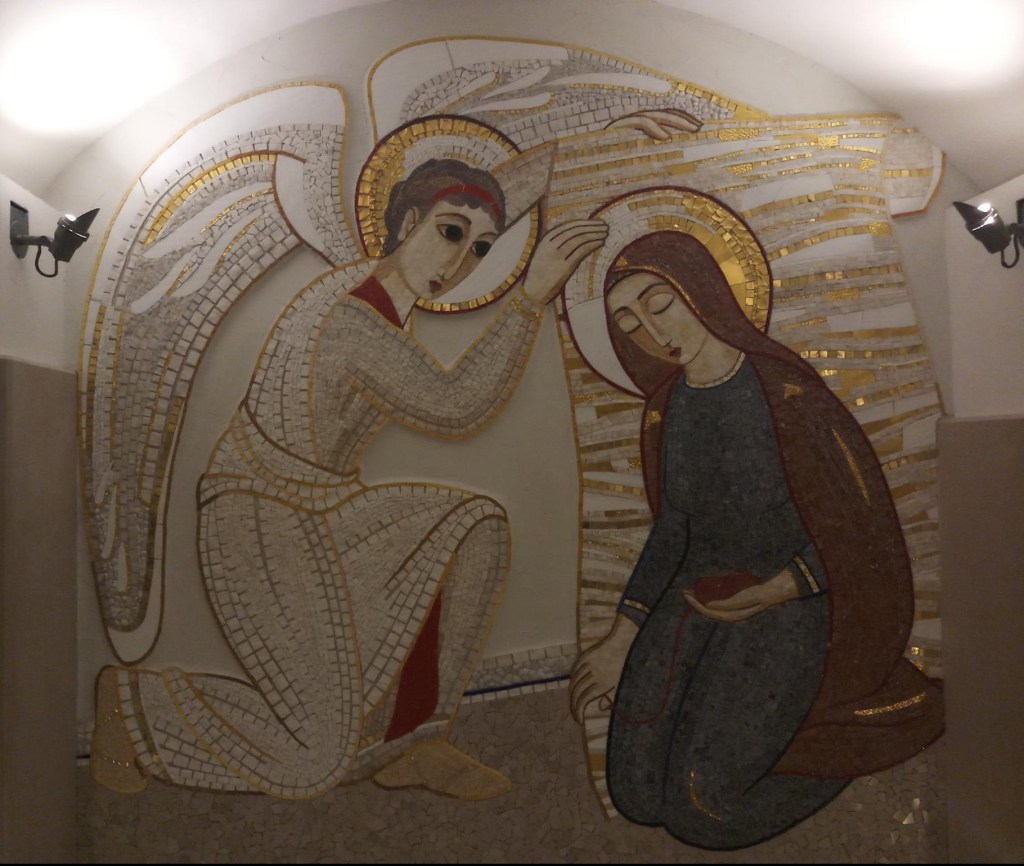
Photo by author, Chapel of the Angel of Peace, RISE Tower, Our Lady of Fatma University, Valenzuela City, Christmas 2024.

Like Mary and Joseph, let us keep coming back to God symbolized by Jerusalem and its temple now replaced with our churches. Let us go back to prayer and to Sunday Masses to find Jesus again present in the signs and symbols of the liturgy and most of all, in everyone present celebrating His coming.

Let us continue the story of Christmas with our relationships with God through others, of our being at home with the Father in Jesus Christ who “advanced in wisdom and age and favor before God and man” (Lk.2:52) after this episode which closed Luke’s Christmas account.

Let us be at home with God and with one another in Jesus, with Jesus, and through Jesus. May you continue to have blessed Christmas Season. Amen.

Becoming a “yeast” for others

The Lord Is My Chef Daily Recipe for the Soul by Fr. Nicanor F. Lalog II
Monday, Memorial of St. Peter Claver, Priest, 09 September 2024
1 Corinthians 5:1-8 <*((((>< + ><))))*> Luke 6:6-11
Photo by Life Of Pix on Pexels.com
God our loving Father, 
make me a yeast,
a leaven for your people,
bringing them into
a community,
a communion.

Do you not know that a little yeast leavens all the dough? Clear out the old yeast, so that you may become a fresh batch of dough, inasmuch as you are unleavened. For our Paschal Lamb, Christ, has been sacrificed. Therefore, let us celebrate the feast, not with the old yeast, the yeast of malice and wickedness, but with the unleavend bread of sincerity and truth (1 Corinthians 5:6-8).

Many times, 
we in the Church fail
to recognize the importance
of corporate witness to
the Gospel as one body;
many times,
we pretend to be blind
and deaf and mute
in the evil pervading among us,
afraid of hurting others feelings,
worst, afraid of being unmasked
in living a double standard life;
straighten our lives,
Lord Jesus like that man
with a withered hand in the synagogue;
straighten our paths to your
righteousness as we discern
justice and mercy and love
whenever there are some
of us on the wrong side of the road.
Like St. Peter Claver
who called himself a
"slave of the slaves forever"
in his pioneering work among the
African slaves in in Colombia,
grant us the grace of courage
and strength to dare start the
impossible of being a yeast,
a leaven to the people
transforming them into
witnesses of your Gospel.
Amen.
Photo by Nadin Sh on Pexels.com

The gift of communion

The Lord Is My Chef Daily Recipe for the Soul by Fr. Nicanor F. Lalog II
Wednesday, Feast of St. Thomas, Apostle, 03 July 2024
Ephesians 2:19-22 <*{{{{>< + ><}}}}*> John 20:24-29
From the the Catholic Diocese of Little Rock, Arkansas, dolr.org.
Praise and glory to You,
God our Father
for your gift of the Church,
the Body of Christ built on the
foundation of the Apostles as a
community of faith,
hope,
and love!
Thank You for the gift
of St. Thomas also known as
Didymus; though he was not
present on the evening of Easter
when the Risen Lord appeared
to his fellow disciples,
he joined them eight days
later to be with them,
most especially with Jesus;
what a beautiful gesture
of him who could not
believe of the Resurrection;
what a gift of courage for him
to submit himself to actual tests
to prove to himself that
Jesus had risen;
most of all,
his goodwill to be one
in communion
with his brother Apostles
and Lord Jesus.

Brothers and sisters: You are no longer strangers and sojourners, but you are fellow citizens with the holy ones and members of the household of God, built upon the foundation of the Apostles and prophets, with Christ Jesus himself as the capstone. Through him the whole structure is held together and grows into a temple sacred in the Lord, in him you also are being built together into a dwelling place of God in the Spirit (Ephesians 2:19-22).

Let us keep those words
of St. Paul, dear Jesus,
"Through him
the whole structure
is held together
and grows into a temple
sacred in the Lord,
in him you also are being built
together into a dwelling place
of God in the Spirit":
what will happen if we
destroy this communion
in You and with You through
one another?
What could have happened
if St. Thomas remained adamant
with his "doubts" and never came to join
the other Apostles on that eighth day after
Easter?
Caravaggio’s painting “The Incredulity of St. Thomas” (1602) from en.wikipedia.org.
Lord Jesus Christ,
teach me to have the
healthy doubts of St. Thomas,
to dare test himself,
not You nor others,
to find You, the Truth;
grant us the humility to
accept and embrace
not only your wounds
but also those wounds
of our fellow disciples
because the twofold communion
with God and with one another
is inseparable -
wherever communion with God
in the Father, and the Son,
and the Holy Spirit is destroyed,
the root and source of our communion
with each other is destroyed too;
whenever we do not live communion
among ourselves, communion with
God is not alive and true either.
Like St. Thomas,
enlighten us with your light
and truth, Jesus,
to see you
among one another
to live in communion.
Amen.

St. Thomas the Apostle,
Pray for us!

Healing our community

The Lord Is My Chef Daily Recipe for the Soul by Fr. Nicanor F. Lalog II
Wednesday, Memorial of San Roque, Healer, 16 August 2023
Deuteronomy 34:1-12   ><)))*> + ><)))*> + ><)))*>   Matthew 18:15-20
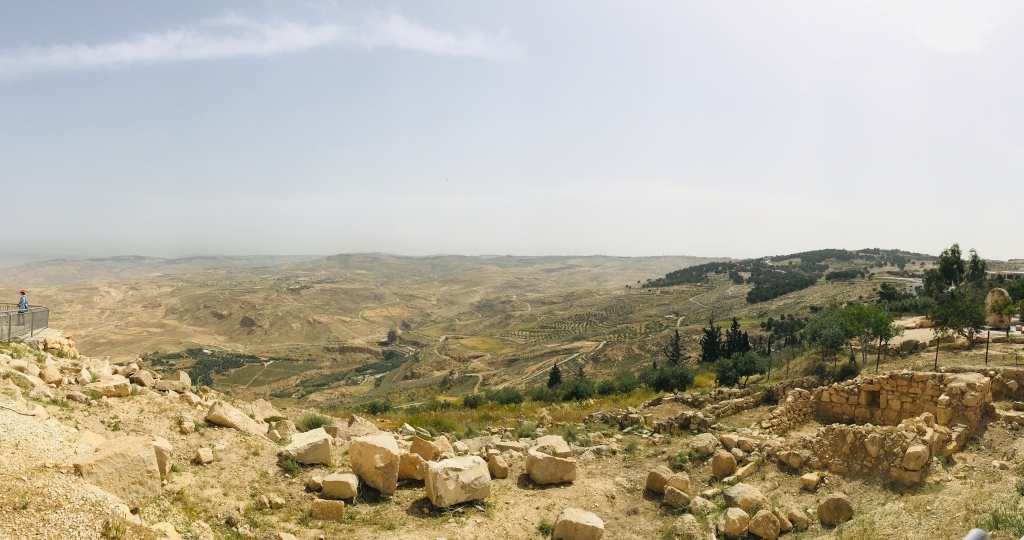
Photo by author, view of Israel from Mt. Nebo in Jordan, May 2019.
God our loving Father,
today we thank you for the gift
of another popular saint among us,
San Roque or St. Rock of France;
he was like Moses, Joshua,
and our Lord Jesus Christ
who primarily worked for the
"healing" of our community,
of your chosen people.

Invoked in time of pestilence
like in the recent pandemic,
San Roque cared and cured many 
sick people infected during a plague
in Italy in the 14th century;
when he caught the disease himself,
he hid in the woods to die so that
others may not be infected through him;
but, in your divine providence, O Lord,
you sent him a dog that licked his wounds
and brought him bread until he was saved 
by its owner until he could finally get home 
to settle the disputes among his relatives 
when an uncle usurped his position
and inheritance from his late father,
the former governor of Montpellier.
Today you remind us, O Lord,
to always care for the unity of
our community that includes our
family, our church, our school even our
office where you call us to gather as one;
like Moses who spent all his life
keeping your chosen people united in you,
may we also work for the common good 
of our designated community.

What a beautiful sight to behold of Moses
seeing the Promised Land from Jordan!
More than our home here on earth,
give us a glimpse of your heavenly
dwelling, dear God, by continuing
your works of leading our community
close to you like Joshua who succeeded Moses.
Teach us to forgive and correct
those who sin and err with humility
and sole concern of being good
and holy like you, O God,
never to put others into shame
nor to look as better than others;
in the name of Jesus Christ your Son,
help us to work for our unity so that
"whenever two or three of us are
gathered in his name, he may truly be
in our midst" (Mt.18:20), 
reflected and mirrored in our community
as we live in justice and mercy,
love and kindness
and holiness.
Amen.
Photo by author, view of Israel from Mt. Nebo, Jordan, May 2019.

Conquering the world

The Lord Is My Chef Daily Recipe for the Soul by Fr. Nicanor F. Lalog II
Monday after the Ascension, Memorial of St. Rita of Cascia, Religious, 22 May 2023
Acts 19:1-8   ><]]]]'> + ><]]]]'> + ><]]]]'>   John 16:29-33
Photo by Mr. Mon Macatangga, 12 May 2023.
Thank you dear Jesus
for conquering the world for us
(John 16:33) in your Passion,
Death and Resurrection;
Your gift of the Holy Spirit
affirms each day in us your
conquest of the world.

Forgive us, dear Lord,
when so many times we refuse
to let your Holy Spirit
operate and work in us;
so many times we take your
 Holy Spirit for granted 
that we are easily
attracted and swayed by others
to leave our Catholic faith
when we see "the light" in other
Christian sects and other 
modern beliefs.
Remind us, O Jesus,
that to live in the Holy Spirit 
and conquer the world is to nurture
its dwelling in us in prayers and the
sacraments, particularly the Holy Eucharist
which animates and empowers us to come
in close contact with other faithful to form
your Body, your community of disciples;
Help us, O Christ,
to renew our commitment in Baptism
to proclaim your good news of salvation
in the context of a community of disciples
united and led by the Holy Spirit.
Like St. Rita de Cascia
whose memorial we celebrate today,
give us the courage to
affirm your victory in the world
by being more firm in our stance
for what is right and good,
fair and just and true
in the spirit of a community
and oneness.
Amen.

Schooling in time of COVID-19

Homily by Fr. Nicanor F. Lalog II 
Mass of the Holy Spirit for the College Department
Our Lady of Fatima University, Valenzuela City
06 September 2021
Photo by Dr. Mylene A. Santos, MD, April 2021.
"Those who seek truth seek God,
whether they realize it or not."
- St. Teresa Benedicta of the Cross

Last August 9 we celebrated the memorial of a modern saint who died at the gas chambers of Auschwitz during the Second World War. She was a German Jew named Edith Stein who became an atheist but later regained her faith as she pursued higher learning in the field of philosophy that was so rare for women at that time.

As she progressed into her philosophical studies working as an assistant to Prof. Edmund Husserl known as the “father of phenomenology”, she converted into Catholicism, eventually leaving her teaching post at a university to become a Carmelite contemplative nun, adopting the name Teresa Benedicta dela Cruz.


Congratulations, our dear students in college who dare to learn and seek the truth by enrolling in this Academic Year 2021-2022.

Students and teachers are both seekers of truth. As St. Teresa Benedicta had experienced, every search for truth leads us to God, the ultimate Truth.

This is a very difficult and trying year for us all but like St. Teresa Benedicta and all the other saints as well as great men and women of history, they all sought for the truth in the most troubled time in history. Trials and hardships in life make learning more “fun” – and an imperative at the same time. In fact, the more we must study and search the truth during critical moments in history and in our lives in order to learn more lessons that are valuable not only to us in dealing with our problems but also with the succeeding generations.

Two important virtues we need to cultivate in seeking the truth, in learning our lessons in this time of the pandemic that I hope you, teachers and students will rediscover this Academic Year: patience and humility.


This pandemic may be considered as another Pentecost, 
teaching us the value of patience, 
of patient waiting for everything, 
reminding us that the beauty of life is best experienced 
by allowing nature to take its course, 
without shortcuts nor rush, to enjoy its beauty as it unfolds before us.

Photo by author, 2019.

Patience is from the Latin “patior” that means “to suffer, to bear with.”

Learning is a process. We cannot know everything right away. It requires a lot of patience on every student and teacher.

This is the reason why Jesus assured his disciples at the Last Supper that he would send them the Holy Spirit he referred to as the Advocate.

“When the Advocate comes whom I will send you from the Father, the Spirit of truth that proceeds from the Father, he will testify to me. And you also testify, because you have been with me from the beginning… I have much more to tell you, but you cannot bear it now. But when he comes, the Spirit of truth, he will guide you to all truth.

John 15:26-27, 16:12

In the last 20 years, so much have changed in our lives brought about by modern means of communication.

Great volumes of information have become so readily accessible at great speed, that many in the younger generation have seemed to have lost the virtue of patience. At the snap of your fingers, you can easily have almost everything you need aside from information and music – including food and groceries, clothes and appliances, plants and pets, even medicines and dates!

But life, most especially learning, takes time, requiring a lot of patience in waiting and searching.

Like the Apostles of Jesus who had to wait for the descent of the Holy Spirit at the Upper Room in Jerusalem.

This pandemic may be considered as another Pentecost, teaching us the value of patience, of patient waiting for everything, reminding us that the beauty of life is best experienced by allowing nature to take its course, without shortcuts, to enjoy its beauty as it unfolds before us.

Let our Lord Jesus Christ be our example in following in the path of patience, of suffering; every trial becomes a blessing, a moment of transformation when seen in the light of Jesus Christ who suffered and died for us on the Cross. His very life tells us that there can be no Easter Sunday without a Good Friday.

This pandemic period is an extended Good Friday but in between those moments of sufferings, we experience little Easter if we try to be patient like what some of you have experienced when you graduated in this time of the pandemic.


Photo by author, January 2020.

The second virtue I wish to invite you to rediscover, teachers and students alike, is humility which is again from the Latin word humus that literally means “soil”.

From humus came the words human and humor.

Man was created from clay, a kind of soil. A person with a sense of humor is one who can laugh at things because he or she is rooted on the ground. We call a person with sense of humor in Filipino as “mababaw” or shallow – not empty but close to the ground or deeply rooted.

It is very difficult to learn anything nor discover the truth unless we first become humble. Pride and ego are the greatest stumbling blocks to any kind of learning. You will find in history, even in our personal lives how many opportunities in the past were lost simply because of our pride or “ego trip”.

Pride was the very sin of Adam and Eve that led to their fall. That is why when Jesus came to save us from effects of that Fall, humility became his central teaching when he demanded us to forget ourselves and, most of all, to become like that of a child so we shall enter the kingdom of heaven.

This humility Jesus himself showed us the path by being born like us – small and helpless.

And that has always been the way of God ever since: the small and little ones, those taken for granted, the unknown and rejected are always the ones used as God’s instruments, the ones always effecting the most far-reaching changes in history and our personal lives.

Even in the story of the Pentecost, the coming of the Holy Spirit, we find the centrality of becoming small to become a part of the whole.

It is the exact opposite of the story at Babel when people in the Old Testament dared to build a tower reaching to the skies; because of their pride, God confused them by making them speak different languages that led to the collapse of their tower and ambitions. During the Pentecost, the people were all united as one despite the different languages they speak because everybody was willing to listen, to become small in themselves to give way to others.

Like during the Pentecost, let us allow the “tongues of fire” and the “strong, driving wind” of the Holy Spirit part us of our fears and indifference, pride and ego during this Academic year 2021-2022 to fully realize and learn the important lessons and truth this pandemic is teaching us.

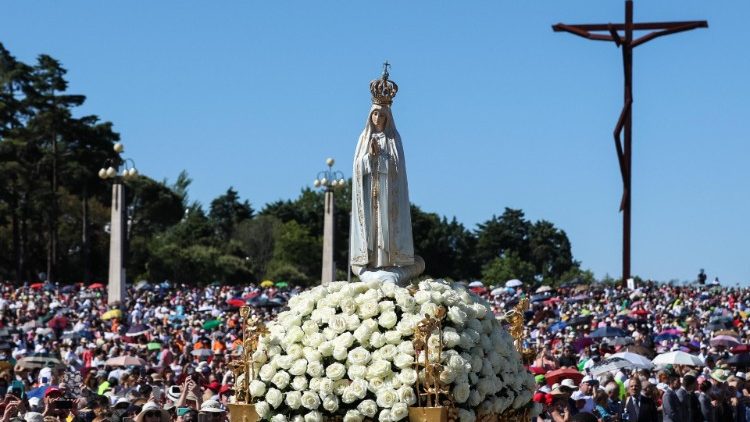
Photo from vaticannews,va, 13 May 2017.

Whenever, and wherever there is a search for truth that leads to the discovery of God through our patience and humility, there springs simultaneously the growth of a community. It is no wonder that wherever there is prayer and worship, there is always learning leading to bonding, or communing.

The first universities – from the Latin term universitas or “community of teachers and scholars” – where all offshoots of the efforts of the monks in their monastery as they evangelized peoples, teaching them not only prayers but also the basics of learning like reading and writing. Eventually monasteries had annex buildings as schools and universities that led to the establishment of towns and cities in Europe that spawned the growth of commerce and trade following the great many interactions among peoples.

Here we find the beautiful interplay of the search for truth that leads to discovery of God that bears fruit into mercy and love among people.

Another learned Saint who sought the Truth, Thomas Aquinas said that the more we learn the truth, the more we become intelligent, the more we must become holy.

How lovely it is, my dear students and teachers of Our Lady of Fatima University that wherever there is Truth which is Veritas, there is also Misericordia, the two mottos of our beloved University.

Amid the threats of COVID-19, amid the difficulties of online learning, let us continue to seek the truth, be patient and humble with one another as we try to build a community of “achievers” by “improving man as man”, “rising to the top” not to be conceited and proud but to be able to offer ourselves in the service of the country and of the world, for the praise and glory of God.

May our Patroness, the Our Lady of Fatima, lead us closer to Jesus Christ who is “the Way, the Truth and the Life.” Amen.

From Facebook.com/fatima.university.

True faith and good health build a community

The Lord Is My Chef Breakfast Recipe for the Soul by Fr. Nicanor F. Lalog II
Wednesday, Week XXII, Year I in Ordinary Time, 01 September 2021
Colossians 1:9-14   ><]]]]'> + ><]]]]'> + ><]]]]'>   Luke 4:38-44
Photo by author, November 2018.
Praise and glory to you,
God our loving Father,
for the gift of life that we have
reached the first day of the "ber"
months leading to Christmas.
Since last year we have been
amusing ourselves with the 
awaited playing of Christmas
carols in September to feel good.
But today, we also feel blessed
for being alive, in keeping the faith
in you.

Brothers and sisters: from the day we heard about you, we do not cease praying for you and asking that you may be filled with knowledge of God’s will through all spiritual wisdom and understanding; to walk in a manner worthy of the Lord so as to be fully pleasing in every good work, bearing fruit and growing in the knowledge of God.

Colossians 1:9-10
While we are all praying
 for more faith and good health
 in this time of another surge,
we continue to pray for the
healing of all those afflicted
with COVID-19, begging you like
Simon Peter for his mother-in-law;
We pray for the healing of the sick
not only in body but also in mind,
heart and soul.
Help us realize that like faith,
good health builds community;
that good health concerns all
because everyone's well-being
depends also with everyone's health.

After Jesus left the synagogue, he entered the house of Simon. Simon’s mother-in-law was afflicted with a severe fever, and they interceded with him about her. He stood over her, rebuked the fever, and it left her. She got up immediately and waited on them.

Luke 4:38-39
Teach us, O God,
to be like Simon Peter's mother-in-law 
to realize that most especially 
in our good health we can help build 
our community and family 
by serving in the name of Jesus
for other's good health
and wellness.
Amen.

What the Holy Spirit does vs. what we can do

The Lord Is My Chef Breakfast Recipe for the Soul by Fr. Nicanor F. Lalog II
Tuesday in the Third Week of Easter, 20 April 2021
Acts 7:51-8:1   <*(((><  +  ><)))*>   John 6:30-35
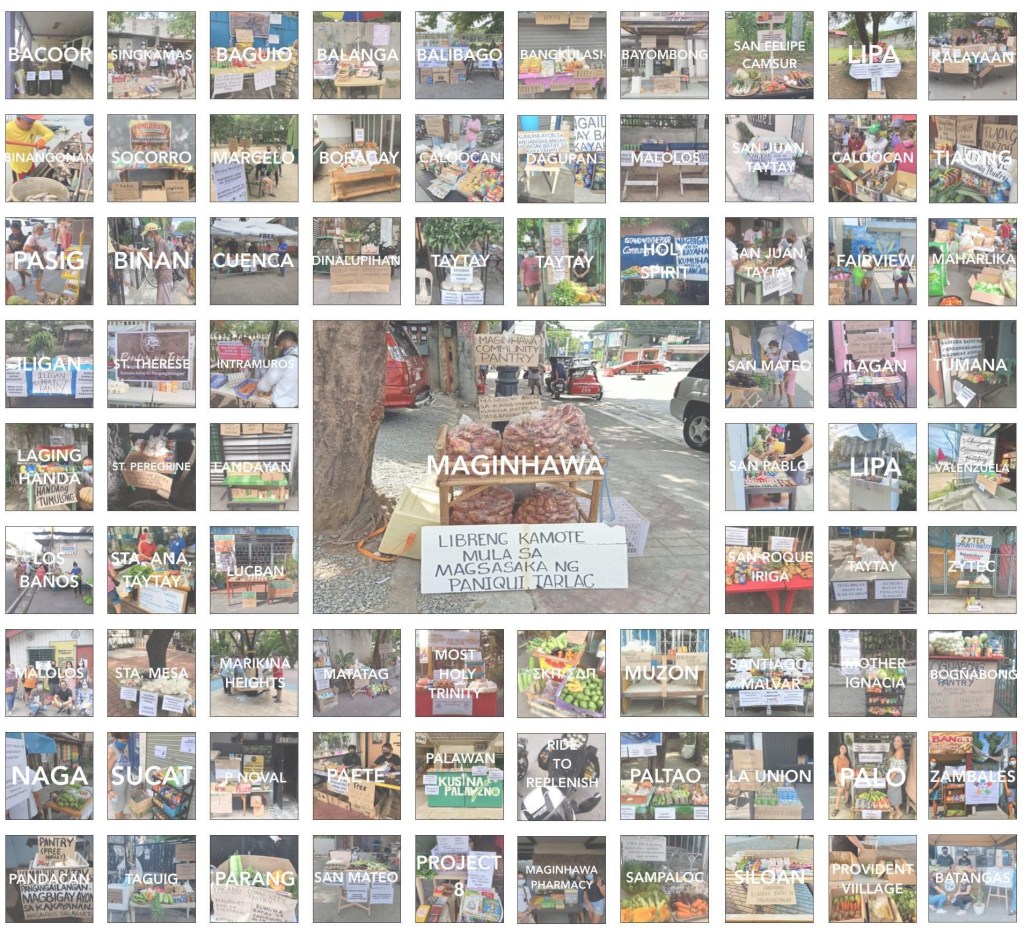
Posted by Jean Palma on Facebook, 18 April 2021 with the caption: “All these community pantries in four days, and counting. What a powerful movement.” #CommunityPantry

Praise and glory to you, O God our loving Father in heaven! Thank you in sending us your Son Jesus Christ our Bread of life who taught and showed us how to be a food ourselves to one another by giving and sharing our very selves in loving service especially in times of crisis like this pandemic.

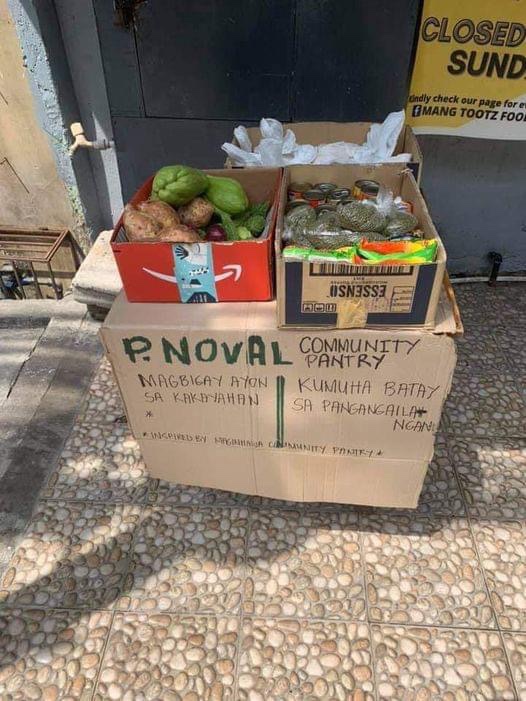
Thank you very much for the grace and inspiration by the Holy Spirit for the people behind this movement fast spreading called “Community Pantry” teaching us to see one another as a brother and a sister who needs to be helped, that each can be of help to anyone in need.

So many times, in our search for food that perishes like wealth and power, we get more focused on “doing” than “being” and “becoming” like those people who have followed Jesus in Capernaum after being fed with bread and fish at the wilderness last week.

The crowd said to Jesus:
"What sign can you do, that we may see and believe in you?
What can you do?"
(John 6:30)

Forgive us, Father, when until now we still ask the very same question to you and one another, “What can you do?” like the devil’s first temptation of Jesus in the wilderness, “If you are the Son of God, command this stone to become bread” (Lk.4:3).

Make us aware of this ploy of the devil to keep us doing everything, to claim everything as our work in order to forget you or even discredit you.

How sad that we are so concerned with doing than with being and becoming, forgetting the value of every person, asking more of “what you can do” than “who are you?” which is more essential because we are all from you, O God our Father, our image and likeness.

No wonder, we have become like the members of the Sanhedrin addressed by Christ’s first martyr, St. Stephen during his trial:

"You stiff-necked people, 
uncircumcised in heart and ears,
you always oppose the Holy Spirit;
you are just like your ancestors."
(Acts 7:51)

We have never grown and matured in our relationships because we have refused to see each one’s worth as a person, measuring our value in what we can do than in who we really are as your beloved children. As a result, we continue to refuse surrendering ourselves to the Holy Spirit for you to do your work in us. Unfortunately, as we keep on doing everything, the results are always miserable. And the more we get into bigger mess in life.

Teach us, especially our leaders in government, to open their minds and their hearts to what your prophets are saying from the various sectors of the society, especially the masses involved in the Community Pantry movement.

May our government officials led by the President realize that ever since this pandemic started, what we have been saying has always been for the good of one another as brothers and sisters, valuing life above all, and not for any achievement nor fame at all that they are so intent on having.

How sad that the more government officials dare and insult people with what they can do, the more it becomes truer that they cannot do anything good at all. Amen.

Photo by Toots Vergara, Philippine Daily Inquirer, 16 April 2021.

Praying for those living in isolation

The Lord Is My Chef Breakfast Recipe for the Soul
Monday, Fourth Week in Ordinary Time, 01 February 2021
Hebrews 11:32-40     >><)))*> + >><)))*>  +  >><)))*>     Mark 5:1-20
Photo of Mang Dodong who was detained at a Navotas quarantine area for almost 30 days last summer for not having a quarantine pass while buying fish there that he would resell in Caloocan to earn much needed income during the lockdown. It was also during that time of his detention when a senator and a police general were caught violating more serious health protocols but were neither punished nor even reprimanded.

As we all go back to work and studies this Monday, so many of our brothers and sisters are staying home, some are remaining in the hospitals while many others are in some form of living in the territory of Gerasenes like in today’s gospel living in isolation, cut off from our human community.

I pray for them, dear God our Father.

I pray for those living in isolation due to various reasons like severe sickness and disability including old age, poverty and other social illnesses that have left them with marks and stigma that cut them off from the rest of our human community.

The man had been dwelling among the tombs, and no one could restrain him any longer, even with a chain. In fact, he had frequently been bound with shackles and chains, but the chains had been pulled apart by him and the shackles smashed, and no one was strong enough to subdue him. Night and day among the tombs and on the hillsides he was always crying out and bruising himself with stones.

Mark 5:3-5

So many people today are suffering loneliness and isolation, Lord, the plague of our modern age when we are supposed to be more mobile and connected with everyone due to modern means of communications and transportation.

Worst, the pandemic had cut them off so painfully from others as life gets more difficult for everyone these days.

Increase their faith, remind them like the author of Hebrews, of how men and women in the Old Testament trusted in you and overcame all obstacles in life.

Help us discern concrete steps we may take to reach out to those living in isolation so we may welcome them back to our community to experience again the joy of companionship especially in critical moments of sickness and difficulties.

Come, Lord Jesus Christ, come and set us free from the chains and shackles that bound us away from each other; heal us of our illnesses that separate us so that we may be cleansed anew to proclaim your glory of living together as a community. Amen.

Photo by author at Shambala, Silang, Cavite, September 2020.

Advent is being consistent

The Lord Is My Chef Sunday Recipe for the Soul by Fr. Nicanor F. Lalog II
Fourth Sunday of Advent, Year B, 20 December 2020
2 Samuel 7:1-5, 8-12, 14, 16  >><)))*>  Romans 16:25-27  >><)))*>  Luke 1:26-38
Photo by author, Christmas 2019.

We are now on the final week of our four Sundays of preparations for Christmas. We have been saying Christmas 2020 is surely the most different and difficult in our lives due to the pandemic. However, it may also be the most meaningful when we have more of spiritual values, less of material things; more of the other persons, less of ourselves; and, more of Jesus, less of the Christmas trimmings.

Today we heard the beautiful story of the annunciation of the birth of Jesus Christ found only in the gospel of Luke, the source of many inspirations in arts for many centuries even today. The scene reveals to us the artistry and spirituality of Luke believed to be a medical doctor who was a disciple of St. Paul. He is the only evangelist who admitted he had “investigated everything accurately anew, to write it down in an orderly sequence (the events about Jesus Christ) so that you may realize the certainty of the teachings you have received” (Lk.1:3-4).

And what is that certainty Luke looked into? That Jesus Christ is the Son of God, the fulfillment of the Old Testament promises to the patriarchs and prophets, who is the very presence of God among us. That is why Luke wrote a second volume to his gospel, the Acts of the Apostles to show us Jesus still present in the Church in the power of the Holy Spirit. In this beautiful canvass painted to us by Luke on Jesus the Christ in his Gospel and Acts we also find in a supporting role the Blessed Virgin Mary, His own Mother and model disciple.

The angel Gabriel was sent from God to a town of Galilee called Nazareth, to a virgin betrothed to a man named Joseph, of the house of David, and the virgin’s name was Mary. And coming to her, he said, “Hail, full of grace! The Lord is with you.” But she was greatly troubled at what was said and pondered what sort of greeting this might be. then the angel said to her, “do not be afraid, Mary, for you have found favor with God. Behold you will conceive in your womb and bear a son, and you shall name him Jesus. He will be great and will be called Son of the Most High, and Lord God will give him the throne of David his father, and he will rule over the house of jacob forever, and of his kingdom there will be no end”

Luke 1:26-33

The discipleship of Mary

As a former journalist, I have always considered the four evangelists as the premiere reporters of Jesus Christ. Mark is the old school type of straight news reporting, writing the basic who, what, where, when and why, making his gospel the first to be written and shortest as he was in a hurry, a true journalist. Matthew is more of a feature writer or interpretative reporter while John was a news analyst, an op-ed columnist.

Luke is the modern journalist using the “digital platform” who goes on “live as it happens” with all the colors and actions without losing depth and focus like the BBC and Al Jazeera. He brings us where the news is happening as you must have noticed yesterday in the story of the annunciation of the birth of John the Baptist to Zechariah which also served as introduction to his lead story of Christmas, the annunciation of the birth of Jesus Christ.

Here we see the unique position of Mary as a disciple of Jesus Christ. Unlike Mark and Matthew, Luke tells us how Mary is the only one to have believed in a “situation of contemporaneity” as Fr. Cantalamessa would love to say, meaning, she believed while the event was taking place and prior to any confirmation by the event or history.

See how Matthew presented some facts already known to him in narrating the annunciation to Joseph where the angel clarified Mary’s pregnancy was due to the Holy Spirit. Luke, on the other hand, is like reporting live in real time, so realistic with Mary and the angel conversing to each other!

Photo by Arch. Philip Santiago, mosaic of the Annunciation at the San Padre Pio Church in San Giovanni Rotondo, Italy, 2016.

Writing in Greek like the rest of the authors in the New Testament, Luke did not use the usual Hebrew greeting of “Shalom” when Gabriel appeared to Mary, addressing her instead with chaire or “Rejoice favored one” that means especially graced from which came our translation from the Latin “Hail, full of grace!” in 1:28.

The favor or grace of Mary has found with God in 1:30 is explained in 1:31 in the future tense, “you will conceive in your womb and bear a son“. What is amazing here is that there is the sense of certitude on the part of the angel that the future will definitely take place because Mary has already been highly favored one by God before this event. How?

Though Mary will finally become a disciple at the end by saying “Behold, I am the handmaid of the Lord. May it be done to me according to your word” in 1:38, we find in 1:29 how she had always been disposed to the will and grace of God when Luke described how “she was greatly troubled at what was said and pondered what sort of greeting this might be“.

Mary “pondered – meaning, she prayed, she meditated right away the greetings to her, indicating her openness and disposition to listen and follow the will of God. That shows how even before the annunciation happened, Mary had always been obedient to God that is why she could say yes to Him when asked to be the Mother of the Savior.

Here we find Mary’s consistency as a disciple of the Lord, her Son Jesus still to be born but already existing in eternity!

When we were growing up, our mother would always tell us that once our names are called either by her or by our father, we only say one thing, “Opo… ano po iyon?” (Yes, what is it?). That is old school discipline where we literally obeyed first even without any instruction yet because we have always been assured parents would never tell kids to do something bad or wrong. And we believed that. Unlike today’s generations where the usual reply to parents’ call is “wait” that no wonder, we now ask God wait before he can speak to us. Thank God I did not get married….

Going back to Mary, we now find the contrast with yesterday’s annunciation to Zechariah: Mary pondered and felt everything in her heart and soul while Zechariah reasoned out, used more his head than his heart – something we must ponder this Christmas. Mary right away had her heart, her very self onto the Christmas Nativity while Zechariah was stuck in his negativity.

Mary believed while the event, the annunciation, was taking place, prior to any confir­mation by the event itself or by history. Later we shall see that expression “pondering in her heart” repeated often by Luke and also by John in presenting Mary: after listening to the words of the shepherds who came to see baby Jesus at His birth in Bethlehem, at finding Jesus at the temple aged 12, and during the wedding feast at Cana where He did His first miracle.

Photo by author of the site where the annunciation to Mary took place found below the Basilica of the Annunciation in Nazareth (2019).

The faith of Mary

From the annunciation of the birth of Jesus to His crucifixion, Easter and Pentecost, Mary always believed. During the Visitation, Elizabeth praised her, becoming the first to call Mary as “blessed” because “you believed what was spoken to you by the Lord would be fulfilled” (Lk.1:45).

Eight days after Easter, Jesus said to Thomas, “Have you believed because you have seen me? Blessed are those who have not seen and yet believe! ” (Jn 20:29). Early at the annunciation, Mary was the first to have believed without having seen Jesus Christ!

Mary teaches us the importance of subjective faith or the act of simply believing and trusting God, a person-to-person relationship with Him.

But it is not enough because it could lead to isolationism when we become individualistic and begin to have our own concept of God like what is happening these days especially with many Catholics with their own interpretations of God, heaven, evil and sin among other things.

Like Mary, we need to cultivate also objective faith, believe in the content of faith of the community. Mary believed God relating with the ancient prophets and patriarchs of Israel which the angel mentioned to her during the annunciation. See that after the annunciation, Mary hastily went to visit Elizabeth to share her good news and her faith. In her we learn that faith leads to a mission that is seen in the context of a community, the Church where Mary was portrayed to us praying with the disciples of Jesus during the Pentecost at the Upper Room in Jerusalem.

So here we find the consistency of Mary even before the annunciation that continued on in the life of the Church we still experience today in her many apparitions and messages always centered on Jesus not herself.

That is the call of Advent to us all: to be consistently clear with our faith with the one to be born at Christmas, Jesus Christ who is the Son of the Father, our Savior promised in Old Testament, now the very presence of God among us.

People kneeling on the streets during our Christ the King celebrations, 22 November 2020.

It is not enough that we just pray and believe; like Mary, we need to get out of ourselves and give ourselves to God and the Church. This is especially true with us priests who seem to believe more to himself and to media than with God! We must constantly examine ourselves if we truly believe in what we preach, in the kind of lives we lead. Is Jesus still center of our lives or us that we are so concerned always with our “image”, always seeking “likes” and “followers” than anything else?

If there is anyone who should be the first to be consistent in faith in God in any community, that must be the priest or pastor.

A few weeks ago while striving through the many challenges of my personal life and my ministry since this pandemic began, a parishioner told me how they draw strength and inspiration from me. I asked her why and how? What does my personal life has anything to do with them?

She explained that whenever they see me still going through with my ministry, holding on in my prayers and daily Masses, still smiling and can still laugh and crack jokes — they just feel they too can overcome their trials and difficulties.

I have realized in that short conversation more than preaching and explaining faith and its content, people look more at how faithful are we truly are as men of faith. That aside from dispensing the sacraments and doing all the ministries in my parish, there is also the task so unknown to me before of enkindling the faith of my flock, of guiding and leading them to God based on how do I live that faith in God with joy and patience.

People believe in God and the Church when they experience their pastor believing first in God and the Church. Like the COVID-19 virus, faith is contagious that spreads by coming into contact with. We priests must be the first to be “infected” with faith in the parish so that everyone would be “positive” with it, creating a “pandemic” in faith!

That is the consistency of Mary as a disciple — she is a “carrier” of a deep, joyful and active faith in Jesus, “infecting” everyone so positively that despite the difficult and trying situations we are into, we celebrate Christ’s coming amid the pandemic.

A blessed Sunday as we prepare for Christmas!