Quiet Storm by Fr. Nicanor F. Lalog II, 26 November 2024
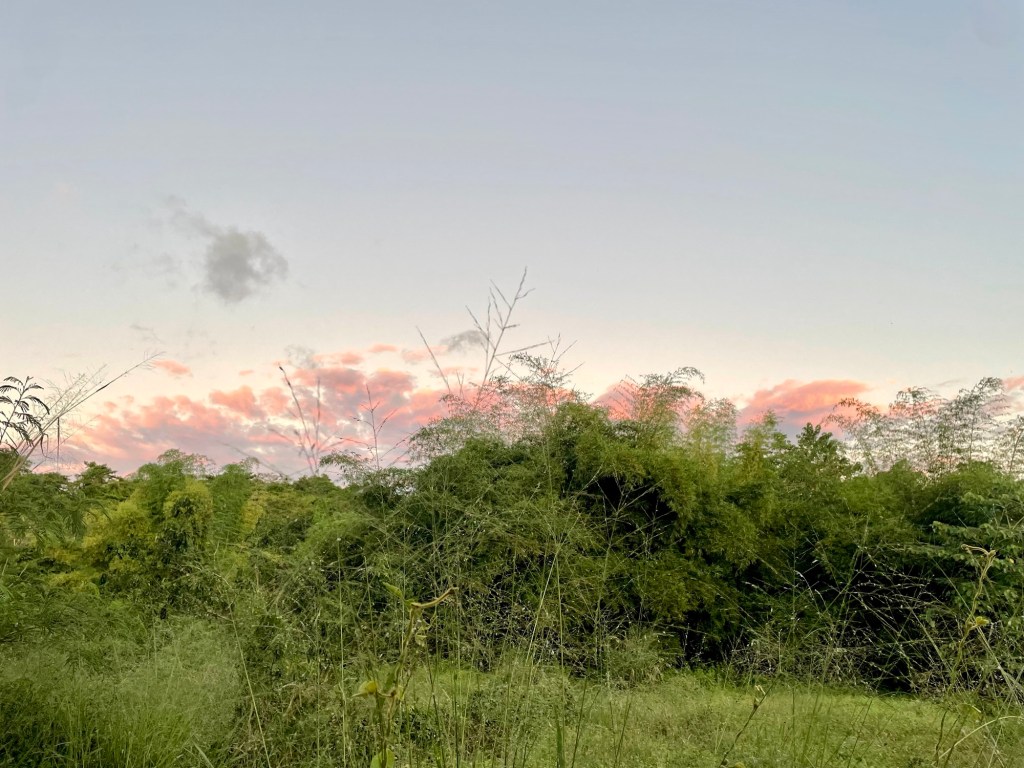
Photo by author, Pulong Sampalok, DRT, Bulacan, 23 November 2024.
Since my mom’s passing in May, I have finally been more resolved in having days off and overnight breaks after some bouts with depression and grief. Last Friday I went to DRT – Doña Remedios Trinidad – the final frontier of Bulacan province where the Sierra Madres link us with Quezon and Rizal provinces.
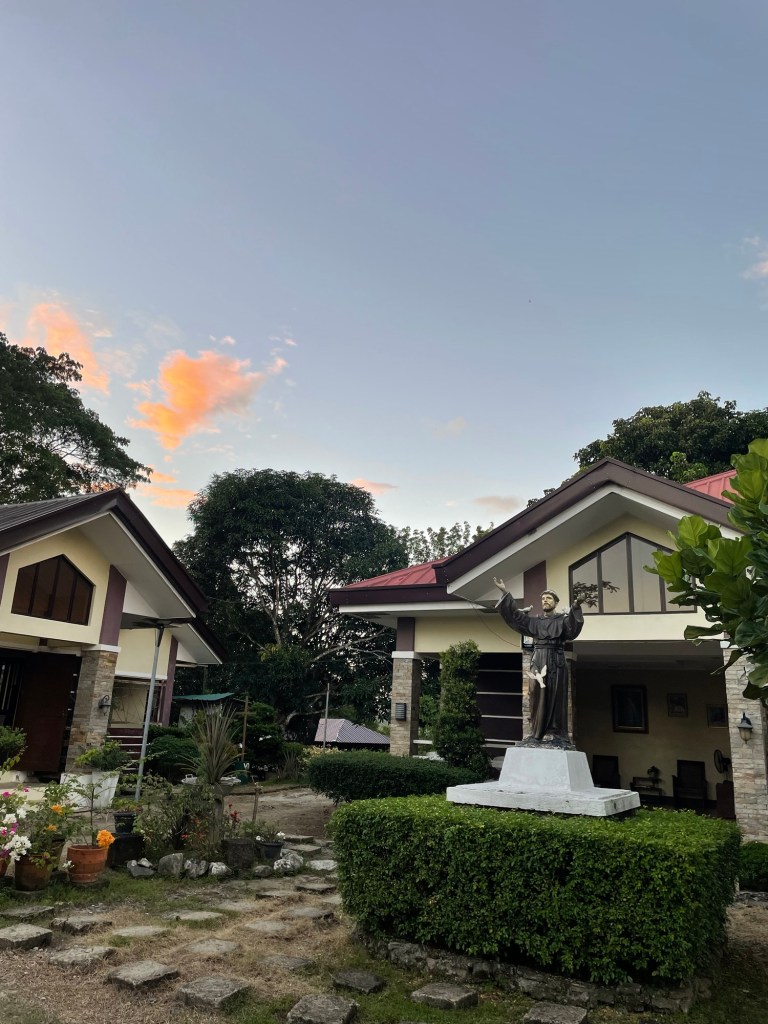
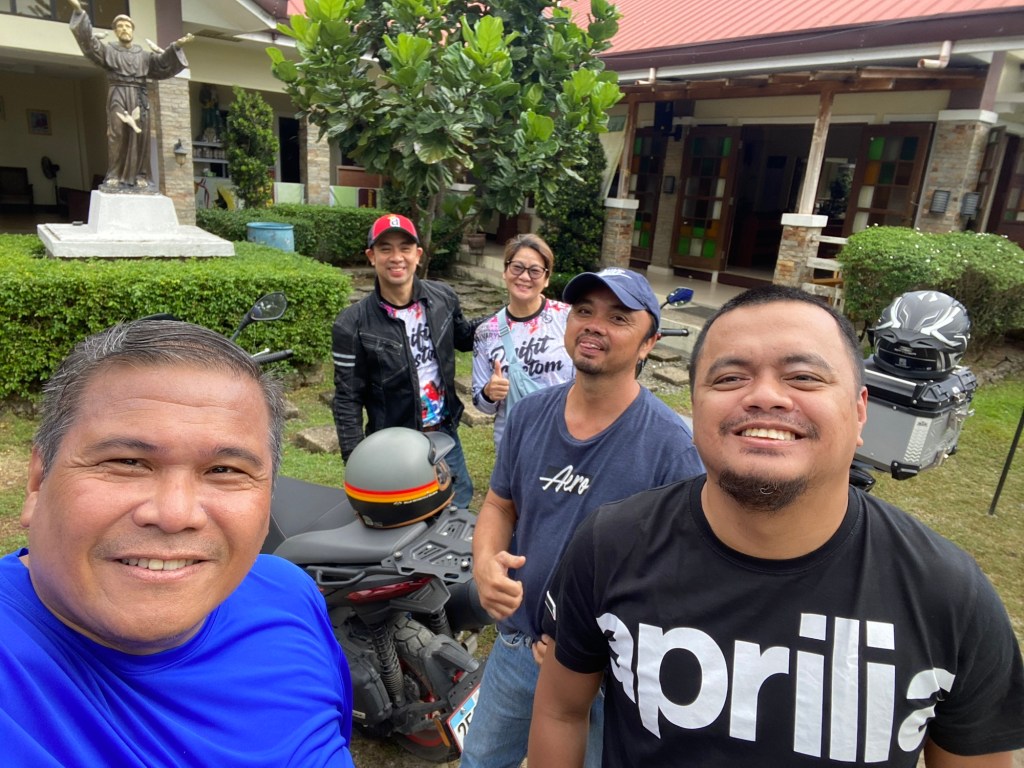
The Retirement Home of the Dominican Sisters of St. Joseph at DRT.
Named after the mother of former First Lady Imelda Romualdez Marcos, DRT was a barrio or barangay of the town of Angat. When Mrs. Marcos separated Valenzuela from Bulacan province in the mid-70’s to create the Greater Manila Area (GMA) that became Metro Manila in the 1980’s, DRT was separated from Angat to become the last and youngest town of Bulacan.
It was actually a homecoming for me after 27 years when I chose to be assigned at Galilee Home, our diocesan rehab for drug dependents before our ordination as deacons in 1997 found at the opposite side of the Dominican Sisters’ House of Prayer where I stayed last weekend.
The Dominican Sisters of St. Joseph were so kind to welcome me to their spiritual center and had promised to join them there every fourth Saturday to celebrate their Mass by staying overnight for my much-needed rest or sabbath.
Indeed, it was a Sabbath to me, a return to Paradise, so close with nature where time seems to stand still or at least goes so slowly.
Those bamboo fences remind me so much of my childhood days in Bocaue; see how modernity represented by the electric meter competing with the countryside’s laid back atmosphere.
What I like seeing all the nature around me is when my memory is shuffled to those days as a promdi when like these kids we ruled supreme on the streets, never worried of being run over by vehicles so kind to stop if we were playing.
Lahat kasali – pati poste! Kids playing Chinese garter.
As my childhood memory sauntered, I realized it was truly another setting than the city when at 545PM I heard a mother shouting to her children, “kakain na… uwi na!” and the kids obediently went home.
Lovely sunset….
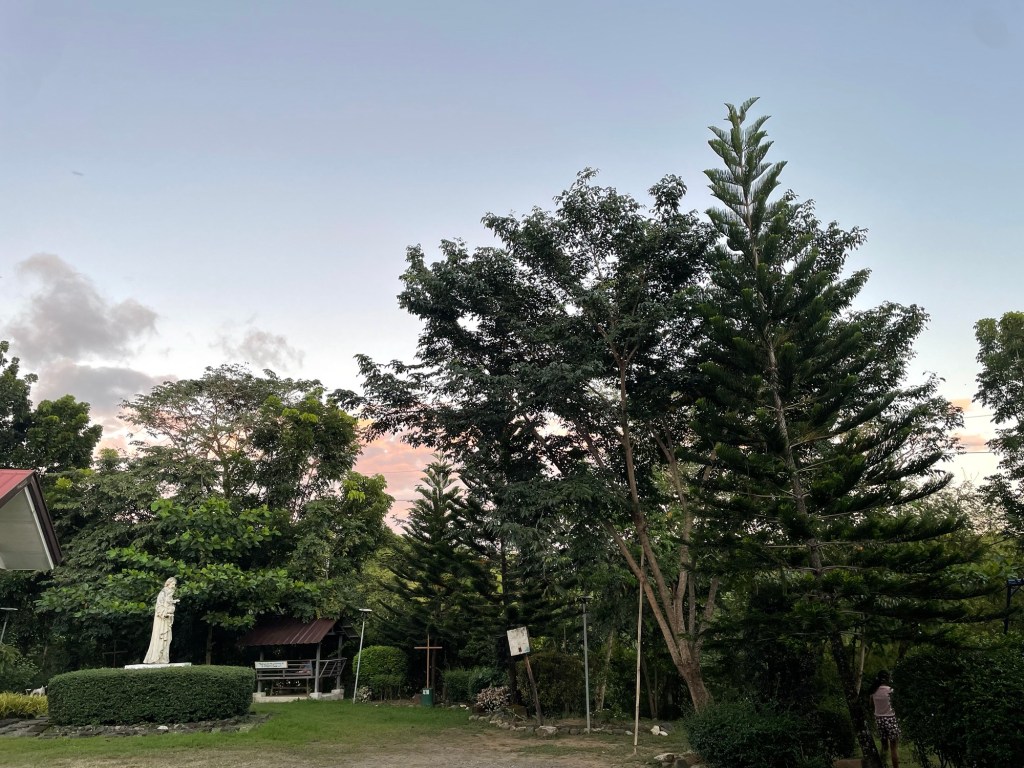
The following morning, as usual, I woke up at 5AM. Prayed and did my warm up exercises and shortly before 6AM, I went off to walk. My destination was the view deck of DRT where a giant statue of the Blessed Virgin Mary stands right after the welcome arch.
So peaceful… as if the whole world is yours!
Every time I walk around Valenzuela, I just bring about 200 pesos in my pocket and nothing else – no glasses which I hate so much and likewise, no cellphones. I find these as distractions.
But, that Saturday morning, I brought along my cellphone in order to shoot scenes and of course the sunrise.
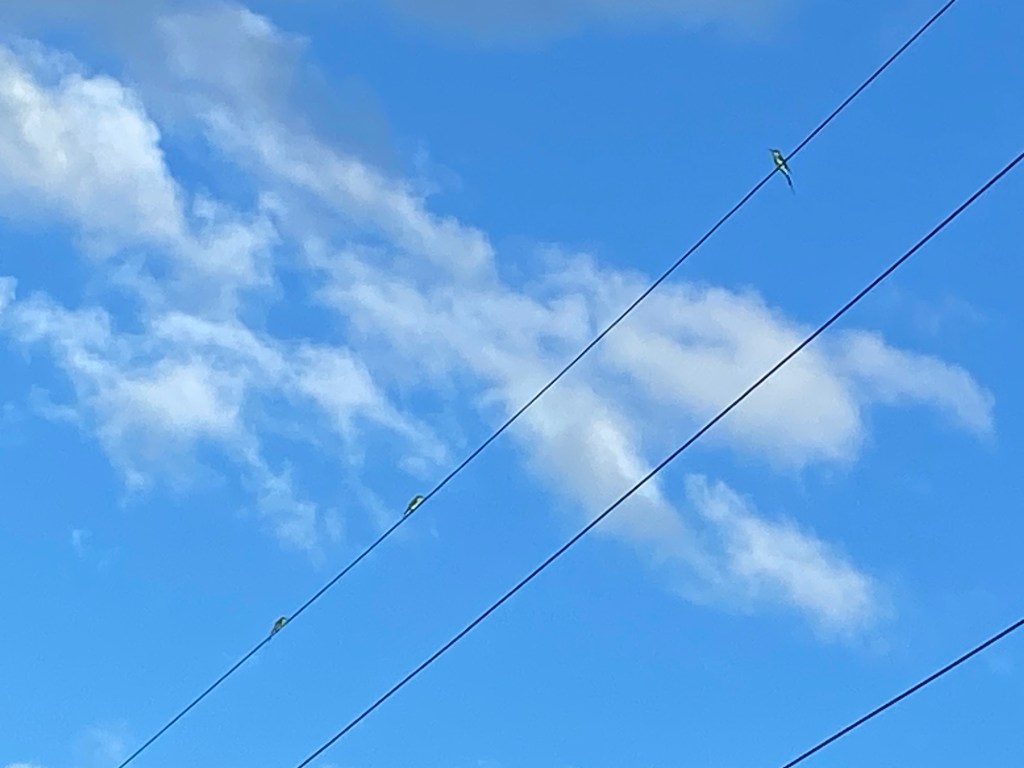
Late did I realize on my way back that I should have brought my glasses for better focus especially with the abounding bird species in the area of Pulong Sampalok.
Oh, they were so many but I failed to catch them in my camera phone because I had no glasses…
Actually, not related to my not bringing of glasses, I got lost that morning.
Instead of turning right from the Damascus circle, I made a left.
Funny too while walking, I felt something was wrong with my t-shirt – it was baligtad!
Since nobody was around not even houses in the area, I changed my shirt and went happily in my walking.
Barrio folks have always believed that in order to find one’s way in the forest or anywhere, one has to change his/her shirt. Baligtarin ang suot na damit kontra sa tiyanak.
But, despite that act of pagbaligtad of my t-shirt, I still got lost and went onto high steeps that really challenged me so greatly.
Many times I had to stop to catch my breath. Even the cyclists I have met admitted it was a very steep climb while others opted to walk with their bikes.
All in all, I walked 6.69 kilometers without reaching the view deck but, God, I found so many views I never expected that truly refreshed me!
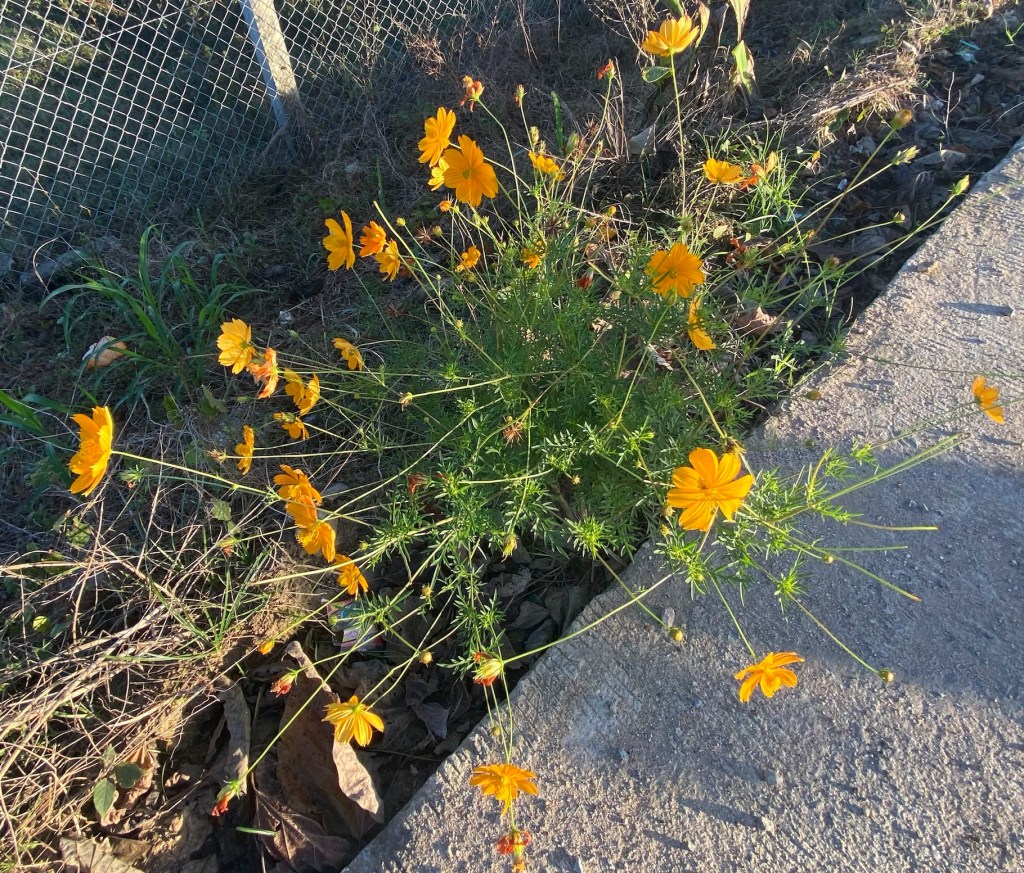
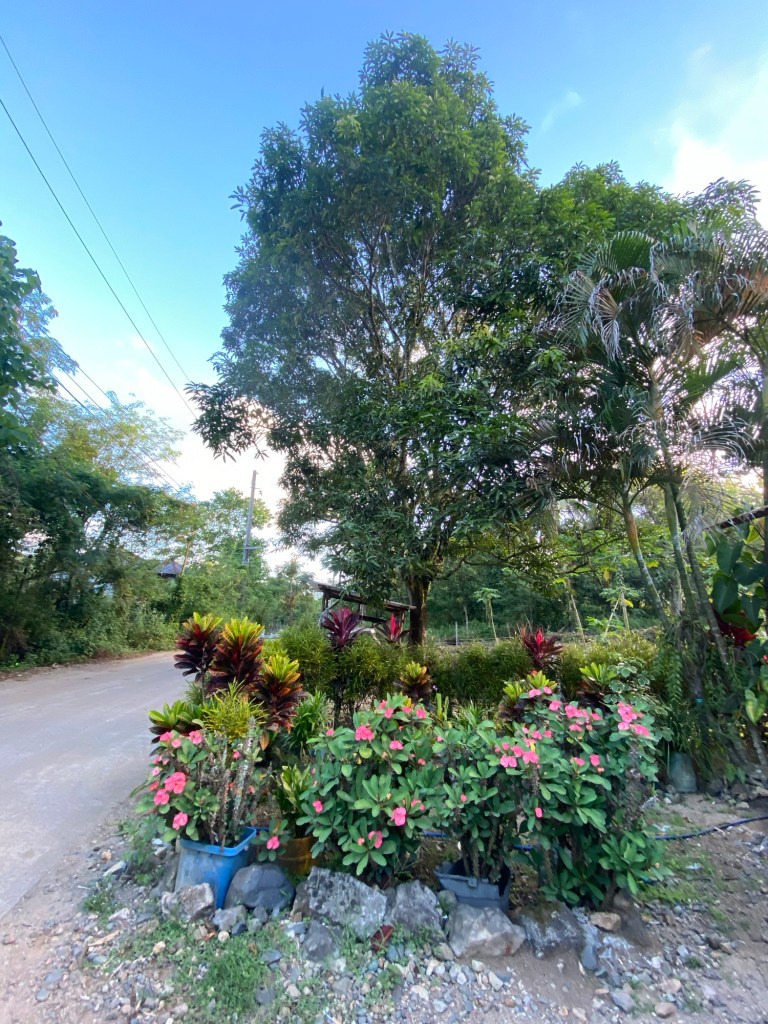
As I got lost walking nowhere, I realized life’s parable – that the most joyful and loveliest things are found in ordinary places like along the sides of the road like these plants and flowers as well as rock formations.
Many times in life, it is actually a grace to go nowhere, to get lost once in a while and simply keep on walking, trusting God for He would always find us a way to Him. Within.
Even met my former student in High School riding with his cousins to visit their lot in the area that Saturday!
What I like most as I have mentioned earlier are the natural fences people have in the countryside like these lovely garden at a store I passed by…
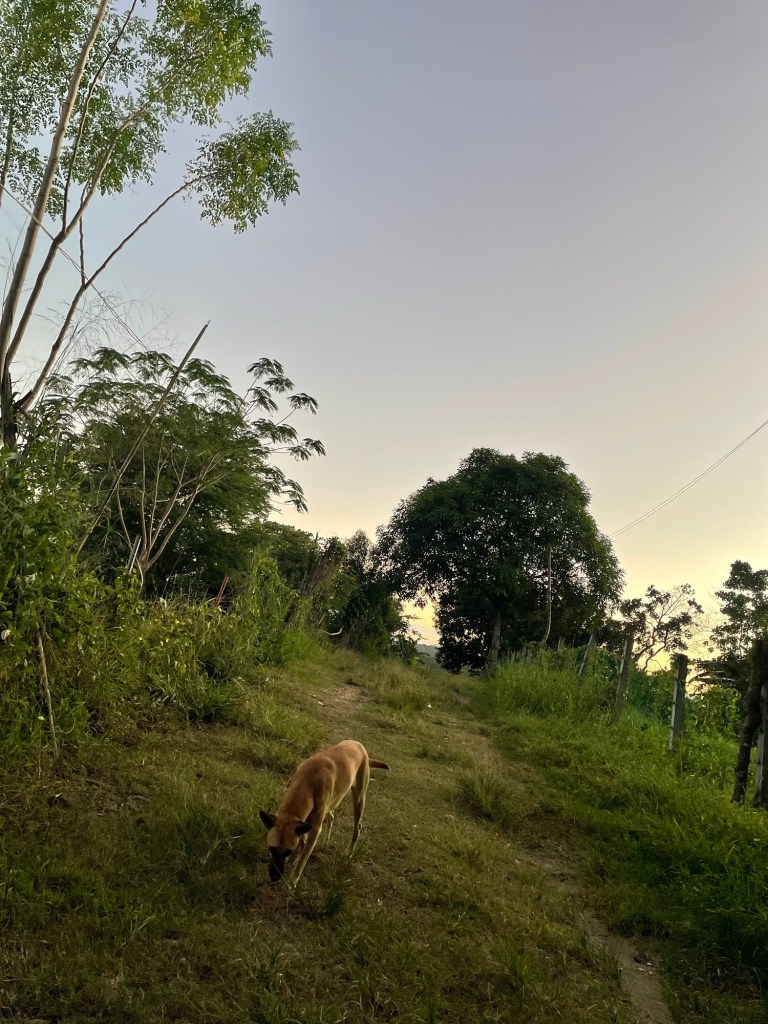
Even dogs seem to be most kind here… not a single dog barked at me despite my getting lost in their area!
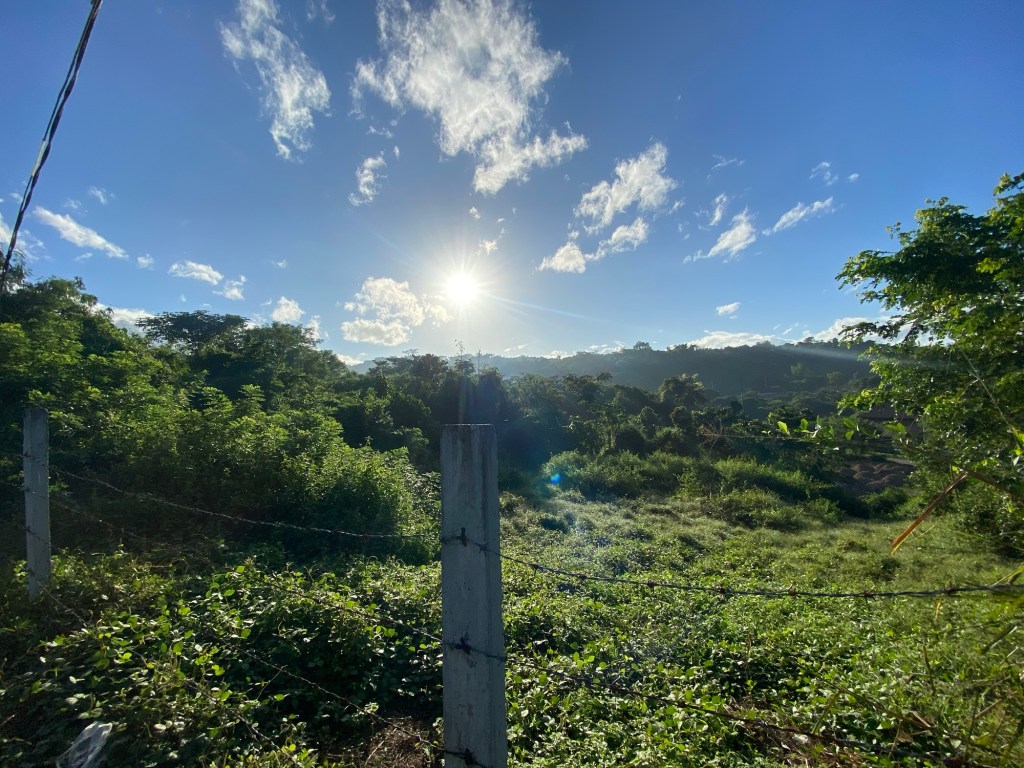
Unfortunately, there have been a strong influx of settlers in DRT with presumably big people buying out large tracts of lands for future developments. What an ugly sight to see barbed wires in the mountain area.
And… whoa!
Or, is it the installation of the post that was wrong? Some misplaced priorities that destroy nature.
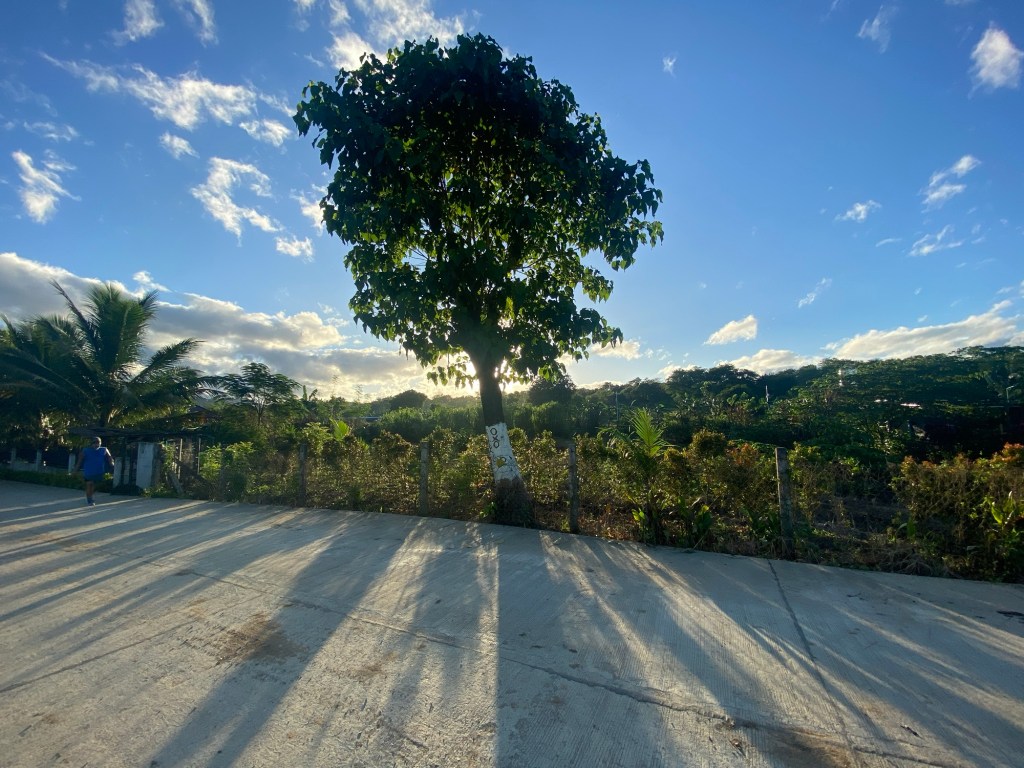
What kind of road construction is this?
Meanwhile… we are not sure if these are indicative of the climate change at all….
Join me next month in my “Friday I’m In Love” journey to cure my grief as I take you to Dumaguete City. Thank you for the visit! God bless!
I don't care if Monday's blue
Tuesday's grey and Wednesday too
Thursday, I don't care about you
It's Friday, I'm in love
Monday you can fall apart
Tuesday, Wednesday, break my heart
Thursday doesn't even start
It's Friday, I'm in love
(Friday I'm In Love by The Cure)
Lawiswis Ng Salita ni P. Nicanor F. Lalog II, Ika-12 ng Nobyembre 2024
Larawan kuha ng may-akda, 07 Nobyembre 2024.
               Dumating kasagsagan ng iyong init, sagad sa aking anit
          ngUnit alinsangan ay mapagtitiyagaan
              Mahirap tanggihan masuyo mong alindog
              Aking nadama saan man ako pumunta
              Gumala man ako sa gabi o
              Umaga, kapanatagan at kapayapaan parang tahanan
              Ewan kung anong hiwaga iyong angkin wala sa ibang puntahin
nakaanTig nitong damdamin kaya aking pangako ikaw ay babalikan
             Eenganyahin kapatid at kaibigan maranasan iyong kagandahan.
Kuhay ng may-akda, takip-silim mula sa Rovira Suites, 10 Nobyembre 2024
DUMAGUETE
hindi man kita agad na gets,
ako ang iyong nadaget
kaya ako ay babalik
that's a promise
I shall not forget!
Larawan kuha ng may-akda sa Boulevard, 10 Nobyembre 2024.
Quiet Storm by Fr. Nicanor F. Lalog II, 29 October 2024
Photo by author, entering the Nagsasa Cove in San Antonio, Zambales, 19 October 2024.
I have always imagined God must be like Jewish director Steven Spielberg. According to an article I have read long ago, Spielberg would always hide sets of important scenes to capture the real emotions of his actors and actresses during shooting. One example was the Raiders of the Lost Ark series where Harrison Ford’s expressions were very natural.
And that exactly was how I felt God in Nagsasa Cove on that lovely weekend of October 19.
Nagsasa’s white beach is actually lahar from Mount Pinatubo’s 1990 eruption that also brought those lush Agojo trees.
From the sea to the cove, I was already so enchanted, even enthralled with the scenery, the sparkling waters with its gentle breeze blowing, so clean and crisp. A taste of paradise.
After a few sips of wine in the warm waters of Nagsasa Cove, I ventured inland. Lo and behold! I immediately went back to our boat to get my cellphone as I told my companions how lovely is the river at the back. That was when Sir Benet Galang, owner of Agojo Beach, willingly joined to guide us deeper inland.
According to Sir Benet, some trekkers who have gone there told him the scene was like New Zealand which he could not verify because he has not been down there yet. One thing for sure, though, he has not seen any hobbits dwelling there except a few gentle Aetas in a settlement area who often guide hikers up the Pundaquit Mountain range.
I forgot to bring my slippers but what the heck! I have always loved walking on earth barefoot, so close to nature, so close with God, reminding me of the burning bush event of Moses when told to take off his sandals because he was on a sacred ground.
That’s Nagsasa Cove, a sacred ground.
The river is very stony but very clear. Water is warm on top but as you dip, it gets cold. Parang beer!
One realizes upon coming here is the great gift God has given our country, a gift so precious that we ought to take care. From here, one may hike to the mountain in about four hours with Aetas as guides.
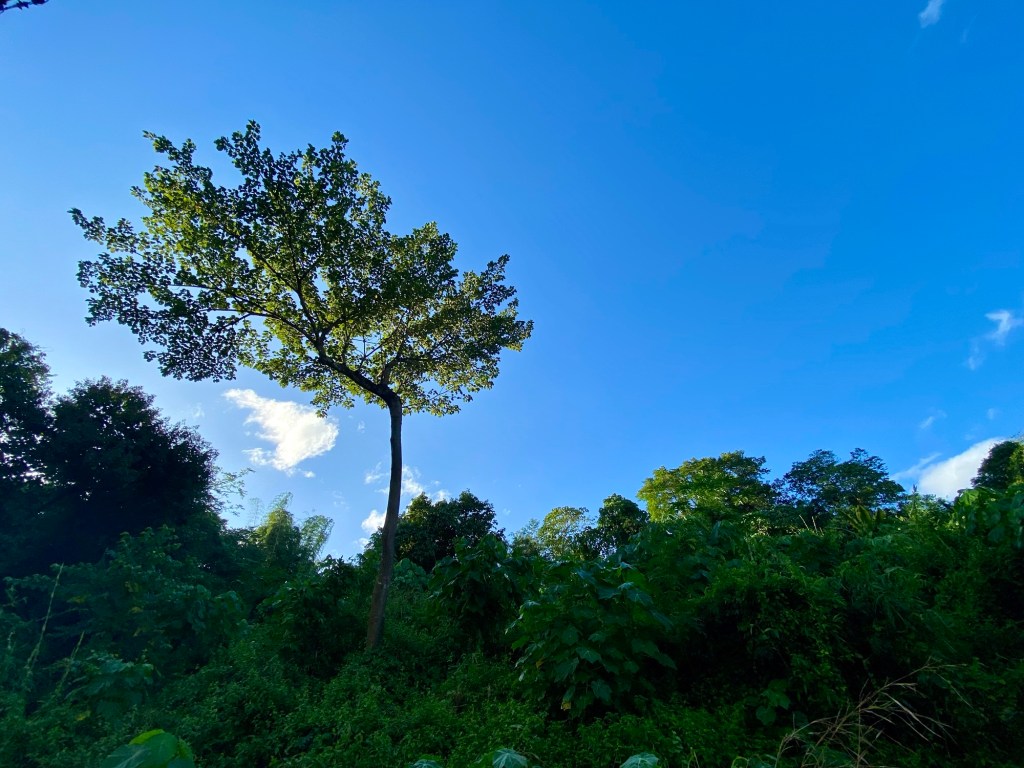
A lot of greenery… and trees.
A young Agojo tree which is a variety of pine trees.
So many sights to behold, things one will never see in the city nor provinces these days.
I was fascinated with the mushrooms growing on this stump of an Agojo tree…
Again, I prayed this area would be spared of roads and big businesses to keep its beauty and charm intact. Residents are very organized, requiring vendors from outside to ensure they take back their waste and litter. During summer, each vendor of any goods is asked to fill a sack of litter to ensure the surroundings are well maintained.
If you are a nature lover, planning to have an entirely “me time”, I strongly recommend Nagsasa Cove.
No problem with food and accommodations there from simple tents to ones like this and air conditioned kubo…
Just come as you are and surely you shall come home filled with good memories and sights. Most of all, fulfilled in yourself.
Piso na lang, nasa langit ka na! Promise. See yah!
*All photos and videos taken by author using iPhone12.
*Check FB page of Agojo Beach for details.
Quiet Storm by Fr. Nicanor F. Lalog II, 17 July 2023
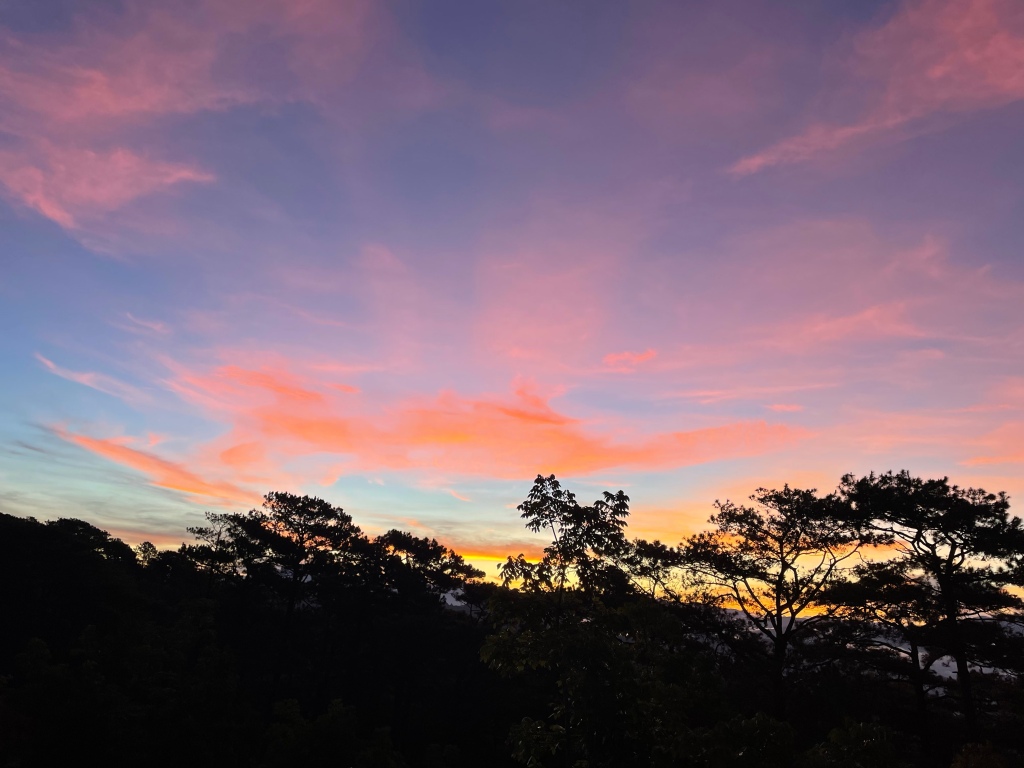
Photo by author, sunrise at Camp John Hay, 12 July 2023.
If there is one thing I have truly learned and finally got convinced more than ever, never trust “media”: what you see and hear especially in social media are not true at all. I have known it all along having worked there. Have been teaching it too for so long. But sometimes, just because I was with the bagets and younger siblings who all relied with WAZE and Tiktok while listening endlessly to Spotify, sigue na nga, maniwala na nga ako sa media.
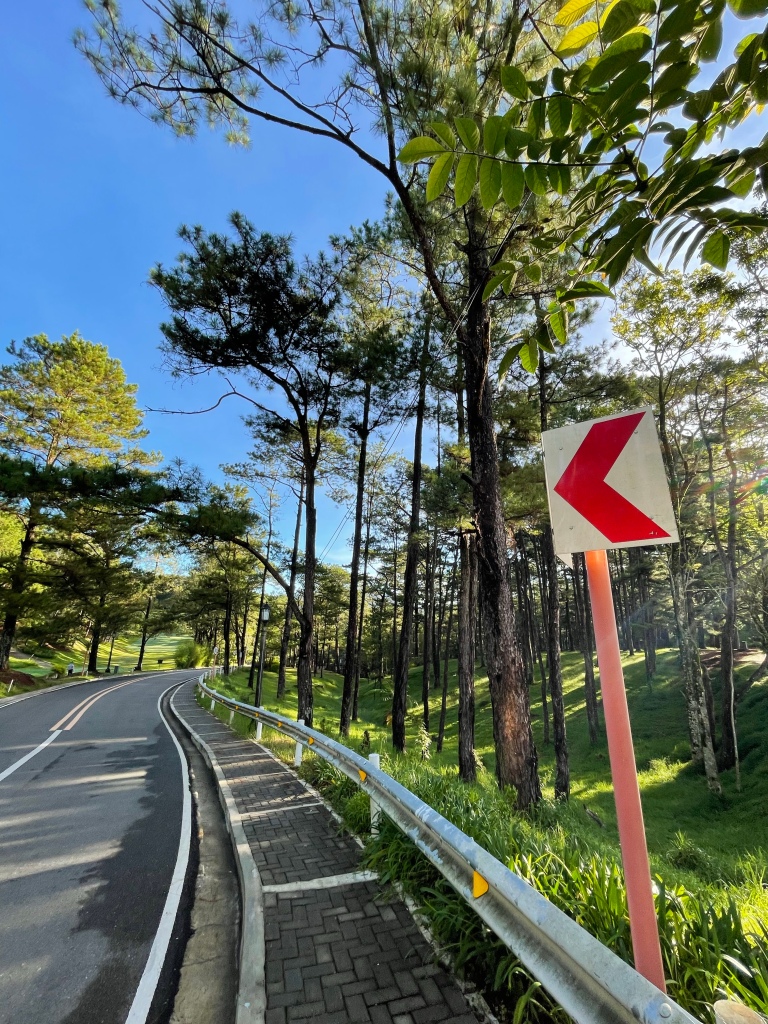
Photo by author, Camp John Hay, 12 July 2023.
And so, we got lost again on our final day in Baguio City.
But, still thankful for the experience, the fun and new discoveries not only outside but inside ourselves as siblings, as a family.
Went to bed earlier the night before hoping I could sleep longer in the city of pines. Unfortunately, I was already up before 5am, as usual, the following morning.
Sad to say, too, the weather is no longer that cold anymore in Baguio as before. Though the temperature readings indicated 19 degrees, I could hardly feel it except at about 2am.
Walked a kilometer with my only nephew Tommy and his mother, my sister Meg who enjoyed identifying the various plants and flowers with her phone app. She’s the only one among us four who had inherited our mother’s green thumb, a certified plantita as she would prove later in our misadventure.
Admiring the “naturally” thriving flowers on a street near the Good Shepherd Convent in Baguio, 12 July 2023.
After a sumptuous breakfast at the Manor House and endless pictorials, we packed our things to check out half an hour before 12 noon for the second most important itinerary of any Baguio vacation: Good Shepherd and Mines View Park shopping for pasalubong!
Traffic was not heavy when we went there, a Tuesday and Wednesday. And Baguio’s new traffic scheme with many “one ways” seem to be working well, even better than before the pandemic period.
Photo by author, 12 July 2023.
We were supposed to visit the Living Gifts Nursery also in La Trinidad town but, WAZE and Google Maps seem to be at a loss where that is located that we ended up at the Bahong Sunflower Garden.
I was already getting impatient after several misses and turns, refreshing Google map over and over when on our third try, we saw signs to a tourism office and the Bahong Sunflower Garden.
That was when we decided to forget the Living Gifts Nursery as we convinced ourselves it had changed its name to Bahong Sunflower Garden after the TikTok reel was uploaded.
Maybe next time, TikTok should also incorporate a GPS app for its featured destination spots for directions. Or, I better stop acting as navigator at all.
Photo by our youngest niece, Catherine Darla Lalog.
There’s an entrance fee so minimal, not less than 100-pesos but again, the sights are worth all the efforts. And patience.
Photo by our birthday celebrator, Bing-Bing.
Of course, first thing we looked for upon arrival was the “CR” that was “comfortable” enough to make us smile and laugh in enjoying each other with nature made better by its cool, sometimes chilly, breeze.
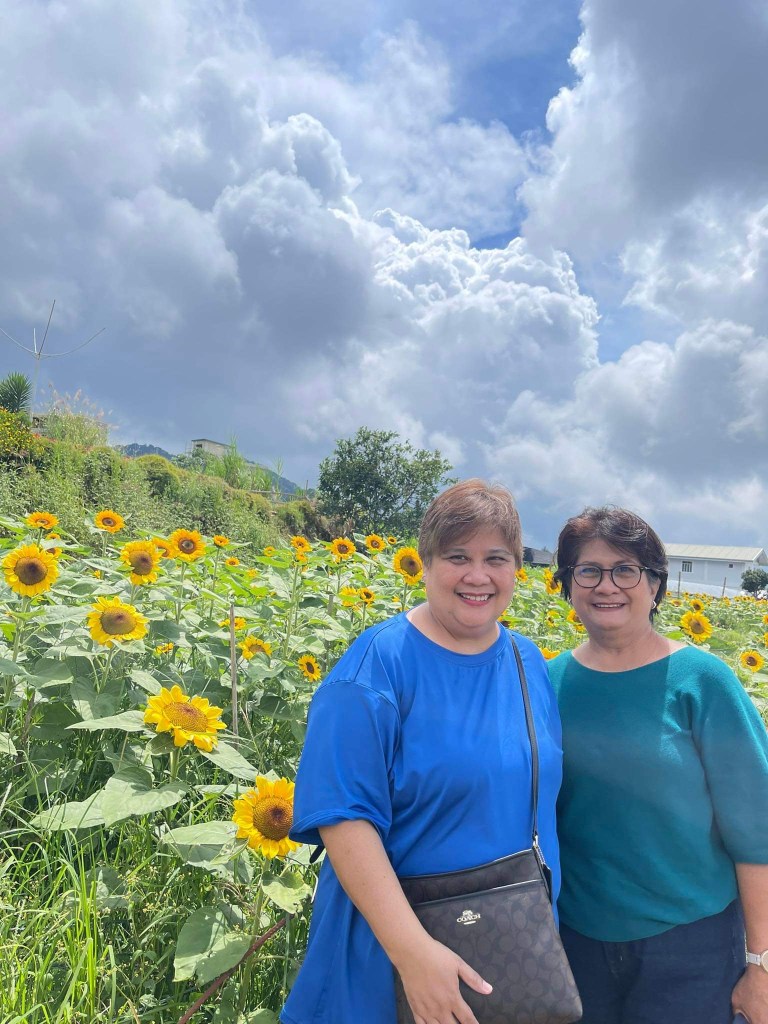
Photo by author, still at Bahong Sunflower Garden, 12 July 2023.
We left Bahong Sunflower Garden after an hour with a lot of fond memories as a family. Shortly before boarding our car, Meg could not contain herself not buying a plant from there. And the more she became insistent after finding out what she wanted cost only 300 pesos which according to her could easily fetch a price of over 3000-pesos in Bulacan.
Despite protests from her kids that there was no more space for her second plant, like my mom, Meg found a way of arranging everything at the back of her Innova with still some space – just in case – like additional pasalubong along the way.
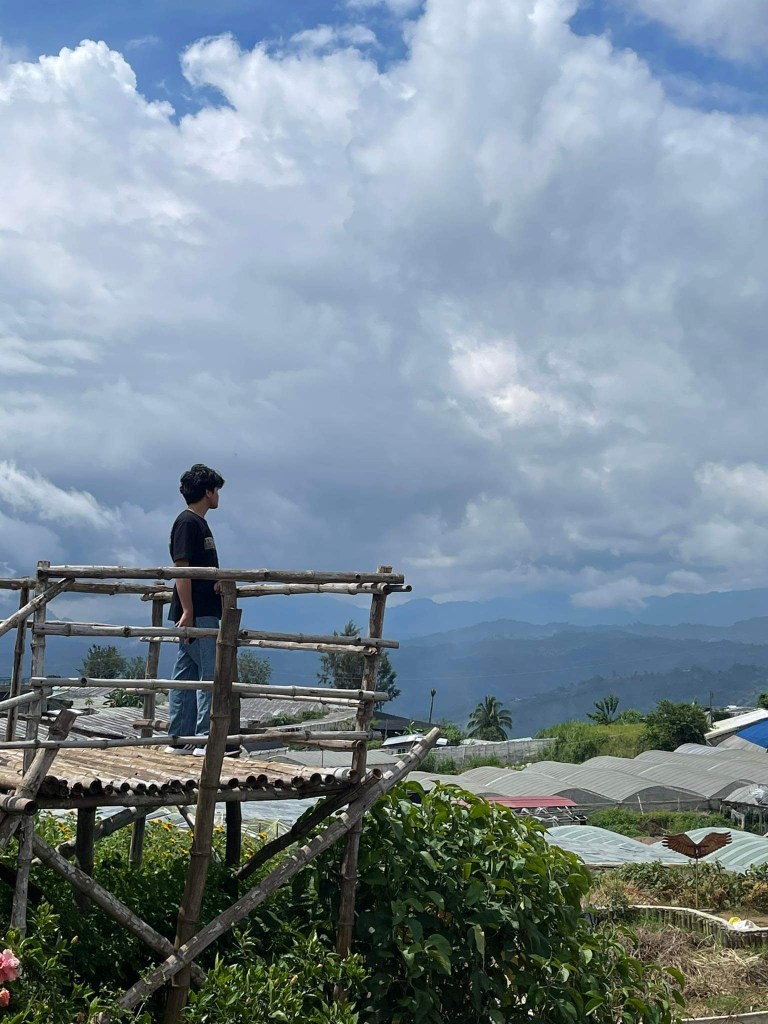
Photo by author, still at Bahong Sunflower Garden, La Trinidad, Benguet, 12 July 2023.
How true indeed that once in a while, it is good to get lost in our trips. After all, it is the journey that matters most and not the destination. Most especially, the company you keep. Primary of them is our own family.
Photo by author, 12 July 2023.
Being the eldest in the family, there were times I wished I have an Ate, an elder sister, someone I could turn to in times of difficulties. Someone to look up to. Hindi yung ako lang palagi tinitingala nila especially after Dad had passed away in 2020.
But, up there in La Trinidad, I have realized that in life, it is not really about looking up and looking down. The only time we ought to look up is to God who is above all else and everything. Our semper major. The rest, in my view, is not about looking up nor looking down but of seeing more each one as a person, a beloved. Life is about seeing – not looking – to find the giftedness of everyone that has always been ever present.
Truly, “persons are gifts of God to me, that come all wrapped so differently” as we used to sing in our daily Masses in the high school seminary. This was most true as we left the garden when we have to ascend.
Photo by author, 12 July 2023.
It was our only nephew Tommy who was most gracious and kind, and strong enough, to pull us up from the steep and sometimes slippery pathways.
Along the way, he found these plants which he called as nature’s “chocolate batirol”.
Despite his denials, he seemed disappointed when Camp John Hay’s Chocolate de Baterol was still closed when we walked there earlier.
We shall definitely go back to Baguio City to relax and unwind. And get lost again.
Thank you for joining us in our trip. God bless everyone! May you also have a great vacation soon! Amen.
The Quiet Storm by Fr. Nick F. Lalog II, 10 January 2022
Photo by author, Ubihan Island, Meycauayan, 31 December 2021.
It is said that “life is a journey” but I have found through the years that as a journey, life is more of a direction than a destination. It is always easy to plot our life destination but upon reaching them, what do we do next?
If life is a journey that is more on destination, all we will be doing in life is keep on thinking of new places to visit and new goals to achieve until we ran out of destinations and we have nowhere else to go!
That is why life is more of a direction.
It does not mean we stop making plans or setting goals to reach; we just learn to be more open with the directions life is leading us into.
So often it can happen that while pursuing a goal or reaching a destination, we find many things and meet persons along the way who make us change directions in life for something better we never knew existed before.
Sometimes we discover while at the middle of a journey the many directions we have been seeing or noticing earlier that suddenly later make sense, opening new routes for us to take to something more fulfilling or clearer and better.
As we become open for directions in life, the more we become free to be our true selves, free to pursue what is best than be fixated and even held hostage by a previous goal or destination we have set before which we find no longer viable.
It is like using those travel apps Waze and Google Maps that give us the pertinent information like traffic conditions that help us choose the best routes to reach a specific destination.
However, as we travel, we find the apps taking us to longer routes or may even be misleading us because the data available are obsolete or the internet signal is unreliable. And so, we disregard the apps and try to find our way to our destination through directions provided by actual people and signages we check on the streets. Recall how the apps would continue to “speak” and even insist us to turn left or right as it is bent on reaching the destination. Travel apps are concerned merely with the place to reach, totally “unaware” of the person traveling.
That’s the problem with journeying more on destination when we forget persons that we miss the fun and adventures along the way.
When we journey more on directions, we are more concerned with persons and people that we experience fun and adventures, learning new things about peoples we meet or travel with as well as places we pass through on the way to our destination.
Sometimes, we have to scrap everything as the new directions lead us to more interesting places to visit.
In that way, we grow and mature as persons because we have become more free to be ourselves, more free to follow our inner voices within our hearts that lead us to far and exciting new places. In the process, we also discover our true friends and companions in life!
Ultimately, when we are free to follow directions than simply reach destinations, the more we also discover God – the most wonderful journey in life because ultimately he is our only destination and end.
God as a direction demands us a deepening of our faith, hope and love in him whose “invisible hands” guide us to persons and places and situations that seem to be unrelated at first but as we journey, we discover their many linkages, like tiny pieces of a mosaic creating a wonderful picture bigger than us.
God as a direction leads us to more freedom to discover life itself. That is the beauty of every new year: those twelve months of the calendar have no specific destinations but give us directions to follow by being sensitive to where God is leading us. It is totally senseless and useless to consult fortune-tellers for their fearless forecasts of what is going to happen for that will only make you “unfree” to seek and follow new directions in life. Besides, only God knows what will happen and that is why we follow his directions.
Above all, remember that the discovery of God is not the end of a journey but the beginning of a new one in him, with him, and through him. The journey never stops in Christ Jesus to God our Father in heaven. So, have life and be free to follow new directions from God this new year!
Keep traveling in Christ this 2022. Who knows, we might meet once or twice along the way. Amen.
The Lord Is My Chef Easter Triduum Recipe by Fr. Nicanor F. Lalog II
Maundy Thursday, 01 April 2021
Exodus 12:1-8, 11-14 ><)))*> 1Corinthians 11:23-26 ><)))*> John 13:1-25
"A journey of a thousand miles
begins with a single step."
- Lao Tzu
We often hear and use this wise saying that is also most applicable to our celebration of the Holy Triduum of the Lord’s Passion, Death and Resurrection also known as the “Sacred Paschal Triduum”.
From the Hebrew word pesach, a pasch is a passing over. It is a journey which is a long trip taken over long period of time to different places. A journey does not necessarily involve physical distance as it can be something within one’s self like an inner journey to God dwelling within us. Hence, a journey is also a process that leads us to growth and maturity from the many difficulties and trials we experience as we travel, entailing a lot of sacrifices from us.
And whatever journey we take outside or within our selves, we always need a companion to travel with. From the Latin words cum panis that literally mean “someone you break bread with”, a companion is someone who helps us in our journey, a friend who shares life with us, guiding us, protecting us. Like the bread we break and share, a companion sustains and nourishes us in our journey.
Let us keep these three words of journey, companion, and bread in reflecting our celebration tonight of the Lord’s Supper that begins the Sacred Triduum.
We are all pilgrims on a journey to heaven
More than 40 days ago on Ash Wednesday, we said Lent is a daily journey to Easter where we find our very selves, others, and God who is our ultimate origin and end. It is a journey that reaches its summit in the Holy Eucharist where we make present the pasch or passover of Jesus Christ
Every Mass is a journey into heaven, a dress rehearsal of our entrance into heaven when we have a foretaste of eternal life we all hope for until Christ comes again. It is the Passover of the New Testament, a perfection of the Jewish Passover when God’s chosen people led by Moses went into exodus from Egypt into the Promised Land.
This “heavenly” journey had its ancient roots among nomadic Semites who used to celebrate a feast on the first full moon of spring as they prepared to lead their flocks to summer pastures. They ate a roasted lamb from the flock with unleavened bread and bitter herbs. It was an important event of migration filled with many dangers for those nomads who marked their tent-pegs with the blood of the lamb to keep their journey safe.
Eventually this found place in the Jewish Passover which we heard in our first reading when God told his chosen people to begin their journey of exodus from Egypt “on the tenth of their first month” that happens on the second full moon of the spring equinox.
Notice that it happens at night that is coincidentally the usual start of every journey we usually make!
Before their Exodus, each family was told to roast an unblemished lamb to be eaten with unleavened bread and bitter herbs “with your loins girt, sandals on your feet and your staff in hand, you shall eat like those who are in flight. It is the passover of the Lord” (Ex.12:11). It has to be done in a hurry, as in a flight, a journey.
And to keep them safe in their journey, God instructed them to paint their door posts with the blood of the slaughtered lamb so that when his angel comes at night to strike death of every first born male child and animal, their homes would be “passed over” and be saved from death that night.
We are all travelers and journeyers on earth;
our true home is in heaven with God our Father.
We are merely "passing over" this planet temporarily.
Photo by author, Egypt, 2019.
Jesus our companion and family in the journey
The Jewish Passover or Exodus became the actual event of God’s covenant with Israel as his people on a journey to their Promised Land. Unfortunately, they would break this covenant with God so many times that it would take them 40 years of wandering in the desert before finally got into the Promised Land.
And their stubbornness continued when they would always turn away from God with sins that led to the division of their nation until its conquest by foreign powers that led them anew into another exile. God would restore them as a nation but, again, they would turn away from him until the Romans ruled over them when Jesus came to perfect God’s covenant.
In perfecting and fulfilling the Jewish Passover, Jesus became the new and everlasting Lamb, perfect without any blemish, offering himself to God for the forgiveness of our sins and our liberation from all forms of evil especially sickness and death. It is no longer the blood of the lamb that we now offer but Jesus Christ’s Body and Blood which he established in the Sacrament of the Eucharist “on the night before he was betrayed” on Holy Thursday.
By celebrating the Lord’s Supper that Thursday evening with his disciples who represented all peoples of all time, Jesus established for us the everlasting memorial of his loving presence as our companion and our very Bread and Wine in the journey back to the Father always filled with darkness and sufferings.
What he did that Thursday evening foreshadowed what he would do on Good Friday when he did his greatest act of love for us by dying on the Cross at about 3PM, the same time when the lambs were being slaughtered in the temple for the coming passover feast.
Brothers and sisters: I received from the Lord what I also handed on to you, that the Lord Jesus, on the night he was handed over, took bread, and, after he had given thanks, broke it and said, “This is my body that is for you. Do this in remembrance of me.” In the same way also the cup, after supper, saying, “This cup is the new covenant in my blood. ?Do this in remembrance of me.”
1 Corinthians 11:23-25
Here we find again the darkness of the night as the beginning of our journey back to God perfected by Jesus Christ as our companion and very bread of life to sustain and nourish us.
What is most beautiful meaning we can find here is the importance of communion, of oneness as a community, as a family.
In the Old Testament, God instructed his people to take the passover meal together as a family; at the Lord’s supper, Jesus celebrated it with his “friends”, the Twelve Apostles. Even Judas Iscariot was present at the start but had to leave in the “darkness of the night” when he broke off from the unity of Jesus.
Perhaps, one reason why we are again together this Holy Thursday not in churches but in our homes, with our family so we may be one again in Jesus Christ in prayers and celebrating Mass on-line.
Therefore, do not be a Judas Iscariot! Go back to your family, to your loved ones – your most faithful and truest companions in this journey of life. You’ll never get to heaven, as Dionne Warwick sang, if you break somebody’s heart, when you refuse to love by turning your back from those who love you.
Holy Thursday reminds us in the Eucharist that no one is saved alone. Every journey becomes wonderfulwhen done in the context of a community, with true companions beginning in our very family.
Photo from wikipediacommons.org of Christ’s washing of feet of Apostles at Montreale Cathedral in Palermo, Italy
The commandment of love
Completing the picture of our celebration tonight with the key concepts of journey, companion and bread is LOVE, the very essence of everything in this life, the reason why we are in a journey in the first place since the Exodus up to this time.
At the very core of every companionship, of every community is LOVE.
To become bread for someone in a journey is to become LOVE.
Jesus Christ as the bread broken, as the cup of wine shared is essentially LOVE.
Love can never be defined but merely described.
And on the night before he was betrayed, Jesus described to us in his actions a very beautiful expression of his love we all must imitate:
So, during supper, fully aware that the Father had put everything into his power and that he had come from God and was returning to God, he rose from supper and took off his outer garments. He took a towel and tied it around his waist. Then he poured water into a basin and began to wash the disciples’ feet and dry them with the towel around his waist.
John 13:3-5
When Jesus washed his disciples’ feet, he showed us one beautiful aspect of LOVE which is tenderness.
Yes, I have been speaking about tenderness lately as something we badly need these days of the pandemic. Tenderness is an expression of love when we realize amid our own suffering the sufferings of others too. To be tender and loving amidst many sufferings is to offer rest to fellow journeyers like what Jesus did on that Holy Thursday evening.
Again, we find here something prevalent during that time which is the concept of “restaurants” where travelers used to stop during their journey not only to eat but to rest that meant soaking their feet on a basin of water. It was therapeutic that gave travelers enough strength to travel far again.
Remember there were no other modes of transportation at that time and not everybody could afford an animal to ride on. Any hiker and mountaineer can attest that after so much trekking, one thing you would always hope for is a stream or tiny brook with cool, crisp, running water to dip your feet and rest!
Photo by Mr. Raffy Tima of GMA-7 News, April 2020.
Everybody is tired of this journey in the pandemic, almost exhausted.
What a shame especially when local officials like that one who refused food delivery because she considered the lowly lugaw as non essential. Lest we forget, Jesus chose one of the most lowly food, the unleavened bread, as the sign of his loving presence among us until the end of time when he comes again.
Indeed, this could be the holiest Holy Week of our lives in this most unholy time of history as it gives us great opportunities to love.
Just be tender with those around you!
Never get tired of loving, of understanding, of caring as everyone is already tired with this journey of ours in the pandemic that seems to be still far from over.
“Do you realize what I have done for you? You call me ‘teacher’ and ‘master’, and rightly so, for indeed I am. If I, therefore, the master and teacher, have washed your feet, you ought to wash one another’s feet. I have given you a model to follow, so that as I have done for you, you should also do.”
John 13:12-15
One of the most moving images of the pandemic for me lately is the one taken by our parishioner on the first day of the ECQ last March 22 when our Parochial Vicar, Fr. Howard John celebrated Mass without a congregation. He said, “the table of the Lord is full, but the pews are empty.”
And that is what we will continue to do in this pandemic. Even without the people, we shall continue to journey in Christ by still celebrating the Mass to give us all nourishment and sustenance and rest in this prolonged journey in the pandemic.
May we never get tired walking in love as a companion and bread to one another in Christ and like Christ by giving rest to others already tired and about to give up. Let us all be together in welcoming Easter! Amen.
El anda que en amor ni cansa ni se cansa.
(The soul that walks in love neither tires others nor grows tired.)
Saint John of the Cross
Photo by Ms. Kysia Cruz, National Shrine of Our Lady of Fatima, Valenzuela City.
Quiet Storm by Fr. Nicanor F. Lalog II, 04 February 2021
We have started this travelogue sharing with you how the Divine — God and music as food of the soul — have guided us in this road trip. He is the Invisible Hand leading us to directions not found on maps nor recognized by GPS, leading us to new discoveries not only to places outside but deep within us.
Let me now share with you the people we have met in this road trip, our companions who enriched our journey.
The word companion is from two Latin words cum + panis that mean “someone you break bread with”, not just someone you travel with but someone you share life with. After all, every journey is not just about places we visit but more of the persons we travel with and meet along the way.
During our first stop at the Baras Church, its sacristan mayor named Alvin told us an interesting story that had allegedly happened at the Pililla Wind Farm before its closure last year due to the COVID-19 pandemic.
According to Alvin, a group of bikers in 2019 allegedly posed half-naked while doing the dirty finger sign with the wind turbines as background. The people at the wind farm felt the place “desecrated” by that act especially after the photos were posted in social media, prompting them to tighten security in the area until the pandemic came that have kept it closed since then.
Though we have no way of verifying Alvin’s story about the “desecration”, it was not farfetched at all considering our penchant for anything notorious and vulgar like – sorry for the terms – kasalaulan and kababayun.
How sad that everything is desecrated and disrespected in our country like a whole environment, public places that include parks and monuments, even churches and schools as well as culture and history, not to mention the people taken for granted especially the weak and marginalized.
But it is not that bad at all. Especially in the province of Rizal where local residents remain warm and hospitable. Most of all, honest and trustworthy.
We were actually laughing because we both did not know how to take selfies…
This we have experienced first hand after Dindo had left his wallet at a convenience store two kilometers from Baras. When we returned to the store, we were so impressed because the guard and another staff member were waiting for us to give us back the wallet. We did not even leave our car as the wallet was promptly handed to us without asking us any questions at all.
Honesty is still very much alive here in our country. We just have to trust and be honest with others, too!
In fact, one thing we noticed that whole Thursday in Rizal was how everybody was so kind and nice, especially at the three churches we visited in Baras, Tanay, and Morong.
They were so kind and courteous with a ready smile to everyone, not grouchy like in some parishes. I did not have to introduce myself as a priest to be treated well that I felt like coming home while visiting those three churches!
It prompted me to commend Msgr. Rigs de Guzman of Tanay in having formed so well their church workers and volunteers whose goodwill flowed so naturally, not rehearsed nor faked because we were visitors.
St. Joseph Parish at Baras, Rizal.
Such kindness and niceties are things becoming so rare these days in many churches in our predominantly Christian nation when people complain against priests and lay people alike in being so cold and impersonal in dealing with the faithful who complain, saying “mga taong simbahan pa naman… kay susungit at sasama ng ugali.”
Sometimes, people leave the Catholic Church not because of difficult teachings and doctrines but of difficult people who failed or refused to witness Jesus Christ in their lives as his servants and disciples.
Parish of St. Jerome in Morong, Rizal.
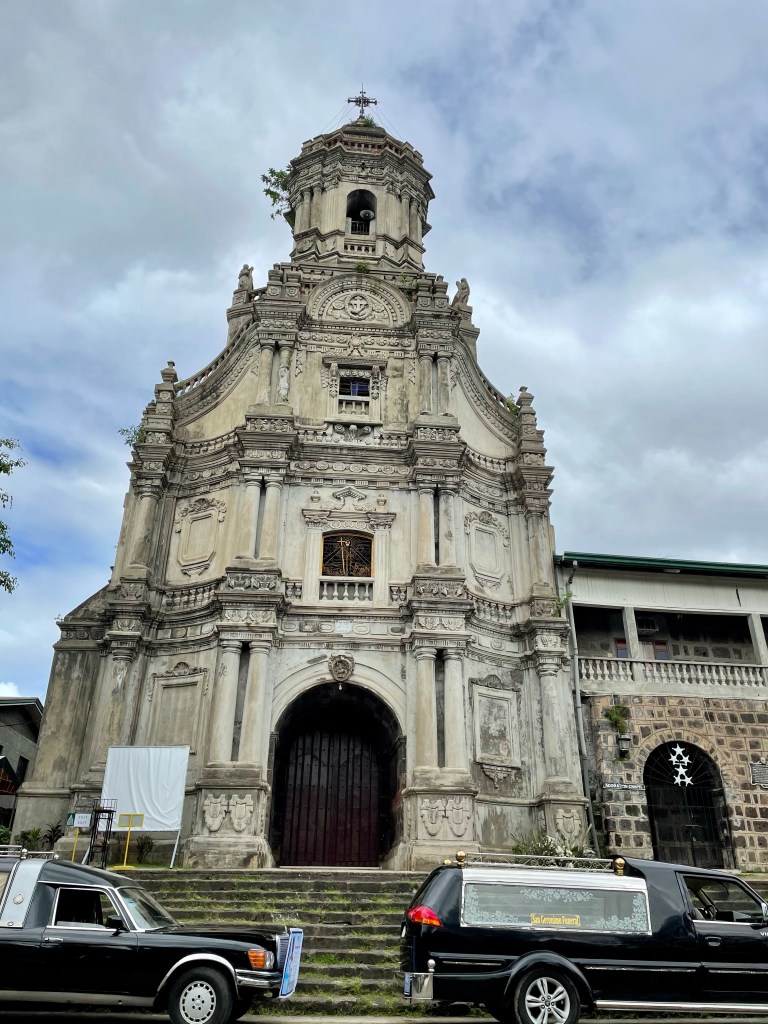
At the beautiful Parish of St. Jerome in Morong, we arrived while a funeral Mass was ongoing. Not knowing where to park as the patio was filled with people, I drove up its old and beautiful driveway all the way to its main door.
Surprisingly, nobody blocked or prevented us from driving there; when I asked if we can park there, the people simply nodded their heads in approval!
And when we went to the parish office to ask permission to go to the side altar to pray, one of the volunteers willingly led us inside so we can comfortably have a seat.
After we have prayed, we decided to skip our usual picture taking due to the ongoing Mass, choosing to feast our eyes with the amazing sight of this church’s unique architecture built by Franciscan Missionaries in 1620 and renovated to its present structure in 1853.
As we marveled at the imposing but genteel facade of the Morong Parish Church, I somehow got a feel of the people’s vibrant faith nurtured by their pastors who must be so dedicated too to have maintained its old and original architecture. One may also notice the same thing with the modern churches in the Diocese of Antipolo that covers the ecclesiastical province of Rizal where there is that blending of faith, arts, and architecture.
They must be so rich in having “respect” as in respect to the past, respect to the culture, and respect to the people that they have kept their many old and modern churches unaltered for so many years.
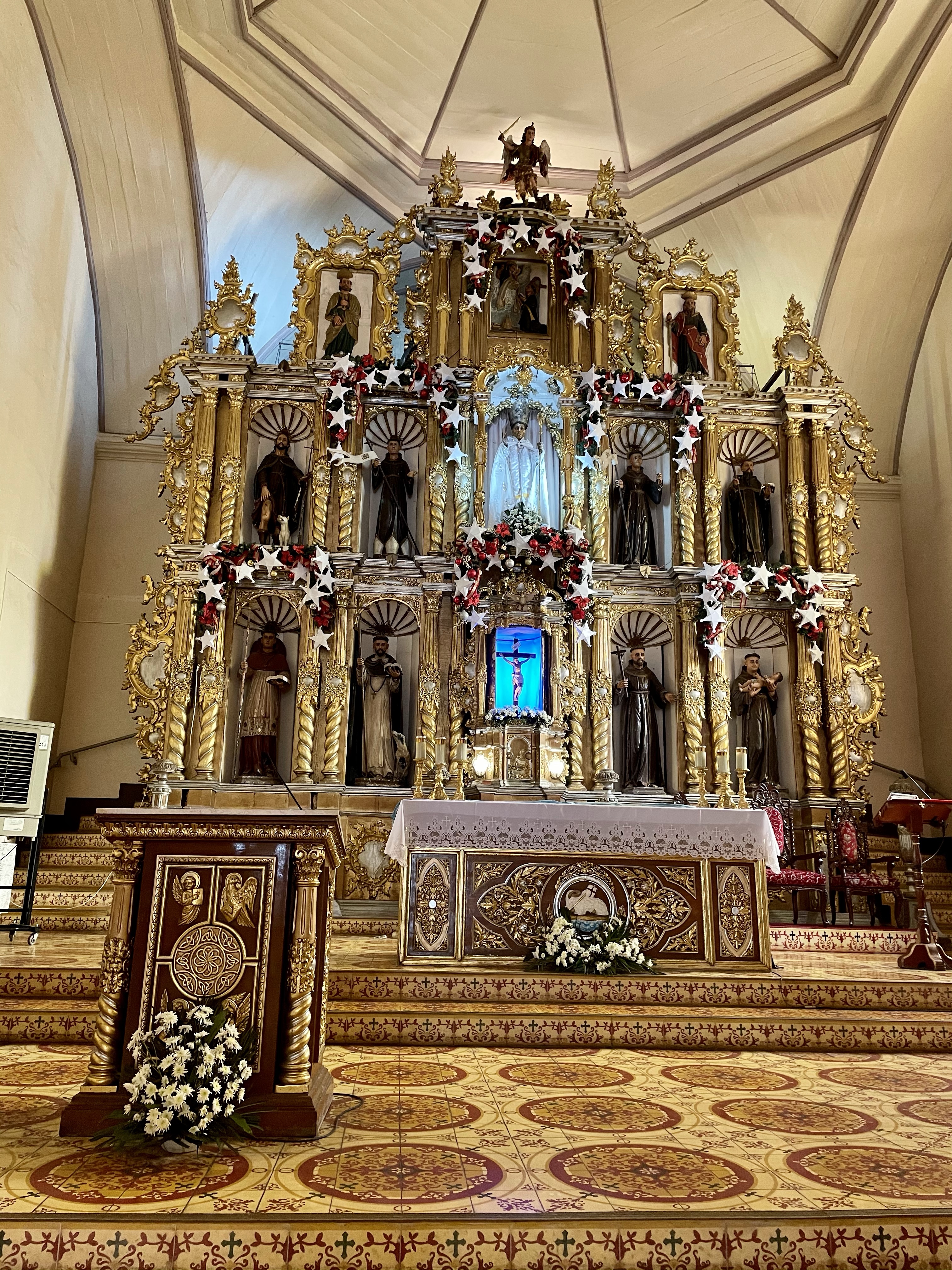
Altar of the Parish of St. Ildephonse in Tanay, Rizal declared as a National Cultural Treasure by the National Commission for Culture and the Arts in 2001.
How sad is the “edifice complex” afflicting some priests especially in our own Diocese of Malolos in Bulacan where many churches, old and new alike, have been disfigured with never ending renovations and constructions as well as overdecorating them that many have looked like cheap cakes smothered with icings.
Many seem to have forgotten the direct correlation between “church as the people gathered in faith” and “church as a building”.
Incidentally, the term used by the early Christians to refer to the Holy Eucharist as they gathered together was “breaking of bread”, a direct reference to our word companion because in every religious gathering, the companionship of the people is indicative of their kind of faith in God.
How lovely it is to see our churches, especially the old ones, as companions in our faith journey in God, to God!
'The real voyage of discovery consists
not in seeing new sights,
but in looking in new eyes."
--- Marcel Proust
As we end this series of our travelogue, we go back to the lovely Parish Church of St. Ildephonse at Tanay, Rizal where we found something so mysterious like Steely Dan’s Pretzel Logic and Deacon Blues.
On the left wall near the main door is found the Seventh Station of the Cross when Jesus fell for the second time on his way to the calvary. It is a huge woodcarving done by local artisans in 1785 using local colors like the Malay features of the images depicted with their brown complexion, large and round eyes, and “squared” body features.
See the man leading the pack blowing a carabao horn for a tambuli while the soldier carried a bolo instead of a sword?
Most unique of all that makes Tanay’s Stations of the Cross as the most amazing and beautiful in Asia is that man at the middle wearing sunglasses, looking afar.
No one can truly explain why that man was portrayed as wearing shades that were already in existence at that time from China called “smoked glasses”. Some claim that man is the high priest Caiaphas who led the Sanhedrin in the trial that found Jesus guilty of blasphemy for claiming himself to be God.
Still, it does not answer the question why wear shades?
My kinakapatid Dindo claimed the woodcarving proves that rock and roll had long been in existence since the time of Jesus Christ, the real Superstar as presented in the 1970 rock opera by Tim Rice and Andrew Lloyd Weber.
Rock and roll is more than a kind of music. It is a way of life, a different kind of looking at things that try to disregard conventional and traditional ways by trying to get to the very roots of the things we do and hold on to.
Again, the word roots is from the Latin radix from which comes the word radical to describe people with revolutionary thoughts who go against the usual and accepted ways of life by going back to the roots of our many ways of life.
Radicals are not necessarily violent who shake our beliefs to see things more clearly like the woodcarver of this Seventh Station of the Cross in Tanay.
He must be telling us how often we try to color the world according to the hues and shades we want to see it that we become oblivious to the plight and sufferings of those around us like Jesus falling for the second time. Sometimes the key in truly enjoying this journey called life is to take off our shades and see others in their true colors by revealing also our true selves.
That is the greatest joy of every road trip when we do not really take the trip but it is the trip that takes us, giving us new eyes to see life in new perspectives and dimensions never seen before.
Our recent road trip actually started even before we planned it three years ago. Dindo and I have been traveling together as companions – breaking bread with each other – sharing life, its joys and pains, fears and hopes long before we took this road trip.
Though we travel on different roads in life, our paths have merged in various points and intersections without us really knowing it, deepening our ties and friendship truly as kinakapatid. It was actually a trip started by our dads who were cumpadres and never did I imagine those trips to their home at Little Baguio every New Year while growing up would eventually lead us to Baras, Tanay, Pillila, and Morong in Rizal!
In between songs and stories and jokes as we got lost going to Pililla Wind Farm, we have realized that we all have the same problems and issues in life. They just come in different shapes and colors that make every journey so wonderful.
Where have you been lately? And how are the people you have met? Try to remember the people you have been traveling with as companions in this journey of life. Thank them and most of all, take a break to let any trip take you — a road trip, a food trip, or any trip except bad trip!
Thank you very much in joining me in this blog and trip. May God bless your journey as well as your companions. Amen.
Quiet Storm by Fr. Nicanor F. Lalog II, 26 January 2021
Every road trip is filled with music. A lot of music. In fact, it is not a road trip without any kind of music! As I was telling you, this road trip was inspired by that line from Steely Dan’s Kid Charlemagne, “Is there gas in the car?”
As we drove to Tanay from Baras Church, our playlist had Rod Stewart singing one of our generation’s staple music so “relate much” with our own experiences…
I didn’t know what day it was When you walked into the room I said, “Hello” unnoticed You said goodbye too soon
Breezing through the clientele Spinning yarns that were so lyrical I really must confess right here The attraction was purely physical (oh, yeah)
Okay. Suspend your judgments for now and let me say too that when men get together whether on a road trip or not, surely topic would always be on women and past relationships.
Always. Even with priests like me who had studied and worked for a long time “outside” the seminary. There is always that somebody in the group who would pop up with that question “have you had a girlfriend before”?
Sorry… you have to go with me in an actual road trip to hear my stories while I am obliged with the “seal of confession” of sorts to keep my lips zipped with Dindo’s stories as we talked about our past relationships while singing with Rod Stewart on our way to Tanay. One thing for sure, though, like real gentlemen, when we talked about women, it was very true, so divine, like those lines …
My love for you is immeasurable My respect for you immense You’re ageless, timeless, lace and fineness You’re beauty and elegance
You’re a rhapsody, a comedy You’re a symphony and a play You’re every love song ever written But honey, what do you see in me?
You’re in my heart, you’re in my soul You’ll be my breath should I grow old You are my lover, you’re my best friend You’re in my soul
Main altar of the Parish of St. Ildephonse in Tanay, Rizal declared by the National Museum of the Philippines as “National Cultural Treasure”, another example of maintaining the noble simplicity of old churches.
The way we relate with women
indicates how we relate with God.
Twenty years ago, I have read from one of the writings by Papal Preacher Raniero Cardinal de Cantalamessa how an American Dominican exegete had put forward that the way we relate with women mirrors our way of relating with God.
That is very true.
Women are God’s loveliest creations that without them, we men would never be complete. Some even claim that women must be the one closest to God in appearance, more perfect than us men that is why she was created last.
What is amazing again with this road trip is how our second stop at the Tanay Church confirmed our discussions of women.
First, it was a woman who directed us to the main entrance to the church because its gate was partly hidden by some obstructions at that time from the main road. Then, inside the church, three women catechists warmly welcomed us near its magnificent altar.
And when I recognized its Patron is St. Ildephonse of Toledo in Spain, I realized again how this road trip “was taking us instead of us taking the trip” on that rainy Thursday, January 07, 2021.
When I was ordained deacon in 1997, I was assigned to help the late Fr. Johann Sebastian in a parish at Pinaod, San Ildefonso town in Bulacan. Of course, San Ildefonso is St. Ildephonse…
Next, Fr. Johann was a resident of San Ildefonso whose house was across the Parish Church where we used to watch the procession during his feast on January 23.
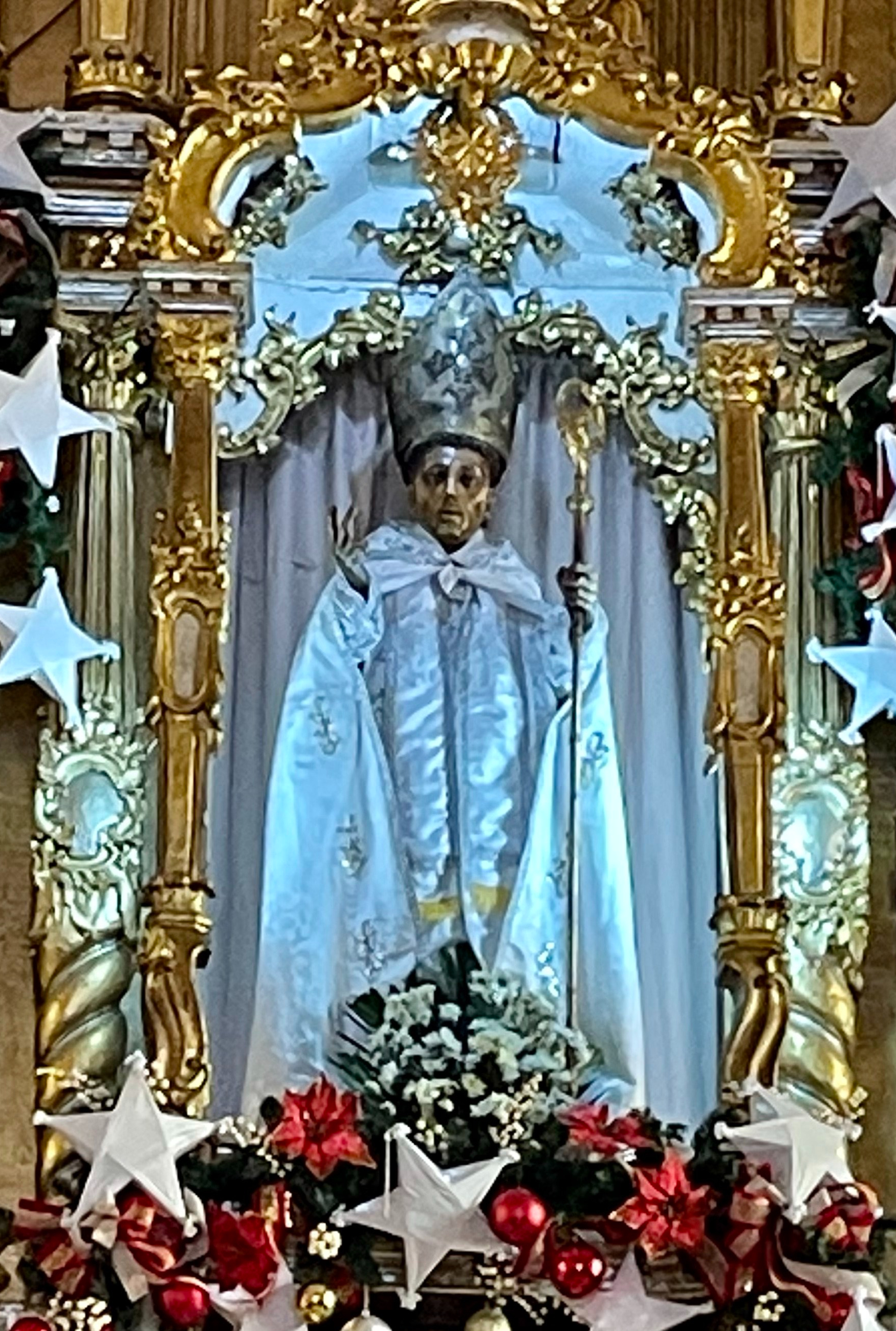
Most of all, it was from Fr. Johann that I learned so much about St. Ildephonse who had lived around the years 607-667 in Toledo, Spain that used to be the main seat of the Church in Spain before Madrid. Outside Fr. Johann’s room used to be displayed a huge painting of the Blessed Virgin Mary appearing to St. Ildephonse while giving him heavenly vestments (chasuble) as gifts for his efforts in propagating devotions to her. In fact, St. Ildephonse was one of the early bishops who had written about the Immaculate Conception of Mary that was finally declared a dogma of the Church in 1854.
Here we are in the beautiful church of Tanay recently declared by the National Museum of the Philippines as a “National Cultural Treasure” under the patronage of St. Ildephonse, truly a holy and a gentleman with a great devotion to the Mother of God that mirrored his fidelity in serving God his Master and Lord!
Shortly after praying and exchanging stories with the three catechists, the Parish Priest, Msgr. Rigoberto de Guzman came to meet and formally welcomed us in his church. Actually, we were hesitant to meet Msgr. Rigs as we did not want to disturb him but we were told that he usually welcomed pilgrims to their parish.
Likewise, I was not so sure if he could still recall me since we have met only twice ten years ago when he was the Rector of the Antipolo Cathedral during the time of Bishop Gabby Reyes while I was with Radio Veritas. And, lo and behold — Msgr. Rigs still knew me, even telling me how he had come across some of my reflections in the Sabbath publication!
A very soft spoken and kind-hearted man of God, Msgr. Rigs thanked me on behalf of our diocese in forming many of their priests who have graduated from our Major Seminary. As a token of his appreciation especially after learning that I teach and serve as a spiritual director in our major seminary, he gave me a framed image of Our Lady of the Poor and Suffering known also as Our Lady of Banneux in Belgium where she appeared eleven times to an 11-year old girl in 1933.
Oh my God!
First, it was St. Joseph who greeted us at Baras; now, we have my second most favorite image of the Blessed Virgin Mary of Banneux welcoming us in Tanay! As I thanked Msgr. Rigs for his gift, he led me to the side of their church where stood an exact replica of the Virgin of Banneux — something we have overlooked earlier due to the rains!
At that very moment, I felt the Blessed Mother’s comforting assurance of love and guidance, especially with my new assignment as chaplain of the Our Lady of Fatima University and Medical Center effective February 16, 2021. What a pleasant morning talking about the women in our lives now capped with the most wonderful woman of all, our Mother, the Blessed Virgin Mary.
The first time I learned about Our Lady of Banneux was when I met the sisters in charge of the Boys’ Town and Girls’ Town in Cavite way back in 2007 after learning about the works of their founder, the Venerable Fr. Al Schwartz, an American priest who worked here among the poorest of the poor. He was a devotee of the Our Lady of Banneux who is very much like the Our Lady of Fatima, so lovely and very simple. Both appeared in the early 20th century in Europe to show Mary’s oneness with humanity going through so many sufferings and afflictions up to this age. It is something many devotees in our diocese in Bulacan seem to be missing with their pomp and pageantry in crowning every image of the Blessed Virgin to be found, even in a bodega or a patio!
That is the beauty and charm of the two old churches we have visited in Baras and Tanay: both are simply elegant, not extravagant nor loud where one can have time with God and the sacred.
After the rains have stopped, Msgr. Rigs prayed over us and blessed us as we left for Pililla while listening this time to Hall and Oates. More rock and roll reflections in our final installment. See ya!
Quiet Storm by Fr. Nicanor F. Lalog II, 21 January 2021
The Church of Baras, Rizal first built by the Franciscans in 1595; present church was completed in 1686.
It was a road trip that took us three years of planning. Though it just covered a little more than a hundred kilometers east of Metro Manila done in 12 hours, it was a road trip beyond maps and GPS as it turned out into some sort of a personal journey within.
Sometimes in life, the most wonderful trips are those made at the spur of the moment – “biglaan, nagkaayaan lang” – when an Invisible Hand guides us, sometimes purposely allowing us to get lost along the way with many detours leading to so many discoveries.
That exactly happened with this road trip with my kinakapatid Dindo (Fernando Alberto, Jr.) last January 07, 2021. It was his idea that we go on a road trip so we can share more of our many common interests like Steely Dan music, singing like crazy Kid Charlemagne’s, “Is there gas in the car?” that has become like a password in our conversations as well as in our chats.
And so, two weeks ago with a tankful of “gas in the car”, I left my parish in Bulacan at 5AM and headed south to pick up Dindo almost exactly an hour later reaching the Church of Baras via Sumulong Highway in Antipolo a little past 7AM.
"Reeling in the Years":
the charm and beauty of Baras Church
If you are looking for a good, old church near Metro Manila that has remained faithful to its past, then go to this Church of Baras town that has retained its quaint Spanish period Baroque architecture.
Set on top of a hill still surrounded by forests, its simple facade is “so cool” and very comforting at first sight that gives every pilgrim a sense of serenity and silence, so welcoming especially to those tired and confused in life.
What struck me first were the beautiful patches of mosses and fronds growing right on the steps all the way up to the bell tower made of adobe bricks exposed without plasters. I have always been amazed with mosses and fronds because they remind me of how life continues to thrive even in the most difficult and harsh situations while their luminous green color look like natural carpets ready to absorb whatever shocks and weight you may be carrying.
From afar, the Baras church looks like an oasis tucked in a lovely corner not far from the busy highway outside. Everything is green and so refreshing. Just looking at this church from the patio dotted with yellow spots for social distancing during Masses, one may already conclude upon arrival that it was worth the trip.
Even after we have missed its main entrance after the small bridge in the poblacion, our peg remained chillax after being welcomed by its sacristan mayor named Alvin who right away opened the main door for us so we can pray inside. And, voila!
Inside the Baras Church. Its pastors have done a great job in keeping the church intact all these years unlike other old churches that have fallen prey to disrespect of its heritage and roots.
Upon entering, one’s sights are directed upwards to its exposed wooden trusses supporting the roof. It has no ceiling like most old churches in Ilocos, exuding with that sense of freedom and openness as if the heavens were rent apart by God to assure that He listens to every prayer said by anyone who comes to this church.
One thing I appreciate in this church as a priest is the prevalence of that sense of coherence, of wholeness from which the word holiness came from. So unlike many churches these days that have become more like a hodge-podge of so many things and colors that distract you away from God.
Baras church is a rarity where that old maxim in liturgy is still kept so many priests ignore: noble simplicity. Nothing kitschy or baduy like tarpaulins and what-have-you that inhibit silent meditation and contemplation with enough room for God and His saints. And you.
The adobe bricks without plasters give you an impression of a relaxed life, safely and securely ensconced inside to rest in the Lord, literally and figuratively speaking. Nothing artificial, so natural is the feeling inside without the ubiquitous giant ceiling fans and flatscreen TV’s. Touch the walls and you can still feel the whispered prayers of the faithful long dead still reverberating!
Sauntering to the sanctuary to pray while feasting my eyes with the ancient wood carvings at the side walls, it was only then when I realized how blessed is this road trip, so timely to have happened that day, not earlier or even later.
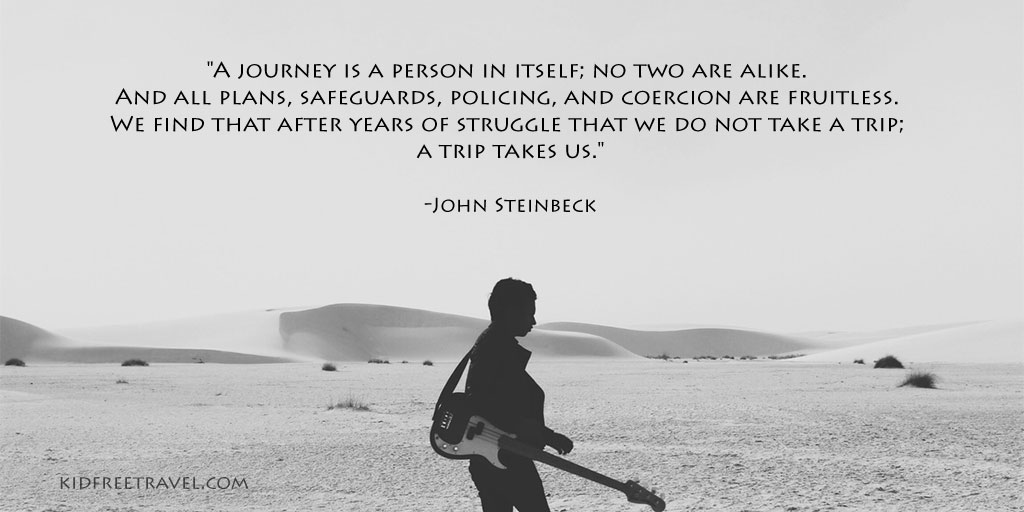
"We find that after years of struggle
we do not take a trip;
a trip takes us."
-John Steinbeck
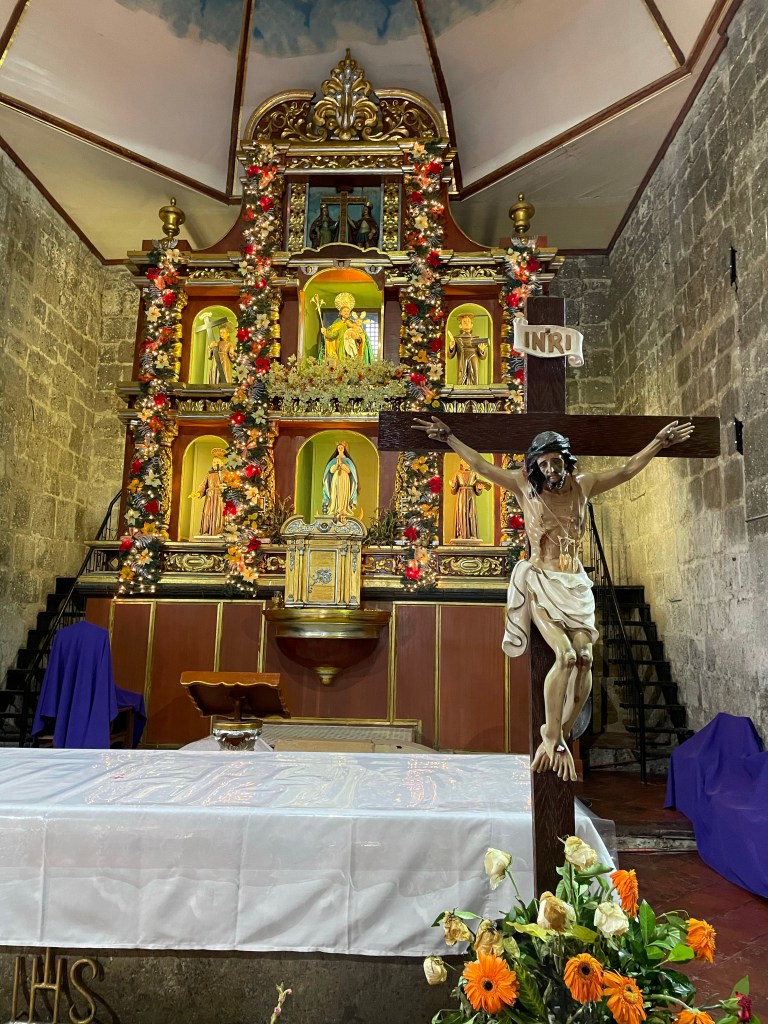
Lo and behold! When Alvin turned on the lights of the retablo, I felt so blessed when I recognized St. Joseph is the Patron of this church, the husband of Mary and foster father of Jesus Christ, my personal patron saint since seminary days!
What a tremendous blessing indeed that our first stop in this road trip is a parish dedicated to St. Joseph on the first month of the Year of St. Joseph as declared by Pope Francis last December 8, 2020 to commemorate the 150th anniversary of the declaration of St. Joseph as Patron of the Universal Church.
Most of all, it was a time in my life I was feeling so afraid, even scared and bothered almost like St. Joseph after finding out Mary was pregnant with a child not his that he decided to silently divorce her until an angel appeared in his dream, explaining everything. In my case, I have just received my new assignment as chaplain of a university and hospital in our diocese. Aside from that fearful feeling going into a new field of ministry, I was wary of the hospital setting in time of COVID-19.
But there before the altar of the Baras Church as I knelt praying, I felt the very same reassurance of God through St. Joseph, as if telling me, “Nick, do not be afraid to take that new assignment for I shall be with you always.”
After saying our prayers, I told Dindo the significance of our first Church that happened to be dedicated to St. Joseph.
And that’s when we realized how along the way we were sharing about our own beloved fathers now both gone to heaven, of their impact on us while growing up in their old-school brand of discipline and parenting that have molded us into who we are today weathering so many storms in life, never giving up, always fighting, always standing for what we firmly believe as true and good.
While there, I prayed to St. Joseph for all the fathers I know, including those priests who have blessed me and nurtured my vocation, deceased and still living. In a special way, I prayed for all dads silently crying in pain because of their great love for their children; dads never understood by their wife, always deferring for them for the sake of balance and peace at home; and, most especially, for dads who are sick after laboring for so long in raising their family.
At the left side of the nave is displayed prominently the original cross used in the church by the Jesuits who administered the parish from 1616 to 1679. Above that is a wood carving of Santiago de Compostela or St. James the Great, patron of Spain and elder brother of St. John the Beloved, the patron of my parish for nine years and seven months. The parish of Baras was originally dedicated to him. Why they changed it to St. Joseph, nobody could tell us.
But, Dindo and I at that time knew, this stop was meant for us both a father and for our own dads who are still cumpadres on a different trip in heaven. We had our light breakfast prepared by Dindo being a great cook himself who was part of the original Mandarin Hotel officers in Beijing three decades ago.
Join us next week at our next stop in Tanay where we met St. Joseph’s wife, Mary.
And along the way, we proved that rock and roll has always been a way of life since the time of Jesus…
Original cross venerated in the Baras Church with a relic from the true Cross of Jesus found in Jerusalem by St. Helena; above that is a woodcarving of St. James the Great, the first patron saint of Baras.




























 lordmychef.com