Everything begins in God

The Lord Is My Chef Sunday Recipe for the Soul
Fifth Week in Ordinary Time, Cycle B, 07 February 2021
Job 7:1-4, 6-7 >><}}}*> 1 Corinthians 9:16-19, 22-23 >><}}}*> Mark 1:29-39
Photo by author, January 2021.

Mark continues to show us a slice in the daily life and ministry of Jesus Christ. We have seen last week how everything began at the synagogue where Jesus preached and healed on a day of sabbath.

The Lord is clearly telling us that everything must begin and end in God. Always.

This Sunday we see a complete 24-hour look not only into the life and ministry of Jesus but most specially to his very person as the Christ, the Son of God as he continued his preaching while proclaiming his good news of salvation to everyone.

And to truly experience him and his gospel, we have to make that effort of meeting him.

On leaving the synagogue Jesus entered the house of Simon and Andrew with James and John. Simon’s mother-in-law lay sick with a fever. They immediately told him about her. He approached, grasped her hand, and helped her up. Then the fever left her and she waiting on them.

Mark 1:29-31

Day time with the Lord…

Photo by author, morning inside our parish church during last summer’s lockdown.

We all know by heart God’s third commandment to keep holy the sabbath day. This commandment was perfected in Jesus Christ when he rose again on Easter, the day after sabbath which is our Sunday celebration.

It is true that sabbath day is Saturday but when Jesus rose from the dead on the first day of the week, the early Christians who were all Jews shifted their day of worship to Sunday. Such shift was very remarkable, proving beyond doubt the truth of the Resurrection of Jesus for the Jewish followers of Christ to abandon their Saturday worship.

In Jesus Christ, we find sabbath not just a stop in work and everything but a return to God who is our life. Such is the centrality of God in our lives that sabbath is the day of the Lord because it is the only day without any other day at par with – walang katapat kasi walang katapat ang Diyos! See there are seven days in a week, an odd number because there is one day without any “partner day” like for example Monday-Tuesday, Wednesday-Thursday, Friday-Saturday.

Photo by author, parish altar one morning in November 2019.

Sabbath which is Sunday for us Christians is solely for the Lord!

The four disciples of Jesus must have known earlier of the fever of Simon’s mother-in-law; they must have been worried but they went along with Jesus to the synagogue to pray and worship God first, casting aside all their worries for they were with the Lord.

It was after coming from the synagogue, when Mark tells us how “they immediately told him about her” that they witnessed and experienced an outpouring of grace in their home and family.

That imagery of Jesus grasping the hand and raising her up is so rich in meaning that tells us how God helps those who help themselves.

Imagine how even if we do not pray daily nor celebrate Mass weekly yet God never fails to bless us every day. How much more if we come and meet him every Sunday!

Here we find how every true worship of God with the community extends to our families when we bring home Jesus if we are with him so we can immediately tell him our concerns in life. Jesus comes daily to us, always wanting to hold our hands and raise us up to be well and better than before like Simon’s mother-in-law but, are we willing to meet him especially in the Holy Eucharist?

In the first reading, we find Job crying to God, lamenting his many sufferings and the sad condition of life in general, something like what Qoheleth had written. It is not a cry of revolt by Job but more of a complaint coming from the heart of a faithful servant caught between despair and hope who finds life’s nothingness without God. Despite his losing all his children and workers in a day along with his properties not to mention his getting sick, Job never turned away from God and kept on calling to him in the silence of his heart from daytime to evening until the Lord heard him and blessed him fourfold.

When it was evening, after sunset, they brought to him all who were ill or possessed by demons. The whole town was gathered at the door… Rising very early before dawn, he left and went off to a deserted place, where he prayed. Simon those who were with him pursued him… He told them, “Let us go on to the nearby villages that I may preach there also. For this purpose have I come.” So he went into their synagogues, preaching and driving out demons throughout the whole of Galilee.

Mark 1:32-33, 35-36, 38-39

Remaining in the Lord even in darkness…

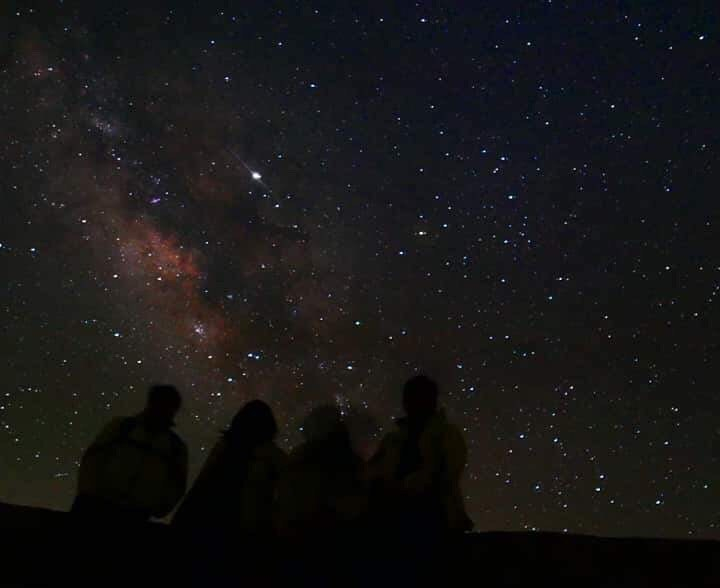
Photo by author of seminarians meditating in silence after their evening prayers, November 2020.

It was still Saturday but sabbath day had already ended at 5PM (having started at 5PM of Friday) that people have started to come to Jesus to seek his healing from their sickness and possessions by evil spirits.

Darkness did not stop Jesus from serving the people despite the difficulties of seeing them, of being so tired and hungry at night, even sleepy. Likewise, darkness did not prevent Jesus communing with the Father by rising before dawn to go to a deserted place to pray alone. What a very beautiful image of Jesus as our Good Shepherd lovingly serving the sick and the poor and as our Eternal Priest making time to pray, ensuring prayer as center not only of his ministry but of his life.

According to recent studies, Filipinos rank as the highest users in the world of social media for the sixth straight year in a row, spending an average of more than four hours and 15 minutes daily (https://www.rappler.com/technology/internet-culture/hootsuite-we-are-social-2021-philippines-top-social-media-internet-usage)

That is 28 hours a week, meaning we lose one whole day or 24 hours weekly just for Facebook, Instagram and other social media platforms! Not included are the hours spent watching television. How about time with God and with our loved ones?

Photo by Ms. Ria De Vera during our Christ the King procession, November 2020.

Please allow me now to be a little personal as this is also my last full week in this first parish I have served for nine years and seven months.

If there is one thing I have learned so well from here is the value and importance of less.

Since my ordination in 1998 until 2010, I have always been celebrating Masses in major parishes like the Malolos Cathedral, the Santissima Trinidad in Malolos (a pilgrimage parish), and the Parish and National Shrine of Our Lady of Fatima in Valenzuela. Every Mass, every sacrament there was really big time with large congregations coming.

Totally the opposite here in my first parish assignment under the beloved disciple of Jesus, St. John Evangelist. Small church building without a garage nor a patio in one small baranggay with about 12000 souls to care for.

Our Patron Saint, San Juan Apostol at Ebanghelista of Bagbaguin, Santa Maria, Bulacan.

My predecessors saw this as too small that they did not have daily Masses. But I felt in my prayers that is the only thing Jesus wanted me to do here: make him present in the daily Masses and other sacraments.

We started with just five people attending our daily Masses while Sundays were half-filled. Before COVID-19, we have increased attendees to our daily Masses to about 20 people and our Sunday celebrations have become almost seating capacity.

At first I felt sad and disappointed but the people here kept on telling me it is a miracle already that “so many people” were coming for the Masses. Slowly, I have come to accept our situation that that’s the way it is. And that is where I felt God blessing us so abundantly with our less!

Modesty aside, in the past nine years we have sent more children to receiving the Sacraments of Holy Communion and Confirmation (without any fees but with free snacks) since 1998 when this started as a quasi parish. We have almost baptized every adult person who have not yet received the sacrament too.

COVID-19 stopped everything, affecting our collections so bad but we just kept on serving and proclaiming Jesus with our daily Masses seen online, motorcade of the Blessed Sacrament every week, distribution of the Holy Communion every Sunday to those who attended our online Mass including through our innovative “drive-thru” Communion.

01 November 2020.

We never beg the people for donations but they all poured in, enabling us to continue helping the poor like helping them bury their dead, even renovate our church with the finest liturgical vessels and things!

One thing has become clear with me: always begin in God, keep him as our center in everything and all else follows.

Remember those days when you were centered in Christ; despite the problems and trials, we were never forsaken by the Lord. Even if we have lost some of our life’s battles, we have still emerged victorious because we have become stronger and fulfilled inside.

We all come and go, especially us priests but, our mission as disciples of Christ remains the same everywhere which is to make Jesus present, make God known to everyone like in the gospel today. This we can only accomplish when we remain one in him, totally free for him and free from other attachments to be free for all.

Like St. Paul, may we all strive especially us your priests to be “all things to all men” -omnia omnibus (1Cor.9:22) by being free to lovingly serve others especially the weak and the poor in Christ Jesus. Amen.

Photo by Mr. Red Santiago of his son praying in our parish, November 2019.

“Authority Song” by John Mellencamp (1983)

The Lord Is My Chef Sunday Music by Fr. Nick F. Lalog II, 31 January 2021
Photo by author, sunset at NLEX-Pampanga, 06 January 2021.

Glad to be back with our Sunday blog on music and the Gospel which speaks today of the people of Capernaum so amazed with Jesus speaking with authority as he preached to them and exorcised a man possessed by an unclean spirit (Mark 1:21-28).

We usually think of authority as having power over people, of subjugating and controlling them for our selfish motives. So often, the word and concept of authority is something we take with disdain and suspicion.

That is exactly the meaning of John Cougar Mellencamp’s Authority Song from his 1983 album called Uh-Huh.

The song is so typical of Mellencamp’s rebel attitude that made his music artistic and unique, making him the leading figure of the second generation of “heartland rockers” in the mid-80’s.

A very interesting part of this song whose video portrayed Mellencamp as a boxing underdog fighting for the ordinary people against the rich and powerful says something about authority’s real essence so close to our gospel this Sunday:

I call up my preacher
I say, “Give me strength for round 5”
He said, “You don’t need no strength, you need to grow up son”
I said, “Growin’ up leads to growin’ old and then to dyin’
Ooo, and dyin’ to me don’t sound like all that much fun”
And so I’ll say
I fight authority, authority always wins
Well, I fight authority, authority always wins
Well, I’ve been doing it since I was a young kid
I come out grinnin’
Well, I fight authority, authority always wins

From the Latin verb augere, augeribus which is to make something to increase, authority implies making things and persons better because in essence it is service. A person in authority is actually vested with powers to serve and help others become better by en-abling and em-powering them.

That’s the authority of Jesus, so powerful in bringing out the giftedness of everyone.

Jesus comes to us with authority to set us free from darkness and sins, fears and anxieties, angers and resentments that hinder us from appreciating the beauty of life and of being alive. He came with all authority from the Father to enable us to become the true persons God wanted us to be (https://lordmychef.com/2021/01/30/the-authority-of-jesus/).

At least, Mellencamp fought the wrong concept of authority; in his music video, it is implied he had lost but the kid who admired him so much was portrayed at the end as pulling his sleeves to indicate of continuing Mellencamp’s fight.

That kid represents us too, that we must continue to fight this wrong concept of authority as power to control people than serve as Jesus had shown us in the gospel.

Enjoy your Sunday with family and friends in Jesus!

Music video by John Mellencamp performing Authority Song. (C) 1984 John Mellencamp under exclusive license to The Island Def Jam Music Group.

The authority of Jesus

The Lord Is My Chef Sunday Recipe for the Soul
Fourth Week in Ordinary Time, Cycle B, 31 January 2021
Deuteronomy 18:15-20  +  1 Corinthians 7:32-35  +  Mark 1:21-28
Photo by author, ruins of the old Capernaum where Jesus lived, May 2017.

As Jesus began his public ministry last week by the shores of the Lake of Galilee calling his first disciples, Mark presents us beginning today some glimpses into the life and person of the Lord in Capernaum where he grew up and would temporarily base himself.

Then they came to Capernaum, and on the sabbath Jesus entered the synagogue and taught. The people were astonished at his teaching, for taught them as one having authority and not as the scribes. In their synagogue was a man with an unclean spirit… All were amazed and asked one another, “What is this? A new teaching with authority. He commands even the unclean spirits and they obey him.” His fame spread everywhere throughout the whole region of Galilee.

Mark 1:21-23, 27-28

First thing we notice with Jesus is his devotion to Judaism, his going to the synagogue at sabbath to worship God his Father; later we find how during major feasts he would also come to the temple at Jerusalem. What a beautiful reminder that personal faith and relationship with God has to be expressed and lived in a community like in our parishes.

In this glimpse into a typical sabbath day in the life of Jesus, we also find the reason why he launched his ministry from the province of Galilee and not at the center of Israel which is Jerusalem: and that is to serve the poor and marginalized, those neglected with nothing in life who always felt left out and forgotten by everyone.

That is no longer true as we heard him declared last Sunday, “This is the time of fulfillment. The kingdom of God is at hand. Repent, and believe in the gospel” (Mk.1:15).

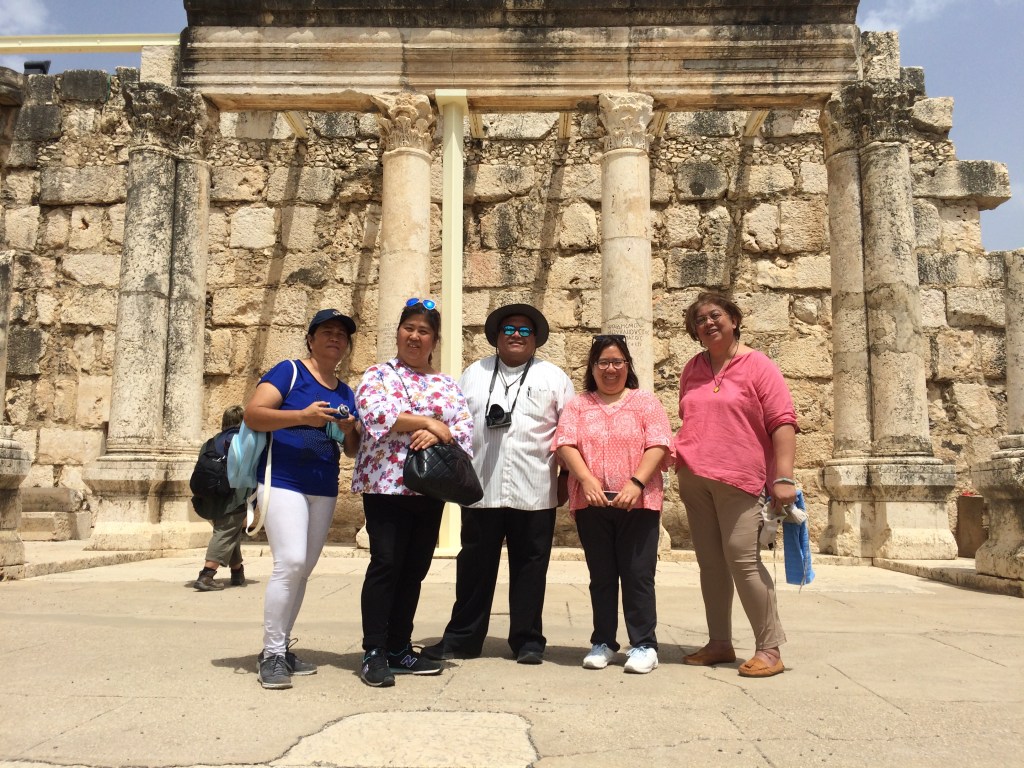
The author with friends and former colleagues at the ruins of the synagogue at Capernaum where Jesus preached on sabbath (May 2017).

A new teaching, proclaimed with authority

Mark tells us twice in our short gospel this Sunday how the people experienced Christ’s having authority in the way he spoke that was so unlike their scribes. Most of all, the people were amazed at his authority and power of words that expelled an “unclean spirit” from a man at their synagogue.

It was definitely something totally new and different that they wondered if it were a new kind of teaching, not knowing it was already God right in their midst in Jesus Christ, the Word who became flesh!

Today Jesus is teaching us the real meaning of power, his power of authority that actualizes persons and communities. Like the first disciples he had called last week, the people at the synagogue felt his words affecting them within. Their hearts must have been stirred and moved that they felt so good, moving them to share it with everyone that they all shared in the joy of hearing something new, something fresh and uplifting.

And it did not stop there.

The people then witnessed Jesus how drove away with his words an unclean spirit from a possessed man. They were amazed more upon seeing the possessed man freed from unclean spirit that “His fame spread everywhere throughout the whole region of Galilee.”

Such was the impact Jesus made on that day of sabbath at Capernaum that continues to our day especially when we gather for the Sunday Eucharist if we can only share in his authority.

Authority as power is always a service that sets people free.

Photo by author, a column among the ruins of the Capernaum synagogue in Galilee, May 2017.

The word authority came from the Latin verb augere, augeribus meaning “to make something increase” or become better. Akin to the word authority is also the word “author” as in the writer of a book or of a document whose words are regarded as true and correct, worth listening and following.

Therefore, real authority is not just having the power over the people to rule and subjugate them as most of us would always think.

Authority in the real sense is service, the power to enable and empower people so that they may become better persons, that they may mature and transcend themselves to grow as persons with so much potentials for change and development.

True authority always leads people to freedom from darkness and sins, sickness and evil that brings out their giftedness as beloved children of God.

That is the authority of Jesus who declared that he had come to serve and not to be served by giving his life as a ransom for many (Mt.20:28) so that we may all have life in him as our good shepherd, a life in abundance (Jn.10:10).

Jesus is the prophet promised by God to Moses in the first reading who shall come to his people to speak to them his very words of life. And by tracing our being prophets with authority to Moses, the first reading gives us too the only criterion for recognizing the true spokesperson of God: he must always speak the word of God that is always actualizing when spoken with humility and sincerity.

Notice how in our language and culture the close linkages of words and authority are so clearly pronounced and recognized: we call people with authority as “mga taong may sinasabi” because people who wield power always have a say in everything.

But what are they saying? What words would always come out of their mouths? Are they life-giving or inducing death, glorifying evil?

So many times, people say so many things that are nothing and senseless. Ang dami-daming sinasabi wala namang sinabi! That is how we call people without impact and true authority: walang sinabi.

Photo by author before celebrating a Mass at the back of Capernaum near the shore of the Lake of Galilee, May 2017.

How sad these recent years, we priests and bishops complain so often how people would no longer listen to us in the Church.

Could it be that this is due to the fact we have stopped speaking the words of God, when all we care to speak of is what we know, what we think of so we would be powerful and famous specially in the various social media platforms? (See https://lordmychef.com/2021/01/27/from-the-ear-to-the-heart/)

We say so many things but fall on deaf ears, no impact, no life at all because they are not the words of Christ whom we have long forgotten.

Worst, how tragic when we impose our own words, insisting our authority on the people that most often is self-serving, far from true and loving service of Jesus Christ.

Whatever happened to that ideal of lay-empowerment when we would not let people speak or at least listen to their voices and thoughts in running their parish?

Before we can make people listen to the words of God, we in the Church must be the first to listen to his words that come to us in a life of prayer and devotion to the Eucharist. What a hypocrisy on our part when we who are supposed to be unmarried and celibate who are “anxious about the things of the Lord, how he may please the Lord” (1Cor.7:32) would not even spend time to pray and listen to Jesus in the Blessed Sacrament daily.

Every day especially in every celebration of the Mass, Jesus comes to us in his authority to set us free from our fears and anxieties, sickness and sins, anger and resentments, compulsions and addictions among other things that hinder us from truly experiencing the beauty of this life.

Let us all pray today for us to have a share in the authority of Jesus Christ to set us free from our being deaf and dumb, blind and lame in the Church that is also his Body. Amen.

The old and charming Church at Baras, Rizal.

From fishermen to fishers of men

The Lord Is My Chef Sunday Recipe for the Soul
Third Sunday in Ordinary Time, Cycle-B, 24 January 2021
Jonah 3:1-5, 10  >><)))*>  1 Corinthians 7:29-31  >><)))*>  Mark 1:14-20
Photo by Mr. Jim Marpa, 2018.

The sea evokes mixed feelings of both joy and fear at the same time. It symbolizes life itself that may be nice and lovely but difficult and dangerous too. For many people, the sea is the sign of abundant life, a source of livelihood while for some, a reminder of death and misery.

Such is the mystery of life too that at the start of the ministry of Jesus Christ, we find Mark locating its setting by the sea as we embark fully into the Ordinary Time of the liturgy.

After John had been arrested, Jesus came to Galilee proclaiming the gospel of God: “This is the time of fulfillment. The kingdom of God is at hand. Repent, and believe in the gospel.” As he passed by the Sea of Galilee, he saw Simon and his brother Andrew casting their nets into the sea; they were fishermen.

Mark 1:14-16

Mark wrote the first gospel account that became the framework for Matthew and Luke in writing their own versions. He was in a hurry in writing his gospel because he felt the urgency in making known the good news of Jesus Christ; thus, his gospel is also the shortest, doing away with so many other details without losing the essentials.

This we find in his brief presentation today of the beginning of Christ’s ministry set by the Sea of Galilee.


Our sea of discontent.

First thing we notice is the very nature of the coming of Jesus Christ that happens when we are in rough waters, perhaps even with a violent storm at the middle of the sea called life: After John had been arrested, Jesus came to Galilee proclaiming the gospel of God: “This is the time of fulfillment. The kingdom of God is at hand. Repent, and believe in the gospel.”

Photo by author, sunrise at the Sea (Lake) of Galilee, 2017.

The setting was not totally good. John had been arrested. People must have been disappointed. But, that is always the cue in God’s coming called “kairos” or fullness of time, the day of judgment.

It is when we are going through difficult situations in life when we must examine ourselves too, of the need to set aside our own plans and agenda to let go and let God.

Every here and now is the time of fulfillment, a time of God’s coming to us.

Do we have the room, the space in us to welcome him to bring us into fulfillment? Hence, the need to empty ourselves, to repent and believe in Jesus Christ, the gospel himself.

Secondly, it is when we are sailing through rough seas when we also experience within that feeling of discontentment, of emptiness when there seems to be something missing in our lives even if everything is going fine like with our career or business, relationships, or family where nobody is sick or maybe the kids have all grown up and now on their own.

There comes a time in our lives when our problem is not having any problems at all — when we are no longer contented with being happy and satisfied but longing for fulfillment.

Rejoice and be glad when feeling this way! Emptiness leads to fullness as discontentment in life is always a sign of spiritual growth if we heed the calls of Jesus when desolation is a prelude to consolation.

Like in the story of creation, out of chaos comes order, exactly the experience of the first four disciples of Jesus.

As he passed by the Sea of Galilee, he saw Simon and his brother Andrew casting their nets into the sea; they were fishermen. Jesus said to them, “Come after me, and I will make you fishers of men.” Then they abandoned their nets and followed him. He walked along a little farther and saw James, the son of Zebedee, and his brother John. They too were in a boat mending their nets. Then he called them. So they left their father Zebedee in the boat along with the hired men and followed him.

Mark 1:16-20
Photo by Mr. Jim Marpa, Carigara, 2019.

When we are sailing through rough seas in life, that is when we have to trust God more so he can do and move in our lives to achieve the great plans he had created us for. “Be still and confess that I am God!” (Ps. 46:10), so the psalmist tells us.

Money and material things were not a problem for Simon and company. They must be well to-do as they have their own fishing boats at the time, even with men hired to work for them. Opening their hearts to listen to Jesus, they must have felt deep inside them that finally, they have found direction in life, something they have been searching for a long time.

Did they understand the meaning of “fishers of men”? We have no way of knowing it but Mark tells us how upon listening to Jesus, Simon and Andrew left everything behind and followed the Lord! Imagine the great fortune they have left behind.

Even Zebedee, the father of James and John, did not complain nor run after them to at least ask them to stay behind so they would help him run their family business because he too must have been praying for his sons to grow up and mature! Recall how the mother of James and John requested Jesus the favor to have them seated beside him when reigning in his kingdom they thought to be like the kings of their time living in a palace. Or, their attitude in asking Jesus to burn down a Samaritan village that refused them passage. These instances indicate how the brothers James and John may have been like today’s typical happy-go-lucky rich kids of their time but searching for meaning in life amid the many troubles and misadventures in life.

Jesus comes to us in a similar manner, in the ordinariness and problems and struggles of our lives like when Simon and Andrew, James, and John were busy working near the Sea of Galilee. The Lord speaks to them about what they were doing as fishermen to express to them his plans to make them fishers of men.


We do not find God;
it is God who finds us.

Every day, Jesus Christ is passing by, calling us, inviting us to repent and believe in his gospel, challenging us to face our responsibilities and most of all, asking us for our commitment. He never imposes but would always patiently wait for us.

We all search for meaning in life; for some, it may come early in life while for others, it might come later. But surely, our search for meaning, for God always come for sure because we were created that way by God.

In my personal experience, I have realized that we do not really find God; it is God who actually finds us! Moreover, nobody escapes God as attested by so many saints and even ordinary people we have known who have experienced conversion.

Photo by Dr. Mylene A. Santos, MD, December 2020.

One beautiful story of God coming to us, searching for us, and saving us from storms at the middle of the sea of life is that of Jonah and the city of Nineveh in the first reading. Jonah himself tried to escape God when his ship encountered a severe storm in the middle of the sea that he was thrown out to be swallowed by a whale. Of course, it is symbolic but it tells us in a nutshell the urgency of proclaiming God’s message of conversion, of not escaping God. This we find when Jonah was surprised at how a pagan nation like Niniveh listened to his preaching that they were spared of God’s wrath and punishment.

Jonah and Niniveh both give us beautiful lessons in resolutely turning back to God and his ways without wasting any instant as well as God’s immense love and concern for everyone, offering his mercy and forgiveness no matter how serious our sins are.

The characters of Jonah and of the inhabitants of Niniveh may be exaggerated but they are very true even among us in our own days! Recently we have seen how things have gone worst in this life in almost every aspect especially since last year with the coming of COVID-19 pandemic.

That is why St. Paul’s call in the second reading is so timely: “I tell you, brothers and sisters, the time is running out. For the world in its present form is passing away” (1Cor.7:29,31).

When St. Paul wrote the Corinthians telling them to act as not having wives or weep as not weeping means we have to detach ourselves from all that perish like material things as well as jobs and careers, and even this life we have. We have to focus more on things that last who is ultimately God in Jesus Christ.

Last week, I was so saddened with the news of the closing of the Makati Shangri-la Hotel next month. One of our parishioners is a young man working there as a chef since 2004. He is a very good man, always dropping by the parish after work, never missing a Sunday with his father who died last summer. When COVID-19 started, he would always attend our online Mass wherever he may be.

I texted him the night the news came out of the closure of their hotel next month. Beside is a screenshot of our chat that turned my sorrow into joy upon realizing Carlo’s deep faith in God.

That night, I thanked God in my final prayer, for letting Jesus passed by my room while chatting with Carlo, in taking care of Carlo.

Yesterday after Mass I talked to him again and he was already very upbeat, looking forward to celebrating the Mass with us more often while looking for a new job.

Let us pray this Sunday for everyone going through many hardships these days so they may remain open in their hearts, listening to Jesus who is passing by, calling them to be his fishers of men in this troubled seas. Amen.

A blessed week ahead of you!

Looking back, looking forward in Jesus

The Lord Is My Chef Sunday Recipe for the Soul
Baptism of the Lord, 10 January 2021
Isaiah 55:1-11   +   1 John 5:1-9   +   Mark 1:7-11

On this second week of January we celebrate the final epiphany of Jesus Christ as an adult in His baptism by John the Baptist at Jordan River which is also called a “theophany” when God the Father made known to everyone Jesus is His beloved Son with whom He is well-pleased.

The other two epiphanies were last Sunday when Jesus manifested to the nations of the world symbolized by the Magi while the other was during His Nativity when He appeared to the poor and lowly symbolized by the shepherds for whom He first came for.

His baptism at Jordan closes the Christmas season that coincides with our secular calendar’s entry to the second week of January which is named after the Roman god Janus who has two faces with one looking forward to the future and the other looking backwards to the past.

It is exactly what our liturgical and secular calendars in this month of January are both telling us – that we are at the threshold of new beginnings, new start as we slowly leave the past behind. And what a blessed start we have on this Solemnity of the Lord’s Baptism when Jesus reminds us of His presence this 2021 which experts predict would just be an extension of 2020. We are looking to the future in Jesus and with Jesus while we look back to the past seeing the great things the Lord had done for us!

This is what John the Baptist proclaimed: “One mightier than I is coming after me. I am not worthy to stoop and loosen the thongs of his sandals. I have baptized you with water; he will baptize you with the Holy Spirit.” It happened in those days that Jesus came from Nazareth of Galilee and was baptized in the Jordan by John. On coming up out of the water he saw the heavens being torn open and the Spirit, like a dove, descending upon him. And a voice came from the heavens, “You are my beloved Son; with you I am well pleased.”

Mark 1:7-11

Jesus Christ our Good News

For this year 2021 properly referred to in liturgy as “Cycle B”, we shall have Mark as our guide and companion in our Sunday Mass journey in the Lord (Cycle A is with Matthew, Cycle C is Luke; we hear John on special occasions like Christmas and Easter).

As I have told you during Advent, Mark wrote the first gospel account, it is the shortest because he was in a hurry in making known the good news right away. But, as Shakespeare had said, brevity is the soul of wit; Mark’s brief and direct reporting of the events and teachings of Jesus open for us so many reflections that make us experience the Lord.

Right away at the start of his gospel account, Mark tells us the baptism of Jesus as the inaugural event of the Gospel in fulfillment of the Old Testament prophecies announcing the coming of John the Baptist as Precursor to the coming of the Christ.

See his manner of narrating, stating matter-of-factly without any further ado that Jesus came from Nazareth of Galilee and was baptized in the Jordan by John; he seems to be in a hurry to tell us something great, something important and so beautiful: On coming up out of the water he saw the heavens being torn open and the Spirit, like a dove, descending upon him.

I like that part when he said “the heavens being torn open” or in some translations which I prefer, “the sky rent in two”. What a beautiful imagery, so evocative of God intervening into our lives, descending into our world to bring order, to bring peace!

In the Book of Isaiah which is read during Lent, we find that beautiful expression, “Oh, that you would rend the heavens and come down” (Is.63:19-64:3).

I love that so much! Imagine God rending, tearing apart the heavens like an action hero coming from behind to save us, to protect us, to get us.

Also in Mark’s gospel, he tells us how Jesus at his last breath “rending” while the curtain at the sanctuary of the temple was torn in two from top to bottom (Mk.15:38).

For the heavens to be rent apart shows us God finally intervening into our lives and affairs to set things right, to have some order.

And that is the beginning of the Good News of Jesus Christ that happens daily in our lives. God has rent the heavens and descended upon us in His Son Jesus Christ who clothed Himself in our humanity so we can be like Him, divine and holy.

It is an invitation He extends to us every day, beautifully expressed by Prophet Isaiah in the first reading:

Thus says the Lord: All you who are thirsty, come to the water! You who have no money, come, receive grain and eat; come, without paying and without cost, drink wine and milk! Heed me, and you shall eat well, you shall delight in rich fare. Come to me heedfully, listen, that you may have life. I will renew with you the everlasting covenant, the benefits assured to David. For my thoughts are not your thoughts, nor are your ways my ways, says the Lord… so shall my word be that goes forth from my mouth; my word shall not return to me void, but shall do my will, achieving the end for which I sent it.

Isaiah 55:1-3, 8, 11

What a beautiful assurance to us this day with the threats of new strains of COVID-19 and problems in having the vaccine, here is God assuring us all the good things we need in this life. Of course, it is not merely the material things we need but surely all good things like milk and honey we need not only to survive but to live fully.

This Feast of the Baptism of the Lord assures us all the blessings and fulfillment we need and long for this 2021 if we accept His invitation to be one with Him.

How sad that too often, we reject Christ’s invitation, thinking how difficult it is to keep the commandments of God without realizing that they are indeed “not burdensome” (1 Jn.5:3) because the more we sin, the more life gets harder and heavier for us.

Today God assures us of His love, of how his favor rests upon us in Jesus Christ.

May we heed His calls so we may see Him rending the heavens apart, coming to our rescue, coming to our aid and presence. Amen.

A blessed Sunday to you!

Advent is being consistent

The Lord Is My Chef Sunday Recipe for the Soul by Fr. Nicanor F. Lalog II
Fourth Sunday of Advent, Year B, 20 December 2020
2 Samuel 7:1-5, 8-12, 14, 16  >><)))*>  Romans 16:25-27  >><)))*>  Luke 1:26-38
Photo by author, Christmas 2019.

We are now on the final week of our four Sundays of preparations for Christmas. We have been saying Christmas 2020 is surely the most different and difficult in our lives due to the pandemic. However, it may also be the most meaningful when we have more of spiritual values, less of material things; more of the other persons, less of ourselves; and, more of Jesus, less of the Christmas trimmings.

Today we heard the beautiful story of the annunciation of the birth of Jesus Christ found only in the gospel of Luke, the source of many inspirations in arts for many centuries even today. The scene reveals to us the artistry and spirituality of Luke believed to be a medical doctor who was a disciple of St. Paul. He is the only evangelist who admitted he had “investigated everything accurately anew, to write it down in an orderly sequence (the events about Jesus Christ) so that you may realize the certainty of the teachings you have received” (Lk.1:3-4).

And what is that certainty Luke looked into? That Jesus Christ is the Son of God, the fulfillment of the Old Testament promises to the patriarchs and prophets, who is the very presence of God among us. That is why Luke wrote a second volume to his gospel, the Acts of the Apostles to show us Jesus still present in the Church in the power of the Holy Spirit. In this beautiful canvass painted to us by Luke on Jesus the Christ in his Gospel and Acts we also find in a supporting role the Blessed Virgin Mary, His own Mother and model disciple.

The angel Gabriel was sent from God to a town of Galilee called Nazareth, to a virgin betrothed to a man named Joseph, of the house of David, and the virgin’s name was Mary. And coming to her, he said, “Hail, full of grace! The Lord is with you.” But she was greatly troubled at what was said and pondered what sort of greeting this might be. then the angel said to her, “do not be afraid, Mary, for you have found favor with God. Behold you will conceive in your womb and bear a son, and you shall name him Jesus. He will be great and will be called Son of the Most High, and Lord God will give him the throne of David his father, and he will rule over the house of jacob forever, and of his kingdom there will be no end”

Luke 1:26-33

The discipleship of Mary

As a former journalist, I have always considered the four evangelists as the premiere reporters of Jesus Christ. Mark is the old school type of straight news reporting, writing the basic who, what, where, when and why, making his gospel the first to be written and shortest as he was in a hurry, a true journalist. Matthew is more of a feature writer or interpretative reporter while John was a news analyst, an op-ed columnist.

Luke is the modern journalist using the “digital platform” who goes on “live as it happens” with all the colors and actions without losing depth and focus like the BBC and Al Jazeera. He brings us where the news is happening as you must have noticed yesterday in the story of the annunciation of the birth of John the Baptist to Zechariah which also served as introduction to his lead story of Christmas, the annunciation of the birth of Jesus Christ.

Here we see the unique position of Mary as a disciple of Jesus Christ. Unlike Mark and Matthew, Luke tells us how Mary is the only one to have believed in a “situation of contemporaneity” as Fr. Cantalamessa would love to say, meaning, she believed while the event was taking place and prior to any confirmation by the event or history.

See how Matthew presented some facts already known to him in narrating the annunciation to Joseph where the angel clarified Mary’s pregnancy was due to the Holy Spirit. Luke, on the other hand, is like reporting live in real time, so realistic with Mary and the angel conversing to each other!

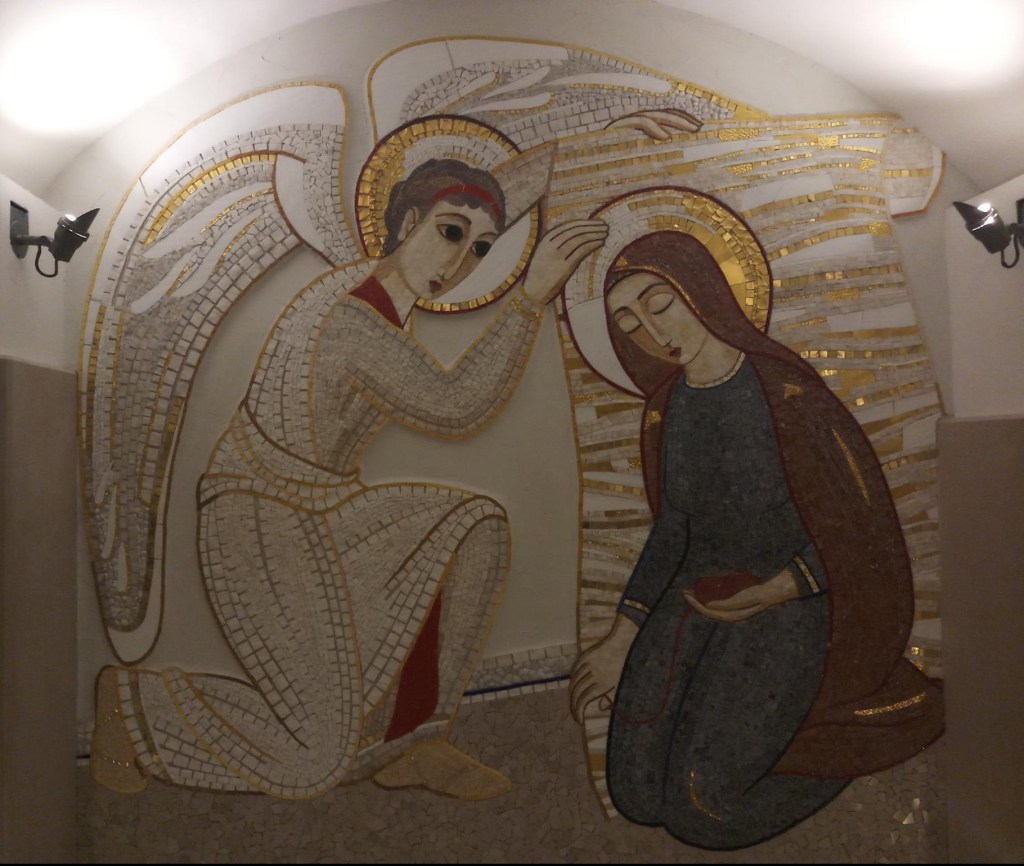
Photo by Arch. Philip Santiago, mosaic of the Annunciation at the San Padre Pio Church in San Giovanni Rotondo, Italy, 2016.

Writing in Greek like the rest of the authors in the New Testament, Luke did not use the usual Hebrew greeting of “Shalom” when Gabriel appeared to Mary, addressing her instead with chaire or “Rejoice favored one” that means especially graced from which came our translation from the Latin “Hail, full of grace!” in 1:28.

The favor or grace of Mary has found with God in 1:30 is explained in 1:31 in the future tense, “you will conceive in your womb and bear a son“. What is amazing here is that there is the sense of certitude on the part of the angel that the future will definitely take place because Mary has already been highly favored one by God before this event. How?

Though Mary will finally become a disciple at the end by saying “Behold, I am the handmaid of the Lord. May it be done to me according to your word” in 1:38, we find in 1:29 how she had always been disposed to the will and grace of God when Luke described how “she was greatly troubled at what was said and pondered what sort of greeting this might be“.

Mary “pondered – meaning, she prayed, she meditated right away the greetings to her, indicating her openness and disposition to listen and follow the will of God. That shows how even before the annunciation happened, Mary had always been obedient to God that is why she could say yes to Him when asked to be the Mother of the Savior.

Here we find Mary’s consistency as a disciple of the Lord, her Son Jesus still to be born but already existing in eternity!

When we were growing up, our mother would always tell us that once our names are called either by her or by our father, we only say one thing, “Opo… ano po iyon?” (Yes, what is it?). That is old school discipline where we literally obeyed first even without any instruction yet because we have always been assured parents would never tell kids to do something bad or wrong. And we believed that. Unlike today’s generations where the usual reply to parents’ call is “wait” that no wonder, we now ask God wait before he can speak to us. Thank God I did not get married….

Going back to Mary, we now find the contrast with yesterday’s annunciation to Zechariah: Mary pondered and felt everything in her heart and soul while Zechariah reasoned out, used more his head than his heart – something we must ponder this Christmas. Mary right away had her heart, her very self onto the Christmas Nativity while Zechariah was stuck in his negativity.

Mary believed while the event, the annunciation, was taking place, prior to any confir­mation by the event itself or by history. Later we shall see that expression “pondering in her heart” repeated often by Luke and also by John in presenting Mary: after listening to the words of the shepherds who came to see baby Jesus at His birth in Bethlehem, at finding Jesus at the temple aged 12, and during the wedding feast at Cana where He did His first miracle.

Photo by author of the site where the annunciation to Mary took place found below the Basilica of the Annunciation in Nazareth (2019).

The faith of Mary

From the annunciation of the birth of Jesus to His crucifixion, Easter and Pentecost, Mary always believed. During the Visitation, Elizabeth praised her, becoming the first to call Mary as “blessed” because “you believed what was spoken to you by the Lord would be fulfilled” (Lk.1:45).

Eight days after Easter, Jesus said to Thomas, “Have you believed because you have seen me? Blessed are those who have not seen and yet believe! ” (Jn 20:29). Early at the annunciation, Mary was the first to have believed without having seen Jesus Christ!

Mary teaches us the importance of subjective faith or the act of simply believing and trusting God, a person-to-person relationship with Him.

But it is not enough because it could lead to isolationism when we become individualistic and begin to have our own concept of God like what is happening these days especially with many Catholics with their own interpretations of God, heaven, evil and sin among other things.

Like Mary, we need to cultivate also objective faith, believe in the content of faith of the community. Mary believed God relating with the ancient prophets and patriarchs of Israel which the angel mentioned to her during the annunciation. See that after the annunciation, Mary hastily went to visit Elizabeth to share her good news and her faith. In her we learn that faith leads to a mission that is seen in the context of a community, the Church where Mary was portrayed to us praying with the disciples of Jesus during the Pentecost at the Upper Room in Jerusalem.

So here we find the consistency of Mary even before the annunciation that continued on in the life of the Church we still experience today in her many apparitions and messages always centered on Jesus not herself.

That is the call of Advent to us all: to be consistently clear with our faith with the one to be born at Christmas, Jesus Christ who is the Son of the Father, our Savior promised in Old Testament, now the very presence of God among us.

People kneeling on the streets during our Christ the King celebrations, 22 November 2020.

It is not enough that we just pray and believe; like Mary, we need to get out of ourselves and give ourselves to God and the Church. This is especially true with us priests who seem to believe more to himself and to media than with God! We must constantly examine ourselves if we truly believe in what we preach, in the kind of lives we lead. Is Jesus still center of our lives or us that we are so concerned always with our “image”, always seeking “likes” and “followers” than anything else?

If there is anyone who should be the first to be consistent in faith in God in any community, that must be the priest or pastor.

A few weeks ago while striving through the many challenges of my personal life and my ministry since this pandemic began, a parishioner told me how they draw strength and inspiration from me. I asked her why and how? What does my personal life has anything to do with them?

She explained that whenever they see me still going through with my ministry, holding on in my prayers and daily Masses, still smiling and can still laugh and crack jokes — they just feel they too can overcome their trials and difficulties.

I have realized in that short conversation more than preaching and explaining faith and its content, people look more at how faithful are we truly are as men of faith. That aside from dispensing the sacraments and doing all the ministries in my parish, there is also the task so unknown to me before of enkindling the faith of my flock, of guiding and leading them to God based on how do I live that faith in God with joy and patience.

People believe in God and the Church when they experience their pastor believing first in God and the Church. Like the COVID-19 virus, faith is contagious that spreads by coming into contact with. We priests must be the first to be “infected” with faith in the parish so that everyone would be “positive” with it, creating a “pandemic” in faith!

That is the consistency of Mary as a disciple — she is a “carrier” of a deep, joyful and active faith in Jesus, “infecting” everyone so positively that despite the difficult and trying situations we are into, we celebrate Christ’s coming amid the pandemic.

A blessed Sunday as we prepare for Christmas!

“I’ll Be Around” cover by Hall and Oates (2004)

The Lord Is My Chef Sunday Music by Fr. Nick F. Lalog II, 13 December 2020
Photo by author, Tabernacle, Gaudete Sunday, 2020.

Today is Gaudete Sunday, the third week of Advent known as “Rejoice Sunday” when our readings and pink motifs invite us all to rejoice because Jesus is coming.

And so, here we rejoice with some hard hitting old-school music with Daryl Hall and John Oates’ cover of the Spinners’ 1972 hit I’ll Be Around.

Yes, we have always preferred the original and the Spinners really did a good one that made I’ll Be Around now a classic but Hall and Oates really “kicked ass” on this one along with other hit classics from their 2004 album Our Kind of Soul.

I was watching Live from Daryl’s House the other day when their featured guest sang this and right away felt its energy but I still preferred this 2004 cover that featured the the dynamic duo’s kind of old-school music especially the signature guitar riff wrapped up in Daryl’s superb voice and performance.

I’ll Be Around was written by Phil Hurtt who clarified he was not “hurting” (pun intended) or into any emotional transition in composing the lyrics of this song that speak of the undying devotion of a brokenhearted man to his ex-girlfriend, that despite their parting of ways, he assured her that

Whenever you call me, I'll be there
Whenever you want me, I'll be there
Whenever you need me, I'll be there
I'll be around

In our gospel reflection, we have said that life is a perpetual Advent of Jesus – he had come, he will come again at the end of time, and he continues to come to us in our lives, among peoples and events.

And in this perpetual coming of Jesus, he needs us as new John the Baptist who shall guide others because “there is one among you whom you do not recognize” who could be Christ after all!

We find this song joyful, upbeat, and very much like the role of John the Baptist, the Lord’s Precursor and Awakener preparing the way of Jesus Christ even in our own time when this Season of Advent has become a parable of our life (https://lordmychef.com/2020/12/12/advent-a-parable-of-our-life/).

So, let us rejoice amid the pandemic, Jesus continues to come to bless us, to save us!

Uploaded to YouTube by LOGONDOR (83,138 views as of 18 June 2015); [Merlin] Absolute Label Services (on behalf of U-Watch Records); CMRRA, BMI – Broadcast Music Inc., Warner Chappell, PEDL, UNIAO BRASILEIRA DE EDITORAS DE MUSICA – UBEM, LatinAutor – Warner Chappell, Sony ATV Publishing, LatinAutorPerf, and 3 Music Rights Societies

“Wake Up Everybody” by Harold Melvin & the Blue Notes (1975)

The Lord Is My Chef Sunday Music by Fr. Nick F. Lalog II, 06 December 2020
Photo by Dr. Mylene A. Santos, MD, Katmon Harbor Nature Sanctuary, Infanta, Quezon (03 December 2020).

Finally got a song so perfect for this Second Sunday of Advent that speaks so well of being awake, awaiting judgement day by leading a life of loving service to others. It peaked on top of the Hot Soul Singles chart of 1976 for two weeks that launched the careers of some of the big names in R&B during that great decade of 1970’s.

My dear readers and followers, welcome Harold Melvin and the Blue Notes doing the original version of Wake Up Everybody.

Wake up everybody no more sleepin' in bed
No more backward thinkin' time for thinkin' ahead
The world has changed so very much
From what it used to be
There is so much hatred war an' poverty
Wake up all the teachers time to teach a new way
Maybe then they'll listen to whatcha have to say
'Cause they're the ones who's coming up and the world is in their hands
When you teach the children teach em the very best you can

The world won't get no better if we just let it be
The world won't get no better we gotta change it yeah, just you and me

Since its release in 1975, Wake Up Everybody has been covered by other artists not only in the US but also in Great Britain and France. During the 2004 US elections, it was covered by various prominent R&B artists with some rappers to urge young people to go out and vote. John Legend also did a cover of the song in 2010 with The Roots featuring Common and Melania Fiona.

Perhaps because of its theme and lyrics, the song has always been considered as political but, hey! even Jesus and John the Baptist were also accused of political leanings in their preachings about truth, dignity of every person, and value of life!

It is said that music is the food of the soul that when a song is so true and really good, it will always present the gospel values of Jesus Christ which is the case in most protest songs of the 60’s and 70’s like Wake Up Everybody.

See how the composers of this classic – John Whitehead, Gene McFadden, and Victor Carstarphen -have consciously or unconsciously incorporated Advent thoughts and theology in Wake Up Everybody that is still so true today:

Wake up all the doctors make the ol' people well
They're the ones who suffer an' who catch all the hell
But they don't have so very long before the Judgment Day
So won'tcha make them happy before they pass away
Wake up all the builders time to build a new land
I know we can do it if we all lend a hand
The only thing we have to do is put it in our mind
Surely things will work out they do it every time

The world won't get no better if we just let it be
The world won't get no better we gotta change it yeah, just you and me

Next to the lyrics, what makes this song so Advent-ish is its slow and cool instrumentations at the beginning of the song that bursts under control with the soothing voice of the late Teddy Pendergrass taking over, sounding so calming yet hits hard through one’s inner core without being preachy either.

That is how Advent happens: Jesus comes to us whenever we proclaim and embrace his gospel of repentance, doing what is right and good to everybody, when we wake up from our life of sins and evil, and indifference with others.

Listen, and wake up to this classic piece and have a blessed Second Sunday of Advent!

Posted on Youtube by yxyoic in 24 September 2011; licensed to YouTube by SME (on behalf of Epic); ARESA, BMG Rights Management (US), LLC, CMRRA, BMI – Broadcast Music Inc., Warner Chappell, PEDL, LatinAutorPerf, LatinAutor – Warner Chappell, UNIAO BRASILEIRA DE EDITORAS DE MUSICA – UBEM, LatinAutor – SonyATV, LatinAutor – UMPG, and 7 Music Rights Societies.

“The Sound of Silence” (1964) by Paul Simon with Art Garfunkel

The Lord Is My Chef Sunday Music by Fr. Nick F. Lalog II, 29 November 2020
Photo by author, Advent Week I, 29 November 2020.

I have been thinking of a song that speaks of darkness and light that best describes the Season of Advent. As I surfed YoutTube song with words like “night” and “darkness”, I stumbled upon this old classic and everyone’s favorite (those in our generation) with its unmistakable opening:

Hello, darkness my old friend...

Advent is from the Latin adventus that means coming or arrival. It is the start of the new year in our Church calendar made up of four Sundays meant to prepare us spiritually for Christmas.

This year, it is hoped that we take the Advent Season seriously by praying more, reflecting our lives and examining our conscience so we can have a meaningful Christmas this 2020 that will surely be bleak and dark due the pandemic.

And that is why I immediately felt Paul Simon’s The Sound of Silence as the perfect music this first Sunday of Advent when darkness is all around us with the pandemic and other calamities while also deep within each of us is another darkness like an illness or somebody with a serious ailment in the family, a lost job, or even death of a beloved.

In the bible, darkness is the realm of evil like when Jesus was betrayed by Judas on that Thursday evening at Gethsemane; however, with the coming of Jesus, darkness has become also the best time to believe in light! See how Jesus was born on the darkest night of the year, Christmas eve, to bring light to the world; likewise, it was during the darkness of the first day of the week when Jesus also rose from the dead on Easter.

Advent Season invites us to pray, to befriend silence in order to listen and understand God and his words coming to us every time we pray (https://lordmychef.com/2020/11/28/life-in-the-dead-of-the-night/).

It is in silence where we learn to be patient and vigilant, two virtues becoming so rare in our world that has come to live 24/7 in artificial lights many think to be the real thing.

Patience and vigilance are both fruits of prayer and expressions of our faith when we bear all pains and sufferings wide awake because we believe God is leading us to something good, something better and brighter.

In this song written by Paul Simon and first recorded with Art Garfunkel in 1965, we find silence that represents prayer and reflections helping us find the realities of life amid the many darkness surrounding us or even encroaching within us.

In restless dreams I walked alone
Narrow streets of cobblestone
'Neath the halo of a street lamp
I turned my collar to the cold and damp
When my eyes were stabbed by the flash of a neon light
That split the night
And touched the sound of silence

And in the naked light I saw
Ten thousand people, maybe more
People talking without speaking
People hearing without listening
People writing songs that voices never share
And no one dared
Disturb the sound of silence

I have always loved these two stanzas, citing them in my teachings and sharing with students and young people to explain to them the value of silence and to befriend the many darkness we have in life. It is a paradox, a part of life’s mystery when we actually find its light and understanding in darkness which is also our starting point in clearing and dealing with all these darkness around and within us.

After the Lord’s supper on Holy Thursday, we find in the gospel how he brought his three apostles with him to Gethsemane to accompany him pray in agony while awaiting his betrayer. Jesus asked the three apostles to watch with him, to pray with him.

This Advent, Jesus is asking us to watch and pray with him so we remain focused in God, not to the neon gods we have made to overcome the many darkness of life.

If darkness is the realm of evil in the bible, silence is the realm of trust: even if life may be dark when we cannot see clearly, we go on in silence because we believe somebody sees better than us, leading us to light and better days.

Enjoy this classic again with family and friends. Have a blessed Sunday!

Uploaded by antonino davi at YouTube, 23 October 2012.

Life in the dead of the night

The Lord Is My Chef Sunday Recipe for the Soul by Fr. Nicanor F. Lalog II
First Sunday of Advent, Cycle B, 29 November 2020
Isaiah 63:16-17, 19; 64:2-7  +  1 Corinthians 1:3-9  +  Mark 13:33-37
Photo by Atty. Polaris Grace Rivas-Beron at the summit of Mt. Sinai, May 2019.

A blessed happy new year to everyone as we begin today the new liturgical year of our Church calendar with the first Sunday of Advent. From the Latin word adventus for “coming”, Advent is a time meant to prepare us spiritually for Christmas.

And with all the problems and sufferings we have been going through this 2020 with the pandemic still around us in this joyous season of Christ’s coming, we hope that we make this Advent Season more serious so we may have a more meaningful Christmas, prepared for 2021 (see our recent blog, https://lordmychef.com/2020/11/23/surely-there-will-be-christmas-2020/)!

Like Lent, though in a less penitential mode, Advent is a time to pray and reflect on our lives and if possible, go to confessions to cleanse our hearts so Jesus may come and rest there like when he was born on a manger in Bethlehem more than 2000 years ago.

Our first reading today beautifully sets the mood for Advent 2020 in the midst of COVID-19 with a prayer so true with each one of us:

You, Lord, are our father, our redeemer you are named forever. Why do you let us wander, O Lord, from your ways, and harden our hearts so that we fear you not? Return for the sake of your servants, the tribes of your heritage. Oh, that you would rend the heavens and come down, with the mountains quaking before you…

Isaiah 63:16-17, 19
Photo by author, Advent 2019.

Advent is for new beginnings, for coming again.

Year 2020 is without doubt very difficult for everyone but it teaches us in the most unique way the essentials in life like God, family, friends, true self, and things like kindness, respect, thoughtfulness, simplicity, presence, and other niceties we have taken for granted for so long. It is about time that we recover these specially in Advent which is the season of new beginnings when we start anew in life.

And where do we start?

Right where we are, here in our darkness in the pandemic and within our hearts, far from God by beginning to pray anew to him so he may finally come and return to us!

The words by Prophet Isaiah in the first reading are so perfect at this time as if these were written only recently, expressing our true sentiments within: that we are sorry for having drifted far from Jesus and from others all these years, so focused with things and gadgets than with God and persons.

Our hearts have been too hard, distant from God and each other, so cold and so dark that we have become so insensitive, callous and numb or even without any conscience at all that in the midst of a pandemic, there are some who can still utter lies and malice with their hands also tainted with blood and corruption.

It is so sickening but, the more we pray and listen to our inner selves, we also find how this darkness has slowly encroached on us too, happening at different levels right in our own family circles, in our community, and even in our church maybe!

On bended knees, we humbly admit our need for God to intervene now – to rend the heavens – and bring us back to our senses and unto him, so we may finally find rays of hope, even a glimmer of light in this darkness we are into.

As we pray for the Lord’s advent or coming, we need to strive to be vigilant on our part as we patiently await him right in our hearts in this night of the pandemic and chaos going on.

Jesus said to his disciples: “Be watchful! Be alert! You do not know when the time will come. Watch, therefore; you do not know when the lord of the house is coming, whether in the evening, or at midnight, or at cockcrow, or in the morning. May he not come suddenly and find you sleeping. What I say to you, I say to all: ‘Watch!'”

Mark 13:33, 35-37
Photo by author, Red Wednesday, 25 November 2020.

Though we live in darkness, we belong to Christ who is light himself!

Everywhere in the world, except Down Under perhaps, the Season of Advent always falls in that time of the year when the nights are longer and most of all, darkest as in winter experienced in the western hemisphere, including Europe.

In fact, Christmas Eve is the darkest night of the year, the date Christ was born to bring light and be the light of the world.

See how Jesus used the night as the time of the return of the “lord of the house” (who is himself, too) when everything is dark and difficult.

For the young generation today, it may mean nothing at all as they have grown accustomed to our 24/7 world where work continues into the night like during the day with offices and stores opened and public transportation readily available.

During the time of Jesus and even 30 years ago, we rarely travelled nor even went out past six in the evening because of the many dangers at night like criminal elements lurking for their preys and simply the difficult situation of seeing clearly the roads ahead. In the bible, darkness is the realm of evil and sin like Jesus being betrayed by Judas after their last supper while in Genesis, we find how in darkness was nothing but chaos until God created everything.

And there lies the good news of the night, of darkness, and of Advent: Jesus Christ as the light himself of the world comes to save us at night! It was before dawn when Jesus walked the waters of the Sea of Galilee to save his apostles while being tossed by giant waves in their small boat. It was also in the darkness of the night when Jesus rose from the dead on Easter Sunday.

Yes, we all live in the night when darkness envelops us, even our hearts and very lives with so many problems and crises happening but we never lose hope, we never lose sight of that glimmer of light for we do not belong to the night but to Jesus Christ, the light of the world.

Photo by author, Red Wednesday, 25 November 2020.

Advent is patient waiting for the Lord’s coming.

Night is the time when it is best to believe in the light. As one poet had said, “The darkest nights produce the brightest stars.” But, another unknown poet had also said that “Only the brave who dare to walk the darkest of nights shall see the brightness of the stars above.”

Our lives may be in darkness or even dark itself these days but we celebrate the Sunday Eucharist today even if the the Lord’s coming may be delayed because we know deep in our hearts that “God is faithful, and by him you were called to fellowship with his Son, Jesus Christ our Lord” (1Cor.1:9).

One thing we need to pray for this season are patience and vigilance in awaiting his return during this darkness.

Patience is a virtue becoming so rare these days when everything is rushed as we live in a world of “instants” like instant gratification and, yes! — even instant vaccine against COVID-19 without us realizing its deep implications of calls for changes in the way of living and doing things in the world as individuals and as nations. From the Latin “patior” which is to bear all pains, patience is also believing that something better will happen in every sufferings we patiently endure.

Likewise, vigilance is more than being awake and prepared for any eventuality but an active waiting for someone or something by taking risks due also to a firm belief something better will come out of trying situations.

Patience and vigilance go together for both are fruits of real and hard prayer, expressions of deep faith in God.

Photo by author, Advent 2019.

On this first Sunday of Advent with clouds still turning dark with rains that have never stopped drenching us these past weeks, we continue to celebrate the Eucharist thanking God for our long-term faith in Christ’s Second Coming.

When we look back to those past nine months of darkness in this pandemic worsened by recent calamities and a clueless government since January, we actually gone far than we have expected.

Why? Because we have never lost hope from the little glimmers of lights God has sent us since the lockdown in March! We have survived and slowly, many of us are finding life’s deeper meanings and realities in God our Father.

Notice how in every patient waiting for Christ’s Second Coming in the midst of the many darkness in life, the Lord actually comes nearer to us, albeit slowly and unnoticeably?

That’s the beauty of Advent, new beginnings always happening for those patiently waiting in the Lord.

Let us be on guard during these long nights of darkness when temptations are strongest and so appealing. Like at the garden of Gethsemane, Jesus wants us to “watch” with him by praying to the Father so we may remain faithful and focused on him alone to soon find life in the dead of the night. Amen.

A blessed Sunday to you!