Best gifts of Christmas

Quiet Storm by Fr. Nicanor F. Lalog II, 27 December 2019
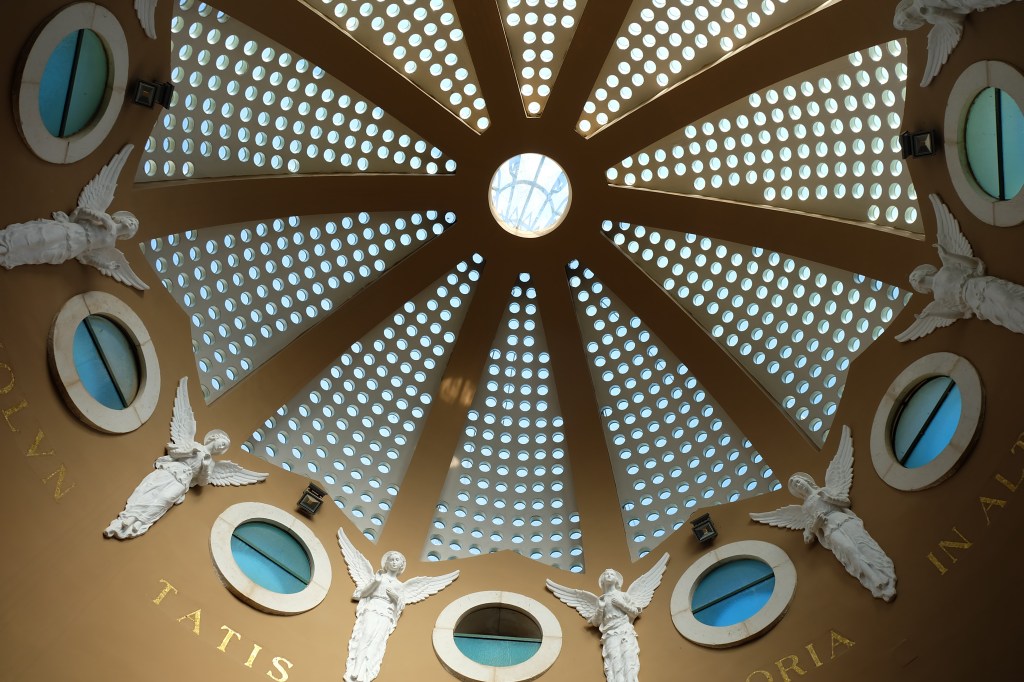
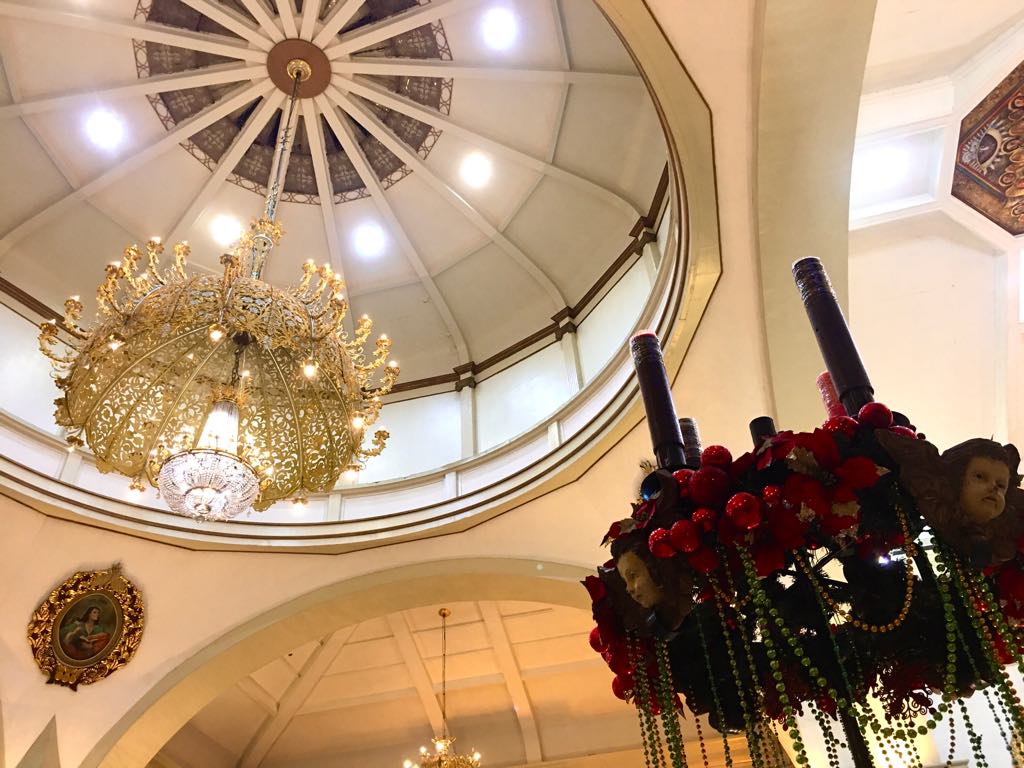
Dome of the chapel at Shepherd’s Field near Bethlehem where the angels appeared to some shepherds to announce the birth of Jesus Christ more than 2000 years ago.

By this time, many of you must have opened the gifts you have received this Christmas. Some are happy, some are not – even disappointed – while there are others who simply do not care at all with the gifts they have received.

But gifts are not everything. What really matters most are the persons and the love and thoughts that come with every gift we have received this blessed season.

Below are some spiritual gifts I feel we need to be thankful too!

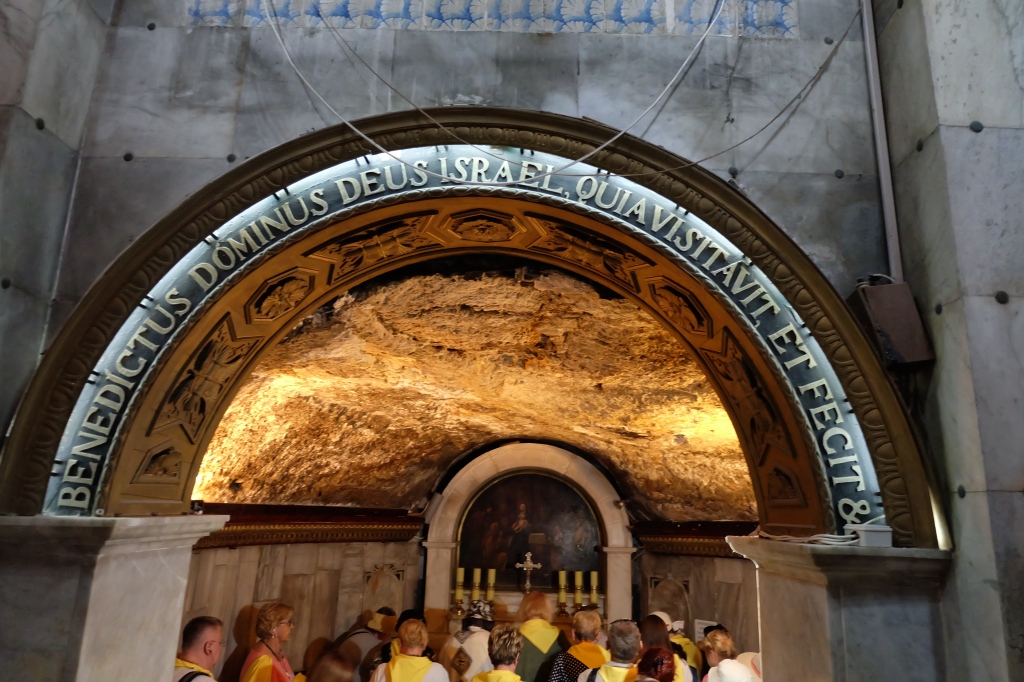
The “little door” that leads into the Church of Nativity in Bethlehem that has come to mean the need to bow low and be humble in order to meet Jesus Christ not only inside but also in our daily life. Photo by author, May 2019.
  1. The gift of hope. Hope is not thinking positively that things can get better like the weather. Hope is having a firm belief that even if things get worst, there is God who always loves us, who takes care of us. People with hope always look forward in the future whether here or in eternal life. They are also the most loving people around, the most understanding and most forgiving. They always strive, work hard to make things better for them and for others. Those without hope are the most evil: they will kill and destroy everything and everyone because they have nothing to look forward to in this life or hereafter. The kind of life we live always indicates the kind of hope we have. Or do not have.
  2. The gift of desert. Sometimes, life becomes a desert for us, when we are desolate and so barren with everything dry and even lifeless. But it is during our desert moments in life when we not only meet our true selves but most of all, that is when we meet God. It is in this meeting with God in our desert we experience healing from all our hurts and disappointments in life. We need to withdraw once in a while to our desert to silently pray in order to hear God’s voice anew in our inner selves. In our mass mediated world today when we are bombarded with wants and needs to be rich and famous, the more we end up empty and lost. But when we dare stay in our desert and try to listen in silence, the more we are attuned with life’s realities, the more we are enriched and deepened in our lives.
  3. The gift of intimacy. From our desert experiences of barrenness and desolation, of silence and prayer, and a lot of reflections and introspections come the great gift of intimacy with God and with others. We come to realize who our true friends are when our chips are down, when we are alone and badly bruised and beaten in life. How ironic that when we are so filled with material things, that is when life for us becomes superficial and shallow. But whenever we go through many desert storms, that is when we come to realize the most important in life – the persons who have touched us for better or for worse, the persons who make us experience to be loved and to love.

An oasis at the Dead Sea desert. Photo by author, May 2017.

We shall continue with our other lists of spiritual gifts this Christmas tomorrow.

How about you, what are the spiritual gifts you wish to share with us that may also help us deepen our Christmas celebrations this 2019?

We’ll be glad to hear from you also.

A blessed Christmas weekend to you.
God is gracious

The Lord Is My Chef Simbang Gabi Recipe, 23 December 2019

Malachi 3:1-4, 23-24 ><)))*> ><)))*> ><)))*> Luke 1:57-66

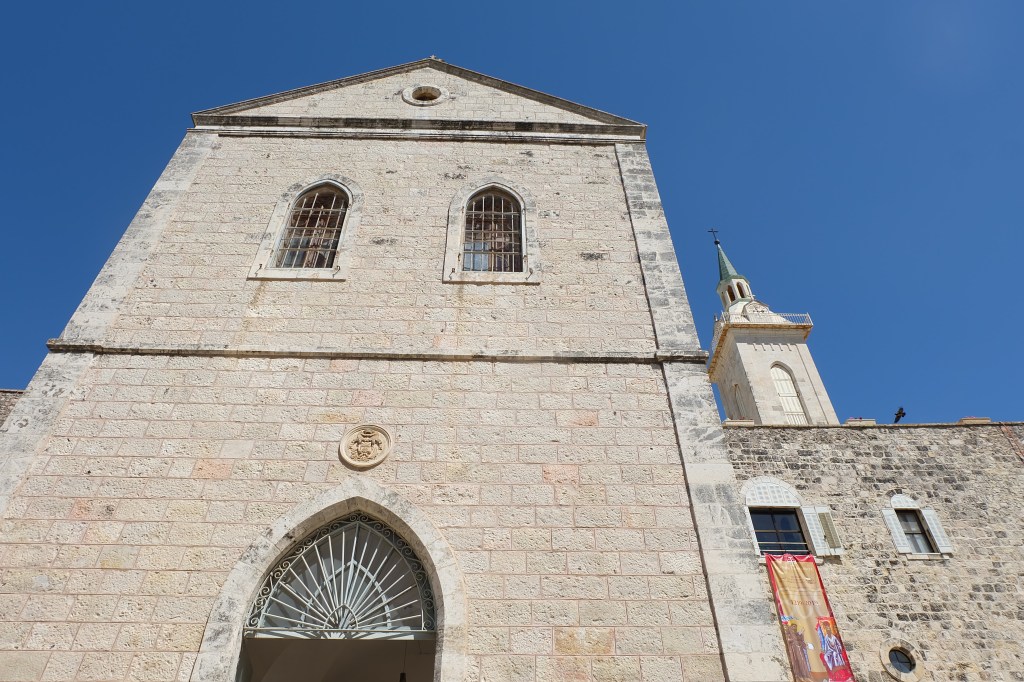
Facade of the Church of St. John the Baptist in Eim Karen where the precursor of the Lord was born. Not to be confused with Church of the Visitation at its other side in the same town. Photo by author, May 2019

Two days before Christmas, St. Luke brings us back to the continuation of his first story about Christmas: the birth of John the Baptizer.

When the time arrived for Elizabeth to have her child she gave birth to a son. Her neighbors and relatives heard that the Lord had shown his great mercy toward her, and they rejoiced with her. When they came on the eighth day to circumcise the child, they were going to call him Zechariah after his father, but his mother said in reply, “No. He will be called John.” But they answered her, “There is no one among your relatives who has this name.” So they made signs, asking his father what he wished him to be called. He asked for a tablet and wrote, “John is his name,” and all were amazed. Immediately his mouth was opened, his tongue freed, and he spoke blessing God.

Luke 1:57-64
Site where St. John the Baptist is believed to have been born. Photo by author, May 2019.

Where is God leading me?

Christmas is almost here. And it is not yet too late in these last two days of Advent that we try some “last ditch efforts” to spiritually prepare ourselves for this joyous season by asking just one question following the story of John’s birth:

“Where is God leading me?”

See the artistry of St. Luke, at how he began his Christmas story with the annunciation of the birth of John to his father Zechariah while incensing the Holy of Holies of the Temple in Jerusalem.

He doubted the good news and he was silenced by the angel until John was born.

Today, after three days, or nine months to be exact, St. Luke brings him back into the scene set free from his punishment. Zechariah was able to speak again when he concurred with his wife’s desire to name their child John by writing it on a tablet.

The name John in Hebrew is Jehohan which means “God is gracious” or “graciousness of God”.

Advent and Christmas are a story of how each one of us is a John, a graciousness of God, of us people so blessed by God to fulfill his promise of salvation in Jesus Christ.

But do we realize the many blessings we have from God?

The other night I saw an interesting post on Facebook from one of my former students in high school. It was from a woman sharing her experience while waiting in line at an ATM that has now gone viral.

She claimed that at first, she felt so bad at what was taking three people so long at the ATM to withdraw their cash. But when she got nearer, she overheard their conversations.

It turned out the three were given a bonus of Php 2000.00 each by their boss.

And they were extremely happy, so thankful, telling each other how they would prepare spaghetti and fruit salad on Christmas eve!

And the woman who posted the photo realized how those simple folks were so thankful for Php 2000.00 bonus when she and others like her who get more than that amount still complain?!

Very nice reflection!

Advent gives us four weeks to remember God’s graciousness to us this past year. The bountiful blessings we have had which we take for granted. Worst, we even complain with!

Altar of the Church of St. John the Baptist, Israel. When we came there last May, it was being closed for major restorations expected to last for years.

Whenever we see and count our blessings, do we ever thank God and ask him too where he is leading us to?

Zechariah was already old, had a great chance of incensing the Holy of Holies at their most important feast, doubted God’s grace but eventually still received it after nine months of silence.

By his action, Zechariah had shown how he had grown in faith during those nine months of “forced silence”, of how he had start to believe again in God, hope again, and practically live life anew!

Tremendous graces in just nine months being silent. Imagine that.

And we can have more grace today until tomorrow being silent, reflecting, praying as we count one by one the many blessings we have received this year.

Call it ageing gracefully, a grace in itself wherein as we grow old, we continue to find direction in life, we continue to find God leading us to him, for a specific mission to fulfill.

Dome of the Church of St. John the Baptist in Israel. Photo by author, May 2019.

Yesterday we have reflected that we are like St. Joseph entrusted with a special mission from God. That God “needs” us to bring Jesus, to care and protect Jesus here in the world. Each of us has a special part or role to play in God’s Divine plan in Jesus Christ.

Never lose hope in life. No matter what is our situation in life, God continues to work in us, working for us, inviting us to work with him.

It is interesting to know that the name Zechariah means “God remembers” while Elizabeth means “God has promised or vowed”.

If their names are brought together, we can see the complete picture why St. Luke started his Christmas story with Zechariah, Elizabeth, and John and not with Jospeh or Mary right away: they all mean “God is gracious because he remembers his promise always”!

May we always trust God and ask him where he is leading each of us this Christmas no matter what is our status in life. Amen.

Holy presence in hiddenness

The Lord Is My Chef Simbang Gabi Recipe, 19 December 2019

Judges 13:2-7, 24-25 ><)))*> ><)))*> ><)))*> Luke 1:15-25

The Walls of Jerusalem, May 2019. Photo by the author.

From St. Matthew, we now move to the Christmas story by St. Luke that starts in the temple of Jerusalem. And surprisingly, not precisely with Jesus or his parents.

In the days of Herod, King of Judea, there was a priest named Zechariah of the priestly division of Abijah; his wife was from the daughters of Aaron, and her name was Elizabeth. Both were righteous in the eyes of God, observing all the commandments and ordinances of the Lord blamelessly. But they had no child, because Elizabeth was barren and both were advanced in years. Once when he was serving as priest in his division’s turn before God, according to the practice of the priestly service, he was chosen by lot to enter the sanctuary of the Lord to burn incense. Then, when the whole assembly of the people was praying outside at the hour of the incense offering, the angel of the Lord appeared to him, standing at the right of the altar of incense.

Luke 1:5-11

We know what happened, of how Zechariah doubted the good news announced to him about the birth of his son John the Baptizer.

Many times in our lives, especially in this age of too much communications in the social media where everything is exposed, we hardly notice the best and nicest things in life happening in silence, mostly in hiddenness.

And the saddest part of this present reality is that it is God whom we miss in this “overexposures” we have in social media because he always comes to us hidden in the most ordinary and simple things in life.

Yesterday St. Joseph taught us the need to value silence and stillness in the Lord as an important lesson in facing life’s many adversarial situations.

Today we hear Zechariah forcibly silenced to experience the Lord’s power and grace, his very presence in fact.

An inside section of the remaining Walls of Jerusalem. Photo by author, May 2019.

God’s presence hidden in our time and space

Advent is the season that reminds us that God comes to us always hidden in our very time and space. Unless we know how to be silent and simple, we shall never experience the Divine presence that has covered the whole world ever since.

Of the four evangelists, St. Luke is the only one who claims to have “investigated everything accurately” about the life and teachings of Jesus Christ (Lk.1:3). That is why he has the most stories and details about Christmas.

For St. Luke, Christmas begins with the coming of St. John the Baptizer, Jesus Christ’s precursor. In a very unique manner, he tells us how God’s presence came through a husband and wife yearning so much to have a child of their own, Zechariah and Elizabeth, both belonging to the upper crust of the Jewish society having descended from the priestly families.

In fact, Zechariah was a priest who was so blessed that Day of Atonement known as the Yom Kippur of the Jews that happens around September 18-24. (That is how we come to celebrate Christmas on December 25: Elizabeth conceived John in September, giving birth to him in June 24; tomorrow, we shall hear in the Annunciation to Mary that Elizabeth was six months pregnant which falls on March 24. Simple math, we arrive at December 25 as Christ’s birthdate.)

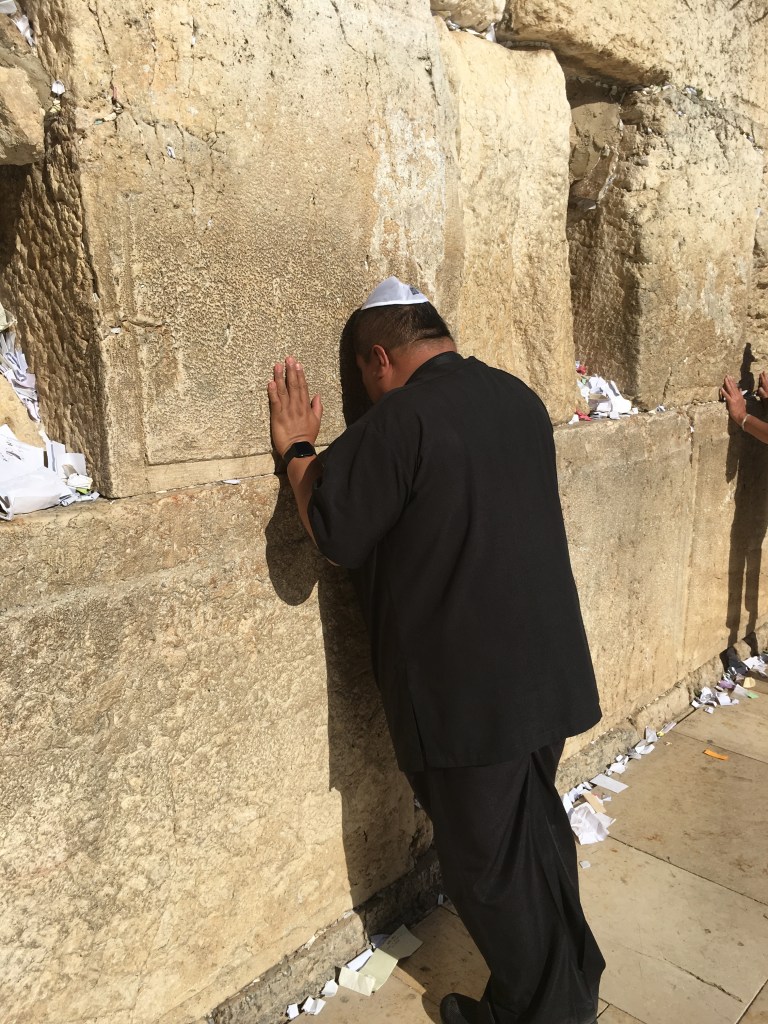
Praying at the Wall, May 2019.

During the Yom Kippur, priests drew lots on who would incense the Holy of Holies where the “Ark of the Covenant” was kept containing the stone tablets of God’s commandments given to Moses. It was the closest thing they have as signs of God’s presence among them. Hence, until now they venerate and pray at the “wailing Wall” of Jerusalem because that is supposed to be the only remaining structure of their temple destroyed in 70 AD closest to that part of the Holy of Holies.

It was so rare at that time to be assigned to incense the Holy of Holies because there were so many priests drawing lots and only one would be chosen for the rite that happens about twice daily for the whole week. It was a tremendous blessing indeed to be chosen to incense the Holy of Holies.

Here we find St. Luke setting the stage of his Christmas story to remind us all that God comes right into our time and space, in our history, in our here and now.

See his descriptions:

  1. It happened in a specific time during during “the days of Herod, King of Judea”, when Zechariah was “chosen by lot to enter the sanctuary of the Lord to burn incense” while people were outside praying and waiting.
  2. It happened in a specific place, the temple of Jerusalem.
  3. Most of all, it happened to real people, “Zechariah of the priestly division of Abijah; his wife Elizabeth was from the daughters of Aaron.”
A view from the Walls of Jerusalem of the Jewish section; dome is the Moslem section, Mount of Olives at the background. Photo by author, May 2017.

The Presence of God, the Absence of Man

When we are deeply hurt and disappointed, we are usually less rational. Worst, although we try to keep our faith alive, that is also when we doubt God, refusing to recognize his presence among us, and even right in us.

In this story of the annunciation of the birth of John the Baptizer, we find God giving Zechariah the tremendous grace to approach his Divine presence by having the rare opportunity to incense the Holy of Holies.

Most of all, at their most important feast when priests gather in the temple to pray for the people and for their personal intentions, God sent Zechariah the angel Gabriel to personally tell him his and Elizabeth’s prayers have been heard and granted!

But what happened? Zechariah doubted, even questioned God!

“How shall I know this? For I am an old man, and my wife is advanced in years.”

Luke 1:18

That’s the problem with us: God is always present but we are always absent that we never meet him. And every time he comes to visit us, we are so busy with so many other things.

If we cannot see and experience God in the most ordinary things and events in our lives, nothing would be enough to convince us of his love and mercy, of his presence and power.

That is why Zechariah was silenced by the angel, who, by the way, is already the presence of God yet Zechariah doubted.

This remaining week before Christmas, let us try to have some silence, or better, let us create a space for silence and solitude to experience God’s loving presence among us, in us.

It is only in silence where we can truly learn how to trust and be intimate with God and with our loved ones because it is only in silence where we can dare to open our selves to God and to others.

Let “the spirit of the Lord stir” you like Samson in the first reading (Jgs.13:25) this Christmas by creating silent moments with Jesus. Amen.

Advent is for healing

The Lord Is My Chef Sunday Recipe for the Soul

Second Sunday of Advent-A, 08 December 2019

Isaiah 11:1-10 ><}}}*> Romans 15:4-9 ><}}}*> Matthew 3:1-12

Cathedral Basilica Minore of the Immaculate Conception, Malolos City, Advent 2019.

Advent is a season we are invited to look forward, to dream of the ideal, of the best things we wish we all have in this destructive world we live in.

It is the time for healing our wounds and brokenness as we look forward to the fulfillment of God’s promise of lasting peace brought by Jesus Christ’s coming more than 2000 years ago.

On that day, a shoot shall sprout from the stump of Jesse, and from his roots a bud shall blossom. The spirit of the Lord shall rest upon him… Not by appearance shall he judge, nor by hearsay shall he decide, but he shall judge the poor with justice, and decide aright for the land’s afflicted… Justice shall be the band around his waist, and faithfulness a belt upon his hips. Then the wolf shall be a guest of the lamb, and the leopard shall lie down with the kid; the calf and young lion shall browse together, with a little child to guide them. The cow and the bear shall be neighbors, together their young shall rest; the lion shall eat hay like ox. The baby shall play by the cobra’s den, and the child lay his hand on the adder’s lair. There shall be no harm or ruin on my holy mountain; for the earth shall be filled with knowledge of the Lord, as water covers the sea.

Isaiah 11:1-2, 3, 4, 5-9
“Peaceable Kingdom”, a painting based on Is.11:1-10 by American Edward Hicks, a Quaker pastor (1780-1849).

Jesus is coming again to heal our destructive world

Last November 28 we celebrated Red Wednesday to remember the more than 300 million Christians worldwide persecuted in various forms because of their faith in Jesus Christ. Many of them were tortured and/or murdered while others were denied of work, housing and liberty for carrying the cross and confessing their faith and love for Jesus Christ.

According to some reports, about 80% of wars and conflicts in the world today are due to religion. How tragic – and scandalous – that religion is tearing us apart than bringing us together as peoples believing in a God who is loving and merciful!

But despite all these destructions going on, Isaiah’s prophecy challenges us to keep our hopes alive for a better future, to look forward for the coming again of Jesus Christ, “the shoot that shall sprout from the stump of Jesse” to heal our destructive world.

Advent assures us that it is never too late for the Lord to make peace and justice spring forth in our dying world like a stump of tree.

Isaiah’s vision is an imagery of God’s test of faith to us all to make it Jesus Christ’s peace a reality in this fragmented world, calling us into conversion so that we shall be “filled with knowledge of the Lord, as water covers the sea.”

It is a call made louder and clearer by St. John the Baptist at the wilderness that still echoes to our own time today.

Healing our destructive world starts within me

Photo by Mr. Jim Marpa, September 2019.

When he saw many of the Pharisees and Sadducees coming to his baptism, he said to them, “You brood of vipers! Who warned you to flee from the coming wrath? Produce good fruit as evidence of your repentance… Even now the ax lies at the root of the trees. Therefore every tree that does not bear good fruit will be cut down and thrown into the fire.

Matthew 3:7-8,10

The season of Advent is not only inviting us to look forward for a new world order where there would be lasting peace and justice, when all our tears would be wiped out, with perfect joy replacing our pains and sufferings. Advent is calling on us to look forward in renewing our relationships with God and with one another by beginning within our own hearts.

And make no mistake that St. John’s preaching and call were not only meant for the Pharisees and Sadducees of his time but also to us all Christians of today to “produce good fruit of our repentance” because being sorry for our sins is just the first step to conversion.

Whenever there is true repentance in our hearts, there must also be a change in our very selves, in our living. And only then can we expect of a better and more beautiful world coming like Isaiah’s vision because from true repentance comes justice and mercy.

St. John was very clear: it is Jesus Christ who is coming whom we shall await and prepare to meet right in our hearts. He is coming not to destroy the world – and us – but to restore everything into life anew.

Skies over the desert of Sinai in Egypt, May 2019.

Meeting Christ in the desert

Sometimes we get discouraged by some people and many situations that throw us off-balanced, tempting us to abandon all our efforts to be healed of our wounds and brokenness, in striving to become better persons.

Like St. John the Baptist, we have our own desert of desolation and bareness that purifies us further in preparing the way of the Lord, in meeting the Lord to be healed.

It is in our own desert of desolation and bareness where we are healed as we learn to be empty of ourselves like St. John in order to conquer first our selfish desires with silence and prayer, not with activities as we are all bent in doing these days.

In our world saturated in media with cacophony of voices telling us to do everything to be rich and popular and famous, the more we become empty and lost, broken and wounded.

“St. John the Baptist Preaching in the Wilderness” by German painter Anton Raphael Mengs (1728-1779). From Google.

Like St. John the Baptist, we have to break free from the trappings of the world by retreating into our own desert right inside our hearts in order to listen more to the voice of the coming Christ we must proclaim fearlessly in words and in deeds.

St. Paul assures us that all that scripture foretold in the past has been fulfilled in Jesus Christ who is coming again at the end of time. Despite the many destructions in this world, despite the many setbacks we have in life, may we imitate St. John the Baptist in awaiting Christ in our own desert for he is most faithful in his promise and presence. Amen.

When Jesus speaks

The Lord Is My Chef Breakfast Recipe for the Soul

Thursday, Week XXIX, Year I, 24 October 2019

Romans 6:19-23 ><)))*> ><)))*> ><)))*> Luke 12:49-53

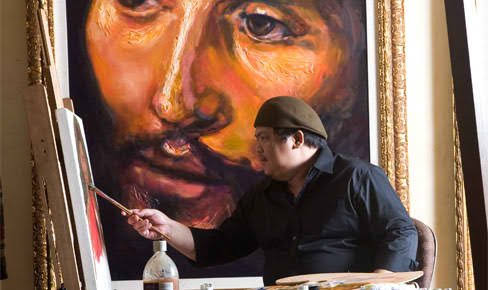
The late Joey Velasco at work. From Google.

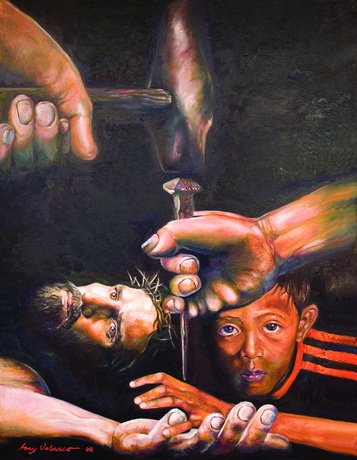
As I prayed today’s gospel, Lord Jesus, I remembered the late painter Joey Velasco who is best known for his “Hapag ng Pag-Asa”.

Joey portrayed you in a very unique way that is very disturbing, even harsh just like the way you spoke in today’s gospel.

Jesus said to his disciples: “I have come to set the earth on fire, and how I wish it were already blazing! There is a baptism with which I must be baptized, and how great is my anguish until it is accomplished! Do you think I have come to establish peace on the earth? No, I tell you, but rather division.”

Luke 12:49-51

Why did I feel that way, Lord?

It seems I have been so conditioned to your image of being “meek and humble”, so gentle like Isaiah’s Suffering Servant who bore all pains and insults.

But more than that imagery that we have nurtured of you like a “baby” within us, Joey’s paintings of you among the poor and suffering disturb us because we are so detached from you.

Yes, we are disturbed and even pained because we have refused to follow you closer among the poor and suffering.

So often, your words shock us and actually bring us back to life because we have actually been dead to sin and evil or the “wages of sin” according to St. Paul in our first reading today.

“That All May Be One” painting by Joey Velasco.
Photo from Google.

We are disturbed because our silence in reaching out to the poor and oppressed is more harsh than your words.

Your words are “harsh” because they are so radical in the truest sense, from the Latin radix or roots – you are shaking us down into our inner core and being to set the earth out on fire with your love!

Your words disturb us because they call us to leave our comfort zones and sidewalks to follow you right onto the dirty road of pain and suffering with the poor.

Yes, you have come Jesus to bring divisions, but not out of our petty quarrels and whims and fanaticisms.

Let us be divided for what is true and good, for what is just and fair.

Let us be divided, Lord, by choosing your side, by standing by your side at the foot of cross with the wounded and unaccepted.

Open our hearts, O Jesus, to the truest sense and meaning of your words to reawaken in us your fire and spirit of loving service for the less fortunate. Amen.

Let nothing disturb you…

Quiet Storm by Nick F. Lalog II, 15 October 2019

Photo by Mr. Jim Marpa at Panglao, Bohol, September 2019.

Which is more difficult to confront, the fact of dying or that of suffering through a serious sickness? I have been thinking these for the past couple of days following my recent visitations of sick parishioners.

Today I visited a parishioner sick for the past three months with a lung disease. She’s 76 years old.

Right upon seeing me, Lola Milagros cried, telling me to ask God to take her because she’s so tired of suffering and waiting for death.

I just let her cry, holding her hands, as I listened to her pouring out of her aches and pains.

After that, I whispered to her the words of St. Teresa de Avila whose feast we are also celebrating today:

Nada te turbe… Solo Dios basta! (Let nothing disturb you… only God suffices!)

St. Teresa De Avila

So beautiful to hear and yes, easier said than done.

Can anybody with a serious ailment be not disturbed?

Been asking myself the same questions too. It is difficult not to be disturbed when one is sick. Aside from the costs of treatment are the enormous pains and sufferings one has to go through with the medical procedures and its many effects to the patient, who eventually would die.

It is a reality getting closer to home with me and I must confess, I am disturbed. Worried. And afraid.

Photo by Essow Kedelina on Pexels.com

The other week I visited another sick parishioner named Charlie, a former cook paralysed waist down due to a spine injury. He is only in his early 50’s.

What struck me when I saw him were the ropes tied to his both feet. I could not figure out how he could be restless when he is paralysed that his feet have to be tied?

He explained, “Father, I pity my wife when I have to wake her up every night just to move my legs. So, I improvised these ropes tied to my feet so I can just pull them with my hands in case I have to change positions even at night.”

Oh God! What a great love of a man to his wife!

Charlie loves his wife so much that he does not want her to be disturbed with his ailment and condition.

When there is love, we are not disturbed. And the only true love that can make us undisturbed is the love of Jesus Christ, the only perfect love we can have and find.

Photo by Pixabay on Pexels.com

Whenever we think of Christ we should recall the love that led him to bestow on us so many graces and favors, and also the great love God showed in giving us in Christ a pledge of his love; for love calls for love in return. Let us strive to keep this always before our eyes and to rouse ourselves to love him. For if at some time the Lord should grant us the grace of impressing his love on our hearts, all will become easy for us and we shall accomplish great things quickly and without effort.

St. Teresa de Avila

“Love calls for love in return.”

So beautiful words by St. Teresa de Avila.

We can only truly feel that personal love of Jesus if we are also personally in love with him.

We are disturbed with so many things in life when there is not enough love in our hearts, when we have not felt loved enough by others too.

Without love, we would always be disturbed.

I told Lola Milagros this morning to thank God for the gift of tears because they are prayers coming straight from her heart. That God knows very well all her pains and sufferings. Most of all, I told her tears are clear signs of love in her heart.

Later on my way home, Lola Milagros’ daughter was also teary-eyed as she told me she was so glad to see her mother cried. According to her, Lola Milagros is a very tough woman of the “old school” who tried to bear everything and even hide what’s inside her so as not to disturb them. She always wanted them to be assured all’s fine.

Lola Milagros and Charlie do not want to disturb their respective family because they love them. It is love that moves the sick not to disturb others and it is also love that enables us to assure them not to be disturbed.

The challenge therefore is not to reflect on whether to die instantly or slowly but to always love truly!

Sacred Heart Novitiate (Novaliches), 2017.

Human love is always imperfect. Only God can love us perfectly. This he did exactly to us when he sent us Jesus Christ who died on the Cross for us.

To love truly is be personally one in Jesus Christ. When we were still seminarians, Fr. Memeng used to tell us in our class “Priestly Spirituality” that “if we can really cultivate a deep prayer life, we can also experience Jesus Christ in the most personal way.” It is the experience of St. Teresa de Avila and all the other saints.

Nothing can disturb us in this life when our love is borne out of a personal relationship with Jesus in prayer.

Prayer life is more than reciting prayers by following a schedule. Prayer life is a relationship, a communing with God, of being our true selves before him, seeing ourselves as he sees us. And because of this assurance of his love despite our many sins and flaws, that is when we are not disturbed because God loves us no matter what.

When we are not disturbed, then we become silent. Presence is more than enough to share and experience God’s love. St. Paul said “love is not pompous” because true love is always silent, more on deeds than on words.

One thing amusing with death is that it always comes in silence, when we least expect it. Whether we die instantly or slowly, it always happens in silence. And that is also why many are disturbed of dying.

But, if we love patiently our self, others and God, nothing can ever disturb us because when we love, we are already in God. That is when we realize too the wisdom and truth of St. Teresa’s contemporary who claimed that

A soul that walks in love is neither tired nor gets tired.

San Juan dela Cruz
From Google.

Let us love, love, and love until the end onto eternity.

Only God suffices because God is love. Amen.

To listen like St. Francis of Assisi

The Lord Is My Chef Breakfast Recipe for the Soul

Friday, Feast of St. Francis of Assisi, 04 October 2019

Baruch 1:15-22 ><)))*> 0 <*(((>< Luke 10:13-16

One of the scenes from Benozzo Gozzoli’s series of frescoes from the life of St. Francis (1450) that captures the saint’s “Sermon to the Birds” and the dedication of his basilica at Assisi. Photo from Google.

Praise and glory to you, Lord God our loving Father for this week about to close with the celebration of another great saint, Francis of Assisi.

Two things I wish to thank you in giving us St. Francis of Assisi.

First is his total dedication in listening to you alone.

St. Francis accomplished so much for you and had so much impact not only to the Church but for the whole world until now because he intently listened to your voice, to your calls, and to your instructions.

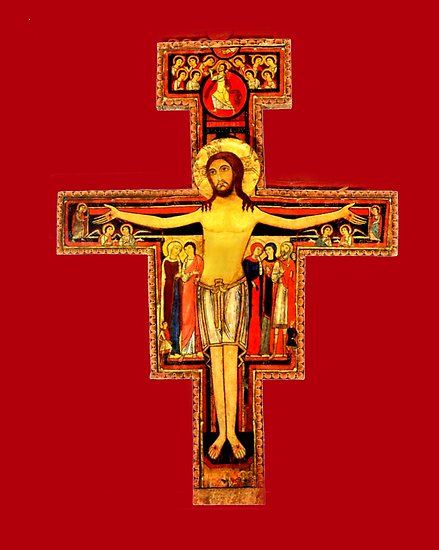
It does not really matter if he got your words literally or figuratively speaking like when he was praying inside San Damiano chapel and heard your voice saying, “Go, Francis, and repair my house, which you see, is falling into ruins.”

Or, when St. Francis finally found his vocation in life after listening to Matthew 10:9 in the Mass and felt you Jesus speaking directly to him to go preach the kingdom of God without extra clothes and money that right after that, he threw everything away to preach penance, brotherly love, and peace.

How ironic that in this world of modern means of communications, the more we have become fragmented than ever because we have lost the values of silence, prayer and listening to self, others, and you, O Lord.

Jesus said to them, “Whoever listens to you listens to me. Whoever rejects you rejects me. And whoever rejects me rejects the one who sent me.”

Luke 10:16

Teach us, dear Jesus to be poor and empty like St. Francis so we may always open our ears and our hearts to seek your voice, to listen to your words, and most of all, to follow your will.

From Be Like Francis at Facebook.

Second thing I am so grateful with you Lord in giving us St. Francis is his deep sense of gratitude to you that he was able to see our universal brotherhood in you God our Father.

Did he really preach to hundreds of birds and told them to be thankful to you dear God for their freedom and for your care to them? I believe it must be true because where there is gratitude, there comes peace and serenity that attract than dispel people and animals alike.

Teach us to be grateful with whatever we have, Lord because the moment we learn to thank you and anyone here on earth, then we we realize our being one. In his gratitude for your wonderful gifts to him, St. Francis not only embraced you Jesus on the Cross but also saw everyone as family with brother Sun and sister Moon, brother Wind and sister Water. And even cousin Death.

Again, O Lord, in this age of affluence, the more we feel empty and lacking as we tend to acquire more of material things. Teach us to repent for our sins like St. Francis and Baruch in the first reading, to acknowledge everything we have including our sins.

It is only in being thankful that we are able to realize who truly reigns in us like St. Francis. Amen.

Never mess with God’s plan

The Lord Is My Chef Breakfast Recipe for the Soul
Wednesday, Wk. XVIII, Yr. I, 07 August 2019
Numbers 13:1-2, 25-14:1, 26-29, 34-35 >< )))*> Matthew 15:21-28
Photo by Jens Johnsson on Pexels.com

Thank you very much, O Lord, for this brand new day, for this breath of new hope at the middle of the week as I pray for those who make life difficult for me, for those who mess your plans like those spies Moses sent to reconnoiter the Promised Land.

Instead of building up the people to meet the challenges of settling in the Promised Land, “they spread discouraging reports among the children of Israel about the land they had scouted” (Num.13:32).

Forgive me Lord for doubting you, for thinking that you do not seem to care at all for me when I feel so alone with nobody on my side.

Increase my faith in you like that Canaanite woman who begged you to heal her daughter possessed by the devil. You did not say a word to her that prompted your disciples to intercede for her just to silence her, telling them you had come to search the lost sheep of Israel until….

He said to her in reply, “It is not right to take the food of the children and throw it to the dogs.” She said, “Please, Lord, for even the dogs eat the scraps that fall from the table of their masters.”

Matthew 15:26-27

You praised that Canaanite woman, Lord, for her great faith; but, those children of Israel who trusted more the lies of those sent to scout the Promised Land were eventually punished, paying the very dear price of wandering for 40 years in the desert because they chose to mess your plans.

Vanish all anger and bitterness in me against these people who would surely soon “realize what it means to oppose you, O Lord” (Num.14:34) while I await your further plans and instructions. Amen.

From Mindful Christianity Today via Facebook.

Where are you leading me, Lord?

The Lord Is My Chef Breakfast Recipe for the Soul
Solemnity of the Birth of John the Baptist, 24 June 2019
Isaiah 49:1-6 >< }}}*> Acts 13:22-26 >< }}}*> Luke 1:57-66, 80
St. John the Baptist Church in Ein Karem, birthplace of St. John the Baptist. Photo by author, 05 May 2019.

Praise and glory to you, O God our almighty Father! Thank you very much for the gift of life, for the gift of being born into this world to see and experience your majesty. Indeed, it is always good to be alive, no matter what our condition or status in life may be.

Unfortunately, Lord, there are so many times in life that we fail to see life’s beauty because we have taken control over ourselves and everything, leaving no room for you to work in us, with us and through us. So many times, Lord, we wonder what we would be like what the neighbors and relatives of John the Baptist said when he was born.

All who heard this these things took them to heart, saying, “What, then, will this child be?” For surely the hand of the Lord was with him.

Luke 1:66

Perhaps, it will be best for us today to be silent as we celebrate John the Baptist’s birthday to let your hand be upon us too, O God, so we may ponder and pray where you are leading us.

It is the start of work and studies for another week. Some of us are getting tired of the routine, some of us could no longer find meaning and direction in life. And some of us are on the brink of giving up on our many plans and even with our very lives!

Let your hand be upon us, Lord, and lead us to your direction. Guide us with your Holy Spirit. Teach us to lay aside our plans and personal agenda to allow you to take us where you would want us to be. Give us the courage to take that plunge into the unknown, trusting you alone wherever you may be leading us.

So many times Lord, we are like John the Baptist’s father Zechariah who believe so much with ourselves that we forget to trust you.

And many times, too, we are like the relatives and neighbors of Elizabeth who always interfere with your plans, insisting on following traditions and patterns, preventing you from surprising us.

Keep us silent today, Lord, to hear you more, to follow you more wherever you are leading us. Amen.

Pilgrims outside the Church of St. John the Baptist in Ein Karem waiting for their turn to enter his birthplace. What a beautiful sight of people still patiently waiting for God to lead them closer to him.

Easter: Faith from “a basta!” experience

The Lord Is My Chef Sunday Recipe for the Soul
Easter Week II, Year C, 28 April 2019
Acts 5:12-16///Revelation 1:9-11, 12-13, 17-19///John 20:19-31
From Google.

We Filipinos have an expression that best captures the faith of Easter experience, something very close with the universal expression “aha!”. It is what I call as the “a basta!” experience.

From the Spanish word “basta” which means “enough” like what St. Teresa of Avila said in her poem, “Solo Dios basta” (Only God is enough/suffices), our “a basta!” expression is often used to insist on something to be accepted as true. Its closest English equivalent is “that’s it” to show that the issue at hand is settled because I have confessed it so.

On this octave of Easter which means eternity (because there are only seven days in a week but if you count the days since Easter, this Sunday is the eighth, an octave), the beloved disciple reminds us that Jesus said other things not recorded in his book; and most likely, he had had other appearances too not recorded simply because they are impossible to do. According to John, these were all written so we may all believe Jesus is the Christ and have eternal life in him. Moreover, there is no need for him to go into so many details about the appearances of Jesus after his Resurrection because what really matters most is the intensity of his presence. It is from that intensity of his presence we derive that “a basta!” experience of him. To be open to accept such intense moments of Christ’s presence leads us to deeper faith in him and eventually, to a relationship with him and in a community.

Thomas meets the Risen Jesus. From Google.

Now a week later his disciples were again inside and Thomas was with them. Jesus came, although the doors were locked, and stood in their midst and said, “Peace be with you.” Then he said to Thomas, “Put your finger here and see my hands, and bring your hand and put it into my side, and do not be unbelieving, but believe.” Thomas answered and said to him, “My Lord and my God!”

John 20:26-

“Do not be unbelieving, but believe.”

Last Sunday we have reflected how the Easter stories are always set in darkness like in the early morning, at sunset, and in the evening: the joy of Easter always comes bursting in the darkness of our lives, when we are down and suffering, sick or feeling lost, and fearful. It is during those dark moments of our lives when Jesus silently comes to us even in locked doors and windows. Problem is the moment Jesus comes to us, that is when we doubt him like Thomas! We could not believe Jesus is really alive though deep inside us, we do believe if only there could be be something within us that could give that final big push for us to say “a basta!”.

A week after his first appearance to his disciples at night, Jesus appeared anew today despite locked doors, darkness, and shadows of doubts within Thomas. When Jesus told him to “do not be unbelieving, but believe” , the Lord was not reproaching him but actually exhorting him to believe. And that is likewise addressed to us today: believe!

To believe is first to accept the gift of faith from God who opens himself to us, inviting us to a relationship with him. To believe in God is to meet him who always comes to meet us, to be with us. To believe in God is most of all to enter into a relationship with him so that that more we believe, the more we “see” him, the more we experience him. Most of the time we learn and get so many proofs of the existence of Jesus Christ in our prayers, studies, and experiences. Through time, we also grow in our personal conviction and acknowledgment of the Risen Lord, surpassing all proofs and logic until eventually even if we can enumerate our many reasons for believing, in the end, we admit that not even one of them is the very reason for our faith in Jesus Christ. And that is when we give that burst of “a basta!” – – – Jesus is alive! Then we learn to confess like Thomas, “My Lord and my God.”

From Google.

The Resurrection of Jesus is both historical and beyond history that made so much impact in human life, affecting us in the most personal manner. Sometimes we really wonder like the Apostle Jude Thaddeus who asked the Lord during the Last Supper why he would only manifest to them and not to everyone (Jn.14:22) so as to cast out all doubts and set the record straight that there is God indeed. When we examine our life journey, we find there is really no need for Jesus to appear at all for everyone to believe his existence, that he had risen from the dead, that there is God.

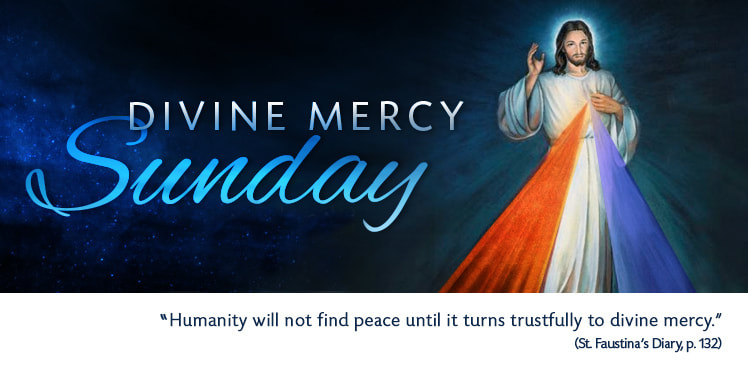
The Easter stories show us how God works silently in our midst, always slowly and surely, gradually through history and in our personal life. It is not really his appearances that matter but the intensity of his presence felt only in silence when we learn to trust more and believe more. How wonderful that on this eight day of Easter we also celebrate Divine Mercy Sunday that invites us to trust more than ever Jesus Christ our salvation. May we entrust ourselves to Jesus anew like Thomas, touching his wounds, confessing “My Lord and my God” or “Jesus, King of Mercy, I trust in You.” Amen.

From Google.