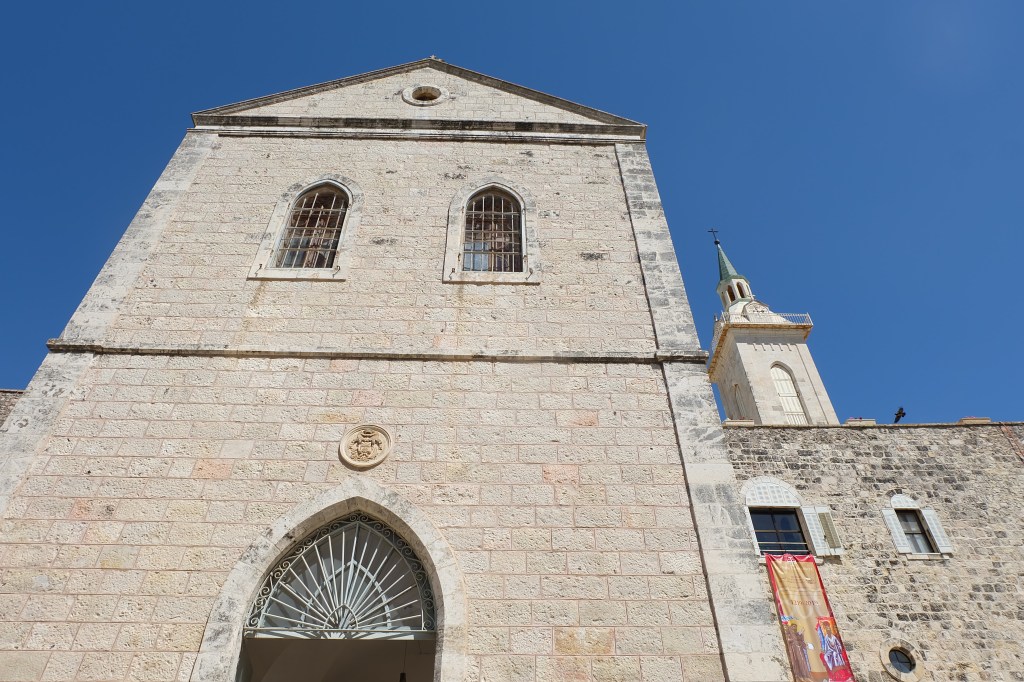
St. John the Baptist Church in Ein Karem, birthplace of St. John the Baptist. Photo by author, 05 May 2019.
Praise and glory to you, O God our almighty Father! Thank you very much for the gift of life, for the gift of being born into this world to see and experience your majesty. Indeed, it is always good to be alive, no matter what our condition or status in life may be.
Unfortunately, Lord, there are so many times in life that we fail to see life’s beauty because we have taken control over ourselves and everything, leaving no room for you to work in us, with us and through us. So many times, Lord, we wonder what we would be like what the neighbors and relatives of John the Baptist said when he was born.
All who heard this these things took them to heart, saying, “What, then, will this child be?” For surely the hand of the Lord was with him.
Luke 1:66
Perhaps, it will be best for us today to be silent as we celebrate John the Baptist’s birthday to let your hand be upon us too, O God, so we may ponder and pray where you are leading us.
It is the start of work and studies for another week. Some of us are getting tired of the routine, some of us could no longer find meaning and direction in life. And some of us are on the brink of giving up on our many plans and even with our very lives!
Let your hand be upon us, Lord, and lead us to your direction. Guide us with your Holy Spirit. Teach us to lay aside our plans and personal agenda to allow you to take us where you would want us to be. Give us the courage to take that plunge into the unknown, trusting you alone wherever you may be leading us.
So many times Lord, we are like John the Baptist’s father Zechariah who believe so much with ourselves that we forget to trust you.
And many times, too, we are like the relatives and neighbors of Elizabeth who always interfere with your plans, insisting on following traditions and patterns, preventing you from surprising us.
Keep us silent today, Lord, to hear you more, to follow you more wherever you are leading us. Amen.
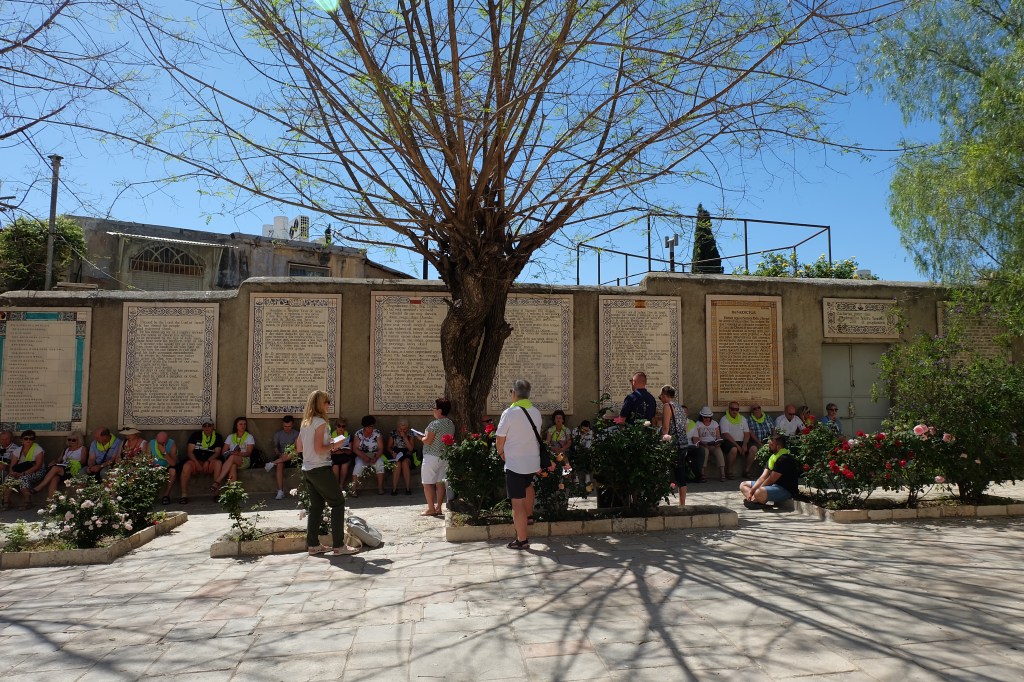
Pilgrims outside the Church of St. John the Baptist in Ein Karem waiting for their turn to enter his birthplace. What a beautiful sight of people still patiently waiting for God to lead them closer to him.
We Filipinos have an expression that best captures the faith of Easter experience, something very close with the universal expression “aha!”. It is what I call as the “a basta!” experience.
From the Spanish word “basta” which means “enough” like what St. Teresa of Avila said in her poem, “Solo Dios basta” (Only God is enough/suffices), our “a basta!” expression is often used to insist on something to be accepted as true. Its closest English equivalent is “that’s it” to show that the issue at hand is settled because I have confessed it so.
On this octave of Easter which means eternity (because there are only seven days in a week but if you count the days since Easter, this Sunday is the eighth, an octave), the beloved disciple reminds us that Jesus said other things not recorded in his book; and most likely, he had had other appearances too not recorded simply because they are impossible to do. According to John, these were all written so we may all believe Jesus is the Christ and have eternal life in him. Moreover, there is no need for him to go into so many details about the appearances of Jesus after his Resurrection because what really matters most is the intensity of his presence. It is from that intensity of his presence we derive that “a basta!” experience of him. To be open to accept such intense moments of Christ’s presence leads us to deeper faith in him and eventually, to a relationship with him and in a community.
Thomas meets the Risen Jesus. From Google.
Now a week later his disciples were again inside and Thomas was with them. Jesus came, although the doors were locked, and stood in their midst and said, “Peace be with you.” Then he said to Thomas, “Put your finger here and see my hands, and bring your hand and put it into my side, and do not be unbelieving, but believe.” Thomas answered and said to him, “My Lord and my God!”
John 20:26-
“Do not be unbelieving, but believe.”
Last Sunday we have reflected how the Easter stories are always set in darkness like in the early morning, at sunset, and in the evening: the joy of Easter always comes bursting in the darkness of our lives, when we are down and suffering, sick or feeling lost, and fearful. It is during those dark moments of our lives when Jesus silently comes to us even in locked doors and windows. Problem is the moment Jesus comes to us, that is when we doubt him like Thomas! We could not believe Jesus is really alive though deep inside us, we do believe if only there could be be something within us that could give that final big push for us to say “a basta!”.
A week after his first appearance to his disciples at night, Jesus appeared anew today despite locked doors, darkness, and shadows of doubts within Thomas. When Jesus told him to “do not be unbelieving, but believe” , the Lord was not reproaching him but actually exhorting him to believe. And that is likewise addressed to us today: believe!
To believe is first to accept the gift of faith from God who opens himself to us, inviting us to a relationship with him. To believe in God is to meet him who always comes to meet us, to be with us. To believe in God is most of all to enter into a relationship with him so that that more we believe, the more we “see” him, the more we experience him. Most of the time we learn and get so many proofs of the existence of Jesus Christ in our prayers, studies, and experiences. Through time, we also grow in our personal conviction and acknowledgment of the Risen Lord, surpassing all proofs and logic until eventually even if we can enumerate our many reasons for believing, in the end, we admit that not even one of them is the very reason for our faith in Jesus Christ. And that is when we give that burst of “a basta!” – – – Jesus is alive! Then we learn to confess like Thomas, “My Lord and my God.”
From Google.
The Resurrection of Jesus is both historical and beyond history that made so much impact in human life, affecting us in the most personal manner. Sometimes we really wonder like the Apostle Jude Thaddeus who asked the Lord during the Last Supper why he would only manifest to them and not to everyone (Jn.14:22) so as to cast out all doubts and set the record straight that there is God indeed. When we examine our life journey, we find there is really no need for Jesus to appear at all for everyone to believe his existence, that he had risen from the dead, that there is God.
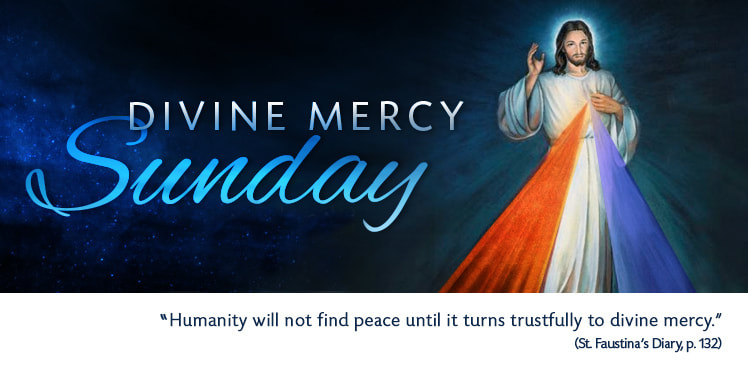
The Easter stories show us how God works silently in our midst, always slowly and surely, gradually through history and in our personal life. It is not really his appearances that matter but the intensity of his presence felt only in silence when we learn to trust more and believe more. How wonderful that on this eight day of Easter we also celebrate Divine Mercy Sunday that invites us to trust more than ever Jesus Christ our salvation. May we entrust ourselves to Jesus anew like Thomas, touching his wounds, confessing “My Lord and my God” or “Jesus, King of Mercy, I trust in You.” Amen.
Lawiswis ng Salita ni P. Nicanor F. Lalog II, ika-8 ng Abril 2019
Mula sa Google.
Madalas nating akalain
Pananahimik ay kawalan ng imik
Tinitikom yaring mga bibig
Di pinapansin mga naririnig.
Ang tunay na pananahimik ay pakikinig
Sa gitna ng katahimikang pilit dinaraig
Ibuka ang bibig dahil baka kumabig ang dibdib
Manaig iniisip sa loob ng munting daigdig.
Larawan kuha ni G. Howie G. Severino ng GMA-7 News sa Taal, Batangas, Nobyembre 2018.
Taliwas na madalas na kaisipan
Katahimikan ay hindi kawalan kungdi kaganapan
Mundo'y hindi iniiwan bagkus tinutunguhan
Niyayakap at niyayapakan upang lubos na maranasan.
Sa panahong atin ngayong ginagalawan
Puro ingay at salitaan, walang unawaan
Hindi mapigilan talastasan na wala namang kaliwanagan
Puro kadiliman, walang naiintindihan dahil walang katahimikan.
Tanging sa katahimikan mapapakinggan
Ibinubulong at kinukuyom ng ating kalooban;
Gayon din naman sa katahimikan matutukalasan
Kahulugan ng sinasaysay ng sino mang pinakikiharapan.
Kung ibig ninumang Diyos ay makaniig at mapakinggan
Kanyang mga Salita kailanma'y hindi maiintidihan
Kung ang Kanyang katahimikan ay di natin kayang sakyan
Dahil ang Diyos sa Kanyang kaibuturan ay pawang kahulugan at kaganapan.
Ang talong Shifen sa Taiwan. Larawan kuha ng may-akda, Enero 2019.
Sikaping makaibigan ang katahimikan
Bagama't hindi madali, ito ay maaring pagsumakitan
Dahil dito lamang matatagpuan mahahalaga at walang kabuluhan
Pati na mga bagay na pansamantala at pangmagpakailanman.
Sa katahimakan ating nabibistay
Mga bagay na lantay at walang saysay
Buhay ay nahihimay, nakikita ang tunay
Kapag tayo ay naghinay-hinay sa daloy nitong buhay.
Ating pagkatao ang siyang dinadalisay
Takbo ng buhay nagiging matiwasay
Dahil sa katahimikan buo ang ating pagtitiwala
Kasabay ang pananampalatayang walang kapantay.
Larawan kuha ni G. Raffy Tima ng GMA-7 News sa Batanes, Agosto 2018.
Photo by Dra. Mai Dela Pena in Athens, Greece, April 2017.
Hello…! Today is the last Sunday of Lent. It is hoped that by this time since Ash Wednesday, we have slowly acquired a contemplative spirit of prayerful silence. It is something very essential not only during these 40 days and in the coming Holy Week. It is only in silence can we truly find balance in life as we discover what is valuable and what is worthless, things that last and things that pass. Silence teaches us to slow down, to be more discerning, and more trusting. It is in silence where we learn to pray deeply, to enter into communion with God to allow Him to suffuse us with His love and grace, mercy and forgiveness to be transformed into a better person.
From Google.
In today’s gospel only found in St. John’s account, we find the remarkable silence of Jesus Christ among the crowd demanding his opinion on whether the woman caught committing adultery should be stoned to death or not as per the Law given by Moses. Jesus chose to be silent so we may realize that issues of sin and evil are best resolved in a contemplative spirit where we find the value of every person.
“Condemn the sin, not the sinner.” History has shown us that where there is severity in measures against evil, we find only more deaths and burials happening but never peace and justice. In Christ Jesus, we have found and experienced God’s mercy so abounding and closest to us sinners if we are truly sorry and ready to change. It is in silence where we discover our sinfulness that leads us to conversion which leads us to more silence which is the contemplative spirit.
Photo by Mr. Raffy Tima of GMA7-News, Natonin, Mountain Province after landslides, Nov. 2018.
In the spirit of this Sunday gospel about the woman caught committing adultery, I invite you to listen anew to Paul Simon’s classic “The Sound of Silence” first released in 1964 with his friend Art Garfunkel. It was a commercial flop upon its release but, “silently” the following year when some radio stations started playing it in Florida and Boston areas when it gained followers, forcing Columbia records to rerelease the song in 1965.
Hello darkness, my old friend
I've come to talk with you again
Because a vision softly creeping
Left its seeds while I was sleeping
And the vision that was planted in my brain
Still remains
Within the sound of silence

In restless dreams I walked alone
Narrow streets of cobblestone
'Neath the halo of a street lamp
I turned my collar to the cold and damp
When my eyes were stabbed by the flash of a neon light
That split the night
And touched the sound of silence
From Bing.com.
 And in the naked light I saw
Ten thousand people, maybe more
People talking without speaking
People hearing without listening
People writing songs that voices never share
No one dared
Disturb the sound of silence
"Fools" said I, "You do not know
Silence like a cancer grows
Hear my words that I might teach you
Take my arms that I might reach you"
But my words like silent raindrops fell
And echoed in the wells of silence
Sunset at Fatima Shrine, Portugal by Arch. Philip Santiago, October 2018.
And the people bowed and prayed
To the neon god they made
And the sign flashed out its warning
In the words that it was forming
And the sign said, "The words of the prophets
Are written on the subway walls
And tenement halls"
And whispered in the sounds of silence
40 Shades of Lent, 5th Sunday-C, 07 April 2019
Isaiah 43:16-21///Philippians 3:8-14///John 8:1-11
From Google.
Sunrise at Lake of Galilee. Photo by author April 2017.
Today is the last Sunday of Lent. It is hoped that by this time since Ash Wednesday, we have slowly acquired or even regained our contemplative spirit of prayerful silence. It is something very essential not only during these 40 days and in the coming Holy Week. It is only in silent prayers can we truly find balance in life as we discover what is valuable and what is worthless, things that last and things that pass. Prayerful silence teaches us to slow down, to be more discerning, and more trusting. The contemplative spirit thus leads us to grow deeper in our faith, hope and love in God. It is in the contemplative spirit where God works best in us.
We find this invitation to a contemplative spirit in our beautiful gospel today of a woman caught committing adultery whom Jesus refused to condemn. Unlike the previous four weeks when we heard all gospels taken from Luke, this Sunday’s story is from John that perfectly fits last week’s parable of the prodigal son to show us God’s immense love and mercy for us sinners. Every conversion, every contrition of sins presupposes silence. Recall how the lost son last Sunday realized his sinfulness while silently tending swine in a far away land.
From Google.
Jesus went to the Mount of Olives. But early in the morning he arrived again in the temple area, and all the people started coming to him, and he sat down and taught them. Then the scribes and the Pharisees brought a woman who had been caught in adultery and made her stand in the middle. They said to him, “Teacher, this woman was caught in the very act of committing adultery. Now in the law, Moses commanded us to stone such women. So what do you say?” They said this to test him, so that they could have some charge to bring against him. Jesus bent down and began to write on the ground with his finger.
John 8:1-6
From Google.
We have seen how Jesus foiled other insidious plots against him through tricky questions but this one involving a woman caught committing adultery shows us a fine image of him as the Christ. His silence, his bending down and his writing on the ground are moving moments that touch our hearts and make us wonder all the more, who is this man?
More than addressing a question that concerns the many dilemmas we face in life, this episode shows us that it is something that directly concerns Jesus Christ himself, his being our Savior. Notice at the start of the story where Jesus is presented always going to the Mount of Olives to pray, to be one with the Father. This episode happened after he had entered Jerusalem on Palm Sunday, showing us how Jesus became more intense in praying, in being one with the Father when his final days were approaching. That is the contemplative spirit.
Now feel the atmosphere of those tense moments when people brought the woman caught committing adultery to Jesus: everybody was saying something, emotions were running high, just like us in our own time with social media around us. We live in so much noises where everybody and everything is talking that we fail to listen to our very selves, to others and most especially to God always silent. See how Jesus was so cool – or “chillax” as young people would say. It was an astonishing reaction to the situation. Only a person with deep contemplative spirit like Jesus can be so composed and silent in a tense situation like that. It is always easier to react and say something than be silent to weigh everything. Too often in the world today, words are so empty that they have to be shouted all around and repeated so often in the hope they become true, exactly what every election candidate is doing!
From Bing.com.
Jesus chose to be silent so we may realize that issues of sin and evil are best resolved in a contemplative spirit where we find the value of every person that we condemn the sin not the sinner. History has shown time and again how wars and violence or any other harsh methods like death penalty have proven ineffective in correcting any injustice or wrongdoing and preventing crimes. Where there is severity in measures against evil, we find only more deaths and burials happening but never peace and justice.
Now more than ever in Jesus Christ, we have found and experienced God’s mercy so abounding and closest to us sinners if we are truly sorry and ready to change. Like the woman caught committing adultery or the prodigal son last Sunday, we have to reach out to Christ to be forgiven from our sins. He assures us of never being condemned, of deleting our past sins and assuring us with a bright future to receive his promises if we “go and sin no more.”
We have to stress that Jesus does not approve sins. Never. He recognized the sinfulness of the woman when he told her “go and sin no more.” Likewise, Jesus never asked us to stop fighting sins. When he dared the people of whoever has no sin be the first to cast the stone, Jesus never meant us to be silent with the evil and wrongdoings happening around us. This encounter between Jesus and the woman committing adultery invites us to examine first, our own attitudes toward others guilty of serious sins. And secondly, to examine our own reactions when our misery meets with God’s mercy especially in the sacrament of penance or reconciliation.
Do we choose to be harsh like the crowd or be gentle like Christ?
How sad that even with our very selves we are so unforgiving, so severe that we hardly move on in life. Only in a contemplative spirit can we truly experience God’s liberating mercy and forgiveness within us and with others. The contemplative spirit enables us to trust God that no matter how sinful we are, his love and mercy are more powerful, able to transform us all into better persons, even saints! This is the promise of God in the first reading that he would do something greater than what he had done in liberating his people from Egypt – that he would send our Savior not only to forgive our many sins but even to share in his glory as saints.
Assumption Sabbath Baguio, January 2019.
St. Paul in the second reading could speak of “considering everything as a loss in knowing Christ Jesus” because of the contemplative spirit he acquired after his conversion. His letters all reveal to us St. Paul’s contemplative spirit and intimacy with Jesus Christ that flowed out into his daily life, reaching its summit in his martyrdom.
As the season of Lent comes to a close on this fifth Sunday, we are reminded of the path of conversion we have followed these past four weeks under St. Luke’s guidance. Conversion leads to contemplation, a daily communion with God in prayerful silence and allow him to suffuse us with his love. Its fruits are seen in our daily lives. It is the work of God, not us. It is God who renews us in silence into a new creation. We simply have to remain in Christ and strive always “to go and sin no more”. Amen.