40 Shades of Lent by Fr. Nicanor F. Lalog II
Friday, Second Week in Lent, 06 March 2026
Genesis 37:3-4, 12-13, 17-28     + + +     Matthew 21:33-43, 45-46
Photo by author, Sacred Heart Novitiate, Novaliches, QC, March 2023.
As we come to nearly closing
this second week in Lent,
forgive us Lord Jesus Christ
for the many times we have
claimed everything as our own:
Lent is when we return back
to God our Father
the life we have all stolen
and destroyed in the process.
It tears apart my heart,
O Lord,
that scene when Jacob's sons
conspired to kill, later sold
Joseph their own brother
because of jealousy
and sadly,
how this still happens among us
as brothers and sisters,
"Judah said to his brothers:
'What is to be gained by killing
our brother and concealing his blood?
Rather, let us sell him
to these Ishmaelites,
instead of doing away with him ourselves.
Afer all, he is our brother,
our own flesh.'
His brothers agreed.
They sold Joseph
to the Ishmaelites
for twenty pieces of silver"
(Genesis 37:26-28).
Forgive us,
Lord in owning each
other like a thing,
an object to be possessed
than a subject to be loved
and respected like when we
rejoice at the summary execution
of criminals, when people argue
in favor of abortion and contraceptives
negating the value of life,
when some insist on same sex unions
and gender reorientation
disregarding the sanctity of
the human body.
Photo by author, from Dominus Flevit Church overlooking Jerusalem, May 2017.
It is the same pride
that consumes us when we
think of our selves,
of our very lives,
of this planet itself
and universe as if
we own everything,
laying claim on everything
and everyone; forgive us,
Father for being so arrogant
with our misplaced confidence
and familiarity in our sense of
ownership and possession
of "your vineyard" entrusted
to us.
We have not only defied you,
Father in disregarding the prophets
you have sent to gather from us your
share of produce from your vineyard
we have now usurped; worst of all,
we have killed your Son Jesus Christ,
not giving him the respect due to him,
"Finally, he sent his son to them,
thinking, 'They will respect my son.'
But when the tenants saw the son,
they said to one another,
'This is the heir. Come, let us kill him
and acquire his inheritance.'
They seized him,
threw him out of the vineyard,
and killed him"
(Matthew 21:37-39).
Every time we sin,
whenever we disrespect others
especially the sick and the weak,
whenever we discredit someone
not present with us in a gathering,
when we are unfaithful and we betray
those we have promised to love
and to serve,
we steal your vineyard, Father,
we kill your Son and Heir,
we claim as ours
without realizing the truth
we have nothing at all
for we are mere stewards.
Photo by author, Sacred Heart Novitiate, Novaliches, QC, March 2025.
Lord Jesus,
you have given me with
so much -
life and talents,
experiences and fulfillment
family and friends
not to own
nor possess like things
but gifts to be shared;
I return them to you
so you may use them
and me according to your will.
Amen.
Your words today,
O Lord Jesus
are short but give
much to reflect on:
"Be merciful...
stop judging...
stop condemning...
Forgive...
Give."
Jesus,
teach me to be
"shamefaced"
like Daniel in the first
reading: it is not enough
that I realize my sinfulness,
of my wickedness in refusing
to love, in turning away from you,
in disregarding your words
over and over and still -
be forgiven and loved.
Jesus said to his disciples: “Be merciful, just as your Father is merciful” (Luke 6:36).
So often in life,
I forget the Father's
mercy that I have totally
been oblivious to being
merciful; thank you Jesus
in giving this comparison today,
of being merciful as the Father
is merciful.
What a shame
of how often I look up
to myself as so good,
so righteous
against others
that I judge
and condemn them;
teach me to be like
you, Lord: merciful,
non-judgmental,
forgiving;
most of all,
teach me to give
freely like you, Lord;
remind me always
to remember your
mercy on me
to realize that
more than an ideal,
mercy is about
how it feels
in my own life.
Lord Jesus Christ,
you have given me with
so much love and mercy,
kindness and forgiveness
of sins but I have refused
to be merciful with others;
have mercy on me, Lord
and let me be merciful
like the Father.
Amen.
Lord My Chef Daily Recipe for the Soul by Fr. Nicanor F. Lalog II
Thursday, Third Week in Ordinary Time, Year II, 29 January 2026
2 Samuel 7:18-19, 24-29     <'[[[[><  +  ><]]]]'>     Mark 4:21-25
Photo by author, Mt. Arayat, Pampanga, 28 January 2026.
How lovely it must be,
dear Jesus,
if there were few sunrise
each year like in other
places of the world;
maybe everybody would be up
very early for those few mornings
we can witness a sunrise
to see and behold;
as I have told you Lord
last Sunday,
I have always loved sunrise
with its subtle yet intense
appeal of light slowly bursting forth,
light breaking out to brighten
the earth and life in it.
Jesus said to his disciples, “Is a lamp brought in to be placed under a bushel basket or under a bed, and not be placed on a lampstand? For there is nothing hidden except to be made visible; nothing is secret except to come to light… To the one who has, more will be given; from the ones who has not, even what he has will be taken away” (Mark 4:21-22, 25).
Thank you,
dear Jesus for that
reassurance today of God
continually pouring out his grace
on us today as he reveals further to us
his glory and majesty in you,
our light,
the true light of the world
never hidden and finally
brought out to the world;
grant me the grace of courage
to bring out your light in me,
Jesus; enough with too much
hiding of you,
now is the time to reveal you
Jesus in me,
through me;
take away my being too shy
even ashamed and afraid
of letting your light shine in me,
Jesus in this time everybody is
so fascinated with the artificial lights
of the world that dazzle us at first
and slowly blinds us until
we could not see the realities
anymore; like King David
in the first reading,
make us realize that it is in
our weaknesses when you,
O Lord, can shine most
and work most.
Amen.
Photo by author, La Paz, Tarlac CLLEX, 28 January 2026.
Lord My Chef Daily Recipe for the Soul by Fr. Nicanor F. Lalog II
Monday, Memorial of St. Andrew Dung-Lac & Companion Martyrs, 24 November 2025
Daniel 1:1-6, 8-20     ><))))*> + ><))))*> + ><))))*>     Luke 21:1-4
Photo by Mr. Chester Ocampo, UST-SHS, 04 November 2019.
Lord Jesus Christ,
give me a new perspective
today on this final stretch
of November
and of our liturgical calendar;
let me see this too familiar scene
with you at the temple with
new eyes:
When Jesus looked up he saw some wealthy people putting their offerings into the treasury and he noticed a poor widow putting in two small coins. He said, “I tell you truly, this poor widow put in more than all the rest; for those others have all made offerings from their surplus wealth, but she, from her poverty, has offered her whole livelihood” (Luke 21:1-4).
Every day,
dear Jesus I witness
a similar scene
but never bothered myself
to search for you,
to find you there,
also sitting,
looking,
observing
how we put our
offerings not only to
the treasury but to each day;
teach me to suspend every
judgment so I may see truly
the poor and the rich among us;
open my eyes and let me
move away from everything familiar
to converse and share moments
with that woman,
perhaps share a meal with her
and ask her,
"why give
all those
two small coins?"

I feel you, Lord
speaking also to me:
teach me to be content
and grateful with whatever
I have like that poor widow;
teach me to believe more,
to trust more in you;
most of all,
teach me to have less
for myself,
less of myself
in order to have more
of you.
Amen.
Lord My Chef Sunday Recipe for the Soul, 28 September 2025
Twenty-Sixth Sunday in Ordinary Time, Cycle C
Amos 6:1, 4-7 ><}}}}*> 1 Timothy 6:11-16 ><}}}}*> Luke 16:19-31
Photo by author, Carmel of the Holy Family Monastery, Guiguinto, Bulacan, 25 September 2025.
But you, man of God, pursue righteousness, devotion, faith, love, patience, and gentleness (1Timothy 6:11).
How lovely and so apt these days are the qualities Paul required through Timothy every man and woman of God must have. Of the six qualities Paul had cited, I like most “gentleness” which Jesus also asked us to have, “learn from me, for I am meek and gentle ( or humble) of heart” (Mt. 11:29).
From the Greek word prauteis, gentleness implies consideration, meekness, humility, calmness and strength amid adversities and difficulties. True power is expressed kindly and gently, not with harshness. Parents and teachers know this so well as children learn discipline better when authority and power are expressed gently than harshly.
Photo by author, Carmel of the Holy Family Monastery, Guiguinto, Bulacan, 25 September 2025.
Lately we have been sliding towards this kind of arrogance in our anger and frustrations following the wholesale corruption in Congress. Everybody feels the weight and pains of the ghost flood control projects but cursing and wishing death upon the corrupt officials are off bounds because that make us just like Duterte and his followers whose mouths spew expletives and death to their detractors.
Our readings are so timely this Sunday again, calling us to be gentle with one another because eternal life begins in the here and now of our earthly existence. How we live today determines our entrance or not into the eternal banquet of the Lord.
Jesus said to the Pharisees: “There was a rich man who dressed in purple garments and fine linen and dined sumptuosly each day. And lying at his door was a poor man named Lazarus, covered with sores, who would gladly have eaten his fill of the scraps that fell from the rich man’s table. dogs even used to come and lick his sores. When the poor man died, he was carried away by angels to the bosom of Abraham. The rich man also died and was buried, and from the netherworld, where he was in torment, he raised his eyes and saw Abraham far off and Lazarus at his side” (Luke 16:19-23).
Photo by author, Carmel of the Holy Family Monastery, Guiguinto, Bulacan, 25 September 2025.
Our readings continue to pursue that thorny issue of money, of how we use and manage it for God’s greater glory in the service of others not for our shameful selfish interests.
That is why we find Paul’s admonition to Timothy and to us today as men and women of God to be gentle in the midst of too much materialism. In the preceding verses Paul warned Timothy of the dangers of false teachings and the love of riches which he concluded with an exhortation to rely more on God than in wealth in verse 17. It is a timely reminder from over 2000 years ago against this growing trend among us spawned by social media of people flaunting their wealth as if finding their own value as a person in possessions than in their very selves.
Gentleness like Jesus is first of all finding our being’s sacredness. It is an expression of our being loving and charitable because we are children of one loving God we relate with as a Father.
How tragic we no longer see each other’s worth as a person, as an image and likeness of God as we seek more the face of money than the face of God in every person. Pera pera na lang lahat – even in the church, sad to say. Every consideration boils down to money like leadership in church activities or hermanidad in fiestas being reserved for the rich and famous who are always the politicians to whom many priests and bishops have become beholden, consciously or unconsciously. We have too much collections and envelopes that further drive away the poor from celebrating our Sunday Eucharist which is essentially a foretaste of the Lord’s banquet in heaven.
Photo by author, Carmel of the Holy Family Monastery, Guiguinto, Bulacan, 25 September 2025.
Amos continues his tirades against the priests of the temple of his time with their hypocrisies of hiding selfish motives in religious celebrations and practices that sadly continue to this day among us in the church.
Thus says the Lord the God of hosts: “Woe to the complacent of Zion! Lying upon beds of ivory, stretched comfortably on their couches, they eat lambs taken from the flock, and calves from the stall! They drink wine from bowls and anoint themselves with the best oils; yet they are not made ill by the collapse of Joseph!” (Amos 6:1, 4, 6).
That “eating lambs from the flock” and “calves from the stall” are the animals reserved for offering in the temple their priests have taken for themselves while “drinking from bowls” and “anointing with the best oils” harp on our rituals we have taken as our own like commercialization of Masses and sacraments. It is the color of money perfectly described by the purple clothing of the rich man in the parable that pervades us in the church that people no longer see and experience God as they have become so cautious asking about the price or the fees that come with every service we give.
Photo by author, Carmel of the Holy Family Monastery, Guiguinto, Bulacan, 25 September 2025.
Gentleness like Christ is using our power and authority at the service of the poor and disadvantaged, ensuring our Eucharistic banquet is a reflection of the eternal banquet in heaven where everyone is welcomed.
How sad this parable is repeated daily in the church that is why Jesus directed it to the Pharisees, one of the ruling class in the Jewish society at that time associated with temple worship and religion. Though Jesus did not say at all if the rich man is a good person or not, it is very clear that he lacked gentleness in his flamboyance, wearing purple clothes as if screaming to be noticed by everyone as a somebody while everybody is a nobody.
Maybe we should add “nepo Fathers” to the list of nepo babies and nepo wives who flaunt their wealth, looking more like showbiz kids than priests, feeling superstars who are more like entertainers than preachers who relish the tag “influencer” than remain hidden doing the work of Christ. They refuse wearing the proper liturgical vestments due to our tropical climate but would not mind at all wearing signature clothes with their perfumes leaving traces in their favorite stomping grounds like malls and cafes during offs.
Where is our gentleness or concern and consideration for the majority of our people who are poor further pushed out of our churches literally and figuratively speaking simply because we do not smell and look like them our flock of sheep as Pope Francis reminded us early in his pontificate?
Photo by author, Carmel of the Holy Family Monastery, Guiguinto, Bulacan, 25 September 2025.
Gentleness of Jesus is solidarity with the people, especially the poor and suffering who experience being uplifted or empowered in his mere presence so filled with warmth and love.
People understand us priests for being strict even stern-looking but what they find so difficult is when pastors are detached from them, always out of the parish for so many reasons, when priests are selective in their company even having cliques. How sad when priests are unapproachable and indifferent like the rich man who was oblivious to the presence of Lazarus at his door, who never gave him any attention at all while still on earth when in fact, they knew each other as mentioned in the parable after they have both died. Kakilala naman pala niya si Lazaro pero doon na lang sa kabilang buhay siya kinausap at pinansin kung kailan huli na ang lahat.
Pope Francis used to describe the church as a hospital where the sick in body and soul come to find solace and comfort in the presence of God. But, instead of hospitality, many times it is hostility that people experience in our parish when they are held hostage by our many rules and regulations that they never feel welcomed at all. Some get scolded that instead of their burdens being eased, they are traumatized by the priests or the office staff and volunteers.
Photo by author, Carmel of the Holy Family Monastery, Guiguinto, Bulacan, 25 September 2025.
If we could be a little more gentle with every Lazarus, perhaps we could be truly rich as we find God in everyone in our doors that lead to our banquet table, whether here on earth or in the afterlife.
Let me end with this parable within me these past five years as a chaplain in the hospital.
Have you ever noticed how the rich with all their wealth and resources are often afflicted with rare diseases without any cure and medication at all while so many poor people without money at all could not avail of the many procedures and medications available for their illness?
It is a parable in this life that begs us to be gentle, even extra gentle many times to ease each other’s sufferings with the rich sharing their material wealth and the poor sharing their gift of self in the face of death.Amen. Have a gentle week ahead everyone. Fr. Nicanor F. Lalog II, Our Lady of Fatima University, Valenzuela City (lordmychef@gmail.com).
A personal note to you, my dear followers, fellow bloggers and everyone at WordPress on the occasion my seventh year of blogging, 06 June 2025
After a funeral Mass in the province yesterday, this greeted me in my notifications yesterday afternoon. Immediately, it brought a smile in me, a sense of inner joy and fullness.
Salamuch is the only word I have for you all.
From the Filipino word “salamat” for thank you and “much” from thank you very much, salamuch is literally “maraming salamat”. Double that to “maraming, maraming salamat” it becomes salamax but I rarely use the term because they remind me of Betamax and its sexual connotations…
I have been reading some blogs by friends via Facebook long before I joined WordPress.
It was purely accidental, like Facebook too. A friend created an account for me here at WordPress seven years ago while we were having a meeting about communications. At first I protested because of my toxic schedules in the parish on top of my teaching load in the seminary and a radio program in our Catholic station. Then I realized this is exactly what I have been teaching to future priests – the need to write and communicate the Gospel in the internet. Since I have been writing my Sunday homilies way back 2003 sending them to some relatives and friends, I started posting them here at WordPress.
I was totally ignorant of everything about blogs… but WordPress is so kind with dinosaurs like me. Most of all, there were so many other bloggers so generous and helpful in sharing me their knowledge about blogging.
That is one great thing about WordPress that I like: it is a community, a family.
I found new friends who helped me grow spiritually. Their diverse views on everything even so different from my own have so enriched me that indeed, reading and writing can take you anywhere around the world, even into the other worlds!
This may sound unusual but, I love WordPress so much because this is where I meet God every day. Not only among the writings by its bloggers but primarily with what WordPress does to me every day: you remind me of the need for me to always pray and whatever I have felt and realized, those are what I wrote and share.
It is funny that as I pounced the keys of my laptop daily and nightly for my posts, it has actually become more of an inner journey than an outer one. Every piece I write is always a journey inside my heart and soul. The same thing happens whenever I read prayers and poems, essays and expositions as well as look at the stunning photos… these have all invited me to look inside me and think what I can share in return.
I have grown because WordPress brought out the gifts I never thought I have.
Salamuch, WordPress in bringing out the good and the best in me always. Indeed, among you I have felt so true Vatican II’s declaration that “Communication is more than the expression of one’s thoughts and feelings. At its most profound level, it is the giving of self in love…” (Communio et Progressio #11). We all read and write here at WordPress simply because we love which is communication in itself. No love, no communication.
Salamuch WordPress for the seven years of love and here’s to more years with you all! God bless!
Lord My Chef Daily Recipe for the Soul by Fr. Nicanor F. Lalog II
Wednesday in the Seventh Week of Easter, 04 June 2025
Acts 20:28-38     <*{{{{><  +  ><}}}}*>     John 17:11-19
What a moving first reading
today as we come to close the
Easter Season when Paul bid goodbye
to the presbyters of the Church of
Ephesus.

They were all in tears because
most likely they would never see
Paul again; but most of all, of the
sincerity of Paul in his words spoken
to them.
“Keep watch over yourselves and over the whole flock of which the Holy Spirit has appointed you as overseers, in which you tend the Church of God that he acquired with his own Blood…I have never wanted anyone’s silver or gold or clothing. You know very well that these very hands have served my needs and my companions. In every way I have shown you that by hard work of that sort we must help the weak, and keep in mind the words of the Lord Jesus who himself said, ‘It is more blessed to give than to receive'” (Acts 20:28, 33-35).
Indeed,
it is more blessed to give
than to receive because in giving
that is when we have to use more of our hands
in toiling and working;
in the work of our hands,
we not only share Christ in the good
deeds we do but most of all,
open the eyes and hearts of others
to welcome Jesus into them to work
also through their very own hands.
It is the same imagery
we have of Jesus praying for us
his disciples,
laying over his hands over us
as he "consecrate" us in truth.

Oh dear Jesus,
make our hands strong
to keep working, doing
the difficult things many avoid
so we can bless more people;
keep our hands open too
to share our work and blessings
with others;
most of all,
keep our hands clasp together in prayer
to you to surrender ourselves
to your will always so that
our hands may be cleansed
of dirt and stains of sin
worthy in giving praise
to you and touching
those in need.
Amen.
Paul saying goodbye at Ephesus on the way to Rome for his trial and eventual martyrdom.
The Lord Is My Chef Christmas Recipe for the Soul by Fr. Nicanor F. Lalog II
Our Christmas Homily, 25 December 2024
Isaiah 52:7-10 ><}}}}*> Hebrews 1:1-6 ><}}}}*> John 1:1-18
From LDS_Believer on X, 23 December 2016.
A blessed merry Christmas to you and your loved ones! On this most joyous season of the year that is also the most commercialized, let us reflect about gift-giving.
During Christmas, I hear a lot of people complaining of finding it difficult in giving gifts, in finding the most suitable gift to give to their family and friends. It is the other way around for me as I find it more difficult in receiving gifts than giving.
Don’t get me wrong. I have no claims to whatsoever except that I have always preferred to be a giver than a receiver. In fact, it is my favorite “love language”. Maybe it is part of my upbringing being the eldest in the family. My father taught me the value of hard work to be independent, never to rely on others unless necessary while my mother instilled in me the importance of sacrifice and contentment as she would say, “magtiis kung ano lang mayroon at hindi lahat ng kaya ay bibilhin.”
Friends know me so well of not opening gifts immediately that so often, food given to me end up expired. That is why I always ask people if their gift is food that needs to be consumed immediately like cakes, chocolates and ice cream!
Recently I gifted a religious priest with vestments for his silver anniversary of ordination three weeks ago. Just before the Simbang Gabi started as I shopped for my Christmas vestment, I messaged him for his chasuble size (the vestment we put on top of our alb). It turned out he goes too to the same shop and told me how he had always loved one of those Roman albs made there, a surplice alb with black lining. Since he had celebrated his silver anniversary as priest, I bought one of the alb too with the chasuble delivered to him via courier that day. That afternoon, Father almost shouted in joy in his messages, thanking me for the gifts of a chasuble and a Roman alb, asking, “akala ko yung alb lang bakit may chasuble pa, Father?” I simply told him “because you are a good priest; just pray for me and don’t mention it in your posts.”
During the Simbang Gabi last week while checking on my Facebook, I saw his posts wearing my gifts in his Misa de Gallo. It looked so good on him, the nice off-white chasuble with a V-shaped design on the chest with a classic cross underneath it the surplice alb with black lining he liked. He looked so holy. And I felt so good at myself having made a brother priest so happy.
At that moment, I felt the deep sense of joy of Christmas whatever it meant, as if Jesus were touching me, speaking to me in His most genteel voice an important lesson about gifts.
Through that priest, Jesus answered my prayer at the start of the Simbang Gabi, “how can I truly share you, Lord, this Christmas?”
Through that priest, I felt Jesus speaking into my heart that for me to be able to truly share Him this Christmas, I must first receive Him. We can only be a true giver when we are a sincere and humble receiver first.
I must confess that aside from my upbringing, it is largely pride that is the reason I prefer giving than receiving. As a giver, there is that sense of pride, of having the upper-hand with power and control especially when some gifts I have received are not of my size or I already have like books. It is easier to give especially when we have so much of things without really feeling deep inside the love and freedom why we give. Very often we give to show we don’t need others because we have.
Being a receiver requires humility in the first place, that we are incomplete and dependent on others. When we are able to receive, our giving becomes meaningful because when we receive gifts, we first receive the giver, the gift of every person we must always warmly receive with joy. As I relished my joy in seeing that priest appreciating my gifts – and me – I felt God patting my shoulder, as if telling me, that is how He feels when we receive and appreciate His Christmas gift, the child Jesus on the manger, asking us to receive Him, to love Him, to take care of Him.
He came to what was his own, but his own people did not accept him (John 1:11).
Photo by author, Christmas 2022.
This Christmas, let us first realize that we are first of all receivers of God’s gift in Jesus Christ. Let us receive Him so we can share and give Him as we pray:
A most blessed happy birthday to You,
Lord Jesus Christ!
You are our most precious,
the most important gift
we have received from the Father.

Forgive me
when I refuse to receive and accept You
 among the people who love and care for me,
for the people you send me to love and care too.

Forgive me
 when I refuse to receive and accept You
among those who have hurt and offended me
that until now I have not truly forgiven,
having grudges against them.

Forgive me
 when I refuse to receive and accept You
 in my own giftedness, always doubting my goodness,
my talents that I cannot be bold enough
in sharing You because I might fail,
I might err, I might not measure up to others' standards.

Grant me the grace this Christmas,
Lord Jesus, to be small and fragile like You
as an infant, so vulnerable, trustingly accepting
even the unfavorable situations where I am
so that I can share and give You truly
to those who are willing to welcome You like me.
Amen.
The Adoration of the Shepherds”, a painting of the Nativity scene by Italian artist Giorgione before his death at a very young age of 30 in 1510. From wikipediacommons.org.
Quiet Storm by Fr. Nicanor F. Lalog II, 13 December 2024
Photo by author, Camp John Hay, Baguio City, December 2018.
Thanks to social media – finally, the beauty and splendor of our faith is once again made known widely especially during this lovely season of Advent. Two beautiful posts from Facebook recently caught my attention that prompted me to share this blog.
First is from the wife of my former student in Bulacan whose wedding I officiated during the COVID pandemic in early 2022. This had actually shaped my prayers and reflections this week. She wrote:
From Facebook, 10 December 2024.
Last Sunday I mentioned in my homily how during Advent the days are shorter and nights are longer, starting earlier than usual. How true indeed that the darkest nights are the longest nights, especially during Christmas. And that’s one of the beautiful reasons Jesus was born on December 25 which is the darkest night of the year.
“Kung kailan magpapasko…” is one expression we dread to hear ourselves or dear ones saying at this time of the year. “Kung kailan magpapasko at saka magkakasakit… mawawalan ng trabaho…” or “mababasted o maghihiwalay.” Worst, “kung kailan magpapasko at saka mayroong mamamatay.”
This Advent, Jesus reminds us how in the cold, dark nights are others He is searching too to remind them that He actually came for them. Jesus wants us to be the “inn keeper” to bring Him to the poor and suffering, the sick and the children, those who have failed and are so disappointed in life, those deep into sins, feeling lost and alone in this merry season.
Dare yourself to be open to Jesus this Advent when He suddenly comes to you to bring Him to someone who needs cheering and reassurance Christ is coming again, Christ had come, and Christ comes.
Simply be aware how blessed you are and Jesus will tell you, will direct you to whom you must pray for or even visit.
Many times, we try doing something good to be blessed but the truth is, we have been tremendously blessed that is why we are able to do something good. God can never be outdone in generosity. Remember that before we can bless anyone, we are first blessed. That is why we have to keep on blessing others by being kind and caring always to anyone because we have been so blessed.
This I noticed since my first year in the priesthood – God would always lead me to some sick people to visit and anoint with oil, hear confessions and receive the Viaticum. That’s every Christmas which I have adopted as a personal tradition, a panata (pledge). That is why when I was assigned as a chaplain at the Fatima University Medical Center in Valenzuela, I felt God affirming my Christmas panata with the sick as He leads me to new directions in my ministry. The other year, I visited my kababata in Bocaue Christmas evening to hear his confessions and anoint him as he reached the terminal stage of his renal disease. A few days after new year, I was back to celebrate Mass at his funeral. So glad to have visited him and brought him Jesus.
With my classmate and friend Bernie, 12 December 2024.
Yesterday I visited a classmate and friend from college, Bernie. We last saw each other before our graduation from UST in 1986 after the EDSA People Power Revolution. We reconnected in 2019 when our seminarian now priest Fr. RA was assigned in his parish in Aritao, Vizcaya where Bernie is an active member and supporter.
Two years ago he asked me for prayers after being diagnosed with cancer and yesterday, he suddenly called me during breakfast to say he has been declared cancer-free by his doctors. As a thanksgiving, he is attending a healing Mass at the National Shrine of the Divine Mercy in Marilao, Bulacan with his parish priest. And they were staying in a private retreat house in Baliuag, Bulacan owned by my friends too! In fact, I held my 50th birthday party there that despite my toxic schedule yesterday, I hurriedly visited Bernie.
As I drove home amid a horrendous traffic at the Nlex, I felt like Joseph with Mary journeying to Bethlehem to bring the Son of God, Jesus Christ into the world. I hope that I just did that to my classmate and friend yesterday.
Photo by author, 28 November 2022, RISE Tower, Our Lady of Fatima University, Valenzuela City.
During these four weeks before Christmas, say a prayer for anyone you know or may have heard to be going through difficulties lately like not feeling merry and bright, suffering mentally, grieving for loved ones, struggling financially, going through some family problems, suffering physically, dealing with severe blows like failures and disappointments in life, and a host of other trials and tribulations others may be going through this month alone.
Pray also for those caring for the sick and suffering. Many times, we are so focused with their patients, forgetting the very crucial roles caregivers do for the sick and impaired or challenged. Remembering them, giving them a little gift or a card or spending precious moments with them can be their merriest Christmas! Many of them rarely go on breaks, especially on Christmas. They need Jesus so badly whom they rarely experience especially when the people they care for are very demanding.
Anyone who visits the sick, cares for those in pain and sufferings, consoles those grieving or simply be present with those going through financial or psychological difficulties is like Joseph and Mary going to Bethlehem to give birth to Jesus, to make Jesus present. The Lord needs us to bring Him closer to those silently crying, silently in pain. Think of the immense blessings that have been poured out to us beforehand and soon, be surprised for more blessings too.
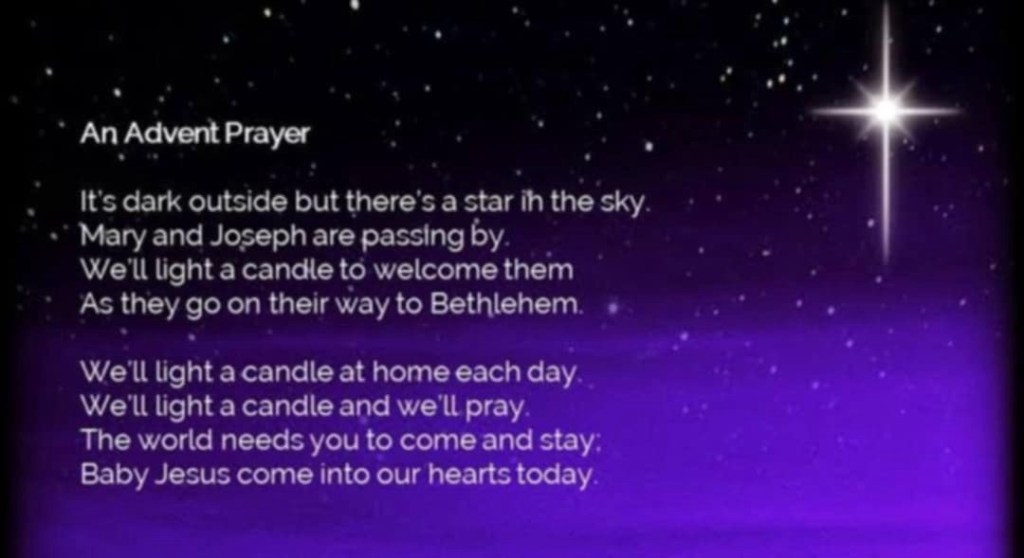
Let me share with you this beautiful prayer shared to me recently too by another friend, a well-respected and multi-awarded photojournalist:
Let’s not forget. Christmas is Jesus Christ. Not money nor things nor food. It is only Jesus, always Jesus dwelling in us. Amen.
The Lord Is My Chef Sunday Recipe for the Soul by Fr. Nicanor F. Lalog II
Thirty-second Sunday in Ordinary Time, Cycle B, 10 November 2024
1 Kings 17:10-16 ><}}}}*> Hebrews 9:24-28 ><}}}}*> Mark 12:38-44
Our Sunday readings are so lovely, so picturesque where you find in both first reading and gospel the character of a poor widow standing side by side with great men of faith in God as the main focus, the Prophet Elijah and Christ Jesus, respectively.
In the first reading, we find humorously the Prophet Elijah asking for water, then some bread from a widow gathering sticks outside her home in Zarephath.
Elijah said to her, “Do not be afraid… For the Lord, the God of Israel, says, ‘The jar of flour shall not go empty, nor the jug of oil run dry, until the day when the Lord sends rain upon the earth.'” She left and did as Elijah had said. She was able to eat for a year, and he and her son as well; The jar of flour did not go empty, nor the jug of oil run dry, as the Lord had foretold through Elijah (1 Kings 17:13, 14-16).
Elijah had fled Israel after proclaiming a drought because the people turned away from God to worship baals or false gods brought by the wife of King Ahab, Queen Jezebel. God then directed Elijah to Zarephath outside the city of Sidon to hide where the king was the father of his archenemy, Queen Jezebel!
Imagine Elijah hiding in the most hostile place of all with a pagan widow who worshipped baal so denounced by him. But, here is a marvelous story of faith of Elijah who trusted God completely in obeying Him to move to the pagan region ruled by his enemies. Similar was the faith of the pagan widow who surprisingly believed Elijah and God’s power that she did not mind putting her life and her son’s at risk in harboring their enemy. Their admirable faith both remind us how God accomplishes His great acts of mercy and love when we surrender ourselves totally to Him.
Photo by author, Wailing Wall of Jerusalem, May 2019.
Nine hundred years later after Elijah, we had Jesus in Jerusalem like the prophet in a very hostile place and situation too – in the Temple that was the very domain of His enemies. This was the Holy Week after Jesus had entered Jerusalem on Palm Sunday leading to Good Friday.
And like Elijah who approached a widow worshipper of baal, Jesus dared to sit at the temple area after harshly castigating the scribes there:
He sat down opposite the treasury and observed how the crowd put money into the treasury. Many rich people put in large sums. A poor widow also came and put in two small coins worth a few cents. Calling his disciples to himself, he said to them, “Amen, I say to you, this poor widow put in more than all the other contributors to the treasury. For they have all contributed from their surplus wealth, but she, from her poverty, has contributed all she had, all her livelihood” (Mark 12:41-44).
Jesus sat down
opposite the treasury and observed
how the crowd put money into the treasury.
Throughout this week, that scene of Jesus seated at the Temple had so absorbed me. What was Mark trying to tell us in reporting this? Jesus seated at the temple opposite the treasury observing the crowd is something else.
See the genius of Mark in weaving this Sunday’s gospel scene: right after castigating the corrupt leaders of Israel who were affiliated with the temple, Mark segued into this poor widow dropping some coins into the treasury box. In ancient Israel, the poor like the widows were not required to give those contributions. In a stroke of genius, Mark tells us something is wrong in this scene which Jesus rightly attacked because that widow was one of those widows whose house was devoured by the scribes!
“The Widow’s Mite” painting by French painter James Tissot, from brooklynmuseum.org.
And Mark never intended the story only for the Christians of his time but also for us as we have continued in the Church that malpractice by priests and scribes of Jerusalem. Woe to us priests and bishops who go around in “long robes and accept greetings, seats of honor” and worst of all, “devour houses of widows”, forgetting the poor, preferring always to be with the rich and powerful that social media attest.
Like Zarephath and the Jerusalem Temple, there is Jesus sitting in the middle of our Church under attack on all fronts and within in order to be closer with us especially the widows and the poor who are victims of an unjust society and systems perpetrated by same men and women supposed to be servants of God, or, at least men and women of God.
Photo by author, July 2024.
That image of Jesus seated at the Temple opposite the treasury was in fact a reminder of His being the victim too of injustice in the temple like the poor widow, of His Crucifixion on Good Friday. In fact, the 30 pieces of silver the priests have paid Judas Iscariot to betray Jesus must have come from that treasury.
In the midst of the hostilities and hurts, the divisions and abuses of power by priests and lay alike, in the Jerusalem Temple then and now in our Church, there has always been Jesus sitting among us, observing our offerings after first offering Himself for us all as our perfect High Priest (second reading) who finally freed us from these injustices and inhumanity of the past.
That is why I love this scene so much.
More than tithing, Jesus tells us this Sunday that like that generous heart of the poor widow, despite her plight, she continued to give because she believed, she hoped, most of all, she loved God. She need not give but still insisted because the treasury was for the upkeep of the temple, the very house of God, therefore, for God Himself.
There are times I hurt deep inside for the pains of the many scandals some priests and bishops have caused the Church but I choose to remain, even to sit in this Church or be a victim like Jesus amid all these because I love Jesus. Yes, amid all these sorrows, there is one “first” I see above all, Jesus Christ. This is concretization of last Sunday’s “which is the first of the commandments” – God who is love above all!
Jesus is telling us this Sunday through the poor widow that it is recognizing God in us and in one another that matters, and that is why we give at all.
Photo by author, 2022.
If we love God, if we find God in us and in others, when we find Jesus seated among us, then we realize we are the Church, we are the Temple we love. The moment we realize this, the more we feel at home “sitting with Jesus in the temple”, then we start giving totally because we love as well as know for a fact that whatever we give is actually what we receive from God in Jesus.
Why give so little? Give all, give everything because you never have anything to begin with! Everything is from God. That is why it is in giving that we truly receive. In every Mass, we do not give anything except our mere presence that is not even complete and yet, we get abundant blessings, primarily Jesus Christ whom we receive wholly, Body and Blood.
In every Mass we celebrate, we sit with Jesus in the midst of this inhospitable world we live in, even right in the church we love and hate sometimes. We do not give up. We persevere because we believe, we trust, we hope. Most of all, we love like Elijah and Jesus and believe like the poor widows of Zarephath and Jerusalem Temple. Amen. Have a blessed week ahead!


















 lordmychef.com