Pag-ibig at kaganapan ng buhay

Lawiswis ng Salita ni P. Nicanor F. Lalog II, Ika-26 ng Marso 2024
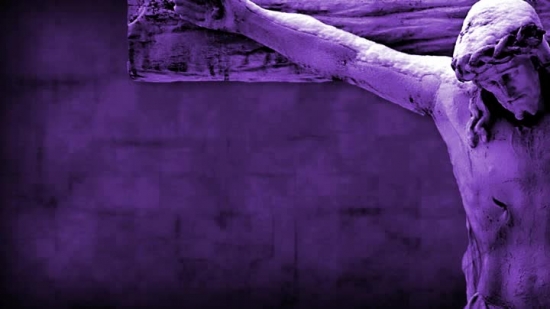
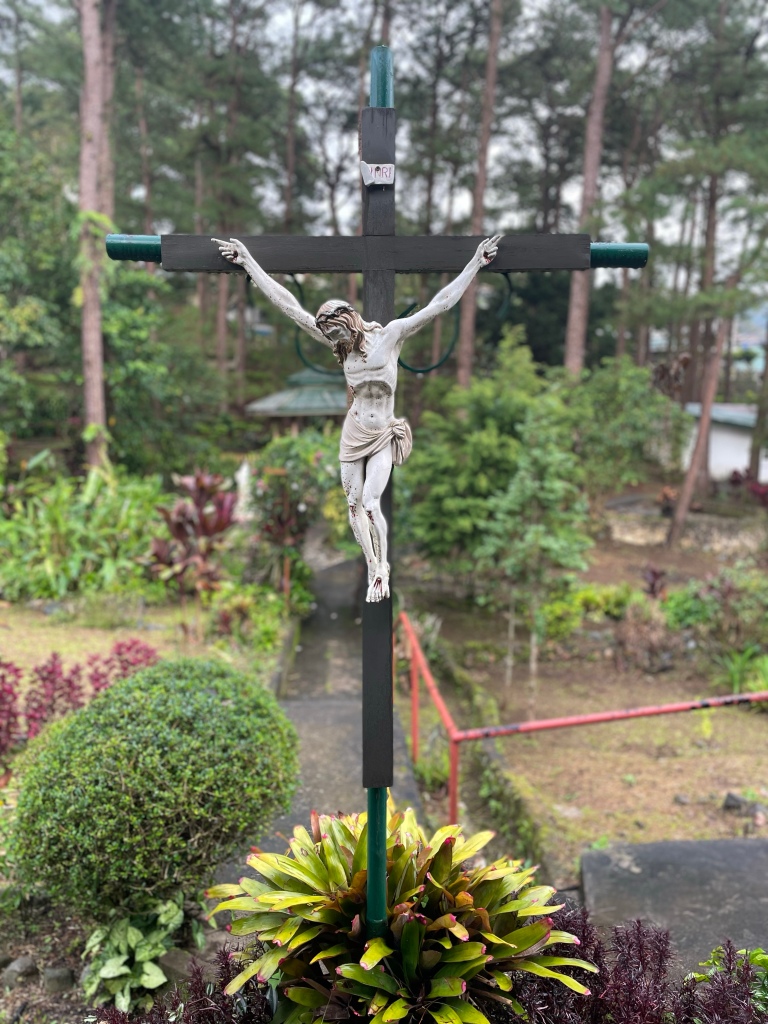
Ika-anim na Huling Wika ni Jesus
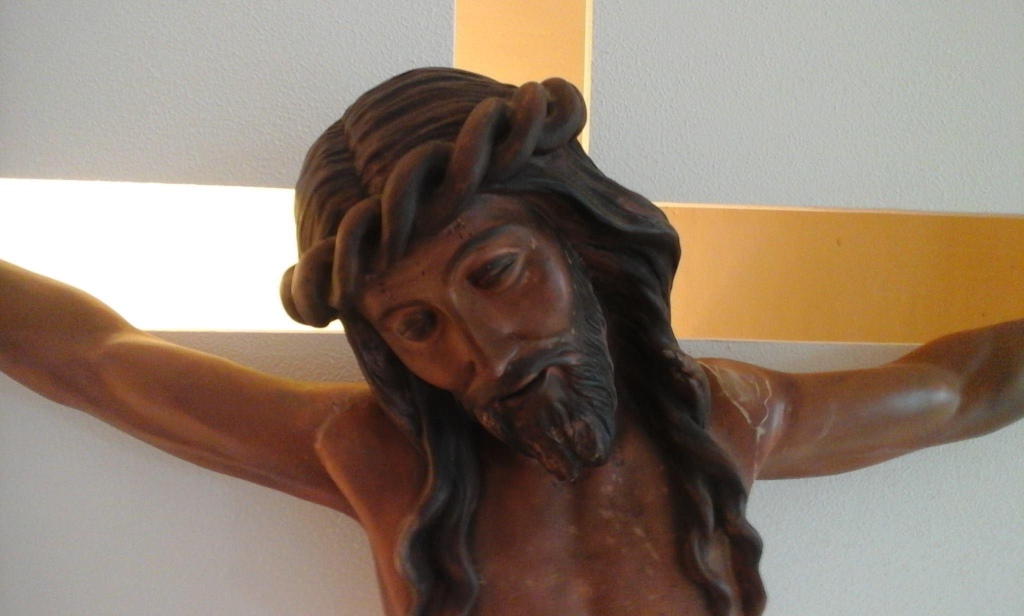
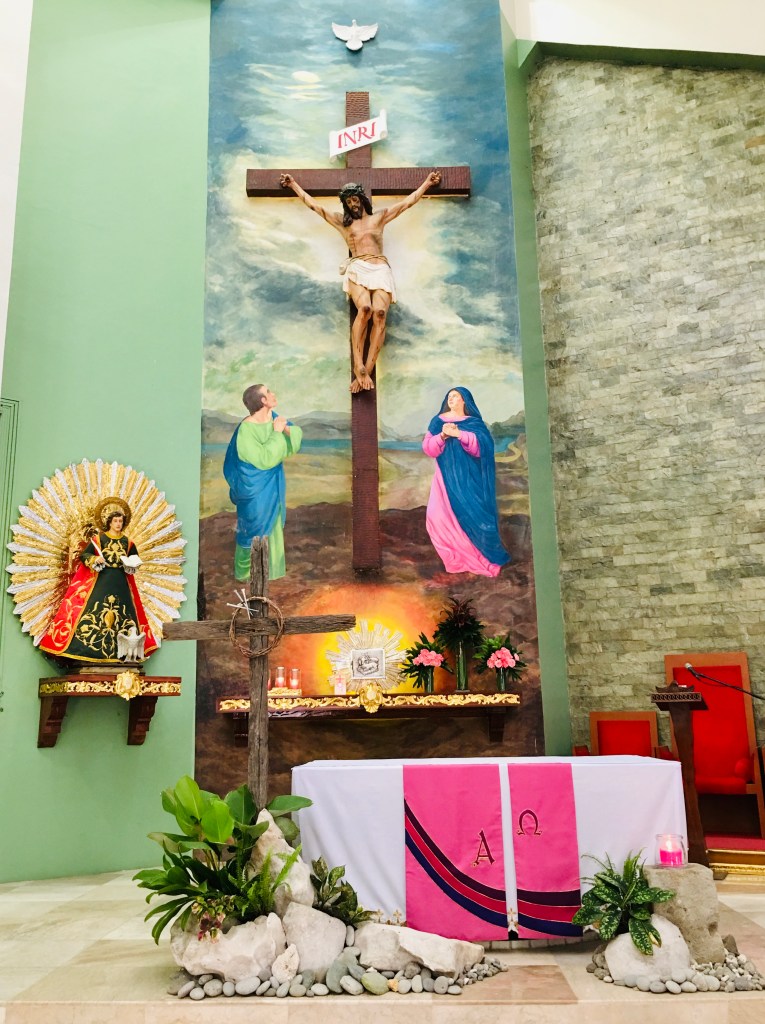
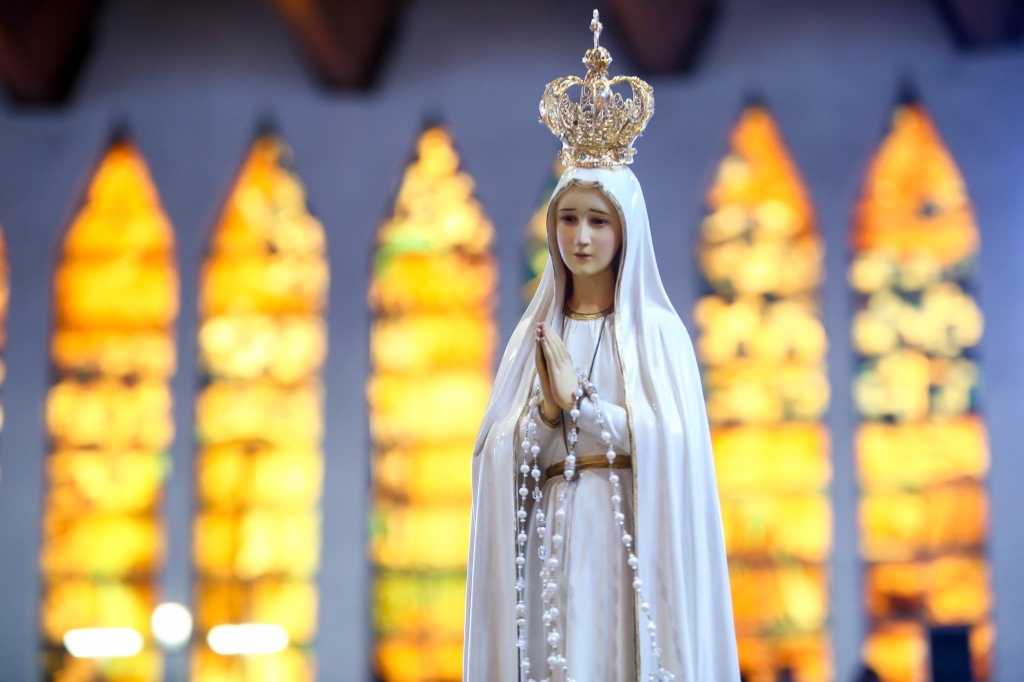
Larawan kuha ni G. Chester Ocampo, kapilya ng Immaculate Conception Seminary, Guiguinto, Bulacan, 30 November 2015.

May isang mangkok doon na puno ng maasim na alak. Itinubog nila rito ang isang espongha, ikinabit sa sanga ng isopo at idiniit sa Kanyang bibig. Nang masipsip ni Jesus ang alak ay Kanyang sinabi, “NAGANAP NA!” Iniyukayok Niya ang Kanyang ulo at nalagot ang Kanyang hininga.

Juan 19:29-30

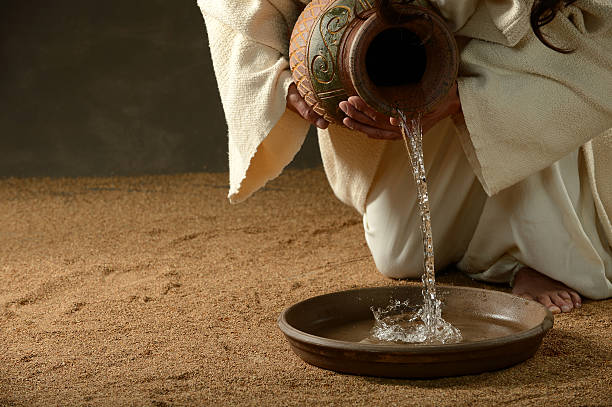
Kung minsan ako ay nalulungkot tuwing Huwebes Santo kapag natutuon ang pansin ng mga tao sa rito ng paghuhugas ng pari sa mga paa ng ilang mananampalataya. Tunay na kakaibang eksena at karanasan iyon sa mga tao ngunit ang totoo, hindi naman talagang bahagi ng Misa ng Huwebes Santo ang naturang paghuhugas ng mga paa na puwede namang hindi ganapin.

Ang tunay na lundo ng Banal na Misa ng Huwebes Santo ay naroon sa bahagi ng Ebanghelyong nagsasaad ng diwa ng paghuhugas ni Jesus sa mga paa ng kanyang mga alagad:

Bisperas na ng Paskuwa. Alam ni Jesus na dumating na ang panahon ng kanyang paglisan sa sanlibutang ito upang bumalik sa Ama. Mahal niya ang kanyang mga tagasunod na nasa sanlibutan, at ngayo’y ipakikita niya kung hanggang saan ang kanyang pag-ibig sa kanila.

Juan 13:1

Hanggang saan nga ba ang pag-ibig sa atin ni Jesus?

Hanggang sa wakas. O, end sa Inggles. Ngunit kapag sinabi nating hanggang sa wakas, parang mayroong hangganan ang pag-ibig natin kaya ang pahayag na ginamit sa pagkakasalin ay “ipakikita niya kung hanggang saan ang kanyang pag-ibig sa kanila.”

Mas mainam ang pagkakasalin sa Inggles ng huling pangungusap na nagsabing “He loved his own in the world and he loved them to the end.” Mula sa salitang Griyego na telos ang katagang wakas o end sa Inggles. Nguni’t salungat sa madalas nating isipin ang “wakas” bilang hangganan dahil ang telos ay nagpapahiwatig ng direksiyon at hahantungan na kaganapan o perfection. Hindi lang pagtigil at paghinto ang wakas o end.
Kaya naman nang sabihin ni Jesus doon sa Krus na “naganap na”, ang pakahulugan Niya ay ang kaganapan ng Kanyang misyon na mahalin tayong lahat hanggang sa wakas na siyang tinutukoy ng pahayag sa simula ng kanilang Paskuwa, “at ngayo’y ipakikita niya kung hanggang saan ang kanyang pag-ibig sa kanila” sa paghuhugas ng kanilang mga paa na ang kaganapan ay sa Kanyang kamatayan sa Krus kinabukasan ng araw ng Biyernes.

Ipinamalas sa atin ni Jesus ng buong-buo at ganap sa Kanyang pagkamatay sa Krus ang pag-ibig ng Ama para sa atin batay sa Kanyang sinabi kay Nicodemus, “Gayon na lamang ang pag-ibig ng Diyos sa sanlibutan, kaya ibinigay niya ang kanyang bugtong na Anak” (Jn.3;16).

Kung tutuusin ay hindi naman kailangang mamatay si Jesus sa Krus upang tayo ay maligtas ngunit pinili pa rin Niya ito bilang tanda ng Kanyang pagmamahal sa ating lahat. Kaya naman dito rin nating makikita ang magandang kahulugan ng pagmamahal na hindi lamang basta pagtupad sa mga kautusan o pagiging mabuti sa kapwa. Sa kabuuan nito, ang pagmamahal ay pagiging-ganap ng ating buhay. Love is the perfection of life, ayon kay Thomas Merton, isang mongheng Amerikano noong araw.

Kapag tayo ay nagmamahal, tayo ay nagiging ganap tulad ng Diyos! Kaya, basta magmahal lang ng magmahal hanggang masaktan dahil hindi iyan mauubos tulad ng Diyos.

Mga minamahal, yamang gayon kadakila ang pag-ibig ng Diyos sa atin, dapat din tayong mag-ibigan. Walang taong nakakita sa Diyos kailanman, ngunit kung tayo’y nag-iibigan, nasa atin siya at nagiging ganap sa atin ang kanyang pag-ibig.

1 Juan 4:11-12

Mula sa unang sulat ding iyan ni San Juan, ating matutunghayan ang pahayag niya na ang Diyos ay pag-ibig na ayon sa dating Santo papa Benedicto XVI sa kanyang unang encyclical na Deus Caritas est, ito ang pinaka-malalim na pahayag tungkol sa Diyos na hindi matatagpuan sa ibang relihiyon maliban lamang sa Kristiyanidad.

Photo by Paco Montoya on Pexels.com

Mga ginigiliw ko, Diyos lang ang makapagmamahal sa atin ng ganap. Tanging si Jesus lang ang makapagmamahal sa atin ng ganap na Kanyang pinatunayan doon sa Krus.

Palagi kong sinasabi, “human love is always imperfect” kaya hayaan nating punan ni Jesus, gawin Niyang ganap at buo ang ating pagmamahal na palaging kapos at kulang. Maari itong mangyari kapag tayo nagsimulang magparaya at magpatawad, magbigay ng walang hinihintay na kapalit, manahimik kesa kumibo at humaba pa usapan. Tanggapin natin at angkinin mga sakit at sugat natamo natin sa imperfect love ng pamilya at kaibigan o sino pa man.

Tularan natin si Jesus na nagpakasakit at naghandog ng buhay sa Krus dahil sa pag-ibig.

Manalangin tayo para sa mga minamahal natin at sa nagmamahal sa atin sa kabila ng ating mga imperfection:

Panginoong Jesu-Kristo,
sana makapagmahal din ako
tulad Mo hanggang kamatayan;
sana masabi ko rin sa wakas tulad Mo
"naganap na";
patawarin po Ninyo ako
sa maraming pagkakataon
na hindi pa rin tapos
at patuloy pa rin sa pagnanana
ng mga sugat kong natamo
sa imperfect na pagmamahal ng kapwa
kaya hindi ako maka-move on
dahil nilalamon akong buhay ng mga sugat
at alaalang ito kaya hindi ako lumago
at maging ganap sa Iyo.
O Kristo Jesus,
patawarin po Ninyo ako
at turuang magpatawad
dahil sa pagpapatawad
kami tunay na nagmamahal
ng ganap tulad Mo.
Amen.

Hindi ka nag-iisa

Lawiswis ng Salita ni P. Nicanor F. Lalog II, 24 Marso 2024
Ikaapat na Huling Wika ni Jesus
Larawan kuha ng may-akda, Kapilya ni San Francisco Javier, Sacred Heart Novitiate, Novaliches, 20 Marso 2024.

Mula sa tanghaling tapat hanggang ikatlo ng hapon ay nagdilim sa buong lupain. Nang mag-iikatlo ng hapon, sumigaw si Jesus, “ELOI, ELOI, LEMA SABACHTANI?” ibig sabihi’y “DIYOS KO, DIYOS KO, BAKIT MO AKO PINABAYAAN?”

Mateo 27:45-46

Sa tagpong ito ating mababanaagan kadakilaan ng pagmamahal sa ating lahat ng Diyos, Siya na ganap, walang kapintasan at kakulangan (perefect) ay piniling maging katulad nating hindi ganap (imperfect) bilang tao sa lahat ng bagay maliban sa kasalanan kay Kristo Jesus.

Pinili at mas inibig ng Diyos kay Kristo na maging tao upang maranasan hirap at sakit natin maging ang kamatayan, lalo’t higit ang magdusa at mamatay na nag-iisa at iniwanan ng lahat doon sa Krus.

Ano mang paghihirap at pagdurusa ay nagiging napakabigat kapag ika’y nag-iisa, na walang kasama ni karamay. Ito pinakamasaklap sa panahon natin ngayon maging sa ating bansa na dati rati’y walang mga bahay ampunan para sa matatanda ngunit nagyon ay naglipana na dahil sa maraming matatanda ang iniiwan, tinatalikuran di lamang ng mga kamag-anakan kungdi pati ng lipunan. Ito ang dahilan kung bakit si Santa Mother Teresa ay bumuo noon ng samahan na mag-aalaga sa mga tinaguriang “poorest of the poor” sa India nang makita niya maraming may-sakit sa Calcutta namamatay nang mag-isa. Hindi lamang ito totoo sa mga mahihirap na lugar kungdi maging sa mga mauunlad na lupain ay maraming matatanda ngayon ang namamatay na lamang ng mag-isa sa buhay.

Larawan kuha ng may-akda, Baguio City, 2023.

Iyan man ay pinagdaanan ni Jesus lalo na noong ipinako siya sa krus na halos iwanan siya ng lahat. Sa labingdalawang alagad niya, naghudas ang isa habang ang pinuno naman nila ay ikinaila siya ng tatlong ulit kaya’t nagtago noon kasama ang iba pang mga alagad. Tanging si Juan na minamahal na alagad ang nanatili sa paanan ng krus ni Jesus kasama ang kanyang Ina na si Maria at ilan pang mga kababaihan.

Nasaan ang mahigit limang libong tao na pinakain ni Jesus sa ilang? Wala din doon ni isa sa mga pinagaling niyang mga may-sakit. Nawala at naglaho ang lahat ng tao na tuwang-tuwang sumalubong kay Jesus noong Linggo ng Palaspas.

Ngunit kailan man ay hindi naramdaman ni Jesus ang pagiging mag-isa doon sa Krus. Tulad ng sino mang mabuting Judio, dinasal ni Jesus noon ang Salmo 22, ang awit ng panaghoy, ng pagpapakasakit at buong pagtitiwala sa Diyos.

Ito ang mabuting balita ng pagkamatay ni Jesus sa Krus: mula noon tayong mga tao ay hindi na mag-iisa sa mga hirap at tiisin nitong buhay maging kamatayan dahil kasama na natin ang Diyos kay Jesus.

Ito ang ating consolation o consuelo, wika nga.

Mula sa dalawang katagang Latin na con (with) at solare (alone) na ibig sabihin ay samahan ang nag-iisa, naging pinakamalapit at tunay na kaisa tayo ng Diyos sa tuwing tayo ay nasa gitna ng mga tiisin at hirap sa buhay maging kamatayan dahil sa pagdamay sa atin ni Jesus doon sa Krus upang sa gayon sa kanyang muling pagkabuhay tayo man ay kanyang makasama at makaisa.

Sapagkat siya ma’y tinukso at nagbata, kaya ngayo’y matutulungan niya ang mga tiutukso.

Hebreo 2:18

Sa tatlong taon kong pagiging chaplain sa Our Lady of Fatima University at Fatima University Medical Center, nakita ko at naranasan sa maraming pagkakataon paano mga tao – bata man o matanda, mahirap at mayaman, may sakit o karamdaman maging mga malalakas at malusog ang pangangatawan – ay nararanasan ang pangungulila at pag-iisa sa gitna ng kanilang mga paghihirap at pagdurusa sa buhay. Marami sa kanila ang mag-isang umiiyak kasi maraming ginagawa o nasa kung saan-saan kanilang mga mahal sa buhay. Maraming pagkakataon nga naitatanong ko na lang kung mayroon pa bang umuuwi ng bahay o nakatira sa kanilang tahanan? Is anybody still home?

Larawan ng convolvulus tricolor mula BBC Gardeners World Magazine.

Halina at ipagdasal ang bawat isa, lalo na yaong mga nahihirapan, nagtitiis ng mag-isa sa buhay:

Diyos Amang mapagkalinga,
ibinigay mo sa amin
ang Iyong Anak na si Jesus
upang aming maranasan Iyong
pag-ibig at habag,
ang Iyong pagpapagaling at pagkandili,
ang Iyong kapanatilihan at kapayapaan
upang hindi na kami mag-isa pa sa buhay na ito;
maalala nawa naming palagi
na kung kami man ay dumaraan sa
napakatinding pagsubok sa buhay
na tila nag-iisa at walang karamay,
naroon si Jesus pinakamalapit sa amin
dahil Siya ang unang nagpakasakit
at namatay doon sa Krus
para sa amin.
Amen.

Lent is believing to see Jesus

40 Shades of Lent by Fr. Nicanor F. Lalog II
Fifth Sunday in Lent-B, 17 March 2024
Jeremiah 31:31-34 + Hebrews 5:7-9 + John 12:20-33
From Google.com.

We now come to the penultimate Sunday of Lent before entering the Holy Week on Palm Sunday as we listened to the final installment of John’s narration of Jesus Christ’s final six days in Jerusalem before his Passion, Death, and Resurrection.

Our gospel today is actually set on Palm Sunday when Jesus triumphantly entered Jerusalem.

Some Greeks who had come up to worship at the Passover Feast came to Philip, who was from Bethsaida in Galilee, and asked him, “Sir, we would like to see Jesus.” Philip went and told Andrew; then Andrew and Philip went and told Jesus. Jesus answered them, “The hour has come for the Son of Man to be glorified. Amen, amen, I say to you, unless a grain of wheat falls to the ground and dies, it remains just a grain of wheat; but if it dies, it produces much fruit. Whoever loves his life loses it, and whoever hates his life in this world will preserve it for eternal life. Whoever serves me must follow me, and where I am, there also will my servant be. The Father will honor whoever serves me.

John 12:20-26
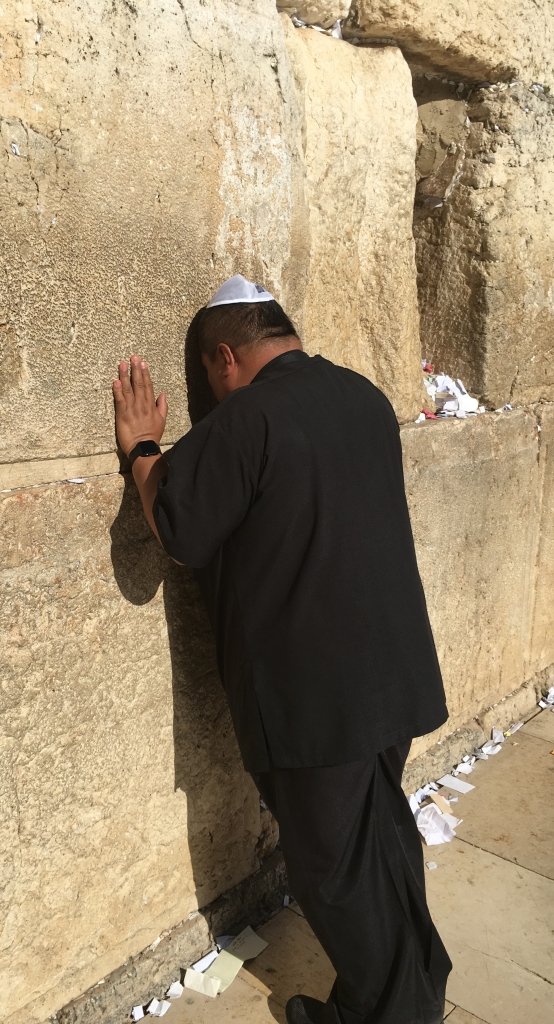
Praying at the wailing wall of Jerusalem, May 2019.

As we have been telling you, John’s gospel teems with many symbolisms and hidden meanings in the way he narrated events and scenes like when those Greeks asked Philip and Andrew to see Jesus.

If they simply wanted to catch a glimpse of Jesus, they could have easily satisfied themselves because Jesus never hid at that time. He had just entered Jerusalem, so warmly welcomed by the people, even by those Greeks perhaps. Most likely, they must have heard many things about Jesus that they wanted to go farther in requesting to see him. Hence, it was more than a request to have an audience with Jesus but something about their faith in him as they were pagans converted to Judaism.

We have to remember here that John used the verb “to see” to also mean “to believe” in his gospel account like when he narrated on Easter morning how Peter and the “other disciple” ran to the empty tomb “and he saw and believed” (Jn.20:8).

Keeping that detail on Easter morning at the empty tomb, we now understand why John never told us if Jesus met at all the Greeks requesting to see him because to see and believe Jesus is to accept and embrace wholly his Passion and Death on the Cross. This is why John jumped into Christ’s monologue upon being told by Philip and Andrew on the Greeks’ request.

Photo by author, 2018.

What a beauty we have here because we are those Greek converts too, constantly searching, seeking to go farther in our faith in Jesus despite our sins. As we get older and mature, we realize how our days are numbered, that we will definitely die someday and meet God.

Lately I have been thinking why do we really have to be happy on our birthday – much less why greet celebrators a happy birthday when in fact every birthday is a step closer to death, is it not? I am not being morbid but it is the truest matter of fact in life. Life is a lifelong process of preparation for death. What comes next when we age? Death.

However, our faith in Jesus tells us it is not simply death as an end but a blessed death that leads to fullness in life, literally and figuratively speaking.

That is where the beauty of Christ’s parable of the grain of wheat lies, “Amen, amen, I say to you, unless a grain of wheat falls to the ground and dies, it remains just a grain of wheat; but if it dies, it produces much fruit.”

We do not simply die in the end or even in the in-betweens of life through those failures and losses, defeats and wrong moves. We get better in life as we forge on.

It is the undeniable truth written in our hearts as God told Jeremiah in the first reading, that we are God’s, we solely belong to him no matter how hard we try to flee from him and disobey him in our sins, he would always find us even if we get lost. St. Augustine said it so well, “You have made us for yourself, O Lord, and our heart is restless until it rests in you.”

There is always that inner longing for God our Creator and End. That is why God sent us Jesus his Son as the author of the Letter to the Hebrews explained in the second reading so that through all our darkness and confusions, sufferings and trials, especially in those daily deaths that weaken us in our desire to search and follow him we may still find to have the strength and courage to forge on in wanting to see him by being with him where he is always – at the Cross.

Photo by author, 2018.

This is the grace of this fifth Sunday in Lent: we believe so we may see, we die in order to live. Both believing and dying in order to see and to live are grace from God freely given to us even if we are not worthy at all.

The world tells us always that to see is to believe but Christ tells us that first we must believe so that we would see; it is the same thing with living – die to one’s self in order to live fully because “whoever loves his life loses it.”

When we read or watch the news, many times we feel so exasperated and hopeless with the world. Imagine a resort right in a natural wonder there in the Chocolate Hills of Bohol? Or, land developers covering swamps without any considerations for others and the environment? Or, the mess and wastage happening in our offices, schools and homes? Do not forget us your priests living far from witnessing Christ in charity and service?

It’s a crazy world! And in all these abuses, the more we have become empty and lost that is why in the process, more and more of us never stop to believe and see, to hope and pray like those Greek converts seeking Jesus, for only in him we find rest and peace. Let us pray:

Lord Jesus Christ,
many times I really do not know
where I am going;
I cannot see
the road ahead of me
while many times
I wonder if I am really
following you and doing your will;
but at least, Jesus,
I am sure it is still you
whom I wish to see,
it is you I always desire
even if many times
it does not show
because this time
I am sure
you alone
is my God,
my life,
my fulfillment.
Therefore, like the psalmist,
"Create a clean heart for me,
O God, and a steadfast spirit
renew within me.
Cast me not out
from your presence,
and your Holy Spirit
take not from me"
(Psalm 51:12-13).
Amen.

Have a blessed week ahead, everyone!

From Google.com.

Lent is facing the Cross

40 Shades of Lent by Fr. Nicanor F. Lalog II
Friday in tbe Fourth Week of Lent, 15 March 2024
Wisdom 2:1, 12-22 ><}}}}*> + <*{{{{>< John 7:1-2, 10, 25-30
Photo by author, Theologate Chapel of the Immaculate Conception Major Seminary, Guiguinto, Bulacan, November 2020.
Loving Father,
as we come closer
to the final week of Lent,
the Cross of Christ gets clearer;
preparing for Easter
is facing and approaching,
embracing and owning
the Cross of Christ;
hence, grant us the courage
and strength to continue this journey
in Jesus with his Cross:

The wicked said among themselves, thinking not aright: “Let us beset the just one, because he is obnoxious to us; he sets himself against our doings, reproaches us for transgressions of the law and charges us with violations of our training… Let us see whether his words be true; let us find out what will happen to him… Let us condemn him to a shameful death; for according to his own words, God will take care of him.”

Wisdom 2:1, 12, 17, 20
Like Jesus,
let us overcome our fears
and continue to come to you,
to speak your words,
to do your works
amid the many people
"blinded by wickedness";
indeed, life is a daily Lent,
a passing over from every trial
because you are, O Lord,
"close to the brokenhearted."
Amen.

Nicodemus and James Taylor

Lord My Chef Sunday Music by Fr. Nicanor F. Lalog II, 10 March 2024
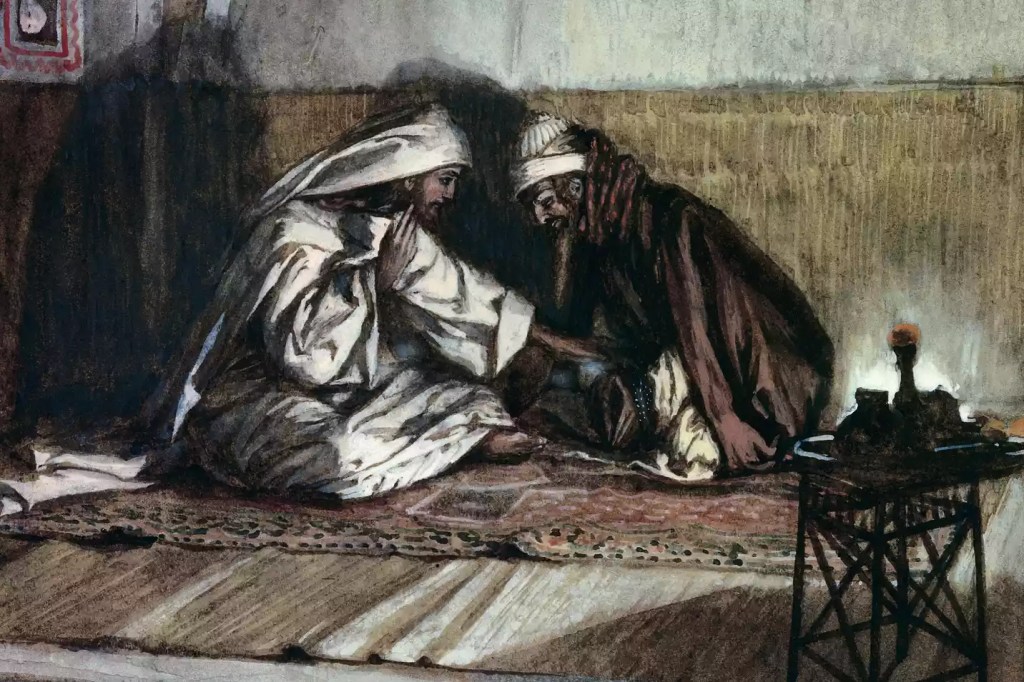
“Nicodemus and Jesus” painting by James Tissot (1836-1902) from SuperStock/GettyImages via learnreligions.com.

One of our favorite singer-songwriters James Taylor is coming next month for a one-night concert at the Mall of Asia Arena; hence, we are featuring two of his songs we find so related with the gospel message this fourth Sunday in Lent also known as Laetare or Rejoice Sunday.

But first, let us take a slight deviation from our usual manner of coming up with the music right away as we realized too the strong links between Nicodemus and James Taylor in their experiences.

Nicodemus belonged to the group of Pharisees, one of the enemies of Jesus at that time. But he admired and believed in Jesus that is why he chose to visit the Lord at night so that people would not notice. Eventually, Nicodemus became a disciple of Jesus after Good Friday after he and another Pharisee named Joseph of Arimathea took the body of Christ and buried him in a tomb (https://lordmychef.com/2024/03/09/lent-is-the-love-mercy-of-god-in-me/).

Nicodemus’ coming to see Jesus at night evoked his situation of being in the darkness of fears and confusions, trying to find directions in life which he found in Christ. It was similar with James Taylor’s plight he beautifully expressed in his 1970 hit Fire and Rain which is about the suicide of a childhood friend as well as his coping with his addiction and depression following his fame.

Just yesterday morning, they let me know you were gone.
Suzanne, the plans they made put an end to you.
I walked out this morning and I wrote down this song,
I just can’t remember who to send it to.
I’ve seen fire and I’ve seen rain. I’ve seen sunny days that I thought would never end.
I’ve seen lonely times when I could not find a friend, but I always thought that I’d see you again.

Won’t you look down upon me, Jesus, You’ve got to help me make a stand.
You’ve just got to see me through another day.
My body’s aching and my time is at hand and I won’t make it any other way.
Oh, I’ve seen fire and I’ve seen rain. I’ve seen sunny days that I thought would never end.
I’ve seen lonely times when I could not find a friend, but I always thought that I’d see you again.

Many times, we find ourselves in situations like Nicodemus when everything is all dark like the night, or James Taylor going through fire and rain.

Now look, Jesus is most present with us when we are in the darkest darkness of the night, right in the middle of a raging storm. Many times we could not see him because he hugs us, embraces us to shield us from more harms.

When Jesus told Nicodemus about his coming crucifixion – “when the Son of Man is raised up” – it was an assurance to us all too that Christ is with us in our worst situation because he suffered first for us on the Cross. I am so glad that JT mentioned Jesus in his song, pleading to the Lord to “look down upon me and help me make a stand.”

That is why we rejoice this Sunday: in the midst of our troubles and sufferings, there are bursts of joy and relief from Jesus within us dwelling in our hearts. And that is why, we find JT’s 1976 hit, Shower the People, so related too with our gospel this Sunday.

When Jesus told Nicodemus how “God so loved the world that he gave his only Son, so that everyone who believes in him might not perish but might have eternal life” (Jn.3:16), it was also a call for us all to be the love and mercy of Christ in the world.

Nicodemus eventually became a disciple of Jesus while JT is still very much around, having weathered so many fires and rains or storms in his life, both telling us how God finds ways to save us, even extricate us from our worst situation. Hence, the need for us to become the presence of Christ’s joy and mercy to people especially those closest to us so that they may realize and experience that God so loved the world because of the way we shower them with love through us.

You can play the game and you can act out the part,
even though you know it wasn’t written for you.
Tell me, how can you stand there with your broken heart ashamed of playing the fool?
One thing can lead to another; it doesn’t take any sacrifice.
Oh, father and mother, sister and brother, if it feels nice, don’t think twice,
just shower the people you love with love, show them the way that you feel.
Things are gonna work out fine if you only will do as I say, just
shower the people you love with love, show them the way you feel.
Things are gonna be much better if you only will.

Here is our doubleheader from the “Sweet Baby James”. Have a blessed, lovely week ahead!

*Both materials are not ours without any intentions at all of infringing its copyrights.

From YouTube.com
From YouTube.com.

Lent is the love & mercy of God in me

40 Shades of Lent by Fr. Nicanor F. Lalog II
Sunday Recipe for the Soul, Lent IV-B, 10 March 2024
2 Chronicles 36:14-16, 19-23 ><}}}}*> Ephesians 2:4-10 ><}}}}*> John 3:14-21
Photo of pink convolvulus from the Botanical Gardens of Jerusalem, flora.org.il.

Many times during prayer periods I banter with God especially when I feel overwhelmed by his kindness and love. Like last Thursday on my way to the adoration chapel when I passed by a row of banks.

As I knelt before the Blessed Sacrament to pray, I just felt like asking God: “BDO (Banco De Oro) ka ba, Lord? Kasi…you always find ways.”

That, for me, my dear friends is the meaning of this fourth Sunday in Lent – God never stops in finding ways to reach out to us, to be with us, to make us experience his love and mercy, kindness and forgiveness despite the hardness of our hearts.

Photo by author, 2019.

Our altars burst in shades of pink this Sunday called Laetare (Latin, rejoice) Sunday from the entrance antiphon that says, “Rejoice, Jerusalem, and all who love her. Be joyful, all who were in mourning; exult and be satisfied at her consoling breast.”

It is a misconception to see Lent as dull and drab due to its penitential nature; while there is the sober tone in our liturgy, let us keep in mind that it is also a season filled with joy and excitement for the coming Easter, the mother of all feasts in the Church.

And today we rightly rejoice because John reminds us in our gospel scene only him narrates – Nicodemus meeting with Jesus in the cover of the darkness of the night – of God’s immense love for us manifested in the dying of Jesus on the Cross.

Jesus said to Nicodemus: “Just as Moses lifted up the serpent in the desert, so must the Son of Man be lifted up, so that everyone who believes in him may have eternal life.” For God so loved the world that he gave his only Son, so that everyone who believes in him might not perish but might have eternal life.”

John 3:14-16
“Nicodemus and Jesus” painting by James Tissot (1836-1902) from SuperStock/GettyImages via learnreligions.com.

John saw a deeper meaning, of a sign pointing to Jesus as the Christ in this conversation with Nicodemus at night. Nicodemus was a Pharisee afraid to come out in the open to show his admiration and belief in Jesus. He eventually joined the disciples on Good Friday with another Pharisee, Joseph of Arimathea when they buried Jesus in a tomb.

See the deep perception of John in this recalling by Jesus to Nicodemus of the bronze serpent raised by Moses in the wilderness (see Num. 21:4-9) as a prefiguration of his own crucifixion.

In the gospel of John, the “lifting up” of the Son of Man refers to Jesus on the Cross. After that scene with the woman caught committing adultery, Jesus declared, “When you lift up the Son of Man, then you will realize that I AM…” (Jn.8:28). Then on Palm Sunday while in the temple area, Jesus told the crowd “‘And when I am lifted up from the earth, I will draw everyone to myself.’ He said this indicating the kind of death he would die” (Jn.12:32-33).

John’s gospel teems with other similar passages showing the inseparability of Christ’s Cross and glory. And so with our life, that is why in the middle of Lent, we rejoice this Sunday!

Photo by author in Petra, Jordan, May 2019.

Like last Sunday, here we find again early in the gospel of John how Jesus laid his vision-mission statement of coming to save us by dying on the Cross during his conversation with Nicodemus that night.

Jesus assured Nicodemus and us today that even while we are in the darkness of life’s many confusions and fears, problems and sufferings, we just have look up to him crucified lighting up our way to life and salvation. That night in their conversation, Jesus assured Nicodemus and us today that even in the worst situations in life when “darkness is our only light and hopelessness is our only hope” as T.S. Eliot wrote in his Four Quartets, God is in us, with us and for us in Christ. Just as when the world was covered in darkness on Good Friday when Jesus died on the Cross, it was the precise moment too of Christ’s glory when he conquered death and sin in obedience to the Father.

Yes, it is true these things are easier said than done but like Nicodemus, even in the darkness of the night we have to dare come close to Jesus, to speak to him and most of all, to hear and listen to him. As one poet had said, “only the brave who walk the darkness of the night shall see the brightness of the stars above.” Most of all, Jesus calls us today to be his love and mercy, his joy and light to the many other Nicodemus groping in the darkness of sin and evil.

In my three years as chaplain in a hospital, I have experienced personally and through others that truth so clear as crystal of God most closest with us in the worst days of our lives. Sometimes, we just sigh deeply as we feel him inside us, assuring us how everything is taken cared of, that everything would be fine.

Like the Israelites in the first reading, we too have to go through an “exile”, a kind of “punishment” not from God but as a result of own our sins and wrongdoing. Many times God let bad things happen to us because we insist on our ways; as God retreats to the back or sides of our lives, he never stops finding ways to save us, even “extricate” us from our imprisonment to sin and sufferings!

Indeed, as St. Paul had said in our second reading today, God is “rich in mercy, because of the great love he had for us” (Eph.2:4). Let us not waste that gift. Even though God forgives every sin no matter how bad it may be, do not forget some of our sins have irreversible consequences we shall face and suffer. Of course, God would still be there to help and guide us but, why wait for that to happen?

There lies the joy and grace – and challenge – of this fourth Sunday in Lent: even while we are in our worst situations in life, in our darkest nights, Jesus is always there for us, in fact, the first to have suffered and died for us so that with him on Easter, we may rise again to new life.

Be the sower of his love and mercy. Be his presence. Be another Nicodemus in the night leading others to the light of Jesus. Let us, therefore, rejoice in the Lord as we pray:

Praise and glory to you,
dearest Father
in giving us your Son
Jesus Christ our Lord,
our light,
our life,
our joy;
make us, O Lord,
your love and mercy
in this world
so everyone may experience
that indeed, God loves the world
that He gives us Jesus through me;
let your Holy Sprit enlighten
my mind and my heart
like Nicodemus
leading those in darkness
into the light of Christ.
Amen.

A joyful week to everyone!

From https://www.wildflowersprovence.fr/plant/convolvulus-lanuginosus/

“Yesterday” by the Beatles (1965)

The Lord Is My Chef Sunday Music by Fr. Nicanor F. Lalog II, 25 February 2024
Photo from petalrepublic.com.

It is the last Sunday in February, the second in the Season of Lent and most likely, everybody is feeling like “suddenly” the month is over with everything happening so fast just like in the song Yesterday by the Beatles.

Released in 1965 from their album Help!, Yesterday was actually written by Paul McCartney after a dream while staying with his former girlfriend, Jane Asher. It is a sad love song that speaks, as usual, of break-up.

The lyrics and music are simple that McCartney had to research for sometime if he had copied its melody from an existing music at that time. But, its simplicity and eloquence caught so many generations then and now as the song speaks so well of everyone’s experience. Yesterday one of the most covered songs of all time, being interpreted by almost every artist in all continents over 2000 times since its release!

You may check our Sunday blog today on the correlation of Yesterday with the transfiguration of Jesus (https://lordmychef.com/2024/02/24/troubles-on-the-road-to-easter/).

What I wish to share with you this lovely Sunday is my realization that aside from old music getting better with age as it takes on a life of its own, there is also a simultaneous change and maturity among us listeners and fans of our favorite artists and bands of their music.

I practically grew up listening to the music of the Beatles, being born in 1965, the same year Yesterday was released. I have never understood all their songs but growing up at that time surrounded by their music, I have also fallen in love with the sound of Beatles like most of my generation.

And now, I just felt everything so “suddenly” too, of how fast time flies that indeed, “I’m not half the man I used to be”!

Yesterday all my trouble seemed so far away
Now it looks as though they're here to stay
Oh I believe in yesterday

Suddenly I'm not half the man I used to be
There's a shadow hanging over me
Oh yesterday came suddenly

It was that line that actually moved me to link Yesterday with the transfiguration of Jesus, “Suddenly I’m not half the man I used to be.”

The lesson is very simple but many times, it could take us a lifetime learning or realizing. Most of all, accepting and owning.

Like the road to Easter, our lives are always marked with so many light and darkness, failures and triumphs, tears and laughter, even little deaths. Jesus tells us in his transfiguration that the scandal of the Cross cannot be removed from the glory of his Resurrection. There can be no Easter Sunday without Good Friday.

The good news is that in every passages in life we go through, every difficulty we hurdle, every pain and sufferings we endure, we always emerge a different person after – not half the man I used to be.

Of course, it still depends on us if we become better or bitter with every pain we go through. But, like the song Yesterday that went through a long process of ups and downs even before being recorded and released, it had emerged a very great music, a classic in our own time.

How consoling to think that great men and women, like McCartney and all the other artists we look up to went through a lot of troubles in life and have emerged better and wiser as persons.

And that’s because Jesus Christ was there first to suffer and die for us so that when he rose again from the dead, we too shall rise with him. Have a blessed week ahead, folks!

From YouTube.com.

Troubles on the road to Easter

40 Shades of Lent by Fr. Nicanor F. Lalog II
Sunday Recipe for the Soul, Lent II-B, 25 February 2024
Genesis 22:1-2, 9, 10-13, 15-18 ><}}}}*> Romans 8:31-34 ><}}}}*> Mark 9:2-10
Photo by Ms. Analyn Dela Torre, 12 February 2024 in Bgy. Caypombo, Santa Maria, Bulacan.

While praying our gospel this Second Sunday in Lent, the song Yesterday by the Beatles kept playing at the back of my mind, especially the first two stanzas that say:

Yesterday all my troubles seemed so far away.
Now it looks as though they're here to stay.
Oh, I believe in yesterday.

Suddenly, I'm not half the man I used to be.
There's a shadow hanging over me.
Oh, yesterday came suddenly.

Written by Paul McCartney and recorded by the Beatles in 1965, Yesterday is a sad love song about break up that greatly changed the lost lover who was “Suddenly, I’m not half the man I used to be.”

Beautiful music, beautiful lyrics on this beautiful Sunday with another beautiful gospel as Mark leads us from the wilderness last week to Mount Tabor with Jesus Christ and his three disciples whose experiences were like the Beatles in Yesterday.

Jesus took Peter, James, and John and led them up a high mountain apart by themselves. And he was transfigured before them, and his clothes became dazzling white, such as no fuller on earth could bleach them.

Mark 9:2-3
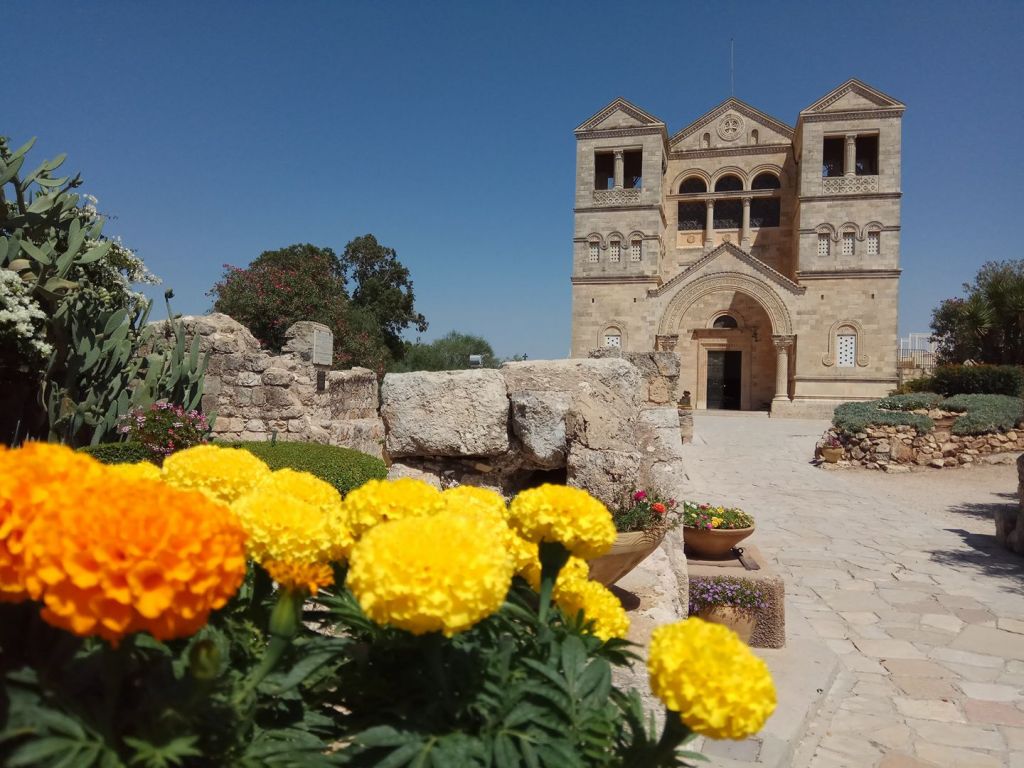
Basilica of the Transfiguration on Mt. Tabor, Israel from custodia.org.

See how the three apostles were overjoyed with the sight of Jesus transfigured, conversing with Moses and Elijah with Peter feeling so “high” that he offered to make three tents for them to remain there. It was the same experience of joy in the Beatles’ Yesterday when McCartney had that great feeling of being loved he thought would last forever.

But, both moments of joy were so brief with the transfiguration cut off immediately after Peter had spoken while McCartney felt his troubles came “suddenly”.

Like his account of Christ’s temptation last Sunday, Mark’s version of the transfiguration is so short unlike those by Matthew and Luke; however, Mark never lost attention to important details that showed the solemnity of the scene from start to finish despite a sudden shift in the mood as they went down the mountain.

As they were coming down from the mountain, he charged them not to relate what they had seen to anyone, except when the Son of Man had risen from the dead. So they kept the matter to themselves, questioning what rising from the dead meant.

Mark 9:9-10

For Mark, the transfiguration of Jesus led the disciples to deepen their faith in Jesus amid his growing mystery especially in the light of his oft-repeated Passion, Death and Resurrection, as if telling us of the many troubles ahead on the road to Easter.

Hence, it is no coincidence that like the transfiguration, Mark ended abruptly his gospel account when Mary Magdalene, Mary the mother of James and Salome saw an angel who spoke to them inside the empty tomb of Jesus very early on Easter: Then they went out and fled from the tomb, seized with trembling and bewilderment. They said nothing to anyone, for they were afraid (Mk. 16:8). Both in the transfiguration and in the Resurrection, the disciples were dared to reflect deeply on those events that later enabled them to make a firm response in their faith in Christ.

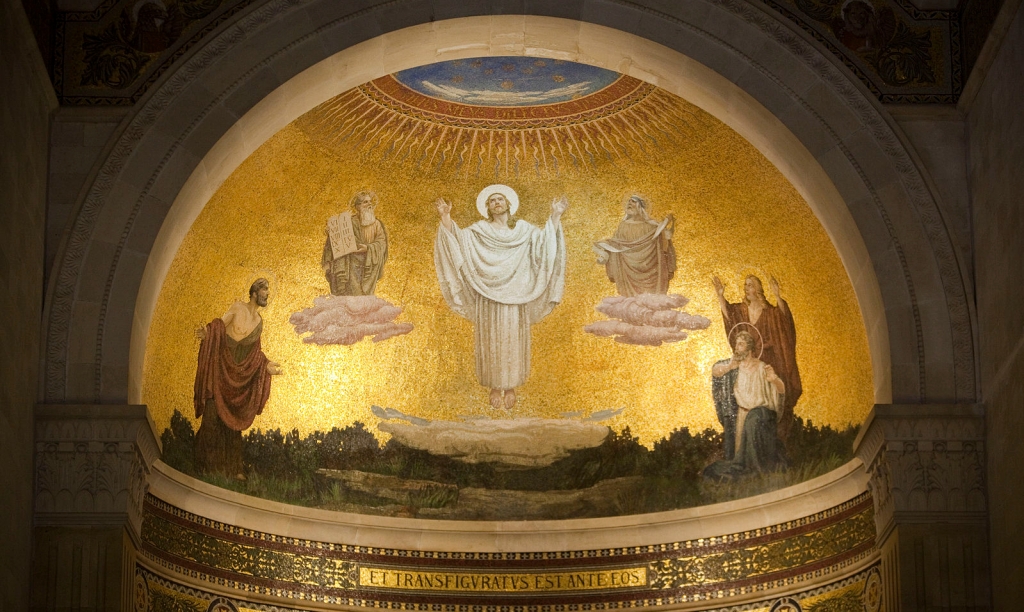
Mosaic inside the Basilica of the Transfiguration on Mt. Tabor, Israel from commons.wikimedia.org..

The same thing applies to us today. Many troubles lie ahead our lives, inviting us to follow Jesus more closely in prayers and reflections to find the meanings and lessons of life’s light and darkness, joy and sadness, triumph and defeat, even of death that keep on hovering above us, even enveloping us at times. We need to deepen our faith in God who had sent us his Son Jesus never stops doing to be our companion in this journey of life especially when we are passing through mountains and valleys, rivers and seas. In the song Yesterday, McCartney sang of our most common experience of having loved and lost yet taught us so much lessons in life. And music.

One thing was clear with the Apostles – and McCartney too – that even though troubles and problems were always with them along the way, they just lived through it and made the most out of them like the Church, including a classic love song!

How about us today, what is our faith response to the many darkness and light we have gone through in life’s journey?

Photo by Roger Buendia/Presidential Museum and Library via esquiremag.ph.

It is always easy to blame others for our many woes in life as we fail to see our own moments of transfiguration. Jesus gifts us with a personal transfiguration event to make us better to be like him but, do we welcome or, run away from them?

Today is the 38th anniversary of the EDSA People Power Revolution when we must ask ourselves how we have personally responded to that great moment of grace from God, a transfiguration in itself, a pasch like the Lord’s. Have we truly valued EDSA 1986, until now?

How unfortunate that EDSA now stands for everything that is wrong with us, especially our wrong choices and wrong decisions in the past 38 years. EDSA invites us to examine our very selves as a Filipino and as a Christian, a disciple of Christ.

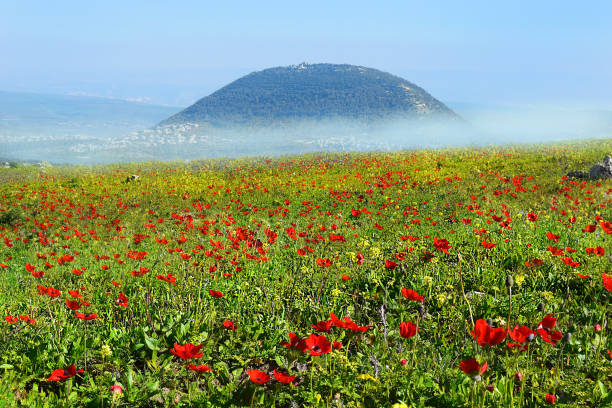
Photo from iStockphoto.com of Mount Tabor in Israel where Jesus is believed to have transfigured.

At his transfiguration, Jesus showed the inseparability of the mystery of the Cross and of his glory on Easter, the closeness of Mount Tabor with Golgotha. The mountain in the bible is always a coming to God, a communion in him.

Every nature lover knows very well the mountain is life itself, difficult to climb, easy to descend. Here now is the beautiful part of the gospel. And song Yesterday. Mountains surely change us but the choice is ours if we want to become better or bitter.

Set on what is believed to be Mount Tabor, the transfiguration was a passage, a foretaste of Christ’s pasch that not only brought him to his glory but transformed too the whole human race and the world itself. In the same manner, McCartney expressed poetically in Yesterday his transformation when “Suddenly, I’m not half the man I used to be.”

From en.wikipedia.org.

This is the good news of this Sunday: every mountain in life is a grace of transfiguration, of being better persons than before. We never come out – or down – the same persons every time we enter through whatever passages or climb any mountain in life. We are always changed, we always emerge different than who we were before after each passages we came through in life.

God gives us the grace and power to choose to be better and stronger, wiser and holier than bitter or resentful with every trials we hurdle in life. This was the experience of Abraham in the first reading when he completely trusted God who asked him to offer his son Isaac on a mountain. It was a very tough test for Abraham who waited in his old age to have a son only to be sacrificed later? But Abraham never doubted God that he still went up the mountain, and as he was about to sacrifice Isaac, an angel stopped him, telling him how God was so delighted with his faith and obedience that he was eventually blessed abundantly after.

Each of us is passing through different trials at this very moment. Many times we feel we suffer more than others, that our tests are tougher than the rest. It is useless and a waste of time to compare ourselves with others. One thing is clear: God does not stop doing something good for us in Jesus, ensuring we get better each day than yesterday. Let the words of St. Paul today assure us that “If God is for us, who can be against us? He who did not spare his own Son but handed him over for us all, how will he not give us everything else along with him? (Rom. 8:31-32)” Have a blessed week ahead, fellow traveler in Christ! Let us pray:

God our loving Father,
thank you for the gift of
this Season of Lent so we may
experience more your Son
Jesus Christ's coming to us
in this journey of life,
our companion amid the
darkness and light
and many troubles
including the little deaths
we experience in life;
give us the faith and trust
of Abraham to offer you those
dearest to us because
if ever you ask something from us,
it is to make more room in ourselves
for your abounding grace
and gifts of transformation
in Christ Jesus with Mary,
our Lady of Fatima.
Amen.
This Sunday, 25 February 2024, is also the Canonical Coronation of the National Pilgrim Image of Fatima here in Valenzuela City, the very image raised at EDSA in 1986. Photo from cbcp.net.

Life is Lent

40 Shades of Lent by Fr. Nicanor F. Lalog II
Thursday After Ash Wednesday, 15 February 2024
Deuteronomy 30:15-20 +++ Luke 9:22-25
Photo from petalrepublic.com.
Our most loving
and merciful Father,
thank you
for this new season
of Lent,
in giving us this most
wonderful occasion to
reflect on life's meaning
we always confuse as
outside of us,
dependent on things,
and most of all,
perfect without pain
and sufferings.
Life is Lent.
It is the only season
that begins not on a Sunday
but on an ordinary day
of the week,
right in the midst
of our many duties
and worries
because Lent is something
within us, always asking us
to make the right choices,
of choosing life,
not death;
blessing,
not curse.

Many times, Father,
we are out of touch with
ourselves,
with life itself
which we see as outside
ourselves that we hardly live at all
without experiencing life
itself in its wholeness
that includes all the beauty
and scars,
the lights and darkness,
the glory and sorrows,
the defeats and victories,
the tears and laughter,
the Good Friday and Easter.

If, however, you turn away your hearts and will not listen, but are led astray and adore and serve other gods, I tell you now that you will certainly perish; you will not live a long life on the land that you are crossing the Jordan to enter and occupy.

Deuteronomy 30:17-18
The way to life
that you, Father, offers us
through the life and example
of Jesus Christ your Son
is the exact opposite
that the world
proposes;
help us realize that truth,
clear us of all doubts
and dilly-dallying,
of making excuses and alibis
that what the world sees
as God's ways are limiting
when in fact are liberating!

Then he said to all, “If anyone wishes to come after me, he must deny himself and take up his cross daily and follow me. For whoever wishes to save his life will lose it, but whoever loses his life for my sake will save it. What profit is there for one to gain the whole world yet lose or forfeit himself?”

Luke 9:23-25
We have seen
for ourselves many times
how the way of the world of
indulging in every desire
and pleasure like
wealth and fame,
sex and drugs
have actually led to destruction
and death,
sorrows and miseries
than life and joy;
clear our minds
and hearts
to make the right
choice and decision
of following Jesus
to the Cross daily
because that is what
it means that life is lent,
a daily journey
to Good Friday
that leads surely
to Easter.
Amen.

Ituloy pagbati ng Maligayang Pasko!

Lawiswis ng Salita ni P. Nicanor F. Lalog II, Ika-27 ng Disyembre 2023
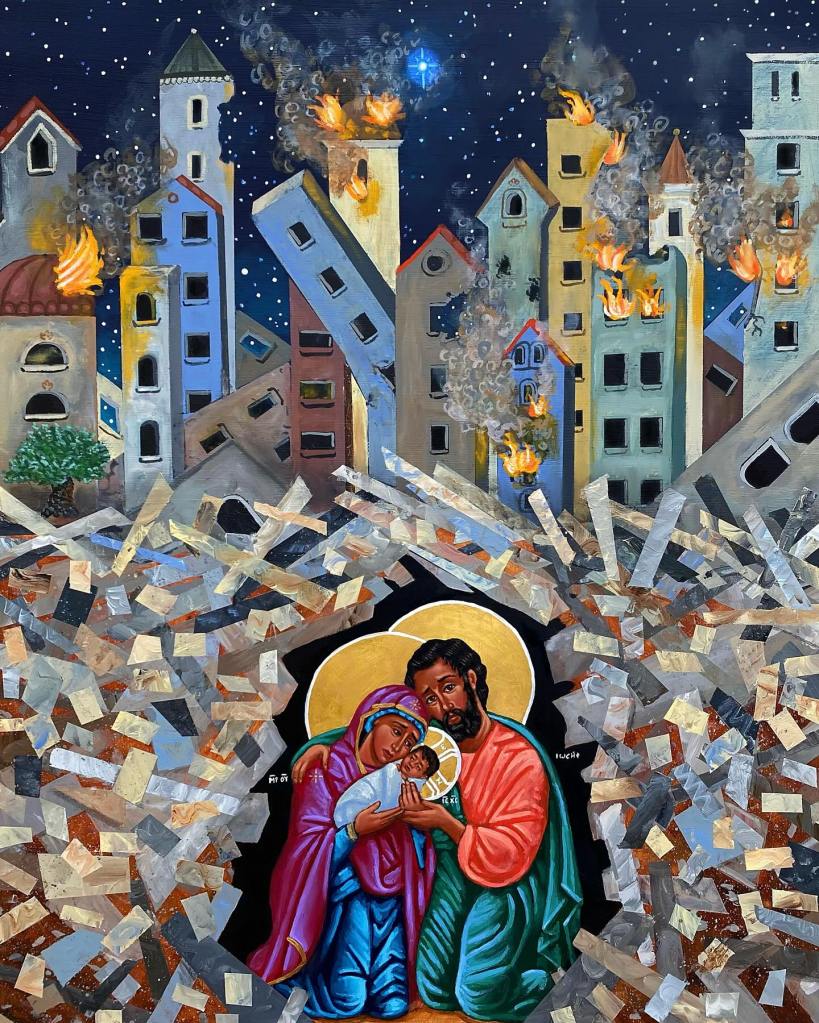
Larawan mula sa Facebook, 23 Disyembre 2023 ng pagtutulungan ng Red Letter Christians at ng artist na si Kelly Latimore ng  @kellylatimoreicons upang lumikha ng bagong larawang ito na pinamagatang “Christ in the Rubble” nagsasaad na kung sakaling ngayong panahon isinilang si Jesus, malamang siya ay ipinanganak sa gitna ng mga durog na bato sanhi ng digmaan doon sa Gaza.

Maligayang Pasko!

Tayo raw mga Pilipino ang mayroong pinaka-tumpak na pagbati sa panahong ito dahil sinasaad ng salitang “pasko” ang buong katotohanan ng hiwaga ng pagkakatawang-tao (Incarnation) ng Diyos Anak na si Jesu-Kristo.

Mula sa wikang Hebreo na pesar o pesach na kahulugan ay “pagtawid”, ito ay pascua sa wikang Kastila na atin ding ginagamit na ugat ng Pasko at pasch naman sa Inggles. 

Una natin itong natunghayan sa Matandang Tipan, sa Aklat ng Exodus nang itawid ng Diyos sa pamumuno ni Moises ang mga Israelita mula Egipto patungong lupang pangako. Iyon ang larawang paulit-ulit na tinutukoy sa ating kasaysayan ng pagliligtas, sumasagisag sa pagtawid mula sa kaalipinan patungo sa kalayaan, pagtawid mula kadiliman patungo sa liwanag, pagtawid mula kasalanan tungo sa kapatawaran, at higit sa lahat, pagtawid mula kaparusahan tungo sa kaligtasan. 

Iyon din ang batayan ng tinutukoy na misteryo paskuwa o ng ating pananampalataya kay Kristo-Jesus na ating ipinahahayag tuwina sa Banal na Misa, “si Kristo ay namatay, si Kristo ay muling nabuhay, si Kristo ay babalik sa wakas ng panahon!

Larawan kuha ng may-akda, 2021.

Tumpak at ayon ang ating pagbati na Maligayang Pasko dahil nagsimula ang misteryo paskuwa ni Jesus nang Siya ay ipaglihi at isinilang ng Mahala na Birheng Maria sa Bethlehem mahigit 2000 tao na nakalilipas.

Sa pagkakatawang-tao ni Jesus, Siya ay tumawid mula sa kawalang-hanggan (eternity) tungo sa mayroong hanggan (temporal) dito sa lupa; mula sa kanyang ganap na pag-iral taglay ang lahat ng kapangyarihan tungo sa limitado niyang pagkatao tulad ng pagiging mahina at mahuna lalo na sa pagiging sanggol at bata. Kasama na doon ang kailangan Niyang mag-aral lumakad, magsulat, magbasa at magsalita na kung tutuusin ay alam Niya ang lahat.

Taong-tao talaga si Jesus bagamat hindi nawala ni nabawasan Kanyang pagka-Diyos sa Kanyang pagkakatawang-tao kaya lahat ng ating mga karanasan bilang tao ay Kanya ring naranasan maliban ang kasalanan at magkasala. Siya man ay nagutom, nauhaw, nahapis at tumangis nang mamatay ang kaibigan Niyang si Lazaro, nahabag sa mga tao mga may sakit at balo. Wika nga ni Papa Benedicto XVI na malapit na nating ipag-ibis luksa sa katapusan, ang Diyos na ganap na kung tutuusin ay hindi nahihirapan ni nasasaktan ay pinili na makiisa sa hirap at sakit nating mga tao pamamagitan ng pagkakatawang-tao ni Jesu-Kristo (Spe Salvi, #39).

Napaka-ganda at husay ng paglalahad ni San Pablo sa pagtawid o paskuwa na ito ni Jesus na kanyang tinaguriang kenosis, ang paghuhubad ni Jesus ng Kanyang pagka-Diyos bagamat para sa akin mas angkop ang salin na “pagsasaid” dahil sinimot ni Jesus ang lahat ng sa Kanya para sa atin doon sa Kanyang pagkakatawang-tao na ang rurok ay doon sa Krus.

Larawan kuha ng may-akda, Baguio City, Agosto 2023.

Magpakababa kayo tulad ni Cristo Jesus: Na bagamat siya’y Diyos, hindi nagpilit na manatiling kapantay ng Diyos, Bagkus hinubad niya ang lahat ng katangian ng pagka-Diyos, nagkatawang-tao at namuhay na isang alipin. Nang maging tao, siya’y nagpakababa at naging masunurin hanggang kamatayan, oo, hanggang kamatayan sa krus.

Filipos 2:5-8

Naalala ko isang araw ng Pasko noong bata ako nang kami ay papaalis patungo sa mga Nanay at kapatid ng aking ama sa Maynila, masungit ang panahon at maulan. Hindi ko matanggap na umuulan at masama ang panahon sa araw ng Pasko kaya tinanong ko aking ina, “Bakit po ganun, birthday ni Jesus may ulan, may bagyo? E hindi ba God Siya? Di ba Niya puwede ipahinto mga ulan sa birthday Niya?”

Di ko matandaan sagot ng mommy ko pero malamang hindi malayo sa luku-luko at gago!

Nang magka-isip na ako, natutuhan ko sa mga pagbabasa na sa maraming pagkakataon mayroong mga bagyo at kalamidad, digmaan at kung anu-ano pang mga sigalot at paghihirap na nangyari kasaysayan tuwing Pasko. 

Tayo man mismo, marahil sa ating personal na buhay, maraming pagkakataon na tayo ay lumuluha, nanlulumo, hapis na hapis sa buhay sa ilang mga masasakit na karanasan sa araw ng Pasko. Kaya marami sa ating habang tumatanda nasasabing para lamang sa mga bata ang Pasko na masaya.

Ngunit hindi po iyan totoo! Batid natin sa ating mga karanasan na sa padaraan ng panahon, lumalalim ding pag-unawa nating sa Paso.

Larawan kuha ng may-akda, Setyembre 2023.

Balikan natin mga panahon ng ating pagsubok sa buhay lalo na sa panahon ng kapaskuhan, higit tayong namamangha at tiyak sasang-ayon ng lubos na tumpak nga ang bati nating mga Pinoy ng “Maligayang Pasko!” dahil mas malalim at makabuluhan ang pagdiriwang ito o ano pa mang selebrasyon sa buhay kapag ating napagdaanan at nalampasan mga hirap at sakit.

Ito ang kagandahan at katotohanan ng buhay natin na isang paulit-ulit na pasko, ng pagtawid at paglampas sa mga hirap at hilahil, pagbubulaanan sa ano mang sakbibi at pag-aaalinlangan ating ikinakakaba.

Hindi inalis ng Diyos ating hirap at sakit maging kamatayan bagkus tayo ay Kanyang sinamahan sa pagbibigay Niya sa atin ng Kanyang bugtong na Anak, ang Panginoong Jesu-Kristo na tumawid mula langit patungo dito sa atin sa lupa upang tayo naman Kanya ring maitawid patungong langit. 

Kaya naman, pakiusap ko sa lahat na ipagpatuloy natin pagbati ng Maligayang Pasko hanggang ika-pito ng Enero 2024, ang Dakilang Kapistahan ng Pagpapakita o Epiphany ng Panginoon. Napakasama at malaking kahangalan na kay tagal inabangan ang Pasko na nagsisimula ng hapon ng ika-24 ng Disyembre at pagkatapos ng ika-25 ay biglang magbabatian ng Happy New Year!?

Kalokohan! At marahil, hindi naunawaan diwa ng Pasko. Mababaw at puro happy, happy gusto ng mga maraming tao, di batid ang diwa at lalim ng kahulugan ng Pasko na sa paglalagom ay iisang salita lamang: PAG-IBIG o PAGMAMAHAL. Ng Diyos sa atin.

Ano man ang mangyari sa buhay natin, sa ating mundo, hindi mapipigil ang Pasko, tuloy ang Pasko dahil kasama natin palagi si Kristo. At kung ikaw man ay mayroong pinagdaraanan, matuwa ka at magalak, ikaw ay nasa paskuwa – pasko – kasama, kaisa si Kristo! Amen.

Larawan kuha ng may-akda, 2021.