Our eyes that see God in others

The Lord Is My Chef Sunday Recipe XXVI-C, 29 September 2019

Amos 6:1.4-7 ><)))*> 1 Timothy 6:11-16 . ><)))*> Luke 16:19-31

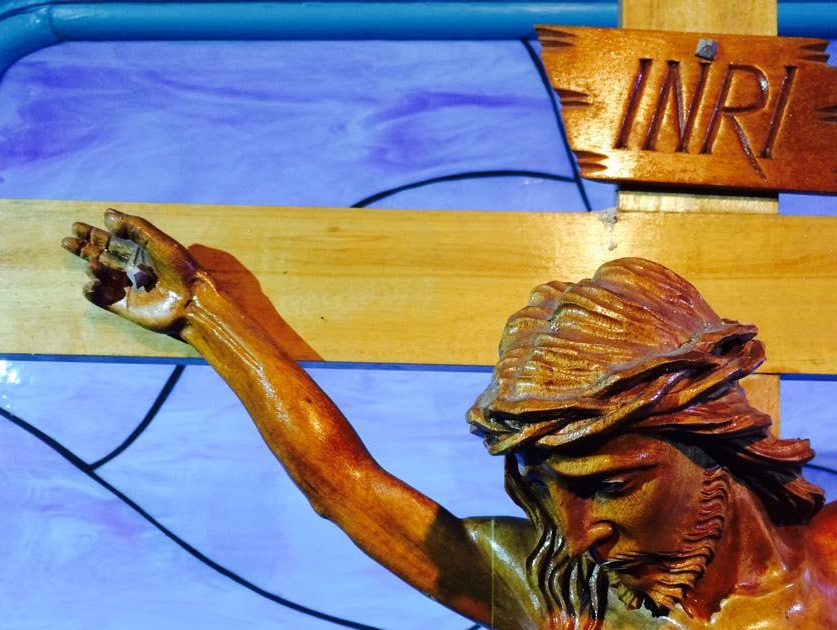
Photo by Mr. Jim Marpa, 2018.

Last Sunday we focused on our hands that we use to pray and serve in reflecting the parable of the wise steward. Today, let us “look” into our eyes that see God in others as we reflect on another parable only St. Luke has, the rich man and Lazarus.

Eyes are the “windows of one’s soul”.

Eyes reveal what is inside us: how we look and move our eyes, the sparkle or dullness in our eyes indicate the kind of person within. Eyes never lie for they reveal if we are telling the truth or not. Most of all, eyes do not only direct us to sights outside but even visions to beyond what we can see.

This is very clear in the parable of the rich man and Lazarus, inviting us to take a deeper look into ourselves, on others, and with the things we possess like money and wealth.

Jesus said to the Pharisees: “There was a rich man who dressed in purple garments and fine linen and dined sumptuously each day. And lying at his door was a poor man named Lazarus, covered with sores, who would gladly have eaten his fill of scraps that fell from the rich man’s table. Dogs even used to come and lick his sores. When the poor man died, he was carried away by angels to the bosom of Abraham. The rich man also died and was buried, and from the netherworld, where he was in torment, he raised his eyes and saw Abraham far off and Lazarus at his side.”

Luke 16:19-23
Photo by Mr. Jim Marpa, September 2019.

For the third consecutive Sunday, we again heard another well-known parable proper to St. Luke like the prodigal son two weeks ago and the wise steward last Sunday. Today’s parable of the rich man and Lazarus follows the same thread of last week’s wise steward which is about the thorny issue of money. But again, there is something deeper than that which is the call for daily conversion by always looking beyond what we can see.

In this parable, Jesus never said the rich man was bad that is why he went to hell or the “netherworld”. Neither did he also claim that the poor man was holy that led him into the “bosom of Abraham” which is heaven. Jesus only described their daily life: the rich man lived in affluence with fine clothings and sumptuous meals while the poor was very destitute feeding on scraps falling from the former’s table as dogs licked the sores that covered his body.

The only critical clues Jesus gives us are the name of the poor man – Lazarus – which means “God has rescued” or El’azar in Hebrew and the final scene in the afterlife.

Let it be clear that the issue here is how people, rich and poor alike, can be blinded by money and wealth that they fail or even refuse to see God and others as brothers and sisters that lead them into evil and sins.

Abraham replied (to the rich man), “My child, remember that you received what was good during your lifetime while Lazarus likewise received what was bad; but now he is comforted here, whereas you are tormented. Moreover, between us and you a great chasm is established to prevent anyone from crossing who might wish to go from our side to yours or from your side to ours.”

Luke16:25-26

Photo by Noelle Otto on Pexels.com

The sad reality is that this parable continues to happen in our days when so many of us are oblivious of the poverty and miseries afflicting many of the poor among us.

We are that rich man who has no name but have eyes that refuse to see and recognize Jesus in everyone especially the poor and suffering. How tragic in this age of social media where everything and everyone is exposed and seen, we have become blind to the plight of those around us. No need to look far but right in our own family when members are on their own without bothering to know how everyone is doing in life.

In my 21 years of priesthood, I have realized that most often, the people who truly suffer are often the Lazarus among us who prefer to be silent, to bear all their pains trusting only in God who would vindicate and raise them in the end. The Lazarus are the poor not just in material wealth but “poor in spirit for theirs is the kingdom of heaven” (Mt. 5:3) who completely trust in God.

Reading further that version of the Beatitudes of St. Matthew, we find Jesus saying

Blessed are the clean of heart, for they will see God.

Matthew 5:8
Photo by Pixabay on Pexels.com

The clean of heart are the Lazarus, the poor who try to find God in this life even amid the many sufferings. Our minds and intellect, including our eyes can never see God. As the Little Prince would say, “what is essential is invisible to the eye; it is only with the heart that one can truly see”. Very true!

A clean heart is a loving heart. When we speak of the heart, we also mean person for the heart embodies the whole person. Therefore, a loving heart is the Lazarus, the one who tries to see God, the one who envisions the end that he is willing to sacrifice, to forgive and to welcome the lost.

Lazarus the poor beggar went to heaven because he has a clean heart unlike the rich man who refused to see beyond himself and his affluence. They are the ones being reprimanded in the first reading by the Prophet Amos, the “complacent” people who may have also included the priestly class of Israel unmindful of the real situation of the people because they have been insulated from realities by the perks and good life of wealth and power (Amos 6:1).

Most people have eyes that have sights but only a few have a vision in life. People with a vision in life are the ones who can see beyond the ordinary, they are the dreamers who dream with eyes wide open working hard to make their dreams happen in reality.

Lazarus is a visionary and a dreamer who saw beyond the door of the rich man, beyond his hunger and sickness the glory of God in eternal life. The rich man on the other hand only had sights for what is “here and now”; and, that is what he is so afraid of with his five brothers still alive who have no vision of the afterlife, no vision of God among others in the present life like him.

My dear friends, Jesus is inviting us today while there is still time to go back to the path of conversion, to see beyond ordinary things and see the more essential, the more lasting things that according to St. Paul in the second reading prepare us for eternal life like “righteousness, devotion, faith, love, patience, and gentleness” (1Tim. 6:11).

Let us listen to the words of God found in the Sacred Scriptures that Abraham referred to in the parable as “Moses and the prophets” (Lk.16:29).

Most of all, let us listen to Jesus Christ, the only one who had risen from the dead (cf. Lk. 16:31) who enables us to see him on the face of everyone we meet, giving us a vision of heaven by helping us in fulfilling our mission as his disciples in proclaiming the coming of the kingdom of God. Amen.

Our hands that pray and serve

The Lord Is My Chef Sunday Recipe Week XXV-C, 22 September 2019

Amos 8:4-7 ><}}}*> 1 Timothy 2:1-8 ><}}}*> Luke 16:1-13

Photo by Roberto Nickson on Pexels.com

Our hands are a microcosm of our very selves.

They always reveal something about us. Medical doctors say our hands’ texture and color indicate our health condition. Psychics always read our palms to see our past, present and future. And every suitor always asks for the hand of his beloved for marriage.

In fact, it is always fascinating to observe the hands of a man courting a woman. See how he would always hide his hands inside his pockets or at his back as he puts his best foot forward to impress the lady he is courting. If he wins her heart, they get engaged and that is when they keep on holding each other’s hands until they get married.

There are a lot great beauty and profundity in our human hands that always come in handy for daily living!

“It is my wish, then, that in every place the men should pray, lifting up holy hands, without anger or argument.”

1 Timothy 2:8

I love St. Paul’s expression of men praying “lifting up holy hands” which is the sum or integration of prayer and action. Very picturesque, showing us how we must conduct ourselves with God and one another by living in peace and harmony as brothers and sisters in Jesus Christ. That is why today until next Sunday, our gospel from St. Luke would be challenging us on how authentic our life is as seen from last week’s parable when we experienced God as a loving Father embracing us despite our sins.

This Sunday, the Lord is asking us, “what’s in our hands”?

What are we holding on, literally and figuratively speaking?

Whatever our hands touch and hold are always linked with our whole selves. They cannot be separated from our body for our hands extend us to other people and even with things. Our hands reveal the balance or imbalance within us, the truth and lies we hold on deep inside us.

Photo by Jim Marpa in Carigara, September 2019.

“No servant can serve two masters. He will either hate one and love the other, or be devoted to one and despise the other. You cannot serve God and mammon.”

Luke 16:13

In our gospel today, Jesus is not asking us to “dirty our hands” with sin. What he wants us to realize from his parable is to be like the wise steward or “hired hand” who used all his resources and intelligence in securing a sound future by doing something finally good to those he had cheated.

Like that hired hand, what are the main concerns of our hands? Do we use our hands for good or for evil? Would we dare to use our hands extensively to achieve eternal life by entering through the “narrow door” Jesus told us last month by keeping our hands busy in doing good, serving the poor and needy?

Our hands are a blessing from God, including the fruits of its labor.

How unfortunate that like during the time of the prophet Amos whom we have heard in the first reading today, we use these very blessings from God to curse and trample others especially the poor and the weak. How ironic and sad that the very hands we use to care for others are the very same hands that beat and even kill others perfectly expressed in the term “blood in one’s hands”. Worst of all, the very hands that pray to God are the same hands that hurt others!

Betania Tagaytay, August 2017.

The late Jaime Cardinal Sin of Manila used to narrate a short story about the gracious hands of God. He said that most of the time, the hands of God caress us, pat our shoulders and even soothe us whenever we are in pain. But, sometimes, the hands of God tap us, even “spank” us when things do not seem to favor us. What matters most, according to Cardinal Sin, whether we are caressed or tapped, the same touches come from God’s loving and healing hands always filled with grace.

In the gospels, we find many instances of Jesus using his hands to raise the sick, to touch the eyes and mouth in restoring senses, and to bless, break and share bread with his friends and sinners alike. When he expressed his immense love for us and the Father, Jesus stretched out his arms and offered his hands on the cross on Good Friday.

Just imagine how with all our sins, God with a stroke of his hand can make us all vanish but chose not to do so and let our trespasses pass. Like the master in the parable we have heard, God is giving us all the opportunities to work with our hands in lovingly serving the people he has entrusted to us in our homes and offices, school and parish, and community.

But unlike that master who still fired his hired hand despite his resourcefulness, God is not judging us into doom. In is infinite love, God gave us Jesus Christ his Son to bring us back to him in eternal life. It is for this that we lift up our hands to him every day, especially in the Holy Mass we celebrate. The best prayer we can offer God is for these “blessed hands” to reach out to everyone in love and forgiveness, kindness and peace. Amen.

Photo by Pixabay on Pexels.com

Bakit nagkaganito buhay natin?

Lawiswis Ng Salita ni P. Nicanor F. Lalog II, Ika-21 ng Setyembre 2019

Larawan kuha ni G. Chester Ocampo sa Catanduanes, Abril 2019.


Isang gabi pagkaraang magdasal at magnilay
kinailangang pansinin at sagutin
isang nagtext sa akin:
kanyang tanong ay napakalalim
bumaon din sa aking loobin.
Aniya'y, "bakit nagkaganito ang buhay namin?"
isang tanong tumimo sa akin
marahil ilang ulit din sa inyo dumating
nakaka-praning, ang hirap sagutin
bagkus maraming katanungan pa rin.
Ang hirap naman kasi sa atin
kapag maganda buhay natin
dinaraanang landasin ayaw suriin
sa pag-aakalang kasiyahan magpapatuloy pa rin
hindi alintana lahat lilipas din.
Kapag ito ang naitatanong natin
mas malamang mga salarin
ng suliraning kinalalagyan natin
tiyak hanggang ngayon ay mga tulog at lasing pa rin
hindi kayang aminin ni tanggapin kanilang pagkukulang din.
Kaya kung ikaw ay nagtatanong
"bakit nagkanito buhay natin?"
tiyak ikaw ay gising at higit na mapalad pa rin
iyong maaapuhap balang araw dahilan
nitong hantungang hindi para sa atin.
Mga taong nagpapasakit sa atin
kadalasan maraming sugat at sakit na dalahin
sadyang kaawa-awa kung tutuusin
ni hindi nila batid bakit nagkanito buhay natin
sigaw ng kanilang loobin sila'y pansinin at saklolohan natin!
Larawan kuha ni G. Chester Ocampo sa Catanduanes, Abril 2019.

Relasyon, hindi emosyon – 2

Lawiswis ng Salita ni P. Nicanor F. Lalog II, Ika-17 ng Setyembre 2019
Relasyon at ugnayan
hindi emosyon at damdamin
ang sabi natin na pangunahin turo sa atin
ng talinhaga ng alibughang anak.
Kay gandang larawan ng Diyos
ang nakintal sa ating puso't isipan
nang ilahad ng mahabaging ama sa dalawang anak niya
na sila ay iisang pamilya, binibigkis ng buhay na mula sa kanya.
Ano mang kasalanan ay mapapatawad
maging kamatayan ay malalampasan
nitong habag at awa ng Diyos na ibinuhos
kay Kristo Hesus para sa ating mga alibughang anak niya.
Ganyan ang habag at awa ng Diyos bilang Ama
na dumadaloy din mula sa kanyang pagiging ina
nang mawika niya, "hindi kita malilimutan kailanman
katulad ng isang ina sa kanyang anak na mula sa kanyang sinapupunan."
Para sa kanilang kaisipan, 
ang habag at awa ay "hesed" ---
damdaming napaka-lalim gaya ng pag-ibig
nagpapahiwatig ng maka-amang katapatan at pananalig.
Nagmumula ito sa sinapupunan o "raham" ---
yaong matris ng kababaihan na siyang kanlungan
ng simula ng buhay, lundo ng katuwaan pagsapit ng kagampan
kapag napawi mga agam-agam, pagsilang ng bagong buhay.
Kapag umiiral habag at awa sa ating buhay
doon tayo buong-buo sa pagkatao
nagiging ganap at banal tulad ng Diyos
puno ng buhay at pagmamahal.
Kaya't kapag mga patayan ay naglipana
at pagkitil sa buhay ang nakikitang paraan
upang lunasan maraming kasalanan at kasamaan
nasisira ating kapatiran, di maglalaon, tayo ang mababaon.

“Time After Time” cover by Tuck & Patti (1988)

The Lord Is My Chef Sunday Music, 15 September 2019
Photo by Vincenzo Malagoli on Pexels.com

Our gospel this Sunday of the parable of the prodigal son speaks so well of what we may describe as the “wildness and wideness” of God’s love and mercy for each one of us, especially the lost and rejected. It is a love that goes “time after time”….

Lying in my bed I hear the clock tick
And think of you
Caught up in circles
Confusion is nothing new
Flashback, warm nights
Almost left behind
Suitcase of memories
Time after
Sometimes you picture me
I’m walking too far ahead
You’re calling to me, I can’t hear
What you’ve said
Then you say, go slow
I fall behind
The second hand unwinds
If you’re lost, you can look and you will find me
Time after time
If you fall, I will catch you, I will be waiting
Time after time

Written and originally performed by Cyndi Lauper, “Time After Time” is her second single she co-wrote with Rob Hyman that was released in January 24, 1984. It was an instant hit and earned very positive reviews for Lauper.

It is a story of unconditional love despite its being over.

The lover promises to continue loving her beloved despite their separation.

It is a kind of love that is so divine like the merciful father in the parable of the prodigal son. A love so true as it recognises the other person as a “somebody”, a part of the lover. A love that persists time after time because we remain a family despite our separation of distance or even of feelings.

We have chosen the 1988 cover by the jazz duo of husband and wife Tuck and Patti because of its more solemn rendition. The guitar and voice ensemble of the duo for me is one of the music world’s great treasure we are so thankful not only in delighting our senses but most of all in making us experience some of the most beautiful songs of our time.

Enjoy!

The wildness – and wideness – of God’s love and mercy

The Lord Is My Chef Sunday Recipe, Week XXIV-C, 15 September 2019

Exodus 32:7-11, 13-14 ><)))*> 1Timothy 1:12-17 ><)))*> Luke 15:1-32

Camp John Hay, Baguio City, 23 August 2019.

Today we conclude the series of “table talks” by Jesus with three parables narrated while dining; but, unlike the other Sunday when he was with prominent people, this time we find the Lord among the notorious ones of his time.

Tax collectors and sinners were all drawing near to listen to Jesus, but the Pharisees and scribes began to complain, saying, “This man welcomes sinners and eats with them.”

Luke 15:1-2

It is the perfect setting where Jesus bared what we may call as “the wildness and wideness” of God’s love and mercy for everyone, especially the lost and rejected. This explains why Luke 15:1-32 is the “heart” of the third gospel also known as the Gospel of Divine Mercy. So, please bear with me reflecting today’s long but lovely gospel.

The first two parables are about things – a sheep and a coin – that were lost and later found. There is nothing extraordinary about losing things that we also experience today. But, in narrating these parables, Jesus ended both with a saying to explain their meanings and significance to introduce the third parable of the lost son.

“I tell you, in just the same way there will be more joy in heaven over one sinner who repents than over ninety-nine righteous people who have no need of repentance.”

“In just the same way, I tell you, there will be rejoicing among the angels of God over one sinner who repents.”

Luke 15: 7, 10
Photo by Ms. Jo Villafuerte, Atok, Benguet, 01 September 2019.

For the past two Sundays, we have been reflecting about the importance of our personhood, of how God comes first to our very persons, of the need for us to be true and humble because God meets us right in our weaknesses and sinfulness. Jesus warned us the other Sunday that “for everyone who exalts himself will be humbled, but the one who humbles himself will be exalted” (Lk.14:11). As they say, bloom wherever you are planted for God’s grace is more than enough for each one of us!

Such is God’s love us that Jesus demands total faith in him that “if anyone comes to me without hating his father and mother, wife and children, brothers and sisters, and even his own life, he cannot be my disciple” (Lk.14: 26). In our lives as his disciples, there would be countless times when no explanations, no reasons are enough why we choose to love and forgive, to be kind and understanding except the very person of Jesus Christ. That is what we call as communion, oneness with the Lord, of always preferring Jesus above anyone and anything!

This is the very reason why the Pharisees and scribes were complaining against him: the tax collectors and sinners were turning to Jesus and not to the Laws they represent! And that continues to happen in our time when some people insist more on religion and vocation, roles and rituals, totally forgetting and even disregarding the very person of God who calls us to himself in Christ!

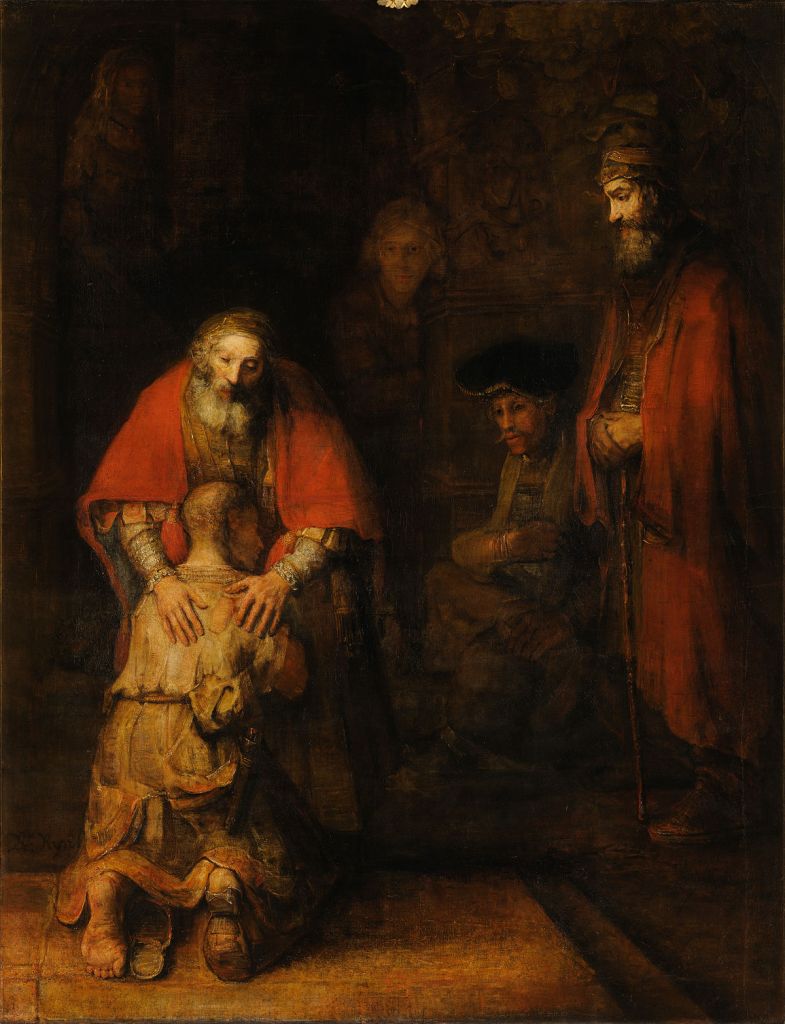
The Return of the Prodigal Son by Rembrandt (c.1661-1669). From Google.

Then he said, “A man had two sons, and the younger son said to his father, ‘Father, give me the share of your estate that should come to me.’ So the father divided the property between them. After a few days, the younger son collected all his belongings and set off to a distant country where he squandered his inheritance on a life of dissipation.”

Luke 15:11-13

Feel the solemnity of Jesus in introducing this parable, shifting from lost sheep and lost coin to lost son, from things to persons because the elder son is also lost. It is the father who eventually restored the lost personhood of the two sons when he lavished them with his love and mercy towards the end of the story. And that is why this parable is so lovely as it reminds us of how unconsciously we are “dumping” our own personhood despite our bloated egos. Slowly we are becoming robots or worst, even zombies without feelings and personal relations with others and with one’s self.

Just like the two sons in our parable who both define sonship in terms of servile obligations that is utilitarian and contractual in relationships, not as a family.

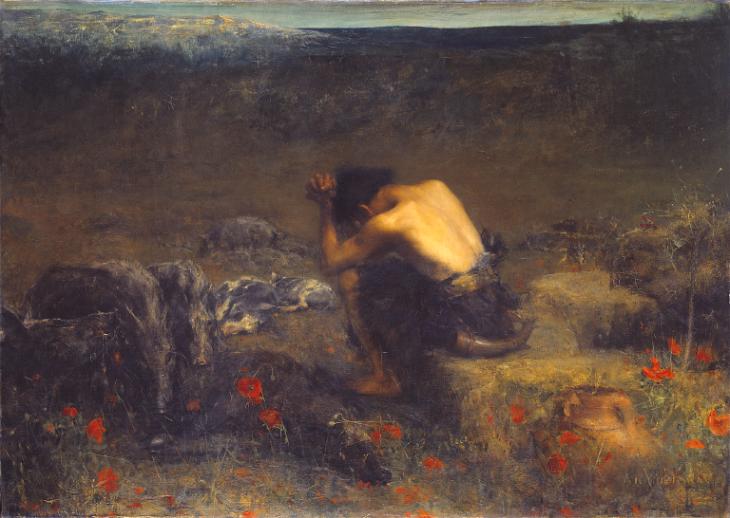
The Prodigal Son by John Macallan Swan, 1888. From Google.

Coming to his senses he thought, ‘How many of my father’s hired workers have more than enough food to eat, but here I am, dying from hunger. I shall get up and go to my father and I shall say to him, “Father, I have sinned against heaven and against you. I no longer deserve to be called your son; treat me as you would treat one of your hired workers.”

He (elder son) said to his father in reply, “Look, all these years I served you and not once did I disobey your orders; yet you never gave me even a young goat to feast on with my friends. But when your son returns who swallowed up your property with prostitutes, for him you slaughtered the fattened calf.”

Luke 15:17-19, 29-30

The prodigal son remembered his father when he was starving, thinking more of the food he could have if he returns home as a servant, not as a son. See how in the midst of sin, he never thought of his father as his parent, of himself as a son. He was convinced that the path to reconciliation with his father was becoming a hired worker, forgetting the very fact he is the youngest son.

The same is true with the elder son who refused to join the celebration when his brother had returned home, feeling so bad that his long years of service to his father deserve him a reward. In a sense, he is worst than the prodigal son: no father, no brother – just himself alone!

Both sons have a slanted view of their father, a very truncated one that is self-isolating, very constricting like the Pharisees and scribes who have forgotten their being persons, of being interrelated with one another in God. Very much like us today that slowly as the ties that bind us as family and friends are slowly being severed by so many things, we also start to lose many of our values like “malasakit” or concern for one another.

The father redefined their – and ours, too – relationships as family that lead to joy and celebration.

He (father) said to him, “My son, you are here with me always; everything I have is yours. But now we must celebrate and rejoice, because your brother was dead and has come to life again; he was lost and has been found.”

Luke 15:31-32
Santorini. Photo by Dra. Mai Dela Pena, 2016.

Today, Jesus reminds us, and assures us too that no matter what happens with us, we will always be his brothers and sisters, beloved and forgiven children of the Father.

We call and relate with God as Father because as his children, he is our giver and keeper of life.

And should this life get lost, God as our Father, can also be so “prodigal” to “wastefully” love us and bring back this life to us for we are more valuable than anything else in this universe. That’s how wild and wide is his love and mercy. Amen.

Up close and personal

The Lord Is My Chef Sunday Recipe, Week XXIII-C, 08 September 2019

Wisdom 9:13-18 ><)))*> Philemon 9-10, 12-17 ><)))*> Luke 14:25-33

Photo by Ms. Jo Villafuerte at Atok, Benguet, 01 September 2019

“A loveless world is a dead world, and always there comes an hour when one is weary of prisons, of one’s work, and of devotion to duty, and all one craves for is a loved face, the warmth and wonder of a loving heart.”

Albert Camus, “The Plague”

I always tell people not all days are bright and sunny but, there comes a time when we are so down, when all is so dark and even hopeless that the only thing left for us is to believe, to hope, and to love.

There is really nothing we can do except to patiently wait for the storm to pass while we suffer alone and cry alone. That is when we are surprised and even shocked at how the gospel of Jesus and the commandments of God can sometimes be so rigid that we want it modified even a little because we want to get even, we want to fight back. If we are not busy thinking of revenge, we complain, asking God why me who should suffer?

But, the more we pray and submit ourselves to God, the more we realise that God’s ways are not our ways. That despite the difficulties, we feel deep inside God is with us, guiding us, leading us to something better!

“Who can know God’s counsel, or who can conceive what our Lord intends? Or who ever knew your counsel, except you had given wisdom and sent your holy spirit from on high? And thus were the paths of those on earth made straight.”

Wisdom 9:13, 17-18
Photo by Ms. Jo Villafuerte at Atok, Benguet, 01 September 2019

Here we find the importance of Christ’s teaching last Sunday, of the need to be humble, to be our true selves by being where we should be for “those who humble themselves will be exalted and those who exalt themselves shall be humbled.”

It is in our poverty, in our weakness, even in our incomprehension when the Holy Spirit works well to reveal to us the higher realities of life often wrapped in every pain and suffering we go through. And that is why sometimes in life, it is best to be unreasonable when the only explanation and justification we can have in still being loving and forgiving, merciful and understanding, kind and patient is the person of Jesus Christ.

“If any one comes to me without hating his father and mother, wife and children, brothers and sister, and even his own life, he cannot be my disciple.”

Luke 14:26
Photo by the author, Holy Family Chapel, Sacred Heart Novitiate (Novaliches), July 2016.

Our gospel today is a continuation of last Sunday when Jesus was invited to a Sabbath dinner by a Pharisee. After giving them some “table talks”, Jesus told them another parable about the great feast to stress that God’s mercy is so vast that there is room for everyone in heaven.

People started to follow him after that meal and lesson on heaven, wanting to become his followers and disciples. To further motivate them in following him, Jesus challenged them with these powerful words using a figure of speech. The word “hate” may be too strong and harsh but such is the gravity of discipleship: we have to lose our very selves even those dearest to us when we have to see everything and everyone in the person of Jesus. To “resolutely follow Jesus in his journey to Jerusalem”, we must be ready to be totally his with him alone as the basis in every decision that can be sometimes foolish like St. Paul who claimed in one of his writings he was a fool for Christ!

See the “foolishness in Christ” of this great apostle: St. Paul was in prison at Rome awaiting trial and judgement. A slave named Onesimus escaped his Christian master named Philemon. It was definitely against the law to harbor escaped slaves yet St. Paul welcomed Onesimus in his prison as his companion and servant! More than that, without really knowing him well, St. Paul baptised Onesimus to become a Christian!

Imagine St. Paul’s adherence to the gospel of Christ even to the point of being unreasonable when he could have just told Onesimus to go back or go somewhere else and spare him all the troubles! But no. It was very clear with St. Paul in asking Philemon to receive Onesimus back that he was not sticking to any moral standards or laws but solely on the person of Jesus Christ, in our communion in him as brothers and sisters.

“Perhaps this is why he was away from you for a while, that you might have him back forever, no longer as a slave but more than a slave, a brother, beloved especially to me, but even more so to you, as a man and in the Lord. So if you regard me as a partner, welcome him as you would me.”

Philemon 15-17
Photo by Ms. Jo Villafuerte at Atok, Benguet, 01 September 2019.

Next Sunday we shall hear the very long but beautiful parable of the merciful father also known as parable of the prodigal son. Like God our Father, the merciful father would reassure his two sons of his immense love for them despite their sins because of their very persons as his sons.

Today in our Sunday Eucharist, Jesus welcomes us all as persons, his brothers and sisters despite our sins and weaknesses. Like Mary whose birth we also celebrate today inspire us to receive Jesus our Savior in his total person in ourselves by receiving the persons around us in him. Amen.

A prayer to be grateful

The Lord Is My Chef Breakfast Recipe for the Soul

Wednesday, Week XXII, Year I, 04 September 2019

Colossians 1:1-8 ><)))*> ><)))*> ><)))*> Luke 4:38-44

Photo by Ms. Jo Villafuerte, Atok, Benguet, 01 September 2019.

Heavenly Father, I always thank you in my prayers. Early in life, I have been told to always say “thank you” and I have diligently kept that, always thanking people especially you for your goodness to me.

But, now I wonder if I have been “thanking” so much without being truly grateful?

There are “thank you’s” that come from lips and there are “thank you’s” that come from the heart which is what gratitude is all about. So often, I say “thank you” out of habit without really looking into the heart, the goodness of the one doing or giving me a favor. Too often, I thank for the thing or favor, not the person.

“We always give thanks to God, the Father of our Lord Jesus Christ, when we pray for you, for we have heard of your faith in Christ Jess and the love that you have for all the holy ones because of the hope reserved for you in heaven.”

Colossians 1:3-5

How lovely it is to dwell on St. Paul’s expression of his gratitude, his thanksgiving that is clearly directed to persons – including you, O God!

Like the people of Capernaum where you have healed Simon’s mother-in-law and others, they saw your person to thank that they begged you to stay in their town.

Remind me always, Lord, that whenever I say “thank you”, I may first try to feel the heart and experience the goodness of the person doing me good for a grateful heart always sees the loving face. Amen.

Disappointments- and Surprises -await us in Heaven

The Lord Is My Chef Sunday Recipe Week XXI-C, 25 August 2019

Isaiah 66:18-21 ><)))*> Hebrews 12:5-7, 11-13 ><)))*> Luke 13:22-30

The small door leading to the Church of Nativity in Bethlehem, symbolic of the need to be lowly, to bow to meet our Lord Jesus Christ who became human like us to save us. Photo by author, May 2019.

The Lord concludes his series of “shock preaching” today with a big bang by dousing us with a big disappointment…

Someone asked him, “Lord, will only a few people be saved?” He answered them, “Strive to enter through the narrow gate, for many, I tell you, will attempt to enter but will not be strong enough. After the master of the house has arisen and locked the door, then will you stand outside knocking and saying, ‘Lord, open the door for us.’ He will say to you in reply, ‘I do not know where you are from.'”

Luke 13:23-25

It is very disappointing that after joining Jesus as he resolutely determined to journey to Jerusalem these past four Sundays in taking into our hearts his many earth-shaking lessons about the “end” only to find out that we could end up being locked out of the door to heaven. More shocking than the lessons last week is the disturbing revelation today that we have to be strong enough to enter through the narrow gate to eternal life.

How strong? We really do not know. But, we have learned from the Old Testament of the need to patiently obey and faithfully keep the commandments of God while the gospels remind us clearly to deny ourselves and carry our crosses even up to the point of dying with Christ.

Very difficult, huh…? And here’s more! Striving hard to enter the “banquet hall of heaven” is keeping in mind the important lessons we have heard these past three Sundays: life does not consist of possessions but of what matters to God (Lk.12:15,21; Aug. 04); that we must always gird our loins to be ready for death that comes like a thief at night (Lk.12:35,39; Aug.11); and, most of all, we have to go through our own passion and death like Jesus to be filled with the fire of the Holy Spirit to bring the peace of Christ into world (Lk.12:49-51; Aug. 18).

It is useless to count how many would be saved for there is enough room for us all in heaven. Through the Prophet Isaiah in the first reading, God wants us all to be with him in heaven despite his knowledge of our sins by sending us his Son Jesus Christ!

Thus says the Lord: I know their works and their thoughts, and I come to gather nations of every language; they shall come and see my glory.

Isaiah 66:18
The small door to the Church of the Nativity from the inside.

See again in our gospel today an apparent contradiction in the teachings of our Lord like last Sunday with his bringing of fire and division among us. When Jesus refused to give that man a definitive answer to his question “if only a few people would be saved”, the Lord in fact revealed something deeper than the initial disappointment we have felt about the gate of heaven being narrow that would be closed when the time comes. Again, he mentions the Eucharist, our Sunday Mass as the wonderful opportunity to be strengthened in order to get inside the heavenly banquet.

“And people will come from the east and the west and from the north and the south and will recline at table in the kingdom of God. For behold, some are last who will be first, and some are first who will be last.”

Luke 13:29-30

It is during the Sunday Mass when the Lord gathers us all together after a very difficult and disappointing week to refresh us, to strengthen us for another week of hurdling more problems, more trials in life. This is why before receiving him, we say, “Lord I am not worthy that you should enter under my roof, but only say the word and my soul shall be healed.” The Father gave us his Son Jesus Christ so we may have that strength needed to enter the narrow gate to heaven by doing more loving service to others, being kind and forgiving, being honest and generous. Yes, these are easier said than done but doable in Christ.

What is so surprising in our many experiences are the many times when in our many disappointments Jesus comes to guide us to new doors, new routes and new openings that mysteriously lead to new life for us!

Grotto of our Lady of Lourdes, Baguio City, January 2019.

Brothers and sisters: You have forgotten the exhortation addressed to you as children: “My son, do not disdain the discipline of the Lord or lose heart when reproved by him; for whom the Lord loves, he disciplines; he scourges every son he acknowledges.” Endure your trials as “discipline”; God treats you as sons. For what “son” is there whom his father does not discipline?

Hebrews 12:5-7

That is the mystery of God’s universal plan of salvation for us: the path may be filled with so many hardships and obstacles, the gate may be so narrow and difficult to pass through but he has made it possible for us to make it through by sending us Jesus Christ our Lord in leading this way to the heavenly Jerusalem. Authentic faith always involves pains and sufferings. When we embrace death like Jesus Christ, we also ensure life.

In every setback in life, we only have two choices always: either to be better or bitter. Choose to be better and that can only be through the narrow door of Jesus Christ by letting go of our anger and hatred, resentment and bitterness to give way to joy and peace, love and forgiveness. That is when God begins to surprise us!

Tam-Awan, Baguio, January 2019.

The author of Amazing Grace, John Newton was once challenged by a man after he had delivered a homily about heaven. Remember that Newton, as he claimed in Amazing Grace, was a “wretch” being a former slave trader after being a slave himself.

Newton was asked by a man to give something that would surprise him when he gets to heaven.

The former wretch replied that there would be three great wonders in heaven: first, he would see many people he never expected to be there; second, he would not find many church-goers he expected to see there; and third – which is the biggest surprise of all – is to find himself there in heaven when he knows very well his sinfulness.

Yes, my dear brothers and sisters, we are all sinners, now feeling disappointed with so many things in life. Just strive to be good and better persons as we celebrate every Sunday the Lord’s Supper and he will do the rest. And be ready to be surprised even before going to heaven! Amen.

Remember, always remember.

The Lord Is My Chef Breakfast Recipe for the Soul

Saturday, Week XIX, Year I, 17 August 2019

Joshua 24:14-29 ><)))*> ><)))*> ><)))*> Matthew 19:13-15

Photo by Eric Smart on Pexels.com

Thank you very much, dear God, for this weekend rest.

And as we rest from work or studies, let us also pray for the gift of remembering.

Like in the first reading when Joshua asked the Israelites to always remember the many wondrous things you have done to them so they may remain faithful to you, make us remember too that there is no other God except you who personally relates with us, blessing us with everything that we need even without our asking.

You have created us to always remember but we are also “beings of forgetfulness” who always forget everything and everyone, especially you and those dearest to us. We are easily distracted with so many other things and people that we always forget those who are truly good to us.

When life becomes nice and easy for us, when we have everything we need, that is when we forget. And sadly, when we forget, when we do not remember, that is when we also break away, we go apart.

Because, to “remember” literally means to make a member or part again, “re” + “member”.

When we remember you, O God, we affirm your presence in us and among us.

When we remember our loved ones, whether away or gone forever, we make them a part again of our lives here and now, the present moment. The same thing is true with events in the past, whether good or bad.

Thank you so much O God for this gift of remembering!

Make us like the children in today’s gospel who came to you, wanting to be one with you, wanting to be your member and part too! Amen.

A blessed Saturday to everyone!