40 Shades of Lent by Fr. Nicanor F. Lalog II Wednesday in the Fourth Week of Lent, 22 March 2023 Isaiah 49:8-15 >>> + <<< John 5:17-30
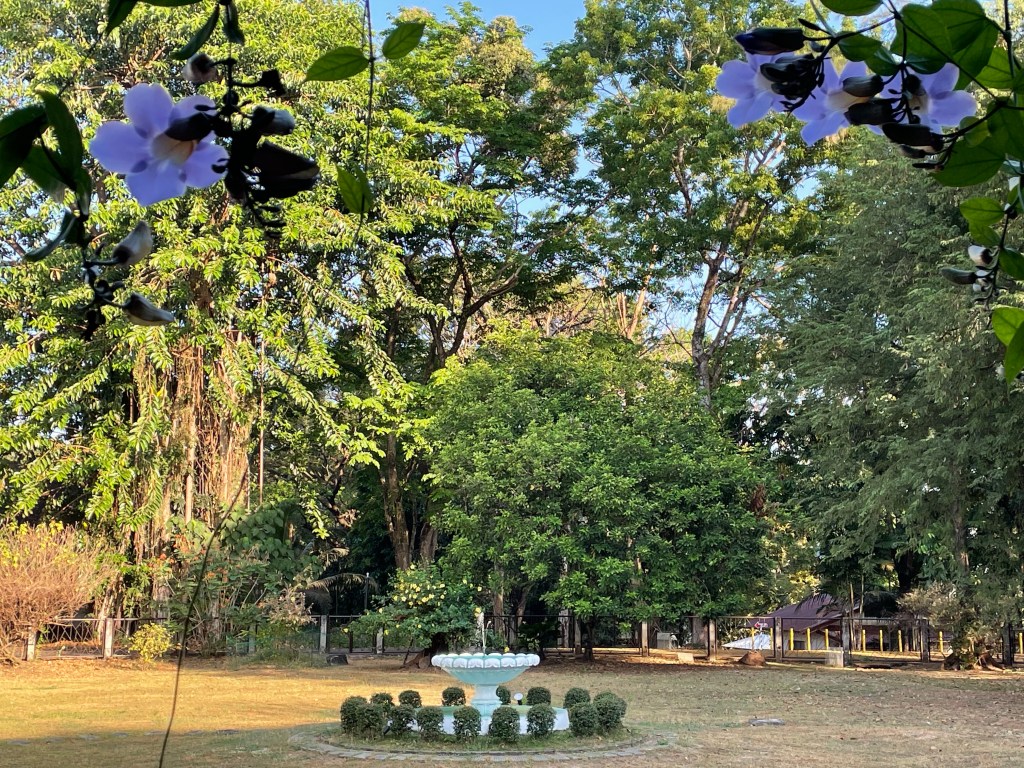
Photo by author, sunrise at the Sacred Heart Novitiate, Novaliches, QC, 22 March 2023.
Loving God our Father,
Your words say it all today,
my birthday:
Thus says the Lord: In a time of favor I answer you, in the day of salvation I help you; and I have kept you and given you as a covenant to the people… Can a mother forget her infant, be without tenderness for the child of her womb? Even should she forget, I will never forget you.
Isaiah 49:8, 15
The Lord is gracious and merciful.
Responsorial Psalm, Ps. 145:8
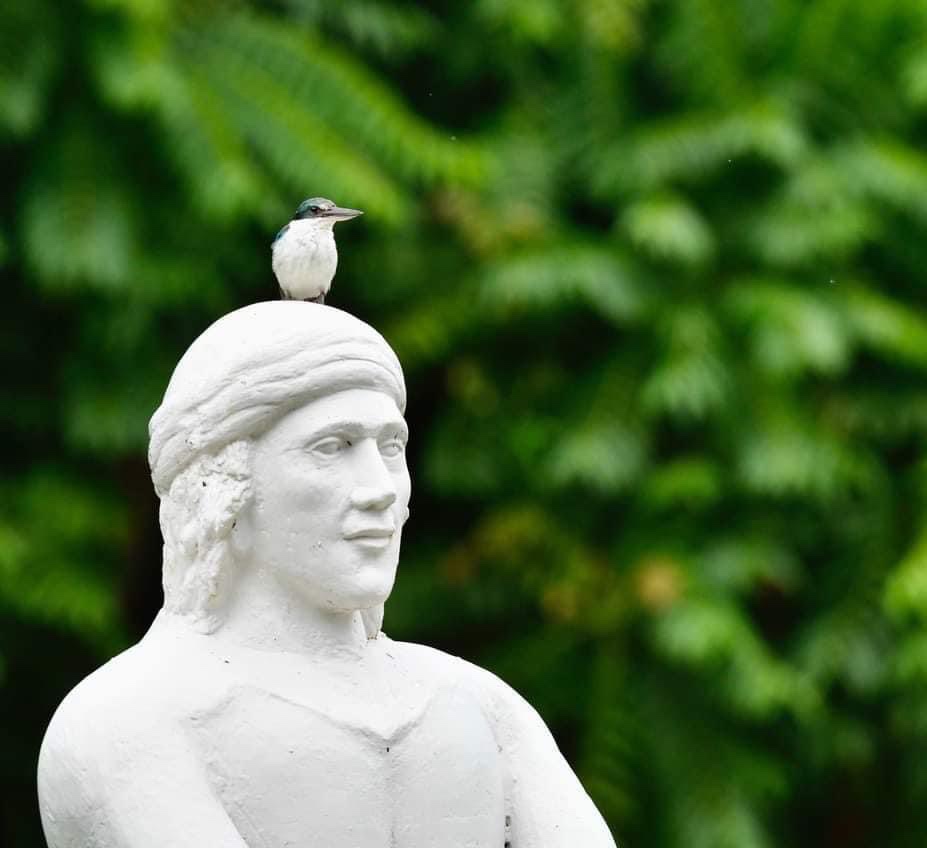
Photo by author, Sacred Heart Novitiate, QC, 22 March 2023.
More than words, dear Father,
I praise and thank you
for your boundless love
and kindness to me all these
58 years!
You have always been present with me,
in me, for me, and through me in Jesus Your Son.
And so, I pray this to you:
Dearest Lord,
you have given me with so much,
I have given you so little;
teach me to give more
of my time and talents,
to give more of my self
so I can give Christ Jesus to others,
especially his love and mercy,
kindness and forgiveness;
empty me of my pride, Lord,
and fill me with your humility,
justice and love.
Amen.
Photo by author, Sacred Heart Novitiate, QC, 22 March 2023.
40 Shades of Lent by Fr. Nicanor F. Lalog II
Fourth Sunday in Lent-A, 19 March 2023
1 Samuel 16:1, 6-7, 10-13 + Ephesians 5:8-14 + John 9:1, 6-9, 13-17,34-38
Photo by author, sunrise at Katmon Nature Sanctuary & Beach Resort, Bgy. Binulusan, Infanta, Quezon (04 March 2023)
We continue to journey with Jesus and his disciples towards Jerusalem for the fulfillment of his mission and like last Sunday, we take on a short stop-over today with him in the healing of a man born blind. It is another long story in these last three weeks of Lent that we hear from the gospel by St. John, filled with so many layers of meaning about our sense of sight or seeing which we often take for granted. Many of us are misled by the world’s insistence that to see is to believe when so often, we still fail to really see persons, things, and situations.
Experience has taught us that it is not enough for us to have eyes to be able to see, that after all, what Jesus has been teaching us is most true – believe and you shall see which is what our story of his healing of a man born blind is all about.
As Jesus passed by he saw a man blind from birth. He spat on the ground and made clay with the saliva, and smeared the clay on his eyes, and said to him, “Go wash in the Pool of Siloam” – which means Sent. So he went and washed, came back able to see. His neighbors and those who had seen him earlier as a beggar said, “Isn’t this the one who used to sit and beg?” Some said, “It is,” but others said, “No, he just looks like him.” He said “I am.” They brought the one once blind to the Pharisee.
John 9: 1, 6-9, 13
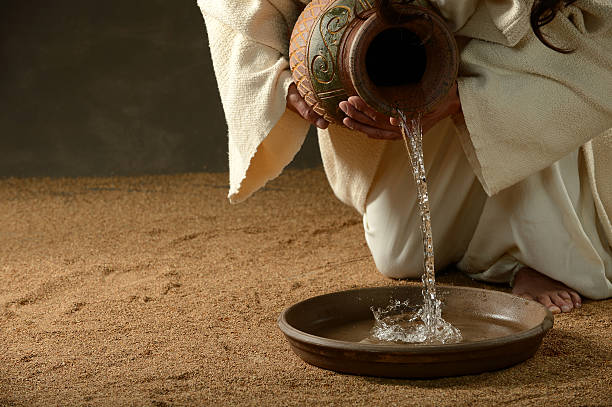
Photo from freebibleimages.org
Like last Sunday, let us just focus at the beginning of this long, beautiful story with many details still relevant to our own time like the apostles asking Jesus who’s to be blamed for the man being born blind, himself or his parents? Jesus clearly tells us how we must stop our blaming game and start believing and trusting God who makes himself visible even in unfortunate circumstances.
In the story of Jesus with the Samaritan woman, St. John revealed to us how God would come to our lives at “noontime” when we are hot or in the heat of our worldly pursuits including sins; in this healing of the man born blind, we are shown how God through Jesus comes to us right in our most sorry plight in life, when we are in darkness. See how so disadvantaged is that man born blind who not only had no sight but practically a nobody as he had nothing in life, begging for food and money in order to live.
And that is when Jesus Christ comes to us, when we are nothing and practically down in the dumps.
Photo from freebibleimages.org
And here the story gets better. In the original Greek text, we find that “he was blind from his genesis” which has double meaning of both birth and creation. In using the term genesis, St. John is telling us that Jesus is not someone who had come to bring back the world to its original set up before the Fall of our first parents by destroying earth.
Jesus came not to destroy earth and us to start anew but to restore us to our original status of blessedness by being like us so we could be like him. Here in this instance, Jesus created a new beginning for the man when he touched the man’s eyes with mud and having him wash in the waters of Siloam which mean the “Sent One”. We are reminded how Adam the first man was formed from the dust of the earth as Ash Wednesday would always tell us at the start of Lent.
In Genesis, after forming man from dust, God breathed on Adam and he became alive.
Photo from freebibleimages.org
In today’s gospel, Jesus spat on the mud and “smeared the clay on his eyes” to show the process of new creation. Spitting is Jesus infusing himself on the mud or earth that was put on the eyes of the man born blind. He then instructed the man to “Go wash in the Pool of Siloam – which means Sent” (Jn.9:7), a complete reference to him too as the Christ or the Messiah long awaited.
Clearly in this scene we find the sign of water like last Sunday, an image of the Sacrament of Baptism where we are all re-created into new persons in Jesus Christ who is himself the water who cleanses us of our sins and impurities, re-creating us into new persons with unlimited possibilities and chances in life because of our union with God.
The healing of the man born blind was his salvation, his being saved through his union with God in Jesus Christ.
The man born blind represents us all who need cleansing by Jesus Christ. Everyday, Jesus comes to us in our lowest points in life, when we are so sick and weak, when we are losing all hopes and inspiration in life, when we are lost and defeated, when we are deep into sin. Jesus gives us himself as our saving gift.
But it is just the beginning.
See how the man born blind did not have his sight right away with Jesus putting mud on his eyes; it happened after obeying the Lord’s instruction to wash himself in Siloam. We have to cooperate with Jesus Christ like the man born blind.
Recall how Jesus reminded Peter on Holy Thursday of the need for him to wash his feet in order to have “inheritance with me” (Jn.13:8). We have been washed and cleansed by Jesus in our Baptism which is perfected in our celebration of the Holy Eucharist he established on Holy Thursday. The more we immerse ourselves in Jesus in the Eucharist, the more we are cleansed, the more we have faith in him, enabling us to see clearer not just have sights of things before us but its meanings in the light of Christ.
We need to go back to Jesus in the Eucharist to be washed clean, especially our eyes to be able to see clearly.
How funny if you have entirely read this story of how the people could not believe with their eyes what they saw after the man born blind was healed by Jesus. They could not agree among themselves they have to consult their authorities, the Pharisees to verify if he was really the man born blind who was healed; but, when summoned the Pharisees questioned the man, they too refused to believe him, even insulted him. The worst part of the story was when the parents of the man born blind were called to verify if he was really their son who was born blind and now can see. Unfortunately, the parents refused to vouch for him, insisting they ask him personally for he was old enough to speak.
There are times in our lives that we could be left alone standing for Jesus Christ for what is true, what is right, what is just, and what is good because it is only us who could see everything clearly like that man born blind after his healing. That is why, it is not enough to have sights only but also insight to see the meaning of things happening at present, as well as hindsight to see the meaning of the past and foresight to find its meaning in the future. We need faith in God in order to see beyond the surface and superficial, to see the deeper meaning of persons and events like what God told Samuel in anointing Jesse’s youngest son David to be Israel’s new king.
But the Lord said to Samuel: “Do not judge from his appearance or from his lofty stature, because I have rejected him. Not as man sees does God see, because man sees the appearance but the Lord looks into the heart.”
1 Samuel 16:7
To see things and events including persons, of finding Jesus working in the present moment (insight), in the past (hindsight) and the future (foresight) requires a lot of courage too to stand for Christ and his values of truth and justice, mercy and love, life and persons like that man born blind and later healed. Here we find American writer Helen Keller’s words ringing so truly, “The only thing worse than being blind is having sight but no vision.” Visionaries are people who dream with eyes wide opened, those who dare to see beyond because of their deep faith and conviction in their beliefs or whatever they held as true. Very much like our saints too who gave their lives for the sake of Jesus Christ.
Beginning this Sunday, let us heed St. Paul’s call for us to “Live as children of light”(Eph. 5:8) by following the light of Jesus Christ. Let us leave our blindness and darkness as well as shortsightedness by seeing to it we “Take no part in the fruitless works of darkness” (Eph. 5:11). Amen.Enjoy a blessed and insightful week ahead, everyone!
Photo by author, early morning rains at Katmon Nature Sanctuary & Beach Resort, Bgy. Binulusan, Infanta, Quezon (04 March 2023)
More than any other prophet, O Lord,
Hosea is the one who tells us most
of your immense love for us all;
his writing moves like a beautiful
love story so unbelievable
yet exists, so true.
After so many harsh words
against us your people for our
infidelity like prostitutes,
here at the last part of his book,
Hosea tells us to never lose hope
because you love us so much.
Moreover, dear God our Father,
what I like most in Hosea's writings
is how you yourself reveals to us
how we must approach you
like a teacher coaching us
for the best answers so we may pass
your final exam.
Thus says the Lord: Return, O Israel, to the Lord, your God, say to him, “Forgive us all iniquity, and receive what is good, that we may render as offerings the bullocks from our stalls
Hosea 14:2, 3
Please Lord, help us experience
your promises of "healing our defections,
loving us freely, becoming like dew
so we shall blossom like the lily,
our splendor be like the olive tree
and fragrance like the Lebanon cedar,
allowing us to dwell in your shade again
and raise grain, blossom like the vine,
and our fame be like the wine of Lebanon"
(cf. Hosea 14: 5-8).
Cast away our doubts of your love
and mercy for us, Father for as your Son
Jesus Christ had revealed, all the commandments
is summed in LOVE, your great love for us
as the very reason why we must love you
not because you need our love but
so that we can have more of your love
when we love.
May we love,
love,
and love!
Amen.
40 Shades of Lent by Fr. Nicanor F. Lalog II
Wednesday in the Third Week of Lent, 15 March 2023
Deuteronomy 4:1, 5-9 >> + << Matthew 5:17-19
Photo by author, La Mesa Eco-Park from Our Lady of Fatima University-QC, February 2023.
Thank you very much, O God
our loving Father for being
so close with us in a very personal manner,
giving us laws meant to lead us closer
to living with one another in peace
and harmony, and eventually
discover the beauty of love.
Jesus said to his disciples: “Do not think that I have come to abolish the law or the prophets. I have come not to abolish but to fulfill.”
Matthew 5:17
This season of Lent,
help us realize and discover
that the laws as expressions of justice
are the minimum requirements of love;
the fulfillment of laws is love
which is more than a special way of living
but itself the perfection of life
because when we truly love,
we go beyond the letters of the laws
and do more than what is required
that slowly we become a new person
in Jesus Christ.
Enable us, O Lord,
in fulfilling the laws
into love where we become more alive,
more real,
more personal
more perfect
like you.
Amen.
Lawiswis ng Salita ni P. Nicanor F. Lalog II, Ika-14 ng Marso 2023
Larawan kuha ng may-akda, Ikatlong Linggo ng Kuwaresma 2019.
Ang kuwento noong Linggo ng babaeng Samaritana at ni Hesus sa balon ni Jacob ay larawan ng buhay natin na hitik sa mga palatandaan napakayaman sa kahulugan.
Tayo ang Samaritana umiigib sa tuwina banga ay dala-dala upang sumalok ng tubig na papawi sa maraming nilulunggati nauuwi sa pagiging sawi; palaging ubos, hindi sumapat upang maampat pagbuhos at pagtapon ng inigib na tubig upang matighaw maraming pagka-uhaw; palibhasa laman nitong ating banga ay mga kasalanan kaya sa katanghaliang-tapat tayo ma'y sumasalok gaya ng Samaritana upang ikubli sa mga mata ng iba ating pagkakasala.
O kay ganda marahil
katulad ng Samaritana
matagpuan sa katanghaliang
tapat itong si Hesus
pagod at naghihintay
sa ating pagdating
upang tayo ang kanyang
painumin ng mga salitang
nagbibigay buhay
at tunay na tumitighaw
sa lahat ng ating pagka-uhaw;
panalok ng Panginoon
ay sariling buhay
sa atin ay ibinigay
doon sa Krus nang
kanyang ipahayag
siya man ay nauuhaw,
isang magnanakaw
kasama niyang nakabayubay
doon din sa krus
sa kanya ay nakiinom
sa Paraiso humantong!
Itong balon ni Jacob
paalala ng matandang tipan
binigyang kaganapan ni Hesus
nang ipako siya sa krus
noon ding katanghaliang tapat
ng Biyernes Santo;
sa kanyang pagkabayubay
at pagkamatay sa krus
siya ang naging balon
at panalok ng tubig
na nagbibigay-buhay
dito na sa ating puso at
kalooban bumabalong;
kung sa bawat pagkakataon
tayo ay tutugon
sa kanya doon sa balon,
atin ding mararanasan
at malalaman na sadyang higit
at di malirip ang tubig niyang bigay
sinalok ng sariling buhay
upang tayo ay makapamuhay
ng walang hanggan! Amen.
40 Shades of Lent by Fr. Nicanor F. Lalog II
Tuesday in the Third Week of Lent, 14 March 2023
Daniel 3:25, 34-43 >>> + <<< Matthew 18:21-35
Photo by author, sunrise at Katmon Nature Sanctuary & Beach Resort, Bgy. Binulusan, Infanta, Quezon, 04 March 2023.
God our Father,
grant me the grace of sincerity
to pray like Azariah whom you
spared from death along with
Shadrach and Meschach in the fiery
furnace of King Nebuchadnezzar;
not even their clothes were singed
by the intense heat that burned to death
their executioners!
Teach me to be sincere
like Azariah who prayed to you while
walking into the furnace with his
companions, telling you one of the
most beautiful prayers in the Bible
we too pray in our Sunday Lauds:
“For we are reduced, O Lord, beyond any other nation, brought low everywhere in the world this day because of our sins. We have in our day no prince, no prophets, or leader, no burnt offering, sacrifice, oblation, or incense, no place to offer first fruits, to find favor with you. But with contrite heart and humble spirit let us be received. Do not let us be put to shame, but deal with us in your kindness and great mercy. Deliver us by your wonders, and bring glory to your name, O Lord.”
Daniel 3:37-39, 42-43
Yes, dear God,
there is no need,
not even necessary,
for us to do anything
"to win your favor"
to grant our prayers except
that we be sincere before you,
that is, to be true and humble,
putting ourselves into your hands
completely that you would take care
of us like Azariah and companions.
Many times, O God,
we can't be like you and be
forgiving as a Father to those
who have wronged us because
we ourselves are not true,
lacking sincerity in begging
your mercy and forgiveness;
many times we doubt your
mercy and forgiveness
that often we act like
the unforgiving servant
in Jesus Christ's parable.
Amen.
Lawiswis ng Salita ni P. Nicanor F. Lalog II, Ika-13 ng Marso 2023
Larawan kuha ng may-akda sa ilang ng Jordan, Mayo 2019.
Apatnapung araw
nag-ayuno si Kristo
tinukso ng diyablo sa ilang:
“Kung ikaw ang Anak ng Diyos,
Gawin mong tinapay itong bato.”
Bagaman kanyang tiyan
ay walang laman,
hindi nalito si Kristo
sa tukso ng diyablo
naging matibay
tulad ng bato
na buhay ng tao
di nakasalalay
sa tinapay
kungdi sa
Salita ng Diyos
na tunay
nating buhay at gabay.
Dapat nating pakatandaan
na hindi sapat
at lalong di dapat
mapuno tayong lagi
at mabusog
ng mga bagay ng mundo
dahil sa maraming pagkakataon
tayo ay nababaon sa
balon ng pagkagumon
kung laging mayroon tayo;
sa pag-aayuno
tayo napapanuto
tumitibay ating pagkatao
tuwing nasasaid
ating kalooban
nawawalang ng laman
nagkakapuwang sa Diyos
na tangi nating yaman!
Nguni't mayroon pang isang anyo
itong pag-aayuno
higit pang matindi
sa pagkagutom
na madaling tiisin
kesa pagka-uhaw
na nanunuot
sa kaibuturan
ng ating katawan
hindi maaring ipagpaliban
gagawa at gagawa
ng paraan
upang matighaw
panunuyo ng labi
at lalamunan
madampian
kahit tilamsikan
ng konting kaginhawahan!
Maraming uri ating
pagka-uhaw:
pagka-uhaw ng laman
at sa laman
nahahayag
sa kayamanan,
kapangyarihan,
at katanyagan
na pawang mga anyo lamang
ng iisa nating pagka-uhaw
sa Diyos at Kanyang pag-ibig
sana sa atin may pumansin
at kung maari
tayo ay kalingain,
intindihin,
at patawarin,
mga lihim nating mithiin,
inaasam, hinihiling.
Kay sarap namnamin
paanong si Hesus
ating Diyos at Panginoon
nag-ayuno upang
magutom at
mauhaw din
tulad natin
upang ipadama
pag-ibig Niya
sa atin; Siya lamang
ang pagkaing bubusog
sa atin
at inuming titighaw
sa pagka-uhaw natin
kaya pagsikapang
Siya ay tanggapin
at panatilihim sa
kalooban natin!
40 Shades of Lent by Fr. Nicanor F. Lalog II
Monday in the Third Week of Lent, 13 March 2023
2 Kings 5:1-15 >>> + <<< Luke 4:24-30
Photo by author, Tagaytay City, 07 February 2023.
Praise and glory to you,
God our loving Father
on this first working day of Monday
in the third week of Lent!
Teach me to be simple,
teach me to simply
follow my "thirst for you,
my soul's longing for you
to behold your face, O God"
(Psalm 42:3).
How wonderful and amazing
that you used, dear God,
simple people in the healing
of Naaman the Syrian army general:
first was the servant of Naaman's wife,
a little girl captured after their
victory over Israel in a battle who
informed her mistress, "If only my master
would present himself to the prophet in Samaria,
he would cure him of his leprosy"
(2 Kings 5:3);
second were Naaman's servants
who pleaded with him to obey
Prophet Elisha's instruction to wash
himself seven times in Jordan for his
skin be cleansed of leprosy
(2 Kings 5:13).
But the servants came up and reasoned with him. “My father,” they said, “if the prophet had told you to do something extraordinary, would you not have done it? All the more now, since he said to you, ‘Wash and be clean’ should you do as he said.” So Naaman went down and plunged into the Jordan seven times at the word of the man of God. His flesh became again like the flesh of a little child, and he was clean.
2 Kings 5:13-14
Many times, O God,
we forget that you are perfect
because you are simple;
many times, we humans
prefer to do things
that are complicated,
that are difficult to show our
greatness and prowess,
not realizing your power
lies in weakness and lowliness;
deepen our faith in you,
teach us to learn submission
and obedience to you like
your Son Jesus Christ our Lord
to effect change in ourselves,
in our lives,
and in the world.
Amen.
40 Shades of Lent by Fr. Nicanor F. Lalog II
Third Sunday in Lent-A, 12 March 2023
Exodus 17:3-7 + Romans 5:1-2, 5-8 + John 4:5-15, 39, 40-42
Photo by author, Taiwan, January 2019.
Thirst for water is something more intense for us humans than hunger for food. Thirst is something too strong we could feel affecting us deep down to the most remote and minutest parts of our body unlike hunger that is localized in the stomach area. Thirst moves us to search for water, even sending us to scamper even for droplets of water to quench our thirst unlike hunger we often dismiss by sleeping in the hopes of forgetting it, even overcoming it.
But not our thirst for water, something we would always quench by all means.
That is why, thirst would always mean more than physical but also something deeper that concerns our very soul and being. This is the beautiful meaning of our gospel this Sunday – from the wilderness of temptations to the summit of a high mountain of his transfiguration – we now join Jesus into a Samaritan town for some water after a very tiring journey on his way to Jerusalem to fulfill his mission. Here we also find Jesus thirsting for us humans, sinners as we are, like on the Cross at Good Friday.
Jesus came to a town of Samaria called Sychar, near the plot of land that Jacob had given to his son Joseph. Jacob’s well was there. Jesus, tired from his journey, sat down there at the well. It was about noon. A woman of Samaria came to draw water. Jesus said to her, “Give me a drink.” His disciples had gone into the town to buy food. The Samaritan woman said to him, “How can you, a Jew, ask me, a Samaritan woman, for a drink?” – For Jews use nothing in common with Samaritans. – Jesus answered and said to her, “If you knew the gift of God and who is saying to you ‘Give me a drink,’ you would have asked him and he would have given you living water.”
John 4:5-10
Photo by author, an old well somewhere in the desert of Egypt, May 2019.
There are a lot of interesting details in this opening lines of this long story of Jesus with the Samaritan woman. Very notable is Jesus coming into a Samaritan town and talking to a woman that are both a big no, no for Jews at that time as the evangelist explained in verse 9, – For Jews use nothing in common with Samaritans.
It is very clear that what we have here is more than a geographical setting but a revelation of God’s immense love (and thirst) sending Jesus for us all especially the sinners and those neglected by the society, living in the margins like women and children, the poor and the elderly.
That Samaritan woman symbolizes us whom Jesus searches to return home to the Father.
Notice that Jesus comes to the well at the hottest time of the day, at noon when the Samaritan woman would come to draw water. Why? Because as we have seen in the story, the woman was a sinner, living with her sixth “husband” as pointed out to her by Jesus himself. She drew water at that time when no one was at the well to avoid the Marites of the town who would always feast with gossips about her scandalous lifestyle!
Is it not the same with us too? Jesus comes to us right in the heat of our sinfulness, of our infidelities, of our cheating, of our unkindness and unforgiving? It is when we are hot in sin when Jesus comes thirsting for us, inviting us to return to him. And too often, he works wonders to win us over, even sometimes allowing us to feel like the Samaritan as so special in doing him a favor.
A woman of Samaria came to draw water. Jesus said to her, “Give me a drink.” His disciples had gone into the town to buy food. The Samaritan woman said to him, “How can you, a Jew, ask me, a Samaritan woman, for a drink?”
John 4:7-9
Photo by author, Third Week of Lent 2019, Parokya ni San Juan Apostol at Ebanghelista, Bagbaguin, Sta. Maria, Bulacan.
Here we find Jesus working subtly, even playing by our games while we are in the heat of our sins and other pursuits in life when he would ask us favors, namely, asking for a drink.
In response, the Samaritan woman opens herself to a dialogue with Jesus rather than outrightly dismissing him as a nuisance. She felt that in giving Jesus a drink, she would do him a favor when in fact, as we have seen later, it was the Lord who did her the most favor as we shall see too on the Cross at Good Friday especially with Dimas.
Are we not like this Samaritan woman when we are in the heat of our sinfulness with our bloated ego that we even dare think of doing God a favor by entering into a dialogue until suddenly, for good reasons, we are swept off in our feet, finding ourselves in his merciful and loving arms?
Like the Samaritan woman, in opening to Jesus to a dialogue when we are in the noontime of our sinfulness or simple ordinariness, that is also when we allow the Lord to do us a great favor.
That is why I always tell people to give us priests a chance to do something good, never to compensate our services and ministry with remunerations. Very often, people say they feel so blessed with our ministry and presence but the truth is, we priests are the ones more blessed when we are able to selflessly serve you our flock!
This I have always felt in hearing confessions and anointing the sick especially since last year as a chaplain at the Fatima University Medical Center here in Valenzuela City. I have instructed our nurses to always insist to the family of patients to never give me anything after visiting their sick. They do not realize the tremendous grace and blessings I experience when I visit the sick, hear their confessions and anoint them with oil. Even when patients die, because as my former Parish Priest Fr. Ersando used to tell me as a young priest 24 years ago, confessing and absolving the sins of the dying and anointing them with holy oil are the most meritorious acts of a priest in preparing the faithful in meeting God our Father. This I have experienced so true in the recent death of Msgr. Teng Manlapig whom I have shared last week.
Many times in our lives, it is through the many “inconveniences” we experience that Jesus comes to invite us to open ourselves to receive his abundant graces and blessings not necessarily material in nature. God is never outdone in generosity and everything is pure grace in him because we are always blessed with more than we give when we offer him the gift of our self to do his will.
Remember always Jesus Christ’s words to the Samaritan woman at the well which are the same words he tells us especially when we are hot in our personal pursuits in life, “If you knew the gift of God and who is saying to you ‘Give me a drink,’ you would have asked him and he would have given you living water.”
In the first reading we have heard how “In those days, in their thirst for water, the people grumbled against Moses” (Ex. 17:3), quarreling among themselves and testing God.
How sad that until now, we grumble and quarrel and test God because of our many thirsts for things and pleasures we thought would complete us. Sometimes we feel as if God owes us so much that we feel so entitled in this life, deserving all the good things without realizing how God knows us so well, even the sins we hide most. We keep on thirsting and desiring so many other things when it is only God whom we must desire first of all, actually desire and thirst most all like the deer that yearns for streams of running water (Ps. 42:2).
Photo courtesy of Rev. Fr. Herbert Bacani, 2023.
One of my favorite churches of all time is the Sta. Cruz in Manila. It is one of the most beautiful churches that has remained unchanged, never altered. As a child more than 50 years ago until now, I am still fascinated by its sanctuary of a painting or a mosaic of Jesus Christ the lamb slain and offered as sacrifice whose blood is like the waters of a spring flowing into us through the Blessed Sacrament.
Notice that this story of Jesus with the Samaritan woman comes after his meeting with the Pharisee named Nicodemus at night where the Lord first discussed the symbolism and importance of being born again in water of Baptism and the Spirit to become a new person in him. This time at Jacob’s well Jesus promised the Samaritan woman water that becomes in the one who drinks it a source springing up into eternal life so that whoever drinks it will never be thirsty again.
This has become possible because Jesus “died for us while we were still sinners” (Rom. 5:8) on the Cross when he said again, “I thirst” (Jn. 19:28-29)!
May we continue to thirst for God by entering into dialogue with Jesus especially when he comes to us, also thirsty, asking us for some small favors from us in order to gift us with his bigger favors we have never imagined. Amen.
40 Shades of Lent by Fr. Nicanor F. Lalog II
Friday in the Second Week of Lent, 10 March 2023
Genesis 37:3-4, 12-13, 17-28 >> +++ << Matthew 21:33-43, 45-46
Photo by author, sunrise at Katmon Nature Sanctuary & Beach Resort, Infanta, Quezon, 04 March 2023.
Today O God you speak to us
of the most lovely virtue of kindness
which is more than being good to another
but precisely of treating others as a "kin"
or a kindred; being "kind" is the most
Christian word because it refers to our
being one big family in you our Father
with each one a brother and a sister in
Jesus Christ.
How sad we have become more
unkind than ever, just like the sons of
Jacob, the brothers of Joseph:
They said to one another:
“Here comes the master dreamer!
Come on, let us kill him and throw him
into one of the cisterns here;
we could say that a wild beast devoured him.
We shall then see what comes of his dreams
(Gen.37:19-20).”
From petty jealousies among us,
our being unkind deteriorate further
into sinister plots right in our hearts
to destroy our own loved ones,
those closest to us; worst of all,
it happens in the midst of us recognizing
them as "our own flesh" like Judah
and yet still "sell" them!
Forgive us, dear Jesus, for being so unkind:
“when the tenants saw the son,
they said to one another,
‘This is the heir. Come, let us kill him
and acquire his inheritance.’
They seized him,
threw him out of the vineyard,
and killed him (Mt.21:38-39).”
Our responsorial psalm captures
the reason why we must always be kind,
“Remember the marvels the Lord has done.”
Let us heed your warning against being unkind,
“When the Lord called down a famine
on the land and ruined the crop
that sustained them,
he sent a man before them,
Joseph, sold as a slave
(Ps.105:16-17).”
Teach us to be kind with everyone because
"the stone that the builders rejected
has become the cornerstone;
by the Lord has this been done,
and it is wonderful in our eyes" (Mt.21:42);
This season of Lent,
let us bring back kindness in our hearts,
in our words,
in our thoughts
and in our deeds
even if others are not kind to us
because very often,
kindness has a way of teaching us
the importance of this virtue
that may not always be kind at all.
Amen.