God. Simply present, always here.

The Lord Is My Chef Sunday Recipe for the Soul by Fr. Nicanor F. Lalog II
Solemnity of the Body and Blood of Jesus Christ, 06 June 2021
Exodus 24:3-8  ><}}}'>  Hebrews 9:11-15  ><}}}'>  Mark 14:12-16, 22-26 
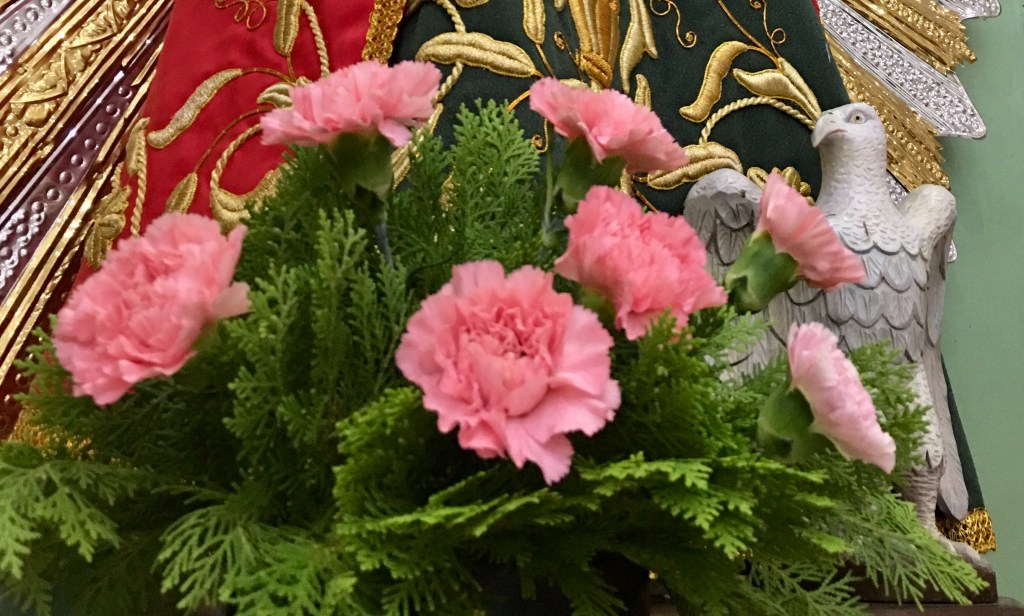
Photo by Fr. Pop Dela Cruz, Binuangan Is., Obando, Bulacan, May 2021.

The one most important thing this pandemic has cost us for over a year now is the simple joy of presence of our loved ones. For more than a year, we have stopped or limited our visits and celebrations with relatives and friends for fears of spreading the virus especially to our older folks.

It has become so insane for many of us, most especially with those health protocols when even couples were prevented from riding together in bikes!

But at least, the pandemic had taught us the value and importance of presence of everyone, of being present to those we love who, unfortunately, many have also died this year due to the virus and other sickness without us even seeing them at all.

This is the gist of our celebration today, of the Solemnity of the Body and Blood of Jesus Christ: the simplicity of God and his simple presence among us.

For the second Sunday in a row after the Pentecost, we celebrate another major feast of the Lord in Ordinary Time to show us that our God is a reality, not just a mystery of the Trinity that we cannot fully understand nor explain.


When Jesus Christ said 
"this is my body" and "this is my blood of the covenant", 
he brought to new significance 
the insignificant gestures of hosting a meal 
and the insignificant food of bread and wine 
so common among peoples in every nation and culture. 

Photo by author, 2018.

The simplicity of God.

Last Sunday we celebrated and reflected on the central mystery of our one God in three Persons called the Holy Trinity. Today we celebrate his meaning and reality as a person, a God who relates with us in the most personal manner with his presence.

Recall our basic catechism of God being perfect – all knowing, all powerful, and always present because of his main attribute: his simplicity.

In our world that has become so complicated like our Facebook relationships or with all those gadgets and apps we have including our “intelligent” cars and homes, God remains so true, so real, so present with us because he is simple. No fuss, no nothing. Just pure presence among those who are willing to be still and simple. And present in the moment.

The disciples then went off, entered the city, and found it just as he had told them; and they prepared the Passover. While they were eating, he took bread, said the blessing, broke it, and gave it to them, and said, “Take it; this is my body.” Then he took a cup, gave thanks, and gave it to them, “This is my blood of the covenant, which will be shed for many.”

Mark 14:16, 22-24

See the simplicity of the story, the simplicity of Jesus Christ who took the initiative to prepare everything for their Passover meal that his disciples “found it just as he had told them”.

When Jesus Christ said “this is my body” and “this is my blood of the covenant”, he brought to new significance the insignificant gestures of hosting a meal and the insignificant food of bread and wine so common among peoples in every nation and culture.

During their supper, Jesus gave a new meaning not only to their Passover meal but even to our most basic and common act of having a meal, of eating together to become a celebration of life, not just to feed one’s body but also one’s soul!

In becoming human like us, sharing in all of our experiences except sin, Jesus leveled up our very being and lives at his Last Supper when he established the Sacrament of the Holy Eucharist to be the everlasting sign of his loving presence among us and thus, revealed to us the deeper meaning of the common meal we used to take with everybody as a giving and sharing of our very selves with others.

Brothers and sisters: When Christ came as high priest of the good things that have come to be, passing through the greater and more perfect tabernacle not made by human hands… he entered once for all into the sanctuary, not with the blood of goats and calves but with his won blood, thus obtaining eternal redemption… cleanse our consciences from dead works to worship the living God.

Hebrews 9:11, 12, 14

Like Jesus Christ, it is not really the food and drinks that we share whenever we eat together and dine with others but our very selves. No wonder, in every celebration and milestone of our lives, from a simple date of a young man and woman trying to get to know each other to weddings, birthdays, and other significant occasions, there is always a meal we host to share our joys, our triumphs, our lives with others.

And the most beautiful part of these meals we share with everyone is the deeper meaning we convey that it is essentially a thanksgiving to God for all of his abounding love and grace poured upon us which is the meaning of the Greek word “eucharistia”.

Photo by Pixabay on Pexels.com

Our presence in the Lord with others

The word present, of being here now, is the other word we use to refer to “gift” like when we say birthday present or Christmas present. And that is the meaning of this Solemnity of the Lord’s Body and Blood: God as the gift and the giver in Jesus Christ.

In the Holy Eucharist, we receive Jesus Christ wholly, nourishing us, blessing us, and most of all, enabling us to offer also ourselves to him through others.

But, are we present to him?

Are we willing to give ourselves to him?

From the very start since God entered into a covenant with his chosen people, he had shown his simple presence demanding nothing except our simple presence too to him and with others. This is the meaning of the offering of blood which symbolizes life, our sharing in the life of God.

But unlike the pagans, we offer our selves to God not to lose but to transformed our lives in him. With Christ’s self-sacrifice on the Cross on Good Friday foreshadowed by his Last Supper on Holy Thursday, we discover how life given to God is not lost but saved which is the meaning of the ratification by Moses of the covenant in the wilderness with the Israelites:

Taking the book of the covenant, Moses read it aloud to the people, who answered, “All that the Lord has said, we will heed and do.” Then he took the blood and sprinkled it on the people, saying, “This is the blood of the covenant that the Lord has made with you in accordance with all these words of life.”

Exodus 24:7-8

Every time we celebrate the Holy Mass, we ratify the new covenant of Christ with us, when we give our great “Amen” to him like the Israelites at the desert, vowing to “heed and do” whatever he told us. That is also the meaning of attending a party or a dinner hosted by a relative or a friend: we renew our ties with them, promising to be there to give ourselves to them especially in times of need and danger.

But, how willing are we to remain true and faithful, always present to God, our family and friends especially in this time of the pandemic?

What a tragedy that while celebrating the Sunday Eucharist, we turn away from God in our sins in the same manner we turn against those people we share meal with and attended parties they hosted.


Let us be still 
in the calming presence of God 
in Jesus Christ's Body and Blood.  
He is more than enough 
to suffice all our needs and longing in this life.  
Like the bread and wine, 
we can all be transformed 
into his Body and Blood 
to be a present to others.

In celebrating this Solemnity of the Lord’s Body and Blood on this second Sunday of Ordinary Time, we are challenged in our faith and conviction of truly being present like Jesus before him and with others in our daily life especially in this time of the pandemic with so many in great need of basic necessities.

Like the Lord Jesus Christ, do we take the time and effort to prepare for every Sunday Mass celebration as he prepared their Passover meal?

Jesus is not asking us to be particular with the details. All we need is the essential: our very presence with the Lord. Simply be our selves: no need to fake anything, to be somebody else because Jesus loves us as we are.

It is good to remember on this Solemnity too how take simplicity for granted as being bare, without much fanfare and even spectacle as we always want something to feast our eyes on like what we have done to many of our rites and rituals. We are never contented that less is always more that many times, our religious celebrations have become banal in nature with all the pomp and pageantry we have added like to our processions. Instead of turning to God, our attentions had turned into our very selves, clearly a case of “triumphalism” when we “exaggerate” even spiritual activities.

Let us be still in the calming presence of God in Jesus Christ’s Body and Blood. He is more than enough to suffice all our needs and longing in this life. Like the bread and wine, we can all be transformed into his Body and Blood to be a present to others. Amen.

Photo by Fr. Pop Dela Cruz at Binuangan Is., Obando, Bulacan, May 2021.

This God who connects us

The Lord Is My Chef Sunday Recipe for the Soul by Fr. Nicanor F. Lalog II
Solemnity of the Holy Trinity-B, 30 May 2021
Deuteronomy 4:32-34, 39-40 ><}}}'> Romans 8:14-17 ><}}}'> Matthew 28:16-20 
From Pinterest.com

If there is anything most difficult and frustrating next to COVID-19 these days, it must be having your internet going “off line” as you lose “connections” with family and friends – and NETFLIX – while isolated in your home due to the pandemic. Making it worst is when it happens on a Saturday evening with no one to even answer your calls at the supposed to be 24/7 hotlines of internet providers that we were flooded with complaints and queries as we could not air our online Masses last Sunday.

As we went back to “stone age” without any internet signal for almost a week, I realized some beautiful things this modern lifestyle we all enjoy with a lot of great patience courtesy of our unreliable telcos. See the terms we use these days that speak of our modern life but at the same time reveal to us something so ancient, so true, and so basic that we take for granted or even disregard – GOD.


Unlike the internet that can be cut off for many reasons, 
our connection with God is permanent --- 
upgraded to the highest level more than 2000 years ago 
in the coming of Jesus Christ and the sending of the Holy Spirit!

God is the original internet, the very first Wi-Fi! He cannot be seen but can be strongly felt. Most of all, God is always around, never goes off line. All we need is make the effort to connect. He has created the whole world and universe as his “Wi-Fi Zone” where we are all interconnected in time and space that we can go back to our past and be healed in him or look into the future and be assured with all of his support.

Unlike the internet that can be cut off for many reasons, our connection with God is permanent — upgraded to the highest level more than 2000 years ago in the coming of Jesus Christ and the sending of the Holy Spirit!

It is in this light that I wish to invite you to join me in reflecting the Solemnity of the Holy Trinity we are celebrating on this first Sunday of the resumption of Ordinary Time.

From shutterstock.com via Aletheia.com

God in our midst

The challenge is not to explain fully 
the mystery of the Trinity, 
of the three Persons in one God 
but how we make that mystery 
a living reality in us and among us.

Before the people of the Bible reflected and wrote about the origins of the world and the universe, they were first preoccupied with their long experience with God. They have felt and have wondered how somebody bigger than them, more powerful yet so loving and caring related with them in a personal way in the many events of their lives employing various signs and wonders that instilled the whole spectrum of feelings like joy and fear, guilt and thanksgiving, commitment and love, and all the other emotions we also go through in our own experiences of him!

And that is the most amazing about his total mystery: we cannot fully know and understand God but we know deep inside us he is true, he is real, he exists. We can prove beyond doubt his very existence and use so many illustrations to explain him but will never be enough.

What matters most is that we “know” him, that he is real, that he is true.

To know in the Jewish thought is not only an intellectual assent but more of a relationship: to know a person is to have a relationship with that person. Hence, every knowledge and recognition of God implies a lifelong commitment and relationship with him!

Moses said to the people: “Ask now of the days of old, before your time, ever since God created man upon the earth; ask from one end of the sky to the other: Did anything so great ever happen before? Was it ever heard of? Did a people ever hear the voice of God speaking from the midst of fire, as you did, and live? This is why you must now know, and fix in your heart, that the Lord is God in the heavens above and on earth below, and that there is no other”

Deuteronomy 4:32-33, 39

Beyond doubt, God is always present, the perfect present in fact as he told Moses at the burning bush, “I Am Who Am” (Ex.3:14) that to say the very word GOD means he exists, a foolishness to claim that “there is no god” (Ps.14:1).

We have come to know him in our many experiences, giving us a sense of “belonging”, of being linked and interconnected like Wi-Fi that we do not see and for all we know, has always been there present in the airwaves, in the atmosphere tapped only recently through our modern communications technology.

The challenge is not to explain fully the mystery of the Trinity, of the three Persons in one God but how we make that mystery a living reality in us and among us.

Photo from kimaldrich.com

To be wrapped by – not to grasp – the mystery

Unlike the internet signals we have discovered only lately in history, God as a reality revealed himself to us in his relationships in the past, reaching its highest point in Christ’s coming that was affirmed and enlightened to the Apostles at the coming of the Holy Spirit at Pentecost in Jerusalem which continues to our time.

For this Sunday, we use the majestic conclusion of the Gospel according to St. Matthew that has a very strong Trinitarian flavor with the Lord’s command before ascending into heaven.

The eleven disciples went to Galilee, to the mountain to which Jesus had ordered them. When they saw him, they worshipped, but they doubted. Then Jesus approached, and said to them, “All power in heaven and on earth has been given to me. Go, therefore, and make disciples of all nations, baptizing them in the name of the Father, and of the Son, and of the Holy Spirit, teaching them to observe all that I have commanded you.”

Matthew 28:16-20

Last Thursday after Pentecost we celebrated the new Feast of Jesus Christ, the Eternal Priest to remind us of our sharing in the priestly ministry of Jesus when we were baptized. That is, to adore, honor, praise and thank the supreme majesty of God in our prayers. We see this exercise of our common priesthood in Christ in this gospel we have heard: the disciples went to a mountain in Galilee as ordered by Jesus. The mountain indicates the presence of God, conveying a message of praying and coming to him.

The Sign of the Cross is essentially an ascent to a mountain, a prayer in itself to God in the Holy Trinity. When we make the Sign of the Cross, we become the embodiment of God’s mysterious threeness of persons in one God. We affirm his reality as we enter into his mystery of the Trinity by fulfilling Christ’s triple mission given to the apostles.

“Go, therefore, and make disciples of all nations.” To truly experience the mystery of the Trinity is to lose one’s self in Christ as his disciple. In his teachings and very life, Jesus had shown us the importance of forgetting one’s self as his follower, of becoming like a child that whoever wants to be the greatest must be the least and servant of all. The mystery of God is not something we grasp but something we allow to envelop us to be covered with his transcendence in order share in Christ’s Passion, Death, and Resurrection. Remember that it is not difficult to find God who reveals himself to those truly seeking him by following Jesus on the Cross.

“Baptize them in the name of the Father, and of the Son, and of the Holy Spirit.” We have seen how since the start of the Church after Pentecost, baptism has been conferred to those who welcomed the Gospel of salvation from Jesus Christ. Through him, with him, and in him, every baptized person is born into God’s life in his Holy Trinity as beloved children of the Father and coheirs of his kingdom in heaven, as brothers and sisters in Jesus Christ, and as the indwelling of the Holy Spirit. Thus, we become a holy people to God, one again in him as he had deemed since the beginning that was fulfilled in Jesus our Eternal High Priest at the last supper and Good Friday.

“Teach them to observe all I have commanded you.” St. Matthew has been very particular in this aspect in his entire gospel account, of the need to put into practice the Lord’s teachings. It is not enough that people are baptized, that they welcome in faith Christ’s commandment to love: they have to live it up! That is when the Trinity becomes so real and true in us when we live in love, when we are willing to give ourselves in love for others.


In this world that has become so highly sophisticated and complicated as well, when what matters most are fame and popularity, connections that do not last at all, always erratic, never contented with what is most essential like value of persons and life, it is no wonder that even God is slowly being removed from the daily equation of life.

Photo by author, Bangui Windmill, Ilocos Norte, 2011.

This is most especially true in this post-modern generation without absolutes, when anything goes as everything is relative; and worst, when something that cannot be proven as tangibly present and real, then the mystery of the Trinity is even pushed even to the back seats of our lives.

See how so many people are so ashamed of even doing the Sign of the Cross in public!

This solemnity of the Trinity that we celebrate on the first Sunday at the resumption of Ordinary Time reminds us of the daily coming of God into our lives, of his personal relationship with us that is being challenged strongly by the ways of the world that is opposite his ways of love and kindness, mercy and forgiveness, simplicity and humility.

Let us ask the help of the Holy Spirit to lead us as “children of God, not slaves” of the world’s selfish ways (Rom. 8:14-17) so we may maintain that strong connections in the Father through Jesus Christ. Amen.

A blessed first week of June 2021 to everyone!

True greatness in being small to become part of the whole

The Lord Is My Chef Sunday Recipe for the Soul by Fr. Nicanor F. Lalog II
Solemnity of the Pentecost, 23 May 2021
Acts 2:1-11  ><}}}*>  Galatians 5:16-25  ><}}}*>  John 15:26-27.16:12-15
Photo by Ms. Jo Villafuerte at Atok, Benguet, 2019.

Today we bring to completion our celebration of the Lord’s Paschal Mystery – his Passion, Death, and Resurrection, Ascension and Coming of the Holy Spirit to his disciples. Although this mystery is one single reality, we have stretched its celebration over a period of 50 days (hence, Pentecost) or more than seven weeks because it will never be enough to fully grasp its whole meaning for it is a continuing reality and mystery in our midst just like the Ascension last week.

Note the upward movement of the Ascension that calls us to “level up” our relationships with God and one another in Christ; today, the downward movement of the coming of the Holy Spirit calls us to being small in order for us to be broken and shared with others. Whenever there is a downward push, what happens usually is a breaking down into smaller parts to fuse with the larger whole like a mix.


...our greatness is in our sharing ourselves with others...  
It is in our becoming small to participate in the whole 
that we truly become great - 
whether in the Church or a community, 
in our personal relationships...

Jesus had taught us in his life and example especially on the Cross that our greatness is in our sharing ourselves with others like him. It is in our becoming small to participate in the whole that we truly become great – whether in the Church or a community, in our personal relationships like family and circle of friends and most especially in the union of man and woman as husband and wife in marriage.

That is why the Pentecost is called the birthday of the Church when the disciples after being filled with the Holy Spirit came out in the open to proclaim the Gospel of salvation in Jesus Christ. It was actually more of a “coming out party” of the Church that was established by Christ during his Last Supper.

See that since the very beginning, the Church started as a catholic – a whole – at the Last Supper of the Lord when he also instituted the Holy Eucharist that has become the sign of our unity from then on that enabled the disciples to recognize him at Easter at the breaking of bread.

Jesus promised them at the Last Supper how things would get clear to them when the Holy Spirit comes.

"When the Advocate comes whom I will send you
from the Father, the Spirit of truth that proceeds
from the Father, he will testify to me.  And you 
also testify... I have much more to tell you,
but you cannot bear it now.  But when he comes,
the Spirit of truth, he will guide you to all truth."
(John 15:26-27. 16:12-13)

Believing in the Holy Spirit, Believing in the Church

Every Sunday in the Mass we profess our faith, declaring “I believe in the Holy Spirit, the Holy Catholic Church” but, do we really understand its meaning? To believe in God is to believe in the Holy Catholic Church, to forget one’s own agenda in life, to submit ones self to her teachings from Christ our Lord and Master.

It is a declaration of the mystery and reality of the Pentecost, reminding us that becoming Christian means receiving and embracing the whole Church!

This is the beautiful meaning of the account by St. Luke at the first reading of the coming of the Holy Spirit on Pentecost at Jerusalem when all barriers – physical, emotional, intellectual, spiritual – were broken as the disciples went around speaking in various languages to proclaim the truth of Jesus Christ.

When the time of Pentecost was fulfilled,
they were all in one place together.
And suddenly there came from the sky a noise
like a strong driving wind, and it filled the entire house
in which they were.  Then there appeared to them
tongues of fire, which parted and came to rest
on each one of them.  And they were all filled 
with the Holy Spirit and began to speak in different tongues,
as the Spirit enabled them to proclaim.
(Acts 1:1-4)

Here we find the disciples of Jesus and their converts on that day of Pentecost allowing themselves to be taken up into the Church!

And how did this happen? St. Luke tells us “Then there appeared to them tongues of fire, which parted and came to rest on each one of them.” Each one was parted, was broken down from their sins and selfishness that they became open for each other, trying to understand and accept each one as brother and sister in Christ.

It was a reversal of the story of Babel in Genesis when people were so arrogant and proud building a tower that reaches to heaven who were punished to speak in different languages that led to their confusion and quarrel until they all perished along with their ambitious plan.

Pentecost was different. There were different languages, different peoples with different backgrounds yet they were united and understood each other because everybody tried to become small, to mix into the whole and thus becoming a part of the Church on that day.

Unless we are willing to be parted by the Holy Spirit’s “tongues of fire” and “strong driving wind” like a storm, we can never be filled with God and his holiness to experience his peace and his joy.

It is a lifelong process and that is why Pentecost is a daily reality, happening to us especially when we sometimes have to be shaken by so many events and circumstances that come our way.

In the second reading, we heard St. Paul reminding the Galatians, including us, to “live by the Spirit and not gratify the desire of the flesh” (Gal.5:16). At that time, some missionaries sowed confusion among the Galatians, telling them to follow Jewish practices and Mosaic prescriptions to be fully Christians like circumcision. The issue had long been settled at the Council of Jerusalem but some Jewish converts persisted.

Here, St. Paul teaches us a valuable lesson in resolving conflicts and confusions in daily life in the light of Jesus Christ, of salvation, of the Church. For St. Paul, we always have to ask the Holy Spirit in guiding us in everything, no matter how secular and mundane it may be to find the theological and spiritual implications of our experiences.

What he told the Galatians remains true to our days, that freedom is not the ability to do whatever we want but to choose and do what is good. Every person has that tendency to sin, an imperfection in the “flesh” that is always in contradiction with the “spirit”.

As we have mentioned earlier, our greatness lies in our ability to share and give ourselves to others by dying to our sins and selfish motives, precisely what St. Paul is telling us:

Now the works of the flesh are obvious: immorality, impurity, licentiousness, idolatry, sorcery, hatred, rivalry, jealousy, outbursts of fury, acts of selfishness, dissensions, factions, occasions of envy, drinking bouts, orgies, and the like.

Galatians 5:19-21

These are the things that the Holy Spirit “part” in us when it comes to us daily especially in our prayers and in the celebrations of the sacraments like the Holy Eucharist. Through the power of the Holy Spirit, we are unified as a person, we become whole and integrated that we see the value and importance of being one with God and with others. It is not longer the rituals that become the law guiding us but the interior law of love of Jesus Christ that enables us to get out of our selfishness to give ourselves in loving service to others.

When we live in the power of the Holy Spirit guided by this interior law of love, that is when we become truly free and experience the gifts and fruits mentioned by St. Paul like peace and joy.

In our world today marred by sin and so many divisions happening in our society and even in the Church, in our communities and right even in our families and personal relationships, let us pray today to the Holy Spirit to come to us, break down within us the many walls we have and lead us to surrender ourselves to God to be led by his hand in continuing the mission of love and mercy of our Lord Jesus Christ. Amen.

A blessed week ahead of everyone!

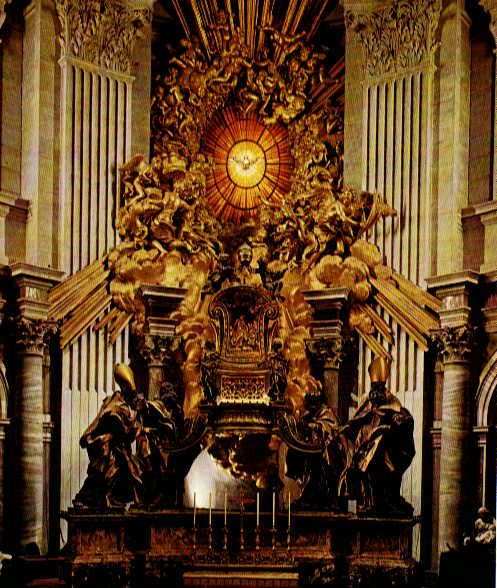
Photo of the stained glass with the Holy Spirit bringing light into the altar of St. Peter’s Basilica in Rome. Photo from wikipediacommons.org.

“Just Like Heaven” by The Cure (1987)

The Lord Is My Chef Sunday Music by Fr. Nick F. Lalog II, 16 May 2021
Photo by author at NLEX-Pampanga area, January 2020.

Happy Ascension Sunday!

After so many tries at other songs that speak of “heaven” in relation with our celebration today, I finally settled on The Cure’s “Just Like Heaven” as our featured Sunday music because first of all, they are one of my favorite bands.

Secondly, unlike the other songs that speak of heaven, The Cure’s Just Like Heaven is so unique: music is cool and crisp that is soothing and relaxing like most romantic songs. It speaks joyfully of the beautiful love between two people so in love with each other that turned out to be only a dream — because the reality is that they have parted ways!

“Show me, show me, show me how you do that trick
The one that makes me scream” she said
“The one that makes me laugh” she said
And threw her arms around my neck

Show me how you do it
And I promise you I promise that
I’ll run away with you

Spinning on that dizzy edge
I kissed her face and kissed her head
And dreamed of all the different ways I had
To make her glow
Why are you so far away, she said
Why won’t you ever know that I’m in love with you
That I’m in love with you

And so, you ask, where is heaven?

Remember our reflection last week about love that despite the pains and hurts of every break up and “LQ” is always the fact that we still love. The man in the song is still so in love that he keeps on dreaming her.

Here lies the deciding factor in our choosing Just Like Heaven for this Sunday’s music: The Cure’s lead singer and composer Robert Smith claims it is his most favorite song in all their music. He admitted in some interviews that composing Just Like Heaven was so different than the rest that he could not repeat. No wonder, a year after writing and recording this song in 1987, Smith married his girlfriend Mary Poole and since then, have lived together — just like heaven! (Mary is the woman who kissed Smith in this music video before waking up from is dream.)

For me, this song captures the meaning of the Lord’s Ascension: it is entering into a higher level of relationships with God through others in Jesus Christ that we have to work for. Heaven does not come on a silver platter; it is both a grace from God we have to strive for as The Cure imply in “Just Like Heaven” (https://lordmychef.com/2021/05/15/levelling-up-in-jesus/).

Have a blessed week and hope you work to deepen your relationships with more love and kindness, and doubling more of forgiving!

“Levelling up” in Jesus

The Lord Is My Chef Sunday Recipe for the Soul by Fr. Nicanor F. Lalog II
Solemnity of the Ascension of the Lord, Cycle B, 16 May 2021
Acts 1:1-11  ><}}}'>  Ephesians 4:1-13  ><}}}'>  Mark 16:15-20  
Photo by author, Egypt 2019.
So then the Lord Jesus,
after he spoke to them,
was taken up into heaven and 
took his seat at the right hand of God.
But they went forth
and preached everywhere,
while the Lord worked with them
and confirmed the word through
accompanying signs.
(Mark 16:19-20)

Thus we heard the closing of St. Mark’s gospel of Jesus Christ. We deliberately chose the word “closing” than “ending” because the Lord’s Ascension is more than an episode in his life but speaks to us of his mystery as the Christ continuing in our time.

The Lord’s Ascension is neither a location indicating heaven somewhere in outer space where Jesus “took his seat at the right hand of God” that we profess every Sunday in the Apostles’ Creed nor a direction of going up, leaving us all behind below here on earth.

If the Ascension were a location or a direction or both, it would mean separation. Then, how could St. Mark claim in his gospel account “the Lord worked with them” if Jesus had really gone to somewhere else?

There is something deeper with the Lord’s Ascension being a part of the mystery of Jesus as the Christ. It is our relationship with God expressed in our relationships with one another in Jesus, through Jesus, and with Jesus who is the head of the Church with us as his body.

In celebrating the Lord’s Ascension, Jesus is inviting us to “level up” our relationships with God and one another in him, with him, and through him while it continues to happen daily among us characterized by our loving service and kindness to everyone which St. Paul reminds us in the second reading.

Brothers and sisters, I, a prisoner for the Lord, urge you to live in manner worthy of the call you have received, with all humility and gentleness, with patience, bearing with one another through love, striving to preserve the unity of the spirit through the bond of peace; one body and one Spirit, as you were also called to the one hope of your call; one Lord, one faith, one baptism; one God and one Father of all, who is over all and through all and in all. But grace was given to each of us according to the measure of Christ’s gift.

Ephesians 4:1-7
Photo from Dr. Yanga’s Colleges, Inc. community pantry in Bocaue, Bulacan called “Paraya”, April 2021.

Christ’s mystery in Ascension revealed among us

See the eloquence and mastery of words by St. Paul in writing his Letter to the Ephesians while imprisoned in Rome with a lot of time to pray and contemplate the mystery of Christ and his gift of salvation to us.

Here we find St. Paul so fatherly in reminding us all of the wealth and richness of our Christian vocation as the Lord’s disciples by living in “humility and gentleness, with patience through love” to preserve our “unity of the spirit through the bond of peace”. This is the application (praxis) of the Lord’s teachings at his last supper we have heard in the last two weeks of his being the true vine and we his branches who must remain in him in love.

As Jesus “entered” into a new level of intimacy in the Father in his Ascension, he invites us to “level up” and deepen our relationships with God through one another to become his presence in the world as a community or a church: one body and one Spirit, as you were also called to the one hope of your call; one Lord, one faith, one baptism“.

The mystery of the Ascension, of Jesus joining the Father to seat at his right, is expressed and revealed in our community living as his disciples united in his very virtues mentioned by St. Paul. This was made possible by Christ’s Passion, Death, and Resurrection as St. Paul spoke about ascension so different from our typical concepts of location and direction but more of the mystery of Jesus Christ as “The one who descended is also the one who ascended far above all the heavens, that he might fill all things” (Eph.4:10).


The Ascension presents us 
a clear image of unity in Christ 
that after seven weeks of celebrating Easter, 
we  are confronted today with the question: 
"Is Jesus working with us or, 
are we the only ones working without him at all?"

The very person of Jesus Christ is the measure, the standard we follow, not just norms and code of conducts because he is the only one highly exalted (Phil.2:9-11) for having gone through his Passion, Death, and Resurrection expressed as his one whole mystery in the Ascension until his sending of the Holy Spirit at Pentecost we celebrate next week.

The Ascension presents us a clear image of unity in Christ that after seven weeks of celebrating Easter, we are confronted today with the question: “Is Jesus working with us or, are we the only ones working without him at all?”

To work with Jesus is to work with others, to work as one community. When there is a community, there is always a mission and vice-versa. This is the meaning of the words spoken by the angels to the disciples after the Lord’s ascension.

“Men of Galilee, why are you standing there looking at the sky? This Jesus who has been taken up from you into heaven will return in the same way as you have seen him going into heaven.”

Acts 1:11

We cannot remain idle while waiting for the return of Jesus.

As a community of believers and followers of Christ, we actively await his “Second Coming” by striving to live in holiness so that we may eventually make this world a little better and more humane like what happened with the recent “community pantry movement” started by Ms. Ana Patricia Non in Maginhawa Street, Quezon City now all over the country helping the poor and hungry.

It is a direct response to Vatican II’s universal call to holiness: “all Christians in any state or walk of life are called to the fullness of Christian life and to the perfection of love, and by this holiness a more human manner of life is fostered also in earthly society” (Lumen Gentium, #40).

Posted by Jean Palma on Facebook, 18 April 2021 with the caption: “All these community pantries in four days, and counting. What a powerful movement.” #CommunityPantry

55th World Communications Sunday

And speaking of Vatican II, today we are also celebrating the 55th World Communications Sunday with the theme, “Come and see (Jn.1:46). Communicating by Encountering People Where and as They Are.”

The World Communications Sunday is the only feast instituted by Vatican II through the Decree on the Means of Social Communication (Inter Mirifica) issued in December 4, 1963 to remind the faithful of our responsibility to contribute in the social communication ministry of the Church.

In this year’s message, Pope Francis tells us that the Lord’s invitation to his disciples to “come and see” is also the method for all authentic human communication where we personally experience every person to know his true situation in life.

It is in our personal encounter with others that we are able to share with them the redeeming presence and truth of Jesus Christ through our witnessing in faith, hope and love. True communication is the giving of one’s self in love for others, when we try to be humble and gentle and patient as St. Paul reminds us today.

Communicating Jesus Christ cannot happen entirely in mediated forms and methods, through gadgets nor techniques but only through persons through whom Jesus works and confirms his words through accompanying signs of love and mercy, kindness and understanding.

However, as communicators of the Lord, we have to keep in mind that Jesus is the focus, not us. It is the work of the Lord, not ours.

May the Ascension remind us anew to simply do the work of Jesus by focusing on him and his words, not on ourselves. May we priests and other church communicators forget all those aspirations to “trend” or be “viral” with most “likes” and “followers” to become “influencers” or at least popular to whatever degree to be adored and idolized by fans (and paid by sponsors).

It is Jesus Christ who must rise, not us. So, let us be rooted in the Lord as we keep reaching for the stars while keeping our feet on the ground in our community. Amen. A blessed week ahead with everyone!

From Forbes.com via Facebook, 2019.

Fatima in time of COVID-19

The Lord Is My Chef Breakfast Recipe for the Soul by Fr. Nicanor F. Lalog II
Thursday in the Sixth Week of Easter, Memorial of Our Lady of Fatima, 13 May 2021
Acts 1:12-14   ><}}}*> + ><}}}*> + ><}}}*>   Luke 1:39-47

While this Memorial of Our Lady of Fatima was approaching, I was asking myself – consciously or unconsciously – “how many more Rosaries do we have to pray before this pandemic ends”?

Like you, I have been praying the Rosary primarily for the ending of this pandemic since it started last year. And it is not far-fetched that even before the Blessed Virgin Mary first appeared 104 years ago today at Fatima in Portugal, the people were most likely asking God in countless prayers and Rosaries too, to end the First World War that had started in 1914.

See some of the similarities of our time with that time 104 years ago when Mother Mary appeared to the three children of Fatima, asking them to remind the whole world to pray and be converted in her Son Jesus Christ:

  • 1917 was in the first two decades of the new century (20th), just like ours (21st) when COVID-19 was first detected in 2019.
  • In 1917, the world witnessed the fiercest and bloodiest large-scale war to ever happened in human history, World War I until it was followed shortly by World War II; at the start of the 21st century, we witnessed the a different kind of deadly war that is “faceless” and “borderless” with the 9/11 attacks as we continue to live daily under threats by another wide scale war and ongoing pocket wars in various parts of the globe.
  • In 1917, Communist Russia was threatening the world of “spreading its errors”; since 2010 or even earlier, the only remaining “Communist” country of China has been flexing its muscles in Asia and Africa to assert its power and dominance in the world.
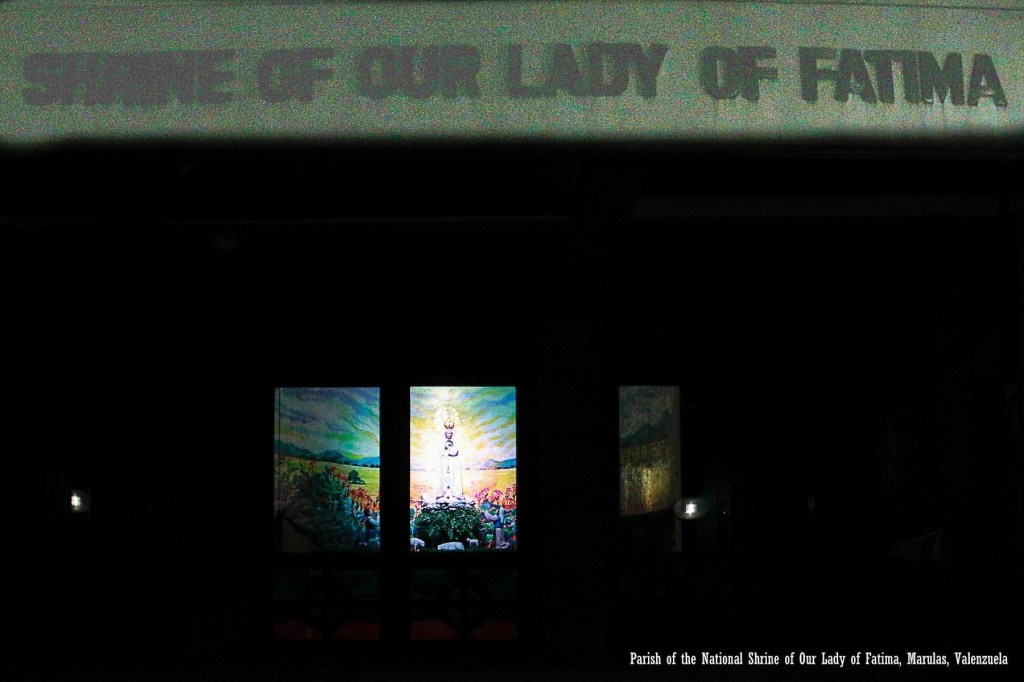
The sanctuary of the Parish of the National Shrine of Our Lady of Fatima seen through its glass door at night during the lockdown last year due to COVID-19.

The Relevance of Fatima

Both in 1917 and 2021, God’s response to our cries and pleas is still the Our Lady of Fatima because then and now, mankind had never heeded Jesus Christ’s calls to return to him and be converted: “This is the time of fulfillment. The kingdom of God is at hand. Repent, and believe in the gospel” (Mk.1:15).

It does not matter how many Rosaries we pray or how many Masses we celebrate or how often we go to the Sacrament of Reconciliation. The problem is not with God but with us who until now refuse to recognize the spiritual dimension of this pandemic.

Whatever solution we eventually find in ending COVID-19, most likely another pandemic or worldwide problem could occur if we continue to refuse in respecting life and every person as an image and likeness of God. Recall that when World War I ended in 1918 as promised by our Lady of Fatima, that same year started the Spanish flu pandemic that claimed about 50-M lives worldwide. Then in 1939, World War II started.

The Spanish flu and the World War II were not punishments from God; he does not punish because “God is love”, nothing evil and bad can come from him. Those things happened after the Fatima apparitions because of man’s refusal to heed Mary’s calls for prayers and conversion of peoples which is happening again in our own time.

Our Lady of Fatima consistently reminds us since 1917 her Son Jesus Christ’s teaching of the centrality of God in our lives through prayers and our daily conversion through humility and being like a child, trusting God completely like her.

More than a century ago, the Lord through his Mother, has been telling us the key to lasting peace in the world and in our very lives lies in our daily conversion, in our conformity to his life intimately united in the Father like the Blessed Virgin Mary.

It is a life of daily fiat – of faith in God, of letting his will be done in us! The Holy Rosary and the Sacraments are the means so we may bear fruits of love and holiness in our faith in God like Mary.

When Elizabeth heard Mary’s greeting, the infant leaped in her womb, and Elizabeth, filled with the Holy Spirit, cried out in a loud voice and said, “Most blessed are you among women, and blessed is the fruit of your womb. And how does this happen to me, that the mother of my Lord should come to me? For at the moment the sound of your greeting reached my ears, the infant in my womb leaped for joy. Blessed are you who believed that what was spoken to you by the Lord would be fulfilled.”

Luke 1:41-45
Our Lady of Fatima at the National Shrine in Valenzuela, the first locally carved image of Fatima done in circa 50’s to 60’s.

True blessedness

For better and for worst, COVID-19 had truly changed our lives, teaching us that true blessedness is not found in money and things, nor in popularity and influence or other things that have become the benchmarks of everything that is good in this life.

In less than a year when everything stood still as COVID-19 ravaged earth with so many deaths, the pandemic had shown us what our Lady of Fatima has always been telling us since 1917: go back to God our Father through our Lord Jesus Christ in the Holy Eucharist and Sacrament of Reconciliation.

Mary believed and lived her faith in God. She was the first to receive the Good News of Jesus Christ by setting aside all her plans in life, her wedding to St. Joseph, of what people would say if found pregnant before they were actually married, and many other things to consider.

She abandoned herself to God completely that immediately after Gabriel had left her, she went in haste to visit her cousin Elizabeth in the hills of Judea not to help her nor verify her being pregnant but to share with her the Good News she had received (Jesus Christ) to show that God’s plan for them are closely linked even with their sons to be born with John being the forerunner of Jesus.

Thus, Mary became the perfect image and model of discipleship in Christ that at the start of his public ministry, she was the first to believe in his saving work when she interceded at a wedding in Cana.

Mary was also the first to believe in Christ’s Resurrection that she remained standing at the foot of his Cross on Good Friday. Last but not least as we have heard in our first reading today, Mary was the first to believe in the coming of the Holy Spirit that she accompanied the Apostles praying at Jerusalem on Pentecost day.

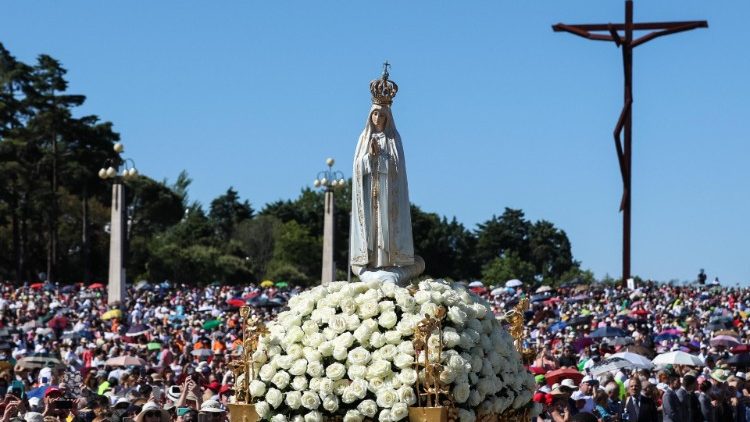
Our Lady of Fatima procession at the Fatima Shrine in Portugal, 2017. Photo from vaticannews.va.

The Challenge of Fatima in our time

Like Mary who appeared at Fatima in Portugal 104 years ago today, may we grow deeper in our faith in God by believing more in him than believing in the world or with our very selves.

In this time of COVID-19, may we bring unity to our family and community, church and nation, so that like the Blessed Mother we may help in strengthening the faith of one another, in believing in God by submitting ourselves to his holy will.

May we not waste time to avert another catastrophe – not as a punishment from God who does not punish – that when rooted can always be traced back to our selfishness and pride, lack of concern for others, and for playing gods who claim to know everything.

These were some of the reasons Mary appeared at Fatima in 1917 to bring us back to God through his Son Jesus Christ. After all the pains and losses we have gone through in this time of COVID-19, have we not still learned the need to be simple and humble?

Like Mary, let us believe more in God by being kind and charitable with one another so that sooner, we may finally end this pandemic. Amen.

“Breakout” by Swing Out Sister (1986)

The Lord Is My Chef Sunday Music, 09 May 2021
Photo by Roberto Nickson on Pexels.com

A blessed happy Mothers’ Day to all the sweet and hardworking moms! Thank you for bringing us out into this world and most of all, thank you for making this planet a better place to live in filled with love and joy. Like Jesus, you make our joy complete with your kindness and affection, fidelity and dedication.

That is why we have chosen this greatest hit by the Swing Out Sister in 1986, Breakout. Composed by lead singer Corinne Drewery, its video features her former profession as fashion designer who also modeled her creations.

Though she looks formal, Corinne exudes with great spunky spirit in her singing filled with courage and joy that one feels the intense love and passion she has in her art and maybe even life – exactly what the gospel tells us today of the need to remain rooted in the love of Christ so we may bear fruit with much love for him and with others.

Love and joy are closely linked with each other: when there is love, there is joy. Without love, there can be no joy; without joy, clearly there is no love at all (https://lordmychef.com/2021/05/08/let-our-joy-be-complete-in-christ/).

Breakout may not be speaking about love and joy but as you listen to its music and lyrics, it is very affirming of one’s worth as being loved so much by God even by others.

When explanations make no sense
When every answer's wrong
You're fighting with lost confidence
All expectations come
The time has come to make or break
Move on don't hesitate
Breakout
Don't stop to ask
Now you've found a break to make at last
You've got to find a way
Say what you want to say
Breakout

This Sunday, we are so blessed with so much love from God and others. “Breakout” from your negative thoughts and other imprisonments that prevent you from experiencing complete joy in Jesus!

A joyful Sunday to everyone especially to our dear Mothers!

Let our joy be complete in Christ

The Lord Is My Chef Sunday Recipe for the Soul by Fr. Nicanor F. Lalog II
Sixth Sunday in Easter, Cycle B,  09 May 2021
Acts 10:25-26, 34-35, 44-48 ><}}}'>  1 John 4:7-10  ><}}}'>  John 15:9-17
Photo by author, December 2020.

Today we come full circle in our readings and teachings of the Lord since Easter, appropriately prepared last Sunday with his discourse being the true vine and we his branches who must remain in him to be fruitful in love.

Yes, love is the only fruit expected of us by God in Christ Jesus. When we die, it is the only thing the Lord would ask us, “gaano ka nagmahal” (how much have you loved)? It is the origin and the end of everything in this life, the only one that would remain in eternity (1Cor. 13:13).

God created us because of love, and because of that love as the second reading tells us, saved us by sending us Jesus Christ whose very life, words and actions are all rooted in his love for the Father and for us. That is why in our gospel today, Jesus spoke of love at every turn during the last supper to emphasize centrality of love that is rooted in God.

Jesus said to his disciples:
"As the Father loves me, 
so I also love you.
Remain in my love.
If you keep my commandments, 
you will remain in my love,
just as I have kept my Father's commandments
and remain in his love.
I have told you this so that my joy may be in you
and your joy may be complete."
(John 15:9-11)
Photo by Dr. Mylene A. Santos, MD, February 2021.

Love and Joy

God alone really knows what love is because “God is love” (1Jn.4:16). Notice how Jesus spoke of love in the gospel today by linking it closely with joy as he tells us that when there is love, there is also joy. Without love, there can be no joy and without joy, clearly there is no love at all!

In its truest sense, joy – like love – is more than an emotion. It is a conviction deep within us borne out of faith that no matter what happens to us, there is God who truly loves us, remaining faithful to us until end when everything and everyone is gone.

Joy is deeper than happiness that is always coming from the outside when lips smile or laugh at something or someone funny and happy. Joy is always coming from within when the heart smiles even when you are in the midst of pain and sufferings. Recall those moments when during a major setback or a struggle in life you still managed to feel joy within through a deep sigh after seeing a beautiful sunrise of sunset or a lovely flower. There is always that feeling of comfort and relief so assured that you have somebody by your side — Jesus who assures us of his love this Sunday, asking us to remain in him “so that my joy may be in you and your joy may be complete” (Jn.15:11).

Photo by author, ICSB-Malolos, 26 April 2021.

When joy is not complete and not in Christ


Our joy is not complete, not in Christ 
when we refuse to love because we feel unloved.

So many times in life, we cannot experience true joy when we refuse to love another person whom we feel not loving us at all. We “hate” them because we feel they do not love us, they do not care for us, that they take us for granted.

I have seen this happening to me so many times when I suspect other people of being angry with me, of being biased against me and worst, of being “insecured” with me!

But too often, I do not have bases in believing so.

Most of all, I have realized in life that we cannot force people to love us or even like us inasmuch as I do not want being coerced to do the same too! What is most true in my experience is that when some people do not seem to love me, the challenge for me is to love them more. Not hate them or not love them.

I know this is easier said than done but try to understand that it is only in loving those who do not love us or do not care for us or even hate us when we truly love because when we do so, that is when we let God intervene to make his love work in us, through us, and with us.

When we love those who do not love us, we surrender ourselves to God which is an act of self-giving like Jesus Christ on the cross, letting him fill in whatever is lacking in us to truly love. It is the truest love we can have when our love is not reciprocated by another, thus enabling us to rediscover God, our very selves and others. In the process, we begin to experience joy because we have started truly loving without expecting anything in return by loving those who do not love us nor care for us at all.

Photo by author, 2019.

Our joy is not complete, not in Christ
when we love only those like us.

Only God can love us perfectly. Human love is always imperfect as we always have that tendency to go only with those like us – in our looks and bearing, beliefs and tastes in almost everything. In that case, we limit ourselves with the people we interact with that in the process, we never grow in love and never really become joyful because we do not love at all!

Love is always outward in movement, always to another person as we mature. As a matter of fact, we love because we want to be become like the one we love who is always someone we look up to and admire. That is why love becomes more wonderful and fulfilling when we love somebody not like us or totally different.

There lies the problem with our kind of love, especially those portrayed in the movies, television, and modern music where we love only those like us that is very selfish because we only love ourselves.

We will never experience joy completely if in our loving we seek only those who are like us or worst, twist others to become like us, fitting them into our own image so that whom we love is not them but us found in them!

Crazy but it happens so many times when we manipulate others to become like us than let them be free to become their true selves.

“Love is our true destiny.We do not find meaning of life by ourselves alone – we find it with another. We do not discover the secret of our lives merely by study and calculation in our own isolated meditations.The meaning of our life is a secret that has to be revealed to us in love, by the one we love.”

Thomas Merton, “Love and Living”

The surest sign that we have truly loved is when we have found another person to love more than our very selves.

Photo by Dr. Mylene A. Santos, MD at Rhode Island, April 2021.

Our joy is not complete, not in Christ
when we refuse to forgive those who have hurt us,
especially those we have loved so much.

It is easy to claim that we love if we do not really love at all. No matter how hard we profess that we love, its lack cannot be denied in the absence of joy in our selves, in our lives because we have been hurt by those we love.

This is more difficult than the first when we refuse to love because we feel we are not loved that may not be true at all; this is evidently clear, somebody had hurt us, had betrayed us, had been unfaithful to us.

And the saddest part of it despite all the denials is that we still love deep within us those who have hurt us! Is it not? Kaya masakit kasi nga mahal pa rin natin.

I am not talking here of a disordered or foolish love; this is something like the love of a husband or a wife to one’s partner who had fallen into infidelity for some reason. Or a prodigal son or daughter who had gone wayward in life.

This kind of love is the most difficult, but once overcome is the most sublime, the loftiest of all because the very reason why we are aching and hurting inside is because we still love. This is the kind of joy that would surely burst in fulness and completeness if we learn to forgive and let go.

Again, easier said than done but such is the power of love: the more we love, love is perfected in us that we slowly get a glimpse of God in others, and the more we become like Jesus his Son (1Jn.4:12).

So many times in life, we need to imitate St. Peter in the first reading by simply allowing God’s irresistible initiatives overtake us that while he was explaining things to the household of Cornelius, “the Holy Spirit fell upon all who were listening that he ordered them to be baptized in the name of Jesus Christ” (Acts 10:44, 48).

When we love, love freely!

Let that love flow, do not hold it, just let it go like what mothers do most of the time: even if they are hurting inside, even if they feel not loved and cared for, even if sometimes they seem to be so hard on us insisting on their own ways, they just love, love, and love.

And that is the secret of true love rooted in Christ: when we love, we can do nothing but good. Then our joy is complete.

A joy-filled week to everyone! And happy Mothers’ Day too.

Photo by Dr. Mai B. Dela Peña, Carmel at Israel, 2014.

Remaining in Christ, the True Vine

The Lord Is My Chef Sunday Recipe for the Soul by Fr. Nicanor F. Lalog II
Fifth Sunday in Easter, Cycle B, 02 May 2021
Acts 9:26-31  ><}}}'>  1John 3:18-24  ><}}}'>  John 15:1-8
From Facebook of Fr. Marlito G. Ocon, SJ via GMA News, 30 April 2021.
"Ang lungkot, Father.  
Wala na akong asawa na mauuwian, 
abo na ang asawa ko."

This broke my heart last Friday evening from a post by Jesuit Fr. Marlito G. Ocon of a woman who came by herself to the Philippine General Hospital (PGH) to deliver her baby. Her husband had just died of COVID-19 while she and her baby are both COVID positive. Worst, she has not informed her parents-in-law about the death of her husband because they are also in critical condition in the province for COVID-19.

“Ang lungkot, Father. Wala na akong asawa na mauuwian, abo na ang asawa ko. Hindi man lang kami nagkausap. Hindi ko man lang maibalita na may second baby na kami. Hindi man lang sila nagkita ng anak namin.” (“It is so sad Father. I do not have a husband anymore to come home to, he’s all ash now. We did not even have the chance to speak to each other. I cannot even tell him the news we have our second baby. He did not even get the chance to meet our new baby.”)

Fr. Ocon is one of the chaplains at the PGH, the largest public hospital in Metro Manila. He said, “I have no words because I know any word can’t explain enough why horrible things like this happened. But I realized that it is in our deep, deep silence and it is when we run out of words, and when theology can’t explain enough, that our faith can speak louder.”

Very true.

Lately I have noticed a shift in prayer requests by relatives and friends, from the usual healing prayers for those afflicted with COVID-19 to prayers for their and loved ones’ emotional and psychological well-being.

More and more people have been coming to me for counseling via Zoom and Messenger apps as they hurdle so many crises in marriage, work, livelihood and self since the pandemic started last year. We have resumed yesterday in our parish our weekly confessions and everyone who came cried not only for their sins but most of all for their emotional baggages either triggered or worsened by this pandemic.

And like Fr. Ocon, I could not say anything at all except to pray and tell them to hold on to God, to never let go of him, “kapit lang at huwag bibitiw sa Diyos”, exactly what Jesus is telling us this Sunday:

Jesus said to his disciples:
"I am the true vine, and my Father is the vine grower.
Remain in me, as I remain in you.
Just as a branch cannot bear fruit on its own 
unless it remains on the vine, 
so neither can you unless you remain in me.
I am the vine, you are the branches.
Whoever remains in me and I in him
will bear much fruit because without me you can do nothing."
(John 15:1, 4-5)

“Remain in me.”

In St. John’s vocabulary, “remain in me” is one of the key phrases he used 68 times in his writings (gospel, three letters and the Revelation), 11 times in this whole discourse in John 15:1-17, and if you have listened attentively, that phrase was mentioned eight times in eight verses!

In its strongest sense, “to remain in me” speaks of the intimate bond of the Father and the Son, of the Son and the Spirit that only St. John recorded for us during the Lord’s discourse at his last supper found in John 14-15. Most of all, “to remain in me” follows that great revelation by Jesus as the Christ in the fourth gospel like “I AM the bread of life”, “I AM the good shepherd”, “I AM the way, the truth and the life” and now “I AM the true vine”.

To remain in the Lord is to live in him in faith even if nothing seems to happen like during this pandemic when God seems to be silent and even distant from us.

It is first of all a call to prayer life. Not just recitation of prayers we have memorized since childhood but to cultivate a deep and personal relationship with God when we do not have to speak at all but simply be in his loving presence.

There are times we feel nothing is happening with our prayers but unknown to us, that is precisely when something is actually happening because prayer does not change the situation but the person!

As we grow and mature in our prayer life, we become more aware of God and of the other persons that we become less focused with our very selves. And that is when we change, when we realize our mistakes and sins, our weaknesses, teaching us to be humble, patient and persevering. It is worth keeping in mind this four-letter word PUSH – Pray Until Something Happens.


Most of the time, 
we do not see things in our lives the way God sees them.  
He tells us in Isaiah 55:8-9 that his ways are not our ways, 
his thoughts are not our thoughts for God is totally different from us!  
We have to trust him and remain in him 
"for God is greater than our hearts and knows everything" (1Jn.3:20).  
And that is for sure - as we have proven so many times in our lives.

Photo by author, 27 April 2021, ICSB-Malolos city.

Remaining and being fruitful

Remaining in Jesus means being faithful especially when things get worse, when even in bad times, we consistently stay in the Lord in silence.

Remember how we have been so sullen in March, wondering if God has forsaken us with the deadly surge of COVID-19 cases amid the glaring incompetence of this government when suddenly our hopes were raised high by this community pantry movement?

Who would have thought of Ms. Patricia Non in the quiet street of Maginhawa in Quezon City would rally the whole nation with her “Community Pantry” now helping so many people going hungry?

Not only that. The most beautiful thing Ms. Patricia Non had done is her bringing out the best in every one of us, rich and poor alike, young and old to share whatever we have for our suffering brothers and sisters!

Most of the time, we do not see things in our lives the way God sees them. He tells us in Isaiah 55:8-9 that his ways are not our ways, his thoughts are not our thoughts for God is totally different from us! We have to trust him and remain in him “for God is greater than our hearts and knows everything” (1Jn.3:20). And that is for sure – as we have proven so many times in our lives.

In the first reading we find the very difficult and almost impossible situation of St. Paul following his conversion: nobody would believe him and everybody suspected him of possible sinister plots against them! But, St. Paul remained consistent in his prayers and studies in Tarsus until Barnabas introduced him to the apostles who gave him the opportunity to preach in Jerusalem. Despite his dark past, St. Paul won so many converts in his preaching in the name of Jesus that eventually, he was sent to missions abroad that led to the growth of the early church.

That is remaining in the Lord – allowing God to work in us and through us like St. Paul so that we become fruitful, not just successful.

Fruitfulness is the result of remaining in the Lord, of letting God do his work in us. Most often, this leads to pains and failures as Jesus tells us of the need to be pruned like the branches of the vine to be more fruitful. But, despite these failures and defeat in our lives, we experience that sense of fulfillment within us because we have grown and matured in the Lord. We have not really failed at all because we have become fruitful.

On the other hand, being successful means relying more on our human efforts like our strengths and intelligence that is usually measured in tangible things like money and popularity. But, we have also experienced or heard many successful people still feeling empty and lost, that despite their fame and wealth, they have no peace and joy within, feeling nobody truly loves them for who they really are.

Many times in life we have experienced that even if we feel safe and sufficient, that is when we feel so empty, something is missing. As we usually say, parang may kulang pa.

This Sunday, Jesus our Good Shepherd reminds everyone of us to remain united in him who is our true vine. It is only in him can we find life and meaning amid the many sufferings and trials going our way especially at this time of the pandemic.

Only in remaining in Jesus is the surest path to fulfillment despite our pains and sufferings, as well as losses in life. Just stay and remain in him as he is always doing something beautiful for us. Amen.

A blessed and fruitful week to everyone!

Posted by Jean Palma on Facebook, 18 April 2021 with the caption: “All these community pantries in four days, and counting. What a powerful movement.” #CommunityPantry

Beloved children of God led by the Good Shepherd

The Lord Is My Chef Sunday Recipe for the Soul by Fr. Nicanor F. Lalog II
Fourth Sunday In Easter, Good Shepherd Sunday and 
World Day of Prayer for Vocations, 25 April 2021
Acts 4:8-12  ><)))">  1 John 3:1-2  ><)))">  John 10:11-18

After listening to the Easter stories by John and Luke these past three weeks, we are now initiated into the implications of Christ’s Resurrection as the Father’s beloved children belonging to him led by Jesus our Good Shepherd.

Jesus said:
"I am the good shepherd,
and I know mine and mine know me,
just as the Father knows me
and I know the Father; 
and I will lay down my life for the sheep."
(John 10:14-15)
Photo by Dr. Mylene A. Santos, MD, March 2021.

Image of shepherd pasturing the weak

Since Easter we have been reflecting on Jesus as our Lord and Savior who comes as our invisible guest in almost every aspect of our lives especially in the Holy Eucharist where he appears, speaks and shares meal with us despite the lockdowns due to COVID-19 pandemic.

In our country where the sheep is only beginning to be known as an excellent food, better than pork and beef especially Abes’s lamb adobo, the image of the shepherd is hardly known, even irrelevant for many especially for those in urban areas.

But, it is important that we try to bridge this gap even a little to appreciate and understand Jesus Christ’s words this Sunday being the Good Shepherd.

One very important aspect we have to keep in mind with the imagery of a shepherd in the Near East region where Israel is located is its symbolism of the relationship between the king and his subjects. Pasturing sheep was clearly an image of the task of every king in the region in ancient times not only in Israel but even in the pagan kingdoms of Babylonia, Assyria, and Sumer. This is the reason we find books in the Old Testament teeming with many references to God as the true king and shepherd of Israel, taking care of the people, leading them in green pastures and clear waters.

When the kings including the priests of Israel abused their roles, forgetting their mission to pasture especially the weak and the poor as they turned to pagan gods like Baal, God became so angry with them that he vowed to come himself to shepherd his flock fulfilled in the coming of Jesus Christ.

This decadence of the image of the shepherd continued in the time of Christ when shepherds were looked down and typecast as thieves and trouble-makers who belonged to the lowest level of the poor who could not even afford to attend temple worship due to their poverty.

Here we find the stage perfectly set for Jesus to restore and fulfill this degeneration of the beautiful and noble image of the shepherd while teaching after his healing of the man born blind that created a very big stir among peoples and temple authorities at that time in Jerusalem.


Knowing and belonging are interrelated:  
one knows because he/she owns like when we claim things as ours.  
When we possess, we know because we have.  
But, Jesus is speaking here not of owning and taking control an object or any material thing.  
Jesus and the Father know each other as they belong to each other as one 
in a perfect relationship but never because they "own" nor "possess" one another.

Photo by Mr. Lorenzo Atienza, Malolos Cathedral, 12 June 2019.

Knowing God, belonging to God

When Jesus declared “I am the good shepherd”, notice that he goes beyond simile: he did not say “I am like a good shepherd” but declares emphatically, repeating thrice the words “I am the good shepherd” – twice in verse 11, and again in verse 14.

His knowledge of the sheep is not from casual nor in-depth observations and study of the sheep but from a totally different and transcendent order when he declared, “I know mine and mine know me, just as the Father knows me and I know the Father”.

Here, Jesus is clearly re-establishing our lost relationship with God as our Father and we his children that is emphasized in our second reading, “Beloved: See what love the Father has bestowed on us that we may be called the children of God. Yet so we are” (1Jn.3:1).

Unlike the monarchs of the world, Christ our King is the Good Shepherd because his relationship with us is based on love and concern especially for the weak and the lowly as the Father had intended since the beginning! Jesus is the good shepherd because his is a relationship of unity in God as our Father.

Knowing implies relationship because it connotes belonging.

Knowing and belonging are interrelated: one knows because he/she owns like when we claim things as ours. When we possess, we know because we have. But, Jesus is speaking here not of owning and taking control an object or any material thing. Jesus and the Father knows each other as they belong to each other as one in a perfect relationship but never because they “own” nor “possess” one another.

To illustrate, we belong to our parents, we belong to a church or a community, we belong to an organization. There is always a degree of knowledge in every belonging not because we are possessed or owned in the same way we own our house, our car, or any gadget for that matter. Owning, possessing or having persons and even pets are of higher degree of knowing and belonging, of something deeper about invisible links that tie us with someone we believe “belongs” to us.

Is it not funny that sometimes we claim how our possessions also seem to be like persons that try to get to know whoever is using it as in “nangingilala” wherein if somebody borrows our car or any thing, sometimes they do not function well? And we say, maybe because the car or the thing did not know who’s driving or using it!

Pope Francis last year mentioned a very beautiful trait of St. Joseph that speaks so well about this very positive kind of “possession”, of knowing and belonging like his relationship with Jesus Christ and Mary. The Pope described it as St. Joseph’s being “a father in the shadows”.

In his relationship to Jesus, Joseph was the earthly shadow of the heavenly Father: he watched over him and protected him, never leaving him to go his own way… Being a father entails introducing children to life and reality. Not holding them back, being overprotective or possessive, but rather making them capable of deciding for themselves, enjoying freedom and exploring new possibilities. Perhaps for this reason, Joseph is traditionally called a “most chaste” father. That title is not simply a sign of affection, but the summation of an attitude that is the opposite of possessiveness. Chastity is freedom from possessiveness in every sphere of one’s life. Only when love is chaste, is it truly love. A possessive love ultimately becomes dangerous: it imprisons, constricts and makes for misery. God himself loved humanity with a chaste love; he left us free even to go astray and set ourselves against him. The logic of love is always the logic of freedom, and Joseph knew how to love with extraordinary freedom. He never made himself the centre of things. He did not think of himself, but focused instead on the lives of Mary and Jesus.

Pope Francis, “Patris Corde” (08 December 2020), #7

What a beautiful way of describing this sense of knowing and belonging – like St. Joseph and very much like Jesus our Good Shepherd!

See that Jesus never forces us into being one with him nor in following him. He simply calls us, inviting us to follow him, to be one with him. That is why we heard him also telling us today that he has “other sheep that do not belong to this fold” that he must lead and care too.

Jesus is the shadow of the Father who leads us back to him as his beloved children. He does not coerce us nor demands us even though he “owns” us as his sheep. In his Passion, Death, and Resurrection, Jesus had shown us how he had become the foundation, the cornerstone we have always rejected in many instances in our lives now pasturing us back to greener pastures.

To know and to belong in the light of Jesus as the Good Shepherd is for us to regard one another as a family, as a brother and a sister we love and trust, allowing them to be free and faithful to God and one another instead of manipulating people like what some parents do to their children or dictators in the government and military.


Knowing and belonging like the Good Shepherd 
is less of controls and more of trust with one another 
because you see them as brothers and sisters in Christ 
perfectly expressed in the Community Pantry dictum, 
"magbigay ayon sa kakayahan, kumuha batay sa pangangailangan" 
(give whatever you can, take only what you need).

Knowing and belonging like the Good Shepherd is less of controls and more of trust with one another because you see them as brothers and sisters in Christ perfectly expressed in the Community Pantry dictum, “magbigay ayon sa kakayahan, kumuha batay sa pangangailangan” (give whatever you can, take only what you need).

What Ms. Ana Patricia Non and her followers did was become like Jesus the Good Shepherd when she said this community pantry is “not about charity but more of mutuality like helping the needy” which is about seeing each other as a brother and a sister belonging to one family under God our Father. Charity happens where there is first a relationship of persons respecting one another.

No wonder, she had perfectly called her effort as “community pantry” because every home has a pantry where everyone goes when hungry. And what is more, her community pantry has become a steady source of kindness and tenderness we have missed so much during this pandemic!

How beautiful that a shepherdess from Maginhawa Street led us to realize that we are one big family – brothers and sisters in Jesus Christ and beloved children of the loving and merciful Father in heaven.

May this be the start of a beautiful journey for our country when we see more our belonging to one nation, one country we collectively “own” and therefore, we must ensure its bright future by seeing each other in the light of Christ our Good Shepherd – not us possessions to be manipulated or even sold for personal interests alone.

Have a blessed week ahead!

Posted by Jean Palma on Facebook, 18 April 2021 with the caption: “All these community pantries in four days, and counting. What a powerful movement.” #CommunityPantry